07–14 OCTOBER 2026
By Anton Schultz
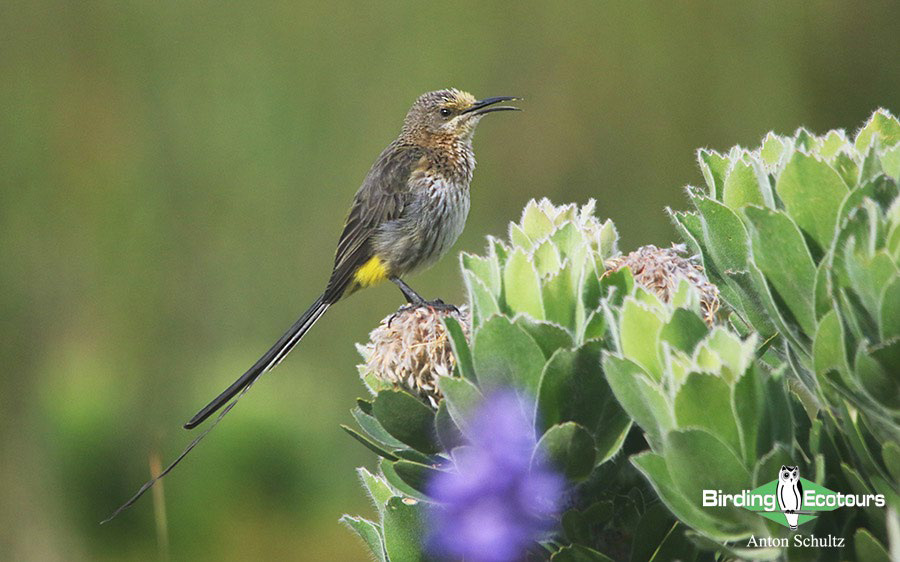
Cape Sugarbirds are surely one of the best Cape endemics to photograph on tour!
Overview
The Western Cape of South Africa is undoubtedly one of the most remarkable birding destinations on the African continent. Despite its relatively small size, the Cape Floral Kingdom supports approximately 9,000 plant species, nearly 70% of which occur nowhere else on Earth. This extraordinary botanical diversity, particularly within the unique fynbos vegetation, provides the setting for an equally impressive array of specialized birdlife.
Our eight-day Best of Cape Town and Beyond tour explored several of the region’s distinctive habitats in search of its endemic and near-endemic birds. Beginning in Cape Town, we spent our first few days visiting productive wetlands, beautiful botanical gardens, and rugged fynbos-covered mountains. We also ventured offshore on a dedicated pelagic excursion, encountering an impressive variety of seabirds and marine mammals in the rich Atlantic waters. From Cape Town, we traveled north along the West Coast, where coastal strandveld, farmlands, and the vast wetlands of West Coast National Park introduced us to a different suite of species. Finally, we headed inland into the starkly beautiful Tankwa Karoo, a semi-arid landscape renowned for its specialized birdlife.
Some highlights of this trip included the iconic Cape Rockjumper, the notoriously secretive Victorin’s Warbler, Cinnamon-breasted Warbler, Ground Woodpecker, Cape Sugarbird, Protea Canary, Cape Siskin, Black Harrier, Southern Black Korhaan, Karoo Korhaan, Cape Clapper Lark, Cape Long-billed Lark, Black-eared Sparrow-Lark, Black-headed Canary, and Grey Tit, among many others. Our pelagic trip was equally memorable, delivering species like Atlantic Yellow-nosed, Shy and Black-browed Albatross, Pintado Petrel, Soft-plumaged Petrel, Sabine’s Gull and Sooty Shearwater.
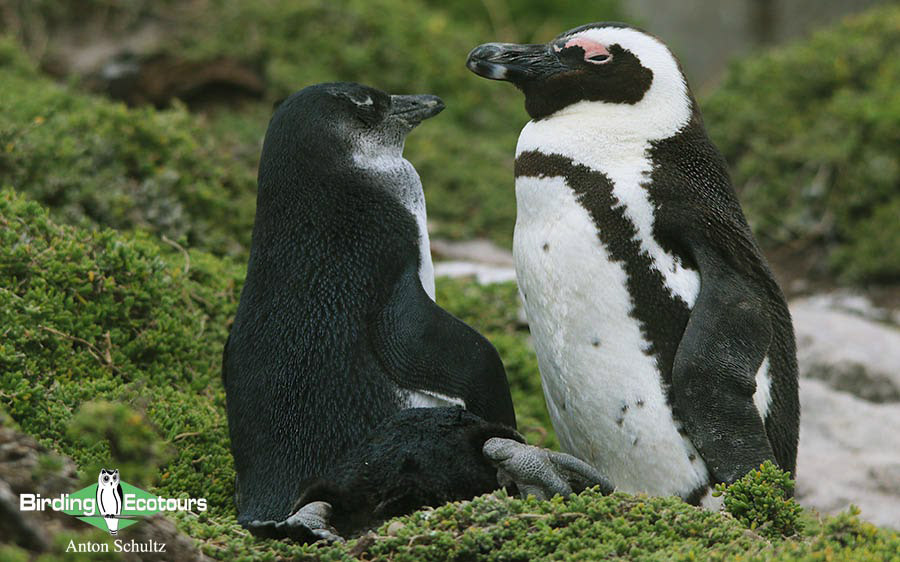
A sleepy African Penguin chick was a particularly charming sight at Stony Point.
Birding was not the only source of excitement, however, and we were treated to several excellent mammal sightings throughout the trip. Perhaps the most unexpected was an incredibly rare encounter with a Caracal along the West Coast, while Chacma Baboon, Klipspringer, Rhebok, Steenbok, Common Eland, and Afro-Australian Fur Seal were among the other highlights. Reptiles also provided some memorable encounters, including a Cape Cobra and Puff Adder.
Beyond the wildlife, the tour offered a wonderful introduction to the Cape’s remarkable scenery. From the dramatic coastline around False Bay and the rolling hills of the West Coast to the ancient rock formations and seemingly endless plains of the Tankwa Karoo, there was certainly never a shortage of beautiful landscapes to admire.
With excellent birding, spectacular scenery, a fantastic group of guests, and more than a few amusing experiences along the way, this was a thoroughly enjoyable and successful tour through one of Africa’s most distinctive birding regions.
Detailed Report
Day 1, 7th October 2026. Birding around Cape Town
With all our guests having arrived the previous day, we could get straight into a full day of birding. Our first destination was Strandfontein Sewage Works, one of Cape Town’s premier wetland birding localities.
The numerous water bodies held an excellent selection of waterfowl, including Maccoa Duck, Southern Pochard, Cape Teal, Red-billed Teal, Cape Shoveler, and South African Shelduck. Other highlights included African Swamphen, Malachite Kingfisher, African Marsh Harrier, and our first Jackal Buzzard, a striking southern African endemic. Among the numerous Hartlaub’s Gulls, we also picked out a few Grey-headed Gulls.
One particularly entertaining encounter came courtesy of a male Pin-tailed Whydah, which apparently took a strong dislike to our stationary vehicle. Presumably mistaking its reflection for a rival, the notoriously aggressive little bird repeatedly attacked the car! We also encountered Caspian and Greater Crested Terns, along with a smaller tern which we suspect was a White-winged Tern. A typically secretive Little Rush Warbler eventually gave us a satisfactory view, while a Cape Gray Mongoose and a Common Platanna, which we rescued from the road, provided some non-avian entertainment.
Our next stop was Rondevlei Nature Reserve, where Lesser Swamp Warbler and Common Reed Warbler both showed particularly well. Other additions included Great Crested Grebe, African Darter, and a magnificent African Fish Eagle soaring overhead. Some typical Cape garden birds also began trickling onto our list, including Cape Robin-Chat, Fiscal Flycatcher, and a stunning male Southern Double-collared Sunbird, complete with brilliant yellow pectoral tufts.
After a lovely lunch at the Fynkos Restaurant, we explored the beautiful Kirstenbosch National Botanical Garden. Here, Southern Double-collared Sunbirds seemed to be everywhere, accompanied by numerous Cape White-eyes, Cape Bulbuls, and African Olive Pigeons. We also encountered Cape, Brimstone and Forest Canary, and the endemic Cape Batis. Another welcome addition was our first Cape Sugarbird, belonging to a remarkable family containing just two species worldwide, both restricted to southern Africa.
Perhaps the highlight of the day, however, was an incredibly cooperative Brown-backed Honeybird. Usually encountered during its high aerial display flights, this bird instead sat relatively close to us, allowing excellent views of its distinctive white outer primaries. Certainly one of my better encounters with this species!
Overhead, Booted Eagle, African Harrier-Hawk, and Common Buzzard kept us entertained. After walking along the famous Boomslang canopy walkway, we ventured into the forested lower slopes, where we encountered some remarkably tame Lemon Doves. Normally incredibly shy, these birds seemed perfectly content wandering around our feet!
With daylight fading, we made an unsuccessful attempt for Cape Siskin at Cecilia Forest, before continuing to the Constantia greenbelt. Here we finished the day in style with a female African Wood Owl, whose distinctive calls were answered by a distant male. Her presence attracted considerable attention, with African Paradise Flycatchers and even an ambitious African Dusky Flycatcher repeatedly taking potshots at the considerably larger owl!
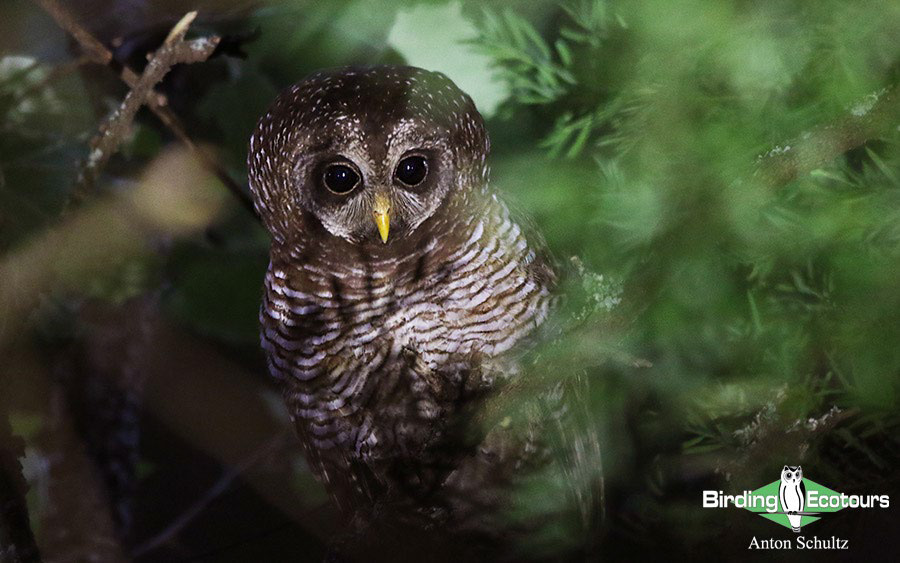
This female African Wood Owl was very tame; she’s probably seen many people around the busy city center of Cape Town.
Day 2, 8th October 2026. Pelagic birding off Cape Town
Today was one of the most anticipated days of the tour, as we headed offshore for our Cape Town pelagic excursion. With strong winds and high swells forecast, we departed Simon’s Town Harbour earlier than planned, accompanied by our specialist pelagic guide, Dominic Rollinson. With his extensive offshore experience, Dominic was the ideal person to lead the day’s birding, especially given my own unfortunate tendency towards severe seasickness.
We were soon heading into False Bay, encountering Cape Cormorants, African Penguins, and even a briefly surfacing Humpback Whale. Approaching Cape Point, we entered the appropriately nicknamed “Washing Machine”, where the increasingly restless seas brought our first Cape Gannets and Sooty Shearwaters. Farther offshore, White-chinned Petrels, Great Shearwaters, and Northern Giant Petrel joined our growing list, while numerous Afro-Australian Fur Seals provided further entertainment.
Eventually, we reached a buoy marking part of a commercial fishing longline. These enormous lines can extend far, sometimes approaching 62 miles (100 kilometers), meaning the fishing vessel itself was nowhere in sight. We waited in the hope that the crew would begin hauling in their line, potentially attracting large numbers of seabirds. Unfortunately, this never materialized, so we decided to take matters into our own hands!
Our skipper began throwing pieces of frozen fish overboard, and slowly the birds began arriving. Great Shearwaters and White-chinned Petrels were among the first to investigate, eventually joined by a tiny Wilson’s Storm Petrel dancing across the water’s surface. Before long, we were surrounded by an impressive assortment of seabirds, including Shy, Black-browed, and Atlantic Yellow-nosed Albatrosses, both Northern and Southern Giant Petrels, Brown Skua, and the beautifully patterned Pintado Petrel. The word “pintado” means “painted” in Spanish and Portuguese, a wonderfully appropriate name for this striking bird. Further excitement came from a Sabine’s Gull and a brief flyby from a Soft-plumaged Petrel.
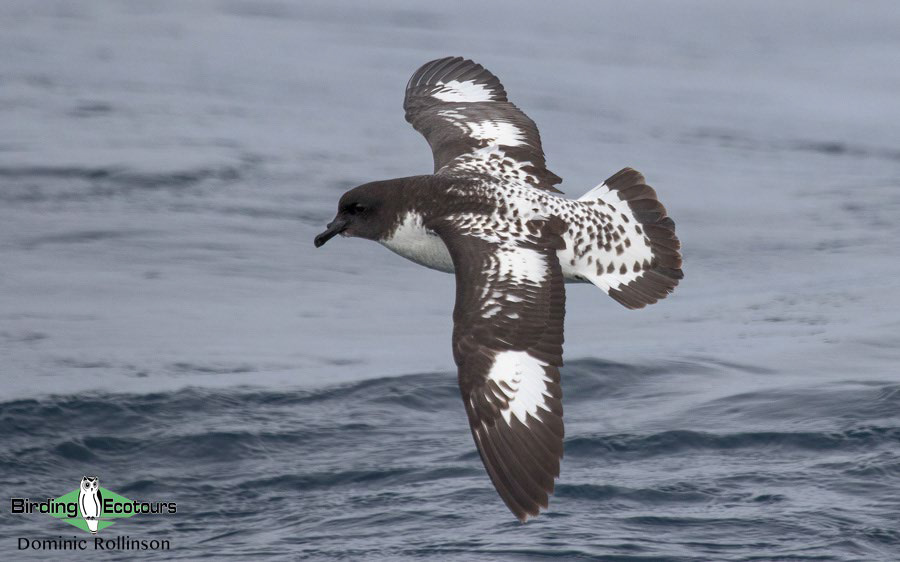
It is quite easy to see where Pintado Petrel gets its name.
Perhaps the most exciting, yet frustrating, sighting involved a large white-backed albatross showing features suggesting it was the exceptionally rare Tristan Albatross. Unfortunately, our views were too brief for confirmation, leaving us with a tantalizing possibility rather than another definite addition to our list.
The rough seas soon had us reaching for ginger sweets and biscuits. Jade’s strategy of eating nothing proved far more successful than mine of eating everything, and I ended up being the only passenger to vomit overboard. At least I contributed to the chumming effort! Gwynn, meanwhile, avoided seasickness entirely with the most effective strategy: not getting on the boat!
Despite the challenging conditions, it was a fantastic day offshore. An African Oystercatcher welcomed us back towards the coastline as we returned to dry land. We kept the afternoon relatively relaxed, making a quick stop to secure excellent views of African Black Duck and Cape Weaver.
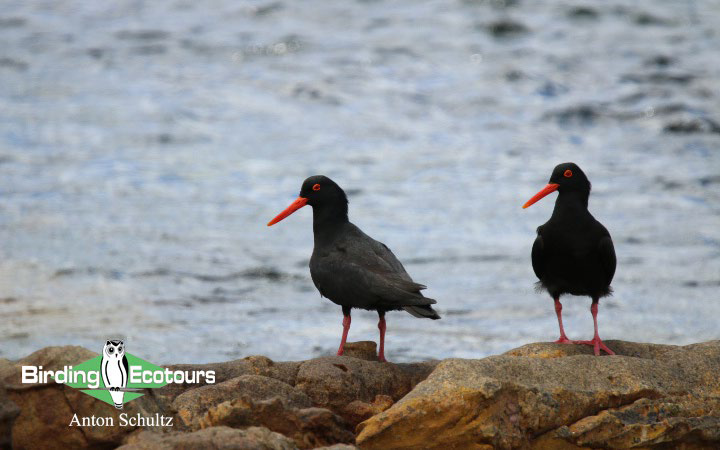
African Oystercatchers are always a treat to see on the South African coastline.
Day 3, 9th October 2026. Rooi Els, Stony Point and Harold Porter
Today we headed east from Cape Town, following the spectacular False Bay coastline towards the fynbos-covered mountains surrounding Rooi Els. Our first stop was an area of mature fynbos, where we hoped to find the notoriously secretive Victorin’s Warbler. We heard several individuals calling, but actually seeing one proved rather difficult. Thankfully, there was plenty to entertain us, including a sighting of the very difficult Ground Woodpecker, along with more common fynbos denizens like Cape Grassbird, Karoo Prinia, and Grey-backed Cisticola.
The fynbos was challenging, with vegetation towering over us and leaving my legs scratched and bleeding. Fortunately, a more open patch further down the road finally rewarded us with incredible views of two Victorin’s Warblers, easily my best encounter with this notoriously secretive species!
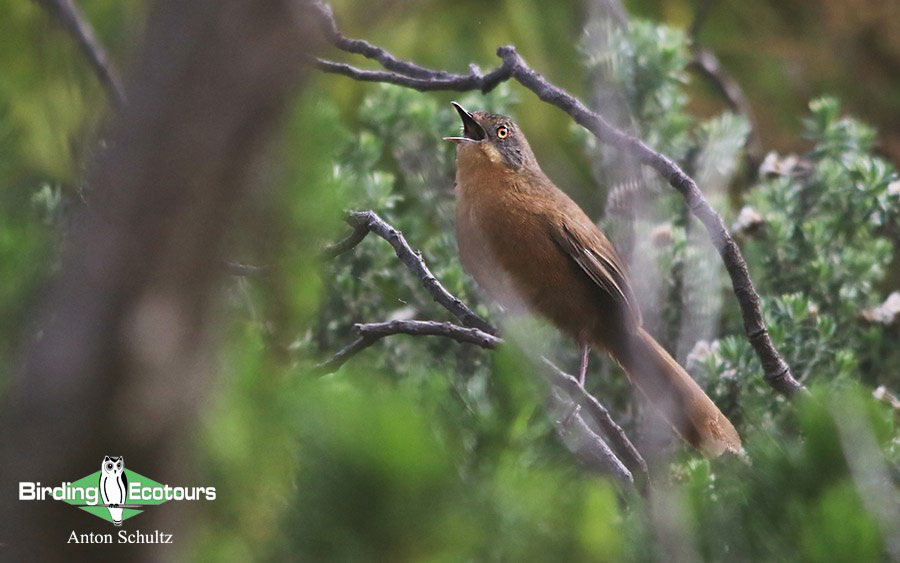
Good Victorin’s Warbler sightings are hard to come by.
With our main target secured, we continued to the famous Rooi Els Cape Rockjumper site, encountering a group of Chacma Baboons crossing the coastal road along the way. The iconic Cape Rockjumper eventually appeared, although unfortunately rather high on the mountainside. Other highlights included Cape Rock Thrush, Cape Bunting, Yellow Bishop, Malachite Sunbird, Cape Sugarbird, and several stunning Orange-breasted Sunbirds.
Our next destination was the Stony Point African Penguin colony, where most of the penguins appeared to be enjoying a midday nap! A few more energetic individuals entertained us around the rocks, alongside several cheeky Rock Hyraxes. Along the boardwalk, we enjoyed all four locally occurring cormorant species, including hundreds of Cape Cormorants, smaller numbers of Crowned and Great Cormorants, and two Bank Cormorants. Off the boardwalk, we had our only sighting for the entire tour of Purple Heron, flying away from us.
After a quick toasted sandwich lunch, we explored the beautiful Harold Porter National Botanical Garden. Here we encountered Swee Waxbill, Streaky-headed Seedeater, Forest Canary, and numerous African Dusky Flycatchers. A pair of African Paradise Flycatchers constructing a nest was particularly enjoyable, while Black Saw-wings darted overhead throughout. This is also where we encountered our first of many Angulate Tortoises of the tour.
With daylight beginning to fade, we returned to Rooi Els for another attempt at Cape Siskin, which had already eluded us on Day 1. Unfortunately, despite our efforts, this particular endemic continued to give us the runaround on Day 3! Still though, it was great getting to see some repeat birds in the afternoon light.
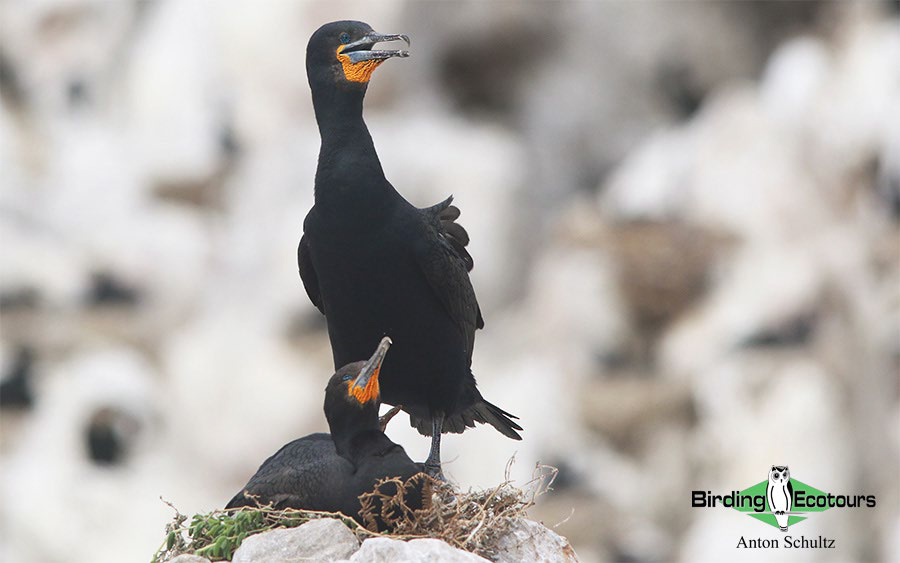
Seeing so many Cape Cormorants breeding was quite a treat!
Day 4, 10th October 2026. Birding the West Coast and Langebaan
After two mornings of breakfast packs and early departures, we enjoyed a proper sit-down breakfast before heading north along South Africa’s beautiful West Coast. Today we would leave the mountainous fynbos behind and enter the subtly different strandveld vegetation, bringing with it a new assortment of birds.
A brief wetland stop proved surprisingly productive, with White-backed Duck, and numerous colorful Southern Red Bishops, while African Black Swifts, Alpine Swifts, and White-rumped Swifts flew overhead. The highlight came when Corinne spotted something skulking in the reeds. I initially assumed she meant a nearby Common Moorhen, but she was actually pointing out a much rarer Little Bittern, which promptly disappeared into the vegetation. An excellent find!
Our second stop was Silwerstroom Road, where our main target was the endemic Cape Clapper Lark, which entertained us with its characteristic wing-clapping display flights, although perched views proved frustratingly difficult. Other additions included Karoo Scrub Robin, White-backed Mousebird, Pearl-breasted Swallow, Bar-throated Apalis and Long-billed Crombec, while a Cape Cobra crossing the road provided some non-avian excitement.
Continuing to Darling Hills Road, we encountered our first Bokmakieries, Cape Spurfowl, and the spectacular endemic Southern Black Korhaan. A large flock of Great White Pelicans passing overhead was unexpected, while the surrounding grasslands produced a perched Black Harrier, displaying Ant-eating Chats, Capped Wheatears, and an unusually large gathering of Cardinal Woodpeckers in one tree. We also encountered a Cape Skink, continuing our rather amusing trend of identifying unfamiliar wildlife by simply adding “Cape” to the beginning of its name!
A few Common Ostriches were present in the farmlands, although these were farmed birds and therefore not tickable. Our next stop, Tienie Versfeld Nature Reserve, delivered the distinctive, heavily streaked local form of Cloud Cisticola, along with Cape Longclaw, African Pipit, and a magnificent Blue Crane.
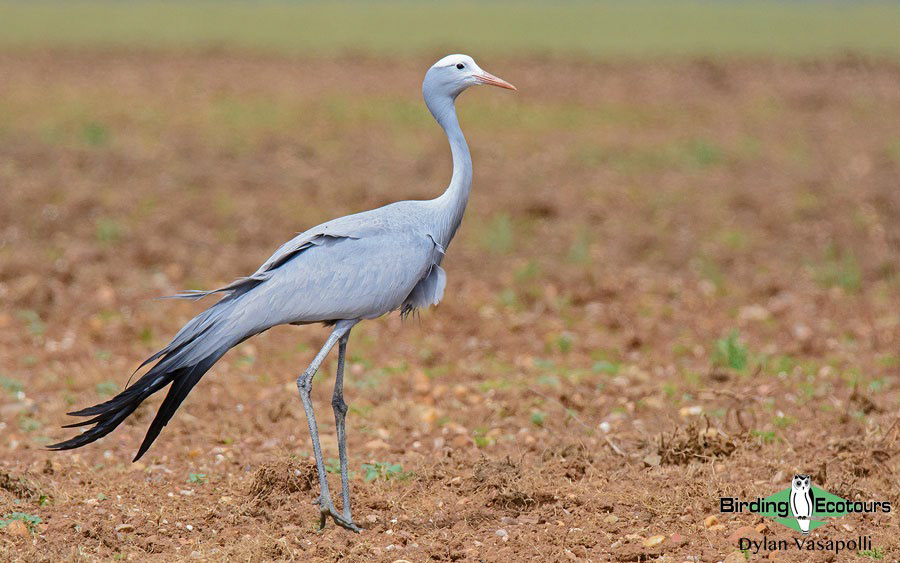
The exquisite Blue Crane is South Africa’s national bird.
After a quick lunch at a roadside farm stall, accompanied by our first European Bee-eaters, we dropped our bags at our accommodation near Langebaan and headed into West Coast National Park. Almost immediately, a pair of Acacia Pied Barbets provided a particularly memorable moment, representing Dave’s 1,000th bird species worldwide!
The park continued delivering excellent birds, including tickable Common Ostriches, Namaqua Doves, Cape Penduline Tit, Red-faced Mousebird, numerous Pied Starlings, and two young Wattled Starlings. At Geelbek Hide, we enjoyed Kittlitz’s Plover, Common Ringed Plover, Common Greenshank, and Eurasian Whimbrel feeding along the exposed mudflats of Langebaan Lagoon.
Mammal sightings were equally enjoyable, particularly a magnificent herd of Common Eland standing in the beautiful afternoon sunlight. As daylight faded, we made one final attempt for Grey-winged Francolin, but these normally reliable birds remained frustratingly elusive. Nevertheless, it had been another fantastic day, with numerous endemic birds and some excellent wildlife encounters.
Day 5, 11th October 2026. Kliphoek Salt Works and transfer to the Tankwa Karoo
Today we would be leaving the West Coast behind and heading inland towards the Tankwa Karoo. Our first surprise came almost immediately upon leaving Langebaan, when a Grey-winged Francolin casually appeared beside the road, a rather amusing contrast to our unsuccessful search the previous evening!
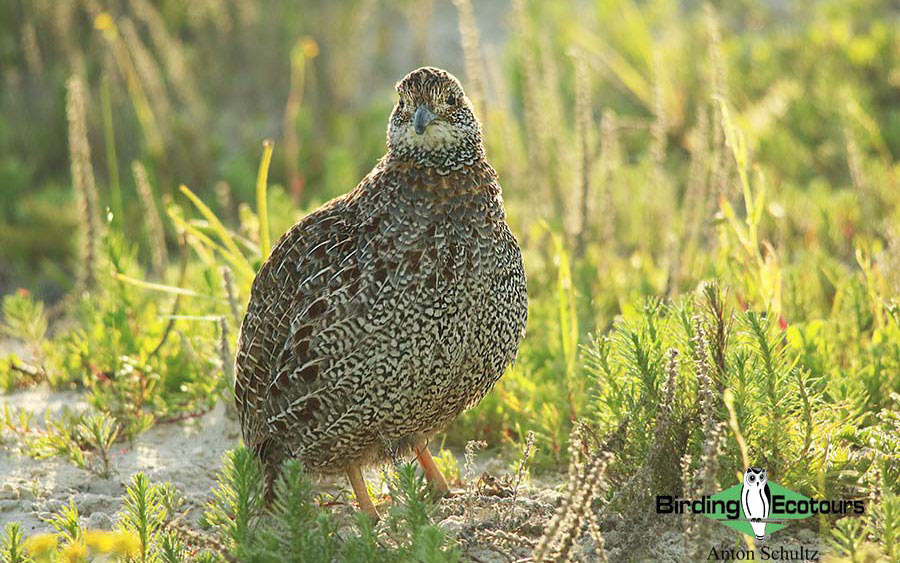
Grey-winged Francolins can be tricky, luckily our persistence paid off.
We began by exploring the farmlands north of Langebaan, where we enjoyed excellent views of Sickle-winged Chat, our first Large-billed Larks, and several Blue Cranes. A particularly memorable encounter was a Cape Long-billed Lark performing its beautiful descending whistle, another excellent Cape endemic added to our growing list.
Our next destination was the Velddrif Salt Works, where the striking pink evaporation pans provided a spectacular setting for some excellent wetland birding. Here we encountered Black-necked Grebe, Ruff, Common Greenshank, and, most importantly, numerous Chestnut-banded Plovers, our main target for the area. Other highlights included Pied Kingfisher, Spotted Thick-knee, Sandwich Tern, Common Tern, Caspian Tern, and Greater Crested Tern, while a large flock of Little Swifts entertained us overhead.
The surrounding area also produced some excellent owl sightings, including a pair of Spotted Eagle-Owls roosting in nearby eucalyptus trees. We then enjoyed lunch at the nearby Kuifkopvisvanger, where a male Western Barn Owl roosting in a tree, with a female nearby, made for another excellent sighting. Several Little Egrets called noisily from the surrounding trees, while Acacia Pied Barbet and our first Eurasian Hoopoe added to the entertainment.
With lunch behind us, we began the long journey inland towards the Tankwa Karoo. We weren’t far from the salt pans before we spotted a Caracal sitting under a tree at midday! This incredibly elusive mammal is rarely encountered, and it was my first-ever sighting. Unfortunately, despite fantastic views as we drove past, our attempt to reverse for photographs sent the animal disappearing into the vegetation. Nevertheless, what an extraordinary encounter!
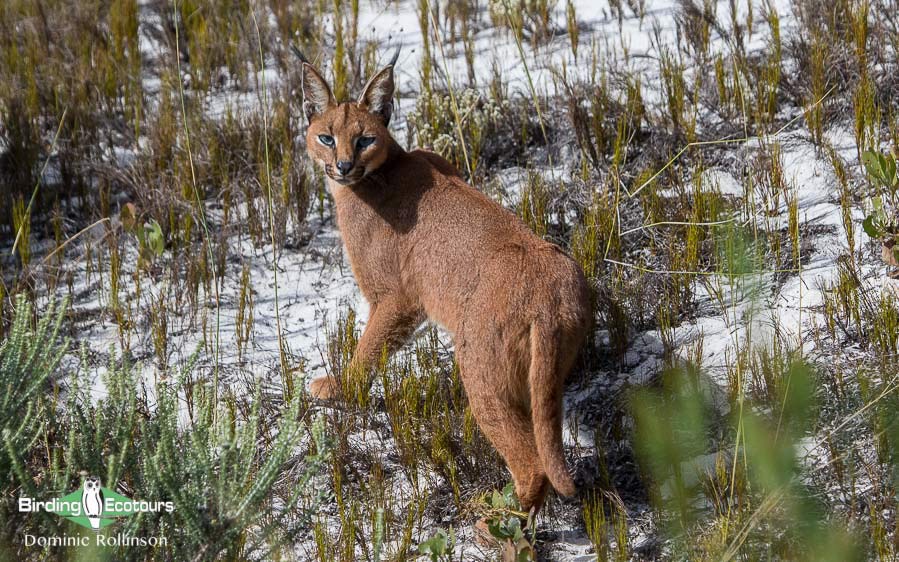
Seeing Caracal in the wild can sometimes feel nearly mythical!
The landscape gradually became increasingly arid, bringing with it a completely different selection of birds. Our first Karoo Chats, Spike-heeled Larks, Karoo Larks, and Pale Chanting Goshawks began appearing, while a flock of Namaqua Sandgrouse was another welcome sight.
A stop around Karoopoort produced an especially exciting find in the form of Black-headed Canary, a highly nomadic species whose unpredictable movements can make it remarkably difficult to encounter.
Eventually, we reached our accommodation at Hartnekskloof, where we would spend the next two nights exploring this remarkable region. With several exciting new endemics already secured, and an unforgettable Caracal sighting behind us, we were eager to see what the Tankwa Karoo had in store!
Day 6, 12th October 2026. Birding the Tankwa Karoo
Today was dedicated to exploring the extraordinary landscapes and endemic-rich birdlife of the Tankwa Karoo. We started early, heading towards Skitterykloof (runny tummy ravine), a spectacular rocky valley with a rather amusing name. According to local folklore, farmers once brought their sheep through the area, only to discover that certain plants gave the animals diarrhea, hence the name!
Our main target was the notoriously tricky Cinnamon-breasted Warbler, which proved predictably difficult. Thankfully, other specials kept us entertained, including Layard’s Warbler, Rufous-eared Warbler, Karoo Eremomela, Dusky Sunbird, and Lark-like Bunting, while another Black Harrier passed overhead. Yellow Canaries, which had started appearing the previous day, now seemed to be everywhere! After considerable searching, we finally secured good views of a Cinnamon-breasted Warbler, while several pairs of Klipspringers entertained us on the rocky slopes.
Following breakfast back at our accommodation, accompanied by a calling Nicholson’s Pipit, we headed deeper into the Karoo. A small patch of thornveld produced Namaqua Warbler, Pririt Batis, Yellow-bellied Eremomela, and White-throated Canary, while the surrounding plains held Pale Chanting Goshawk, Karoo Chat, Karoo Lark, and numerous Spike-heeled Larks.
One of the day’s greatest highlights came when we encountered a pair of Karoo Korhaans calling across the open veld. Their remarkable frog-like calls were fascinating to hear, and the birds gradually moved closer, eventually providing spectacular views through the scope!
Continuing into the arid plains, we stopped for lunch and soon noticed several Black-eared Sparrow-Larks flying around us. These highly nomadic birds proved difficult to observe properly, constantly disappearing into the low vegetation. Thankfully, patience paid off, and we eventually enjoyed excellent views, with several individuals carrying food, suggesting they were feeding young. Given their remarkably short nesting period and unpredictable breeding activity, this was a wonderful encounter. Other additions included Red-capped Lark, Large-billed Lark, Tractrac Chat, and Namaqua Dove. John continued impressing me with his sharp eyes, regularly finding birds in the seemingly empty landscape.
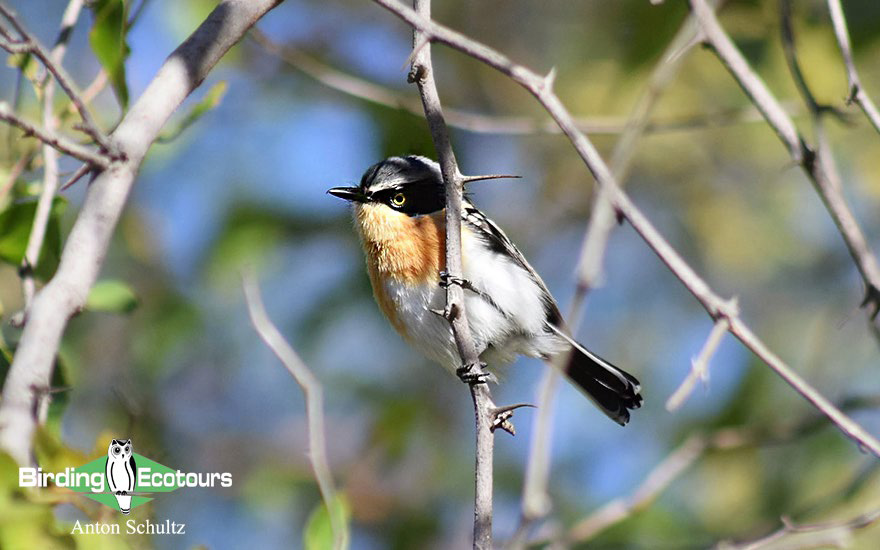
It is easier to identify the plain yellowish buff of the female Pririt Batis as opposed to the male.
As the afternoon progressed, we headed back towards Skitterykloof, where we enjoyed improved views of Fairy Flycatcher, a group of Pale-winged Starlings, and another pair of Cinnamon-breasted Warblers. Perhaps the most entertaining sighting came when a Spotted Eagle-Owl flushed onto a rocky ridge, immediately attracting an angry mob of smaller birds. Conveniently, these included several species that had previously proved difficult to see, such as Layard’s Warbler, Chestnut-vented Warbler and White-throated Canary. Apparently, all we needed was an owl to bring them into the open!
A fascinating little Toktokkie beetle tapping its abdomen against the ground provided one final distraction before we returned to our accommodation. It had been a fantastic day, with exceptional views of some of the Karoo’s most sought-after birds!
Day 7, 13th October 2026. Final Karoo birding and return to Cape Town
With our time in the Tankwa Karoo drawing to a close, we began the morning with one final attempt at Grey Tit, a species that had frustrated us throughout our stay. Thankfully, our persistence paid off near Skitterykloof, where we suddenly encountered no fewer than five Grey Tits! Apparently, this was where they had all been hiding.
We then headed towards the plateau above Skitterykloof, where the vegetation became increasingly fynbos-like. Here we encountered numerous displaying Cape Clapper Larks, including one particularly cooperative individual that provided excellent close views, a welcome improvement on our earlier sightings. Other highlights included Karoo Lark, Black-headed Canary, and several Rheboks grazing on the grassy plateau.
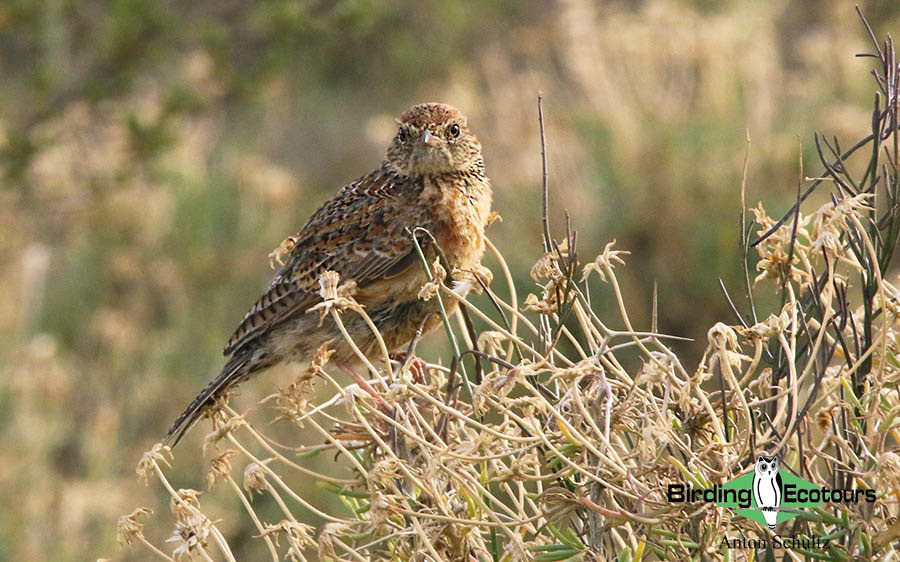
One wonders why we put so much effort into Cape Clapper Lark earlier on tour, when a sighting like this was waiting for us on the second to last day.
Continuing towards Ceres, we enjoyed spectacular scenery as ancient rock formations towered above the road. Cory and Gwynn, our resident geology enthusiasts, shared fascinating insights into these formations, some dating back hundreds of millions of years. We also discussed the region’s rich human history, including the remarkable rock paintings left by San hunter-gatherers who inhabited these landscapes for thousands of years.
A lunch stop among the mountains delivered another major highlight: a pair of Protea Canaries! These elusive Cape endemics can be remarkably difficult to find, so securing such excellent views was a wonderful way to conclude our time in the region.
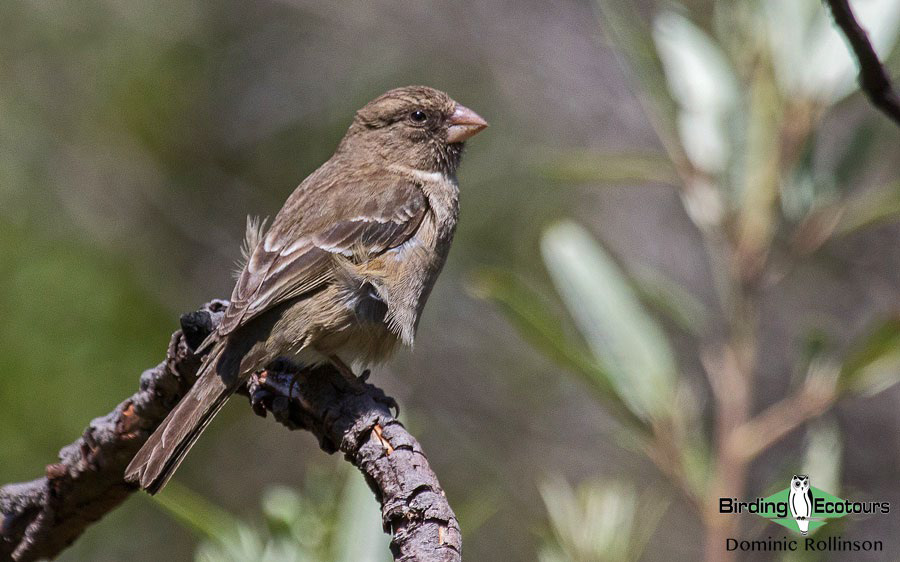
Protea Canaries can be hit or miss, luckily this year they were hit!
The long drive back towards Cape Town was filled with conversation, jokes, and a few rounds of the alphabet game. However, we still had unfinished business with one particularly stubborn endemic: Cape Siskin. After several unsuccessful attempts throughout the tour, we returned to Cecilia Forest, determined to finally secure this elusive species. Thankfully, our persistence was rewarded with great views, bringing a satisfying end to one of the tour’s most frustrating searches!
With a little daylight remaining, we explored the nearby Constantia greenbelt, where a Black Sparrowhawk with a chick provided another memorable encounter, and several stunning Amethyst Sunbirds added a colorful finish to our final full day of birding. With almost all of our major endemic targets secured, excellent wildlife encounters, and plenty of wonderful memories, it had been a fitting conclusion to an incredible week exploring the Western Cape!
Day 8, 14th October 2026. Departure from Cape Town
With little birding planned for today, we enjoyed a relaxed breakfast before heading towards Cape Town International Airport, rather unceremoniously adding the invasive House Crow to our list as our last tick for the trip. By the end of the tour, we had recorded 233 bird species, of which 229 were seen, along with an excellent assortment of mammals, reptiles, and other wildlife. It had been a fantastic week exploring the Western Cape’s remarkable landscapes, from endemic-rich fynbos and coastal wetlands to the rugged mountains and arid plains of the Tankwa Karoo.
A huge thank you to John, Jade, David, Corinne, Gwynn, and Cory for making this such a memorable tour. Between the excellent birding, unexpected adventures, and plenty of laughs, it was certainly a trip to remember. Until next time!
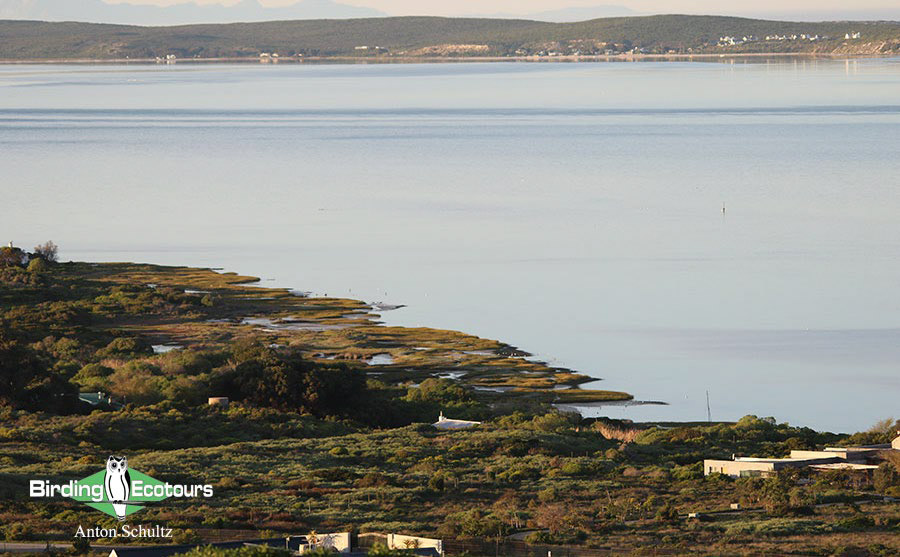
A lovely view from the relatively small town of Langebaan.
Bird List – Following IOC 15.2 (April 2026)
Birds ‘heard only’ are marked with (H) after the common name, all other species were seen.
The following notation after species names is used to show conservation status following the IUCN Red List: CR = Critically Endangered, EN = Endangered, VU = Vulnerable.
| Common name | Scientific name |
| Ostriches (Struthionidae) | |
| Common Ostrich | Struthio camelus |
| Ducks, Geese, Swans (Anatidae) | |
| White-faced Whistling Duck | Dendrocygna viduata |
| White-backed Duck | Thalassornis leuconotus |
| Spur-winged Goose | Plectropterus gambensis |
| Egyptian Goose | Alopochen aegyptiaca |
| South African Shelduck | Tadorna cana |
| Cape Shoveler | Spatula smithii |
| African Black Duck | Anas sparsa |
| Yellow-billed Duck | Anas undulata |
| Mallard | Anas platyrhynchos |
| Cape Teal | Anas capensis |
| Red-billed Teal | Anas erythrorhyncha |
| Southern Pochard | Netta erythrophthalma |
| Maccoa Duck – EN | Oxyura maccoa |
| Guineafowl (Numididae) | |
| Helmeted Guineafowl | Numida meleagris |
| Pheasants & Allies (Phasianidae) | |
| Grey-winged Francolin | Scleroptila afra |
| Cape Spurfowl | Pternistis capensis |
| Swifts (Apodidae) | |
| African Palm Swift | Cypsiurus parvus |
| Alpine Swift | Tachymarptis melba |
| African Black Swift | Apus barbatus |
| Little Swift | Apus affinis |
| White-rumped Swift | Apus caffer |
| Bustards (Otididae) | |
| Karoo Korhaan | Heterotetrax vigorsii |
| Southern Black Korhaan – VU | Afrotis afra |
| Sandgrouse (Pteroclidae) | |
| Namaqua Sandgrouse | Pterocles namaqua |
| Pigeons, Doves (Columbidae) | |
| Rock Dove | Columba livia |
| Speckled Pigeon | Columba guinea |
| African Olive Pigeon | Columba arquatrix |
| Lemon Dove | Columba larvata |
| Red-eyed Dove | Streptopelia semitorquata |
| Ring-necked Dove | Streptopelia capicola |
| Laughing Dove | Spilopelia senegalensis |
| Namaqua Dove | Oena capensis |
| Rails, Crakes & Coots (Rallidae) | |
| Common Moorhen | Gallinula chloropus |
| Red-knobbed Coot | Fulica cristata |
| African Swamphen | Porphyrio madagascariensis |
| Cranes (Gruidae) | |
| Blue Crane – VU | Grus paradisea |
| Grebes (Podicipedidae) | |
| Little Grebe | Tachybaptus ruficollis |
| Great Crested Grebe | Podiceps cristatus |
| Black-necked Grebe | Podiceps nigricollis |
| Flamingos (Phoenicopteridae) | |
| Greater Flamingo | Phoenicopterus roseus |
| Lesser Flamingo | Phoeniconaias minor |
| Stone-curlews, Thick-knees (Burhinidae) | |
| Spotted Thick-knee | Burhinus capensis |
| Water Thick-knee (H) | Burhinus vermiculatus |
| Oystercatchers (Haematopodidae) | |
| African Oystercatcher | Haematopus moquini |
| Stilts, Avocets (Recurvirostridae) | |
| Black-winged Stilt | Himantopus himantopus |
| Pied Avocet | Recurvirostra avosetta |
| Plovers (Charadriidae) | |
| Common Ringed Plover | Charadrius hiaticula |
| Three-banded Plover | Charadrius tricollaris |
| Blacksmith Lapwing | Vanellus armatus |
| Crowned Lapwing | Vanellus coronatus |
| Kittlitz’s Plover | Anarhynchus pecuarius |
| Chestnut-banded Plover | Anarhynchus pallidus |
| Sandpipers, Snipes (Scolopacidae) | |
| Eurasian Whimbrel | Numenius phaeopus |
| Bar-tailed Godwit | Limosa lapponica |
| Common Sandpiper | Actitis hypoleucos |
| Common Greenshank | Tringa nebularia |
| Ruff | Calidris pugnax |
| Curlew Sandpiper – VU | Calidris ferruginea |
| Little Stint | Calidris minuta |
| Gulls, Terns, Skimmers (Laridae) | |
| Caspian Tern | Hydroprogne caspia |
| Whiskered Tern | Chlidonias hybrida |
| White-winged Tern | Chlidonias leucopterus |
| Common Tern | Sterna hirundo |
| Sandwich Tern | Thalasseus sandvicensis/acuflavidus |
| Greater Crested Tern | Thalasseus bergii |
| Sabine’s Gull | Xema sabini |
| Grey-headed Gull | Chroicocephalus cirrocephalus |
| Hartlaub’s Gull | Chroicocephalus hartlaubii |
| Kelp Gull | Larus dominicanus |
| Skuas (Stercorariidae) | |
| Brown Skua | Stercorarius antarcticus |
| Penguins (Spheniscidae) | |
| African Penguin – CR | Spheniscus demersus |
| Austral Storm Petrels (Oceanitidae) | |
| Wilson’s Storm Petrel | Oceanites oceanicus |
| Albatrosses (Diomedeidae) | |
| Snowy/Tristan Albatross | Diomedea exulans/dabbenena |
| Atlantic Yellow-nosed Albatross – EN | Thalassarche chlororhynchos |
| Shy Albatross | Thalassarche cauta |
| Black-browed Albatross – VU | Thalassarche melanophris |
| Petrels, Shearwaters, Diving Petrels (Procellariidae) | |
| Southern Giant Petrel | Macronectes giganteus |
| Northern Giant Petrel | Macronectes halli |
| Pintado Petrel | Daption capense |
| Soft-plumaged Petrel | Pterodroma mollis |
| White-chinned Petrel – VU | Procellaria aequinoctialis |
| Sooty Shearwater | Ardenna grisea |
| Great Shearwater | Ardenna gravis |
| Gannets, Boobies (Sulidae) | |
| Cape Gannet – EN | Morus capensis |
| Anhingas, Darters (Anhingidae) | |
| African Darter | Anhinga rufa |
| Cormorants, Shags (Phalacrocoracidae) | |
| Reed Cormorant | Microcarbo africanus |
| Crowned Cormorant | Microcarbo coronatus |
| Bank Cormorant – EN | Phalacrocorax neglectus |
| Cape Cormorant – EN | Phalacrocorax capensis |
| Great Cormorant | Phalacrocorax carbo |
| Ibises, Spoonbills (Threskiornithidae) | |
| African Sacred Ibis | Threskiornis aethiopicus |
| Hadada Ibis | Bostrychia hagedash |
| Glossy Ibis | Plegadis falcinellus |
| African Spoonbill | Platalea alba |
| Herons, Bitterns (Ardeidae) | |
| Little Bittern | Botaurus minutus |
| Black-crowned Night Heron | Nycticorax nycticorax |
| Little Egret | Egretta garzetta/dimorpha |
| Western Cattle Egret | Ardea ibis |
| Grey Heron | Ardea cinerea |
| Purple Heron | Ardea purpurea |
| Black-headed Heron | Ardea melanocephala |
| Pelicans (Pelecanidae) | |
| Great White Pelican | Pelecanus onocrotalus |
| Kites, Hawks, Eagles (Accipitridae) | |
| Black-winged Kite | Elanus caeruleus |
| African Harrier-Hawk | Polyboroides typus |
| Booted Eagle | Hieraaetus pennatus |
| Pale Chanting Goshawk | Melierax canorus |
| Black Sparrowhawk | Astur melanoleucus |
| Black Harrier – EN | Circus maurus |
| African Marsh Harrier | Circus ranivorus |
| Black Kite | Milvus migrans |
| African Fish Eagle | Icthyophaga vocifer |
| Jackal Buzzard | Buteo rufofuscus |
| Common Buzzard | Buteo buteo |
| Barn Owls (Tytonidae) | |
| Western Barn Owl | Tyto alba |
| Owls (Strigidae) | |
| Spotted Eagle-Owl | Bubo africanus |
| African Wood Owl | Strix woodfordii |
| Mousebirds (Coliidae) | |
| Speckled Mousebird | Colius striatus |
| White-backed Mousebird | Colius colius |
| Red-faced Mousebird | Urocolius indicus |
| Hoopoes (Upupidae) | |
| Eurasian Hoopoe | Upupa epops |
| Kingfishers (Alcedinidae) | |
| Malachite Kingfisher | Corythornis cristatus |
| Pied Kingfisher | Ceryle rudis |
| Bee-eaters (Meropidae) | |
| European Bee-eater | Merops apiaster |
| African Barbets (Lybiidae) | |
| Acacia Pied Barbet | Tricholaema leucomelas |
| Honeyguides (Indicatoridae) | |
| Brown-backed Honeybird | Prodotiscus regulus |
| Woodpeckers (Picidae) | |
| Ground Woodpecker | Geocolaptes olivaceus |
| Cardinal Woodpecker | Dendropicos fuscescens |
| Caracaras, Falcons (Falconidae) | |
| Rock Kestrel | Falco rupicolus |
| Wattle-eyes, Batises (Platysteiridae) | |
| Cape Batis | Batis capensis |
| Pririt Batis | Batis pririt |
| Bushshrikes (Malaconotidae) | |
| Bokmakierie | Telophorus zeylonus |
| Southern Boubou (H) | Laniarius ferrugineus |
| Drongos (Dicruridae) | |
| Fork-tailed Drongo | Dicrurus adsimilis |
| Monarchs (Monarchidae) | |
| African Paradise Flycatcher | Terpsiphone viridis |
| Shrikes (Laniidae) | |
| Southern Fiscal | Lanius collaris |
| Crows, Jays (Corvidae) | |
| House Crow | Corvus splendens |
| Pied Crow | Corvus albus |
| White-necked Raven | Corvus albicollis |
| Rockjumpers (Chaetopidae) | |
| Cape Rockjumper | Chaetops frenatus |
| Fairy Flycatchers (Stenostiridae) | |
| Fairy Flycatcher | Stenostira scita |
| Tits, Chickadees (Paridae) | |
| Grey Tit | Melaniparus afer |
| Penduline Tits (Remizidae) | |
| Cape Penduline Tit | Anthoscopus minutus |
| Larks (Alaudidae) | |
| Spike-heeled Lark | Chersomanes albofasciata |
| Karoo Long-billed Lark (H) | Certhilauda subcoronata |
| Cape Long-billed Lark | Certhilauda brevirostris |
| Black-eared Sparrow-Lark | Eremopterix australis |
| Karoo Lark | Calendulauda albescens |
| Cape Clapper Lark | Corypha apiata |
| Large-billed Lark | Galerida magnirostris |
| Red-capped Lark | Calandrella cinerea |
| Bulbuls (Pycnonotidae) | |
| Sombre Greenbul | Andropadus importunus |
| Cape Bulbul | Pycnonotus capensis |
| Swallows, Martins (Hirundinidae) | |
| Black Saw-wing | Psalidoprocne pristoptera |
| Banded Martin | Neophedina cincta |
| Brown-throated Martin | Riparia paludicola |
| Large Rock Martin | Ptyonoprogne fuligula |
| Pearl-breasted Swallow | Hirundo dimidiata |
| Barn Swallow | Hirundo rustica |
| White-throated Swallow | Hirundo albigularis |
| Greater Striped Swallow | Cecropis cucullata |
| Crombecs, African Warblers (Macrosphenidae) | |
| Cape Grassbird | Sphenoeacus afer |
| Long-billed Crombec | Sylvietta rufescens |
| Victorin’s Warbler | Cryptillas victorini |
| Reed Warblers & Allies (Acrocephalidae) | |
| Lesser Swamp Warbler | Acrocephalus gracilirostris |
| Common Reed Warbler | Acrocephalus scirpaceus |
| Grassbirds & Allies (Locustellidae) | |
| Little Rush Warbler | Bradypterus baboecala |
| Cisticolas & Allies (Cisticolidae) | |
| Grey-backed Cisticola | Cisticola subruficapilla |
| Levaillant’s Cisticola | Cisticola tinniens |
| Neddicky (H) | Cisticola fulvicapilla |
| Zitting Cisticola | Cisticola juncidis |
| Cloud Cisticola | Cisticola textrix |
| Karoo Prinia | Prinia maculosa |
| Namaqua Warbler | Phragmacia substriata |
| Bar-throated Apalis | Apalis thoracica |
| Rufous-eared Warbler | Malcorus pectoralis |
| Cinnamon-breasted Warbler | Euryptila subcinnamomea |
| Yellow-bellied Eremomela | Eremomela icteropygialis |
| Karoo Eremomela | Eremomela gregalis |
| Sylviid Babblers (Sylviidae) | |
| Layard’s Warbler | Curruca layardi |
| Chestnut-vented Warbler | Curruca subcoerulea |
| White-eyes (Zosteropidae) | |
| Cape White-eye | Zosterops virens |
| Sugarbirds (Promeropidae) | |
| Cape Sugarbird | Promerops cafer |
| Starlings, Rhabdornises (Sturnidae) | |
| Common Starling | Sturnus vulgaris |
| Wattled Starling | Creatophora cinerea |
| Pied Starling | Lamprotornis bicolor |
| Red-winged Starling | Onychognathus morio |
| Pale-winged Starling | Onychognathus nabouroup |
| Thrushes (Turdidae) | |
| Olive Thrush | Turdus olivaceus |
| Chats, Old World Flycatchers (Muscicapidae) | |
| Karoo Scrub Robin | Tychaedon coryphoeus |
| Fiscal Flycatcher | Sigelus silens |
| African Dusky Flycatcher | Muscicapa adusta |
| Cape Robin-Chat | Dessonornis caffer |
| Cape Rock Thrush | Monticola rupestris |
| African Stonechat | Saxicola torquatus |
| Karoo Chat | Emarginata schlegelii |
| Tractrac Chat | Emarginata tractrac |
| Sickle-winged Chat | Emarginata sinuata |
| Ant-eating Chat | Myrmecocichla formicivora |
| Mountain Chat | Myrmecocichla monticola |
| Capped Wheatear | Oenanthe pileata |
| Familiar Chat | Oenanthe familiaris |
| Sunbirds (Nectariniidae) | |
| Orange-breasted Sunbird | Anthobaphes violacea |
| Amethyst Sunbird | Chalcomitra amethystina |
| Malachite Sunbird | Nectarinia famosa |
| Southern Double-collared Sunbird | Cinnyris chalybeus |
| Dusky Sunbird | Cinnyris fuscus |
| Old World Sparrows, Snowfinches (Passeridae) | |
| Cape Sparrow | Passer melanurus |
| House Sparrow | Passer domesticus |
| Weavers, Widowbirds (Ploceidae) | |
| Cape Weaver | Ploceus capensis |
| Southern Masked Weaver | Ploceus velatus |
| Southern Red Bishop | Euplectes orix |
| Yellow Bishop | Euplectes capensis |
| Waxbills, Munias & Allies (Estrildidae) | |
| Bronze Mannikin | Spermestes cucullata |
| Swee Waxbill | Coccopygia melanotis |
| Common Waxbill | Estrilda astrild |
| Indigobirds, Whydahs (Viduidae) | |
| Pin-tailed Whydah | Vidua macroura |
| Wagtails, Pipits (Motacillidae) | |
| Cape Wagtail | Motacilla capensis |
| Cape Longclaw | Macronyx capensis |
| African Pipit | Anthus cinnamomeus |
| Nicholson’s Pipit | Anthus nicholsoni |
| Finches, Euphonias (Fringillidae) | |
| Eurasian Chaffinch | Fringilla coelebs |
| Forest Canary | Crithagra scotops |
| Cape Siskin | Crithagra totta |
| Yellow Canary | Crithagra flaviventris |
| Brimstone Canary | Crithagra sulphurata |
| Streaky-headed Seedeater | Crithagra gularis |
| White-throated Canary | Crithagra albogularis |
| Protea Canary | Crithagra leucoptera |
| Cape Canary | Serinus canicollis |
| Black-headed Canary | Serinus alario |
| Buntings (Emberizidae) | |
| Lark-like Bunting | Emberiza impetuani |
| Cape Bunting | Emberiza capensis |
| Species seen: | 229 |
| Species heard: | 4 |
| Total recorded: | 233 |
Mammal List – Following Mammalwatching.com (November 2025)
The following notation after species names is used to show conservation status following the IUCN Red List: VU = Vulnerable
| Common name | Scientific name |
| Hyraxes (Procaviidae) | |
| Rock Hyrax | Procavia capensis |
| Old World Monkeys (Cercopithecidae) | |
| Chacma Baboon | Papio ursinus |
| Squirrels (Sciuridae) | |
| Eastern Gray Squirrel | Sciurus carolinensis |
| Eared Seals (Otariidae) | |
| Afro-Australian Fur Seal | Arctocephalus pusillus |
| Felids (Felidae) | |
| Caracal – VU | Caracal caracal |
| Mongooses (Herpestidae) | |
| Cape Gray Mongoose | Herpestes pulverulentus |
| Rorquals (Balaenopteridae) | |
| Humpback Whale | Megaptera novaeangliae |
| Bovids (Bovidae) | |
| Springbok | Antidorcas marsupialis |
| Rhebok | Pelea capreolus |
| Klipspringer | Oreotragus oreotragus |
| Steenbok | Raphicerus campestris |
| Common Eland | Tragelaphus oryx |
| Species seen: | 12 |
Reptile List – Following Reptiles of the World (November 2025)
| Common name | Scientific name |
| Elapid Snakes (Elapidae) | |
| Cape Cobra | Naja nivea |
| Vipers (Viperidae) | |
| Puff Adder | Bitis arietans |
| Dragons (Agamidae) | |
| Southern Rock Agama | Agama atra |
| Girdle-tail Lizards (Cordylidae) | |
| Black Girdled Lizard | Cordylus niger |
| Cape Crag Lizard | Pseudocordylus microlepidotus |
| Skinks (Scincidae) | |
| Cape Skink | Trachylepis capensis |
| Tortoises (Testudinidae) | |
| Angulate Tortoise | Chersina angulata |
| Species seen | 7 |
This is a sample trip report. Please email us ([email protected]) for more trip reports from this destination.