- Duration:
- 18 days
- Group Size:
- 4–8
- Tour Start:
- Paro, Bhutan
- Tour End:
- Paro, Bhutan
Birding Tour Bhutan: Spring Birding in The Eastern Himalayas
Details
2027
17 April–04 May
Per person sharing
$10,850 USD
£8,584 GBP / €10,161 EUR
Single supplement
$1,140 USD
£902 GBP / €1,068 EUR
2028
17 April–04 May
Per person sharing
$11,500 USD
£9,098 GBP / €10,770 EUR
Single supplement
$1,140 USD
£902 GBP / €1,068 EUR
Itinerary
Download ItineraryComplete Bhutan – Spring Birding in The Eastern Himalayas
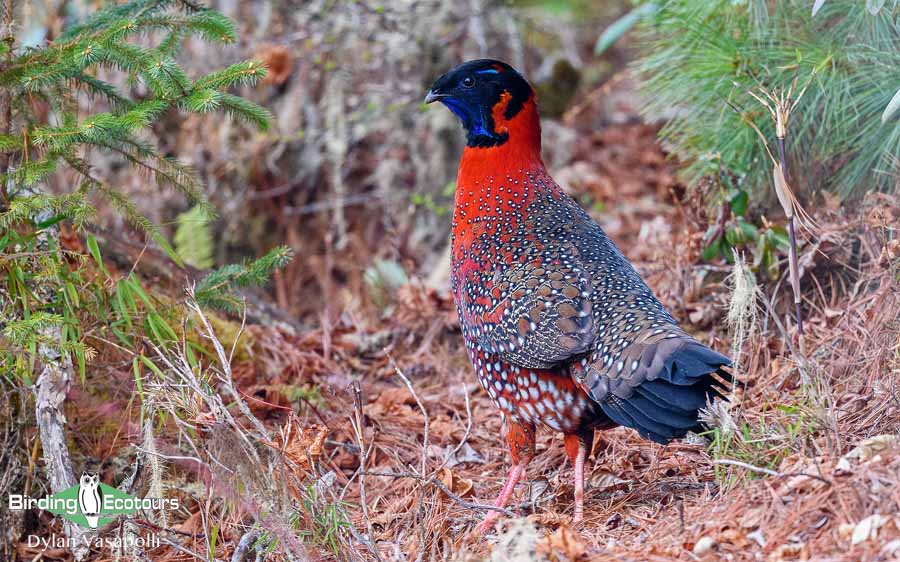
The fabled Kingdom of Bhutan, fondly known as “the Land of the Thunder Dragon” is an almost ethereal country straddled in ancient history. Perhaps best known for the role Bhutan has played in the formation of Buddhism, it comes as no surprise that iconic and significant monasteries such as the Tiger’s Nest Monastery, or Taktsang, draw the bulk of the visitors to the country. The general wildlife tourism and, in particular, the birdwatching tourism, is also a major drawcard for visitors, with the government having formally protected over two-thirds of the country’s total land area. This means that there are vast areas of largely untouched habitat, and its unique location in the eastern Himalayas makes it arguably the premier destination to see many of the highly sought-after Himalayan species. Birds like the stunning Beautiful Nuthatch, the gorgeous Ward’s Trogon, the unbelievable Fire-tailed Myzornis, the giant Rufous-necked Hornbill, the scarce Yellow-rumped Honeyguide, and of course, the spectacular duo of Satyr Tragopan and Himalayan Monal (as well as other vivid pheasants) are all prime examples. A plethora of other exciting birds add to the tour, with large numbers of seemingly strange-sounding families, like drongos, laughingthrushes, white-eyes, leafbirds, sunbirds, accentors, and parrotbills all likely. Even the Critically Endangered (IUCN) White-bellied Heron, will be sought out – a species on the brink of extinction, with only around 250 individuals thought to be left in the world. Three different monotypic bird families are another major attraction, with Ibisbill, Wallcreeper and Spotted Elachura – all sure to cater to some of the desires of world birders.
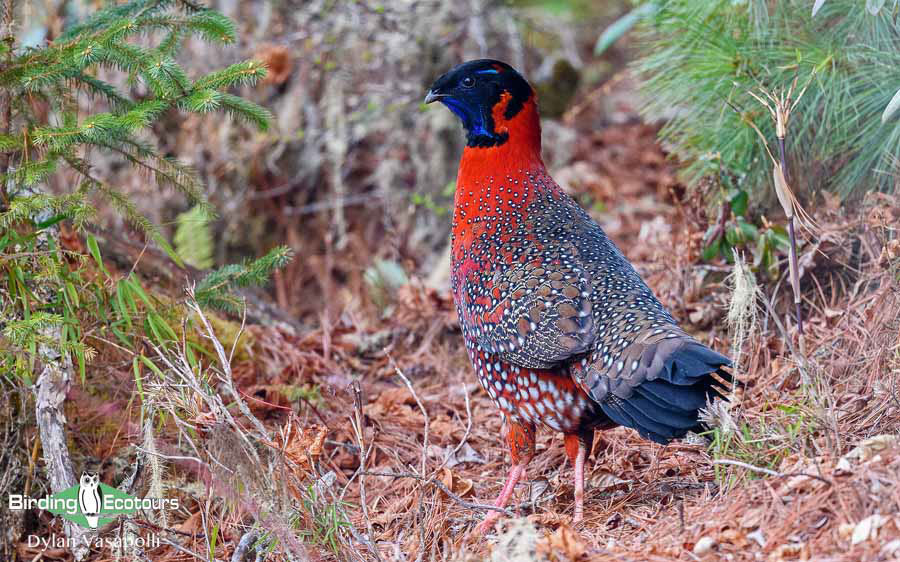 Satyr Tragopan is one of the most special and sought-after birds in the world – and is arguably the biggest attraction on this tour!
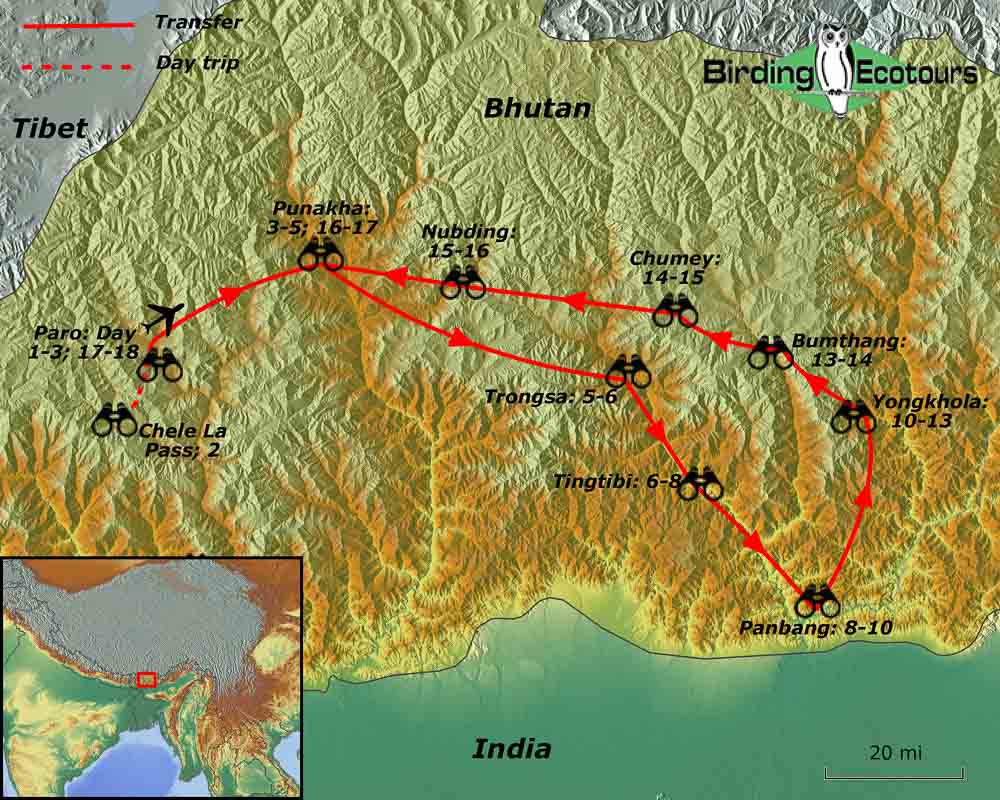
This tour begins in the high-elevation city of Paro, before undertaking an 18-day road trip through the country. We venture east to the Punakha Valley, seeking out our first forest birds and also searching for the rare White-bellied Heron, before heading east to Trongsa, and south to Tingtibi and Panbang, where we will tackle the mid-elevation mossy forests for the stunning Beautiful Nuthatch, amongst others. These lowland areas also offer stands of bamboo and other riparian woods and support a vast number of birds we’re unlikely to see anywhere else, including the trio of hulking Rufous-necked, Great and Wreathed Hornbills. We then transfer to the bird-rich Yongkhola region for a few days, where the forests are dripping with a wide array of sought-after birds, including Ward’s Trogon. The higher alpine zones follow, with time around Bumthang, Chumey and Nobding dedicated to giving us the best chances to see the highly sought-after pheasants, including Satyr Tragopan and Himalayan Monal. The tour concludes in Paro, following an enthralling road trip through all the best birding sites in Bhutan.
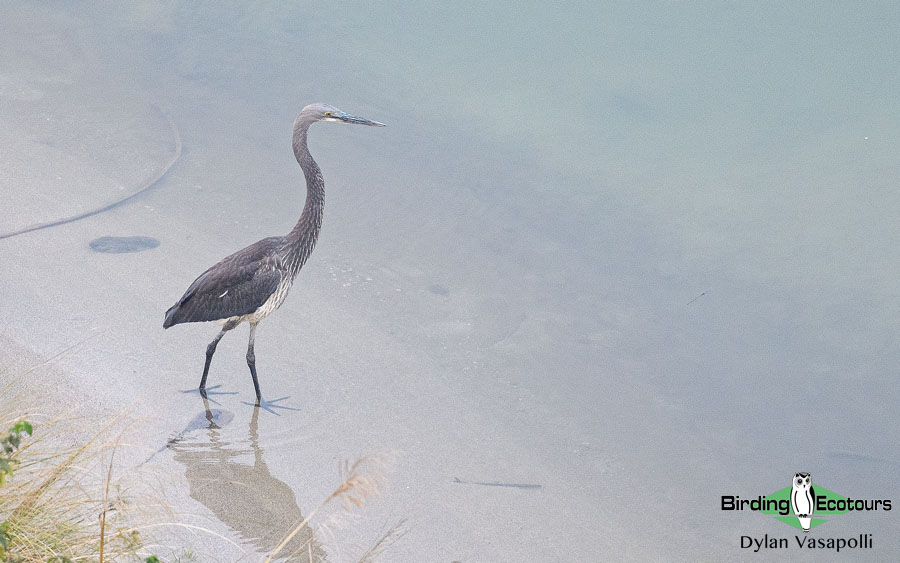
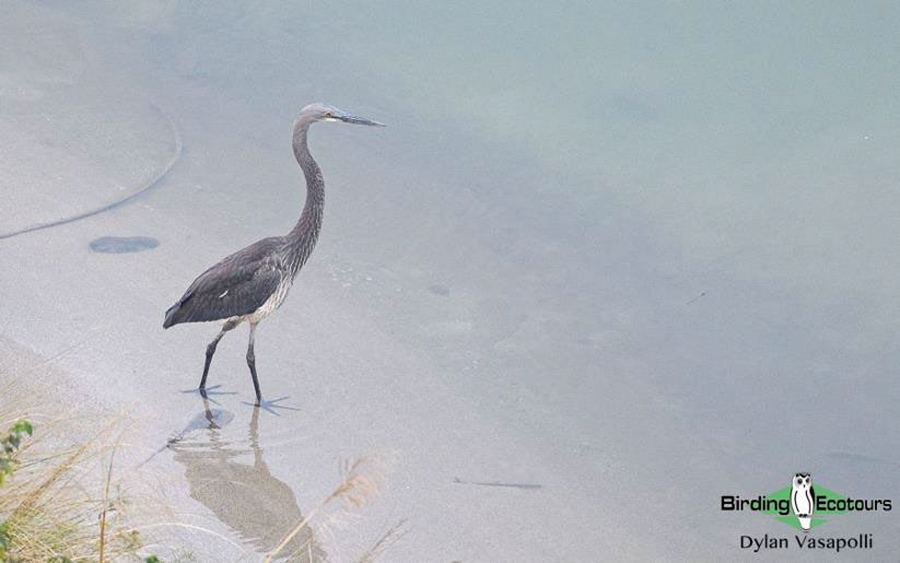 White-bellied Heron is one of the rarest birds in the world, with fewer than 250 individuals remaining.
Itinerary (17 days/16 nights)
Day 1. Arrival in Paro
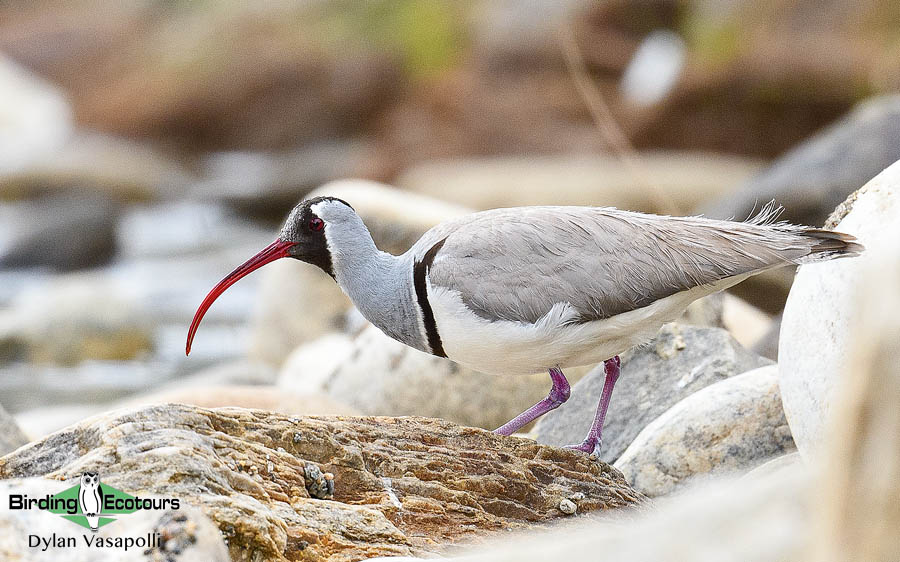
This tour begins with your arrival at the spectacular Paro International Airport. Most flights usually arrive in the morning, and the remainder of the day will be spent birding and exploring the Paro Chhu (local word for river). Ibisbill is one of the major targets on our radar here and is fortunately reliably seen (it is often one of the first birds we encounter in the country!). Other desirable birds like Wallcreeper (although sometimes this species has headed to higher altitudes by now), Black–tailed Crake and Solitary Snipe will also be sought. Red-billed Chough breed within the massive Rinpung (Paro) Dzong, and are a common sight over the town. Whilst we’re scouring the river for our target species, we’re also likely to find other birds like Brown Dipper, White-capped Redstart and Rufous-breasted Accentor.
Overnight: Paro
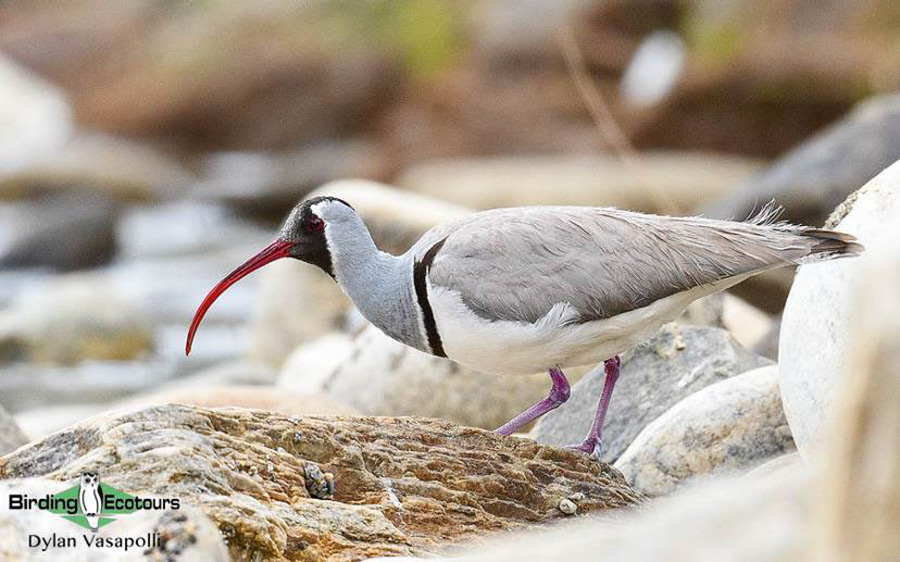 Ibisbill occurs right in the middle of Paro – sometimes it’s even one of the first birds seen.
Day 2. Birding Chele La Pass
Based at our comfortable hotel in Paro, we have the full day available to us. We’ll head up the famous Chele La Pass, which is one of the highest passes in the entire country, at over 12,000 feet (4,000 meters). Mrs. Gould’s Sunbirds are common, and Blood Pheasants can be numerous in the upper reaches of the pass. This is also a reliable area to look for Himalayan Monal, and even Satyr Tragopan occurs here, though the latter species is scarce here and more likely to be heard. Himalayan Bluetails are delightfully common, and we’ll search the rocky outcrops at the top for the likes of Alpine and Altai Accentors, while flocks of Snow Pigeons fly around showing off their incredible colors. Small seedeaters also occur widely, and large flocks of Plain Mountain Finches flit about, while some careful work is required to find the likes of Himalayan White-browed Rosefinch. A quick search of the Paro Chhu running through town will surely give us further views of Ibisbill, and we can search for others like Wallcreeper as well.
Overnight: Paro
Day 3. Birding Dochula Pass and the Lamperi Royal Botanical Park
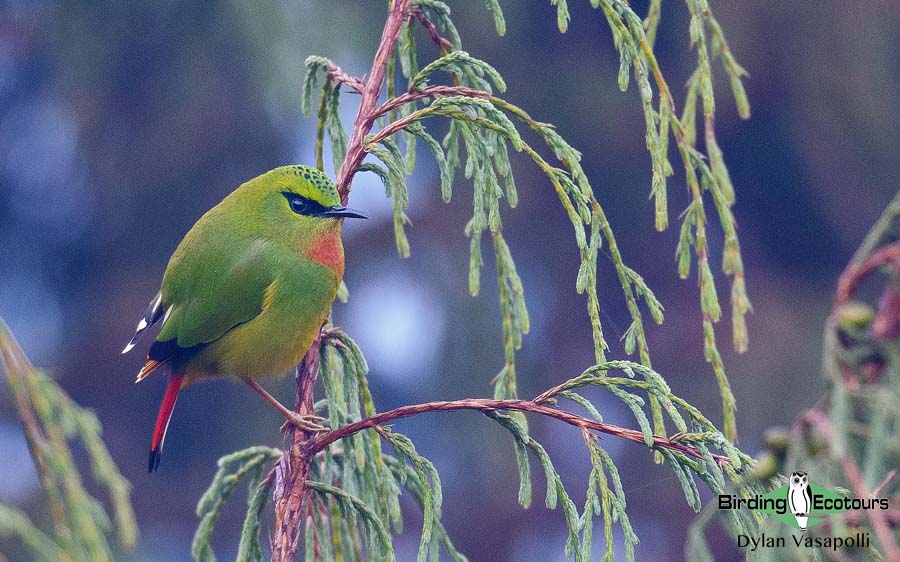
This will likely be the first of many early starts, as we head east to the Dochula Pass, bypassing Bhutan’s capital city – Thimpu. The Druk Wangyel monastery at the top of the pass features manicured gardens that play host to the likes of Darjeeling Woodpecker and Stripe-throated Yuhina, along with the highly sought-after Fire-tailed Myzornis. Additionally, Black-faced and White-throated Laughingthrushes commonly occur, and with some careful searching, we may also find the massive Spotted Laughingthrush. In recent years, the large Great Parrotbill has also been seen.
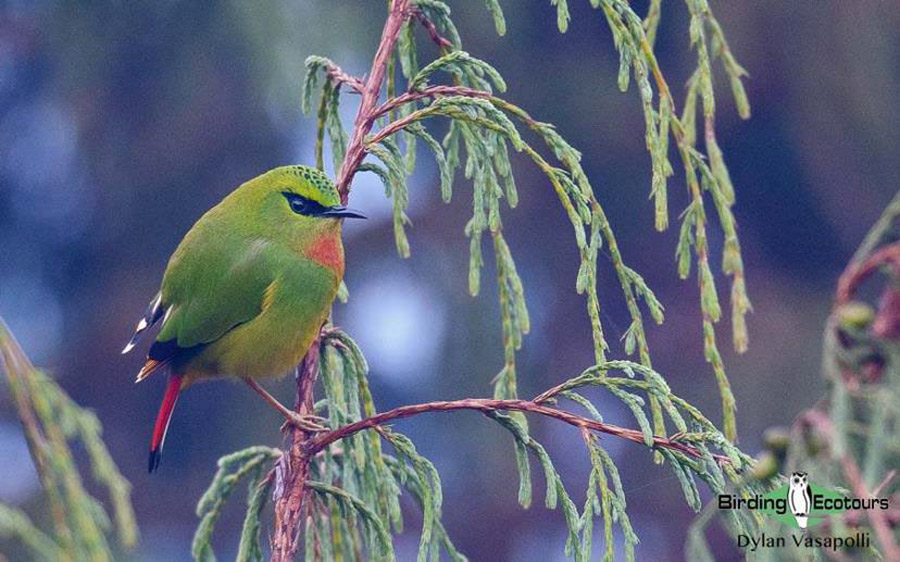 Fire-tailed Myzornis is a high-altitude special occurring on some of the passes we traverse.
As we slowly bird our way through the pristine broad-leaved and moss-clad forests heading down from the monastery, we make a stop off in the formally proclaimed Lamperi Royal Botanical Park. This is another fantastic spot to stretch our legs, and Blue-fronted Redstarts and Great Barbets will likely greet us on our arrival. Comical Yellow-billed Blue Magpies bounce around the grass, while delicate Rufous-bellied Woodpeckers drum from the treetops. We are also likely to come across our first ‘warbler flocks,’ which will test our identification skills. A great variety of similar Phylloscopus warblers occur, and we’re likely to see Whistler’s, Lemon-rumped, Chestnut-crowned, Ashy-throated and Grey-hooded Warblers. The pristine forests here also give us our first chance for the scarce Ward’s Trogon. Grey-sided Laughingthrush is another generally scarce bird that we can sometimes find here as well. Bright flocks of minivets sweep through the trees, and equally bright flycatchers also vie for attention, with Verditer, Rufous-gorgeted and Ultramarine Flycatchers all possible.
After an exciting day of birding, we’ll descend into the Punakha Valley, where we will spend the next two nights.
Overnight: Punakha
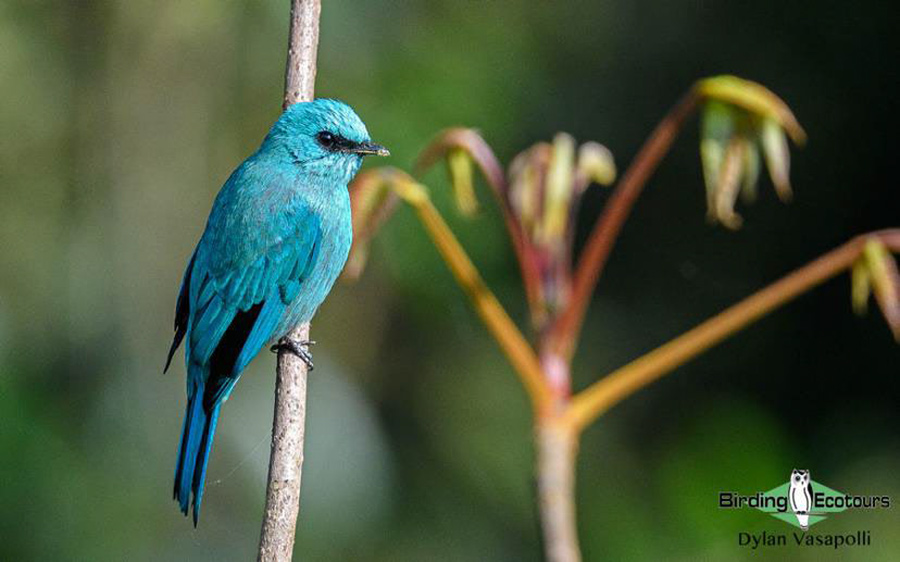 Spectacular Verditer Flycatchers are common virtually throughout Bhutan!
Day 4. Rivers and forests of the Punakha Valley
We have a full day to spend birding around Punakha, and we will keep the day somewhat flexible, depending on whether there are any recent reports of the Critically Endangered (IUCN Red List) White-bellied Herons. The tale of this bird is unfortunate, with it formerly being a widespread species in the foothills of the Himalayas. Due to a combination of factors, there are now thought to be fewer than 250 of these birds left in the wild today. Bhutan is arguably the best country to search for this difficult species, and it will be a major target during our time here. With so few of these birds remaining, we will count ourselves extremely lucky if we manage to find one. The Puna Tsang Chhu flowing through the Punakha Valley has been a good site for this species over the years, but it is not always present and is occasionally seen further down this river valley towards Damphu. *Importantly, we have a night towards the end of the tour in the region again, as a backup in case we miss it today.
While searching for the heron, we’re likely to see many other waterbirds, which might include rafts of ducks, ranging from Ruddy Shelduck to Bar-headed Goose, along with the strange-looking Common Merganser, large Crested Kingfisher and the Endangered (IUCN) Pallas’s Fish Eagle. Sandbars may host the scarce Small Pratincole. We will also explore some wonderful riverine forest sections along the scenic Mo Chhu upstream from here. Skulkers abound here, and we will have a tough task ahead of us to see any of the following: Chestnut-headed, Grey-bellied and Slaty-bellied Tesias, Scaly-breasted Cupwing or the sought-after Spotted Elachura. The elachura in particular is of great importance to many, as it was recently moved into a family of its own, making it a monotypic family (the only member of its family). Small Niltavas flit from the mid-strata, while the ever-persistent call of Golden-throated Barbets ring out. We will also keep an eye out for both Spotted and Slaty-backed Forktails on the forested sections of the river here.
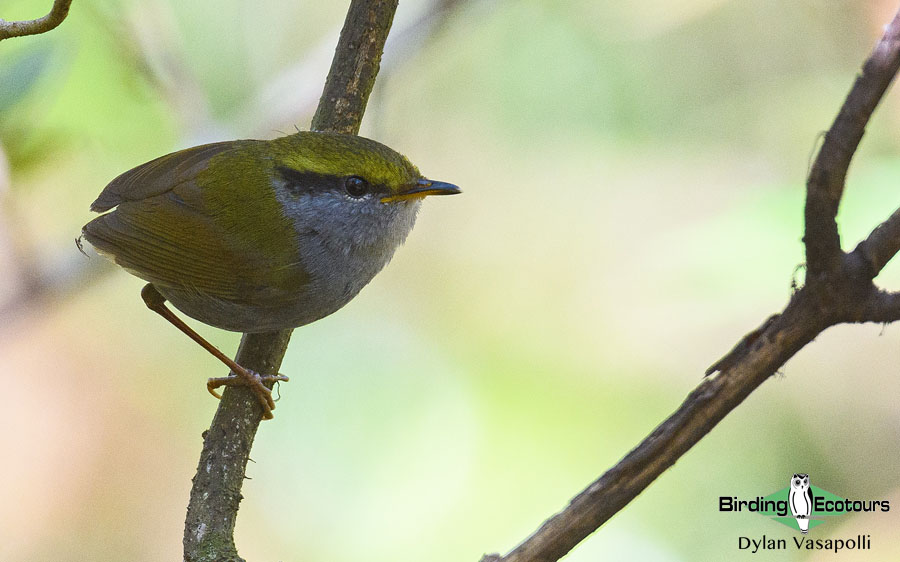 Grey-bellied Tesia is a master skulker that requires a huge amount of patience and skill to see.
After this birding spectacle, we will visit the legendary Punakha Dzong – Bhutan’s most impressive dzong and currently in use as a monastery. The dzong is situated at the confluence of the Mo Chhu and Po Chhu and has been subject to many attacks, floods, fires, and earthquakes since it was built in the 1600s. The beauty and tranquility of this edifice is awe-inspiring.
Overnight: Punakha
Day 5. Birding to Trongsa
Following our productive time in the Punakha Valley, we transit to Trongsa for the night. This is an exciting travel day, as we anticipate spending our morning around the Nubding forest, which is home to the highly sought-after Ward’s Trogon and Himalayan Cutia, amongst others. If we’re lucky, a Yellow-rumped Honeyguide may come to a rock bee colony that is usually present in the area. We will also likely be able to stop on the Pele La Pass for a short time, where we can look for more high-altitudinal species like Fire-tailed Sunbird and Spotted Laughingthrush. Again, we will devote more time later on the tour to birding this core site.
We anticipate getting into Trongsa in the afternoon, having birded all along the way. Should we have time, we may bird the nearby Yotong La Pass in the late afternoon, where we can carry on searching out high-altitude species. The lower reaches hold exciting species like Fire-tailed Myzornis, Hoary-throated Barwing, Brown Parrotbill and Mrs. Gould’s Sunbird, while the upper reaches host Satyr Tragopan – though its rugged hills and dense forests make seeing this species here difficult. We will eventually settle into our comfortable hotel after an exciting day’s birding.
Overnight: Trongsa
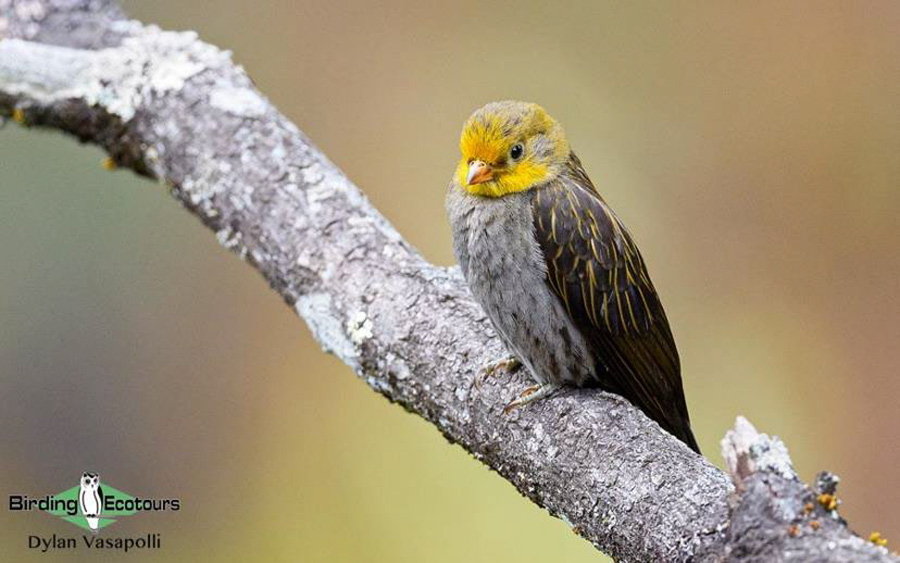 Yellow-rumped Honeyguide has a close relationship with rock bee colonies, and we pass several known stakeouts for this uncommon species on the tour.
Days 6 – 7. Birding the broad-leafed forests of Tingtibi
Leaving Trongsa in the morning, we venture down to Tingtibi, for some lower-elevation forest birding, where we will spend two nights. This long, windy road follows the course of the Mangde Chhu for the duration of the drive. It will soon become apparent just how numerous both Large Hawk-Cuckoo and Himalayan Cuckoo are in this area – their distinct calls will be with us almost continuously here and, with some patience, we’re sure to get some good views of them.
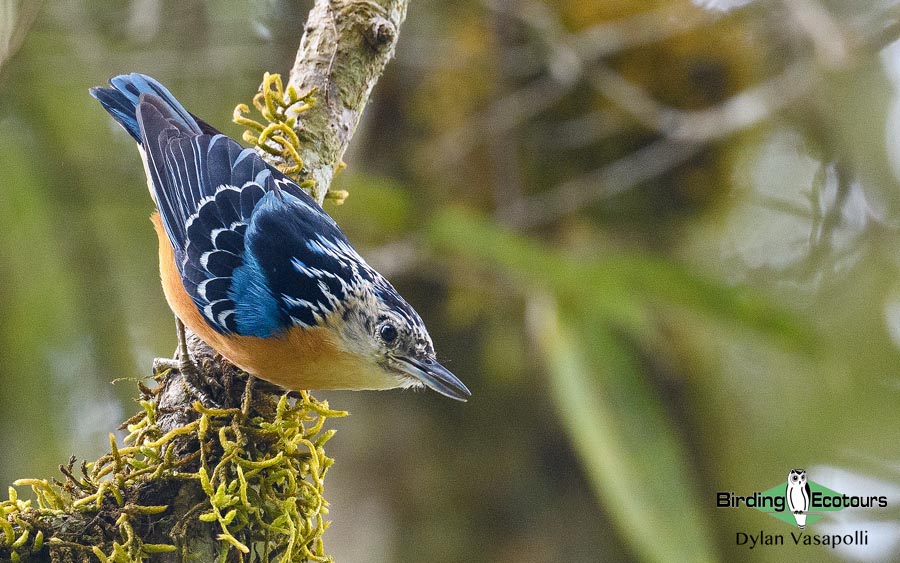
One of the reasons we venture to this area is to search for Beautiful Nuthatch. As its name implies, this is a spectacular bird. It has a close association with Sultan Tit and we’ll be keeping a beady eye (and ear) open looking for Sultan Tits as well, in the hope that a Beautiful Nuthatch is nearby. We’re also likely to see the similar-looking Chestnut-bellied and White-tailed Nuthatches.
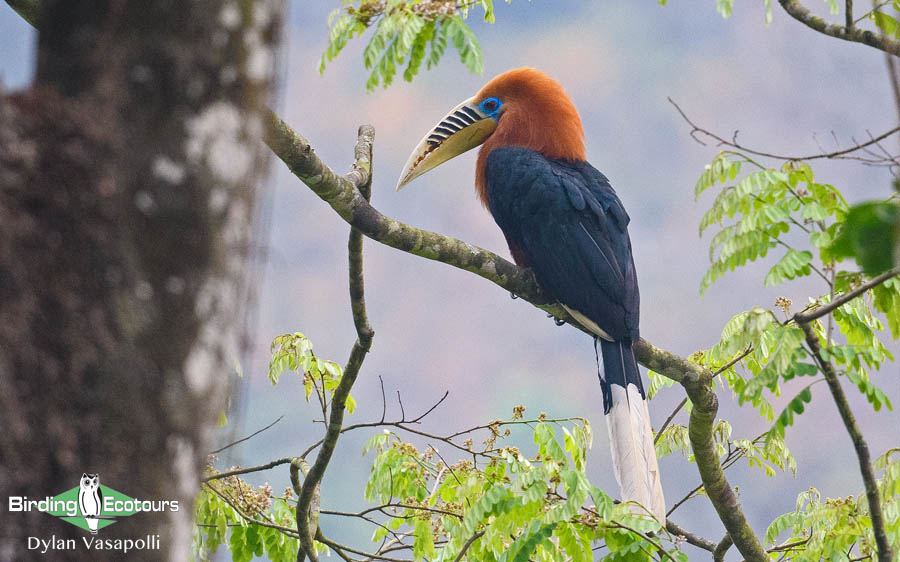
This is a very birdy area, and we’re sure to accumulate a long bird list as we go about our search. This area also gives us our first chance to see the hulking Rufous-necked Hornbill, while other crowd favorites include the likes of Blue-bearded Bee-eater, Greater Yellownape, Black-eared Shrike-babbler, Maroon Oriole and the delightfully tiny Golden Babbler. We should also add to our laughingthrushes with Rufous-necked and White-crested Laughingthrushes, along with close relatives like Rusty-fronted Barwing, Silver-eared Mesia and Red-faced Liocichla. We’ll also be sure to give the bare trees a scan as the tiny Fire-breasted Flowerpecker and flashy Orange-bellied Leafbirds frequently perch up.
Additionally, we will explore some of the bamboo patches here, which hold some scarce species. White-hooded Babbler and both White-breasted and Pale-billed Parrotbills are targets, along with others like the rare Broad-billed Warbler and fidgety Rufous-faced Warbler. Flocks of Pin-tailed Green Pigeons zoom overhead, while enormous Great Hornbills compete for fruiting trees. Rufous-bellied Eagles and Mountain Hawk-Eagles float overhead, while the tall canopies can be searched for the likes of Rufous Woodpeckers and the shy Square-tailed Drongo-Cuckoo.
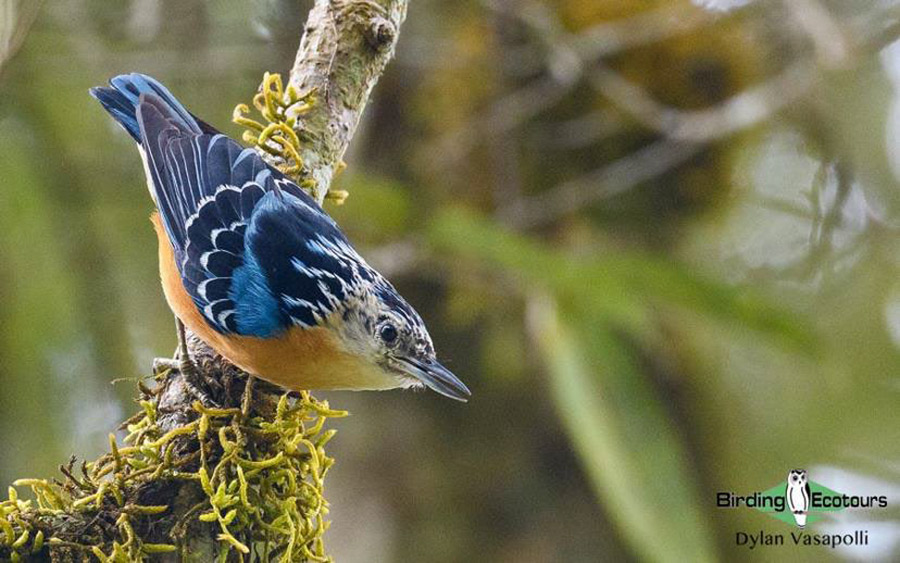 Beautiful Nuthatch is another major target species of this tour – we stand good chances at finding them in several localities.
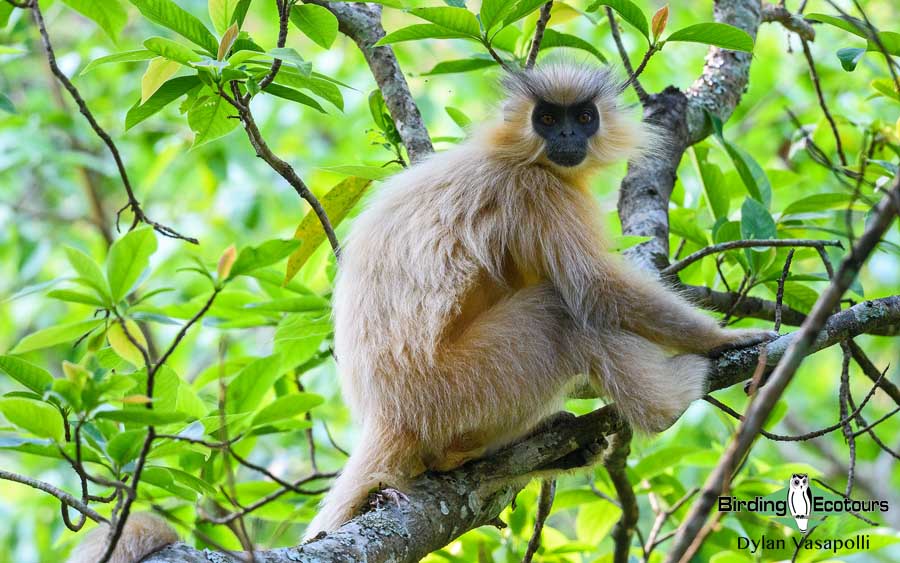
Parties of noisy Nepal Fulvettas flitting through the undergrowth normally herald the arrival of a bird party, and we’ll pay special attention to them in the hope they bring many other species into play. Possibilities include Yellow-bellied Warbler, Yellow-vented Warbler, White-browed Scimitar-Babbler, Lesser Necklaced Laughingthrush and Blue-throated Blue Flycatcher. Bright Crimson Sunbirds can be common, and a wide range of other species will be seen, and we’re also likely to see our first mammals, which might include Golden Langur and the enormous Black Giant Squirrel.
The picturesque river around Tingtibi is an important backup site for the rare White-bellied Heron, should the birds which are occasionally seen around Punakha, not be seen in the early days of the tour. Kindly note that this is a extremely rare bird, and we will need a good dose of luck to find it.
Overnight: Tingtibi
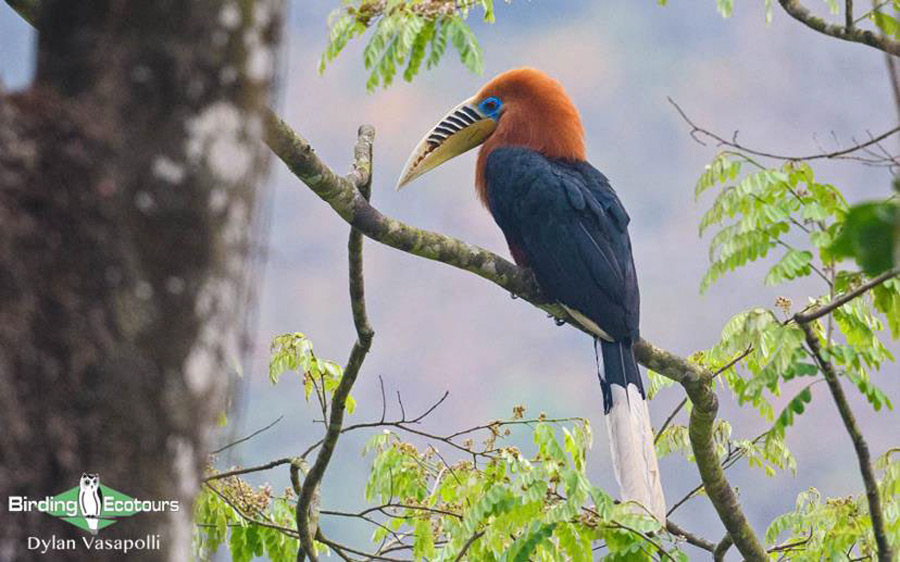 Hulking Rufous-necked Hornbills are a true highlight of the lower-lying forests in Bhutan – this is a scarce eastern Himalayan special we’ll try hard to find.
Days 8 – 9. Birding the lowland forests of Panbang.
From Tingtibi, we keep to the lowlands and transfer to the small village of Panbang for two nights. Scenically located at the confluence of the Manas and Tongasa Rivers (called rivers in this part of the country, not ‘Chhus’), we slowly bird along the road to Panbang in the surrounding area. We should continue adding to our, by now, burgeoning list. Green and Mountain Imperial Pigeons perch atop the trees in the early morning, and this is also the best way to find the scarce Jerdon’s Baza and both of the tiny Collared and Pied Falconets. This is a good area for the large hornbills occurring in Bhutan, with Great, Rufous-necked and Wreathed Hornbills all possible.
Additionally, we can look for other sought-after birds like Long-tailed Sibia, Pin-striped Tit-Babbler and the stunning Greater Racket-tailed Drongo. Roving flocks of birds move through the forests, and we will keep a beady eye out for other great birds like White-browed Piculet, Red-headed Trogon, Common Green Magpie and Grey-headed Parrotbill, amongst others. Several bamboo patches occur in the surrounding area, and we can search for the likes of White-hooded Babbler and Rufous-faced Warbler, if we missed them earlier. Other lower-altitude species we’re likely to find include the snazzy Streaked Spiderhunter, the strange-looking Lineated Barbet and the noisy Golden-fronted Leafbird. The river here is a reliable area to search for Crested Kingfisher and Black-backed Forktail and has also produced sightings of the rare Blyth’s Kingfisher – though we’ll need some luck to come across this species. These are only a handful of the many birds we’ll have on our radar, and we’re sure to have impressive daily bird tallies.
Overnight: Panbang
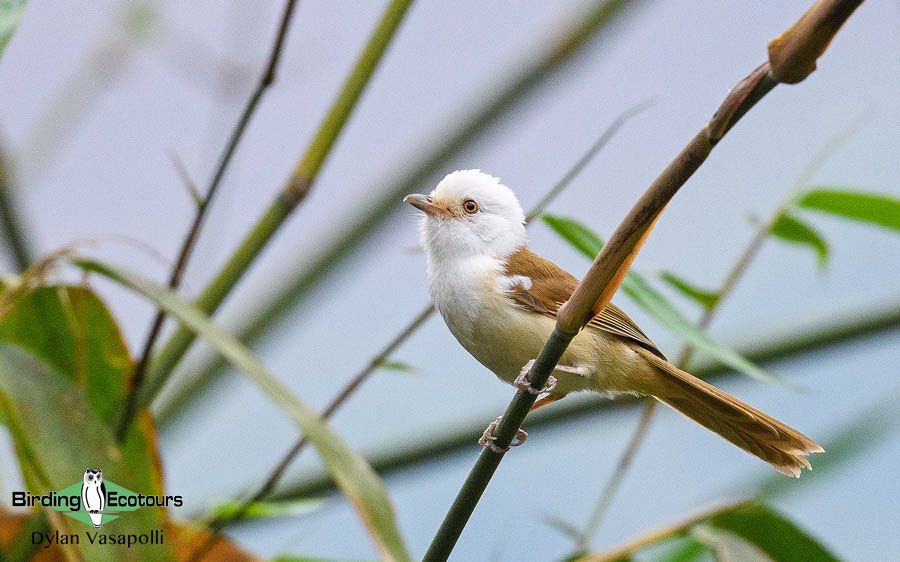 White-hooded Babbler is a prime target in the bamboo zones, often associating with parrotbills.
Day 10. Long drive to Yongkhola.
This is the longest drive of the trip and will take us the whole day, as we transfer from the lowlands around Panbang to the mid-elevation village of Yongkhola, located in the central part of the country. Aside from the truly scenic (though at times nerve-wracking) mountain passes we’ll negotiate, we will be sure to enjoy several birding stops as we make the journey, especially en-route to Nganglam which holds some exciting forest birding we would have sampled the previous day (see above for species). We anticipate rolling into our comfortable guesthouse in the early evening. We will settle in here for the next three nights.
Overnight: Trogon Villa, Yongkhola
Days 11 – 12. Birding Yongkhola and its forests
Yongkhola is widely known for hosting some of the best birdwatching in Bhutan. The mix of elevations and pristine forests available in the immediate surrounds gives us our best chances for some of the most exciting birds possible in the country. We have two full days at our disposal to explore these tracts of pristine forest and track down as many of the specials as possible.
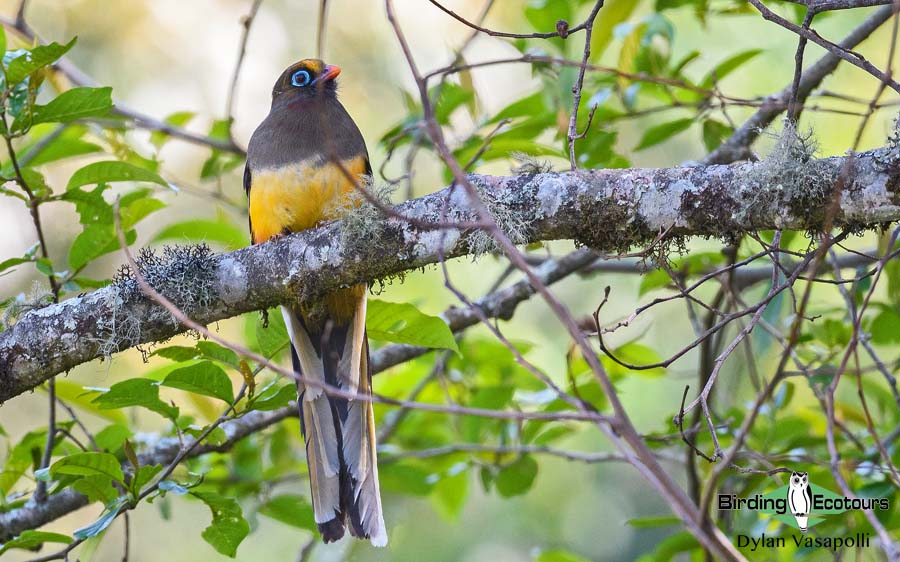
One of the major targets for us will be the scarce Ward’s Trogon and, although this uncommon bird presents a big challenge even in the best of circumstances, we have a good chance of finding this species. Multiple sites also exist for the arguably even more sought-after Beautiful Nuthatch in this area, should we have missed this earlier on the trip around Tingtibi. Himalayan Cutia is another sought-after species that occurs in the high-elevation forests here and is another of our main targets. A plethora of laughingthrushes can be found, and we’ll carefully search for scarce species like Scaly, Blue-winged, Grey-sided and Rufous-chinned Laughingthrushes. Many skulking species are also likely to feature strongly on our list of targets here – with Slender-billed and Black-crowned Scimitar Babblers, Red-faced Liocichla, Grey-throated Babbler, Golden Bush Robin, Long-billed and Rufous-throated Wren-Babblers, Scaly-breasted Cupwing, Lesser Shortwing and Silver-eared Mesia all possible.
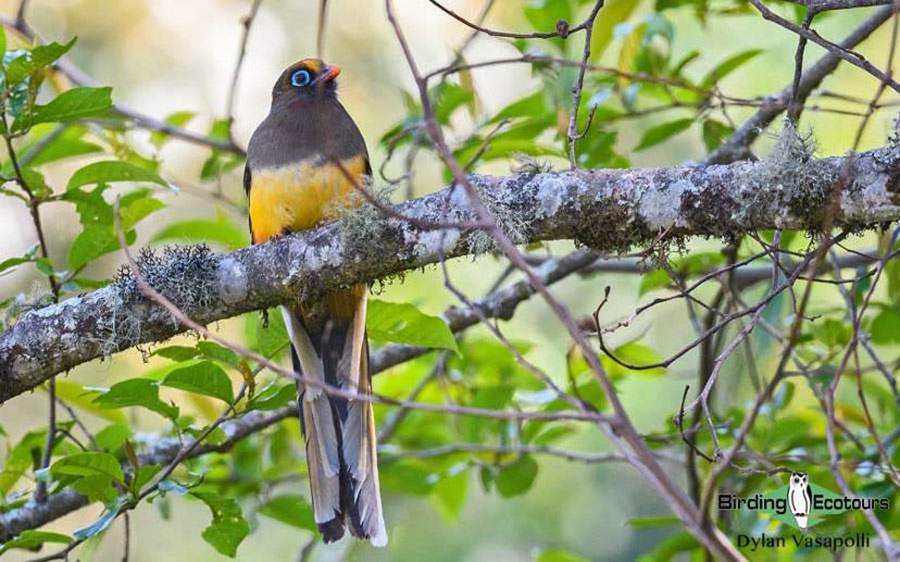 Ward’s Trogon is easily one of the main target species for birding tours to Bhutan. Although it is always an uncommon species that takes much time and effort to locate, we will have several attempts at this highly sought-after species.
The stands of bamboo in the area host a different suite of birds, and we’ll keep an eye out for species like the stunning Golden-breasted Fulvetta and the tiny Black-throated Parrotbill, along with other specials like Mountain Tailorbird and White-gorgeted Flycatcher. We’re also likely to come across several bright seedeaters, which may include the dazzling Scarlet Finch and the more subtly marked Golden-naped Finch. The cooing of Barred Cuckoo-Doves will be a regular feature, and we hope to see this shy bird, along with the tiny Asian Emerald Cuckoo, as they display from the treetops. Several new bulbuls will also likely feature, with Ashy, Striated and Mountain Bulbuls all occurring here. Many Asian bird groups that we’ll now be familiar with will also be seen, and we can expect several yuhinas, fulvettas, minlas, sibias and niltavas, along with more well-known groups like woodpeckers, flycatchers and warblers. These are likely to be some of our best birding days of the trip, and many folks see these days as their favorites!
Overnight: Trogon Villa, Yongkhola
Day 13. Birding the Lingmethang Road to Bumthang
While birding tours of old used to concentrate their birding in Bhutan on the Lingmethang Road exclusively, major work on upgrading the road has caused some significant disturbances and will see us transit through this area and the former birding meccas of Namling and Sengor to our end destination, Jakar/Bumthang. With multiple passes to navigate, this is another long drive that will take the whole day, with the usual birding stops along the journey.
As we ascend into the alpine zone, we’ll bird especially along the impressive Thrumshing La Pass above Sengor. Here, where we’ll keep our eyes open for Blood Pheasant crossing the road, while the scrubby areas hold further exciting birds like Slender-billed Scimitar Babbler and Green Shrike-babbler, and the bamboo stands play host to the sought-after Great Parrotbill.
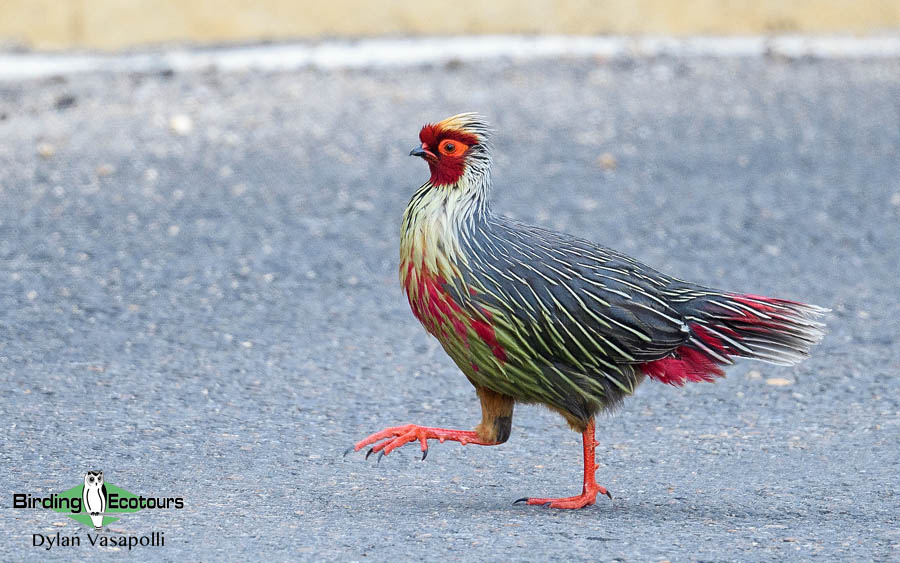 Blood Pheasants are much less secretive than some of their cousins, like tragopans and monals.
The mix of alpine fir, aspens, hemlocks and pines will have many new species for us. Here, the songs of Green-backed and Grey-crested Tits herald the arrival of feeding flocks, and we’ll need to be quick to get onto all the birds in these rapidly moving flocks. Both the dainty Black-throated and Rufous-fronted Bushtits vie for attention, along with the snazzy White-browed Fulvetta and Whiskered Yuhina. We’re also likely to come across both Bar-throated and Red-tailed Minlas and our first of many Green-tailed Sunbirds. We’ll also look for the lovely White-browed Bush Robin perched atop the fir trees. If we are incredibly lucky, we may even come across the mega Red Panda, which is resident in the area.
The main target of most birding tours to Bhutan, however, also occurs in the area, and this marks our first of several attempts to try and find Satyr Tragopan. While this species can occur in reasonable densities in suitable habitat, seeing this bird is another story altogether. Their eerie, hooting calls ring out from the forest, and can carry some distance, and we’ll need to employ all our skills (and luck) to find one.
Overnight: Jakar/Bumthang
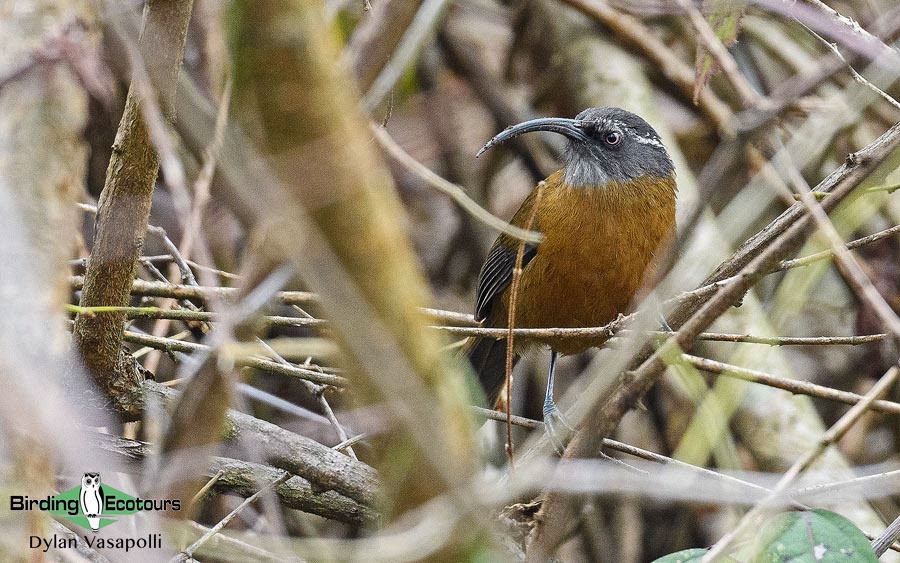 Slender-billed Scimitar Babbler is an exciting and major target in the higher elevations.
Day 14. More alpine birding for Satyr Tragopan and other specials
We have another attempt to find our coveted Satyr Tragopan this morning. We’ll spend the entire morning searching for this species, and many others, on the Sheytang La Pass. We’re likely to first hear their eerie howls coming out from the depths of the mossy forest floors and some careful scanning and pinpoint positioning will hopefully reward us. Groups of Blood Pheasants are usually evident as well. Spotted Nutcrackers are a common sight up here, and we’ll hope to add a few new alpine birds, which might include Coal and Rufous-vented Tits, Buff-barred Warbler, Goldcrest, Hodgson’s Treecreeper, Collared Grosbeak and Red Crossbill.
Eventually, we’ll descend down this winding pass back into the Bumthang Valley, where we will easily see the localized Black-rumped Magpie. Our next port of call is the Chumey area, where we will base ourselves for the night. This is a short transfer, and we should arrive in good time and have the afternoon free. Solitary Snipe can occasionally be seen on rivers in the area, while Himalayan Beautiful Rosefinch feed in the surrounds. After dark, we will try for the scarce Himalayan Owl.
Overnight: Chumey
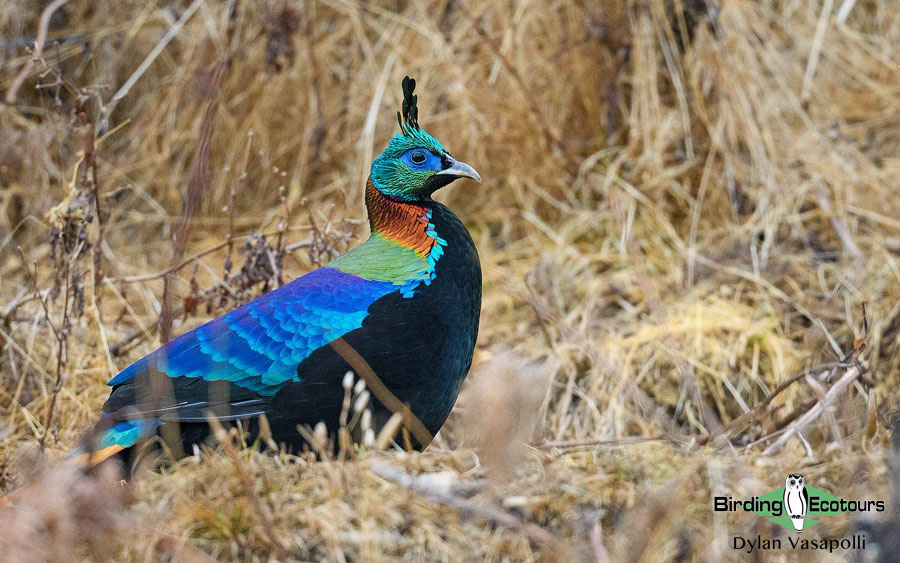
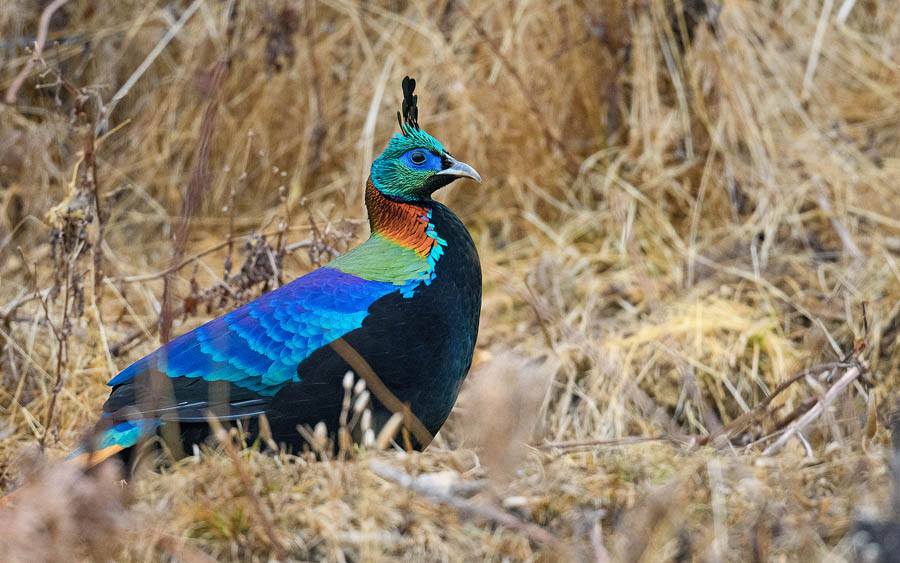 Spending time with a male Himalayan Monal, complete with all its vivid colors, is sure to be a major highlight of our time in the alpine zone.
Day 15. Himalayan Monal and transfer to Pele La Pass
The early morning will find us at the Tharpaling Monastery that looms over the Chumey Valley. The main purpose for venturing up to the monastery, however, is to find another of Bhutan’s spectacular and highly sought-after pheasants – Himalayan Monal. Monks here feed these stunning birds in the morning, and numbers of these spectacular birds frequent the area immediately around the monastery – usually putting on incredible shows for birders! Snow Pigeons are often around the rocky cliffs here, and we’ll hope to add the scarce White-winged Grosbeak in the surrounding pines.
After having spent the morning around the monastery, we’ll settle in for a long transfer to Nubding. Our route takes us through Trongsa and the birdy Yotong La Pass. Although we’ll likely be passing through here during the midday period, we’ll keep our eyes peeled for specials like Fire-tailed Myzornis and Brown Parrotbill, along with more widespread species like Long-tailed Minivet, Yellow-bellied Fantail, Yellow-browed Tit, Large-billed Leaf Warbler, Grey-sided Bush Warbler and Bhutan Laughingthrush. Beyond Trongsa, rocky overhangs and cliffs host breeding Nepal House Martins.
Eventually, we’ll ascend the Pele La Pass, and immediately head for the old main road, where we will spend the remainder of the day – searching for any missing birds we’ve not yet seen in this alpine high-altitude zone, most notably, Satyr Tragopan.
Overnight: Nubding
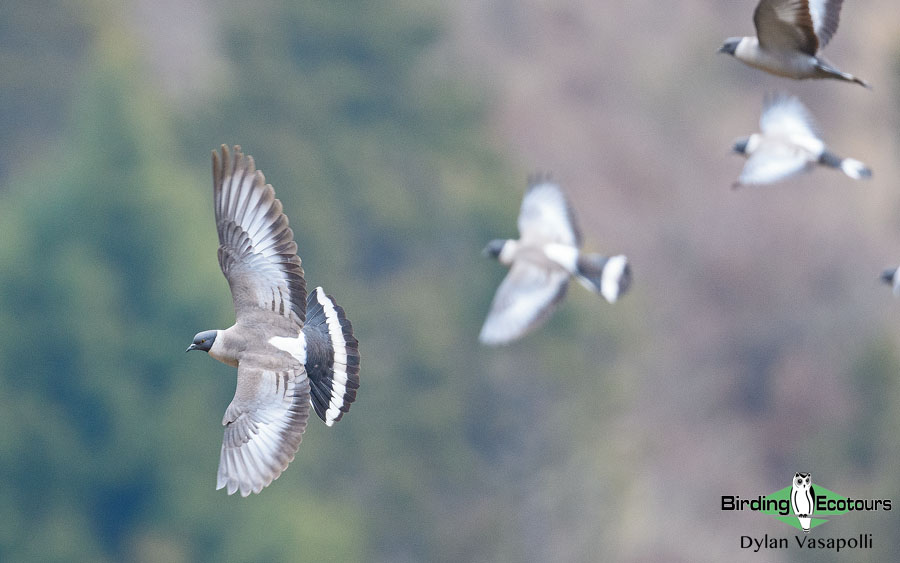 Not your average pigeon – delightful Snow Pigeons are usually evident around the monastery.
Day 16. Birding Pele La and Nubding for the day, transfer to Punakha
We have the entire day to spend birding the high-lying alpine Pele La Pass and the lower-lying mossy, broad-leafed Nubding forests. These two sites serve as important backup places for several species. The alpine rhododendron-dominated reaches at the top of Pele La Pass are home to both Satyr Tragopan and Himalayan Monal, should we have missed either of these species in the days prior. Here, we can also search for other scarce birds like Fire-tailed Myzornis and Fire-tailed Sunbird. We’re also likely to see several other birds, like Red-headed Bullfinch and Hoary-throated Barwing. Himalayan Vultures are a regular sight overhead.
The very different Nubding forests host our final chances for Ward’s Trogon, along with other specials like Himalayan Cutia. Yellow-rumped Honeyguide can often be found in the area, where they frequent rock bee colonies hanging from some of the exposed cliff ledges. We also have our final attempts to see any of the major skulkers that may have eluded us, from the tiny Chestnut-headed and Grey-bellied Tesias to the minute Scaly-breasted Cupwing and the ultra-shy Spotted Elachura.
Eventually, we’ll need to tear ourselves away from the birding and check into our comfortable hotel in the Punakha Valley.
Overnight: Punakha
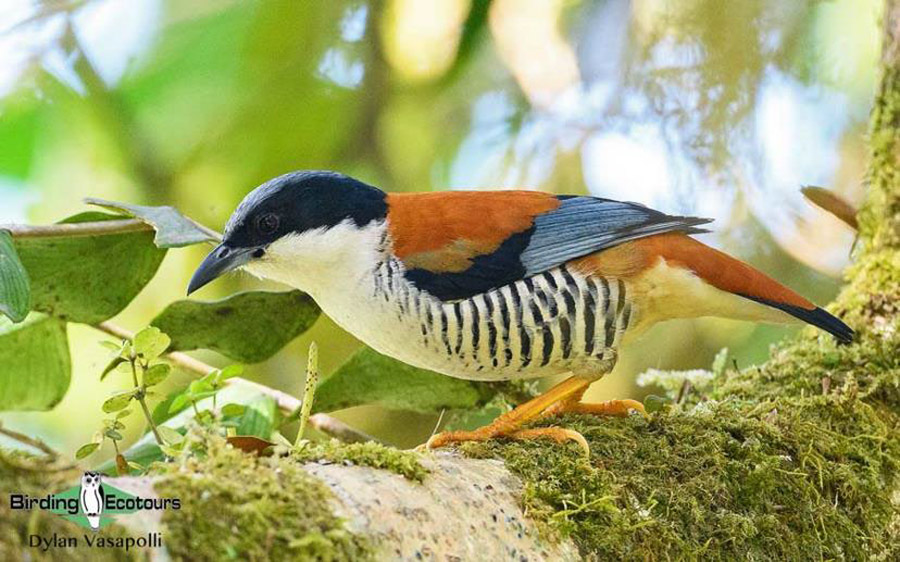 Himalayan Cutia frequents moss-covered trees, occurring at mid-elevation.
Day 17. White-bellied Heron on the Puna Tsung Chu
Our stay in Punakha for this last night is primarily to allow us extra time to track down the rare White-bellied Heron and/or any other major targets we might have missed on the trip. The road from Punakha down to Damphu is perhaps the best area to find this rare heron currently, and should we indeed still be missing this species, we will have the bulk of the day at our disposal to transit down this road as far as necessary, giving us the best chance to find it. Of course, should we have seen the heron already, there is lots of excellent birding to be had in the area, and multiple nearby sites are well within reach, including the always-excellent Dochula Pass we would have birded much earlier on in the trip. Eventually in the afternoon, we will complete our journey back to Paro, where we anticipate arriving in the late afternoon.
Overnight: Paro
Day 18. Departure from Paro
The day is set aside for your departure from Paro, and no birding plans are included. Most flights depart from Paro during the mid-morning, and you are welcome to depart at your leisure.
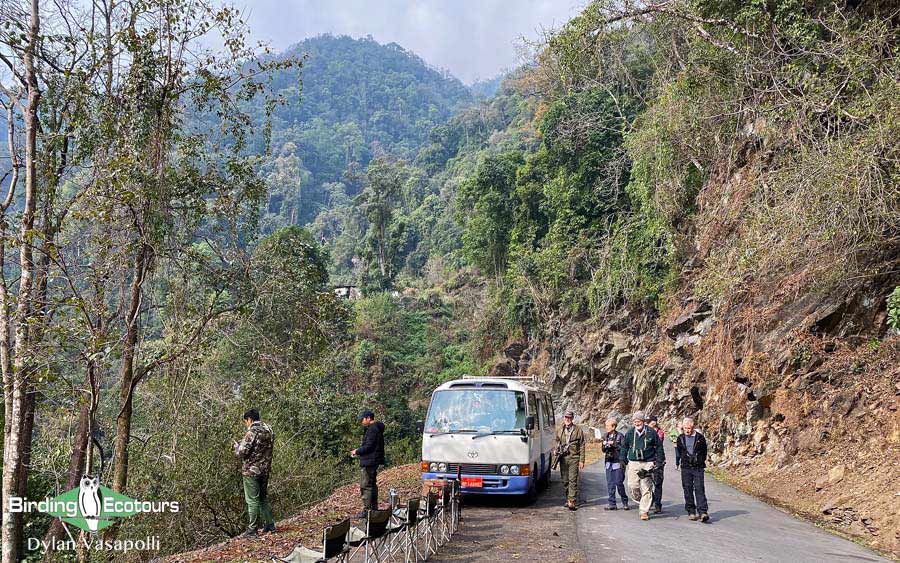 Bhutan is an impressive country – here is a typical scene whilst birding.
Please note that the itinerary cannot be guaranteed as it is only a rough guide and can be changed (usually slightly) due to factors such as availability of accommodation, updated information on the state of accommodation, roads, or birding sites, the discretion of the guides, and other factors. In addition, we sometimes have to use a different guide from the one advertised due to tour scheduling or other factors.
Map
Testimonials
Gallery
General Information
GENERAL INFORMATION ABOUT BHUTAN CAN BE READ HERE.