Written by Matthew Orolowitz, the Birding Ecotours Fellow of Grasslands Conservation, on 26 January 2026
Botha’s Lark (Spizocorys fringillaris) is South Africa’s most endangered bird species. Endemic to a tiny part of South Africa (it is restricted to the high-altitude grasslands of the eastern Highveld), this small and easily overlooked bird has suffered one of the most severe population declines of any bird species in southern Africa. Over the past decade, Botha’s Lark has declined by approximately 90%, leading to it being uplisted to Critically Endangered (BirdLife South Africa Regional Red Data Book) in 2025. Today, an estimated 340 individuals remain worldwide, placing the species on the very brink of extinction.
Botha’s Lark suffers from habitat loss, and most of its remaining range occurs on privately owned land. Consequently, how farmers manage their land is critical to the species’ conservation. Collaborating with ranchers and landowners will be essential to preventing the extinction of this bird. When appropriately managed, specific cattle grazing regimes can maintain or even create optimal habitat, potentially increasing the amount of land available to support Botha’s Lark populations.
When Birding Ecotours began supporting conservation work on Botha’s Lark through BirdLife South Africa in 2024, the outlook for the species was bleak. The bird had not been recorded anywhere for approximately 18 months, raising serious concerns that numbers had dropped even further. Since then, sustained and targeted fieldwork has begun to lift the veil on the species’ current status, revealing both the scale of the challenge and reasons for cautious optimism.
Over the past 18 months, surveys have been conducted year-round, with particularly intensive effort during the breeding season. This has involved more than 450 hours in the field and over 1,000 km (625 miles) of on-the-ground surveys, spanning grasslands from north of Amersfoort to south-west of Harrismith. This work has been a collaborative effort, bringing together landowners, local birders, conservation practitioners, and concerned members of the public. Many historical sites were revisited but no longer support suitable habitat, underlining both the extent of grassland loss and the significant gaps that remain in understanding the species’ current distribution.
Despite these challenges, surveys have confirmed more than 20 Botha’s Lark individuals across several sites (Figure 1). Crucially, active breeding has been confirmed at these sites, providing rare and vital evidence that the species is still reproducing in parts of its remaining range. Breeding monitoring has yielded some of the most important insights to date. Approximately 30 nests have been located over the last 18 months, most found at the egg stage and some with chicks (Figure 2). Nests are typically identified by carefully tracking adult behavior, with birds showing a strong association with specific patches of suitable habitat during breeding. During the previous breeding season, an estimated 21% breeding success rate was recorded, an invaluable benchmark for a species at such low numbers.
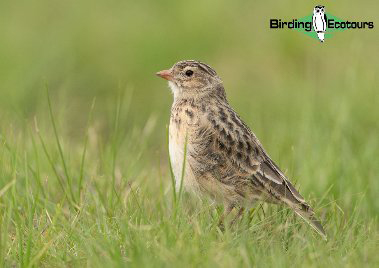
Figure 1: An adult Botha’s Lark (Spizocorys fringillaris) recorded during field surveys in the high-altitude grassland of southern Mpumalanga, highlighting the species’ continued persistence within its remaining range.
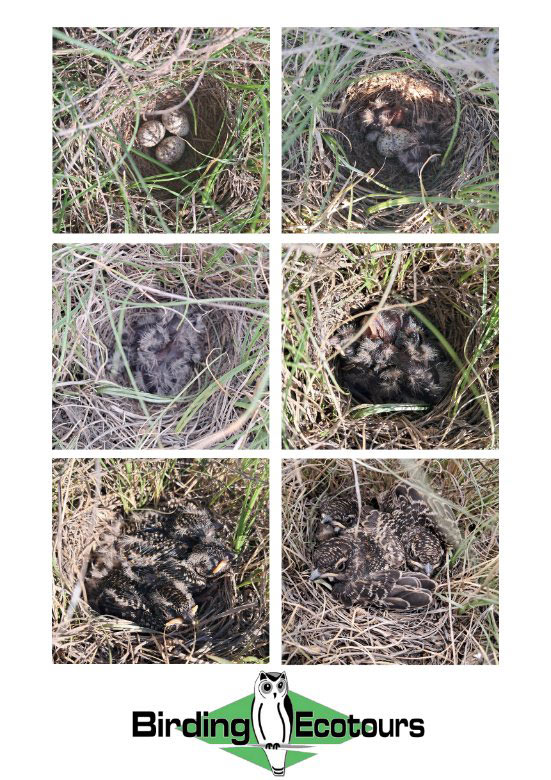
Figure 2: Nest progression of Botha’s Lark, showing different breeding stages from egg-laying to chick development, as recorded during monitoring surveys.
To support long-term monitoring, four individuals have been color-ringed under the appropriate permits and ethical clearance. Color-ringing allows individual birds to be identified without recapture, opening a window into survival, movement, and breeding behavior (Figure 3). Early observations suggest that Botha’s Larks may attempt multiple nesting attempts within a single season, and not always in the same area, highlighting the importance of maintaining a mosaic of suitable grassland habitat across the landscape.
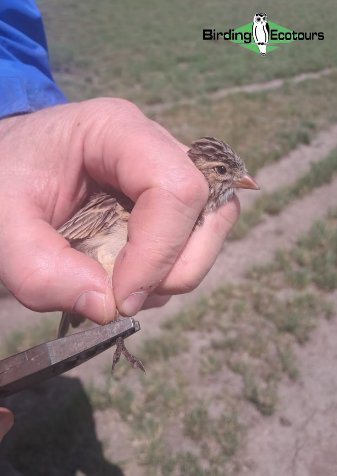
Figure 3: A Botha’s Lark being color-ringed under approved permits and ethical clearance, enabling individual identification for long-term monitoring of survival, movement, and breeding behavior.
Understanding why nests fail is just as important as documenting successes. Camera traps deployed at selected nests have directly identified Yellow Mongoose as a confirmed nest predator, with two predation events captured on camera (Figure 4). In addition, extreme weather, particularly heavy rainfall and flooding, has been shown to play a significant role in nest failure and abandonment. Several nesting attempts coincided with periods of intense rain, illustrating how climatic extremes can compound existing pressures on small, fragmented populations.
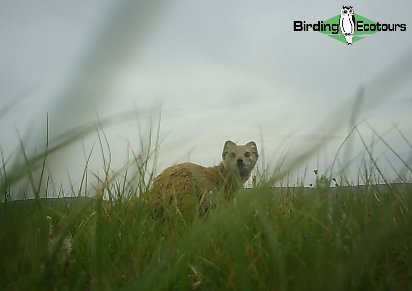
Figure 4:Yellow Mongoose (Cynictis penicillata) captured on a camera trap at a Botha’s Lark nest site, confirming nest predation as a key cause of breeding failure.
These findings are already shaping future conservation action. Identifying key nest predators and the influence of weather, provide critical guidance for habitat management, discussions around predator mitigation, and the refinement of fire and grazing regimes that support suitable breeding conditions.
Beyond its rarity, Botha’s Lark is a powerful indicator of grassland ecosystem health. Conserving this species helps protect one of South Africa’s most threatened biomes, a biome that underpins biodiversity, water security, carbon storage, and sustainable agriculture. With fewer than 400 birds remaining, every nest, every breeding attempt, and every hectare of remaining grassland, matters.
Birding Ecotours’ support goes far beyond birding. By enabling sustained field presence and long-term monitoring through BirdLife South Africa, it has directly contributed to the most significant advances in Botha’s Lark conservation in years. While the species remains Critically Endangered, recent discoveries demonstrate that targeted, science-based conservation can still make a difference, and that with continued commitment, there is real hope for the future of this uniquely South African bird.