Guest Post for Birding Ecotours by Kai Pflug, the editor of 10,000 Birds on 02 December 2025
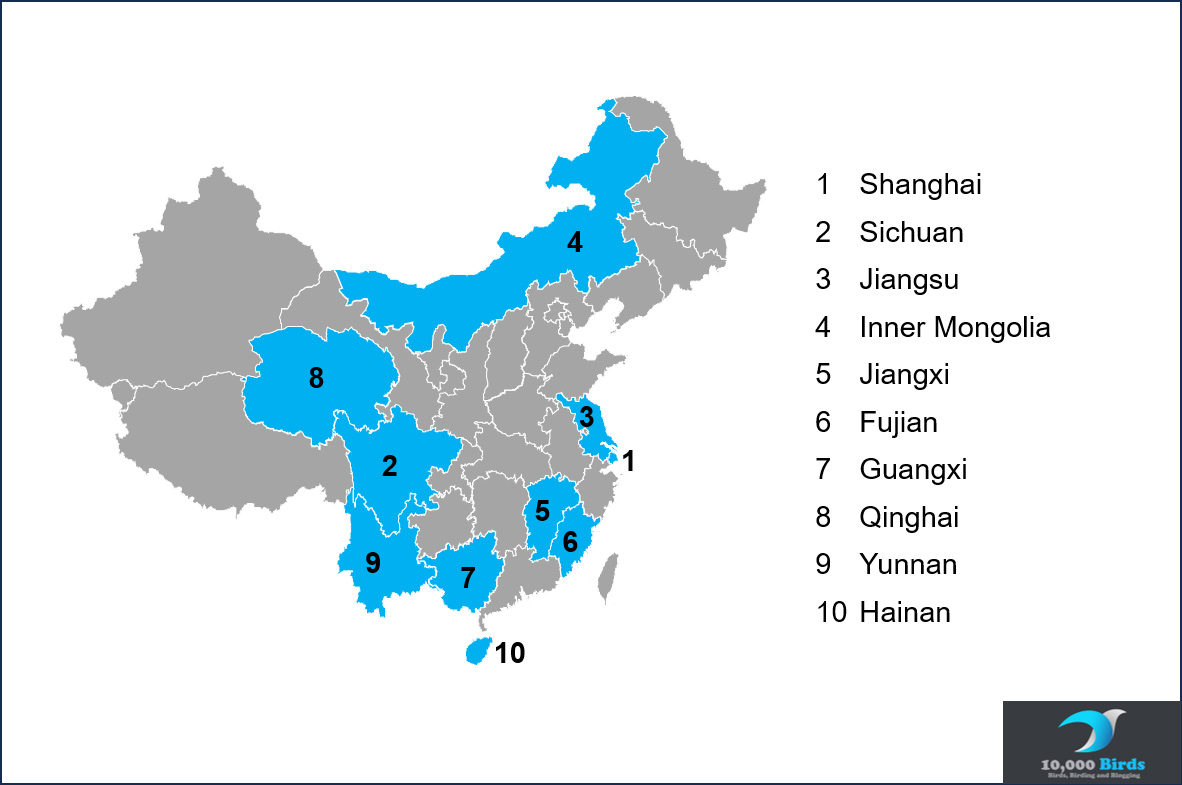
China has about 1,450 species of birds – slightly too many to cover in a single guest post. But to give a tiny bit of a taste of the birds of the country, I have selected ten interesting birds that can be found at ten different locations in ten of China’s provinces. Not all of them are necessarily very rare or threatened – I am more interested in giving you an idea of the variety of birds here, and of course, I also shamelessly highlight some of my own favorite species.
Firstly, below is a map showing the ten Chinese provinces covered in this blog.
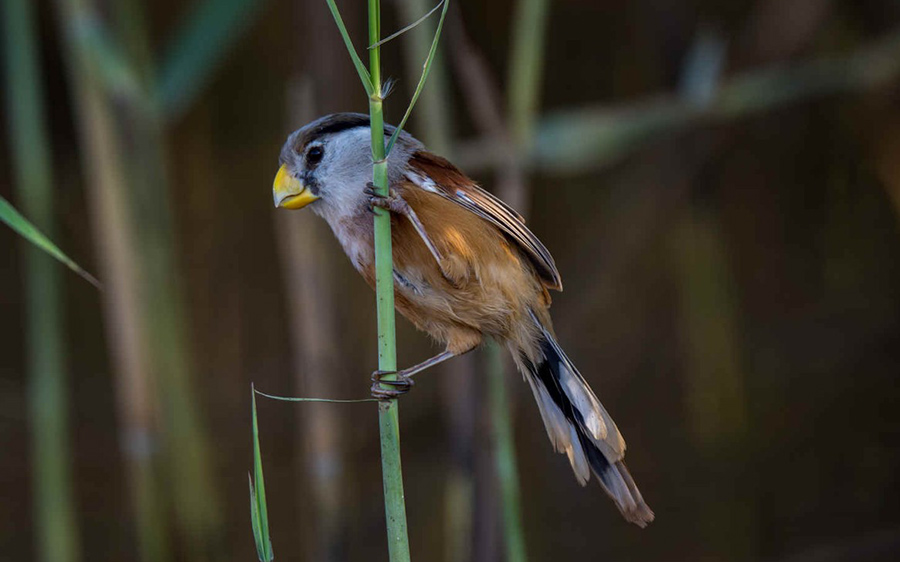
First up is the Reed Parrotbill, for me the star bird of my hometown (and also sort-of-province) of Shanghai. It is a resident here, and probably the bird most birders visiting Shanghai from abroad are keen to see. While it looks like a typical parrotbill, with its big head and parrot-like beak, it prefers coastal reedbeds over bamboo favored by many other parrotbills.
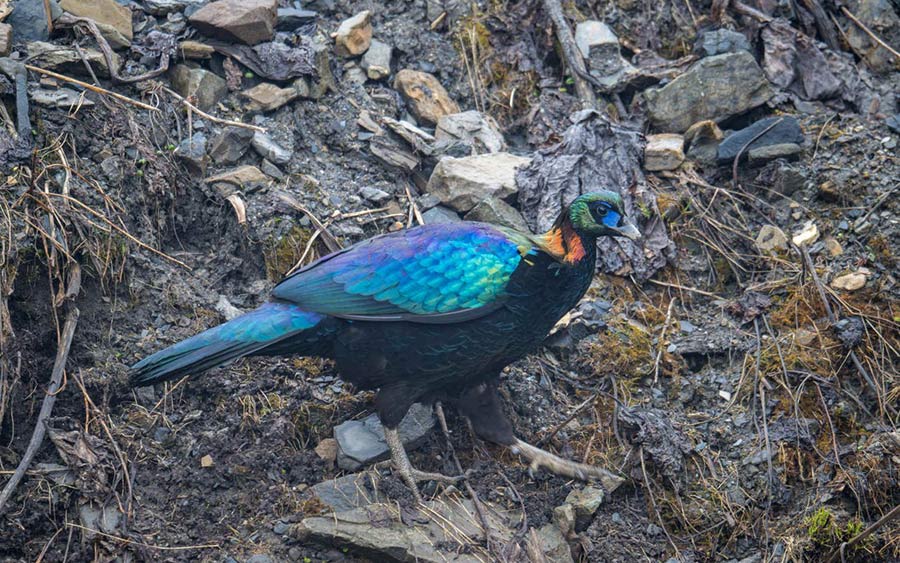
To see these other parrotbills, a good idea is to go to another province, Sichuan. So, my non-obvious choice for that province is the Chinese Monal, which, with sufficient local knowledge and support, can be seen at Kangding. It is listed as Vulnerable (IUCN) with an estimated total population of about 2,500-10,000 individuals.
Returning to the eastern coast of China, our next stop is Tiaozini in Jiangsu province. The tidal flats there are one of the few good places to see the Spoon-billed Sandpiper – which I will mention a bit later. Instead, I picked the Far Eastern Curlew, an Endangered (IUCN) species which is restricted to East Asia and Australia and thus one sometimes wonders how it got the scientific name Numenius madagascariensis (it has never been recorded in Madagascar).

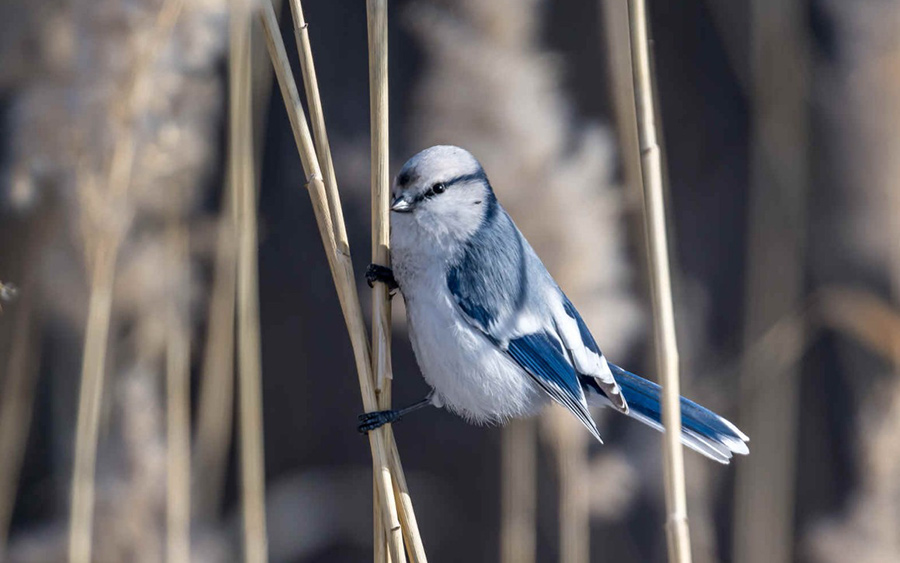
Inner Mongolia is a northern province that is very good for seeing several owl species in winter – but obviously, it is very cold at that time. That makes it even more surprising that a bird as cute and tiny as the Azure Tit can survive the winter there, acting a bit like the Reed Parrotbill already mentioned (photo taken at Hailar).
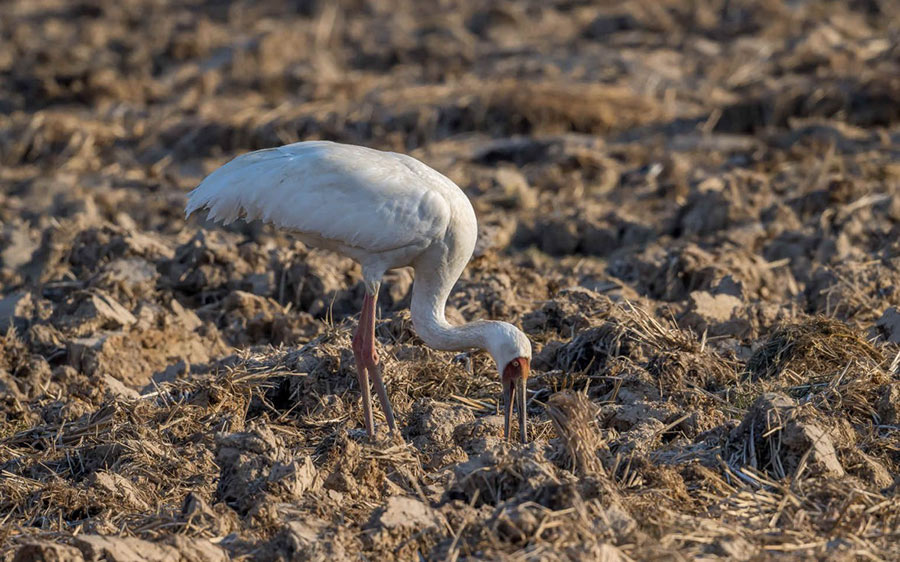
One might think that a crane with “Siberia” in its name also winters far north, but no, most of the global population of Siberian Cranes come to Poyang Lake in Jiangxi province in the coldest months. The species is listed as Critically Endangered (IUCN)and even has its own document that sounds almost like an EU law, namely the Memorandum of Understanding Concerning Conservation Measures for the Siberian Crane.
Like for cranes, China is also a global hotspot for pheasants, with about 20 different species! For this post, I have picked Elliot’s Pheasant, which can be found in Sanming, Fujian province. This pheasant is named after Daniel Giraud Elliot (1835-1915), a US ornithologist whose apparent only vice was to be very rich (in my blog posts, I prefer to write about shadier characters, it is simply more interesting).

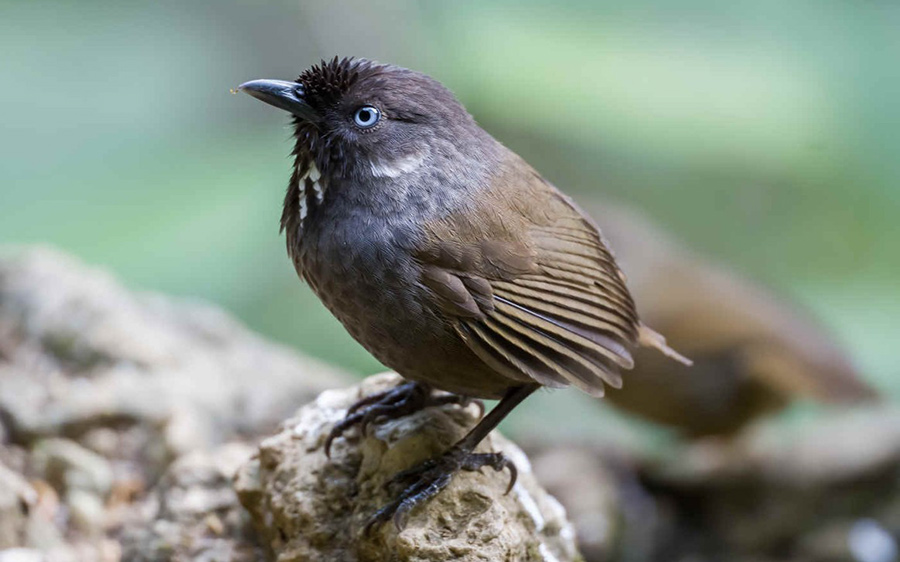
The Nonggang Babbler is interesting in that it was only formally described in 2008, even though it is fairly easy to see nowadays in the right location (yes, at Nonggang in Guangxi province). Its distribution is very tiny indeed and somewhat remote (a karst landscape, somewhat reminiscent of northern Vietnam), and it is listed as Vulnerable (IUCN).
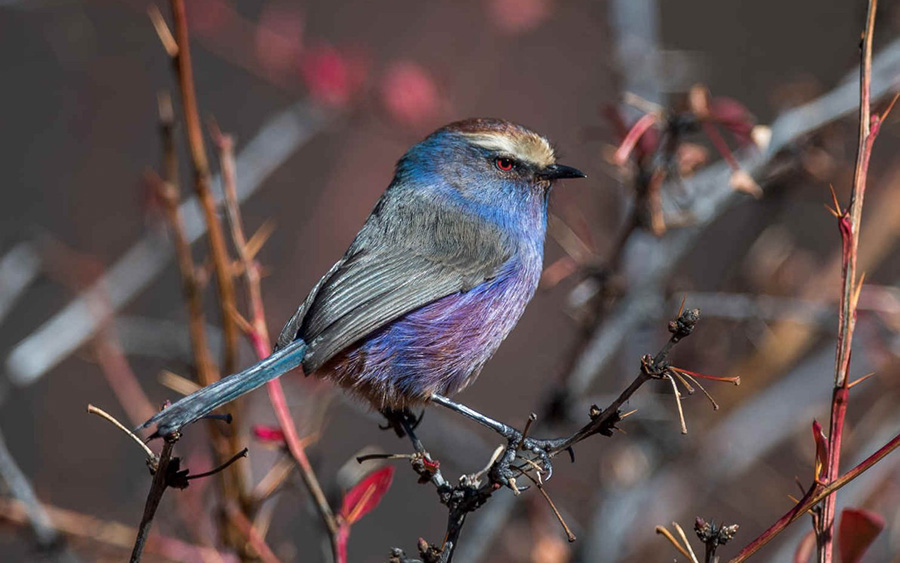
My personal preference tends toward small, cute, and colorful birds, which makes the White-browed Tit-warbler a natural choice. It can be found in places like the Dulan area in Qinghai province and also on the cover of many Japanese bird photo books (the Japanese love cute things). Fortunately, it is quite common in parts of its distribution.
It would not be right to compile a post like this one without including Yunnan province, which I am almost certain has the largest number of species of all Chinese provinces. Many of the birds here overlap with those of Southeast Asia, making it a particularly attractive place for Chinese birders worried about the cost and complexity of going abroad. Within China, it is the best place to see pittas such as the Rusty-naped Pitta (at Hongbenghe in Yunnan, right on the border to Myanmar – in the past, there were literally places where you could cross dilapidated bridges over to another country, though that all changed during Covid).

Finally, Hainan is an island (and a province) in China’s south. It has beaches and tourists and crowds and ugly hotel complexes, but also birds. One in particular, in winter: the Spoon-billed Sandpiper, photographed here at the Danzhou Bay mudflats. When you see it for the first time, you realize how small it is – though the scientific name Calidris pygmaea could have been a warning … Sadly, recent (2024) research has found that its population is very small (330-550) and still declining at about 5% per year. No wonder it is listed as Critically Endangered (IUCN).

Now, China has not 10 but 34 provincial-level units, so this post could easily have been much longer. But there are a few reasons it’s not: I get tired of writing, you probably get tired of reading, and there are plenty more posts on China’s birds over at our birding website, 10,000 Birds.