11–23 MAY 2026
By Anton Schultz
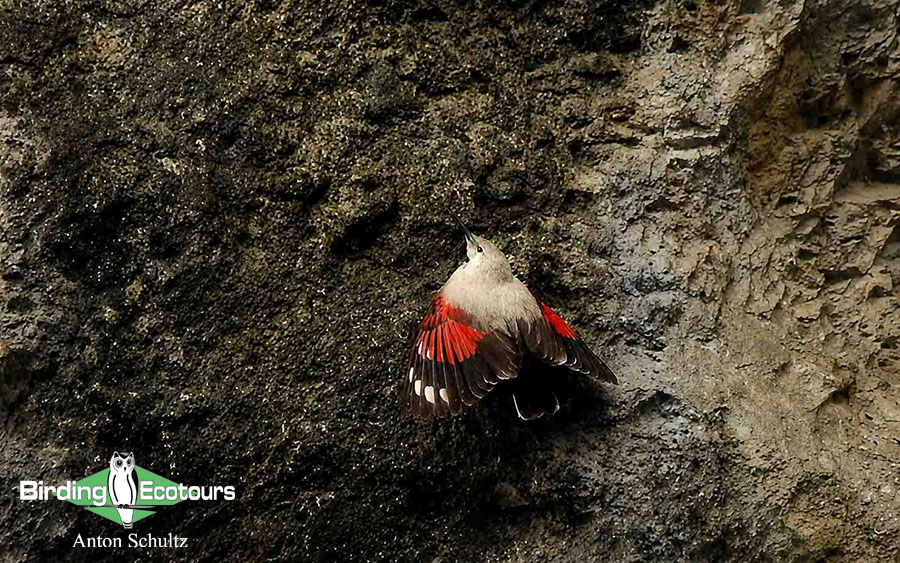
Wallcreeper belongs to a monotypic family found in Europe and Asia. We were extremely lucky with our sighting of a pair in Trigrad Gorge this year.
Overview
This Bulgaria and Romania birding tour was timed to coincide with the spectacular spring migration across the Balkans, as many birds returned from their African wintering grounds and breeding activity was already well underway across much of the region. We obtained an excellent mix of passage migrants, resident specialties, and breeding birds already feeding young, all set against the dramatic scenery of the Balkans and the vast wetlands of the Danube Delta.
The tour began in Bulgaria’s capital, Sofia, before we headed south into the scenic Rhodope Mountains. Here we explored a range of habitats from forested valleys to high mountain plateaus, where lingering patches of snow still remained in the upper elevations. Birding in the Western Rhodopes and highlands produced an exciting collection of specialties including close-up views of the highly sought after Wallcreeper and other highlands specials like Spotted Nutcracker, Black Woodpecker, Crested and Willow Tit, Common Firecrest, Bullfinch and Common Crossbill.
Into the Eastern Rhodopes, we focused on the incredible raptors and the impressive assortment of migratory warblers of the region. Highlights included Griffon, Egyptian and Cinereous Vulture (and the incredible group of people trying to save them), Eurasian Scops Owl, Blue Rock Thrush, Rock Bunting, Western Rock Nuthatch, Sombre Tit, Chukar Partridge, Eastern Subalpine, Eastern Orphean, Sardinian, Barred and Olive-tree Warblers.
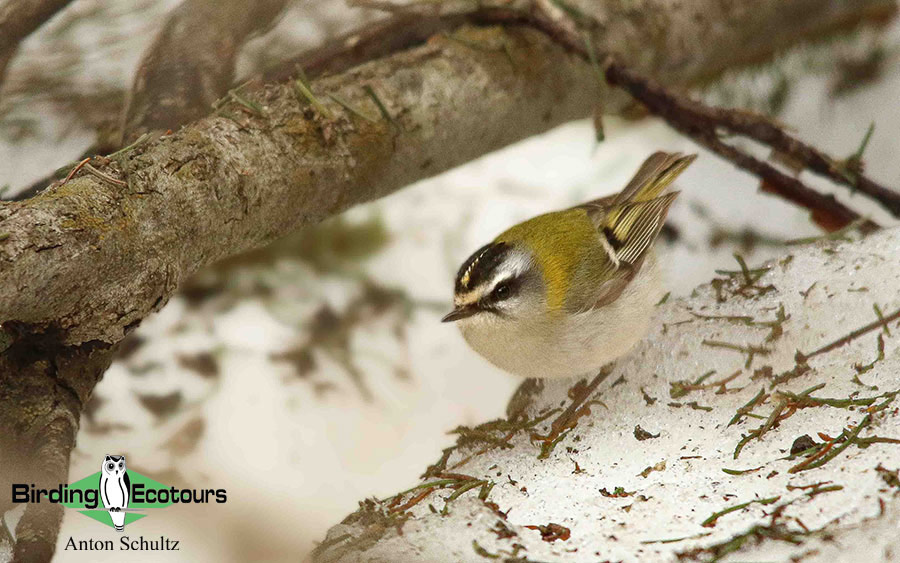
The minuscule Common Firecrest was seen foraging in snow before the summer melt.
From the Rhodope Mountains we continued northeast toward the Black Sea coast, where extensive wetlands and coastal habitats provided some outstanding birding. Even the day of travel between these two areas provided some great sightings in the form of Eastern Imperial Eagle, Lesser Kestrel, the scarce Masked Shrike and a magical roosting Eurasian Eagle-Owl. Throughout the Black Sea region we encountered a rich mix of wetland species such as Ferruginous Duck, Ruddy Shelduck, Garganey, Greater Flamingo, Black-Throated Loon, Little Gull, Gull-billed, Black, White-winged and Little Tern. We also encountered Steppe specialists like Greater Short-toed Lark, Eurasian Stone Curlew and Pied Wheatear.
Crossing into Romania, the superb birding continued with a range of exciting species and wetland birds. Among the many highlights were Pallas’s Gull, Red-footed Falcon, Bearded Reedling and Paddyfield Warbler. Exploration of the Danube Delta itself by boat saw us adding some fantastic species to our list such as White-tailed Eagle, Dalmatian Pelican and Red-necked Grebe, and some memorable sightings of more widespread species like Great White Pelican, Great Egret and Black-crowned Night Heron in incredible numbers.
The tour concluded in the productive Vadu area, where bird activity was intense, and migration was still clearly evident. On the beach itself we had a memorable sighting of a Parasitic Jaeger setting chase on a Common Tern over the Black Sea. A fantastic roosting Long-eared Owl on the wetland itself finished off the tour in style. The complete eBird trip report can be seen here.
In addition to the birds, springtime was evident in the diverse mammals we saw on tour. We saw a pair of Red Foxes playing in the mountain snow, Northern Chamois dappling steep cliff faces, and a brief Eurasian Wildcat crossing the road on our travels. Also, a few Harbor Porpoise in the Black Sea and, the star standout, a Beech Marten raiding Little Egret nests over a wetland viewpoint. We even had two species of snakes on tour, with Common European Adder and European Grass Snake.
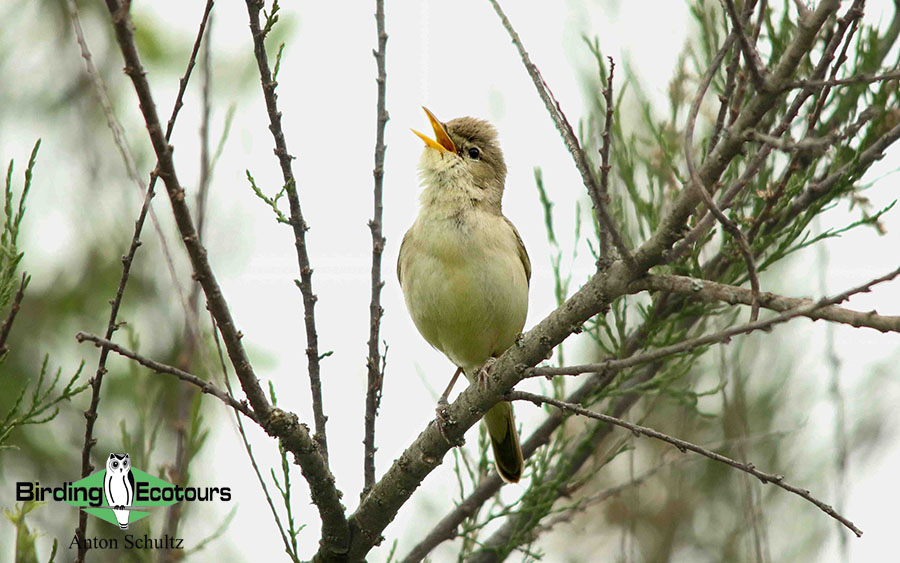
The drab but vocal Eastern Olivaceous Warbler was never far off throughout the tour, a mostly shy species until we got lucky with this confiding individual.
Detailed Report
Day 1, 11th May 2026. Mount Vitosha birding, transfer to the western Rhodope Mountains
Sofia was bustling with activity, thanks to the Giro d’Italia taking over the city center and, after our various adventures yesterday evening, we all met up this morning, ready to begin the tour properly. Chris, Teri, Mike, Wendy and I were joined by our local guide and driver, Assen, then set off to ascend Mount Vitosha. Fortunately, we managed to stay one step ahead of the weather as we climbed higher into the mountains.
At the summit we were greeted by a snowy wonderland, hardly the image one associates with spring birding, but beautiful nonetheless. The birding was immediately rewarding, with a stunning Firecrest showing exceptionally well. Ring Ouzels seemed to litter the landscape, while the strange and charismatic Spotted Nutcracker stole the show with several individuals giving fantastic views. Other species such as Dunnock, Tree Pipit, Eurasian Treecreeper, and Whinchat proved to be both the first and only sightings of these species for the trip.
A pair of Griffon Vultures circling high overhead was an unexpected bonus for the region and perhaps a fitting preview of what awaited us later in the Eastern Rhodopes. Away from the birds, the mountain also produced a memorable sighting of a Common European Adder crossing the path, while two young Red Foxes entertained us by play-fighting in the snow near the summit.
As we descended, the pine specialists gradually gave way to a suite of widespread but still delightful oak forest species. Coal Tit and Song Thrush featured prominently, accompanying us back down the slopes. Eventually, however, we had to turn our attention toward reaching our accommodation in Osina before nightfall.
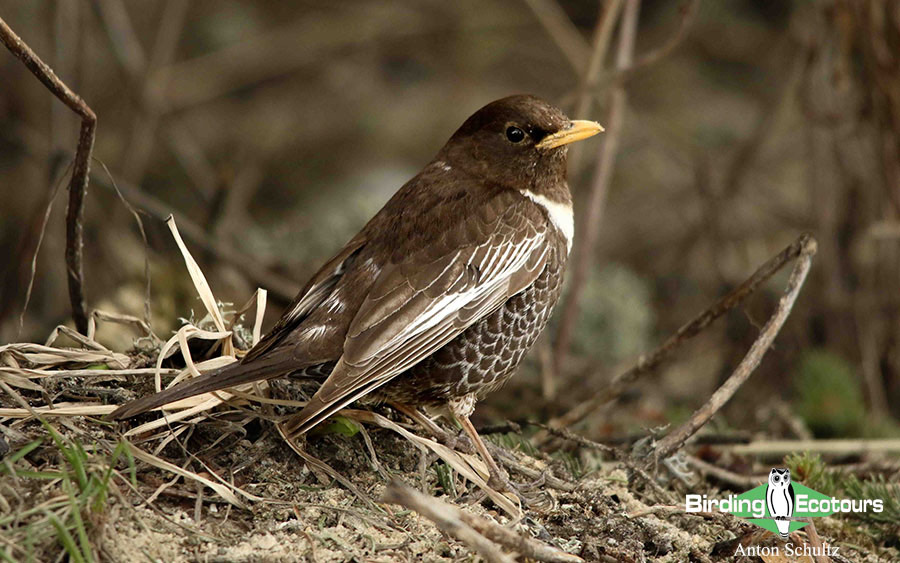
The handsome Ring Ouzel is a fairly common denizen on top of Vitosha Mountain.
Even so, we still had one excellent stop remaining on the outskirts of Sofia. A grassland quarry produced a fine selection of open-country species including Calandra Lark, Black-headed Bunting, Sardinian Warbler, European Red-rumped Swallow, Northern Wheatear, and Eastern Black-eared Wheatear. From here we finally continued on toward Osina. Although much of today had technically been a travel day, we still managed to pack in a remarkable variety of memorable sightings and we finished the day with a fine taster of the local alcohol, ‘Rakia’.
Day 2, 12th May 2026. Birding Trigrad Gorge and the western Rhodope Mountains
We began the morning with a relaxed walk around the hotel grounds, a productive start that quickly added several quality species to the trip list. Birds here included European Serin, Eurasian Bullfinch, Common Crossbill, Mistle Thrush, and Pallid Swift. One particular highlight was watching a Common Crossbill expertly dismantling a pine cone in search of seeds. Following a fantastic breakfast of assorted local cheeses, meats, and fresh vegetables, we set off toward the spectacular Trigrad Gorge. En route we made only one unscheduled stop, but it was a worthwhile one, with an enormous male Black Woodpecker giving a brief but memorable aerial display, accompanied by a Great Spotted Woodpecker nearby.
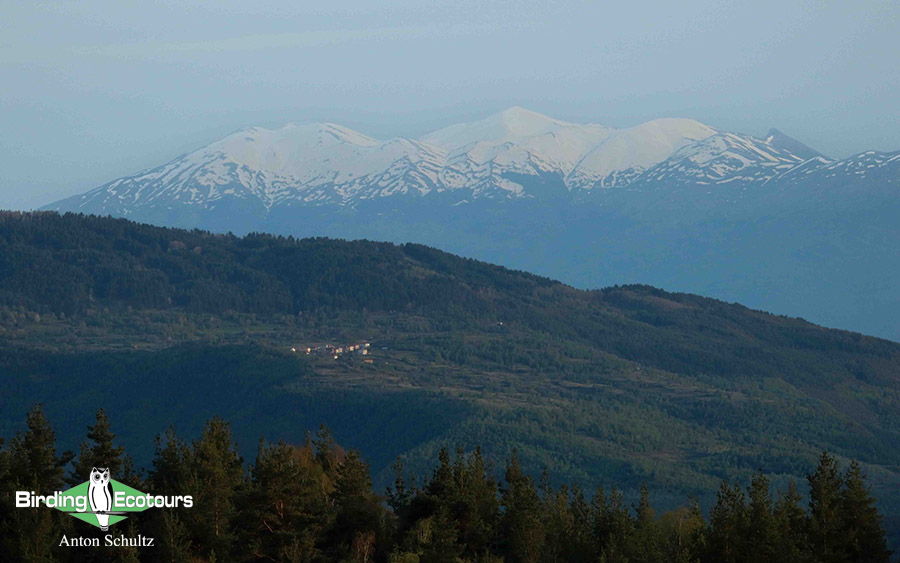
Views like this were not uncommon in the enchanting Western Rhodopes.
We arrived at the steep-sided Trigrad Gorge in the late morning and immediately began our vigil for the highly sought-after Wallcreeper. Oddly enough, this legendary species was only a lifer for one participant on the tour, with everyone else having previously encountered it somewhere in Asia. After around half an hour of increasingly anxious scanning, interrupted only by passing Eurasian Crag Martins and Pallid Swifts, we finally picked up a pair of Wallcreepers feeding high on the cliffs, offering brief but satisfying enough scope views.
Already delighted, we decided to test our luck a little further, and were richly rewarded. Before long, a Wallcreeper appeared barely 30 feet (10 meters) away from us, clinging effortlessly to the cliff face and flashing its crimson wings at close range. Fortune, it seemed, favored the experienced too.
With arguably the coolest bird of the tour successfully tracked down, we headed into the village of Trigrad for lunch, stopping only for a brief and entirely necessary celebratory zipline session along the way. Around the river we enjoyed excellent views of several White-throated Dippers, while the ever-present Grey Wagtails patrolled the streams as usual. From our lunch spot itself, Assen picked out our first Northern Chamois of the trip standing high on a distant mountainside.
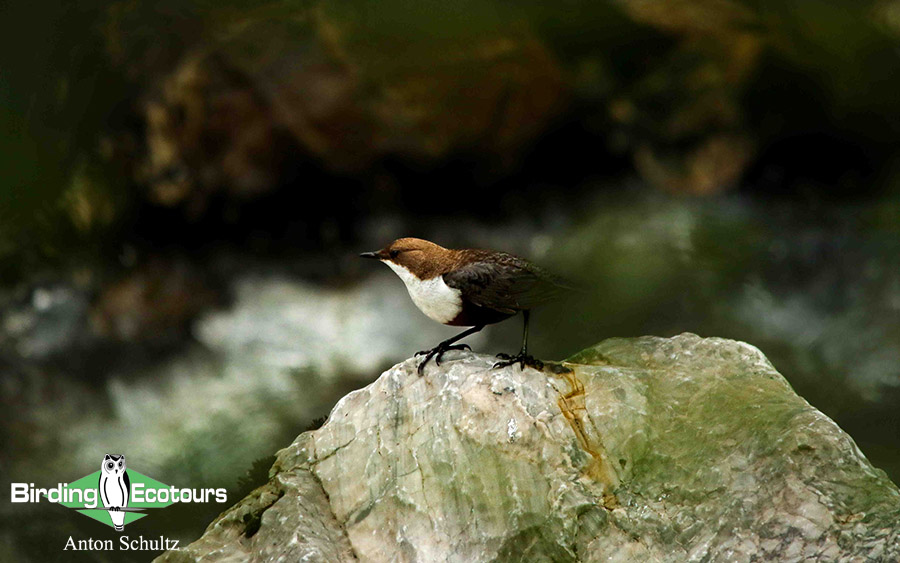
Dippers are the only family of truly aquatic passerine birds on earth, with White-throated Dipper being the only aquatic passerine species on the European continent.
After lunch we continued toward our next accommodation, adding a fleeting and ultimately our only Eurasian Sparrowhawk of the entire tour en route. By mid-afternoon we arrived at our lovely accommodation in the impossibly picturesque village of Yagodina and headed out for one final walk before the day ended. The clear sighting of the afternoon was a pair of breeding Sombre Tits, one of the most coveted species for Western Palearctic listers. A few Yellowhammers and additional Common Crossbills rounded off another thoroughly enjoyable day in the Bulgarian mountains.
Day 3, 13th May 2026. Birding Yagodina, Kardzhali and Dolna Kula
This morning involved a fair amount of off-roading up an entirely unnecessary, yet thoroughly rewarding, steep muddy track on the outskirts of Yagodina. Fortunately, the effort proved more than worthwhile. At the top we were greeted by beautiful golden morning light and excellent views of both Crested Tit and Willow Tit, while another vocal Sombre Tit accompanied us on the descent back down the mountain.
After a quick breakfast, we slowly made our way out through yet another spectacular river gorge as we departed the high mountains and began our journey toward the Eastern Rhodopes. Along the way we encountered a particularly unusual-looking Northern Chamois, while the riversides once again produced several White-throated Dippers among the rushing mountain streams.
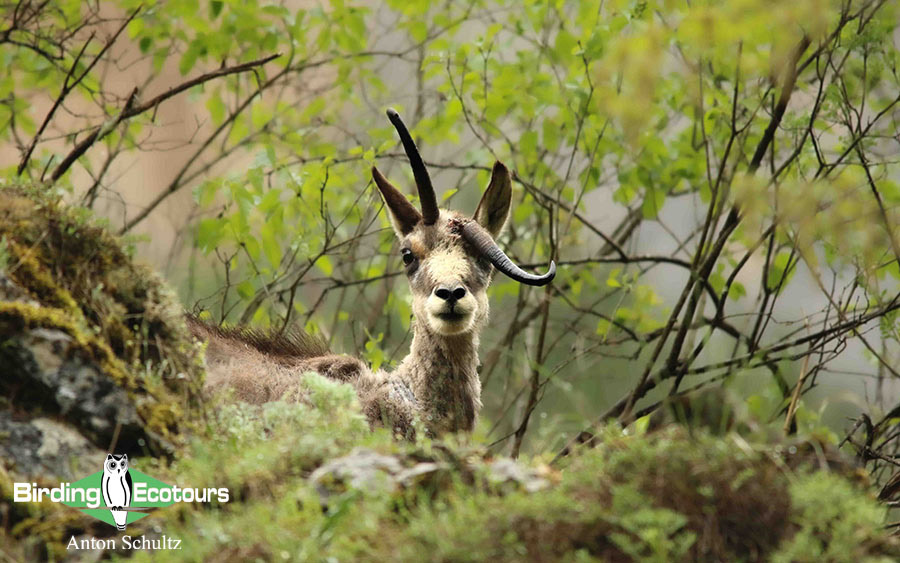
This Northern Chamois looked like it was going through its emo phase with that broken horn.
Our journey eastward began producing some exciting hints of what was still to come, with species such as Black Stork and European Honey Buzzard appearing along the route. Today, we also acquired our trip mascot, a cute little doll we affectionately named ‘Yagoda’ (‘Strawberry’ in Bulgarian). The real treat of the day, however, came when we spent an hour birding from a superb wetland bridge in the city of Kardzhali. Here the species list rapidly expanded with birds that would become familiar companions throughout the latter half of the tour. Highlights included Little Grebe, Mute Swan, Little Bittern, Purple Heron, Pygmy Cormorant, Common Moorhen, Eurasian Hobby, Great Reed Warbler, and Common Reed Warbler.
The true stars of the wetland, however, were the impressive breeding colonies of Black-crowned Night Herons and Little Egrets, their nests packed into the willow trees hanging over the water. As if that spectacle was not entertaining enough, just as we were preparing to leave, a Beech Marten appeared and began enthusiastically raiding the nests, creating complete chaos among the colony and giving us an unforgettable final scene before we continued onward.
Somehow still not entirely satisfied with the day’s birding, we finished the afternoon in the famous Dolna Kula Valley, where the rain had finally caught up with us. Fortunately, the showers arrived in manageable bursts, giving us enough dry windows to enjoy several excellent species. Highlights included Chukar, Lesser Spotted Woodpecker, Lesser Grey Shrike, Eastern Olivaceous Warbler, and Eastern Black-eared Wheatear. Thoroughly pleased with the day’s sightings, we eventually made our way to Krumovgrad, where a spectacular double rainbow appeared over the town to provide a fitting end to an outstanding travel day.
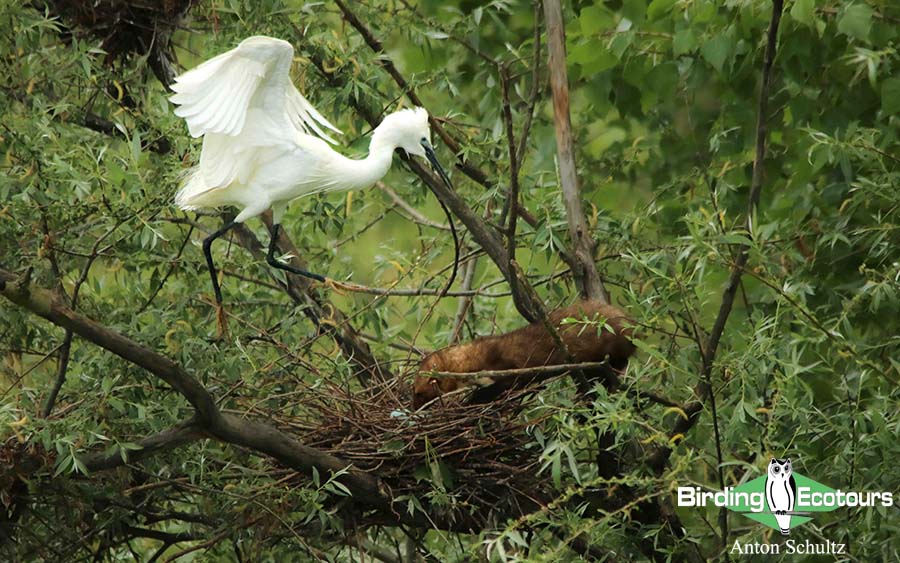
This Little Egret tried its best to fight against the Beech Marten, but the marten clearly thought these eggs were worth the minor nuisance.
Day 4, 14th May 2026. Birding the eastern Rhodope Mountains
With the high-altitude pine forests of western Bulgaria now behind us, and a transition into the drier, sparsely vegetated landscapes of the Eastern Rhodopes underway, today always felt destined to be a productive one.
We began the morning by making our way to the local vulture feeding station perched on a hillside near the town of Potochnica. Egyptian Vultures seemed to dominate the site, while several Griffon Vultures brooded nearby. At one stage, Wendy, who repeatedly proved herself to be an exceptional spotter throughout the tour, picked up the head of an enormous bird just visible above a distant ridgeline. Sure enough, it turned out to be the highly sought-after Cinereous Vulture, undoubtedly one of the highlights of the entire trip.
As we worked our way back down the hillside, the surrounding scrub and open country delivered an excellent variety of species. Top species included Eurasian Hoopoe, Little Owl, Eurasian Roller, Woodchat Shrike, Spanish Sparrow, Olive-tree Warbler, Eastern Orphean Warbler, and Eastern Subalpine Warbler. The Little Owl, perched beside a small abandoned building typical of these rural corners of Bulgaria, was especially memorable.
A midday hike through the nearby Studen Kladenets River Valley then pushed the trip list even higher. The rocky slopes and scattered scrub produced a fine selection of species, including Short-toed Snake Eagle, Blue Rock Thrush, Long-tailed Tit, Cirl Bunting, and a far improved sighting of Eastern Subalpine Warbler.
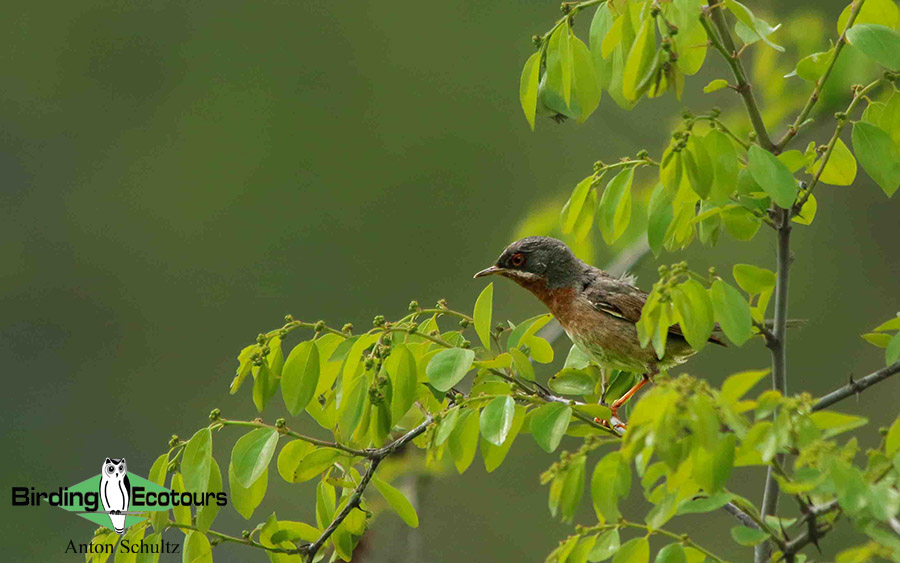
Eastern Subalpine Warbler is fairly common around these parts around this time of year.
From here we slowly made our way toward the town of Madzharovo, stopping briefly along the Arda River where we witnessed our first Peregrine Falcon of the trip attempting to hunt an impressively agile Alpine Swift. The swift ultimately proved far too acrobatic to become lunch, much to our relief.
Even during the drive itself, it was impossible not to notice just how dramatically the bird diversity had increased in the region. Common Nightingales seemed to pour out of every patch of vegetation, Corn Buntings sang constantly from exposed perches, White Storks became a regular feature of both the fields and their characteristic oversized nests scattered throughout the countryside, and every now and then a flock of European Bee-Eaters would make a flyby.
Our day concluded in the legendary Madzharovo crater area, where the dramatic cliffs and rocky slopes produced excellent views of both Rock Bunting and Blue Rock Thrush. The true highlight of the afternoon, however, was undoubtedly a pair of Western Rock Nuthatches repeatedly visiting their remarkable mud “lava” nest on an impossibly distant cliff face. This was the very same pair I had located while scouting before the tour, and apparently the only active nest we were able to find this season, making the sighting feel even more special.
Even after dinner, though, the day still had one final surprise waiting for us. In the center of town, a diminutive Eurasian Scops Owl put on a magical performance, calling persistently and eventually giving us wonderful views to round off another exceptional day in the Eastern Rhodopes.
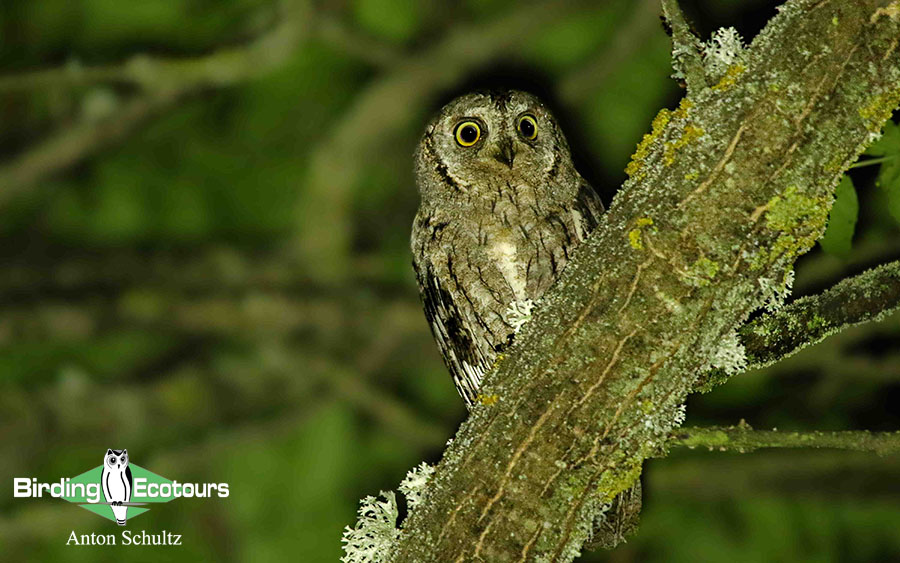
It’s surprising just how plentiful these beautiful Eurasian Scops Owls were in the center of busy towns in the region.
Day 5, 15th May 2026. Further birding in the eastern Rhodope Mountains
This morning we took a pre-breakfast walk on the oak hills above the town to secure Eastern Bonelli’s Warbler. The other highlight of the walk had to be finally seeing some of the Common Cuckoos we’d been hearing all trip, as well as a fantastic Eurasian Blackcap calling from an open perch.
After breakfast, and a coffee stronger than my love for birding, we headed back out toward the Madzharovo crater area for a walk along the edge of the rocky peaks. One interesting sighting along the way was a European Stonechat of the Siberian race which only gave us very brief views. The morning quickly produced an excellent selection of species, including Black Stork, Griffon Vulture, Short-toed Snake Eagle, European Turtle Dove, Sombre Tit (again), Woodlark, Blue Rock Thrush, and greatly improved views of Rock Bunting.
The primary target for the walk, however, was the elusive Barred Warbler, a species that had somehow managed to avoid us throughout the trip up to this point. Initially, a particularly shy individual led us on something of a chase through the scrub, refusing to offer more than the briefest glimpses. Fortunately, persistence eventually paid off when another bird appeared and proceeded to sit perfectly still in the open, allowing everyone in the group prolonged scope views of this excellent species.
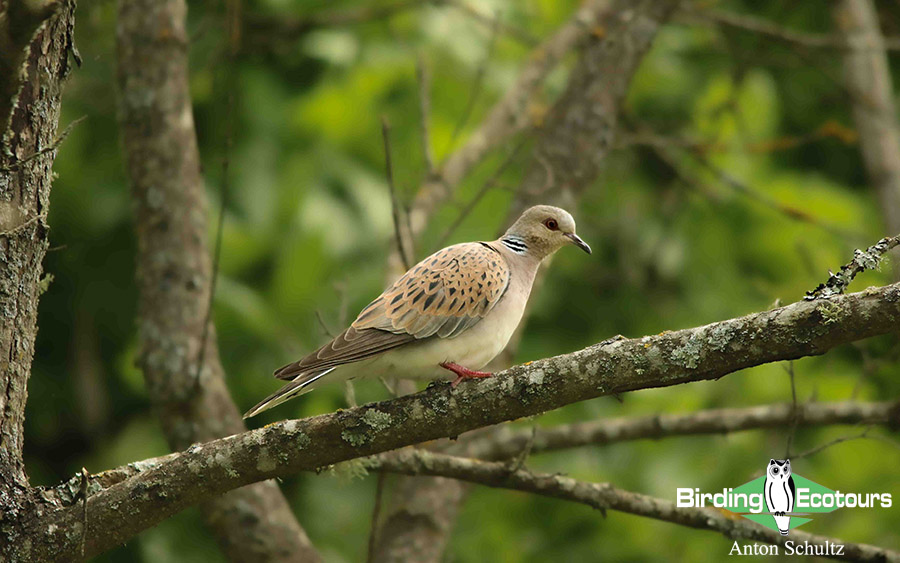
As with many European-African migrants, European Turtle Dove is becoming increasingly scarce throughout Europe; it’s always a treat to see them.
After a morning filled with plenty of walking, it was a welcome change of pace to stop by the Eastern Rhodopes Conservation Center. Here we were given a short tour showcasing the immense progress that has been made in securing breeding sites and recovering vulture populations within the region. Seeing the scale and dedication of these conservation efforts made us appreciate even more that the spectacular Cinereous Vulture we had enjoyed earlier in the trip would likely not have been possible without intervention programs such as these.
A very short walk near the center also produced a few woodland species that had somehow managed to elude us until now, including Eurasian Nuthatch and Short-toed Treecreeper, both welcome additions to the steadily growing trip list. We also saw a few birds which were now becoming very familiar, like Eurasian Golden Oriole.
After lunch, we made our way to the nearby Ivaylovgrad Reservoir where we enjoyed our first and only Western Osprey of the trip, carrying a fish neatly parallel to its body, as they so characteristically do. The reservoir also produced good views of Ruddy Shelduck, Common Tern, Little Owl, Black Kite, European Honey Buzzard, and Booted Eagle. The Common Terns in particular were a sign of things to come, and they became a familiar sight over the next few days. One particularly odd occurrence in the area was a Eurasian Scops Owl calling in the heat of the day, although I have previously experienced this behavior with this genus of owls.
Day 6, 16th May 2026. Birding the eastern Rhodope Mountains to the Black Sea coast
We decided to go on another morning walk near the hotel this morning, this time being followed the entire way by a particularly friendly stray dog that seemed to love the adventure. Our walk added Middle-Spotted Woodpecker to our list with some great sightings, and once again, another great sighting of a pair of Sombre Tits feeding a juvenile. This would be our last sighting of this awesome bird for the tour, and something tells me it isn’t always this easy to keep up with.
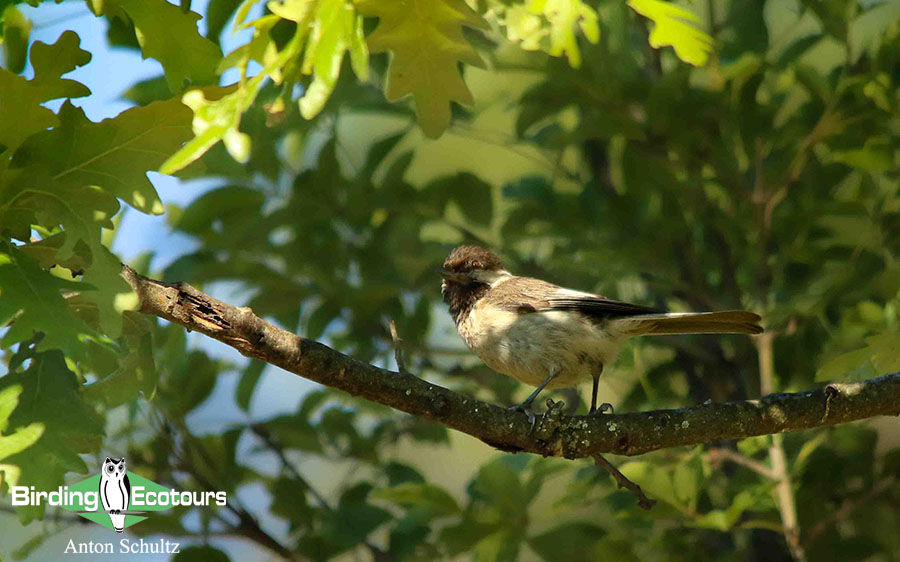
Sombre Tits are range restricted and difficult to pick up on in most circumstances.
Before reaching the Black Sea coast we still had several important species to find, as we gradually left the Rhodope Mountains behind us. Highest on the agenda was the scarce Masked Shrike, which fortunately rewarded us with excellent views after a short but determined chase through the scrub.
Birding in this region proved to be consistently rewarding, and we repeatedly found ourselves distracted by additional quality species along the way. Highlights included Eurasian Goshawk, which gave a brief overhead flyby, several Eastern Orphean Warblers and, at last, a long-awaited Ortolan Bunting, a species that had somehow managed to elude us for much of the tour and, further into town, a great Syrian Woodpecker.
We next visited a colony of Lesser Kestrels, where artificial nesting boxes have been installed as part of ongoing efforts to restore and support the Bulgarian population of this charismatic falcon. Once again, it was impossible not to be impressed by the scale and dedication of the conservation work taking place throughout the region.
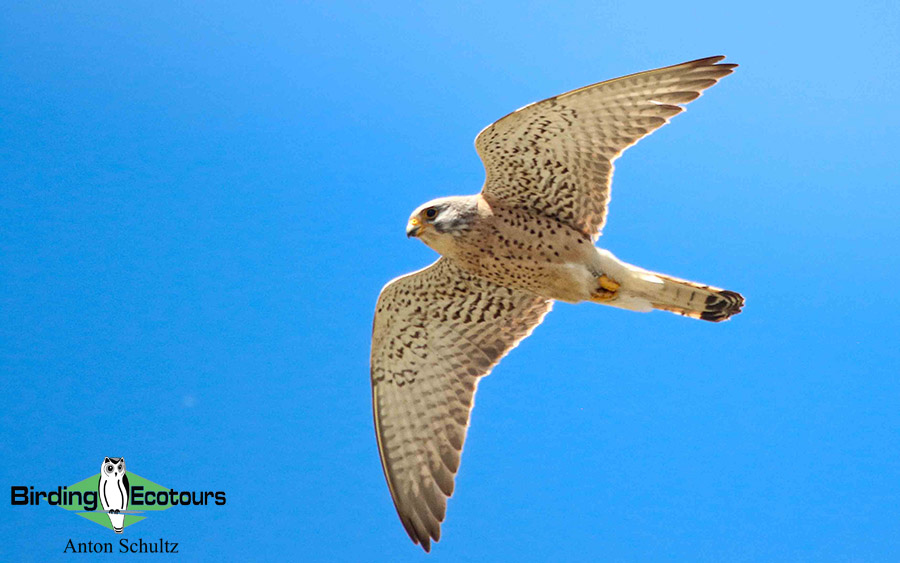
Breeding Lesser Kestrels were once entirely absent from Bulgaria until the Levka breeding program successfully reared chicks in 2014.
The journey toward the coast also proved exceptionally productive for raptors. Along the route we encountered Montagu’s Harrier, Long-legged Buzzard, Short-toed Snake Eagle, Lesser Spotted Eagle, and the magnificent Eastern Imperial Eagle. Around the Imperial Eagle site, the habitat shifted into more open steppe-like terrain, which produced excellent sightings of Tawny Pipit and Isabelline Wheatear. With plenty of driving still ahead of us, we eventually hit the road once more. With only an extremely brief sighting of European Wildcat on the way, we finally reached the Black Sea coast in the evening and stunning views from our porches awaited us.
Day 7, 17th May 2026. Birding the Black Sea coast
We set off after breakfast toward Atanasovsko Lake, where, much like earlier in the trip, our species list once again exploded, this time with an impressive array of wetland specialists. Pied Avocets dotted the shallow waters nearby, while large numbers of Little Gulls, Black Terns, White-winged Terns, and Whiskered Terns moved constantly back and forth across the lake. Further out on the pans, a flock of roughly one hundred Greater Flamingos stood glowing pink against the pale water.
Along the distant muddy shoreline Grey Plovers and Ruffs were seen actively feeding, while several Eurasian Spoonbills stood behind them. Waders proved to be quite difficult on this tour because of the high-water levels but, by the end of the tour, we accrued a decent list despite getting it in drips and drabs. Altogether, it was an exceptional wetland spectacle and one of the most atmospheric scenes of the tour. Unfortunately, we had to eventually tear ourselves away and continue onward.
From here we moved towards the more open freshwater habitats of Mandrensko Lake, where the pace of birding slowed slightly compared to the frenzy of Atanasovsko. Even so, the area still produced several excellent species, including Great White Pelican, Great Crested Grebe, White-tailed Eagle, Squacco Heron, Western Yellow Wagtail, and Marsh Warbler, the latter proving far easier to hear than to actually see. A brief flyby view of White-tailed Eagle was great but would be much improved upon in the Danube delta later on the tour.
The latter half of the day was spent searching the ancient forests of Strandzha Nature Park for the notoriously difficult White-backed Woodpecker. Despite a considerable amount of effort, the species largely remained a ghost, offering only the briefest untickable glimpse for the group before disappearing once again into the dense forest.
Rain throughout the afternoon did little to help matters, and at one point we temporarily retreated for coffee while waiting out the worst of the weather. Still, it was hard to complain in forests as beautiful as Strandzha, and several excellent distractions kept morale high, including Semi-collared Flycatcher, Marsh Tit, and Eurasian Wren among the ancient oak woodland.
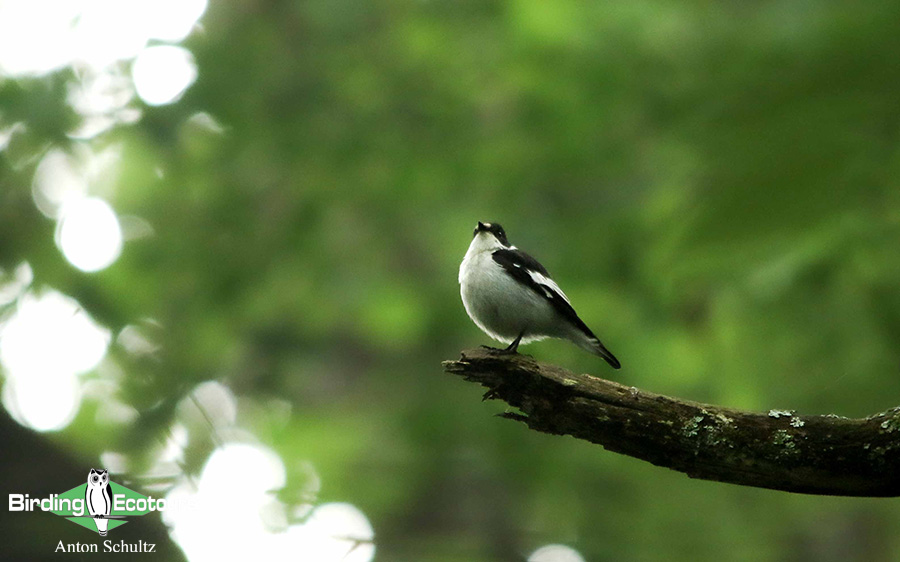
This Semi-collared Flycatcher displayed fairly typical behaviour hawking insects from his perch in the understory.
Day 8, 18th May 2026. Northward along the coast
After breakfast, we stopped at the Poda Protected Area where we added a number of excellent species to the trip list, including Common Pochard, Squacco Heron, Eurasian Spoonbill, Cetti’s Warbler and a Ferruginous Duck that I managed to miss — I was busy purchasing some entirely essential pin badges in the visitor center at the time.
We moved on to the Pomorie Lake Salt Museum area, where another productive session of birding awaited us. Memorable species included Gadwall, Great Egret, Eurasian Oystercatcher, once again expertly spotted by Wendy, several Little Terns, and an even larger gathering of Sandwich Terns packed tightly together on a wooden dock. Continuing further north (with great music on the way in), we made a brief stop in the Goritsa woodlands where it was enjoyable to reconnect with several familiar species from earlier in the tour. Birds here included Middle Spotted Woodpecker, Short-toed Treecreeper, Eurasian Blue Tit, and European Greenfinch.
A bit later we made another memorable stop where, after investing a considerable amount of energy and patience, we finally connected with a European Green Woodpecker. While certainly not an especially rare species in these parts, they can be remarkably elusive, and this individual proved no exception. Out along the nearby beach we paused to enjoy the coastal scenery, where several Gull-billed Terns made graceful flybys over the shoreline to round off the stop nicely.
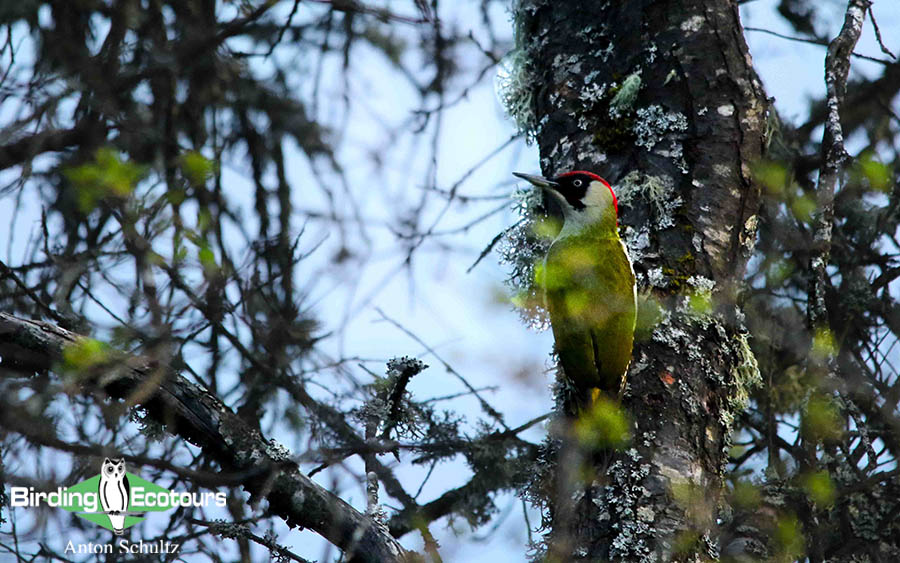
European Green Woodpecker is widespread in Europe but nonetheless tricky at times.
Our final stop of the day proved to be an excellent one. Assen knew of an active breeding site for Eurasian Eagle-Owl and, after some careful scanning, he managed to locate the bird resting deep within the shadows of a distant mountainside. Interestingly, Assen, who is something of an owl expert outside of guiding, pointed out that the bird never once closed its eyes while we observed it. According to him, this suggested that it was fully aware of our presence despite us being well over a hundred feet away. The site also produced a good number of Eurasian Hobby, several of which perched out on the cliffs and provided superb scope views to round off another memorable day of birding.
Day 9, 19th May 2026. Birding the Durankulak and Kavarna area
We spent the full day birding a variety of sites across north-eastern Bulgaria, beginning at the legendary Durankulak Lake area where the birding was exceptional despite strong winds throughout the morning. Highlights came thick and fast and included Ferruginous Duck (phew), Dalmatian Pelican, Glossy Ibis, Black-necked Grebe, Common Ringed Plover, Little Ringed Plover, Curlew Sandpiper, Collared Pratincole, Black Tern, White-winged Tern, Red-footed Falcon, Sand Martin, Common Redstart, Common Linnet, and Ortolan Bunting. Another unusual encounter here was a European Grass Snake which sought shade shelter in the strangest of places.
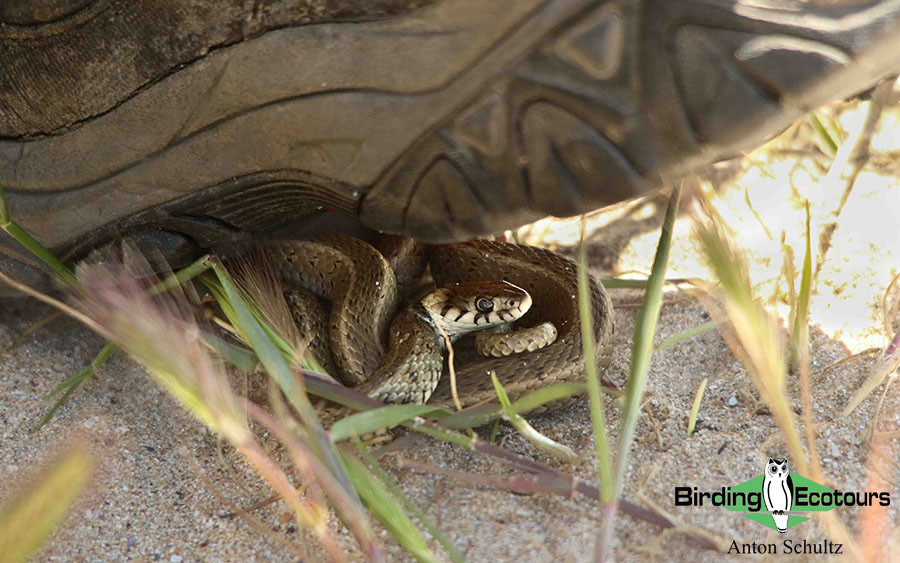
This European Grass Snake thought the underside of Mike’s foot was the best place to seek shelter, luckily Mike was understanding of its plight.
Moving on to Shablenska Tuzla Salt Lake, the birding continued with another excellent selection of species. Highlights here included Garganey, Squacco Heron, and Little Gull, while a rather unexpected Barred Warbler appearing in the scrub right alongside us proved to be a particularly enjoyable surprise.
Our birding around Kavarna and the also-legendary Cape Kaliakra proved to be brilliant with some great species like Black-throated Loon, European Shag, Pied Wheatears and Black-headed Bunting on the Kaliakra itself. The highlight of the area, however, had to be a large flock of Rosy Starlings, which were clearly nesting somewhere nearby. The surrounding steppes near Cape Kaliakra were alive with bird activity, allowing us to add Greater Short-toed Lark, Crested Lark, Calandra Lark, Tawny Pipit, Isabelline Wheatear and Corn Bunting in quick succession.
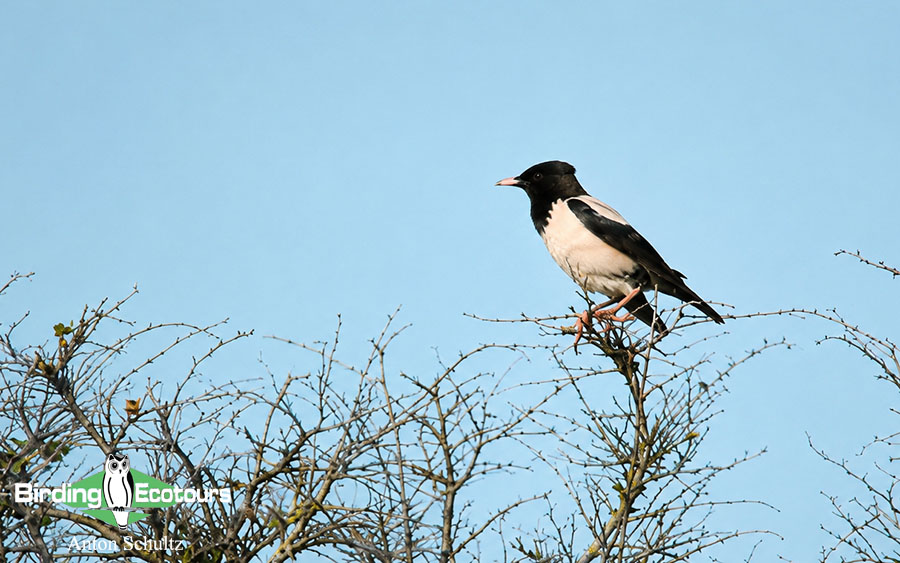
Rosy Starlings are highly nomadic and driven by food availability. They are only present around Kavarna for a short period each year.
Day 10, 20th May 2026. Crossing into Romania
Today we changed guides from Assen to Yordan and hit the road northwards. Yordan got us off to a very strong start with a pair of Eurasian Stone-Curlew and a couple of repeats like Greater Short-toed Lark and Eurasian Hoopoe. The border crossing into Romania proved to be very simple with friendly border police who took an interest in the pictures of Wallcreeper we showed them. Almost immediately after crossing, one change became evident — flocks of Rooks began appearing out of nowhere. We had seen only a single terrible sighting of one the day prior in Durankulak, but it seemed that they were mostly loyal to Romania.
Well within Romania, we stopped at one of the country’s most legendary wetland sites, the Vadu wetlands. From our lunch vantage point we enjoyed an excellent variety of species, including Greylag Goose, Ruddy Shelduck, Eurasian Teal, Ferruginous Duck, Red-crested Pochard, Eurasian Spoonbill, Western Cattle Egret which proved to be our only sighting of the trip, Northern Lapwing, large numbers of Collared Pratincoles, and ever-increasing numbers of Red-footed Falcons.
At exactly 3 PM we met our boat driver for the Danube Delta and set off toward Mila 23, where we would spend the next two nights. Along the way we made a brief stop at a local cultural museum before continuing deeper into the delta.
Even during the journey itself the birding was already excellent. Species seen along the waterways included Black-tailed Godwit in full breeding plumage, Whiskered Tern, Black-headed Gull, Caspian Gull, and White-tailed Eagle, the latter always an impressive sight soaring above the vast reedbeds of the delta.
Day 11, 21st May 2026. Birding the Danube Delta
Excitingly, today we had a full-day boat trip out into the Danube Delta ahead of us. Before setting off, however, we decided to take a short walk around the small island surrounding our boat-access-only accommodation.
The bird of the morning had to be an exceptionally confiding Grey-headed Woodpecker, which more than made up for the behaviour of its far less cooperative European Green Woodpecker relative earlier in the trip. Other species included excellent views of Eastern Olivaceous Warbler and Long-tailed Tit, while a trio of Dalmatian Pelicans drifted along the open channel nearby.
Our time exploring the intricate network of channels and lakes throughout the day produced an excellent variety of wetland species. Some of our top birds included an enormous flock of Great White Pelicans, Red-necked Grebe, Great Cormorant, Pygmy Cormorant, Black-crowned Night Heron, Purple Heron, Great Egret, Little Egret, Eurasian Spoonbill, Black Tern, Common Tern, Whiskered Tern, Black-headed Gull, and Caspian Gull. The undisputed star of the show on the channel, however, was an absurdly charming little Eurasian Penduline Tit, which completely stole the spotlight.
Our boat tour also included a stop at Letea Forest, the oldest natural reserve in Romania. This proved to be one of the highlights of the day, with the forest producing excellent sightings of Thrush Nightingale, Icterine Warbler, Collared Flycatcher, and Common Redstart. On the journey to and from the forest, we also encountered impressive numbers of Red-footed Falcons occupying old Rook nests throughout the surrounding countryside. All in all, it was an excellent day exploring the waterways and forests of the Danube Delta.
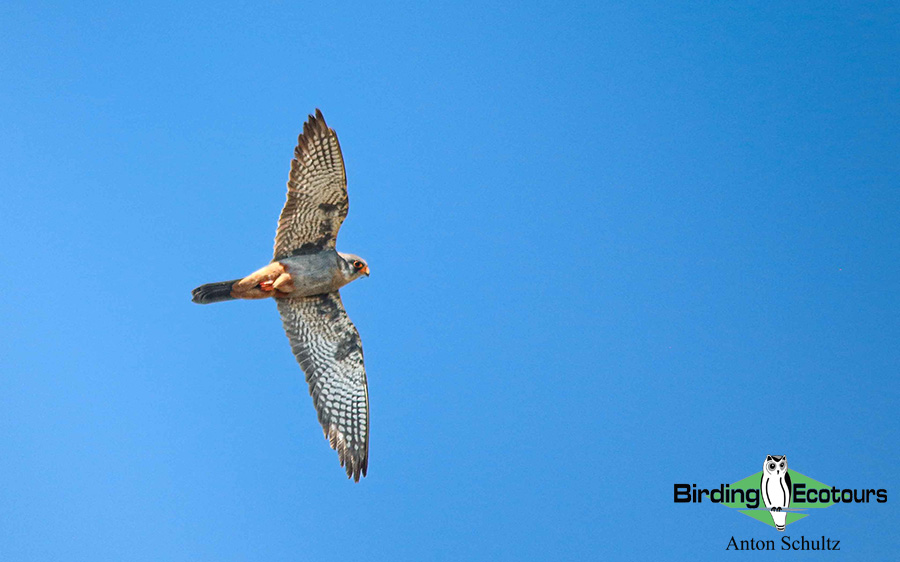
Interestingly, Red-footed Falcons are entirely incapable of constructing their own nests, instead relying on abandoned stick nests built by corvids, particularly rooks, for breeding sites.
Day 12, 22nd May 2026. Danube Delta to Vadu
After breakfast, we took a quick water taxi back to the mainland. Today was largely dedicated to a few lingering targets that had somehow eluded us, and with Yordan at the helm we steadily began ticking them off.
Mediterranean Gull required quite a bit of careful sifting through distant flocks before we eventually secured acceptable views, while Pallas’s Gull proved to be a much more straightforward target soon afterwards. In an area of dense reedbeds, we added several more long-awaited species including Paddyfield Warbler, Savi’s Warbler, and the unique and highly sought-after Bearded Reedling, which fortunately showed exceptionally well for the group.
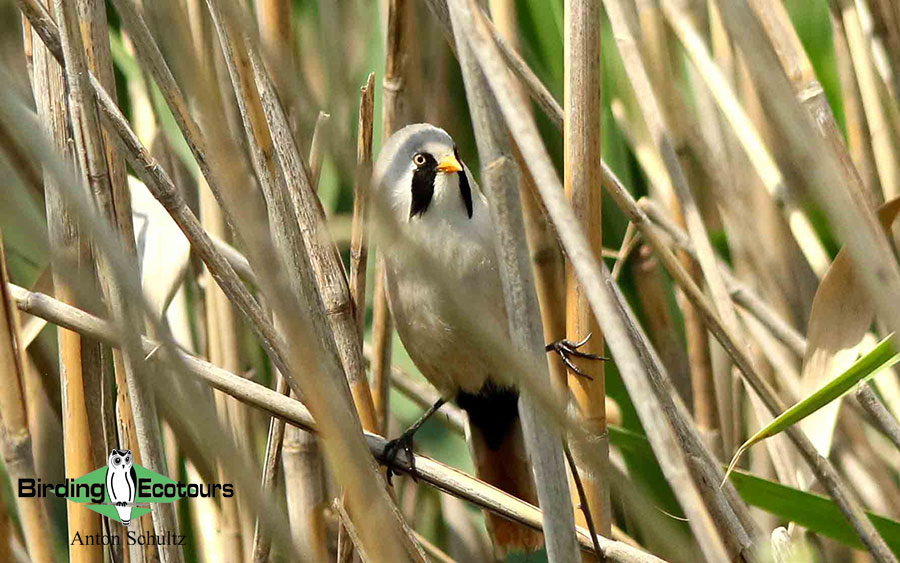
This pose is quite famous for the monotypic Bearded Reedling, probably one of the cutest birds on the planet.
A visit to Lake Sinoe added another excellent selection of species to the trip list, including Marsh Sandpiper, Common Greenshank, Moustached Warbler, and Common Reed Bunting. Eurasian Bittern boomed from deep in the wetland, but unfortunately, we never got lucky enough to see it. The area also produced several familiar species that would have had our mouths watering at the beginning of the tour, including Caspian Gull, Western Yellow Wagtail, and yet more Paddyfield Warblers, which by now were becoming almost expected.
We returned to the highly productive Vadu area for the afternoon, enjoying many of the same excellent species we had encountered there two days earlier, alongside new additions such as Wood Sandpiper, Savi’s Warbler, and Sand Martin.
This visit differed from the last, however, as we made our way out to the beachfront itself and spent our final afternoon of the tour overlooking the Black Sea. Here we enjoyed sightings of Black-necked Grebe, Little Ringed Plover, Eurasian Oystercatcher, Gull-billed Tern, and Sandwich Tern. The most memorable sighting, though, had to be an absolutely spectacular Parasitic Jaeger relentlessly chasing a Common Tern along the shoreline.
We headed back to our accommodation around sunset and celebrated what was an all-round successful trip with many high points and great stories (some of them never made it into this report, like Chris’s flag identification skills, Teri’s aversion to the spicy Paprika sauce, Wendy’s badass walking stick and of course, Mike’s Condor).
Day 13, 23rd May 2026. Vadu birding and departure from Bucharest
Our final morning vigil began with us following up on a Willow Warbler, but in the process, we accidentally stumbled into one of the most unexpected sightings of the entire trip, a stunning roosting Long-eared Owl hidden in plain sight!
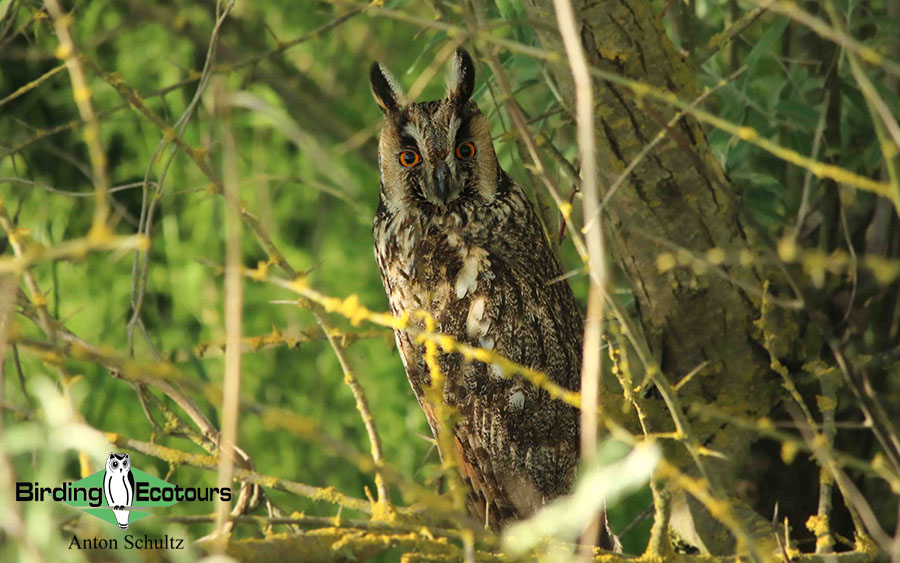
This Long-eared Owl was the last new species of our 2026 Bulgaria and Romania spring trip.
Following up on such a spectacular sighting proved difficult, and our final stop at a nearby quarry on the way to the airport could only produce some great species which we had already seen on this tour, like Long-legged Buzzard, Northern Wheatear and Yellowhammer. We arrived at the airport around midday and said our goodbyes as we all continued on our respective journeys through life. Thanks for a great trip, everyone, especially the local guides Assen and Yordan who both put in a great effort for a fantastic total of 224 species seen!
Bird List – Following IOC 15.2 (March 2025)
Birds ‘heard only’ are marked with (H) after the common name, all other species were seen.
The following notation after species names is used to show conservation status following the IUCN Red List:
EN = Endangered, VU = Vulnerable.
| Common name | Scientific name |
| Ducks, Geese, Swans (Anatidae) | |
| Greylag Goose | Anser anser |
| Mute Swan | Cygnus olor |
| Common Shelduck | Tadorna tadorna |
| Ruddy Shelduck | Tadorna ferruginea |
| Garganey | Spatula querquedula |
| Northern Shoveler | Spatula clypeata |
| Gadwall | Mareca strepera |
| Mallard | Anas platyrhynchos |
| Eurasian Teal | Anas crecca |
| Red-crested Pochard | Netta rufina |
| Common Pochard (VU) | Aythya ferina |
| Ferruginous Duck | Aythya nyroca |
| Pheasants & Allies (Phasianidae) | |
| Common Pheasant | Phasianus colchicus |
| Chukar Partridge | Alectoris chukar |
| Swifts (Apodidae) | |
| Alpine Swift | Tachymarptis melba |
| Common Swift | Apus apus |
| Pallid Swift | Apus pallidus |
| Cuckoos (Cuculidae) | |
| Common Cuckoo | Cuculus canorus |
| Pigeons, Doves (Columbidae) | |
| Rock Dove | Columba livia |
| Common Wood Pigeon | Columba palumbus |
| European Turtle Dove (VU) | Streptopelia turtur |
| Eurasian Collared Dove | Streptopelia decaocto |
| Rails, Crakes & Coots (Rallidae) | |
| Common Moorhen | Gallinula chloropus |
| Eurasian Coot | Fulica atra |
| Grebes (Podicipedidae) | |
| Little Grebe | Tachybaptus ruficollis |
| Red-necked Grebe | Podiceps grisegena |
| Great Crested Grebe | Podiceps cristatus |
| Black-necked Grebe | Podiceps nigricollis |
| Flamingos (Phoenicopteridae) | |
| Greater Flamingo | Phoenicopterus roseus |
| Stone-curlews, Thick-knees (Burhinidae) | |
| Eurasian Stone-curlew | Burhinus oedicnemus |
| Oystercatchers (Haematopodidae) | |
| Eurasian Oystercatcher | Haematopus ostralegus |
| Stilts, Avocets (Recurvirostridae) | |
| Black-winged Stilt | Himantopus himantopus |
| Pied Avocet | Recurvirostra avosetta |
| Plovers (Charadriidae) | |
| Grey Plover (VU) | Pluvialis squatarola |
| Common Ringed Plover | Charadrius hiaticula |
| Little Ringed Plover | Charadrius dubius |
| Northern Lapwing | Vanellus vanellus |
| Sandpipers, Snipes (Scolopacidae) | |
| Eurasian Curlew | Numenius arquata |
| Black-tailed Godwit | Limosa limosa |
| Marsh Sandpiper | Tringa stagnatilis |
| Wood Sandpiper | Tringa glareola |
| Common Redshank | Tringa totanus |
| Common Greenshank | Tringa nebularia |
| Ruff | Calidris pugnax |
| Curlew Sandpiper (VU) | Calidris ferruginea |
| Dunlin | Calidris alpina |
| Little Stint | Calidris minuta |
| Coursers, Pratincoles (Glareolidae) | |
| Collared Pratincole | Glareola pratincola |
| Gulls, Terns, Skimmers (Laridae) | |
| Little Tern | Sternula albifrons |
| Gull-billed Tern | Gelochelidon nilotica |
| Caspian Tern | Hydroprogne caspia |
| Whiskered Tern | Chlidonias hybrida |
| Black Tern | Chlidonias niger |
| White-winged Tern | Chlidonias leucopterus |
| Common Tern | Sterna hirundo |
| Sandwich Tern | Thalasseus sandvicensis |
| Little Gull | Hydrocoloeus minutus |
| Black-headed Gull | Chroicocephalus ridibundus |
| Pallas’s Gull | Ichthyaetus ichthyaetus |
| Mediterranean Gull | Ichthyaetus melanocephalus |
| Caspian Gull | Larus cachinnans |
| Yellow-legged Gull | Larus michahellis |
| Skuas (Stercorariidae) | |
| Parasitic Jaeger | Stercorarius parasiticus |
| Loons (Gaviidae) | |
| Black-throated Loon | Gavia arctica |
| Storks (Ciconiidae) | |
| Black Stork | Ciconia nigra |
| White Stork | Ciconia ciconia |
| Cormorants, Shags (Phalacrocoracidae) | |
| Pygmy Cormorant | Microcarbo pygmaeus |
| Great Cormorant | Phalacrocorax carbo |
| European Shag | Gulosus aristotelis |
| Ibises, Spoonbills (Threskiornithidae) | |
| Glossy Ibis | Plegadis falcinellus |
| Eurasian Spoonbill | Platalea leucorodia |
| Herons, Bitterns (Ardeidae) | |
| Eurasian Bittern (H) | Botaurus stellaris |
| Little Bittern | Botaurus minutus |
| Black-crowned Night Heron | Nycticorax nycticorax |
| Little Egret | Egretta garzetta |
| Squacco Heron | Ardeola ralloides |
| Great Egret | Ardea alba |
| Western Cattle Egret | Ardea ibis |
| Grey Heron | Ardea cinerea |
| Purple Heron | Ardea purpurea |
| Pelicans (Pelecanidae) | |
| Great White Pelican | Pelecanus onocrotalus |
| Dalmatian Pelican | Pelecanus crispus |
| Ospreys (Pandionidae) | |
| Osprey | Pandion haliaetus |
| Kites, Hawks, Eagles (Accipitridae) | |
| Egyptian Vulture (EN) | Neophron percnopterus |
| European Honey Buzzard | Pernis apivorus |
| Cinereous Vulture | Aegypius monachus |
| Griffon Vulture | Gyps fulvus |
| Short-toed Snake Eagle | Circaetus gallicus |
| Lesser Spotted Eagle | Clanga pomarina |
| Booted Eagle | Hieraaetus pennatus |
| Eastern Imperial Eagle (VU) | Aquila heliaca |
| Eurasian Sparrowhawk | Accipiter nisus |
| Eurasian Goshawk | Astur gentilis |
| Montagu’s Harrier | Circus pygargus |
| Western Marsh Harrier | Circus aeruginosus |
| Black Kite | Milvus migrans |
| White-tailed Eagle | Haliaeetus albicilla |
| Common Buzzard | Buteo buteo |
| Long-legged Buzzard | Buteo rufinus |
| Owls (Strigidae) | |
| Little Owl | Athene noctua |
| Eurasian Scops Owl | Otus scops |
| Long-eared Owl | Asio otus |
| Eurasian Eagle-Owl | Bubo bubo |
| Hoopoes (Upupidae) | |
| Eurasian Hoopoe | Upupa epops |
| Rollers (Coraciidae) | |
| European Roller | Coracias garrulus |
| Bee-eaters (Meropidae) | |
| European Bee-eater | Merops apiaster |
| Woodpeckers (Picidae) | |
| Middle Spotted Woodpecker | Dendrocoptes medius |
| Lesser Spotted Woodpecker | Dryobates minor |
| Syrian Woodpecker | Dendrocopos syriacus |
| Great Spotted Woodpecker | Dendrocopos major |
| White-backed Woodpecker (H) | Dendrocopos leucotos |
| Black Woodpecker | Dryocopus martius |
| European Green Woodpecker | Picus viridis |
| Grey-headed Woodpecker | Picus canus/dedemi |
| Caracaras, Falcons (Falconidae) | |
| Lesser Kestrel | Falco naumanni |
| Common Kestrel | Falco tinnunculus |
| Red-footed Falcon (VU) | Falco vespertinus |
| Eurasian Hobby | Falco subbuteo |
| Peregrine Falcon | Falco peregrinus |
| Figbirds, Old World Orioles, Piopios (Oriolidae) | |
| Eurasian Golden Oriole | Oriolus oriolus |
| Shrikes (Laniidae) | |
| Masked Shrike | Lanius nubicus |
| Lesser Grey Shrike | Lanius minor |
| Woodchat Shrike | Lanius senator |
| Red-backed Shrike | Lanius collurio |
| Crows, Jays (Corvidae) | |
| Eurasian Jay | Garrulus glandarius |
| Eurasian Magpie | Pica pica |
| Northern Nutcracker | Nucifraga caryocatactes |
| Western Jackdaw | Coloeus monedula |
| Rook | Corvus frugilegus |
| Hooded Crow | Corvus cornix |
| Northern Raven | Corvus corax |
| Tits, Chickadees (Paridae) | |
| Coal Tit | Periparus ater |
| Crested Tit | Lophophanes cristatus |
| Sombre Tit | Poecile lugubris |
| Marsh Tit | Poecile palustris |
| Willow Tit | Poecile montanus |
| Eurasian Blue Tit | Cyanistes caeruleus |
| Great Tit | Parus major |
| Penduline Tits (Remizidae) | |
| Eurasian Penduline Tit | Remiz pendulinus |
| Bearded Reedling (Panuridae) | |
| Bearded Reedling | Panurus biarmicus |
| Larks (Alaudidae) | |
| Woodlark | Lullula arborea |
| Eurasian Skylark | Alauda arvensis |
| Crested Lark | Galerida cristata |
| Greater Short-toed Lark | Calandrella brachydactyla |
| Calandra Lark | Melanocorypha calandra |
| Swallows, Martins (Hirundinidae) | |
| Sand Martin | Riparia riparia |
| Eurasian Crag Martin | Ptyonoprogne rupestris |
| Barn Swallow | Hirundo rustica |
| Western House Martin | Delichon urbicum |
| European Red-rumped Swallow | Cecropis rufula |
| Cettia Bush Warblers & Allies (Cettiidae) | |
| Cetti’s Warbler | Cettia cetti |
| Bushtits (Aegithalidae) | |
| Long-tailed Tit | Aegithalos caudatus |
| Leaf Warblers (Phylloscopidae) | |
| Eastern Bonelli’s Warbler | Phylloscopus orientalis |
| Willow Warbler | Phylloscopus trochilus |
| Common Chiffchaff | Phylloscopus collybita |
| Reed Warblers & Allies (Acrocephalidae) | |
| Great Reed Warbler | Acrocephalus arundinaceus |
| Moustached Warbler | Acrocephalus melanopogon |
| Paddyfield Warbler | Acrocephalus agricola |
| Common Reed Warbler | Acrocephalus scirpaceus |
| Marsh Warbler | Acrocephalus palustris |
| Eastern Olivaceous Warbler | Iduna pallida |
| Olive-tree Warbler | Hippolais olivetorum |
| Icterine Warbler | Hippolais icterina |
| Grassbirds & Allies (Locustellidae) | |
| River Warbler (H) | Locustella fluviatilis |
| Savi’s Warbler | Locustella luscinioides |
| Sylviid Babblers (Sylviidae) | |
| Eurasian Blackcap | Sylvia atricapilla |
| Garden Warbler | Sylvia borin |
| Barred Warbler | Curruca nisoria |
| Lesser Whitethroat | Curruca curruca |
| Eastern Orphean Warbler | Curruca crassirostris |
| Sardinian Warbler | Curruca melanocephala |
| Eastern Subalpine Warbler | Curruca cantillans |
| Common Whitethroat | Curruca communis |
| Goldcrests, Kinglets (Regulidae) | |
| Common Firecrest | Regulus ignicapilla |
| Goldcrest | Regulus regulus |
| Wrens (Troglodytidae) | |
| Eurasian Wren | Troglodytes troglodytes |
| Nuthatches (Sittidae) | |
| Western Rock Nuthatch | Sitta neumayer |
| Eurasian Nuthatch | Sitta europaea |
| Wallcreeper (Tichodromidae) | |
| Wallcreeper | Tichodroma muraria |
| Treecreepers (Certhiidae) | |
| Eurasian Treecreeper | Certhia familiaris |
| Short-toed Treecreeper | Certhia brachydactyla |
| Starlings, Rhabdornises (Sturnidae) | |
| Rosy Starling | Pastor roseus |
| Common Starling | Sturnus vulgaris |
| Thrushes (Turdidae) | |
| Song Thrush | Turdus philomelos |
| Mistle Thrush | Turdus viscivorus |
| Common Blackbird | Turdus merula |
| Ring Ouzel | Turdus torquatus |
| Chats, Old World Flycatchers (Muscicapidae) | |
| Spotted Flycatcher | Muscicapa striata |
| European Robin | Erithacus rubecula |
| Thrush Nightingale | Luscinia luscinia |
| Common Nightingale | Luscinia megarhynchos |
| Semicollared Flycatcher | Ficedula semitorquata |
| Collared Flycatcher | Ficedula albicollis |
| Black Redstart | Phoenicurus ochruros |
| Common Redstart | Phoenicurus phoenicurus |
| Blue Rock Thrush | Monticola solitarius |
| Whinchat | Saxicola rubetra |
| European Stonechat | Saxicola rubicola |
| Northern Wheatear | Oenanthe oenanthe |
| Isabelline Wheatear | Oenanthe isabellina |
| Pied Wheatear | Oenanthe pleschanka |
| Eastern Black-eared Wheatear | Oenanthe melanoleuca |
| Dippers (Cinclidae) | |
| White-throated Dipper | Cinclus cinclus |
| Old World Sparrows, Snowfinches (Passeridae) | |
| Eurasian Tree Sparrow | Passer montanus |
| Spanish Sparrow | Passer hispaniolensis |
| House Sparrow | Passer domesticus |
| Accentors (Prunellidae) | |
| Dunnock | Prunella modularis |
| Wagtails, Pipits (Motacillidae) | |
| Western Yellow Wagtail | Motacilla flava |
| Grey Wagtail | Motacilla cinerea |
| White Wagtail | Motacilla alba |
| Tawny Pipit | Anthus campestris |
| Tree Pipit | Anthus trivialis |
| Finches, Euphonias (Fringillidae) | |
| Eurasian Chaffinch | Fringilla coelebs |
| Hawfinch | Coccothraustes coccothraustes |
| Eurasian Bullfinch | Pyrrhula pyrrhula |
| European Greenfinch | Chloris chloris |
| Common Linnet | Linaria cannabina |
| Red Crossbill | Loxia curvirostra |
| European Goldfinch | Carduelis carduelis |
| European Serin | Serinus serinus |
| Buntings (Emberizidae) | |
| Corn Bunting | Emberiza calandra |
| Yellowhammer | Emberiza citrinella |
| Rock Bunting | Emberiza cia |
| Ortolan Bunting | Emberiza hortulana |
| Cirl Bunting | Emberiza cirlus |
| Black-headed Bunting | Emberiza melanocephala |
| Common Reed Bunting | Emberiza schoeniclus |
| Species Seen: | 224 |
| Species Heard: | 3 |
| Species Recorded: | 227 |
Mammal List – Following Mammalwatching.com (February 2026)
The following notation after species names is used to show conservation status following the IUCN Red List:
EN = Endangered
| Common name | Scientific name |
| Hares and Rabbits (Leporidae) | |
| European Hare | Lepus europaeus |
| Squirrels (Sciuridae) | |
| Eurasian Red Squirrel | Sciurus vulgaris |
| European Ground Squirrel (EN) | Spermophilus citellus |
| Mustelids (Mustelidae) | |
| Beech Marten | Martes foina |
| Eurasian Otter | Lutra lutra |
| Canids (Canidae) | |
| Red Fox | Vulpes vulpes |
| Felids (Felidae) | |
| European Wildcat | Felis silvestris |
| Oceanic Dolphins (Delphinidae) | |
| Panglobal Common Dolphin | Delphinus delphis |
| Porpoises (Phocoenidae) | |
| Harbor Porpoise | Phocoena phocoena |
| Bovids (Bovidae) | |
| Northern Chamois | Rupicapra rupicapra |
| Deer (Cervidae) | |
| Western Roe Deer | Capreolus capreolus |
| Western Red Deer | Cervus elaphus |
| Common Fallow Deer | Dama dama |
| Species Seen: | 13 |
Reptile List – Following Reptiles of the World (December 2025)
The following notation after species names is used to show conservation status following the IUCN Red List:
VU = Vulnerable
| Common name | Scientific name |
| Colubrid Snakes (Colubridae) | |
| European Grass Snake | Natrix natrix |
| Vipers (Viperidae) | |
| Common European Adder | Vipera berus |
| Pond and Box Turtles (Emydidae) | |
| European Pond Turtle | Emys orbicularis |
| Tortoises (Testudinidae) | |
| Greek Tortoise (VU) | Testudo graeca |
| Species Seen: | 4 |
This is a sample trip report. Please email us ([email protected]) for more trip reports from this destination.