06 – 08 MARCH 2026
By Andrew Walker
Overview
This short pelagic extension followed our longer winter birding tour of Japan (you can see the trip report for that tour, here). This extension commenced in Tokyo late on the 6th of March 2026, and ended there on the 8th of March 2026. The 7th of March 2026 was spent birding in pelagic waters between Miyake-Jima island and Tokyo, from the inter-island ferry.
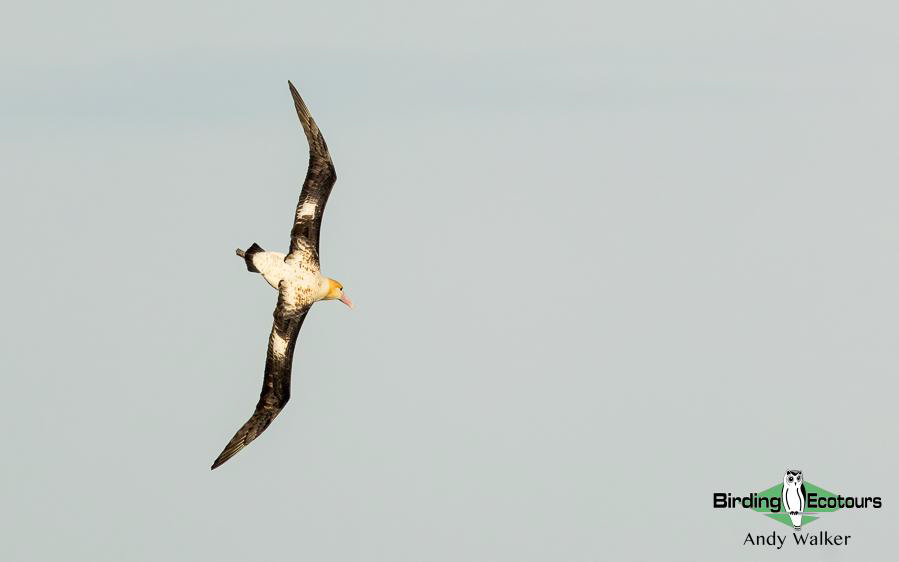
Short-tailed Albatross was arguably the most attractive of the three albatross species we saw during our Japanese pelagic trip, and we enjoyed repeated good views.
We were planning on spending the morning of the 7th of March 2026 birding on Miyake-Jima for the endemic birds, however a huge storm with gale-force winds in the area put paid to that. We watched the weather forecast with baited breath to see what (if anything) would be possible, and waited for the ferry company to announce whether the boat would sail, or not, and if so, under what conditions/route the ferry would take.
Late on the 6th of March 2026, it was announced the ferry would sail to Miyake-Jima, but would return almost immediately (docking was uncertain). There would, unfortunately, be no possibility of getting the endemic birds, but we would have opportunities for the hoped-for pelagic species.
We therefore boarded the ferry, spent the night onboard, traveling between Tokyo and Miyake-Jima (in sometimes rather rough seas), and woke up to find us approaching the island. The harbor was quite sheltered from the wind, so we docked for 30 minutes before the ferry, in breaking daylight, set sail for the return journey to Tokyo, giving us a seven hour pelagic trip.
We recorded 15 bird species (all were seen) on this winter pelagic trip in Japan. The bird list follows the report. You can also see our eBird trip report (with some additional photos), here. The highlights of the extension were repeated good (and occasionally close) views of multiple individuals of Short-tailed Albatross, Laysan Albatross, Black-footed Albatross, Providence Petrel, and Streaked Shearwater.
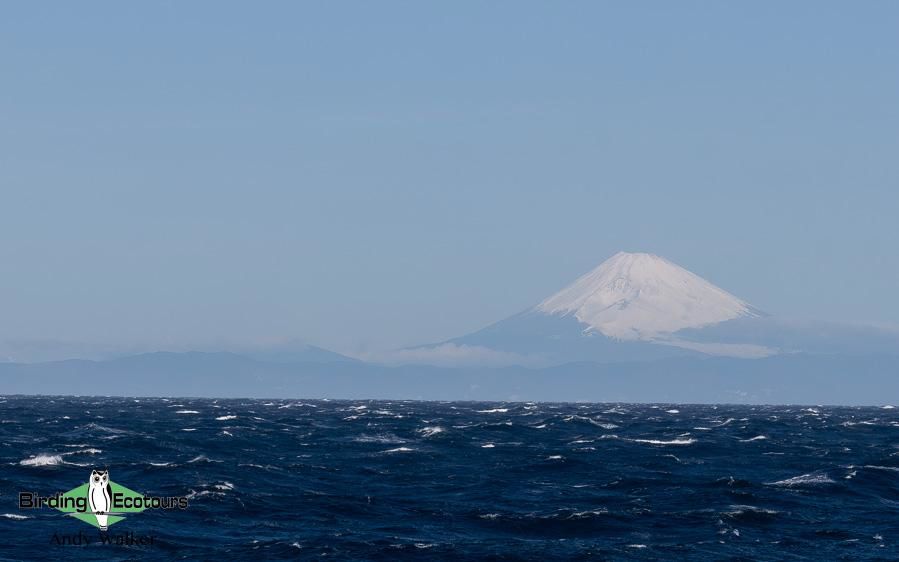
The stunning sight of Mt. Fuji accompanied us during our ferry trip back to Tokyo.
Detailed Report
Day 1, 6th March 2026. Day at leisure with evening ferry departure from Tokyo
We met in the evening in Tokyo, where we grabbed a quick dinner, before heading over to the ferry terminal for the overnight journey to Miyake-Jima. We were already aware of the shortened ferry schedule for the day ahead due to the weather, so we were suitably prepared for an upcoming day of pelagic birding. While we were disappointed to miss out on the chance for the endemic birds on the island, we were relieved to be able to get anything done and to have an opportunity for some great seabirds. The ferry departed right on time at 22:30 hrs. and we spent the night onboard, in sometimes rough seas. The ferry handled the conditions well and it was actually fairly comfortable, despite the conditions outside.
Day 2, 7th March 2026. Pelagic birding from ferry between Miyake-Jima and Tokyo
We awoke at 05:30 hrs. to find we were about to dock in a fairly sheltered harbor in the northwest of Miyake-Jima. We stopped for 30 minutes before the boat set sail for the return journey to Tokyo at 06:00 hrs., just as it was getting light. The boat arrived back in Tokyo at 13:45 hrs., giving us almost eight hours of sea-watching before we returned to our accommodation in Tokyo for a welcome shower and hot meal.
It didn’t take long for us to spot our first albatross, with multiple Short-tailed Albatrosses seen in the early morning gloom. Gradually, as the light improved, some closer birds were seen. This species would be the most abundant albatross recorded during the day, with a range of different aged birds seen, from stunning mature birds (see trip report cover image), to younger birds.
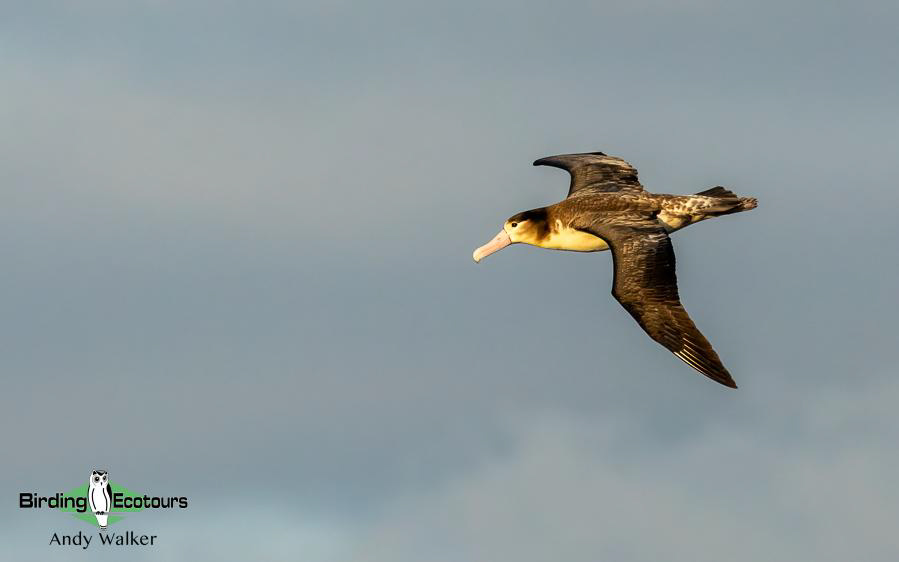
A high percentage of the Short-tailed Albatross seen during the day were younger birds.
The second most abundant albatross species recorded during the day was Black-footed Albatross. These birds look way better than the field guides suggest, and we appreciated multiple flyby views.
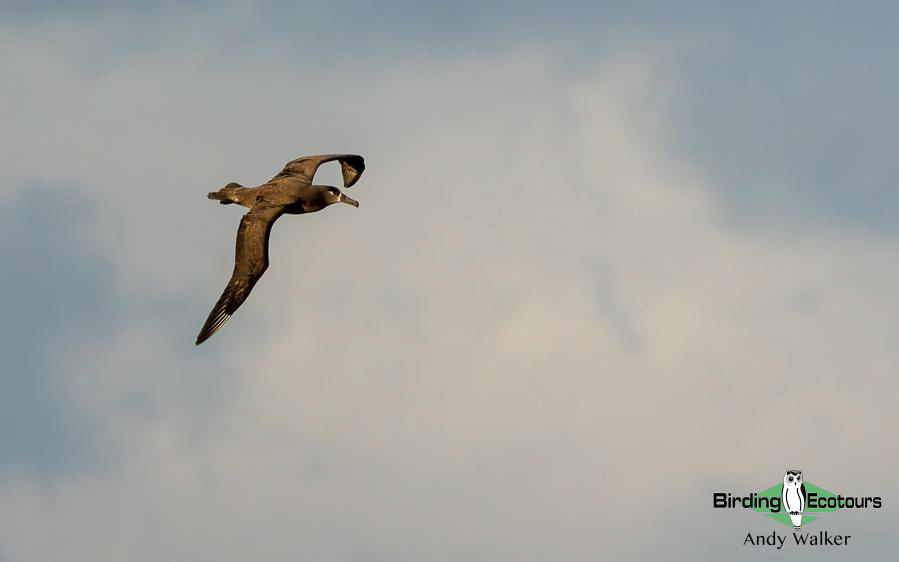
Black-footed Albatross gave some very close flyby views during the day.
Our third albatross species was Laysan Albatross. They were less abundant than the other two species recorded, though a couple of individuals did allow close views, with one bird even landing on the water near the ferry momentarily.
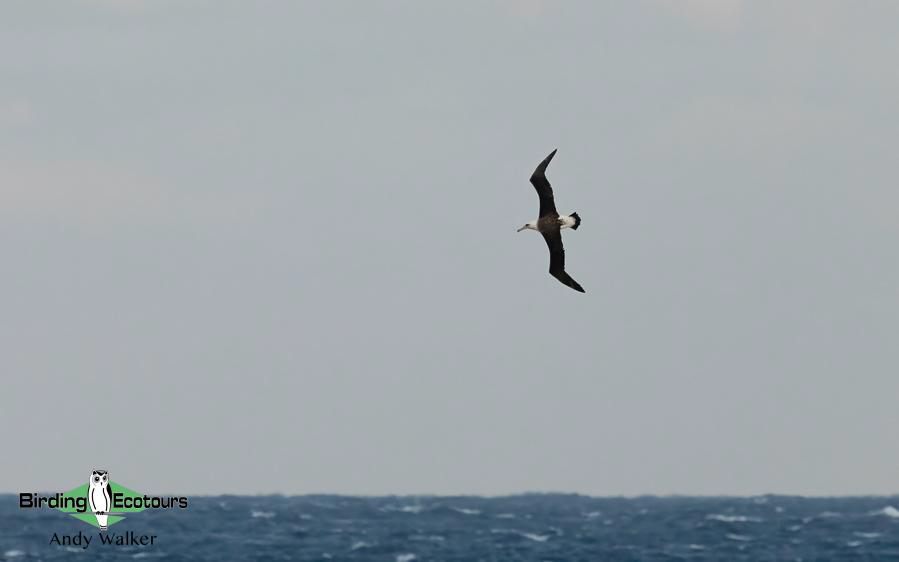
Laysan Albatross was recorded in lower numbers than the other two albatross species, but completed the desired set of all three possible albatross species.
In addition to the three albatross species recorded, we also saw multiple Providence Petrels. They were generally often distant, and only noted during the first half of the trip, though a couple of birds did come close to the boat.
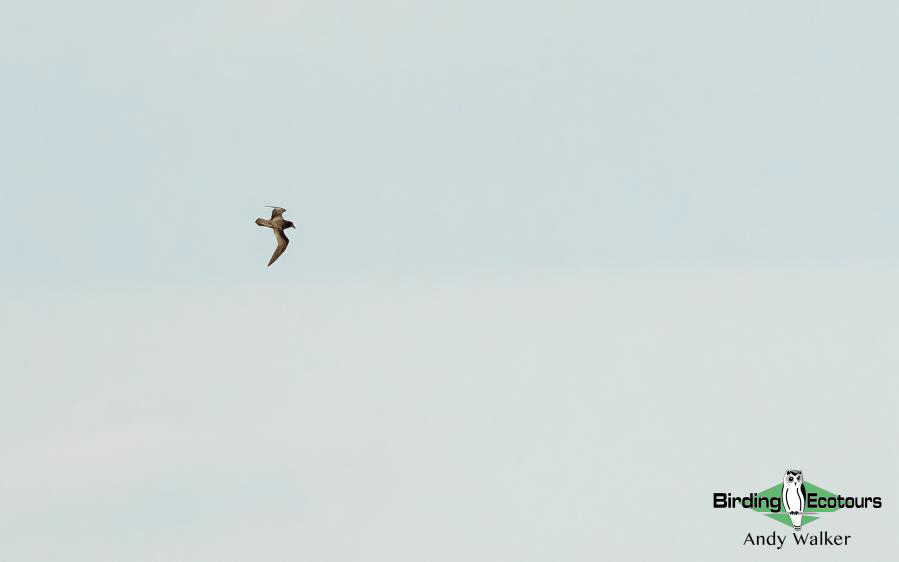
Providence Petrels impressed us with their typical and strong Pterodroma flight.
Streaked Shearwater was the most abundant species recorded in the pelagic waters, with a couple of thousand birds recorded between Miyake-Jima and the mouth of Tokyo Bay. At times we passed through big flocks of foraging birds, and at other times long lines of flying birds could be seen moving through all the way to the horizon.
Three Red Phalaropes were seen getting off the water ahead of the ferry, though given the rough sea conditions, as soon as they took flight they vanished behind a large wave and were gone without a trace!
A couple of Black-tailed Gulls were seen in the pelagic waters, but most gull sightings occurred once we were back in Tokyo Bay. Several thousand Black-headed Gulls were busily foraging in the bay, with much lower numbers of Vega Gulls, Black-tailed Gulls, and Slaty-backed Gulls also all seen well.
Other species recorded as we passed through Tokyo Bay included Great Crested Grebe, Great Cormorant, Japanese Cormorant, and Black Kite. A pair of Large-billed Crows were also noted first thing in the harbor on Miyake-Jima.
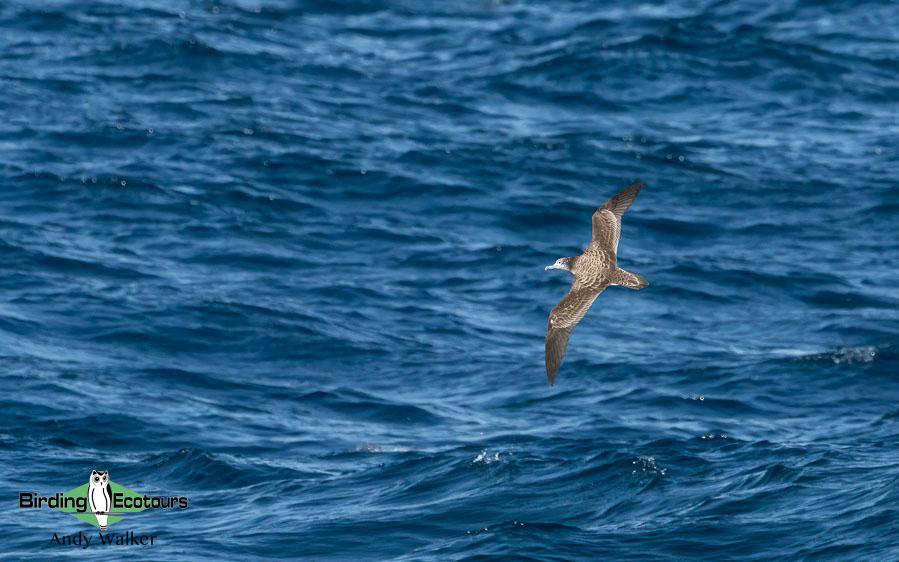
Despite being the most abundant pelagic species recorded during the day, Streaked Shearwater was one of the most difficult to get a photo of!
Day 3, 8th March 2026. Departure from Tokyo
The group departed at leisure during the day.
Bird List – Following IOC (15.1) (March 2025)
All birds were seen. The following notation after species names is used to show conservation status following IUCN/BirdLife International: VU = Vulnerable
| Common Name | Scientific Name |
| Grebes (Podicipedidae) | |
| Great Crested Grebe | Podiceps cristatus |
| Sandpipers, Snipes (Scolopacidae) | |
| Red Phalarope | Phalaropus fulicarius |
| Gulls, Terns, Skimmers (Laridae) | |
| Black-headed Gull | Chroicocephalus ridibundus |
| Black-tailed Gull | Larus crassirostris |
| Vega Gull | Larus vegae |
| Slaty-backed Gull | Larus schistisagus |
| Albatrosses (Diomedeidae) | |
| Laysan Albatross | Phoebastria immutabilis |
| Black-footed Albatross | Phoebastria nigripes |
| Short-tailed Albatross – VU | Phoebastria albatrus |
| Petrels, Shearwaters, Diving Petrels (Procellariidae) | |
| Providence Petrel | Pterodroma solandri |
| Streaked Shearwater | Calonectris leucomelas |
| Cormorants, Shags (Phalacrocoracidae) | |
| Japanese Cormorant | Phalacrocorax capillatus |
| Great Cormorant | Phalacrocorax carbo |
| Kites, Hawks, Eagles (Accipitridae) | |
| Black Kite | Milvus migrans |
| Crows, Jays (Corvidae) | |
| Large-billed Crow | Corvus macrorhynchos |
| Total seen | 15 |
| Total heard only | 0 |
| Total recorded | 15 |
This is a sample trip report. Please email us ([email protected]) for more trip reports from this destination.