This bird book review was written by Chris Lotz on May 31, 2026.
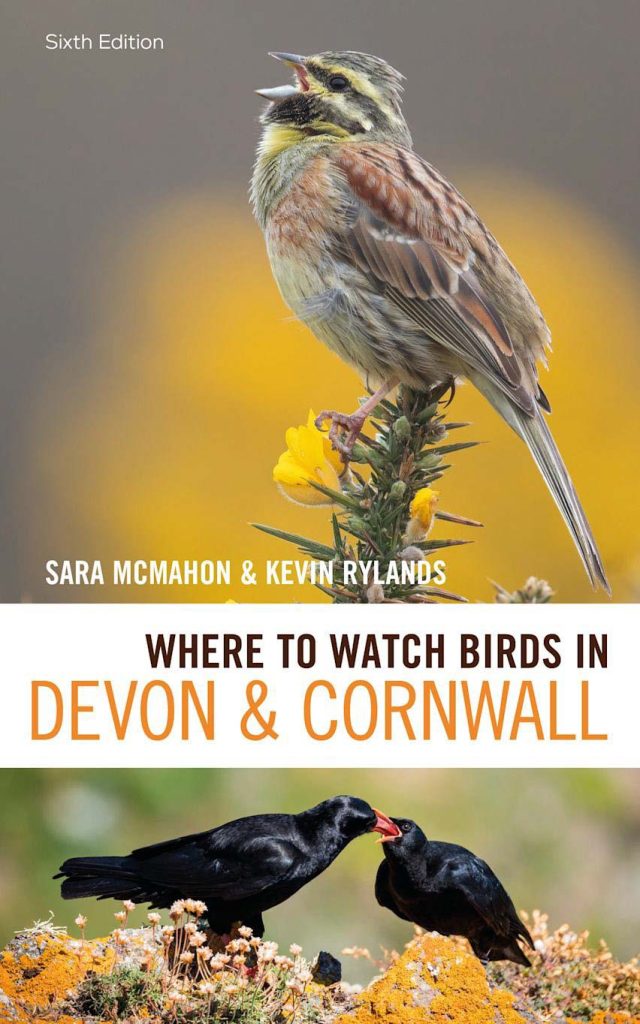
This bird-finding guide covering the picturesque and birdy English counties of Cornwall and Devon was first published over 40 years ago. This review is of the sixth edition, hot off the press in 2026. This sure is an excellent book, jam-packed with a vast amount of information that will help both local and visiting birders alike as they explore the many birding sites in this beautiful part of Britain. The Isles of Scilly (Cornwall) and the Island of Lundy (Devon) are included.
An amazing 322 pages of the book are dedicated to providing detailed birding accounts of 84 sites spread across south-western England. Each of these accounts is divided into the following sections:
- The location of the site is summarized with the Ordnance Survey (OS) map number and grid reference, the postcode and the what3words code.
- Habitat. This section is nicely detailed and often includes mention of non-avian fauna and flora, from basking sharks to butterflies.
- Species. This section goes into great detail about where to find all the special birds at various times of year, providing excellent bird-finding information.
- Timing. This section gives a large amount of information about the time of day to visit, which tides to visit on, if/when the site should be avoided because of human disturbance, and so forth.
- Access. While many birders will just enter the postcode given in 1) above into Google Maps, this section on access gives useful information about the best route, where to park, which paths to take, etc.
- A map of the site is included, supplementing the other sections above nicely.
In addition to the main part of the book, there are some other good sections. The introduction includes a fascinating section on population changes of the birds of this part of the world, e.g. the arrival and expansion of egrets, the natural return and reestablishment of choughs to Cornwall, the successful reintroduction of Cirl Buntings, and the sad decline of other species like Wood Warbler and Ring Ouzel.
The end of the book includes some good information too, such as the top twelve sites for disabled birders, the top five/six sites in Devon/Cornwall accessible with public transport, thirty “bird species to see in Devon and Cornwall”, a list of organizations with their websites, a reference list, a code of conduct for birdwatchers, a bird list for this part of Britain, and a glossary. The glossary makes for an interesting read, giving some local terms such as “combe/coombe, a word mainly used in Devon to describe a steep-sided and often wooded valley, and “carne”, a Cornish word for an open hilltop vantage point. The glossary also defines words related to migration such as “overshoot”, “off-passage” and “irruption”. Additionally, the glossary describes the difference between a Redhead (a very rare vagrant to the British Isles) and a “redhead” merganser/Smew.
There are a couple of (in my mind minor) issues that hopefully can be addressed in the next edition, e.g. the table of contents erroneously doesn’t show the page numbers (although these aren’t really needed as the sites are chronologically numbered). The regional map at the front of the book is small and basic. It does not differentiate the two counties or include a key, even though there is space to add site names. One has to flip through the pages of the book to find the site name for each of the numbers on the map. These items can surely be forgiven noting the sheer amount of valuable information within the pages of this excellent book.