- Duration:
- 11 days
- Group Size:
- 5–8
- Tour Start:
- Seville San Pablo Airport, Seville, Spain
- Tour End:
- Madrid–Barajas Airport, Madrid, Spain
Birding Tour Spain: Spring Birding Extravaganza
Details
2028
14–24 April
Per person sharing
€6,570 EUR
$7,742 USD / £5,754 GBP
Single supplement
€770 EUR
$907 USD / £674 GBP
2029
14–24 April
Per person sharing
€7,090 EUR
$8,354 USD / £6,210 GBP
Single supplement
€830 EUR
$978 USD / £727 GBP
Itinerary
Birding Tour Spain: Spring Birding Extravaganza
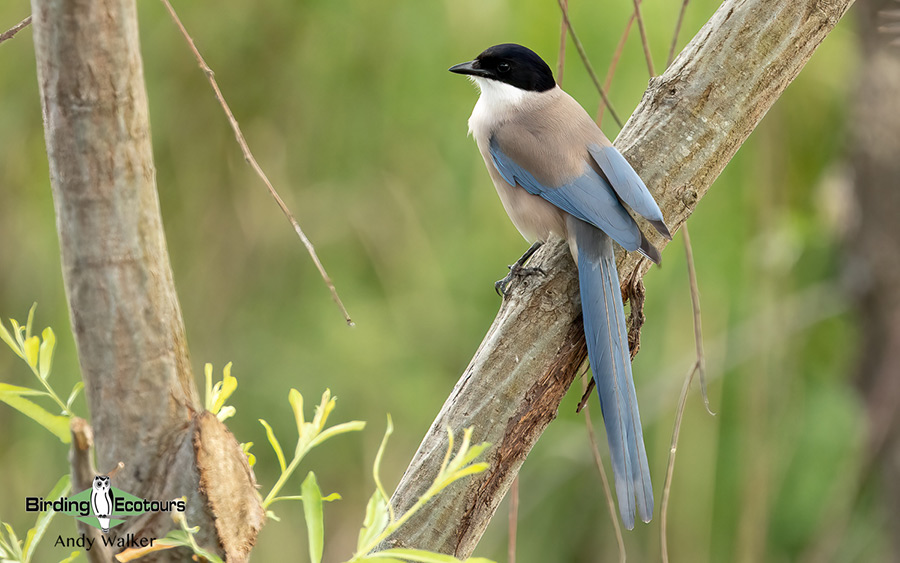
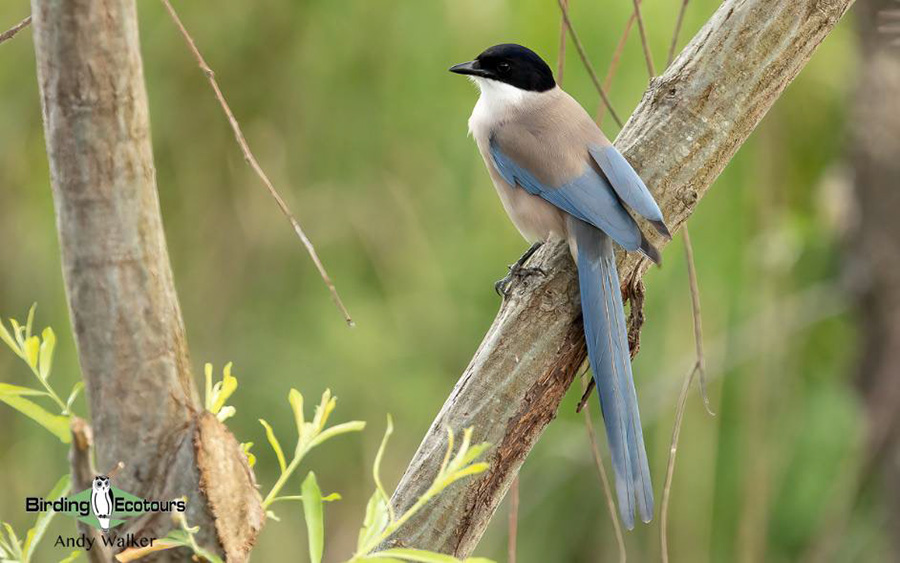 The gorgeous Iberian Magpie is an attractive regional specialty endemic to the Iberian Peninsula.
Overview
Spain is one of Europe’s birding wonders, combining an outstanding diversity of birdlife with beautiful weather and stunning scenery. This spring birding extravaganza is perfectly timed to enjoy the excitement of migration with a small group of like-minded birders. Our route takes us from the wetlands and coast of Andalusia into the vast interior of Spain, with its breathtaking scenery dotted with gorgeous white-painted, classically Spanish villages. From the famous marshes of Doñana National Park to the rugged river valleys of Monfragüe, the open plains of Extremadura, and finally the granite peaks, pine forests, and mountain meadows of the Sierra de Gredos, we will experience a remarkable variety of landscapes, habitats, and wildlife, while also enjoying Spain’s distinctive culture and cuisine.
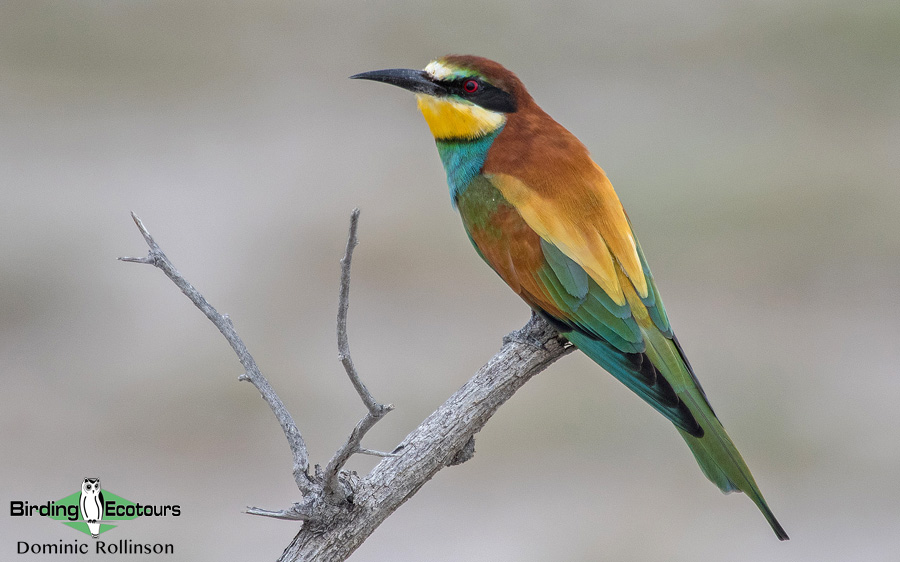 Our tour will be given a splash of exotic color as the skies fill with European Bee-eaters arriving from their wintering grounds in sub-Saharan Africa.
We begin in the lower Guadalquivir region, exploring the wetlands of Brazo del Este and the saltpans, marshes, and coastal habitats around Sanlúcar de Barrameda, Bonanza, and Chipiona. Key targets include White-headed Duck, Marbled Duck, Red-crested Pochard, Western Swamphen, and Collared Pratincole. The surrounding farmland and scrub offer opportunities for Lesser Kestrel, Montagu’s Harrier, the attractive Iberian Magpie, Mediterranean Short-toed Lark, and the much-sought-after migrant Rufous-tailed Scrub Robin. We then spend two nights in the famous Doñana area, exploring its celebrated wetlands, pine woods, and Mediterranean scrub. We will look for Glossy Ibis, Greater Flamingo, Black-winged Kite, and the Iberian Peninsula endemic Spanish Imperial Eagle, alongside many other waterbirds. In the scrub and woodland we hope to find Iberian Green Woodpecker, Iberian Chiffchaff, and the vibrant Eurasian Golden Oriole. Doñana is also an important area for the elusive Iberian Lynx. Although sightings are never guaranteed, we may be lucky enough to encounter this magnificent wild cat.
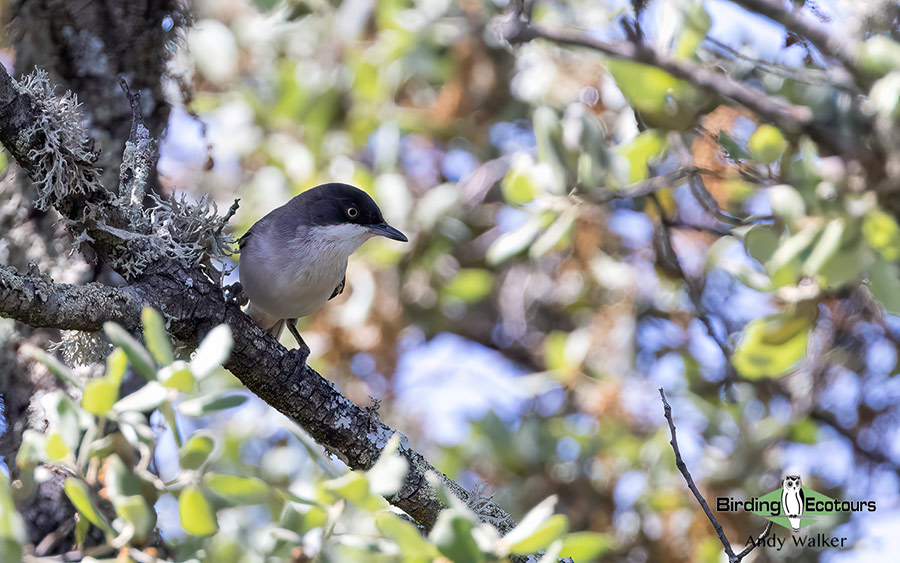
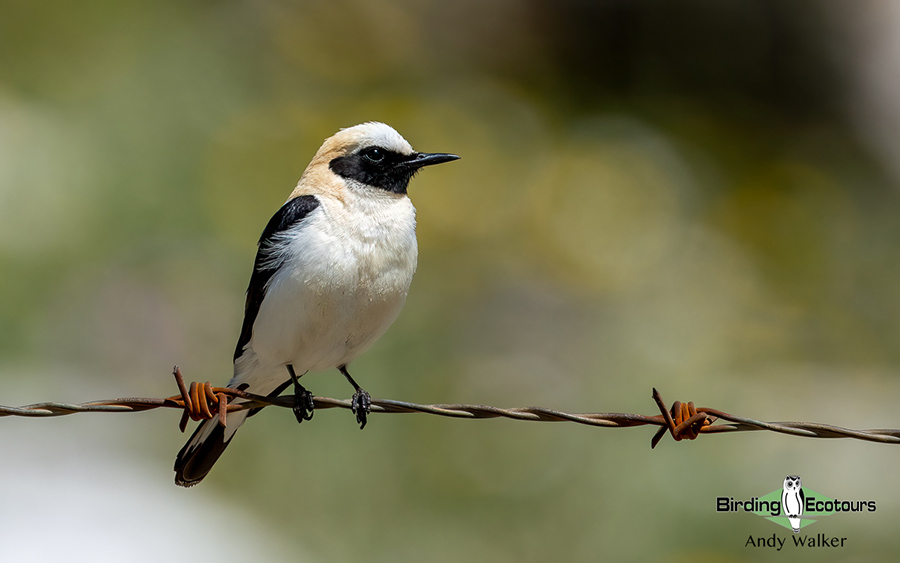
Traveling north into Extremadura, we will make a special effort to find the handsome, localized Black Wheatear in its favored rocky hillside habitat. We then explore Monfragüe National Park, a superb place to watch birds of prey. Targets include Cinereous Vulture, Griffon Vulture, Egyptian Vulture, Bonelli’s Eagle, and Short-toed Snake Eagle. On the rocky slopes we will seek Blue Rock Thrush, Western Black-eared Wheatear, and Western Orphean Warbler. We then spend a full day on the open plains near Trujillo, where grasslands and cereal fields support a distinctive community of steppe specialists. Top targets include Great Bustard, Little Bustard, Pin-tailed Sandgrouse, Black-bellied Sandgrouse, Eurasian Stone-curlew, European Roller, and Great Spotted Cuckoo. If time allows, we may also explore Trujillo’s handsome historic center, with its monumental Plaza Mayor, palaces, churches, and castle.
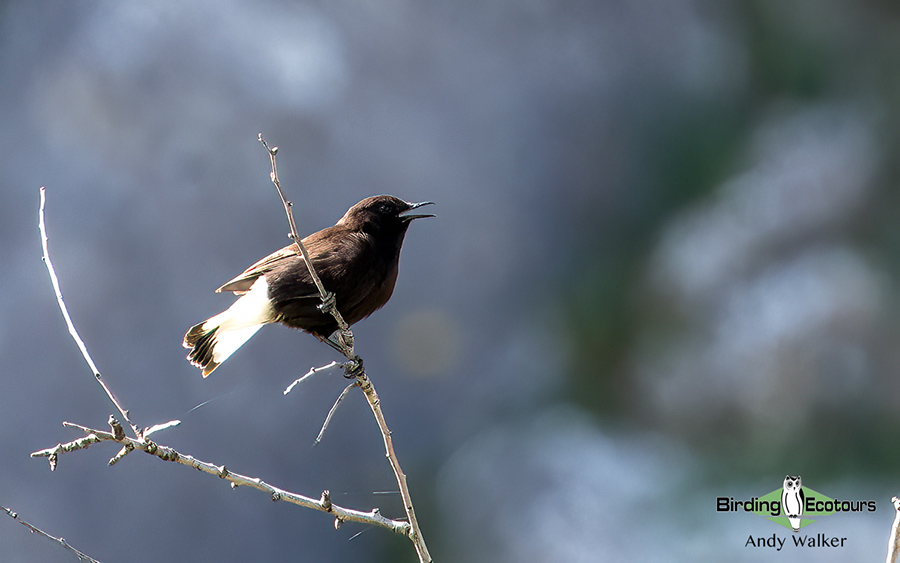
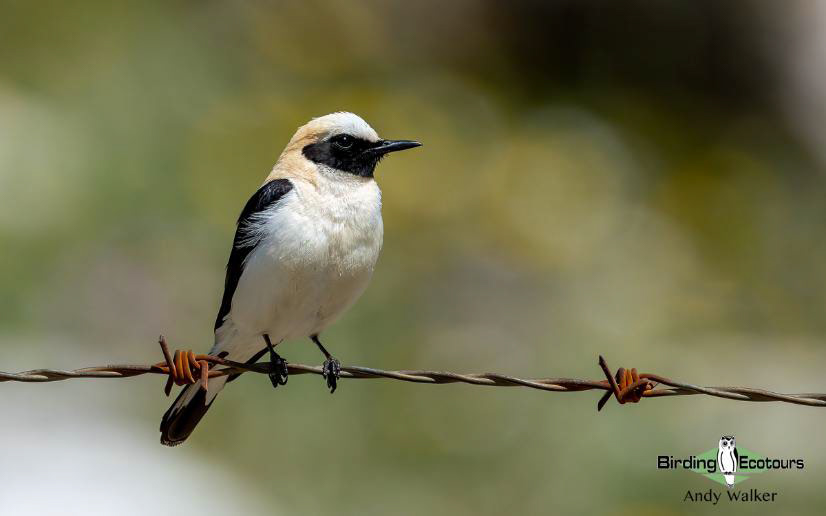 We will look for the migratory Western Black-eared Wheatear during our time in Extremadura.
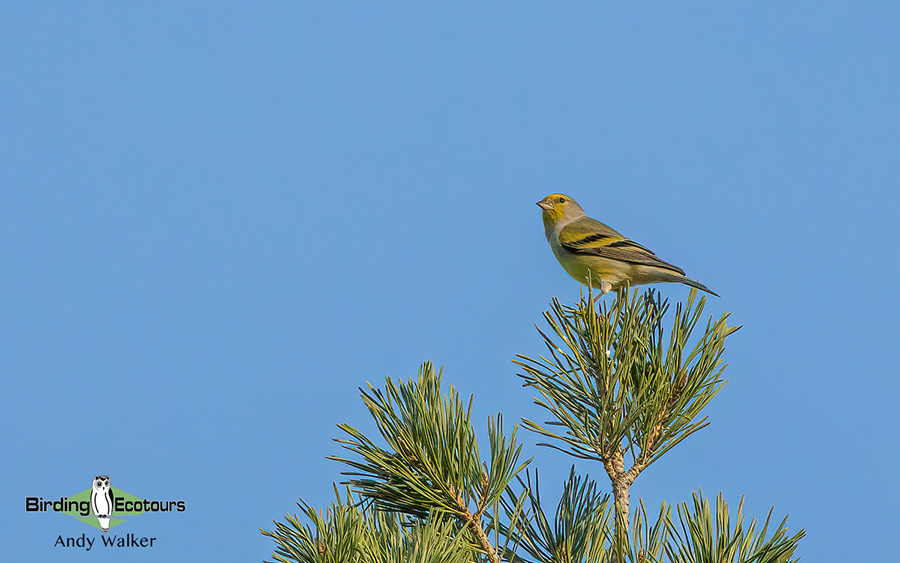
We finish with two days in the Sierra de Gredos, stopping at Embalse de Arrocampo en route. We will have time to explore the mountain woodlands, meadows, and streams, with a full day of birding followed by a final morning to look for any remaining targets before we transfer to Madrid. In the woodlands, we will look for Crested Tit, Common Firecrest, Western Bonelli’s Warbler, European Pied Flycatcher, Red Crossbill, and one of our key targets, the localized Citril Finch. Streams offer chances to see White-throated Dipper and Grey Wagtail, while higher up on the mountain slopes, we will look for Golden Eagle, Common Rock Thrush, Water Pipit, Ortolan Bunting, and Spanish Ibex.
Detailed Itinerary (11 days/10 nights)
Day 1. Arrival in Seville
After arriving in Seville, we will transfer to our hotel and check in for our two-night stay. The remainder of the day is free to relax or explore this historic Andalusian city, with its handsome architecture, lively streets, and inviting plazas. We will meet for a group welcome dinner in the evening and discuss our plans for the days ahead.
Overnight: AC Hotel Sevilla Forum, or similar, Seville
Day 2. Birding in Brazo del Este
We will begin birding southeast of Seville at Brazo del Este, a wetland of shallow pools, marshes, reedbeds, and rice fields. This protected area provides excellent habitat for waterfowl, shorebirds, herons, gulls, and terns, and we expect to see many species throughout the day. The open, flat landscape offers long views across the channels and flooded fields. We will look for Common Shelduck, Northern Shoveler, Gadwall, Garganey, Western Swamphen, Collared Pratincole, Gull-billed Tern, Whiskered Tern, Purple Heron, and Squacco Heron, while Western Marsh Harriers often float overhead. We will also have our first chance to see one of our top targets, Marbled Duck, a scarce and patchily distributed species. The reedbeds provide cover for secretive wetland birds such as Little Bittern, Eurasian Penduline Tit, Great Reed Warbler, and Savi’s Warbler, while the reed edges are worth checking for the elusive Spotted Crake.
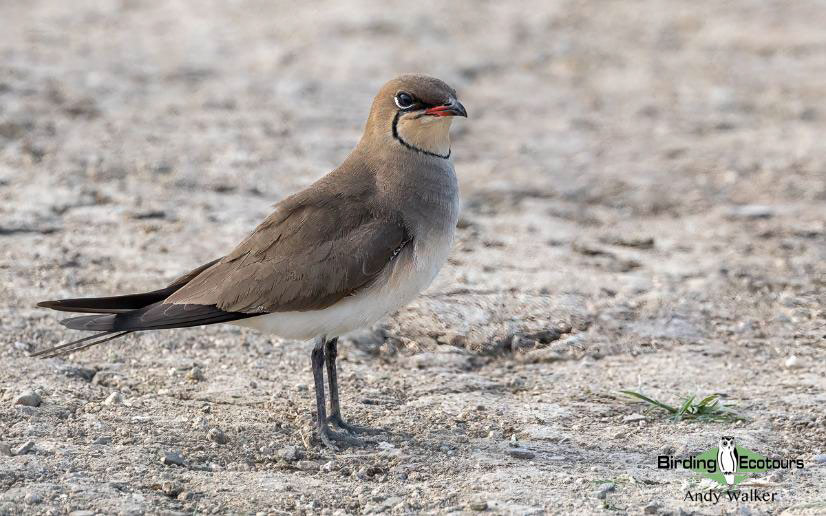 Collared Pratincoles can be found in large numbers around Sanlúcar de Barrameda.
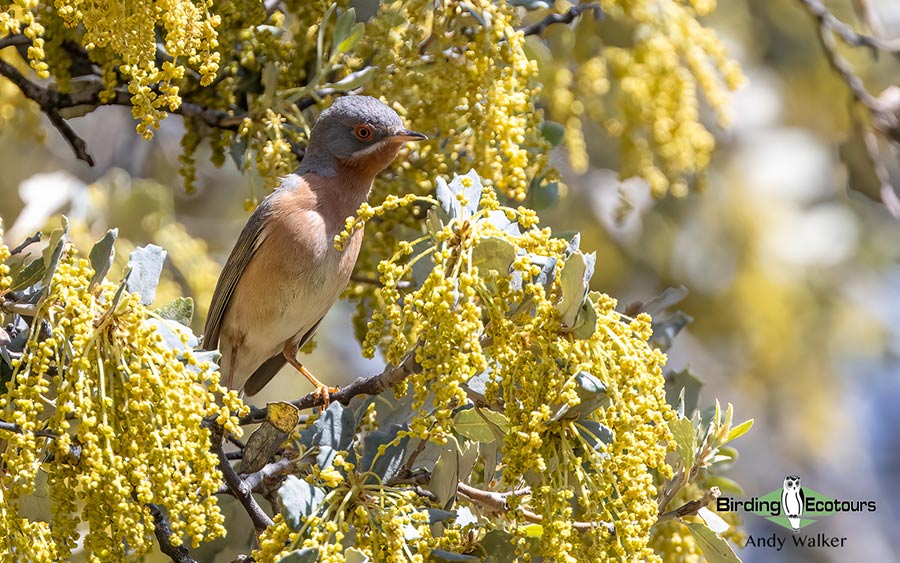
In the surrounding farmland and scrub, we will search for Red-legged Partridge, European Turtle Dove, European Bee-eater, Zitting Cisticola, Common Nightingale, and the localized Spotless Starling, a species only found in southwest Europe and northern Africa. We will also watch for migrating songbirds returning to Europe to breed, such as Garden Warbler, Western Subalpine Warbler, and Common Reed Warbler. The introduced Black-headed Weaver, Yellow-crowned Bishop, and Common Waxbill, all native to Africa, are established in this area. If time allows, we may also visit Los Palacios, a small group of freshwater pools and reedbeds surrounded by cultivated fields. The pools are good for herons and shorebirds, and the area is one of the few places in Europe where Laughing Dove can be found.
Overnight: AC Hotel Sevilla Forum, or similar, Seville
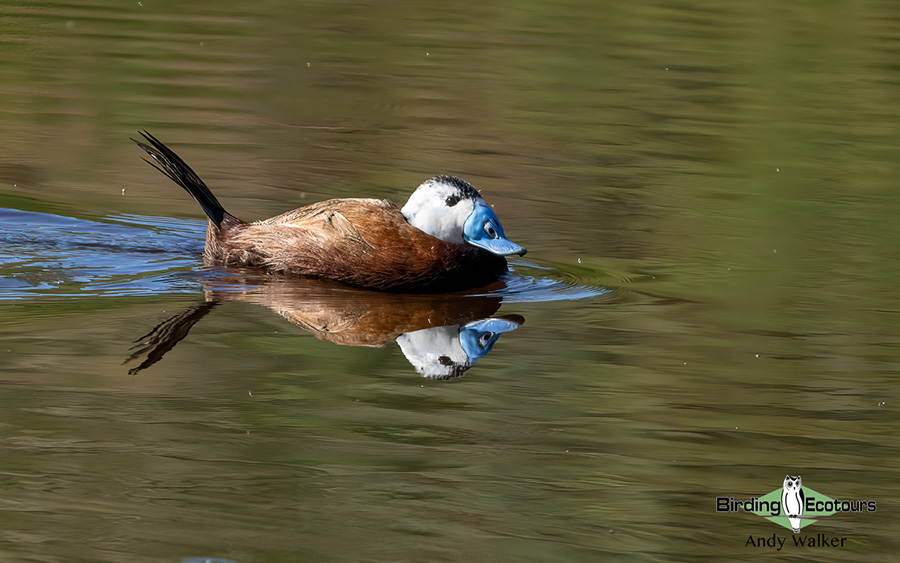
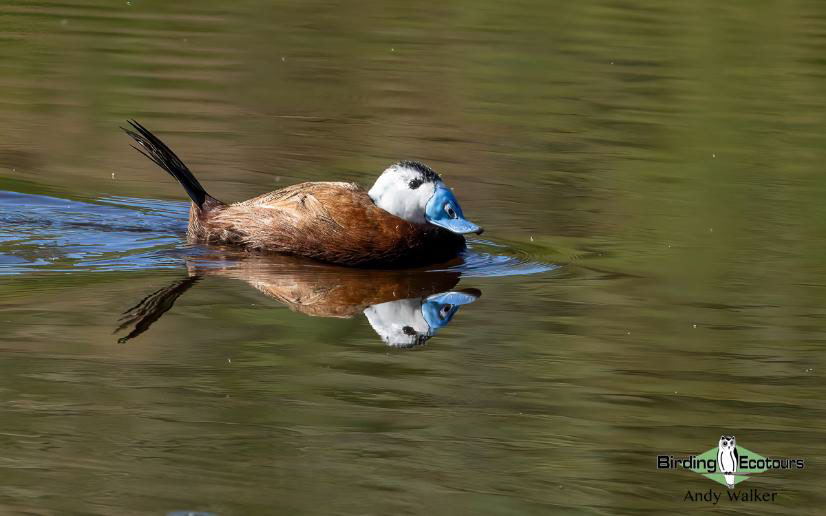 The Endangered (BirdLife International) White-headed Duck will be one of our early targets.
Day 3. Birding around Sanlúcar and Chipiona
We will explore the lower Guadalquivir estuary around Sanlúcar de Barrameda, Bonanza, and Chipiona, where saltpans, marshes, vineyards, and coastal scrub create an attractive mosaic of habitats. The geometric saltpans and shallow pools at Bonanza make an impressive birding area, with broad views across the low-lying landscape toward the coast. At Bonanza, we will search the saltpans and shallow pools for a range of shorebirds, including Eurasian Whimbrel, Black-tailed Godwit, Common Snipe, Common Redshank, Common Greenshank, Wood Sandpiper, Ruff, Dunlin, Little Stint, Curlew Sandpiper, Sanderling, Kentish Plover, Little Ringed Plover, Black-winged Stilt, and Pied Avocet. Aside from these shorebirds, other top targets include Greater Flamingo, Black Tern, Eurasian Spoonbill, and Purple Heron. The deeper pools are especially important for White-headed Duck and Marbled Duck, both major targets on this tour, and for Red-knobbed Coot, a species with a highly localized European population confined to Spain.
Along the Guadalquivir River and in the surrounding open country and vineyards, we will search for the beautiful Montagu’s Harrier, Lesser Kestrel, Common Hoopoe, Mediterranean Short-toed Lark, Western Olivaceous Warbler, Spectacled Warbler, Tawny Pipit, Western Yellow Wagtail, and the stunning Rufous-tailed Scrub Robin, a scarce but much sought-after spring visitor. In Chipiona, we will visit a breeding site for Little Swift. Although widespread in Africa and parts of Asia, this species is scarce in Europe. A seawatch from the coast in may also produce seabirds, including Northern Gannet, Slender-billed Gull, Audouin’s Gull, and Caspian Tern. Sanlúcar de Barrameda’s handsome historic center, with its palaces and churches, is also worth exploring, and the town is well known for its seafood. After our afternoon birding, we will head to our accommodation and check in for our two-night stay in Chipiona, from where we will explore the famous Doñana area.
Overnight: Hotel Agaró Chipiona, or similar, Chipiona
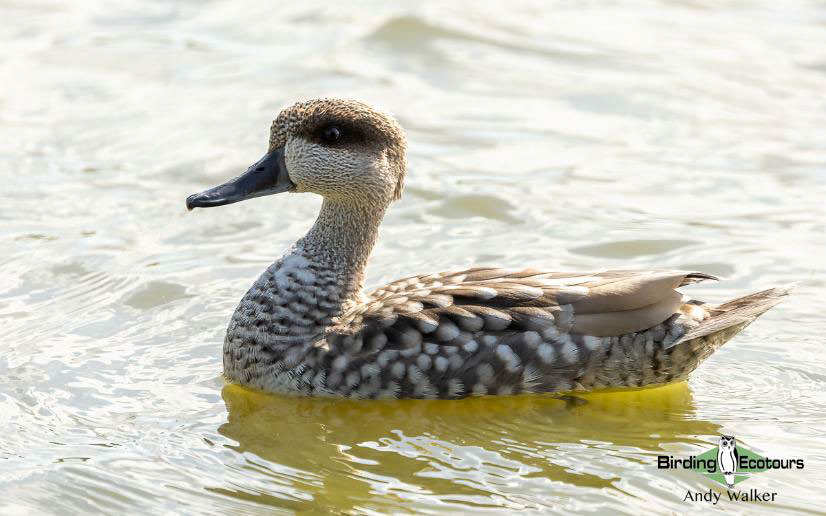 Marbled Duck is another rare target on our Spain birding tour.
Day 4. Morning birding near Sanlúcar, transfer to Doñana, and afternoon birding near Villamanrique
We will make the most of the morning around Sanlúcar and Bonanza before driving inland toward Doñana, revisiting productive wetlands if we need more time with key targets or passage shorebirds. In the afternoon, we will explore sites on the northern and eastern margins of Doñana, potentially including Dehesa de Abajo, Dehesa Las Hermosillas, and Dehesa Torneros. We will search the shallow lagoons and wetland margins for Red-crested Pochard, Ferruginous Duck, and Red-knobbed Coot, while the surrounding scrub and grassland support Common Cuckoo, Sardinian Warbler, European Stonechat, European Serin, and Corn Bunting.
During our spring visit, the wildflowers may be in bloom, bringing color to the open ground and sandy tracks. Doñana is one of Europe’s most important areas for Iberian Lynx, an elusive and highly sought-after wild cat. Although a sighting would be a major highlight, an encounter is unlikely given the species’ rarity and secretive behavior. After dinner, we may have an opportunity to look for nocturnal birds around the accommodation, including Red-necked Nightjar, Tawny Owl, and the beautiful Long-eared Owl.
Overnight: Ardea Purpurea, or similar, Villamanrique de la Condesa
Day 5. Full day in Doñana
We will explore Doñana’s seasonal marshes, lagoons, pine woods, and Mediterranean scrub, visiting several key areas, including El Rocío, La Rocina, El Acebrón, and El Acebuche. From the whitewashed village of El Rocío, we will look out over the extensive marshland, while elsewhere we will walk along sandy tracks through pine woodland and dense scrub. In the open woodlands and olive groves, we will look for Iberian Green Woodpecker, Lesser Spotted Woodpecker, the stunning Eurasian Golden Oriole, and Iberian Magpie, which is endemic to the Iberian Peninsula. Scrub areas hold Iberian Chiffchaff and Dartford Warbler, while the wetlands support many ducks, herons, egrets, and other waterbirds.
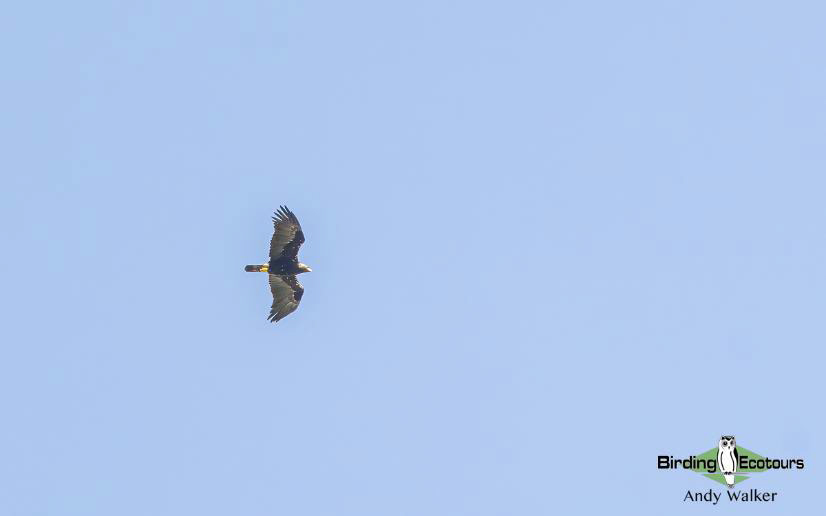 We will look for the Spanish Imperial Eagle, endemic to the Iberian Peninsula, in its prime habitat.
In the afternoon, we will visit the Centro de Visitantes José Antonio Valverde, set amid Doñana’s immense marshes. We will scan the skies and wetland margins for Black-winged Kite, Montagu’s Harrier, and Spanish Imperial Eagle, one of our major targets and a species endemic to the Iberian Peninsula. The lagoons often attract large numbers of waterbirds, including Greater Flamingo, Collared Pratincole, Squacco Heron, and Glossy Ibis, feeding across the shallow water and open marsh.
Overnight: Ardea Purpurea, or similar, Villamanrique de la Condesa
Day 6. Morning in Doñana and drive to Monfragüe, with birding stops along the way
After a final morning’s birding in Doñana, we will look for any remaining targets, particularly the stunning Montagu’s Harrier and Rufous-tailed Scrub Robin, a sought-after migrant that starts arriving here in early April. We will then travel north from the Guadalquivir lowlands into Extremadura where the cultivated plains will gradually give way to open farmland, dehesa, scattered villages, low hills, and rocky ridges.
In these habitats, we will look for Greater Short-toed Lark, Iberian Grey Shrike, Woodchat Shrike, and Spanish Sparrow. Scrub and woodland edges offer opportunities for Short-toed Treecreeper, Western Bonelli’s Warbler, Common Nightingale, and Cirl Bunting. Overhead, we may see European Bee-eater, Eurasian Crag Martin, and European Red-rumped Swallow, while European Turtle Dove, Common Hoopoe, and Spotless Starling are other possibilities along the route.
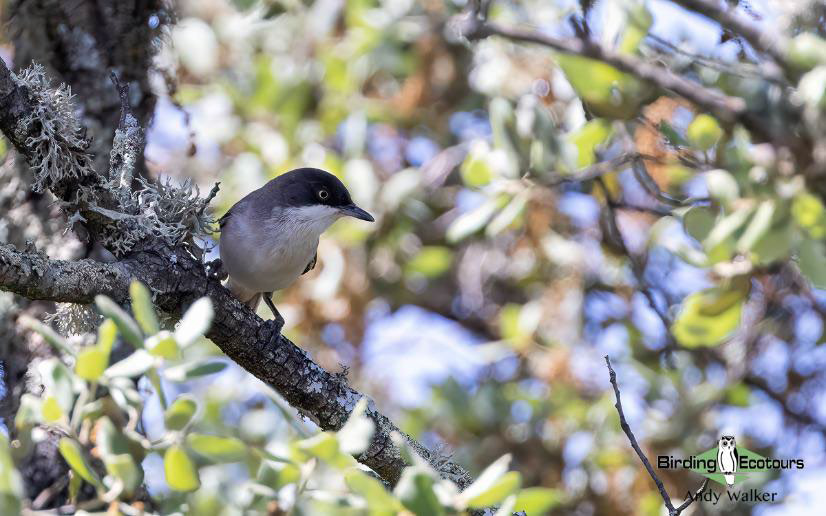 We will look for the migratory Western Orphean Warbler in suitable scrub and woodland.
We will make stop at Alange Reservoir to look for the handsome and localized Black Wheatear, which is best searched for around the rocky outcrops and stonework just above the reservoir. While searching for Black Wheatear we may come across Eurasian Crag Martin, Sardinian Warbler, Blue Rock Thrush, European Serin, and Rock Bunting in the harsh, rocky habitats here. We will then check in for our three-night stay near Monfragüe, which will provide our base for exploring the national park and the surrounding plains.
Overnight: Hospedería de Monfragüe, or similar, Torrejón el Rubio
Day 7. Full day in Monfragüe National Park
The Tajo River winds beneath Monfragüe’s rugged cliffs, cutting through wooded slopes and Mediterranean scrub. From the viewpoints, pale quartzite rock faces rise above the dark green valley, creating one of Spain’s most memorable landscapes for watching birds of prey. We will scan the cliffs and skies for a number of possible raptors, such as Black-winged Kite, Egyptian Vulture, Cinereous Vulture, Griffon Vulture, Short-toed Snake Eagle, Booted Eagle, Spanish Imperial Eagle, Golden Eagle, Bonelli’s Eagle, Black Kite, Red Kite, Common Buzzard, Osprey, Eurasian Sparrowhawk, Eurasian Goshawk, Common Kestrel, Eurasian Hobby, and Peregrine Falcon.
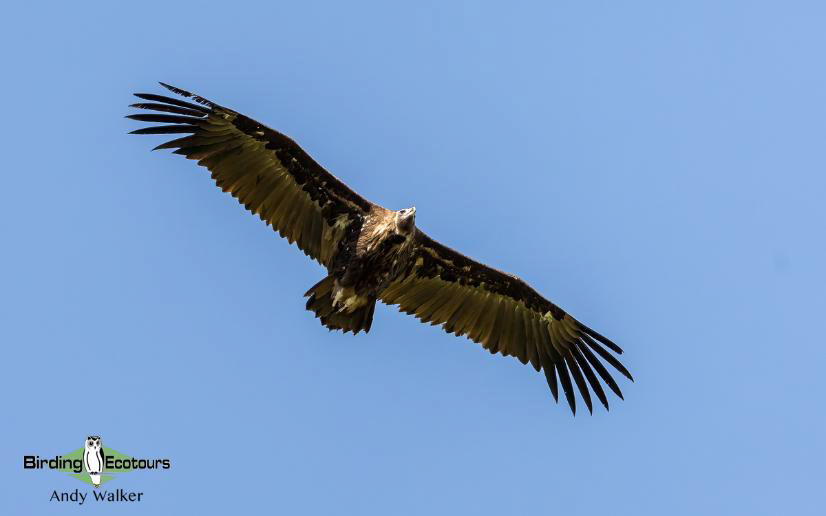 The enormous Cinereous Vulture can be seen well at Monfragüe National Park.
Away from the raptors, we may see Alpine Swift and Black Stork overhead. We will also look for the acrobatic Red-billed Chough, a scarce species here. Around the rocky slopes and cliffs we hope to find Thekla’s Lark, Blue Rock Thrush, Western Black-eared Wheatear, Northern Wheatear, Rock Sparrow, and Rock Bunting, while in the scrubby woodland we will look for Short-toed Treecreeper, Eurasian Golden Oriole, Iberian Chiffchaff, Melodious Warbler, Western Orphean Warbler, Western Subalpine Warbler, and Hawfinch.
Overnight: Hospedería de Monfragüe, or similar, Torrejón el Rubio
Day 8. Full day birding around Trujillo
We will spend the day birding the open plains around Trujillo and the wider Extremadura steppe country, a very different landscape from those we have explored so far. These open plains are among Europe’s most important remaining areas of steppe habitat. Great Bustard and Little Bustard are major targets, and our spring tour is timed to give us a chance at seeing displaying male Great Bustards. Pin-tailed Sandgrouse and Black-bellied Sandgrouse can be difficult to locate because they range widely across the plains, but we will scan suitable feeding areas and listen for the tell-tale call as birds fly overhead. Eurasian Stone-curlew, European Roller, and Great Spotted Cuckoo are also possibilities in this stark habitat. Raptors are a regular feature of the plains, and we will watch for Cinereous Vulture, Spanish Imperial Eagle, Red Kite, and Lesser Kestrel. Other specialists of this open, arable, and sparsely vegetated landscape include larks and shrikes such as Woodchat Shrike, Iberian Grey Shrike, Crested Lark, Thekla’s Lark, Calandra Lark, and Greater Short-toed Lark. If time allows, we may also spend some time exploring Trujillo to appreciate its monumental Plaza Mayor, stone-built palaces, churches, and castle. The town’s medieval and Renaissance architecture provides a striking contrast to the broad grasslands and cereal fields beyond it.
Overnight: Hospedería de Monfragüe, or similar, Torrejón el Rubio
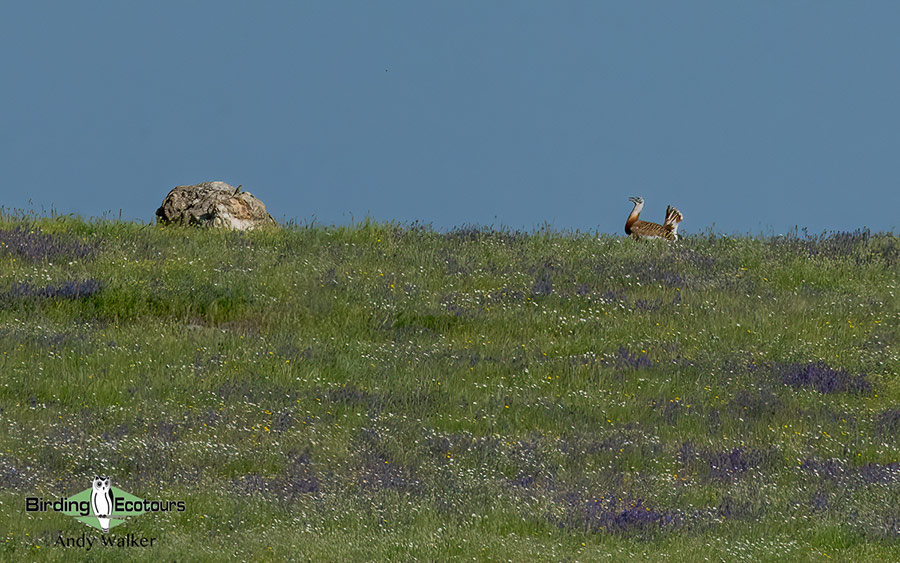
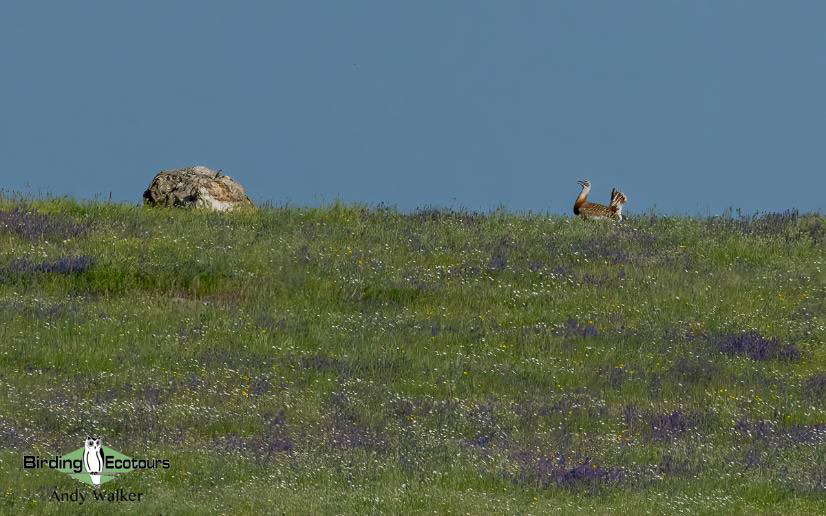 The sight of a Great Bustard roaming around a meadow of beautiful wildflowers is rather special.
Day 9. Morning birding at Arrocampo, drive to Gredos, and afternoon birding there
We will begin at the wetlands of Embalse de Arrocampo, an oasis in an otherwise agricultural landscape. Here we will look for wetland birds, with a good opportunity to look for the secretive Eurasian Bittern and Little Bittern among the extensive reedbeds and narrow channels. After birding Arrocampo, we continue north toward the Sierra de Gredos, a mountain range in central Spain whose granite peaks, pine-clad slopes, meadows, and streams contrast with the open plains of Extremadura. We will check in for our two-night stay in the Sierra de Gredos, ready to explore the mountain habitats over the following day and a half. If time allows on arrival, we will make a first visit to nearby woodland, meadows, or streams in search of Crested Tit, Western Bonelli’s Warbler, Common Firecrest, Common Whitethroat, European Pied Flycatcher, Red Crossbill, White-throated Dipper, and Grey Wagtail.
Overnight: Hostal Almanzor, or similar, Navarredonda de Gredos
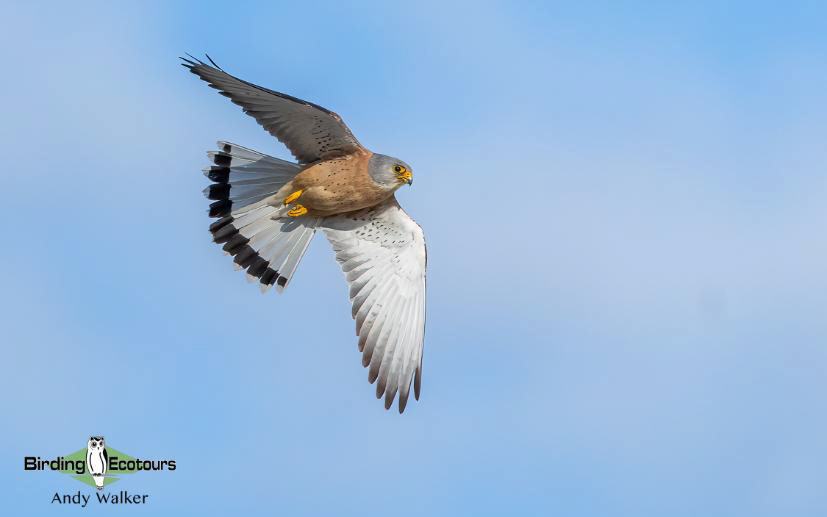 Arriving from Africa in the spring, colonies of breeding Lesser Kestrel can be found in Extremadura.
Day 10. Full day in Gredos
We will begin with a visit to a local bird blind in the peaceful woodland, where we hope to enjoy close views of Great Spotted Woodpecker, Eurasian Nuthatch, Crested Tit, Eurasian Blue Tit, Great Tit, Red Crossbill, European Goldfinch, and European Greenfinch. In the open mountainous habitats, we will search for Eurasian Skylark, Northern Wheatear, Common Rock Thrush, Bluethroat, Water Pipit, Ortolan Bunting, and Red-backed Shrike, a scarce species in Spain. Citril Finch is one of the tour’s key targets and a localized species in these mountains. We will look for males singing from the tops of tall spruce and pine, particularly along the edges and clearings of the montane woodland. Along streams and mountain rivers, we will look for White-throated Dipper and Grey Wagtail, while Golden Eagle may be seen soaring over the slopes. The high mountains are also home to Spanish Ibex, whose males are especially impressive with their large, curved horns.
Overnight: Hostal Almanzor, or similar, Navarredonda de Gredos
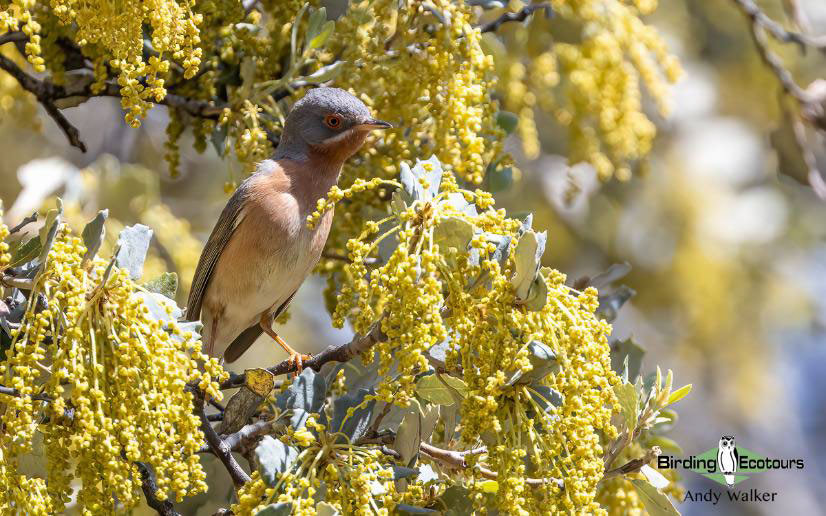 The attractive Western Subalpine Warbler is one of many warbler targets on this tour.
Day 11. Morning in Gredos, drive to Madrid, and end of tour
We will spend our final morning of birding in the Sierra de Gredos, looking for any remaining targets, with the localized Citril Finch still a priority. The mountain villages and surrounding countryside offer a memorable final setting, with stone-built settlements, wooded slopes, rushing streams, open pastures, and distant granite peaks. After breakfast, we will drive to Madrid and transfer to the airport, bringing the tour to an end.
Overnight: Not included
Please note that the itinerary cannot be guaranteed as it is only a rough guide and can be changed (usually slightly) due to factors such as availability of accommodation, updated information on the state of accommodation, roads, or birding sites, the discretion of the guide, and other factors. In addition, we sometimes have to use a different guide from the one advertised due to tour scheduling or other factors.
Map
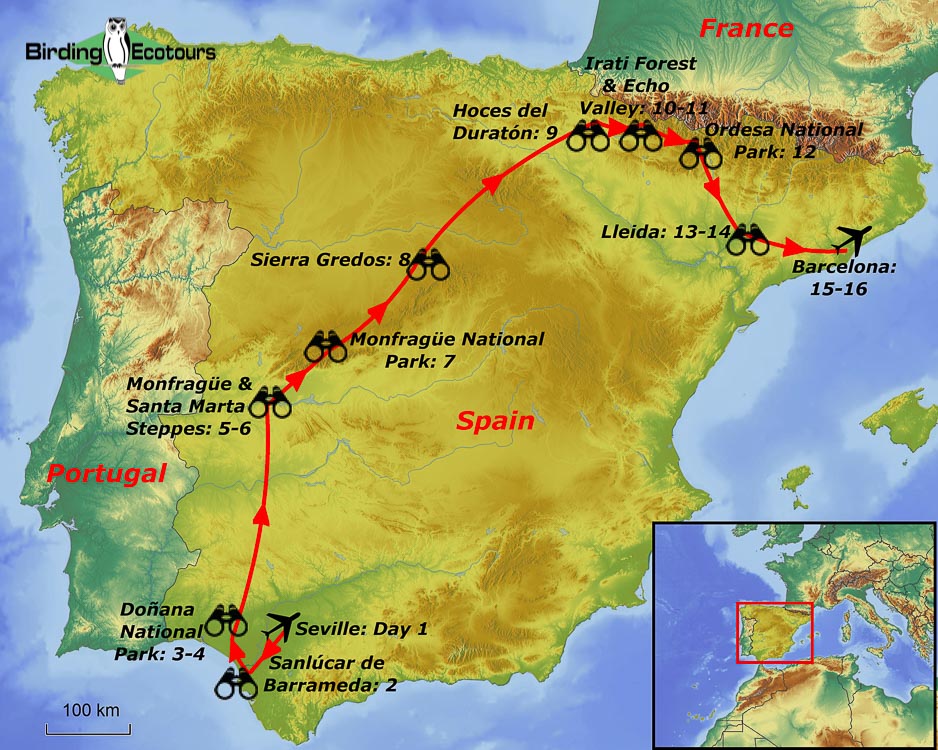
Trip Report
Testimonials
Gallery
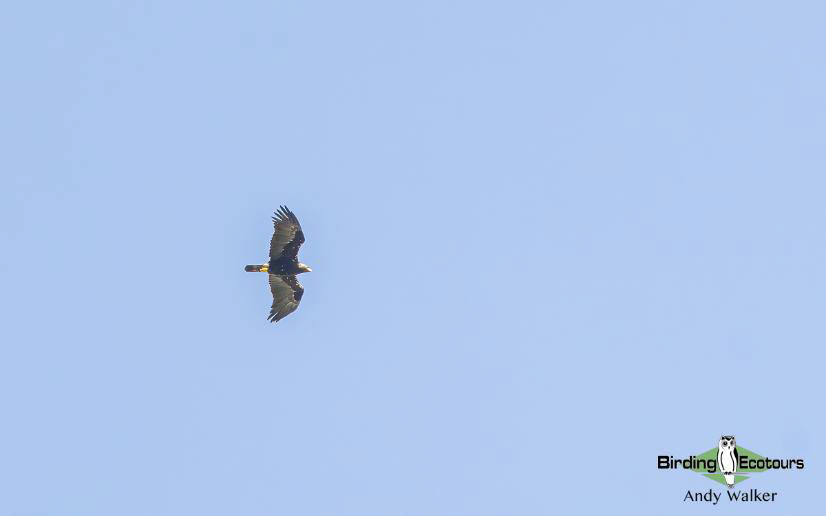
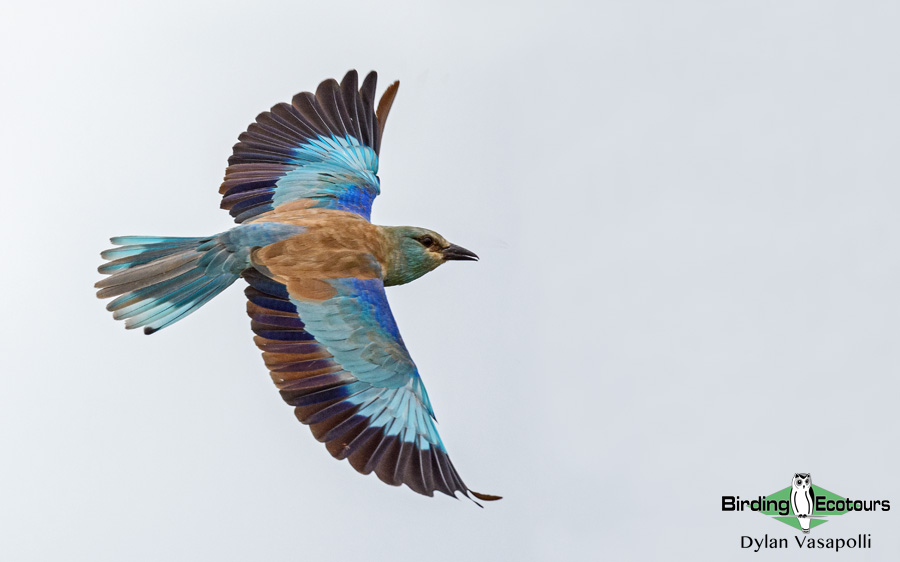
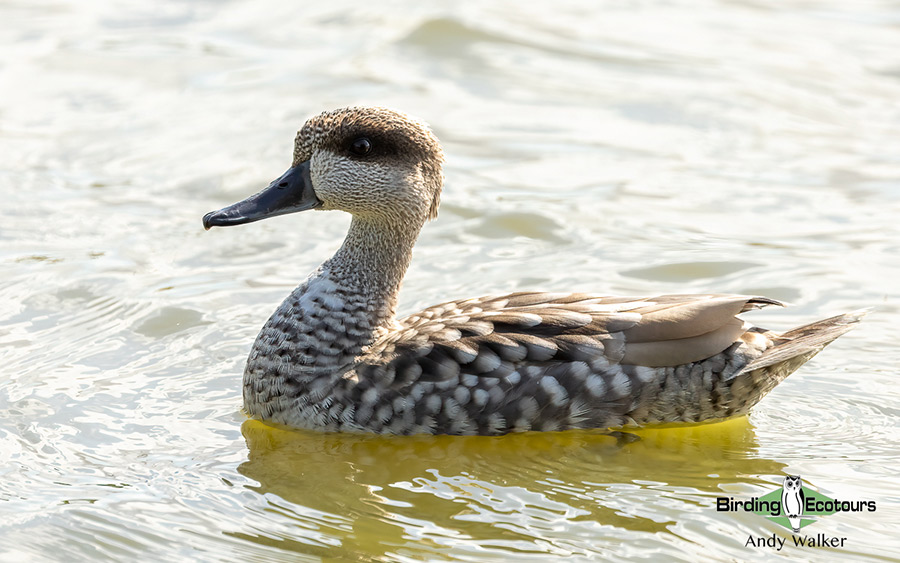
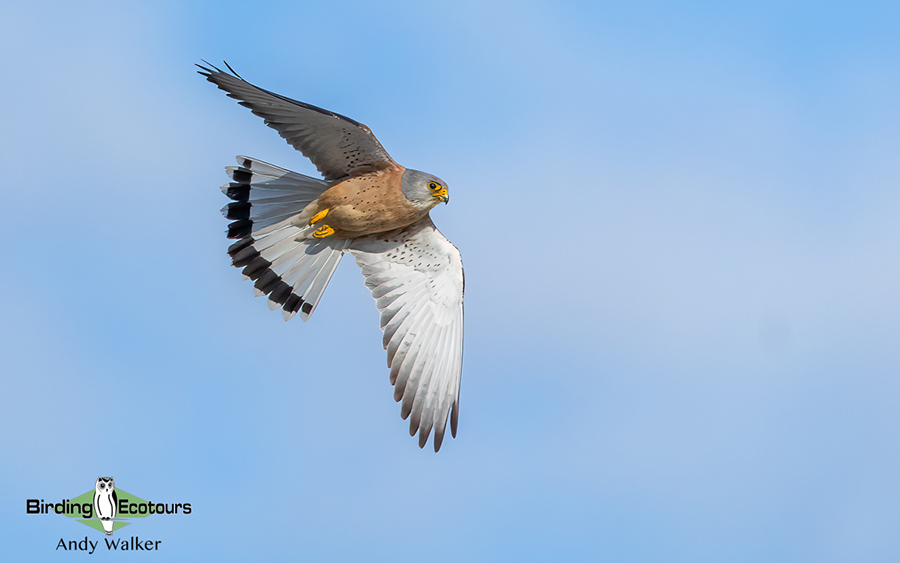
General Information
Spain: Spring Birding Extravaganza
Tour-specific Information
GENERAL INFORMATION ABOUT SPAIN CAN BE READ HERE
TOUR OUTLINE
Our small-group birdwatching tour to Spain during the spring season offers a comprehensive look at the Iberian region and connects with some of the most highly sought-after of the country’s species, such as Dupont’s Lark, Spanish Imperial Eagle, Cinereous Vulture, Bearded Vulture, Great Bustard, White-headed Duck, Marbled Duck, Pin-tailed Sandgrouse, Wallcreeper, Iberian Green Woodpecker, Iberian Magpie, Iberian Grey Shrike, White-winged Snowfinch, Citril Finch, and Alpine Accentor to mention but a few. Take a look at the detailed itinerary for more information on the species possible on this tour which starts in Seville and ends in Barcelona.
WEATHER/CLIMATE
The temperatures on this spring birding tour could be incredibly varied. During the first half of the tour, we should expect temperatures around 64 – 77 °F (18 – 25 °C) while our visit to the Pyrenees could see temperatures as low as single figures in Celsius (possibly in the region of 41 °F or 5 °C). Nights are generally comfortable but can still be chilly with temperatures around 46 – 57 °F (8 – 14 °C). The sun is strong this time of the year but as it is the European spring it is also necessary to be prepared for rain.
DAILY ACTIVITIES, PHYSICAL REQUIREMENTS, AND TOUR PACE
This spring birding tour covers a large proportion of Spain and is at a faster pace than some of our other tours, with a long list of birds possible. Longer journeys are broken up with birding and bathroom stops. Most walking is an easy level of exertion and at a gentle pace and should be suitable for most people, for the most part this will all be on easy tracks, roads, and trails for the most part. Some longer walks will be required for some sites and the exact details of these longer walks will be presented to you ahead of time, most walks are optional and should you wish to sit out a walk we will endeavor to plan something else for you, or you are welcome to relax around the hotel grounds.
The tour will require some early starts and late finishes to our days in the field to maximize the return on the birding and meal times will remain flexible around our birding activities, the main focus of this tour is finding as many of the regionally special birds as possible. Most of the tour is spent at sea-level and low elevations, though we will spend time in higher elevations later in the tour, but these elevations are still not particularly high and are unlikely to provide any constraints to most people (e.g. we will be birding at around 6,500 feet / 2,000 meters), potentially a little higher.
DOMESTIC FLIGHTS
There are no domestic flights included in this tour. Note the tour starts in Seville at Seville San Pablo Airport and ends in Barcelona at Josep Tarradellas Barcelona-El Prat Airport.
ACCOMMODATION
During our Spain spring tour we will be staying in a range of two-star to four-star hotels. All the hotels are of a traditional style and have been hand-picked to offer the best experience in their respective area. Hotels are located in areas that enable short drives to excellent birding areas.