18–31 OCTOBER 2026
By Dominic Rollinson
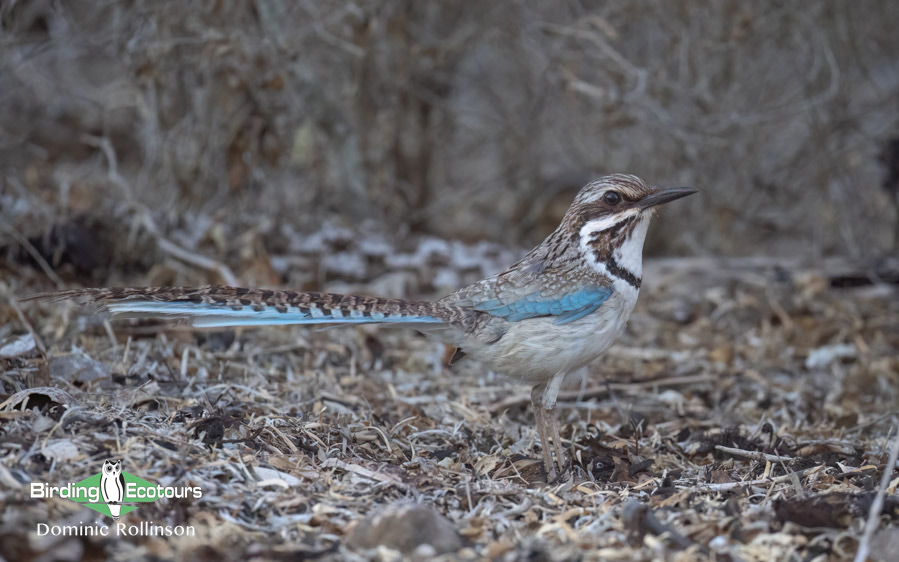
Long-tailed Ground Roller was seen well in the spiny forests of the southwest.
Overview
Our two-week Madagascar birding and mammal adventure covered an excellent range of habitats, from the lush eastern rainforests of Andasibe and Ranomafana to the dry deciduous woodlands of Zombitse and the remarkable spiny forests of the southwest. This extraordinary island, famous for its exceptional levels of endemism, provided a wonderful assortment of highly specialized birds, fascinating lemurs, and an incredible variety of other wildlife. Madagascar also offers some remarkable examples of adaptive radiation, with groups such as the vangas, couas, ground rollers, lemurs, and chameleons having diversified into an astonishing array of forms, each adapted to different ecological niches. The resulting diversity is especially striking given the island’s isolation and makes exploring its varied habitats all the more rewarding.
Our journey began in the rainforests around Andasibe, where we quickly connected with many of Madagascar’s iconic birds and mammals. Highlights included several species of coua, Madagascar Forest Rail, Madagascar Ibis, Velvet Asity, and an assortment of vangas. We were particularly pleased to find both Pitta-like and Scaly Ground Rollers in Mantadia National Park, while the nearby Analamazaotra Reserve produced one of the most memorable sightings of the tour: a pair of beautifully camouflaged Collared Nightjars roosting together on the forest floor. This species was subsequently voted our bird of the trip. Mammal encounters were equally impressive, with excellent views of Indri, Diademed Sifaka, Common Brown Lemur, and Black-and-white Ruffed Lemur. Hearing a family group of Indri giving their extraordinarily loud calls at close range was an experience that will live long in our memories.
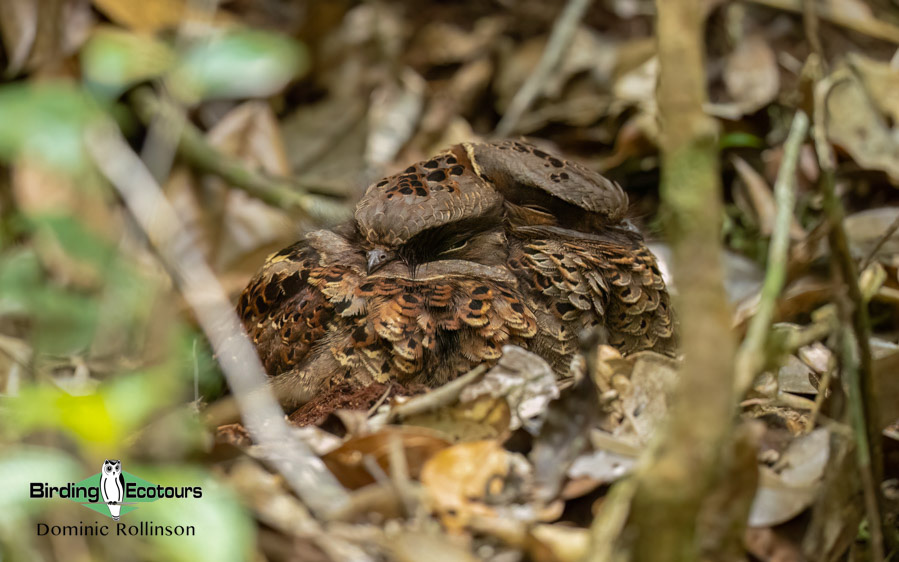
Collared Nightjar, near Andasibe, was voted ‘bird of the trip’.
Continuing south, we spent two full days exploring the wonderful rainforests of Ranomafana National Park. This proved to be particularly productive for some of Madagascar’s more sought-after forest birds, with highlights including the unusual Crossley’s Vanga, Cuckoo-roller (a monotypic order), Rufous-headed Ground Roller, Pitta-like Ground Roller, Henst’s Goshawk, Common Sunbird-Asity, Velvet Asity, and a variety of other vangas and tetrakas. The mammal watching was outstanding too, with Golden Bamboo Lemur, Milne-Edwards’ Sifaka, Red-bellied Lemur, and the park’s only remaining Greater Bamboo Lemur, affectionately known as Simone. We also enjoyed some excellent nocturnal wildlife encounters, including mouse lemurs and an impressive assortment of chameleons.
Further south, the scenery changed dramatically as we made our way toward the dry forests and open landscapes of the southwest. A visit to Anja Community Reserve provided fantastic encounters with Ring-tailed Lemurs, while Zombitse National Park produced several more special birds, including Giant, Coquerel’s and Crested Couas, Hook-billed and Sickle-billed Vangas, Appert’s Tetraka, and the impressive Madagascar Hoopoe. We also found two additional lemur species here, Zombitse Sportive Lemur and Verreaux’s Sifaka.
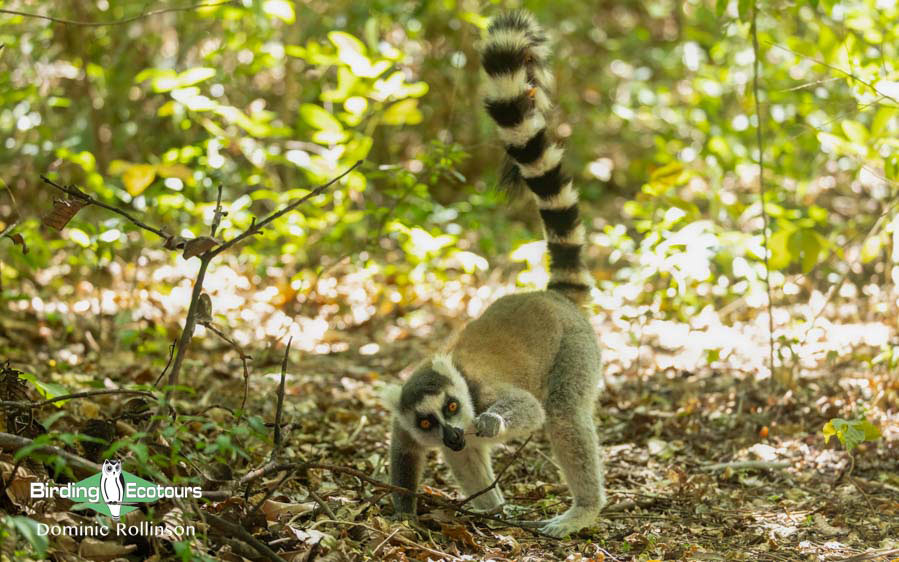
Lemurs, such as this Ring-tailed Lemur which we saw at Anja Community Reserve, feature strongly on this tour.
The final leg of our adventure focused on the distinctive spiny forests around Ifaty and Toliara. These distinctive landscapes, dominated by octopus trees and baobabs, hold some of Madagascar’s most specialized birds. An early morning visit proved highly successful, with excellent views of the highly localized Subdesert Mesite, followed by Long-tailed Ground Roller, Running Coua, Olive-capped Coua, Thamnornis, Archbold’s Newtonia and Sickle-billed Vanga. Nearby salt pans and wetlands added Madagascar Plover, while a boat trip to Nosy Ve produced the unusual Crab-plover (a monotypic family) and several nesting Red-tailed Tropicbirds. We also enjoyed good views of Littoral Rock Thrush and the localized Red-shouldered Vanga.
Mammals and other wildlife continued to feature prominently throughout the southwest, with encounters including Verreaux’s Sifaka, Zombitse Sportive Lemur, White-footed Sportive Lemur, and another species of mouse lemur. A variety of reptiles and amphibians added further interest, including Mossy Leaf-tailed Gecko, Oustalet’s Giant Chameleon, Carpet Chameleon, Satanic Leaf-tailed Gecko, Spider Tortoise, and the brightly colored Baron’s Mantella.
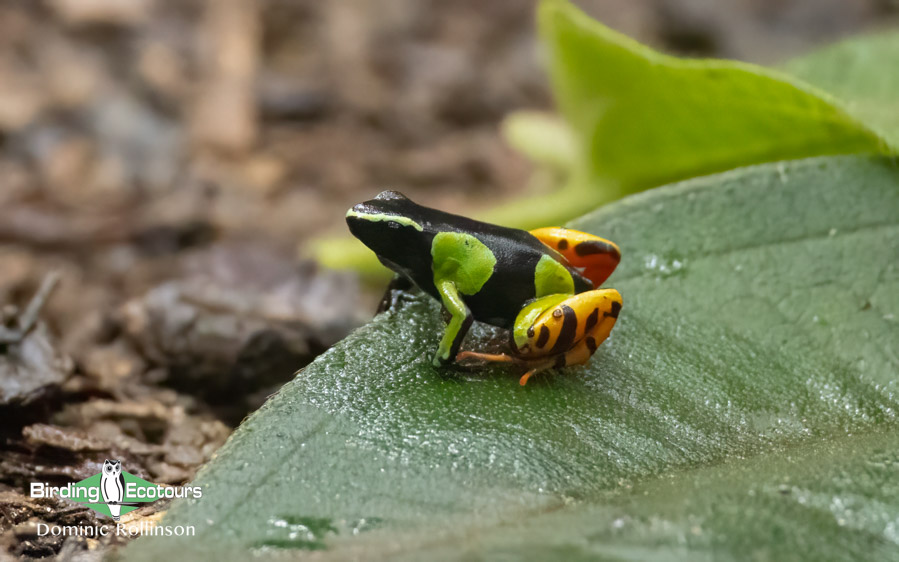
Madagascar is well-known for its unusual and unique wildlife and this Baron’s Mantella, seen in Ranomafana National Park, is certainly no different.
Overall, this was a highly successful and thoroughly enjoyable Madagascar adventure, combining excellent birding, an exceptional assortment of endemic birds and mammals, fascinating reptiles and amphibians, and the opportunity to explore some of the world’s most unusual habitats. From the unforgettable calls of Indri in the rainforest to the remarkable birds of the southwestern spiny forests, Madagascar once again demonstrated just how special and unique its wildlife really is.
By the end of the tour, we had recorded 155 bird species (153 seen and two heard only), 20 mammal species, 22 reptiles, and three amphibians, with an impressive proportion of these being Malagasy endemics. A detailed daily account can be read below, with the full bird, mammal, reptile, and amphibian lists at the end of the report. More photos and details can be found in the eBird trip report, here.
Detailed Report
Day 1, 18th October 2026. Arrival in Antananarivo
Today was an arrival day, with group members arriving throughout the day and over the preceding days. We enjoyed a group welcome dinner and even snuck in a calling Madagascar Nightjar after dinner to get our bird list started.
Day 2, 19th October 2026. Antananarivo to Andasibe
After breakfast we loaded up our 4×4 vans and hit the road east toward Andasibe. We also welcomed our final group member, Amanda, today, who somehow pushed through the whole day without any sleep after her delayed flights. Soon after our journey started, we pulled off the road as our local guide, Lala, had spotted a Madagascar Snipe flushed by a farmer. Lala ran off into the rice paddies and eventually the bird flushed, and we enjoyed some brief and distant views of this tricky endemic. While waiting for the snipe to flush we added Black Heron, Little and Great Egrets and a few Madagascar Martins.
A few roadside stops also produced Malagasy Kingfisher, Mascarene Martin, Madagascar Swamp Warbler, Madagascar Mannikin, with the highlight being a couple of Baillon’s Crakes (well spotted by Gretchen) and a Carpet Chameleon.
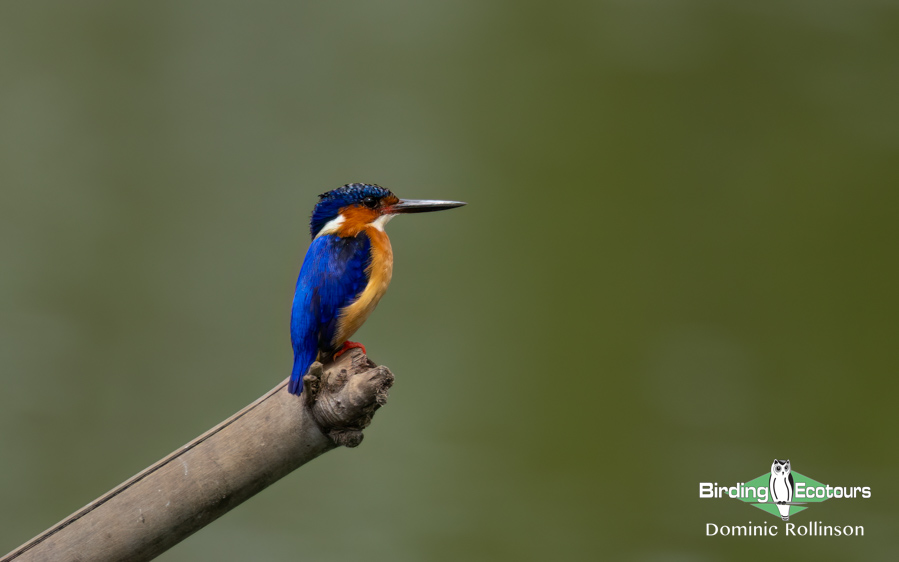
Malagasy Kingfisher was an early trip highlight.
We arrived in Andasibe for lunch and enjoyed a very distracted lunch as we overlooked a patch of secondary forest. While eating our lunch we had our first looks at Crested Drongo, Malagasy Kestrel, Chabert Vanga, Green Jery and Malagasy White-eye. We heard a distant Hook-billed Vanga but unfortunately could not get any visuals.
After lunch, we spent the rest of the afternoon birding V.O.I M.M.A. community reserve with our site guide, William and a couple of helpers. The birding here, as always, was excellent, and we soon added several new species to our list. Almost immediately as we met William, he excitedly pulled us aside to look at Madagascar Green and Madagascar Blue Pigeons feeding on a fruiting fig tree as well as a single Madagascar Starling (which turned out to be our only sighting of the trip). We then hit the forest trails and after a couple hours of walking added the likes of Blue and Red-fronted Couas, Madagascar Forest Rail, Madagascar Ibis, roosting Madagascar Scops Owl, Greater Vasa Parrot, Malagasy Paradise Flycatcher, Spectacled Tetraka, Madagascar Magpie-Robin and Souimanga Sunbird. Lemurs are usually a highlight of this patch of forest, and we soon found a small family group of Indri as they hopped through the canopy as well as Common Brown Lemur and Grey (Eastern Lesser) Bamboo Lemur. We then made the final 30-minute drive to our accommodation north of Andasibe and settled in for the night.
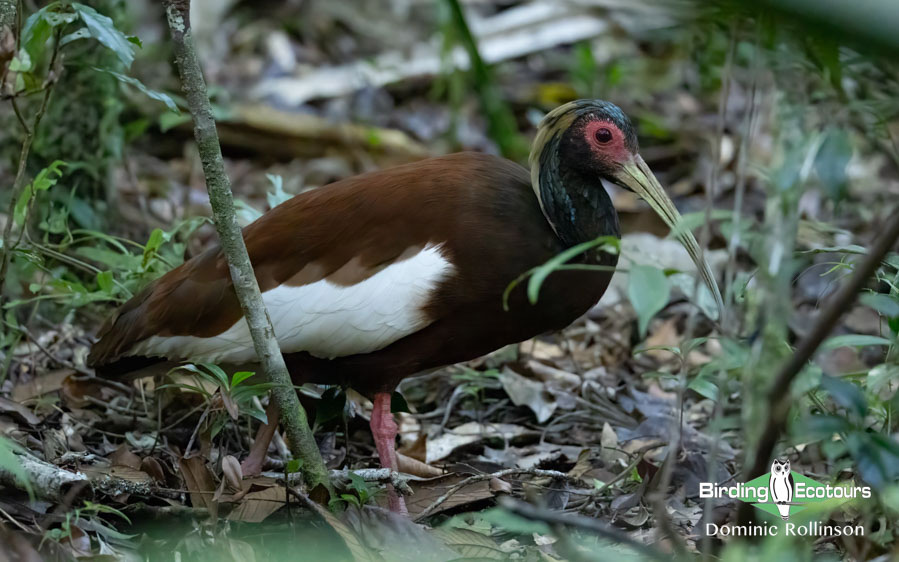
We couldn’t have asked for better looks at Madagascar Ibis around Andasibe.
Day 3, 20th October 2026. Birding Mantadia National Park and surrounds
After an early breakfast we set off for the drive deep into Mantadia National Park where we would be birding for most of the day. Once we eventually reached our birding areas, we hopped out the vans and immediately found a small group of Black-and-white Ruffed Lemurs as well as Lesser Vasa Parrots and a Malagasy Green Sunbird. Other birds seen from along the road included White-throated Oxylabes, Madagascar Cuckoo, Ward’s Flycatcher, Rand’s Warbler, Stripe-throated Jery and Broad-billed Roller. William showed us a Mossy Leaf-tailed Gecko which was ridiculously well camouflaged against the tree bark it was resting on.
We then ventured off-piste deep into the rainforest in the hopes of finding Short-legged Ground Roller which after a long and determined effort would not play along and we had to accept defeat. While venturing through the forest we did however add Malagasy Turtle Dove, Madagascar Pygmy Kingfisher, Greater Vasa Parrot, Madagascar Cuckooshrike, Common Newtonia and Nuthatch Vanga. Just before we got back to the vehicles for lunch, a few group members had brief looks at a male Forest Fody.
At our lunch stop we added a circling Madagascar Buzzard as well as Madagascar Girdled Lizard while William happily showed us a few Giraffe-necked Weevils with their bizarre long necks.
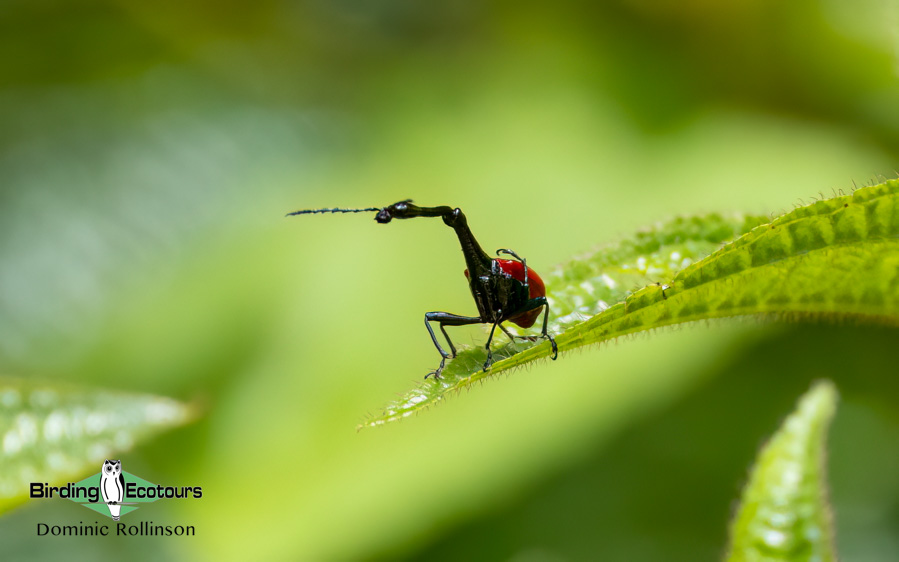
Giraffe-necked Weevil is another example of Madagascar’s fascinating wildlife.
We then headed back into the forest (this time along an established trail) and managed to find both Pitta-like and Scaly Ground Rollers which were a relief to find. Along the trails we also found Tylas Vanga, Malagasy Brush Warbler and Spectacled Tetraka. Lemurs included Common Brown and Red-bellied Lemurs as well as a few distant Indri. Making our way out of the forest we found a Diademed Sifaka as well as a Malagasy Kingfisher perched above a stream.
Once we had left the forest, we birded a marshy area for Madagascar Rail which eventually appeared after some effort, while overhead we saw our first Madagascar Spinetails.
To finish the day we headed back south to Andasibe village where we found Madagascar Owl roosting in a patch of pine trees. We enjoyed prolonged scope views of this large owl before heading back to our accommodation for an enjoyable meal and our beds.
Day 4, 21st October 2026. Birding Analamazaotra Reserve and surrounds
This morning before breakfast Kim showed us a female Velvet Asity that she had found feeding on some berries with the Nelicourvi Weavers putting on a show as they hung from their nests. After breakfast we headed south to Analamazaotra Reserve (adding Malagasy Coucal and calling Madagascar Flufftail en route), near Andasibe, where we spent the remainder of the morning walking its many forest trails.
The morning’s birding was excellent, and we saw the likes of Malagasy Turtle Dove (seen well by all this time), Madagascar Forest Rail, Madagascar Scops Owl, Tylas, Red-tailed and Madagascar Blue Vangas, Long-billed Bernieria and Rand’s Warbler. The birding highlight of the morning (and ultimately voted ‘bird of the trip’) was a pair of Collared Nightjars roosting on the forest floor alongside each other. Their intricately patterned plumage, blending in perfectly with the forest floor, was quite something to see and none of us were sure how William had spotted them!
As with any forest walk in Madagascar, lemurs kept us well entertained and the mammal highlight of the morning (and of the trip) was watching a small family group of Indri at point-blank range as they gave their incredibly loud cries, which echoed throughout the forest, with distant groups responding. It was a moment that will live with us all for a very long time! While on the trails we also saw Common Brown Lemur and Diademed Sifaka (better views this time). On the reptile front we added Giant Madagascan Hognose Snake and Brown Leaf Chameleon to our already swelling list.
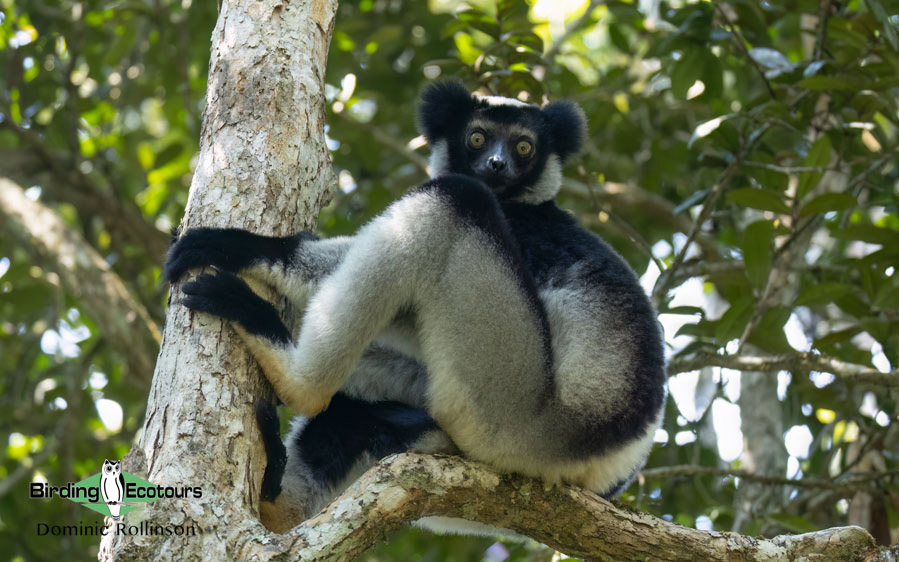
This particular Indri put on a remarkable show for us as it sang its deafening call through the forests of Andasibe.
After lunch, some of the group decided to take it easy around the lodge (Hannelie enjoying Blue Couas from the swimming pool) with the remainder of the group heading out to the nearby Torotorofotsy Marsh which quickly added Grey Emutail and much improved views of Madagascar Snipe as well as many Madagascar Cisticolas.
To finish the day we headed back to V.O.I M.M.A. community reserve for a night walk which turned out to be a bit of a disaster with seemingly dozens or even hundreds of tourists out looking for nocturnal lemurs. After a short while we decided we had had enough and headed back to our accommodation, just as the rain started.
Day 5, 22nd October 2026. Andasibe to Antsirabe
Today we had a long drive ahead of us as we went from Andasibe to Antsirabe, south of Tana. A couple of brief stops in the morning yielded Madagascar Cisticola and Malagasy Palm Swift. Unfortunately once again, the Madagascar Pratincoles were not on their usual rocks in the Mangoro River, despite a thorough search. We then unluckily hit terrible traffic on the mountain pass, with miles of queued trucks causing chaos. The less said about the day the better, and we eventually only made it into our accommodation well after dark.
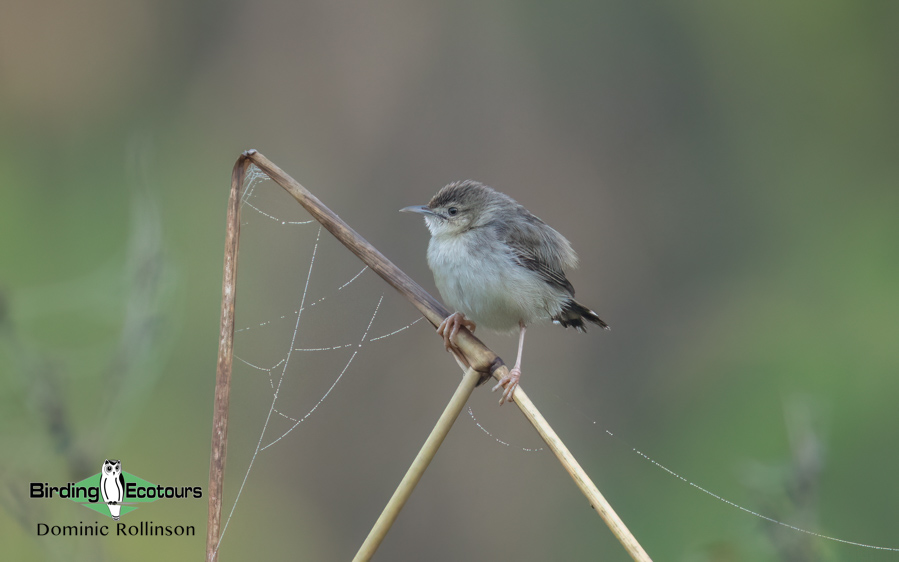
Madagascar Cisticolas are rather common in open areas across Madagascar.
Day 6, 23rd October 2026. Antsirabe to Ranomafana
Today was another long travel day (although it was nothing as bad as the previous day) and we left Antsirabe soon after breakfast and enjoyed a picnic lunch along the way. A couple roadside stops added Hamerkop and our first Pied Crows of the trip.
We arrived in Ranomafana Forest in the late afternoon and enjoyed stretching our legs with a walk along the road running through the forest. The birding here in the late afternoon light was great, and highlights included Madagascar Cuckoo, Madagascar Blue Pigeon (well spotted Stephan), Malagasy Black Swift, Madagascar Buzzard, Malagasy Kestrel, Ward’s Flycatcher, Pollen’s Vanga, Green Jery (excellent looks), Stripe-throated Jery and had brief looks at Forest Fody. This ended two travel days, and we were all excited about the prospect of the next two full days of birding.
Day 7, 24th October 2026. Ranomafana National Park birding
After an early breakfast we hit the trails of Telatekely in Ranomafana Forest which involves steep hill after steep hill and ensured we all got in our steps and flights of stairs for the day. Thankfully the birds and wildlife along the trails were excellent and we were all tired but satisfied with the morning out. Birding highlights included Crossley’s Vanga, Henst’s Goshawk, Cuckoo-roller (seen after only hearing them for the last few days), Pitta-like Ground Roller, Madagascar Cuckooshrike, Tylas, White-headed, Madagascar Blue and Rufous Vangas, Long-billed Bernieria and Forest Fody (finally sitting out in the open for the whole group to see).
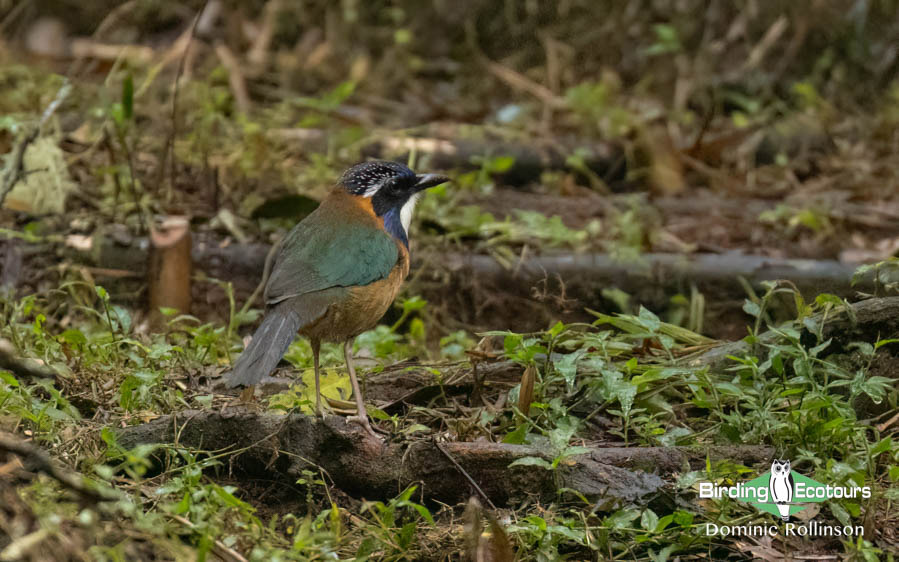
The colorful Pitta-like Ground Roller was seen a few times on this tour.
The wildlife (aside from birds) was equally impressive with sightings of Golden Bamboo Lemur (the species for which the park was established to protect), Red-fronted Brown Lemur, Red-bellied Lemur and the park’s only remaining Greater Bamboo Lemur. This female has been named Simone and it was quite sad to learn her story. Her father died in 2022, leaving her as the sole remaining individual of her species in the forest. We learned that translocating primates was a tricky and normally unsuccessful process and unfortunately her prospects don’t look great. We observed her remaining close to a group of Golden Bamboo Lemurs, which appears to be her only form of social interaction nowadays. We also got to see the strange-looking Satanic Leaf-tailed Gecko and watched an inquisitive Ring-tailed Vontsira (Mongoose) at close quarters.
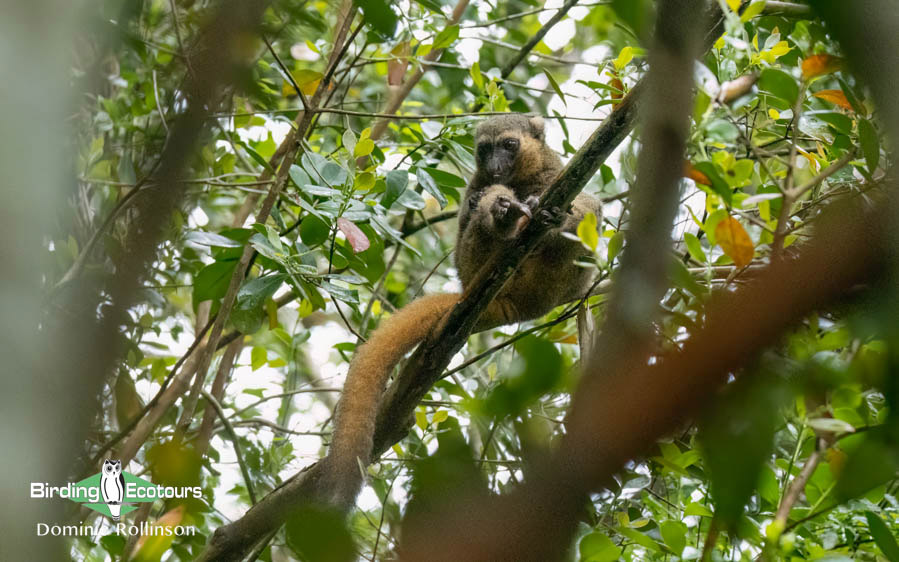
Ranomafana National Park is one of the most accessible areas to see the rare Golden Bamboo Lemur.
After lunch we headed back onto the forest trails and this time did the more gradual slopes of the Sahamalaotra Track. Unfortunately the weather had closed in somewhat which made the conditions under the forest canopy quite dark and gloomy. We tried our best to get looks at the Brown Mesite but had to settle for it being ‘heard only’ on the list. The birding highlight of the afternoon was a Common Sunbird-Asity with Milne-Edwards’ Sifaka being a new lemur addition.
We finished the day with an evening walk where we enjoyed seeing the Rufous Mouse Lemurs come out to feed and then we found a plethora of chameleon species including Ranomafana Nosed Chameleon, Globe-horned Chameleon, O’Shaughnessy’s Chameleon and Cryptic Chameleon.
Day 8, 25th October 2026. Ranomafana National Park birding
We spent most of the morning along the Sahamalaotra Track which was mostly slow going but we gradually worked away at our target species and eventually found most of what we were hoping for. New additions to the list included Rufous-headed Ground Roller, Dark Newtonia, Brown Emutail (glimpses in the undergrowth), Wedge-tailed Jery and Grey-crowned Tetraka. We also saw a couple male Velvet Asities and had fantastic looks at a male Common Sunbird-Asity. We finished the walk enjoying the incredibly brightly colored Baron’s Mantella frog which was great to see.
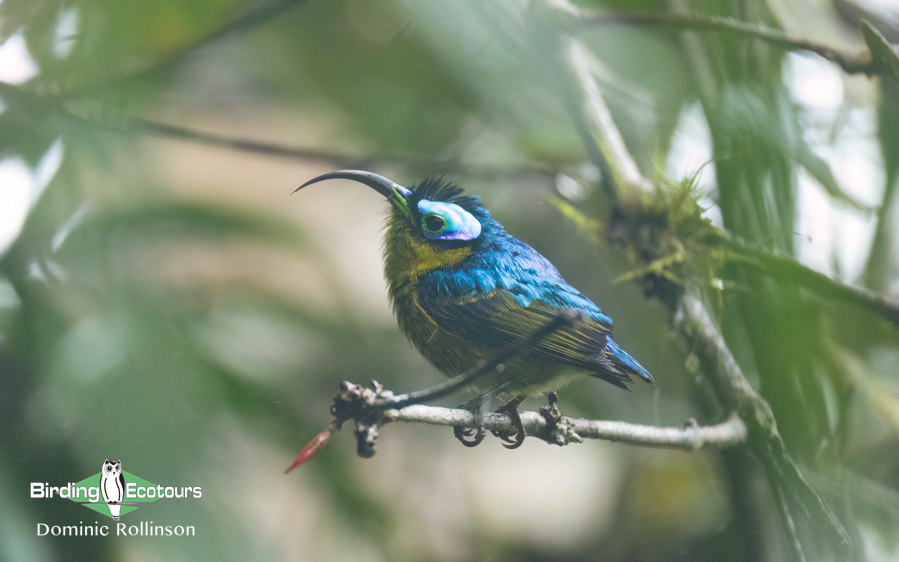
This tiny male Common Sunbird-Asity was seen in Ranomafana.
For our final afternoon of birding (unfortunately the light rain was still around) we again headed back to the Sahamalaotra Track to try to track down our last remaining targets. We still couldn’t find Brown Mesite but did manage to get brief looks at Madagascar Yellowbrow and had good looks at multiple Blue Couas.
Day 9, 26th October 2026. Ranomafana National Park to Isalo
With another long day of travel ahead, we left our accommodation at dawn and made our way south to Anja Community Reserve. We enjoyed some impressive vistas of the high-elevation grassland and deciduous woodlands as we went and eventually arrived at Anja in the late morning.
Within a few minutes of our arrival, we found one of the large groups of Ring-tailed Lemurs and enjoyed watching them for a while as their energetic youngsters kept us highly entertained. We then took a short walk around where we were shown Oustalet’s Giant Chameleon and another Carpet Chameleon. It was also fun to see a large group of Flatid Leaf Bugs which resembled pink flower petals. We added a single new bird species while here, a pair of Grey-headed Lovebirds.
We then set off again and a bit further down the road we came across a large gathering of Black Kites and Pied Crows which were feeding alongside a fire which was sweeping through the grassland. We stopped for a short while and enjoyed the scene as the kites and crows swooped on insects escaping from the fire.
Before arriving at our lovely accommodation on the edge of Isalo National Park we made a stop for the Benson’s subspecies of Forest Rock Thrush. We walked around for a while before we were told the female was sitting on the nest inside the museum and found her without difficulty.
We then arrived at our accommodation in the late afternoon and went for a walk around hoping for Madagascar Partridge which unfortunately did not play along. We did, however, get our first looks at Madagascar Hoopoe.
Later that evening after dinner, Kim, Kotie, Arnold and I took a quick walk around the property and found a pair of obliging White-browed Owls.
Day 10, 27th October 2026. Zombitse birding and transfer to Ifaty
Before breakfast some of us headed out to have another crack at Madagascar Partridge which unfortunately still evaded us, however we did get our only looks at introduced Helmeted Guineafowl.
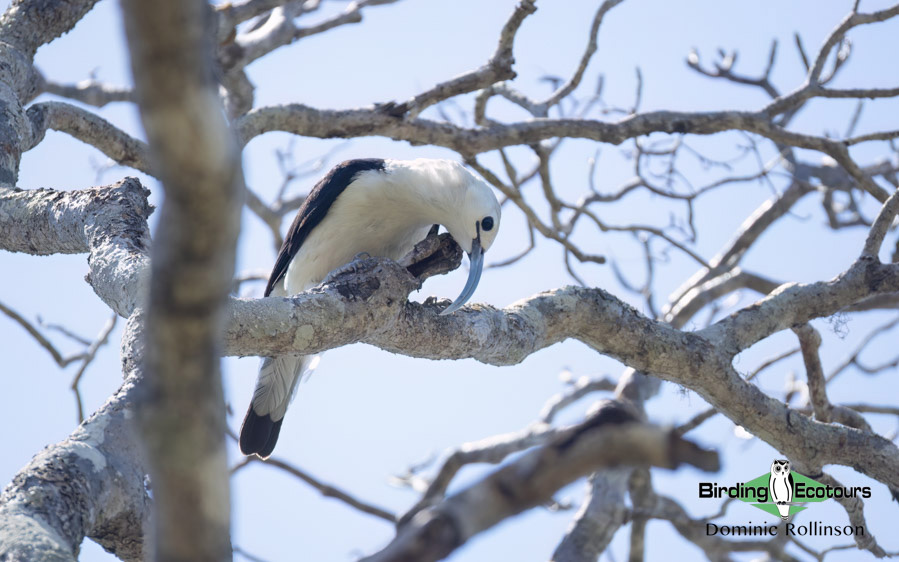
Sickle-billed Vangas were seen in Zombitse’s deciduous woodlands.
After breakfast we loaded up the bus and made the roughly two-hour drive to Zombitse National Park (with White-headed Vanga seen en route), which is a small patch of remaining deciduous woodland which offers some fantastic birding. We spent two hours here walking the trails and chasing after our many bird and mammal targets. Highlights from our time here included Giant, Coquerel’s and Crested Couas, White-browed Owl, Cuckoo-roller, Madagascar Hoopoe, Broad-billed Roller, Hook-billed, Rufous (on a nest) and Sickle-billed Vangas and Appert’s Tetraka. We also found two new lemur species: Zombitse Sportive Lemur and Verreaux’s Sifaka, while new reptile species included Banded Day Gecko and Madagascar Iguana.
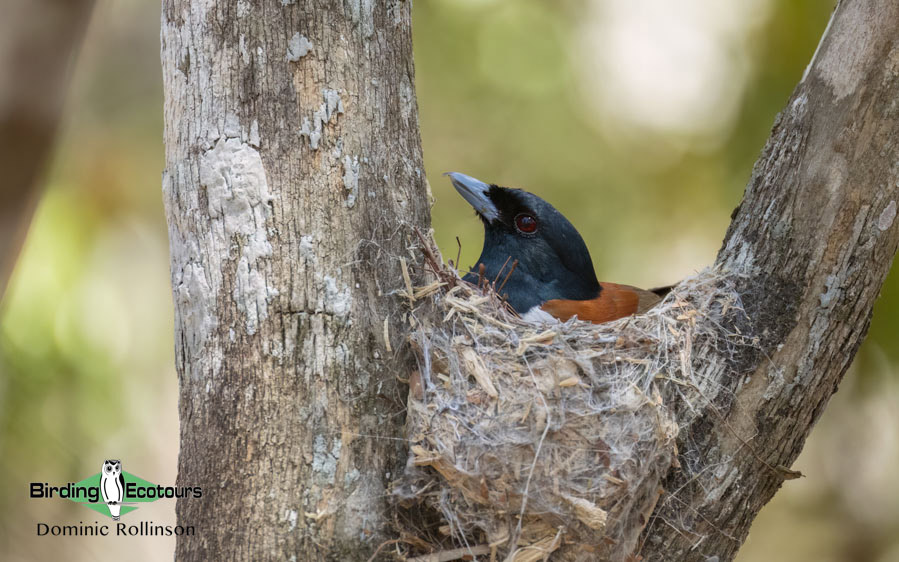
Rufous Vanga, yet another species for our vanga list.
We then left Zombitse and started making our way southwest toward Ifaty. The road quickly deteriorated, and we had to bump along at a snail’s pace. A couple of hours down the road we stopped for Madagascar Sandgrouse which proved very easy as the site guide had a large group sitting in the shade of a tree.
From here, it was a very long afternoon in the bus, and we eventually arrived at our lovely beachside accommodation as it was getting dark.
Day 11, 28th October 2026. Birding in the spiny forest
We had a very early start this morning as we wanted to arrive at our birding site for sunrise before the spiny forest became unbearably hot and uncomfortable. It was rather special to be in the spiny forest at sunrise and watch the red sky glow through a forest of octopus trees and baobabs. For the first 30 minutes or so we were marched through the spiny forest looking for Subdesert Mesite. Eventually the word came through that a mesite had been seen and was seeking cover in a nearby tree, and we all got to enjoy a male as it sat motionless in an octopus tree. After this the pressure was off, somewhat, and we could take things a little slower and focus on our other spiny forest targets. Over the next couple of hours we managed to find the likes of Namaqua Dove, Crested, Olive-capped and Running Couas, Madagascar Buttonquail, Madagascar Harrier-Hawk, Madagascar Sparrowhawk, Madagascar Scops Owl, Long-tailed Ground Roller, Archbold’s Newtonia, Sickle-billed Vanga, Thamnornis and Sakalava Weaver. A White-footed Sportive Lemur was our only mammal of the morning.
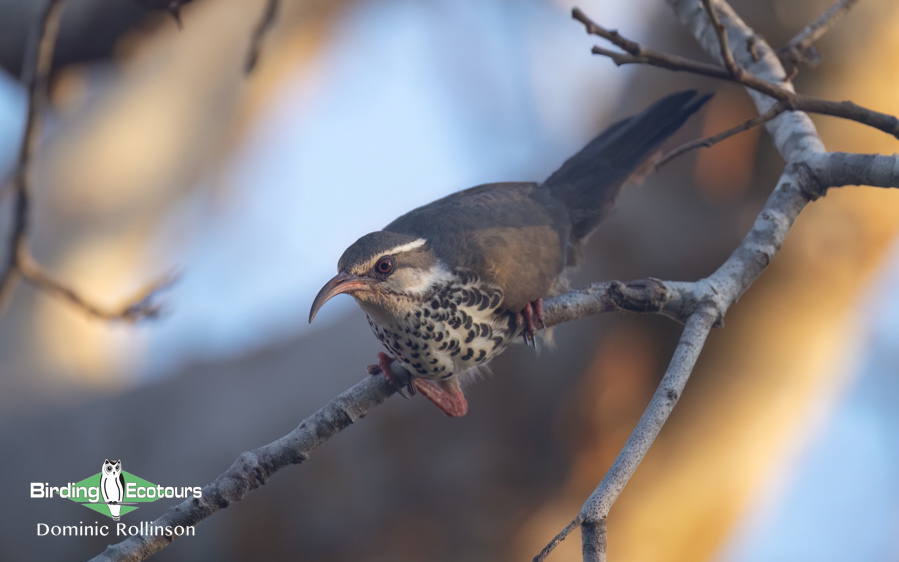
Subdesert Mesite as seen in Madagascar’s southwestern spiny forest.
After a busy morning, we enjoyed a relaxed sit-down breakfast back at our hotel and then afterwards headed out again to bird for the remainder of the morning. We first headed to some nearby salt pans where we easily found Madagascar Plover as well as Kittlitz’s, Common Ringed and White-fronted Plovers and a small group of Curlew Sandpipers. A couple Madagascar Larks patrolled the overgrazed grassy areas on the edge of the salt pans, and we enjoyed our best looks at this species.
We then birded a nearby road which runs along the edge of a large tract of spiny forest in the hopes of finding Banded Kestrel which unfortunately did not oblige for us, although we did spot many Malagasy Kestrels. The birding along this road was surprisingly good though and we also saw Crested Coua, Madagascar Hoopoe, Greater Vasa Parrot, Chabert and Sickle-billed Vangas, Thamnornis and our first looks at Subdesert Brush Warbler.
We had one final birding stop before heading back for lunch and visited the nearby Belalanda Wetlands which added Little Grebe, Blue-billed and Red-billed Teals, Red-knobbed Coot, Common Sandpiper, Common Greenshank, Little Stint and a displaying Madagascar Lark.
We then headed back for lunch and decided to take the rest of the afternoon off, after what had been a busy few days of birding and travel.
Day 12, 29th October 2026. Birding La Table and coastal birding
This morning was another pre-dawn start as we made our way back south to the coastal town of Toliara to load up for our Nosy Ve boat trip. There were some nervous moments when we boarded the speedboat using zebu-drawn carts, however we were soon on our way over choppy seas toward the small island. After roughly an hour on the speedboat, we made it to Nosy Ve and immediately spotted one of the day’s big targets, a group of 13 Crab-plovers, the sole representative of their taxonomic family.
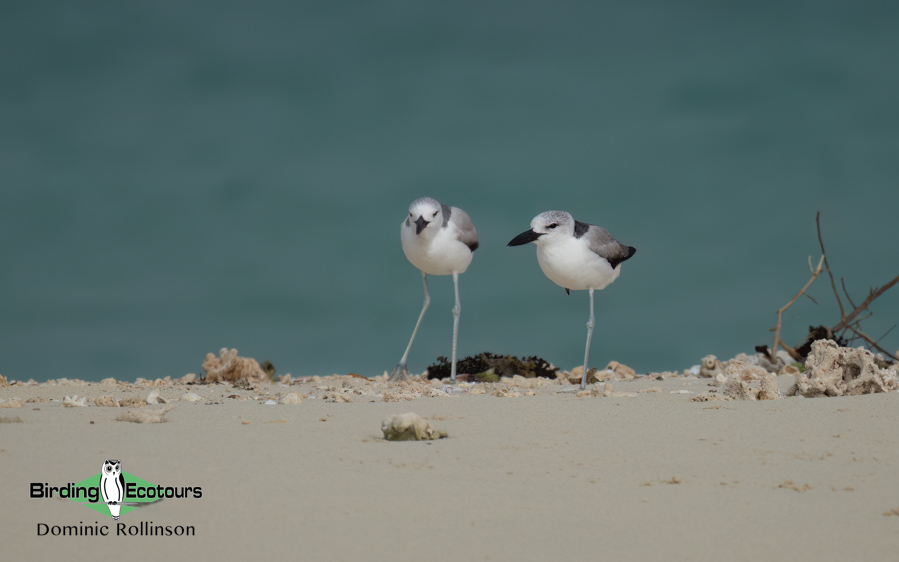
Crab-plovers were seen well on the island of Nosy Ve.
We then had a roughly 40-minute walk around the tiny island, enjoying a few pairs of nesting Red-tailed Tropicbirds as well as Greater Crested Tern, Eurasian Whimbrel, Grey (Back-bellied) Plover, Ruddy Turnstone and Grey Heron.
We loaded back into our boat on the other side of the island and then made the short trip across to the mainland at Anakao village where we found Littoral Rock Thrush with relative ease and then enjoyed a relaxed drink at a beachside restaurant. In the coastal scrub we also found Madagascar Iguana, Bernier’s Striped Snake and a Spider Tortoise, all identified by Kris and her impressive Seek app.
We then boarded the boat again and made our way back up the coast, but this time disembarked closer by at St Augustin which saved us a longer choppy boat ride. In the bay at St Augustin we took some time to look through the coastal bird species and found both Greater and Lesser Flamingoes, Humblot’s Heron, and large numbers of Common Greenshank and Eurasian Whimbrel.
Back on dry land, we met the bus and drove the hour or so to our lovely accommodation on the edge of the Arboretum d’Antsokay. While we waited for lunch, we took a quick walk around and found a male Madagascar Buttonquail with three tiny chicks in tow. Arnold and I had brief looks at a single Barn Swallow shooting by.
That afternoon a smaller group of us headed to the spiny scrub near St Augustin in the hopes of finding our last few remaining southwestern specials. It took a while but eventually we found a Verreaux’s Coua and Red-shouldered Vanga, although we could not find the hoped-for Lafresnaye’s Vanga.
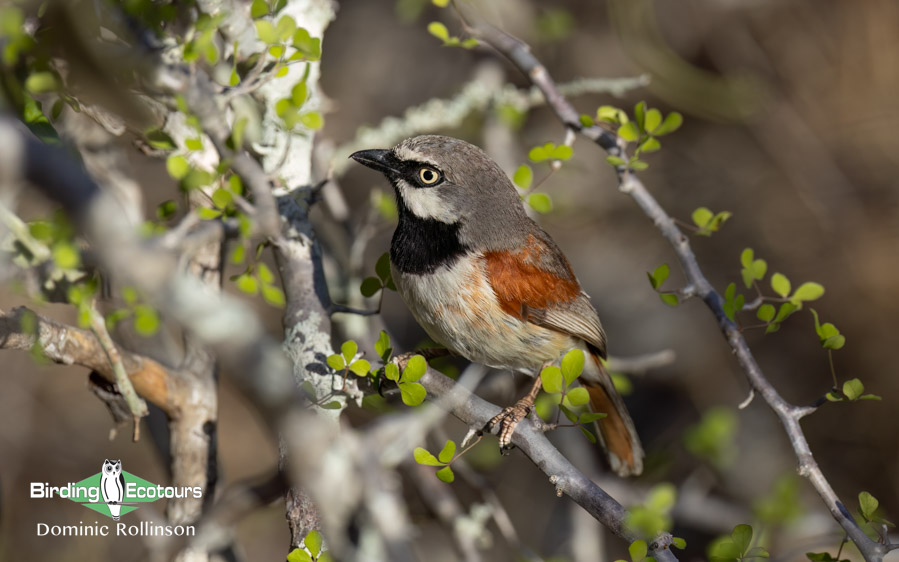
This Red-shouldered Vanga took some work to find, but eventually we enjoyed good looks.
We returned to our accommodation and after an enjoyable dinner, we headed out for a night walk around the arboretum. This walk was highly successful and enjoyable, and we managed to find Spiny Chameleon, Mascarene Ridged Frog, Brown Rain Frog, as well as Grey-brown Mouse Lemur and a pair of roosting Madagascar Buttonquail.
Day 13, 30th October 2026. Toliara birding and flight to Tana
After a busy few days we decided to mostly take it easy this morning and so went for a couple of walks around the arboretum, as well as some time to relax. Our pre-breakfast walk yielded Crested Coua, Subdesert Brush Warbler, Madagascar Magpie-Robin, Sakalava Weaver as well as two new bird species: a Three-banded Plover and a male Greater Painted-snipe. A roosting Mauritian Tomb Bat proved to be our final mammal addition of the trip.
We then enjoyed another tasty lunch and then loaded up for our Toliara-Tana flight which went smoothly. We arrived back at our hotel in Tana in the early evening and enjoyed one final group dinner together.
Day 14, 31st October 2026. Lake Alarobia birding and departure
For our final birding excursion of the tour, we headed out to Lake Alarobia on the outskirts of Tana. This tiny reserve is always bustling with birdlife and seems a bit out of place in the busy suburbs of Tana, but it is a great way to add a few missing waterbirds which are otherwise tricky to see through most of Madagascar. Over the course of our 90-minute visit here we added the likes of White-faced and Fulvous Whistling Ducks, Knob-billed Duck, Meller’s Duck, Malagasy Pond Heron, Common Moorhen and White-throated Rail.
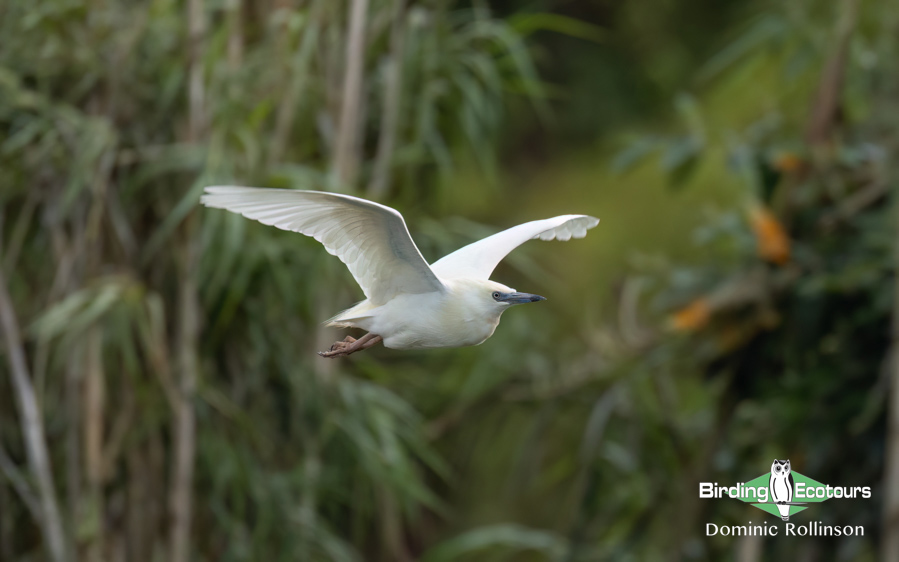
Malagasy Pond Heron as seen at Lake Alarobia in Tana.
The tour concluded following two highly successful and thoroughly enjoyable weeks in Madagascar, during which we encountered an excellent selection of the island’s endemic birds, fascinating lemurs, and an impressive assortment of other fascinating wildlife. It was a memorable adventure through some of Madagascar’s most distinctive habitats, with fantastic wildlife encounters throughout.
Bird List – Following IOC 15.2 (April 2026)
Birds ‘heard only’ are marked with (H) after the common name, all other species were seen.
The following notation after species names is used to show conservation status following BirdLife International: EN = Endangered, VU = Vulnerable.
| Common name | Scientific name |
| Ducks, Geese, Swans (Anatidae) | |
| White-faced Whistling Duck | Dendrocygna viduata |
| Fulvous Whistling Duck | Dendrocygna bicolor |
| Knob-billed Duck | Sarkidiornis melanotos |
| Blue-billed Teal | Spatula hottentota |
| Meller’s Duck (Endemic) – EN | Anas melleri |
| Red-billed Teal | Anas erythrorhyncha |
| Guineafowl (Numididae) | |
| Helmeted Guineafowl | Numida meleagris |
| Nightjars (Caprimulgidae) | |
| Collared Nightjar (Endemic) | Gactornis enarratus |
| Madagascar Nightjar | Caprimulgus madagascariensis |
| Swifts (Apodidae) | |
| Madagascar Spinetail | Zoonavena grandidieri |
| Malagasy Palm Swift | Cypsiurus gracilis |
| Malagasy Black Swift | Apus balstoni |
| Cuckoos (Cuculidae) | |
| Malagasy Coucal | Centropus toulou |
| Crested Coua (Endemic) | Coua cristata |
| Verreaux’s Coua (Endemic) | Coua verreauxi |
| Blue Coua (Endemic) | Coua caerulea |
| Olive-capped Coua (Endemic) | Coua olivaceiceps |
| Red-fronted Coua (Endemic) | Coua reynaudii |
| Coquerel’s Coua (Endemic) | Coua coquereli |
| Running Coua (Endemic) | Coua cursor |
| Giant Coua (Endemic) | Coua gigas |
| Madagascar Cuckoo | Cuculus rochii |
| Mesites (Mesitornithidae) | |
| Brown Mesite (Endemic) – VU (H) | Mesitornis unicolor |
| Subdesert Mesite (Endemic) – VU | Monias benschi |
| Sandgrouse (Pteroclidae) | |
| Madagascar Sandgrouse (Endemic) | Pterocles personatus |
| Pigeons, Doves (Columbidae) | |
| Rock Dove | Columba livia |
| Malagasy Turtle Dove | Nesoenas picturatus |
| Namaqua Dove | Oena capensis |
| Madagascar Green Pigeon (Endemic) | Treron australis |
| Madagascar Blue Pigeon (Endemic) | Alectroenas madagascariensis |
| Flufftails & Forest Rails (Sarothruridae) | |
| Madagascar Forest Rail (Endemic) | Mentocrex kioloides |
| Madagascar Flufftail (Endemic) (H) | Sarothrura insularis |
| Rails, Crakes & Coots (Rallidae) | |
| Madagascar Rail (Endemic) – VU | Rallus madagascariensis |
| White-throated Rail | Dryolimnas cuvieri |
| Common Moorhen | Gallinula chloropus |
| Red-knobbed Coot | Fulica cristata |
| Baillon’s Crake | Zapornia pusilla |
| Grebes (Podicipedidae) | |
| Little Grebe | Tachybaptus ruficollis |
| Flamingos (Phoenicopteridae) | |
| Greater Flamingo | Phoenicopterus roseus |
| Lesser Flamingo | Phoeniconaias minor |
| Buttonquail (Turnicidae) | |
| Madagascar Buttonquail (Endemic) | Turnix nigricollis |
| Stilts, Avocets (Recurvirostridae) | |
| Black-winged Stilt | Himantopus himantopus |
| Plovers (Charadriidae) | |
| Grey Plover – VU | Pluvialis squatarola |
| Common Ringed Plover | Charadrius hiaticula |
| Three-banded Plover | Charadrius tricollaris |
| Madagascar Plover (Endemic) – VU | Anarhynchus thoracicus |
| Kittlitz’s Plover | Anarhynchus pecuarius |
| White-fronted Plover | Anarhynchus marginatus |
| Painted-snipes (Rostratulidae) | |
| Greater Painted-snipe | Rostratula benghalensis |
| Sandpipers, Snipes (Scolopacidae) | |
| Eurasian Whimbrel | Numenius phaeopus |
| Bar-tailed Godwit | Limosa lapponica |
| Madagascar Snipe (Endemic) – VU | Gallinago macrodactyla |
| Common Sandpiper | Actitis hypoleucos |
| Common Greenshank | Tringa nebularia |
| Ruddy Turnstone | Arenaria interpres |
| Curlew Sandpiper – VU | Calidris ferruginea |
| Little Stint | Calidris minuta |
| Crab-plover (Dromadidae) | |
| Crab-plover | Dromas ardeola |
| Gulls, Terns, Skimmers (Laridae) | |
| Greater Crested Tern | Thalasseus bergii |
| Tropicbirds (Phaethontidae) | |
| Red-tailed Tropicbird | Phaethon rubricauda |
| Ibises, Spoonbills (Threskiornithidae) | |
| Madagascar Ibis (Endemic) – VU | Lophotibis cristata |
| Herons, Bitterns (Ardeidae) | |
| Black-crowned Night Heron | Nycticorax nycticorax |
| Black Heron | Egretta ardesiaca |
| Little Egret | Egretta garzetta |
| Little Heron | Butorides atricapilla |
| Squacco Heron | Ardeola ralloides |
| Malagasy Pond Heron – EN | Ardeola idae |
| Great Egret | Ardea alba |
| Western Cattle Egret | Ardea ibis |
| Grey Heron | Ardea cinerea |
| Purple Heron | Ardea purpurea |
| Humblot’s Heron – EN | Ardea humbloti |
| Hamerkop (Scopidae) | |
| Hamerkop | Scopus umbretta |
| Kites, Hawks, Eagles (Accipitridae) | |
| Madagascar Harrier-Hawk (Endemic) | Polyboroides radiatus |
| Madagascar Sparrowhawk (Endemic) | Accipiter madagascariensis |
| Henst’s Goshawk (Endemic) – VU | Astur henstii |
| Black Kite | Milvus migrans |
| Madagascar Buzzard (Endemic) | Buteo brachypterus |
| Owls (Strigidae) | |
| White-browed Owl (Endemic) | Athene superciliaris |
| Madagascar Scops Owl (Endemic) | Otus rutilus |
| Madagascar Owl (Endemic) | Asio madagascariensis |
| Cuckoo-roller (Leptosomidae) | |
| Cuckoo-roller | Leptosomus discolor |
| Hoopoes (Upupidae) | |
| Madagascar Hoopoe (Endemic) | Upupa marginata |
| Rollers (Coraciidae) | |
| Broad-billed Roller | Eurystomus glaucurus |
| Ground Rollers (Brachypteraciidae) | |
| Scaly Ground Roller (Endemic) – VU | Geobiastes squamiger |
| Pitta-like Ground Roller (Endemic) | Atelornis pittoides |
| Rufous-headed Ground Roller (Endemic) | Atelornis crossleyi |
| Long-tailed Ground Roller (Endemic) – VU | Uratelornis chimaera |
| Kingfishers (Alcedinidae) | |
| Madagascar Pygmy Kingfisher (Endemic) | Corythornis madagascariensis |
| Malagasy Kingfisher | Corythornis vintsioides |
| Bee-eaters (Meropidae) | |
| Olive Bee-eater | Merops superciliosus |
| Caracaras, Falcons (Falconidae) | |
| Malagasy Kestrel | Falco newtoni |
| Old World Parrots (Psittaculidae) | |
| Greater Vasa Parrot | Coracopsis vasa |
| Lesser Vasa Parrot (Endemic) | Coracopsis nigra |
| Grey-headed Lovebird (Endemic) | Agapornis canus |
| Asities (Philepittidae) | |
| Velvet Asity (Endemic) | Philepitta castanea |
| Common Sunbird-Asity (Endemic) | Neodrepanis coruscans |
| Vangas & Allies (Vangidae) | |
| Red-tailed Vanga (Endemic) | Calicalicus madagascariensis |
| Red-shouldered Vanga (Endemic) – VU | Calicalicus rufocarpalis |
| Hook-billed Vanga (Endemic) | Vanga curvirostris |
| Pollen’s Vanga (Endemic) – VU | Xenopirostris polleni |
| Sickle-billed Vanga (Endemic) | Falculea palliata |
| White-headed Vanga (Endemic) | Artamella viridis |
| Chabert Vanga (Endemic) | Leptopterus chabert |
| Madagascar Blue Vanga (Endemic) | Cyanolanius madagascarinus |
| Rufous Vanga (Endemic) | Schetba rufa |
| Tylas Vanga (Endemic) | Tylas eduardi |
| Nuthatch Vanga (Endemic) | Hypositta corallirostris |
| Dark Newtonia (Endemic) | Newtonia amphichroa |
| Common Newtonia (Endemic) | Newtonia brunneicauda |
| Archbold’s Newtonia (Endemic) | Newtonia archboldi |
| Ward’s Flycatcher (Endemic) | Pseudobias wardi |
| Crossley’s Vanga (Endemic) | Mystacornis crossleyi |
| Cuckooshrikes (Campephagidae) | |
| Madagascar Cuckooshrike (Endemic) | Ceblepyris cinereus |
| Drongos (Dicruridae) | |
| Crested Drongo | Dicrurus forficatus |
| Monarchs (Monarchidae) | |
| Malagasy Paradise Flycatcher | Terpsiphone mutata |
| Crows, Jays (Corvidae) | |
| Pied Crow | Corvus albus |
| Larks (Alaudidae) | |
| Madagascar Lark (Endemic) | Eremopterix hova |
| Bulbuls (Pycnonotidae) | |
| Malagasy Bulbul | Hypsipetes madagascariensis |
| Swallows, Martins (Hirundinidae) | |
| Mascarene Martin | Phedina borbonica |
| Madagascar Martin (Endemic) | Riparia cowani |
| Reed Warblers & Allies (Acrocephalidae) | |
| Malagasy Brush Warbler | Nesillas typica |
| Subdesert Brush Warbler (Endemic) | Nesillas lantzii |
| Madagascar Swamp Warbler (Endemic) | Acrocephalus newtoni |
| Grassbirds & Allies (Locustellidae) | |
| Grey Emutail (Endemic) | Bradypterus seebohmi |
| Brown Emutail (Endemic) | Bradypterus brunneus |
| Tetrakas & Allies (Bernieridae) | |
| White-throated Oxylabes (Endemic) | Oxylabes madagascariensis |
| Long-billed Bernieria (Endemic) | Bernieria madagascariensis |
| Wedge-tailed Jery (Endemic) | Hartertula flavoviridis |
| Thamnornis (Endemic) | Thamnornis chloropetoides |
| Spectacled Tetraka (Endemic) | Xanthomixis zosterops |
| Appert’s Tetraka (Endemic) – VU | Xanthomixis apperti |
| Grey-crowned Tetraka (Endemic) | Xanthomixis cinereiceps |
| Madagascar Yellowbrow (Endemic) | Crossleyia xanthophrys |
| Rand’s Warbler (Endemic) | Randia pseudozosterops |
| Cisticolas & Allies (Cisticolidae) | |
| Common Jery (Endemic) | Neomixis tenella |
| Green Jery (Endemic) | Neomixis viridis |
| Stripe-throated Jery (Endemic) | Neomixis striatigula |
| Madagascar Cisticola | Cisticola cherina |
| White-eyes (Zosteropidae) | |
| Malagasy White-eye | Zosterops maderaspatanus |
| Starlings, Rhabdornises (Sturnidae) | |
| Common Myna | Acridotheres tristis |
| Madagascar Starling (Endemic) | Hartlaubius auratus |
| Chats, Old World Flycatchers (Muscicapidae) | |
| Madagascar Magpie-Robin (Endemic) | Copsychus albospecularis |
| Forest Rock Thrush (Endemic) | Monticola sharpei |
| Littoral Rock Thrush (Endemic) | Monticola imerina |
| African Stonechat | Saxicola torquatus |
| Sunbirds (Nectariniidae) | |
| Souimanga Sunbird | Cinnyris sovimanga |
| Malagasy Green Sunbird | Cinnyris notatus |
| Old World Sparrows, Snowfinches (Passeridae) | |
| House Sparrow | Passer domesticus |
| Weavers, Widowbirds (Ploceidae) | |
| Nelicourvi Weaver (Endemic) | Ploceus nelicourvi |
| Sakalava Weaver (Endemic) | Ploceus sakalava |
| Red Fody | Foudia madagascariensis |
| Forest Fody (Endemic) | Foudia omissa |
| Waxbills, Munias & Allies (Estrildidae) | |
| Madagascar Mannikin (Endemic) | Lepidopygia nana |
| Wagtails, Pipits (Motacillidae) | |
| Madagascar Wagtail (Endemic) | Motacilla flaviventris |
| Species Seen | 153 |
| Species heard only | 2 |
| Total species recorded | 155 |
Mammal List – Following Mammal Watching (February 2026)
The following notation after species names is used to show conservation status following the IUCN Red List: CR = Critically Endangered, EN = Endangered, VU = Vulnerable.
| Common name | Scientific name |
| Dwarf and Mouse Lemurs (Cheirogaleidae) | |
| Grey-brown Mouse Lemur (Endemic) | Microcebus griseorufus |
| Rufous Mouse Lemur (Endemic) – VU | Microcebus rufus |
| Indris, Sifakas, and Woolly Lemurs (Indriidae) | |
| Indri (Endemic) – CR | Indri indri |
| Diademed Sifaka (Endemic) – CR | Propithecus diadema |
| Milne-Edwards’s Sifaka (Endemic) – EN | Propithecus edwardsi |
| Verreaux’s Sifaka (Endemic) – CR | Propithecus verreauxi |
| Typical Lemurs (Lemuridae) | |
| Brown Lemur (Endemic) – VU | Eulemur fulvus |
| Red-bellied Lemur (Endemic) – VU | Eulemur rubriventer |
| Red-fronted Brown Lemur (Endemic) – VU | Eulemur rufifrons |
| Golden Bamboo Lemur (Endemic) – CR | Hapalemur aureus |
| Grey Bamboo Lemur (Endemic) – VU | Hapalemur griseus |
| Ring-tailed Lemur (Endemic) – EN | Lemur catta |
| Greater Bamboo Lemur (Endemic) – CR | Prolemur simus |
| Black-and-white Ruffed Lemur (Endemic) – CR | Varecia variegata |
| Sportive Lemurs (Lepilemuridae) | |
| Zombitse Sportive Lemur (Endemic) – EN | Lepilemur hubbardi |
| White-footed Sportive Lemur (Endemic) – EN | Lepilemur leucopus |
| Small-toothed Sportive Lemur (Endemic) – EN | Lepilemur microdon |
| Nesomyids (Nesomyidae) | |
| Red Forest Rat (Endemic) | Nesomys rufus |
| Sheath-tailed Bats (Emballonuridae) | |
| Mauritian Tomb Bat | Taphozous mauritianus |
| Euplerids (Eupleridae) | |
| Ring-tailed Vontsira (Endemic) | Galidia elegans |
| Species Seen | 20 |
Reptile List – Following Reptiles of the World (October 2023)
The following notation after species names is used to show conservation status following the IUCN Red List: CR = Critically Endangered, EN = Endangered, VU = Vulnerable.
| Common name | Scientific name |
| Chameleons (Chamaeleonidae) | |
| O’Shaughnessy’s Chameleon (Endemic) – VU | Calumma oshaughnessyi |
| Globe-horned Chameleon (Endemic) – EN | Calumma globifer |
| Cryptic Chameleon (Endemic) | Calumma crypticum |
| Ranomafana Nosed Chameleon (Endemic) | Calumma tjiasmantoi |
| Brown Leaf Chameleon (Endemic) | Brookesia superciliaris |
| Spiny Chameleon (Endemic) | Furcifer verrucosus |
| Oustalet’s Giant Chameleon (Endemic) | Furcifer oustaleti |
| Carpet Chameleon (Endemic) | Furcifer lateralis |
| Two-banded Chameleon (Endemic) – EN | Furcifer balteatus |
| Typical Geckos (Gekkonidae) | |
| Mossy Leaf-tailed Gecko (Endemic) | Uroplatus sikorae |
| Satanic Leaf-tailed Gecko (Endemic) | Uroplatus phantasticus |
| Modest Day Gecko (Endemic) | Phelsuma modesta |
| Banded Day Gecko (Endemic) – VU | Phelsuma standingi |
| Peacock Day Gecko (Endemic) | Phelsuma quadriocellata |
| Plated Lizards (Gerrhosauridae) | |
| Madagascar Girdled Lizard | Zonosaurus madagascariensis |
| Madagascar Keeled Cordylid (Endemic) | Tracheloptychus madagascariensis |
| Madagascar Iguanas (Opluridae) | |
| Madagascar Iguana (Endemic) | Chalarodon madagascariensis |
| Skinks (Scincidae) | |
| Gold-spotted Mabuya (Endemic) | Trachylepis aureopunctata |
| Sand Snakes (Psammophiidae) | |
| Pencil Snake (Endemic) | Mimophis mahfalensis |
| Madagascar Ground Snakes (Pseudoxyrhophiidae) | |
| Giant Madagascan Hognose Snake (Endemic) | Leioheterodon madagascariensis |
| Bernier’s Striped Snake (Endemic) | Dromicodryas bernieri |
| Tortoises (Testudinidae) | |
| Spider Tortoise (Endemic) – CR | Pyxis arachnoides |
| Species Seen | 22 |
Amphibian List – Following Amphibians of the World (August 2023)
| Common name | Scientific name |
| Mantellas (Mantellidae) | |
| Baron’s Mantella (Endemic) | Mantella baroni |
| Narrowmouth Toads (Microhylidae) | |
| Brown Rain Frog (Endemic) | Scaphiophryne brevis |
| Grassland Frogs (Ptychadenidae) | |
| Mascarene Ridged Frog | Ptychadena mascareniensis |
| Species Seen | 3 |
This is a sample trip report. Please email us ([email protected]) for more trip reports from this destination.