- Duration:
- 6 days
- Group Size:
- 5–8 (2026 & 2027)
- Group Size:
- 6–8 (2028)
- Tour Start:
- Hobart, Tasmania
- Tour End:
- Hobart, Tasmania
Birding Tour Australia: Tasmania Bird Tour – Tasmanian Endemics and the Orange-bellied Parrot
Details
2026
24–29 October
Per person sharing
A$7,160 AUD
$5,328 USD / £3,982 GBP / €4,646 EUR
Single supplement
A$945 AUD
$704 USD / £526 GBP / €613 EUR
includes the Orange-bellied Parrot day-trip flights
This tour is closed to new bookings, please consider booking early for 2027
2027
25–30 October
Per person sharing
A$7,950 AUD
$5,916 USD / £4,422 GBP / €5,160 EUR
Single supplement
A$1,050 AUD
$781 USD / £584 GBP / €681 EUR
includes the Orange-bellied Parrot day-trip flights
2028
25–30 October
Per person sharing
A$8,230 AUD
$6,124 USD / £4,577 GBP / €5,341 EUR
Single supplement
A$1,150 AUD
$856 USD / £639 GBP / €747 EUR
includes the Orange-bellied Parrot day-trip flights
Itinerary
Download ItineraryBirding Tour Australia: Tasmania Bird Tour – Tasmanian Endemics and the Orange-bellied Parrot
This small group tour of the Australian island state of Tasmania looks for all Tasmanian endemics (we usually see them all well) and also includes a day-trip flight to look for the Critically Endangered (BirdLife International) Orange-bellied Parrot, not everyone offers this option within their tours so do check as this is the only realistic way to see this species.
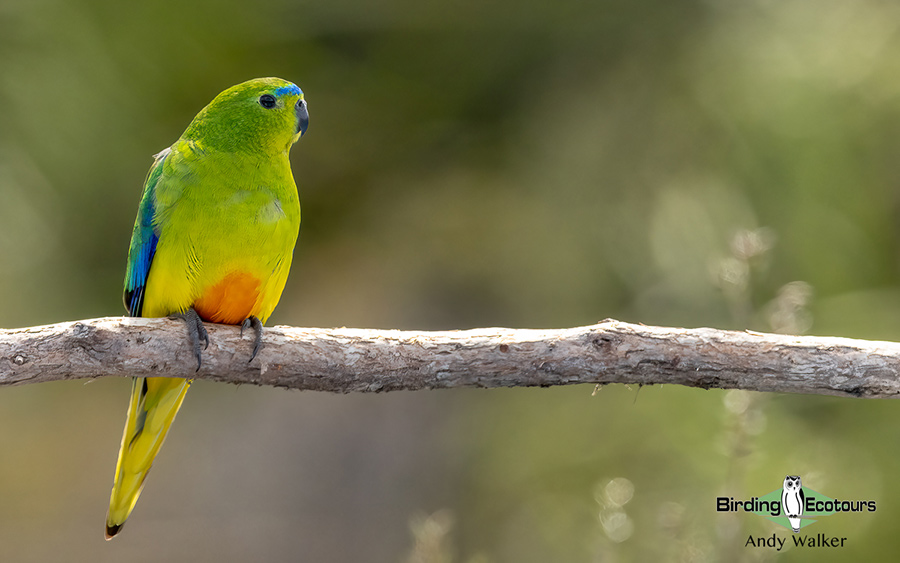
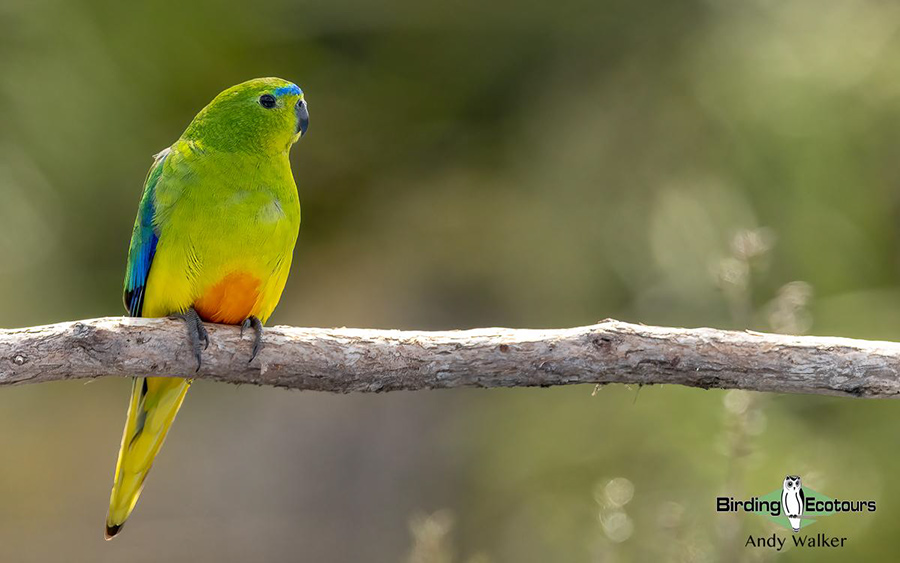 The handsome Orange-bellied Parrot is the primary target on this tour.
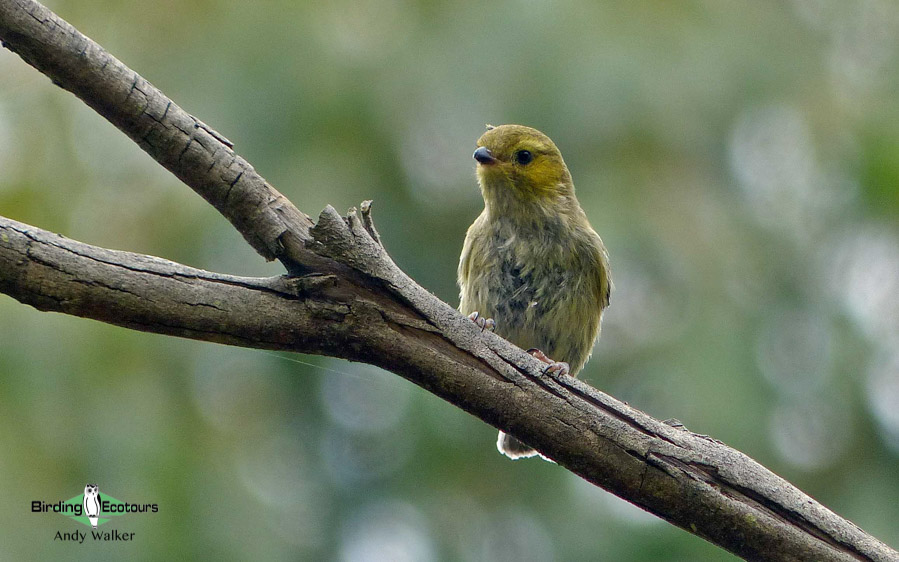
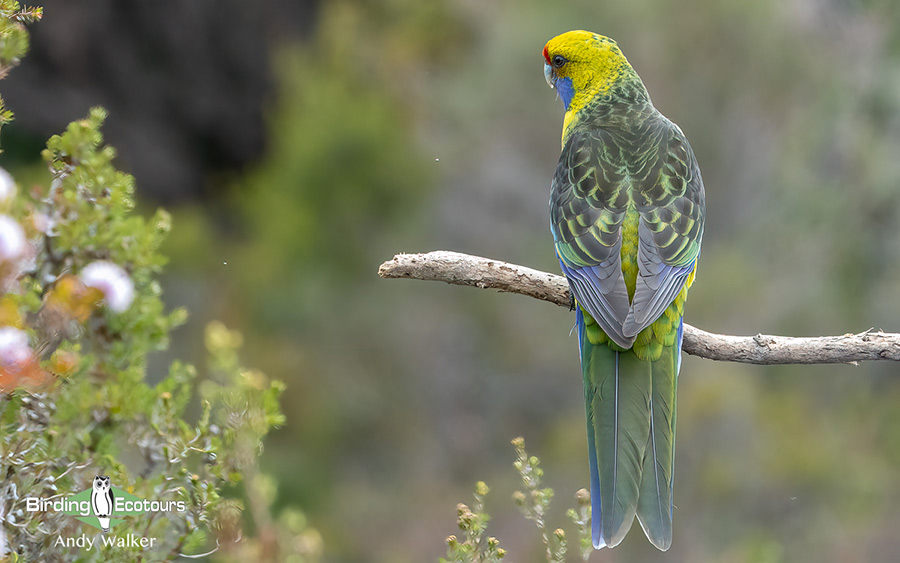
Adjoined to the mainland until the end of the last glacial period about ten thousand years ago, Tasmania is both geographically and genetically isolated from the Australian mainland. Through the millennia this island has developed its own unique set of plants and animals, including twelve avian endemics: Forty-spotted Pardalote, Tasmanian Nativehen, Green Rosella, Yellow Wattlebird, Scrubtit, Tasmanian Scrubwren, Tasmanian Thornbill, Dusky Robin, Yellow-throated Honeyeater, Black-headed Honeyeater, Strong-billed Honeyeater, and Black Currawong. Beyond the endemics Tasmania also harbors several species which winter on the mainland and breed on Tasmania, such as Orange-bellied Parrot already mentioned above, Swift Parrot another Critically Endangered (BirdLife International) parrot and another major target on this tour, and Tasmanian Boobook (some of which seem to overwinter in Victoria).
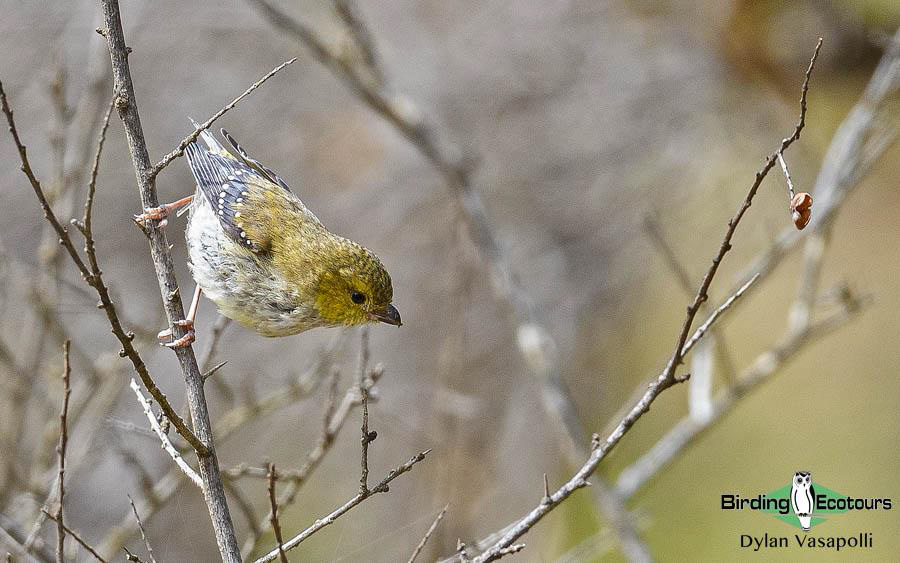 Forty-spotted Pardalote is one of the Tasmanian endemics we will target on this tour.
This tour also offers wonderful opportunities for many other highly sought-after species such as Little Penguin, Hooded Plover, Freckled Duck, Wedge-tailed Eagle, Grey Goshawk, (Eastern) Ground Parrot, Yellow-tailed Black Cockatoo, Pink Robin, Flame Robin, Scarlet Robin, Olive Whistler, Southern Emu-wren, and Beautiful Firetail.
Our search for the endemics and breeding specialties of Tasmania is set within a stunning backdrop of rugged coastlines, tall evergreen sclerophyll forests, alpine heathlands, and cool temperate rainforests, undoubtedly enriching our experience here.
For those wishing to continue exploring Australia, this tour can be combined with our Australia Birding Tour: Eastern Australia – from the Outback to the Wet Tropics tour.
Itinerary (6 days/5 nights)
Day 1. Arrival in Hobart
Afternoon arrival at Hobart International Airport and transfer to your hotel in the city, our base for the next few nights, with the rest of the day at your leisure.
Overnight: Hobart
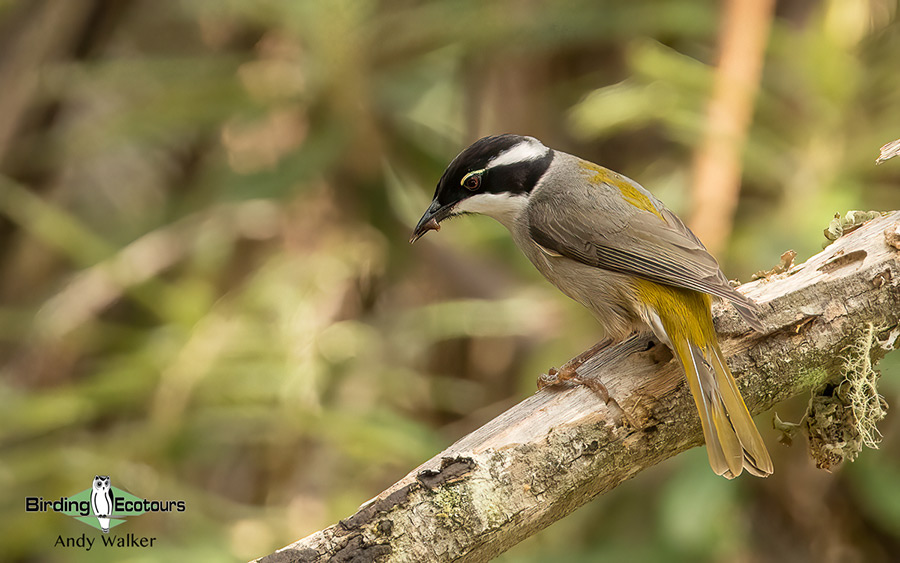
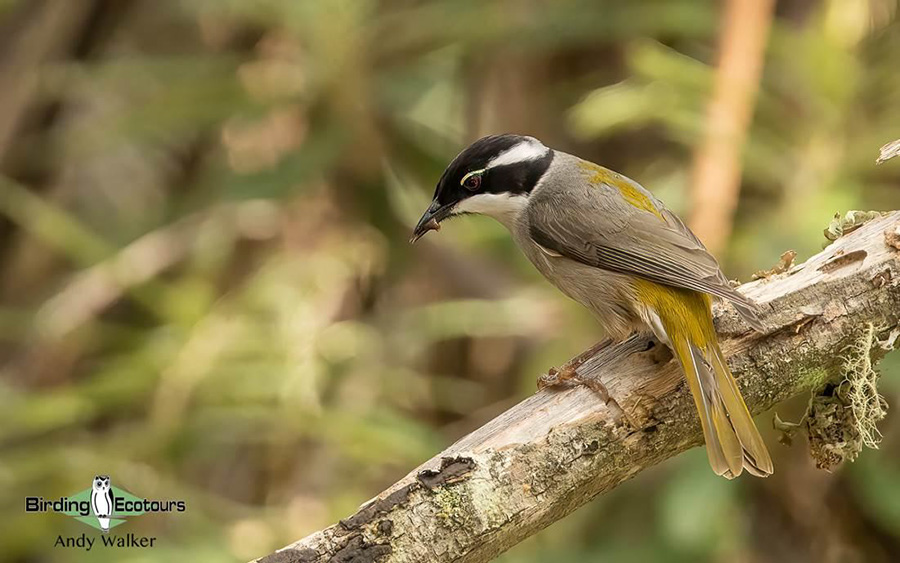 Endemic to Tasmania, Strong-billed Honeyeater will be an early target on the tour.
Day 2. Hobart environs
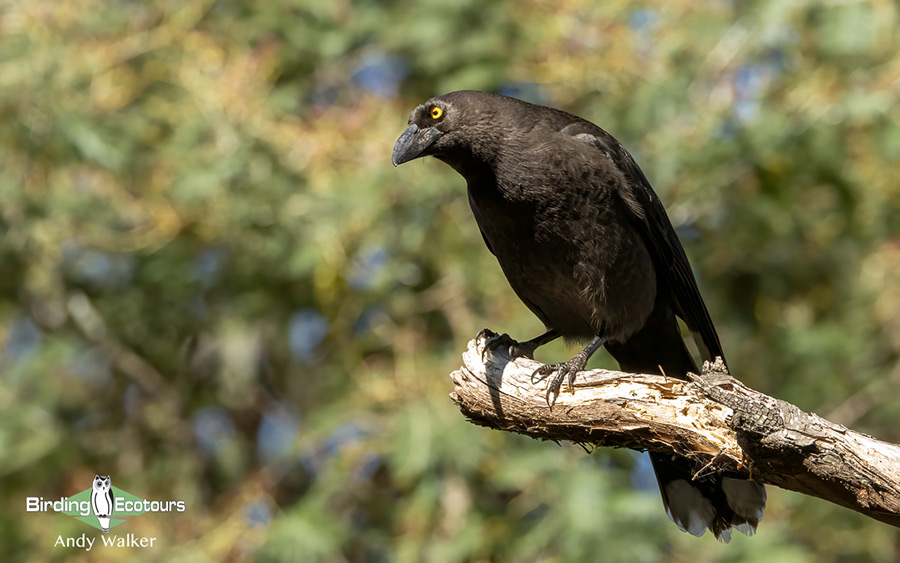
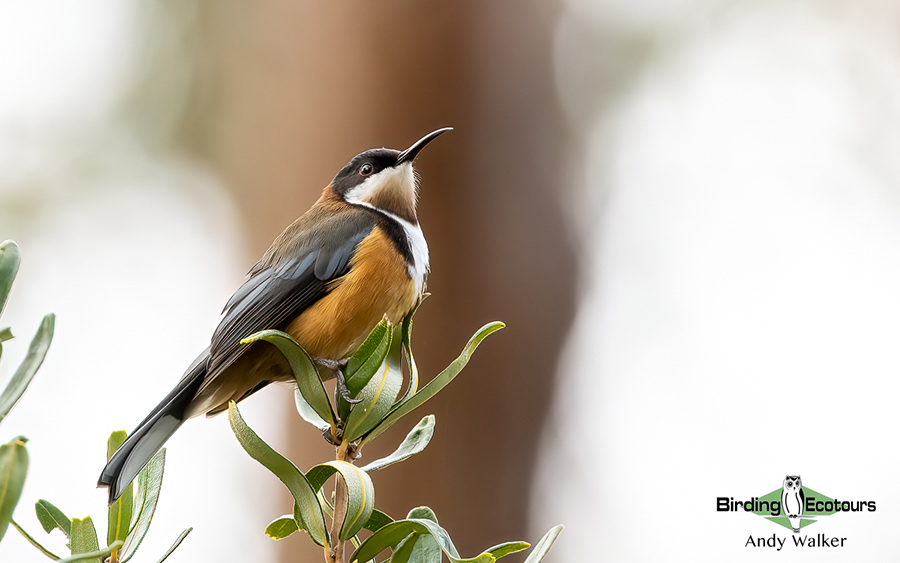
We spend the day birding at a couple of sites within close proximity to Hobart city, exploring the beautiful Fern Glade at Mt Wellington and the nearby Waterworks Reserve, where we can expect to get our list of Tasmanian endemic species up and running with Tasmanian Scrubwren, Scrubtit, Tasmanian Thornbill, Black Currawong, Yellow Wattlebird, Dusky Robin, and Strong-billed Honeyeater. The supporting cast may include Pink Robin, Bassian Thrush, and Olive Whistler.
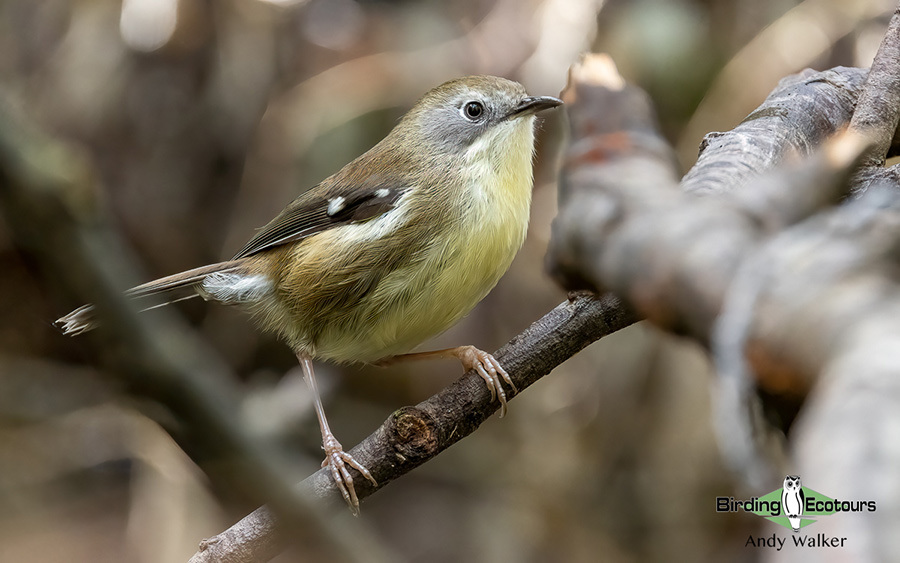
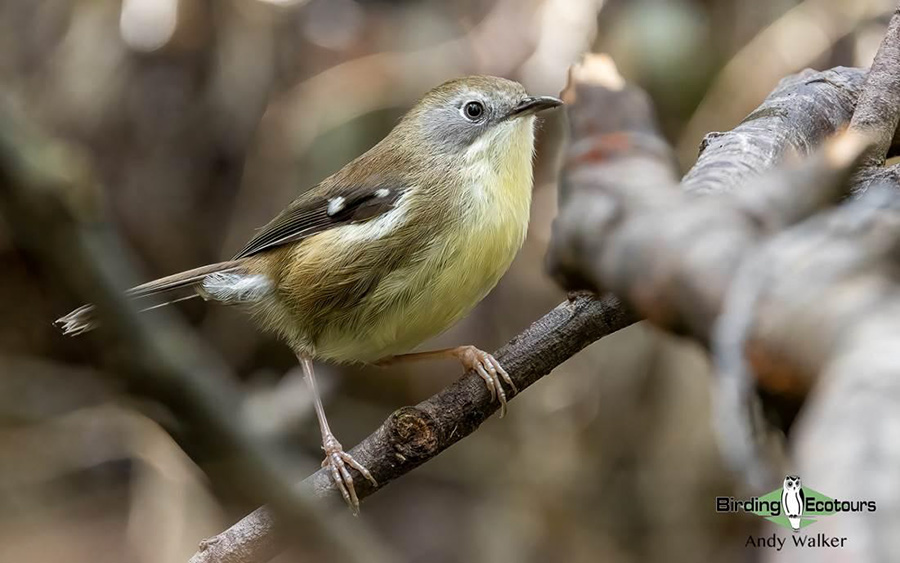 Usually one of the tougher endemics, Scrubtit loves the deep dark areas of forested ravines!
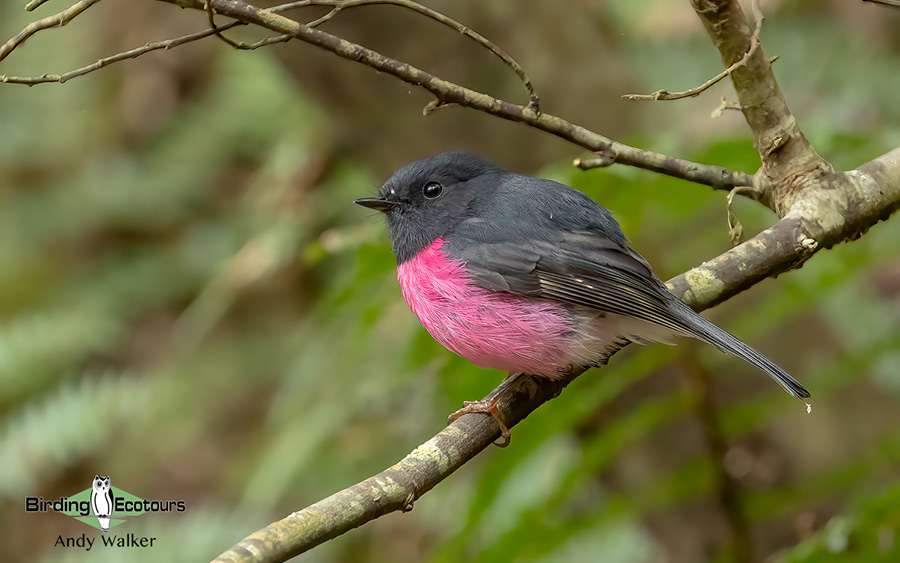
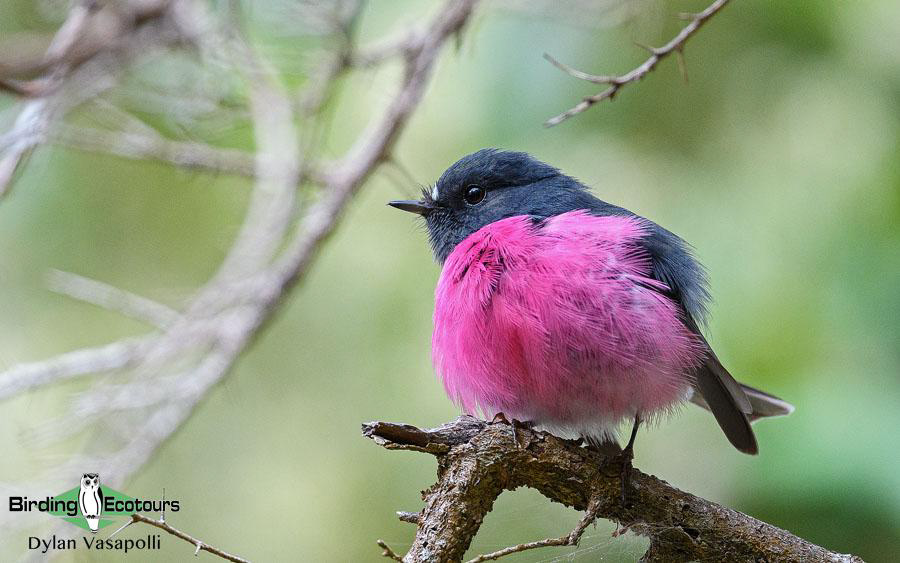 The spectacular Pink Robin is always popular!
Day 3. Melaleuca Orange-bellied Parrot day trip
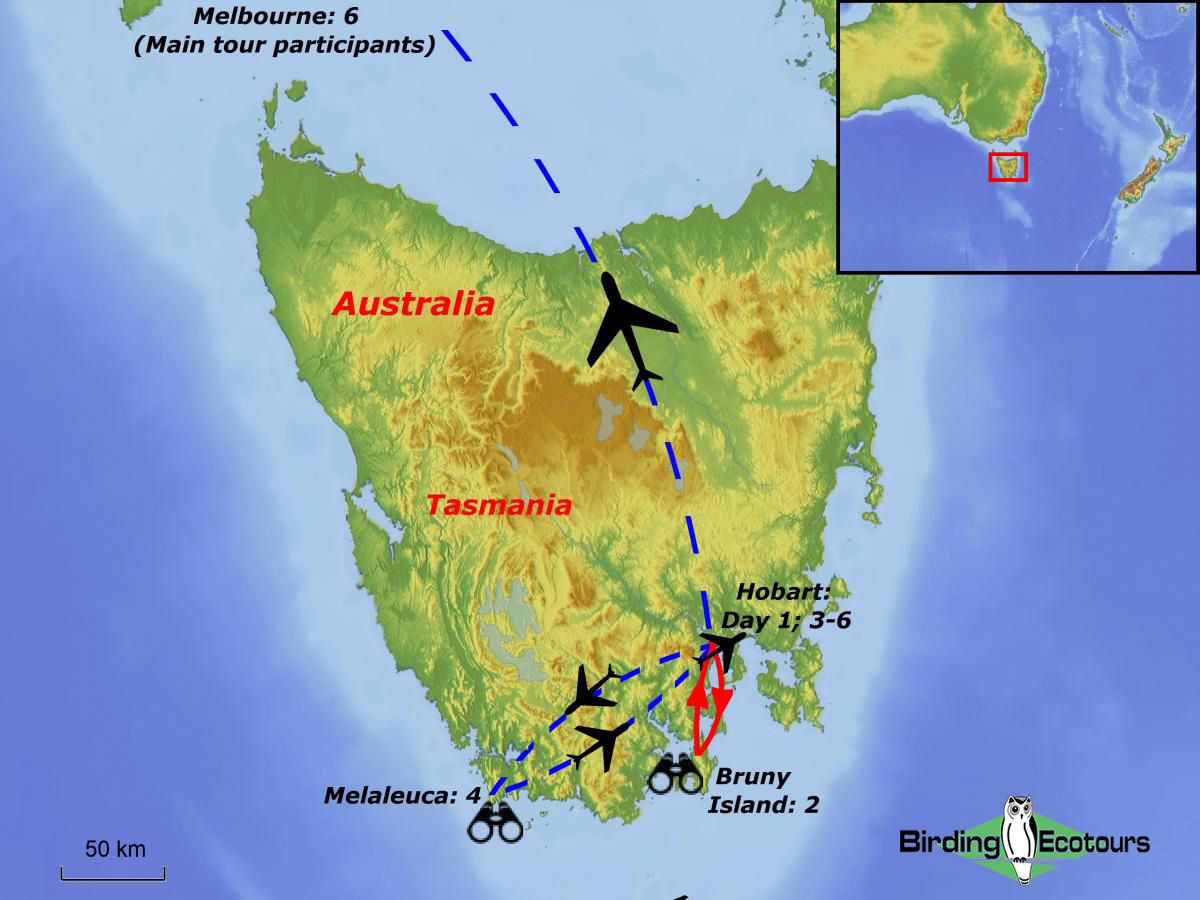
An unforgettable day is in store for us today! Weather-permitting we will board a small plane early in the morning, flying over some incredible scenery over southwestern Tasmania before descending onto the remote airstrip at Melaleuca. Originally a tin mine, Melaleuca is now the center of conservation efforts aimed at restoring the wild population of the Critically Endangered (BirdLife International) Orange-bellied Parrot. A Tasmanian breeding endemic, these beautiful little parrots are in a dire situation, with fewer than forty individuals left in the wild. Time unfortunately seems to be running out for them.
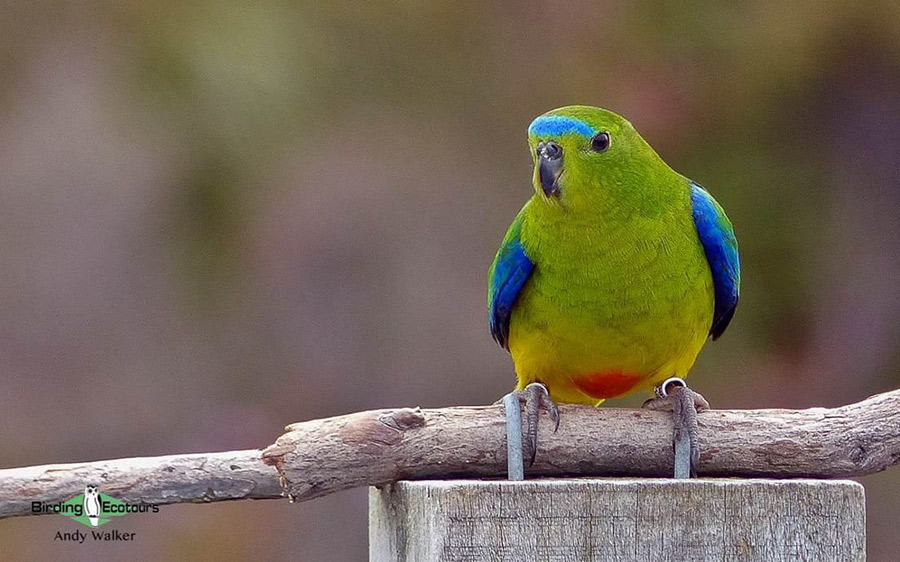 We will hopefully find Orange-bellied Parrot at Melaleuca.
The surrounding heath hosts a healthy population of Southern Emu-wren, Striated Fieldwren, Olive Whistler, Pink Robin, Crescent Honeyeater, Beautiful Firetail, and the very secretive and subtly beautiful (Eastern) Ground Parrot, which we will also try to find. Over the course of the day we will be truly spoiled with a range of fantastic local Tasmanian food and drink. Our return flight to Hobart late in the afternoon will likely take us on a different route back to Hobart, offering more views of stunning mountain scenery. This is often considered one of the most enjoyable days across all of our Australian tours.
*As touched on at the start of this day account, this day trip is subject to weather and prevailing conditions on the day, and should they be unfavorable, there is a risk of cancellation. Should this happen, we will endeavor to reschedule this to an alternate day within the tour dates.
Overnight: Hobart
Day 4. Hobart to Bruny Island
Located off the southeastern coast of Tasmania, Bruny Island supports all twelve currently recognized Tasmanian endemics, including the world’s largest population of the Endangered (BirdLife International) Forty-spotted Pardalote. We will board a ferry to this rich site during the morning, watching for White-bellied Sea Eagle, Pacific Gull, and Black-faced Cormorant on our way out.
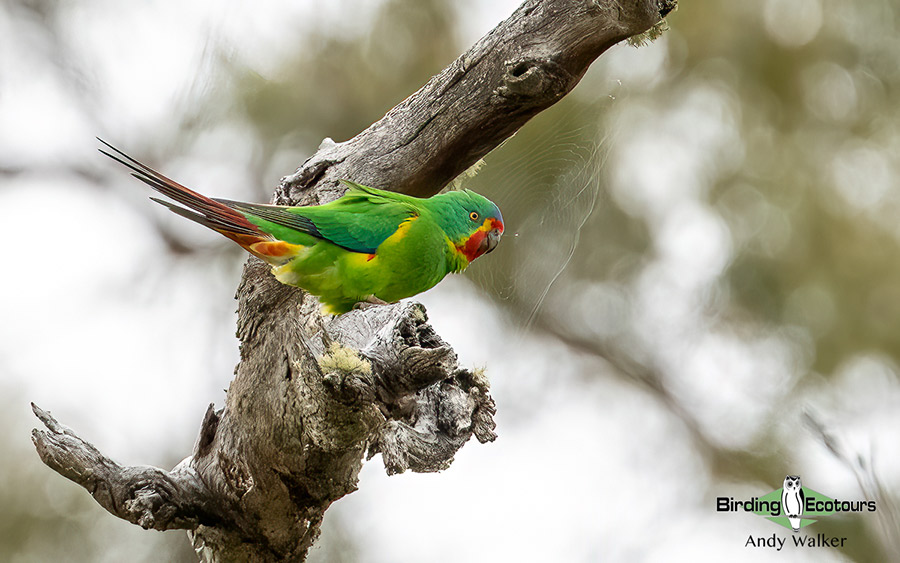
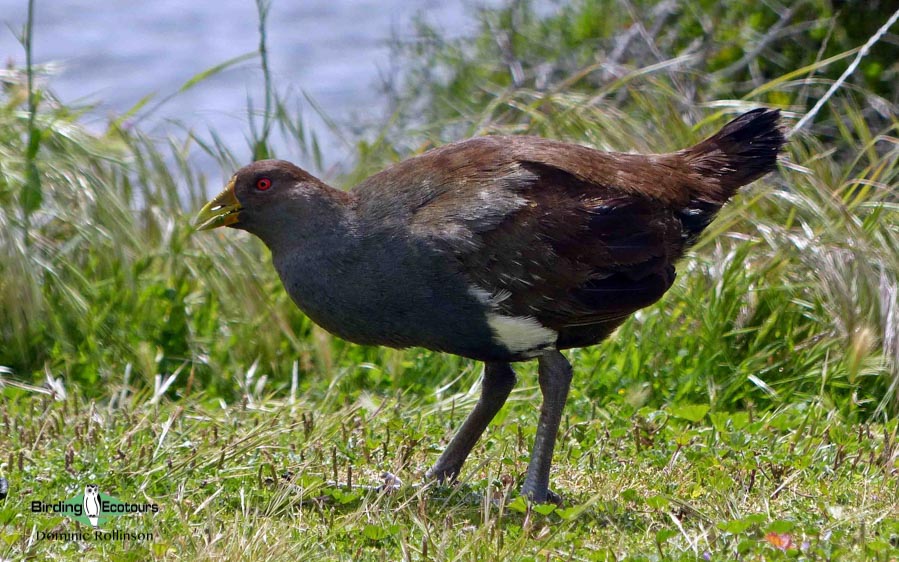
Once we arrive on the island, we will spend the better part of the day looking for all the Tasmanian endemics, such as the demure Dusky Robin, the vociferous Yellow Wattlebird, and the comical Tasmanian Nativehen. By scanning sandy beaches, we also hope to connect with the increasingly rare Hooded Plover. While here we will also look for the Critically Endangered (BirdLife International) breeding-endemic Swift Parrot, another species in a state of unfortunate rapid decline.
We will take a drive and walk around at dusk to look for Little Penguin and Short-tailed Shearwater as well as the recently split Tasmanian Boobook (a hawk-owl).
Overnight: Bruny Island
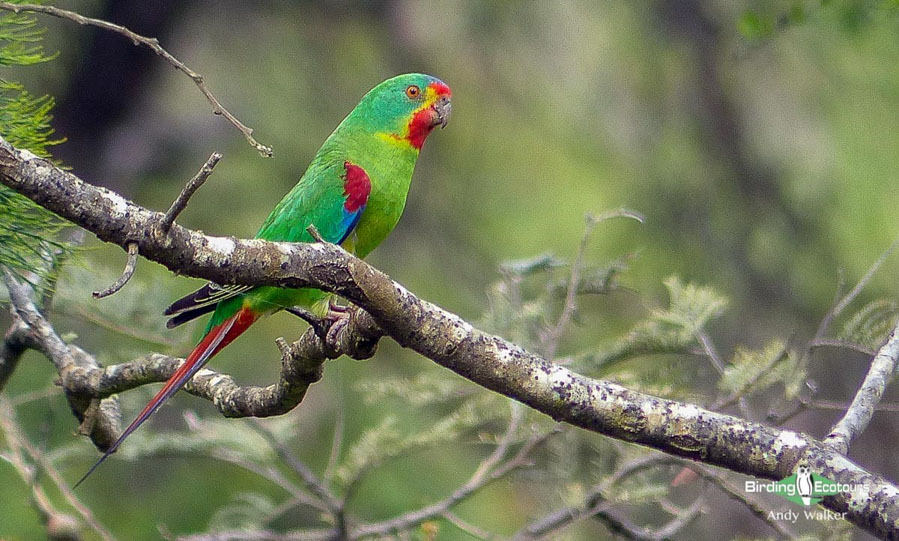 Swift Parrot – another Critically Endangered (BirdLife International) parrot that we hope to find on this tour.
Day 5. Bruny Island to Hobart
We spend a full day birding Bruny Island, focusing perhaps on the scarcer endemics such as Scrubtit and Strong-billed Honeyeater. Other specialties like Wedge-tailed Eagle, Beautiful Firetail, Olive Whistler, (Eastern) Ground Parrot, and Swift Parrot will be among our targets too. We will also keep an eye open over the water for Black-browed Albatross and Shy Albatross, Australasian Gannet, and White-bellied Sea Eagle. In the late afternoon we will catch the ferry off Bruny Island and head back to our hotel in the city of Hobart.
Overnight: Hobart
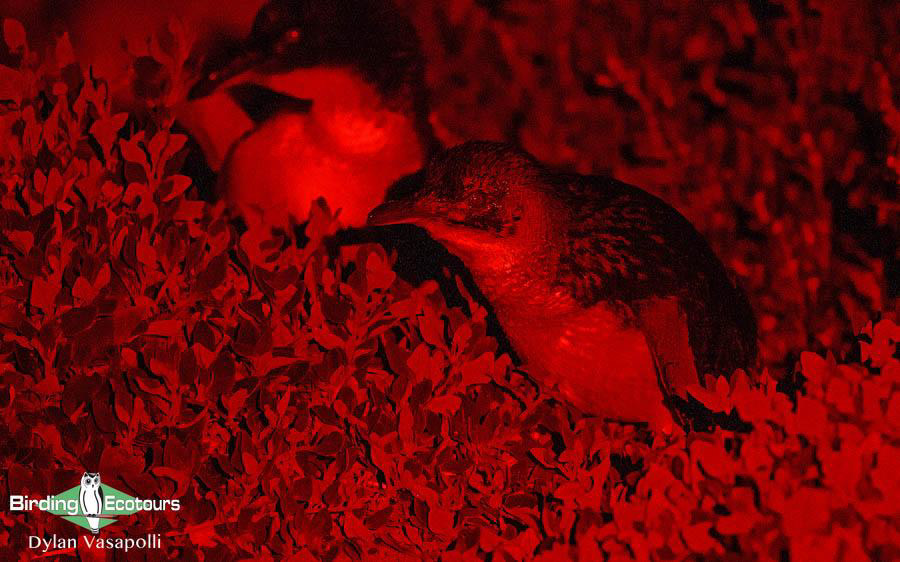 We will attempt to see the aptly named Little Penguin whilst in Tasmania. These are difficult birds to track down, as they only come ashore during the night, and are very susceptible to disturbance – hence why a red light is used to view them. We hope to have success, as we have on previous tours.
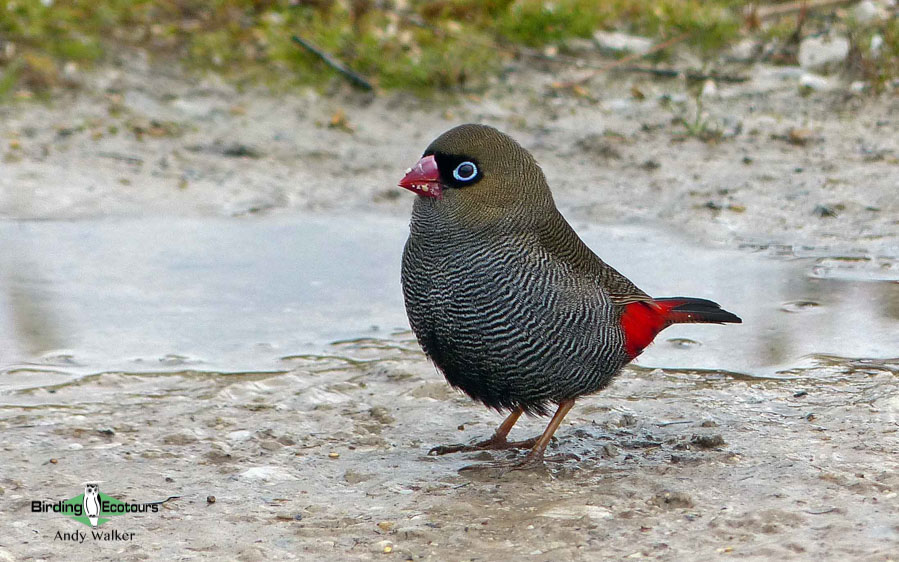
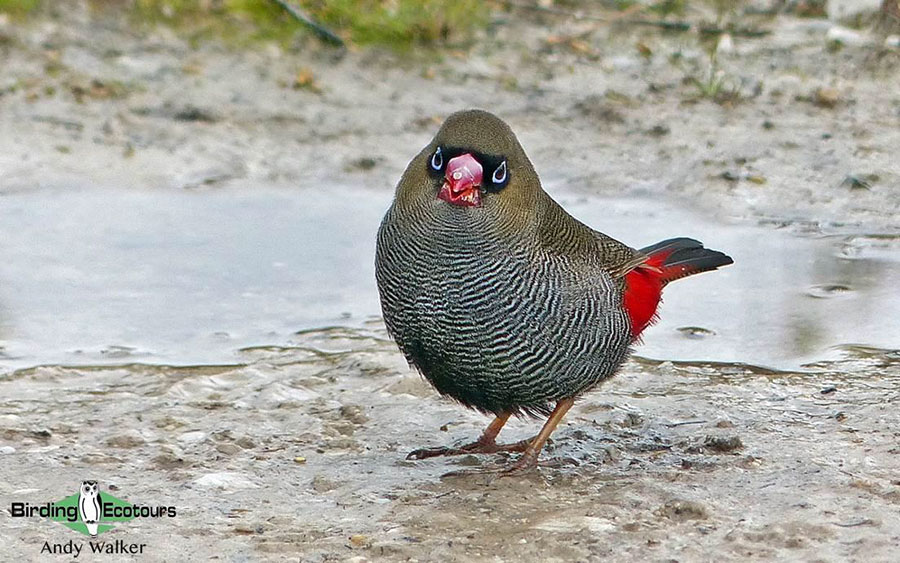 This tour gives great opportunities to see the magnificent Beautiful Firetail.
Day 6. Birding Southeast Tasmania and tour concludes
We will have a final morning session birding at some sites in the southeast of the island, where we may find Latham’s Snipe, Baillon’s, Australian, and Spotless Crakes, Little Grassbird, and Australian Reed Warbler, as well as, hopefully, an assortment of waterbirds (depending on water levels).
The tour will end after a final lunch together before we make our way back to Hobart International Airport, where the tour ends at 2pm. Those continuing on the Birding Tour Australia: Eastern Australia – from the Outback to the Wet Tropics tour will fly to Melbourne for the start of that tour the following day.
Overnight: Not included
Please note that the itinerary cannot be guaranteed as it is only a rough guide and can be changed (usually slightly) due to factors such as availability of accommodation, updated information on the state of accommodation, roads, or birding sites, the discretion of the guides and other factors. In addition, we sometimes have to use a different international guide from the one advertised due to tour scheduling.
Map
Testimonials
Gallery
General Information
Birding Tour Australia: Tasmania – Tasmanian Endemics and the Orange-Bellied Parrot
Tour-Specific Information
GENERAL INFORMATION ABOUT AUSTRALIA CAN BE READ HERE
TOUR OUTLINE
This short (just under one week in duration) Tasmanian birding tour offers an excellent chance of finding all of the Tasmanian resident endemic birds, as well as three Tasmanian breeding endemics (Swift Parrot, Orange-bellied Parrot, and Tasmanian Boobook) and a host of more widespread Australian endemics. The Tasmanian endemic bird targets on our birding tour of Tasmania include Tasmanian Nativehen, Green Rosella, Strong-billed Honeyeater, Black-headed Honeyeater, Yellow-throated Honeyeater, Yellow Wattlebird, Scrubtit, Tasmanian Scrubwren, Tasmanian Thornbill, Dusky Robin, Black Currawong, and Forty-spotted Pardalote. We can also find many other great Australian birds on this Tasmanian bird tour, such as Little Penguin, Hooded Plover, (Eastern) Ground Parrot, Southern Emu-wren, Flame Robin, Pink Robin, and Beautiful Firetail – some of Australia’s best birds in a short space of time. The tour starts and ends in, and is mainly based in Hobart.
This tour combines very well with our Birding Tour Australia: from the Outback to the Wet Tropics tour that covers the eastern side of Australia, including birding in Victoria, New South Wales, and north and south Queensland.
DAILY ACTIVITIES, PHYSICAL REQUIREMENTS, AND TOUR PACE
This is a fairly relaxed pace Tasmania birding tour, with limited driving and few accommodation changes. Accommodation and food are generally considered to be of a higher standard than most other bird tours, given the areas we are staying in and visiting have been developed for tourism. Tasmania is an island in the far southeast of Australia and is often wetter and colder than other parts of the vast country. The longest drive of the tour is likely to be two hours (between Hobart and our accommodation on South Bruny Island); however, in reality, we will be birding our way there, so it will take longer to reach.
We will be based in Hobart for most of the tour, and we will make morning and afternoon trips out of the city to key birding sites in our quest to find the endemic birds of Tasmania (e.g., drives of around 20 – 30 minutes). On one full day, we will take a charter flight to the far southwest of the island (to Melaleuca) in pursuit of the Critically Endangered Orange-bellied Parrot (see the “Orange-bellied Parrot Trip” section below for more information). We will also spend one night and the majority of two days birding on the delightful Bruny Island. This small offshore island (reached by a short car ferry ride) acts as a refuge for many of Tasmania’s endemic birds, and we are sure to enjoy our time here during our Tasmanian bird tour.
Most of the walking on our Tasmania bird tour is considered easy, although there are two moderately strenuous walks. We will bird at a waterworks site near Hobart that has some loop circuits; these are slightly undulating, and we will probably walk about 1.2 – 1.8 miles (2 – 3 kilometers/km) on these, with a fair bit of stopping and scanning some reservoirs. A mountain trail near the city will be the most strenuous hike on the tour. This is probably a similar length to the aforementioned hike, but this is a windy uphill then downhill trail, which is steep in places. A hiking pole will be useful or necessary if you are unstable when walking. We will be looking for secretive forest birds here and going slowly. While on Bruny Island and in the southwest of Tasmania (Melaleuca), we will likely have a couple of hikes of around 3.5 – 5 miles (6 – 8 km), but these will be on mainly flat ground. All walking will be at a slow birding pace.
During our time on Bruny Island, we will take a look at dusk for Little Penguin and Tasmanian Boobook and may find some mammals at this time too.
TRANSPORTATION
We will use a 12-seater minibus on this Tasmanian bird tour. There will be limited baggage space in the vehicle, so please pack as lightly as possible for the tour (including within the seating area). It will be possible to leave larger baggage at our hotel in Hobart for our overnight trip to Bruny Island, which will help with space. There will not be masses of time spent in vehicles on this tour, the most vehicle time will be when we are travelling to and birding around Bruny Island.
We will take a short (approximately 30 minutes) car ferry ride between the Tasmanian “mainland” and Bruny Island. This crossing is usually smooth and stable, but if you suffer from motion sickness, you might want to bring along suitable medication.
The tour doesn’t include any domestic flights; however, we do take one chartered flight during the tour; see the “Orange-bellied Parrot Trip” section below for more information.
ORANGE-BELLIED PARROT TRIP
We will spend a full day of the tour taking a scenic flight into the remote wilderness in the Melaleuca area of southwest Tasmania. Our flight will leave Hobart at 08:30 hrs. and return there at 16:30 hrs. The flight time for each journey is approximately one hour. Our route out to Melaleuca is usually different from our route back to Hobart, thus maximizing the opportunities for spectacular landscape views (maybe even some snow-capped peaks!). We will be making this journey with Par Avion (a division of Airlines of Tasmania Pty Ltd.), and a gourmet lunch of local Tasmanian food and drinks will be provided. The aim of our trip is to connect with the extremely rare and Critically Endangered Orange-bellied Parrot. This area remains the stronghold for the species, where they are supported by massive levels of predator management, nest site provisions, and supplementary feeding. The area is also good for several other species, and we will look for these too.
We will be using a small aircraft, likely with a capacity of nine passengers. Depending on the final size of the group, we may have the plane to ourselves. We will need to supply body weight information to the airline ahead of our flight (so expect an email in the lead-up to the tour asking for this information). A carry-on baggage allowance of 8.8 pounds (4 kilograms) is permitted per person on this trip. Everyone will need to bring a personal water supply with them for the day. The carriage of dangerous goods is prohibited as per Civil Aviation Safety Authority regulations (e.g., including, but not limited to, compressed gases, explosives, corrosives, etc. – see here for full details – in general, the usual things you cannot take on a plane).
All flights are subject to change due to weather or other operational requirements. In case of poor weather cancellation, flights will be transferred to an alternative day if possible. We will make every effort to make the flight happen; however, there is a chance the trip might be cancelled if weather conditions are not suitable and an alternative date does not work. These factors are beyond our control.
Par Avion has a range of aircraft in their lineup, but we usually use the Britten-Norman Islander light utility aircraft on our tours. For further details, photographs, and frequently asked questions about this trip, please see here.
LUGGAGE
Please pack as lightly as possible for this Tasmanian birdwatching tour. A medium, soft-sided, and robust duffle bag is likely to work best for packing in the tour vehicle. You will be expected to load and unload your own bags into and out of vehicles and to/from your rooms.
We recommend a daypack is used to keep items that you wish to use daily when in the vehicle or when birding in the field (such as binoculars, camera, notebook, field guide, personal supply of water, snacks, umbrella, rain jacket, extra layers of clothing, etc.).
ACCOMMODATION
In Hobart, we stay at a city hotel, usually the Best Western Hobart, or equivalent. This hotel is typical of most modern city hotels, with air conditioning, ensuite bathrooms, and free Wi-Fi. The hotel has a restaurant where we will have breakfast and dinner on most days of our time in the city. The hotel is also located in the city center, so you can explore the sights in downtime from birding, should you wish to do so.
We spend one night on Bruny Island, and our accommodation is located on South Bruny Island. We usually stay in holiday cottages/houses run by Bruny Island Hotel. These usually have several bedrooms of various arrangements with a shared lounge area, kitchen, and bathroom/toilet. Depending on the overall group size and final rooming arrangements of the group, we might need to book two or three such properties. These properties might be a little drive apart from each other, but you will be picked up and dropped off at each of these as needed. We will eat meals together at the various cafés or restaurants on the island as required. The properties will be unlikely to have Wi-Fi.
WEATHER
We will be birding in Tasmania during the spring period on this Tasmanian bird tour. Temperatures and weather can be quite varied and can also be heavily influenced by wind direction. Anything from the south will drop the feel of the temperature, sometimes considerably. The average peak daytime temperature is likely to be around 59 – 63 degrees Fahrenheit (oF) (15 – 17 degrees Centigrade/oC). At night we can expect temperatures of around 46 oF (8 oC). Showers or periods of rainfall should be expected; Tasmania receives a lot of rainfall, particularly compared to other parts of the country.
WHAT TO BRING: CLOTHING AND OTHER ITEMS
The following is a list of useful items to bring on this Tasmanian birding tour and should be read in conjunction with the Australia general information document.
- A field guide to the birds of Tasmania. See the general information for our recommendations for this tour.
- Hiking pole or walking stick to help on the tracks and trails. While probably not necessary for everyone, a walking stick is compulsory for anyone who is unsteady walking, as we feel this is a safety issue. We don’t want anyone slipping on the trails or anywhere else. Please discuss with us if you are unsure whether you will need one or not.
- Torch (flashlight) and/or headlamp (headtorch), and spare batteries.
- A small personal first aid kit. See the suggested items from the Centers for Disease Control and Prevention (CDC), here.
- Lightweight hiking boots are likely the best footwear for this tour. A set of sandals (flip-flops) and/or trainers would be useful for walking around some of the accommodations but are not suitable for birding time (consider snake bites, mud, slips, trips, falls, etc.).
- Quick-drying birding clothes (in suitable colors) are the best for this tour, and a good selection of clothing layers (including sweater/jumper/fleece/warm coat) are also recommended due to the potential for cool or even cold mornings/days.
- Light rain jacket/poncho (and small umbrella) as rain could fall at any time at any location.
- A dry bag to keep valuable documents in, such as passports, cell phones, wallets, etc., as well as cameras, if it rains.
- A day pack suitable for our Orange-bellied Parrot charter flight for personal supply of drinking water (please bring a refillable water bottle) and other items you may require for the day such as cameras and optics.

Download Tasmania Birding Tour Information
DOWNLOAD AUSTRALIA GENERAL INFORMATION