- Duration:
- 12 days
- Group Size:
- 4 – 12
- Tour Start:
- Oulu Airport, Oulu, Finland
- Tour End:
- Ivalo Airport, Ivalo, Finland
Birding Tour Finland and Norway: Taiga and Tundra Adventure
Details
2027
24 May – 04 June
Per person sharing
€6,778 EUR
$8,130 USD / £6,105 GBP
Single supplement
€863 EUR
$1,035 USD / £777 GBP
based on 8 – 12 participants (larger group than usual to keep prices lower)
In the event of fewer than four participants signing up to the tour there will be the option of a surcharge to guarantee departure. The amount of the surcharge will depend on how many participants are signed up to the tour and will occur if all participants agree.
Per person sharing
€9,322 EUR
$11,181 USD / £8,397 GBP
Single supplement
€863 EUR
$1,035 USD / £777 GBP
based on 4 – 7 participants
In the event of fewer than four participants signing up to the tour there will be the option of a surcharge to guarantee departure. The amount of the surcharge will depend on how many participants are signed up to the tour and will occur if all participants agree.
2028
24 May – 04 June
Per person sharing
€7,185 EUR
$8,618 USD / £6,471 GBP
Single supplement
€915 EUR
$1,097 USD / £824 GBP
based on 8 – 12 participants (larger group than usual to keep prices lower)
In the event of fewer than four participants signing up to the tour there will be the option of a surcharge to guarantee departure. The amount of the surcharge will depend on how many participants are signed up to the tour and will occur if all participants agree.
Per person sharing
€9,881 EUR
$11,852 USD / £8,900 GBP
Single supplement
€915 EUR
$1,097 USD / £824 GBP
based on 4 – 7 participants
In the event of fewer than four participants signing up to the tour there will be the option of a surcharge to guarantee departure. The amount of the surcharge will depend on how many participants are signed up to the tour and will occur if all participants agree.
Itinerary
Download ItineraryBirding Tour Finland & Norway : Taiga and Tundra Adventure
There has been a long-held mysticism among birders regarding the northern part of Finland and Norway. The area conjures up images of vast forests, biting temperatures, and months of darkness. The reality is that the north of both Finland and Norway are two of Europe’s premier birding locations and our Taiga and Tundra Adventure will showcase just that, with the bonus of 24 hours of daylight to maximize our birding experiences. While it is true that there are vast swathes of taiga forest, there are also stunning fjords, miles of breathtaking tundra, rocky mountain peaks, otherworldly coastlines, and charming fishing villages to enjoy. Moreover, there is a simply fantastic selection of wildlife, no more so than the avifauna of the region. This tour will cover the full range of habitats available as we make our way through Lapland’s vast emptiness before joining the breathtaking Varangerfjord and exploring its length in its entirety.
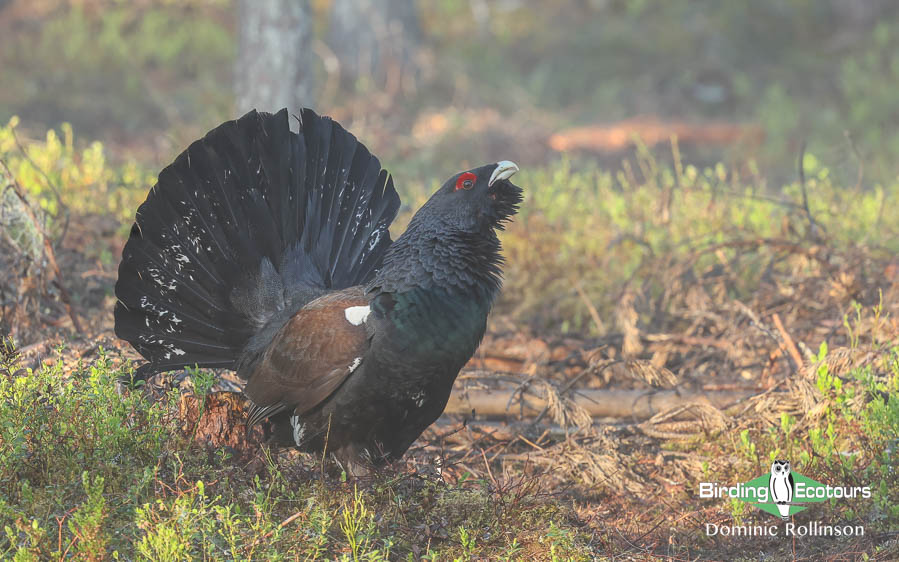
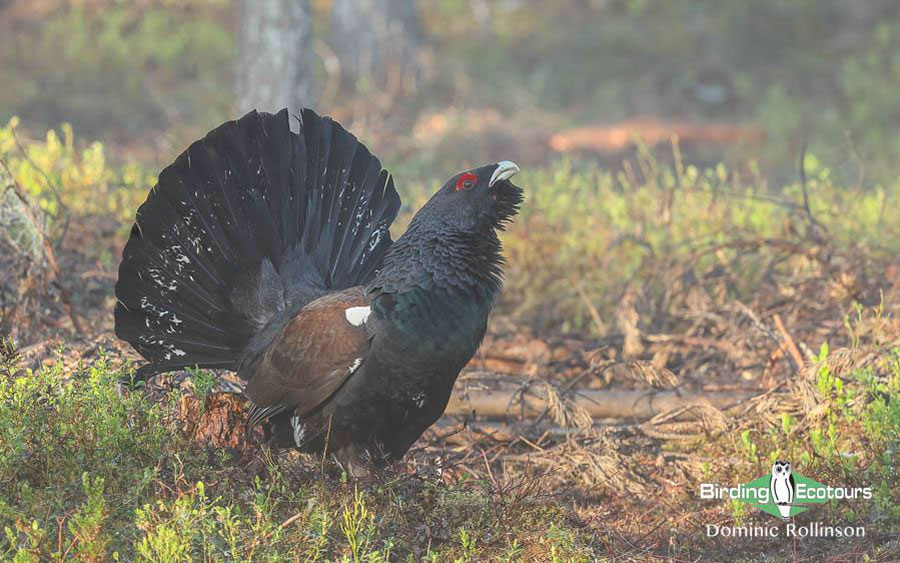 This tour targets some fantastic grouse and owl species, such as the huge and charismatic Western Capercaillie, which we hope to find lekking in the forests around Kuusamo.
Birding in the northern latitudes presents its own unique set of experiences. June in the region is surprisingly dry, as this area of Finland and Norway is sheltered from the Atlantic currents that bring lots of rain up through Scandinavia. This means that we will generally find good weather which, combined with the midnight sun, will give a lot of birding hours to enjoy. These northern latitudes do not have the sheer number of species you will find further south in Europe, but the climate and environment has led to a fascinating diversity of highly sought-after species that thrive in these areas.
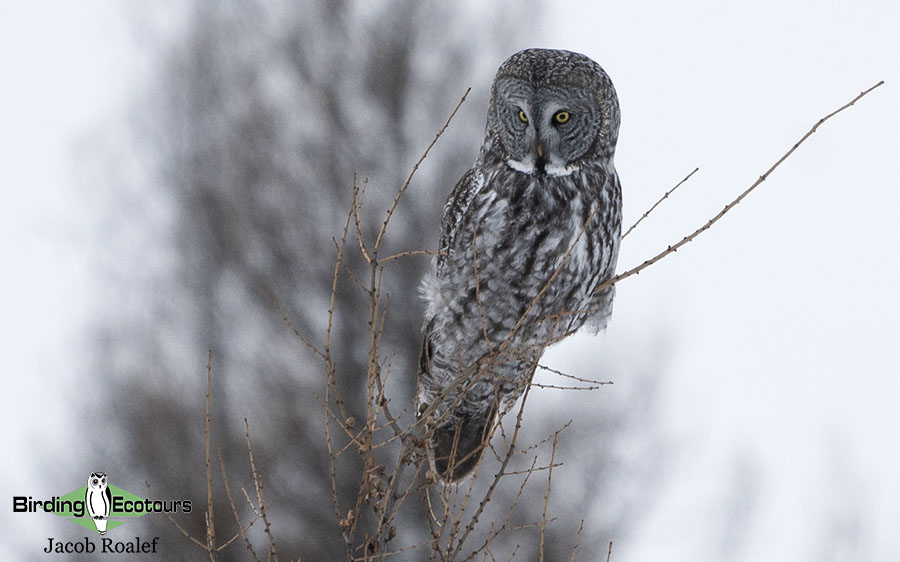
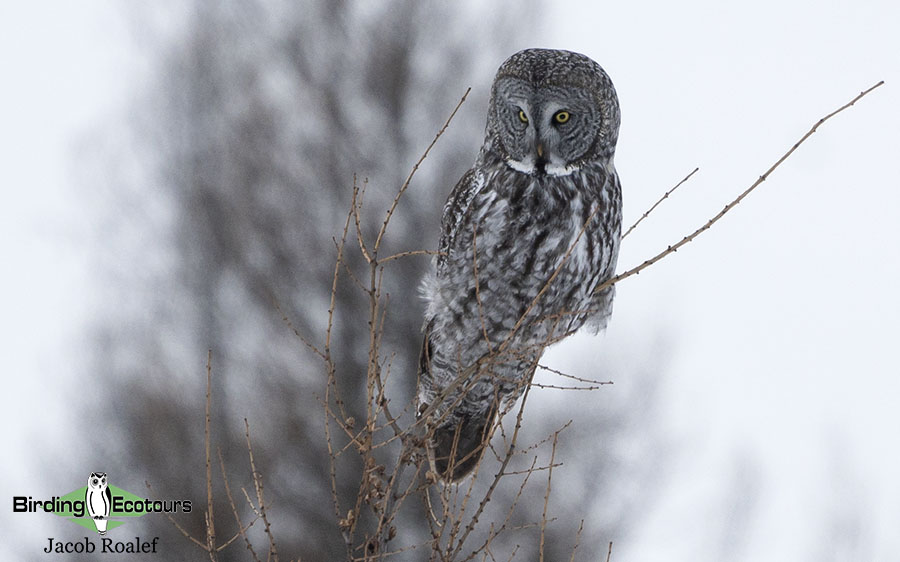 While exploring the Finnish forests we will search for the breathtaking Great Grey Owl.
We will begin our tour in the city of Oulu in central Finland. Over the first three days of the tour we will explore the vast forests of the area. These forests are arguably the best in Europe for breeding owls and they will be the focus of the first part of our tour. With the aid of excellent and knowledgeable local guides, we hope to come across a number of highly desired owl species. Whichever species we see will no doubt be an unforgettable experience, as is always the case with this charismatic family of birds. The chances of seeing our owl targets on this tour relies very heavily on the concentrations of voles, which varies each year. Some years are considered bad vole years, which means there are fewer breeding owls around, while in some years vole numbers may be high, which increases our chances of finding our owl targets! The forests around Oulu are also home to a range of other fascinating species, including Black Woodpecker, Eurasian Three-toed Woodpecker, Wood Warbler, and Rustic Bunting, amongst others.
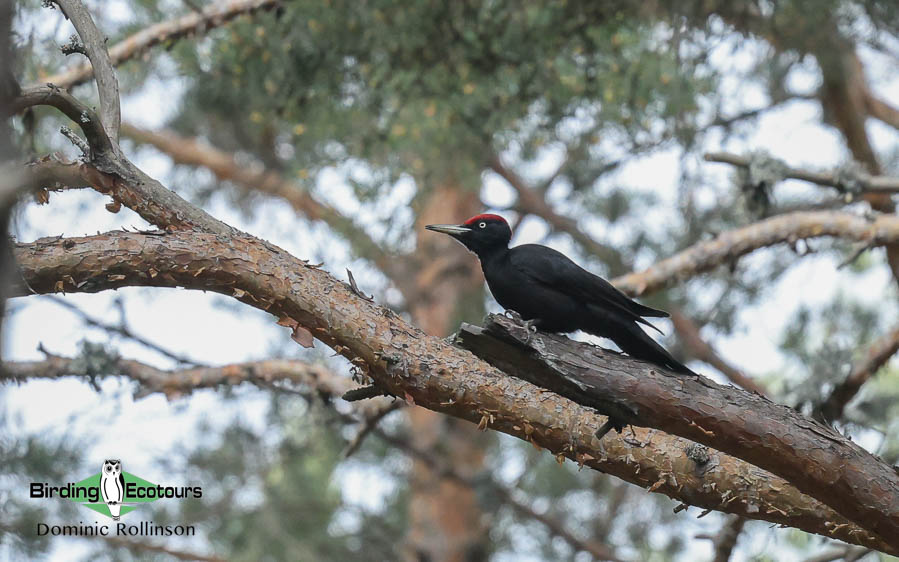 We hope to find the huge Black Woodpecker in the tall forests around Oulu.
While around Oulu we will explore Liminganlahti. This superb wetland area plays host to many wildfowl and shorebird (wader) species. Highlights of our time here will likely include Spotted Redshank, Caspian Tern, Black-tailed Godwit, Garganey, Whooper Swan, and Common Crane. This activity is an irresistible lure to multiple birds of prey including White-tailed Eagle, Western Marsh Harrier, and Peregrine Falcon. Rarer species that we have a chance of coming across here include shorebirds (waders) like Broad-billed Sandpiper and the delicate Pallid Harrier, one of Europe’s rarest (and most attractive) breeding birds of prey whose presence in the area is reliant on the concentrations of voles. We should also be well timed to witness the fascinating Ruff leks that occur in the area every summer.
We will then head east across the breadth of Finland to the city of Kuusamo, close to the Russian border. Along the route we will explore the vast swathes of lakes that form Finland’s interior. Here we may come across Smew, Common Crane, Common Scoter, and Eurasian Whimbrel, among others. The variety of birds here is extensive, and as we continue to explore, we will come across small groups of Common Goldeneye, singing Wood Sandpiper, and stunning Brambling. This area of Finland is home to several eastern species of birds, including Red-flanked Bluetail, Rustic Bunting, and Little Bunting. Taiga forest specials occur here too, including Grey-headed Chickadee (Siberian Tit), Siberian Jay, and the tricky Two-barred Crossbill. Our primary targets while birding around Kuusamo are the various grouse species, and we hope to find lekking Western Capercaillie and Black Grouse, as well as Hazel Grouse.
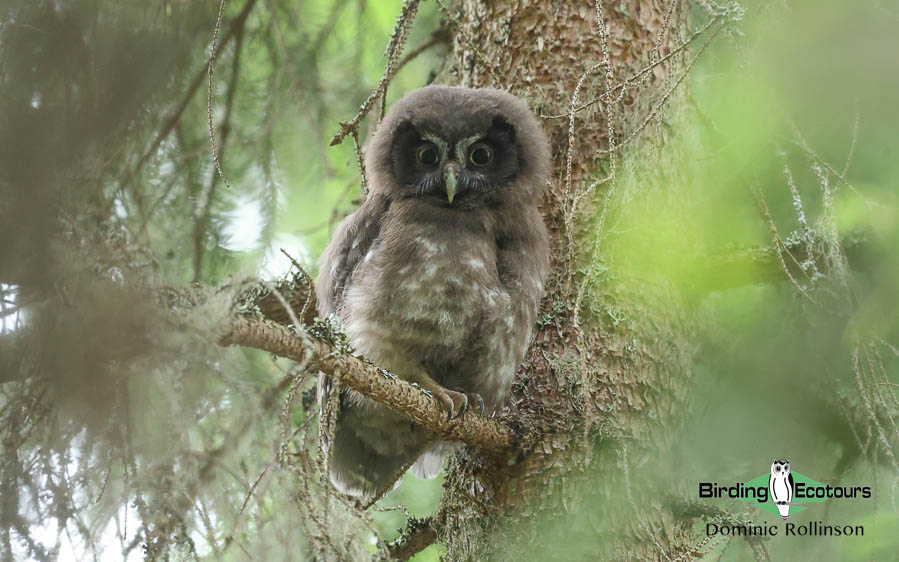 Boreal (Tengmalm’s) Owl (such as this juvenile) is one of several owl species we hope to encounter in Finland and Norway.
From Kuusamo we drive north, crossing the Arctic Circle, heading through beautiful taiga forests to Ivalo. From Ivalo we continue our journey north (often enjoying Pine Grosbeak at a feeding station en route) and eventually cross into Norway. The landscape changes into boggy fells as the Arctic tundra begins to reveal some of its stunning birdlife, such as Black-throated Loon (Diver), Bluethroat, Rough-legged Buzzard, and European Golden Plover. The Tana River and delta should hold numbers of Common Merganser (Goosander), plus breeding Temminck’s Stint, and small numbers of Bar-tailed Godwit.
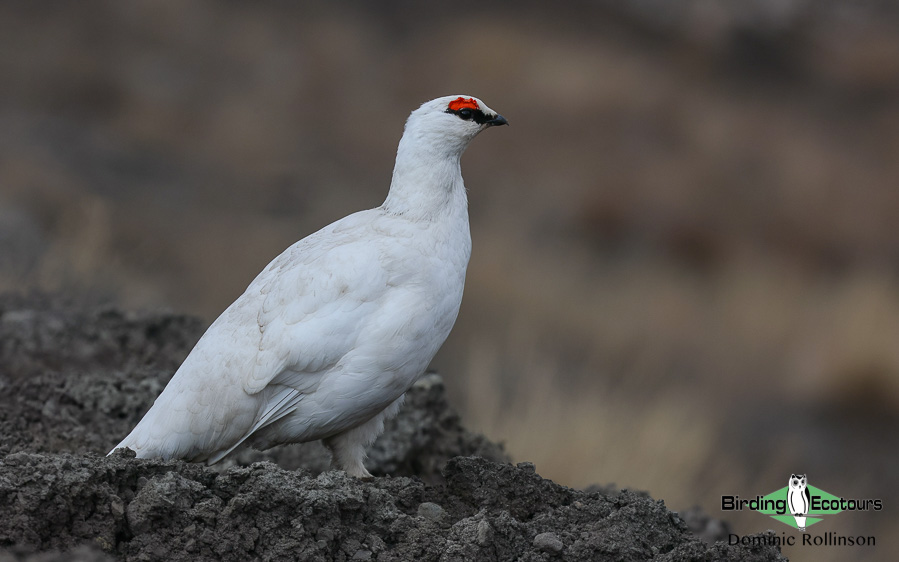
After exploring the river, we head up to the northern harbor town of Båtsfjord on the north coast of Varanger. The high tundra en route is home to specials such as Rock Ptarmigan, Long-tailed Jaeger (Skua), Eurasian Dotterel, Arctic Redpoll, and Lapland Longspur (Lapland Bunting). While in the highlands, temperatures often hover around freezing, however, the birding is normally exceptional with many new trip birds as we make our way through the tundra. The tundra areas here also hold Rough-legged Buzzard, Parasitic Jaeger (Arctic Skua), Short-eared Owl, Bluethroat, Horned (Shore) Lark, and Snow Bunting.
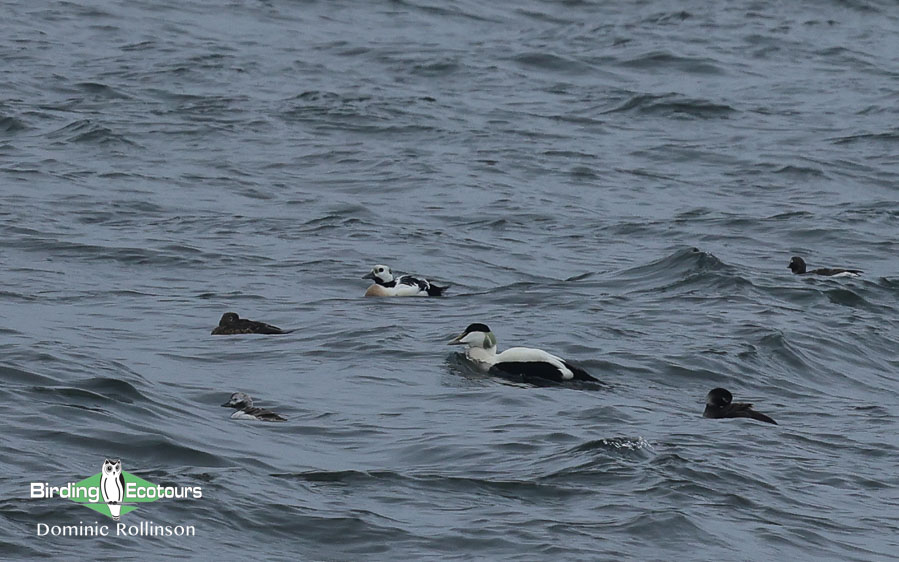
The final leg of our tour is on the stunning Varangerfjord itself. Along the route we will scan the tundra pools for shorebirds (waders) like Eurasian Whimbrel, Red-necked Phalarope, Temminck’s Stint, Little Stint, and Bar-tailed Godwit. These lakes and pools are also home to breeding Red-throated and Black-throated Loons (Divers). Further into the fjord we will explore coastal sites for some special wildfowl. With luck, the flocks of Common Eider may still have a few King Eider and Steller’s Eider (two amazing sea ducks), although most of these birds would have already moved off to their breeding grounds further east.
We will explore the peninsula’s superb seabird colonies. The remote island of Hornøya, off the coast of Vardø, is something to behold. The rocky island is home to 25,000 pairs of Black-legged Kittiwake, plus around 150 pairs of European Shag. The island is also covered in alcids such as Thick-billed Murre (Brünnich’s Guillemot), Common Murre (Guillemot), Razorbill, and Atlantic Puffin. This activity attracts the two principal birds of prey here, the massive White-tailed Eagle and the scarce Gyrfalcon.
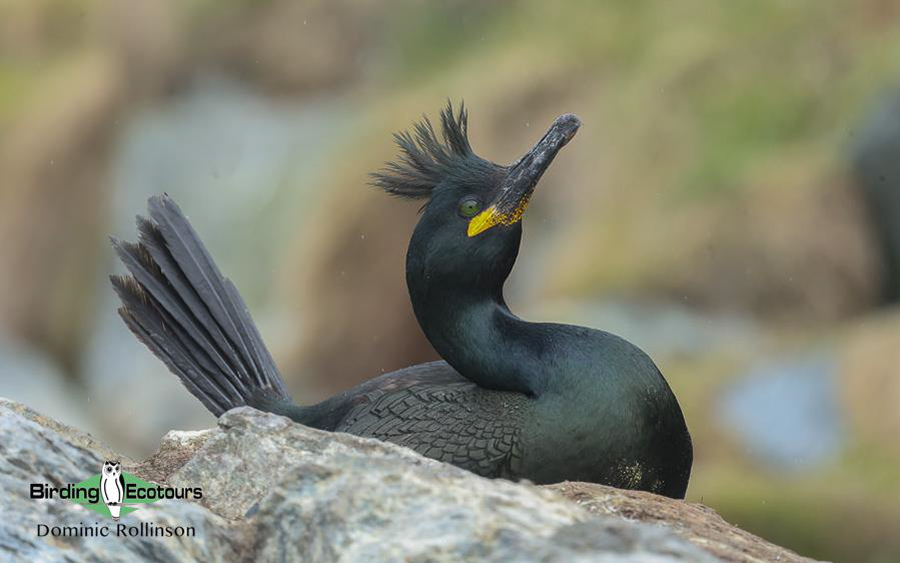 European Shag usually provides us with incredible views on Hornøya, along with large numbers of other breeding seabirds.
From here we will make the journey back to Ivalo, stopping for birding en route, before drawing our tour to a close. This journey will see us head further east than Istanbul in Turkey and as far north as the Arctic Circle. This Scandinavian birding tour is one you do not want to miss!
Itinerary (12 days/11 nights)
Days 1 – 3. Arrival in Oulu, birding the Liminganlahti wetlands and the Oulu region
Welcome to the land of the midnight sun. You will be met in Oulu by your Birding Ecotours tour leader and expert Finnish local guide. Our first evening in Oulu will be spent getting settled into our hotel and enjoying a traditional Finnish meal. Here we will discuss the trip and use the time to assist with anything the group may need.
We will spend the first three days of our tour in the area surrounding the city of Oulu. This city of around 200,000 inhabitants is the largest in northern Finland and will be our base for the next few days. Oulu happens to be surrounded by some of the best birding Finland has to offer and we will use the long hours of daylight to maximize the birding experiences. Here, we will explore the dense taiga forests in search of some of the amazing species that inhabit this vast wilderness. The Oulu region is one of the best in Europe for breeding owls and we will attempt to see a number of charismatic owl species here.
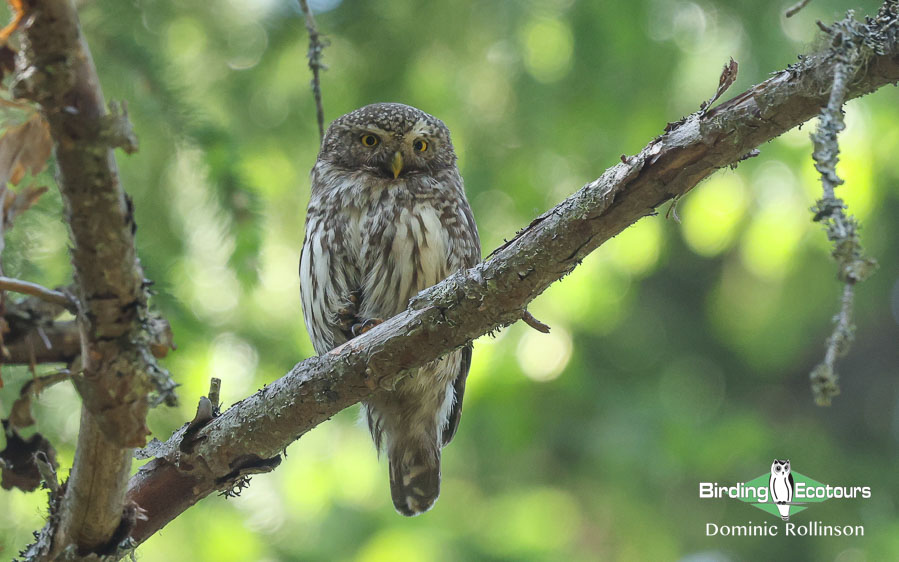
The smallest of these species is the Eurasian Pygmy Owl. Despite its small size this species is a voracious, mainly diurnal hunter, and often hangs around bird feeders and hunts in a fashion like that of small hawks. Another small owl species here is the Boreal (Tengmalm’s) Owl. This species can be incredibly elusive, and our best bet will be to observe this species near nest sites. In more open habitats, we hope to come across Short-eared Owl, although this species often requires some luck to find.
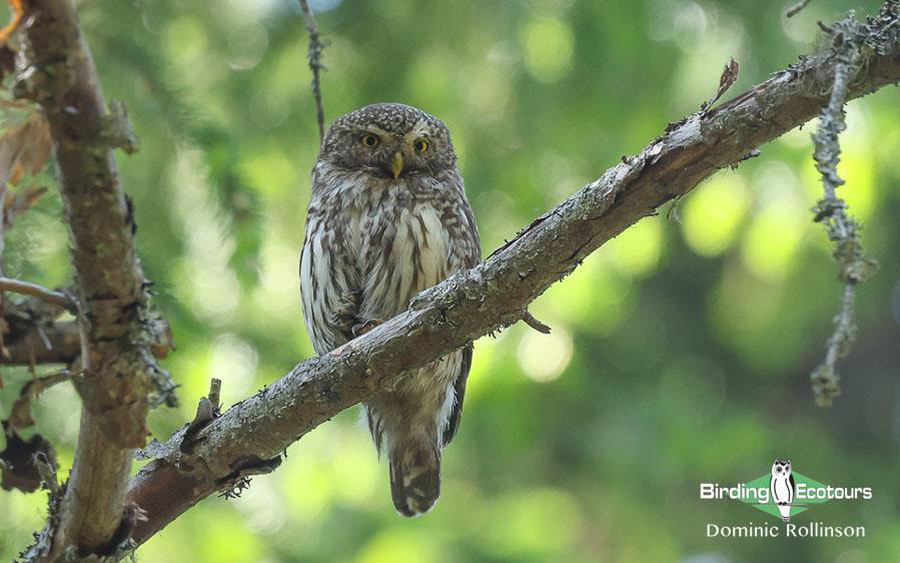 The tiny Eurasian Pygmy Owl is a fearsome predator. Its small size not hindering it from being an effective hunter in the dense Finnish forests.
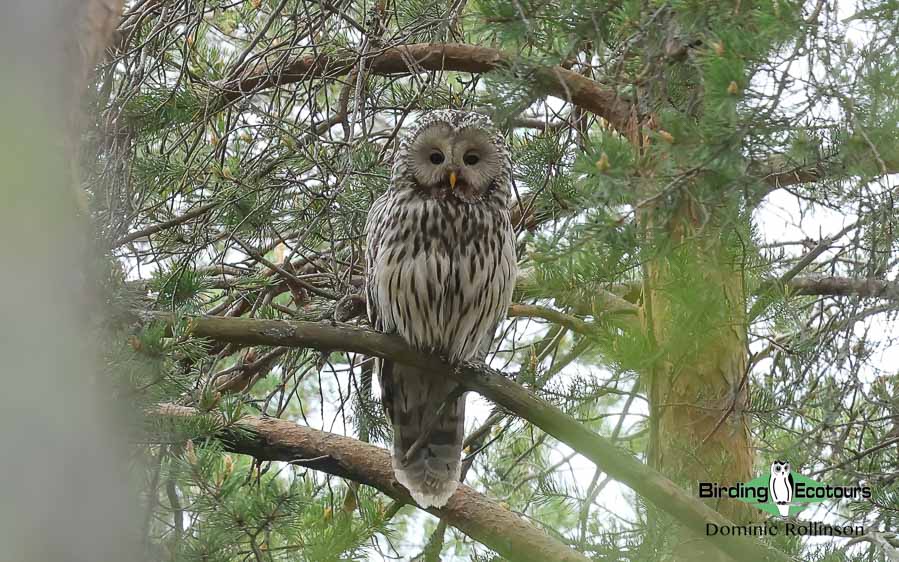
Ural Owl and Great Grey Owl dwarf the other owl species here, but this does not necessarily make them any easier to see, though with our excellent local team we will stand a good chance! We will spend plenty of time searching the forests for these two mighty species. There is sometimes the possibility of seeing Eurasian Eagle-Owl too, however, as they are extremely sensitive breeders, we do not visit nesting sites, and so are reliant on finding roosting birds. While the owl species are the real highlight of the forests, they are not the only amazing species to be found here. The taiga forests in June come alive as the daylight hours increase. By exploring the forest trails here, we should come across forest specials such as Black Woodpecker, Eurasian Three-toed Woodpecker, Lesser Spotted Woodpecker, Grey-headed Woodpecker, and perhaps Eurasian Goshawk.
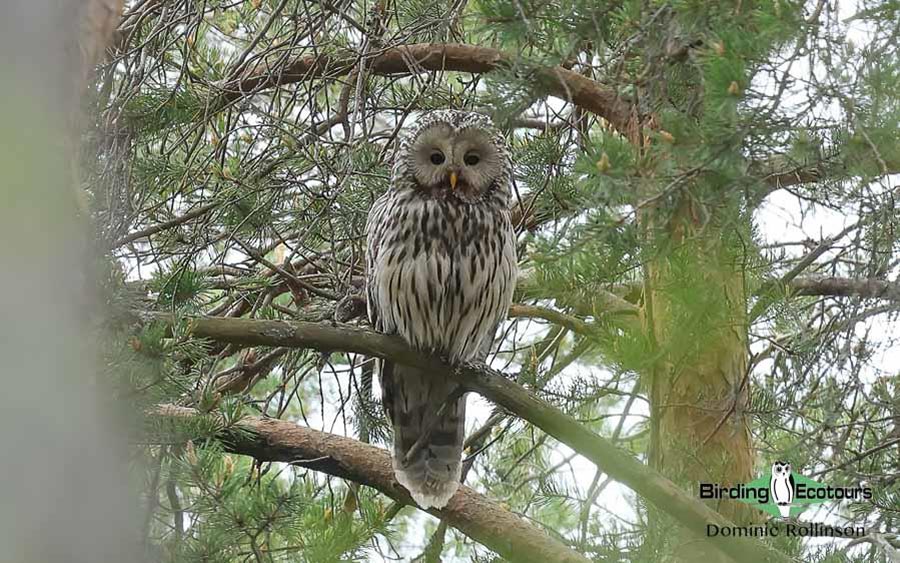 The massive Ural Owl should be another highlight of our time around Oulu.
Passerines of the forest can be numerous in June, and we will search for Bohemian Waxwing, European Crested Tit, Great Grey Shrike, Common Rosefinch, Fieldfare, Tree Pipit, Brambling, Red (Common) Crossbill, Eurasian Siskin, and Yellowhammer. Forest birding can be challenging but this makes the rewards even greater and the forests around Oulo offer some sensational species for us to enjoy.
Another area we will explore during the first three days of the tour is the wetlands of Liminganlahti, situated to the south of Oulu. This wetland site is home to a multitude of wildfowl and shorebirds, including Eurasian Curlew, Common Greenshank, Spotted Redshank, Ruff, Caspian Tern, Black-tailed Godwit, Northern Shoveler, Red-breasted Merganser, and Garganey. Additionally, hundreds of young (non-breeding) Whooper Swans and Common Cranes spend their summer in the bay area. Usual sightings here also include White-tailed Eagle and Western Marsh Harrier, while Peregrine Falcon is a regular visitor from the nearby bog. Terek Sandpiper and Pallid Harrier are much sought-after rare breeding birds in the Oulu area.
During other excursions into forested areas there might be a chance to find Wood Warbler, Thrush Nightingale and Blyth’s Reed Warbler – and perhaps even Corn Crake, and Marsh Warbler. It is fair to say that all these species have incredible songs and will provide more tour highlights.
Overnight (three nights): Finlandia Hotel Airport Oulu, Kempele, Finland
Days 4 – 6. Birding the Kuusamo region
After three action-packed days around Oulu we will spend Day 4 undertaking our journey towards the beautiful northern regions of Finland. En route we will travel through stunning landscapes blanketed with forests, bogs, lakes, and rivers, with our end destination being the city of Kuusamo on the border with Russia.
Along the way we will stop at convenient points to do some birding around the wet bogs and lakes. In these areas we may come across Smew (one of the best-looking ducks on the planet), Velvet Scoter, Common Scoter, Common Crane, Osprey, Eurasian Whimbrel, Green Sandpiper, Common Goldeneye, Wood Sandpiper, and Little Gull, among others.
As we approach Kuusamo these lakes and bogs are broken up by sections of taiga forest. These are a real draw for species such as Willow Tit, Common Cuckoo, Hooded Crow, Great Spotted Woodpecker, Brambling, Bohemian Waxwing, and Eurasian Siskin.
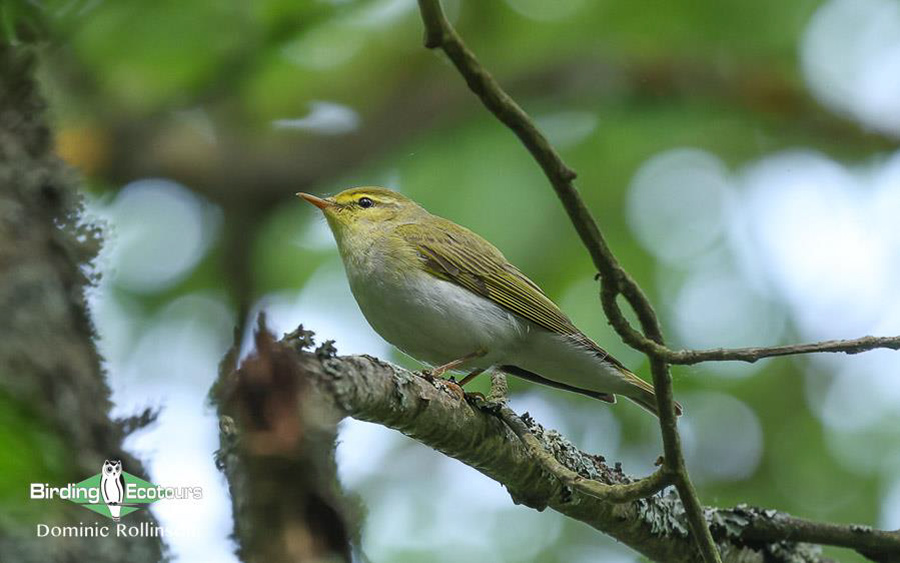 We will listen out for the distinctive song of Wood Warbler to help track it down.
Once in Kuusamo we will explore the superb habitats of the region around the town. The real draw of this region is the grouse species which can be seen at traditional lekking sites. Grouse targets here include Black Grouse, Western Capercaillie, and Hazel Grouse. To find these grouse at their lekking sites we will need very early morning starts (around 3:30 am) to ensure we are on site before it warms up! We also look for several other species which are very range-restricted in Europe around Kuusamo, such as Red-flanked Bluetail, Rustic Bunting, Little Bunting, and Grey-headed Chickadee (Siberian Tit). These are all beautiful species and a huge bonus of birding in the area.
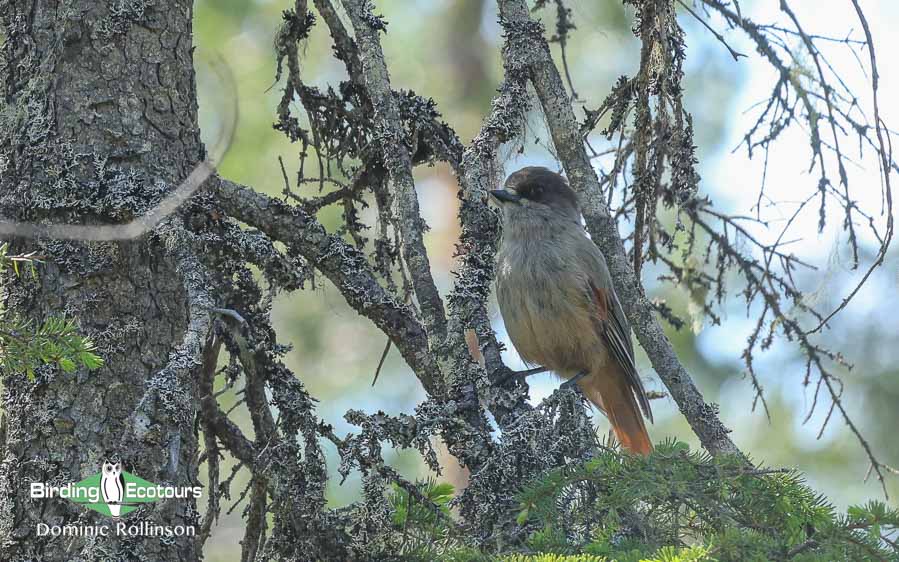
We also hope to be able to add to the above with some real forest specials such as Siberian Jay, Parrot Crossbill, Pine Grosbeak, and Black Woodpecker. The grassland sections between the forests often hold Rough-legged Buzzard, and Common Rosefinch.
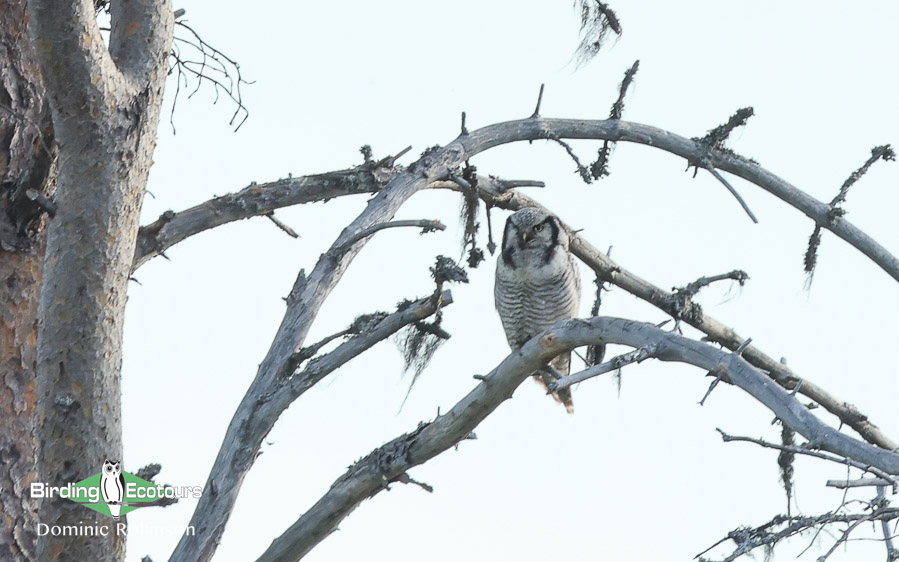
Another important target around Kuusamo (and as we head further north) is the striking Northern Hawk-Owl. This species is a real star of the taiga forest and it is often seen on roadside wires scanning the grasses for small mammals. It is one of the few owls to be solely diurnal and this will help us locate this species. The habitats closer to Kuusamo will provide us with a different range of species to those found nearer Oulu such as Red-necked Grebe, Spotted Redshank, and Jack Snipe. Exploring the surrounding forests will give us another chance of spotting Northern Hawk-Owl and Boreal (Tengmalmn’s) Owl, plus Western Capercaillie, Black Grouse, and Hazel Grouse.
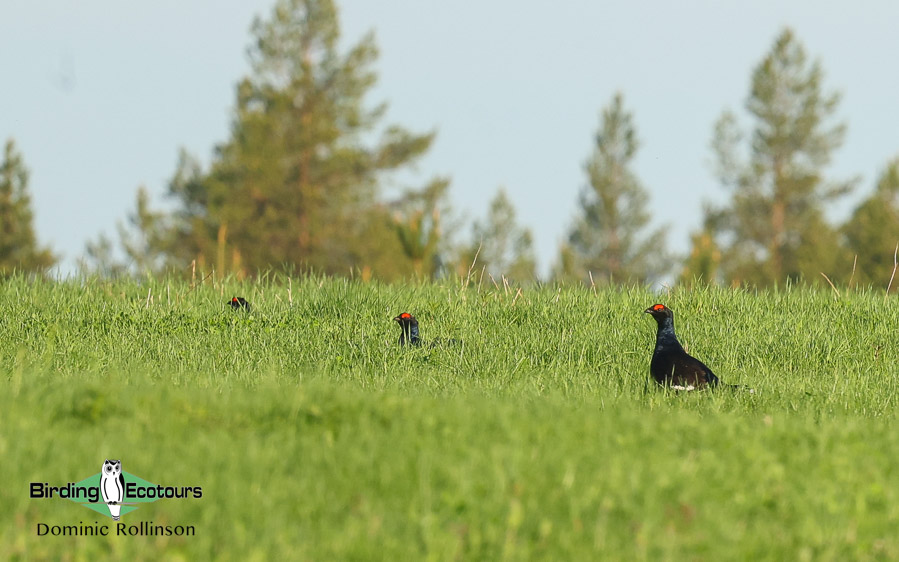 The striking Black Grouse may be seen in forest clearings near Kuusamo.
We will also spend time in the breathtaking old forests of the Oulanka National Park. Oulanka is the westernmost extreme of the taiga or boreal coniferous forest zone. In addition to the vast spruce forests, we can enjoy lichenous upland pine forests, wild river valleys, and watery mires. The flora and fauna of Oulanka’s river valley is a distinctive mix of northern, eastern, and southern species.
One of the true stars of the area is the Red-flanked Bluetail, for which we will walk up Valtavaara Hill, where the birds should be singing. While exploring the area we will attempt to see the often-elusive Hazel Grouse and Siberian Jay, and other highlights here could include Golden Eagle, White-throated Dipper, Red-necked Grebe, Little Gull, European Pied Flycatcher, and Common Redstart. If luck is on our side, we may also have an unforgettable encounter with (European) Brown Bear or Moose (confusingly called Elk in Europe!).
Overnight (three nights): Holiday Club Kuusamon, Tropiikki, Finland
Day 7. Crossing the Arctic Circle to Lapland, transfer to Ivalo
Today will be a travel day as we make the drive north from Kuusamo to Lapland, and the town of Ivalo. We will stop along the route, as we have done in previous days, to look for the area’s key species such as Eurasian Dotterel and Broad-billed Sandpiper.
Overnight: Hotel Ivalo, Ivalo, Finland
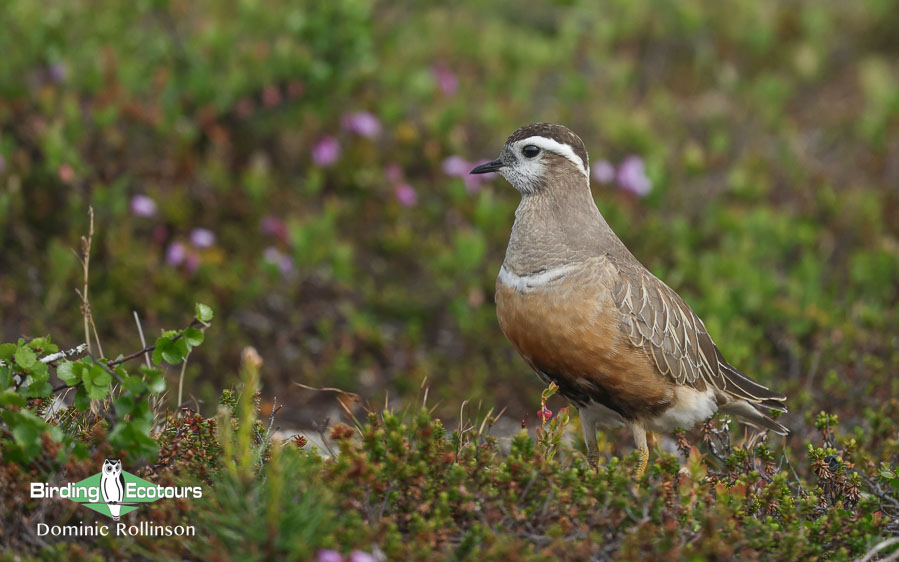
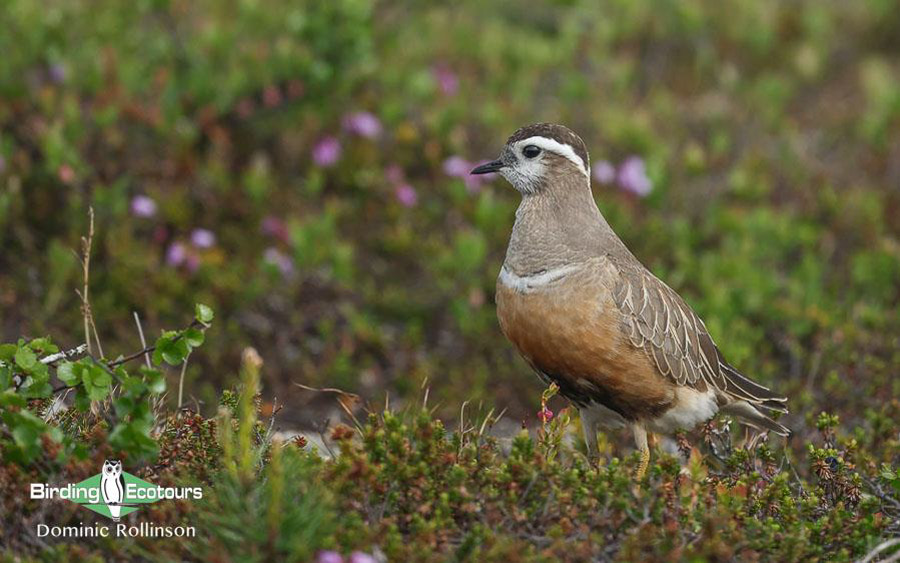 Eurasian Dotterel is one of several stunning shorebirds possible on this tour.
Day 8. Birding the Tana River, its delta in Norway and crossing the tundra to Båtsfjord
Today we will make another northward journey from Ivalo all the way to the northern edge of Europe on the Barents Sea. Along the way we will notice how the landscape begins to change with the vegetation becoming sparser as we move into tundra habitats. We start by exploring some superb pine forest and bog habitat. Here we will look for similar species to the previous days, such as Siberian Jay, Pine Grosbeak, and perhaps even Jack Snipe. As we move north, new species will start to reveal themselves.
As we approach the border with Norway the vast forests begin to give way to more expansive bogs. Here we should come across Black-throated Loon (Diver), Common Crane, Tufted Duck, Bluethroat, Rough-legged Buzzard, European Golden Plover, and Spotted Redshank. Other shorebirds in the area might include Temminck’s Stint, with its butterfly-like display flight, as well as Common Ringed Plover. We will also aim to watch a few spectacular male Ruffs at their lek sites. Differently colored males concentrate on winning the females’ attention in a dazzling display of color and movement, something not to be missed.
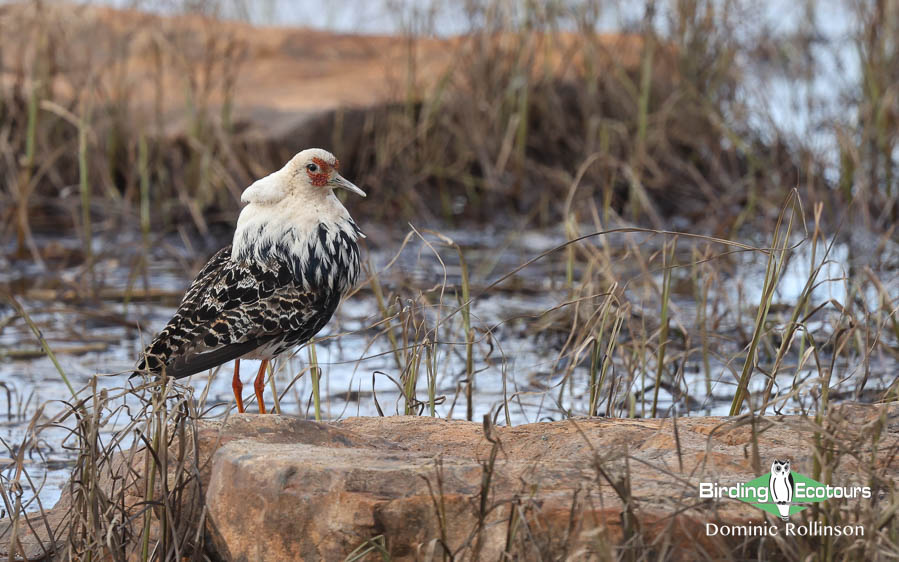 Male Ruffs of many different colors may be seen lekking in Finland and Norway.
Next, we will drive along the Tana River and into Norway. The ancient deciduous woodland around the river is an excellent spot to look for Northern Hawk-Owl and woodland passerines. We will then visit the Tana River delta, which is famous for good numbers of Common Merganser (Goosander), Temminck’s Stint, and other breeding waders, plus Arctic Tern. The area is also productive for birds of prey, with Golden Eagle, Rough-legged Buzzard, Common Kestrel, Peregrine Falcon, and White-tailed Eagle all regular in the area.
The delta is also a good place to look for Harbor Seal, with the vast river deposits forming islands for them to rest on. These islands also make good loafing sites for birds such as Common Gull, European Herring Gull, Great Black-backed Gull, Great Cormorant, Northern Raven, Common Eider, Whooper Swan, and Barnacle Goose. Offshore we may spot passing Parasitic Jaeger (Arctic Skua), Pomarine Jaeger (Skua), and Long-tailed Jaeger (Skua).
From the Tana delta we once again head north and it is from this point that we will see the most dramatic change in habitat as we enter the true tundra region. As the road twists, turns and slowly begins to climb we will notice that the last of the trees will vanish and in front of us will emerge a vast area of high-altitude tundra, a vast rocky landscape broken up by small bogs and lakes. We will stop and explore the tundra area and experience the hardy birds that live here such as Rock Ptarmigan, Willow Ptarmigan, Merlin, Long-tailed Jaeger (Skua), Eurasian Whimbrel, Eurasian Dotterel, Lapland Longspur (Bunting), Temminck’s Stint, Red-necked Phalarope, Eurasian Golden Plover, Greater Scaup, and Long-tailed Duck. We may also come across Bluethroat, Horned (Shore) Lark and Lapland Longspur (Bunting), which spend the summer here. We will keep checking rare bird news for any reports of Snowy Owl which is occasionally seen in the area.
Overnight: Båtsfjord Hotel, Båtsfjord, Norway
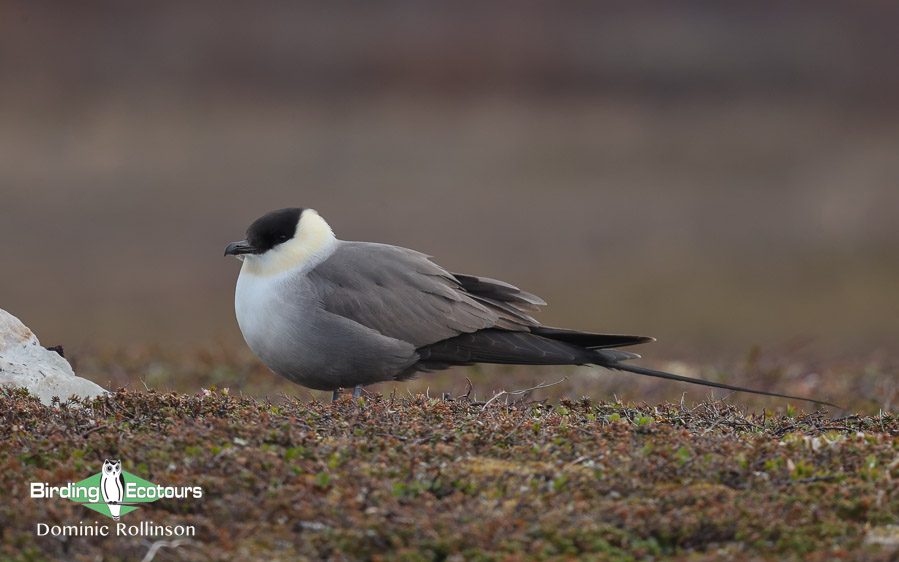 The high tundra is home to many pairs of striking Long-tailed Jaeger (Skua) which feed on lemmings in the area.
Days 9-10. The Varangerfjord and Hornøya
The next two days will be spent on the Varangerfjord. Our birding here will be a mixture of tundra walks, checking coastal bays and river inlets, sea-watching, and visiting the huge seabird colonies in the area. We will also search for the key mammals of the area, with the open tundra habitat home to Reindeer, Red Fox, Mountain Hare, and Arctic Fox (although this is now a rare mammal here).
The tundra exploration will be like that of the previous days, however being further south we should come across a bit more variety here as we move back to areas with a bit more tree cover. In these areas we may come across Rough-legged Buzzard, Bluethroat, Short-eared Owl, Arctic Redpoll, Common Redpoll, Horned (Shore) Lark, Snow Bunting, Lapland Longspur (Bunting), Fieldfare, Redwing, Brambling, and plenty of other species. We may also, once again, bump into Northern Hawk-Owl around the villages which lie adjacent to the fjord.
The high tundra off the Varangerfjord will see us come across the breeding territories of Long-tailed Jaeger (Skua), Parasitic Jaeger (Arctic Skua), Red-throated Loon (Diver), Black-throated Loon (Diver), Long-tailed Duck, and Red-necked Phalarope. Shorebirds (waders) breed in this area too with European Golden Plover, Eurasian Whimbrel, Wood Sandpiper, and Ruff, all in the higher areas.
Exploring the sheltered bays, river inlets, and harbors along the coast of the fjord will give us fantastic close-up views of several species of shorebirds, ducks, geese, seabirds, gulls, and terns. Some of the key species that we may come across include Purple Sandpiper, Red-necked Phalarope, Temminck’s Stint, Bar-tailed Godwit, Tundra Bean Goose, Northern Fulmar, Pink-footed Goose, Barnacle Goose, Velvet Scoter, Arctic Tern, Glaucous Gull, and occasionally Iceland Gull.
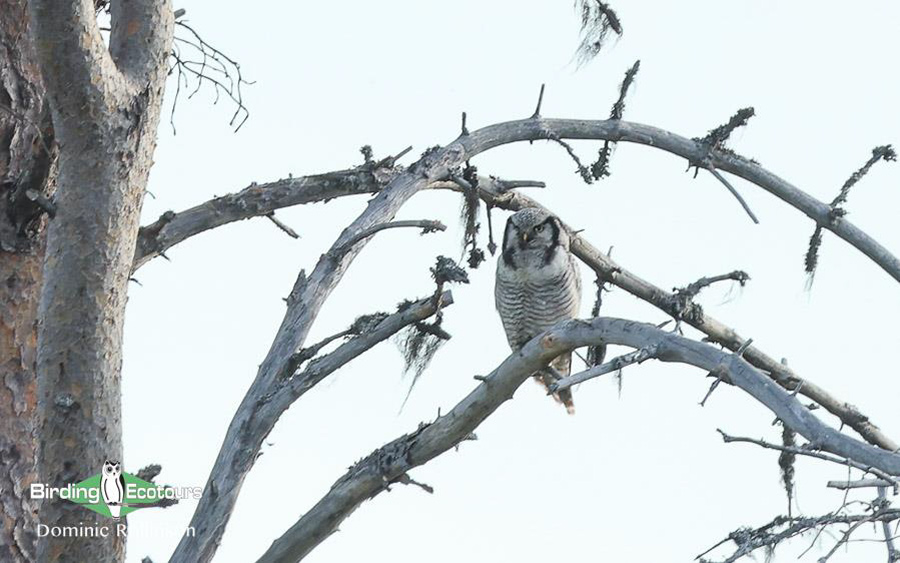 Northern Hawk-Owl is yet another charismatic owl species we hope to find on this tour.
The real stars of these coastal sites are the large numbers of Common Eider which are present here through most of the summer. While common, their stardom comes from sometimes holding small numbers of the beautiful King Eider and Steller’s Eider within their flocks. While both these birds have declined in summer in recent years, we hope for some individuals to linger into June, and we will spend time looking for these rare and striking ducks.
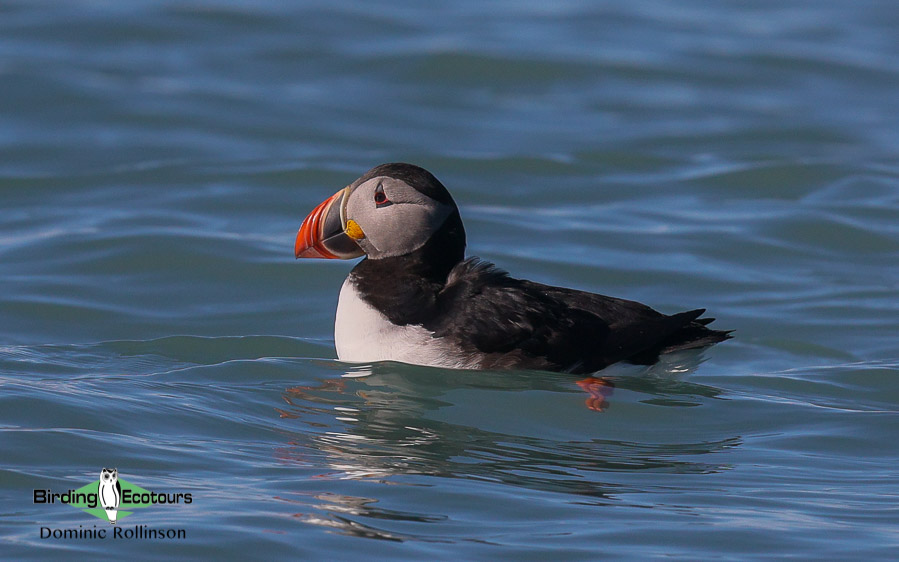
While in the Varangerfjord we will make a boat excursion from the town of Vardø to the islet of Hornøya. The Hornøya Nature Reserve is the easternmost of the protected bird colonies in Norway, home to about 25,000 pairs of Black-legged Kittiwake and 150 pairs of European Shag. Northern alcids breeding here include Thick-billed Murre (Brünnich’s Guillemot), Common Murre (Guillemot), Razorbill, and several thousand pairs of Atlantic Puffin.
The relentless noise from the colony attracts birds of prey and corvids to the area and it is not uncommon to see hunting in action here. We may witness the giant White-tailed Eagle grabbing adult Black-legged Kittiwakes from the cliffs while Gyrfalcon may occasionally be seen while on the lookout for unsuspecting birds below! While watching and photographing the breeding seabirds of the islet we will also be on the lookout for European Rock Pipit and Twite which are normally found on the higher areas of the island, towards the lighthouse.
The Arctic waters are also home to Grey Seal and Harbor Seal, which we may see from the boat on the trip to or from the island. Cetaceans may be seen here too including Killer Whale (Orca), Humpback Whale, Harbor Porpoise, and on occasion, Beluga Whale.
We will also make an excursion towards Hamningberg, connected by road from Vardø. The wild landscape on the road to Hamningberg is something special. We may take several short walks to the tundra and to the bogs here. We will do some sea-watching south of Hamningberg, hoping to see Yellow-billed Loon (White-billed Diver), Northern Gannet, Northern Fulmar, Long-tailed Jaeger (Skua), Parasitic Jaeger (Arctic Skua), or even Beluga Whale.
Overnight (two nights): Hotel Vardø, Vardø, Norway
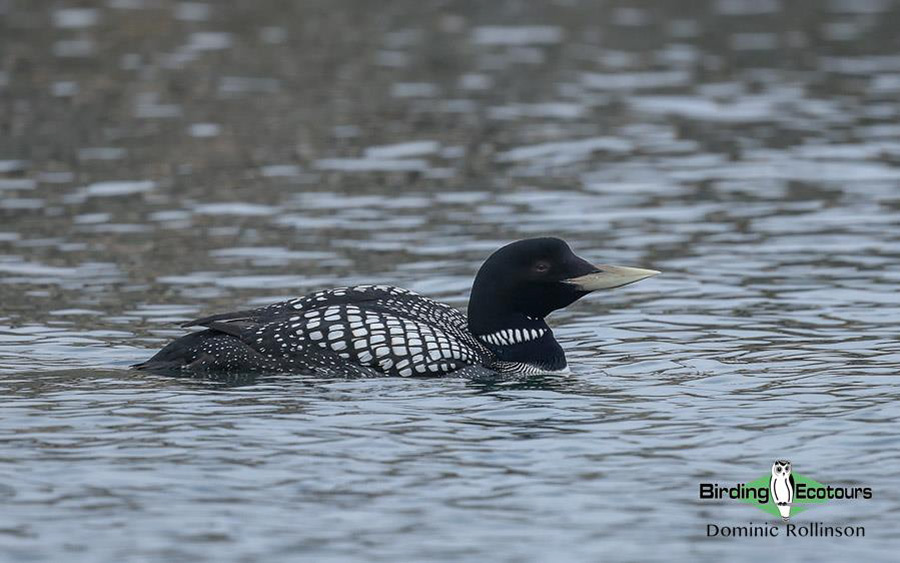 The intricately patterned Yellow-billed Loon is often seen near Varangerfjord.
Day 11. Transfer to Ivalo
Today will mostly be a travel day as we make the drive south from Vardø in Norway back to Finland, and the town of Ivalo. We will stop along the route, as we have done in previous days, to look for any of the area’s missing key species. After our bird-filled days in the Arctic weather, we will retreat to our comfortable hotel in Ivalo.
Overnight: Hotel Ivalo, Ivalo, Finland
Day 12. Departure from Ivalo
Time permitting, we may bird in the morning before heading to Ivalo Airport for your flight home, or further connections.
Overnight: Not included
Please note that the itinerary cannot be guaranteed as it is only a rough guide and can be changed (usually slightly) due to factors such as availability of accommodation, updated information on the state of accommodation, roads, or birding sites, the discretion of the guides and other factors. In addition, we sometimes must use a different guide from the one advertised due to tour scheduling or other factors.
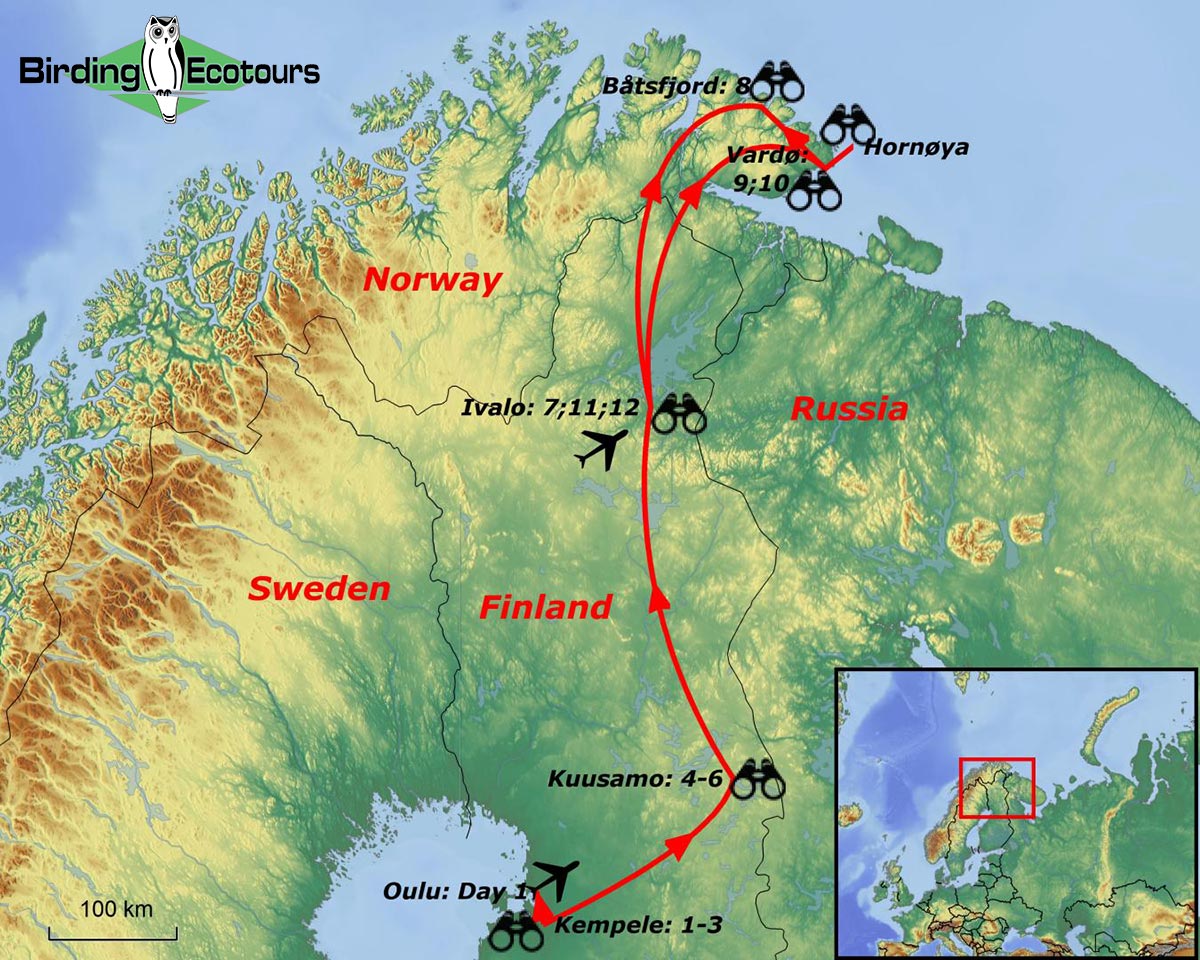
Map
Testimonials
Gallery
General Information
Useful information
During this tour, your guide will be driving you in a comfortable vehicle. The tour does require some walking and hiking to see certain species of birds and there are opportunities for longer hikes if you wish. Some of these walks and hikes will be on rough, steep terrain so please make sure you are of a good level of fitness for this tour.
Due to the costs involved with visiting Scandinavia we run this tour with a slightly larger group than we would to other destinations so that we can spread the cost and keep costs down for everyone involved. This decision is also based on the habitats we will be birding in on the tour which allow for larger groups, without reducing the experience of the tour.
The weather in the area can also be highly variable with day temperatures often ranging from 25oC to -8oC in this period depending on the wind strength and direction. Nights are frequently cold and as the sun does not set, many of our excursions will occur later into the evening and early morning.
The forested areas will have noticeable populations of biting insects if the weather is warm so please ensure you bring some form of repellent with you. Despite the northern latitudes, the sun here can be strong in summer, so a hat and sun block are advised.