- Duration:
- 23 days
- Group Size:
- 5–6
- Tour Start:
- Dar es Salaam
- Tour End:
- Arusha
The order of the tour might be reversed. Please check with us before buying air tickets.
Tanzania Birding Tour: Remote Endemics of the Eastern Arc Mountains
Details
2027
10 September–02 October
Per person sharing
$12,800 USD
£9,926 GBP / €11,606 EUR
Single supplement
$980 USD
£760 GBP / €888 EUR
2028
17 September–09 October
Per person sharing
$13,450 USD
£10,430 GBP / €12,195 EUR
Single supplement
$1,020 USD
£791 GBP / €925 EUR
Itinerary
Download ItineraryTanzania Birding Tour: Endemics of the Eastern Arc Mountains
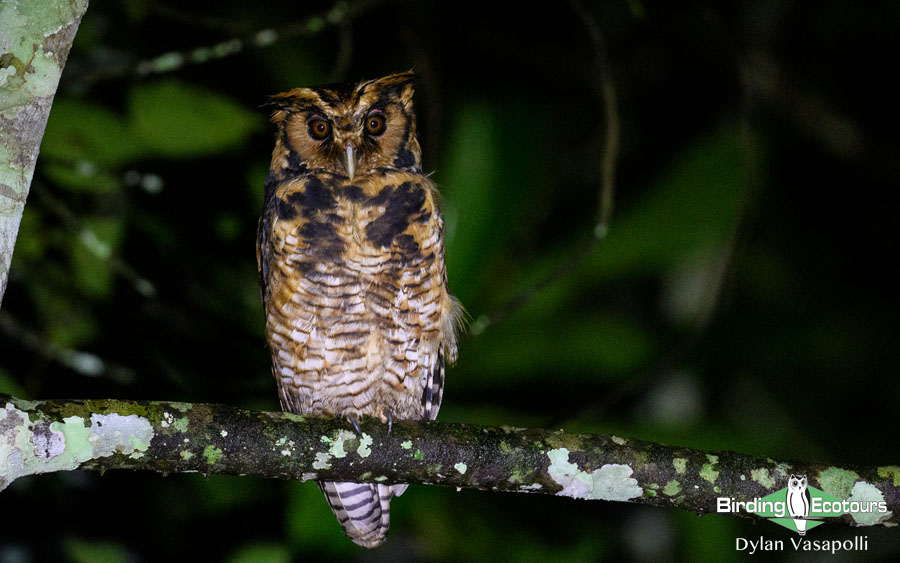
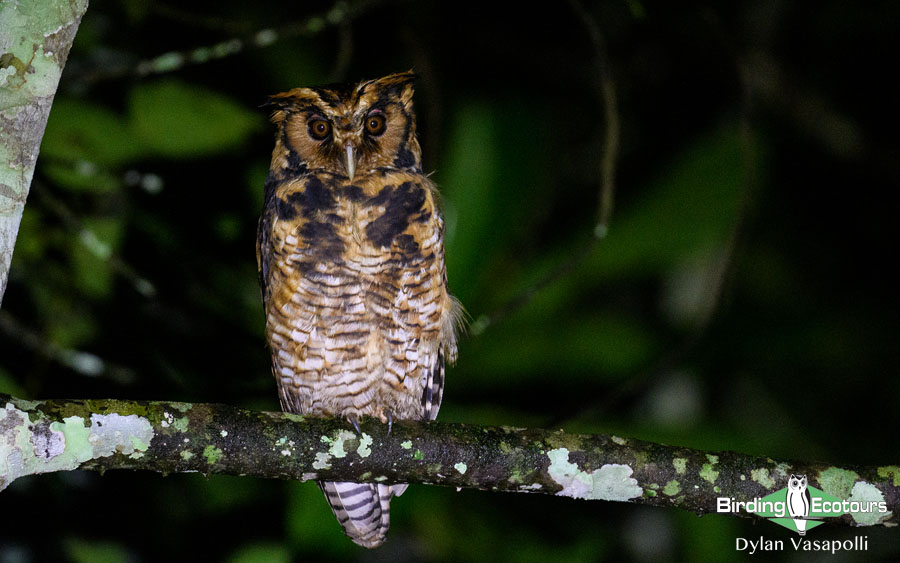 The localized and endemic race of Fraser’s Eagle-Owl, formerly split as Usambara Eagle-Owl, is one of our many targets on this exciting and endemic-focused birding tour.
Overview
Tanzania is one of Africa’s premier birdwatching destinations, and for good reason. The country boasts an impressive list of over 1,150 bird species and is among the most endemic-rich destinations in Africa. Powerful geological forces have shaped the topography, creating vast rift valleys and fragmented mountain ranges, often referred to as “sky islands.” Among the most remarkable of these are the Eastern Arc Mountains, an ancient and discontinuous chain that stretches from southern Kenya through eastern Tanzania. Over evolutionary timescales, the isolation of these mountains has given rise to unique life forms and contributed to Tanzania’s exceptional levels of endemism. Just shy of 40 bird species are found nowhere but Tanzania, many of which are exceptionally localized, occurring only on a single mountain range. However, Tanzania offers birders the opportunity to explore a variety of other habitats, each with its own unique avian assemblages, including miombo woodland, dry thorn savanna, mixed savanna, and, of course, the vast expanses of grasslands, which set the scene for the “Great Migration” in which millions of wildebeest and other ungulates participate.
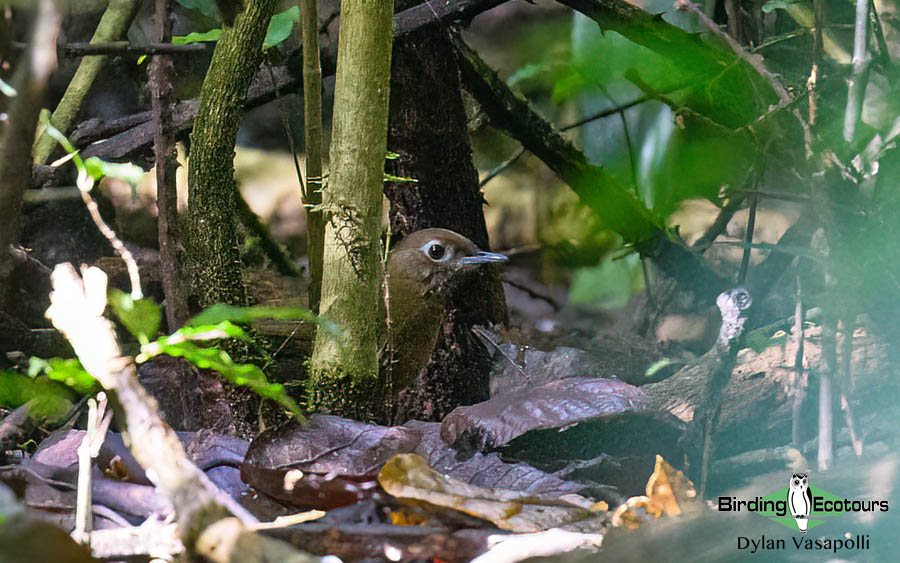
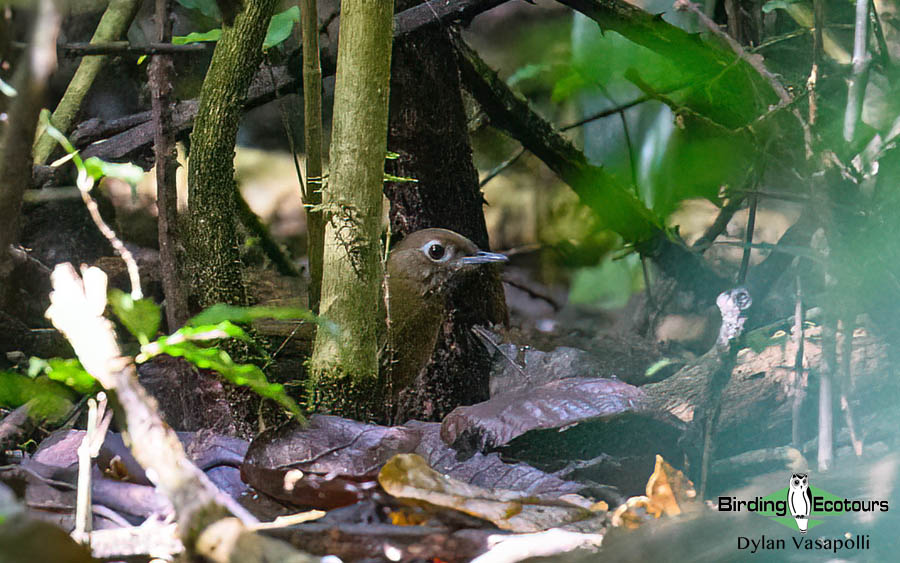 The mega-shy Spot-throat is an especially sought-after bird, as it is one of only three members of a very unique family – one of the others, Dapple-throat, can also be seen on this tour.
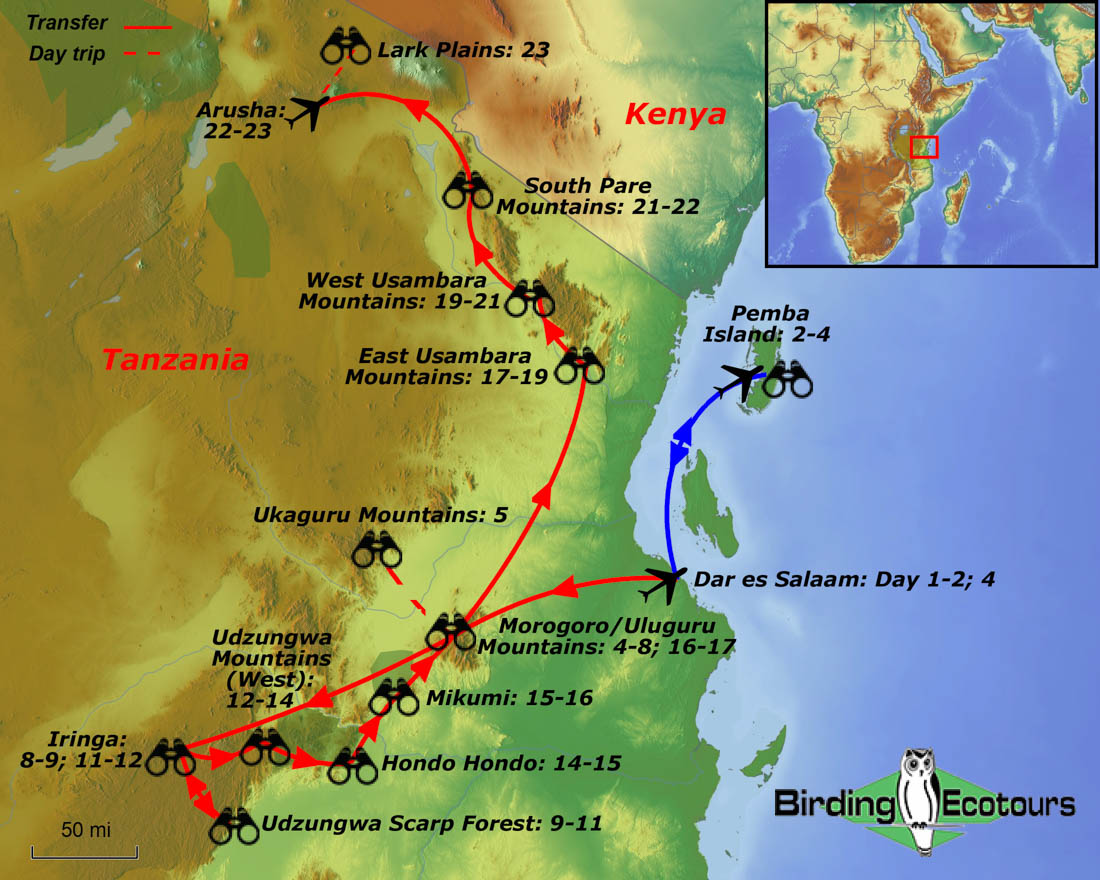
This endemics-focused Tanzania birding tour targets over 30 of the country’s endemic birds and starts in Dar es Salaam, Tanzania’s bustling port city and the largest city in East Africa. From here, we fly to the idyllic Pemba Island, where lush green coastal forests meet white sand beaches. On Pemba, we search for the island’s four endemic species: Pemba Green Pigeon, Pemba Scops Owl, Pemba White-eye, and Pemba Sunbird, before flying back to the mainland, where the scarce Ruvu Weaver is an early target for us. We spend the next 20 days exploring several mountain ranges in Tanzania’s Eastern Arc Mountains. First on the agenda is the Ukaguru and Uluguru Mountains, where a treasure-trove of poorly known endemics awaits, including Rubeho Akalat, Uluguru Bushshrike, Winifred’s Warbler, Uluguru and Yellow-throated Mountain Greenbuls, and Moreau’s and Loveridge’s Sunbirds.
Next, we visit the extensive Udzungwa Mountains, where we hope to connect with the near-mythical Udzungwa Forest Partridge, Dapple-throat, Iringa Akalat, Rufous-winged Sunbird, and Kipengere Seedeater, amongst others. Accessing these remote mountains requires difficult hiking and camping. Nearby, a brief visit to the arid Baobab Valley could yield another trio of endemics, including Tanzanian Red-billed Hornbill, Yellow-collared Lovebird, and Ashy Starling. Following which, we’ll visit the famed Kilombero Valley, for Kilombero Weaver and the endemic cisticola duo of White-tailed and Kilombero Cisticolas, along with the scarce Lesser Seedcracker. Beautiful miombo woodlands of Mikumi National Park should give us a host of special birds, including Racket-tailed Roller, Pale-billed Hornbill and the local race of Shelley’s Sunbird.
After Mikumi, we start making our way north to the Usambara Mountains. Here, we will look for several specialties, including Spot-throat, Usambara Hyliota, Usambara Thrush, Usambara Akalat, Usambara Weaver, Long-billed Forest Warbler, Tanzanian Illadopsis, Banded Green Sunbird, and hopefully the isolated endemic race of Fraser’s Eagle-Owl (formerly Usambara Eagle-Owl). En-route to Arusha, we visit the South Pare Mountains for the endemic South Pare White-eye, before arriving at the “safari capital of Tanzania”. The outskirts of town sometimes host Broad-ringed White-eye and Taveta Weaver. We’ll end the tour on a high, with a visit to the famous “Lark Plains” north of Arusha for Beesley’s Lark and a stack of other species typical of East Africa’s arid scrublands. The tour will conclude in Arusha.
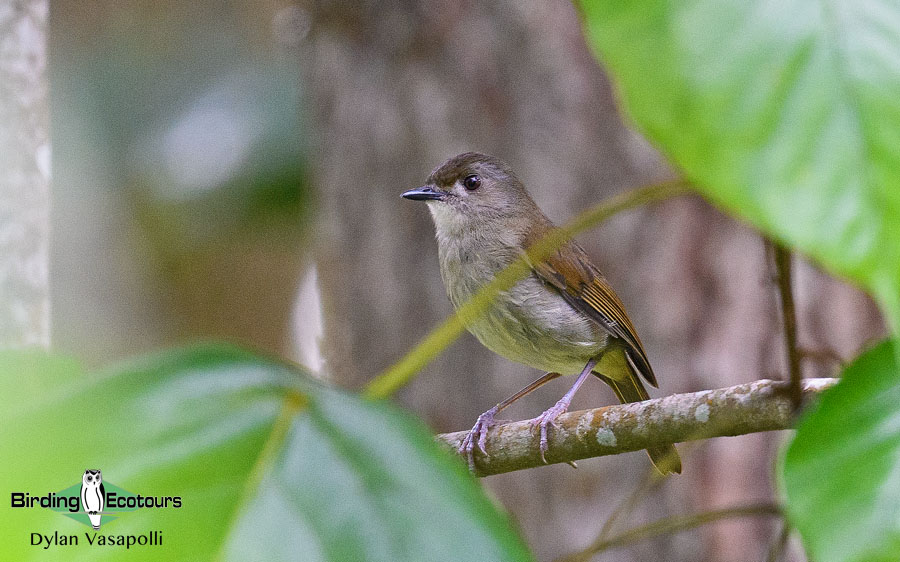
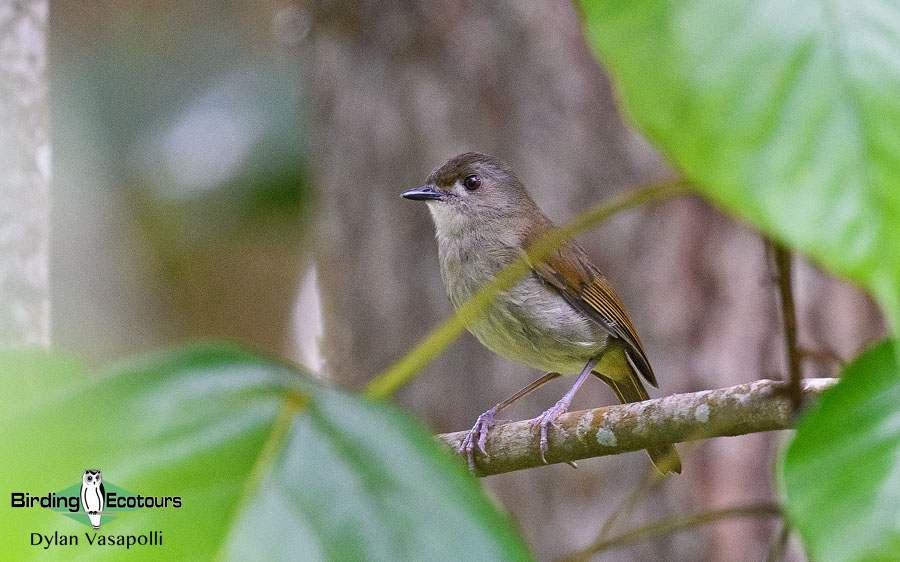 Usambara Akalat is one of several highly-localized akalats we’ll be looking for.
We do not visit the typical “safari circuit” areas, like Tarangire, Serengeti and Ngorongoro Crater on this route. Several endemic species are restricted to these areas and are best seen on our Northern Tanzania – Introduction to Africa birding tour, which takes place a bit earlier in the year.
We expect to compile an impressive species list on this trip, and despite the endemics and other highly-localized species being the focus, there are so many other excellent birds that we will be sure to try for. Although we cannot possibly mention them all, a few of these species include Hartlaub’s and Fischer’s Turacos, Bar-tailed Trogon, Böhm’s Bee-eater, Green-headed Oriole, Red-capped Forest Warblers, Kretschmer’s Longbill, and Amani and Usambara Double-collared Sunbirds.
Unlike many of our other tours, this itinerary takes us into some truly remote corners of Tanzania’s Eastern Arc Mountains, where accommodation is more basic than usual. Where possible, we make use of the best available lodges along our route, but in some areas, camping is the only practical way to access the forests where some of the region’s most sought-after birds occur. Reaching the elusive Udzungwa Forest Partridge, for example, requires a steep hike up to Luala Camp in the Udzungwa Mountains, where we will spend two nights camping. We will also camp for two nights in the Udzungwa Scarp Forest while searching for its elusive denizens (camping for a total of four nights). During our time in the Uluguru Mountains, birding will involve longer hikes, sometimes on muddy trails that can be moderate-to-challenging but very rewarding. If you are unsure whether this tour will suit your level of fitness, please feel free to contact us, and we will be happy to advise you.
These efforts are all part of what makes this tour such a special adventure. For those with a spirit of exploration and a passion for rare birds, the rewards of birding these remarkable forests more than make up for the extra effort.
Detailed Itinerary (23 days/22 nights)
Day 1. Arrival in Dar es Salaam
Our Tanzanian birding adventure will begin in the vibrant, bustling city of Dar es Salaam (affectionately known as “Dar”). Dar is Tanzania’s largest city and serves as the country’s economic hub, featuring its busiest port, and is home to over 6 million residents! After your arrival at Julius Nyerere International Airport, you will be met and transferred to our hotel. There are no birding plans for this arrival day.
Overnight: Dar es Salaam
Days 2–3. Birding Pemba Island
After breakfast at the hotel on Day 2, we will head back to the airport and catch the short internal flight up the coast and over the ocean to Pemba Island, where we’ll spend two nights. Pemba is one of the two large islands in the Zanzibar Archipelago (the other, of course, being Zanzibar); however, Pemba is considerably more rural and less touristy than Zanzibar. After landing in Pemba, we will make our way across the island, taking in its rolling green hills, villages, palm trees, and dense clove plantations (Pemba is one of the world’s primary clove producers).
Pemba is home to no fewer than four endemic bird species, and we will waste no time in tracking them down. Ngezi Forest Reserve is the main site, and is home to a stack of exciting birds, including all four endemics: Pemba Sunbird, Pemba White-eye, Pemba Green Pigeon, and Pemba Scops Owl, although we will likely have to wait for nightfall to try for the latter. Other species we may encounter here include Palm-nut Vulture, Dickinson’s Kestrel, Brown-headed Parrot, Mangrove Kingfisher, Broad-billed Roller, Olive Bee-eater, Black-bellied Starling and Black-winged Red Bishop. We should also see the large, endemic Pemba Flying Fox, which can be found in roosts of over 800 bats and, at night, we may see Garnett’s Greater Galago.
Coastal birding on Pemba can be rewarding as well, and we will be sure to try for the monotypic Crab-plover, which can be seen in sizeable flocks on the white-sand beaches. Among the local fishermen pushing wooden dhows into the ocean, we are likely to see more widespread shorebirds and larids, including Curlew, and Terek Sandpipers, Common Ringed Plover, Lesser Crested and Greater Crested Terns, and if we are lucky, Sooty Gull.
Overnight: Pemba Island
 The monotypic Crab-plover can be seen on Pemba’s picturesque beaches.
Day 4. Flight to Dar es Salaam, and transfer to Morogoro
Depending on flight times, we may have a final birding session on Pemba this morning or head straight to the airport to catch our flight to Dar. Once we’re back on the mainland, we’ll transfer out of this mega city, and head inland to Morogoro, likely arriving in the afternoon. We’ll try for the highly-localized and endemic Ruvu Weaver along the way. We’ll use Morogoro as a base for the next four nights, as we explore the Ukaguru and Uluguru Mountains.
Overnight: Morogoro
Day 5. Day trip to the Ukaguru Mountains
Our first day trip out of Morogoro is a long one, as we head to the Ukaguru Mountains. Some of our first targets here include the more common endemic trio of Yellow-throated Mountain Greenbul, Moreau’s Sunbird, and Winifred’s Warbler (here of the rubehoensis subspecies, treated by some authorities as a separate species – Rubeho Warbler). The endemic Rubeho Akalat, is arguably our most challenging target here. As is typical with akalats, although relatively easy to hear, they can be extremely difficult to see.
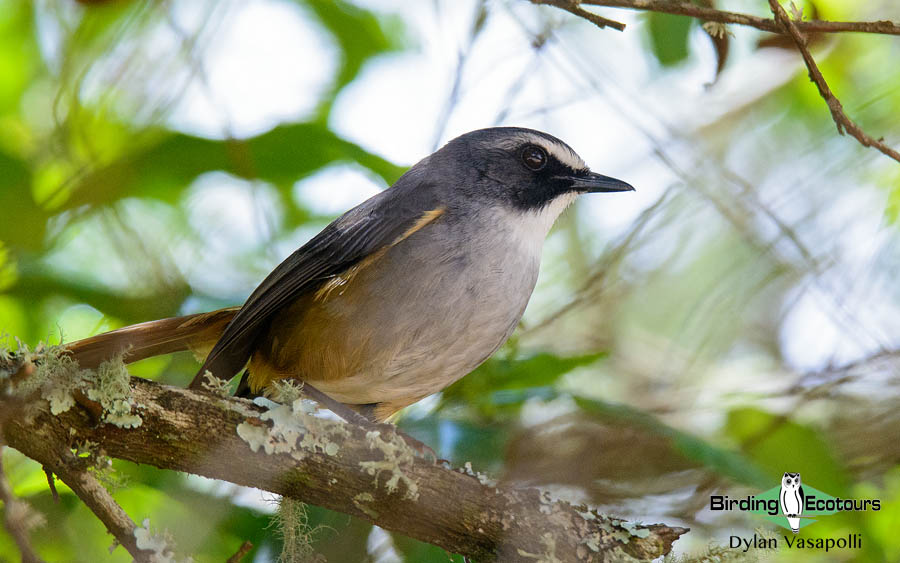 Tanzania is one of the best places to see the skulking Olive-flanked Ground Robin.
As this is our first foray into montane forests, we will also have our first chances at many of the following species, which we should encounter widely through most other forest patches we’ll be birding in over the rest of the tour. These include the near-endemic Red-capped Forest Warbler, Chapin’s and Bar-throated Apalises, Fülleborn’s Boubou, Black-fronted Bushshrike, Dark Batis, Shelley’s Greenbul, White-tailed Crested Flycatcher, White-eyed Slaty Flycatcher, White-starred Robin, and Moustached Tinkerbird. Other skulkers on offer include Olive-flanked Ground Robin and African Hill Babbler. We will likely hear the deep hooting vocalizations of Blue Monkeys while birding here and may catch a glimpse of them moving around in the canopy.
A good dose of patience and luck, in equal measure, will be required to lay eyes on a Spot-throat, a near-endemic in its own genus (Modulatrix) and one of only three species belonging to the oddball Modulatricidae family (see photo in “Overview” above). This incredibly shy species is most common and perhaps best seen in the West Usambara Mountains, later in the trip (but this is a mega skulker and hard to see anywhere).
Overnight: Morogoro
Days 6–7. Birding the Uluguru Mountains
We will have two full days to explore the exceptionally biodiverse Uluguru Mountains, which rise abruptly from the low-lying plains around Morogoro to a height of over 8,600 feet (2,600 m) at their highest point. Birding in this area requires challenging hiking for between six and eight hours each day, on often-steep and muddy trails through dense forest, as well as long drives along poor roads. However, the quality of the birds makes all the discomfort worth it. We visit two subtly distinct forests in the Uluguru Mountains: Tegetero Forest in the northeast and the higher-elevation Bunduki Forest in the southwest.
Our primary targets here include the three Uluguru endemics: Uluguru Bushshrike, Uluguru Mountain Greenbul, and Loveridge’s Sunbird. We will listen out for the whistling call of Uluguru Bushshrike while birding in the reaches of Tegetero Forest, while Uluguru Mountain Greenbul is best seen at Bunduki Forest. Loveridge’s Sunbird, by contrast, can be delightfully common everywhere.
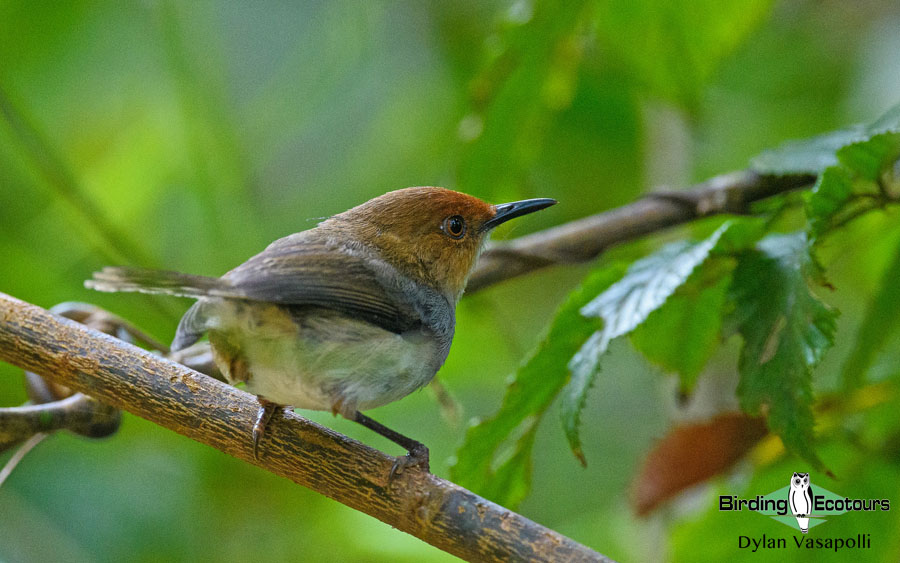 Most of the Eastern Arc forests are home to the dainty Red-capped Forest Warbler.
As is typical with all forest birding – it can be challenging at times with long periods of no activity and quiet, before things burst into life with birds all around. The large Silvery-cheeked Hornbill is common, and we have a good chance at seeing Livingstone’s Turaco, Bar-tailed Trogon, Green-headed Oriole, Green Barbet, African Broadbill, Waller’s and Kenrick’s Starlings, Olive-headed Greenbul, Winifred’s Warbler (here of the winifredae subspecies), Trilling Cisticola, Moustached Grass Warbler, Yellow-bellied Waxbill, and Southern Citril. Apalises are well represented with Chapin’s, Black-headed, and the stunning White-winged Apalis all occurring here. Again, the undergrowth has its own assortment of elusive birds, this time featuring Sharpe’s Akalat, Orange Ground Thrush, and the scarce White-chested Alethe. In the primate department, we will look out for the smart-looking Angolan Colobus, which inhabits most forests in the Eastern Arc Mountains.
Overnight: Morogoro
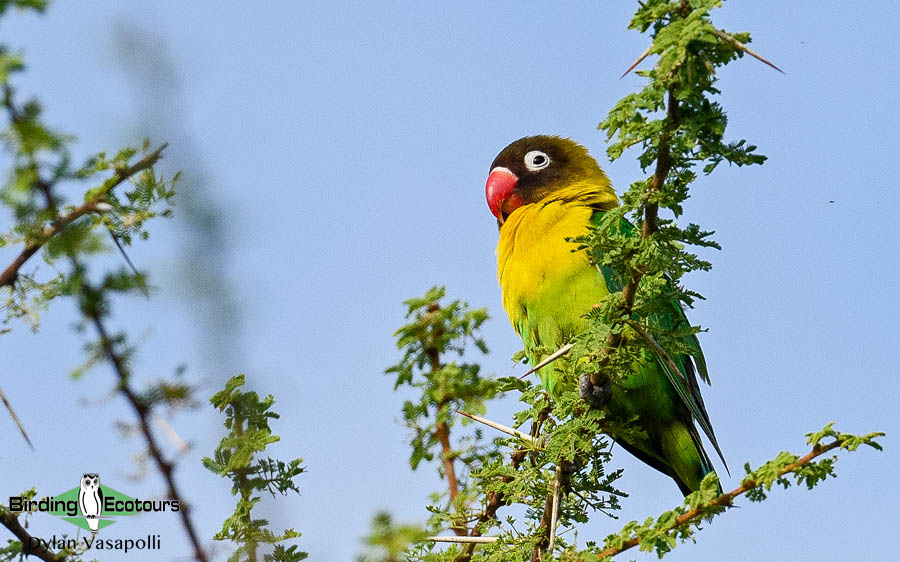 The Baobab Valley, near Iringa, should produce some of Tanzania’s arid endemics, like this Yellow-collared Lovebird.
Day 8. Transfer to Iringa
Today, we will bid farewell to the Uluguru Mountains and make our way southwest to Iringa – the gateway to the Udzungwa Mountains. This is a long drive, and takes us through the vast Mikumi National Park. We’ll make a stop or two in the Baobab Valley along the way. As the name suggests, enormous baobab trees and thorn scrub line the hillsides and valley floor along the Great Ruaha River. Our main targets are the endemic trio of Tanzanian Red-billed Hornbill, Yellow-collared Lovebird, and Ashy Starling. These species are common on our Northern Tanzania – Introduction to Africa birding tour; however, this area will be our only chance to see them on this tour. There are several other widespread open-country birds worth looking out for here such as: Von der Decken’s Hornbill, Meyer’s Parrot, D’Arnaud’s Barbet, Swallow-tailed Bee-eater, Abyssinian Scimitarbill and Gorgeous Sunbird.
We will likely arrive in Iringa in the evening, and try to get an early night. Tomorrow we return to the forests, where we’ll spend the next two nights camping in the Udzungwa Mountains.
Overnight: Iringa
Days 9–10. Udzungwa Scarp Forest birding
We have an early start on Day 9 as we make our way along roads that seem to get increasingly rough as we get closer to our destination, Uluti Forest in the larger Udzungwa Scarp Forest Reserve. This large and remote reserve in the Udzungwa Mountains is home to several sought-after yet poorly known birds, and we will spend two nights camping up in the forest to maximize our chances of finding our targets. After going as far as we can by car, we will cover the last distance to our campsite on foot, from where we’ll spend the rest of our time exploring the surrounds.
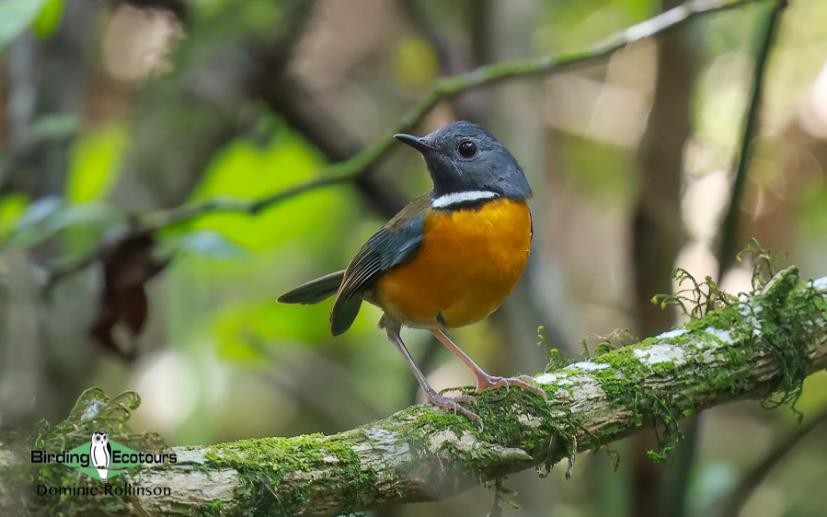 Swynnerton’s Robin is a highly-localized special that can be seen in Uluti Forest.
Priority birds here include the endemic Iringa Akalat, Tanzanian Illadopsis, and Rufous-winged Sunbird, the rare Dapple-throat (this is almost certainly the best place in the world to see it, and it will be the second member of the sought-after Modulatrichidae family that we’ll be able to try for), and the attractive Swynnerton’s Robin. Most of these are shy and skulking birds that require patience and skill to see. We’ll also keep an eye out for Churring and Black-lored Cisticolas, and Yellow-browed Seedeater in the more open areas, and we will likely be serenaded by African Wood Owls as we fall asleep in our tents at night. Additionally, we have another chance at many of the birds mentioned under the descriptions for the earlier forest sites, like Eastern Bronze-naped Pigeon, Bar-tailed Trogon, African Broadbill, Spot-throat, White-chested Alethe, Sharpe’s Akalat, Oriole Finch and White-winged Apalis.
Overnight: Camping – Uluti Forest, Udzungwa Mountains.
Day 11. Udzungwa Scarp Forest to Iringa
We have a final morning available for birding in the forests, searching for any of the above-mentioned species we have yet to see. We’ll then start the hike back down the mountain, meet up with our car, and head back to civilization for a night – spending the night in Iringa.
Overnight: Iringa
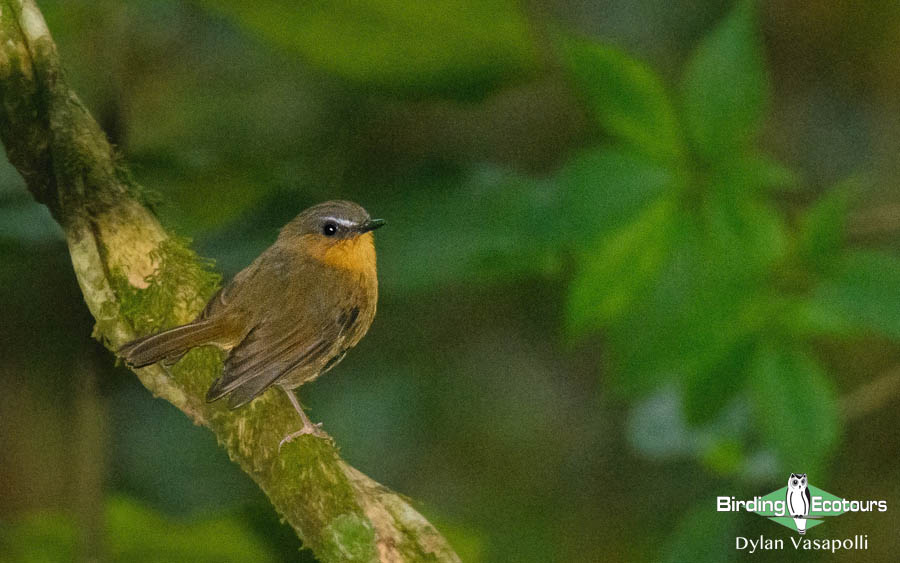 Another sought-after akalat we’ll be looking for – Sharpe’s Akalat.
Days 12–13. Birding the West Udzungwa Mountains
We’ll have an early start once more from Iringa on Day 12, as we begin our mini-expedition to the West Udzungwa Mountains. As before, we’ll follow the road as far as possible, before going the rest of the distance on foot, up to our base camp, where we’ll spend two nights. *Note that this is a steep and challenging hike.
During our time here, we will explore the forest on foot, between 5,000 and 8,000 feet (1,500 – 2,400 m) above sea level, in search of our targets, the most exciting of which is the near-mythical Udzungwa Forest Partridge. This elusive ground-dwelling bird is restricted to the remote reaches of the Udzungwa and Rubeho Mountains (the Rubeho birds are sometimes considered a separate species – Rubeho Forest Partridge), and the fact that it was only discovered as recently as 1991 is testament to its reclusive nature and inaccessibility.
While searching for the partridge, we’ll also be keeping an eye out for other excellent target birds, such as the endemic and range-restricted Kipengere Seedeater, Usambara Weaver (we will have additional chances for this endemic in the West Usambara Mountains, where it is more common), Yellow-throated Mountain Greenbul (along with six other greenbul species), and Moreau’s Sunbird. Other species we may see here include Spot-throat, Grey Cuckooshrike, Cinnamon Bracken Warbler, Olive-flanked Ground Robin, Waller’s, Slender-billed, and Kenrick’s Starlings, and Brown Parisoma, to name only a few. Patches of montane grassland could yield Scaly Spurfowl and nocturnal species such as Montane Nightjar and the scarce African Grass Owl. Raptors can often be seen soaring over the forests, and we may see Mountain Buzzard and Crowned Eagle during our time here. Although it is less common here than at the Udzungwa Scarp Forest, we will have another chance at seeing Iringa Akalat around our campsite.
Overnight: Camping – Luala, West Udzungwa Mountains.
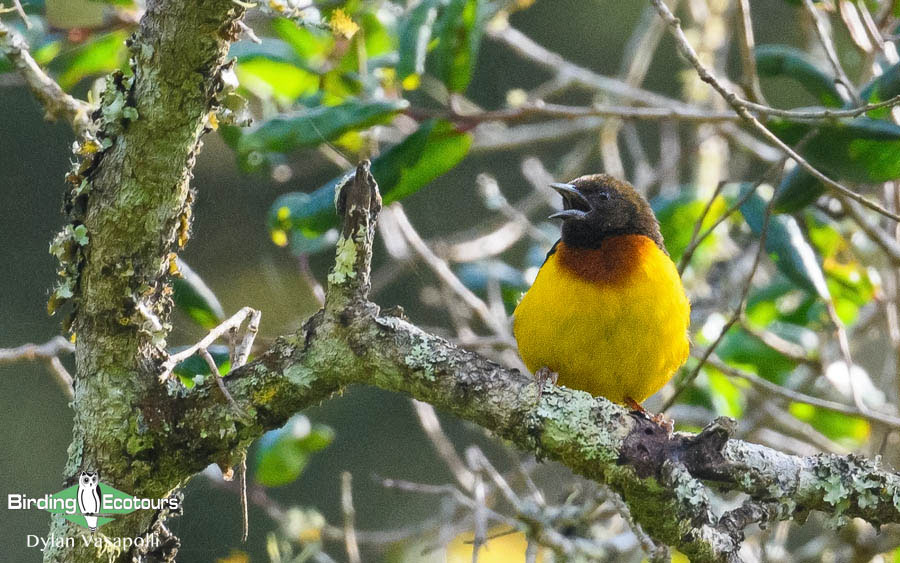 The forest-dwelling Usambara Weaver is a scarce endemic, only occurring at a few sites.
Day 14. West Udzungwa Mountains to Hondo Hondo
We have a final morning available for us to bird in the forests, searching for any of the above-mentioned species we have yet to see. We’ll then start the long and difficult hike back down the mountain, from where we’ll be glad to join our vehicle once again. Once back on the main road, we’ll journey around the mountains to Hondo Hondo, where we’ll spend the night in our hotel.
This marks the end of our camping portion of the tour.
Overnight: Mangula/Sanje/Hondo Hondo
Day 15. Birding the Kilombero Valley floodplain to Mikumi
We’ll spend our morning in the Kilombero Valley floodplain. This area has an air of mystery to it, with three recently described endemics with highly restricted ranges occurring essentially nowhere else – Kilombero and White-tailed Cisticolas, and Kilombero Weaver. Fortunately, all three of these birds are fairly easy to find here, along with a range of other excellent water-associated species such as coucals (the massive Coppery-tailed Coucal being a highlight), herons, lapwings (such as the attractive White-crowned Lapwing), kingfishers, the localized Marsh Tchagra, among others. The floodplain is heavily used by people for fishing and cattle-grazing, so it’s quite a scene to behold. The open scrubby areas near our hotel also host an important target for us – Lesser Seedcracker. We’ll spend some time looking for this sought-after species before we leave the area.
We’ll then make our way the short distance to Mikumi town, where we’ll spend the night. Depending on the exact time of our arrival, we’ll try to get our first spell of miombo woodland birding in this afternoon, on the nearby Kilosa Road. Some exciting birds like Racket-tailed Roller and Pale-billed Hornbill will be targeted, though the full range of possible species are listed under the following days’ account.
Overnight: Mikumi
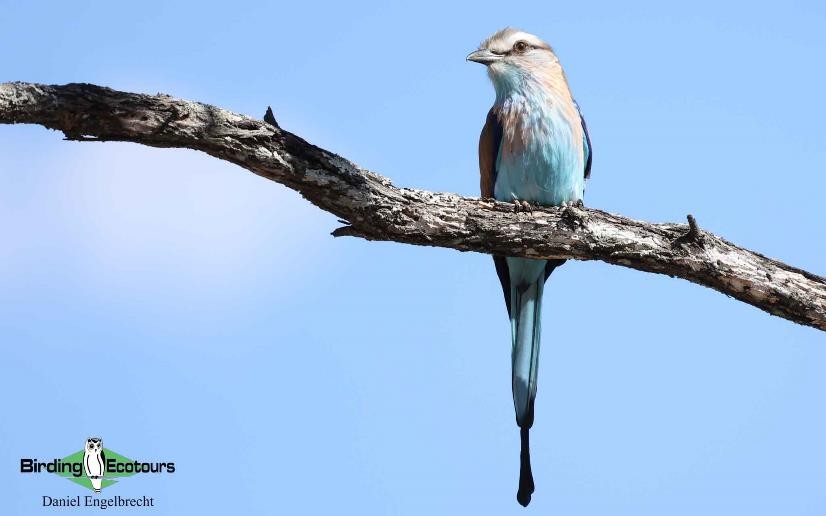 Racket-tailed Roller will be one of our main targets in the miombo woodlands near Mikumi.
Day 16. Mikumi miombo birding to Morogoro
The plan for the morning is to bird along the Kilosa Road, which runs through a tract of miombo woodland north of Mikumi. We may have had our first taste of the road and birding the previous afternoon already. Possible species we’ll search for include: Pale-billed Hornbill, Speckle-throated Woodpecker, Racket-tailed Roller, Rufous-bellied Tit, Pale Batis, Arnot’s Chat, Pale Flycatcher, Stierling’s Wren-Warbler, Yellow-bellied Hyliota, White-breasted Cuckooshrike, Red-faced Crombec, Lesser Blue-eared Starling, Shelley’s Sunbird (here of the endemic hofmanni subspecies, treated by some authorities as a separate species – Hofmann’s Sunbird), Cabanis’s Bunting, and Black-eared Seedeater.
Miombo birding is heavily dependent on finding mixed-species flocks, and we may find ourselves going for lengthy periods without seeing a single bird, before mayhem unfolds when suddenly we stumble upon a mixed-species flock containing twenty-five species (it has happened before!). As such, birding can be slow at times but exceptionally rewarding.
Following our morning birding, we’ll begin the drive back up to Morogoro (and tomorrow, onwards to the Usambara Mountains), likely arriving in the late afternoon.
Overnight: Morogoro
Days 17–18. Amani Nature Reserve – birding the East Usambara Mountains
We’ll have an early start on Day 17, as we finish the journey to Amani in the East Usambara Mountains. On the way we hope to try for the attractive Böhm’s Bee-eater, which can be seen at a couple of reliable stakeouts. The pristine afrotropical montane and lowland forests here fall mostly within the Amani Nature Reserve, a 20,000 acre (8,100 hectare) protected area boasting high levels of floral and faunal endemism. The proximity of these mountains to the coast (25 miles / 40 km) facilitates year-round moisture buildup and high annual rainfall (80 inches / 200 cm), allowing montane forest to grow at lower altitudes here than at any other site in Tanzania.
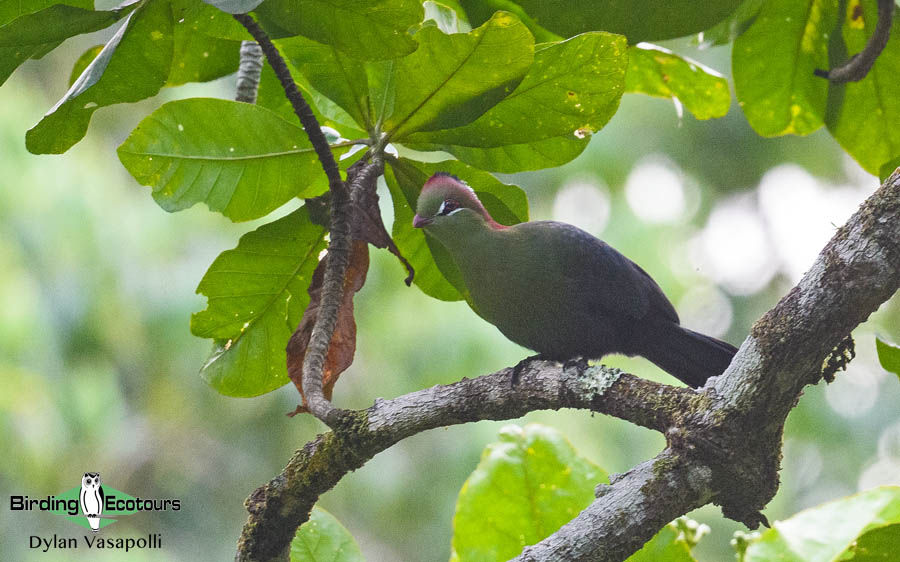
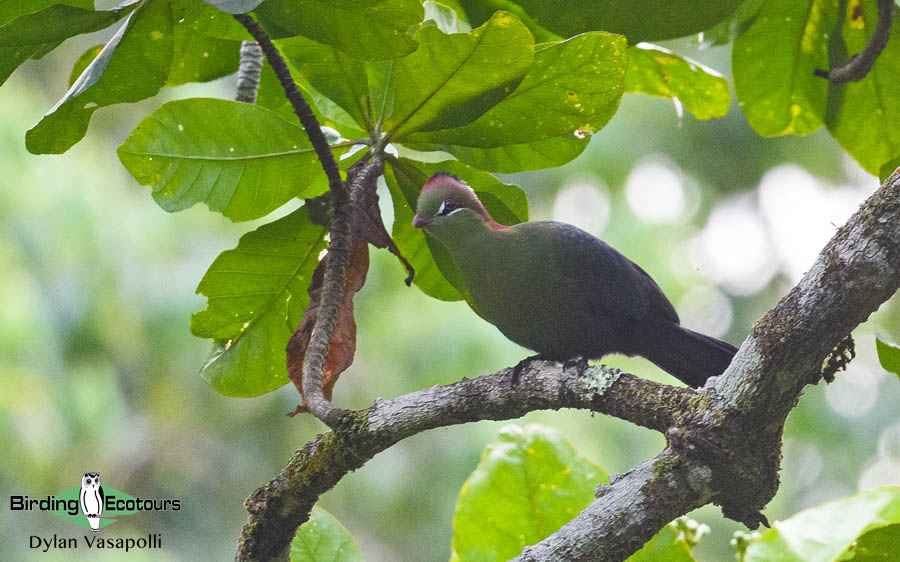 Fischer’s Turaco is one of many possible members of this family we should see on the trip. We’ll look for this while birding in the East Usambara Mountains.
We’ll devote our time to exploring the higher reaches of more montane forest, and the lower-lying lowland forest – each having their own unique species sets. Some of the more common species that we are likely to encounter in these forests include Silvery-cheeked Hornbill, Tambourine Dove, Green and White-eared Barbets, Purple-banded, and Collared Sunbirds, and Little and Shelley’s Greenbuls.
In the higher lying montane segments, we will work carefully through all the sunbirds in the hope of connecting with the range-restricted Amani and Uluguru Violet-backed Sunbirds and the localized endemic Banded Green Sunbird, the East Usambaras being the most reliable site for the latter. In the undergrowth, we may encounter a Red-tailed Ant Thrush following an ant swarm, or get a glimpse of a Tanzanian Illadopsis foraging in the underbrush, while the dense tangles may produce Forest Batis and the endemic Montane Tiny Greenbul. Vocal Green-headed Orioles and raucous Fischer’s Turaco call from the canopies, and can occasionally show well. The more disturbed forest edges are the domain of the highly-localized Long-billed Forest Warbler and Kretzschmer’s Longbill. Fast-flowing mountain streams are the favored habitat of Half-collared Kingfisher and Mountain Wagtail.
In the lowland forests, we will look out for chiefly, the endemic Usambara Hyliota – which we’re unlikely to see anywhere else. This canopy-dwelling species is rare and easily missed though and always presents a challenge. Other species we’ll have on our radar include: Green Tinkerbird, Mombasa Woodpecker, Chestnut-fronted Helmetshrike, Pallid Honeyguide, Little Yellow Flycatcher, Lowland Tiny, and Fischer’s Greenbuls, Black-headed Apalis, Red-throated Twinspot, and Plain-backed Sunbird. Birding the lowland forests here is difficult work.
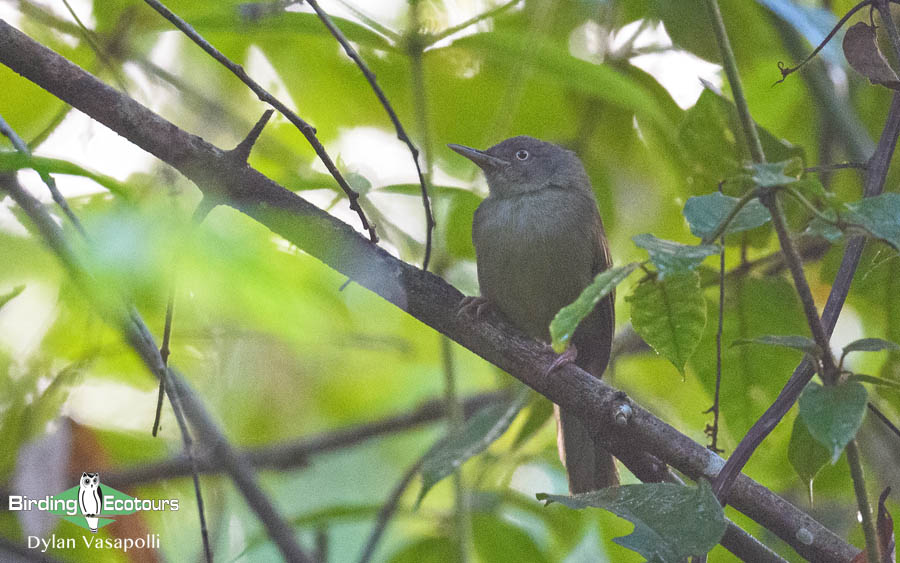 The peculiar Kretzschmer’s Longbill is a rare and thinly-spread special of the Eastern Arc.
Birds of prey are well represented, and this will be our best chance to see Southern Banded Snake Eagle. At night, we will search for the endemic vosseleri subspecies of Fraser’s Eagle-Owl, sometimes split as a separate species (Usambara Eagle-Owl), although recently re-lumped (see cover image). A night walk around Amani is also excellent for many of the endemic chameleons occurring here.
We expect to compile a sizeable list over our two days in Amani Nature Reserve. Next, we head to the West Usambara Mountains to target the remaining Usambara endemics.
Overnight: Amani
Days 19–20. Birding the West Usambara Mountains
As in the East Usambara Mountains, we will likely have the better part of two full days in the larger and higher West Usambara Mountains, after transferring from Amani. The transit to the West Usambaras should present us with the likes of Zanzibar Red Bishop, Coastal Cisticola, East Coast Boubou and the shy Grey-olive Greenbul.
We will concentrate our birding time in the vast Magamba Forest, visiting several sections within. Foremost among the targets will be the endemics, including Usambara Thrush, Usambara Akalat, Montane Tiny Greenbul, and Usambara Weaver – all of which are most reliably seen here, though none of which are ‘easy’. Magamba is arguably also our best chance at seeing the ultra-shy Spot-throat – though this species does occur in most of the prior forest patches we’d have been in by this point, and we may have managed to see this species already. The Usambara Double-collared Sunbird, largely restricted to the western side of the Usambaras, is the exception and should be easy to track down.
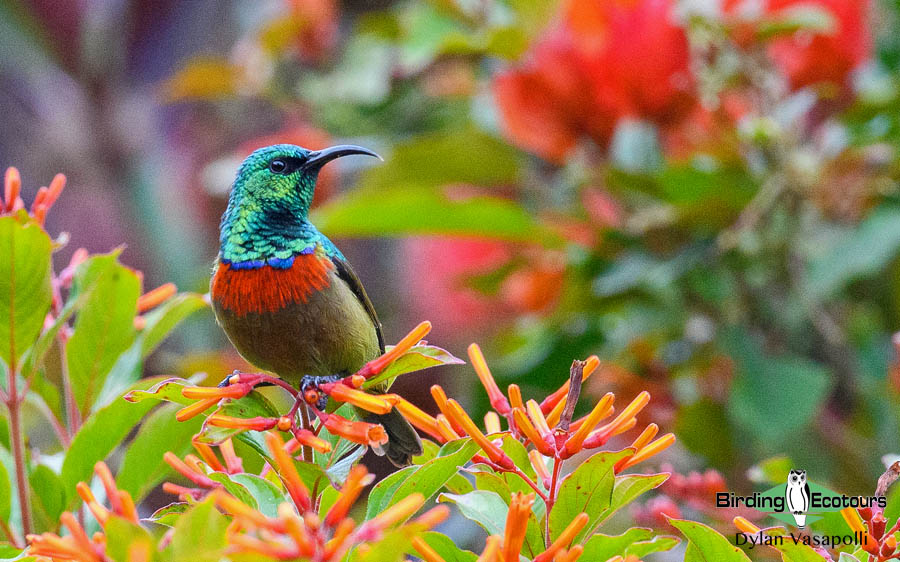
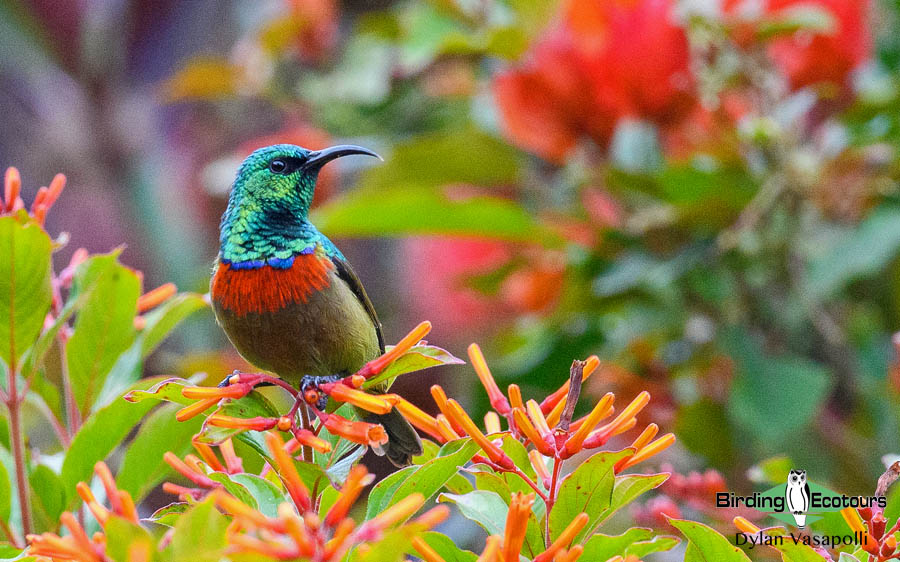 Bright Usambara Double-collared Sunbirds should be easily seen.
Additionally, we may see the attractive Hartlaub’s Turaco, the near-endemic Black-headed Mountain Greenbul, the odd-looking Sharpe’s Starling, and the colorful Cinnamon-chested Bee-eater. Other high-quality birds that we will have another chance to see here include Mountain Buzzard, Bar-tailed Trogon, White-chested Alethe, Red-capped Forest Warbler, Cinnamon Bracken Warbler, Red-faced Crimsonwing, and Oriole Finch. However, we expect to have seen most of these species by this stage of the trip.
Overnight: Lushoto
Day 21. Transfer to the South Pare Mountains
We will have the morning available for some final birding, should we still be searching for any species, before we’ll load up and begin the transfer to Same. We will have our first taste of some dry-country “Somali-thornveld” habitat along the route, where stacks of new birds await. A quick stop or two is likely to get us the more common species like Slate-colored Boubou, Pink-breasted Lark, Hunter’s and Tsavo Sunbirds, Purple Grenadier, and Somali Bunting – though we’ll spend a bit more time birding in this habitat tomorrow.
We’ll take an afternoon trip up to the top of the South Pare Mountains, where its sole endemic, the South Pare White-eye occurs. We will also search for the local race of Bar-throated Apalis, and it’ll likely present our final chances for forest birds like Eastern Bronze-naped Pigeon, African Hill Babbler and Sharpe’s Starling.
Overnight: Same
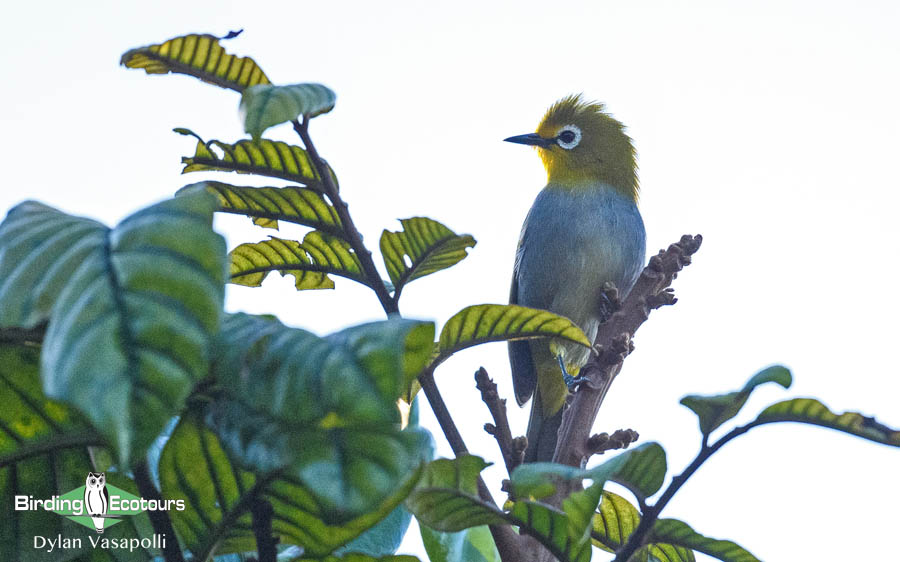
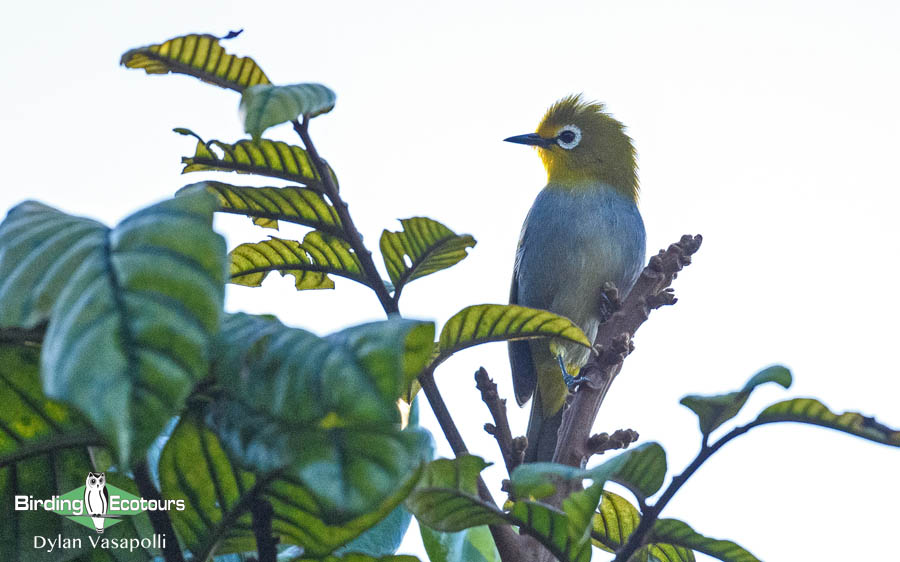 South Pare White-eye, only occurs in its namesake mountains.
Day 22. Dry-country birding to Arusha
We’ll spend our morning birding the highly productive dry-country “Somali-thornveld” habitat around Same, outside the Mkomazi National Park, and along the way to Arusha. The excellent birding on offer here will be a pleasant change from the mostly difficult forest-based birding we’d have had up until this point.
Aside from the more common species mentioned yesterday in this habitat, we’ll be sure to add many more. Some of our primary targets will be the more sought-after (and low-density) birds like Golden-breasted Starling, Pringle’s Puffback, Acacia Tit and Mouse-colored Penduline Tit. Given just the morning it is unlikely we’ll see all of these. Other species that are sure to entertain include the likes of White-bellied Go-away-bird, White-headed Mousebird, Red-and-yellow Barbet, Red-bellied Parrot, Grey Wren-Warbler, Scaly Chatterer, Superb and Hildebrandt’s Starlings, Straw-tailed Whydah and Southern Grosbeak-Canary.
We will then continue onwards to Arusha, skirting the slopes of Africa’s tallest peak, Mount Kilimanjaro (16,100 feet / 4,900 m above sea level), before reaching the outskirts of the city. Time permitting, we may make a quick detour upon entering Arusha to try for the endemic Broad-ringed (Kilimanjaro) White-eye, which is easy to see on the lower slopes of Mount Meru, or the localized Taveta Weaver, which breeds at sites in the city.
Overnight: Arusha
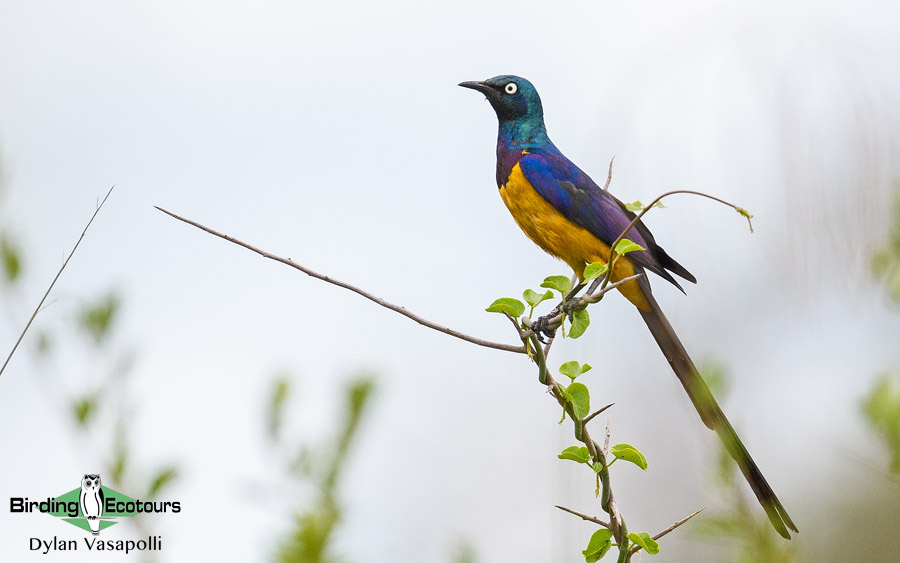 Golden-breasted Starling occurs sparsely in the dry country around Same.
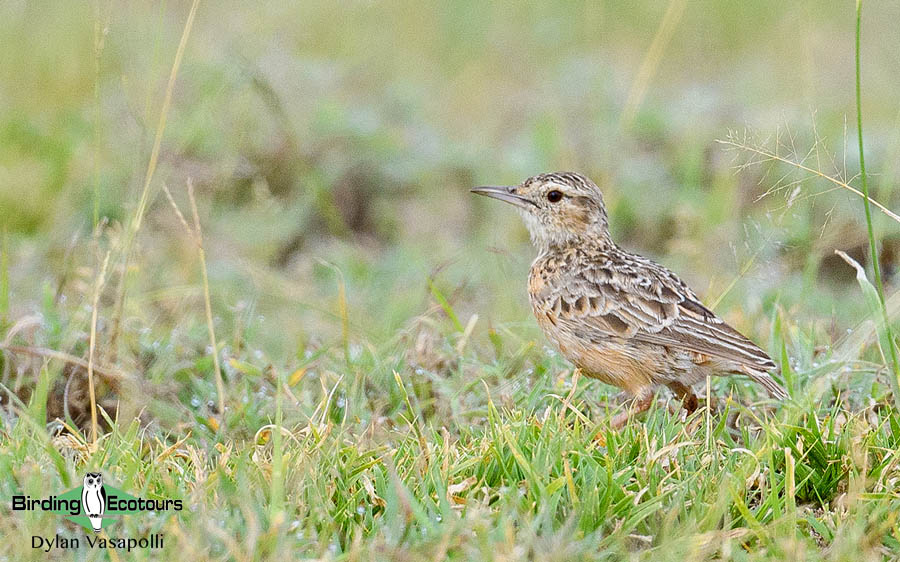
Day 23. Lark Plains and departure
The plan for the final morning of the trip is to head north of Arusha to the arid “Lark Plains”. Our main target here will be the incredibly localized Beesley’s Lark, long considered a subspecies of the more widespread Spike-heeled Lark; it is now widely recognized as a separate species and is likely among the rarest birds in East Africa, occupying a total area of less than 2,500 acres (1,000 hectares)! It’s not called “Lark Plains” just for Beesley’s Lark, and we could see Red-capped, Fawn-colored (Foxy), Athi Short-toed, Sentinel, and Short-tailed Larks, as well as Fischer’s Sparrow-Lark, all of which are regularly seen here.
The surrounding thornveld habitat is also alive with birds, and other species we’re likely to find include Kori Bustard, Eastern Chanting Goshawk, Chestnut-bellied Sandgrouse, Black-throated and Red-fronted Barbets, Rosy-patched Bushshrike, Taita Fiscal, Red-throated Tit, Pygmy Batis, Fischer’s Starling, Banded Parisoma, Kenya and Chestnut Sparrows, White-headed Buffalo Weaver, and Grey-capped Social Weaver, among many others.
After what is sure to be a lifer-loaded morning, we will head back to Arusha at lunchtime. At our accommodation, we will pack our bags, freshen up, and get ready for our evening departure flights. Our incredible Eastern Arc birding adventure will conclude in Arusha this afternoon after 23 days exploring remote mountain peaks, lush forests, savannas, and arid plains in search of some of Africa’s rarest and least-known birds.
Overnight: Not included
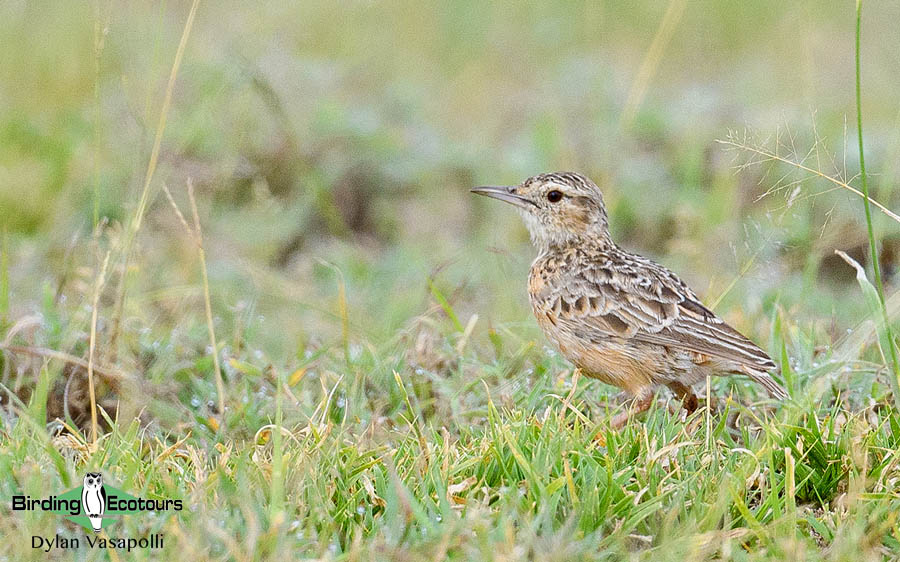 Beesley’s Lark, now recognized as its own species, has a tiny geographical range, and is likely one of the rarest birds on earth. We make a special effort at the end of the tour to see this bird.
Please note that the itinerary cannot be guaranteed as it is only a rough guide and can be changed (usually slightly) due to factors such as availability of accommodation, updated information on the state of accommodation, roads, or birding sites, the discretion of the guides, and other factors. In addition, we sometimes have to use a different guide from the one advertised due to tour scheduling or other factors.
Map