- Duration:
- 16 days
- Group Size:
- 6 – 8
- Tour Start:
- Fortaleza, Brazil
- Tour End:
- Porto Seguro, Brazil
Birding Tour Northeastern Brazil: The Finest Brazilian Endemics
Details
2027
04–19 November
Per person sharing
R$59,449 BRL
$11,952 USD / £9,029 GBP / €10,620 EUR
Single supplement
R$4,949 BRL
$995 USD / £752 GBP / €884 EUR
Itinerary
Download ItineraryNortheastern Brazil Birding Tour: The Finest Brazilian Endemics
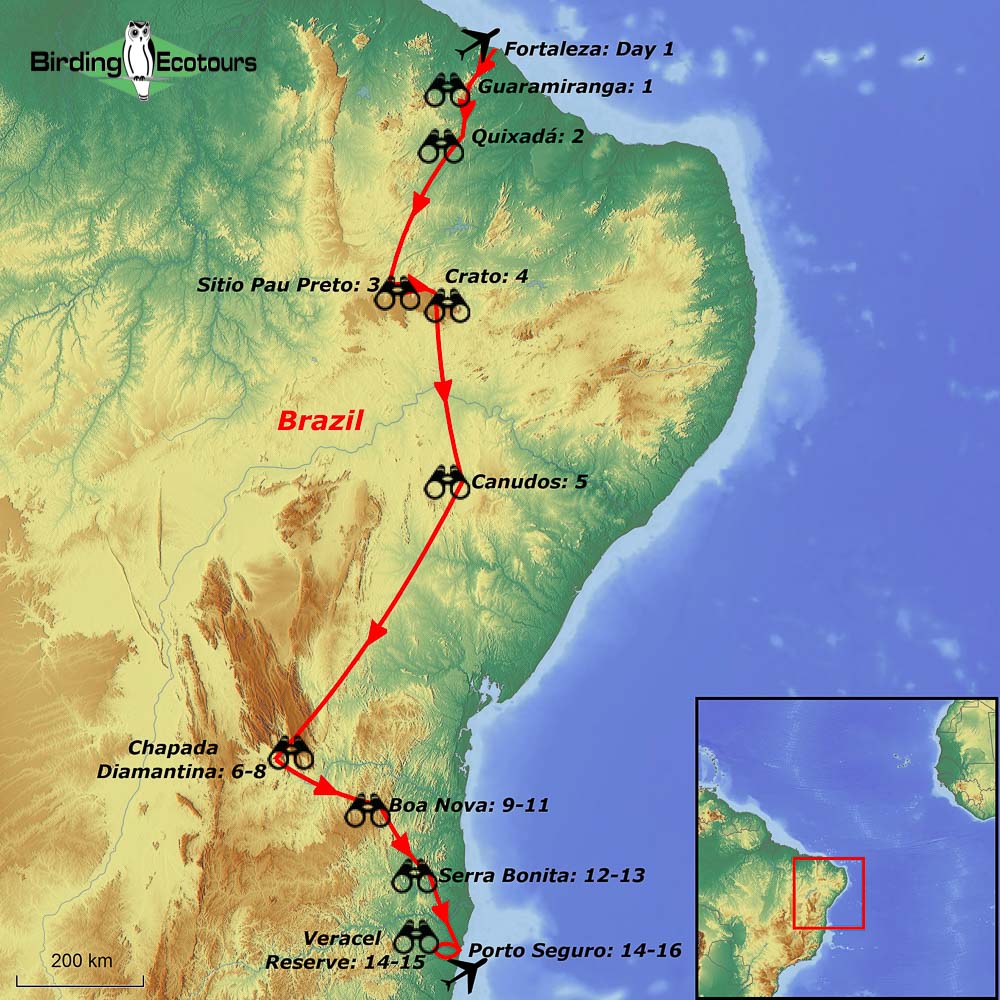
Our northeast Brazil birding tour is designed to explore a very remote corner of one of the largest countries on earth. This birding tour to Brazil is an epic adventure which covers 2,175 miles (3,500 kilometers) across the states of Ceará and Bahia in 16 days. We will be birding along a route which includes breath-taking scenery and many unique neotropical ecosystems. In the search for an incredible set of birds (including loads of endemics, range-restricted specials and some of the most threatened birds of South America) we will bird a wide range of ecosystems which will include the caatinga (dry scrub dominated by cacti), cerrado (Brazilian grasslands) and Atlantic Forest.
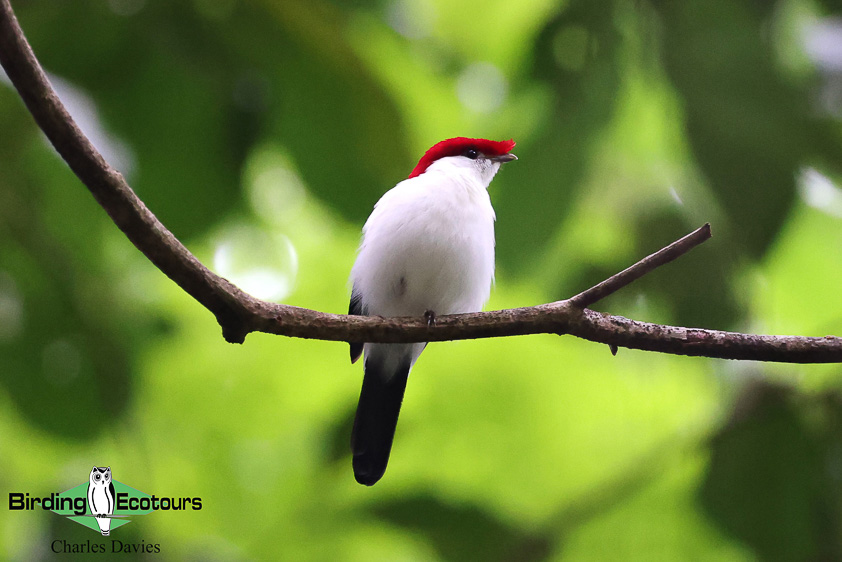
Araripe Manakin will be one of the main targets of our trip.
We will spend our 16-day Brazilian birding tour looking for sought-after species including the Critically Endangered (IUCN) and incredibly beautiful Araripe Manakin, which was only discovered in 1996, and the Endangered (IUCN) Lear’s Macaw. Other specials include avian jewels such as Great Xenops, Pink-legged Graveteiro, Banded and White-winged Cotingas, Grey-breasted Parakeet, White-browed Antpitta, Gould’s Toucanet, White-browed Guan, East Brazilian Chachalaca, Crescent-chested Puffbird, Diamantina Tapaculo, Slender Antbird, Giant Snipe, Sharpbill, Blue-winged Macaw, East Brazilian Pygmy Owl, Pygmy Nightjar, Ochre-backed Woodpecker, Ceara Gnateater and the spectacular Hooded Visorbearer.
Please do join us on this fantastic birding adventure to northeast Brazil which surely ranks as a must-do tour for anyone from the most demanding of world listers, to intrepid birders to macaw-lovers, alike.
Itinerary (16 days/15 nights)
Day 1. Arrival in Fortaleza and transfer to Guaramiranga
You will arrive at the Fortaleza Airport and be met by your Birding Ecotours leader and local representatives before being transferred by land to Guaramiranga (75 miles/120 kilometers). As we still have some birding scheduled for this afternoon, it is recommended that all participants arrive in Fortaleza before noon, or if this is not possible, we recommend arriving the previous day (we can book a hotel and transfer for you). Our 75-mile (120 kilometer) drive takes over two hours and will include a few birding stops en route. Some of these stops will involve roadside birding as well as a few short trails. Despite the busy day of birding we will ensure we arrive at Guaramiranga before dark. Some of the targets we expect to see on the first day include Grey-breasted Parakeet (one of the world’s most-threatened parrots) and other species of great interest such as Buff-breasted Tody-Tyrant, Ceara Gnateater, Ceara Woodcreeper, Ochraceous Piculet, Guianan Tyrannulet, Band-tailed Manakin, Gould’s Toucanet and Grey-headed Spinetail. We will pay special attention to some of the subspecies in the area (that could possibly be elevated to full species status) such as Variable Antshrike, Red-necked Tanager and Rufous-breasted Leaftosser.
Overnight: Sítio Guaramiranga, Guaramiranga
Day 2. Birding Guaramiranga and transfer to Quixadá
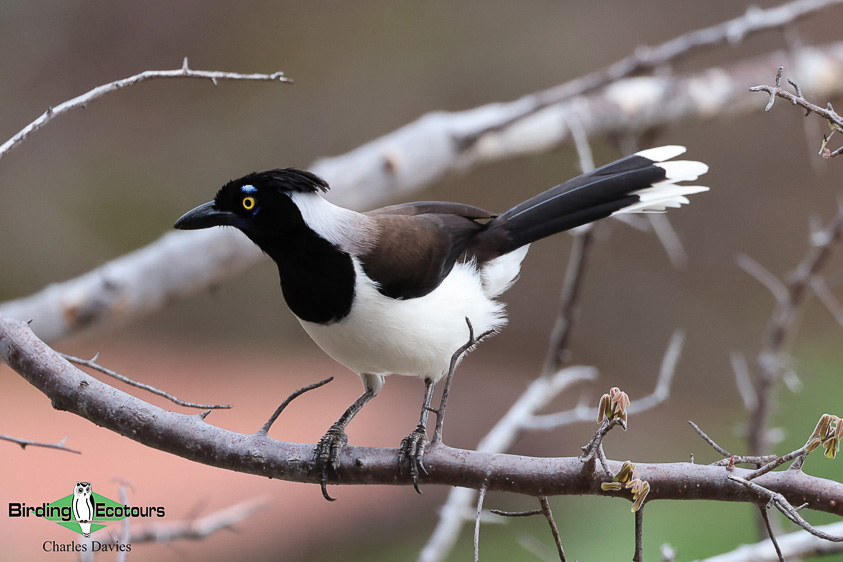
We will be transferred over land to Quixadá which will involve a drive of roughly 70 miles (110 kilometers) which normally takes around two hours to complete. Today we will target species such as White-naped Jay, Caatinga Parakeet, Pygmy Nightjar, Black-bellied Antwren, Pale Baywing, Caatinga Cacholote, Ochre-backed Woodpecker and, if we are lucky, we might even see the rare and endemic White-browed Guan; a flock of these large caatinga endemics usually comes to drink at a reservoir in the hotel area.
Overnight: Hotel Pedra dos Ventos, Quixadá
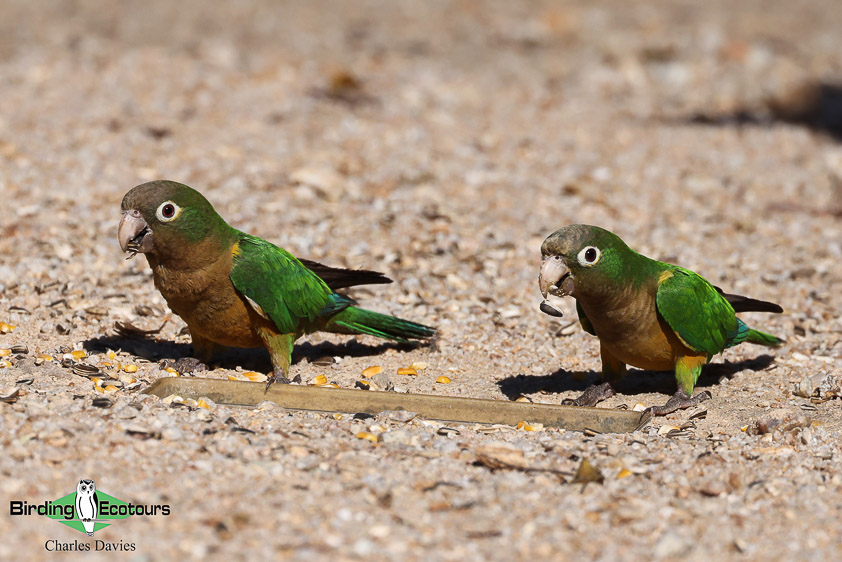 Caatinga Parakeet is one of the caatinga specials we hope to find.
Day 3. Birding Quixadá and transfer to Potengi and Sitio Pau Preto area
Today, we travel to Potengi (219 miles/350 kilometers) which is a small town in the southern region of Ceará, part of the Chapada do Araripe area. Only recently has Potengi entered the world birding scene due to the efforts of a passionate birdwatcher and biologist who transformed his family property into a refuge for caatinga birds, the “Sítio Pau Preto”. We will stay in a small, family-owned lodge where we will feel right at home hosted by the biologist himself and his kind family. We will bird the area searching for many of the special birds of this unique habitat. For bird photographers, there are also feeders which attract a number of interesting species.
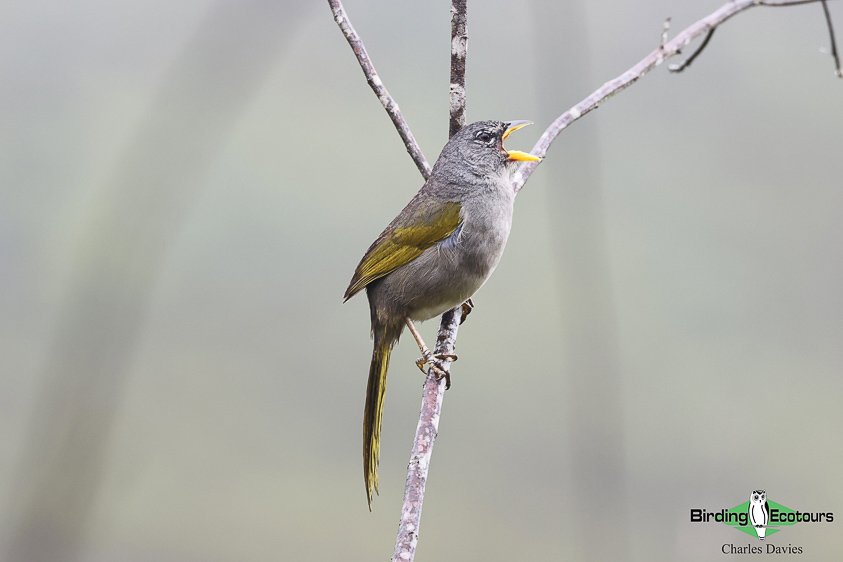
While here, caatinga specials will be the primary goal and should include the likes of White-browed Antpitta, Caatinga Antwren, White-throated Seedeater, Scarlet-throated Tanager, Great Xenops and Red-shouldered Spinetail. In addition to these species we will try to track down the local races of Lesser and Greater Wagtail-Tyrants and Stripe-backed Antbird. We will of course not forget the feeders, where we could see Campo Troupial, Red-cowled Cardinal, White-naped Jay and Pileated Finch. At the end of the day we have chances of seeing Least Nighthawks flying over the lodge.
Overnight: Pousada Sítio Pau Preto, Potengi. Laundry possible.
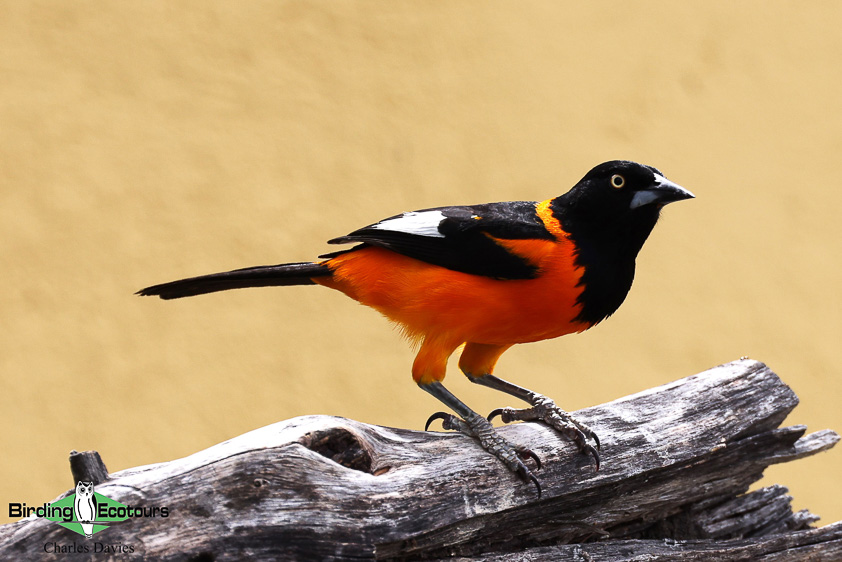 We hope to find the striking Campo Troupial at feeders.
Day 4. Birding Arajara Water Park and transfer to Canudos
We have a two-hour drive to Crato where we will spend the morning birding in the Arajara Water Park which is situated in the foothills of the Chapada do Araripe plateau, an area we simply cannot miss, for it is the only site in the world for the superb Araripe Manakin! After enjoying the Araripe Manakin, we will be transferred to Canudos, in the state of Bahia. The drive is 236 miles (380 kilometers) long (roughly six hours). If we get there with time to spare, we could try for Blue-winged Macaws coming into roost, or rather explore the caatinga area near the lodge searching for any birds we may have missed the previous day.
Canudos has some of the most extraordinary scenes of the trip; the experience of hearing Lear’s Macaws calling with the red sand cliffs contrasting with the indigo blue of the macaws is simply unforgettable. We usually stay in a lodge inside the Lear’s Macaw Reserve, which many people love due to its laid-back atmosphere and tranquillity. We will also target Bat Falcon, King Vulture, Black-chested Buzzard-Eagle, Spotted Piculet, Stripe-breasted Starthroat and the endemic race of Blue-crowned Parakeet.
Overnight: Estação Biológica de Canudos, Canudos. No Wi-fi, no hot showers.
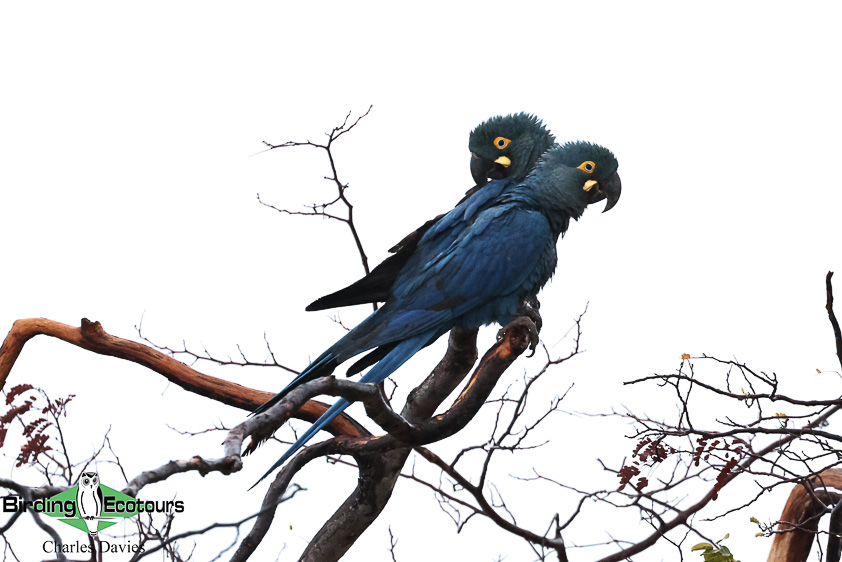 We should find Lear’s Macaw at one of their roost sites.
Day 5. Birding in Canudos and transfer to Chapada Diamantina
After some early morning birding around the lodge, we will start the long drive to Chapada Diamantina, a drive of over eight hours and covering 335 miles (540 kilometers). Here we will stay in the pleasant town of Lençois.
Overnight: Estalagem do Alcino, Lençois, Chapada Diamantina. Laundry possible.
Days 6 – 7. Chapada Diamantina
We will spend the next two days exploring the Chapada Diamantina area, which must certainly rank as one of the most impressive places in Brazil. With astonishing landscapes, Chapada Diamantina is part of a long series of highlands linked to the Espinhaço Mountain Range, which extends from north of Minas Gerais through to Bahia. There is a high diversity of habitats such as caatinga, cerrado, campo rupestre (arid mountain shrubs), humid and gallery forests and, of course, a high diversity of birds (almost 400 species). Most of these beautiful landscapes and pristine habitat are part of the Chapada Diamantina National Park, which protects 585 square miles (152,000 hectares). Our main targets are the striking Hooded Visorbearer, Sincora Antwren and Diamantina Tapaculo.
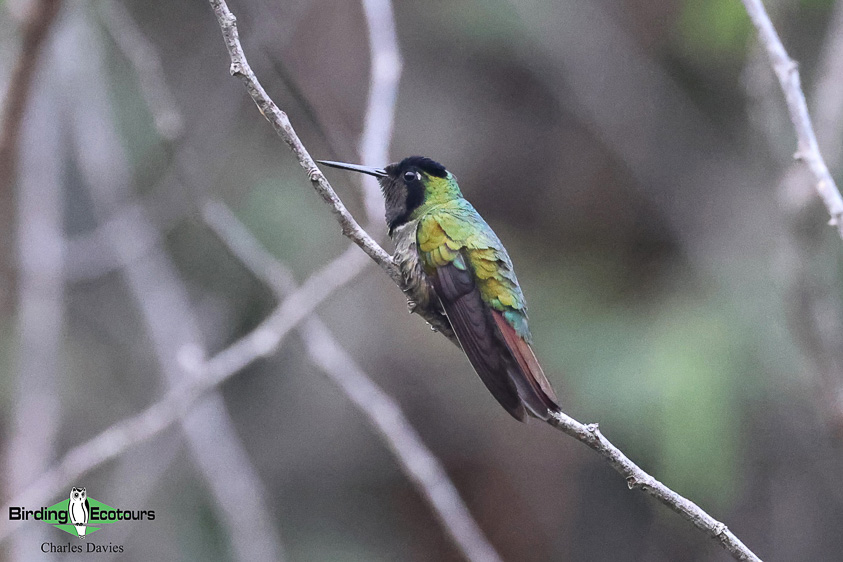 Hooded Visorbearer is one of our main targets in the Chapada Diamantina area.
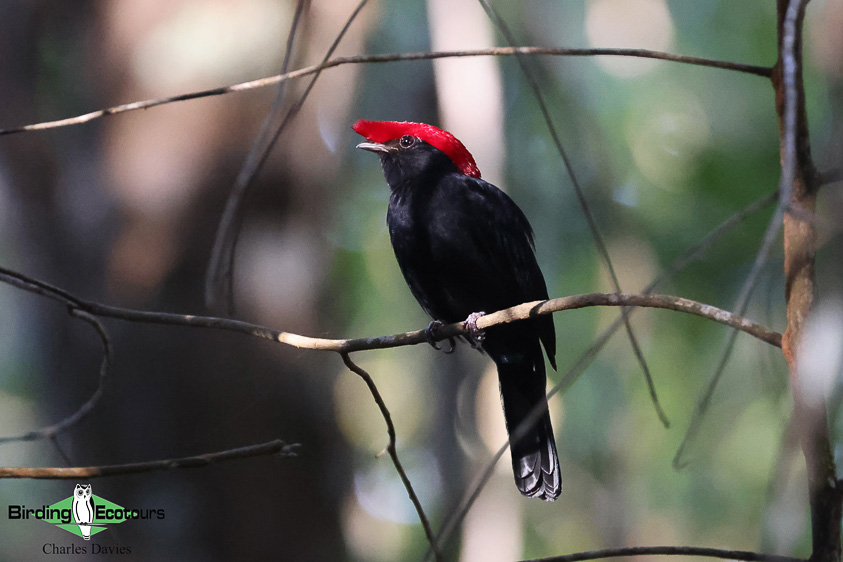
We have a long list of birds to look for besides the three mentioned above, including Collared Crescentchest, Helmeted Manakin, Pale-bellied Tyrant-Manakin, Surucua Trogon, Black-throated Saltator, Rufous Nightjar, Broad-tipped Hermit, Rufous-sided Pygmy Tyrant, Blue Finch, Shrike-like (White-banded) and Gilt-edged Tanagers, Rufous-winged Antshrike, East Brazilian Chachalaca, Copper Seedeater, Green-winged Saltator, Horned Sungem, Grey-backed Tachuri and Serra Finch.
Overnight Day 6: Estalagem do Alcino, Lençois, Chapada Diamantina. Laundry possible.
Overnight Day 7: Pousada Mucugê, Mucugê, Chapada Diamantina
Day 8. Birding Chapada Diamantina and transfer to Boa Nova
Today we have another long drive (281 miles/450 kilometers) to explore Boa Nova in the southwestern region of the Bahia state. Boa Nova is famous among birders due to its highly diverse bird community (more than 430 species recorded!), with typical elements of montane Atlantic Forest, the caatinga biome, and a unique transitional area between the Atlantic Forest and caatinga, known as “mata-de-cipó” (vine forest). We will spend the next three days exploring different sections of this vast area.
Many globally threatened species occur in the area which motivated the Brazilian government to create a mosaic of protected areas in the region – Boa Nova National Park and Boa Nova Wildlife Refuge, which protect 50 square miles (13,000 hectares) and 57 square miles (15,000 hectares), respectively. While here, we will look for Slender Antbird which is confined to the “mata-de-cipó” vegetation, where we could also find Narrow-billed Antwren and Hangnest Tody-Tyrant.
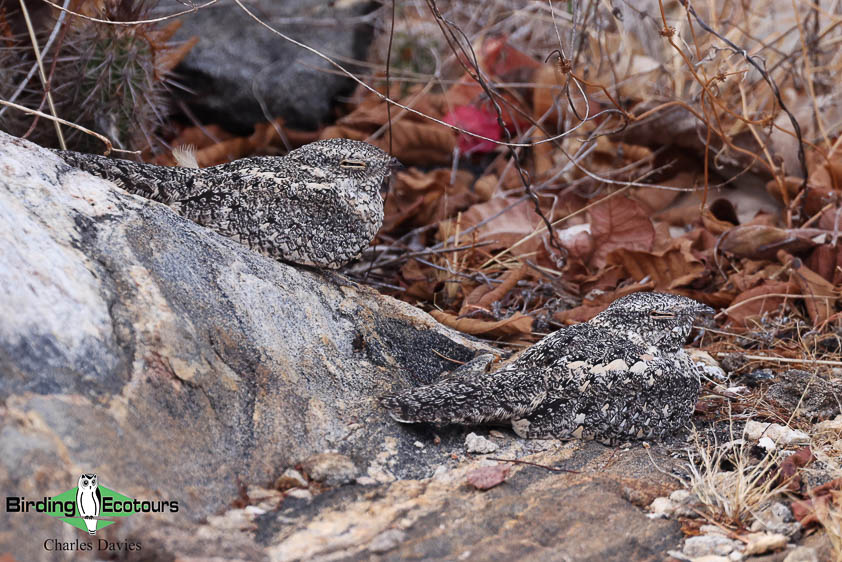 The perfectly camouflaged Pygmy Nightjar can be seen on this birding tour.
In the montane Atlantic Forest, we will search for species such as Striated Softtail, Bahia and Pallid Spinetails, Rio de Janeiro and Ferruginous Antbirds, Fork-tailed Tody-Tyrant, Crescent-chested Puffbird, Rufous-headed and Gilt-edged Tanagers, Black-billed Scythebill, East Brazilian Pygmy Owl, White-eyed Foliage-gleaner, Pin-tailed Manakin, Scale-throated Hermit, Spot-breasted Antvireo and Grey-hooded Attila. Here, we will also have chances of seeing the fantastic Giant Snipe. Hummingbird gardens can provide views of Sapphire-spangled Emerald, Swallow-tailed and Ruby-Topaz Hummingbirds, Planalto Hermit, Stripe-breasted Starthroat and several other delightful hummingbird species. The highlights in Poções include the rare Wied’s Tyrant-Manakin, White-bibbed Antbird, Greenish Schiffornis, Scaled Woodcreeper and Blue (Swallow-tailed) Manakin.
Overnight: Pousada do Sande, Boa Nova. Laundry possible.
Days 9 – 10. Birding Boa Nova
We will have two full days birding the Boa Nova area looking for many of the birds described above.
Overnight: Pousada do Sande, Boa Nova. Laundry possible.
Day 11. Transfer to Itacaré
Today we transfer from Boa Nova to Itacaré, coastal Bahia (125 miles/200 kilometers). This area has vast remnants of lowland forest, some protected in Serra do Conduru State Park and some on private land. Itacaré is a very popular area for tourists because of its lovely forests, waterfalls and beaches.
We plan to visit Maraú (north of Itacaré) in search of the rare, endemic Bahia Tapaculo, our main target. We also plan to head south of Itacaré to explore the Atlantic Forest of the Conduru State Park. This is one of the most diverse parts of the Atlantic Forest biome, with 458 tree species per hectare. Some of the birds we might see here include White-fronted Nunbird (the nominate subspecies), White-crowned, Blue-backed and Kinglet Manakins, Opal-rumped (Silver-breasted, if split) and Turquoise (White-bellied, if split) Tanagers, Great-billed Hermit (Margaretta’s, if split), Band-tailed Antwren, Scaled Antbird, Black-cheeked Gnateater, Cinereous-breasted Spinetail and many others.
Overnight: Pousada Vila dos Pássaros, Itacaré
Day 12. Transfer to Camacan (Serra Bonita Reserve), birding en route
Today, we drive another 125 miles (200 kilometers) to Serra Bonita. The Serra Bonita Reserve is an innovative, private conservation operation which was established to protect sub-montane forest in southern Bahia. This initiative was started thanks to the efforts of Vitor Becker and Clemira Souza who, after retirement, decided to dedicate their lives to the protection of this important and unique fragment of forest. Through the amalgamation of several rural property owners, the Serra Bonita Reserve now protects over 10 square miles (2,500 hectares) of fragile and pristine Brazilian Atlantic Forest. Additionally, this is also one of the last remnants of scrub montane forest in the region, which covers an area of about 30 square miles (7,500 hectares), ranging in altitude from 650 to 3,200 feet (200 to 1,000 meters), within the municipalities of Camacan and Pau Brasil, Bahia.
The main targets in the highlands are the unique Pink-legged Graveteiro, Bahia Tyrannulet, Plumbeous Antvireo, Salvadori’s Antwren, Sharpbill, Lemon-chested Greenlet, Crescent-chested Puffbird, the rare Atlantic race of Rufous-brown Solitaire (soon likely to be split), Blue (Swallow-tailed) Manakin, Spot-backed Antshrike, Spot-billed Toucanet, and Sombre Hummingbird. If we’re lucky enough to find a big mixed flock, we have chances of seeing the rare ‘Bahia Treehunter’ subspecies of Pale-browed Treehunter that is still awaiting a formal description. Birds we may see at the feeders include Maroon-bellied Parakeet, Red-necked, Green-headed, Golden-chevroned and Azure-shouldered Tanagers and sometimes even Spot-billed Toucanet. On the day we leave the reserve, we will spend some time birding in the lowlands where we will search for Kinglet Manakin, White-eared (Maroon-faced), Ochre-marked, and Golden-capped Parakeets, Black-necked Aracari, Thrush-like Wren, Yellow-rumped and Red-rumped Caciques, Chestnut-backed Antshrike, and Yellow-fronted Woodpecker. In recent years, we’ve often seen the beautiful and ultra-rare Banded Cotinga coming to feed on Açai Palm (ripe berries), near the headquarters of one of the properties in the lowlands – it’s all about being in the right place at the right time!
Overnight: Serra Bonita Reserve, Serra Bonita
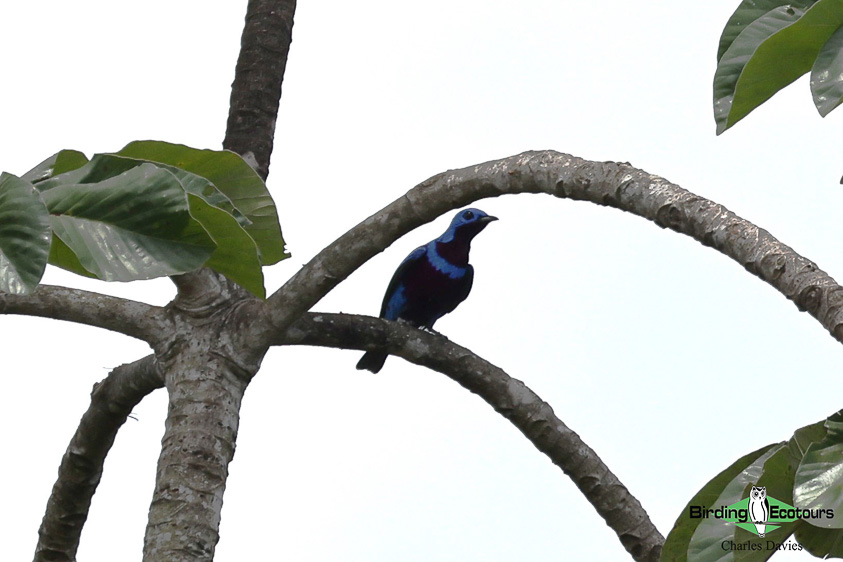 Banded Cotinga are sometimes seen feeding on Açai Palm berries in Serra Bonita Reserve.
Day 13. Full day birding Serra Bonita Reserve
We will have a full day to explore Serra Bonita Reserve where we should find many of the species mentioned above.
Overnight: Serra Bonita Reserve, Serra Bonita
Days 14 – 15. Birding the Serra Bonita Reserve lowlands and transfer to Porto Seguro
Today is another 125 miles (200 kilometers) drive. One of the most famous beaches on the southern coast of Bahia, Porto Seguro is the third largest tourist destination in Brazil, so do not panic if there are many people out on the streets. The hustle and bustle of town will be left behind as we will be birding in Veracel Reserve, roughly 20 miles (32 kilometers) inland of Porto Seguro.
This private area protects almost 27 square miles (7,000 hectares) of a unique type of lowland Atlantic Forest known as “Mata de Tabuleiro”, which shares many elements (fauna and flora) with the Amazon Forest. At some sites in the forest, the calls of Screaming Pihas and huge towering trees will bring back fond memories of birding in the Amazon.
We will look for White-winged Cotinga, Hook-billed Hermit, Red-browed Amazon, Bahia Antwren, Band-tailed Antwren, Black-headed Berryeater, Ochre-marked Parakeet, Sooretama Slaty Antshrike, and there will be extra chances for Banded Cotinga and many more. There will be some night birding as well, where we will look for Black-capped Screech Owl, Tawny-browed Owl and, with a lot of luck, White-winged Potoo which is very rare in the Atlantic Forest. We will also bird the mangroves for specials such as Bicolored Conebill, Plain-bellied Emerald, Mangrove Rail and perhaps, Little Wood Rail.
Overnight: Best Western Shalimar Praia Hotel, Porto Seguro. Laundry possible.
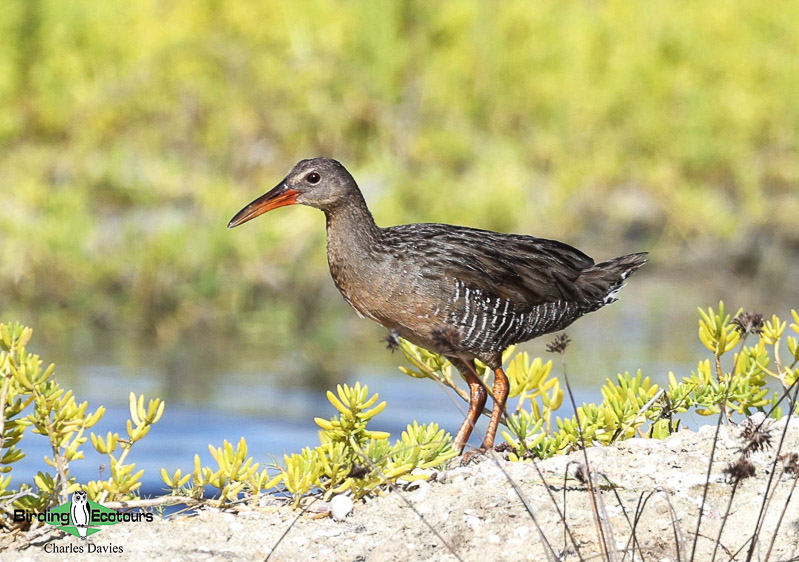 Mangrove Rail is possible in the mangroves around Porto Seguro.
Day 16. Transfer to the Porto Seguro airport to connect with your flight
This is a travel day, perhaps with time for final birding depending on your departure flight times.
Please note that the itinerary cannot be guaranteed as it is only a rough guide and can be changed (usually slightly) due to factors such as availability of accommodation, updated information on the state of accommodation, roads, or birding sites, the discretion of the guides and other factors. In addition, we sometimes have to use a different international guide from the one advertised due to tour scheduling.
Map
Gallery
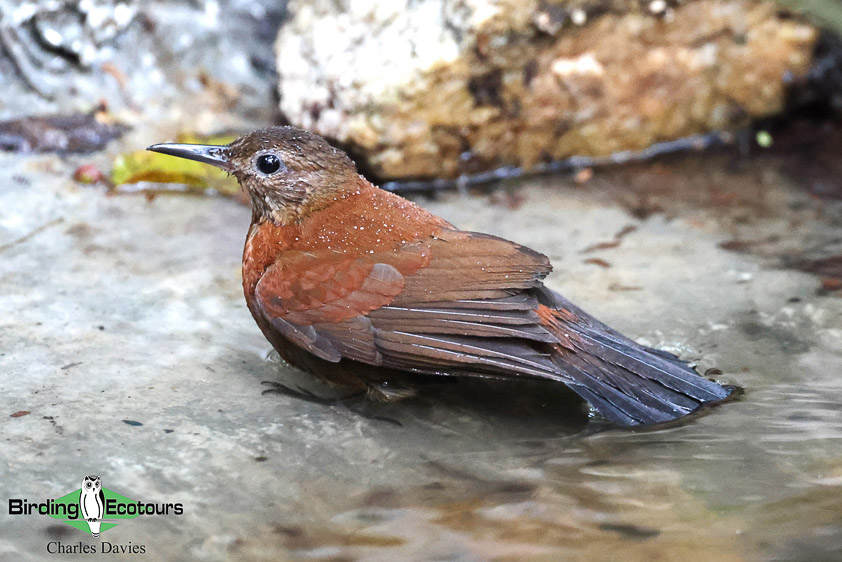
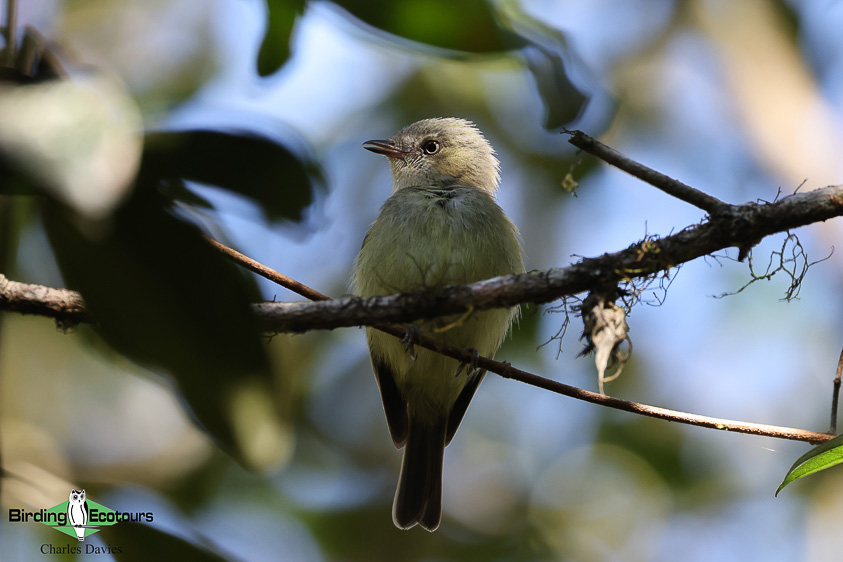
General Information
NORTHEASTERN BRAZIL TOUR-SPECIFIC INFORMATION
GENERAL INFORMATION ABOUT BRAZIL CAN BE READ HERE.
This northeastern Brazil tour is designed to explore a large portion of the Ceará and Bahia states in 16 days looking for an incredible set of endemic and range-restricted species. If you have never birded the area before, you can expect a large number of lifers however it’s a trip that will include long drives and long days, on an almost daily basis. With a few exceptions we will change accommodation almost daily. We will have early starts on each day of the trip but will do our best to provide some after-lunch breaks when possible. Most of the accommodations are adequate for this undeveloped part of the country but they are still fairly basic, several of them without air conditioning facilities, hot showers or laundry services. However, we will stay in some hotels with all the above services included, such in Chapada Diamantina. We will have some daily walking, including steep hikes and a few rough roads. The weather can be around 15°C (60°F) in the morning and reach 32°C (90°F) at noon, with humidity and rain a possibility too.