- Duration:
- 13 days
- Group Size:
- 6–8
- Tour Start:
- Nairobi
- Tour End:
- Malindi
Eastern Kenya Birding Tour: Amboseli, Taita Hills, and Coastal Specials
Details
2027
30 July – 11 August
Per person sharing
$8,870 USD
£6,950 GBP / €8,287 EUR
Single supplement
$1,670 USD
£1,308 GBP / €1,560 EUR
2028
30 July – 11 August
Per person sharing
$9,845 USD
£7,714 GBP / €9,198 EUR
Single supplement
$1,850 USD
£1,450 GBP / €1,728 EUR
Itinerary
Download ItineraryEastern Kenya Birding Tour: Amboseli, Taita Hills, and Coastal Specials
Our 13-day Eastern Kenya: Amboseli, Taita Hills, and Coastal Specials tour focuses on the special birds and mammals of this diverse region of Kenya. From a global listing perspective, this tour offers opportunities for four Kenyan endemics (we target the other five gettable endemics on our Western and Central Kenya tour): the “Taita trio” of Taita Thrush, Taita Apalis, and Taita White-eye, as well as the scarce Kilifi Weaver. In addition to the endemics, we search for dozens of other sought-after and challenging species, including Sokoke Scops Owl, Sokoke and Malindi Pipits, Fischer’s Turaco, Pangani Longclaw, Mombasa Woodpecker, Green Tinkerbird, and Amani Sunbird, as well as an assemblage of other classic East African species.
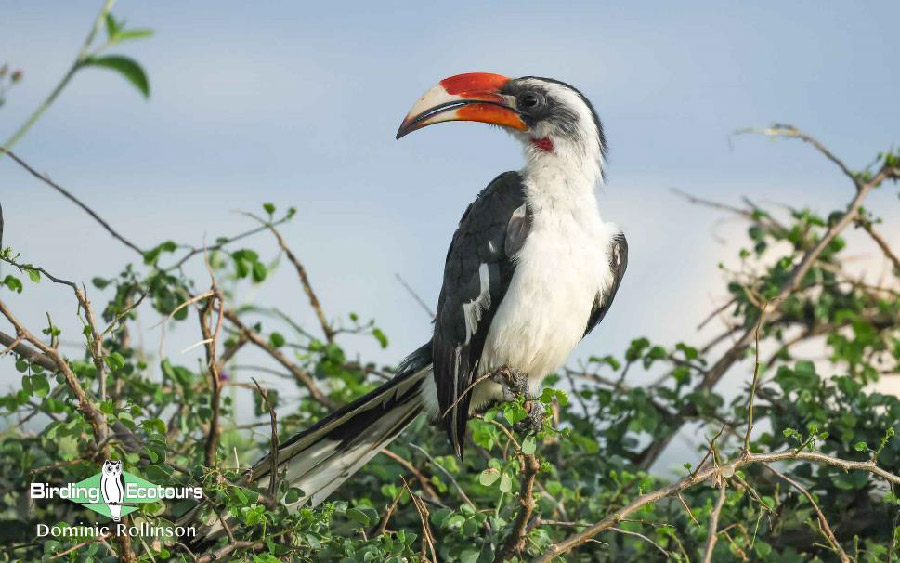
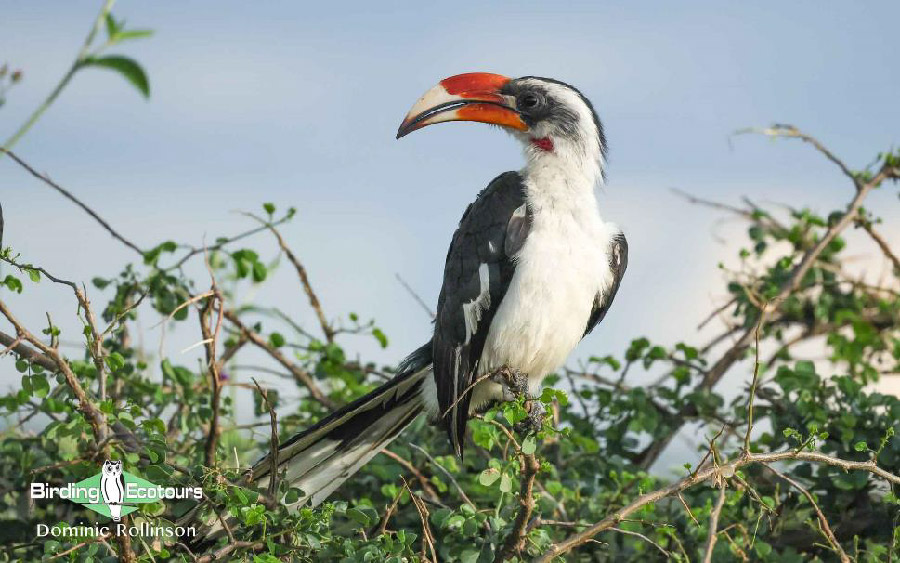 Von der Decken’s Hornbill should be seen during our time at Amboseli National Park.
Kenya owes its incredible avifaunal diversity to its equally impressive array of habitats. These range from humid tropical lowland forests with localized denizens such as Sokoke Scops Owl near the idyllic Indian Ocean coastline (which boasts Crab-plover) to snow-capped mountains at over 16,000 feet (5,000 meters) above sea level! Between the sea and the high mountains lie vast, arid savannas and grasslands, famous for their massive herds of migrating wildlife and an unbelievable array of dazzling birds.
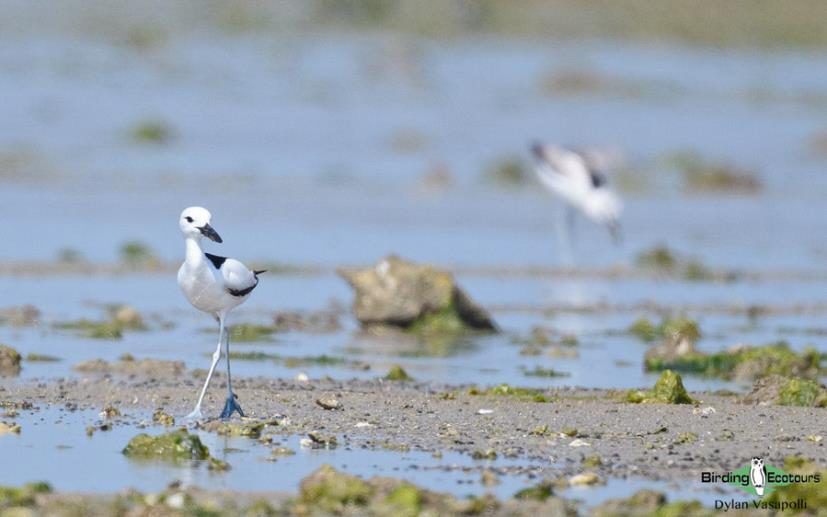
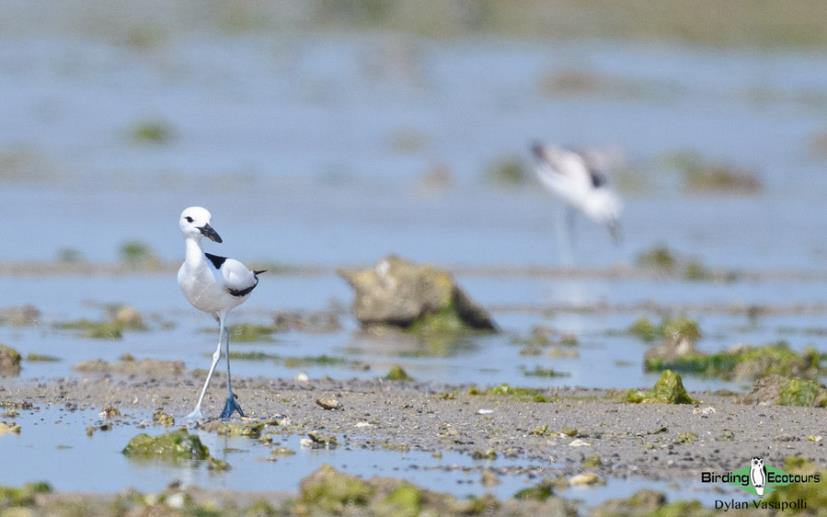 We may be lucky enough to encounter Crab-plover along the Indian Ocean coastline.
The country boasts an impressive list of over 1,162 bird species. As alluded to in the opening paragraph, ten of these species are endemic to Kenya. However, only nine are currently obtainable, as Tana River Cisticola has not been recorded since the 1970s. Endemics aside, Kenya has several near-endemic species that are shared only with its neighbors, notably Tanzania and Ethiopia. No fewer than 62 Important Bird Areas (IBAs) have been identified in Kenya, and some of the most famous parks in the world, such as the Maasai Mara and Amboseli, are located in this country.
This Eastern Kenya tour should allow you to amass a trip list of around 500 species while visiting some of the country’s most famous sites. While we make time to enjoy all the wildlife we encounter, we are sure to spend sufficient time searching for the prized bird species of Kenya (and East Africa as a whole). This tour can be combined with our 23-day Central and Western Kenya: Birding and Wildlife Safari to target all the country’s accessible endemic species and visit sites like the famous Maasai Mara, Lake Victoria, Kakamega Forest, Mount Kenya, and Samburu National Reserve.
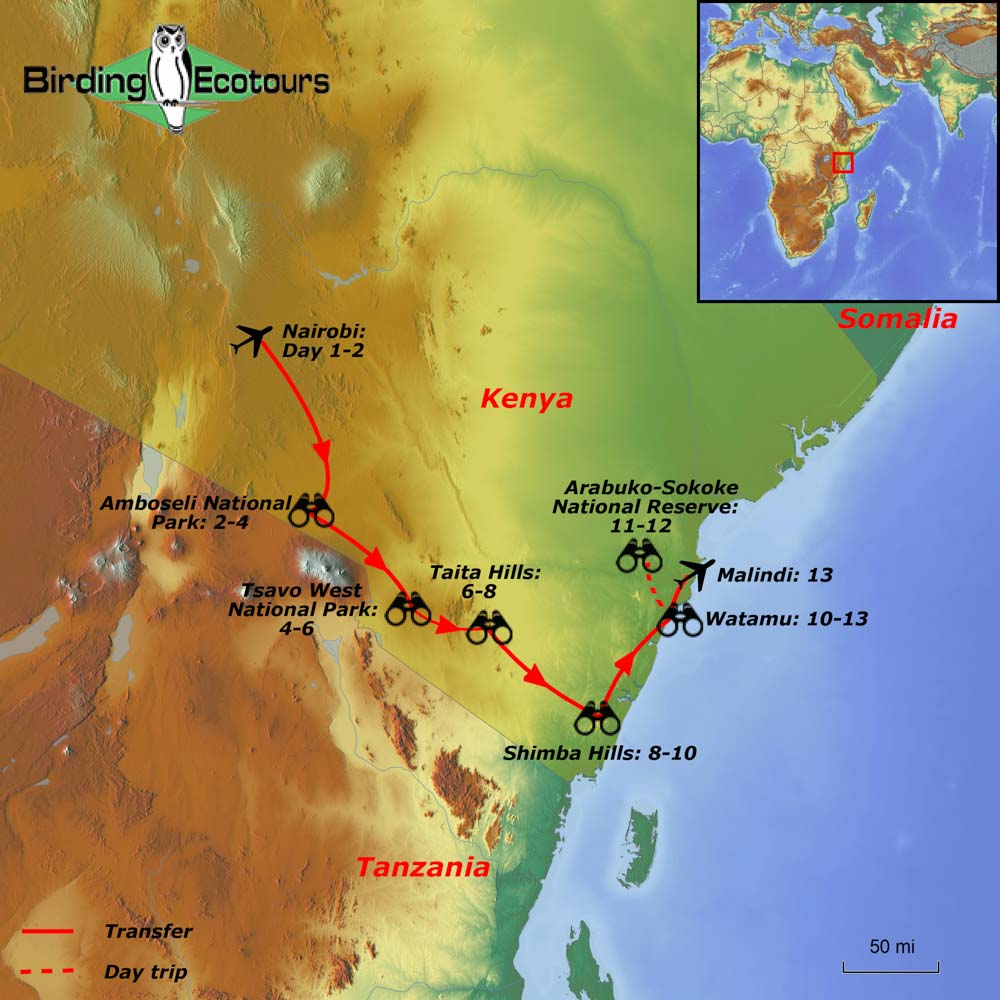
Itinerary (13 days/12 nights)
Day 1. Nairobi
Upon arrival at the Jomo Kenyatta International Airport (JKIA) in Nairobi, you will be met by our driver and transferred to your hotel. Our Central and Western Kenya: Birding and Wildlife tour concludes in Nairobi this evening, and those who have signed up for both tours will seamlessly transfer to this tour.
Overnight: Nairobi
Day 2. Nairobi to Amboseli National Park
After breakfast, we will pack our bags and start the drive south to Amboseli National Park. This delightful park is renowned for its spectacular game-viewing opportunities, with the majestic snow-capped peak of Mount Kilimanjaro—the tallest mountain in Africa—as an ever-present backdrop. The Maasai people own the land in Amboseli and still practice a pastoral existence within and around the park. The park features a diverse range of habitats, including arid savannas, Acacia woodlands, extensive marshlands and wetlands, and a large seasonal lake – Lake Amboseli. The park is also the site of a decades-long study on African Elephant ecology, initiated in 1972, and we are sure to see large herds of these iconic mammals during our time here. In addition to elephants, Amboseli boasts an impressive array of other mammals, from ungulates to big cats. In fact, four of the “Big 5” can be seen here: African Elephant, African Buffalo, Lion, and Leopard, with the rhino being the only one absent.
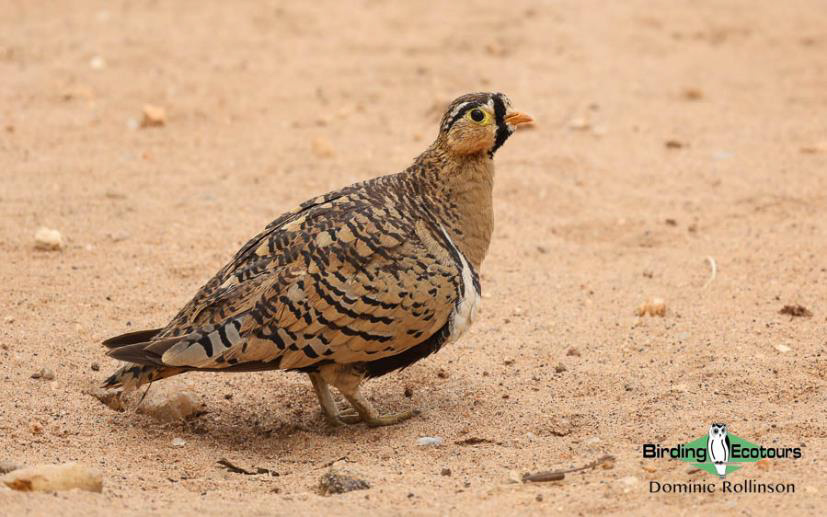
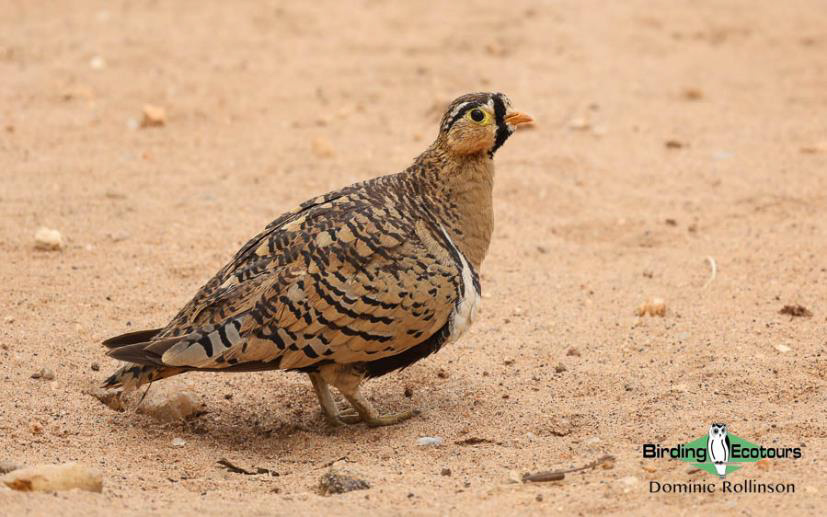 Black-faced Sandgrouse is one of three sandgrouse species that we hope to see at Amboseli.
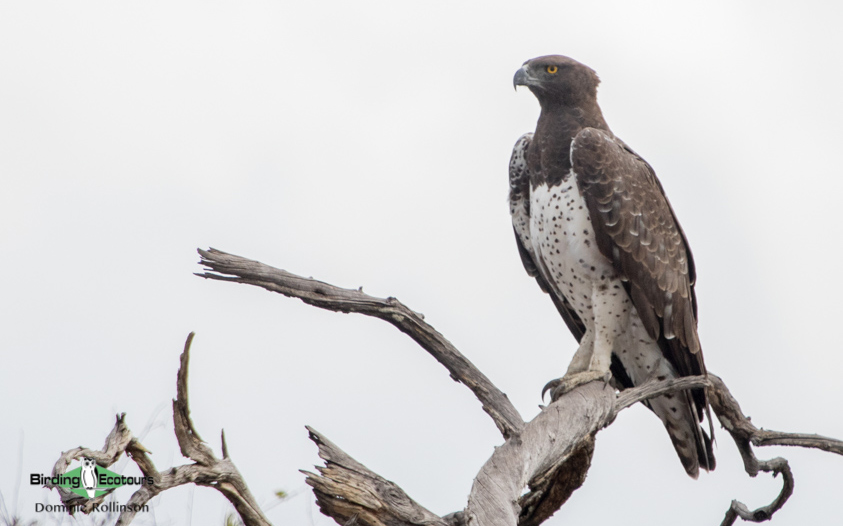
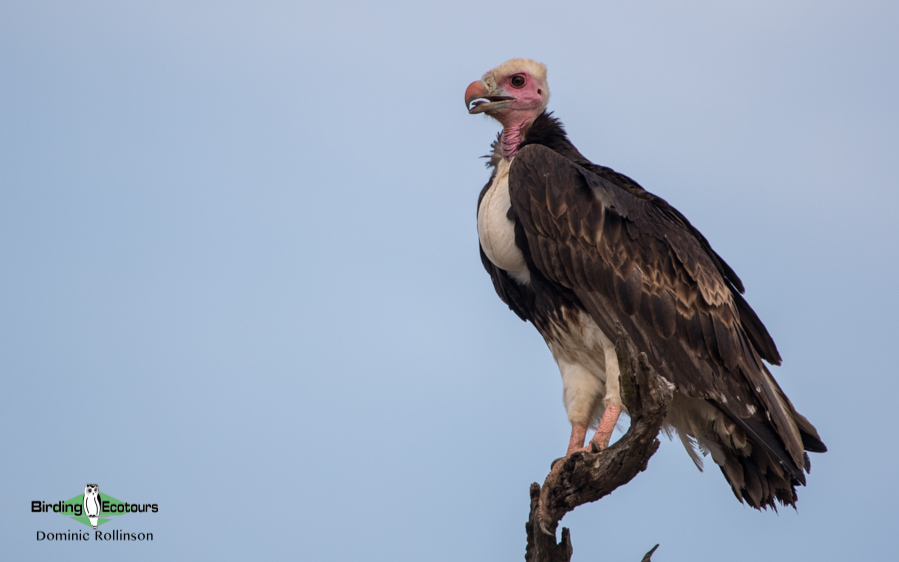
The birding is truly remarkable, with over 450 species recorded within the park. The marshlands are favored by birds such as Saddle-billed and Yellow-billed Storks, Great White and Pink-backed Pelicans, African Jacana, Greater Painted-snipe, the monotypic Hamerkop, and a large variety of waterfowl. We will work the more wooded habitats for White-bellied Go-away-bird, Blue-naped and White-headed Mousebirds, Fischer’s and Hildebrandt’s Starlings, Crimson-rumped Waxbill, Slate-colored Boubou, Taita Fiscal, Rosy-patched Bushshrike, Eastern Violet-backed Sunbird, Von der Decken’s Hornbill, Black-throated and D’Arnaud’s Barbets, Spotted Palm Thrush, Rufous Chatterer, and Parrot-billed and Kenya Sparrows, to name a few. Taveta Weaver, another East African endemic, is common here. Birds of prey are well represented, and we may see Martial and Tawny Eagles, African Hawk-Eagle, Eastern Chanting and Gabar Goshawks, Black-chested and Brown Snake-Eagles, and a number of vulture species, including Hooded, Lappet-faced, White-headed, White-backed, and Rüppell’s Vultures.
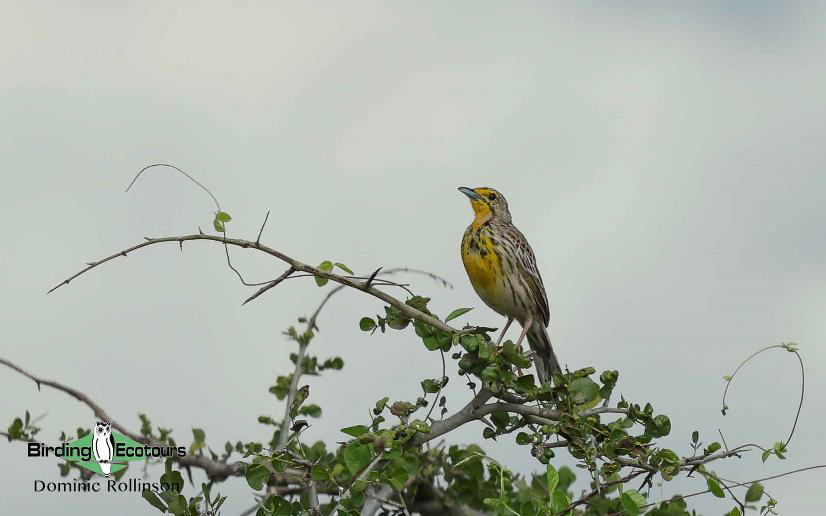
Areas with open grassland will be scanned for Secretarybird, and we will keep an eye open for the adorable Pygmy Falcon. Other grassland targets include Hartlaub’s Bustard and Pangani Longclaw. If Lake Amboseli has water at the time of our visit, we can expect to see the impressive spectacle of thousands of Greater and Lesser Flamingos foraging in the lake’s alkaline waters.
We plan to arrive at lunchtime and will head to our wonderful lodge within the park before embarking on a late afternoon birding and mammal-watching drive.
Overnight: Amboseli Serena Safari Lodge, Amboseli National Park
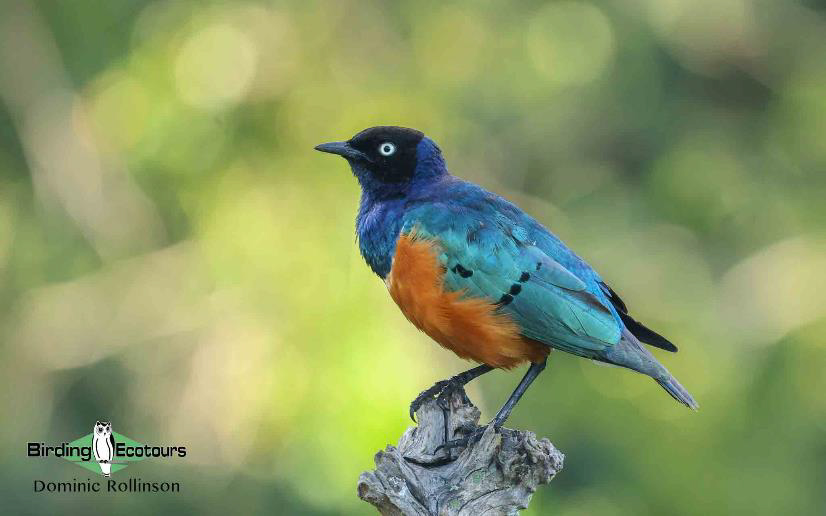
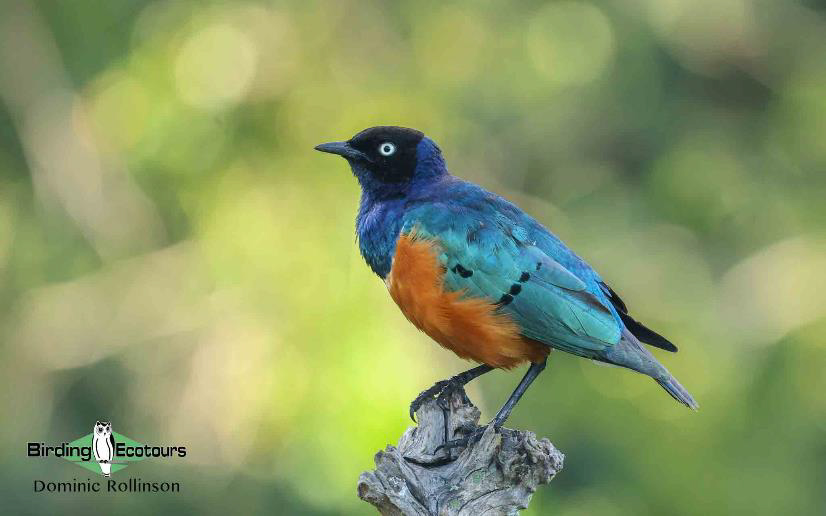 Superb Starling is just one of many classic East African species that we will see on this tour.
Day 3. Amboseli National Park
We have a full day in Amboseli National Park today to explore the various habitats that the park has to offer. We will target many of the aforementioned birds (see Day 2) and will undoubtedly take the time to enjoy the various mammals in the park.
By the end of the day, we should have amassed an impressive list of East African birds and mammals.
Overnight: Amboseli Serena Safari Lodge, Amboseli National Park
Day 4. Amboseli National Park to Tsavo West National Park
Tsavo West National Park is next on our agenda, and we will leave Amboseli after enjoying a delicious breakfast at the lodge. The Tsavo habitat is a relatively dense thicket of savanna dominated by Acacia and Camiphora bush with baobabs, grassy plains, riverine woodland, and the Mzima Springs. We’ll ensure we arrive in time for lunch. In the afternoon, we will take a game drive in the park, which supports a large number of big game species, such as African Elephant, Black and White Rhinos, Lion, huge herds of African Buffalo, and more. Here, like at Amboseli, Mount Kilimanjaro serves as a backdrop to the fantastic scenes of big game and abundant birds. There will be a large number of new species for us here, and we will enjoy classic East African birding with birds like the iconic Vulturine Guineafowl, Common Ostrich, Buff-crested Bustard, Abyssinian Scimitarbill, Red-bellied Parrot, African Grey, Eastern Yellow-billed, and Northern Red-billed Hornbills, Red-and-yellow Barbet, Red-naped Bushshrike, Pringle’s Puffback, Long-tailed Fiscal, Northern White-crowned Shrike, Pygmy Batis, Pink-breasted Lark, Black-bellied and Eastern Violet-backed Sunbirds, White-headed and Red-billed Buffalo Weavers, Black-capped Social Weaver, and the gorgeous Golden Pipit. Nocturnal species to look out for may include Verreaux’s Eagle-Owl, Pearl-spotted Owlet, Donaldson Smith’s, Slender-tailed, and Plain Nightjars.
Overnight: Kilaguni Serena Safari Lodge, Tsavo West National Park
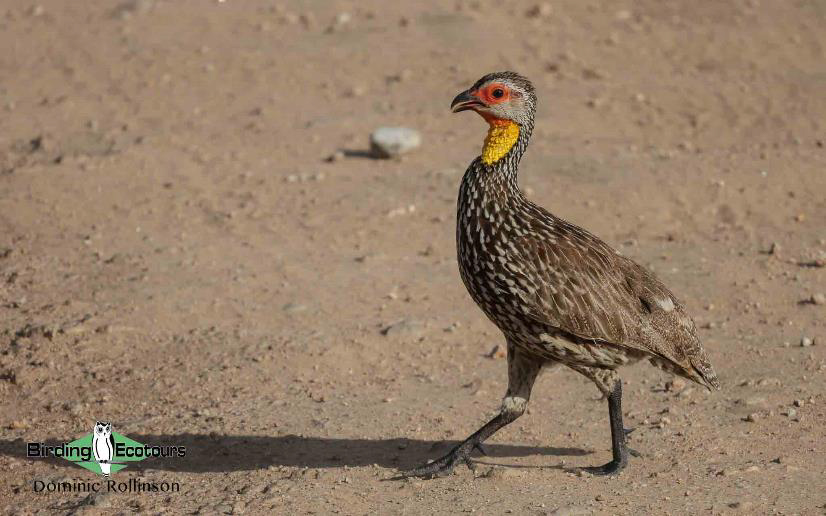
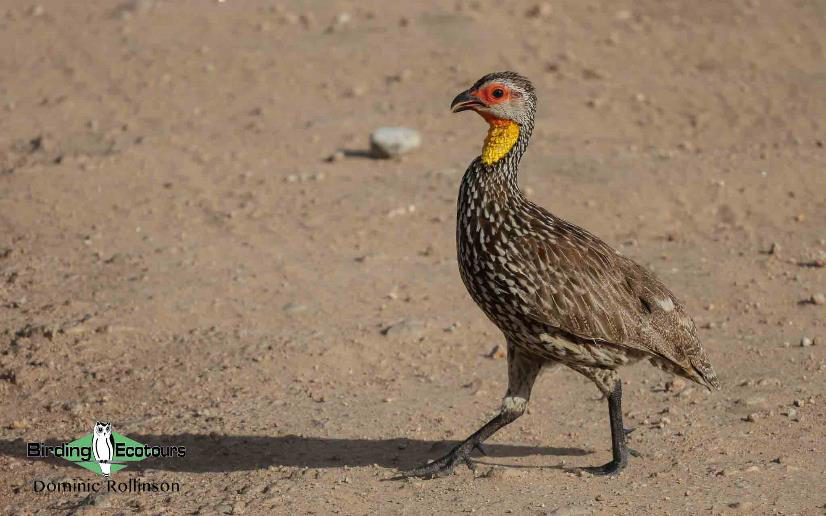 The attractive Yellow-necked Spurfowl is common in Tsavo West National Park.
Day 5. Tsavo West National Park
After breakfast, we tour the Mzima Springs, which are part of the Chyulu Range and are composed of porous volcanic lava rock and ashes, purifying the water to produce the spring’s sparklingly clear water. We shall drive along lava rocks and explore the spring on foot, enjoying views of Nile Crocodile and Hippopotamus and birds such as Red–headed and Black-necked Weavers, Nubian Woodpecker, Little Sparrowhawk, Hunter’s and Tsavo Sunbirds, Straw-tailed Whydah, and many others. We will also keep an eye out for the near-endemic Fire-fronted Bishop and Friedmann’s Lark, both are nomadic species that occasionally erupt after good rains.
We will head back to our lodge for lunch, and later in the afternoon, we will enjoy a game drive to the rhino sanctuary.
Overnight: Kilaguni Serena Safari Lodge, Tsavo West National Park
Day 6. Tsavo West National Park to Taita Hills
After breakfast, we will drive through Tsavo West National Park to Taita Hills Wildlife Sanctuary. This is a private conservancy on the slopes of the Taita Hills. The forest shares botanical similarities with the Usambara Mountains in Tanzania to the south. We will arrive in time for lunch and take an afternoon drive to explore the riverine and savanna thickets, as well as the open plains within the conservancy, in search of various bird and mammal species. We will look for Southern Ground Hornbill, White-bellied Bustard, Black-throated Barbet, Pangani Longclaw, Red-faced Crombec, Purple Grenadier, Chestnut Weaver, Red-fronted Prinia, and Grey Wren-Warbler, among many previously seen species.
Overnight: Salt Lick Safari Lodge, Taita Hills Wildlife Sanctuary
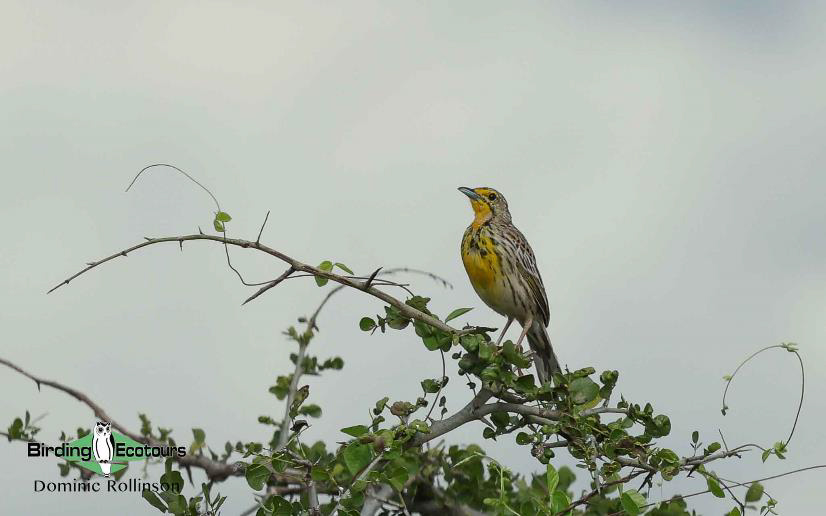 We hope to see Pangani Longclaw during the first few days of the tour.
Day 7. Taita Hills Forest
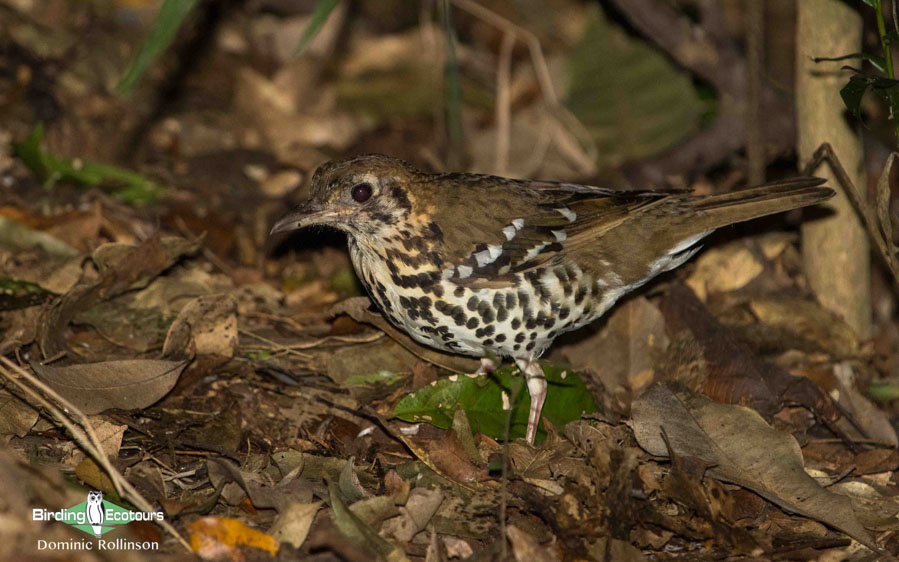
We will have an early breakfast before dawn and ascend to the Taita Hills forests, birding in the conservancy en route. The drive will take us about two hours to the top of Ngangao Forest, one of the major forest fragments. We will then meet our local guide and explore the forest. One of our primary targets will be Taita Thrush, which is found on the forest floor and can be a rather shy species; we will thus need to ensure that we keep our noise to a minimum! We hope to see the other two Taita endemics, the Critically Endangered (BirdLife International) Taita Apalis and Taita White-eye, among the many other highland forest species. Other goodies here include Crowned Eagle, Striped Pipit, White-bellied Tit, Moustached Tinkerbird, Spot-flanked Barbet, Yellow-throated Woodland Warbler, Evergreen Forest Warbler, Pale White-eye, Usambara Double-collared Sunbird, Olive-headed and Placid Greenbuls, White-starred Robin, Hartlaub’s Turaco, and many more. After our forest walk, we will have a picnic lunch and head back to the wildlife sanctuary for an afternoon game drive.
Overnight: Salt Lick Safari Lodge, Taita Hills Wildlife Sanctuary
Day 8. Taita Hills to Shimba Hills
After an early breakfast at the lodge, we will bid farewell to Taita Hills and start the four-and-a-half-hour drive to Shimba Hills, south of Mombasa. Shimba Hills National Reserve is a 53,700-acre (21,740-hectare) reserve featuring a diverse range of habitats, from coastal lowland forest to shrubland and grassland. The reserve is perhaps best known for its Sable Antelope, which can be seen in large herds here, in addition to many of the mammals that we would have seen earlier in this trip.
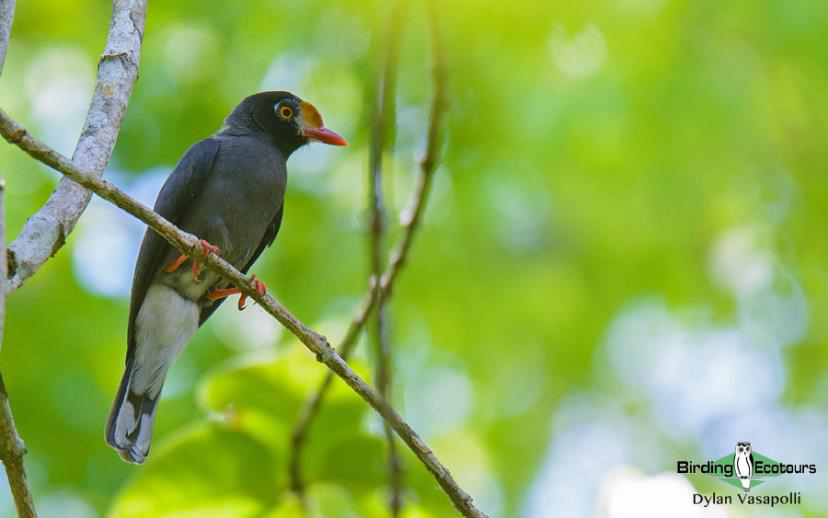
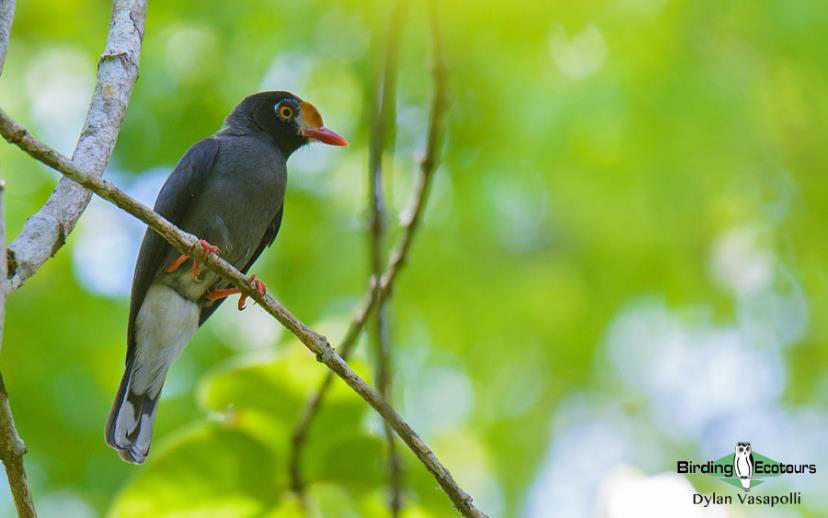 Chestnut-fronted Helmetshrike is one of our targets at Shimba Hills.
Over 250 bird species have been recorded on the reserve, and we hope to connect with the range-restricted Sokoke Pipit, Fischer’s Turaco, Little Yellow Flycatcher, Green Barbet, Green Tinkerbird, Lowland Tiny Greenbul, Mombasa Woodpecker, East Coast Boubou, Green-headed Oriole, Plain-backed Sunbird, and Coastal Cisticola. Other more widespread species will include Eastern Crested Guineafowl, Red-necked Spurfowl, Green Malkoha, Böhm’s and Mottled Spinetails, Palm-nut Vulture, Silvery-cheeked and Crowned Hornbills, Chestnut-fronted and Retz’s Helmetshrikes, and Yellow-throated Longclaw, among many others.
We plan to spend most of the afternoon exploring the reserve and will have a full day tomorrow to clean up any targets we missed.
Overnight: Shimba Hills Lodge
Day 9. Shimba Hills
We will have the whole day to explore the coastal forests of Shimba Hills and target any species that we may still need to find. As always, we will keep an eye out for the exciting mammals here.
Overnight: Shimba Hills Lodge
Day 10. Shimba Hills to Watamu (Mida Creek)
After an early morning breakfast at Shimba Hills, we will head further north towards the Indian Ocean coast to the beach resort of Watamu (meaning “sweet”). On our way, we will stop at Mida Creek for a picnic and then do some shorebirding along the creek. Mida Creek, part of a UNESCO Biosphere Reserve, is a large inlet that opens into the sea south of Watamu, rising and falling with the tides. Mida Creek contains one of Africa’s most extensive mangrove forests and is an essential component of the marine ecosystem in the Watamu/Sokoke World Biosphere Zone. The mangrove roots provide a rich source of food for fish, crabs, shrimp, and oysters. The fish and crustaceans then provide the food for Mida’s birds. Thousands of migratory birds regularly visit here, with Crab-plover being its star attraction. We will walk on the boardwalk to Mida Village through the mangrove habitat, looking for birds like Little (Dimorphic) Egret, Gull-billed and Saunders’s Terns, Greater Sand Plover, and Water Thick-knee. If we’re lucky, we may find Crab-plover. We will also look for Zanzibar Red Bishop at coastal sites today.
We can spend the afternoon relaxing in the cool tidal breeze on the snow-white sandy beaches after an adventurous and bird-filled journey.
Overnight: Turtle Bay Resort, Watamu
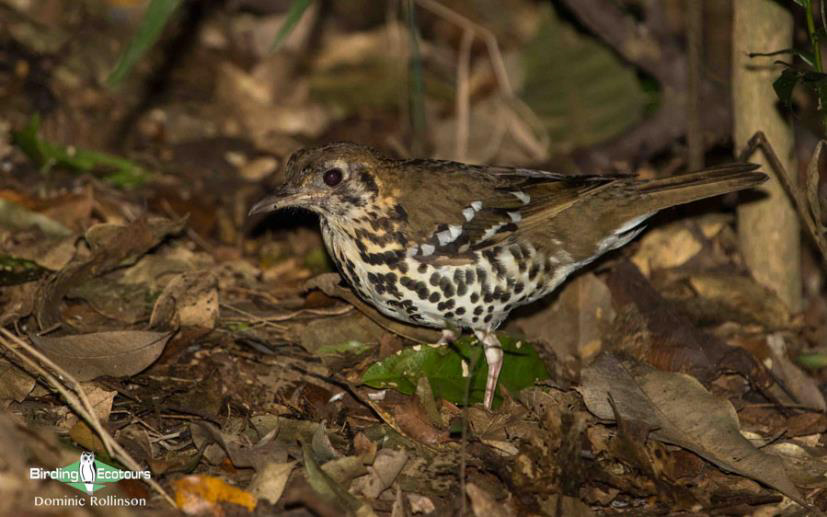 The sought-after Spotted Ground Thrush can be found at Arabuko-Sokoke National Reserve.
Days 11-12. Arabuko-Sokoke National Reserve
However, the adventure is not over just yet, as today, we’ll take a short drive to the unique Arabuko-Sokoke Forest, where we’ll spend our time walking trails around the forest. It is one of the last remnants of indigenous coastal forests in Kenya and is by far the largest. The forest contains at least three distinct vegetation types, which provide habitat for several threatened species, and it has a very high number of species in relation to its size. 20% of Kenya’s bird species and about thirty percent of its butterflies have been recorded in this small part (0.07%) of Kenya. At least 24 bird, mammal, and butterfly species are restricted to this stretch of coast. This high proportion of endemic species, some known only from Arabuko-Sokoke Forest, makes the forest a key part of the East African Coastal Forests Endemic Bird Area.
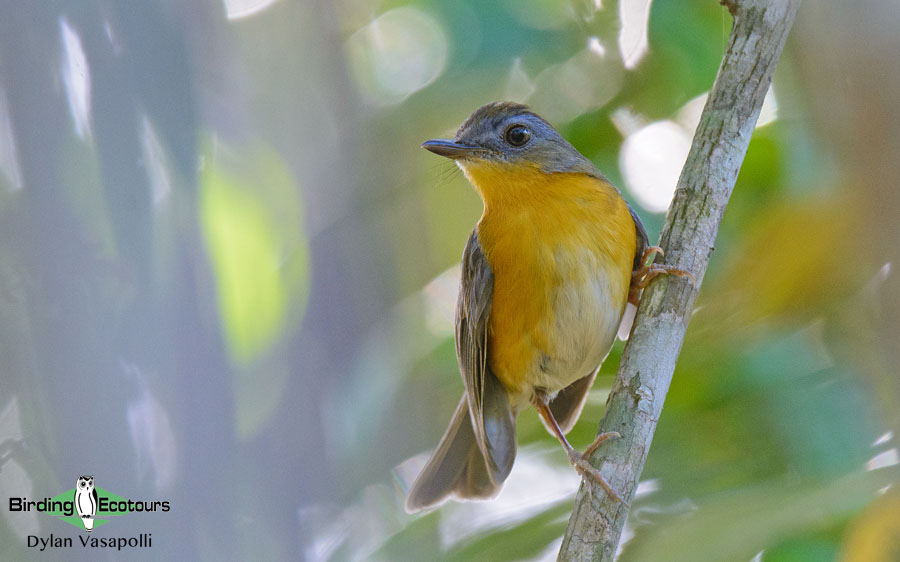
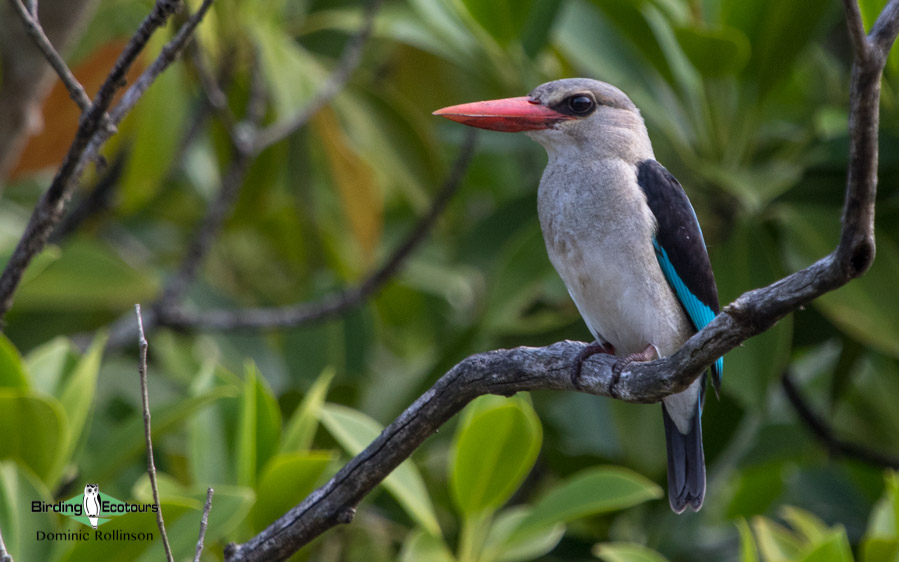
The forest holds some rare endemic species like Sokoke Scops Owl, Sokoke Pipit and the endemic Kilifi Weaver, as well as other key species like Amani Sunbird, Malindi Pipit, Fischer’s Turaco, Eastern Crested Guineafowl, Spotted Ground Thrush, Chestnut-fronted and Retz’s Helmetshrikes, Scaly-throated Honeyguide, Fischer’s Greenbul, Eastern Nicator, Mombasa Woodpecker, Scaly Babbler, Mangrove Kingfisher, Forest and Eastern Black-headed Batises, Green Barbet, and Black-bellied Starling.
We will have two full days to explore the forest in pursuit of its many sought-after denizens.
Overnight: Turtle Bay Resort, Watamu
Day 13. Departure
After breakfast, we transfer to the airport in Malindi and connect to Jomo Kenyatta International Airport to fly back home.
Please note that the itinerary cannot be guaranteed as it is only a rough guide and can be changed (usually slightly) due to factors such as availability of accommodation, updated information on the state of accommodation, roads, or birding sites, the discretion of the guides, and other factors. In addition, we sometimes have to use a different guide from the one advertised due to tour scheduling or other factors.
Map