- Duration:
- 16 days
- Group Size:
- 6–10
- Tour Start:
- Auckland, North Island
- Tour End:
- Invercargill, South Island
New Zealand: Endemic Extravaganza
Details
2027
01–15 December
Per person sharing
NZ$17,183 NZD
$10,533 USD / £7,781 GBP / €9,056 EUR
Single supplement
NZ$2,330 NZD
$1,428 USD / £1,055 GBP / €1,229 EUR
2028
01–15 December
Per person sharing
NZ$19,073 NZD
$11,691 USD / £8,636 GBP / €10,053 EUR
Single supplement
NZ$2,586 NZD
$1,586 USD / £1,171 GBP / €1,363 EUR
Itinerary
Download ItineraryNew Zealand Birding Tour: Endemic Extravaganza
This New Zealand birding tour offers a once-in-a-lifetime experience and one that will live long in your memory. We really love visiting this top birdwatching destination, and we are sure you will too. New Zealand is one of the most remote places on earth, and during 8o million years of isolation a fascinating and unique fauna has evolved. In the absence of mammals, except for bats and marine species, birds became the dominant animals, and they evolved to fill most available niches. Many became flightless, and some grew to be giants, including a huge eagle and the giant browsing moas. Sadly, with the occupation of New Zealand by Polynesians about 800 years ago and Europeans in the 19th century, many of the endemic species became extinct, including the eagle and the moas. Of those species that survived, some are still common, others are rare but still found on the larger islands, and many are only found in carefully managed populations on small predator-free islands. The stories of how New Zealanders have protected their birds are extraordinary, and these stories play an important role in our New Zealand birding tour.
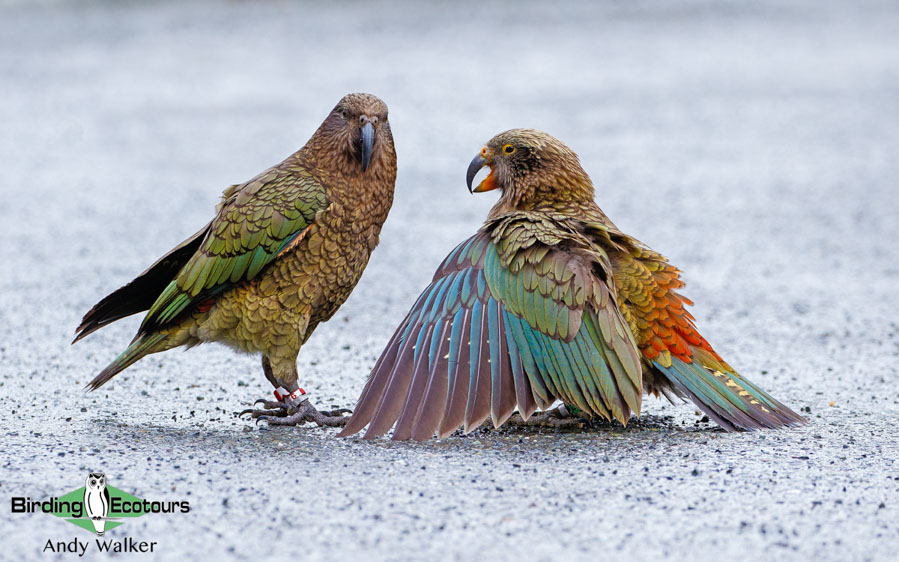
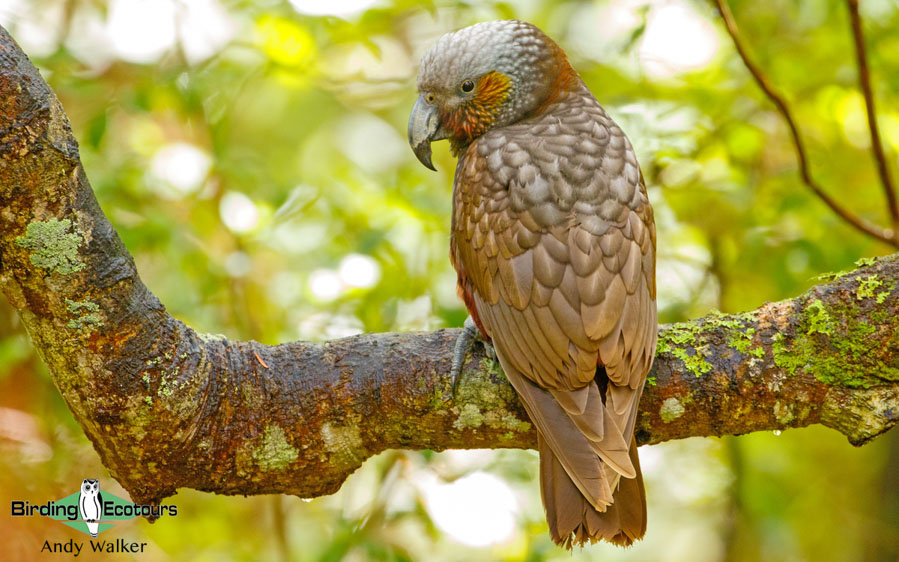
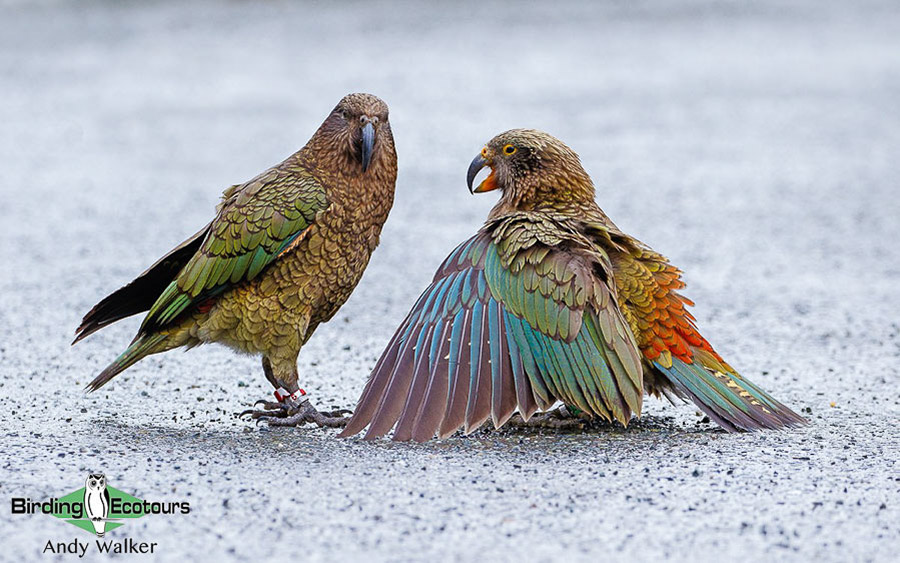 Kea is one of our spectacular endemic targets on this trip of a lifetime.
This New Zealand bird tour itinerary is designed to find numerous New Zealand endemic bird species, as well as species introduced by Europeans and the many species that have naturally colonized from Australia. Located in the Southern Ocean, New Zealand is also rich in oceanic species of birds and mammals, and our bird tour includes pelagic trips at key locations.
The tour starts in Auckland, North Island, where we will take a pelagic trip for the highly sought-after New Zealand Storm Petrel and many other seabirds. We will visit an impressive Australasian Gannet colony, go to the excellent Tiritiri Matangi Island (one of two predator-free islands we will visit on the tour) to see rare endemics, including North Island Saddleback and Stitchbird. We will take a night safari to look for Northern Brown Kiwi and we will visit the shorebird haven at Miranda – where we might catch our first look at the impressive (and rather odd-looking) Wrybill.
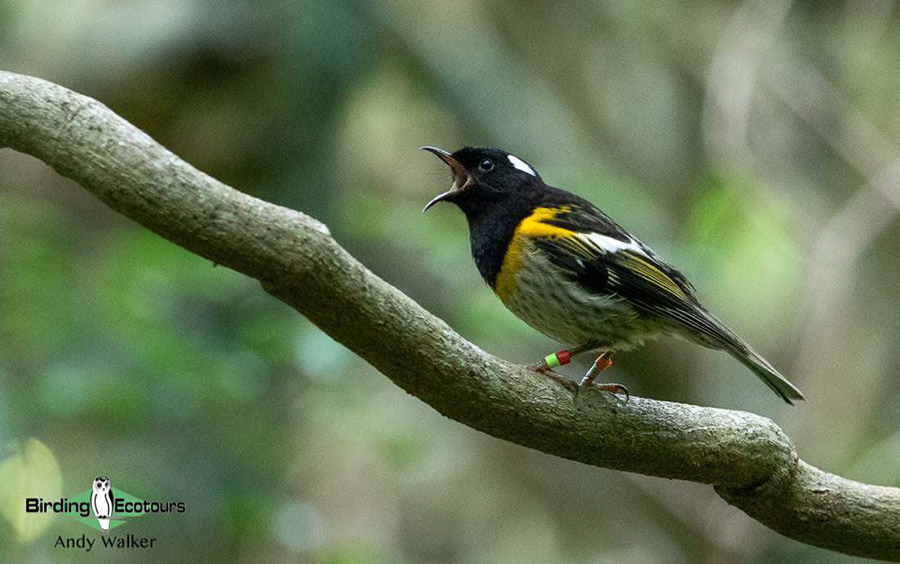 Stitchbird is usually seen on predator-free Tiritiri Matangi Island.
As we move south we will call in to temperate rainforests of central North Island, such as the stunning Pureora Forest Park, where we hope to find North Island Kokako, New Zealand Kaka, and other forest endemics. In the nearby fast-flowing rivers we look for the very rare Whio – the Blue Duck.
After finishing up our birding on North Island we will cross Cook Strait, from Wellington to Picton, by ferry (offering more good seabird-watching opportunities), and our New Zealand birding tour will continue on South Island. During a boat trip in the Marlborough Sounds we visit a colony of New Zealand King (Rough-faced) Shag, which is only found in this isolated location and on Motuara Island, another predator-free reserve. A visit to Blumine Island promises to be a special experience, with some very rare birds targeted, such as Malherbe’s Parakeet.
Next, at beautiful Kaikoura, on the east coast of South Island, a unique phenomenon provides the ideal location for an easy pelagic cruise. This is the only place in New Zealand where there is no continental shelf, and the sea plummets 3,280 feet (1,000 meters) just offshore. Albatrosses, shearwaters, and petrels can be seen just minutes from the shore, giving fantastic close views, and marine mammals are abundant. This experience is sure to be a tour highlight.
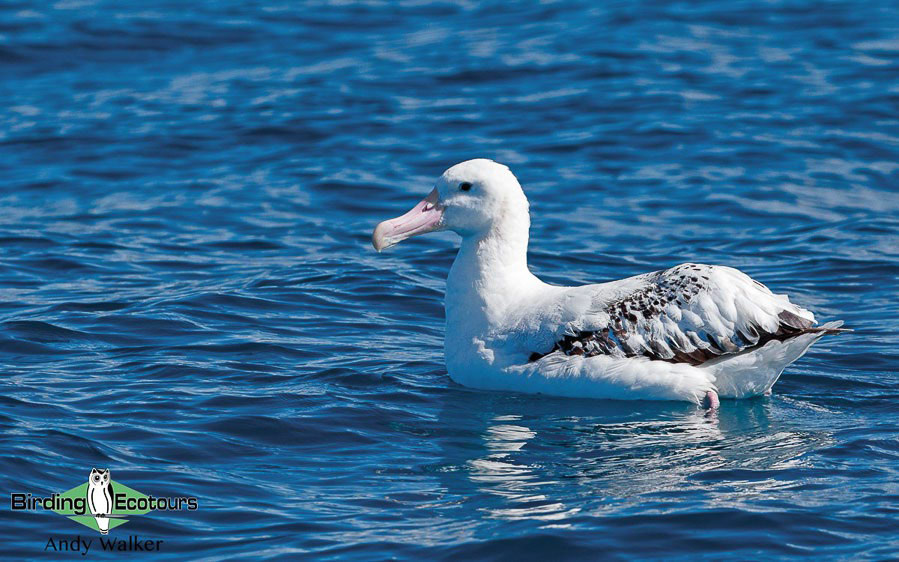 The sight (and sound) of the ginormous Antipodean Albatross bobbing around the back of the boat, along with many other stunning seabirds, is sure to be memorable.
We then leave Kaikoura towards the town of Twizel, going via Arthur’s Pass and the staggering Southern Alps, where we will look for New Zealand Rockwren and the cheeky Kea. This region takes some beating for its beauty, with its many turquoise lakes, braided rivers and the grand, snow-capped peaks of Aoraki Mount Cook National Park. Birding here is a breathtaking experience, as we seek out mega birds such as the Critically Endangered (BirdLife International) Black Stilt, the unique Wrybill on its breeding grounds, and the attractive Double-banded Plover.
Dropping down to the extreme south of South Island, we will visit several spots, such as Taiaroa Head and the Royal Albatross Center, the only mainland breeding site of Northern Royal Albatross and a unique opportunity to observe these birds on land at their nests. We will also visit a colony of the increasingly rare endemic Hoiho – the Yellow-eyed Penguin, nearby.
Finally, we will take the short ferry ride across to Stewart Island, New Zealand’s third-largest island, most of which is protected as a national park, where we will take a night safari to look for Southern Brown Kiwi. At the excellent predator-free Ulva Island, which is like stepping back in time, we will round off our trip with some incredibly rare birds like South Island Saddleback, South Island Robin, and Yellowhead. A different set of seabirds is on offer on our pelagic/coastal boat trip here and may include Buller’s Albatross and Fiordland Penguin, if we are lucky.
The food in New Zealand is excellent, especially the wonderful fresh seafood. The accommodations are varied and interesting, and the scenery is simply some of the most spectacular on the planet and will take your breath away. Combine the above with the incredible New Zealand endemic birds and you will certainly have a great New Zealand birding tour!
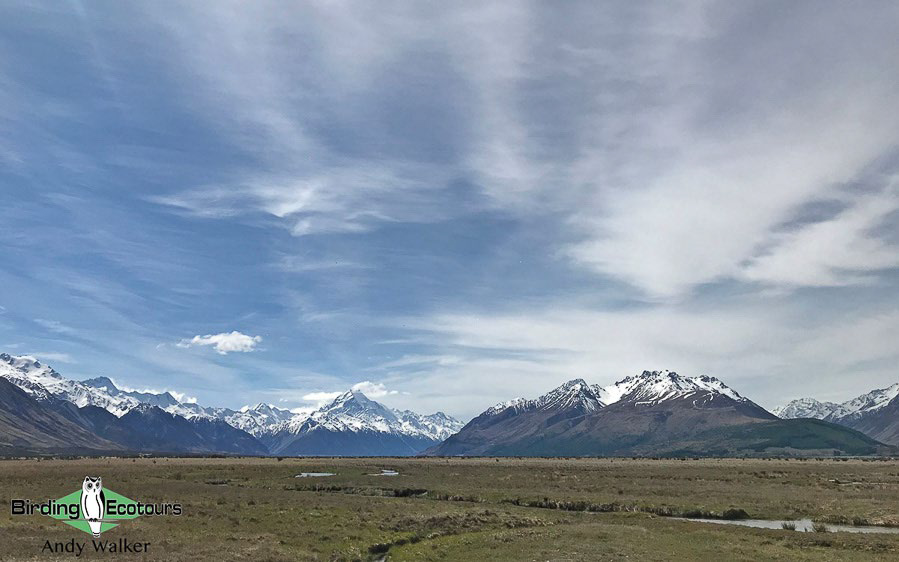 The tussocky grassland and braided river landscape we will be birding in whilst in sight of Mt. Cook (the tallest mountain in New Zealand) is spectacular, and the birds are too!
Itinerary (16 days/15 nights)
Day 1. Arrival in Auckland
A non-birding day. After your arrival into Auckland, New Zealand’s capital, on North Island, and self-transfer to our hotel, the rest of your day will be at leisure. We will meet in the evening for a group welcome dinner as we discuss the exciting tour ahead.
Overnight: Auckland
Day 2. Auckland to Tutukaka
We will commence our New Zealand birding today. In the morning we will visit a couple of sites that are good for shorebirds (waders) and, if lucky, could start the tour with a bang in the form of one of the most-wanted shorebirds in the country, the unique Wrybill. We will likely pick up plenty of other coastal species here, as well as Paradise Shelduck, Black-billed Gull, and New Zealand Pipit.
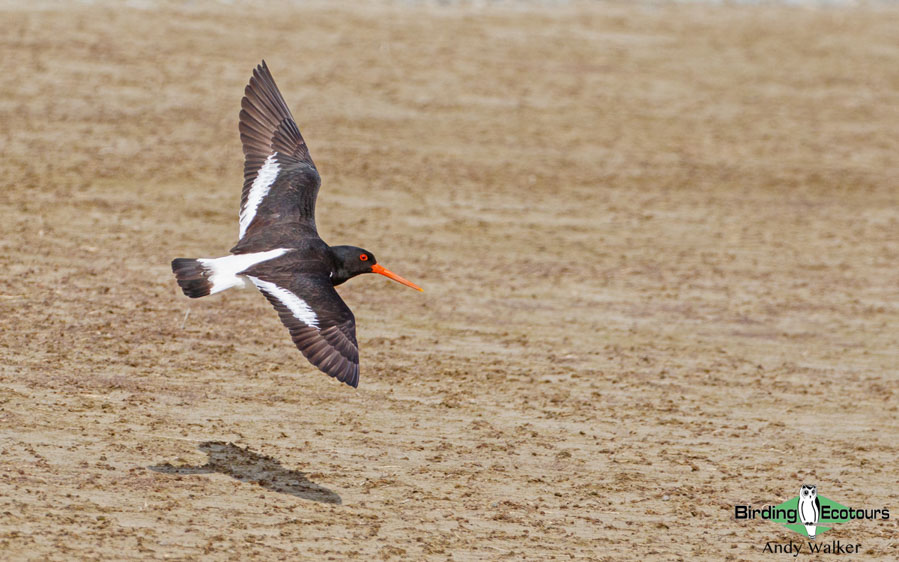
As we leave Auckland behind we will call in to Muriwai on the west coast, home to an impressive Australian Gannet colony, where we should enjoy plenty of close views of the gannets and likely our first looks at White-fronted Terns too. A stop at Mangawhai Heads could provide some different shorebirds, including Variable Oystercatcher and South Island Oystercatcher, along with Fairy Tern and the often shy Fernbird. After our birding we will continue our journey to Tutukaka, where we will be based for two nights.
Overnight: Tutukaka
Day 3. Full day Hauraki Gulf pelagic birding trip
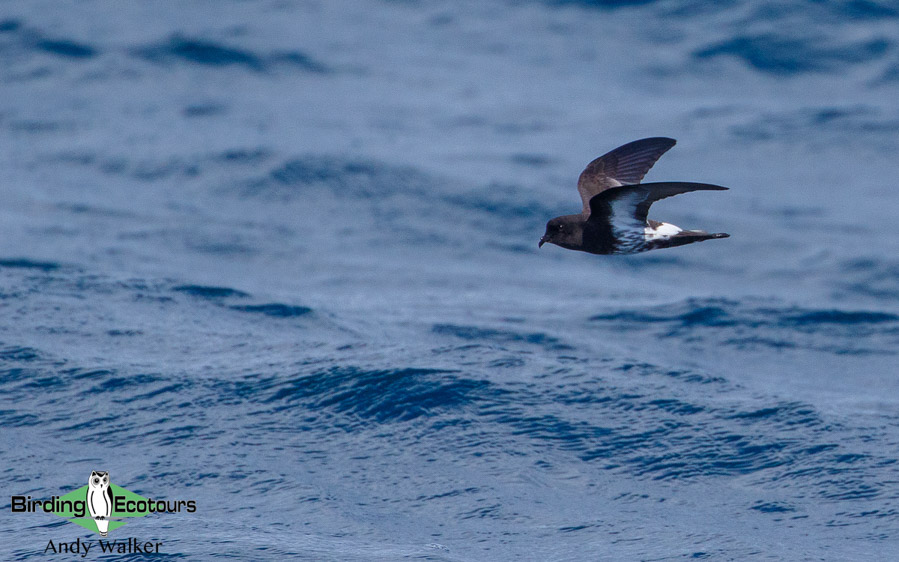
This is the first of three pelagic trips planned for this tour and is a full day (usually a nine hour trip). Each pelagic trip offers different species, although there are a number of species we hope to find today that we are less likely, or unlikely, to encounter elsewhere on the tour, these include Buller’s Shearwater, Fluttering Shearwater, Little Shearwater, Black (Parkinson’s) Petrel, Grey-faced Petrel, Cook’s Petrel (rarely even Pycroft’s Petrel and Black-winged Petrel), and White-faced Storm Petrel. However, one of the main reasons for a pelagic trip in this area is the chance to see the tiny, and Critically Endangered (BirdLife International), New Zealand Storm Petrel. This species was presumed to have become extinct, based on a lack of records, since three specimens were collected (under dubious circumstances) in the 1800s. Amazingly, this species was rediscovered in 2003, with recent genetic work confirming species status, and then in 2013 a breeding site was spectacularly discovered on Hauturu Island (Little Barrier Island). An observation of this tiny seabird species will make for an early tour highlight. Other exciting possibilities on the water include Common Diving Petrel, Northern Giant Petrel, and our first albatross of the tour – Shy (White-capped) Albatross. We could also see marine mammals on this boat trip, including dolphins and Bryde’s Whales, as well as other marine species. This will be a full day pelagic trip, and we will return to the harbor in the late afternoon.
Overnight: Tutukaka
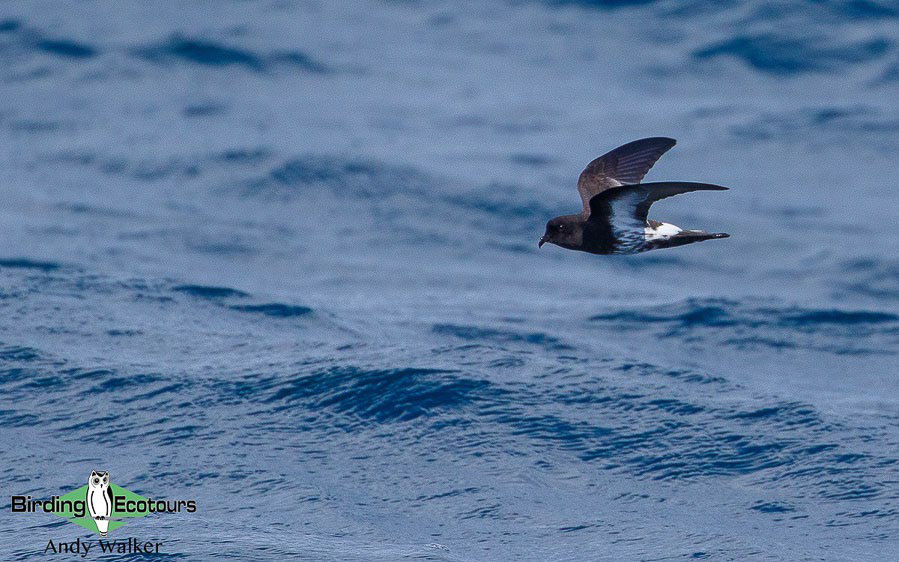 New Zealand has many globally rare birds, and one of the rarest is New Zealand Storm Petrel, we hope this species will become an early tour highlight.
Day 4. Tutukaka to Snells Beach
We will have a morning birding around Tutukaka searching for more of New Zealand’s incredible birds, including Double-banded Plover, New Zealand Dotterel, White-fronted Tern, and the usually rather friendly New Zealand Fantail.
Later in the afternoon we will end up at Snells Beach, where we will have an early dinner. In the evening we will take a trip near our accommodation to look for North Island Brown Kiwi, our first example of this extremely bizarre (even by New Zealand standards), endemic family. We may also find the widespread endemic Morepork (a Ninox hawk-owl).
Overnight: Snells Beach
Day 5. Tiritiri Matangi Island
In the morning we will take a short boat ride to the excellent Tiritiri Matangi Island, a protected haven for threatened species and home to New Zealand’s oldest operating lighthouse. Tiritiri Matangi is a predator-free island, meaning the island is free of rats, possums, hedgehogs, cats, and stoats etc., thus providing a haven for many rare birds (many have been introduced or re-introduced to boost populations). We will visit several such islands during this tour. The restoration of the island started over 40 years ago and the progress made is incredible. We will spend the day on this picturesque and bird-filled island, enjoying everything it has to offer.
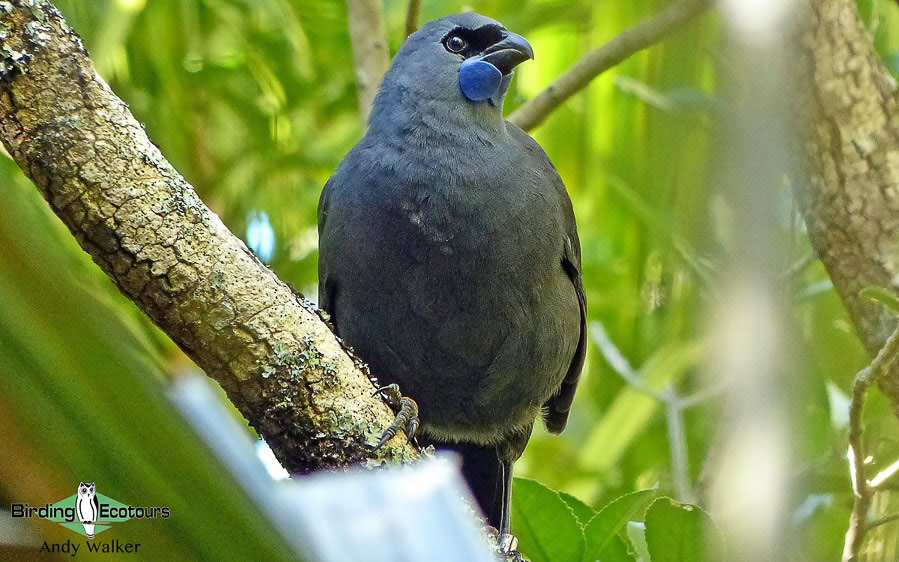 The endemic and sought-after North Island Kokako has an amazing song.
This excursion will offer up our first chance for many exciting localized native land birds, many with intriguing and enticing names, such as North Island Kokako, Stitchbird, Whitehead, New Zealand Fernbird, North Island Saddleback, along with the more familiar-sounding North Island Robin.
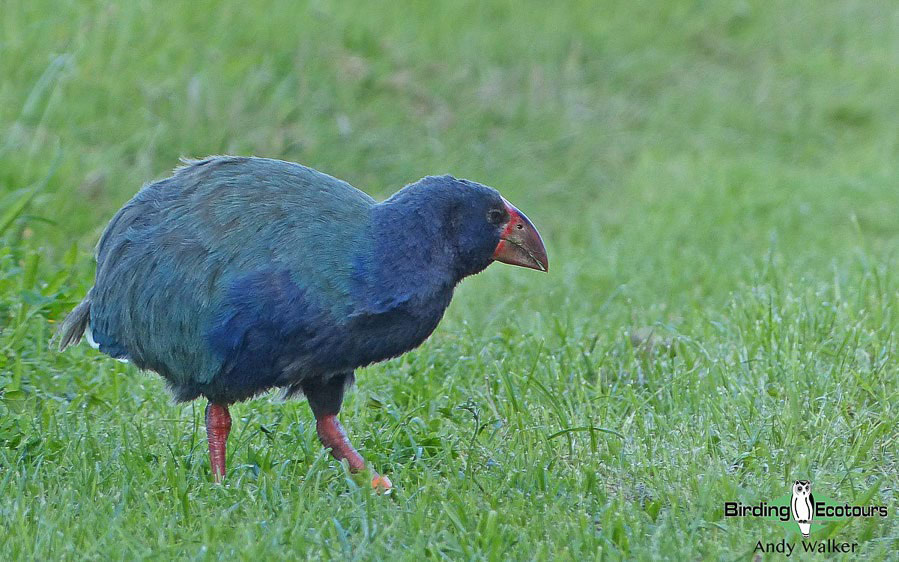 The giant (25 inches/63 centimeters), flightless South Island Takahe was rediscovered in 1948 after being considered extinct for 50 years! It is considered Endangered (BirdLife International).
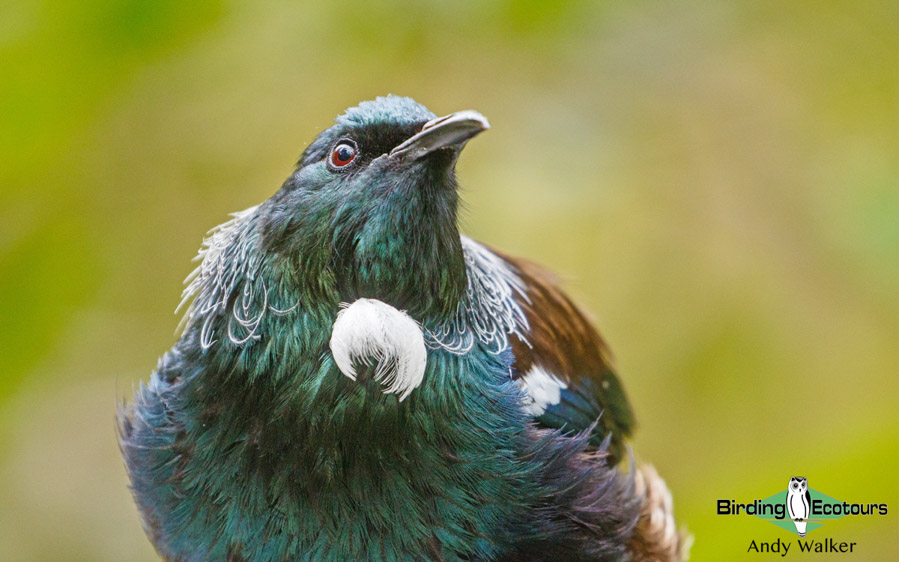
We will also come across more widespread endemic species such as Tui (a large spectacular honeyeater with an amazing duet), New Zealand Bellbird, New Zealand Fantail, and Grey Gerygone.
The island is also great for rare endemic non-passerines such as the hulking South Island Takahe (a giant swamphen), Brown Teal, and Red-crowned Parakeet. We may also find roosting Morepork and the very cute Little Penguin. After our time on Tiritiri Matangi Island, we will cross back to North Island on the ferry before driving south to Miranda.
Overnight: Miranda
Day 6. Pūkorokoro Miranda Shorebird Center to Taupo
We will spend time birding at Pūkorokoro Miranda Shorebird Center, an important feeding ground and roosting area for many shorebirds (waders) which migrate from the tundra of the Arctic to avoid the northern winter. One of the most famous northern migrants is Bar-tailed Godwit (read about the fascinating migration of this species here), other species can include Far Eastern Curlew, Sharp-tailed Sandpiper, and Red-necked Stint. There are also several interesting endemic shorebirds likely to be present here too, such as the unique Wrybill (though we are likely to see more on their breeding grounds when we get to South Island), South Island Oystercatcher, and New Zealand Plover.
After our birding at Miranda we will continue our journey to Taupo, where we will look for New Zealand Scaup, New Zealand Grebe, and New Zealand Falcon. We will then spend the night in Taupo.
Overnight: Taupo
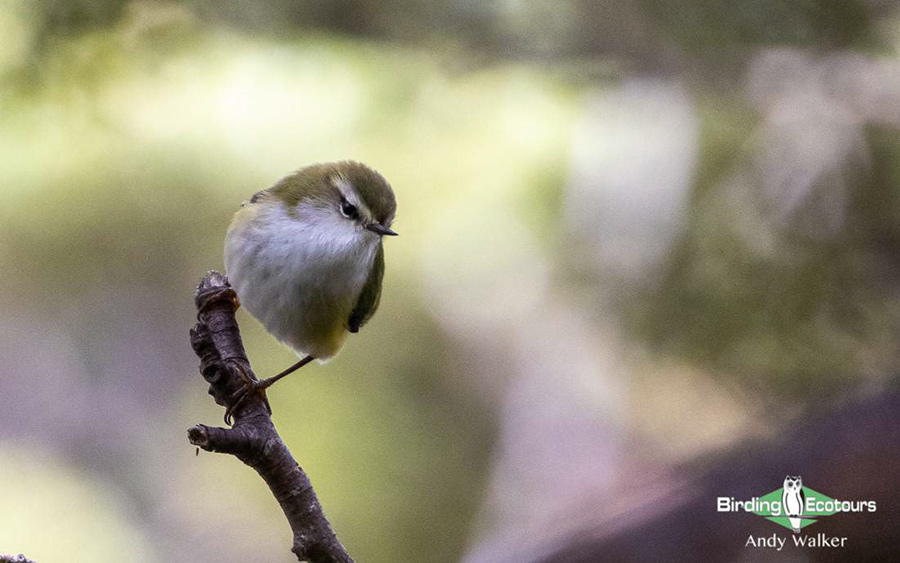 At around three inches (seven centimeters), Rifleman is the smallest bird in New Zealand.
Day 7. Taupo to Turangi via Pureora Forest
The forests at Pureora Forest Park are often referred to as the ‘dinosaur forests’ because they are dominated by ancient conifers in the Podocarpaceae family. Podocarps were the dominant trees in Gondwana 100 million years ago and are still dominant in some of New Zealand’s rainforests today, and no more so than at Pureora. Our morning will be spent in this, one of the finest podocarp forests in the country, where we may experience the haunting call of the North Island Kokako in its natural, misty rainforest environment. We will have most of the day here and will also look for New Zealand Kaka (an endemic parrot), Yellow-crowned Parakeet, Whitehead, North Island Robin, New Zealand Falcon, New Zealand Pigeon, the gorgeous Tomtit, Shining Bronze Cuckoo, with luck the secretive migrant Pacific Long-tailed Cuckoo, Sacred Kingfisher, and New Zealand’s smallest bird, Rifleman.
We will continue to Turangi where we will be based for the night and where we will also look for Blue Duck and New Zealand Falcon.
Overnight: Turangi
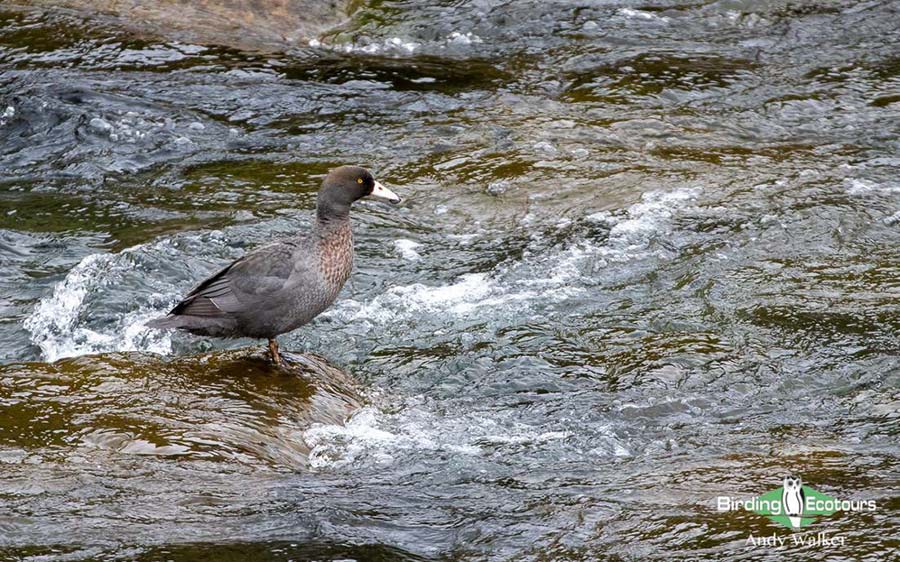 We will look for Blue Duck around Turangi.
Day 8. Turangi to Picton via ferry
We will have some time birding around Turangi, perhaps again looking for Blue Duck or New Zealand Falcon before we travel to Wellington, where we will board the large ferry bound for Picton at the northern tip of South Island. The crossing of Cook Strait takes around three hours and provides another seawatching opportunity, with possibilities including Fluttering Shearwater, Hutton’s Shearwater, Sooty Shearwater, Flesh-footed Shearwater, Black Petrel, Westland Petrel, Broad-billed Prion, Fairy Prion, Common Diving Petrel, Parasitic Jaeger (Arctic Skua), Northern Giant Petrel, Antipodean Albatross, and Shy (White-capped) Albatross. We will stay overnight near the ferry terminal in town.
Overnight: Picton
Day 9. Marlborough Sounds (Queen Charlotte Sound) then to Kaikoura
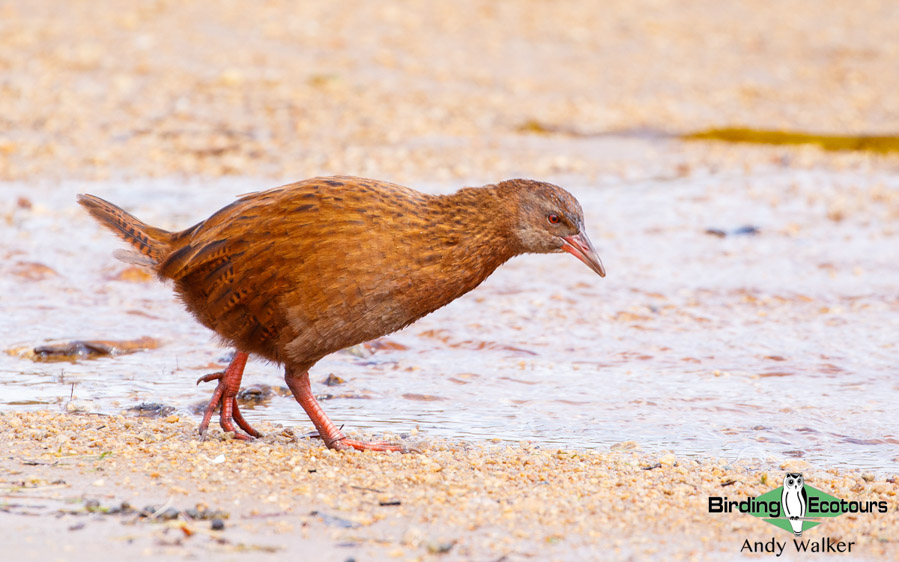
Our morning will be spent birding our way through Queen Charlotte Sound. We will have seen some of the area on the ferry the previous evening, as we came into Picton, but this will be a more specific birding trip. We will make our way to a small rocky island where a small colony of the very localized New Zealand King (Rough-faced) Shag breeds and roosts. We could also see the widespread Australian Pied Cormorant and Little Cormorant, and we may also encounter the interesting Weka, a flightless member of the Rallidae family. A stop on Blumine Island could yield Malherbe’s Parakeet and, with much luck, South Island Saddleback and South Island Robin. We may also spot the rare Hector’s Dolphin while on the water.
After lunch in Picton we will drive down the east coast of South Island to the famed town of Kaikoura (a pelagic paradise), where we will spend the next two nights.
Overnight: Kaikoura
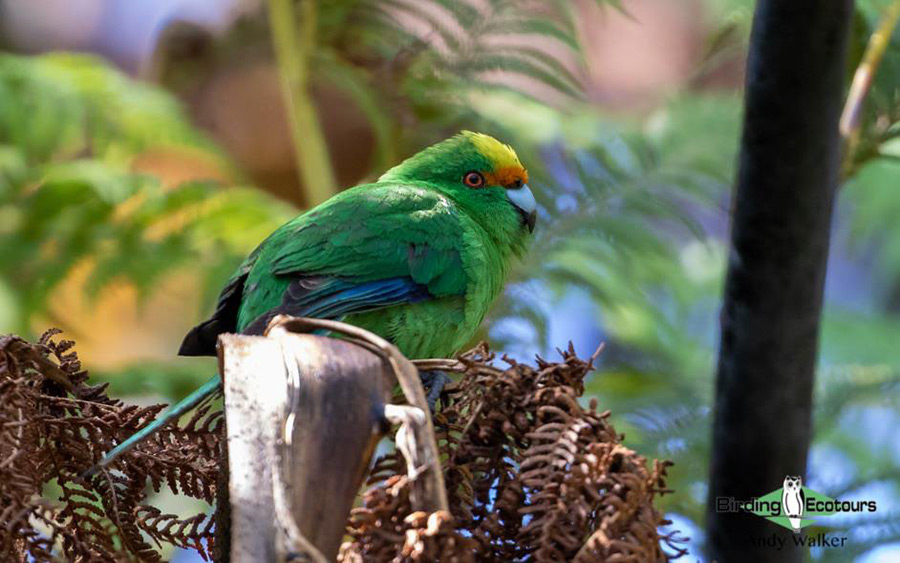 We will look for the Critically Endangered (BirdLife International) Malherbe’s Parakeet.
Day 10. Kaikoura pelagic birding trip
With a backdrop of steep mountains and the sea plummeting into a deep ocean trough, Kaikoura is not only spectacular to look at but also a perfect habitat for pelagic animals. Sperm Whales are resident, Humpback Whales are seasonal visitors, Dusky Dolphins are abundant, the tiny, rare Hector’s Dolphin is frequently seen, there is a New Zealand Fur Seal colony close to the town, and we’ve even bumped into Killer Whales (Orcas) on previous tours. Pelagic birds, including albatrosses and giant petrels, are often seen from the shore. Hutton’s Shearwater breeds near the tops of the 8,200-foot (2,500-meter) mountain range behind the town and can often be seen in vast flocks, wheeling around just offshore. Not surprisingly, Kaikoura’s economy is based on whale watching, swimming with dolphins, and albatross viewing, as well as commercial diving for crayfish and pāua (abalone).
An early-morning outing on the ocean from Kaikoura is the best possible way to start the day. Because conditions are so perfect for pelagic birds we do not need to travel far, or for long, and we will see a lot of species. Possibilities include Antipodean Albatross, Northern Royal Albatross, Southern Royal Albatross, Shy Albatross, Salvin’s Albatross, Buller’s Albatross, Black-browed Albatross, Southern Giant Petrel, Northern Giant Petrel, Common Diving Petrel, Westland Petrel, White-chinned Petrel, Hutton’s Shearwater, Buller’s Shearwater, and the abundant Cape Petrel.
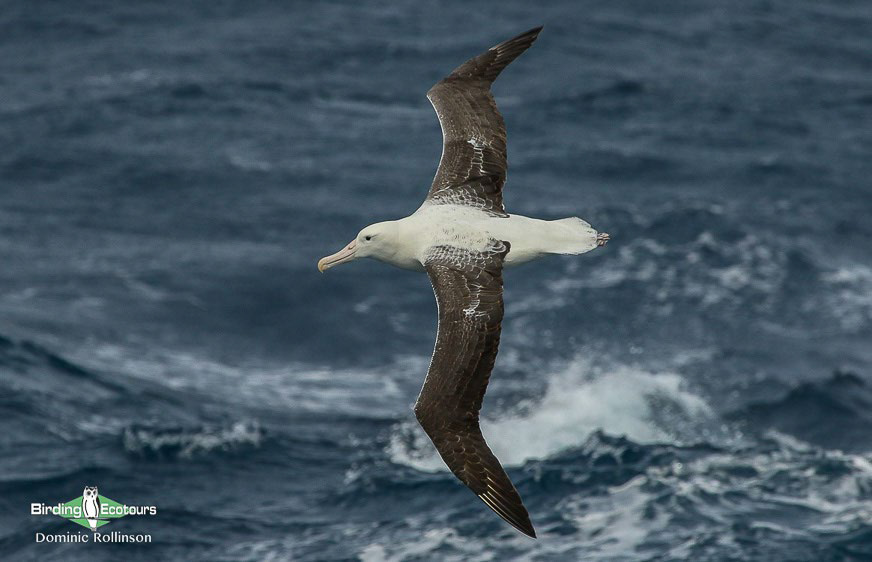 Southern Royal Albatross is one of the many seabird species we should encounter on our Kaikoura pelagic.
The afternoon will be at your leisure to take a stroll on Kaikoura Peninsula or edit the hundreds of photos you will have likely taken on the boat trip!
Overnight: Kaikoura
Day 11. Kaikoura to Arthur’s Pass
As well as targeting pelagic species at Kaikoura, we will also look for a rare introduced species, Cirl Bunting. Throughout our tour we will also see a number of species introduced from Europe, including Eurasian Skylark, Eurasian Chaffinch, Yellowhammer, European Greenfinch, European Goldfinch, (Common) Redpoll, Common Blackbird, Song Thrush, House Sparrow, and Dunnock. These birds may not be of too much interest to European birders but might be so for birders from other parts of the world.
Our journey today takes us from the east coast of South Island and carries us across the vast Canterbury Plains (look out for endemic and gorgeous Black-fronted Terns here) and up into the staggeringly beautiful Southern Alps at Arthur’s Pass, an ancient route of travel once used by the Maori. At Arthur’s Pass National Park we might find the Kea – the world’s only montane (and definitely cheekiest) parrot – it is also rather pretty, as shown on the itinerary front cover! Here too we will look for Pipipi (New Zealand Brown Creeper), Tomtit, South Island Robin, Rifleman, the elusive Yellowhead, and the tiny and practically tailless New Zealand Rockwren. We will spend the night at Arthur’s Pass.
Overnight: Arthur’s Pass
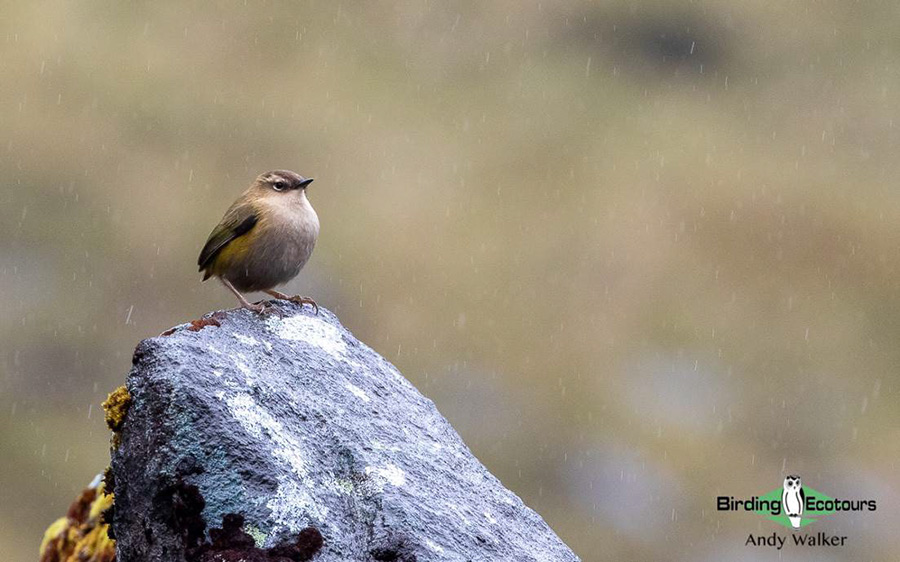 One of the tougher of the endemics to find, New Zealand Rockwren is a great bird!
Day 12. Arthur’s Pass to Twizel
We will spend the morning around Arthur’s Pass looking for the birds mentioned above, as some of them are elusive and can take some time to be found, particularly New Zealand Rockwren and Yellowhead. It is also fun to get another look at the “characterful” and boisterous Kea.
We will then drop down to the braided riverbeds at Twizel and head towards the foot of the simply spectacular Mt. Cook. Birding in this landscape is a truly special experience.
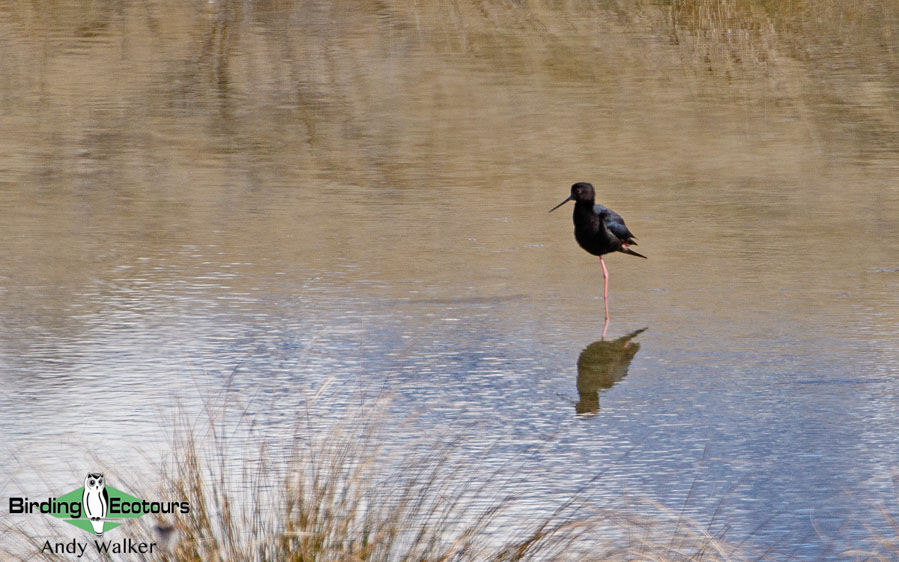
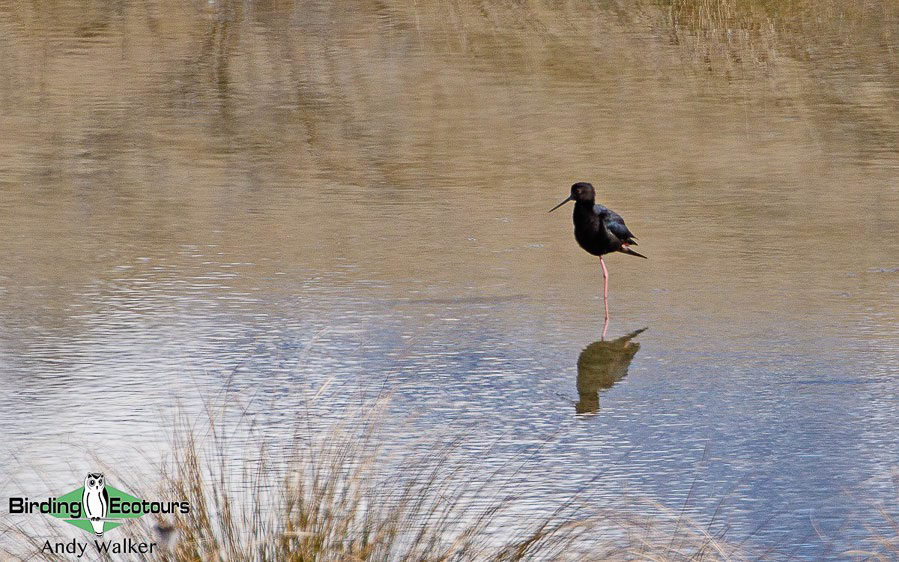 Black Stilt (pictured) is deemed Critically Endangered by BirdLife International and there is a lot of work underway to try and prevent this very rare bird becoming extinct. One of the threats to the species’ survival is hybridization with its cousin, Pied Stilt, a recently self-introduced species from Australia (several other species we will see during the tour are also self-introduced from Australia). The survival of this species certainly hangs in the balance!
There are many great birds on offer this afternoon, gorgeous Black-fronted Tern, New Zealand Pipit, South Island Oystercatcher, Paradise Shelduck, and Swamp Harrier. Nevertheless, there are three species of endemic/breeding-endemic shorebirds to be found here, and these will form the focus of our attention. The Kaki or Black Stilt, which is one of New Zealand’s rarest birds, breeds along the rivers in this area and we will spend time looking for this elusive bird. Like so many rare New Zealand birds it owes its survival to micro-management by conservation authorities, who operate captive breeding facilities, and private conservation groups.
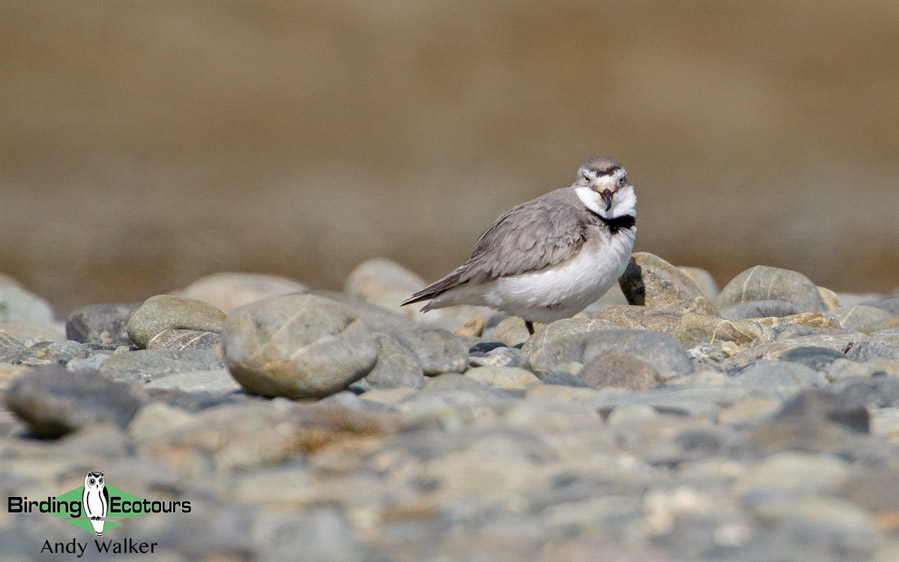
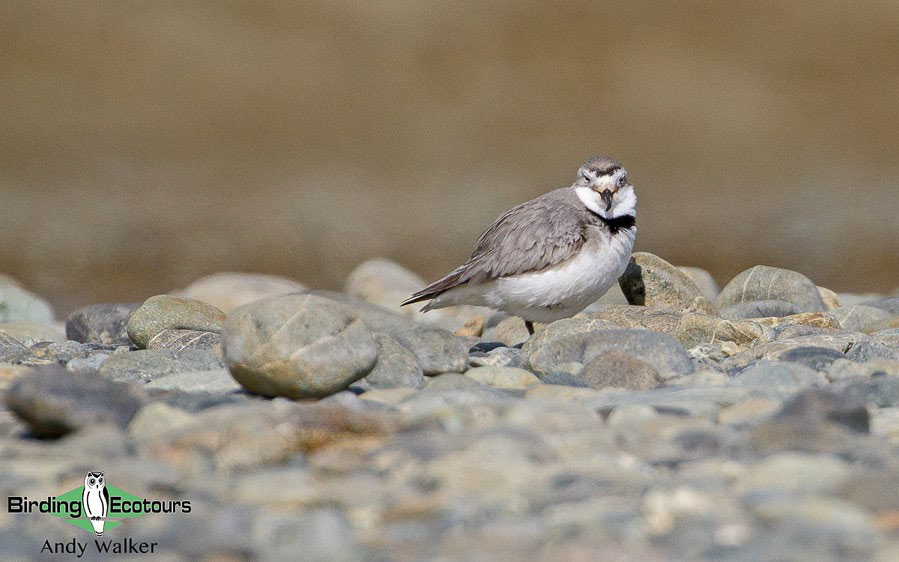 Definitely one of the most highly sought-after species in New Zealand, the Wrybill.
We will also search around the braided rivers for breeding Wrybill and the pretty Double-banded Plover (a New Zealand breeding endemic which migrates to Australia during the non-breeding season). Both highly sought-after species too. We may have already seen both species on beaches while birding North Island earlier in the tour, however seeing these two species in their breeding habitat and usually at a closer range is well worth it. The Double-banded Plovers in full breeding plumage are a sight to behold.
After what is sure to have been an enjoyable afternoon in an idyllic setting, we will head into the town of Twizel for the night.
Overnight Twizel
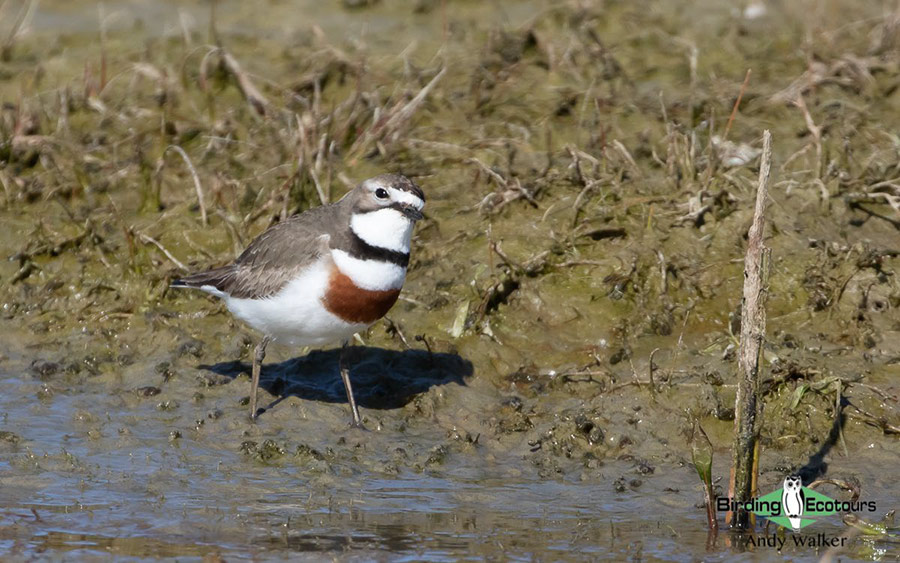 The attractive Double-banded Plover breeds at the foot of Mt. Cook.
Day 13. Twizel to Oamaru
Today we will leave the Southern Alps behind as we cut back across to the east coast of South Island and then drive south, down to the coastal town of Oamaru.
In Oamaru, where we will spend the night, we will stop to look for Stewart Island (Otago) Shag. We will also call in and visit a small colony of the magnificent, and increasingly rare, Hoiho – Yellow-eyed Penguins, which are sadly declining at a worrying rate.
Overnight: Oamaru
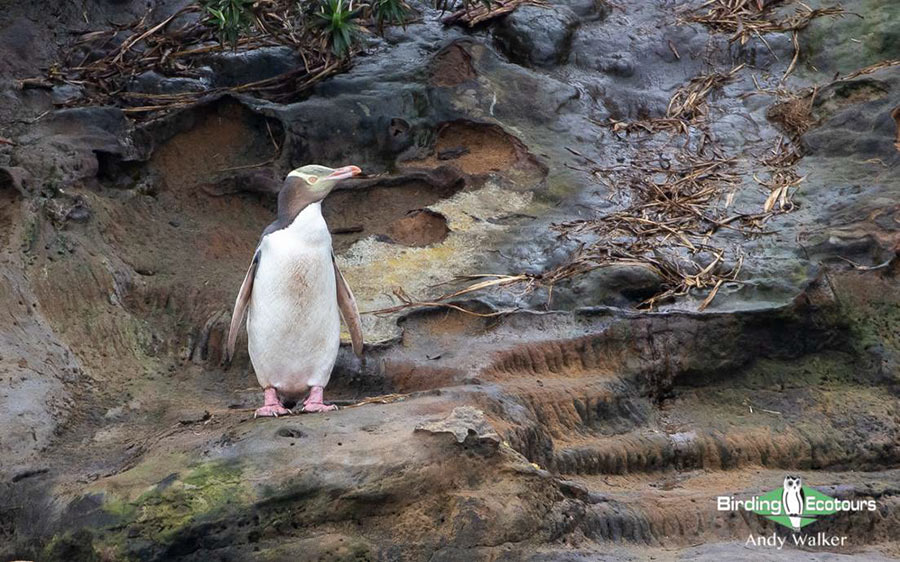 Yellow-eyed Penguin is one of three species of penguin we hope to find on this tour.
Day 14: Oamaru to Stewart Island
We depart Oamaru for Invercargill, where we will board the fast ferry to Stewart Island. However, before all of that excitement, we will drive from Oamaru and through Dunedin to visit Taiaroa Head, the site of the only mainland breeding colony in the world of Northern Royal Albatross, a huge bird with a wingspan of over 120 inches (three meters)! Here too, we will look for Spotted Shag and Silver Gull (of the endemic form, sometimes split and referred to as Red-billed Gull). We then travel through the beautiful Catlins, a world of leafy hill country, where land rises sharply from the coast to the inland ranges, and where rivers and waterfalls abound, picking up any forest birds we still need, as we eventually head to the Bluff on the south coast at Invercargill to take the ferry to Stewart Island.
Although the ferry crossing is not a pelagic trip as such, this ferry ride does offer an extra chance for a few new seabirds, maybe Salvin’s Albatross or Buller’s Albatross.
We will base ourselves in the village of Oban for two nights on this gorgeous, almost pristine, island, of which 80% is set aside as national park. The main activity in Oban will be a nighttime quest to find Southern Brown Kiwi. We will have enjoyed some great food during the tour and the fresh seafood in Oban is sure to rate as some of the best.
Overnight: Oban, Stewart Island
Day 15: Stewart Island pelagic/coastal birding trip and Ulva Island
We will spend some time during the morning on a charter boat as we explore the South Pacific Ocean and Paterson Inlet. We will look for Yellow-eyed Penguin, Fiordland Penguin, Little Penguin, Stewart Island (Foveaux) Shag, Buller’s Albatross, Shy (White-capped) Albatross, Salvin’s Albatross, Brown Skua, and Common Diving Petrel.
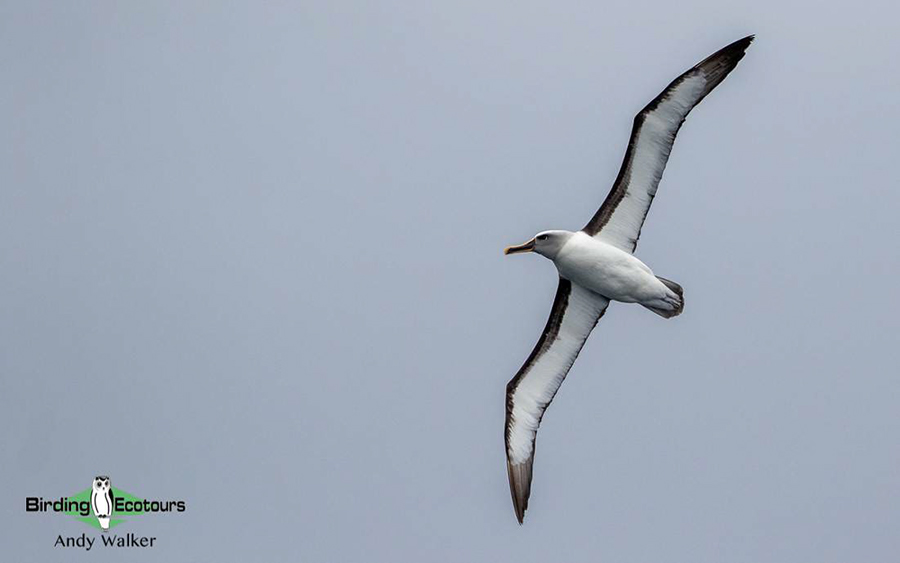 We will look for Buller’s Albatross during our boat trip off Stewart Island.
A treat awaits us this afternoon as we visit the island sanctuary of Ulva Island. The primeval forest on this island is amazing, and a great trail network allows easy exploration. The island comes complete with some really special birds, and many of these are extremely approachable, allowing for great photo opportunities.
We will be on the lookout for as many of the specials as possible during our visit, depending on what we have seen over the previous two weeks of the tour. Potential targets include Weka, Morepork, New Zealand Pigeon, New Zealand Kaka, Yellow-crowned Parakeet, Red-crowned Parakeet, South Island Robin, South Island Saddleback, Yellowhead, Pipipi (New Zealand Brown Creeper), Tomtit, Grey Gerygone, New Zealand Bellbird, Tui, and New Zealand Fantail.
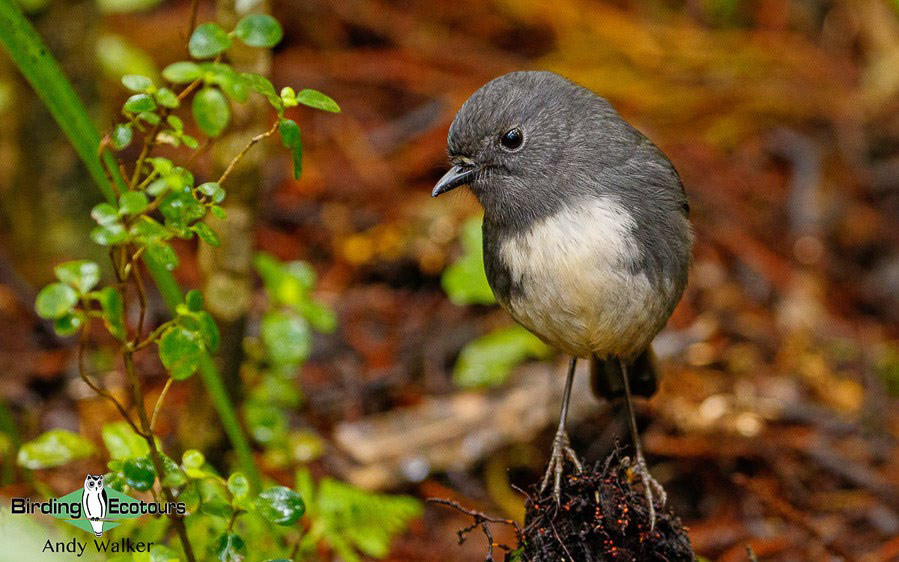 South Island Robin can be extremely confiding!
Occasionally New Zealand Sea Lions might haul themselves out of the ocean onto the beaches of Ulva Island, a rather spectacular sight. Variable Oystercatcher can also usually be found on the beach and, with some luck, occasionally Fiordland Penguin too.
Overnight: Oban, Stewart Island
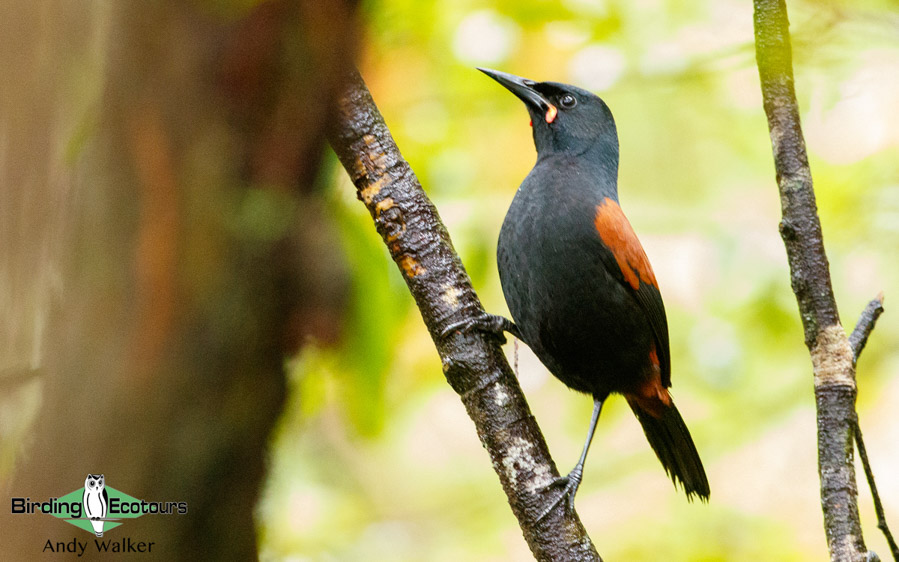
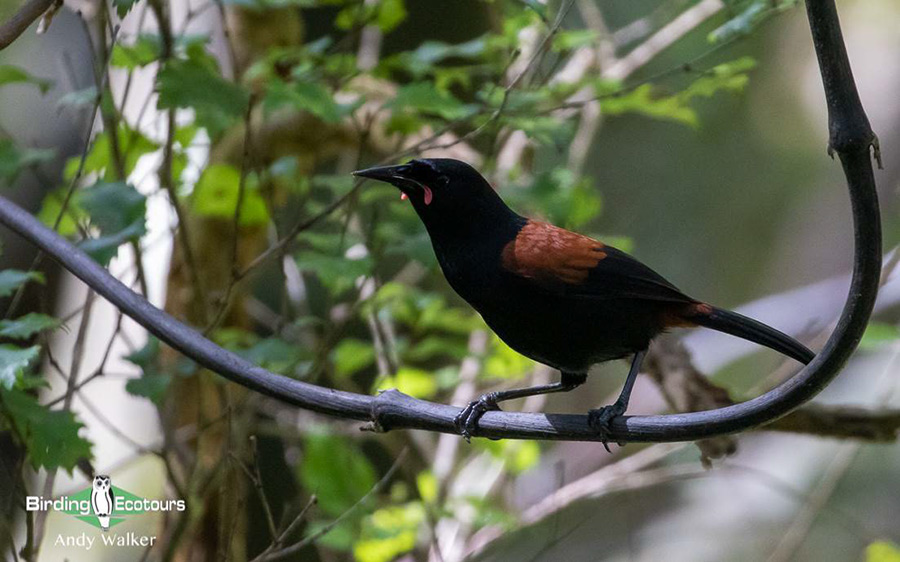 Usually rather shy, South Island Saddleback can occasionally show well on Ulva Island.
Day 16: Stewart Island to Invercargill, where tour concludes at noon
After breakfast we will take the fast ferry from Stewart Island back to Invercargill, where the tour will end at Invercargill airport in the middle of the morning, in time for a flight back to Auckland.
Overnight: Not included
Please note that the itinerary cannot be guaranteed as it is only a rough guide and can be changed (usually slightly) due to factors such as availability of accommodation, updated information on the state of accommodation, roads, or birding sites, the discretion of the guides, and other factors. In addition, we sometimes have to use a different guide from the one advertised due to tour scheduling or other factors.
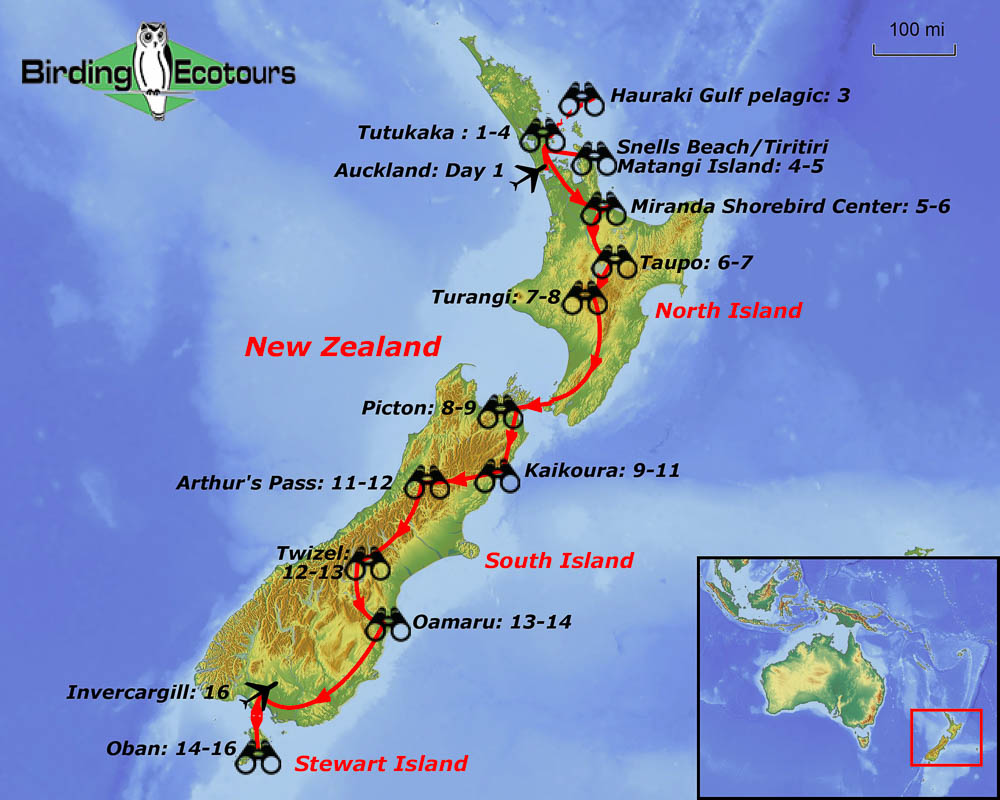
Map
Testimonials
Gallery
General Information
Please note: The trip leaves Auckland in the morning (approximately 10am) on Day 1; therefore guests should arrive in Auckland a day early. If you need information about Auckland hotels, in the area where it would be easiest for you to be picked up, please notify us, and we will be happy to be of assistance.
Group size information: Due to the costs involved with visiting New Zealand we run this tour with a slightly larger group than we would to other destinations. This is so that we can spread the cost across more people and thereby keep costs down for everyone involved. This decision is also based on the habitats we will be birding on the tour, which allow for larger groups without reducing the experience of the tour.