- Duration:
- 17 days
- Group size:
- 6–8
- Start:
- Bukhara International Airport (BHK), Uzbekistan
- End:
- Nursultan Nazarbayev (Astana) International Airport (NQZ), Kazakhstan
Central Asia Birding Tour: Birding Uzbekistan, Kazakhstan, & Kyrgyzstan – Silk Road Birding
Details
2028
05–21 May
Per person sharing
$11,390 USD
£9,050 GBP / €10,681 EUR
Single supplement
$1,569 USD
£1,246 GBP / €1,471 EUR
2029
06–22 May
Per person sharing
$12,530 USD
£9,956 GBP / €11,750 EUR
Single supplement
$1,720 USD
£1,367 GBP / €1,613 EUR
Itinerary
Download ItineraryCentral Asia Birding Tour: Birding Uzbekistan, Kazakhstan, and Kyrgyzstan – Silk Road Birding
Overview
Central Asia is an extraordinary, largely untapped paradise for birdwatchers, offering a dramatic mix of pristine ecosystems that span from the vast, wind-swept steppes of Kazakhstan to the towering, snow-capped peaks of the Tian Shan (Tien Shan) and Pamir mountains in Kyrgyzstan. This geographical diversity creates a crucial crossroads for migratory birds traveling along the Central Asian Flyway, allowing birders to witness spectacular seasonal movements of waterfowl, shorebirds, and raptors.
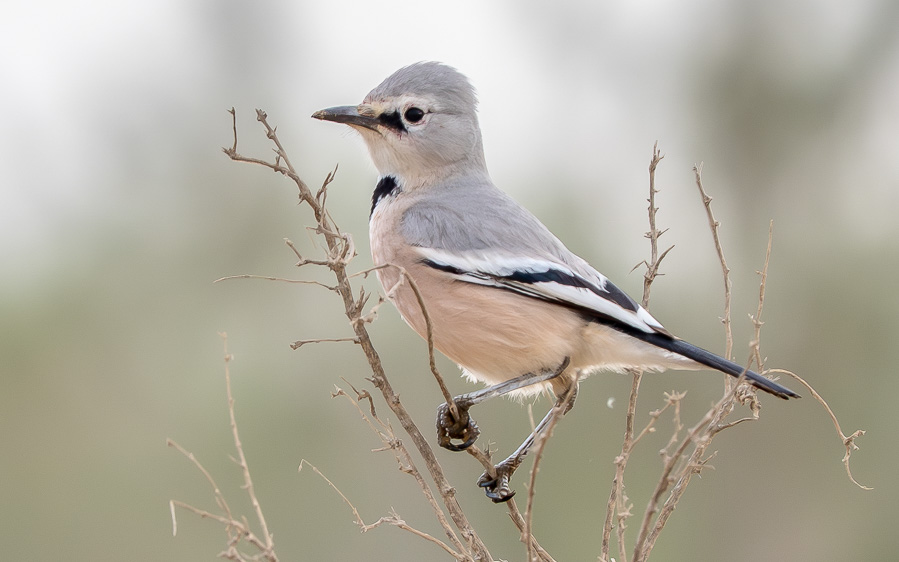
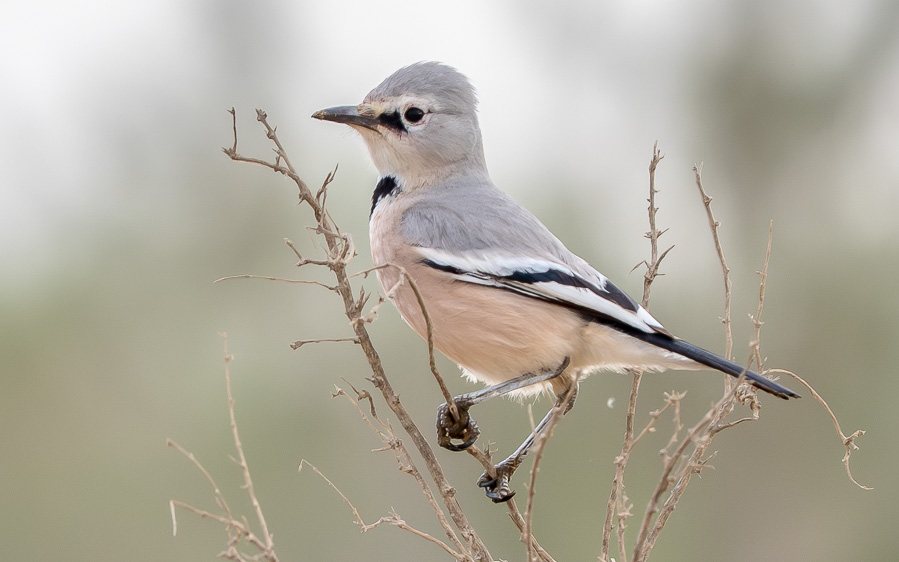 One of the top tour targets when birding in Central Asia is the localized Turkestan Ground Jay, also known as Pander’s Ground Jay (photo M. Valkenburg).
Adding to this natural wonder is the region’s deep connection to the Silk Road, the historic network of trade routes that once connected east and west. For centuries, Central Asia served as the pulsing heart of this global highway, where legendary oasis cities like Samarkand and Bukhara thrived as melting pots of commerce, culture, and ideas.
Today, the region remains globally renowned for its highly sought-after avian specialties, and during this tour we will seek many of them, such as the Critically Endangered (IUCN/BirdLife International) Sociable Lapwing breeding on the northern steppes of Kazakhstan, the vibrant Himalayan Rubythroat in subalpine meadows, and elusive high-altitude icons like the Ibisbill, Himalayan Snowcock, and Güldenstädt’s Redstart in Kyrgyzstan. Exploring the remote saxaul forests of the deserts of Uzbekistan (and Kazakhstan) reveals specialized residents like Turkestan (Pander’s) Ground Jay, Asian Houbara (Macqueen’s Bustard), Saxaul Sparrow, and many other great species. Combining this rich Silk Road heritage, legendary hospitality, and raw, untamed wilderness, a birding expedition through Kazakhstan, Uzbekistan, and Kyrgyzstan provides an unforgettable journey into one of the planet’s most spectacular avian frontiers. We can’t wait to share it with you on this thrilling Central Asian birding tour.
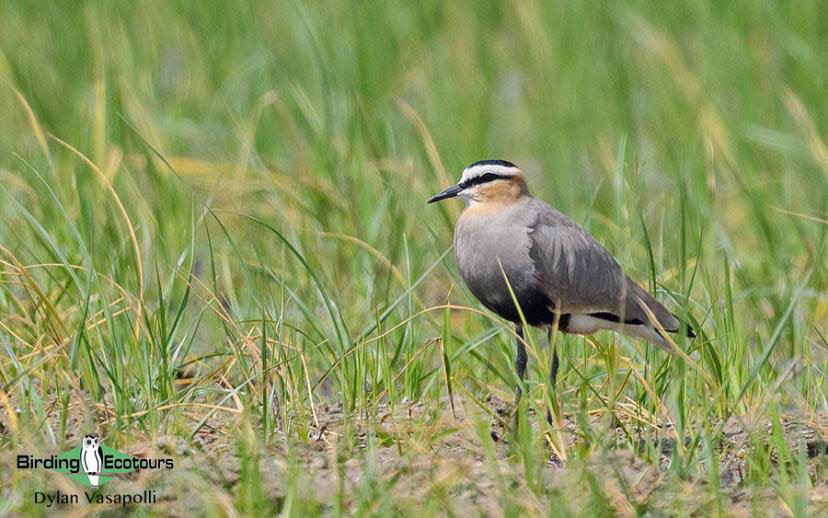
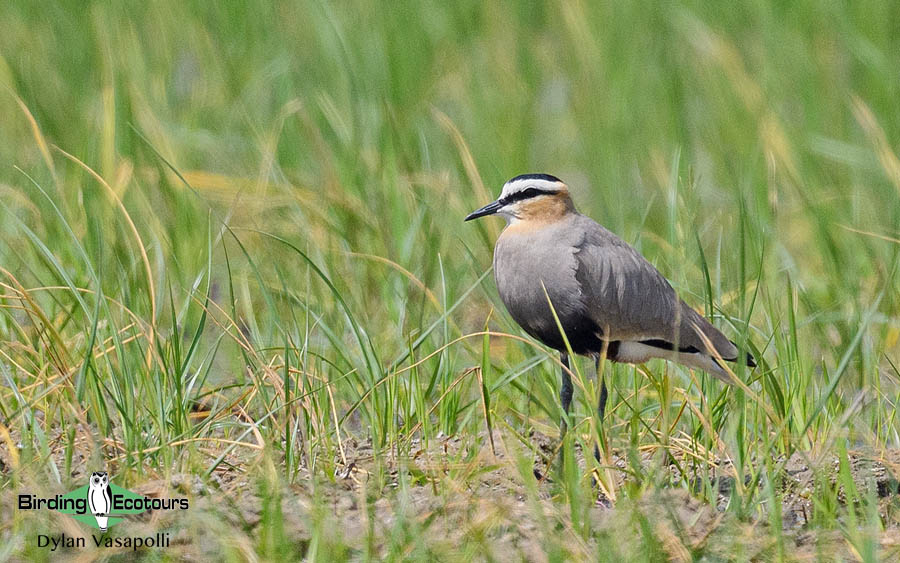 Sociable Lapwing is a big target on this Central Asian birding tour.
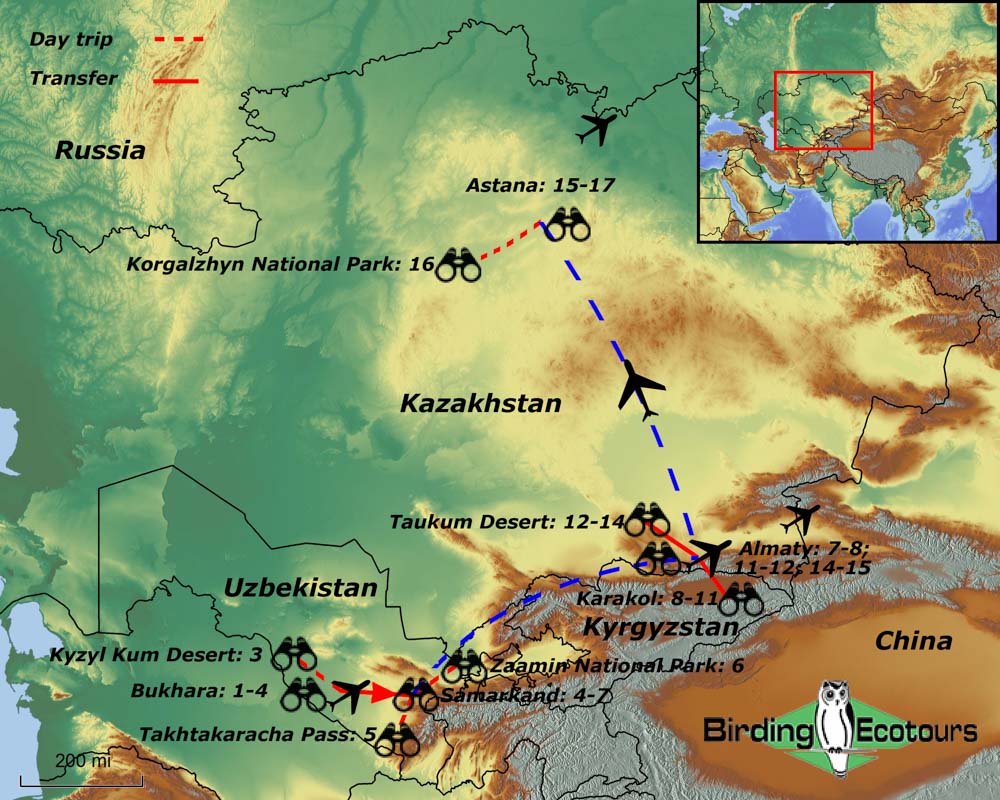
Detailed Itinerary (17 days/16 nights)
Day 1. Arrival in Bukhara, Uzbekistan
After your arrival in the ancient city of Bukhara, Uzbekistan, you will make the short transfer to our comfortable tourist hotel, with the rest of the day after your arrival at leisure. We will meet for a group welcome dinner in the evening. You might like to take this opportunity for some cultural exploration in this fascinating and ancient city.
Overnight: Bukhara
Day 2. Relaxed morning birding and afternoon cultural activities in Bukhara
We will enjoy a relaxed morning birding session in wetlands near arid Bukhara. Here we will hope to get our trip lists started with species such as Marbled Duck, Red-crested Pochard, Western Marsh Harrier, White-tailed Lapwing, Slender-billed Gull, Whiskered Tern, Red-tailed (Turkestan) Shrike, European Red-rumped Swallow, and Clamorous Reed Warbler.
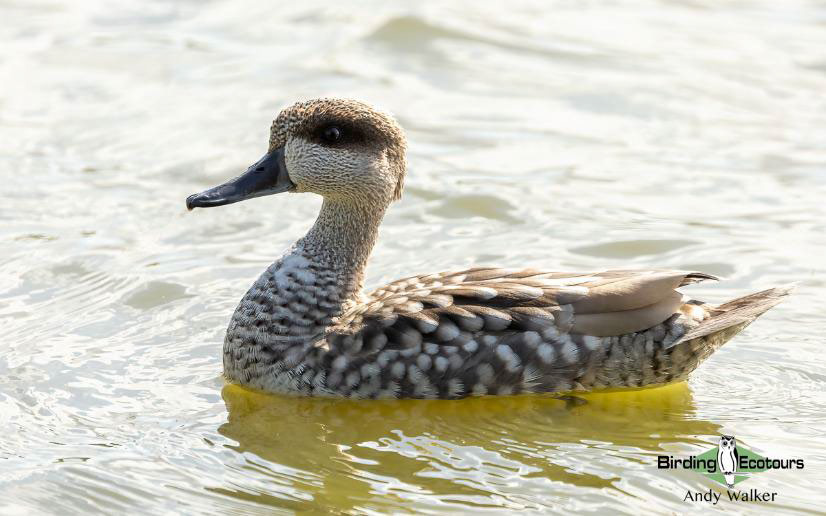 Marbled Duck is declining across its global range, so a sighting of one is always appreciated.
In the afternoon, we soak in some of the fascinating cultural heritage of Bukhara, our first stop on the famous Silk Road. We will visit some of the most iconic landmarks of the city, including, but not limited to Poi Kalyan complex (featuring the “Tower of Death”), Kalyan Mosque, Mir-i-Arab Madrasa, and Lyabi-Hauz, as well as some interesting and less well known cultural sights.
Overnight: Bukhara
Day 3. Desert birding near Bukhara
We will have a very early start today and make a day trip out to the mainly sandy Kyzyl Kum desert to the west of Bukhara. The main target of the day will be the iconic Turkestan (Pander’s) Ground Jay, which can be found in the saxaul scrub and open plains of this region. During the day we will keep our eyes peeled for other charismatic species of the desert ecosystem, including Black-bellied Sandgrouse, Long-legged Buzzard, Blue-cheeked Bee-eater, Brown-necked Raven, Great (Steppe) Grey Shrike, Indian Golden Oriole, Isabelline Wheatear, Streaked Scrub Warbler, Asian Desert Warbler, Menetries’s Warbler, Upcher’s Warbler, Sykes’s Warbler, Rufous-tailed Scrub Robin, Desert Finch, and Red-headed Bunting.
We will likely return to our accommodation in the middle of the afternoon with time to rest or enjoy some more relaxed cultural exploration.
Overnight: Bukhara
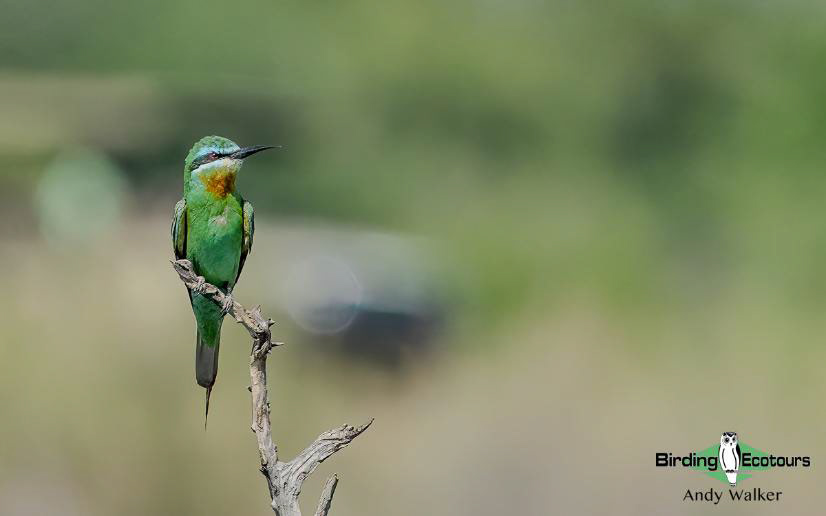 Blue-cheeked Bee-eaters breed in Central Asia and will provide a splash of color when we find them.
Day 4. Travel between Bukhara and Samarkand
In the morning we will travel between Bukhara and Samarkand, a beautiful scenic drive, during which time we might spot White-tailed Lapwing or Pied Bush Chat. We will arrive in Samarkand in time for lunch. Following lunch, we will make a guided cultural excursion around the historic landmarks of this remarkable city, such as Registan Square (our comfortable hotel is located near here), Gur-e-Amir Mausoleum, and the Bibi-Khanym Mosque.
Overnight: Samarkand
Day 5. Birding Takhtakaracha Pass
We will travel south of Samarkand to the impressive and rugged slopes of the Takhtakaracha Pass. Here we will look for the stunning yet secretive White-throated Robin, along with other species such as Eastern Orphean Warbler, the rare Hume’s Short-toed Lark, Red-tailed (Turkestan) Shrike, Eastern Rock Nuthatch, the stunning Indian Paradise Flycatcher, the yellow-breasted form of Azure Tit, Finsch’s Wheatear, Grey-crowned Goldfinch, and White-capped Bunting, all set in the dramatic mountain scenery.
Overnight: Samarkand
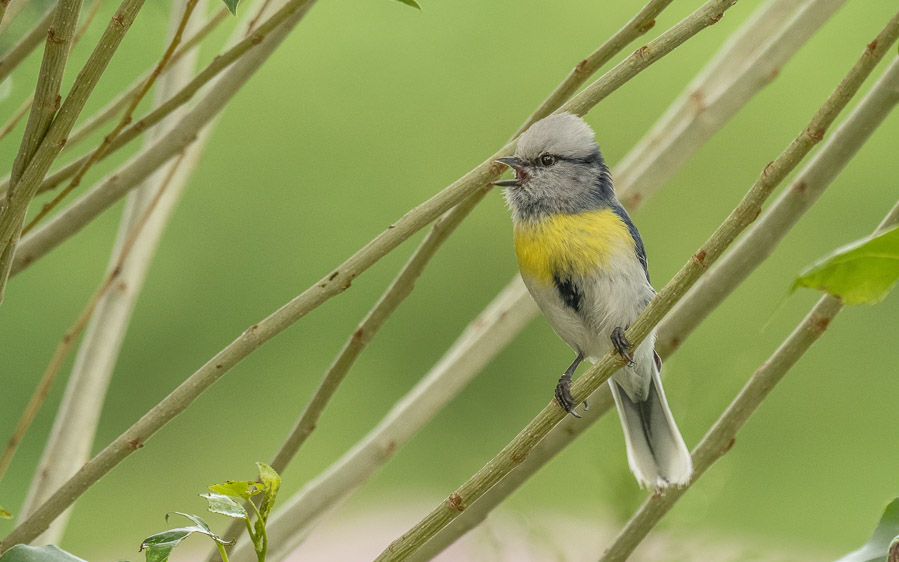
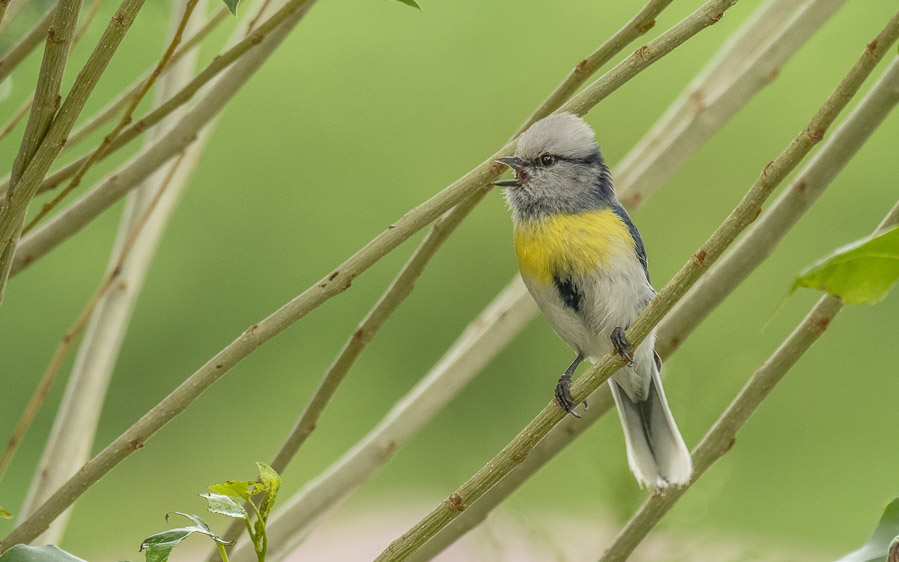 The yellow-breasted form of Azure Tit is rather spectacular (photo M. Valkenburg).
Day 6. Birding Zaamin
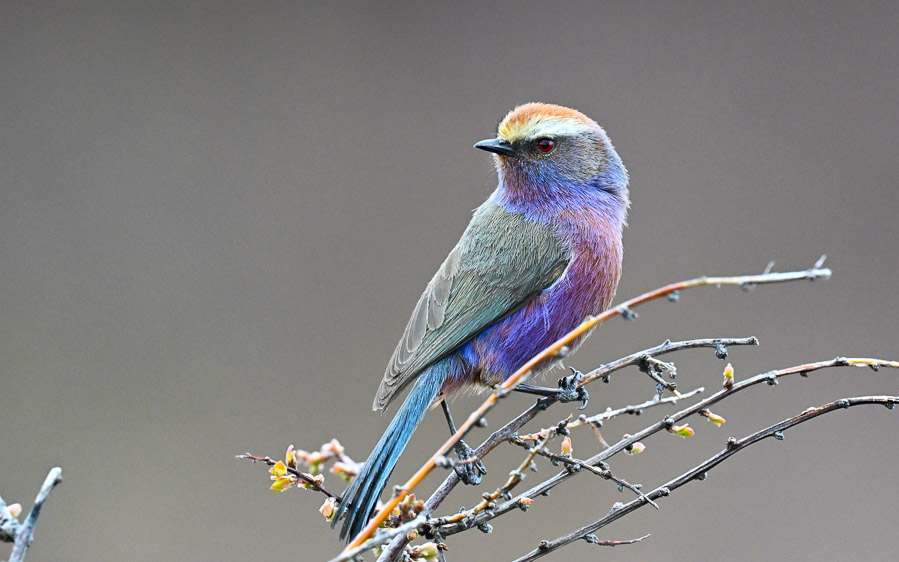
We will make a day trip from Samarkand to little visited Zaamin National Park, right along the Uzbekistan border with Tajikistan. Here we will look for Blyth’s Rosefinch, our main target. Birding the foothills of the Tian Shan Mountains, we will spend time looking for the stunning yellow-breasted form of Azure Tit and the spectacular White-browed Tit-warbler – another of the most sought-after birds in the world.
In addition to the above targets, other species we might connect with here include Bearded Vulture, Egyptian Vulture, Cinereous Vulture, Golden Eagle, Blue-cheeked Bee-eater, European Roller, Indian Golden Oriole, Rufous-naped Tit, Rusty-tailed Flycatcher, Rosy Starling, Red-fronted Serin, Grey-crowned Goldfinch, White-winged Grosbeak, and Red-headed Bunting.
Overnight: Samarkand
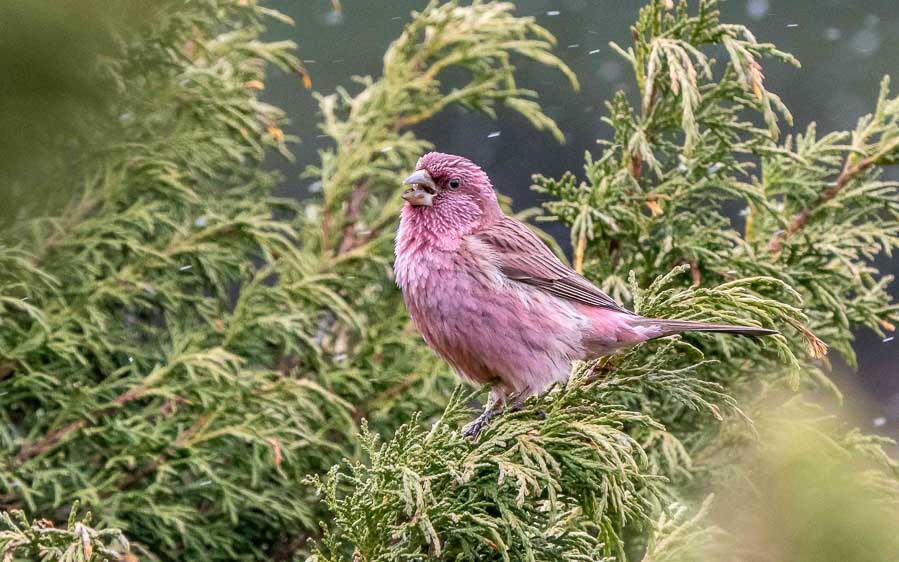
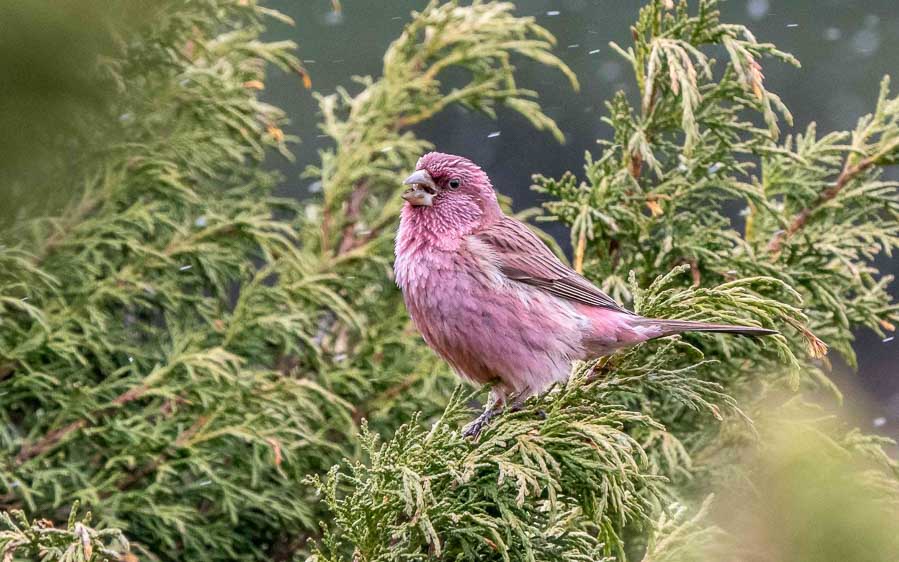 Blyth’s Rosefinch is an attractive, range-restricted, and localized species, and Zaamin National Park in Uzbekistan is one of the best places in the world to search for it (photo M. Valkenburg).
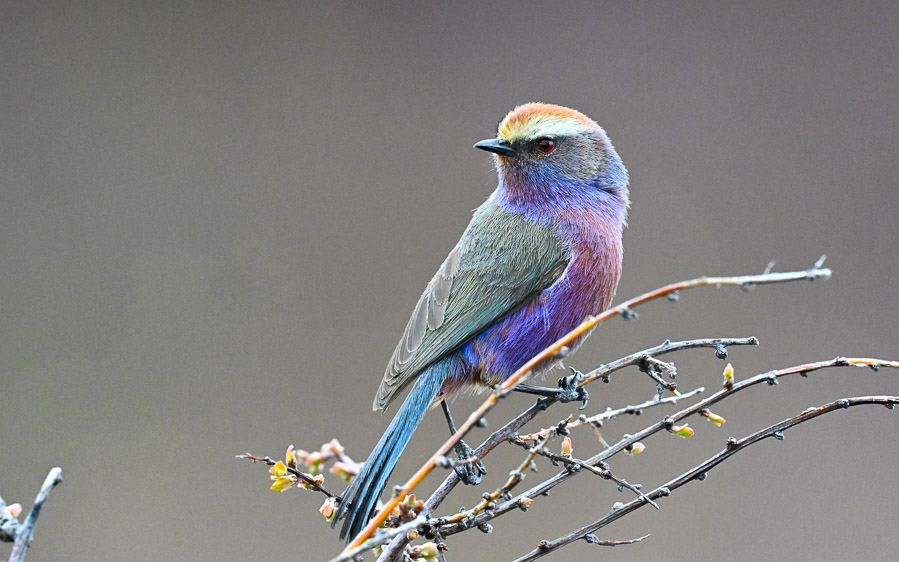 Without doubt one of the most attractive and highly sought-after birds in Asia, White-browed Tit-warbler is a target at a couple of locations we will visit during this Central Asian birding tour (photo P. He).
Day 7. Fly from Samarkand, Uzbekistan, to Almaty, Kazakhstan
Today is essentially a travel day. We will take a short flight from Samarkand, Uzbekistan, to Almaty, Kazakhstan. Almaty, set against the dramatic snow-capped Tian Shan Mountain backdrop, is considered to be one of the greenest cities in Central Asia, despite being the country’s most populous city. During the time of our visit, the city is likely to be looking quite beautiful.
Overnight: Almaty
Day 8. Birding at Charyn Canyon National Park and travel to Karakol, Kyrgyzstan
From Almaty, we will head east to the spectacular multicolored Charyn Canyon National Park and Sogety Valley. We will bird in a mix of habitats, including semi-desert, steppe, and dramatic rock formations. Some of our target birds will include Himalayan Vulture, Steppe Eagle, Eurasian Scops Owl, Pallas’s Sandgrouse, Lesser Kestrel, Asian Desert Warbler, Desert Finch, Mongolian Finch, (Asian) Crimson-winged Finch, White-capped Bunting, and Grey-necked Bunting.
In the afternoon we will drive across the border into little-visited Kyrgyzstan (making a stop to look for Richard’s Pipit along the way). We will arrive in Karakol for a three-night stay near the huge Lake Issyk-Kul, with the towering peaks of the Tian Shan Mountains dominating the landscape. This region offers some of the finest mountain birding in Central Asia, combining spectacular scenery with a rich diversity of high-altitude species.
Overnight: Karakol
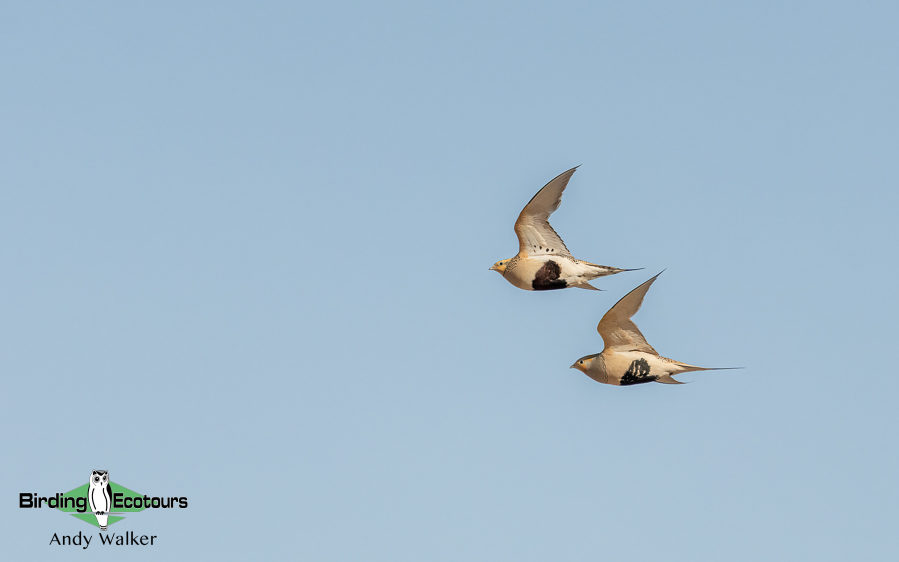
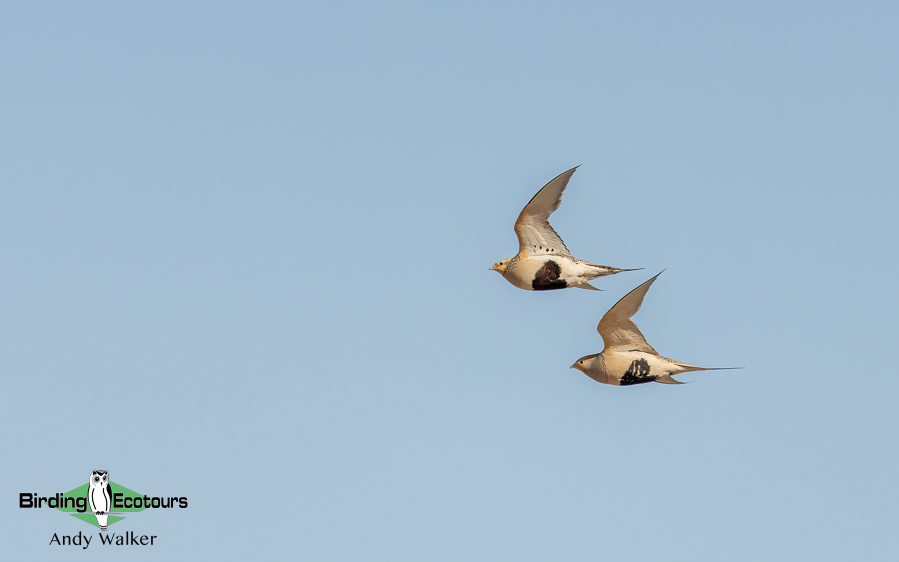 Pallas’s Sandgrouse are beautiful birds and we will look out for them while birding in Central Asia.
Days 9-10. Birding Tian Shan Mountains in Kyrgyzstan
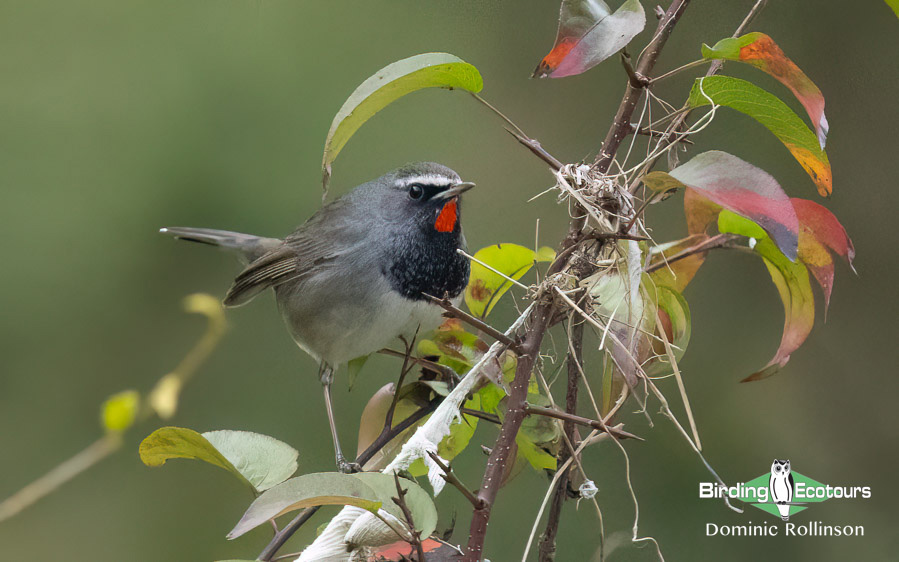
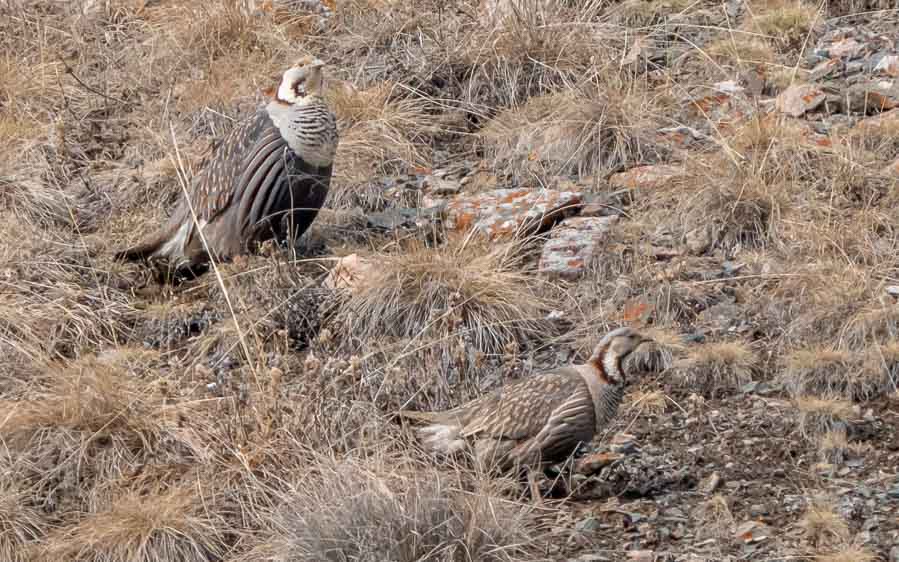
We will spend two full days birding in the high elevation zones of the Tian Shan Mountains, near Karakol. We will be looking for numerous major targets, including Himalayan Snowcock, White-browed Tit-warbler, Sulphur-bellied Warbler, Mountain Chiffchaff, Himalayan Rubythroat, Güldenstädt’s Redstart, Eversmann’s Redstart, Brown Dipper, White-throated Dipper, Brown Accentor, Altai Accentor, Black-throated Accentor, Red-fronted Serin, Brandt’s Mountain Finch, and White-winged Grosbeak.
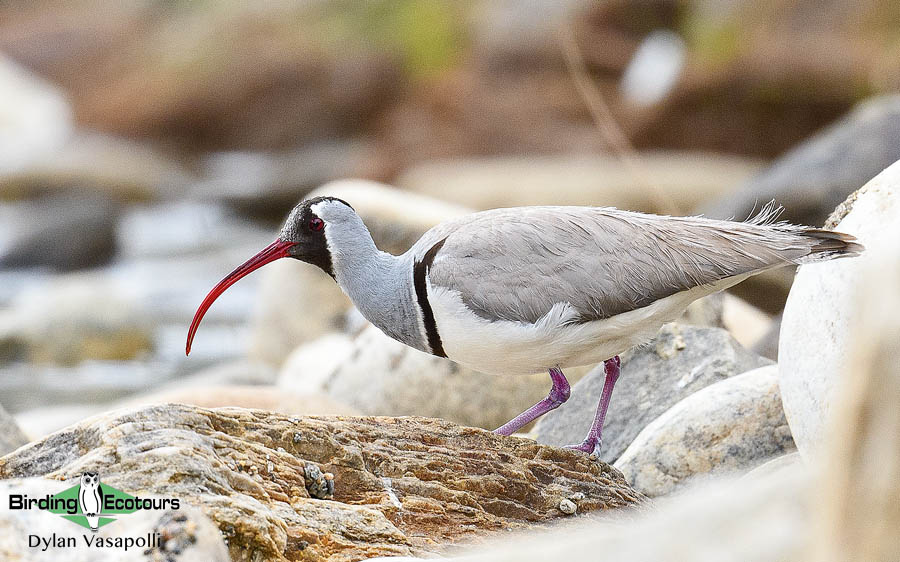
The crystal-clear mountain streams here are home to Ibisbill, a stunning monotypic family and a top target during the tour. Overhead, we will keep our eyes peeled for sightings of Bearded Vulture, Himalayan Vulture, and Golden Eagle.
During a birding session in wetlands at lower elevations, near Karakol, we will look for Oriental Turtle Dove, Pallas’s Grasshopper Warbler, and Corn Bunting.
Overnight (two further nights): Karakol
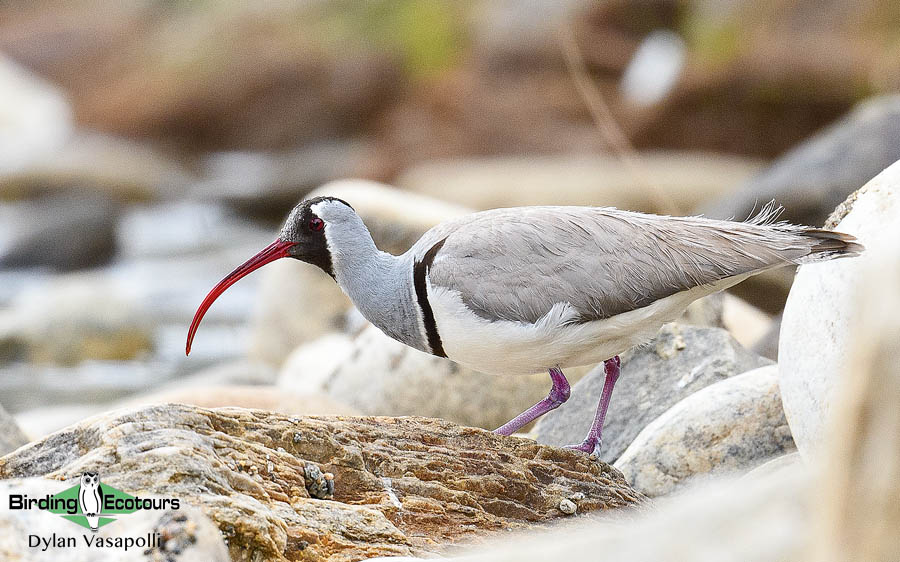 The unique Ibisbill can be found on the mountain rivers in the Tian Shan Mountains.
Day 11. Travel between Karakol, Kyrgyzstan and Almaty, Kazakhstan
We will retrace our steps from Karakol in Kyrgyzstan to Almaty in Kazakhstan. This will give us another opportunity to bird in the Sogety Valley, a sprawling, rocky-gravel desert and former ocean floor located in the Almaty Region of southeastern Kazakhstan. We will look for Pallas’s Sandgrouse, Mongolian Finch, and (Asian) Crimson-winged Finch.
We will also likely explore the Kokpek Pass, an area of steppe and semi-desert, where we can find Chukar Partridge, Saker Falcon, White-crowned Penduline Tit, Asian Desert Warbler, Common Rock Thrush, Blue Rock Thrush, Pied Wheatear, and Red-headed Bunting.
Overnight: Almaty
Day 12. Travel between Almaty and Taukum Desert
Departing early from Almaty, we will head to the northwest and the vast open landscapes of Taukum Desert. Not far out of the city, after passing through wildflower-filled meadows, we will stop at Sorbulak Lake, where we will look for shorebirds and waterbirds, including White-headed Duck, Terek Sandpiper, and Temminck’s Stint. Here we might also potentially find Great White Pelican and Dalmatian Pelican.
In the afternoon, we will reach the artesian wells in Taukum Desert. A wide range of birds usually occur at high densities here due to the water in an otherwise parched landscape, especially during migration. Flocks of larks are possible, and could be made up of Calandra Lark, Bimaculated Lark, Asian Short-toed Lark, Greater Short-toed Lark, and Crested Lark.
There will be the opportunity for an optional night drive to look for desert-dwelling mammals, such as jerboas.
Overnight: Private comfortable yurt camp
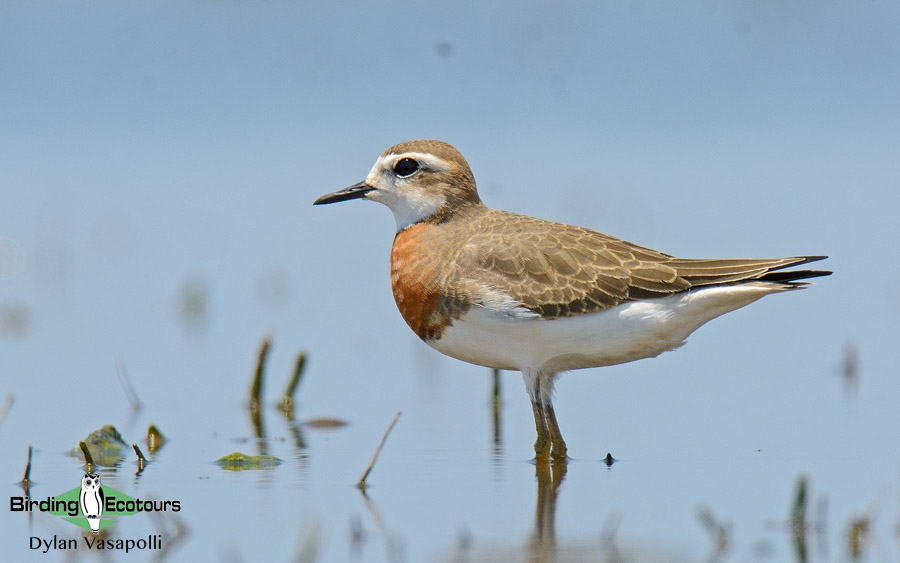
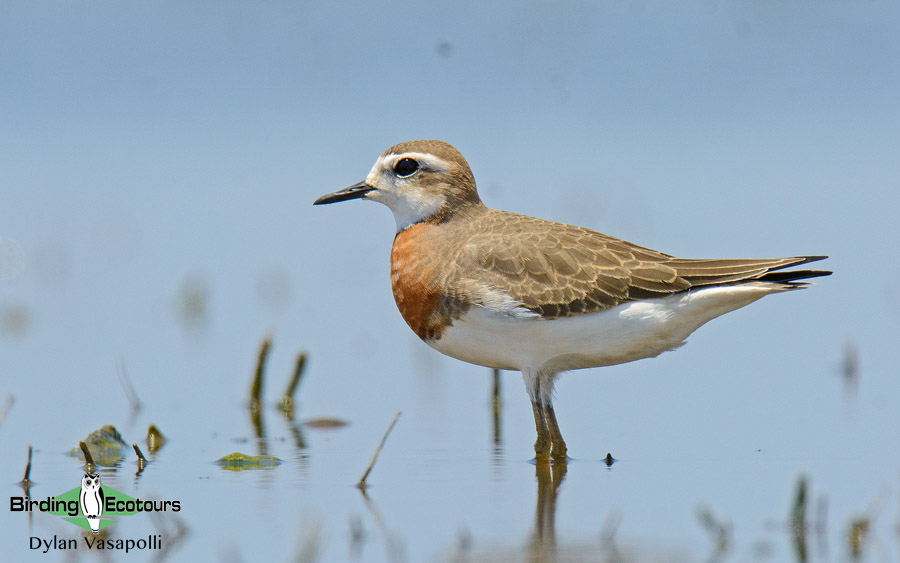 Caspian Plover will be a top target while we are birding in Taukum Desert.
Day 13. Taukum Desert birding
We will spend the day birding in the expansive, remote, and undisturbed steppe habitats of Taukum Desert. Our two main targets will be Asian Houbara (Macqueen’s Bustard) and Caspian Plover. Sightings of either, but hopefully both, of these highly sought-after species will likely provide a tour highlight.
In addition to the open steppes, we will also visit Topar Lake and Zheltorangly Forest, both designated as BirdLife International Important Bird and Biodiversity Areas. Here we will search for Yellow-eyed Pigeon, Shikra, Pallid Scops Owl, White-winged Woodpecker, Great (Steppe) Grey Shrike, and Saxaul Sparrow.
Overnight: Private comfortable yurt camp
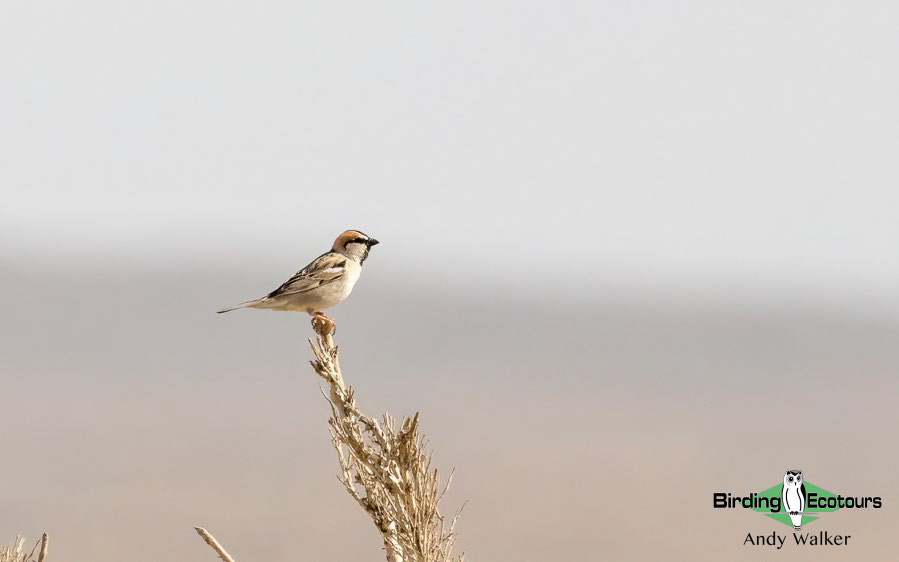 Saxaul Sparrow is found in open sandy areas across arid parts of Central Asia.
Day 14. Taukum Desert birding and travel back to Almaty
After enjoying a final morning of birding in Taukum Desert, possibly enjoying further sightings of Asian Houbara (Macqueen’s Bustard) or Caspian Plover among others, we commence our journey back to Almaty.
We will most likely call in at Sorbulak Lake again to check for any new migratory birds moving through the area, potentially including Common (Eurasian) Hoopoe, European Roller, European Bee-eater, Lesser Grey Shrike, and more.
Overnight: Almaty
Day 15. Flight between Almaty and Astana with birding near Astana
We will board our domestic flight between Almaty and Astana, likely in the morning. After arriving in Kazakhstan’s modern capital city, we will head out to visit some birding sites around the city. During our afternoon birding session we will hope to find Red-footed Falcon, Short-eared Owl, and Black Lark, along with a wide range of other species.
Overnight: Astana
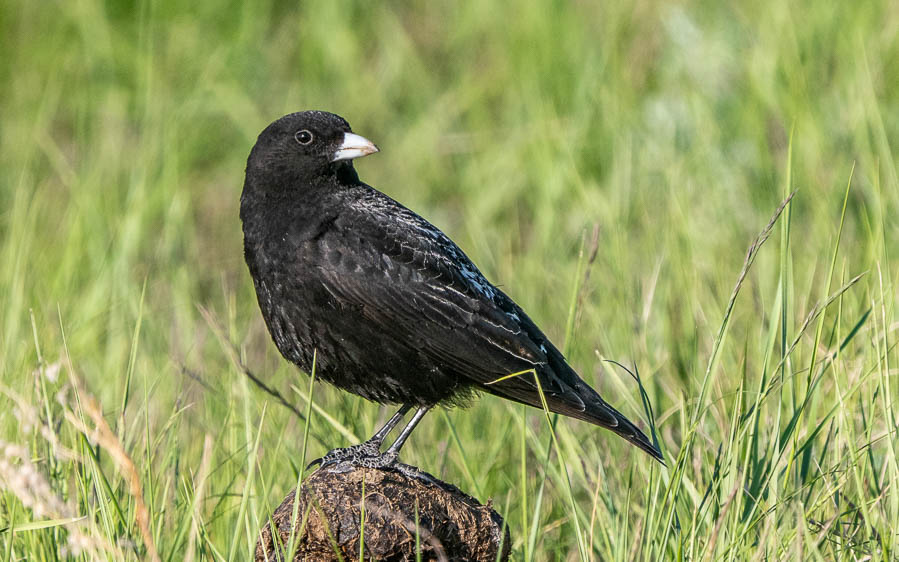
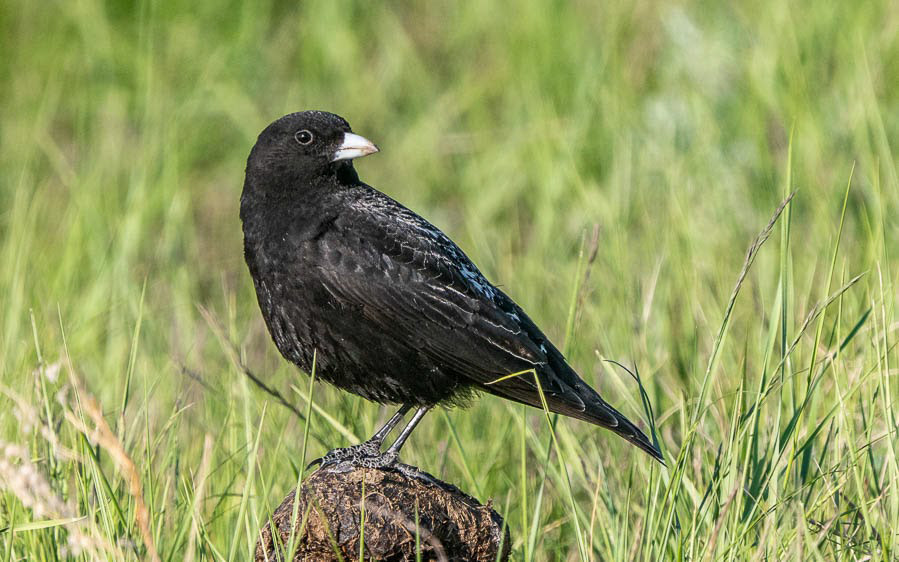 Black Lark is a unique-looking lark mainly restricted to Kazakhstan (photo M. Valkenburg).
Day 16. Birding Korgalzhyn National Park
After an early start from Astana, we will head southwest toward Korgalzhyn National Park, a UNESCO World Heritage Site. This staggeringly huge wetland area, which also includes plenty of steppe grassland, is home to some impressive birds and large mammals – including Saiga (antelope). Our main bird target at the site is the small global breeding population of Sociable Lapwing. These attractive shorebirds are considered Critically Endangered by the IUCN/BirdLife International, and we will hope to find them.
The Sociable Lapwing is not our only target here, however, and we will check out roadside nesting colonies of Black-winged Pratincoles and White-winged Terns – two additional attractive species. Plenty of other shorebirds will be possible, such as Terek Sandpiper, Red-necked Phalarope, Spotted Redshank, and Ruff. Further targets will include (properly wild) Mute Swan, Whooper Swan, White-headed Duck, Red-crested Pochard, Red-necked Grebe, Eurasian Bittern, Dalmatian Pelican, Demoiselle Crane, Caspian Tern, Montagu’s Harrier, and Pallid Harrier. Breeding colonies of attractive Pallas’s Gulls might also contain Caspian Gulls and Slender-billed Gulls.
While waterbirds will likely be forming the main focus of the day and in impressive numbers, we will also look out for interesting and sought-after passerines like Black Lark, White-winged Lark, Booted Warbler, and Bluethroat.
Overnight: Astana
Day 17. Tour concludes with your departure from Astana, Kazakhstan
Sadly, our Central Asian birding tour comes to an end today with your departure at your leisure. Breakfast is the final meal of the tour and hotel check-out time will be mid-morning.
Overnight: Not included
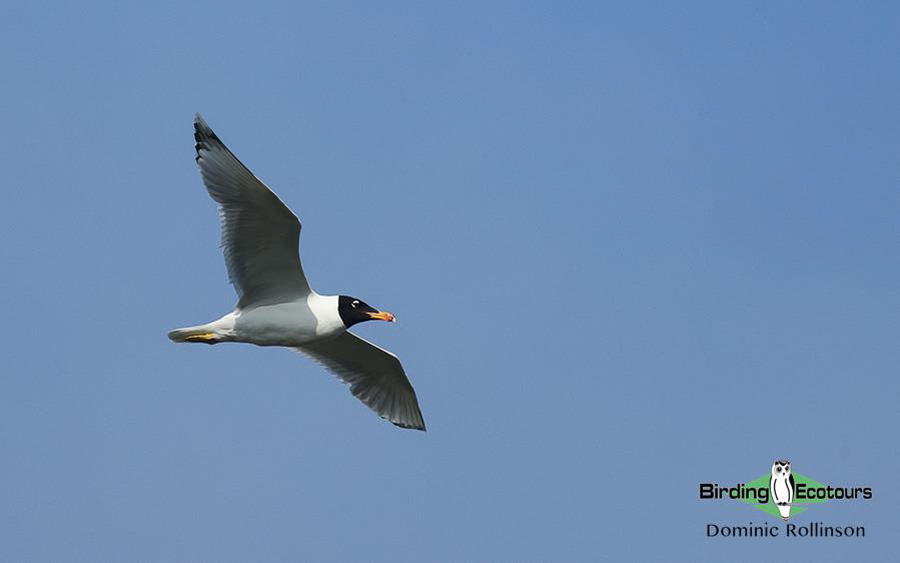
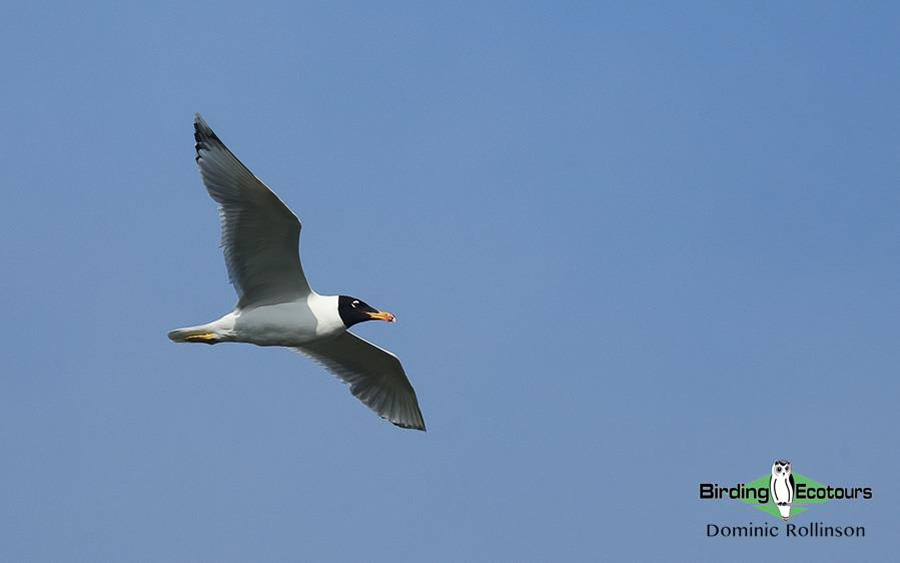 Pallas’s Gull, also known as Great Black-headed Gull, is one of the more attractive species of gulls in the world.
Please note that the itinerary cannot be guaranteed as it is only a rough guide and can be changed (usually slightly) due to factors such as availability of accommodation, updated information on the state of accommodation, roads, or birding sites, the discretion of the guides and other factors. In addition, we sometimes have to use a different international guide from the one advertised due to tour scheduling.
Map