- Duration:
- 11
- Group size:
- 6–8
- Start:
- San José, Costa Rica
- End:
- San José, Costa Rica
Costa Rica Birding Tour: The Pacific Rainforest Adventure
Details
2027
16–26 January
Per person sharing
$5,980 USD
£4,695 GBP / €5,604 EUR
Single supplement
$1,030 USD
£809 GBP / €965 EUR
per person sharing
2028
21–31 January
Per person sharing
$6,590 USD
£5,173 GBP / €6,176 EUR
Single supplement
$1,130 USD
£887 GBP / €1,059 EUR
per person sharing
Itinerary
Download ItineraryCosta Rica Birding Tour: The Pacific Rainforest Adventure
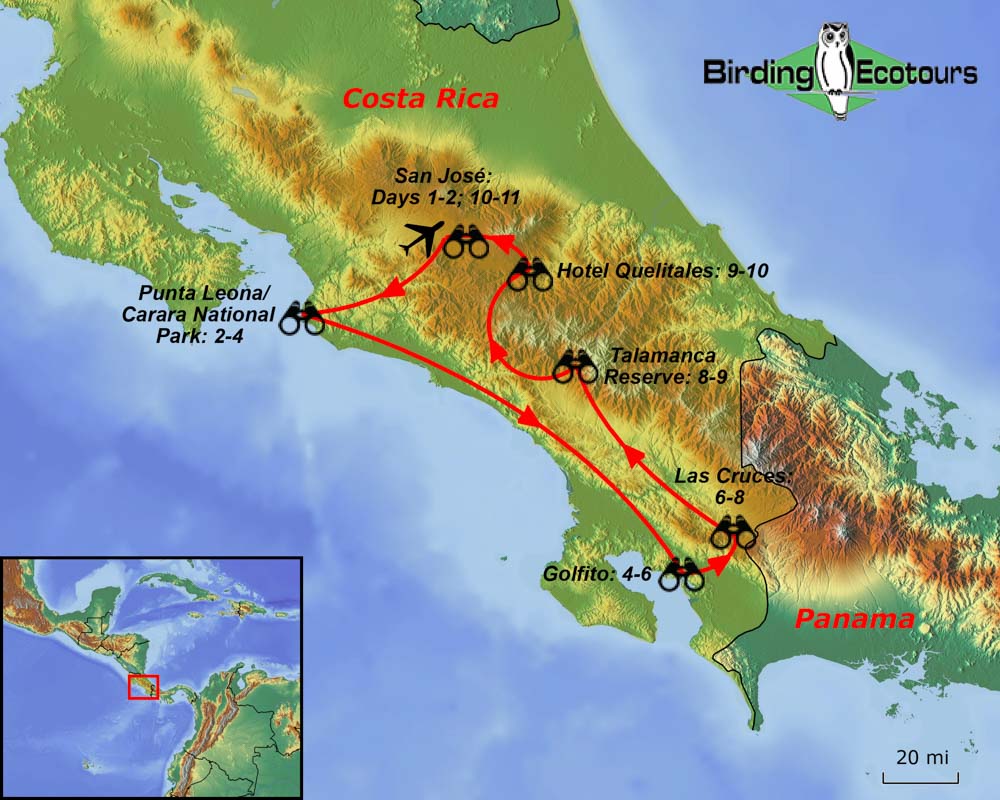
This exciting birding tour explores Costa Rica’s Pacific lowlands and southern regions, covering a wide range of habitats including dry forest, mangrove forest, lowland rainforest, foothill forest, wetlands, and mid-elevation cloud forest.
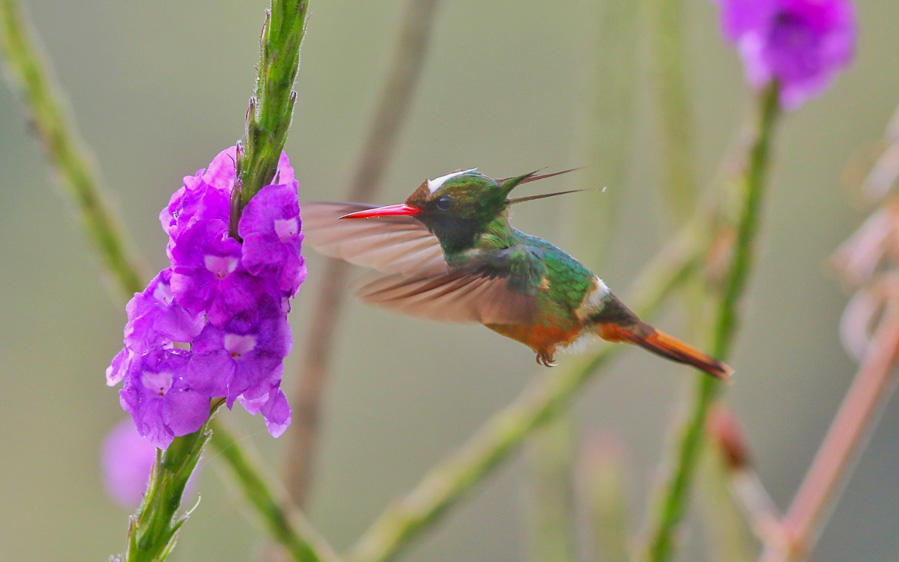 White-crested Coquette, a true gem of the Pacific lowlands (photo Vernon Campos).
The itinerary is designed to maximize species diversity while targeting many of the country’s most sought-after regional specials and endemics such as Yellow-billed Cotinga, White-crested Coquette, Fiery-billed Aracari, the endemic Black-cheeked Ant Tanager, Mangrove Hummingbird, Coppery-headed Emerald, Scarlet Macaw, Costa Rican Brushfinch, and Cabanis’s Ground Sparrow, among many other amazing birds and hummingbirds.
This is a wonderful opportunity for returning visitors to explore a less-visited part of the country, and to enjoy the birds and natural beauty of this outstanding destination.
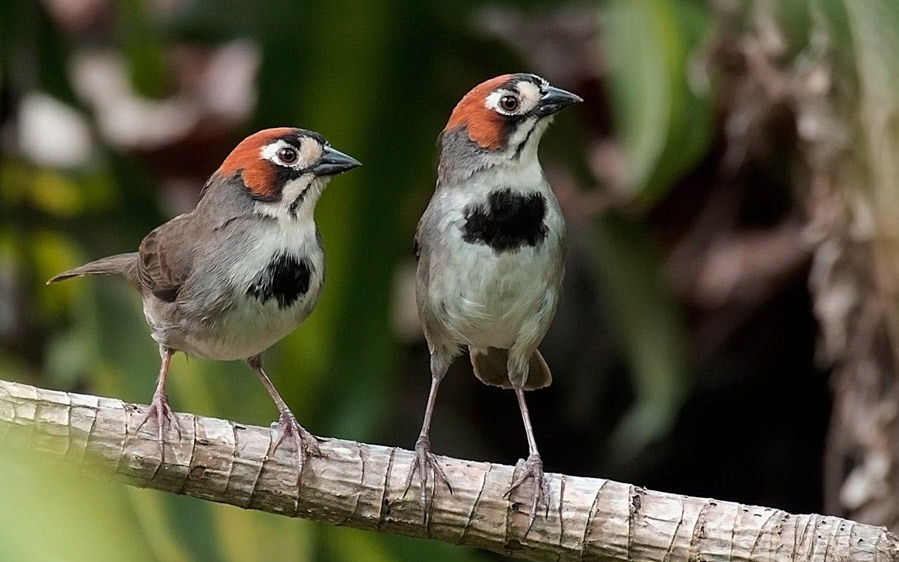 Cabanis’s Ground Sparrow is a Costa Rican endemic that we will target on this tour (photo Vernon Campos).
Itinerary (11 days / 10 nights)
Day 1. Arrival in San José and transfer to hotel
Upon arrival at Juan Santamaría International Airport, you will be met by your Birding Ecotours leader and transferred to our hotel in San José. Depending on arrival times, we may enjoy some light introductory birding in the hotel gardens. Possible species include Rufous-backed Wren, Hoffmann’s Woodpecker, Finsch’s Parakeet, Baltimore Oriole, Squirrel Cuckoo, Cinnamon-bellied Saltator, American Yellow Warbler, White-winged Dove, Rufous-tailed Hummingbird, Clay-colored Thrush, and our first Ferruginous Pygmy Owl.
Overnight: Hotel Robledal
Day 2. San José to Punta Leona and Tárcoles River
We depart San José and travel south toward Punta Leona near Jacó, entering the Pacific lowlands. En route, we explore dry and deciduous forest habitats, targeting species largely restricted to this ecosystem. These may include White-throated Magpie-Jay, Cinnamon Hummingbird, Blue-vented Hummingbird, Double-striped Thick-knee, Turquoise-browed Motmot, Hoffmann’s Woodpecker, Yellow-throated Vireo, Streaked Flycatcher, Lesser Greenlet, Banded Wren, White-lored Gnatcatcher, Spot-breasted Oriole, Orange-fronted Parakeet, and Nutting’s Flycatcher.
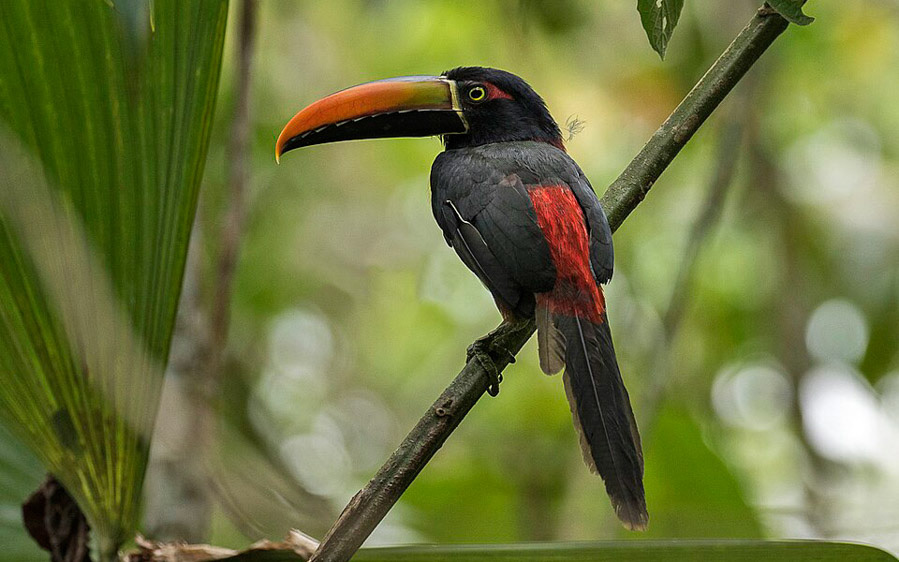 We will look for the distinctive Fiery-billed Aracari on this tour (photo Francesco Veronesi).
Special attention will be given to the calls of the much-desired Long-tailed Manakin, which may be displaying at this time of the year. Other possible sightings include Pacific Screech Owl, Zone-tailed Hawk, King Vulture, and Olive Sparrow.
In the afternoon, we will enjoy a boat trip along the Tárcoles River, one of Costa Rica’s best mangrove birding sites. Species may include Brown Pelican, Magnificent Frigatebird, Royal Tern, Sandwich Tern, White Ibis, Mangrove Swallow, Wood Stork, Anhinga, Bare-throated Tiger Heron, Yellow-crowned Night Heron, Roseate Spoonbill, Common Black Hawk, American Pygmy Kingfisher, Prothonotary Warbler, and Grey-cowled Wood Rail. On this boat cruise, we may also encounter numerous waders, American Crocodile, Scarlet Macaw and, with luck, the endemic Mangrove Hummingbird.
Once we get back from our boat cuise, we have our first chance of finding the highly sought-after Fiery-billed Aracari around the lodge grounds.
Overnight: Punta Leona
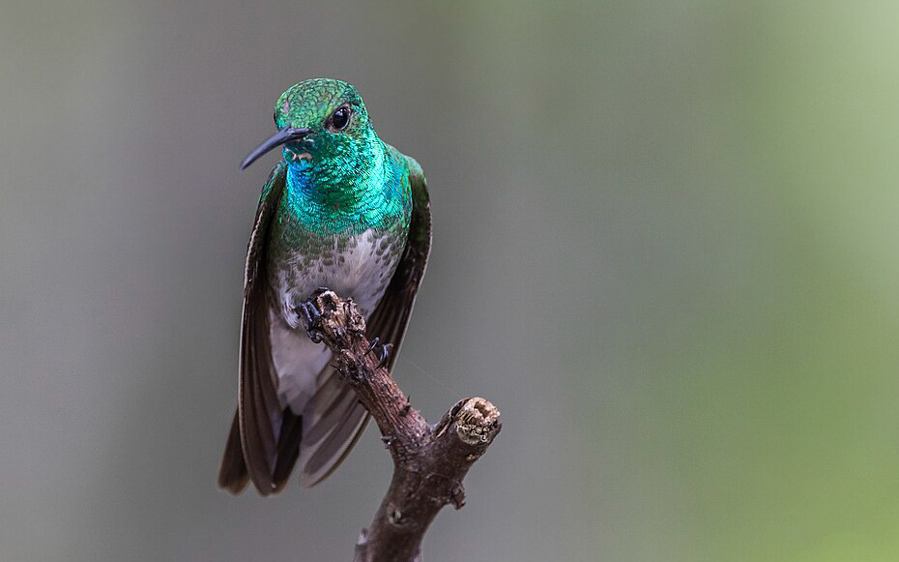 Mangrove Hummingbird will hopefully be found in the mangrove forests along the Tárcoles River (photo Jorge Obando Nature Photo).
Day 3. Carara National Park
Carara National Park is one of Costa Rica’s most important protected areas and likely supports the country’s largest population of Scarlet Macaw. With over 400 recorded bird species across 5,335 hectares of transitional rainforest, birding here can be highly rewarding, though sometimes slow due to consistently warm temperatures.
While exploring forest trails, we may encounter the elusive Streak-chested Antpitta, Black-faced Antthrush, Great Tinamou, Red-capped Manakin, Northern Bentbill, Golden-crowned Spadebill, Sulphur-rumped Flycatcher, Northern Schiffornis, Crested Guan, Olivaceous Woodcreeper, Slaty Antwren, Dusky Antbird, Chiriquí Foliage-gleaner, Slaty-tailed Trogon, Lineated Woodpecker, Northern Barred Woodcreeper, Rufous-breasted Wren, and Black-hooded Antshrike.
Key targets here include Orange-collared Manakin and our first opportunity for the range-restricted Fiery-billed Aracari and Riverside Wren.
Overnight: Punta Leona
Day 4. Transfer from Punta Leona to Golfito
We then continue south toward Golfito, a picturesque town surrounded by lush rainforest near the entrance to the Osa Peninsula. Birding stops along the long drive allow us to search for localized species such as Sapphire-throated Hummingbird and the scarce Veraguan Mango. Other key species include Black-striped Woodcreeper, Charming Hummingbird, Baird’s Trogon, and the localized Black-cheeked Ant Tanager, a highly sought-after Costa Rican endemic, especially for birders who want to see all four of the world’s ant tanager species!
Overnight: Golfito
Day 5. Rincón Bridge and La Gamba
An early pre-dawn start brings us to the famous Rincón Bridge at first light, one of the best sites for the highly sought-after Yellow-billed Cotinga. Other targets include Turquoise Cotinga, Short-billed Pigeon, Band-tailed Barbthroat, Golden-naped Woodpecker, White-crowned Parrot, Scarlet Macaw, Yellow-throated Toucan, Fiery-billed Aracari, Black-striped Sparrow, Orange-billed Sparrow, Slaty-tailed Trogon, Lesson’s Motmot, and a variety of aquatic species.
We return toward Golfito making birding stops in areas such as La Gamba, where additional species may include Black-hooded Antshrike, Black-faced Antthrush, Black-striped Woodcreeper, Eye-ringed Flatbill, Yellow-bellied Flycatcher, Chestnut-backed Antbird, Buff-rumped Warbler, and further chances for Fiery-billed Aracari.
Overnight: Golfito
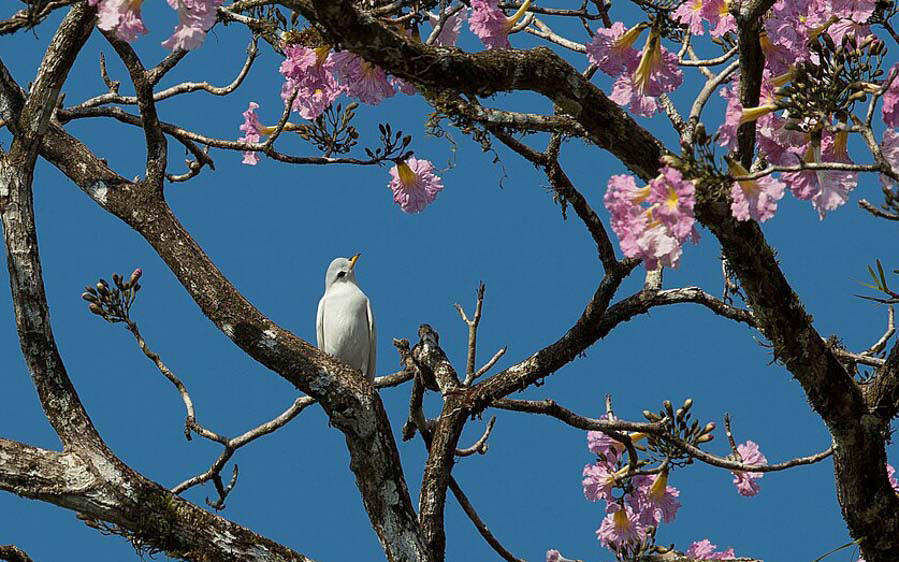 Yellow-billed Cotinga is an important target on this Costa Rica tour (photo Bruno Conjeaud).
Day 6. Coto 47 Wetlands and Wilson Botanical Garden
We depart Golfito and explore wetlands and aquatic habitats around Coto 47 before continuing to the renowned Wilson Botanical Garden at Las Cruces. This internationally recognized garden is part of the Las Cruces Research Station and supports extraordinary biodiversity.
The gardens and surrounding forest harbor over 425 recorded bird species, along with hundreds of butterflies, mammals, reptiles, and amphibians. The area lies within the La Amistad Biosphere Reserve, one of Central America’s most important conservation landscapes.
Overnight: Las Cruces OTS
Day 7. Wilson Botanical Garden and Cerro Paraguas
We spend the morning birding the botanical garden in search of the stunning and elusive White-crested Coquette. Other possible species include Snowy-bellied Hummingbird, Charming Hummingbird, Olivaceous Piculet, Gartered Trogon, Brown-hooded Parrot, Orange-billed Nightingale-Thrush, Thick-billed Euphonia, Spot-crowned Euphonia, Speckled Tanager, Isthmian Wren, Bay-headed Tanager, Golden-hooded Tanager, Red-faced Spinetail, White-throated Thrush, Rufous-breasted Wren, and Crimson-fronted Parakeet.
In the afternoon, we travel to higher elevations around Cerro Paraguas, targeting mid-elevation species such as Costa Rican Brushfinch, Elegant Euphonia, Chestnut-capped Brushfinch, White-naped Brushfinch, Black-bellied Wren, Spotted Wood Quail, Scaled Pigeon, Red-headed Barbet, Brown-billed Scythebill, Ruddy Foliage-gleaner, White-throated Spadebill, Ochraceous Wren, Black-faced Solitaire, Golden-winged Warbler, Collared Trogon, and Smoky-brown Woodpecker. After dusk, there is a chance to see Striped Owl.
Overnight: Las Cruces OTS
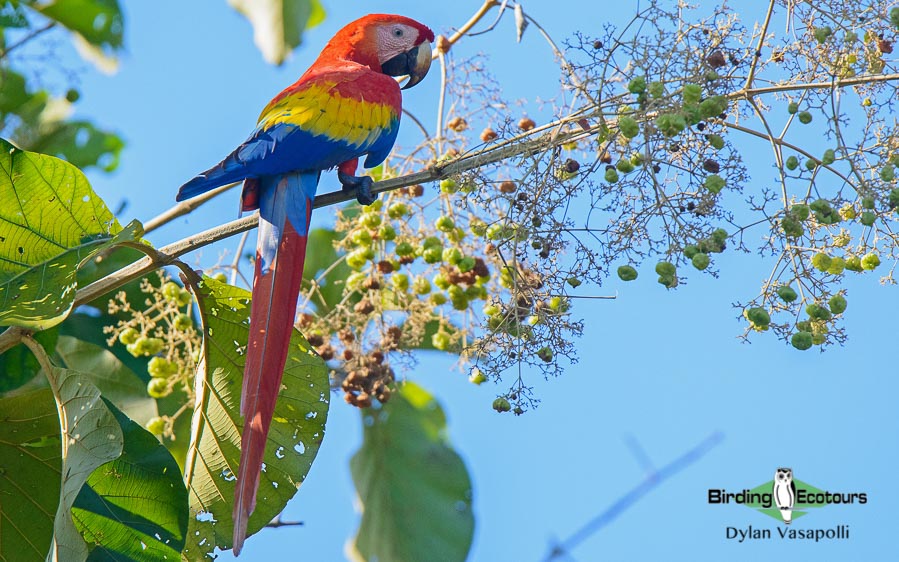 The large and colorful Scarlet Macaw is always a fan favorite.
Day 8. Talamanca Reserve and Skutch Biological Corridor
We explore the Talamanca Reserve on the slopes of Cerro Chirripó, where we may have another opportunity for White-crested Coquette. Additional species may include Magenta-throated Woodstar, Garden Emerald, White-tailed Emerald, Brown Jay, Scarlet-thighed Dacnis, and Sulphur-winged Parakeet.
Later, we bird the Alexander F. Skutch Biological Corridor near San Isidro, searching for Tawny-winged Woodcreeper, Northern Plain Xenops, Rufous Piha, Yellow-throated Vireo, Red-crowned Ant Tanager, Rufous-tailed Jacamar, Purple-crowned Fairy, Golden-naped Woodpecker, Green Shrike-Vireo (whose call sounds like “can’t see me,” inspiring its informal nickname), the elusive White-throated Crake, Blue-throated Sapphire, Black-chested Jay, and White-tailed Emerald. We will also pay special attention to the near-endemic Red-fronted Parrotlet, as well as Ocellated Crake, Rosy Thrush-Tanager, and Pearl Kite.
Overnight: Talamanca Reserve
Day 9. Talamanca Reserve to Hotel Quelitales
We depart Talamanca and travel toward Cachí, searching for the shy and localized Cabanis’s Ground Sparrow. At Hotel Quelitales excellent birding may produce Coppery-headed Emerald, Green-fronted Lancebill, Sooty-faced Finch, White-bellied Mountain-gem, Slaty-backed Nightingale-Thrush, White-eared Ground Sparrow, Chestnut-capped Warbler, Black-headed Saltator, Tawny-capped Euphonia, Tufted Flycatcher, Spotted Barbtail, Zeledon’s Antbird, White-ruffed Manakin, and possibly the secretive Scaled Antpitta, which occasionally visits the worm feeders. Sunbittern is often seen around the hotel grounds.
Overnight: Hotel Quelitales
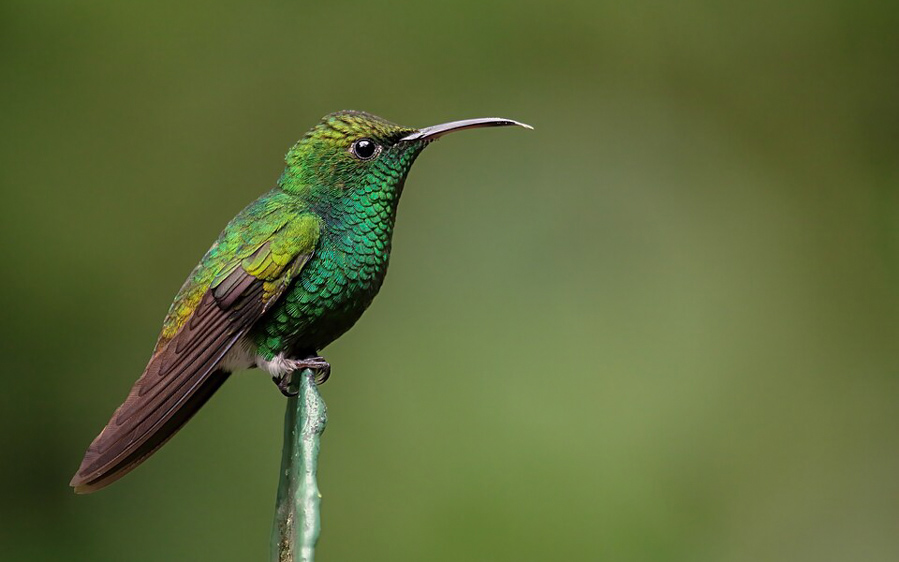 The exquisite male Coppery-headed Emerald (photo Cephas).
Day 10. Hotel Quelitales to San José
After a final morning of birding at Hotel Quelitales, we return to San José for our farewell group dinner. With luck, a daytime-roosting Mottled Owl may be found at the hotel.
Overnight: Hotel Bougainvillea San José
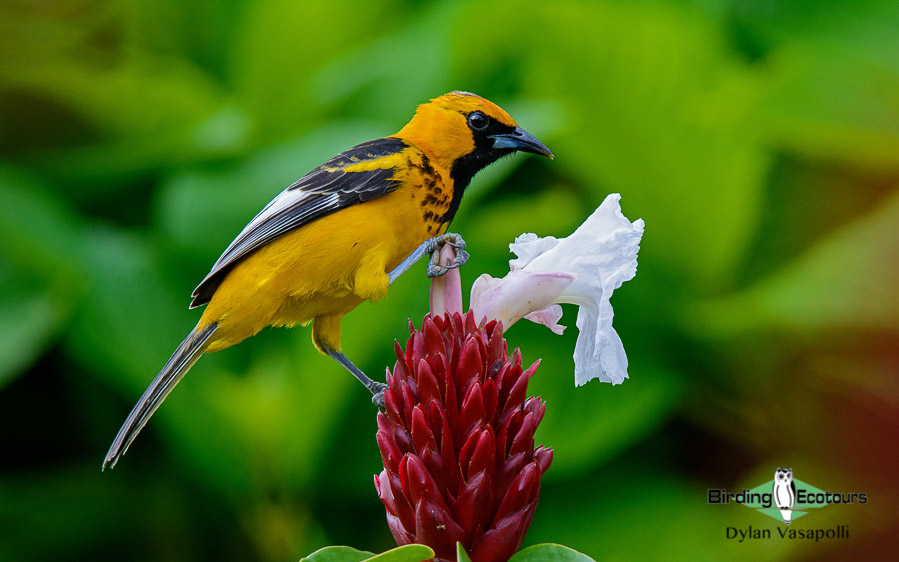 The delightful Spot-breasted Oriole can be seen in the forests of Costa Rica.
Day 11. Departure
We will transfer to the airport for international flights home after an unforgettable Costa Rica birding adventure.
Please note that the itinerary cannot be guaranteed as it is only a rough guide and can be changed (usually slightly) due to factors such as availability of accommodation, updated information on the state of accommodation, roads, or birding sites, the discretion of the guides, and other factors. In addition, we sometimes have to use a different guide from the one advertised due to tour scheduling or other factors.
Map