23 JUNE–09 JULY 2026
By Zach Simpson
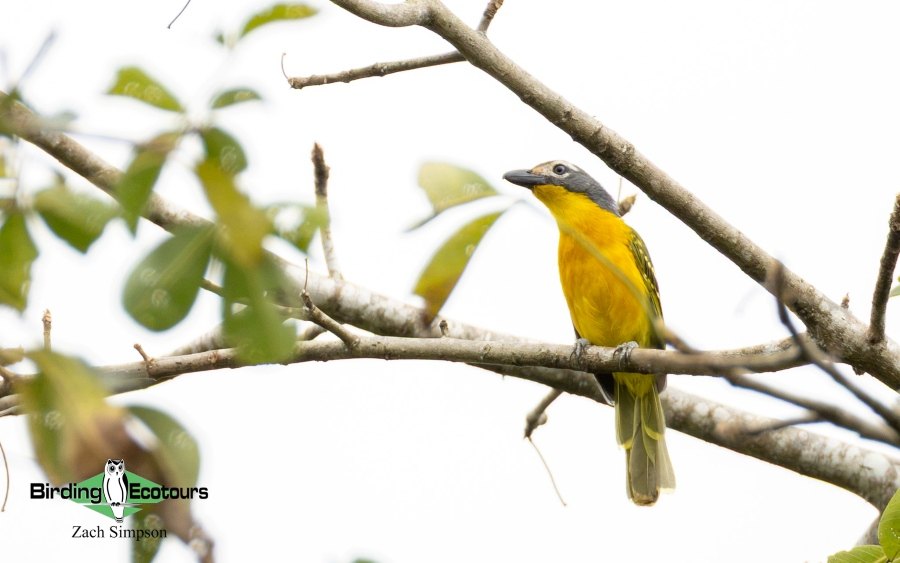
Monteiro’s Bushshrike is one of three special bushshrikes that we target on this trip.
Overview
Angola has become one of Africa’s premier birding destinations since reopening to tourism after the end of its civil war, offering birders the chance to see numerous endemic and range-restricted species. This 17-day tour focused on finding as many of these specialties as possible, with excellent success and an impressive total of nearly 500 bird species recorded. Our route followed Angola’s diverse habitats, from the northern forests to the southern escarpment and Namibe region, targeting the country’s richest birding areas. We enjoyed excellent birding, stunning scenery, and many memorable encounters on this trip.
A full eBird trip report with many more photos can be viewed here.
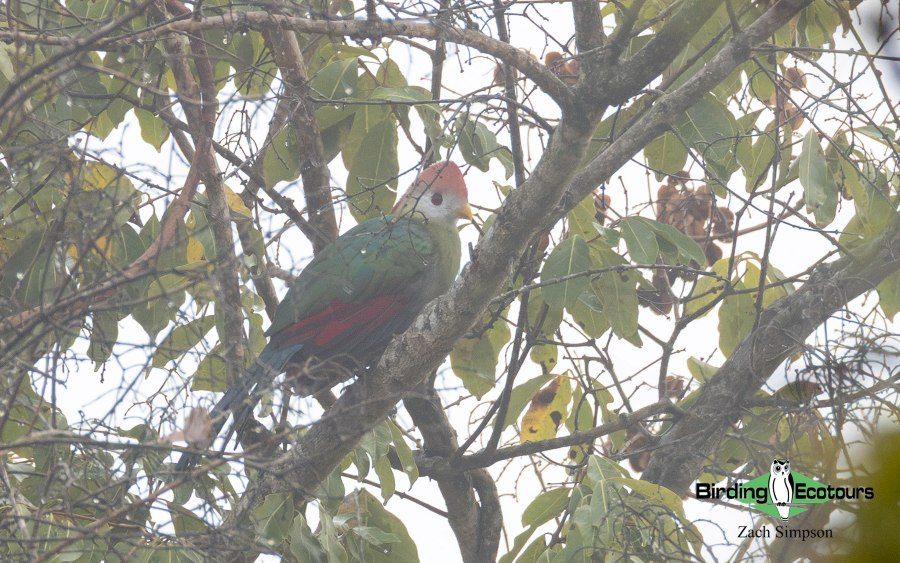
Red-crested Turaco is one of Angola’s many endemics. It is also Angola’s national bird and is highly sought-after by world birders.
The tour group had a successful pre-tour birding morning near our hotel. We were able to see Grey-striped Spurfowl, as well as some of the other dry woodland targets. We began and ended our journey in Luanda. Our first day produced Monteiro’s Bushshrike and Gabela Helmetshrike on our way to the northern escarpment forests. The following day we quickly found one of our major targets: Braun’s Bushshrike. We continued to Kalandula, home of the impressive Kalandula Falls, where Red-crested Turaco showed, and White-headed Robin-Chat was also seen well.
Our next stop was Maxima, where we enjoyed repeat views of the critical trio of endemics: Grey-striped Spurfowl, Gabela Helmetshrike, and Monteiro’s Bushshrike. More widespread birds such as Bates’s Paradise Flycatcher and Yellow-bellied Wattle-eye, as well as Hartert’s Camaroptera, Angola Batis, and White-fronted Wattle-eye were seen. Moving on to Kumbira Forest, we faced a bit more of a challenge with Gabela Bushshrike, but eventually managed. Pulitzer’s Longbill and Gabela Akalat proved far more cooperative.

Kalandula Falls is one of the most iconic landmarks in Angola
In the highlands we explored Mount Moco, dambos and surrounding miombowoodlands. These areas were especially productive, with highlights including specials such as Bocage’s Weaver, Brazza’s Martin, Miombo Barbet, Miombo Wren-Warbler, Böhm’s Flycatcher, Souza’s Shrike, Angola Lark, Bocage’s Sunbird, Black-and-rufous Swallow, Huambo Cisticola, Dusky Twinspot, Western Tinkerbird, Black-chinned Weaver, and Ludwig’s Double-collared Sunbird. Further south we picked up more southern escarpment gems, including Swierstra’s Spurfowl, Angola Cave-Chat, Bocage’s Akalat, Angola Waxbill, White-headed Barbet and Rockrunner.
Descending into the arid lowlands north of the Namib Desert, we found a suite of desert-adapted specials: Karoo Long-billed Lark, Tractrac Chat, Rüppell’s Parrot, Hartlaub’s Spurfowl, Bare-cheeked Babbler, Rosy-faced Lovebird, Monteiro’s Hornbill, White-tailed Shrike, Damara Red-billed Hornbill, and many others.
Our final two days were spent gradually returning north along the Atlantic coast. Though mainly a travel leg, we made time for several key stops, yielding species such as Chestnut-banded Plover, Damara Tern and Sooty Shearwaters. A visit to the Kwanza River mangroves capped the trip with excellent views of Mangrove Sunbird, followed by West African Crested Tern at the river mouth.
Detailed Report
Day 0, 22nd June 2026. Pre-tour birding with great success
Since everyone had arrived in Angola two nights before the official start of the tour we had a full day at the hotel. The group opted to take a walk into some woodland across the road from the hotel to do some general birding. This morning proved to be very successful. Multiple endemics were seen. Within no time, we heard multiple groups of Grey-striped Spurfowls. This was our main target for the day as it can be quite tricky! Seeing it this early in the tour was useful. Despite hearing several calling spurfowls, it took a good few hours before we had a bird come onto the road, for a brief second before flying off! Other good birds seen included White-fronted Wattle-eye, Red-backed Mousebird and Pale-olive Greenbul.
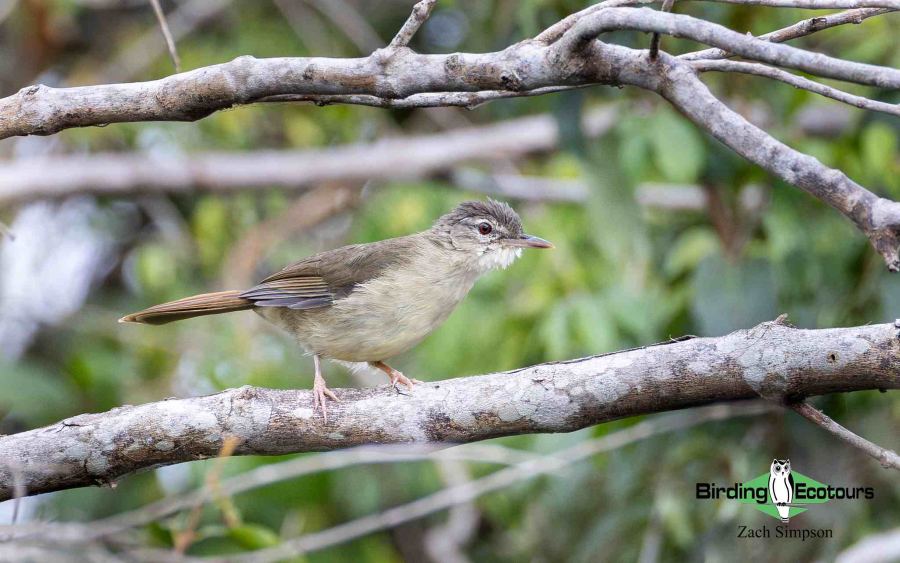
This Pale-olive Greenbul showed very well for us!
Day 1, 23rd June 2026. First taste of dry baobab woodland and northern escarpment forests
Our tour started with a travel day going northeast of Luanda towards the city of Uige. We set out early this morning, with packed breakfasts, and enjoyed the first of many sunrises on the road from our extended Landcruiser. As the sun rose, we left the city and ancient baobabs started to appear in the landscape. We made our first short birding stop of the trip and saw stunning Golden-backed Bishops in breeding plumage. Continuing, we enjoyed a number of great species. These included Black Scimitarbill, Swamp Boubou, Rufous-tailed Palm Thrush, Angola Batis, White-fronted Wattle-eye, Falkenstein’s Greenbul, Hartert’s Camaroptera, Pale-olive Greenbul and Bubbling Cisticola. However, two birds in quick succession stole the show. Gabela Helmetshrike and Monteiro’s Bushshrike gave us great views.
After a quick post-birding coffee, we hit the road again. The next stop was around midday where we ate our lunch at a bridge and enjoyed views of Forest Swallow. Cassin’s Flycatcher was another good bird. After some vehicle issues, we were back on the road. Some good birding was done that evening around the northern escarpment.
Our stop on the edge of a natural pan produced Red-throated Cliff Swallow, Brown-backed Scrub Robin, Yellow-mantled Widowbird, Red-necked Buzzard and Brown Twinspot for some. The forest produced Yellow-crested Woodpecker, Red-fronted Parrot and Chestnut-breasted Nigrita. Our last push to the hotel along the forested road produced a very large Gaboon Adder! This was certainly the reptile highlight of the tour!
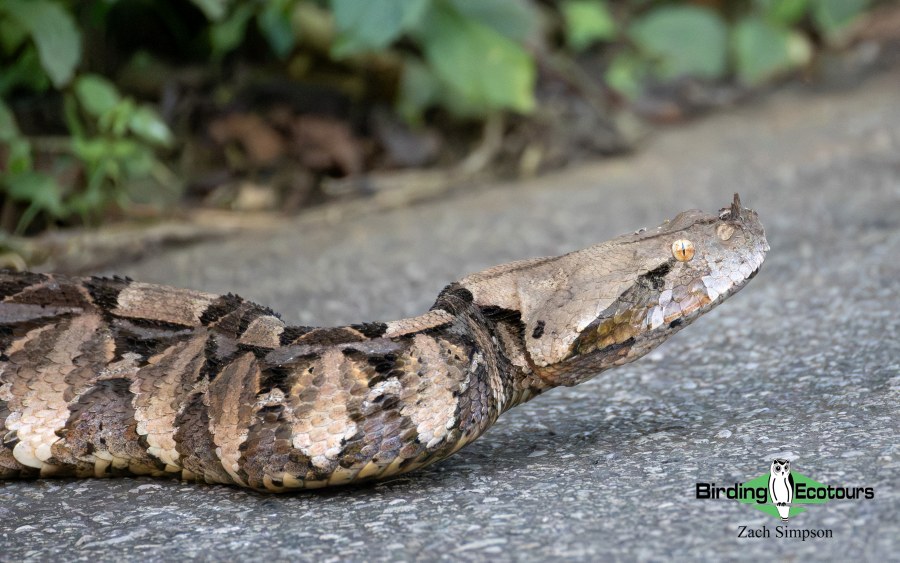
Gaboon Adder generated great excitement among the group. This species has the longest fangs of any snake in the world.
Day 2, 24th June 2026. Full day in the northern forests near Uige
Our full day of birding in the northern escarpment forests started with a predawn breakfast. We arrived at our forest patch for the morning just as the forest was waking up. The priority was Braun’s Bushshrike. After some time we managed views of this difficult species. Great Blue Turaco made an appearance, and we enjoyed some fantastic scope views. Throughout the morning there was a good selection of barbets including Bristle-nosed, Naked-faced and Speckled Tinkerbird. Black-casqued, Congo Pied and Piping Hornbills also showed. Gabon Coucal and Yellow Longbill were the skulkers of the morning, thankfully we enjoyed views of both of these birds. Other birds included African Piculet, Buff-throated Apalis, Fraser’s Rufous Thrush, Bocage’s Bushshrike, Banded Prinia, Swamp Palm Bulbul, Yellow-mantled Weaver, as well as four Nigrita species including Pale-fronted during our morning coffee stop. Later we enjoyed our lunch in some grassland along the same road. Here we added Chattering Cisticola.
Transiting to our next forest site for the afternoon we managed views of a distant Cassin’s Hawk-Eagle, this bird produced great excitement! This next forest patch was met with mixed emotions; the road is currently a logging road. We saw first-hand the logging of pristine forest; despite this we added some amazing birds. These included Afep Pigeon, Black Bee-eater, Many-colored Bushshrike, Yellow-throated Nicator, Black-throated Apalis, Splendid Starling and Grey-headed Kingfisher.
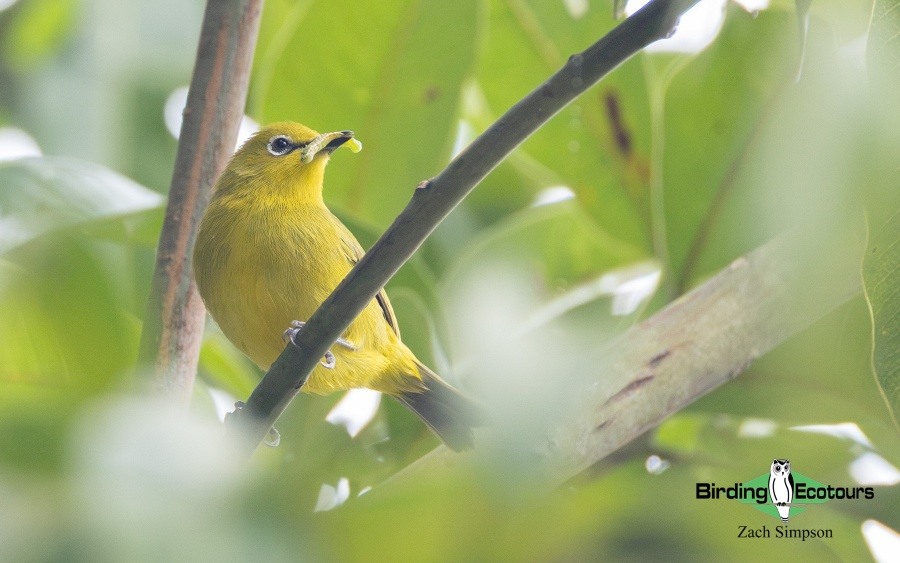
Angola White-eye bringing food to the nest!
Day 3, 25th June 2026. Morning birding before transfer to Kalandula
Despite this being our travel day to Kalandula we were able to enjoy a quick session of morning birding in the forests near Uige. Jumping out of the vehicle, a pair of Guinea Turacos gave us good views through the mist. Walking through some of the grassy habitat we added Black-collared Bulbul, Simple Greenbul, Black-faced Canary, Orange-cheeked Waxbill and good views of Brown Twinspot. As we moved into the degraded forest patch, we were treated to perched views of Red-fronted Parrots. Eastern Yellow-billed Barbets, Narrow-tailed and Chestnut-winged Starling and Afep Pigeons were all seen in this area. Lower down into the forest we had views of Lowland Masked Apalis and brief views of a pair of Green Twinspots. Back at the vehicle we picked up Angola White-eye at a nest and a pair of Sooty Flycatchers hawking insects.
By mid-morning we were on the road, transiting to Kalandula, and the rest of the day was spent traveling, with a quick stop here and there. We did add Bateleur and Ayre’s Hawk-Eagle. We ended our day’s travel with magnificent views of Kalandula Falls!
Day 4, 26th June 2026. Birding the miombo and swamp forests near Kinjila Village
With our birding only 30 minutes away, we enjoyed an early breakfast at the hotel. Once on the road the excitement grew as there were many great birds ahead of us. Our first stop was a very successful one and we added many species quickly. Our main target on the first stretch of road was Red-crested Turaco. The turacos were very vocal, but to get a visual was not easy. Eventually we got prolonged scope views of one bird in a distant tree. While working for the turaco a pair of Black-backed Barbets showed briefly, a Western Bronze-naped Pigeon gave us excellent views and a pair of Bates’s Sunbirds were a fantastic surprise. Other species included Cabanis’s Greenbul, White-spotted Flufftail, Blue-throated Brown Sunbird and a few flocks of Sharp-tailed Starlings.
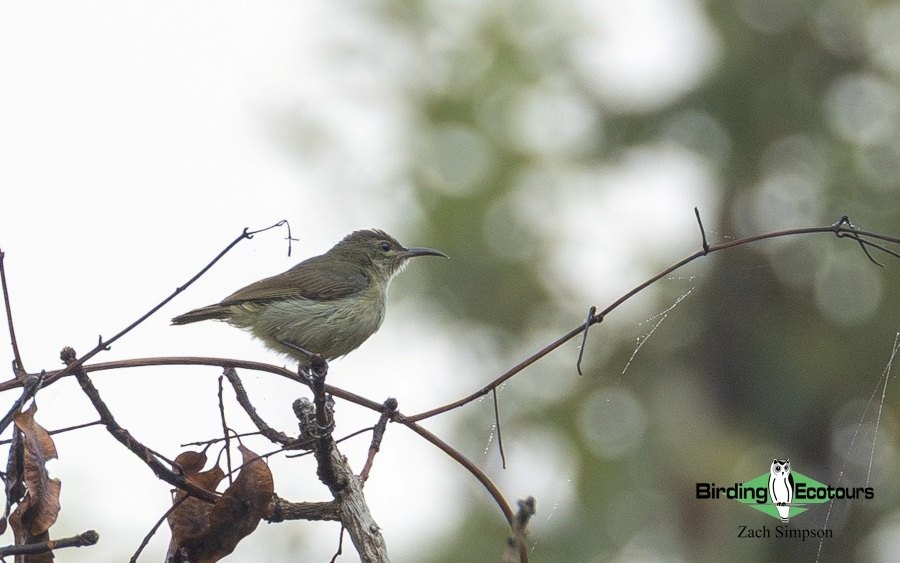
Bates’s Sunbird was a big distraction while trying to get views of Red-crested Turaco!
Heading onward towards the swamp forest patch, we saw a pair of Anchieta’s Barbets. We joined our local guides for the main target in this habitat and then proceeded into the forest. Unfortunately, the birds did not show immediately and so some of us walked to another forest patch, where we had better success. White-headed Robin-Chat in the bag! Other notable species from these forest patches included Grey-winged Robin-Chat, Brown-headed Apalis, Black-throated Wattle-eye, Sharpe’s Drongo, Narina Trogon, Blue Malkoha and Honeyguide Greenbul.
Lunch was eaten in a small patch of swamp forest surrounded by a flood plain. Here we were again treated to views of White-headed Robin-Chat. Chirping Cisticola was also a nice addition.
The afternoon was very quiet, and we did not add much. We did hear Pale-billed Hornbill, Miombo Scrub Robin and African Broadbill, as well as African Wood Owl as it started to get dark.
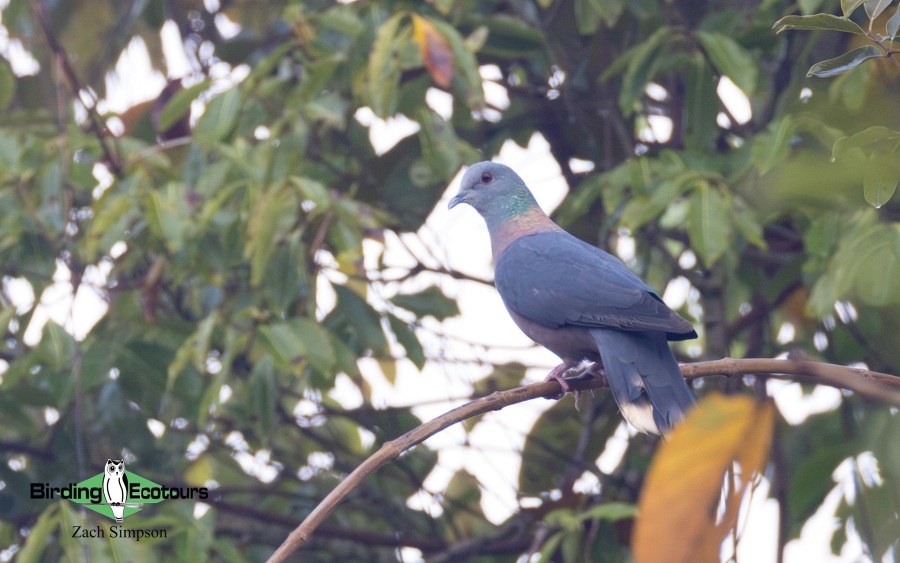
Western Bronze-naped Pigeon gave us incredible views!
Day 5, 27th June 2026. Final birding at Kinjila and transfer to Maxima
Another travel day awaited us; nevertheless, we did some birding in the Kalandula area this morning. A bridge over a large river produced huge numbers of Red-throated Cliff Swallows (they breed under the bridge). We also added Blue-headed Coucal to the fast-growing list. Further forest and woodland birding produced Ross’s Turaco, Shikra, African Barred Owlet (heard only), Brown-backed Honeybird, Gorgeous Bushshrike, Whistling Cisticola and Orange-winged Pytilia.
The rest of the day was spent on the road, with a quick lunch stop in some forest. Here we saw Carmelite Sunbird, which was a big target for some on the trip. A Grey Kestrel was seen in the late afternoon on a distant Baobab. Arriving at the hotel, we were met by Square-tailed Nightjars and a Puff Adder crossing the road. This was a great end to a long travel day!
Day 6, 28th June 2026. Birding the dry woodlands of Maxima
Our full day around Maxima was a great success! The number of Angola specials in this area is astounding. Having seen the three main targets, Monteiro’s Bushshrike, Gabela Helmetshrike and Grey-striped Spurfowl (on the pre-tour day) already, we spent this day working on some of the other specials. Our first stop produced good views of African Broadbill and a Red-tailed Bristlebill for one of our group members. The call of African Fish Eagle sounded regularly. Further on we added Forest Scrub Robin, flight views of Grey-striped Spurfowl, Mottled and African Swifts, Böhm’s and Mottled Spinetails and Grey Tit-Flycatcher and Ashy Flycatchers. Red-backed Mousebirds were also very common. Olive Bee-eaters were also seen hawking insects.
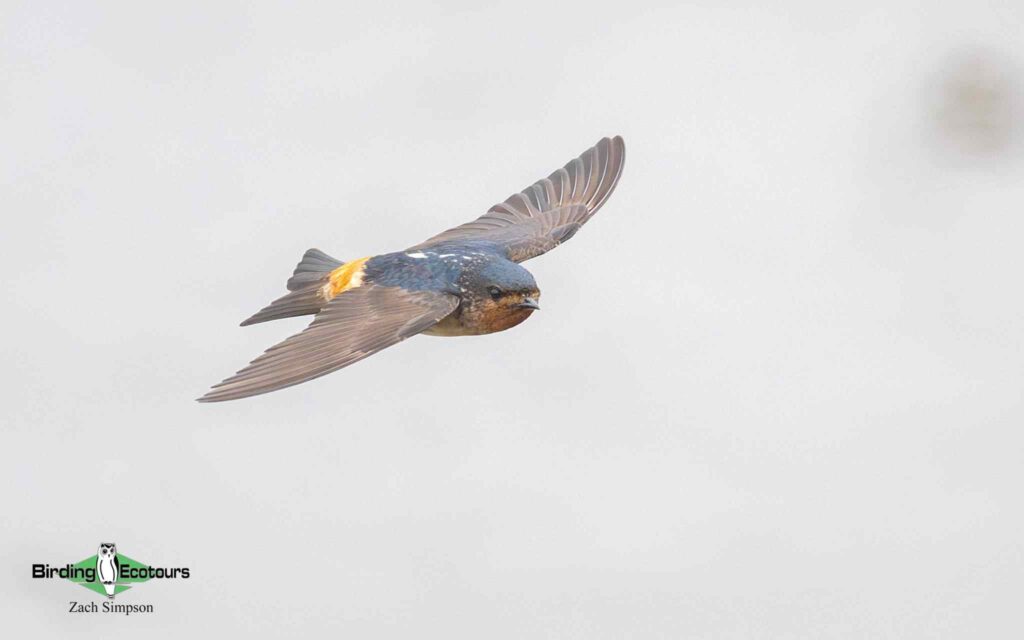
We saw an incredibly huge flock of Red-throated Cliff Swallows building nests under a bridge.
Further on, in some moister habitat, we found Bates’s Paradise Flycatcher and Yellow-bellied Wattle-eye. After our coffee stop, we had a large bird party pass through. From one spot we recorded Monteiro’s Bushshrike, Gabela Helmetshrike, Red-crested Turaco, Yellow-bellied and White-fronted Wattle-eye, Angola Batis, and Pale-olive Greenbul. These major specials were accompanied by White-crested Helmetshrikes and Green Woodhoopoes. Leaving the area, some had brief views of Grey Waxbill.
The afternoon and early evening were spent birding a large bridge not far from the accommodation. An interesting observation made from the bridge was a young Gabar Goshawk raiding weaver nests in the reeds. Other good birds seen included Senegal Lapwing, Collared Pratincole, Allen’s Gallinule, White-faced Whistling Duck, Mourning Collared Dove and Greater Swamp Warbler with a nest. A large flock of about 20 Black-faced Canaries was also nice to see.
Day 7, 29th June 2026. Birding to Conda
We started with breakfast at the hotel, and the calls of Spotted Thick-knee and Grey-striped Spurfowls echoed up the valley below the hotel. Our first birding was down along the same bridge we had ended on yesterday, and we added Lesser Moorhen to the trip list. Continuing, we had our mid-morning coffee stop in some good woodland. We did not add much on the birding front, apart from repeat views of White-fronted Wattle-eyes. The morning did, however, have more mammals than normal, including Blue and Malbrouk’s Monkeys.
The rest of the day was spent driving to the Conda area, where we would spend the next three nights. Along the way we added Southern Yellow-billed Hornbill, Purple Roller, Red-billed Buffalo Weaver and Wattled Starling. Some wetlands added Black Heron and African Swamphen.
After a long travel day we did some central escarpment forest birding. It was very cold and quite misty when we arrived, but we picked up on a good bird party. Here we added the weird Southern Hyliota (Forest Hyliota), White-tailed Blue Flycatcher and African Golden Oriole. As we left the forest, we were treated to a troop of Southern Talapoin Monkeys.
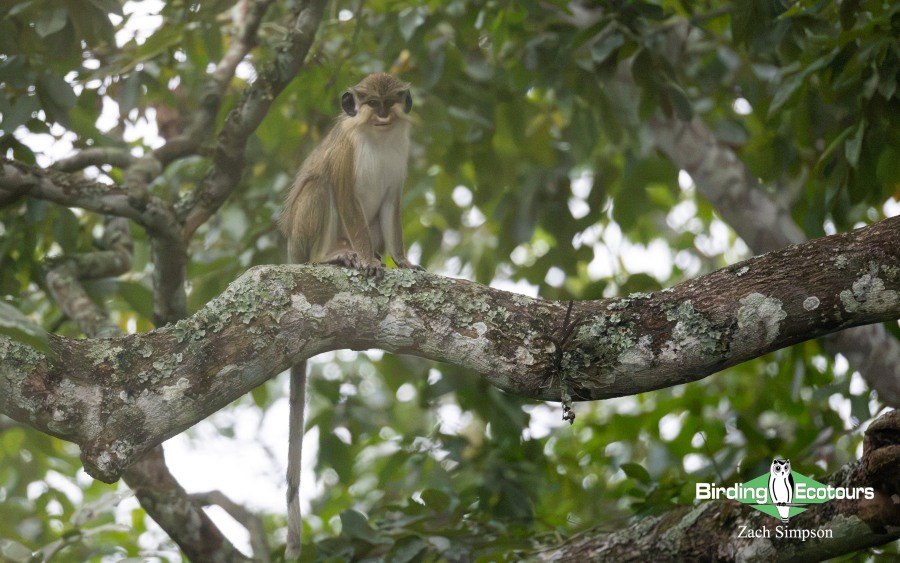
Southern Talapoin Monkey was certainly one of the mammal highlights of the trip.
Day 8, 30th June 2026. Endemics and forest species at Kumbira
Our full day around Kumbira Forest was a huge success. Our first stop in the degraded forest quickly produced a calling Pulitzer’s Longbill and very soon we had great views of this rather charismatic bird. We also had repeat views of a pair of Black-throated Apalis in the same area. Further down the road we added the endemic Gabela Akalat. Other good birds seen on the first stretch of road included Carmelite Sunbird, Grey Waxbills, Brown Illadopsis, Mottled Swifts and Green-headed Sunbird. A large part of the morning was spent around a stake-out for Gabela Bushshrike. This bird can be extremely difficult to see, and a large amount of time was given to finding this species. After about an hour of listening from the same area, we managed to hear a single bird calling up the valley. After pinpointing the general location we headed up a trail towards the calling bird. It only called for a few minutes, but this was enough for us to work out the general area of the bird. After having repositioned, we waited for about another hour. We were close to heading back towards the vehicle when, suddenly, the bird called about 30 meters from where we were standing. The bird then started calling at regular intervals, which allowed us to pinpoint where the bird was. With much excitement and adrenaline, we got decent views of the bird.
By now it was about lunchtime, so we headed lower down into some better-quality forest and enjoyed lunch. The post-lunch birding also produced great species. One of the first birds was Dusky Tit, followed by Purple-throated Cuckooshrike, Brown-eared Woodpecker, Green Hylia, Chestnut Wattle-eye, Yellow-whiskered Greenbul and Fraser’s Rufous Thrush. After a successful stint of birding we headed back to the area we had started in in the morning. Our target here was the Pale-throated race of Naked-faced Barbet. It took a large amount of work, but we managed to see one individual just before we left. A breeding male Black Bishop was also a great find.
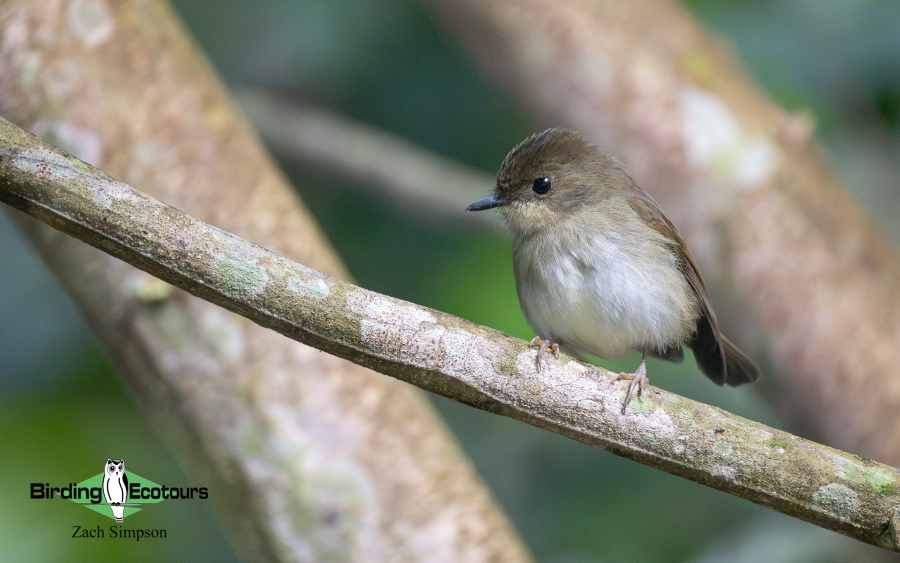
Gabela Akalat, one of our main targets at Kumbira, showed soon.
Day 9, 1st July 2026. Our first taste of true miombo birding!
Miombo birding is always exciting. We set out early this morning and spent much of the day working patches of miombo woodland. The morning started out with many of the more regular species. We saw miombo species such as Green-capped Eremomela, Miombo and Rufous-bellied Tits, Red-capped Crombec, Grey Penduline Tit, Wood Pipits, Western Violet-backed Sunbird, Miombo Rock Thrush and Cabanis’s Bunting. Other general species included Angola White-eye, Angola Waxbill, Moustached Grass Warbler, Pale Flycatcher, Schalow’s Turaco, Augur Buzzard and Oustalet’s Sunbird. We looked hard for Souza’s Shrike here but had no luck.
After lunch we moved to another miombo spot, which proved rather successful. As we got out of the car a couple of Finsch’s Francolins called nearby. After about 20 minutes we got good flight views of three birds. Continuing, we added Miombo Wren-Warbler and Yellow-bellied Hyliota. Once again Souza’s Shrike avoided us. We then headed towards a dambo. This proved successful as we added a pair of Locust Finches. A good number of swallows were seen here, including Pearl-breasted, Black-and-rufous and Grey-rumped Swallows. On departing the area, we added Plain-backed Pipit and then, finally, Souza’s Shrike, three of them sitting close to the road.
The last spot of the day was a roadside stop in a grass riverine area. There was a fair amount of flowering Leonotis. There were a good number of sunbirds. We saw Bronze and Variable Sunbirds, and fortunately, after a while, a male Bocage’s Sunbird showed up. Other good birds included Broad-tailed Paradise Whydah, repeat views of Black-collared Bulbul as well as Fawn-breasted and Orange-breasted Waxbills. After a successful day we made our way back to the hotel and enjoyed a good meal together.
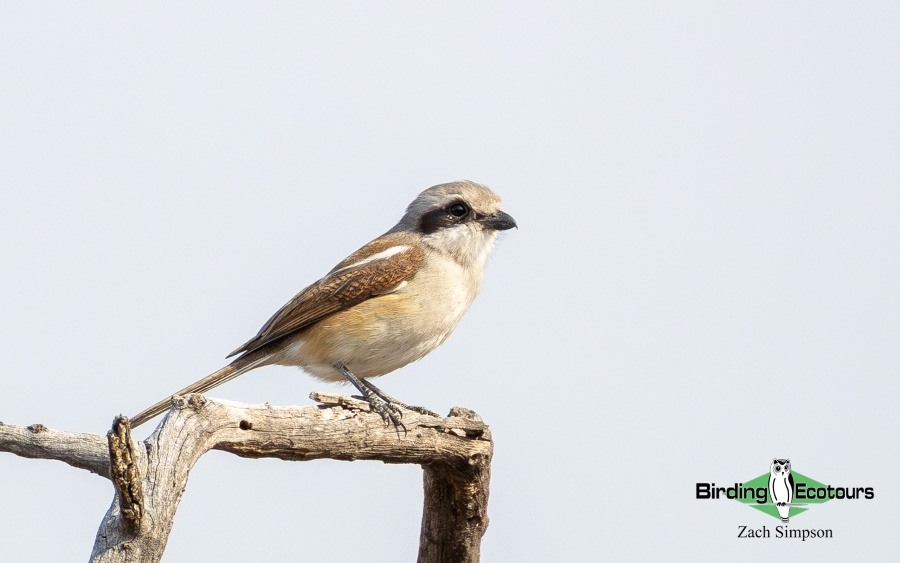
Souza’s Shrike was a fortunate day-end find.
Day 10, 2nd July 2026. Transfer, with great birding en route
Our transfer day to Bailundo was meant to be mainly a driving day. However, it turned out to be one of the best and most exciting days of birding. We started off in the same place we had ended yesterday. Once again, we had repeat views of Bocage’s Sunbird and other more widespread species. Continuing, we added Lanner Falcon and African Pipit to our trip lists.
A little further on while driving through farmlands, a weaver flew over the road. We hastily jumped out the car to check the bird! Unfortunately, it turned out to be a Holub’s Golden Weaver, not the species we were looking for. Then, on a distant treetop, one of the members in our group spotted another pair of weavers enjoying the morning sun. With much excitement the group quickly drew close to the tree and confirmed that the birds were indeed Bocage’s Weavers. The two individuals then joined a larger flock feeding close to the road. This was a great and exciting way to find one of the biggest targets of the trip! Angola Lark and Brimstone Canary were also added along this stretch of road.
The next stop proved to be just as successful. We were enjoying our morning coffee near a small bridge over a stream. Suddenly a small, uniform martin flew past the vehicle; with much excitement the group watched the bird turn around and fly back right over the vehicle and show a streaked underside. Brazza’s Martin in the bag! This was certainly one of the most exciting moments of the trip! Some general birding was done in the same area. Coppery-tailed Coucal, Dark Chanting Goshawk, Brown Firefinch and Black-throated Canary were all added. Later stops in the day added Marsh Widowbird, Fülleborn’s Longclaw and repeat views of Black-backed Barbet. Having had such a successful day, we headed to the hotel earlier than normal and enjoyed some rest before dinner.
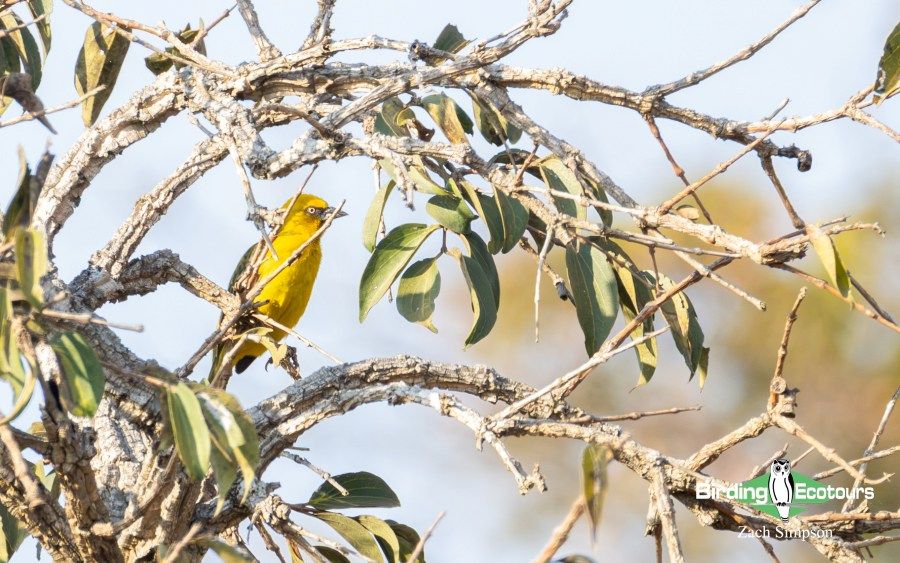
Bocage’s Weaver, a lucky find in the form of one of the best birds of the trip!
Day 11, 3rd July 2026. Mount Moco and miombo birding
Mount Moco is one of the more successful conservation stories in Angola. Visiting the lower forest patch on Mount Moco, we saw the results of the reforestation project. Many of the planted trees are getting quite tall. This, and the very recently burnt firebreaks (to prevent fire from getting too close to the forests), provides a glimmer of hope for conservation in Angola. The birding was fantastic; it started off slowly and we added the more common species such as Grey Apalis and Western Tinkerbird quite quickly. Ludwig’s Double-collared Sunbirds were very common. After reaching the higher slopes above the forest, with the sun on our backs, we added Wailing Cisticola on the rocky slopes and a major target, Huambo Cisticola, in the bracken ferns along the edge of the forest. Further up a pair of Black-chinned Weavers was seen! This species is a truly stunning weaver! Other new birds included African Hill Babbler, Wing-snapping Cisticola and Dusky Twinspot. It was great to have repeat views of Black-backed Barbet, Schalow’s Turaco, Angola Waxbill and Olive Woodpecker. On our way down through the forest, we had brief views of Bocage’s Akalat.
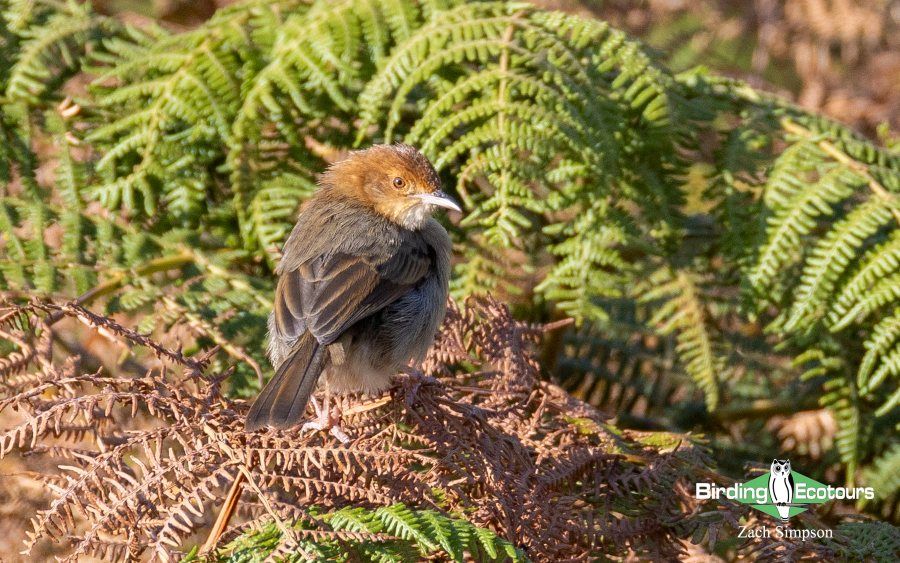
Huambo Cisticola was one of the major targets at Mount Moco.
When we left the forest we made our way back down to the small village. We loaded up and drove back through the grassy hillsides to find some shade for lunch. On our way out we added Dusky Indigobird (these individuals have been documented mimicking Dusky Twinspot, Bateleur and Booted Eagle).
We found shade on the road while going through some miombo, it was very quiet during lunch. A short walk did, however, produce a Böhm’s Flycatcher as well as some other birds such as Red-headed Weaver and repeat views of Miombo Wren-Warbler, Green-capped Eremomela and Yellow-bellied Hyliota. As the day continued, we tried a different patch of miombo, and this patch proved very successful. We added White-breasted Cuckooshrike quite quickly. We enjoyed repeat views of Bocage’s Weaver, Western Violet-backed Sunbird, Black Scimitarbill, Orange-winged Pytilia and Angola White-eye. The most exciting bird of all was Miombo Pied Barbet sitting and calling on the top of a dead tree. This ended the day on a high note!
Day 12, 4th July 2026. Transfer to Lubango
This day was mainly a travel day. We got out onto the road early to make headway towards Lubango. Our routine coffee stop proved rather successful. Hartlaub’s Babbler, Blue-billed Teal, Yellow-billed Duck, Sooty Chat, Three-banded Plover, Brown-throated Martin, African Wattled Lapwing and Scarlet-chested Sunbird were all added, as well as repeat views of Coppery-tailed Coucal, African Swamphen, Chirping Cisticola, Red-throated Cliff Swallow and Sharp-tailed Starling. We continued and added a roadside Temminck’s Courser. The rest of the day was spent driving to our hotel.
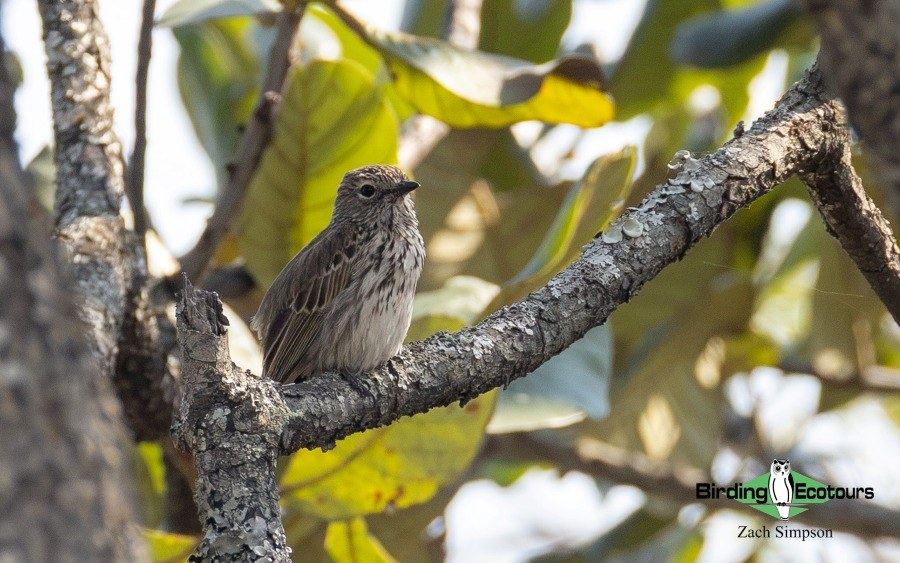
Böhm’s Flycatcher was one of the biggest targets in the miombo.
Day 13, 5th July 2026. Birding Tundavala
With an early start we headed up to Tundavala, where we watched the sunrise over the rocky outcrops. Fiery-necked Nightjar showed on the drive up. The ceremonial coffee was held slightly earlier this morning as we battled the cold. Birds such as Bradfield’s Swift, Tinkling Cisticola, Short-toed Rock Thrush and Rockrunner were some of the first to rise with the morning sun. Once our coffee was done, we positioned ourselves at the top of one of the large gorges. The hope was that our main target would perch out and call while enjoying the morning sun. A couple were calling down the valley, but our bird would not show. Just before we gave up, a Swierstra’s Spurfowl flew out of some nearby cover and gave flight views. The bird landed and was visible for a few seconds before ducking into some cover. While waiting for the spurfowl, Large Rock Martin, Black-chested Prinia, Rock Kestrel and Jameson’s Firefinch all made appearances. Angola Cave Chats also gave us fantastic views as they moved around on the rocks, sometimes no more than nine feet (three meters) from us.
After the spurfowl we took a lengthy hike (1.4 miles / 2.3 kilometers each way) down to a stakeout for a very special barbet. On arriving, Yellow-crowned Canaries made an appearance. After scanning for some time, we managed to get White-headed Barbet in the bag. In Angola, this is the only site where birders can see this species. What makes it more special is that it is an endemic race, with the nearest other populations being 1,250 miles (2,000 km) away in east Africa.
We then wrapped things up for the morning and ate lunch on the lower slopes of Tundavala. While having lunch White-browed Robin-Chats and Congo Rope Squirrels kept us company. The afternoon birding was fairly slow, we did add Violet-eared Waxbill, Rattling Cisticola and Yellow-bellied Eremomela. On the way out Freckled Nightjar was also heard!
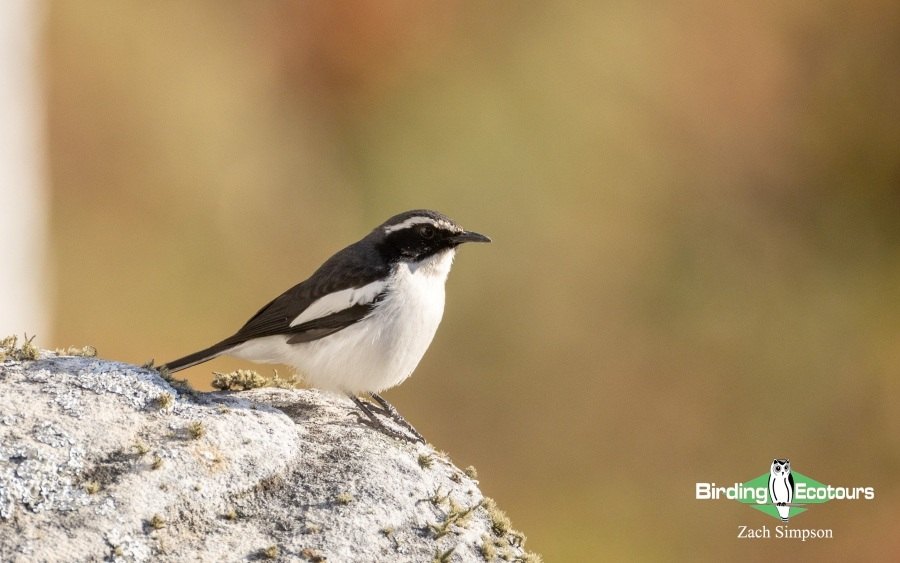
We had incredible close views of Angola Cave Chat while scanning for spurfowl.
Day 14, 6th July 2026. Leba Pass and the Namibian specials
Our day birding the Namibe was a fun day and produced one of our largest day lists. Our first spot produced around 50 species. Bradfield’s and Alpine Swifts as well as Böhm’s and Mottled Spinetails filled the skies. A highlight was the numerous Rüppell’s Parrots, they gave us great views. Other new species included Pearl-spotted Owlet, African Red-eyed Bulbul, White-tailed Shrike, Yellow-billed Oxpecker, Groundscraper Thrush, Common Scimitarbill, Marico and White-bellied Sunbirds, White-browed Sparrow-Weaver, Red-billed Buffalo Weaver, Chestnut Weaver and Red-billed Firefinch.
As we transferred to the next stop we added Damara Red-billed Hornbill. The next site also produced some new birds. Rosy-faced Lovebirds were dime a dozen, and we enjoyed large flocks feeding along the river. A group of Bare-cheeked Babblers showed well alongside a calling Grey-headed Bushshrike. The biggest surprise of the morning was a Half-collared Kingfisher that was moving up and down the river which was one of the first records for the area.
We made another stop further on during the heat of the day but, unfortunately, did not add much more. We enjoyed our lunch in the shade of some large trees before heading further towards the coast to look for drier woodland species. Our first stop added Monteiro’s Hornbill, Crimson-breasted Shrike, Pririt Batis, Chestnut-vented Warbler, Kalahari Scrub Robin, Chat Flycatcher and Shaft-tailed Whydahs. Later stops added White-throated Canary, Ashy Tit, Karoo and Mountain Chats, as well as Sabota Lark. The very arid habitat in the late evening produced Pale Chanting Goshawk, Karoo Long-billed Lark and Cape Sparrow. The mist rolled in, and things got cold very quickly, so we called it a day and headed to our hotel.
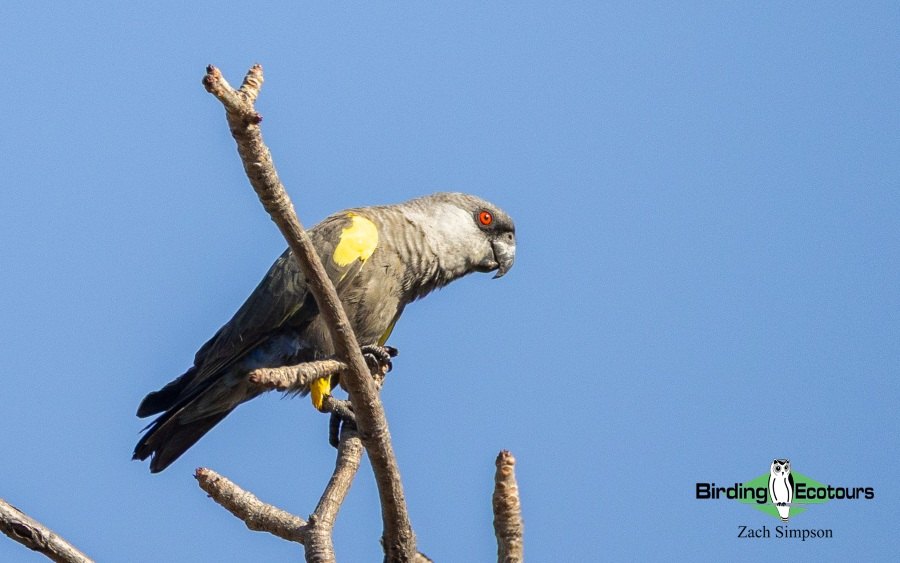
Rüppell’s Parrot was an exciting find!
Day 15, 7th July 2026. Transfer to Benguela
Our day started off in the same area we ended yesterday. We had clear skies, and the area was filled with birds. Grey-backed Sparrow-Lark and Stark’s Larks were added very quickly. Lark-like Buntings were calling in good numbers and we got some visuals of this very non-descript species. Rüppell’s Korhaans and Orange River Francolins called from many places far off. We did manage to get views of Rüppell’s Korhaan. From there we moved to sandy coastal plains. As we arrived a large flock of Namaqua Sandgrouse flew over. The area was full of Grey-backed Sparrow-Larks with a couple of Stark’s and Spike-heeled Larks in the mix. The very pale Tractrac Chat was also seen.
Most of the day was spent traveling north towards Benguela. Various quick spots and our lunch stop produced Bokmakierie, Dusky Sunbird, Scaly-feathered Weaver, Red-headed Finch and Great Sparrow. A seaside stop produced Cape Gannets, Sooty Shearwaters, Kelp Gull, Cape and White-breasted Cormorants and a couple of Wilson’s Storm Petrels.
A late afternoon stop was made at some salt pans along the coast. Kittlitz’s and Chestnut-banded Plovers showed well, alongside some Cape Teals. Mixed flocks of terns were seen just offshore. Most of them were Caspian and Sandwich Terns. A fair number of non-breeding Damara Terns were also present just past the shoreline. We watched the terns feed as the light faded, before making our way to our hotel.
Day 16, 8th July 2026. Transfer to Kwanza
With an early start we headed out to a well-known outcrop, inland from the city of Benguela. Here our target, Hartlaub’s Spurfowl, showed very quickly. We also had repeat views of Damara Red-billed Hornbill, Red-billed Buffalo Weaver and Bare-cheeked Babbler. Wrapping up at this site, we headed back towards the coast. A quick coffee stop produced Barred Wren-Warbler and, finally, fantastic views of a pair of Orange River Francolins.
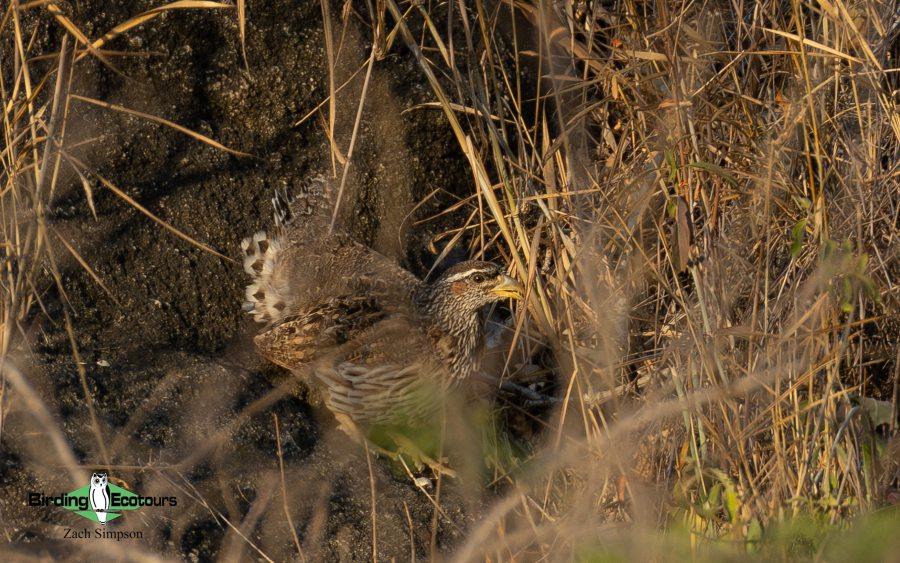
Hartlaub’s Spurfowl was the cherry on the top, being our third localized spurfowl for the trip.
Our only other birding stop of the day was at Lobito Wetlands. Many common and widespread species were added to the trip list. These included Red-knobbed Coot, Common Moorhen, Greater and Lesser Flamingos, Great White Pelican, Water Thick-knee, Pied Avocet and African Sacred Ibis. A later lunch stop gave us brief views of a group of Dwarf Mongoose. The rest of the day was spent driving to our accommodation, just outside Luanda along the Kwanza River.
Day 17, 9th July 2026. Birding Kwanza and departure
This morning’s birding was done on and around the golf course where we had started. So, with one of the latest starts of the trip, we took a stroll up the fairways to find one of our main targets. Very soon we had great views of multiple Long-legged Pipits. They truly have long legs. From there we headed into the mangrove forests along the river. It did not take us long at all before we had a pair of Mangrove Sunbirds. Other good species included Brown-eared Woodpecker, White-fronted Plover, Osprey and some distant calling Blue-breasted Kingfishers.
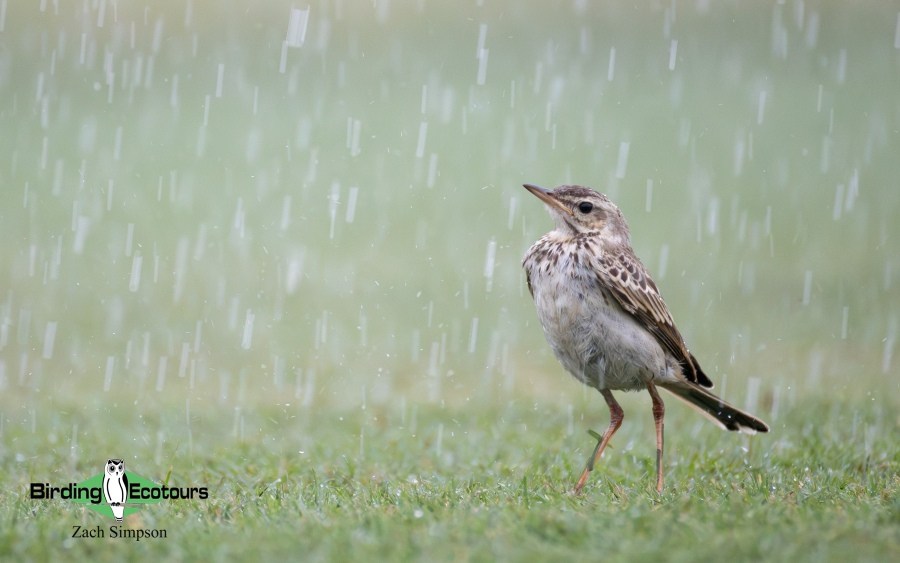
Long-legged Pipit was a big target for most of the group.
After a fantastic breakfast on the Kwanza River we packed our bags and loaded up. Two more stops were made before heading to our hotel near the airport to wrap up the tour. The first stop was at the Kwanza River mouth, fortunately there was a large tern roost. Despite considerable distance we were able to pick out a fair number of West African Crested Terns. Common Terns and a riverside Golden-tailed Woodpecker were new trip birds.
Our last stop for the tour was at some mudflats. Large numbers of waders were present. Curlew Sandpipers and Sanderlings were present in big numbers. Eurasian Whimbrel, Eurasian Curlew, Bar-tailed Godwit, Black-bellied Plover, and Ruddy Turnstone were all good to see. Our final bird for the trip was a Desert Cisticola along the edge of the flats.
With that we climbed into the cruiser for the last time and made our way to the hotel. The next day had a few sad goodbyes as everyone departed Angola. Thankfully, the tour was a great success.
Angola Bird List – Following IOC (15.1 / March 2025)
Birds ‘heard only’ are marked with (H) after the common name, all other species were seen.
The following notation after species names is used to show conservation status following the IUCN Red List: EN = Endangered, VU = Vulnerable.
| Common name | Scientific name |
| Ducks, Geese, Swans (Anatidae) | |
| White-faced Whistling Duck | Dendrocygna viduata |
| Blue-billed Teal | Spatula hottentota |
| Yellow-billed Duck | Anas undulata |
| Cape Teal | Anas capensis |
| Guineafowl (Numididae) | |
| Helmeted Guineafowl | Numida meleagris |
| Pheasants & Allies (Phasianidae) | |
| Finsch’s Francolin | Scleroptila finschi |
| Orange River Francolin | Scleroptila gutturalis |
| Hartlaub’s Spurfowl | Pternistis hartlaubi |
| Swierstra’s Spurfowl – VU | Pternistis swierstrai |
| Grey-striped Spurfowl | Pternistis griseostriatus |
| Red-necked Spurfowl | Pternistis afer |
| Nightjars (Caprimulgidae) | |
| Fiery-necked Nightjar | Caprimulgus pectoralis |
| Freckled Nightjar (H) | Caprimulgus tristigma |
| Swifts (Apodidae) | |
| Mottled Spinetail | Telacanthura ussheri |
| Böhm’s Spinetail | Neafrapus boehmi |
| African Palm Swift | Cypsiurus parvus |
| Alpine Swift | Tachymarptis melba |
| Mottled Swift | Tachymarptis aequatorialis |
| Bradfield’s Swift | Apus bradfieldi |
| Little Swift | Apus affinis |
| White-rumped Swift | Apus caffer |
| Turacos (Musophagidae) | |
| Great Blue Turaco | Corythaeola cristata |
| Grey Go-away-bird | Crinifer concolor |
| Ross’s Turaco | Tauraco rossae |
| Red-crested Turaco | Tauraco erythrolophus |
| Guinea Turaco | Tauraco persa |
| Schalow’s Turaco | Tauraco schalowi |
| Bustards (Otididae) | |
| Rüppell’s Korhaan | Heterotetrax rueppelii |
| Cuckoos (Cuculidae) | |
| Gabon Coucal | Centropus anselli |
| Blue-headed Coucal | Centropus monachus |
| Coppery-tailed Coucal | Centropus cupreicaudus |
| White-browed Coucal | Centropus superciliosus |
| Blue Malkoha | Ceuthmochares aereus |
| Klaas’s Cuckoo | Chrysococcyx klaas |
| Sandgrouse (Pteroclidae) | |
| Namaqua Sandgrouse | Pterocles namaqua |
| Pigeons, Doves (Columbidae) | |
| Rock Dove | Columba livia |
| Afep Pigeon | Columba unicincta |
| Western Bronze-naped Pigeon | Columba iriditorques |
| Mourning Collared Dove | Streptopelia decipiens |
| Red-eyed Dove | Streptopelia semitorquata |
| Ring-necked Dove | Streptopelia capicola |
| Laughing Dove | Spilopelia senegalensis |
| Emerald-spotted Wood Dove | Turtur chalcospilos |
| Blue-spotted Wood Dove | Turtur afer |
| Tambourine Dove | Turtur tympanistria |
| Namaqua Dove | Oena capensis |
| African Green Pigeon | Treron calvus |
| Flufftails & Forest Rails (Sarothruridae) | |
| White-spotted Flufftail | Sarothrura pulchra |
| Red-chested Flufftail (H) | Sarothrura rufa |
| Rails, Crakes & Coots (Rallidae) | |
| Lesser Moorhen | Paragallinula angulata |
| Common Moorhen | Gallinula chloropus |
| Red-knobbed Coot | Fulica cristata |
| Allen’s Gallinule | Porphyrio alleni |
| African Swamphen | Porphyrio madagascariensis |
| Black Crake | Zapornia flavirostra |
| Grebes (Podicipedidae) | |
| Little Grebe | Tachybaptus ruficollis |
| Flamingos (Phoenicopteridae) | |
| Greater Flamingo | Phoenicopterus roseus |
| Lesser Flamingo | Phoeniconaias minor |
| Stone-curlews, Thick-knees (Burhinidae) | |
| Spotted Thick-knee (H) | Burhinus capensis |
| Water Thick-knee | Burhinus vermiculatus |
| Stilts, Avocets (Recurvirostridae) | |
| Black-winged Stilt | Himantopus himantopus |
| Pied Avocet | Recurvirostra avosetta |
| Plovers (Charadriidae) | |
| Grey Plover – VU | Pluvialis squatarola |
| Three-banded Plover | Charadrius tricollaris |
| Senegal Lapwing | Vanellus lugubris |
| African Wattled Lapwing | Vanellus senegallus |
| Kittlitz’s Plover | Anarhynchus pecuarius |
| Chestnut-banded Plover | Anarhynchus pallidus |
| White-fronted Plover | Anarhynchus marginatus |
| Jacanas (Jacanidae) | |
| African Jacana | Actophilornis africanus |
| Sandpipers, Snipes (Scolopacidae) | |
| Eurasian Whimbrel | Numenius phaeopus |
| Eurasian Curlew | Numenius arquata |
| Bar-tailed Godwit | Limosa lapponica |
| Common Greenshank | Tringa nebularia |
| Ruddy Turnstone | Arenaria interpres |
| Curlew Sandpiper – VU | Calidris ferruginea |
| Sanderling | Calidris alba |
| Coursers, Pratincoles (Glareolidae) | |
| Temminck’s Courser | Cursorius temminckii |
| Collared Pratincole | Glareola pratincola |
| Gulls, Terns, Skimmers (Laridae) | |
| Damara Tern | Sternula balaenarum |
| Caspian Tern | Hydroprogne caspia |
| Common Tern | Sterna hirundo |
| Sandwich Tern | Thalasseus sandvicensis |
| West African Crested Tern | Thalasseus albididorsalis |
| Kelp Gull | Larus dominicanus |
| Austral Storm Petrels (Oceanitidae) | |
| Wilson’s Storm Petrel | Oceanites oceanicus |
| Petrels, Shearwaters, Diving Petrels (Procellariidae) | |
| Sooty Shearwater | Ardenna grisea |
| Storks (Ciconiidae) | |
| African Openbill | Anastomus lamelligerus |
| Gannets, Boobies (Sulidae) | |
| Cape Gannet – EN | Morus capensis |
| Anhingas, Darters (Anhingidae) | |
| African Darter | Anhinga rufa |
| Cormorants, Shags (Phalacrocoracidae) | |
| Reed Cormorant | Microcarbo africanus |
| Cape Cormorant – EN | Phalacrocorax capensis |
| Great Cormorant | Phalacrocorax carbo |
| Ibises, Spoonbills (Threskiornithidae) | |
| African Sacred Ibis | Threskiornis aethiopicus |
| African Spoonbill | Platalea alba |
| Herons, Bitterns (Ardeidae) | |
| Black-crowned Night Heron | Nycticorax nycticorax |
| Black Heron | Egretta ardesiaca |
| Little Egret | Egretta garzetta |
| Little Heron | Butorides atricapilla |
| Squacco Heron | Ardeola ralloides |
| Great Egret | Ardea alba |
| Yellow-billed Egret | Ardea brachyrhyncha |
| Western Cattle Egret | Ardea ibis |
| Grey Heron | Ardea cinerea |
| Purple Heron | Ardea purpurea |
| Black-headed Heron | Ardea melanocephala |
| Hamerkop (Scopidae) | |
| Hamerkop | Scopus umbretta |
| Pelicans (Pelecanidae) | |
| Great White Pelican | Pelecanus onocrotalus |
| Ospreys (Pandionidae) | |
| Osprey | Pandion haliaetus |
| Kites, Hawks, Eagles (Accipitridae) | |
| Black-winged Kite | Elanus caeruleus |
| African Harrier-Hawk | Polyboroides typus |
| Palm-nut Vulture | Gypohierax angolensis |
| Bateleur – EN | Terathopius ecaudatus |
| Black-chested Snake Eagle | Circaetus pectoralis |
| Brown Snake Eagle | Circaetus cinereus |
| Crowned Eagle (H) | Stephanoaetus coronatus |
| Long-crested Eagle | Lophaetus occipitalis |
| Ayres’s Hawk-Eagle | Hieraaetus ayresii |
| Cassin’s Hawk-Eagle | Aquila africana |
| Gabar Goshawk | Micronisus gabar |
| Dark Chanting Goshawk | Melierax metabates |
| Pale Chanting Goshawk | Melierax canorus |
| Lizard Buzzard | Kaupifalco monogrammicus |
| African Goshawk | Aerospiza tachiro |
| Shikra | Tachyspiza badia |
| Black Sparrowhawk | Astur melanoleucus |
| African Marsh Harrier | Circus ranivorus |
| Yellow-billed Kite | Milvus aegyptius |
| African Fish Eagle | Icthyophaga vocifer |
| Red-necked Buzzard | Buteo auguralis |
| Augur Buzzard | Buteo augur |
| Owls (Strigidae) | |
| Pearl-spotted Owlet | Glaucidium perlatum |
| African Barred Owlet (H) | Glaucidium capense |
| African Wood Owl (H) | Strix woodfordii |
| Mousebirds (Coliidae) | |
| Speckled Mousebird | Colius striatus |
| Red-backed Mousebird | Colius castanotus |
| Red-faced Mousebird | Urocolius indicus |
| Trogons (Trogonidae) | |
| Narina Trogon | Apaloderma narina |
| Hoopoes (Upupidae) | |
| Eurasian Hoopoe | Upupa epops |
| Wood Hoopoes (Phoeniculidae) | |
| Green Wood Hoopoe | Phoeniculus purpureus |
| Black Scimitarbill | Rhinopomastus aterrimus |
| Common Scimitarbill | Rhinopomastus cyanomelas |
| Hornbills (Bucerotidae) | |
| Damara Red-billed Hornbill | Tockus damarensis |
| Monteiro’s Hornbill | Tockus monteiri |
| Southern Yellow-billed Hornbill | Tockus leucomelas |
| Crowned Hornbill | Lophoceros alboterminatus |
| Congo Pied Hornbill | Lophoceros fasciatus |
| Pale-billed Hornbill | Lophoceros pallidirostris |
| Piping Hornbill | Bycanistes fistulator |
| Trumpeter Hornbill | Bycanistes bucinator |
| Black-casqued Hornbill | Ceratogymna atrata |
| Pale-billed Hornbill (H) | Lophoceros pallidirostris |
| Rollers (Coraciidae) | |
| Purple Roller | Coracias naevius |
| Lilac-breasted Roller | Coracias caudatus |
| Kingfishers (Alcedinidae) | |
| Chocolate-backed Kingfisher (H) | Halcyon badia |
| Grey-headed Kingfisher | Halcyon leucocephala |
| Brown-hooded Kingfisher | Halcyon albiventris |
| Striped Kingfisher | Halcyon chelicuti |
| Blue-breasted Kingfisher (H) | Halcyon malimbica |
| Woodland Kingfisher | Halcyon senegalensis |
| African Pygmy Kingfisher | Ispidina picta |
| Malachite Kingfisher | Corythornis cristatus |
| Half-collared Kingfisher | Alcedo semitorquata |
| Giant Kingfisher | Megaceryle maxima |
| Pied Kingfisher | Ceryle rudis |
| Bee-eaters (Meropidae) | |
| Black Bee-eater | Merops gularis |
| Little Bee-eater | Merops pusillus |
| White-fronted Bee-eater | Merops bullockoides |
| Olive Bee-eater | Merops superciliosus |
| European Bee-eater | Merops apiaster |
| African Barbets (Lybiidae) | |
| Eastern Yellow-billed Barbet | Trachylaemus purpuratus |
| Bristle-nosed Barbet | Gymnobucco peli |
| Naked-faced Barbet | Gymnobucco calvus |
| Anchieta’s Barbet | Stactolaema anchietae |
| Speckled Tinkerbird | Pogoniulus scolopaceus |
| Western Tinkerbird | Pogoniulus coryphaea |
| Yellow-rumped Tinkerbird | Pogoniulus bilineatus |
| Yellow-fronted Tinkerbird | Pogoniulus chrysoconus |
| Hairy-breasted Barbet | Tricholaema hirsuta |
| Miombo Pied Barbet | Tricholaema frontata |
| Acacia Pied Barbet | Tricholaema leucomelas |
| White-headed Barbet | Lybius leucocephalus |
| Black-collared Barbet | Lybius torquatus |
| Black-backed Barbet | Pogonornis minor |
| Honeyguides (Indicatoridae) | |
| Brown-backed Honeybird | Prodotiscus regulus |
| Lesser Honeyguide | Indicator minor |
| Greater Honeyguide | Indicator indicator |
| Woodpeckers (Picidae) | |
| Red-throated Wryneck | Jynx ruficollis |
| African Piculet | Verreauxia africana |
| Brown-eared Woodpecker | Pardipicus caroli |
| Golden-tailed Woodpecker | Campethera abingoni |
| Bearded Woodpecker (H) | Chloropicus namaquus |
| Yellow-crested Woodpecker | Chloropicus xantholophus |
| Cardinal Woodpecker | Dendropicos fuscescens |
| Olive Woodpecker | Dendropicos griseocephalus |
| Caracaras, Falcons (Falconidae) | |
| Rock Kestrel | Falco rupicolus |
| Grey Kestrel | Falco ardosiaceus |
| Lanner Falcon | Falco biarmicus |
| African & New World Parrots (Psittacidae) | |
| Red-fronted Parrot | Poicephalus gulielmi |
| Meyer’s Parrot | Poicephalus meyeri |
| Rüppell’s Parrot | Poicephalus rueppellii |
| Old World Parrots (Psittaculidae) | |
| Rosy-faced Lovebird | Agapornis roseicollis |
| African & Green Broadbills (Calyptomenidae) | |
| African Broadbill | Smithornis capensis |
| Wattle-eyes, Batises (Platysteiridae) | |
| Chinspot Batis | Batis molitor |
| Pririt Batis | Batis pririt |
| Angola Batis | Batis minulla |
| White-tailed Shrike | Lanioturdus torquatus |
| Chestnut Wattle-eye | Platysteira castanea |
| Black-throated Wattle-eye | Platysteira peltata |
| White-fronted Wattle-eye | Platysteira albifrons |
| Yellow-bellied Wattle-eye | Platysteira concreta |
| Bushshrikes (Malaconotidae) | |
| Monteiro’s Bushshrike | Malaconotus monteiri |
| Grey-headed Bushshrike | Malaconotus blanchoti |
| Many-colored Bushshrike | Chlorophoneus multicolor |
| Bocage’s Bushshrike | Chlorophoneus bocagei |
| Orange-breasted Bushshrike | Chlorophoneus sulfureopectus |
| Gorgeous Bushshrike | Telophorus viridis |
| Bokmakierie | Telophorus zeylonus |
| Brown-crowned Tchagra | Tchagra australis |
| Black-crowned Tchagra | Tchagra senegalus |
| Pink-footed Puffback | Dryoscopus angolensis |
| Black-backed Puffback | Dryoscopus cubla |
| Braun’s Bushshrike – EN | Laniarius brauni |
| Gabela Bushshrike – EN | Laniarius amboimensis |
| Tropical Boubou | Laniarius major |
| Swamp Boubou | Laniarius bicolor |
| Crimson-breasted Shrike (H) | Laniarius atrococcineus |
| Brubru | Nilaus afer |
| Vangas & Allies (Vangidae) | |
| White-crested Helmetshrike | Prionops plumatus |
| Gabela Helmetshrike – EN | Prionops gabela |
| Cuckooshrikes (Campephagidae) | |
| White-breasted Cuckooshrike | Ceblepyris pectoralis |
| Black Cuckooshrike | Campephaga flava |
| Purple-throated Cuckooshrike | Campephaga quiscalina |
| Figbirds, Old World Orioles, Piopios (Oriolidae) | |
| Black-headed Oriole | Oriolus larvatus |
| Black-winged Oriole | Oriolus nigripennis |
| African Golden Oriole | Oriolus auratus |
| Drongos (Dicruridae) | |
| Velvet-mantled Drongo | Dicrurus modestus |
| Fork-tailed Drongo | Dicrurus adsimilis |
| Sharpe’s Drongo | Dicrurus sharpei |
| Monarchs (Monarchidae) | |
| Rufous-vented Paradise Flycatcher | Terpsiphone rufocinerea |
| Bates’s Paradise Flycatcher | Terpsiphone batesi |
| African Paradise Flycatcher | Terpsiphone viridis |
| Shrikes (Laniidae) | |
| Southern White-crowned Shrike | Eurocephalus anguitimens |
| Northern Fiscal | Lanius humeralis |
| Souza’s Shrike | Lanius souzae |
| Southern Fiscal | Lanius collaris |
| Crows, Jays (Corvidae) | |
| Pied Crow | Corvus albus |
| Fairy Flycatchers (Stenostiridae) | |
| African Blue Flycatcher | Elminia longicauda |
| White-tailed Blue Flycatcher | Elminia albicauda |
| Tits, Chickadees (Paridae) | |
| White-winged Black Tit | Melaniparus leucomelas |
| Dusky Tit | Melaniparus funereus |
| Rufous-bellied Tit | Melaniparus rufiventris |
| Miombo Tit | Melaniparus griseiventris |
| Ashy Tit | Melaniparus cinerascens |
| Penduline Tits (Remizidae) | |
| Grey Penduline Tit | Anthoscopus caroli |
| Nicators (Nicatoridae) | |
| Yellow-throated Nicator | Nicator vireo |
| Larks (Alaudidae) | |
| Spike-heeled Lark | Chersomanes albofasciata |
| Benguela Long-billed Lark | Certhilauda benguelensis |
| Grey-backed Sparrow-Lark | Eremopterix verticalis |
| Sabota Lark | Calendulauda sabota |
| Angola Lark | Amirafra angolensis |
| Rufous-naped Lark | Corypha africana |
| Stark’s Lark | Spizocorys starki |
| Red-capped Lark | Calandrella cinerea |
| Bulbuls (Pycnonotidae) | |
| Slender-billed Greenbul | Stelgidillas gracilirostris |
| Black-collared Bulbul | Neolestes torquatus |
| Red-tailed Bristlebill | Bleda syndactylus |
| Pale-throated Greenbul | Atimastillas flavigula |
| Swamp Palm Bulbul | Thescelocichla leucopleura |
| Falkenstein’s Greenbul | Chlorocichla falkensteini |
| Yellow-bellied Greenbul | Chlorocichla flaviventris |
| Simple Greenbul | Chlorocichla simplex |
| Honeyguide Greenbul | Baeopogon indicator |
| Little Greenbul | Eurillas virens |
| Yellow-whiskered Greenbul | Eurillas latirostris |
| Plain Greenbul | Eurillas curvirostris |
| Cabanis’s Greenbul | Phyllastrephus cabanisi |
| Pale-olive Greenbul | Phyllastrephus fulviventris |
| African Red-eyed Bulbul | Pycnonotus nigricans |
| Common Bulbul | Pycnonotus barbatus |
| Swallows, Martins (Hirundinidae) | |
| Black Saw-wing | Psalidoprocne pristoptera |
| Grey-rumped Swallow | Pseudhirundo griseopyga |
| Banded Martin | Neophedina cincta |
| Brazza’s Martin | Phedinopsis brazzae |
| Brown-throated Martin | Riparia paludicola |
| Large Rock Martin | Ptyonoprogne fuligula |
| Black-and-rufous Swallow | Hirundo nigrorufa |
| Pearl-breasted Swallow | Hirundo dimidiata |
| Angola Swallow | Hirundo angolensis |
| White-throated Swallow | Hirundo albigularis |
| Wire-tailed Swallow | Hirundo smithii |
| Lesser Striped Swallow | Cecropis abyssinica |
| Red-breasted Swallow | Cecropis semirufa |
| Red-throated Cliff Swallow | Petrochelidon rufigula |
| Crombecs, African Warblers (Macrosphenidae) | |
| Moustached Grass Warbler | Melocichla mentalis |
| Rockrunner | Achaetops pycnopygius |
| Yellow Longbill | Macrosphenus flavicans |
| Pulitzer’s Longbill – EN | Macrosphenus pulitzeri |
| Long-billed Crombec | Sylvietta rufescens |
| Red-capped Crombec | Sylvietta ruficapilla |
| Green Crombec | Sylvietta virens |
| Hylias (Hyliidae) | |
| Green Hylia (H) | Hylia prasina |
| Reed Warblers & Allies (Acrocephalidae) | |
| Greater Swamp Warbler | Acrocephalus rufescens |
| Lesser Swamp Warbler | Acrocephalus gracilirostris |
| African Yellow Warbler | Iduna natalensis |
| Grassbirds & Allies (Locustellidae) | |
| Little Rush Warbler | Bradypterus baboecala |
| Cisticolas & Allies (Cisticolidae) | |
| Red-faced Cisticola | Cisticola erythrops |
| Whistling Cisticola | Cisticola lateralis |
| Chattering Cisticola | Cisticola anonymus |
| Bubbling Cisticola | Cisticola bulliens |
| Huambo Cisticola | Cisticola bailunduensis |
| Rattling Cisticola | Cisticola chiniana |
| Tinkling Cisticola | Cisticola rufilatus |
| Wailing Cisticola | Cisticola lais |
| Chirping Cisticola | Cisticola pipiens |
| Short-winged Cisticola | Cisticola brachypterus |
| Neddicky | Cisticola fulvicapilla |
| Desert Cisticola | Cisticola aridulus |
| Wing-snapping Cisticola | Cisticola ayresii |
| Tawny-flanked Prinia | Prinia subflava |
| Black-chested Prinia | Prinia flavicans |
| Banded Prinia | Prinia bairdii |
| White-chinned Prinia | Schistolais leucopogon |
| Yellow-breasted Apalis | Apalis flavida |
| Lowland Masked Apalis | Apalis binotata |
| Black-throated Apalis | Apalis jacksoni |
| Buff-throated Apalis | Apalis rufogularis |
| Grey Apalis | Apalis cinerea |
| Brown-headed Apalis | Apalis alticola |
| Grey-backed Camaroptera | Camaroptera brevicaudata |
| Hartert’s Camaroptera | Camaroptera harterti |
| Miombo Wren-Warbler | Calamonastes undosus |
| Barred Wren-Warbler | Calamonastes fasciolatus |
| Yellow-bellied Eremomela | Eremomela icteropygialis |
| Green-capped Eremomela | Eremomela scotops |
| Rufous-crowned Eremomela | Eremomela badiceps |
| Sylviid Babblers (Sylviidae) | |
| African Hill Babbler | Sylvia abyssinica |
| Chestnut-vented Warbler | Curruca subcoerulea |
| White-eyes (Zosteropidae) | |
| Angola White-eye | Zosterops kasaicus |
| Ground Babblers (Pellorneidae) | |
| Brown Illadopsis | Illadopsis fulvescens |
| Laughingthrushes & Allies (Leiothrichidae) | |
| Bare-cheeked Babbler | Turdoides gymnogenys |
| Hartlaub’s Babbler (H) | Turdoides hartlaubii |
| Hyliotas (Hyliotidae) | |
| Yellow-bellied Hyliota | Hyliota flavigaster |
| Southern Hyliota | Hyliota australis |
| Spotted Creepers (Salpornithidae) | |
| African Spotted Creeper | Salpornis salvadori |
| Starlings, Rhabdornises (Sturnidae) | |
| Wattled Starling | Creatophora cinerea |
| Cape Starling | Lamprotornis nitens |
| Splendid Starling | Lamprotornis splendidus |
| Sharp-tailed Starling | Lamprotornis acuticaudus |
| Violet-backed Starling | Cinnyricinclus leucogaster |
| Chestnut-winged Starling | Onychognathus fulgidus |
| Narrow-tailed Starling | Poeoptera lugubris |
| Oxpeckers (Buphagidae) | |
| Yellow-billed Oxpecker | Buphagus africanus |
| Thrushes (Turdidae) | |
| Fraser’s Rufous Thrush | Stizorhina fraseri |
| Groundscraper Thrush | Turdus litsitsirupa |
| Kurrichane Thrush | Turdus libonyana |
| Chats, Old World Flycatchers (Muscicapidae) | |
| Forest Scrub Robin | Tychaedon leucosticta |
| Miombo Scrub Robin (H) | Tychaedon barbata |
| Kalahari Scrub Robin | Cercotrichas paena |
| Brown-backed Scrub Robin | Cercotrichas hartlaubi |
| White-browed Scrub Robin | Cercotrichas leucophrys |
| Pale Flycatcher | Agricola pallidus |
| Chat Flycatcher | Agricola infuscatus |
| Grey Tit-Flycatcher | Fraseria plumbea |
| Ashy Flycatcher | Fraseria caerulescens |
| Southern Black Flycatcher | Melaenornis pammelaina |
| Dusky-blue Flycatcher | Bradornis comitatus |
| Böhm’s Flycatcher | Myopornis boehmi |
| Sooty Flycatcher | Artomyias fuliginosa |
| African Dusky Flycatcher | Muscicapa adusta |
| Cassin’s Flycatcher | Muscicapa cassini |
| White-browed Robin-Chat | Cossypha heuglini |
| Red-capped Robin-Chat | Cossypha natalensis |
| White-headed Robin-Chat | Cossypha heinrichi |
| Rufous-tailed Palm Thrush | Cichladusa ruficauda |
| Angola Cave Chat | Xenocopsychus ansorgei |
| Bocage’s Akalat | Sheppardia bocagei |
| Gabela Akalat – EN | Sheppardia gabela |
| Grey-winged Robin-Chat | Sheppardia polioptera |
| Short-toed Rock Thrush | Monticola brevipes |
| Miombo Rock Thrush | Monticola angolensis |
| African Stonechat | Saxicola torquatus |
| Karoo Chat | Emarginata schlegelii |
| Tractrac Chat | Emarginata tractrac |
| Mountain Chat | Myrmecocichla monticola |
| Sooty Chat | Myrmecocichla nigra |
| Familiar Chat | Oenanthe familiaris |
| Sunbirds (Nectariniidae) | |
| Mangrove Sunbird | Anthreptes gabonicus |
| Western Violet-backed Sunbird | Anthreptes longuemarei |
| Little Green Sunbird | Anthreptes seimundi |
| Grey-chinned Sunbird | Anthreptes tephrolaemus |
| Collared Sunbird | Hedydipna collaris |
| Green-headed Sunbird | Cyanomitra verticalis |
| Blue-throated Brown Sunbird | Cyanomitra cyanolaema |
| Olive Sunbird | Cyanomitra olivacea |
| Carmelite Sunbird | Chalcomitra fuliginosa |
| Amethyst Sunbird | Chalcomitra amethystina |
| Scarlet-chested Sunbird | Chalcomitra senegalensis |
| Bocage’s Sunbird | Nectarinia bocagii |
| Bronze Sunbird | Nectarinia kilimensis |
| Olive-bellied Sunbird | Cinnyris chloropygius |
| Ludwig’s Double-collared Sunbird | Cinnyris ludovicensis |
| Marico Sunbird | Cinnyris mariquensis |
| Purple-banded Sunbird | Cinnyris bifasciatus |
| Superb Sunbird | Cinnyris superbus |
| Oustalet’s Sunbird | Cinnyris oustaleti |
| White-bellied Sunbird | Cinnyris talatala |
| Variable Sunbird | Cinnyris venustus |
| Dusky Sunbird | Cinnyris fuscus |
| Bates’s Sunbird | Cinnyris batesi |
| Copper Sunbird | Cinnyris cupreus |
| Old World Sparrows, Snowfinches (Passeridae) | |
| Yellow-throated Bush Sparrow | Gymnoris superciliaris |
| Cape Sparrow | Passer melanurus |
| Great Sparrow | Passer motitensis |
| Northern Grey-headed Sparrow | Passer griseus |
| Southern Grey-headed Sparrow | Passer diffusus |
| House Sparrow | Passer domesticus |
| Weavers, Widowbirds (Ploceidae) | |
| Red-billed Buffalo Weaver | Bubalornis niger |
| White-browed Sparrow-Weaver | Plocepasser mahali |
| Scaly-feathered Weaver | Sporopipes squamifrons |
| Thick-billed Weaver | Amblyospiza albifrons |
| Black-chinned Weaver | Ploceus nigrimentus |
| Spectacled Weaver | Ploceus ocularis |
| Black-necked Weaver | Ploceus nigricollis |
| Bocage’s Weaver | Ploceus temporalis |
| Holub’s Golden Weaver | Ploceus xanthops |
| Lesser Masked Weaver | Ploceus intermedius |
| Southern Masked Weaver | Ploceus velatus |
| Village Weaver | Ploceus cucullatus |
| Vieillot’s Black Weaver | Ploceus nigerrimus |
| Chestnut Weaver | Ploceus rubiginosus |
| Yellow-mantled Weaver | Ploceus tricolor |
| Dark-backed Weaver | Ploceus bicolor |
| Red-headed Weaver | Anaplectes rubriceps |
| Red-billed Quelea | Quelea quelea |
| Black Bishop | Euplectes gierowii |
| Black-winged Red Bishop | Euplectes hordeaceus |
| Golden-backed Bishop | Euplectes aureus |
| Yellow Bishop | Euplectes capensis |
| Yellow-mantled Widowbird | Euplectes macroura |
| Marsh Widowbird | Euplectes hartlaubi |
| White-winged Widowbird | Euplectes albonotatus |
| Red-collared Widowbird | Euplectes ardens |
| Waxbills, Munias & Allies (Estrildidae) | |
| Bronze Mannikin | Spermestes cucullata |
| Black-and-white Mannikin | Spermestes bicolor |
| Angola Waxbill | Coccopygia bocagei |
| Green Twinspot | Mandingoa nitidula |
| White-breasted Nigrita | Nigrita fusconotus |
| Chestnut-breasted Nigrita | Nigrita bicolor |
| Grey-headed Nigrita | Nigrita canicapillus |
| Pale-fronted Nigrita | Nigrita luteifrons |
| Grey Waxbill | Glaucestrilda perreini |
| Orange-cheeked Waxbill | Estrilda melpoda |
| Fawn-breasted Waxbill | Estrilda paludicola |
| Common Waxbill | Estrilda astrild |
| Locust Finch | Paludipasser locustella |
| Red-headed Finch | Amadina erythrocephala |
| Orange-breasted Waxbill | Amandava subflava |
| Violet-eared Waxbill | Granatina granatina |
| Blue Waxbill | Uraeginthus angolensis |
| Green-winged Pytilia | Pytilia melba |
| Orange-winged Pytilia | Pytilia afra |
| Dusky Twinspot | Euschistospiza cinereovinacea |
| Brown Twinspot | Clytospiza monteiri |
| Red-billed Firefinch | Lagonosticta senegala |
| African Firefinch | Lagonosticta rubricata |
| Jameson’s Firefinch | Lagonosticta rhodopareia |
| Brown Firefinch | Lagonosticta nitidula |
| Indigobirds, Whydahs (Viduidae) | |
| Dusky Indigobird | Vidua funerea |
| Pin-tailed Whydah | Vidua macroura |
| Shaft-tailed Whydah | Vidua regia |
| Long-tailed Paradise Whydah | Vidua paradisaea |
| Broad-tailed Paradise Whydah | Vidua obtusa |
| Wagtails, Pipits (Motacillidae) | |
| Cape Wagtail | Motacilla capensis |
| African Pied Wagtail | Motacilla aguimp |
| Fülleborn’s Longclaw | Macronyx fuelleborni |
| African Pipit | Anthus cinnamomeus |
| Wood Pipit | Anthus nyassae |
| Plain-backed Pipit | Anthus leucophrys |
| Long-legged Pipit | Anthus pallidiventris |
| Striped Pipit | Anthus lineiventris |
| Finches, Euphonias (Fringillidae) | |
| Black-faced Canary | Crithagra capistrata |
| Black-throated Canary | Crithagra atrogularis |
| Yellow-fronted Canary | Crithagra mozambica |
| Brimstone Canary | Crithagra sulphurata |
| White-throated Canary | Crithagra albogularis |
| Yellow-crowned Canary | Serinus flavivertex |
| Buntings (Emberizidae) | |
| Lark-like Bunting | Emberiza impetuani |
| Cinnamon-breasted Bunting | Emberiza tahapisi |
| Golden-breasted Bunting | Emberiza flaviventris |
| Cabanis’s Bunting | Emberiza cabanisi |
| Species Seen: | 476 |
| Heard Only: | 14 |
| Species Recorded: | 490 |
Angola Mammal List – Following Mammalwatching.com (Jan. 2024)
The following notation after species names is used to show conservation status following the IUCN Red List: VU = Vulnerable.
| Common name | Scientific name |
| Hyraxes (Procaviidae) | |
| Bush Hyrax | Heterohyrax brucei |
| Rock Hyrax | Procavia capensis |
| Old World Monkeys (Cercopithecidae) | |
| Blue Monkey | Cercopithecus mitis |
| Malbrouck Monkey | Chlorocebus cynosuros |
| Southern Talapoin Monkey – VU | Miopithecus talapoin |
| Chacma Baboon | Papio ursinus |
| Squirrels (Sciuridae) | |
| Congo Rope Squirrel | Funisciurus congicus |
| Mongooses (Herpestidae) | |
| Common Slender Mongoose | Herpestes sanguineus |
| Common Dwarf Mongoose | Helogale parvula |
| Species Seen: | 9 |
This is a sample trip report. Please email us ([email protected]) for more trip reports from this destination.