Go to Best of Colombia bird tour page | Neotropical Bird Tours | Neotropical Trip Reports | All our Birding Tours
17-30 November 2025
By Giancarlo Ventolini
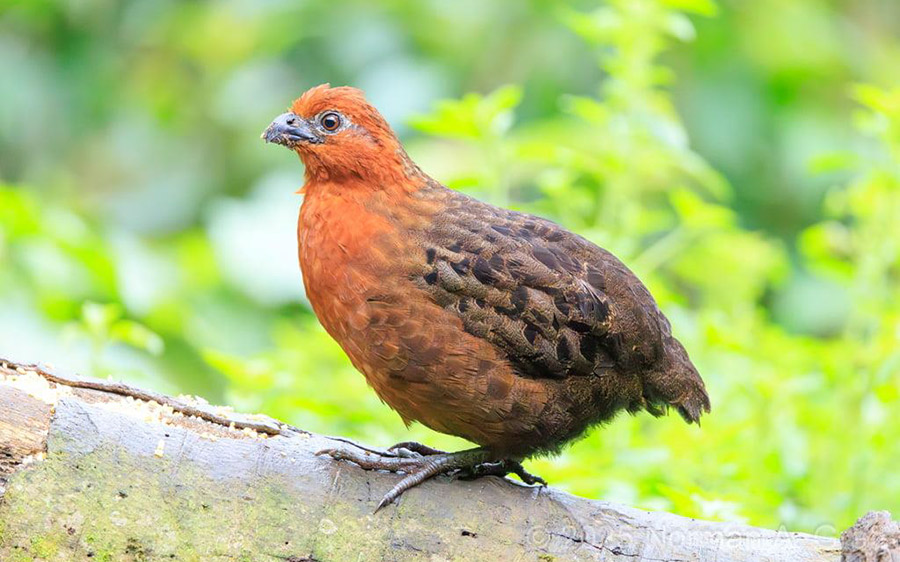
Chestnut Wood Quail is a highly prized Colombian endemic (photo Norman Graf).
Overview
Colombia is renowned as the country with the greatest bird diversity, boasting more than 1,970 recorded species: nearly 20% of the world’s avifauna within a relatively compact territory. This extraordinary richness stems from its unique geography, where the Andes, Amazon, Caribbean, and Pacific converge, and from the influence of major river basins such as the Magdalena, Cauca, and Orinoco. The division of the Andes into three mountain ranges creates a mosaic of climatic zones and microhabitats that foster high levels of endemism and an exceptional variety of ecosystems.
This birdwatching journey explored some of Colombia’s most biodiverse regions, including the western Andes, the Chocó, the Cauca River Valley, and the Central Andes, featuring the high-Andean páramo ecosystem, as well as part of the eastern Andes, with visits to the Cajamarca area and the Fuertes’s Parrot Reserve. Among the highlights were several Colombian endemics of great importance, such as Multicolored Tanager, Tolima Dove, Tolima Blossomcrown, and Yellow-headed Brushfinch, along with many others.
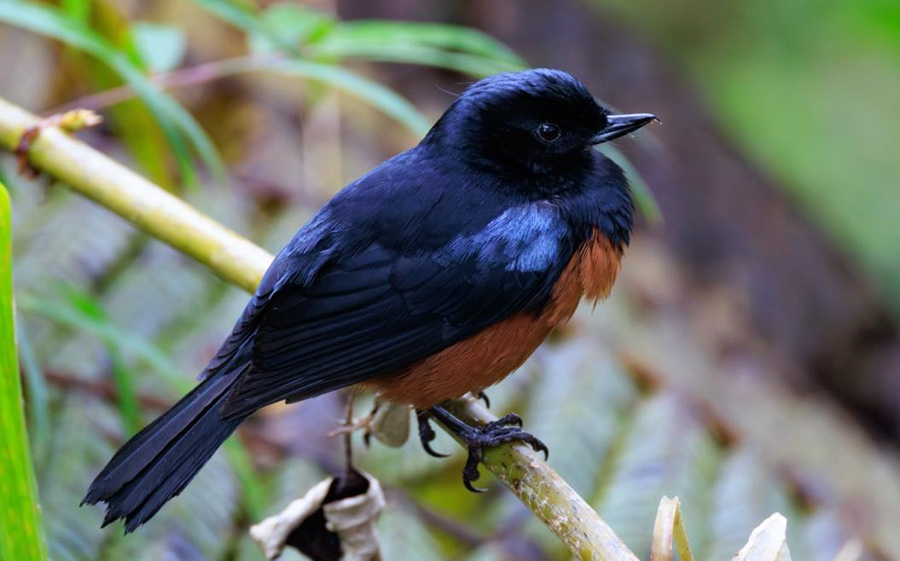
Chestnut-bellied Flowerpiercer, one of the most beautiful of all flowerpiercers, is only found at high elevations in Colombia’s western Andes(photo Norman Graf).
Throughout the journey, we recorded a high diversity of bird species, including several Colombian endemics and range-restricted species associated with the humid forests of the Chocó like Gold-ringed Tanager, Chestnut-bellied Flowerpiercer, Munchique Wood Wren and Black-and-gold Tanager. While birding the Andean cloud forests, high-mountain ecosystems, and the traditional rural landscapes of Tolima, we were able to observe the spectacular Yellow-eared and Fuertes’s Parrots. The variety of habitats visited allowed us to compare birding opportunities along altitudinal gradients and across areas influenced by local communities, emphasizing the important role of community-based initiatives in land stewardship and conservation.
The birding tour also demonstrated how Colombia continues to strengthen its position as a leading global birding destination, thanks to its extraordinary biological richness, easy access to multiple ecosystems, and the steady growth of specialized tourism infrastructure. However, it also highlighted ongoing challenges related to habitat conservation, the need to further support community-driven tourism initiatives, and the importance of better coordination between tourism development and environmental protection.
During this fantastic 14-day Colombian birding tour, we recorded 384 bird species which included 47 species of hummingbirds and 40 tanager species.
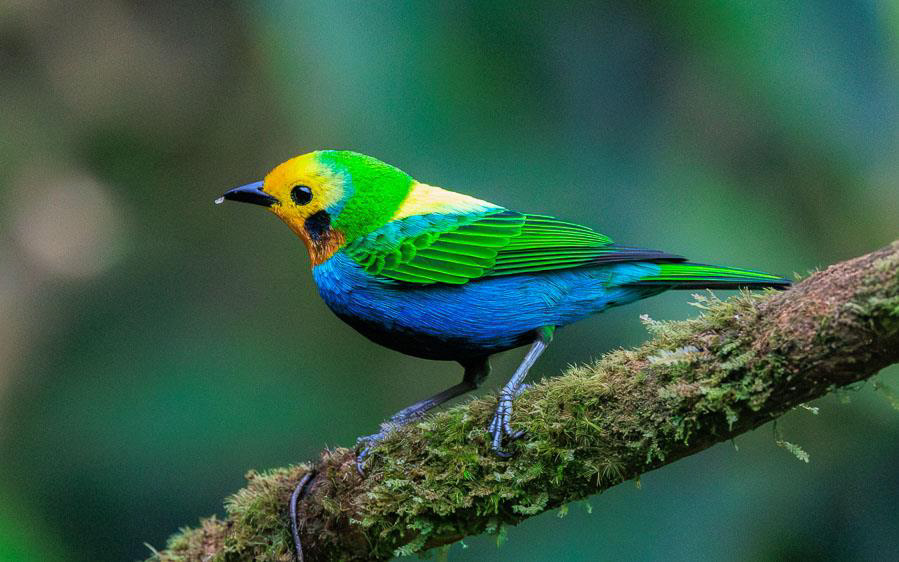
Multicolored Tanager is one of the most beautiful tanagers in all of South America, which can only be found in Colombia (photo Norman Graf).
Detailed Report
Day 1, 17th November 2025. Arrival in Cali
Our tour began in the city of Cali. The group arrived at the Alfonso Bonilla Aragon International Airport and then transferred to the hotel. In the evening, we had dinner at the hotel and got to know the whole group and excitedly discussed the tour ahead.
Day 2, 18thNovember 2025. Birding Finca La Florida and KM 18 Forest
We left the city of Cali early to enjoy some of the many birding hotspots near the city; KM18 and La Florida Reserve. At La Florida Reserve we spent time enjoying the wonderful bird feeders on the property, and here we saw some of the most eagerly awaited species such as Multicolored Tanager and Chestnut Wood Quail. Other species seen at the feeders included Red-headed Barbet, Crimson-rumped Toucanet, Green Honeycreeper, Saffron-crowned, Golden-naped, Summer, Flame-rumped, Black-capped, and Golden Tanagers.
Afterwards, we visited the hummingbird feeders where we were able to observe species such as Long-tailed Sylph, White-booted Racket-tail (a recent split from Booted Racket-tail) and Bronzy Inca. Other species that we found here included Colombian Chachalaca (endemic), Black-winged Saltator, Acorn Woodpecker, Grey-breasted Wood Wren, and Chestnut-capped Brushfinch. Other hummingbird species included Greenish Puffleg, White-necked Jacobin, Fawn-breasted Brilliant, Steely-vented Hummingbird, Andean Emerald, Speckled Hummingbird.
We then had a delicious lunch in the reserve and waited to visit a feeder where we could see Little Tinamou. It was worth the wait and we were able to clearly see the species, which is not easily done, away from feeders.
We returned to the city of Cali, where we had dinner and were able to talk about our wonderful first day, filled with beautiful birds.
Day 3, 19thNovember 2025. Anchicaya Road and Doña Dora feeders
We left Cali early and headed into the Pacific side of the western Andes, which provided us with different species than the previous day. We visited other famous bird feeders in the area of the Doña Dora feeders, where we enjoyed our first set of Chocó specials. In this Pacific slope area species reach their eastern extent and meet other more typical western Andes species. At the hummingbird feeders we found White-whiskered Hermit, Green Thorntail, Empress Brilliant, Violet-tailed Sylph and Rufous-gaped Hillstar. The fruit feeders also attracted the most-wanted Toucan Barbet. Other notable species included Choco Brushfinch, Silver-throated and Rufous-throated Tanagers and Spot-crowned Barbet. At the feeders we were able to observe the wonderful Glistening-green and Tawny-crested Tanagers.
We had a delicious lunch, prepared by our hostess Dora, and then went for a walk around the area, where we saw Crested Ant Tanager, a Colombian endemic that is easiest to find in this area. Other species seen here included Andean Solitaire, Ornate Flycatcher, Scale-crested Pygmy Tyrant and Bar-crested Antshrike. During the hike, we heard a group of Club-winged Manakin singing, which we tried to call in, but unfortunately only one group participant was able to see them.
After another fantastic day’s birding, we returned to our hotel to make our list, have dinner, and talk about the wonderful bird species we had seen.
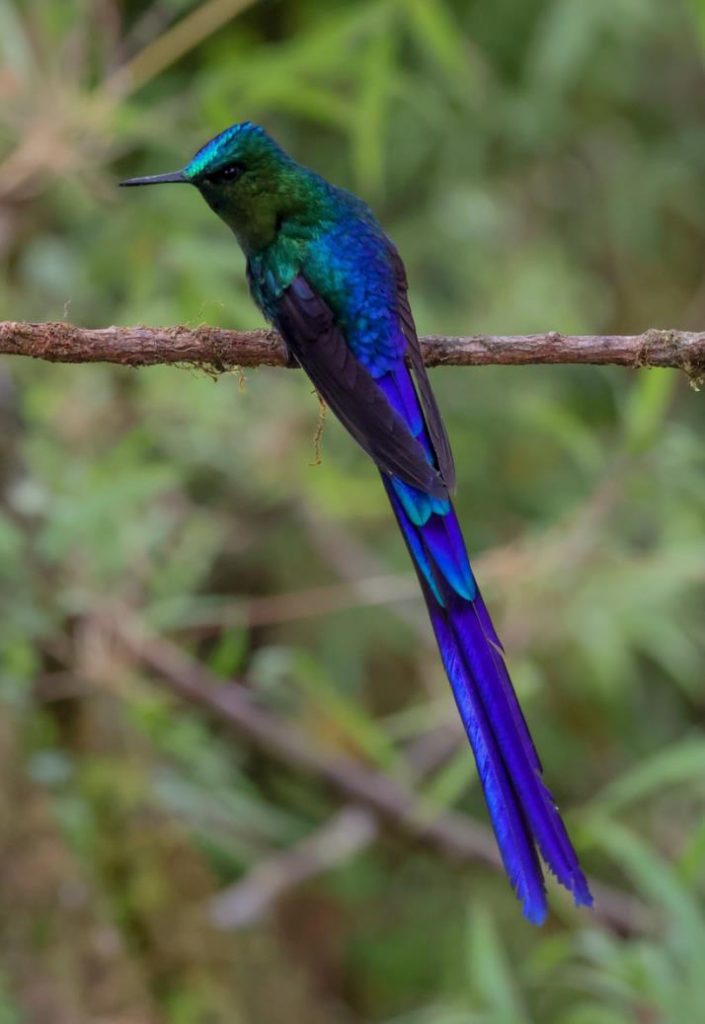
The Stunning Violet-tailed Sylph (photo Charles Barns).
Day 4, 20th November 2025. Birding San Cipriano Reserve and transfer to Buga
Today we made a very early start, departing with all our luggage for the San Cipriano Reserve in Colombia’s lower Pacific region. This biodiverse area offers a wealth of interesting species. To enter the reserve, we used the local “brujitas” of San Cipriano—improvised wooden platforms mounted on motorcycles that run along the old railway tracks, carrying visitors through lush tropical rainforest to the village and the Escalerete River. The short ride is an iconic local experience and a testament to the community’s ingenuity and adaptability. We arrived in the town of San Cipriano and began targeting Chocó specials such as Choco Toucan, along with Black-breasted Puffbird, Blue Dacnis, Slate-throated Gnatcatcher, Scarlet-browed and Blue-whiskered Tanagers and Dusky Pigeon.
We enjoyed a traditional Pacific Coast lunch in the reserve which typically features fresh fish prepared with coconut milk, accompanied by rice, plantain, and local herbs. This meal reflects the region’s Afro-Colombian heritage and its close connection to the rivers, mangroves, and the sea. Other species seen here included Rufous-tailed Jacamar, White-tailed Trogon, Baudo Oropendola, Rufous-winged and Golden-hooded Tanagers. As we left the reserve, we found Black-tipped Cotinga, had great views of Pale-mandibled Aracari and even found a nesting Purple-crowned Fairy. Once we had left the reserve, we transferred to Buga city, where we spent the night.
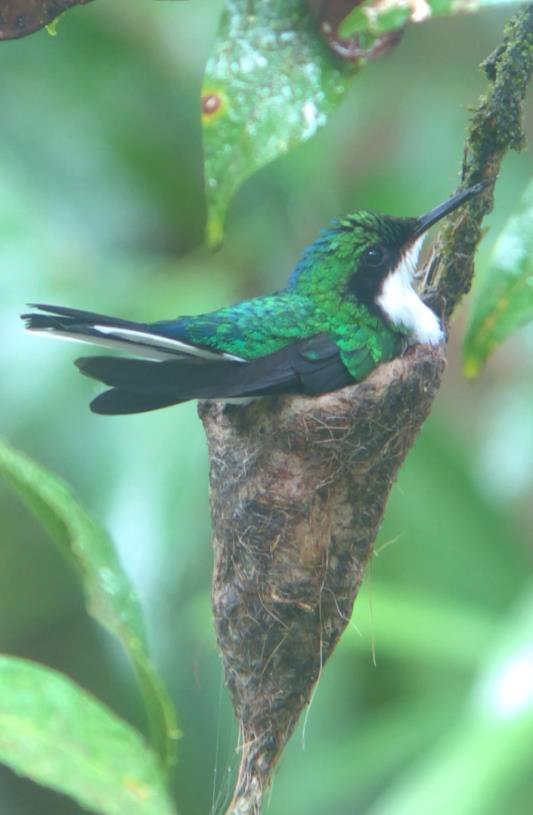
This cute Purple-crowned Fairy was found on its delicate nest.
Day 5, 21st November 2025. Morning at Sonso Lagoon and transfer to Cajamarca
We enjoyed a relaxed morning at Sonso Lagoon, one of the most important wetlands in the Cauca Valley and a key site for waterbird conservation in Colombia. The lagoon provides essential habitat for both resident and migratory species, supports local fisheries and livelihoods, and plays an important role in flood control and water regulation, making it a priority area for conservation and birdwatching. We started our visit here by finding Spectacled Parrotlet, Common Potoo, Lesser Nighthawk, Oriole Blackbird, Grey-cowled Wood Rail and Greyish Piculet (Colombian endemic). Several aquatic species also made it onto our list such as Black-bellied Whistling Duck, Purple Gallinule, Limpkin, Pied-billed Grebe, Anhinga and the secretive Little Cuckoo.
After a few hours of birding, we continued toward Cajamarca in the foothills of the Tolima Massif to visit the superb feeders at El Retorno del Colibrí Reserve. This Tolima-based conservation project protects high-Andean forests and maintains natural gardens that attract an exceptional diversity of hummingbirds, providing an intimate birdwatching experience and chances to see regional endemics including Tolima Dove, Tolima Blossomcrown, and Indigo-capped Hummingbird. By late afternoon, while wandering among the flowers, we finally saw the impressive White-tipped Sicklebill.
After a long but rewarding day in the field, we finally reached our accommodation, Urapanes del Bosque Hotel where we were based for the night.
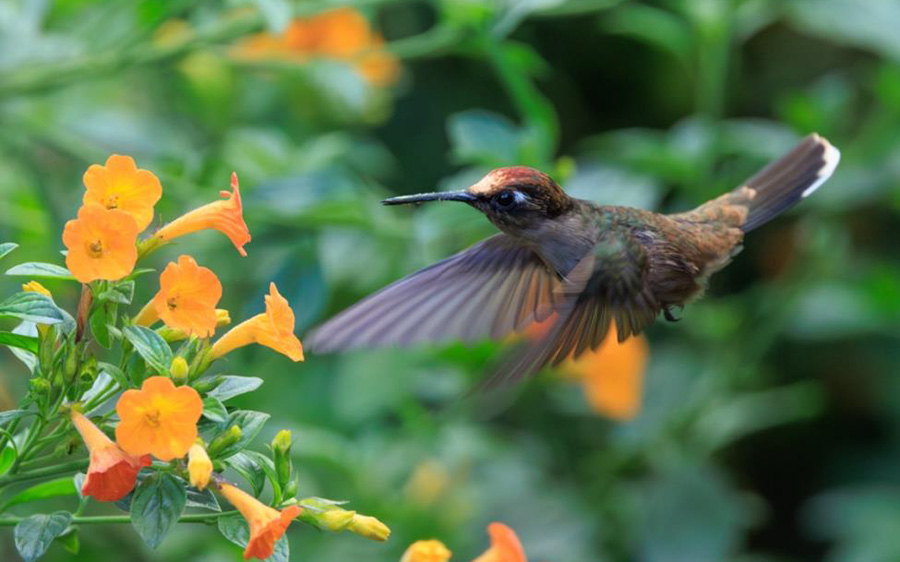
We had great views of the Colombian endemic Tolima Blossomcrown in the gardens of El Retorno del Colibrí Reserve(photo Norman Graf).
Day 6, 22nd November 2025. Visiting Fuertes’s Parrot Reserve
Today we made an early start to visit the Fuertes’s Parrot Bird Reserve, located on the eastern flank of Colombia’s Central Cordillera near the village of Potosí Alto in the municipality of Cajamarca, Tolima. This reserve is one of the very few places in the world where the Critically Endangered and endemic Fuertes’s Parrot can be seen, and after an intense search we were rewarded with views of a perched group of these remarkable birds.
After leaving the reserve, we walked to lower elevations where we encountered a variety of species, including Masked Trogon, Black-billed Mountain Toucan, Crimson-mantled and Bar-bellied Woodpeckers, White-throated and Crimson-rumped Toucanets, Inca Jay, and Golden-plumed Parakeet. After lunch, we visited an area dominated by wax palms (Ceroxylon quindiuense), the tallest palm species in the world and Colombia’s national tree. These palms grow in high-Andean valleys and cloud forests, creating striking landscapes and providing critical habitat for the endemic Yellow-eared Parrot.
Here we found a group of these rare parrots nesting, giving us exceptional opportunities to observe and photograph them at close range. We were all amazed by the views of this iconic species, as shown in the photo below. We then returned to our hotel by 4×4 vehicle for dinner and to compile our day list, delighted to have seen two of Colombia’s rarest endemic birds in a single day.
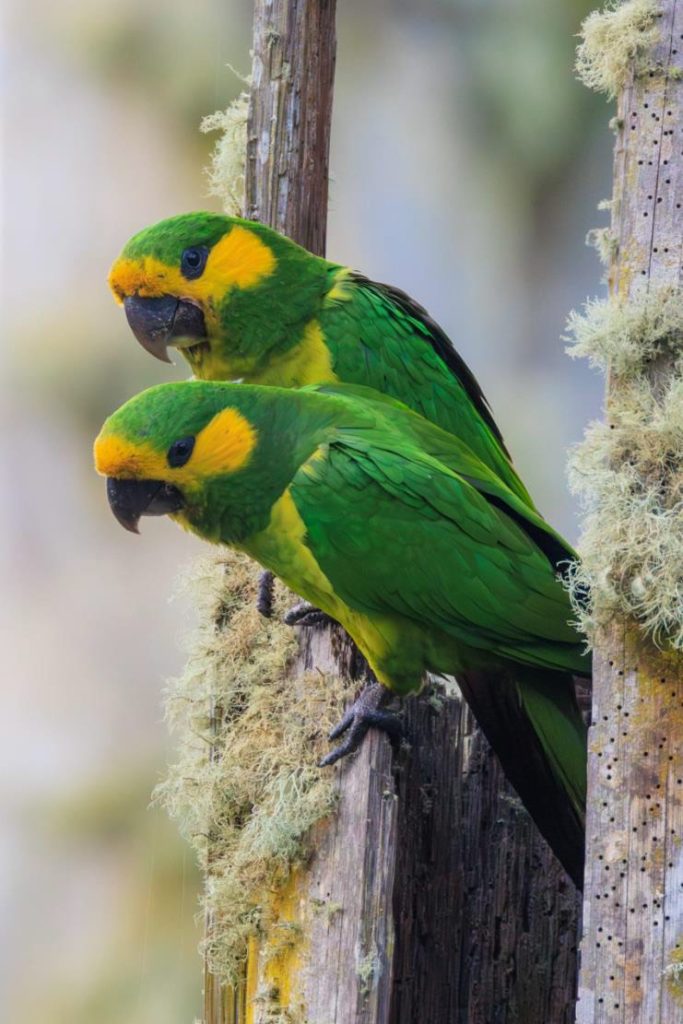
Another endemic species of Colombia, the Yellow-eared Parrot (photo Norman Graf).
Day 7, 23rd November 2025. Final birding and transfer to Montezuma
After some final birding in the area, we observed another impressive endemic species, the Yellow-headed Brushfinch. Other birds recorded that morning included Yellow-backed Oriole, Crested Oropendola, Yellow-faced Grassquit, and White-throated Quail-Dove. We then transferred to Montezuma Lodge, located in the foothills of Tatamá National Park outside Pereira. This family-run lodge is the only accommodation in the area and, while relatively simple, offers a rewarding stay in one of Colombia’s premier birding hotspots. The surrounding area is where Pacific slope and Andean species overlap, making it one of the few accessible Chocó-region sites.
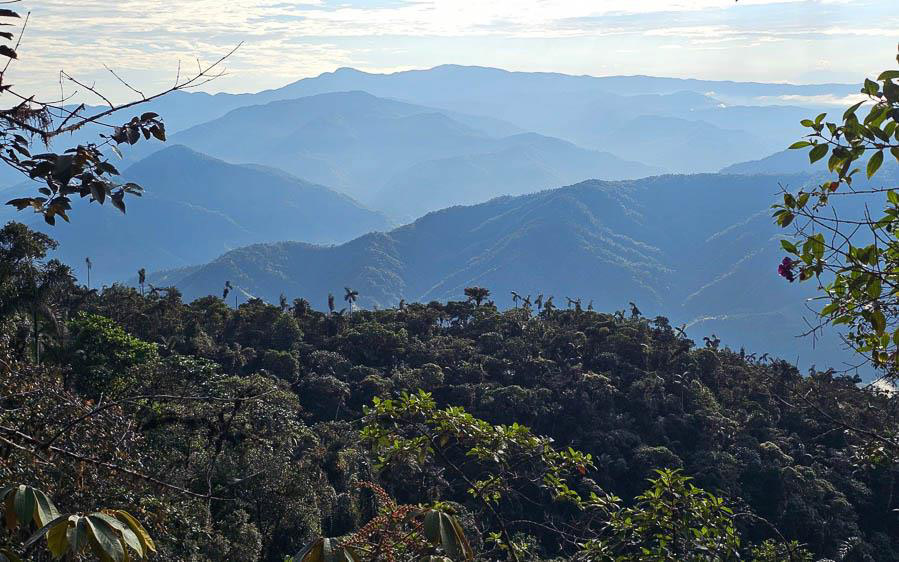
One of Colombia’s many spectacular landscapes is Tatamá National Natural Park, home to numerous important bird species of the Chocó region (photo: Norman Graf).
Day 8, 24th November 2025. Birding the top of Montezuma Ridge
Today we made an early start for a full day exploring the summit of the Montezuma Ridge at 8,530 feet (2,600 meters) above sea level. Here we encountered key species such as the endemic Chestnut-bellied Flowerpiercer and Munchique Wood Wren, along with Velvet-purple Coronet and Collared Inca. We also searched for the spectacular mixed-species flocks for which Montezuma is famous, often featuring Gold-ringed (Colombian endemic), Glistening-green, and Purplish-mantled Tanagers.
Our lunch was delivered to the mountain by motorcycle, allowing us to enjoy a memorable meal in the heart of the national park. We then continued down the trail, encountering mixed-species flocks that included Chestnut-breasted Chlorophonia, Fulvous-dotted Treerunner, Narino and Tatama Tapaculos, Montane Woodcreeper, Indigo Flowerpiercer, Bronze-olive Pygmy Tyrant, and Handsome Flycatcher. Below the ridge, hummingbird feeders attracted Tourmaline Sunangel, Greenish Puffleg, Violet-tailed Sylph, Empress Brilliant, and Brown Inca. It was an outstanding introduction to Tatamá National Park.
Day 9, 25thNovember 2025. Birding the mid elevations of Montezuma and transfer to Pereira
We began the day with another early start, this time focusing on mid-elevation species in the Cajones sector of the park. Carrying our packed breakfasts, we ate in the field while enjoying sightings of the Orange-breasted Fruiteater and the Colombian endemic Black-and-gold Tanager. Continuing down the trail, we encountered lively mixed flocks that included Uniform Treehunter, Buff-fronted Foliage-gleaner, Uniform Antshrike, Bluish Flowerpiercer, Black-and-gold (endemic) and Flame-faced Tanagers, Pacific Tuftedcheek, Choco Brushfinch, Choco Vireo, Golden-winged Manakin, Black-throated Tody-Tyrant, Black Solitaire, and Dusky Chlorospingus.
In the afternoon, we returned to the lodge for lunch before preparing to leave this remarkable hotspot. Our journey took us to Pereira, a vibrant city in Colombia’s Coffee Region, framed by green mountains, coffee plantations, and rich biodiversity. With its warm climate, welcoming people, and strategic location, Pereira serves as an excellent base for exploring cloud forests, birding destinations, and natural attractions in the Central Andes. We settled in for the night at the comfortable Movich Hotel Pereira, where we enjoyed another delightful dinner.
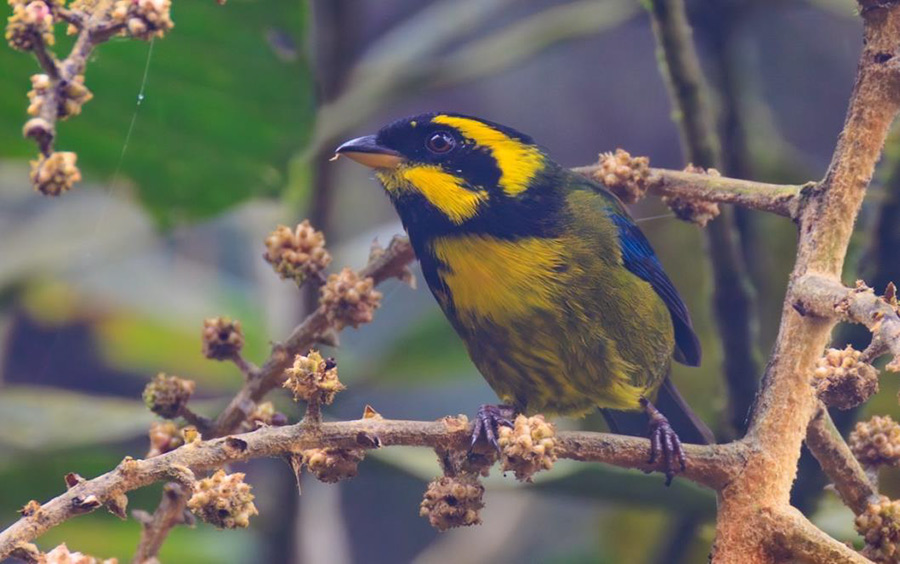
The Gold-ringed Tanager is one of the many species that can be found in these beautiful mountains, as well known as the Tatama Tanager (photo Norman Graf).
Day 10, 26th November 2025. Otún-Quimbaya Sanctuary and transfer to Manizales
We began the day with a drive from Pereira to the Otún-Quimbaya Flora and Fauna Sanctuary, a protected reserve in the Central Andes renowned for its lush cloud forests, clear rivers, and remarkable biodiversity. With scenic trails, abundant birdlife—including several endemics—and a tranquil natural setting, the sanctuary is considered one of the finest birdwatching and nature destinations in Colombia’s Coffee Region.
Our morning started with sightings of two highly sought-after species: the Torrent Duck and the endemic Cauca Guan. As we continued, we observed an impressive variety of birds, including Red-ruffed Fruitcrow, Rufous-breasted Flycatcher, Chestnut-breasted Wren, Crested Ant Tanager (endemic), Andean Motmot, White-throated Toucanet, Stiles’s Tapaculo (endemic), Torrent Tyrannulet, Collared Trogon, and White-capped Dipper.
After lunch in the town of Florida, we continued on to Manizales, a picturesque mountain city in the Coffee Region. Set on steep Andean slopes and surrounded by cloud forests, coffee plantations, and volcanoes, Manizales is known for its cool climate, sweeping views, and vibrant cultural life. It serves as an excellent gateway to birding sites and high-Andean ecosystems—and will be our base for the coming days.
Day 11, 27th November 2025. Exploring Los Nevados National Natural Park
We departed Manizales and drove for just over an hour toward Los Nevados National Park. As we ascended, the landscape transformed dramatically into rolling páramo dotted with frailejones (Espeletia plants), glacial valleys, and sweeping vistas of snow-capped volcanoes—an ideal setting for wildlife observation and High-Andean scenery.
At the park’s highest point, around 13,800 feet (4,200 meters) above sea level, we were rewarded with a Buffy Helmetcrest, a striking hummingbird endemic to Colombia. This species is adapted to the cold, open páramo, and distinguished by its brilliant golden crest, and is a true highlight for birdwatchers exploring Los Nevados. After this wonderful encounter, we explored other areas of the park and highlights included Plain-colored Seedeater, Plumbeous Sierra Finch and Stout-billed Cinclodes.
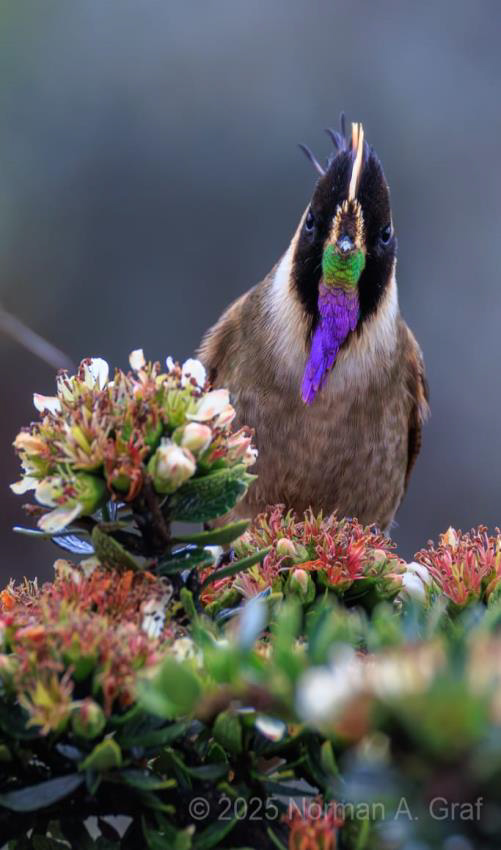
Buffy Helmetcrest, another Colombian endemic, restricted to the páramo ecosystem in the central Andes (photo Norman Graf).
We spent part of the day at the Termales del Ruiz Hotel, enjoying the activity around its feeders. These regularly attract a dazzling array of hummingbirds, including Great Sapphirewing, Buff-winged Starfrontlet, Mountain Velvetbreast, Golden-breasted Puffleg, Shining Sunbeam, Tyrian Metaltail, and the spectacular Rainbow-bearded Thornbill—and today was no exception. The banana feeders drew Scarlet-bellied and Lacrimose Mountain Tanagers, while other visitors included Pale-naped Brushfinch and Masked Flowerpiercer. In the late afternoon, we finally returned to our hotel in Manizales.
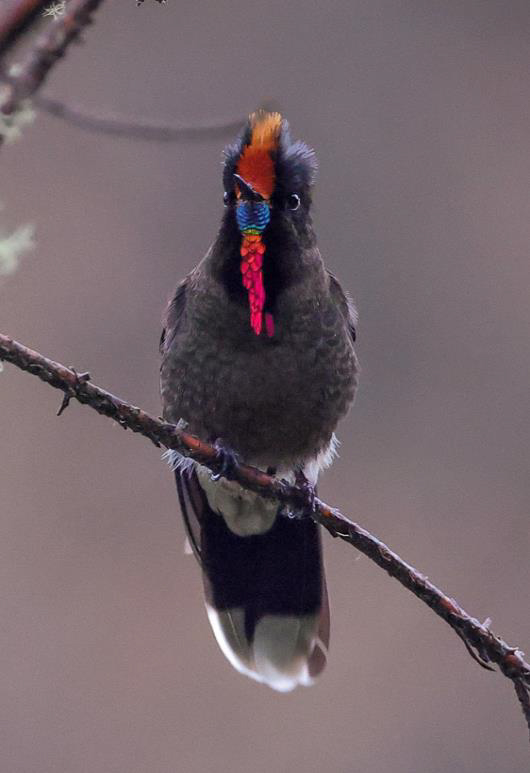
The cute Rainbow-bearded Thornbill (photo Charles Barns).
Day 12, 28th November 2025. Birding Hacienda El Bosque
We spent the entire morning at Hacienda El Bosque, a private reserve that has become a must-visit destination for birding and photography enthusiasts in Colombia. After enjoying a delicious breakfast with sweeping views of Manizales, we set out toward our first hide, where we observed the Equatorial Antpitta and White-browed Spinetail. At the next hide, we encountered Yellow-bellied Chat-Tyrant, Mountain and Grass Wrens, Golden-fronted Redstart, and Grey-browed Brushfinch.
Our third hide offered close-up views of Hooded Mountain Tanager and the striking Grey-breasted Mountain Toucan, one of the reserve’s specialties. Additional highlights included Andean and Sickle-winged Guans. The hummingbird feeders added further excitement, attracting Sword-billed Hummingbird, Tourmaline Sunangel, Buff-winged Starfrontlet, Mountain Velvetbreast, Shining Sunbeam, and many others.
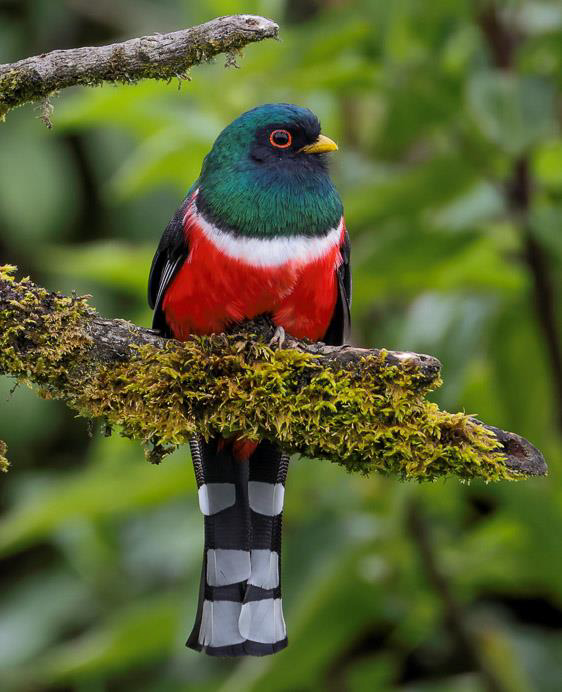
The colorful Masked Trogon showed wonderfully well for us on this tour (photo Charles Barns).
Day 13, 29th November 2025. Birding Rio Blanco Reserve
We spent the morning exploring the Rio Blanco Reserve, nestled in the mountains near Manizales. This well-preserved cloud forest safeguards vital water sources and supports an exceptional diversity of Andean bird species, making it one of Colombia’s premier destinations for birdwatching and nature tourism.
Our visit included three antpitta stations, where we successfully observed Chestnut-crowned, Brown-banded, and Slate-crowned Antpittas—an unforgettable experience to see all three species at the feeders. While walking between stations, we encountered mixed flocks featuring Blue-and-black, Grass-green, and Blue-capped Tanagers, Blue-winged Mountain Tanager, Capped Conebill, Black-eared and Black-capped Hemispingus, Crimson-mantled Woodpecker, Pearled Treerunner, and Green-and-black Fruiteater.
After a delicious lunch, we continued along the road in search of more flocks, adding Rufous-crowned Tody-Flycatcher, Streak-headed Antbird, Russet-crowned Warbler, and Grey-browed Brushfinch to our list. Other highlights included Masked Saltator, Grey-hooded Bush Tanager (also known as Pink-billed Cnemoscopus), and Streaked Tuftedcheek.
It was another remarkable day filled with new species. In the evening, we returned to Manizales for a final dinner at the hotel, reflecting on the unforgettable experiences of the tour. This marked the conclusion of our birdwatching adventure.
Day 14, 30th November 2025. Transfer to Pereira and departure
We began the day with breakfast at our hotel in Manizales before departing for Pereira. Some participants chose to stay an extra night in Pereira, while others continued their journeys to explore more of this beautiful country.
This trip has truly showcased the extraordinary biodiversity of the region and underscored the importance of conserving its ecosystems. It also reaffirmed the immense potential of birdwatching and sustainable ecotourism as powerful tools for environmental education and local development.
I would like to extend my heartfelt thanks to the entire group for their positive attitude, curiosity, and respect for nature throughout the journey. Sharing this experience with such enthusiastic and dedicated participants has been a genuine pleasure. Your passion for birds, landscapes, and conservation made each day both meaningful and enjoyable. Thank you for your energy, teamwork, and for making this adventure truly special.
Bird List – Following IOC (15.1) (March 2025)
Birds ‘heard only’ are marked with (H) after the common name, all other species were seen.
The following notation after species names is used to show conservation status following BirdLife International: EN = Endangered, VU = Vulnerable.
| Common Name | Scientific Name |
| Tinamous (Tinamidae) | |
| Little Tinamou | Crypturellus soui |
| Screamers (Anhimidae) | |
| Horned Screamer | Anhima cornuta |
| Ducks, Geese, Swans (Anatidae) | |
| Black-bellied Whistling Duck | Dendrocygna autumnalis |
| Torrent Duck | Merganetta armata |
| Andean Teal | Anas andium |
| Andean Duck | Oxyura ferruginea |
| Chachalacas, Curassows, Guans (Cracidae) | |
| Sickle-winged Guan | Chamaepetes goudotii |
| Andean Guan | Penelope montagnii |
| Cauca Guan | Penelope perspicax |
| Colombian Chachalaca | Ortalis columbiana |
| New World Quail (Odontophoridae) | |
| Chestnut Wood Quail | Odontophorus hyperythrus |
| Nightjars (Caprimulgidae) | |
| Lesser Nighthawk | Chordeiles acutipennis |
| Potoos (Nyctibiidae) | |
| Common Potoo | Nyctibius griseus |
| Swifts (Apodidae) | |
| White-collared Swift | Streptoprocne zonaris |
| Grey-rumped Swift | Chaetura cinereiventris |
| Hummingbirds (Trochilidae) | |
| White-necked Jacobin | Florisuga mellivora |
| White-tipped Sicklebill | Eutoxeres aquila |
| White-whiskered Hermit | Phaethornis yaruqui |
| Tawny-bellied Hermit | Phaethornis syrmatophorus |
| Green-fronted Lancebill | Doryfera ludovicae |
| White-throated Daggerbill | Schistes albogularis |
| Sparkling Violetear | Colibri coruscans |
| Brown Violetear | Colibri delphinae |
| Lesser Violetear | Colibri cyanotus |
| Purple-crowned Fairy | Heliothryx barroti |
| Black-throated Mango | Anthracothorax nigricollis |
| Tourmaline Sunangel | Heliangelus exortis |
| Green Thorntail | Discosura conversii |
| Speckled Hummingbird | Adelomyia melanogenys |
| Long-tailed Sylph | Aglaiocercus kingii |
| Violet-tailed Sylph | Aglaiocercus coelestis |
| Purple-backed Thornbill | Ramphomicron microrhynchum |
| Rainbow-bearded Thornbill | Chalcostigma herrani |
| Buffy Helmetcrest | Oxypogon stuebelii |
| Tyrian Metaltail | Metallura tyrianthina |
| Greenish Puffleg | Haplophaedia aureliae |
| Black-thighed Puffleg | Eriocnemis derbyi |
| Golden-breasted Puffleg | Eriocnemis mosquera |
| Shining Sunbeam | Aglaeactis cupripennis |
| Bronzy Inca | Coeligena coeligena |
| Brown Inca | Coeligena wilsoni |
| Collared Inca | Coeligena torquata |
| Buff-winged Starfrontlet | Coeligena lutetiae |
| Mountain Velvetbreast | Lafresnaya lafresnayi |
| Sword-billed Hummingbird | Ensifera ensifera |
| Great Sapphirewing | Pterophanes cyanopterus |
| Buff-tailed Coronet | Boissonneaua flavescens |
| Velvet-purple Coronet | Boissonneaua jardini |
| White-booted Racket-tail | Ocreatus underwoodii |
| Rufous-gaped Hillstar | Urochroa bougueri |
| Purple-bibbed Whitetip | Urosticte benjamini |
| Fawn-breasted Brilliant | Heliodoxa rubinoides |
| Green-crowned Brilliant | Heliodoxa jacula |
| Empress Brilliant | Heliodoxa imperatrix |
| White-bellied Woodstar | Chaetocercus mulsant |
| Purple-throated Woodstar | Philodice mitchellii |
| Tolima Blossomcrown | Anthocephala berlepschi |
| White-vented Plumeleteer | Chalybura buffonii |
| Crowned Woodnymph | Thalurania colombica |
| Steely-vented Hummingbird | Saucerottia saucerottei |
| Indigo-capped Hummingbird | Saucerottia cyanifrons |
| Rufous-tailed Hummingbird | Amazilia tzacatl |
| Cuckoos (Cuculidae) | |
| Greater Ani | Crotophaga major |
| Smooth-billed Ani | Crotophaga ani |
| Striped Cuckoo | Tapera naevia |
| Little Cuckoo | Coccycua minuta |
| Squirrel Cuckoo | Piaya cayana |
| Pigeons, Doves (Columbidae) | |
| Rock Dove [Feral Pigeon] | Columba livia |
| Pale-vented Pigeon | Patagioenas cayennensis |
| Band-tailed Pigeon | Patagioenas fasciata |
| Plumbeous Pigeon | Patagioenas plumbea |
| Dusky Pigeon | Patagioenas goodsoni |
| Ruddy Ground Dove | Columbina talpacoti |
| Tolima Dove | Leptotila conoveri |
| White-throated Quail-Dove | Zentrygon frenata |
| Rails, Crakes & Coots (Rallidae) | |
| Blackish Rail | Pardirallus nigricans |
| Grey-cowled Wood Rail | Aramides cajaneus |
| Purple Gallinule | Porphyrio martinica |
| Common Gallinule | Gallinula galeata |
| Limpkin (Aramidae) | |
| Limpkin | Aramus guarauna |
| Grebes (Podicipedidae) | |
| Pied-billed Grebe | Podilymbus podiceps |
| Plovers (Charadriidae) | |
| Southern Lapwing | Vanellus chilensis |
| Jacanas (Jacanidae) | |
| Wattled Jacana | Jacana jacana |
| Sandpipers, Snipes (Scolopacidae) | |
| Noble Snipe | Gallinago nobilis |
| Anhingas, Darters (Anhingidae) | |
| Anhinga | Anhinga anhinga |
| Cormorants, Shags (Phalacrocoracidae) | |
| Neotropic Cormorant | Nannopterum brasilianum |
| Ibises, Spoonbills (Threskiornithidae) | |
| Green Ibis | Mesembrinibis cayennensis |
| Bare-faced Ibis | Phimosus infuscatus |
| Glossy Ibis | Plegadis falcinellus |
| Buff-necked Ibis | Theristicus caudatus |
| Herons, Bitterns (Ardeidae) | |
| Little Blue Heron | Egretta caerulea |
| Striated Heron | Butorides striata |
| Western Cattle Egret | Ardea ibis |
| Great Egret | Ardea alba |
| Cocoi Heron | Ardea cocoi |
| New World Vultures (Cathartidae) | |
| Black Vulture | Coragyps atratus |
| Turkey Vulture | Cathartes aura |
| Ospreys (Pandionidae) | |
| Osprey | Pandion haliaetus |
| Kites, Hawks, Eagles (Accipitridae) | |
| Snail Kite | Rostrhamus sociabilis |
| Barred Hawk | Morphnarchus princeps |
| Roadside Hawk | Rupornis magnirostris |
| White-tailed Hawk | Geranoaetus albicaudatus |
| Broad-winged Hawk | Buteo platypterus |
| Owls (Strigidae) | |
| Tropical Screech Owl | Megascops choliba |
| Trogons (Trogonidae) | |
| White-tailed Trogon | Trogon chionurus |
| Collared Trogon | Trogon collaris |
| Masked Trogon | Trogon personatus |
| Kingfishers (Alcedinidae) | |
| Amazon Kingfisher | Chloroceryle amazona |
| Ringed Kingfisher | Megaceryle torquata |
| Motmots (Momotidae) | |
| Andean Motmot | Momotus aequatorialis |
| Jacamars (Galbulidae) | |
| Rufous-tailed Jacamar | Galbula ruficauda |
| Puffbirds (Bucconidae) | |
| Black-breasted Puffbird | Notharchus pectoralis |
| New World Barbets (Capitonidae) | |
| Spot-crowned Barbet | Capito maculicoronatus |
| Red-headed Barbet | Eubucco bourcierii |
| Toucan Barbets (Semnornithidae) | |
| Toucan Barbet | Semnornis ramphastinus |
| Toucans (Ramphastidae) | |
| Southern Emerald Toucanet | Aulacorhynchus albivitta |
| Crimson-rumped Toucanet | Aulacorhynchus haematopygus |
| Grey-breasted Mountain Toucan | Andigena hypoglauca |
| Black-billed Mountain Toucan | Andigena nigrirostris |
| Pale-mandible Aracari | Pteroglossus erythropygius |
| Yellow-throated Toucan | Ramphastos ambiguus |
| Choco Toucan | Ramphastos brevis |
| Woodpeckers (Picidae) | |
| Greyish Piculet | Picumnus granadensis |
| Acorn Woodpecker | Melanerpes formicivorus |
| Black-cheeked Woodpecker | Melanerpes pucherani |
| Red-crowned Woodpecker | Melanerpes rubricapillus |
| Yellow-vented Woodpecker | Veniliornis dignus |
| Bar-bellied Woodpecker | Veniliornis nigriceps |
| Lineated Woodpecker | Dryocopus lineatus |
| Golden-olive Woodpecker | Colaptes rubiginosus |
| Crimson-mantled Woodpecker | Colaptes rivolii |
| Spot-breasted Woodpecker | Colaptes punctigula |
| Caracaras, Falcons (Falconidae) | |
| Crested Caracara | Caracara plancus |
| Yellow-headed Caracara | Milvago chimachima |
| African & New World Parrots (Psittacidae) | |
| Orange-chinned Parakeet | Brotogeris jugularis |
| Fuertes’s Parrot | Hapalopsittaca fuertesi |
| Speckle-faced Parrot | Pionus tumultuosus |
| Blue-headed Parrot | Pionus menstruus |
| Bronze-winged Parrot | Pionus chalcopterus |
| Yellow-crowned Amazon | Amazona ochrocephala |
| Spectacled Parrotlet | Forpus conspicillatus |
| Chestnut-fronted Macaw | Ara severus |
| Golden-plumed Parakeet | Leptosittaca branickii |
| Yellow-eared Parrot | Ognorhynchus icterotis |
| Scarlet-fronted Parakeet | Psittacara wagleri |
| Ovenbirds (Furnariidae) | |
| South American Leaftosser (H) | Sclerurus obscurior |
| Wedge-billed Woodcreeper | Glyphorynchus spirurus |
| Streak-headed Woodcreeper | Lepidocolaptes souleyetii |
| Montane Woodcreeper | Lepidocolaptes lacrymiger |
| Streaked Xenops | Xenops rutilans |
| Pacific Tuftedcheek | Pseudocolaptes johnsoni |
| Streaked Tuftedcheek | Pseudocolaptes boissonneautii |
| Stout-billed Cinclodes | Cinclodes excelsior |
| Scaly-throated Foliage-gleaner | Anabacerthia variegaticeps |
| Montane Foliage-gleaner | Anabacerthia striaticollis |
| Lineated Foliage-gleaner | Syndactyla subalaris |
| Buff-fronted Foliage-gleaner | Dendroma rufa |
| Uniform Treehunter | Thripadectes ignobilis |
| Spotted Barbtail | Premnoplex brunnescens |
| Fulvous-dotted Treerunner | Margarornis stellatus |
| Pearled Treerunner | Margarornis squamiger |
| White-browed Spinetail | Hellmayrea gularis |
| White-chinned Thistletail | Asthenes fuliginosa |
| Red-faced Spinetail | Cranioleuca erythrops |
| Slaty Spinetail (H) | Synallaxis brachyura |
| Azara’s Spinetail | Synallaxis azarae |
| Antbirds (Thamnophilidae) | |
| Rufous-rumped Antwren | Euchrepomis callinota |
| Great Antshrike | Taraba major |
| Bar-crested Antshrike | Thamnophilus multistriatus |
| Black-crowned Antshrike | Thamnophilus atrinucha |
| Uniform Antshrike (H) | Thamnophilus unicolor |
| Slaty Antwren | Myrmotherula schisticolor |
| Dot-winged Antwren | Microrhopias quixensis |
| Streak-headed Antbird | Drymophila striaticeps |
| Dusky Antbird (H) | Cercomacroides tyrannina |
| Jet Antbird (H) | Cercomacra nigricans |
| Antthrushes (Formicariidae) | |
| Rufous-breasted Antthrush | Formicarius rufipectus |
| Antpittas (Grallariidae) | |
| Chestnut-crowned Antpitta | Grallaria ruficapilla |
| Chestnut-naped Antpitta (H) | Grallaria nuchalis |
| Yellow-breasted Antpitta (H) | Grallaria flavotincta |
| Equatorial Antpitta | Grallaria saturata |
| Tawny Antpitta | Grallaria quitensis |
| Brown-banded Antpitta | Grallaria milleri |
| Slate-crowned Antpitta | Grallaricula nana |
| Tapaculos (Rhinocryptidae) | |
| Ash-colored Tapaculo (H) | Myornis senilis |
| Blackish Tapaculo (H) | Scytalopus latrans |
| Nariño Tapaculo | Scytalopus vicinior |
| Stiles’s Tapaculo | Scytalopus stilesi |
| Tatama Tapaculo (H) | Scytalopus alvarezlopezi |
| Spillmann’s Tapaculo (H) | Scytalopus spillmanni |
| Tyrant Flycatchers, Calyptura (Tyrannidae) | |
| Streak-necked Flycatcher | Mionectes striaticollis |
| Slaty-capped Flycatcher | Leptopogon superciliaris |
| Rufous-breasted Flycatcher | Leptopogon rufipectus |
| Marble-faced Bristle Tyrant | Pogonotriccus ophthalmicus |
| Variegated Bristle Tyrant | Pogonotriccus poecilotis |
| Bronze-olive Pygmy Tyrant (H) | Pseudotriccus pelzelni |
| Rufous-headed Pygmy Tyrant | Pseudotriccus ruficeps |
| Scale-crested Pygmy Tyrant | Lophotriccus pileatus |
| Black-throated Tody-Tyrant | Hemitriccus granadensis |
| Rufous-crowned Tody-Flycatcher | Poecilotriccus ruficeps |
| Slate-headed Tody-Flycatcher | Poecilotriccus sylvia |
| Common Tody-Flycatcher | Todirostrum cinereum |
| Fulvous-breasted Flatbill | Rhynchocyclus fulvipectus |
| Yellow-olive Flatbill | Tolmomyias sulphurescens |
| Cinnamon Flycatcher | Pyrrhomyias cinnamomeus |
| Ornate Flycatcher | Myiotriccus ornatus |
| Handsome Flycatcher | Nephelomyias pulcher |
| Southern Beardless Tyrannulet | Camptostoma obsoletum |
| White-throated Tyrannulet | Mecocerculus leucophrys |
| Torrent Tyrannulet | Serpophaga cinerea |
| Black-capped Tyrannulet | Tyranniscus nigrocapillus |
| Golden-faced Tyrannulet | Zimmerius chrysops |
| Flavescent Flycatcher | Myiophobus flavicans |
| Acadian Flycatcher | Empidonax virescens |
| Black Phoebe | Sayornis nigricans |
| Vermilion Flycatcher | Pyrocephalus rubinus |
| Crowned Chat-Tyrant | Silvicultrix frontalis |
| Yellow-bellied Chat-Tyrant | Silvicultrix diadema |
| Chestnut-bellied Chat-Tyrant | Ochthoeca cinnamomeiventris |
| Rufous-breasted Chat-Tyrant | Ochthoeca rufipectoralis |
| Brown-backed Chat-Tyrant | Ochthoeca fumicolor |
| Long-tailed Tyrant | Colonia colonus |
| Bright-rumped Attila | Attila spadiceus |
| Pale-edged Flycatcher | Myiarchus cephalotes |
| Cattle Tyrant | Machetornis rixosa |
| Great Kiskadee | Pitangus sulphuratus |
| Rusty-margined Flycatcher | Myiozetetes cayanensis |
| White-ringed Flycatcher | Conopias albovittatus |
| Golden-bellied Flycatcher | Myiodynastes hemichrysus |
| Streaked Flycatcher | Myiodynastes maculatus |
| Tropical Kingbird | Tyrannus melancholicus |
| Cotingas (Cotingidae) | |
| Olivaceous Piha | Snowornis cryptolophus |
| Red-ruffed Fruitcrow | Pyroderus scutatus |
| Dusky Piha | Lipaugus fuscocinereus |
| Black-tipped Cotinga | Carpodectes hopkei |
| Manakins (Pipridae) | |
| Golden-winged Manakin | Masius chrysopterus |
| Golden-collared Manakin | Manacus vitellinus |
| Club-winged Manakin (H) | Machaeropterus deliciosus |
| Tityras, Becards & Allies (Tityridae) | |
| Barred Becard | Pachyramphus versicolor |
| Cinnamon Becard | Pachyramphus cinnamomeus |
| Royal Flycatchers & Allies (Onychorhynchidae) | |
| Sulphur-rumped Flycatcher | Myiobius sulphureipygius |
| Vireos, Greenlets, Shrike-babblers (Vireonidae) | |
| Choco Vireo | Vireo masteri |
| Brown-capped Vireo | Vireo leucophrys |
| Black-billed Peppershrike | Cyclarhis nigrirostris |
| Crows, Jays (Corvidae) | |
| Black-collared Jay | Cyanolyca armillata |
| Inca Jay | Cyanocorax yncas |
| Black-chested Jay | Cyanocorax affinis |
| Swallows, Martins (Hirundinidae) | |
| Southern Rough-winged Swallow | Stelgidopteryx ruficollis |
| Blue-and-white Swallow | Pygochelidon cyanoleuca |
| Brown-bellied Swallow | Orochelidon murina |
| Wrens (Troglodytidae) | |
| Southern House Wren | Troglodytes musculus |
| Mountain Wren | Troglodytes solstitialis |
| Grass Wren | Cistothorus platensis |
| Whiskered Wren (H) | Pheugopedius mystacalis |
| Bay Wren | Cantorchilus nigricapillus |
| Sharpe’s Wren | Cinnycerthia olivascens |
| Grey-breasted Wood-Wren | Henicorhina leucophrys |
| Munchique Wood-Wren | Henicorhina negreti |
| Northern Chestnut-breasted Wren (H) | Cyphorhinus dichrous |
| Gnatcatchers (Polioptilidae) | |
| Slate-throated Gnatcatcher | Polioptila schistaceigula |
| Thrushes (Turdidae) | |
| Andean Solitaire | Myadestes ralloides |
| Slaty-backed Nightingale-Thrush | Catharus fuscater |
| Swainson’s Thrush | Catharus ustulatus |
| Black Solitaire | Entomodestes coracinus |
| Great Thrush | Turdus fuscater |
| Black-billed Thrush | Turdus ignobilis |
| Dippers (Cinclidae) | |
| White-capped Dipper | Cinclus leucocephalus |
| Finches, Euphonias (Fringillidae) | |
| Chestnut-breasted Chlorophonia | Chlorophonia pyrrhophrys |
| White-vented Euphonia | Euphonia minuta |
| Thick-billed Euphonia | Euphonia laniirostris |
| Fulvous-vented Euphonia | Euphonia fulvicrissa |
| Orange-bellied Euphonia | Euphonia xanthogaster |
| Andean Siskin | Spinus spinescens |
| New World Sparrows (Passerellidae) | |
| Yellow-throated Chlorospingus | Chlorospingus flavigularis |
| Ashy-throated Chlorospingus | Chlorospingus canigularis |
| Common Chlorospingus | Chlorospingus flavopectus |
| Dusky Chlorospingus | Chlorospingus semifuscus |
| Grey-browed Brushfinch | Arremon assimilis |
| Chestnut-capped Brushfinch | Arremon brunneinucha |
| Olive Finch | Arremon castaneiceps |
| Rufous-collared Sparrow | Zonotrichia capensis |
| Yellow-headed Brushfinch | Atlapetes flaviceps |
| Choco Brushfinch | Atlapetes crassus |
| Northern Slaty Brushfinch | Atlapetes schistaceus |
| Pale-naped Brushfinch | Atlapetes pallidinucha |
| Oropendolas, New World Orioles, Blackbirds (Icteridae) | |
| Russet-backed Oropendola | Psarocolius angustifrons |
| Crested Oropendola | Psarocolius decumanus |
| Chestnut-headed Oropendola | Psarocolius wagleri |
| Baudo Oropendola | Psarocolius cassini |
| Scarlet-rumped Cacique | Cacicus uropygialis |
| Mountain Cacique (H) | Cacicus chrysonotus |
| Yellow-backed Oriole | Icterus chrysater |
| Yellow Oriole | Icterus nigrogularis |
| Shiny Cowbird | Molothrus bonariensis |
| Oriole Blackbird | Gymnomystax mexicanus |
| New World Warblers (Parulidae) | |
| Black-and-white Warbler | Mniotilta varia |
| Tennessee Warbler | Leiothlypis peregrina |
| Tropical Parula | Setophaga pitiayumi |
| Bay-breasted Warbler | Setophaga castanea |
| Blackburnian Warbler | Setophaga fusca |
| Northern Yellow Warbler | Setophaga aestiva |
| Three-striped Warbler | Basileuterus tristriatus |
| Buff-rumped Warbler | Myiothlypis fulvicauda |
| Russet-crowned Warbler | Myiothlypis coronata |
| Canada Warbler | Cardellina canadensis |
| Slate-throated Whitestart | Myioborus miniatus |
| Golden-fronted Whitestart | Myioborus ornatus |
| Mitrospingid Tanagers (Mitrospingidae) | |
| Dusky-faced Tanager | Mitrospingus cassinii |
| Cardinals & Allies (Cardinalidae) | |
| Summer Tanager | Piranga rubra |
| Red-hooded Tanager | Piranga rubriceps |
| Crested Ant-Tanager | Driophlox cristata |
| Ochre-breasted Tanager (H) | Chlorothraupis stolzmanni |
| Tanagers & Allies (Thraupidae) | |
| Black-capped Hemispingus | Kleinothraupis atropileus |
| Oleaginous Hemispingus | Sphenopsis frontalis |
| Black-eared Hemispingus | Sphenopsis melanotis |
| Superciliaried Hemispingus | Thlypopsis superciliaris |
| Tawny-crested Tanager | Tachyphonus delatrii |
| White-lined Tanager | Tachyphonus rufus |
| Flame-rumped Tanager | Ramphocelus flammigerus |
| Crimson-backed Tanager | Ramphocelus dimidiatus |
| Black-and-gold Tanager | Bangsia melanochlamys |
| Gold-ringed Tanager | Bangsia aureocincta |
| Hooded Mountain Tanager | Buthraupis montana |
| Blue-capped Tanager | Sporathraupis cyanocephala |
| Grass-green Tanager | Chlorornis riefferii |
| Lacrimose Mountain Tanager | Anisognathus lacrymosus |
| Scarlet-bellied Mountain Tanager | Anisognathus igniventris |
| Blue-winged Mountain Tanager | Anisognathus somptuosus |
| Black-chinned Mountain Tanager | Anisognathus notabilis |
| Purplish-mantled Tanager | Iridosornis porphyrocephalus |
| Glistening-green Tanager | Chlorochrysa phoenicotis |
| Multicolored Tanager | Chlorochrysa nitidissima |
| Blue-grey Tanager | Thraupis episcopus |
| Palm Tanager | Thraupis palmarum |
| Rufous-throated Tanager | Ixothraupis rufigula |
| Golden-naped Tanager | Chalcothraupis ruficervix |
| Black-capped Tanager | Stilpnia heinei |
| Scrub Tanager | Stilpnia vitriolina |
| Golden-hooded Tanager | Stilpnia larvata |
| Blue-and-black Tanager | Tangara vassorii |
| Beryl-spangled Tanager | Tangara nigroviridis |
| Metallic-green Tanager | Tangara labradorides |
| Plain-colored Tanager | Tangara inornata |
| Rufous-winged Tanager | Tangara lavinia |
| Bay-headed Tanager | Tangara gyrola |
| Saffron-crowned Tanager | Tangara xanthocephala |
| Flame-faced Tanager | Tangara parzudakii |
| Blue-whiskered Tanager | Tangara johannae |
| Golden Tanager | Tangara arthus |
| Silver-throated Tanager | Tangara icterocephala |
| Blue Dacnis | Dacnis cayana |
| Green Honeycreeper | Chlorophanes spiza |
| Golden-collared Honeycreeper | Iridophanes pulcherrimus |
| Scarlet-browed Tanager | Heterospingus xanthopygius |
| Guira Tanager | Hemithraupis guira |
| Blue-backed Conebill | Conirostrum sitticolor |
| Capped Conebill | Conirostrum albifrons |
| Chestnut-bellied Flowerpiercer | Diglossa gloriosissima |
| Glossy Flowerpiercer | Diglossa lafresnayii |
| Black Flowerpiercer | Diglossa humeralis |
| White-sided Flowerpiercer | Diglossa albilatera |
| Indigo Flowerpiercer | Diglossa indigotica |
| Bluish Flowerpiercer | Diglossa caerulescens |
| Masked Flowerpiercer | Diglossa cyanea |
| Plumbeous Sierra Finch | Geospizopsis unicolor |
| Pink-billed Cnemoscopus | Cnemoscopus rubrirostris |
| Saffron Finch | Sicalis flaveola |
| Blue-black Grassquit | Volatinia jacarina |
| Grey Seedeater | Sporophila intermedia |
| Yellow-bellied Seedeater | Sporophila nigricollis |
| Plain-colored Seedeater | Catamenia inornata |
| Paramo Seedeater | Catamenia homochroa |
| Bananaquit | Coereba flaveola |
| Yellow-faced Grassquit | Tiaris olivaceus |
| Black-winged Saltator | Saltator atripennis |
| Masked Saltator | Saltator cinctus |
| Total seen | 367 |
| Total heard only | 17 |
| Total recorded | 384 |
Mammal List
| Common Name | Scientific Name |
| Night Monkeys (Aotidae) | |
| Lemurine Night Monkey – VU | Aotus lemurinus |
| Hares and Rabbits (Leporidae) | |
| Andean Tapeti – DD | Sylvilagus andinus |
| Agoutis and Acouchis (Dasyproctidae) | |
| Central American Agouti | Dasyprocta punctata |
| Squirrels (Sciuridae) | |
| Red-tailed Squirrel Sciurus granatensis | |
| Choco Dwarf Squirrel Microsciurus similis | |
| Mustelids (Mustelidae) | |
| Tayra Eira Barbara | |
| Total seen | 6 |
Reptile List
| Common Name | Scientific Name |
| Colubrid Snakes (Colubridae) | |
| Parrot Snake | Leptophis ahaetulla |
| Mud Turtles (Kinosternidae) | |
| White-lipped Mud Turtle | Kinosternon leucostomun |
| Total seen | 2 |
This is a sample trip report. Please email us ([email protected]) for more trip reports from this destination.