05 – 15 FEBRUARY 2026
By Andy Walker
Overview
This short northern Thailand birding tour started in Chiang Mai on the 5th of February 2026 and covered a circuit around the region, ending back there on the 15th of February 2026. We spent time birding at some of the best mountain birdwatching sites in northern Thailand, such as Doi Inthanon National Park, Doi Chiang Dao, and Doi Pha Hom Pok National Park (at Doi Ang Khang and Doi Lang). We visited several extensive areas of rice paddies, such as at Doi Lo, Chiang Dao, Fang, and Thaton. We also visited the huge Chiang Saen Lake and the Mekong River along the Thailand-Myanmar-Laos border. Several in the group joined this tour after completing our Central Thailand tour , which preceded this tour.
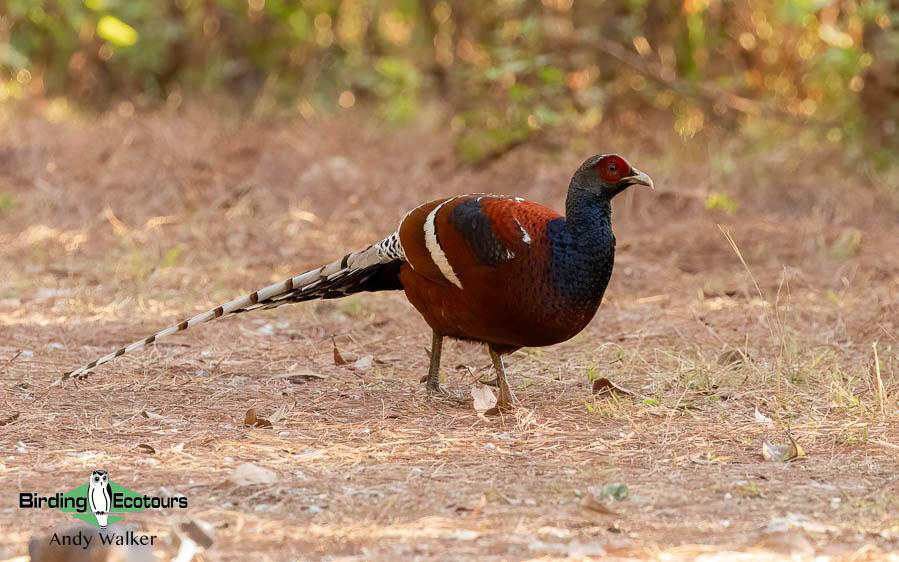
Mrs. Hume’s Pheasant was a massive tour highlight from our birding in northern Thailand.
We recorded 315 bird species (14 were heard only) on this Thailand birdwatching tour, including the Critically Endangered (IUCN/BirdLife International) Baer’s Pochard. Bird and animal lists for this North Thai birding tour follow the report. You can also see our eBird trip report, here.
Highlights of our time birding at Doi Inthanon were many and included lots of Rufous-throated Partridges at incredibly close range (literally under our feet at times!), a couple of gorgeous Green Peafowls, and a roosting Hodgson’s Frogmouth. We found some really great tiny passerines such as Pygmy Cupwing, Slaty-bellied Tesia, and Ashy-throated Warbler, and enjoyed sightings of Silver-eared Laughingthrush, Bar-throated Minla, and Dark-backed Sibia. Chats and Old World flycatchers (Muscicapidae) were well represented and offered some of the flashiest species we encountered on the mountain, such as Rufous-bellied Niltava, Large Niltava, Himalayan Shortwing, Siberian Rubythroat, Himalayan Bluetail, Slaty-backed Forktail, Black-backed Forktail, Ultramarine Flycatcher, and White-capped Redstart. Sunbirds are generally all stunners and Mrs. Gould’s Sunbirds and Green-tailed Sunbirds were rightly popular!
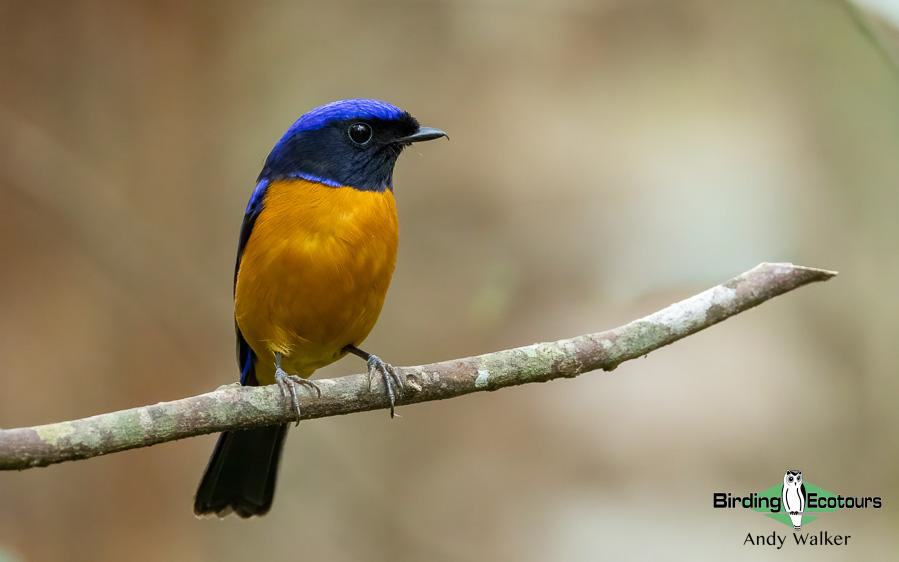
Rufous-bellied Niltava was one of many attractive and popular flycatchers seen on the tour.
As we birded our way to and around Chiang Dao, we mixed our forest birding with some birding in wetland and rice paddies. Highlights while forest birding from this leg of the trip included sightings of Pin-tailed Green Pigeon, Jerdon’s Baza, Violet Cuckoo, Crested Treeswift, White-browed Piculet, Blue-throated Barbet, Black-hooded Oriole, Striated Yuhina, Asian Fairy-bluebird, and Streaked Spiderhunter, many of these species were visiting a fruiting tree. Along a river and in the rice paddies we found such delights as Grey-headed Lapwing, Small Pratincole, Asian Green Bee-eater, Chestnut-headed Bee-eater, Pallas’s Grasshopper Warbler, Baikal Bush Warbler, Black-collared Starling, and Siamese Pied Myna.
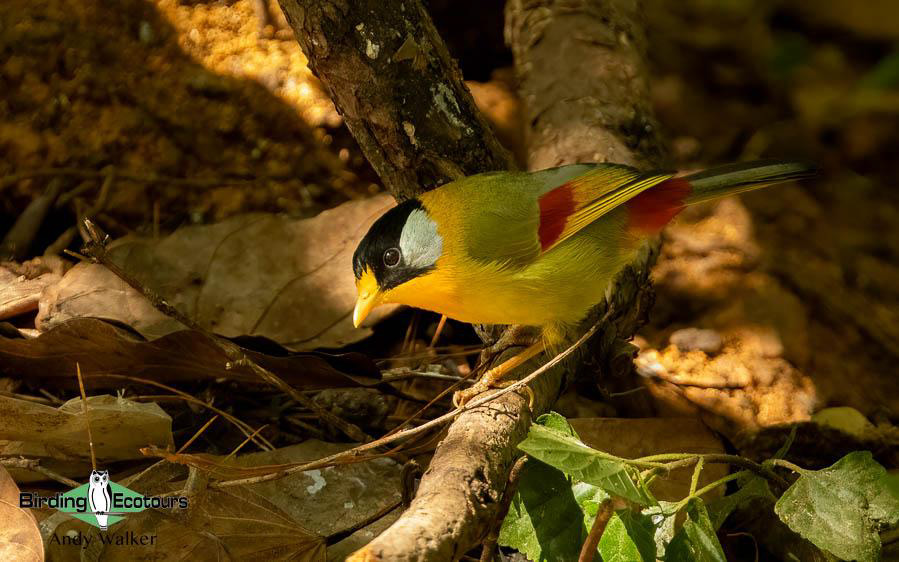
Silver-eared Mesia was a very popular species, no wonder given their beauty and our views.
Our next base allowed us more time in the mountains (Doi Ang Khang and Doi Lang) and some more rice paddies, where highlights were Pied Harrier, Greater Painted-snipe, and Yellow-breasted Bunting. The mountain birding was also phenomenal, and we had some amazing looks at the secretive Mrs. Hume’s Pheasants. Both Maroon Oriole and Slender-billed Oriole dazzled us with their voice and their colors, while the interesting Crested Finchbill and Striated Bulbul showed nicely. White-browed Laughingthrush, Silver-eared Mesia, Scarlet-faced Liocichla, and Rufous-backed Sibia all put on a good showing, as did the increasingly rare Giant Nuthatch. Grey-winged Blackbird, Black-breasted Thrush, Siberian Rubythroat, White-bellied Redstart, and Sapphire Flycatcher all showed very well and were trip highlights for many.
The final stop on the tour was for some birding around Chaing Saen Lake and along the famous Mekong River. On the way we called in to a pretty hill village, where we had fantastic views of the rare (in Thailand) Blue-naped Pitta. As usual, birding at the lake was a fun way to end the tour, and it was here we found Baer’s Pochard, along with the rare (in Thailand) Baikal Teal – a stunning breeding plumaged adult male, and lots of other ducks. It was a great end to the tour.
Detailed Report
Day 1, 5thFebruary 2026. Arrival in Chiang Mai
We met in our very comfortable hotel in Chiang Mai for our welcome dinner and discussion about plans for the coming days. Several in the group flew in from Bangkok fresh from completing our Central Thailand tour.
Day 2, 6thFebruary 2026. Birding farmland between Chiang Mai and Doi Inthanon
After a delicious breakfast we left Chiang Mai behind and commenced our journey towards Doi Inthanon (Thailand’s highest mountain). We only arrived at our accommodation in the middle of the afternoon after spending most of the morning and middle of the day birding in some rice paddies and some adjacent farmland along the Ping River.
As soon as we got out of our tour bus we started finding many species and there was a lot of excitement. We picked out Pheasant-tailed Jacana, White-throated Kingfisher, Asian Green Bee-eater, Ornate Sunbird, and Purple Sunbird as some of the flashiest species. More subtly plumaged species included Ashy Woodswallow, Streak-eared Bulbul, Sooty-headed Bulbul, Dusky Warbler, Amur Stonechat, and Pied Bush Chat. A distant flock of Grey-headed Lapwings were observed, while Red-wattled Lapwings showed much closer. We worked hard on trying to get a Pallas’s Grasshopper Warbler out into the open, with limited success as only a few in the group saw the super skulker! Nearby we found more new birds, including Eurasian Hoopoe, Brown Shrike, Black-collared Starling, Red-whiskered Bulbul, Olive-backed Pipit, and two dazzling male Siberian Rubythroats – stunners.
Another change of location gave us some nice views of perched Wire-tailed Swallows, along with other aerial species, such as House Swift. Here we also noted several Black Kites, a single Crested Honey Buzzard, and a Glossy Ibis flying over.
After lunch, where some saw the spectacular sight of an Indochinese Roller, we walked through some rice paddies. An Eastern Marsh Harrier flew through and flushed a Richard’s Pipit out of the rice, but luckily the pipit landed in full view so we enjoyed some good views of that. We also spotted Eastern Cattle Egret, Medium Egret, Little Egret, Chinese Pond Heron, Asian Openbill, Zitting Cisticola, Plain Prinia, Brown Shrike, and Amur Stonechat.
After checking into our cute cabins at the entrance to Doi Inthanon National Park, we again visited an area of farmland and woodland edge habitat, finding several new birds. Unfortunately the Blossom-headed Parakeet was not seen by everyone, but there were lots of new birds that showed well, with one of the best species being two sightings of the gorgeous and uncommon Green Peafowl. A small lake held a nice flock of Lesser Whistling Ducks and nearby there was a pair of Red Junglefowl. A brief sighting of a spectacular Greater Racket-tailed Drongo was tantalizing as it vanished all too quickly. We had a good view of a flock of Chestnut-tailed Starlings, saw several Indochinese Rollers, lots of Asian Green Bee-eaters, a brief Plaintive Cuckoo, with Banded Bay Cuckoo also seen nearby. A Green Sandpiper flushed off a small stream and a Grey Wagtail showed too. Both Lineated Barbet and Coppersmith Barbet showed very nicely and Barn, Wire-tailed, and Eastern Red-rumped Swallows were overhead, as were Asian Palm Swifts, to end an enjoyable and bird-filled first day in northern Thailand.
Day 3, 7thFebruary 2026. Birding Doi Inthanon
We had a long day out birding on Doi Inthanon. The overall species list wasn’t huge, as we were focusing on some of the higher elevation areas, but we saw some great birds. We started at the top of the mountain at dawn, finding Blue Whistling Thrush and Olive-backed Pipit as we took some hot drinks to warm us up (it was 46oF / 8oC when we arrived). We entered the forest and quickly found Rufous-throated Partridge, Silver-eared Laughingthrush, and Dark-backed Sibia. Walking around the boardwalk at the bog, we had lots to keep us entertained, such as a stunning male Himalayan Bluetail, several leaf warblers (including Ashy-throated Warbler), and some absolutely stunning sunbirds – with both Mrs. Gould’s Sunbird and Green-tailed (Doi Inthanon) Sunbird showing well, at close range. One of the most popular species was Yellow-bellied Fantail, with a family group giving prolonged views. Several migrant thrushes were seen too, and included Eyebrowed Thrush, Grey-sided Thrush, and Chestnut Thrush. Overhead several Ashy Wood Pigeons flew through, giving good flight views. Bar-throated Minlas, Rufous-winged Fulvettas, Snowy-browed Flycatcher, and several other interesting birds were noted during the morning.
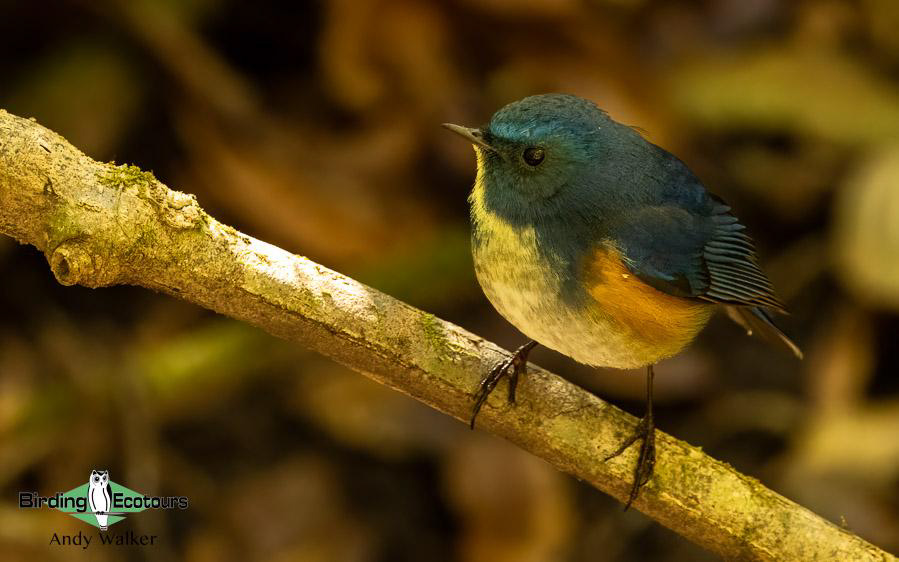
A territorial male Himalayan Bluetail lit up the dark forest floor.
On the way to lunch we decided to call in to check out something at a “secret site”, only to find most of the birders on the mountain had already descended there, not so secret anymore! We decided to check a different spot out to avoid the crowds and this worked in our favor, after a tip off from a fellow birder. In no time at all we were watching a roosting Hodgson’s Frogmouth at very close range – a fantastic sight. In this area we also saw Stripe-breasted Woodpecker, Bronzed Drongo, Chestnut-vented Nuthatch, Hume’s Leaf Warbler, and Yellow-cheeked Tit. We arrived at a restaurant for lunch and were immediately distracted by the beautiful trio of White-capped Redstart, Plumbeous Water Redstart, and Slaty-backed Forktail. It was tough to know where to look! Eventually our lunch was ordered and we enjoyed repeated views of these birds.
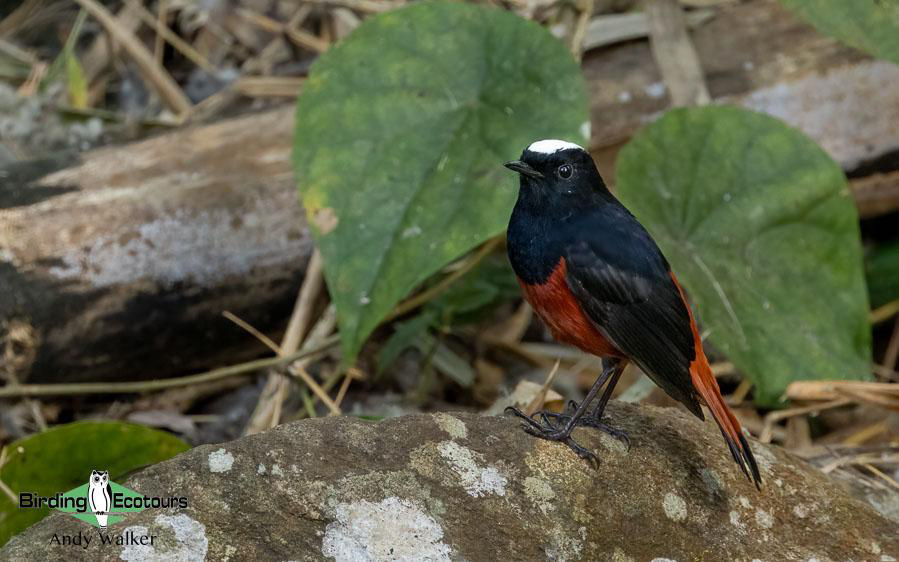
White-capped Redstart showed very nicely and is always very popular.
In the early afternoon we visited a bird blind (bird hide), where we had very close views of several new birds. Highlights here were Rufous-bellied Niltava, Hainan Blue (Western Orange-breasted) Flycatcher, Siberian Blue Robin, White-rumped Shama, White-bellied Erpornis, Puff-throated Bulbul, Yellow-bellied Warbler, and Black-throated Sunbird. After the bird blind, we took another walk around the bog but didn’t note anything too different from the morning session, so we descended back to our accommodation for dinner and a well earned rest!
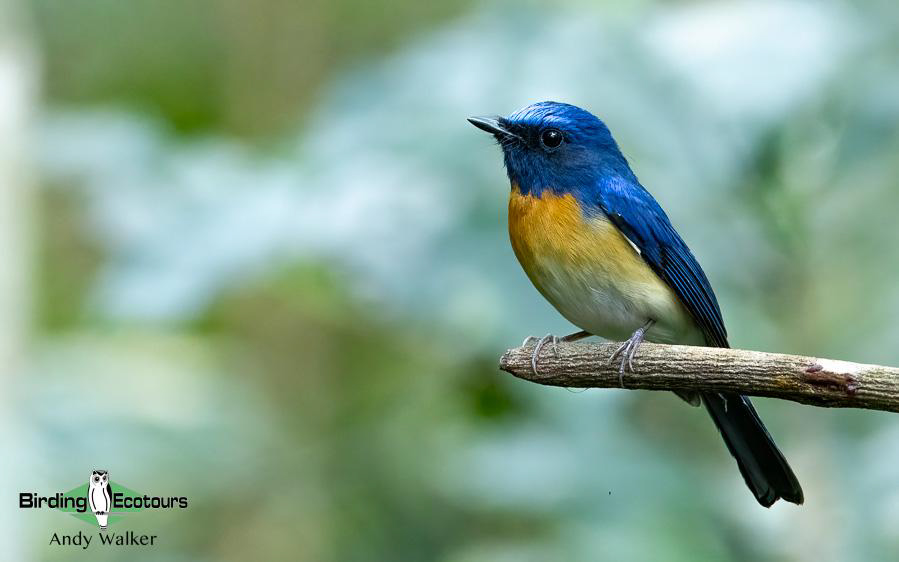
Another stunning bird – Hainan Blue Flycatcher (this subspecies was formerly considered one of the Blue-throated Blue Flycatcher subspecies, before recent taxonomical changes).
Day 4, 8thFebruary 2026. Birding Doi Inthanon
We spent another day birding in Doi Inthanon National Park, and today focused our attention on the middle elevations. As the sun broke over the ridge and started illuminating the trees around our starting point we quickly found Long-tailed Minivet, Eurasian (White-faced) Jay, White-browed Shrike-babbler, Hume’s Leaf Warbler, Pied Bush Chat, Grey Bush Chat, Olive-backed Pipit, and a large flock of Swinhoe’s White-eyes. Walking around a very pretty area with no crowds (of tourists or other birders) was really nice and we found plenty of birds here, including Crested Honey Buzzard, Scarlet Minivet, Grey-backed Shirke, Hair-crested Drongo, Eastern Red-rumped Swallow, Asian House Martin, Black-crested Bulbul, Flavescent Bulbul, Velvet-fronted Nuthatch, Cinereous Tit, Sulphur-breasted Warbler, Blyth’s Leaf Warbler, Claudia’s Leaf Warbler, Davison’s Leaf Warbler, Chestnut-flanked White-eye, and Slaty-backed Flycatcher. A pair of Blue-breasted Bee-eaters flew through, but were gone too quickly.
We decided to take a quick tea/coffee break in a picturesque spot overlooking a distant waterfall, where we saw a flock of House Swifts, a brief Common (Steppe) Buzzard, and several very common and widespread species.
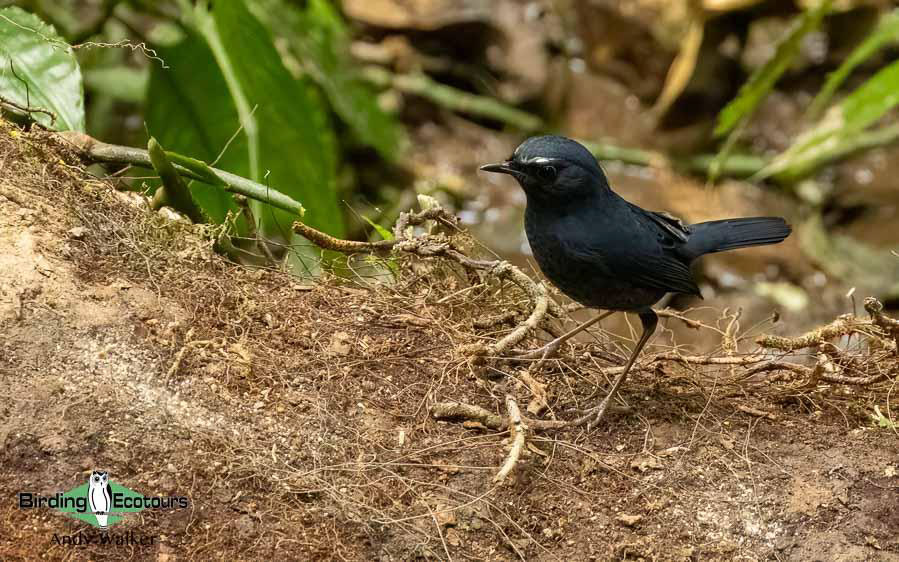
Himalayan Shortwing showed quite nicely for a secretive species!
After our refreshments we hit another area of the national park, where the forest provided us with some views of a pair of Himalayan Shortwings, Slaty-bellied Tesia, Pygmy Cupwing, and pairs of both White-gorgeted Flycatchers and Large Niltavas. Some folks also saw Chestnut-crowned Warbler, Grey-headed Canary-flycatcher, and Yunnan Fulvetta.
Following our lunch, we went back to the forest where we saw Golden-throated Barbet, and then a mixed flock took some patience to work through as the birds generally remained high and a little bit off the trail. However, the flock did provide us with several new birds and some better views of species seen earlier in the day, such as Lesser Racket-tailed Drongo, Rufous-backed Sibia, White-browed Shrike-babbler, Chestnut-vented Nuthatch, Velvet-fronted Nuthatch. Unfortunately a Green Cochoa was only seen by a few, and White-necked Laughingthrushes, Grey Treepie, and Maroon Oriole were just heard. Nearby we again saw the roosting Hodgson’s Frogmouth – in the exact same spot as the previous day and we all got some views of Black Bulbul, and a few got a brief sighting of a Black-winged Cuckooshrike. With our birding completed we drove back down off the mountain to our accommodation and went for dinner.
Day 5, 9thFebruary 2026. Morning birding Doi Inthanon, afternoon transfer to Chiang Dao
We spent the morning birding in the lower elevations of Doi Inthanon National Park where we were trying to find some of the tricky species found in the dry zone. The forest has some impressive vegetation, but size of the leaves can make spotting anything tough, as birds disappear as soon as they land! A distant Black-headed Woodpecker was seen out in the open along a distant ridgeline, but not by all, and the many we heard were all too far away and non-responsive, unfortunately. Grey-capped Pygmy Woodpecker, however, did show nicely. Several Red-billed Blue Magpies showed quite well down by a river, but their presence was probably making the Black-backed Forktail in the area a little nervous, and that was seen several times, but always only briefly as it was very skittish. Eurasian (White-faced) Jays were more accommodating and showed well, as did Blue Whistling Thrush and Blue-winged Leafbird. A male Ultramarine Flycatcher was a nice surprise, we found him calling from the top of a tree. A pair of Oriental Cuckooshrikes flew over, Purple Sunbirds were vocal and showed nicely, while a Fire-breasted Flowerpecker sighting was all too brief.
After checking out of our accommodation we commenced our journey to Chiang Dao, our base for the next two nights. Along the way we stopped for some lunch and for a short birding session along a river, during which we found a flock of over 130 dainty Small Pratincoles. From our vantage point, on a bridge, the pratincoles showed very well, with some flying low right over our heads or even below us. We noted a couple of flocks of Black-winged Stilts, several Common Sandpipers, a showy Green Sandpiper, and nesting Little Ringed Plovers. The area was also busy with both Asian Green Bee-eaters and Chestnut-headed Bee-eaters, which showed very well. Lots of common and widespread species were also seen here. We arrived in the Chiang Dao area in the late afternoon and had a bit of free time soaking in the last light of the day and some garden birds at our accommodation.
Day 6, 10thFebruary 2026. Birding Doi Chiang Dao and Chiang Dao paddies
We had an hour birding before breakfast so walked from our accommodation to the base of Doi Chiang Dao. We spent about an hour fixed to the spot as there were so many birds to look at. One of the best sightings was of several perched Pin-tailed Green Pigeons – such elegant birds. There was a fruiting tree pulling in all sorts of birds (and why the pigeons were around too), with Black-hooded Orioles, Black-headed Bulbuls, Black-crested Bulbuls, Red-whiskered Bulbuls, Grey-eyed Bulbuls, Lineated Barbets, Blue-throated Barbets, Blue-eared Barbets, Coppersmith Barbets, and Asian Fairy-bluebirds all in attendance in good numbers. Bronzed Drongo, Streaked Spiderhunter, Plain Flowerpecker, and Orange-bellied Leafbird were flying around and several Mountain Imperial Pigeons flew over, as did a pair of Oriental Pied Hornbills.
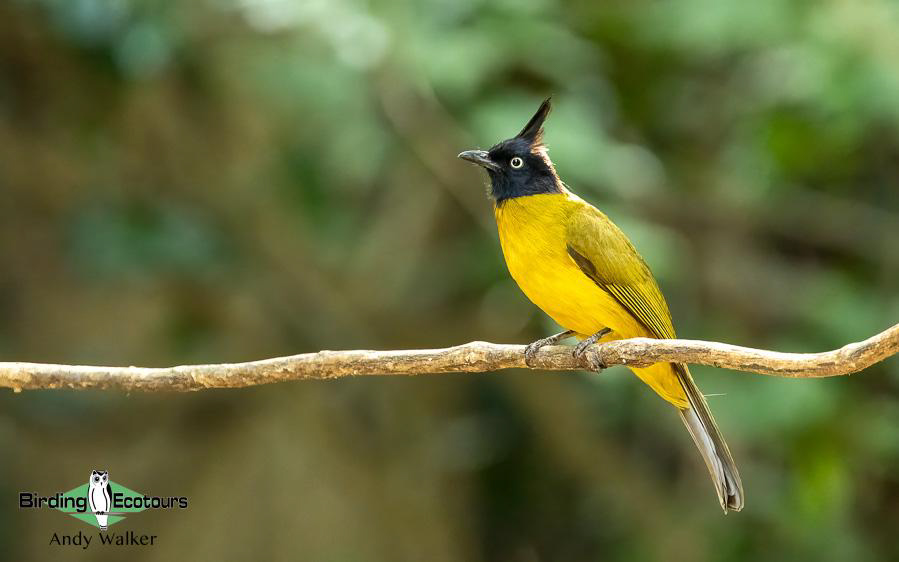
While it might be rather common, Black-crested Bulbul is always a firm favorite.
After breakfast we visited a couple of other areas, where we got some great looks at both Violet Cuckoo and Square-tailed Drongo-Cuckoo. These areas were also busy with bulbuls and barbets, with Puff-throated Bulbul giving good views along with all the common species. Overhead we picked up Jerdon’s Baza, Crested Serpent Eagle, and Cook’s Swifts. A Green-billed Malkoha perched out in the open, though an Orange-breasted Trogon remained hidden for most. An Asian Barred Owlet perched up for quite a while, gaining the attention of lots of bulbuls, but it didn’t seem concerned by the disturbance it was causing!
Following a break in the middle of the day we ventured out to the nearby rice paddies, where we had a really enjoyable and productive birding session. In an area of wet paddies with young rice we found several shorebirds, such as Grey-headed Lapwing, Black-winged Stilt, Green Sandpiper, Wood Sandpiper, and Pin-tailed Snipe. A bright and colorful Common Kingfisher flew right past us and a pair of Indochinese Rollers showed very nicely providing another hit of color. Several disturbances to the feeding birds were caused by Eastern Marsh Harrier, Black-winged Kite, and Common Kestrel. A large flock of Baya Weavers was feeding in some rice stubble fields, along with Black Drongo, Pied Bush Chats, Amur Stonechats, and Brown Shrikes. White Wagtails were numerous, a couple of displaying Oriental Skylarks were found, and around the periphery of the paddies we had very good views of a Baikal Bush Warbler, with Pallas’s Grasshopper Warbler and Dusky Warbler both also seen fairly well, for skulking species. As the light faded we watched Asian Openbills, an assortment of starlings (including Siamese Pied Mynas, Black-collared Starlings, and Chestnut-tailed Starlings), and a range of egrets all going to roost.
Day 7, 11thFebruary 2026. Morning birding near Chiang Dao, afternoon birding at Thaton rice paddies
We again spent the morning birding near our accommodation in the base of Doi Chiang Dao. The fruiting tree was still pulling in lots of the species we had enjoyed seeing yesterday morning, such as Pin-tailed Green Pigeon, Black-hooded Oriole, Asian Fairy-bluebird, and numerous barbets and bulbuls, however the light was not as good as yesterday morning. A small flock of Striated Yuhinas was a new trip bird for us though. We took a trail into the forest where we soaked in the impressive mountain views. A Greater Flameback was heard calling, and a tiny White-browed Piculet showed very nicely at eye-level. Another fruiting tree was pulling in lots of bulbuls, as well as Plain Flowerpecker, Yellow-vented Flowerpecker, and Indian White-eye. A small mixed flock contained Black-naped Monarch, White-bellied Erpornis, and Yellow-bellied Warbler. An attractive male Hill Blue Flycatcher was seen singing and a Crested Treeswift was sat on its nest. We also found a small group of White-rumped Munias feeding on some flowering bamboo, with a Little Spiderhunter nearby.
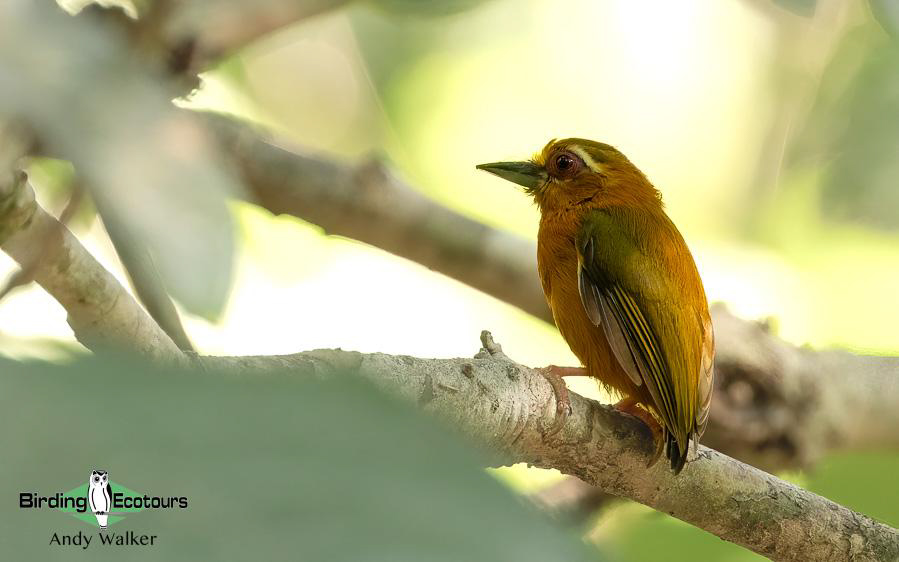
The miniscule White-browed Piculet is a tiny woodpecker. We got some nice and close eye-level views during the tour.
We grabbed some lunch and commenced our journey north, arriving in the small town of Fang. We checked in to our hotel and then went and visited part of the nearby Thaton rice paddies. A large flock of Grey-headed Lapwings greeted us and as we explored further, we found many Citrine Wagtails in among the few White Wagtails, Eastern Yellow Wagtails, and lone Grey Wagtail. The big prize at the site is the Critically Endangered (IUCN/BirdLife International) Yellow-breasted Buntings that overwinter here, and we found a flock of easily over 200 birds. The flock contained at least one Chestnut-eared Bunting and several weavers, but frustratingly the whole group was flushed by someone on a scooter and they dispersed far out of sight. We got some good sightings of Eurasian Wryneck, Long-tailed Shrike, Singing Bush Lark, Oriental Skylark, Bluethroat, Amur Stonechat, Richard’s Pipit, and Paddyfield Pipit – all were using rice fields at various stages of growth. A few shorebirds were noted, though we were mainly focusing on the passerines. We had some good views of Common Snipe, Pin-tailed Snipe, Green Sandpiper, and Wood Sandpiper. The common and widespread egrets and pond herons were in attendance and some excitement in the small birds (and for us) was caused by a juvenile Shikra, an adult male Common Kestrel, and finally, a stunning adult male Pied Harrier.
Day 8, 12thFebruary 2026. Birding Doi Pha Hom Pok National Park (Doi Ang Khang)
We spent the day birding at Doi Ang Khang. The morning got off to a rapid start with a flock of stunning Silver-eared Mesias giving good views, along with some brief views of White-browed Laughingthrush and Silver-eared Laughingthrush, with a longer look at Striated Bulbul. Several flocks of Common Rosefinches were noted flying over, with some landing to give nice perched views. However, the highlight at our first stop of the day was the Endangered (IUCN/BirdLife International) Giant Nuthatch, which flew in and showed nicely.
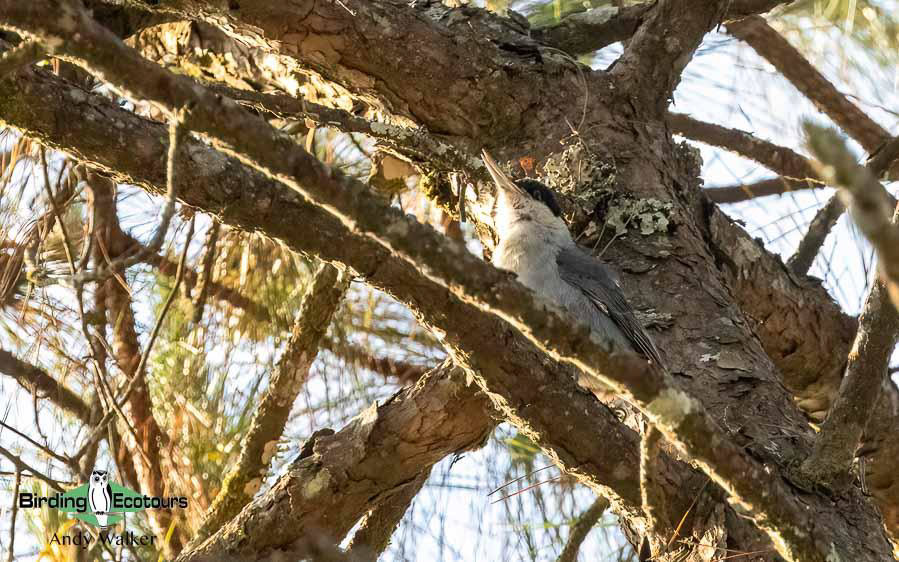
Despite its size and loud, far-reaching call, Giant Nuthatch does well at hiding itself!
We moved around a little and grabbed our picnic breakfasts and some hot drinks and then set off to the forest, where we had a bonanza of birds. The highlight here was a group of three Grey-winged Blackbirds (one male and two females) – a rare bird in Thailand. There were plenty of thrushes in attendance, including many Black-breasted Thrushes, Grey-sided Thrushes, and Eyebrowed Thrushes. A gorgeous male Rufous-bellied Niltava showed nicely, as did Rufous-gorgeted Flycatcher. Yunnan Fulvettas and Silver-eared Mesias were busily feeding, and we got some brief sightings of Streaked Wren-Babbler and Grey-throated Babbler. A pair of Little Pied Flycatchers and Grey-headed Canary-flycatchers were present. Silver-eared Laughingthrush, Black-throated Laughingthrush, White-browed Shrike-Babbler, Rufous-winged Fulvetta, and Rufous-backed Sibias all dropped in to show themselves too. It was a great birding session.
Our final birding spot of the morning was just as busy, with loads more thrushes seen (of the same species mentioned above), with some very close views of Banded Bay Cuckoo, Velvet-fronted Nuthatch, Large Niltava, Blue Whistling Thrush, yet more Silver-eared Mesias, Blue-winged Minlas, and Olive-backed Pipits. Unfortunately the Daurian Redstart was very shy and vanished very quickly and probably wasn’t seen by all.
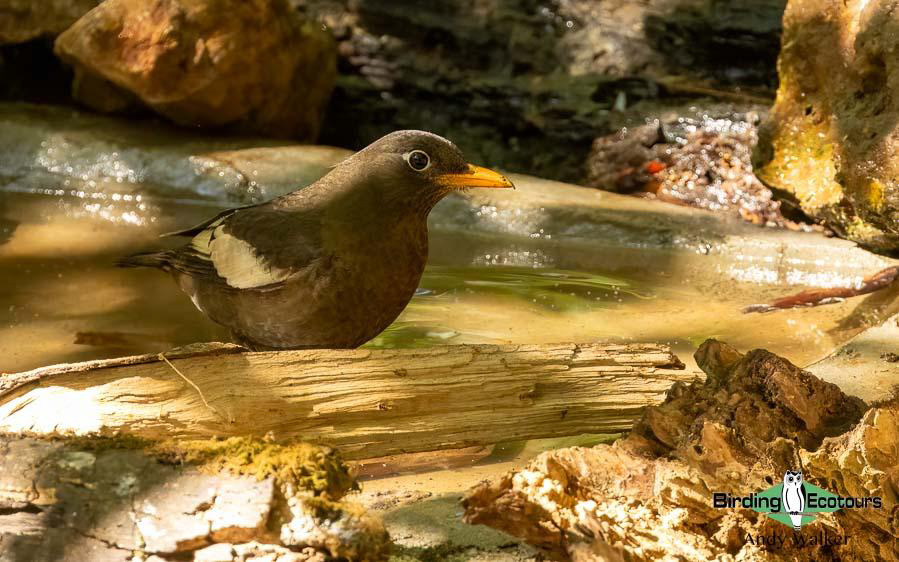
Grey-winged Blackbird – one of at least five seen during the day at Doi Ang Khang!
After our lunch we noted the general activity had waned due to the increased heat, however we picked up several new birds for the day or the trip. A pair of Maroon Orioles flew around before settling down and allowing some decent views. The same tree held an Orange-bellied Leafbird and several barbets and bulbuls. Walking around a little more we found Crested Honey Buzzard, Eurasian Hoopoe, Indian White-eye, Chestnut-flanked White-eye, Mrs. Gould’s Sunbird, and Black-throated Sunbird.
A final few stops on the mountain were a bit tougher as the activity really had come to a grinding halt. We were able to bump into a small mixed flock containing Cinereous Tit and several warblers, including vocal Davison’s Leaf Warblers. Both Hill Prinia and White-bellied Redstarts remained hidden to most and a few warblers called briefly before vanishing into dense scrub. Despite the slow end to the day we had seen some really great birds, with the feeling that any migrant could pop out at any time!
Day 9, 13thFebruary 2026. Birding Doi Pha Hom Pok National Park (Doi Lang) and Fang rice paddies
We had a great day birding at Doi Lang. We got to our stakeout site nice and early and took up our positions as dawn broke. Not long after, a group of three Mrs. Hume’s Pheasants walked into view to feed on the grain provided. One stunning male and two pretty and well camouflaged females. These three birds then showed well for about an hour as we soaked in the views. An Oriental Turtle Dove dropped in for some food too. Once the pheasants had finished their meal we too moved on for our picnic breakfast. We spent the morning birding a section of forest where we found lots of new birds, though we couldn’t resist taking in some views of another Hodgson’s Frogmouth too. In the forest patches and adjacent scrubby areas, over the course of the day, we saw several new birds very well, such as Mountain Bamboo Partridge, Slender-billed Oriole, White-bellied Redstart, Daurian Redstart, Sapphire Flycatcher, Slaty Blue Flycatcher, Crested Finchbill, Pallas’s Leaf Warbler, Red-eyed Scimitar Babbler, White-browed Scimitar Babbler, and the gorgeous Scarlet-faced Liocichla. We also had good looks at several other species we had seen before, and no one is going to grumble looking at another stunning Siberian Rubythroat, or Rufous-gorgeted Flycatcher or Rufous-bellied Niltava for that matter!
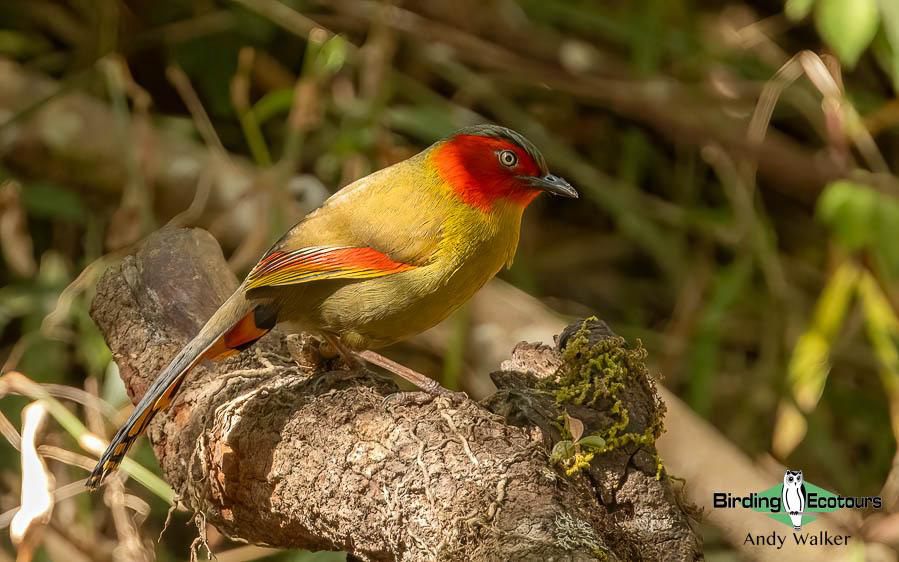
Scarlet-faced Liocichla was yet another stunning species giving incredible views.
In the late afternoon, we took a quick walk in the Fang rice paddies before going for dinner. A Greater Painted-snipe was flushed but only seen by a few in the group. A stunning male Pied Harrier flew through and was closer than our previous sighting, so well received. Most of the other species were birds we had seen before and probably with better views previously, of species such as Eurasian Wryneck, Bluethroat, and Amur Stonechat. We did have our best looks at Baya Weavers and our first sighting of noisy Racket-tailed Treepies too. After another excellent meal (our third) at our new favorite restaurant in Fang we packed up for an early start the following morning as we aimed for the furthest northernmost point of our tour, Chiang Saen.
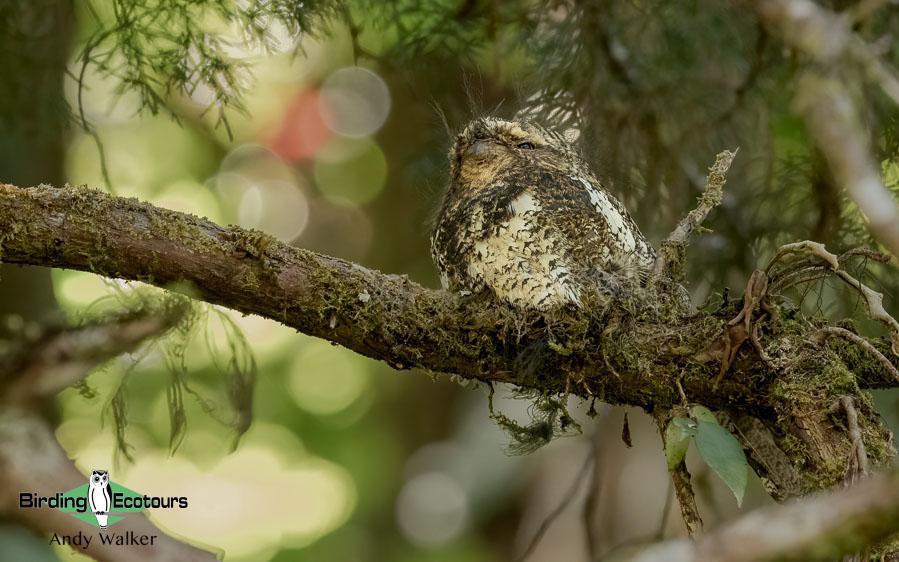
Hodgson’s Frogmouth was seen at two locations during the 2026 northern Thailand tour.
Day 10, 14thFebruary 2026. Morning birding Chiang Rai followed by birding Chiang Saen Lake and surrounding area
We departed Fang early and drove into the low hills of Chiang Rai. We parked up at a beautiful spot, watching Grey-throated Martins carrying nesting material off to their nests and then commenced a short hike into some mixed farmland, heading for a bird blind. We arrived shortly thereafter and sat patiently for our main target. A few Black-breasted Thrushes and a pair of White-rumped Shamas were around and then, after not long at all, a male Blue-naped Pitta hopped into view. We enjoyed a prolonged look at this exciting and well camouflaged pitta, with shocking blue nape when he bent down for food. After the male had fed, a female came out. She was a lot more subtle in her plumage. After enjoying great views of the pittas we headed back to the van, very satisfied with our haul and feeling like it was well worth the early start.
With the quick success of seeing our main target we commenced our journey to Chiang Saen Lake, arriving in the late morning. We couldn’t resist a quick look at the water to see what was about, even though it wasn’t really the best time of the day. Despite the time of day, we had a fantastic birding session. A flock of vocal Lesser Whistling Ducks was dominating the view close inshore, several drake Garganey were a little further back, with Indian Spot-billed Duck noted further out. A feeding flock of Ferruginous Ducks was spotted, and careful scanning with the scope resulted in the discovery of an adult Baer’s Pochard, a Critically Endangered species (IUCN/BirdLife International) and one of the main reasons we visit this site during the tour. Another bird showing characteristics of the pochard was also noted, but something didn’t look quite right with it, so we considered it to be a Baer’s Pochard x Ferruginous Duck hybrid.
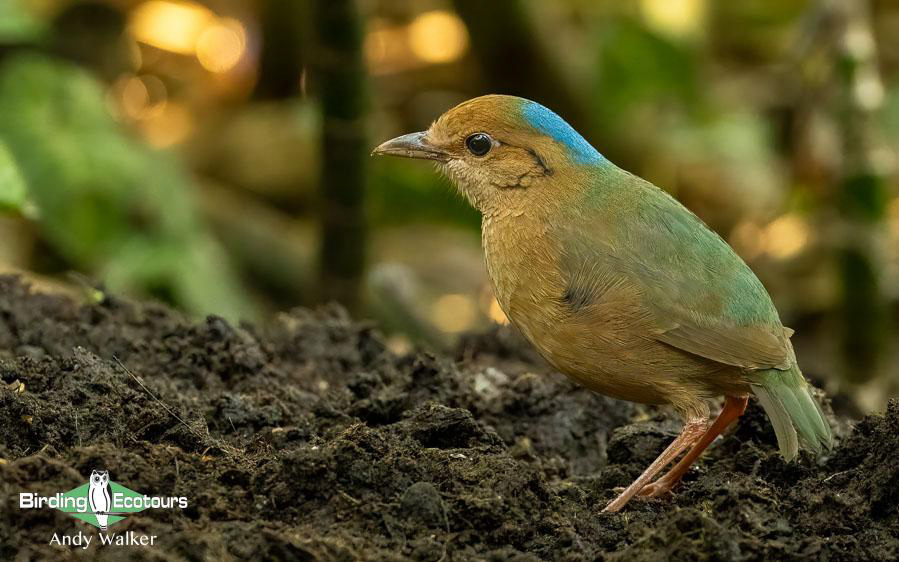
We couldn’t have asked for, or even hoped for, views of Blue-naped Pitta as good as we got!
While our focus was firmly on the ducks, it was difficult not to notice plenty of other species too, with new trip birds or notable sightings including Little Grebe, Great Crested Grebe, Purple Heron, Little Cormorant, Eastern Marsh Harrier, Pied Harrier (both harriers were harassing the whistling ducks!), Grey-headed Swamphen, Common Moorhen, plenty of Pheasant-tailed Jacanas, and a brief Eurasian Hoopoe.
We checked into our comfortable hotel on the Mekong River overlooking Laos, where a few folks added birds to their Laos bird list! After a break during the hot part of the day we headed back out birding. This time we visited a wetland adjacent to Chiang Saen Lake. The lakes were teeming with wildfowl. Lesser Whistling Ducks were the most numerous species present (and the most vocal) and there were also a large number of Northern Pintail and Garganey, with the next most abundant species being Indian Spot-billed Duck and these four species made up the majority of ducks present. Among these ducks we found decent numbers of Northern Shoveler, Eurasian Teal, Eurasian Wigeon, and Ruddy Shelduck. Scanning through the mass of birds carefully resulted in finding three Ferruginous Ducks and a lone drake Common Pochard, however the real highlight of the afternoon was a drake Baikal Teal, an absolutely pristine breeding plumaged male (there was also a more subtly plumaged female type bird nearby). The Baikal Teal, as with all the ducks, looked incredible in the late afternoon sunlight. A few other birds were noted while working through the ducks, such as Common Greenshank, Eastern Marsh Harrier, Pied Harrier, Brahminy Kite (a rare species in northern Thailand), Pied Kingfisher, and Sand Martin. The latter came in with a huge number of Barn Swallows at dusk.
Day 11, 15thFebruary 2026. Morning birding Chiang Saen area, transfer to Chiang Mai for tour conclusion
We had a couple of hours birding at Chiang Saen Lake before it was time to pack up and commence our journey back to Chiang Mai, where this successful and enjoyable north Thailand birding tour concluded. Our final birding session saw us looking out over the ducks we had seen the previous morning, including the flock of Ferruginous Ducks containing a Baer’s Pochard and presumed hybrid. Two Northern Pintails were also in the mix today, but otherwise it was very similar to the previous morning. When we arrived at the lake several birds were quite close to the shore and we got some really nice looks at a few Bronze-winged Jacanas. Scanning of the water lilies also provided us with our first, and only, Cotton Pygmy Goose of the trip.
We took a short walk around a small section of the lake, finding several Citrine Wagtails and Eastern Yellow Wagtails. Assorted alarm calls suddenly rang out and quickly we picked up a Peregrine Falcon hurtling towards the lake, but it went out of sight before we could see any outcome of its hunt. Nearby, we also saw a perched Eastern Buzzard and a flock of three Glossy Ibis. While walking around we also picked up the song of Burmese Shrike, and once we got a little closer to where it was coming from, we got some really nice views. A Scarlet-backed Flowerpecker drew our attention for a while as it hovered in display, a bit like a hummingbird! As usual, Pied Harriers and Eastern Marsh Harriers were noted flying around and flushing birds, mainly the noisy Lesser Whistling Ducks, but they also flushed a flock of Purple Herons and Oriental Darters.
After finishing up our birding we packed up and made the uneventful drive back to Chaing Mai. During our lunch stop, we discussed the “bird of the trip”, which is always an interesting time. The breeding plumage adult Baikal Teal we had seen the previous day came out as the winner, with the Blue-naped Pitta, also seen the previous day, coming in a very close second. The list of other highlight birds from the tour pushing these two close included high quality birds like Mrs. Hume’s Pheasant, Baer’s Pochard, Siberian Rubythroat, White-capped Redstart, Scarlet-faced Liocichla, and Silver-eared Mesia.
Bird List – Following IOC (15.1) (March 2025)
Birds ‘heard only’ are marked with (H) after the common name, all other species were seen. The following notation after species names is used to show conservation status following IUCN/BirdLife International: CR = Critically Endangered, EN – Endangered, VU = Vulnerable, NT = Near-threatened.
| Common Name | Scientific Name |
| Ducks, Geese, Swans (Anatidae) | |
| Lesser Whistling Duck | Dendrocygna javanica |
| Ruddy Shelduck | Tadorna ferruginea |
| Cotton Pygmy Goose | Nettapus coromandelianus |
| Baikal Teal | Sibirionetta formosa |
| Garganey | Spatula querquedula |
| Northern Shoveler | Spatula clypeata |
| Eurasian Wigeon | Mareca penelope |
| Indian Spot-billed Duck | Anas poecilorhyncha |
| Northern Pintail | Anas acuta |
| Eurasian Teal | Anas crecca |
| Common Pochard – VU | Aythya ferina |
| Baer’s Pochard – CR | Aythya baeri |
| Ferruginous Duck – NT | Aythya nyroca |
| Pheasants & Allies (Phasianidae) | |
| Rufous-throated Partridge | Arborophila rufogularis |
| Mrs. Hume’s Pheasant – VU | Syrmaticus humiae |
| Green Peafowl – EN | Pavo muticus |
| Green-legged Partridge (H) | Tropicoperdix chloropus |
| Mountain Bamboo Partridge | Bambusicola fytchii |
| Red Junglefowl | Gallus gallus |
| Nightjars (Caprimulgidae) | |
| Large-tailed Nightjar (H) | Caprimulgus macrurus |
| Frogmouths (Podargidae) | |
| Hodgson’s Frogmouth | Batrachostomus hodgsoni |
| Treeswifts (Hemiprocnidae) | |
| Crested Treeswift | Hemiprocne coronata |
| Swifts (Apodidae) | |
| Himalayan Swiftlet | Aerodramus brevirostris |
| Edible-nest Swiftlet | Aerodramus fuciphagus |
| Asian Palm Swift | Cypsiurus balasiensis |
| Cook’s Swift | Apus cooki |
| House Swift | Apus nipalensis |
| Cuckoos (Cuculidae) | |
| Greater Coucal | Centropus sinensis |
| Green-billed Malkoha | Phaenicophaeus tristis |
| Asian Koel | Eudynamys scolopaceus |
| Violet Cuckoo | Chrysococcyx xanthorhynchus |
| Banded Bay Cuckoo | Cacomantis sonneratii |
| Plaintive Cuckoo | Cacomantis merulinus |
| Square-tailed Drongo-Cuckoo | Surniculus lugubris |
| Pigeons, Doves (Columbidae) | |
| Rock Dove (Feral Pigeon) | Columba livia [dom.] |
| Ashy Wood Pigeon | Columba pulchricollis |
| Oriental Turtle Dove | Streptopelia orientalis |
| Red Collared Dove | Streptopelia tranquebarica |
| Spotted Dove | Spilopelia chinensis |
| Common Emerald Dove | Chalcophaps indica |
| Zebra Dove | Geopelia striata |
| Pin-tailed Green Pigeon | Treron apicauda |
| Mountain Imperial Pigeon | Ducula badia |
| Rails, Crakes & Coots (Rallidae) | |
| Common Moorhen | Gallinula chloropus |
| Eurasian Coot | Fulica atra |
| Grey-headed Swamphen | Porphyrio poliocephalus |
| White-breasted Waterhen | Amaurornis phoenicurus |
| Grebes (Podicipedidae) | |
| Little Grebe | Tachybaptus ruficollis |
| Great Crested Grebe | Podiceps cristatus |
| Stilts, Avocets (Recurvirostridae) | |
| Black-winged Stilt | Himantopus himantopus |
| Plovers (Charadriidae) | |
| Little Ringed Plover | Charadrius dubius |
| Grey-headed Lapwing | Vanellus cinereus |
| Red-wattled Lapwing | Vanellus indicus |
| Painted-snipes (Rostratulidae) | |
| Greater Painted-snipe | Rostratula benghalensis |
| Jacanas (Jacanidae) | |
| Pheasant-tailed Jacana | Hydrophasianus chirurgus |
| Bronze-winged Jacana | Metopidius indicus |
| Sandpipers, Snipes (Scolopacidae) | |
| Pin-tailed Snipe | Gallinago stenura |
| Common Snipe | Gallinago gallinago |
| Common Sandpiper | Actitis hypoleucos |
| Green Sandpiper | Tringa ochropus |
| Wood Sandpiper | Tringa glareola |
| Common Greenshank | Tringa nebularia |
| Coursers, Pratincoles (Glareolidae) | |
| Small Pratincole | Glareola lactea |
| Storks (Ciconiidae) | |
| Asian Openbill | Anastomus oscitans |
| Anhingas, Darters (Anhingidae) | |
| Oriental Darter – NT | Anhinga melanogaster |
| Cormorants, Shags (Phalacrocoracidae) | |
| Little Cormorant | Microcarbo niger |
| Ibises, Spoonbills (Threskiornithidae) | |
| Glossy Ibis | Plegadis falcinellus |
| Herons, Bitterns (Ardeidae) | |
| Black-crowned Night Heron | Nycticorax nycticorax |
| Little Egret | Egretta garzetta |
| Chinese Pond Heron | Ardeola bacchus |
| Great Egret | Ardea alba |
| Medium Egret | Ardea intermedia |
| Eastern Cattle Egret | Ardea coromanda |
| Grey Heron | Ardea cinerea |
| Purple Heron | Ardea purpurea |
| Kites, Hawks, Eagles (Accipitridae) | |
| Black-winged Kite | Elanus caeruleus |
| Jerdon’s Baza | Aviceda jerdoni |
| Crested Honey Buzzard | Pernis ptilorhynchus |
| Crested Serpent Eagle | Spilornis cheela |
| Shikra | Tachyspiza badia |
| Eurasian Sparrowhawk | Accipiter nisus |
| Pied Harrier | Circus melanoleucos |
| Eastern Marsh Harrier | Circus spilonotus |
| Black Kite | Milvus migrans |
| Brahminy Kite | Haliastur indus |
| Grey-faced Buzzard | Butastur indicus |
| Common Buzzard | Buteo buteo |
| Eastern Buzzard | Buteo japonicus |
| Barn Owls (Tytonidae) | |
| Eastern Barn Owl (H) | Tyto javanica |
| Owls (Strigidae) | |
| Brown Boobook | Ninox scutulata |
| Collared Owlet (H) | Taenioptynx brodiei |
| Asian Barred Owlet | Glaucidium cuculoides |
| Mountain Scops Owl (H) | Otus spilocephalus |
| Trogons (Trogonidae) | |
| Orange-breasted Trogon | Harpactes oreskios |
| Hoopoes (Upupidae) | |
| Eurasian Hoopoe | Upupa epops |
| Hornbills (Bucerotidae) | |
| Oriental Pied Hornbill | Anthracoceros albirostris |
| Rollers (Coraciidae) | |
| Indochinese Roller | Coracias affinis |
| Kingfishers (Alcedinidae) | |
| White-throated Kingfisher | Halcyon smyrnensis |
| Common Kingfisher | Alcedo atthis |
| Pied Kingfisher | Ceryle rudis |
| Bee-eaters (Meropidae) | |
| Blue-bearded Bee-eater | Nyctyornis athertoni |
| Asian Green Bee-eater | Merops orientalis |
| Chestnut-headed Bee-eater | Merops leschenaulti |
| Asian Barbets (Megalaimidae) | |
| Great Barbet (H) | Psilopogon virens |
| Lineated Barbet | Psilopogon lineatus |
| Golden-throated Barbet | Psilopogon franklinii |
| Blue-throated Barbet | Psilopogon asiaticus |
| Blue-eared Barbet | Psilopogon cyanotis |
| Coppersmith Barbet | Psilopogon haemacephalus |
| Woodpeckers (Picidae) | |
| Eurasian Wryneck | Jynx torquilla |
| White-browed Piculet | Sasia ochracea |
| Grey-capped Pygmy Woodpecker | Yungipicus canicapillus |
| Stripe-breasted Woodpecker | Dendrocopos atratus |
| Black-headed Woodpecker | Picus erythropygius |
| Greater Flameback (H) | Chrysocolaptes guttacristatus |
| Bay Woodpecker (H) | Blythipicus pyrrhotis |
| Caracaras, Falcons (Falconidae) | |
| Common Kestrel | Falco tinnunculus |
| Peregrine Falcon | Falco peregrinus |
| Old World Parrots (Psittaculidae) | |
| Blossom-headed Parakeet – NT | Psittacula roseata |
| Pittas (Pittidae) | |
| Rusty-naped Pitta (H) | Hydrornis oatesi |
| Blue-naped Pitta | Hydrornis nipalensis |
| Woodswallows, Butcherbirds & Allies (Artamidae) | |
| Ashy Woodswallow | Artamus fuscus |
| Ioras (Aegithinidae) | |
| Common Iora | Aegithina tiphia |
| Cuckooshrikes (Campephagidae) | |
| Short-billed Minivet | Pericrocotus brevirostris |
| Long-tailed Minivet | Pericrocotus ethologus |
| Scarlet Minivet | Pericrocotus speciosus |
| Oriental Cuckooshrike | Coracina javensis |
| Black-winged Cuckooshrike | Lalage melaschistos |
| Vireos, Greenlets, Shrike-babblers (Vireonidae) | |
| White-browed Shrike-babbler | Pteruthius aeralatus |
| White-bellied Erpornis | Erpornis zantholeuca |
| Figbirds, Old World Orioles, Piopios (Oriolidae) | |
| Maroon Oriole | Oriolus traillii |
| Black-hooded Oriole | Oriolus xanthornus |
| Black-naped Oriole | Oriolus chinensis |
| Slender-billed Oriole | Oriolus tenuirostris |
| Drongos (Dicruridae) | |
| Bronzed Drongo | Dicrurus aeneus |
| Lesser Racket-tailed Drongo | Dicrurus remifer |
| Greater Racket-tailed Drongo | Dicrurus paradiseus |
| Hair-crested Drongo | Dicrurus hottentottus |
| Ashy Drongo | Dicrurus leucophaeus |
| Black Drongo | Dicrurus macrocercus |
| Fantails (Rhipiduridae) | |
| Malaysian Pied Fantail | Rhipidura javanica |
| Monarchs (Monarchidae) | |
| Black-naped Monarch | Hypothymis azurea |
| Shrikes (Laniidae) | |
| Burmese Shrike | Lanius collurioides |
| Brown Shrike | Lanius cristatus |
| Long-tailed Shrike | Lanius schach |
| Grey-backed Shrike | Lanius tephronotus |
| Crows, Jays (Corvidae) | |
| Eurasian Jay | Garrulus glandarius |
| Red-billed Blue Magpie | Urocissa erythroryncha |
| Grey Treepie | Dendrocitta formosae |
| Racket-tailed Treepie | Crypsirina temia |
| Eastern Jungle Crow | Corvus levaillantii |
| Fairy Flycatchers (Stenostiridae) | |
| Yellow-bellied Fantail | Chelidorhynx hypoxanthus |
| Grey-headed Canary-flycatcher | Culicicapa ceylonensis |
| Tits, Chickadees (Paridae) | |
| Cinereous Tit | Parus cinereus |
| Yellow-cheeked Tit | Machlolophus spilonotus |
| Larks (Alaudidae) | |
| Singing Bush Lark | Mirafra javanica |
| Oriental Skylark | Alauda gulgula |
| Bulbuls (Pycnonotidae) | |
| Puff-throated Bulbul | Alophoixus pallidus |
| Striated Bulbul | Alcurus striatus |
| Grey-eyed Bulbul | Iole propinqua |
| Mountain Bulbul | Ixos mcclellandii |
| Black Bulbul | Hypsipetes leucocephalus |
| Black-headed Bulbul | Brachypodius melanocephalos |
| Black-crested Bulbul | Rubigula flaviventris |
| Crested Finchbill | Spizixos canifrons |
| Streak-eared Bulbul | Pycnonotus conradi |
| Stripe-throated Bulbul | Pycnonotus finlaysoni |
| Flavescent Bulbul | Pycnonotus flavescens |
| Red-whiskered Bulbul | Pycnonotus jocosus |
| Sooty-headed Bulbul | Pycnonotus aurigaster |
| Swallows, Martins (Hirundinidae) | |
| Grey-throated Martin | Riparia chinensis |
| Sand Martin | Riparia riparia |
| Barn Swallow | Hirundo rustica |
| Wire-tailed Swallow | Hirundo smithii |
| Asian House Martin | Delichon dasypus |
| Eastern Red-rumped Swallow | Cecropis daurica |
| Cupwings (Pnoepygidae) | |
| Pygmy Cupwing | Pnoepyga pusilla |
| Cettia Bush Warblers & Allies (Cettiidae) | |
| Yellow-bellied Warbler | Abroscopus superciliaris |
| Mountain Tailorbird (H) | Phyllergates cucullatus |
| Aberrant Bush Warbler (H) | Horornis flavolivaceus |
| Slaty-bellied Tesia | Tesia olivea |
| Bushtits (Aegithalidae) | |
| Black-throated Bushtit | Aegithalos concinnus |
| Leaf Warblers (Phylloscopidae) | |
| Buff-barred Warbler | Phylloscopus pulcher |
| Ashy-throated Warbler | Phylloscopus maculipennis |
| Hume’s Leaf Warbler | Phylloscopus humei |
| Yellow-browed Warbler | Phylloscopus inornatus |
| Pallas’s Leaf Warbler | Phylloscopus proregulus |
| Radde’s Warbler | Phylloscopus schwarzi |
| Dusky Warbler | Phylloscopus fuscatus |
| Buff-throated Warbler | Phylloscopus subaffinis |
| Grey-crowned Warbler | Phylloscopus tephrocephalus |
| Two-barred Warbler | Phylloscopus plumbeitarsus |
| Greenish Warbler | Phylloscopus trochiloides |
| Chestnut-crowned Warbler | Phylloscopus castaniceps |
| Sulphur-breasted Warbler | Phylloscopus ricketti |
| Blyth’s Leaf Warbler | Phylloscopus reguloides |
| Claudia’s Leaf Warbler | Phylloscopus claudiae |
| Davison’s Leaf Warbler | Phylloscopus intensior |
| Reed Warblers & Allies (Acrocephalidae) | |
| Black-browed Reed Warbler | Acrocephalus bistrigiceps |
| Thick-billed Warbler | Arundinax aedon |
| Grassbirds & Allies (Locustellidae) | |
| Pallas’s Grasshopper Warbler | Helopsaltes certhiola |
| Baikal Bush Warbler | Locustella davidi |
| Cisticolas & Allies (Cisticolidae) | |
| Zitting Cisticola | Cisticola juncidis |
| Hill Prinia | Prinia superciliaris |
| Grey-breasted Prinia | Prinia hodgsonii |
| Yellow-bellied Prinia | Prinia flaviventris |
| Plain Prinia | Prinia inornata |
| Common Tailorbird | Orthotomus sutorius |
| Dark-necked Tailorbird | Orthotomus atrogularis |
| White-eyes (Zosteropidae) | |
| Striated Yuhina | Staphida castaniceps |
| Chestnut-flanked White-eye | Zosterops erythropleurus |
| Swinhoe’s White-eye | Zosterops simplex |
| Indian White-eye | Zosterops palpebrosus |
| Babblers, Scimitar Babblers (Timaliidae) | |
| Chestnut-capped Babbler | Timalia pileata |
| Pin-striped Tit-Babbler | Mixornis gularis |
| Golden Babbler | Cyanoderma chrysaeum |
| Rufous-fronted Babbler | Cyanoderma rufifrons |
| White-browed Scimitar Babbler | Pomatorhinus schisticeps |
| Red-eyed Scimitar Babbler | Erythrogenys imberbis |
| Grey-throated Babbler | Stachyris nigriceps |
| Ground Babblers (Pellorneidae) | |
| Rufous-winged Fulvetta | Schoeniparus castaneceps |
| Puff-throated Babbler | Pellorneum ruficeps |
| Streaked Wren-Babbler | Gypsophila brevicaudata |
| Alcippe Fulvettas (Alcippeidae) | |
| Yunnan Fulvetta | Alcippe fratercula |
| Laughingthrushes & Allies (Leiothrichidae) | |
| Silver-eared Laughingthrush | Trochalopteron melanostigma |
| Dark-backed Sibia | Heterophasia melanoleuca |
| Blue-winged Minla | Actinodura cyanouroptera |
| Bar-throated Minla | Actinodura strigula |
| Silver-eared Mesia – EN | Leiothrix argentauris |
| Rufous-backed Sibia | Leioptila annectens |
| Scarlet-faced Liocichla | Liocichla ripponi |
| White-crested Laughingthrush (H) | Garrulax leucolophus |
| White-necked Laughingthrush (H) | Garrulax strepitans |
| Black-throated Laughingthrush | Pterorhinus chinensis |
| White-browed Laughingthrush | Pterorhinus sannio |
| Fairy-bluebirds (Irenidae) | |
| Asian Fairy-bluebird | Irena puella |
| Nuthatches (Sittidae) | |
| Giant Nuthatch – EN | Sitta magna |
| Velvet-fronted Nuthatch | Sitta frontalis |
| Chestnut-vented Nuthatch | Sitta nagaensis |
| Starlings, Rhabdornises (Sturnidae) | |
| Great Myna | Acridotheres grandis |
| Common Myna | Acridotheres tristis |
| Black-collared Starling | Gracupica nigricollis |
| Siamese Pied Myna | Gracupica floweri |
| Chestnut-tailed Starling | Sturnia malabarica |
| Thrushes (Turdidae) | |
| Green Cochoa (H) | Cochoa viridis |
| Grey-winged Blackbird | Turdus boulboul |
| Black-breasted Thrush | Turdus dissimilis |
| Eyebrowed Thrush | Turdus obscurus |
| Grey-sided Thrush – VU | Turdus feae |
| Chestnut Thrush | Turdus rubrocanus |
| Chats, Old World Flycatchers (Muscicapidae) | |
| Oriental Magpie-Robin | Copsychus saularis |
| White-rumped Shama | Copsychus malabaricus |
| Asian Brown Flycatcher | Muscicapa dauurica |
| Rufous-bellied Niltava | Niltava sundara |
| Large Niltava | Niltava grandis |
| Verditer Flycatcher | Eumyias thalassinus |
| White-gorgeted Flycatcher | Anthipes monileger |
| Hainan Blue Flycatcher | Cyornis hainanus |
| Indochinese Blue Flycatcher | Cyornis sumatrensis |
| Hill Blue Flycatcher | Cyornis whitei |
| Bluethroat | Luscinia svecica |
| White-bellied Redstart | Luscinia phaenicuroides |
| Siberian Rubythroat | Calliope calliope |
| Black-backed Forktail | Enicurus immaculatus |
| Slaty-backed Forktail | Enicurus schistaceus |
| Blue Whistling Thrush | Myophonus caeruleus |
| Himalayan Shortwing | Brachypteryx cruralis |
| Siberian Blue Robin | Larvivora cyane |
| Slaty-blue Flycatcher | Ficedula tricolor |
| Snowy-browed Flycatcher | Ficedula hyperythra |
| Slaty-backed Flycatcher | Ficedula erithacus |
| Rufous-gorgeted Flycatcher | Ficedula strophiata |
| Sapphire Flycatcher | Ficedula sapphira |
| Ultramarine Flycatcher | Ficedula superciliaris |
| Little Pied Flycatcher | Ficedula westermanni |
| Taiga Flycatcher | Ficedula albicilla |
| Himalayan Bluetail | Tarsiger rufilatus |
| Plumbeous Water Redstart | Phoenicurus fuliginosus |
| White-capped Redstart | Phoenicurus leucocephalus |
| Daurian Redstart | Phoenicurus auroreus |
| Grey Bush Chat | Saxicola ferreus |
| Pied Bush Chat | Saxicola caprata |
| Amur Stonechat | Saxicola stejnegeri |
| Leafbirds (Chloropseidae) | |
| Blue-winged Leafbird | Chloropsis moluccensis |
| Golden-fronted Leafbird | Chloropsis aurifrons |
| Orange-bellied Leafbird | Chloropsis hardwickii |
| Flowerpeckers (Dicaeidae) | |
| Yellow-vented Flowerpecker | Pachyglossa chrysorrhea |
| Thick-billed Flowerpecker | Pachyglossa agilis |
| Plain Flowerpecker | Dicaeum minullum |
| Fire-breasted Flowerpecker | Dicaeum ignipectus |
| Scarlet-backed Flowerpecker | Dicaeum cruentatum |
| Sunbirds (Nectariniidae) | |
| Ruby-cheeked Sunbird | Chalcoparia singalensis |
| Purple Sunbird | Cinnyris asiaticus |
| Ornate Sunbird | Cinnyris ornatus |
| Mrs. Gould’s Sunbird | Aethopyga gouldiae |
| Green-tailed Sunbird | Aethopyga nipalensis |
| Black-throated Sunbird | Aethopyga saturata |
| Little Spiderhunter | Arachnothera longirostra |
| Streaked Spiderhunter | Arachnothera magna |
| Old World Sparrows, Snowfinches (Passeridae) | |
| Eurasian Tree Sparrow | Passer montanus |
| House Sparrow | Passer domesticus |
| Weavers, Widowbirds (Ploceidae) | |
| Asian Golden Weaver – NT | Ploceus hypoxanthus |
| Baya Weaver | Ploceus philippinus |
| Waxbills, Munias & Allies (Estrildidae) | |
| Scaly-breasted Munia | Lonchura punctulata |
| White-rumped Munia | Lonchura striata |
| Wagtails, Pipits (Motacillidae) | |
| Eastern Yellow Wagtail | Motacilla tschutschensis |
| Citrine Wagtail | Motacilla citreola |
| Grey Wagtail | Motacilla cinerea |
| White Wagtail | Motacilla alba |
| Richard’s Pipit | Anthus richardi |
| Paddyfield Pipit | Anthus rufulus |
| Olive-backed Pipit | Anthus hodgsoni |
| Finches, Euphonias (Fringillidae) | |
| Common Rosefinch | Carpodacus erythrinus |
| Buntings (Emberizidae) | |
| Chestnut-eared Bunting | Emberiza fucata |
| Yellow-breasted Bunting – CR | Emberiza aureola |
| Total seen | 301 |
| Total heard only | 14 |
| Total recorded | 315 |
Mammal List
| Common Name | Scientific Name |
| Treeshrews (Tupaiidae) | |
| Northern Treeshrew | Tupaia belangeri |
| Gibbons (Hylobatidae) | |
| Lar Gibbon | Hylobates lar |
| Squirrels (Sciuridae) | |
| Pallas’s Squirrel | Callosciurus erythraeus |
| Finlayson’s Squirrel | Callosciurus finlaysonii |
| Asian Red-cheeked Squirrel | Dremomys rufigenis |
| Himalayan Striped Squirrel | Tamiops mcclellandii |
| Civets, Genets, and Oyans (Viverridae) | |
| Masked Palm Civet | Paguma larvata |
| Total seen | 7 |
Reptile List
| Common Name | Scientific Name |
| Dragons (Agamidae) | |
| Orange-winged Flying Lizard | Draco maculatus |
| Typical Geckos (Gekkonidae) | |
| Flat-tailed House Gecko | Hemidactylus platyurus |
| Asian House Gecko | Hemidactylus frenatus |
| Tokay Gecko | Gekko gecko |
| Skinks (Scincidae) | |
| Common Sun Skink | Eutropis multifasciata |
| Total seen | 5 |
This is a sample trip report. Please email us ([email protected]) for more trip reports from this destination.