17–28 APRIL 2026
By Dominic Rollinson
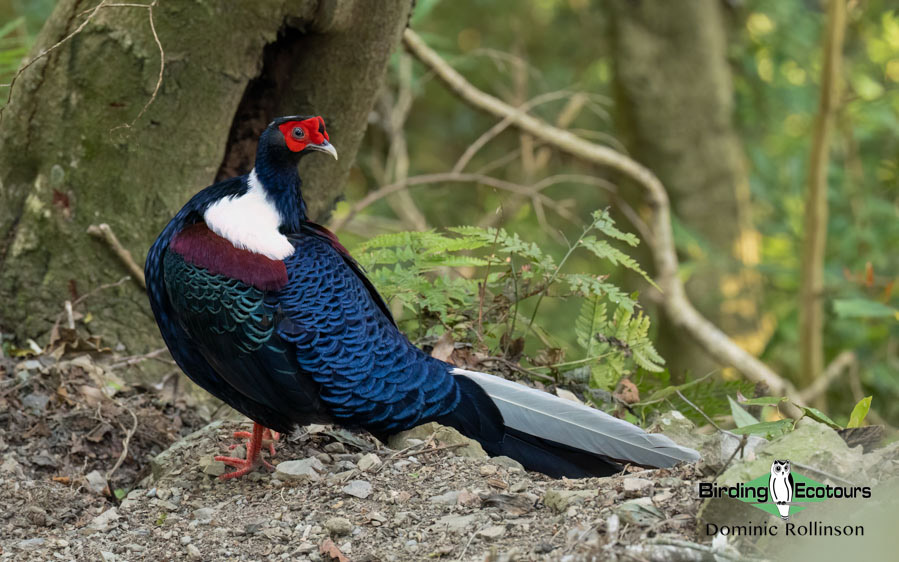
Swinhoe’s Pheasant is a large and colorful Taiwanese endemic that we saw frequently on this tour.
Overview
Our April 2026 Taiwan Endemic Birding Extravaganza tour was an exciting and highly successful exploration of this fascinating island nation. Over the course of twelve days, we birded a fantastic variety of habitats including lowland forests, high-elevation mountain roads, extensive coastal wetlands, offshore islands, agricultural areas and scenic tea plantations. Taiwan once again delivered exceptional birding, wonderful food, stunning scenery and an impressive selection of endemic birds, with the tour finishing on 191 recorded bird species, along with several memorable mammals and reptiles.
We began the tour around Taipei where our first birding outings immediately produced some of Taiwan’s most iconic species. Taiwan Blue Magpie and Taiwan Barbet both showed wonderfully well, while the distinctive Taiwanese form of Maroon Oriole gave prolonged views early on. Nearby forested areas added Taiwan Bamboo Partridge, Taiwan Scimitar Babbler, Taiwan Whistling Thrush and our first Swinhoe’s Pheasants. Wetland birding at Xiangshan Wetland produced a good variety of migrant shorebirds including Grey Plover, Terek Sandpiper, Broad-billed Sandpiper and both Greater and Siberian Sand Plovers, while careful scanning eventually revealed the scarce Chinese Egret.

The attractive Taiwanese subspecies of Maroon Oriole was seen on our first afternoon in Taiwan.
From Taipei we headed south toward Dasyueshan National Forest Recreation Area, one of Taiwan’s premier montane birding areas. Birding along the winding mountain road proved incredibly productive, with feeding flocks holding many of Taiwan’s endemic forest species. Highlights over our two days here included Taiwan Liocichla, Yellow Tit, White-eared Sibia, Taiwan Yuhina, Grey-cheeked Fulvetta, Rufous-crowned Laughingthrush, White-whiskered Laughingthrush and the tiny endemic Flamecrest. After much patience we eventually managed brief views of the notoriously difficult Taiwan Partridge, while the spectacular Mikado Pheasant showed brilliantly near the summit area. Swinhoe’s Pheasant was seen repeatedly and became one of the standout birds of the tour for many participants. Other memorable species included Collared Bush Robin, Taiwan Bush Warbler, Taiwan Vivid Niltava, Little Forktail, White-tailed Robin and Collared Owlet. Mammal sightings in the mountains included Taiwanese Macaque, the endemic Formosan Serow and excellent evening views of the huge Taiwan Giant Flying Squirrel around our lodge.
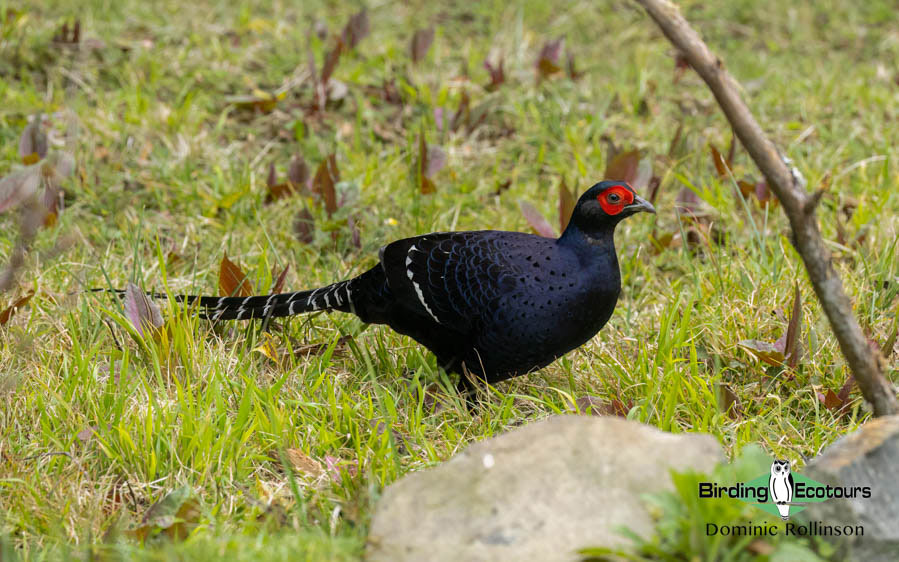
Mikado Pheasant was seen well in the mountains of Dasyueshan.
Leaving the mountains behind, we travelled southwest toward Taiwan’s famous coastal wetlands and lowland birding areas. One of the major highlights came near Yunlin County where we visited a breeding site of Oriental Stork. Several adults and two large chicks were present at the nest, representing the first recorded breeding record of this species in Taiwan. We considered ourselves extremely fortunate to witness such a remarkable event. The Budai Wetlands and Jiangjung Wetlands were alive with migrant shorebirds and waterbirds, producing species such as Sharp-tailed Sandpiper, Long-toed and Red-necked Stints, Pied Avocet, Black-winged Stilt and large numbers of the endangered Black-faced Spoonbill. Other highlights in these productive wetland systems included Cinnamon Bittern, Pheasant-tailed Jacana, Oriental Pratincole, Black-winged Kite and good numbers of Eastern Yellow Wagtails.
Birding in lowland forest patches near Tainan proved equally rewarding. Here we enjoyed fantastic views of the highly sought-after Fairy Pitta, eventually watching one feeding quietly in a bamboo thicket only a few meters away. Other birds seen in these forest patches included Black-naped Monarch and Taiwan Scimitar Babbler. Later that evening we enjoyed an excellent nocturnal birding session which produced prolonged looks at Eastern Grass Owl, including one bird perched out in the open on a pumpkin.
Another major feature of the tour was our visit to Lanyu Island off Taiwan’s southeast coast. The ferry crossings produced several Streaked and Wedge-tailed Shearwaters, while the island itself offered a completely different birding experience. Forest birding on Lanyu produced Black Paradise Flycatcher, Philippine Cuckoo-Dove, Ryukyu Scops Owl, Taiwan Green Pigeon, Common Emerald Dove and Lowland White-eye, while coastal areas added Pacific Reef Heron and various migrant shorebirds. One of the most memorable spectacles of the entire trip came during our early morning watch for migrating raptors, when we estimated roughly 2,000 Chinese Sparrowhawks moving north over the island in the space of about an hour. Smaller numbers of Japanese Sparrowhawks, Grey-faced Buzzards and Ospreys added to the experience.
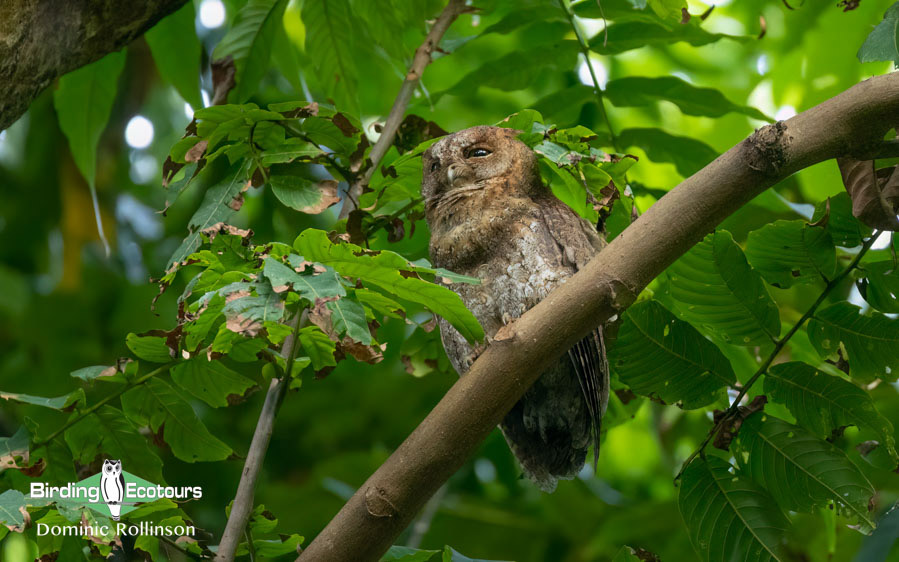
Ryukyu Scops Owl was one of our highlights on Lanyu Island.
Back on mainland Taiwan the Kenting area added species such as Taiwan Hwamei, Styan’s Bulbul, Oriental Skylark and Oriental Cuckoo, while nearby wetlands and agricultural areas produced Oriental Pratincole. Higher up around Alishan we enjoyed some of the most enjoyable forest birding of the entire tour. Taiwan Cupwing eventually gave fantastic views after initially proving elusive, while Taiwan Barwing, Golden Parrotbill, Taiwan Bullfinch, Taiwan Rosefinch, Taiwan Shortwing and numerous Flamecrests all showed well. The scenic forests, moss-covered trails and tea plantations around Alishan provided a fitting setting for the final major birding section of the tour.
Our final birding around Xitou Nature Education Area and the wetlands near Taipei Airport produced several final additions including Great Knot, Grey-tailed Tattler and more excellent views of Chinese Egret. Although Taiwan Thrush remained frustratingly out of reach throughout the tour, we nevertheless enjoyed an outstanding selection of Taiwan’s endemic birds and a superb overall trip list.
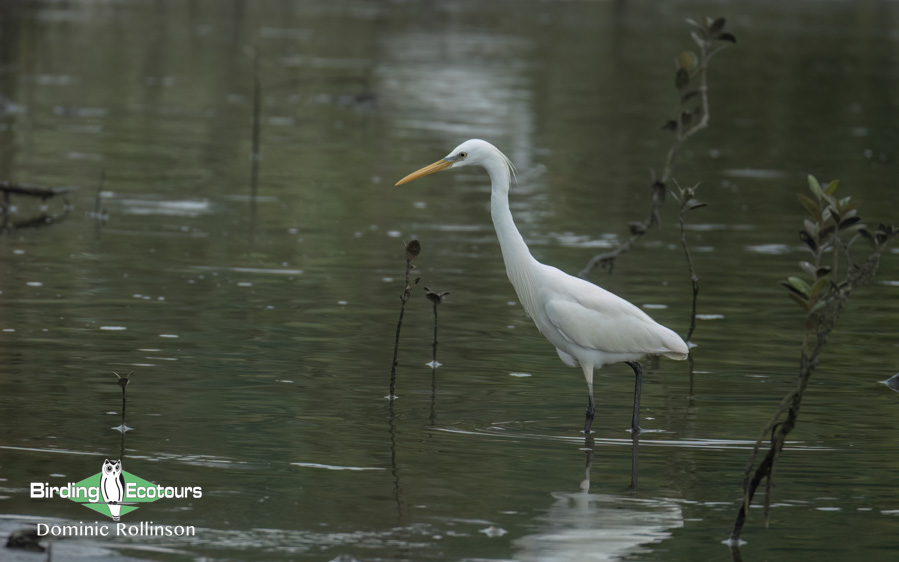
Chinese Egrets were seen at a few locations on this tour.
This brought to a close a thoroughly enjoyable and highly successful twelve days in Taiwan. The combination of fantastic endemic birding, productive wetlands, exciting migration, scenic mountain forests, excellent food and enjoyable company once again showed why Taiwan ranks as one of Asia’s premier birding destinations.
We recorded 191 bird species on this short Taiwan birding tour, with an impressive 31 out of 32 Taiwanese endemics seen, with only the notoriously tricky Taiwan Thrush eluding us! Additionally we recorded 43 of the 52 Taiwanese endemic subspecies. The complete eBird trip report can be seen here.
Detailed Report
Day 1, 17th April 2026. Taipei birding
The entire group had arrived into Taipei over the previous few days and so we met our local guides Mei-Feng and Anny Lee at our Taipei hotel in the late morning and headed out for our first taste of Taiwan birding. We headed south of Taipei to an area where Maroon Oriole had been showing well the last few days. The Taiwanese subspecies of this species is a beautiful species which looks very different from the other subspecies found elsewhere in Asia, and is touted as potential split one day! Upon disembarking from the bus we noticed a large group of photographers, which was a good sign, and we easily spotted both the male and female oriole and enjoyed prolonged views of this tough Taiwanese subspecies endemic. In this same area we also found our first Taiwan endemic, a couple of Taiwan Blue Magpies which showed very well for us, as well as our first Taiwan Barbet, which we saw almost daily throughout the trip.
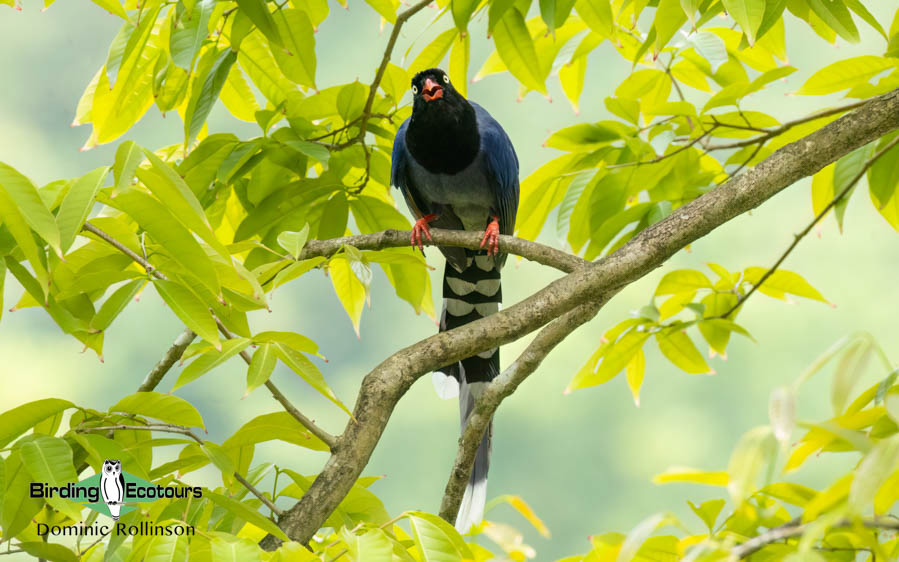
The crazy-looking Taiwan Blue Magpie was seen near Taipei.
We then moved up the road and enjoyed some ice creams as well as some more good birds, including House Swift, Crested Honey Buzzard, Grey-chinned Minivet, Grey Treepie, Black Bulbul, Swinhoe’s White-eye and a calling Plain Flowerpecker, which would remain unseen.
Over our lunch break (our first of many 7-Eleven lunches) we unfortunately had a medical incident which meant some of us had to rush to a nearby hospital. Thankfully, the doctor gave the all-clear later that afternoon and we could return to the hotel that evening. The rest of the group went birding with our local guide, Mei-Feng, for the remainder of the afternoon and, although they only had slim pickings, they did manage views of Common Kingfisher.
Day 2, 18th April 2026. Taipei birding and transfer to Dongshi District
We met bright and early the next morning, loaded the bus and drove to our first birding spot of the day, a little way southwest of Taipei. The birding was slow to begin with but we soon started ticking off Taiwan endemics, including Taiwan Scimitar Babbler and Taiwan Whistling Thrush, with the best bird of the morning being a pair of Taiwan Bamboo Partridges which slowly strolled across the road in front of us! Other birds of note this morning included Bronzed Drongo and Black Kite, while we also had brief flyby views of Taiwan Blue Magpie.
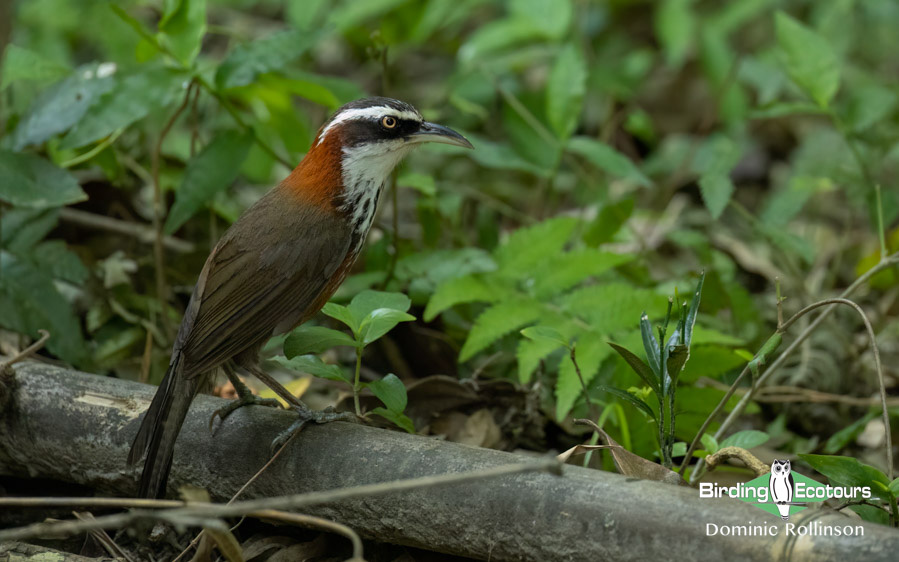
Taiwan Scimitar Babblers were seen frequently on this tour.
We then moved to the mountainous area of the nearby Pinglin District, finding a few new birds en route, including Crested Myna, Crested Serpent Eagle and the exotic Javan Myna. In the mountains around Pinglin we found a splendid male Swinhoe’s Pheasant (a species we would have repeat views of in the mountainous areas of northern Taiwan) and we also eventually managed to get views of a pair of skulking Black-necklaced Scimitar Babblers – a species which requires a great deal of patience to see.
Back down in the lowlands of the Pinglin District we enjoyed fantastic eye-level views of a small heronry which included Eastern Cattle and Little Egrets and Black-crowned Night Heron. From here we also added Oriental Magpie and Swinhoe’s White-eye and enjoyed flyover views of Crested Honey Buzzard and Crested Goshawk.
It was then a lengthy transfer to Xiangshan Wetland (with lunch en route), where we set about sifting through the many shorebirds and coastal birds on offer. Most of the shorebirds were unfortunately rather distant but, with some patient scanning, we picked out Grey Plover and both Siberian and Greater Sand Plovers, Eurasian Whimbrel, Terek and Broad-billed Sandpipers, Common Redshank, Common Greenshank and Ruddy Turnstone. After much scanning we found a distant Chinese Egret in among the many Little and Great Egrets and eventually had rather good looks at this scarce species, which mostly occurs in Taiwan on passage between its breeding and wintering grounds.
After a long but highly productive day of birding, we made it into the small village of Xincheng on the outskirts of Taichung City. Here we were well-placed to visit the famous Dasyueshan Road the following day. After an enjoyable dinner, we added one final new bird for the day in the form of a Savanna Nightjar, which was calling from the buildings and light posts around our hotel.
Day 3, 19th April 2026. Dasyueshan National Forest birding
We grabbed a quick breakfast at the hotel and left soon after dawn to spend the entire day birding Dasyueshan Road, where we hoped to find many of Taiwan’s endemic forest birds. Our first stop was around the 17 kilometer mark, where a small feeding flock hosted Grey-chinned Minivet, White-bellied Erpornis, Rufous-faced Warbler and Grey-cheeked (Morrison’s) Fulvetta. We had hoped to find the endemic Chestnut-bellied Tit here, but this tough species would have to wait.
At the well-known 23.5 kilometer car park we hoped to find Taiwan Partridge but, unfortunately, they were a no-show and we had to be happy with fine looks at a feeding male Swinhoe’s Pheasant. Birding from the car park was highly productive, though, and we soon added White-eared Sibia, Taiwan Barbet, Large Hawk-Cuckoo and Green-backed Tit.
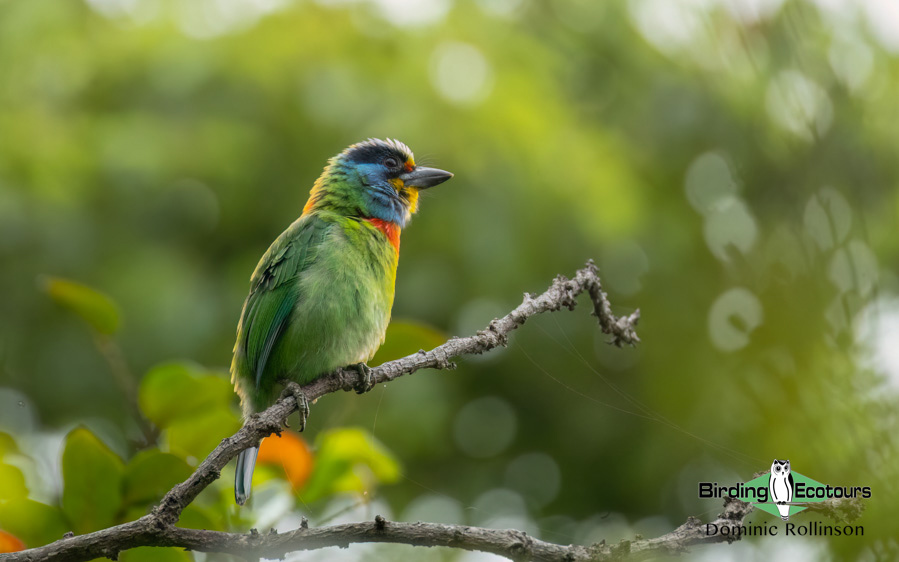
The colorful Taiwan Barbet was a constant presence in the forests of Taiwan.
Further up the road we stopped for feeding flocks which contained the likes of Yellow Tit, Taiwan Liocichla, Rufous-crowned and Rusty Laughingthrushes and the cute Black-throated Bush Tit. A stop at a bridge gave us good looks at large numbers of breeding Asian House Martins, while nearby we enjoyed our first looks at the feisty Collared Owlet (another subspecies endemic).
We continued our way up the mountain, continually gaining in elevation, with roadside stops producing Snowy-browed Flycatcher, Little Forktail (nesting alongside a stream) and good numbers of Taiwan Yuhinas.
We eventually made it to the top of the road and enjoyed a picnic lunch at the 50 kilometer marker. Either side of lunch we did a few short walks in the area, which proved tough going as bird activity was low, but we did eventually eke out Flamecrest, Collared Bush Robin and Yellow-bellied Bush Warbler, with White-whiskered Laughingthrush proving incredibly tame and photogenic. A few of us got glimpses of the skulking Taiwan Bush Warbler, although we all decided this would go into the ‘better views desired’ folder for now.
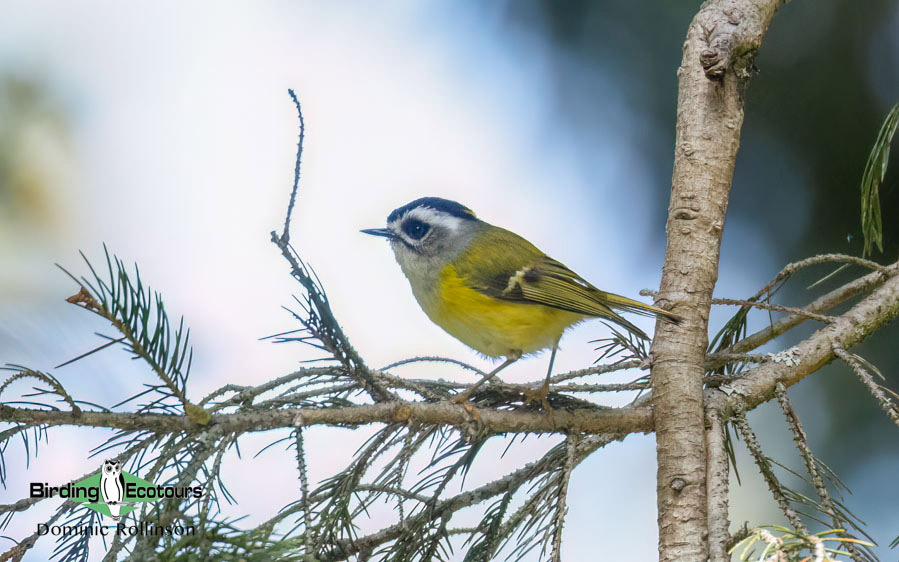
The tiny and highly active Flamecrest took some work to find.
The rest of the afternoon was spent slowly making our way back down to our hotel. We again stopped at the Taiwan Partridge spot in the hopes that it would come out to feed but, unfortunately, this did not happen today.
Day 4, 20th April 2026. Dasyueshan National Forest birding
Today was another early start as we were again making our way up towards Dasyueshan, however, tonight we would be staying in the park and not returning back to the lowlands in the afternoon. We started birding the lower sections of the road, where Striped Prinia was the first new bird of the day, along with improved views of Rufous-faced Warbler.
We again made a stop for the Chestnut-bellied Tit on the lower section of the road and struck gold when we found a pair of foraging Chestnut-bellied Tits, which showed very well for us, with other new birds nearby including Large-billed Crow and the attractive White-tailed Robin.
We made our usual stop to look for Taiwan Partridge but again they were not in attendance and we were starting to get worried about this species! Other birds seen around the car park included White-bellied Green Pigeon, Collared Owlet, Taiwan Barbet (including a mating pair), Yellow Tit and a pair of Fire-breasted Flowerpeckers.
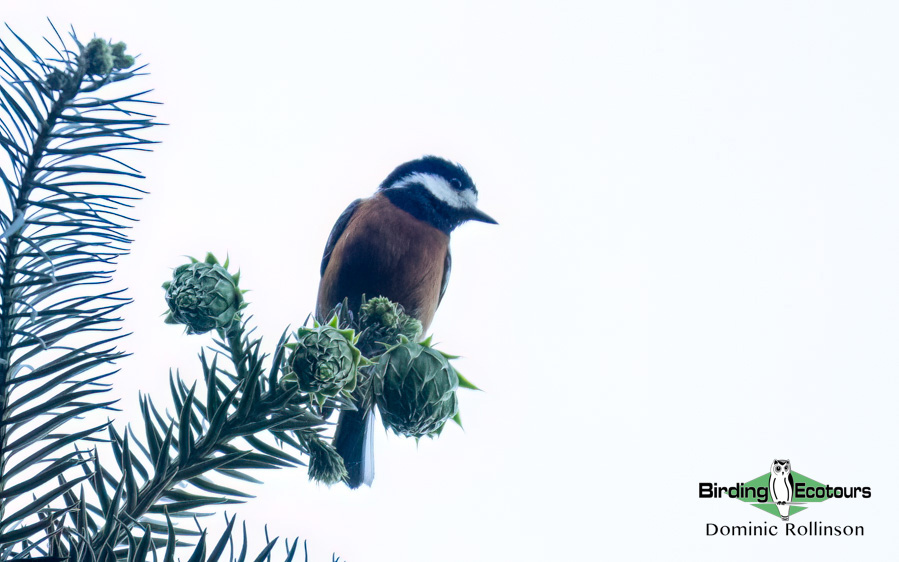
The attractive Chestnut-bellied Tit was seen along the Dasyueshan Road.
We then continued up the mountain, where we enjoyed a coffee break and a wander around that proved incredibly productive, and we were all very relieved when I managed to pick out a pair of Taiwan Partridges with the thermal scope. Our views weren’t what we had all hoped for, but we all eventually managed to get good enough looks at this tricky Taiwan endemic. Other birds seen on this walk included Rufous-crowned Laughingthrush, White-tailed Robin, Taiwan Vivid Niltava and a flyover Mountain Hawk-Eagle.
Again, we had our lunch stop at the top of the road and were just unpacking the lunch when we got the call that Mikado Pheasants were out feeding at the usual stakeout. We all quickly rushed around the corner and enjoyed amazing looks at this most-wanted Taiwan endemic. We decided to delay lunch and birded the general area for a while longer and managed to find Eurasian Jay (of the Taiwan subspecies), Coal Tit, Yellow-bellied Bush Warbler, Taiwan Fulvetta, Flamecrest and Collared Bush Robin. While up here we also came across a couple of new mammal species including cheeky Taiwanese Macaques and the strange-looking Formosan Serow.
After lunch we started making our way back down towards our lovely lodge located within the park. Most decided to take it easy for the afternoon (Mike and Marcy stretching their legs with a walk to see a gigantic Formosan Cypress tree) with a couple of us taking a wander around the very birdy lodge grounds. Despite there being lots of birds around we only added Eurasian Nuthatch and Rufous-capped Babbler (seen by Katie and I) to the trip list, with Alan being pleased with his looks at Rufous-faced Warbler, which had been eluding him until now.
Later that evening, after dinner, a few of us took a walk around the lodge grounds and had great looks at the huge and slightly scary-looking Taiwan (Red-and-white) Giant Flying Squirrel, while calling Mountain Scops Owls were just always out of reach (as is so often the case with this species) and eventually we decided to call it a night.
Day 5, 21st April 2026. Dasyueshan to Tainan
We started the day with a relaxed walk around the lodge grounds, which did not add much different, although we did have brief views of White-backed Woodpecker and again had looks at Taiwan Vivid Niltava.
After a rare sit-down breakfast we started making our way down the mountain and made one final stop to see if the partridges would show better for us, but again no luck here.
We then undertook a long drive southwest to Yunlin, where we scoped a nest of Oriental Storks, which had two nearly fully grown chicks, with at least four adults seen on and around the nest too. This was the first recorded breeding record of Oriental Storks in Taiwan, and we considered ourselves extremely fortunate to witness this. In the area we also saw many Red Collared Doves and had our first views of Scaly-breasted Munia.
For our final birding for the afternoon we birded the extensive Budai Wetlands, which comprise of miles of fish/shrimp farms which create excellent habitat for a variety of shorebirds and waterbirds. Highlights of our time here included Common, Marsh, Wood, Sharp-tailed and Curlew Sandpipers, Red-necked and Long-toed Stints, Black-winged Stilt, Pied Avocet, Little and Whiskered Terns, Cinnamon Bittern, Black-winged Kite, Pacific and Eastern Red-rumped Swallows, Chestnut-tailed Starling and Eastern Yellow Wagtail. However, the real stand-out species was the good numbers of Black-faced Spoonbills which would soon be leaving for their breeding grounds further north.
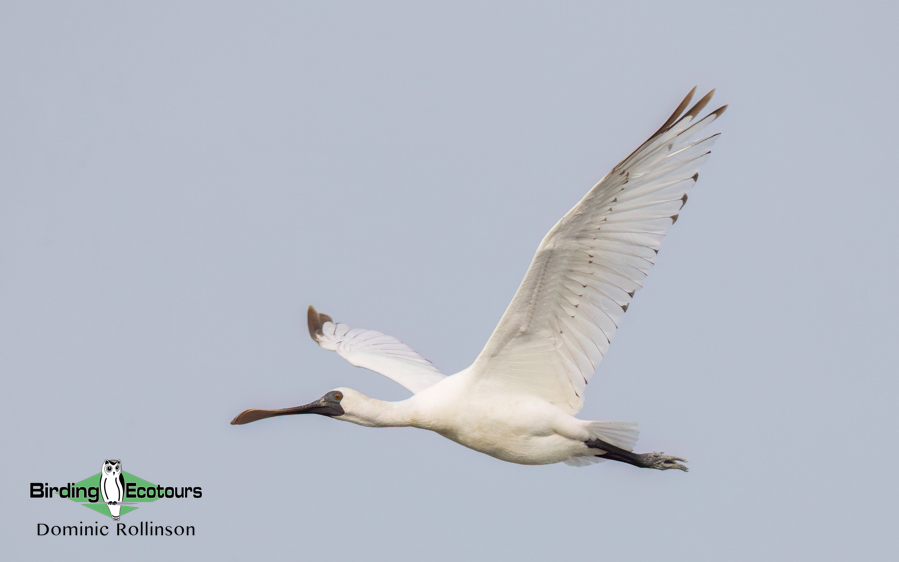
Black-faced Spoonbills were seen in good numbers in the Budai Wetlands.
After another long but productive day of birding, we made it into our hotel as the sun was beginning to set. Later that evening, after dinner, a few of us headed out to some nearby agricultural fields and it did not take too long to find our primary target, Eastern Grass Owl. We had good looks at this rare species (including a bird perched up on a pumpkin), while we also saw good numbers of Savanna Nightjars and had brief looks at a flushed pair of Common Pheasants.
Day 6, 22nd April 2026. Forest and wetland birding near Tainan and transfer to Kenting
This morning we had a sit-down breakfast (after our nocturnal birding the previous evening) and then hit the road to visit some patches of lowland forest where we hoped to find Fairy Pitta. We arrived at the forest patch and soon found a group of photographers waiting for the pittas to show. It didn’t take too long before Li-Ru, our bus driver, frantically called us over and pointed out a fine Fairy Pitta posing for us in a bamboo thicket. It took a bit of manoeuvring but eventually we all had clear unobstructed views and, a while later, the pitta came out to feed just a few meters from us. While waiting for the pitta, we also found Black-naped Monarch, Taiwan Scimitar Babbler and had brief looks at White-rumped Shama.
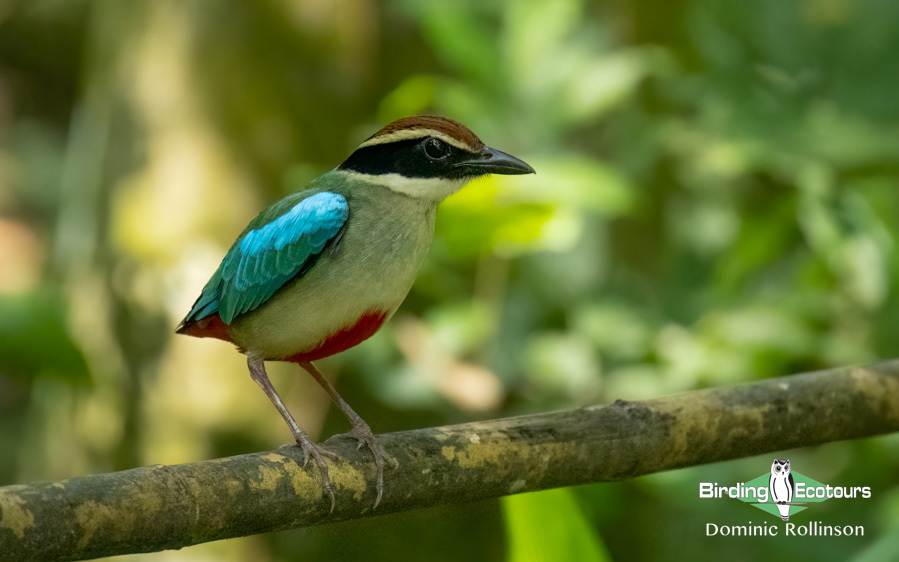
We couldn’t have asked for better views of Fairy Pitta.
We then made our way back towards the coast and birded the Jiangjung Wetlands before lunch. En route we added Pheasant-tailed Jacanas (in full breeding plumage) at a small roadside pond, while a bathroom stop further added Asian Glossy Starling.
Once at the wetlands we battled a bit with the wind, which was gusting and made it tricky to see through the scope, but we persevered and found Pacific Golden Plover, Tibetan Sand Plover, Kentish Plover, Terek, Marsh, Wood, Broad-billed, Curlew and Sharp-tailed Sandpipers as well as good numbers of Red-necked Stints.
After lunch we again birded the wetlands of the Budai area, which did not add too much of interest except Eurasian Wigeon, Eurasian Coot, Oriental Magpie-Robin and a brief flyby view of Common Kingfisher for some of the group.
It was then the long drive south for the remainder of the afternoon, and we pulled into our accommodation in the Kenting area shortly before dark. A couple of us had brief looks at Styan’s Bulbul as we were unpacking the bus, but we were sure we would see more of this Taiwanese endemic over the next few days.
Day 7, 23rd April 2026. Ferry to Lanyu Island and birding the island
We had a ferry to catch this morning and so loaded up into the bus early and picked up breakfast on the run (good old 7-Eleven) before arriving at the ferry terminal. Most of us stood at the back of the ferry for the two-hour crossing to Lanyu Island and enjoyed the seabirding as we went. Unfortunately there was not a lot of seabird movement today, but we persisted and eventually added a few Streaked and Wedge-tailed Shearwaters, as well as good numbers of migrating birds including Brown Shrike and Eastern Yellow Wagtail.
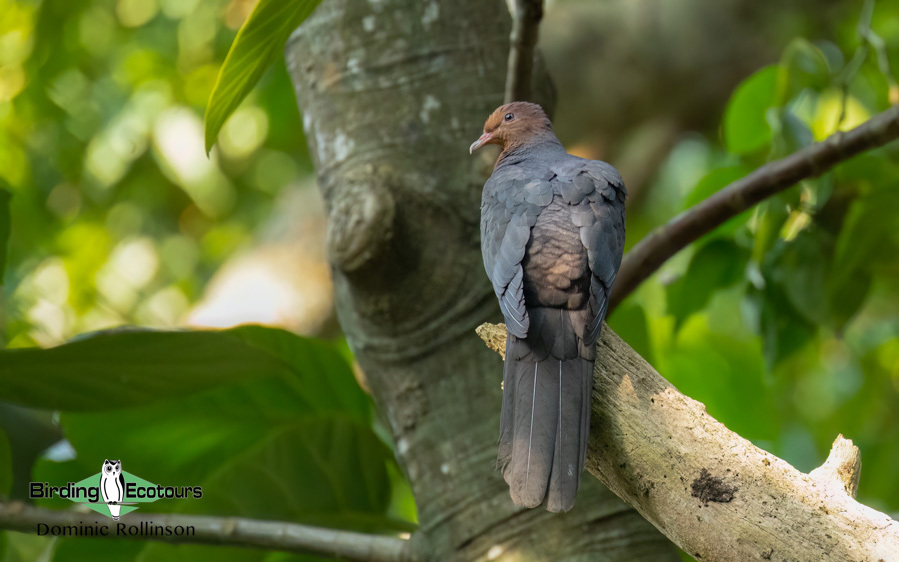
Philippine Cuckoo-Dove was one of the Lanyu Island specials we found.
After sorting out our vehicle rental and checking into our accommodation, we immediately headed out birding and, at a small patch of lowland forest, we found Black Paradise Flycatcher (one of Lanyu’s big targets), while Brown-eared Bulbuls proved rather common. We then took the coastal road around the northern edge of the island, which added Pacific Reef Heron feeding in the shallows, with Blue Rock Thrush and Brown Shrike seen nearby.
After lunch back at our accommodation and some time off during the heat of the early afternoon, we headed back out and again targeted some of the Lanyu Island forest specials. It did not take long to find Philippine Cuckoo-Dove, which showed wonderfully well, and then Ryukyu Scops Owl also did not put up much of a fight. Katie did well to spot a Taiwan Green Pigeon sitting out in the open and then, finally, a Common Emerald Dove showed well for us all. This ended an incredibly productive hour or so of forest birding.
To finish off the day we again birded some lowland forest patches, where we found the final Lanyu Island special, Lowland White-eye. One vehicle managed to see a lone Chinese Sparrowhawk that evening, and we soon got news that a couple thousand of this species had gone in to roost on the other side of the island, and so formulated our plans for the next morning!
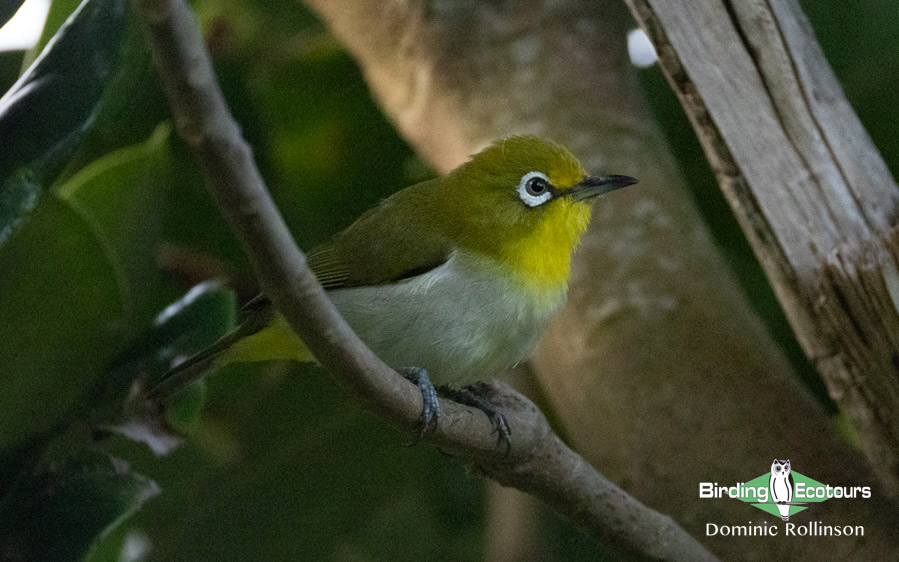
Lowland White-eyes were relatively common on Lanyu Island.
Day 8, 24th April 2026. Lanyu Island birding and ferry back to Kenting
This morning we set off before sunrise to ensure we could be at a good vantage point to watch the raptors continue their migration. It did not take long until the first Chinese Sparrowhawks emerged from the forests, gained height and then continued on their way north. We spent about an hour enjoying the spectacle of migration and over this period we estimated around 2,000 Chinese Sparrowhawks, along with small numbers of Japanese Sparrowhawks, Grey-faced Buzzards and Ospreys.
The rest of the morning and early afternoon was spent birding around the island, with highlights including Lesser Coucal, Pacific Swift, Peregrine Falcon, Zitting Cisticola, White-shouldered Starling, Grey and White Wagtails, Little Bunting and better looks at Black Paradise Flycatcher (much to Gail’s enjoyment). Shorebirds were surprisingly diverse and tiny patches of freshwater held Greater Sand Plover, Common, Wood, Terek, Curlew and Sharp-tailed Sandpipers, along with Red-necked Stint. A coastal flock of egrets was investigated and was found to contain a single Chinese Egret, which was great to see.
It was then time to catch the ferry back to Kenting, which produced a few more Streaked and Wedge-tailed Shearwaters, along with Common and Roseate Terns.
Day 9, 25th April 2026. Kenting birding and transfer to Alishan area
Our first birding for the morning was in an open area near our accommodation where we soon found our primary target, Taiwan Hwamei, with a pair showing very well for us. Other birds in the nearby area included Pacific Golden Plover, Oriental Skylark, Zitting Cisticola, Styan’s Bulbul, Richard’s Pipit and small numbers of Chinese Sparrowhawks moving overhead (a catch-up bird for Cliff).
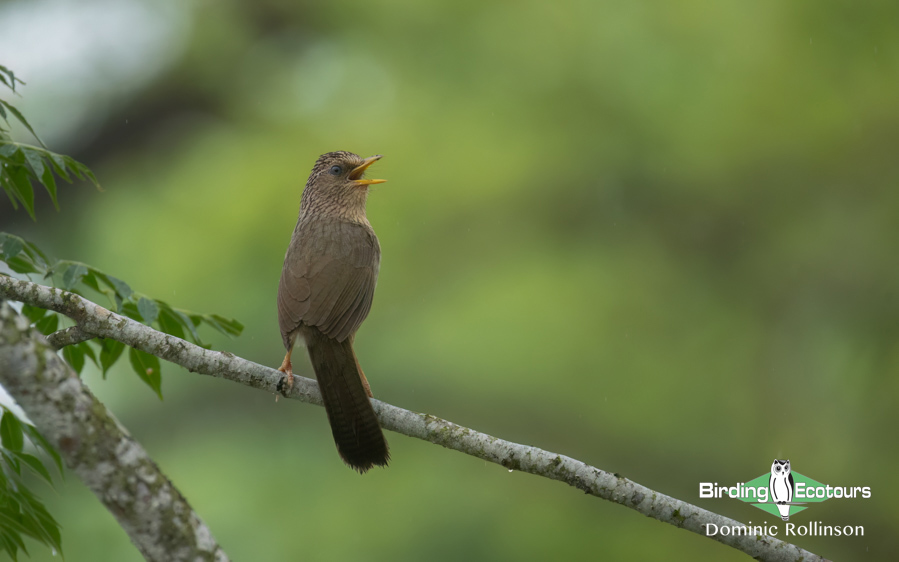
Taiwan Hwamei was seen at a number of localities in southern Taiwan.
We then moved to the nearby Longluan Lake and enjoyed our breakfast here while scoping birds out on the water. There were low numbers of birds around but, with careful scanning, we managed to eke out a few new birds in and around the lake, including Eastern Spot-billed and Tufted Ducks, Oriental Cuckoo, Red Knot and Plain Prinia. At another stop along the eastern side of the lake we birded some marshy areas near some abandoned fish farms. The agricultural fields on the way over added good numbers of Oriental Pratincole, as well as a couple of Sika Deer. Closer to the edge of the lake, highlights included Common Moorhen, Chestnut-cheeked Starling (well spotted by Di), Styan’s Bulbul, Blue Rock Thrush and a brief view of Yellow Bittern, which was unfortunately missed by most of the group.
It was then time to head north and we made our way to the Linhousilin Forest Park in the hopes of finding Collared Scops Owl, which had been using a day roost there recently. Unfortunately the bird had been disturbed that morning and had moved off from its regular day roost. Our time here was, however, well spent and we found Black-naped Oriole, Brown Shrike, Black Kite, Eastern Red-rumped Swallow and a cooperative Common Kingfisher (a catch-up bird for Gail, after narrowly missing it previously).
We weren’t giving up on the scops owl yet though, and we moved to a city park in Tainan (adding Malayan Night Heron en route) where we walked straight to the spot, and there were two roosting Collared Scops Owls. Despite the rain, we enjoyed the owls for a while before making the final drive into the mountains bordering Alishan National Forest Recreation Area.
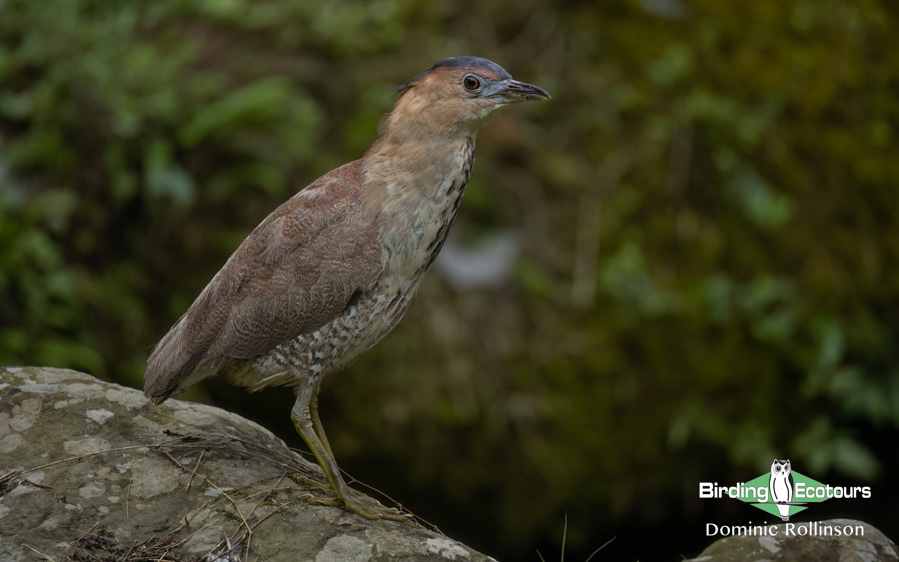
Malayan Night Herons were incredibly obliging in Taiwan.
Day 10, 26th April 2026. Birding Alishan National Forest
As was the theme for this trip we grabbed breakfast on the go and started making our way up to Alishan, where we hoped to find most of the country’s remaining endemic bird species. The best method to do this was to make regular stops along the way up, looking for feeding flocks and sometimes targeting specific species at certain stakeouts. Using this technique we found the likes of Ferruginous Flycatcher, White-eared Sibia, Fire-breasted Flowerpecker and, with some effort, we all had brief looks at the elusive Taiwan Shortwing (despite hundreds of marathon runners passing by, which made for a comedic scene.).
A bathroom stop gave us point-blank views of Brownish-flanked Bush Warbler, which did not seem at all perturbed by our presence. Here, we also had good looks at Rufous-capped Babbler, while, unfortunately, the calling Taiwan Cupwing would not show itself!
Towards the top of the road we birded along a quiet trail, which proved to be some of the most enjoyable birding of the trip as we easily found target after target, many of them being Taiwan endemics. Highlights from this short walk included Taiwan Bush Warbler (after much effort), White-whiskered Laughingthrush, Taiwan and Collared Bush Robins, Taiwan Rosefinch, Taiwan Bullfinch and incredible looks at numerous feeding Flamecrests. However, the bird of the morning was when Katie pointed out a Taiwan Cupwing, feeding on a moss-covered wall, which showed unbelievably well for us. Cupwings are notoriously difficult to see, often appearing only for a split second. This bird, however, was unusually confiding and was not at all bothered by the group of birders watching it from nearby and put on a show for us!
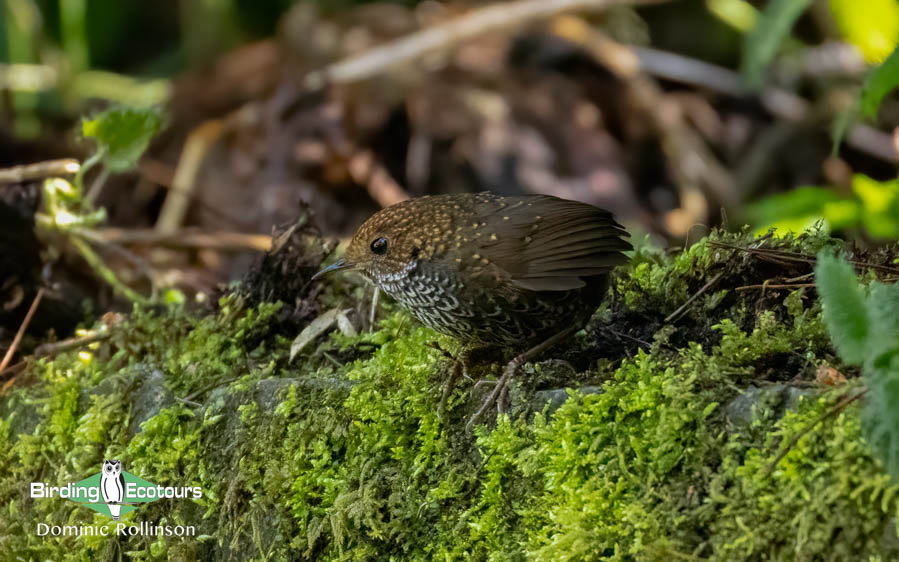
The skulking Taiwan Cupwing showed superbly in Alishan.
At the visitor center we started walking a short trail and, before we had walked 50 yards, we found our targets, these being Taiwan Barwing and a small group of incredibly cute Golden Parrotbills. For good measure, we also had further looks at Taiwan Bullfinch and Taiwan Fulvetta.
For our lunch stop we moved down the eastern side of the mountain a bit and arrived at a spot where photographers were feeding various birds with berries dropped from surrounding trees. Here, we had great looks at Rusty Laughingthrush and Taiwan Liocichla as they fought over the berries. The area was alive with birds and we also found White-bellied Green Pigeon, Taiwan Barbet, Eurasian Jay, Grey-capped Pygmy Woodpecker, White-eared Sibia, Eurasian Nuthatch and Fire-breasted Flowerpecker. We hoped that Taiwan Thrush might be in the area too but, unfortunately, there was no sight or sign of the thrush.
Heading back to our accommodation later this afternoon we made a couple of stops searching for Taiwan Thrush but, despite our best efforts, the thrush would not show. We did, however, find Black-necklaced Scimitar Babbler, Rusty Laughingthrush and White-tailed Robin.
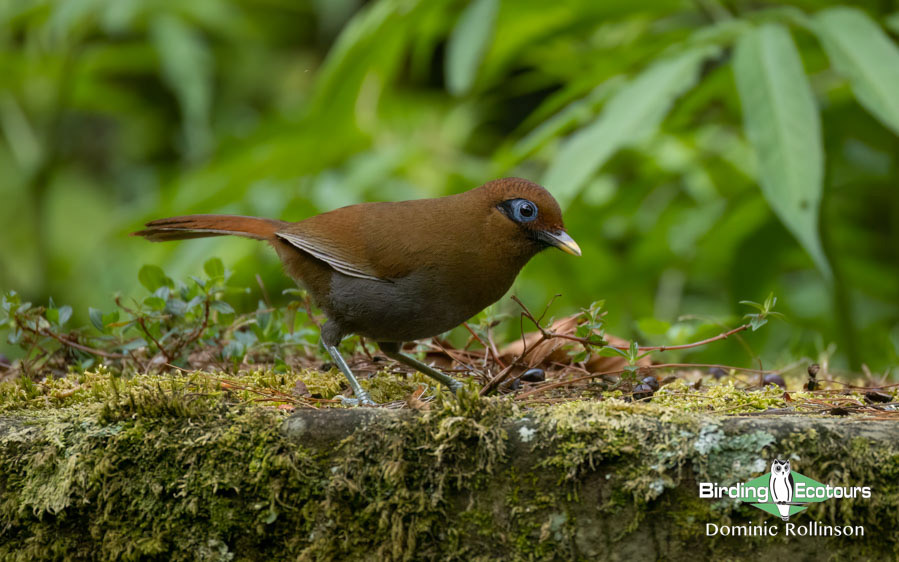
Rusty Laughingthrush, yet another Taiwanese endemic.
To finish the day, a few of us went for a walk in the tea plantation at the back of our accommodation, which proved to be very birdy. On this walk we found Pacific Swift, Eastern Red-rumped Swallow, Collared Finchbill, Russet Sparrow, Grey Wagtail and Olive-backed Pipit.
Later this evening we tried to track down a nearby Mountain Scops Owl but, despite our efforts, it remained elusive and we had to accept defeat with this tricky species.
Day 11, 27th April 2026. Alishan to Douliu
Gail and I went for an early morning walk this morning in the tea plantation and managed to find Collared Finchbill, a singing Arctic Warbler, as well as a female Siberian Rubythroat.
After picking up breakfast, we had another go at Taiwan Thrush but, unfortunately, still no luck here. We did, however, get glimpses of Dusky Fulvetta and more looks at Black-necklaced Scimitar Babbler and Taiwan Vivid Niltava. We then loaded into the bus and made our way back up and over Alishan towards the Yushan area, which again added some of the same birds as yesterday.
After a delicious lunch in a small, charming restaurant we made our way to a nearby stream which held a few feeding Plumbeous Water Redstarts of the endemic Taiwanese subspecies.
It was then a longish drive to Douliu, with a final productive birding stop along the Jiji Zhuoshui River. We spent just under an hour birding along the river and here we found Kentish and Little Ringed Plovers, Yellow-bellied and Plain Prinias, Vinous-throated Parrotbill, Taiwan Hwamei and Chestnut Munia.
After another long but productive day we pulled into our hotel in Douliu for our final night of the tour.
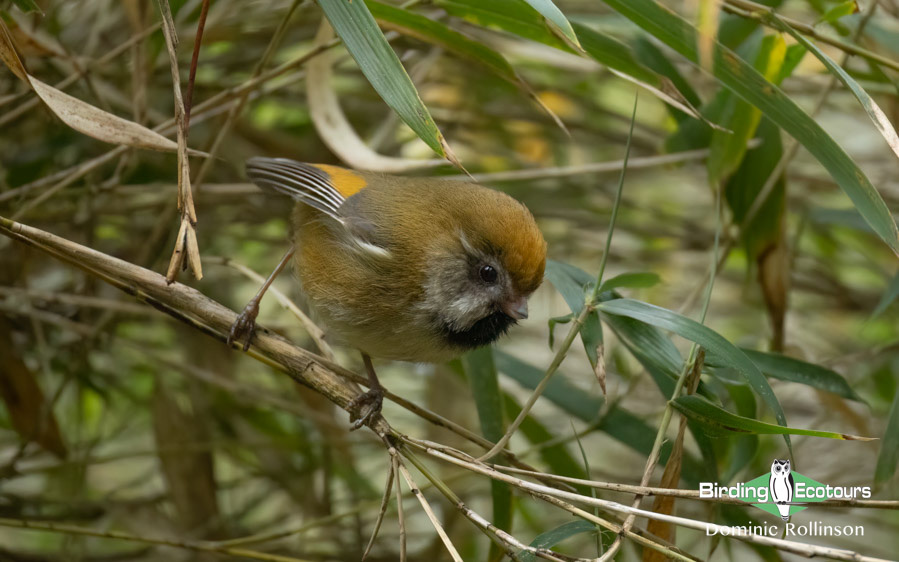
Golden Parrotbills were seen in the Alishan area.
Day 12, 28th April 2026. Douliu to Taipei with birding en route
With Taiwan Thrush being the only missing Taiwanese endemic, we gave this species one last shot at Xitou Nature Education Center, where there had been a couple of sightings in the last few days. Despite a good search we had to accept defeat with this species, the trickiest of the 32 Taiwan endemics. Our time here was thoroughly enjoyable, birding in the picturesque forest, and we saw a good selection of species including White-bellied Green Pigeon, Malayan Night Heron, Crested Serpent Eagle, Besra, Black-necklaced Scimitar Babbler, Taiwan Barwing, Taiwan Vivid Niltava and Snowy-browed Flycatcher.
We then headed north and had lunch in Taichung City and enjoyed watching diners catching their fresh prawns from the on-site pool! After lunch we birded some random grassy areas within the city, where we quickly added Golden-headed Cisticola, as well as Zitting Cisticola and Yellow-bellied Prinia.
For our final birding of the trip we birded at the Xucuogang Wetlands near Taipei Airport, which proved a worthwhile stop, with a couple of new trip birds added at the last minute. Great Knot and Grey-tailed Tattler were welcome final trip additions, while we also had good looks at Siberian and Greater Sand Plovers, Eurasian Whimbrel, Terek, Broad-billed and Sharp-tailed Sandpipers, Red Knot and at least seven Chinese Egrets!
This brought to a close a thoroughly enjoyable and successful twelve days in Taiwan. A special thank you goes to the clients for making the tour such a pleasure, and a big thank you to our local guide, Mei-Feng, translator, Anny Lee, along with our expert driver, Li-Ru, whose efforts helped make the trip such a success.
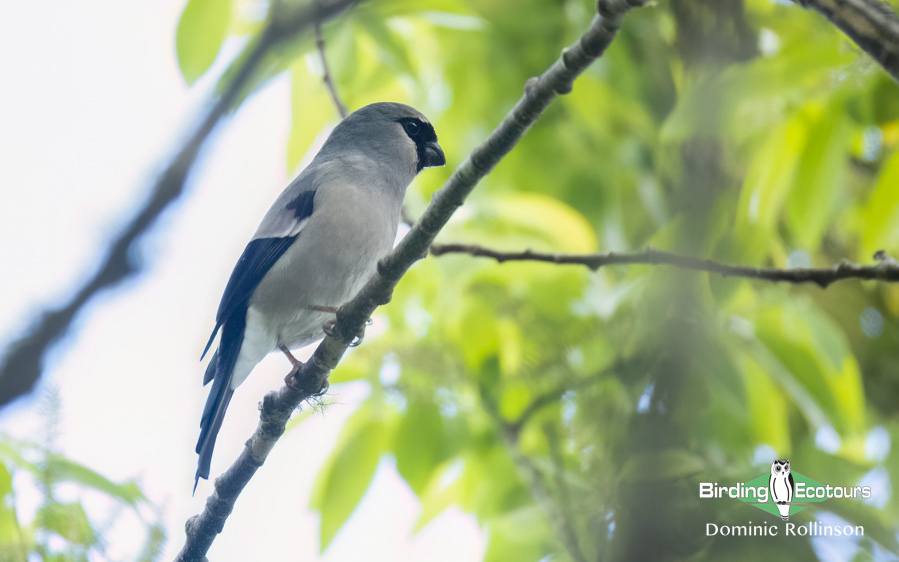
Taiwan Bullfinch can prove tricky at times, but this bird eventually showed well for us in the Alishan area.
Bird List – Following IOC 15.1 (March 2025)
Birds ‘heard only’ are marked with (H) after the common name, all other species were seen.
The following notation after species names is used to show conservation status following the IUCN Red List: CR = Critically Endangered, EN = Endangered, VU = Vulnerable.
| Common name | Scientific name |
| Ducks, Geese, Swans (Anatidae) | |
| Eurasian Wigeon | Mareca penelope |
| Eastern Spot-billed Duck | Anas zonorhyncha |
| Tufted Duck | Aythya fuligula |
| Pheasants & Allies (Phasianidae) | |
| Taiwan Partridge (Endemic) | Arborophila crudigularis |
| Mikado Pheasant (Endemic) | Syrmaticus mikado |
| Common Pheasant | Phasianus colchicus |
| Swinhoe’s Pheasant (Endemic) | Lophura swinhoii |
| Taiwan Bamboo Partridge (Endemic) | Bambusicola sonorivox |
| Nightjars (Caprimulgidae) | |
| Savanna Nightjar | Caprimulgus affinis |
| Swifts (Apodidae) | |
| Pacific Swift | Apus pacificus |
| House Swift | Apus nipalensis |
| Cuckoos (Cuculidae) | |
| Lesser Coucal | Centropus bengalensis |
| Large Hawk-Cuckoo | Hierococcyx sparverioides |
| Oriental Cuckoo | Cuculus optatus |
| Pigeons, Doves (Columbidae) | |
| Rock Dove | Columba livia |
| Oriental Turtle Dove | Streptopelia orientalis |
| Red Collared Dove | Streptopelia tranquebarica |
| Spotted Dove | Spilopelia chinensis |
| Philippine Cuckoo-Dove | Macropygia tenuirostris |
| Common Emerald Dove | Chalcophaps indica |
| White-bellied Green Pigeon | Treron sieboldii |
| Taiwan Green Pigeon | Treron formosae |
| Rails, Crakes & Coots (Rallidae) | |
| Common Moorhen | Gallinula chloropus |
| Eurasian Coot | Fulica atra |
| White-breasted Waterhen | Amaurornis phoenicurus |
| Grebes (Podicipedidae) | |
| Little Grebe | Tachybaptus ruficollis |
| Stilts, Avocets (Recurvirostridae) | |
| Black-winged Stilt | Himantopus himantopus |
| Pied Avocet | Recurvirostra avosetta |
| Plovers (Charadriidae) | |
| Grey Plover – VU | Pluvialis squatarola |
| Pacific Golden Plover | Pluvialis fulva |
| Little Ringed Plover | Charadrius dubius |
| Tibetan Sand Plover | Anarhynchus atrifrons |
| Siberian Sand Plover | Anarhynchus mongolus |
| Greater Sand Plover | Anarhynchus leschenaultii |
| Kentish Plover | Anarhynchus alexandrinus |
| Jacanas (Jacanidae) | |
| Pheasant-tailed Jacana | Hydrophasianus chirurgus |
| Sandpipers, Snipes (Scolopacidae) | |
| Eurasian Whimbrel | Numenius phaeopus |
| Terek Sandpiper | Xenus cinereus |
| Common Sandpiper | Actitis hypoleucos |
| Grey-tailed Tattler | Tringa brevipes |
| Marsh Sandpiper | Tringa stagnatilis |
| Wood Sandpiper | Tringa glareola |
| Common Redshank | Tringa totanus |
| Common Greenshank | Tringa nebularia |
| Ruddy Turnstone | Arenaria interpres |
| Great Knot – EN | Calidris tenuirostris |
| Red Knot | Calidris canutus |
| Broad-billed Sandpiper – VU | Calidris falcinellus |
| Sharp-tailed Sandpiper – VU | Calidris acuminata |
| Curlew Sandpiper – VU | Calidris ferruginea |
| Long-toed Stint | Calidris subminuta |
| Red-necked Stint | Calidris ruficollis |
| Coursers, Pratincoles (Glareolidae) | |
| Oriental Pratincole | Glareola maldivarum |
| Gulls, Terns, Skimmers (Laridae) | |
| Little Tern | Sternula albifrons |
| Caspian Tern | Hydroprogne caspia |
| Whiskered Tern | Chlidonias hybrida |
| Common Tern | Sterna hirundo |
| Roseate Tern | Sterna dougallii |
| Petrels, Shearwaters, Diving Petrels (Procellariidae) | |
| Streaked Shearwater | Calonectris leucomelas |
| Wedge-tailed Shearwater | Ardenna pacifica |
| Ibises, Spoonbills (Threskiornithidae) | |
| Black-faced Spoonbill – EN | Platalea minor |
| Herons, Bitterns (Ardeidae) | |
| Cinnamon Bittern | Botaurus cinnamomeus |
| Yellow Bittern | Botaurus sinensis |
| Black-crowned Night Heron | Nycticorax nycticorax |
| Malayan Night Heron | Gorsachius melanolophus |
| Pacific Reef Heron | Egretta sacra |
| Chinese Egret – VU | Egretta eulophotes |
| Little Egret | Egretta garzetta |
| Great Egret | Ardea alba |
| Eastern Cattle Egret | Ardea coromanda |
| Grey Heron | Ardea cinerea |
| Ospreys (Pandionidae) | |
| Osprey | Pandion haliaetus |
| Kites, Hawks, Eagles (Accipitridae) | |
| Black-winged Kite | Elanus caeruleus |
| Crested Honey Buzzard | Pernis ptilorhynchus |
| Crested Serpent Eagle | Spilornis cheela |
| Mountain Hawk-Eagle | Nisaetus nipalensis |
| Crested Goshawk | Lophospiza trivirgata |
| Besra | Tachyspiza virgata |
| Japanese Sparrowhawk | Tachyspiza gularis |
| Chinese Sparrowhawk | Tachyspiza soloensis |
| Black Kite | Milvus migrans |
| Grey-faced Buzzard | Butastur indicus |
| Barn Owls (Tytonidae) | |
| Eastern Grass Owl | Tyto longimembris |
| Owls (Strigidae) | |
| Collared Owlet | Taenioptynx brodiei |
| Mountain Scops Owl | Otus spilocephalus |
| Ryukyu Scops Owl | Otus elegans |
| Collared Scops Owl | Otus lettia |
| Kingfishers (Alcedinidae) | |
| Common Kingfisher | Alcedo atthis |
| Asian Barbets (Megalaimidae) | |
| Taiwan Barbet (Endemic) | Psilopogon nuchalis |
| Woodpeckers (Picidae) | |
| Grey-capped Pygmy Woodpecker | Yungipicus canicapillus |
| White-backed Woodpecker | Dendrocopos leucotos |
| Caracaras, Falcons (Falconidae) | |
| Peregrine Falcon | Falco peregrinus |
| Pittas (Pittidae) | |
| Fairy Pitta – VU | Pitta nympha |
| Cuckooshrikes (Campephagidae) | |
| Grey-chinned Minivet | Pericrocotus solaris |
| Vireos, Greenlets, Shrike-babblers (Vireonidae) | |
| White-bellied Erpornis | Erpornis zantholeuca |
| Figbirds, Old World Orioles, Piopios (Oriolidae) | |
| Maroon Oriole | Oriolus traillii |
| Black-naped Oriole | Oriolus chinensis |
| Drongos (Dicruridae) | |
| Bronzed Drongo | Dicrurus aeneus |
| Black Drongo | Dicrurus macrocercus |
| Monarchs (Monarchidae) | |
| Black-naped Monarch | Hypothymis azurea |
| Black Paradise Flycatcher | Terpsiphone atrocaudata |
| Shrikes (Laniidae) | |
| Brown Shrike | Lanius cristatus |
| Crows, Jays (Corvidae) | |
| Eurasian Jay | Garrulus glandarius |
| Taiwan Blue Magpie (Endemic) | Urocissa caerulea |
| Grey Treepie | Dendrocitta formosae |
| Oriental Magpie | Pica serica |
| Large-billed Crow | Corvus macrorhynchos |
| Tits, Chickadees (Paridae) | |
| Coal Tit | Periparus ater |
| Chestnut-bellied Tit (Endemic) | Sittiparus castaneoventris |
| Green-backed Tit | Parus monticolus |
| Yellow Tit (Endemic) | Machlolophus holsti |
| Larks (Alaudidae) | |
| Oriental Skylark | Alauda gulgula |
| Bulbuls (Pycnonotidae) | |
| Brown-eared Bulbul | Hypsipetes amaurotis |
| Black Bulbul | Hypsipetes leucocephalus |
| Collared Finchbill | Spizixos semitorques |
| Light-vented Bulbul | Pycnonotus sinensis |
| Styan’s Bulbul (Endemic) – VU | Pycnonotus taivanus |
| Swallows, Martins (Hirundinidae) | |
| Grey-throated Martin | Riparia chinensis |
| Pacific Swallow | Hirundo javanica |
| Barn Swallow | Hirundo rustica |
| Asian House Martin | Delichon dasypus |
| Eastern Red-rumped Swallow | Cecropis daurica |
| Cupwings (Pnoepygidae) | |
| Taiwan Cupwing (Endemic) | Pnoepyga formosana |
| Cettia Bush Warblers & Allies (Cettiidae) | |
| Rufous-faced Warbler | Abroscopus albogularis |
| Brown-flanked Bush Warbler | Horornis fortipes |
| Yellow-bellied Bush Warbler | Horornis acanthizoides |
| Bushtits (Aegithalidae) | |
| Black-throated Bushtit | Aegithalos concinnus |
| Leaf Warblers (Phylloscopidae) | |
| Arctic Warbler | Phylloscopus borealis |
| Grassbirds & Allies (Locustellidae) | |
| Taiwan Bush Warbler (Endemic) | Locustella alishanensis |
| Cisticolas & Allies (Cisticolidae) | |
| Zitting Cisticola | Cisticola juncidis |
| Golden-headed Cisticola | Cisticola exilis |
| Striped Prinia | Prinia striata |
| Yellow-bellied Prinia | Prinia flaviventris |
| Plain Prinia | Prinia inornata |
| Parrotbills & Allies (Paradoxornithidae) | |
| Taiwan Fulvetta (Endemic) | Fulvetta formosana |
| Golden Parrotbill | Suthora verreauxi |
| Vinous-throated Parrotbill | Suthora webbiana |
| White-eyes (Zosteropidae) | |
| Taiwan Yuhina (Endemic) | Yuhina brunneiceps |
| Swinhoe’s White-eye | Zosterops simplex |
| Lowland White-eye | Zosterops meyeni |
| Babblers, Scimitar Babblers (Timaliidae) | |
| Rufous-capped Babbler | Cyanoderma ruficeps |
| Taiwan Scimitar Babbler (Endemic) | Pomatorhinus musicus |
| Black-necklaced Scimitar Babbler (Endemic) | Erythrogenys erythrocnemis |
| Ground Babblers (Pellorneidae) | |
| Dusky Fulvetta | Schoeniparus brunneus |
| Alcippe Fulvettas (Alcippeidae) | |
| Grey-cheeked Fulvetta (Endemic) | Alcippe morrisonia |
| Laughingthrushes & Allies (Leiothrichidae) | |
| White-whiskered Laughingthrush (Endemic) | Trochalopteron morrisonianum |
| White-eared Sibia (Endemic) | Heterophasia auricularis |
| Taiwan Barwing (Endemic) | Actinodura morrisoniana |
| Taiwan Liocichla (Endemic) | Liocichla steerii |
| Taiwan Hwamei (Endemic) | Garrulax taewanus |
| Rufous-crowned Laughingthrush (Endemic) | Pterorhinus ruficeps |
| Rusty Laughingthrush (Endemic) | Pterorhinus poecilorhynchus |
| Goldcrests, Kinglets (Regulidae) | |
| Flamecrest (Endemic) | Regulus goodfellowi |
| Nuthatches (Sittidae) | |
| Eurasian Nuthatch | Sitta europaea |
| Starlings, Rhabdornises (Sturnidae) | |
| Asian Glossy Starling | Aplonis panayensis |
| Crested Myna | Acridotheres cristatellus |
| Javan Myna – VU | Acridotheres javanicus |
| Common Myna | Acridotheres tristis |
| Black-collared Starling | Gracupica nigricollis |
| Chestnut-cheeked Starling | Agropsar philippensis |
| White-shouldered Starling | Sturnia sinensis |
| Chestnut-tailed Starling | Sturnia malabarica |
| Chats, Old World Flycatchers (Muscicapidae) | |
| Oriental Magpie-Robin | Copsychus saularis |
| White-rumped Shama | Copsychus malabaricus |
| Grey-streaked Flycatcher | Muscicapa griseisticta |
| Ferruginous Flycatcher | Muscicapa ferruginea |
| Taiwan Vivid Niltava (Endemic) | Niltava vivida |
| White-tailed Robin | Myiomela leucura |
| Siberian Rubythroat | Calliope calliope |
| Little Forktail | Enicurus scouleri |
| Taiwan Whistling Thrush (Endemic) | Myophonus insularis |
| Taiwan Shortwing (Endemic) | Brachypteryx goodfellowi |
| Snowy-browed Flycatcher | Ficedula hyperythra |
| Taiwan Bush Robin (Endemic) | Tarsiger formosanus |
| Collared Bush Robin (Endemic) | Tarsiger johnstoniae |
| Plumbeous Water Redstart | Phoenicurus fuliginosus |
| Blue Rock Thrush | Monticola solitarius |
| Flowerpeckers (Dicaeidae) | |
| Plain Flowerpecker | Dicaeum minullum |
| Fire-breasted Flowerpecker | Dicaeum ignipectus |
| Old World Sparrows, Snowfinches (Passeridae) | |
| Russet Sparrow | Passer cinnamomeus |
| Eurasian Tree Sparrow | Passer montanus |
| Waxbills, Munias & Allies (Estrildidae) | |
| Scaly-breasted Munia | Lonchura punctulata |
| Chestnut Munia | Lonchura atricapilla |
| Wagtails, Pipits (Motacillidae) | |
| Eastern Yellow Wagtail | Motacilla tschutschensis |
| Grey Wagtail | Motacilla cinerea |
| White Wagtail | Motacilla alba |
| Richard’s Pipit | Anthus richardi |
| Olive-backed Pipit | Anthus hodgsoni |
| Finches, Euphonias (Fringillidae) | |
| Taiwan Bullfinch (Endemic) | Pyrrhula owstoni |
| Taiwan Rosefinch (Endemic) | Carpodacus formosanus |
| Buntings (Emberizidae) | |
| Little Bunting | Emberiza pusilla |
| Species seen: | 189 |
| Species heard: | 2 |
| Total recorded: | 191 |
Mammal List – Following Mammalwatching.com (October 2025)
| Common name | Scientific name |
| Old World Monkeys (Cercopithecidae) | |
| Taiwanese Macaque (Endemic) | Macaca cyclopis |
| Squirrels (Sciuridae) | |
| Pallas’s Squirrel | Callosciurus erythraeus |
| Maritime Striped Squirrel | Tamiops maritimus |
| Taiwan Giant Flying Squirrel (Endemic) | Petaurista lena |
| Bovids (Bovidae) | |
| Formosan Serow (Endemic) | Capricornis swinhoei |
| Deer (Cervidae) | |
| Sika Deer | Cervus nippon |
| Reeve’s Muntjac | Muntiacus reevesi |
| Species seen: | 7 |
Reptile List – Following Reptiles of the World (November 2025)
| Common name | Scientific name |
| Dragons (Agamidae) | |
| Taiwan Japalure (Endemic) | Diploderma swinhonis |
| Skinks (Scincidae) | |
| Longtail Mabuya | Eutropis longicaudata |
| Eurasian Pond, River, and Neotropical Wood Turtles (Geoemydidae) | |
| Common Thread Turtle | Mauremys sinensis |
| Species seen: | 3 |
Amphibian List – Following Amphibians of the World (August 2023)
| Common name | Scientific name |
| True Toads (Bufonidae) | |
| Central Formosa Toad | Bufo bankorensis |
| Species seen: | 1 |
This is a sample trip report. Please email us ([email protected]) for more trip reports from this destination.