- Duration:
- 18
- Group Size:
- 5–6
- Tour Start:
- Lusaka, Zambia
- Tour End:
- Livingstone, Zambia
Zambia Birding Tour: Endemics and Rare Birds
Details
2027
03–20 November
Per person sharing
$10,120 USD
£7,845 GBP / €9,168 EUR
Single supplement
$850 USD
£658 GBP / €770 EUR
Itinerary
Download ItineraryZambia Birding Tour: Endemics and Rare Birds
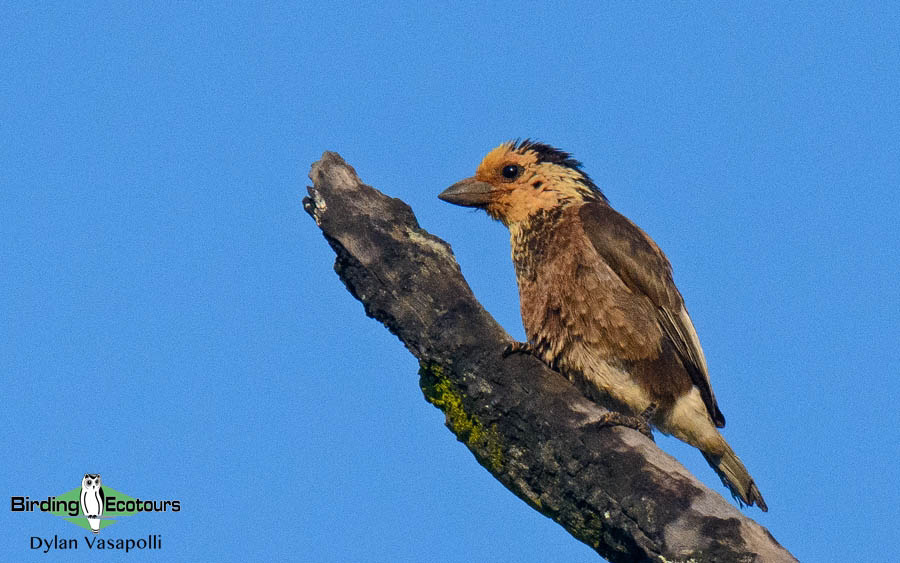
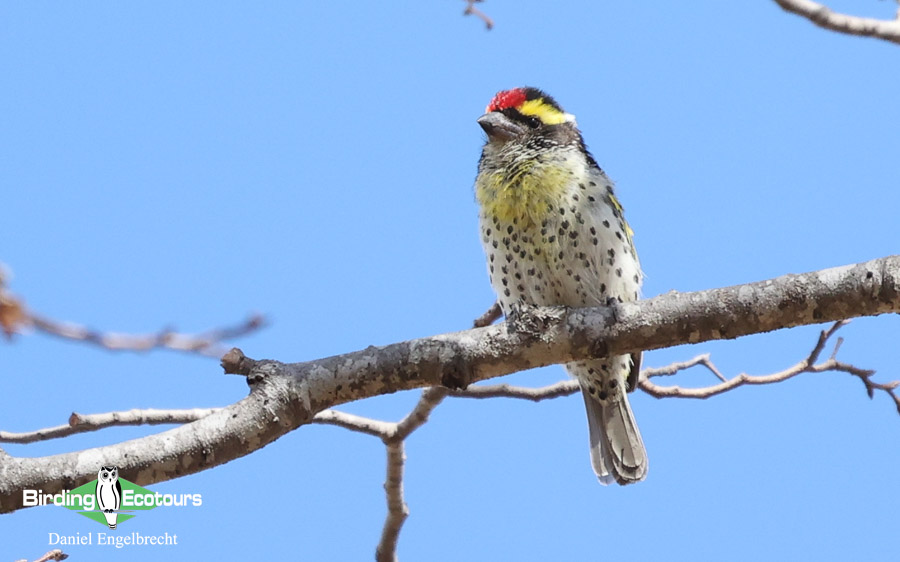
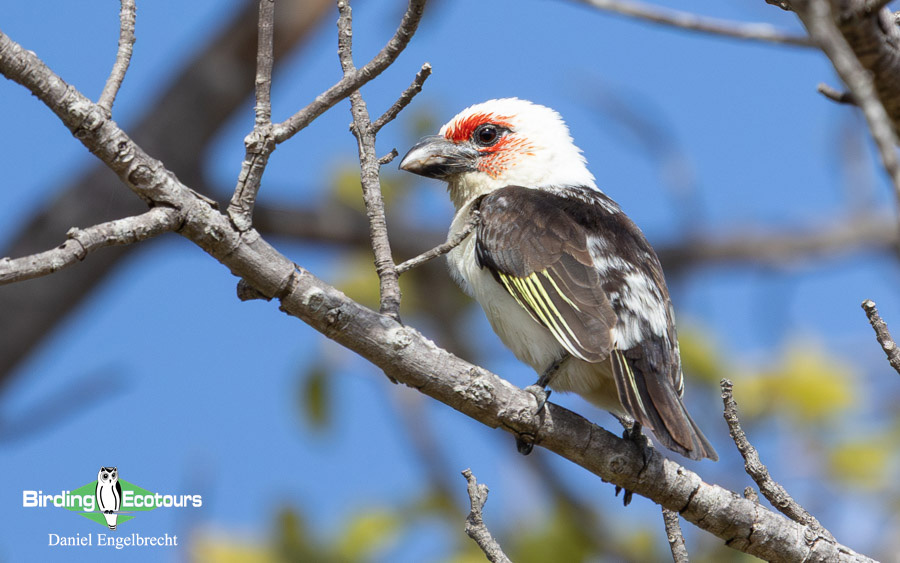 The endemic Chaplin’s Barbet is one of our primary targets and should be an early trip highlight!
Overview
Zambia is Africa’s best-kept birding secret. Despite boasting two endemic species, Chaplin’s Barbet and Black-cheeked Lovebird, and offering some of the best opportunities to see several rare and localized birds, the country is only now beginning to receive the recognition it deserves as one of southern Africa’s premier birding destinations. An excellent safety record, good infrastructure, and a suite of regional endemics seldom encountered elsewhere in Africa should place Zambia firmly on the radar of every serious world birder.
Our 18-day tour includes three nights at the outstanding Mutinondo Wilderness, an area overlooked by most Zambia birding tours. Mutinondo is arguably the only site where there is a chance of seeing the near-mythical Chestnut-headed Flufftail (it remains an exceptionally challenging bird to see, but we have had views of it in the past), and our extended stay here sets this itinerary apart. It also allows us to spend significantly more time in prime miombo woodland, greatly improving our chances of finding sought-after species such as Bar-winged Weaver.
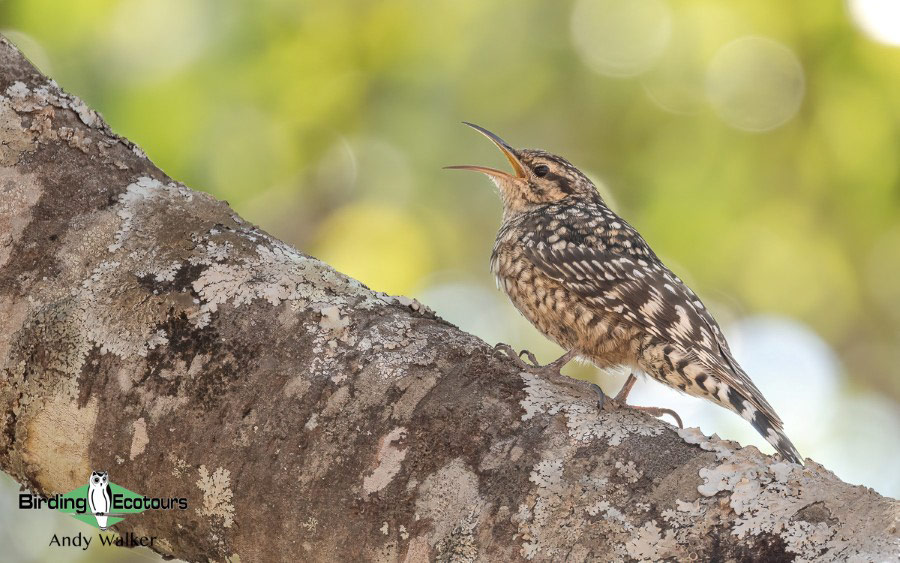
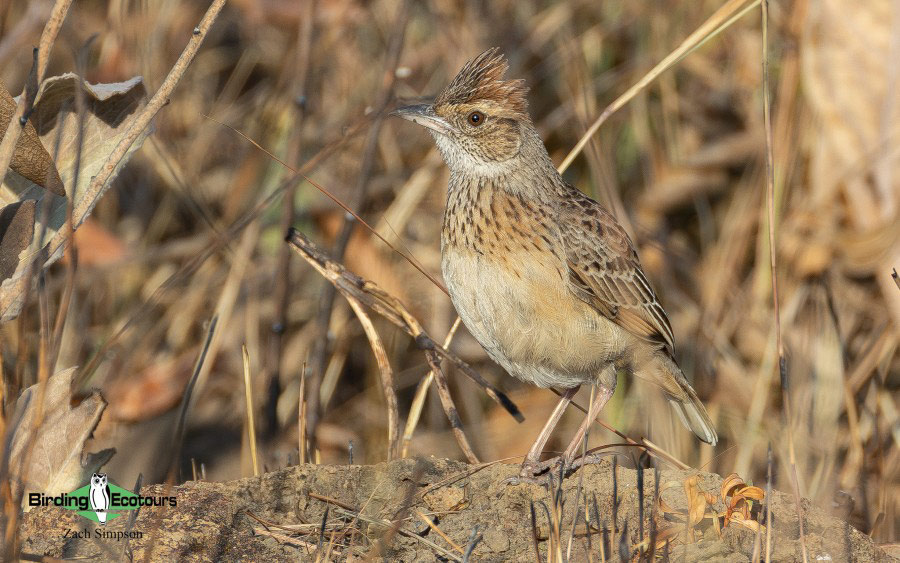
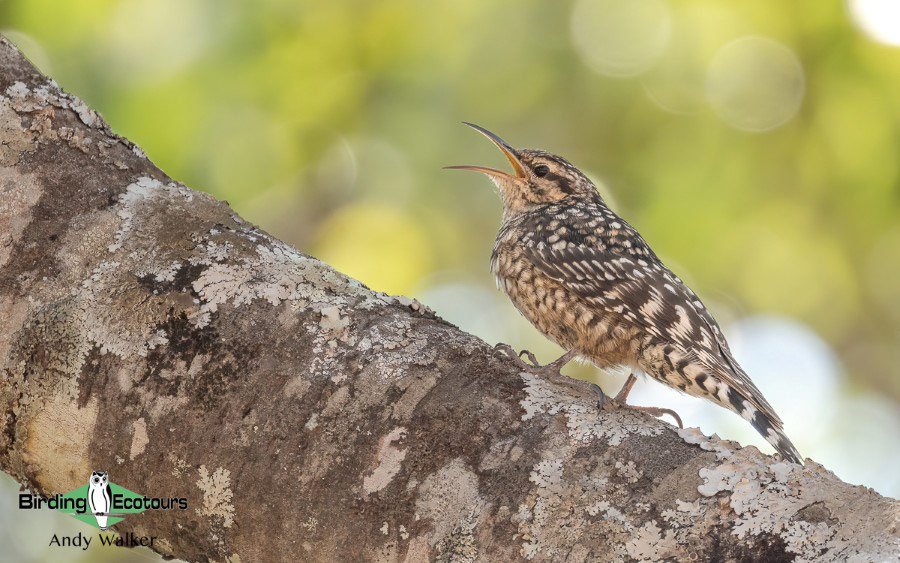 Zambia is arguably the best destination for miombo birding, offering excellent chances of seeing species such as this African Spotted Creeper.
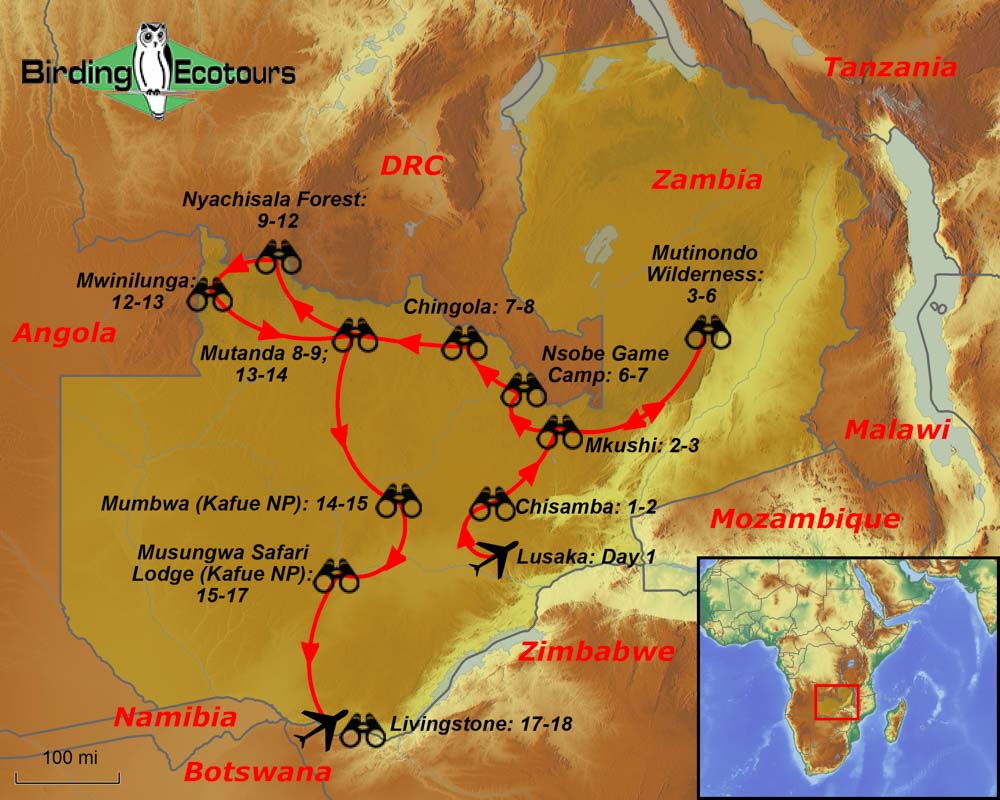
The tour starts in Lusaka, Zambia’s capital, before heading north to the Chisamba area, where we hope to connect with the fig-loving Chaplin’s Barbet. From Chisamba, we will head northeast to Mutinondo Wilderness, breaking up the lengthy journey with an overnight stop. Our three nights at Mutinondo will give us ample time to explore the pristine miombo woodlands, dambos (shallow, seasonal wetlands, often covered in grass, typical of south-central Africa), and granite outcrops in this scenically spectacular part of the country.
In addition to the two endemic Zambian species, we hope to see miombo specials like Pale-billed Hornbill, Anchieta’s Sunbird, Anchieta’s Barbet, Laura’s Woodland Warbler, Whyte’s Francolin, and African Spotted Creeper. From Mutinondo, we will make our way west to the Mwinilunga area of northwest Zambia, breaking up the journey with three overnight stays and birding along the way, where targets will include Bocage’s Akalat, Chestnut-backed Sparrow-Weaver, Böhm’s Bee-eater, and Bamboo Warbler, among others.
In the Mwinilunga area, we will spend four nights exploring a variety of forested habitats, dambos, and plains, in search of species more typical of Central Africa, such as Vermiculated Fishing Owl, Spot-breasted Ibis, Spotted Thrush-Babbler, Black-collared Bulbul, and more. Other range-restricted and rare species we will be on the lookout for include Grimwood’s Longclaw, Blue Quail, Bocage’s Weaver, Dambo Cisticola, Black-and-rufous Swallow, Margaret’s Batis, Angola Lark, and Bannerman’s Sunbird.
We will then head south to Kafue National Park, where we will have two full days to explore this wonderful park. Our main target here will be the endemic Black-cheeked Lovebird, and we will have a good chance of seeing iconic African megafauna, such as African Savanna Elephant, Common Hippopotamus, Lion, Cape Buffalo, Leopard, and a large selection of plains game.
We will conclude the tour with a visit to world-famous Victoria Falls and an afternoon boat cruise on the Zambezi River, where we may see African Skimmer, Rock Pratincole, and even African Finfoot.
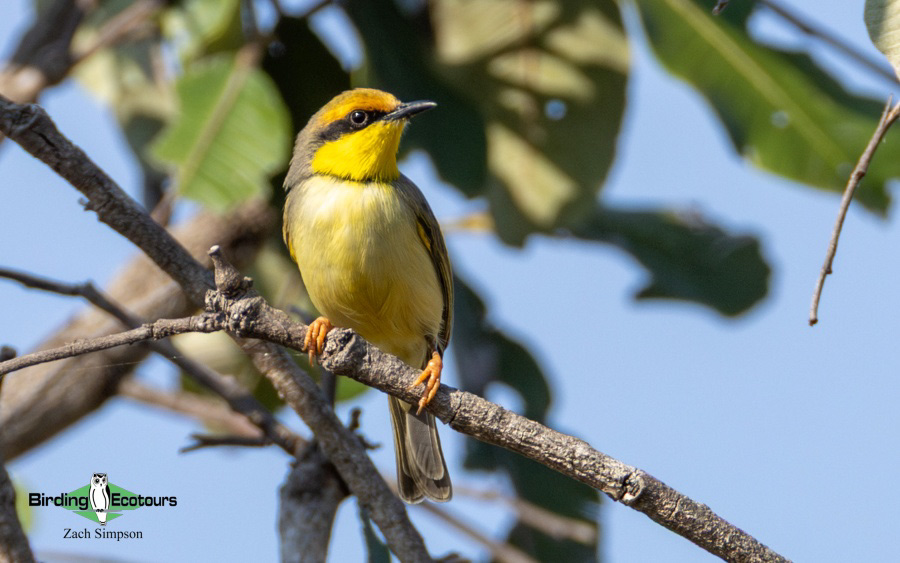
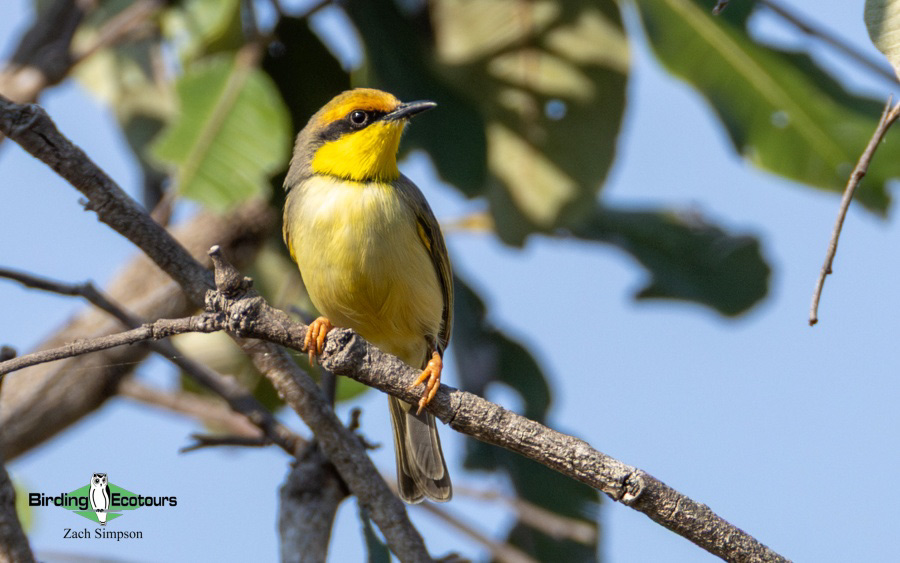 Black-necked Eremomela is another of the sought-after miombo targets on this tour.
Detailed Itinerary (18 days/17 nights)
Day 1. Arrival in Lusaka, transfer to Chisamba
After we arrive in Lusaka, Zambia’s capital and largest city, we will begin the two-hour drive north through villages and degraded woodlands before reaching the Chisamba area. We will check into our comfortable lodge and aim to head out for our first birding session in the afternoon. A nearby wetland should yield many widespread species, including Marabou Stork, Knob-billed, and White-faced Whistling Ducks, African Wattled Lapwing, African Fish Eagle, and African Jacana. Some of the scarcer waterbirds that we have a chance of seeing here include Rufous-bellied Heron, Allen’s Gallinule, African Rail, and Greater Painted Snipe.
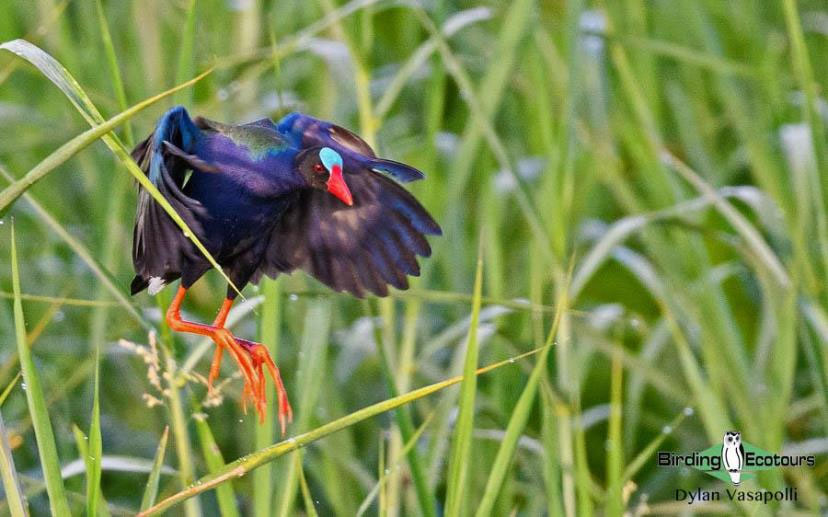 Allen’s Gallinule is a stunning bird that we could see on our first afternoon.
One of our main targets today will be Luapula Cisticola, a regional specialty and an inhabitant of marshes and swamps. Exploring the woodlands, thickets, and wet grasslands could yield species like Trumpeter Hornbill, White-browed Coucal, Tropical Boubou, Northern Fiscal, Copper and Variable Sunbirds, Northern Grey-headed Sparrow, Red-headed and Red-billed Queleas, Yellow-mantled, Fan-tailed, and Red-collared Widowbirds, Orange-breasted Waxbill, and Quailfinch, to name only a few. Vultures are also fairly common in this area, and we have a good chance of seeing White-backed and Hooded Vultures, along with the less common Lappet-faced Vulture.
After what promises to be a productive afternoon, we will make our way back to the lodge for dinner.
Overnight: Chisamba
Day 2. Chisamba birding and transfer to Mkushi
Our main target this morning will be the endemic Chaplin’s Barbet, and we have several reliable stakeouts for this species close to our accommodation. We will spend time searching the woodlands, particularly around sycamore figs, the species’ primary food source. In addition to the barbet, we will have opportunities to connect with many of the previously mentioned species, along with others such as Croaking Cisticola, Striped Kingfisher, Greater Blue-eared Starling, Meyer’s Parrot, African Golden Oriole, and a variety of other woodland birds. After finding the barbet and enjoying breakfast at the lodge, we will begin the four-hour drive northeast to our accommodation near the town of Mkushi.
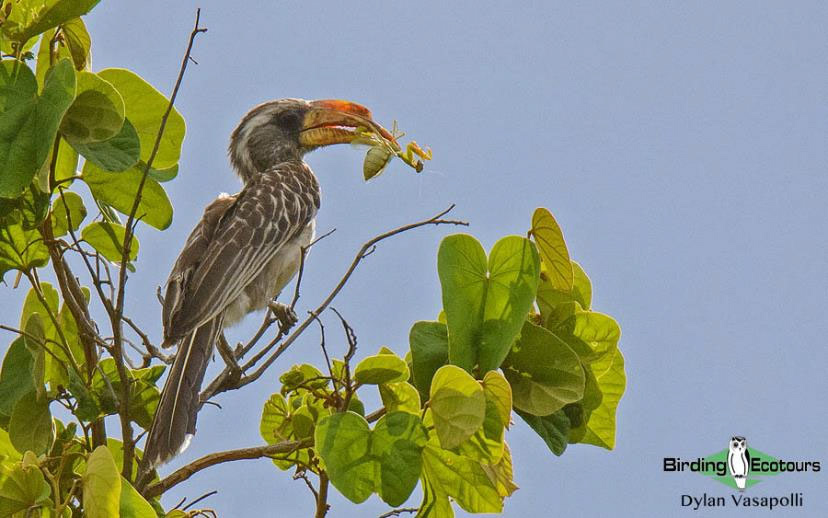 Pale-billed Hornbill is one of several miombo specials we may see today.
In the afternoon, we plan to explore the miombo woodlands near the lodge, where we may encounter Crowned and Pale-billed Hornbills, Miombo Scrub Robin, Trilling Cisticola, White-breasted Cuckooshrike, Black-necked Eremomela, Rufous-bellied Tit, White-crested and Retz’s Helmetshrikes, Stierling’s Wren-Warbler, Red-winged Prinia, Red-capped Crombec, African Spotted Creeper, and even African Broadbill. Miombo birding is a unique experience and often depends on locating mixed-species flocks. At times, the woodland can seem almost devoid of birdlife, only for a mixed-species flock to suddenly sweep through, sometimes containing as many as 30 species.
In the evening, we will listen for the resident African Wood Owl and enjoy a delicious dinner in preparation for tomorrow’s drive to Mutinondo Wilderness and more exciting miombo birding.
Overnight: Mkushi
Day 3. Mkushi to Mutinondo Wilderness
We will likely start the morning with a pre-breakfast birding session around the lodge before embarking on the long drive northeast to Mutinondo Wilderness. The drive will take most of the day, and we expect to arrive at our eco-lodge in the late afternoon. We may have time for some afternoon birding in the pristine miombo woodlands among the impressive granite domes.
Overnight: Mutinondo Wilderness
Days 4 – 5. Full days birding at Mutinondo Wilderness
Because these days will follow a similar pattern, they are discussed together here. We will have two full days to explore Mutinondo in search of its many excellent birds, some of which have already been mentioned under Day 2 at Mkushi. The striking Ross’s and Schalow’s Turacos are delightfully common here, where they inhabit lush woodlands along with a variety of other sought-after birds like the stunning Anchieta’s and Western Miombo Sunbirds, Black-backed Barbet, Brown-necked Parrot, Grey-olive Greenbul, Souza’s Shrike, Miombo Rock Thrush, White-tailed Blue Flycatcher, Miombo Tit, Yellow-bellied Hyliota, Brown-headed Apalis, Evergreen Forest Warbler, Wood Pipit, Reichard’s Seedeater, and Cabanis’s Bunting, to name a few.
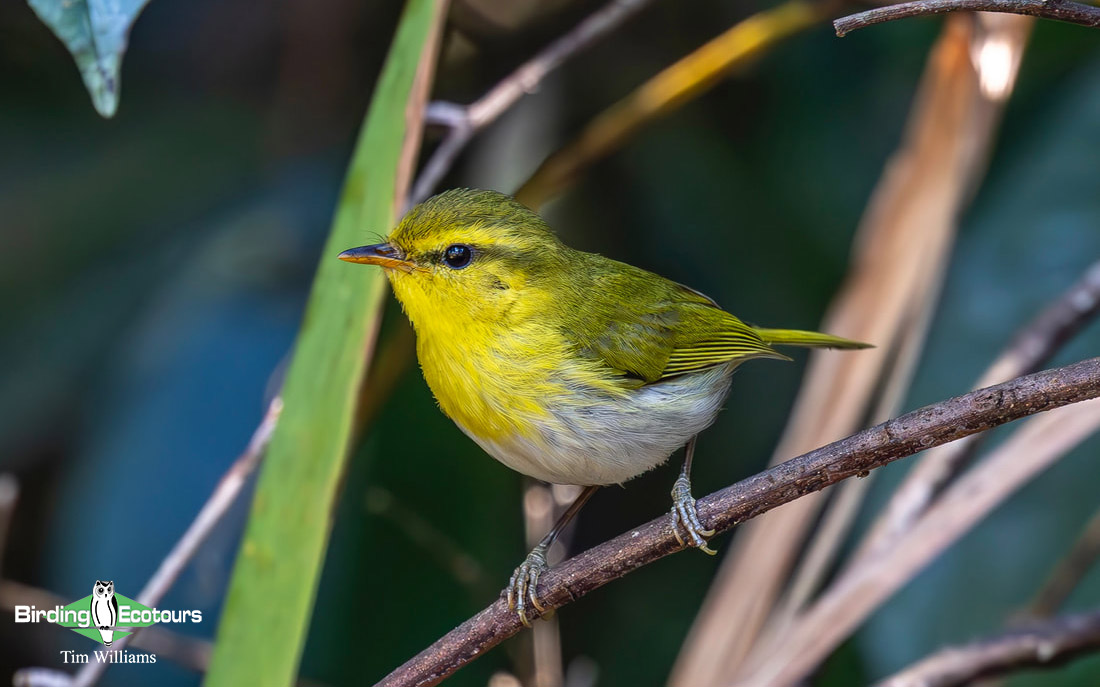
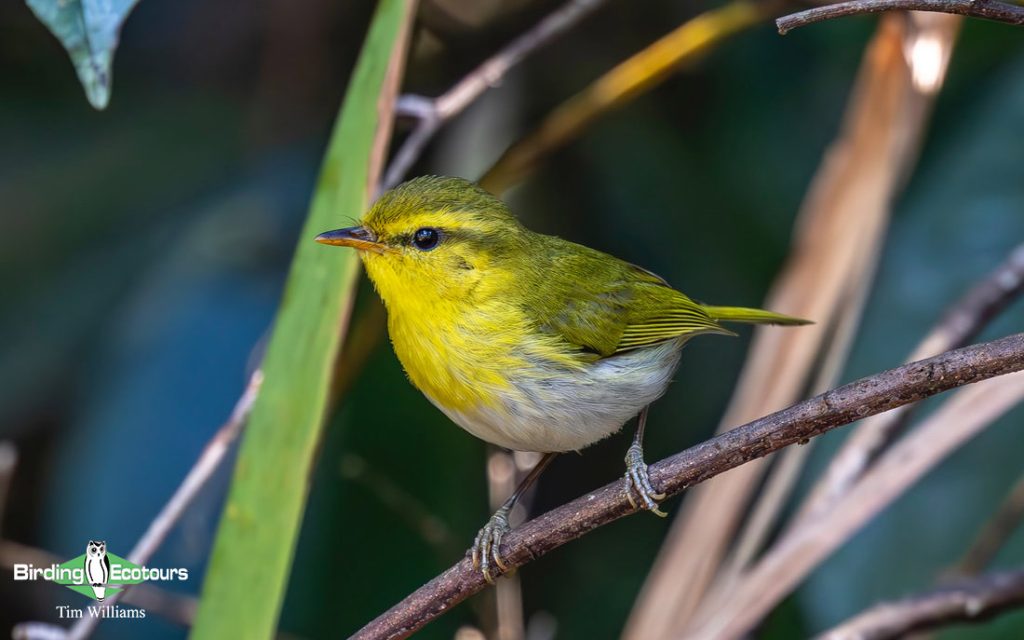 Laura’s Woodland Warbler is one of many range-restricted targets at Mutinondo Wilderness.
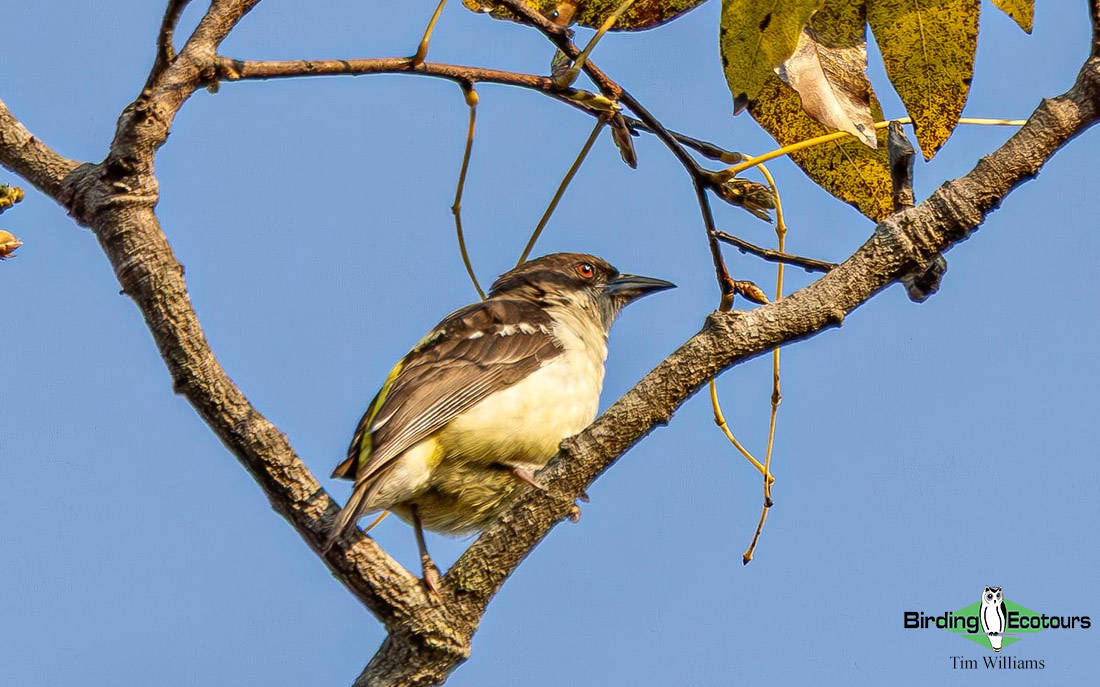
We will also focus on searching for regional specialties, including Anchieta’s Barbet, Laura’s Woodland Warbler, Böhm’s Flycatcher, Bar-winged Weaver, and the recently split Whyte’s Francolin (formerly lumped with Shelley’s Francolin), which is often heard calling but difficult to see.
Among the woodlands are dambos where we will target a different suite of birds, including Pale-crowned Cisticola, Marsh Widowbird, Fawn-breasted Waxbill, Locust Finch, Fülleborn’s Longclaw, and, of course, the coveted duo of Chestnut-headed and Streaky-breasted Flufftails, along with the more widespread Red-chested Flufftail. Although we stand a good chance of hearing them, flufftails are notoriously elusive and exceptionally difficult to see. Patience, persistence, and a measure of luck will all be required. Fortunately, our guides are highly experienced at locating these secretive birds and will make every effort to secure sightings for the group.
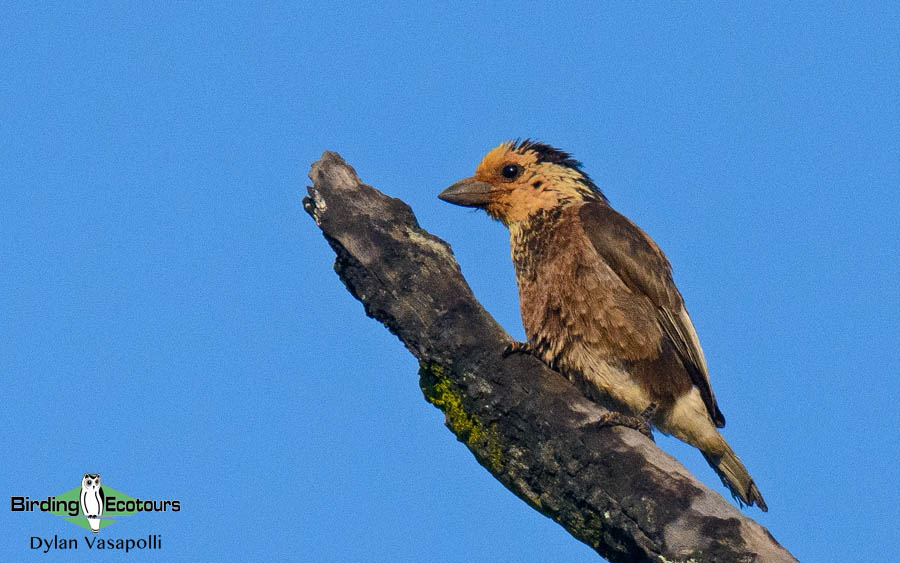 Although scarce, we will put in the work to find the localized Anchieta’s Barbet.
Nocturnal birding at Mutinondo can also be rewarding, and we should see the small African Barred Owlet, along with Spotted Eagle-Owl and perhaps African Wood Owl. Freckled Nightjars are often heard calling from the granite inselbergs at night, and we also have a good chance of seeing the magnificent Pennant-winged Nightjar.
Overnight: Mutinondo Wilderness
Day 6. Mutinondo to Nsobe Game Camp via North Swaka Miombo
Today, we will enjoy a final early-morning birding session at Mutinondo before breakfast. We will then begin the long drive west to Nsobe Game Reserve.
Although today is largely a travel day, we will break the journey with some exciting miombo birding at North Swaka Forest Reserve. This will provide another opportunity to pick up any remaining miombo species, as well as our first chance to see species such as Böhm’s Bee-eater, Miombo Pied Barbet, and Arnot’s Chat. Depending on our arrival time, we may squeeze in an hour or two of afternoon birding around Nsobe Game Camp, where Böhm’s Spinetail, Little Green Woodpecker, Black-fronted Bushshrike, Cabanis’s and Little Greenbuls, Chirping Cisticola, and Brown Firefinch are all on the cards. The attractive and localized Bocage’s Akalat can also be seen around our accommodation.
Overnight: Nsobe Game Camp
Day 7. Nsobe Game Camp to Chingola
We will have a slightly more relaxed morning today, spending time birding around Nsobe Game Camp in search of many of the species mentioned on Day 6. We will then start the three-hour drive towards Chingola, stopping to bird at Mwakera College Forest, where some of our main targets will include Racket-tailed Roller, Miombo Pied Barbet, Miombo Wren-Warbler, and Arnot’s Chat, among many of the previously mentioned miombo species.
Overnight: Chingola
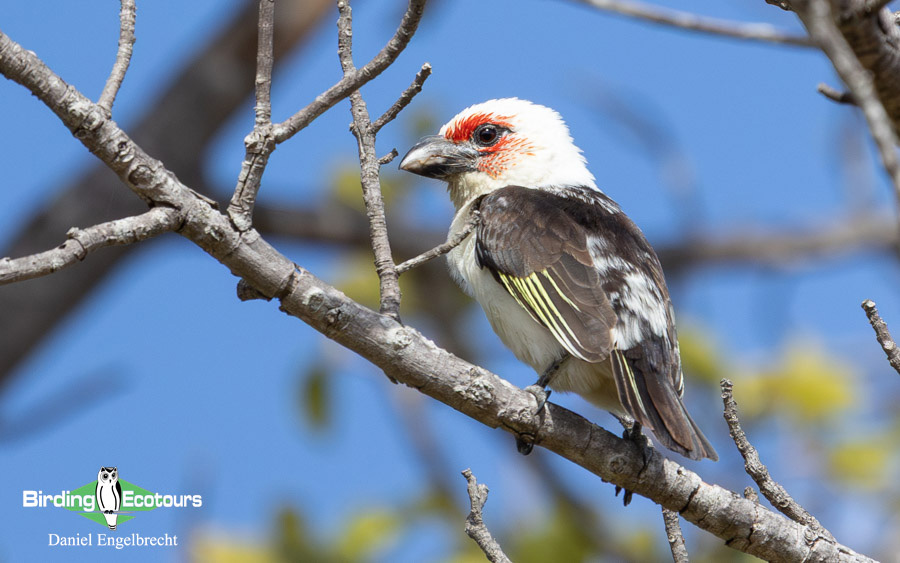
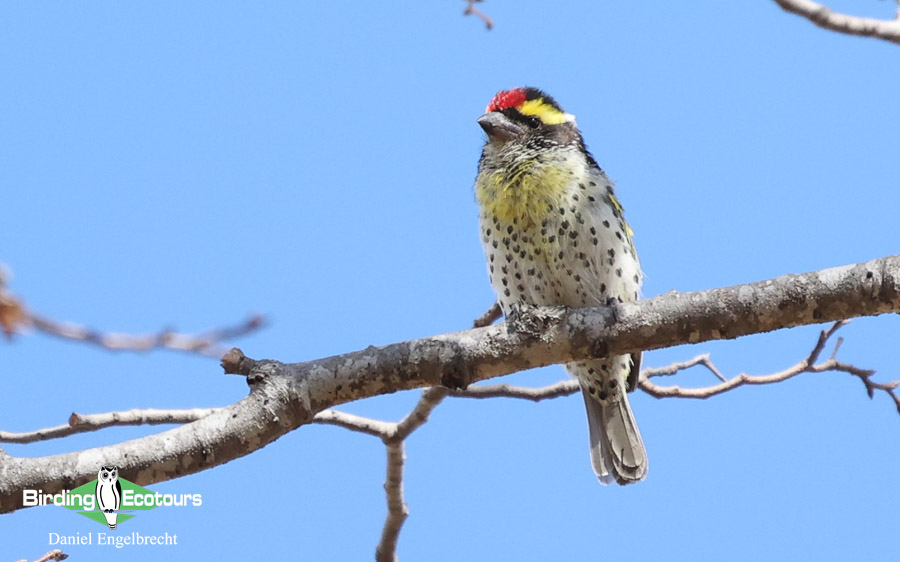 The attractive Miombo Pied Barbet is one of a few special barbets that we target on this tour.
Day 8. Chingola to Mutanda via Chimfunshi
We will continue our journey west today and plan to make a few strategic stops to target key species. One of our key birding stops will be at Chimfunshi Wildlife Orphanage, where we will spend some time wandering around the woodlands in search of our primary target, the range-restricted Chestnut-backed Sparrow-Weaver. We plan to arrive in the Mutanda area in the afternoon, where we will search for a few special birds in the lush riverine woodlands such as Bocage’s Akalat and Bamboo Warbler, along with more widespread species like Olive Woodpecker, Half-collared Kingfisher, African Thrush, Cassin’s Flycatcher, Brown-headed Apalis, White-chinned Prinia, Moustached Grass Warbler, Black-throated Wattle-eye, Black-faced Canary, and Grey Waxbill.
Overnight: Mutanda
Day 9. Mutanda to Nyachisala Forest
We will have our first taste of the true northwest and its many rare and sought-after birds today as we make our way to the remote Nyachisala Bush Camp, close to the border with the Democratic Republic of the Congo. This remarkable region hosts several highly sought-after species whose ranges are centered in the DRC and eastern Angola, only just extending into this corner of Zambia. As a result, it is the safest and most accessible place to look for them
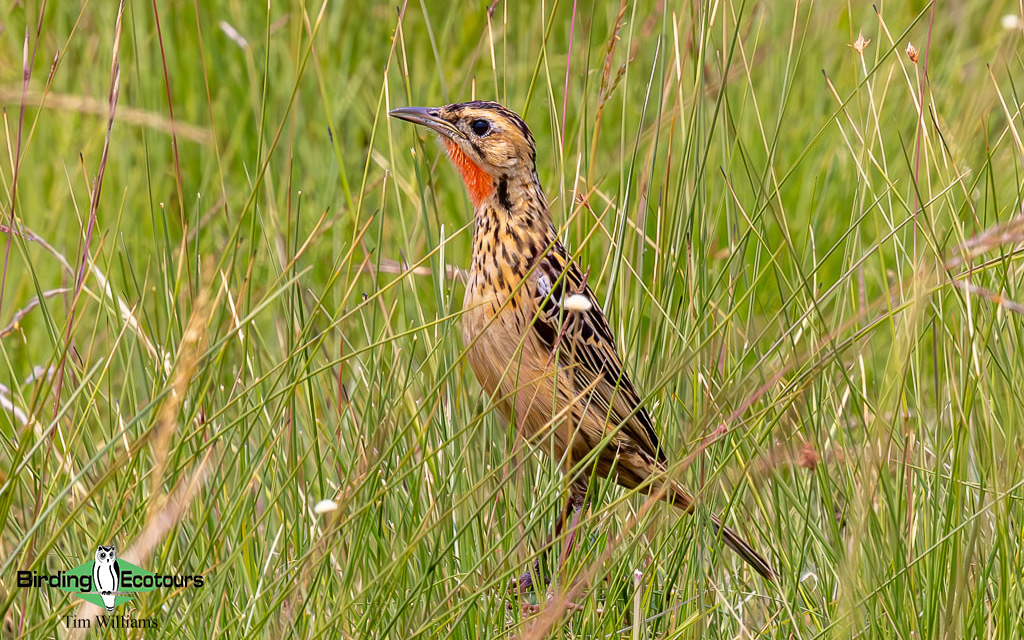
Following an early breakfast at our accommodation in Mutanda, we will travel west along the main road, stopping briefly at a breeding colony of Red-throated Cliff Swallows, before branching off onto dirt roads that traverse a varied landscape of forests, woodlands, and seasonally wet dambos. Our first stop will likely be at Mufundu Plain, where we will search for the range-restricted Grimwood’s Longclaw, Angola Lark, and Black-and-rufous Swallow. Other new species for us here may include Great Snipe, the attractive Blue-breasted Bee-eater, Stout Cisticola, Sooty Chat, Rosy-throated Longclaw (Fülleborn’s Longclaw also occurs here), and Short-tailed Pipit. Locust Finch can be common here, and we will certainly try for good views of this much-wanted bird.
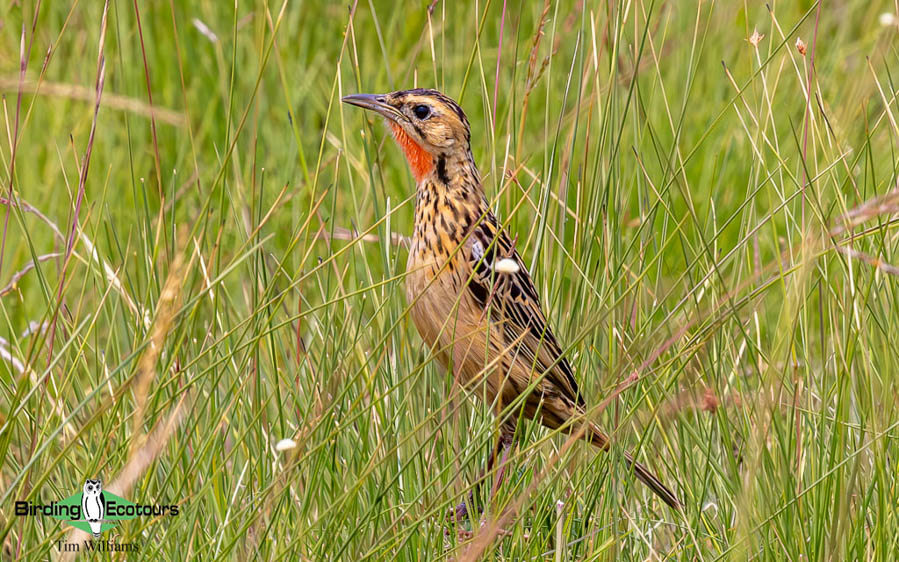
Grimwood’s Longclaw is one of the main attractions of northwest Zambia.
After spending some time birding at Mufundu Plain, we will push further into the remote wilderness before reaching our tented camp at Nyachisala Forest – Zambia’s largest evergreen forest. The jumbling calls of Little Greenbuls will sound from the undergrowth while the deep cooing of Afep Pigeons occupies the canopy. Birding in this remote wilderness can be exceptional, and over the next two full days, we hope to connect with many of the standout species.
Most of our targets will be sought in the forests and dense thickets, for example, Western Bronze-naped Pigeon, White-spotted Flufftail, Narina Trogon, Blue Malkoha, Olive Long-tailed Cuckoo, Purple-throated Cuckooshrike, Blue-breasted Kingfisher, Least and Pallid Honeyguides, the rare and extremely shy Spotted Thrush-Babbler (easy to hear, challenging to see), Fraser’s Rufous Thrush, Grey-winged Robin-Chat, Honeyguide Greenbul, and Splendid Starling. Forest streams in this area always require careful scanning for Shining-blue Kingfisher and the scarce White-bellied Kingfisher. Spot-breasted Ibis can, with luck, also be seen in this area, particularly at dusk when vocal birds return to roost. In addition to all these new species, Nyachisala also serves as a backup for some of our targets, like Bamboo Warbler and Laura’s Woodland Warbler, should we have missed them earlier in the trip.
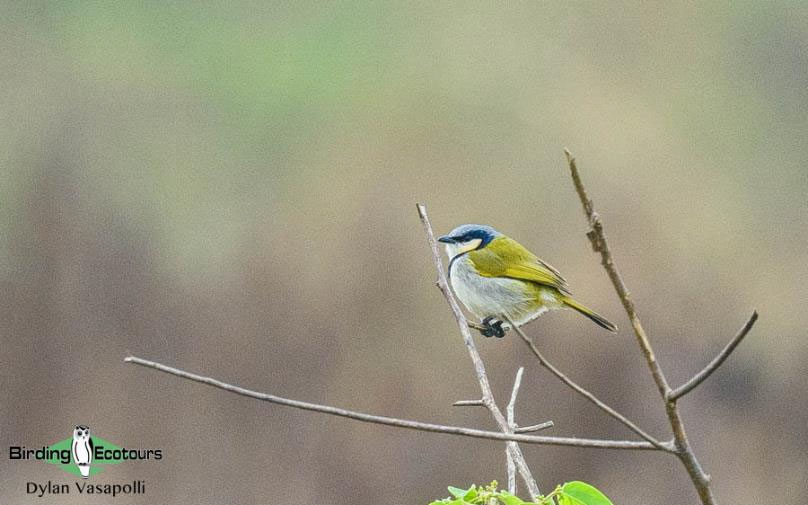 The odd-looking Black-collared Bulbul is uncommon throughout its relatively small range.
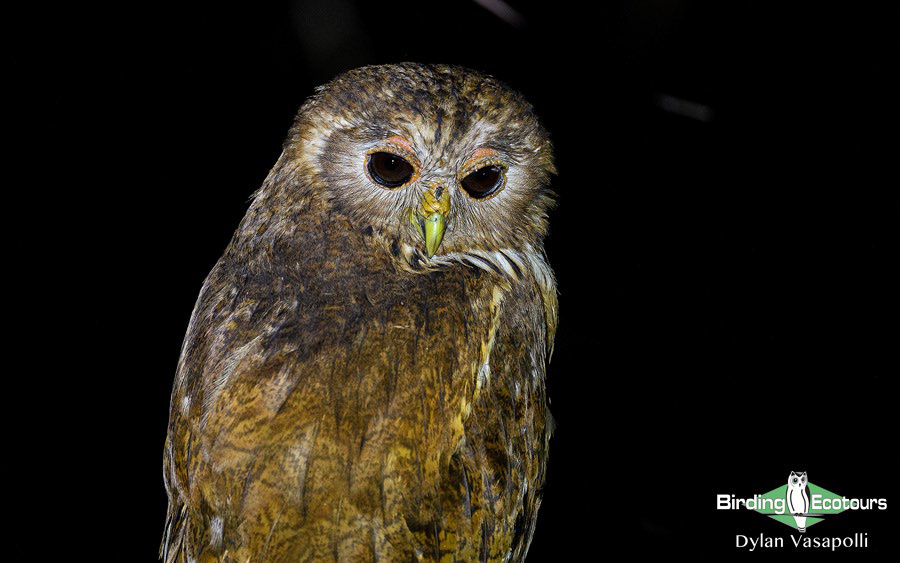
Forest edge and clearings are preferred by Black-collared Bulbul, the drab Bate’s Sunbird, Buff-throated Apalis, Hartlaub’s Babbler, Orange-winged Pytilia, and Black-bellied Seedcracker. The plains and dambos around our camp are home to many of the species mentioned at Mufundu Plain, in addition to Blue Quail, Black and Coppery-tailed Coucals, Swamp Nightjar, Fan-tailed Grassbird, Marsh Tchagra, and Compact Weaver. Arguably, the star of the show at Nyachisala is the rare Vermiculated Fishing Owl, and we will head out at night to search for this coveted bird.
Overnight: Nyachisala Bush Camp
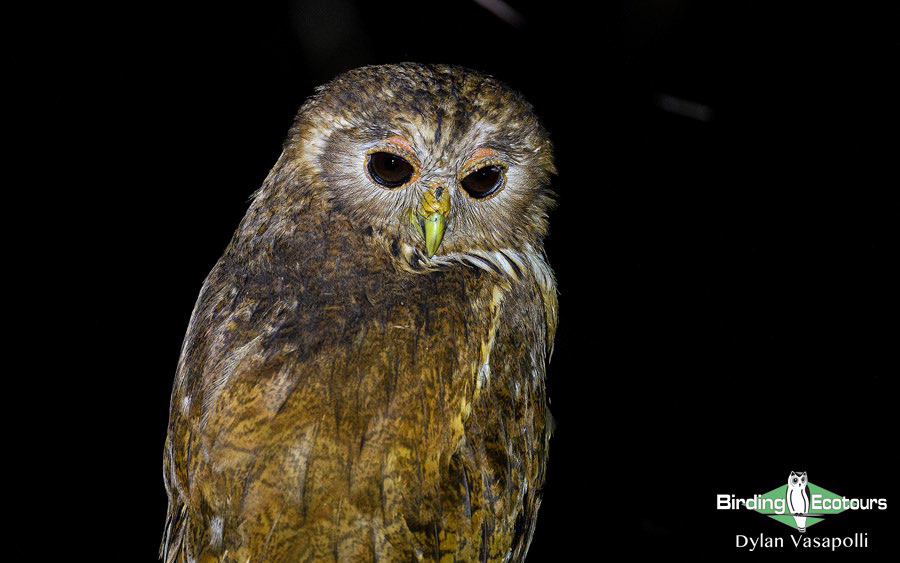 The rare Vermiculated Fishing Owl will certainly be a tour highlight!
Days 10 – 11. Full days birding Nyachisala Forest and surrounds
We will spend two full days birding Nyachisala Forest and its surrounding habitats, seeking out the many sought-after species for which this region is renowned.
Overnight: Nyachisala Bush Camp
Day 12. Nyachisala Forest to Mwinilunga (Chitunta Plain)
Today, we plan to enjoy a final early-morning birding session in Nyachisala Forest before continuing westward to Mwinilunga. We spend most of the day in good habitat and will make regular roadside stops, which, with luck, could yield the scarce Bannerman’s Sunbird. Most of our birding today will be at Chitunta Plain, north of Mwinilunga, where we will have another chance at plains species like Grimwood’s Longclaw and Black-and-rufous Swallow, in addition to Dambo Cisticola – our main target.
Although the species is somewhat nomadic and unpredictable, we will also look out for the localized Bocage’s Weaver, which breeds around dambos. Both Blue Quail and Black-rumped Buttonquail can be flushed from the grasslands here. The Mwinilunga area will also give us another chance to try for Bar-winged Weaver, should we have missed it at Mutinondo earlier in the tour. After what will surely be another exciting day out, we will head to our accommodation in Mwinilunga.
Overnight: Mwinilunga
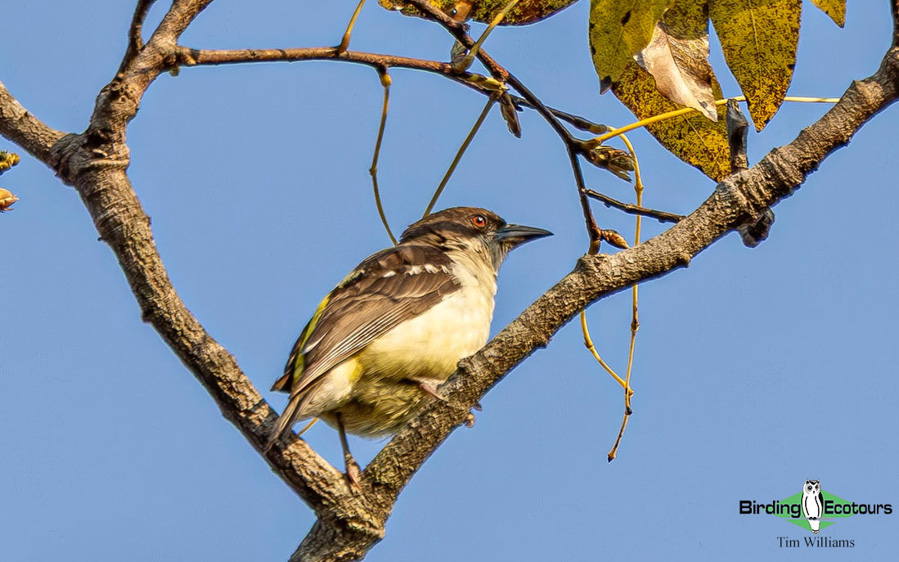
The near-endemic Bar-winged Weaver can be challenging to find.
Day 13. Mwinilunga to Mutanda
Our morning will start with an early breakfast before we head south of Mwinilunga into the Cryptosepalum dry forests. Our main target here is the localized yet locally common Margaret’s Batis, along with other species that we are unlikely to have seen yet, like Red-tailed Bristlebill. After spending the morning birding in the forest, we will start the 6-hour drive back to Mutanda, where we will spend the night.
Overnight: Mutanda
Day 14. Mutanda to Kafue National Park (Mumbwa)
Today will be a long travel day as we head south towards Kafue National Park and the town of Mumbwa. Of course, we will schedule several birding stops along the way, which will give us opportunities for more miombo birding and our best chance of seeing Böhm’s Bee-eater. We will also spend a considerable amount of time traversing the northern reaches of Kafue National Park, where we have a good chance of seeing large and charismatic birds typical of Africa’s large protected areas, like Bateleur, Martial Eagle, White-backed and Lappet-faced Vultures, Saddle-billed Stork, Goliath Heron, and Southern Ground Hornbill. Kafue is Zambia’s largest and oldest national park and, unlike many of Africa’s major protected areas, remains largely uncrowded, enhancing its wild and untamed atmosphere. Large mammals are well represented in Kafue, and the park supports large populations of Cape Buffalo and African Savanna Elephant, as well as Lion, Leopard, and other scarcer predators such as Cheetah and African Wild Dog.
Overnight: Mumbwa
Day 15. Mumbwa to Musungwa Lodge, Kafue National Park
Today will once again be a fairly long travel day as we continue our southward journey, this time to the southern region of Kafue National Park. We will have additional chances to see many of the species mentioned on Day 14, before arriving at our comfortable lodge overlooking Itezhi-Tezhi Dam.
Overnight: Musungwa Lodge
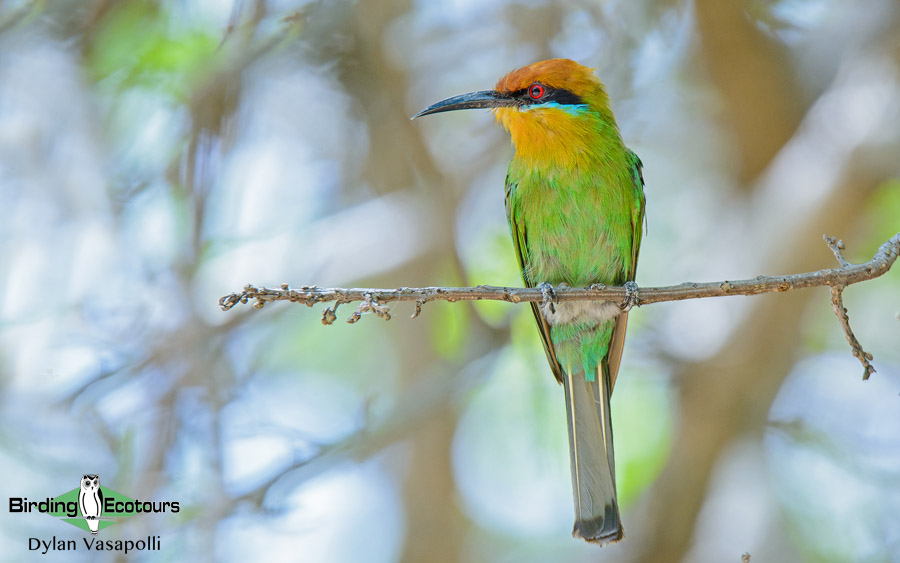
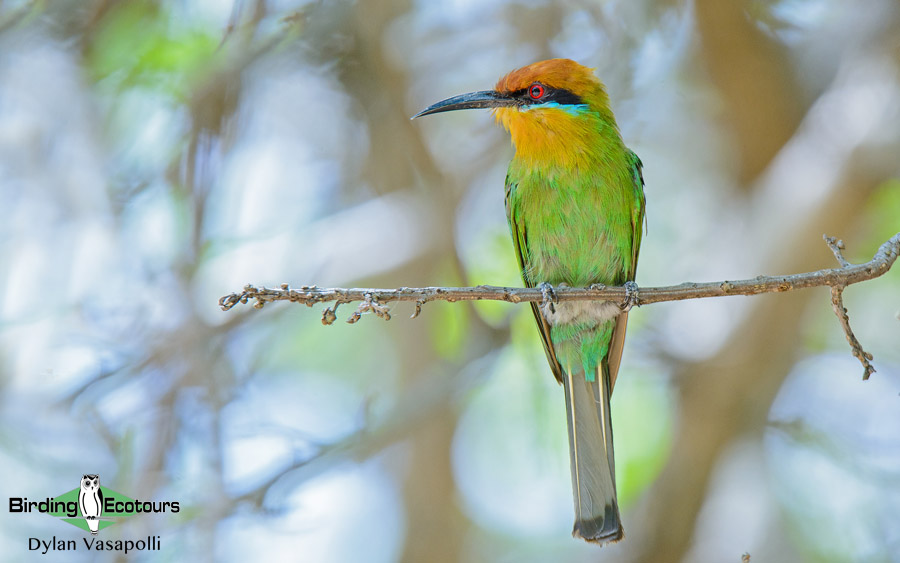 Böhm’s Bee-eater is always a special bird to see!
Day 16. Full day birding in the southern region of Kafue National Park
After an early breakfast, we plan to head out for a birding session along the dam where we expect to quickly amass a sizeable list with many colorful species like White-fronted Bee-eater, Lilac-breasted and Broad-billed Rollers, African Golden Oriole, Greater and Miombo Blue-eared Starlings, Brown-hooded, Woodland, and Grey-headed Kingfishers, Green Wood-hoopoe, Meyer’s Parrot, and Orange-breasted Bushshrike, vying for our attention. The dense thickets around the dam hold Southern Crested Guineafowl and Bearded Scrub-Robin, and if we are extremely lucky, African Pitta.
Other noteworthy species that we have a chance of seeing here include Lappet-faced, White-backed, Hooded, and White-headed Vultures, Western Banded Snake Eagle, Dark Chanting Goshawk, Lizard Buzzard, Trumpeter Hornbill, Mosque Swallow, Senegal Coucal, Mocking Cliff Chat, Grey Tit-Flycatcher, Ashy Flycatcher, Flappet Lark, Orange-winged Pytilia, and its brood-parasite Broad-tailed Paradise-Whydah.
After lunch, we will explore the woodlands near Nanzhila Plains Camp, where our main target will be Zambia’s other endemic – the gorgeous Black-cheeked Lovebird. We have an excellent chance of seeing this range-restricted species, as they often come to drink in large numbers late in the afternoon. The plains here are home to Wattled Cranes, and we will keep an eye open for Dickinson’s Kestrel, which is occasionally seen perched on dead trees.
Overnight: Musungwa Lodge
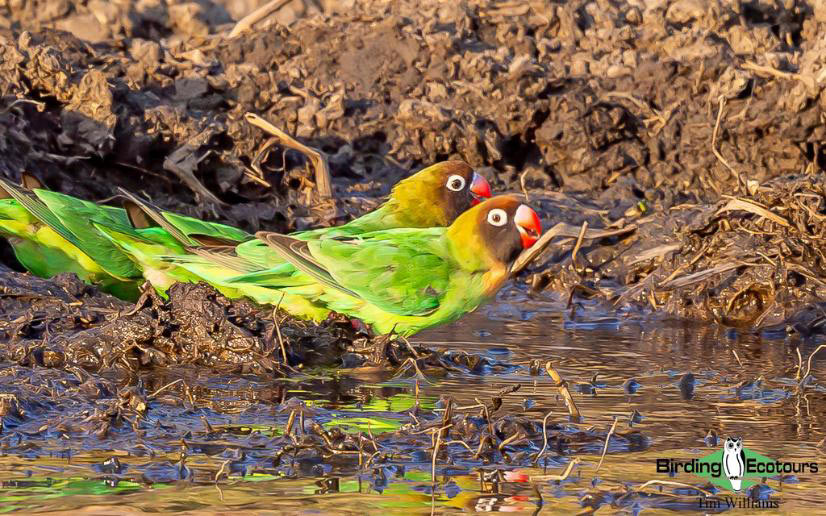
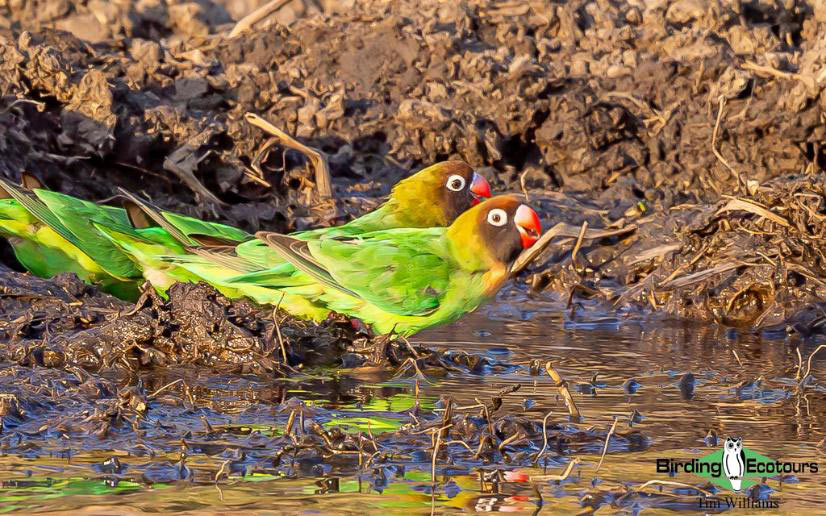 The gorgeous Black-cheeked Lovebird will likely be the avian highlight of our time in Kafue National Park.
Day 17. Kafue National Park to Livingstone
We will have another chance to see Black-cheeked Lovebird this morning, and we will likely spend the best hours of the morning birding in Kafue National Park. Over the heat of the day, we will drive south to Livingstone, where we will arrive in time to visit the unforgettable Victoria Falls. Although water levels are near their lowest in November, the falls are still incredibly impressive and are sure to be a sight to behold.
In the afternoon, we will embark on a boat cruise along the mighty Zambezi River, taking in the spectacular scenery while reflecting on the many highlights of our Zambian adventure, accompanied by the unmistakable soundtrack of grunting Common Hippopotamuses. Naturally, we will be birding on this cruise too, and we should see many waterbirds, with highlights potentially including African Skimmer, Rock Pratincole, African Finfoot, and White-crowned Lapwing. At our accommodation in Livingstone tonight, we will enjoy a final dinner together and prepare for our departure tomorrow.
Overnight: Livingstone
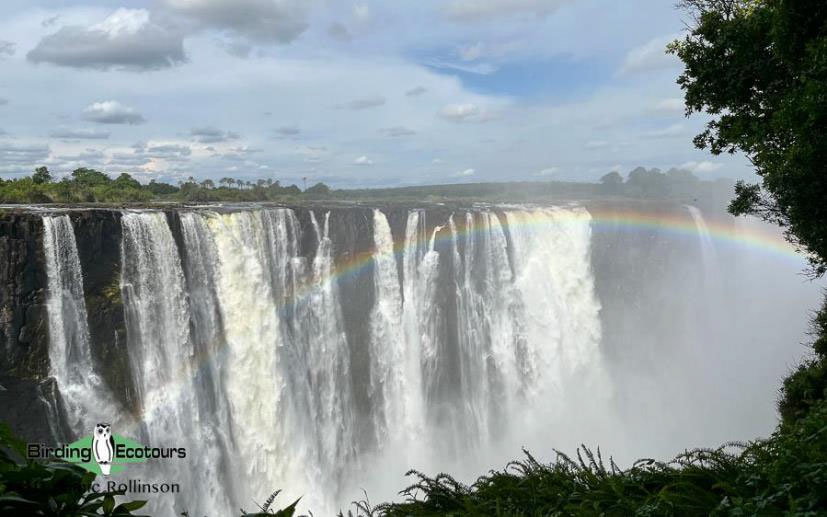 We will conclude the tour with a visit to Victoria Falls and a boat cruise on the Zambezi River.
Day 18. Departure
Today is a dedicated departure day, and you are free to depart after breakfast at your leisure. For those joining our Zimbabwe Birding Tour: African Pitta, Mana Pools, Miombo Woodlands and Eastern Highlands, you will fly to Harare today.
Please note that the itinerary cannot be guaranteed as it is only a rough guide and can be changed (usually slightly) due to factors such as availability of accommodation, updated information on the state of accommodation, roads, or birding sites, the discretion of the guides, and other factors. In addition, we sometimes have to use a different guide from the one advertised due to tour scheduling or other factors.
Map