- Duration:
- 14 days
- Group Size:
- 4–8
- Tour Start:
- Cusco, Peru
- Tour End:
- Cusco, Peru
Southern Peru: Manu Road Paradise and Cusco Jewels Birding Tour
Details
2027
01–14 July
Per person sharing
$7,140 USD
£5,597 GBP / €6,531 EUR
Single supplement
$570 USD
£447 GBP / €522 EUR
2028
01–14 July
Per person sharing
$7,340 USD
£5,753 GBP / €6,714 EUR
Single supplement
$600 USD
£470 GBP / €549 EUR
Itinerary
Download ItinerarySouthern Peru: Manu Road Paradise and Cusco Jewels Birding Tour
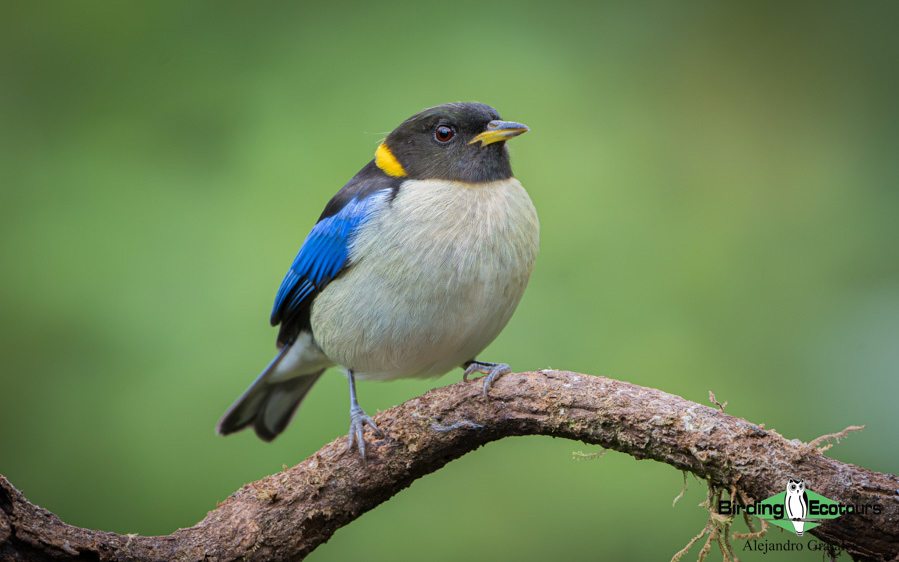
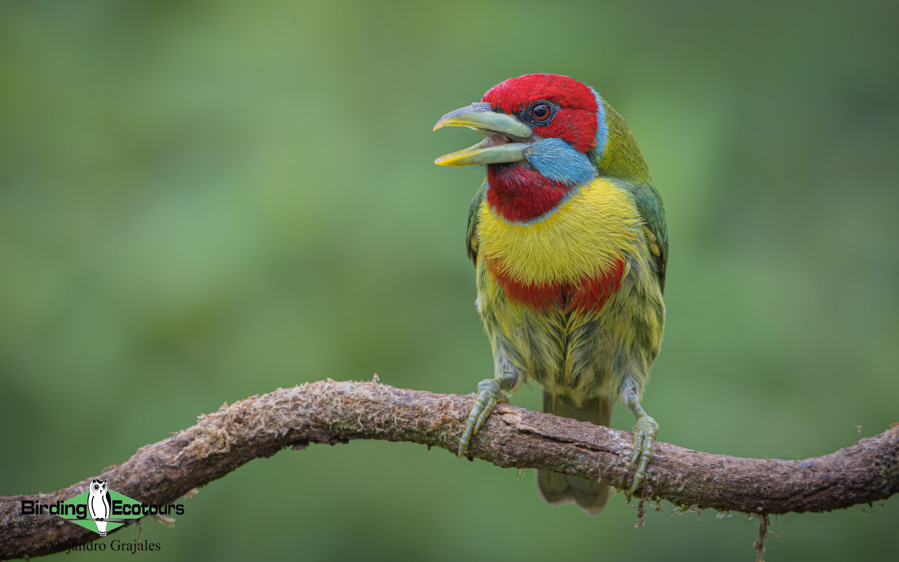
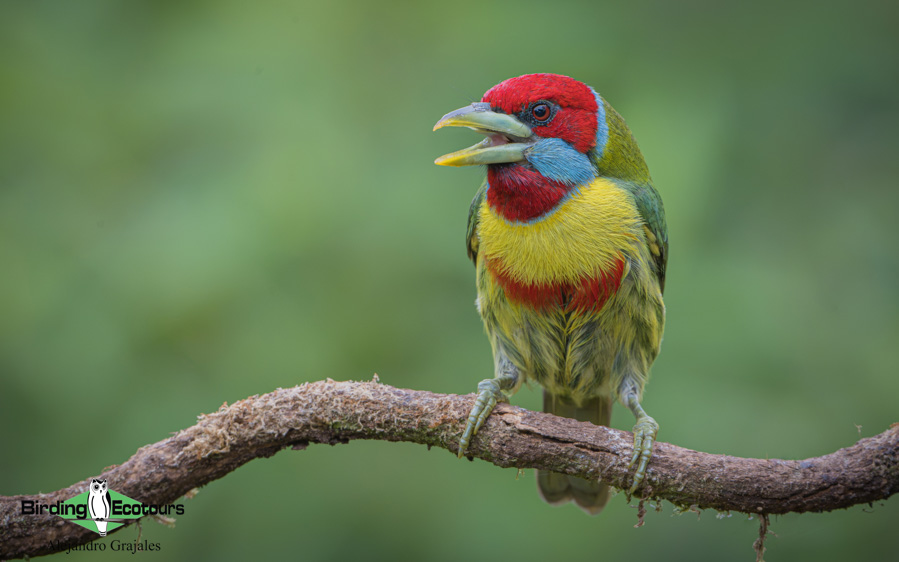 Versicolored Barbet is a true gem of the Manu Road mountain forests.
Overview
Few names evoke as much excitement among birders and nature enthusiasts as Manu Road. Undoubtedly one of the world’s most legendary birding routes, the Manu Road begins high in the Andes above Cusco at nearly 11,800 feet (3,600 meters) and descends dramatically into the Amazonian lowlands at approximately 1,640 feet (500 meters). This extraordinary elevational journey takes us through an exceptional mosaic of habitats, from dry inter-Andean valleys and high Andean grasslands to elfin forest, humid montane cloud forest, lush Amazonian foothills, and finally the vast Amazonian plain. Few places in the Neotropics offer such an impressive transition of ecosystems within a single journey. This route provides opportunities to encounter an extraordinary diversity of Neotropical birds, together with numerous regional endemics and highly localized specials, including species restricted to southern Peru and others whose ranges marginally extend into neighboring Bolivia and western Brazil.
We invite you to explore one of Peru’s finest birding adventures, a carefully designed journey combining the world-famous Manu Road with the exceptional birding destinations surrounding Cusco. Throughout this remarkable expedition, we will search for many of the region’s classic and most desirable species, including Andean Cock-of-the-rock, Torrent Duck, White-capped Dipper, Versicolored Barbet, Rufous-crested Coquette, Grey-breasted Mountain Toucan, Chestnut-crested Cotinga, Blue-headed Macaw, Chestnut-fronted Macaw, Blue-and-yellow Macaw, Paradise Tanager, Undulated Tinamou, Inca Wren, Bamboo Antshrike, King Vulture, Andean Goose, Andean Ibis, and the endemic Red-and-white Antpitta, to name just a few of the many highlights awaiting us.
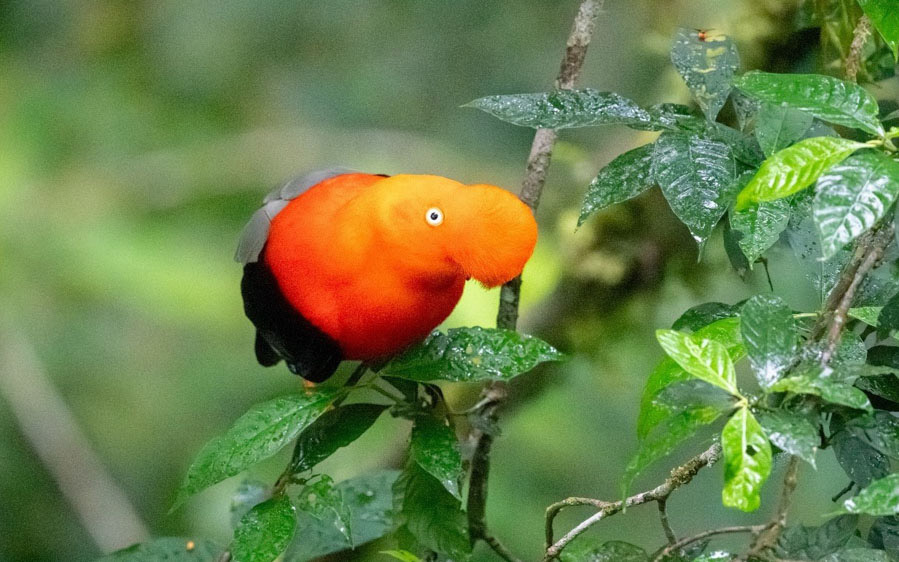
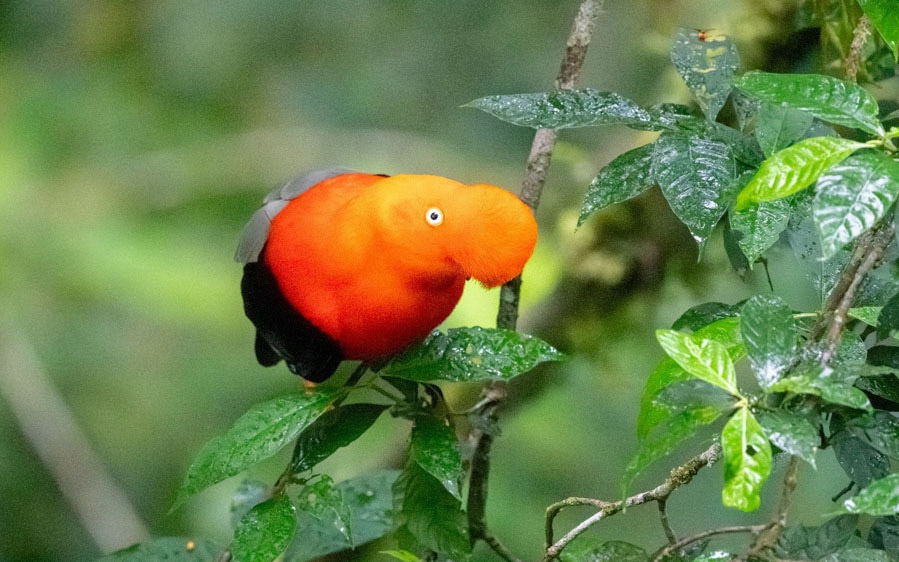 Andean Cock-of-the-rock is one of the most important targets along the Manu Road (photo Andrew Cutler).
In recent years, Manu has developed into one of South America’s premier birding destinations thanks to the remarkable improvement in infrastructure and birding facilities, allowing it to rival many of the celebrated birding routes of Colombia and Ecuador. At Wayqecha Biological Station, specially established feeding areas provide one of the finest opportunities anywhere to observe three spectacular antpittas during the same morning: Red-and-white Antpitta, Urubamba Antpitta, and Rufous-breasted (Leymebamba) Antpitta. The region’s hummingbird feeders can produce an astonishing diversity, with around 50 species of hummingbirds possible during a two-week journey, while the colorful tanager assemblage may include approximately 60 species across the different habitats we explore.
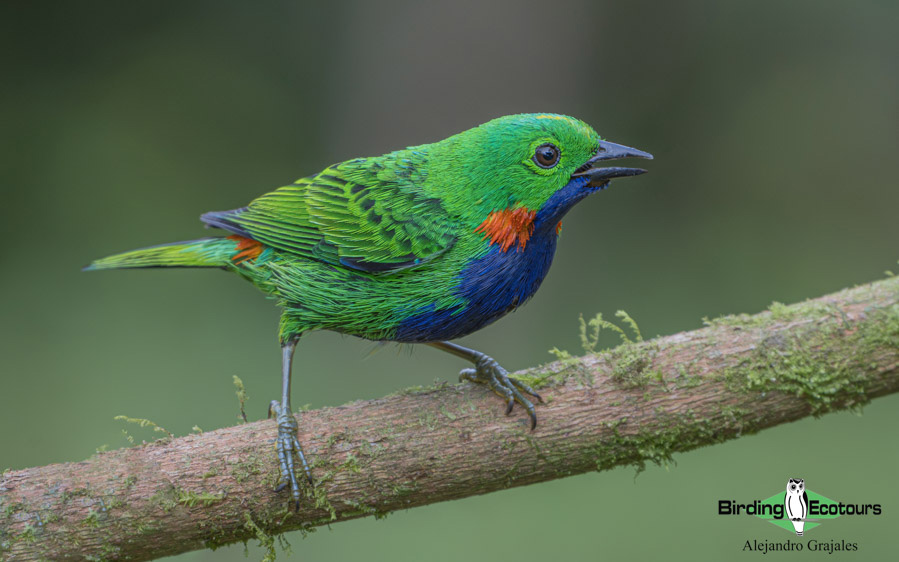
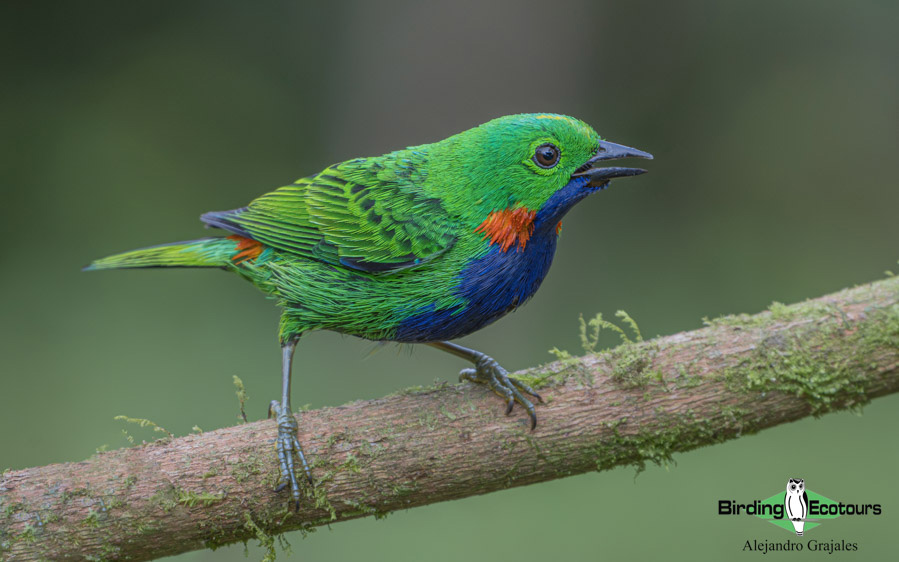 Orange-eared Tanager, one of the many tanager species found along the Manu Road.
Equally exciting is the growing number of specialized feeding stations designed for observing secretive insectivorous birds at close range. These unique sites offer exceptional opportunities to photograph and enjoy elusive species such as Rufous-sided Crake, Great Antshrike, and White-lined Antbird, birds that traditionally require tremendous patience and luck to observe in the dense forests of the Amazon.
Beyond Manu itself, this tour also explores the finest birding localities of the Cusco region, adding a completely different suite of habitats and endemics to the experience. Here we will search for the majestic Andean Condor soaring above spectacular mountain landscapes, together with highly localized Peruvian endemics including Masked Fruiteater, Inca Wren, Cuzco Brushfinch, Apurimac Brushfinch, and Ampay Tapaculo. As a fitting finale, we will also venture out after dark in search of one of the region’s most elusive nocturnal birds, the mysterious Buff-fronted Owl, a rarely encountered species that perfectly represents the sense of discovery and adventure that makes southern Peru one of the world’s truly unforgettable birding destinations.
Please e-mail us ([email protected]) if you want us to arrange a Machu Picchu extension.
Itinerary (14 days/13 nights)
Day 1. Arrival in Cusco
Our journey begins in the historic city of Cusco. Upon arrival at Alejandro Velasco Astete International Airport, you will be met and transferred to our hotel, conveniently located near the city center.
Guests arriving in Lima the previous day may wish to spend the night at a hotel near Lima International Airport. This provides an opportunity to rest after the long international journey before taking a connecting flight to Cusco the following day. Arriving in Cusco after midday allows time to settle into the hotel and relax before our birding adventure begins.
Overnight: Cusco
Day 2. Salvador feeders, transfer to the Manu Road, and birding at Acjanaco Pass
Today our birding adventure begins as we leave Cusco and travel towards San Salvador, near the Santuario del Señor de Huanca. Here, at Don Uriel’s property, we will have our first chance to encounter a fascinating selection of Peruvian endemics and other species characteristic of the dry, arid inter-Andean valleys of the Cusco region.
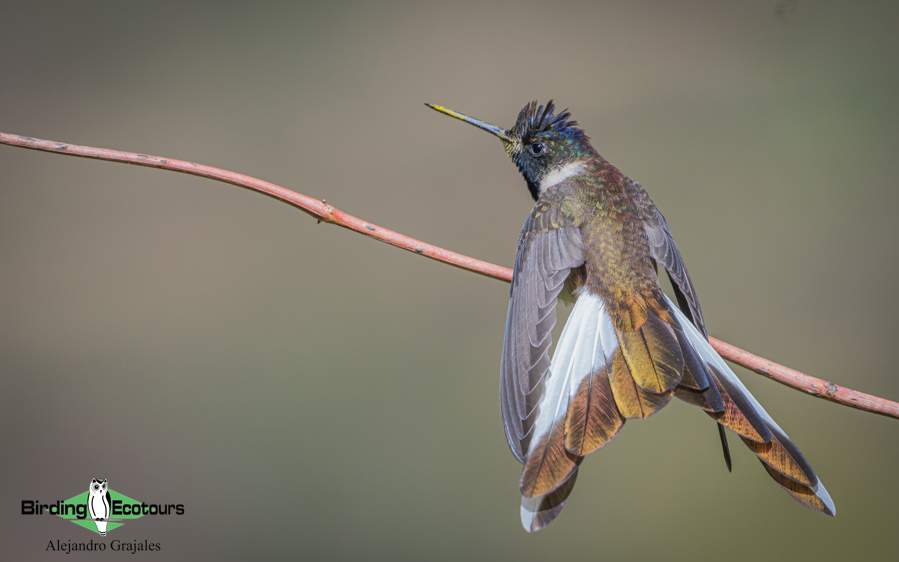
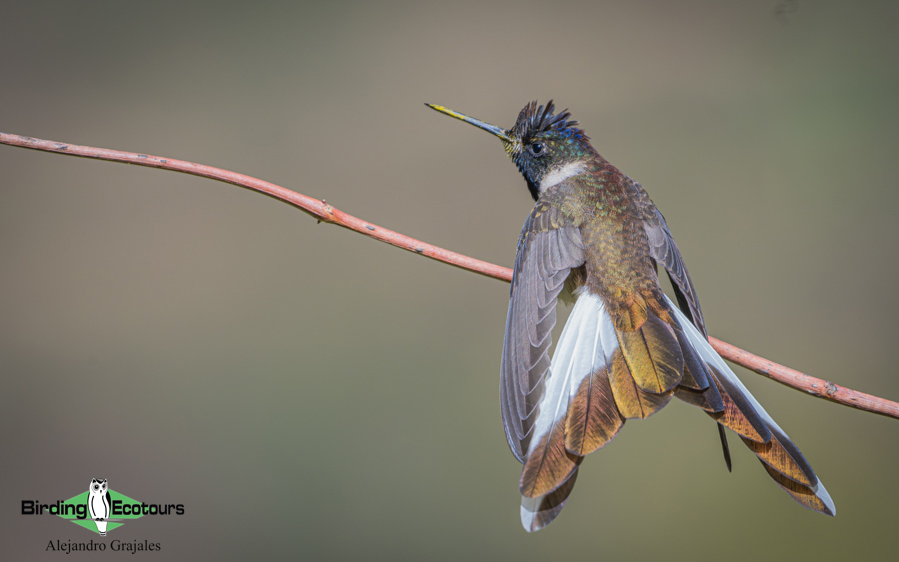 Bearded Mountaineer can be seen at hummingbird feeders near San Salvador.
The hummingbird feeders at Don Uriel’s property can be particularly productive, attracting the impressive Northern Giant Hummingbird, the largest hummingbird in the world, along with Tyrian Metaltail, Sparkling Violetear, Black-tailed Trainbearer, and the endemic Bearded Mountaineer. The surrounding habitat will hopefully also produce Rusty Flowerpiercer and Black-throated Flowerpiercer, as well as Black-backed Grosbeak, Golden-billed Saltator, and the endemic Chestnut-breasted Mountain Finch.
We will then continue our journey through the spectacular Andean mountains, passing traditional highland villages and crossing areas above 11,500 feet (3,500 meters) in elevation. Along the way, we will search for typical high-Andean species such as Andean Flicker, Variable Hawk, Puna Ibis, and Rufous-naped Ground Tyrant, while, with some luck, we may also encounter Andean Ibis. As we descend towards the picturesque Andean town of Paucartambo, further possibilities include Brown-bellied Swallow, White-winged Cinclodes, and the Peruvian endemic Creamy-crested Spinetail.
Eventually, we will reach Acjanaco Pass at approximately 11,800 feet (3,600 meters), where we enter the spectacular Manu Biosphere Reserve. Here we will explore the elfin forest and high-elevation montane grasslands in search of a different suite of birds. One of our principal targets will be the range-restricted Scribble-tailed Canastero, while other possibilities include Scarlet-bellied Mountain Tanager, White-browed Conebill, Moustached Flowerpiercer, Brown-backed Chat-Tyrant, White-throated Tyrannulet, and Pearled Treerunner, among many others.
After an exciting first day of birding across this remarkable elevational gradient, we will arrive at Wayqecha Biological Station, where we will spend the next two nights.
Overnight: Wayqecha Biological Station
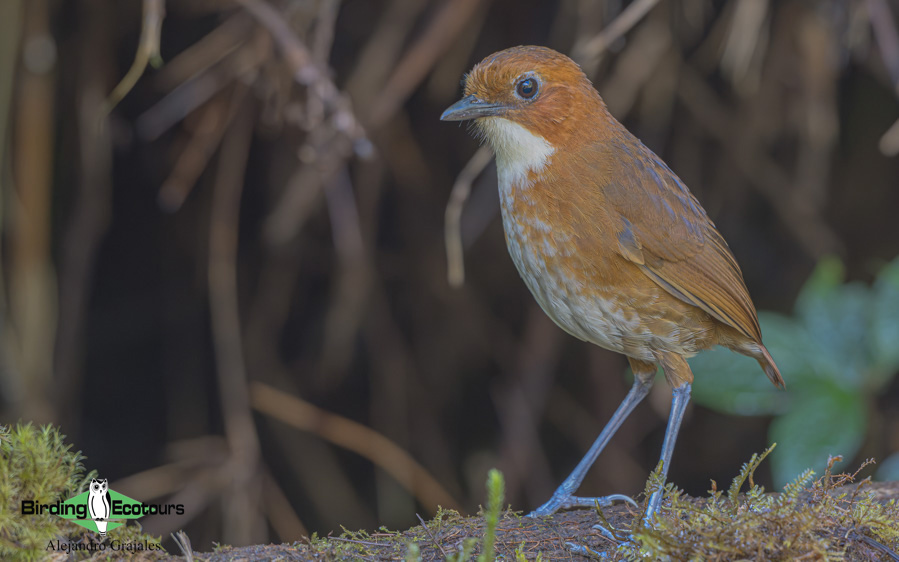 Red-and-white Antpitta, one of the major targets of the trip.
Day 3. Wayqecha feeding stations
This morning will be devoted to one of the most exciting birding experiences at Wayqecha: searching for the remarkable antpittas that inhabit the area around the biological station. With some luck, a single morning may produce three highly sought-after species, including the endemic Urubamba Antpitta and Red-and-white Antpitta, as well as Rufous-breasted (Leymebamba) Antpitta. These secretive forest-floor birds are among the major highlights of our time in the upper reaches of Manu, thanks to the new feeding stations.
The feeders at the station often host colorful birds of high-elevation cloud forest at close range. Regular visitors may include Hooded Mountain Tanager, Grass-green Tanager, Masked Flowerpiercer, White-collared Jay, Black-faced Brushfinch, and Blue-capped Tanager, among others.
The forests surrounding Wayqecha are also particularly productive for mixed-species flocks. We will spend time exploring the trails and forest edges, watching carefully for flocks that may contain an impressive variety of species, including the endemic Marcapata Spinetail, Plushcap, Fulvous Wren, Black-capped Hemispingus, Blue-backed Conebill, Chestnut-bellied Mountain Tanager, Rust-and-yellow Tanager, Streaked Tuftedcheek, and Montane Woodcreeper, as well as many others.
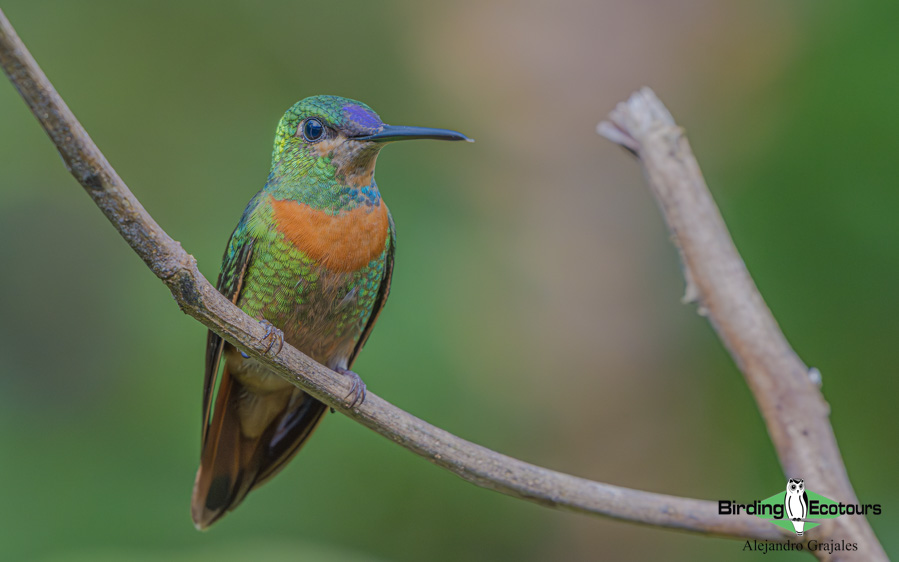
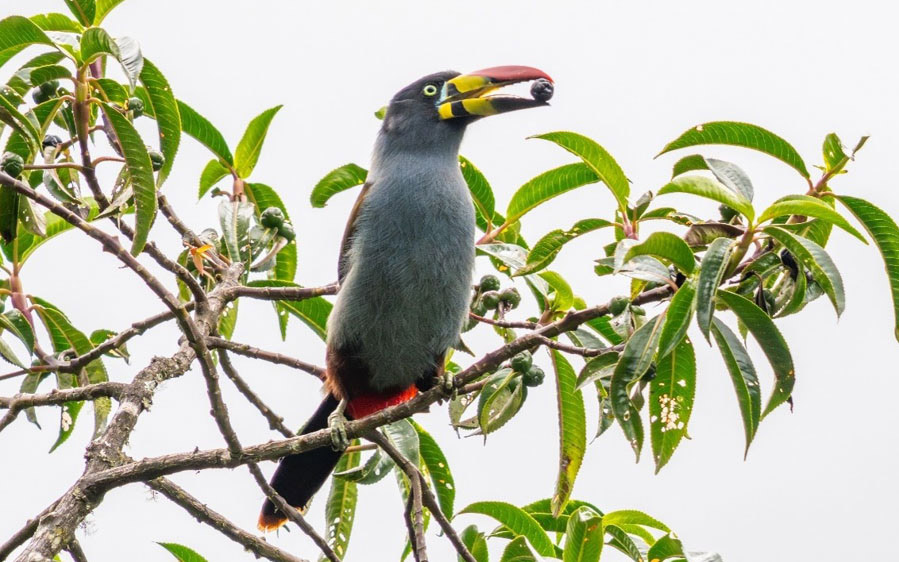
We will also keep a close watch for the spectacular Grey-breasted Mountain Toucan, an impressive and charismatic cloud forest species that is always a favorite among visiting birders.
Overnight: Wayqecha Biological Station
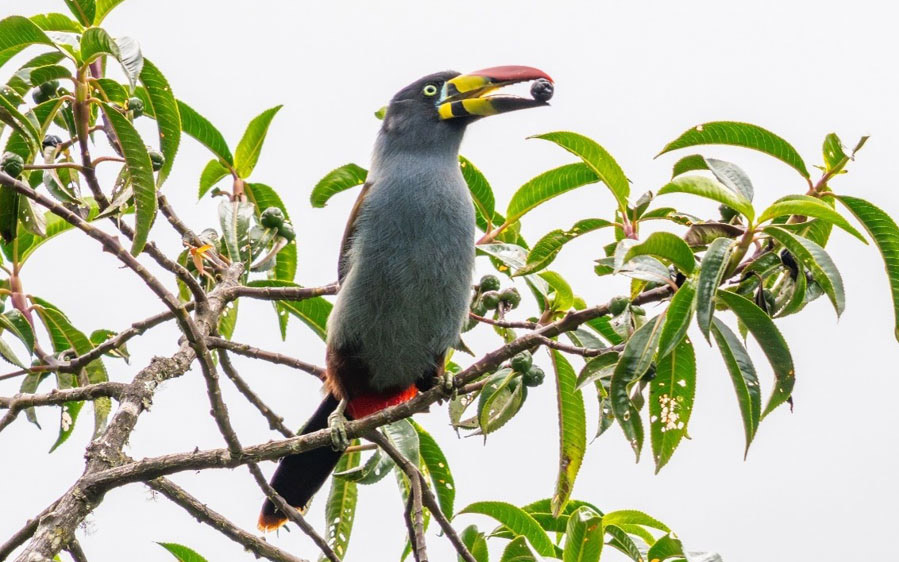 Grey-breasted Mountain Toucan in the cloud forest of Wayqecha (photo Andrew Cutler).
Day 4. Exploring the Manu Road and transfer to Cock of the Rock Lodge
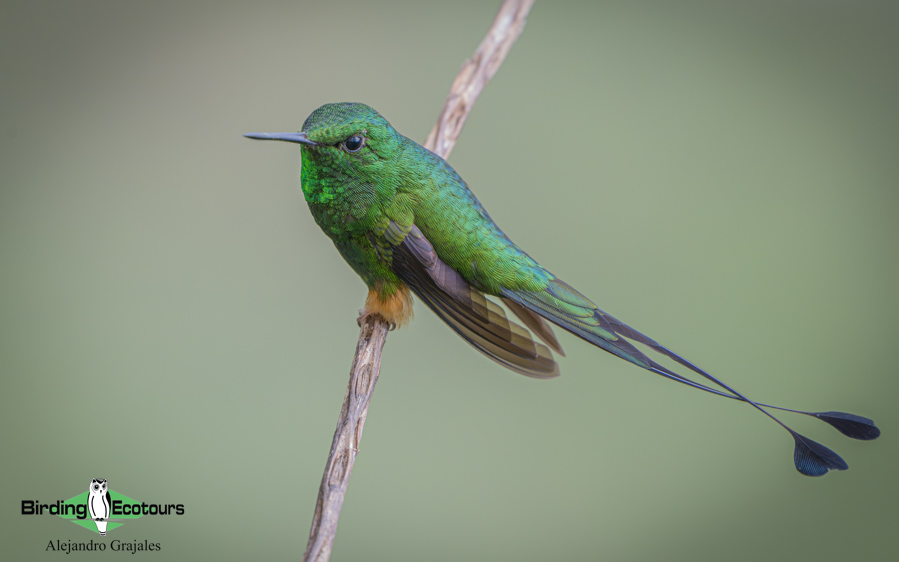
As we descend through this remarkable altitudinal gradient, we will visit hummingbird feeders where we may enjoy excellent close-up views of an impressive diversity of species, including Fawn-breasted Brilliant, Speckled Hummingbird, Lesser Violetear, Buff-thighed Puffleg, Amethyst-throated Sunangel, Bronzy Inca, Rufous-booted Racket-tail, and White-bellied Woodstar, among others.
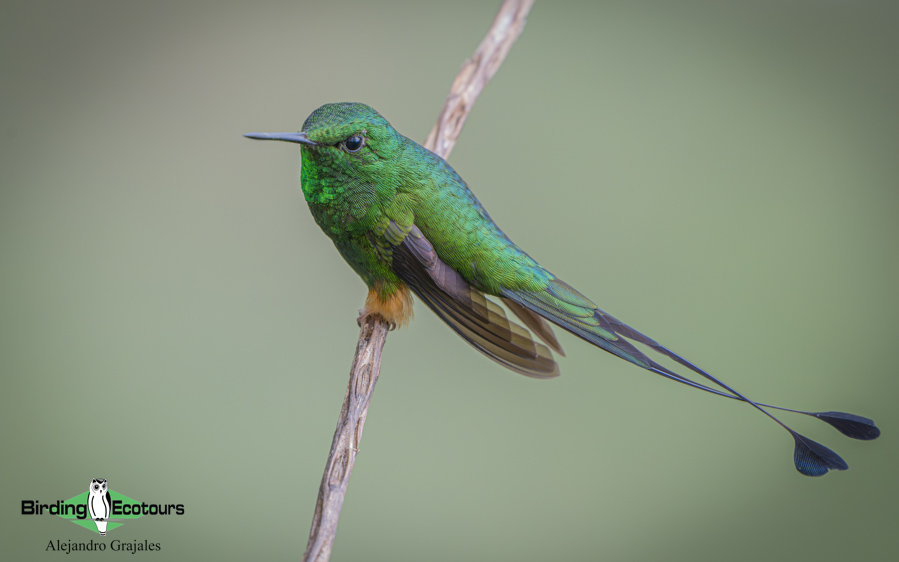 Rufous-booted Racket-tail – one of the many hummingbird species we hope to encounter on this tour.
We will also keep a close watch for the splendid Chestnut-crested Cotinga, one of the most striking and sought-after birds of these montane forests. Other exciting possibilities along this section of the Manu Road include Blue-banded Toucanet, Masked Trogon, Golden-headed Quetzal, Capped Conebill, and many other special birds characteristic of these exceptionally diverse Andean forests.
We will arrive at our lodge in time to visit one of the great wildlife spectacles of the Manu Road: the extraordinary courtship display of the Andean Cock-of-the-rock at its traditional lek. Watching the brilliantly colored males gather and perform their elaborate displays at close range is an unforgettable experience for birders and nature enthusiasts alike.
The surrounding forest offers excellent birding, and we will also search for Black-eared Hemispingus, Yungas Manakin, Andean Motmot, White-eared Solitaire, and, with some luck, the diminutive and highly prized Lanceolated Monklet.
Overnight: Cock of the Rock Lodge
Day 5. Birding Rocotal and San Pedro areas
Today we will visit another excellent feeding station in the Rocotal zone along the Manu Road, locally known as “El Jardín de Tío Víctor” (Uncle Victor’s Garden). An early start will give us the best opportunity to enjoy the remarkable variety of birds attracted to this productive site, including the magnificent Versicolored Barbet, one of the most striking species we hope to encounter during our time in the Manu foothills.
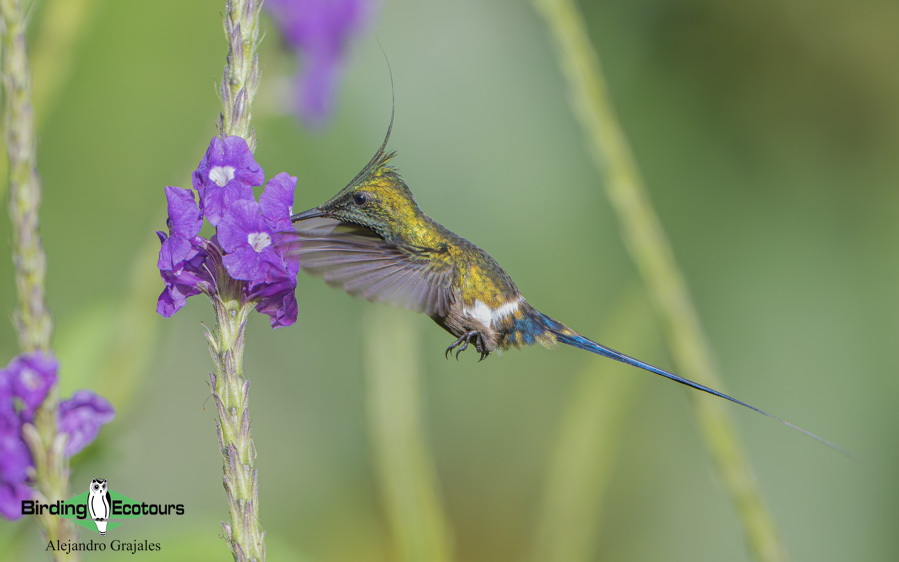
The feeders and surrounding forest can produce a dazzling selection of colorful tanagers, including Orange-eared Tanager, Golden-eared Tanager, Golden-collared Honeycreeper, Golden-naped Tanager, Spotted Tanager, Beryl-spangled Tanager, and Blue-necked Tanager. The hummingbird feeders should also attract a different selection of species, and this may be our first encounter with the fabulous Wire-crested Thorntail, surely one of the most distinctive and spectacular hummingbirds of the entire trip.
After dark, once we have arrived at Cock of the Rock Lodge in the San Pedro area, those wishing to continue birding will have the possibility to search for some of the area’s nocturnal specials, particularly Lyre-tailed Nightjar and Rufescent Screech Owl, providing an exciting conclusion to another rewarding day along the Manu Road.
Overnight: Cock of the Rock Lodge
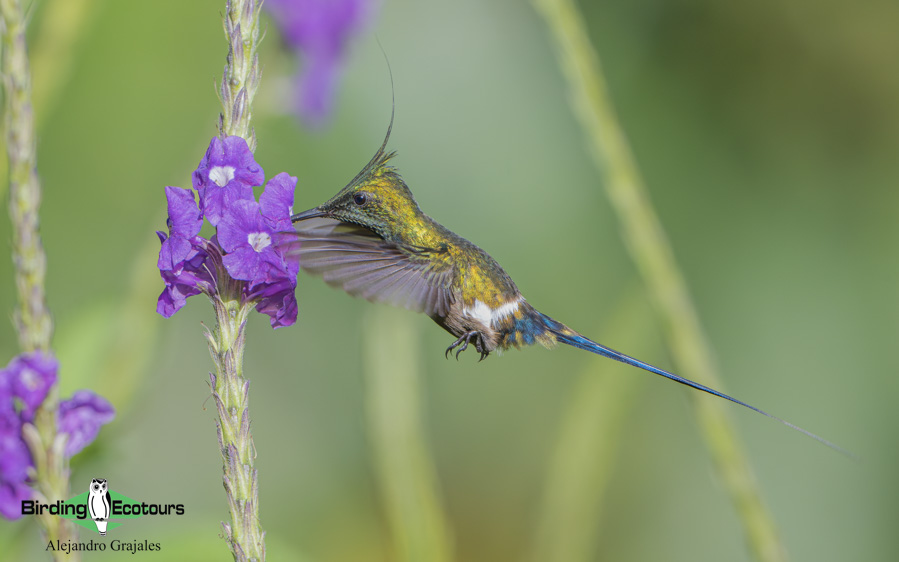 The fantastic Wire-crested Thorntail along the Manu Road.
Day 6. Birding the foothills and transfer to Manu Biolodge
Today we will have another full day exploring the Manu Road, focusing on elevations between approximately 5,900 and 3,000 feet (1,800–900 meters), where montane forests transition into Amazonian foothills, bringing a markedly different suite of birds.
As we work our way through these incredibly diverse forests, we will search for specials such as Dusky-green Oropendola, Two-banded Warbler, Cuzco Warbler, Blackish Antbird, the extraordinary Red-billed Scythebill, Cinnamon-faced Tyrannulet, Chestnut-backed Antshrike, Stripe-chested Antwren, Foothill Stipplethroat, Bluish-fronted Jacamar, and Cabanis’s Spinetail.
We will also keep a close watch on the skies and exposed perches for raptors and other conspicuous species, including Double-toothed Kite, Plumbeous Kite, Swallow-tailed Kite, and the elegant Long-tailed Tyrant.
Another particularly important target will be the Peruvian endemic Black-backed Tody-Flycatcher, adding yet another sought-after endemic to the impressive collection of birds we hope to encounter during our journey through Manu.
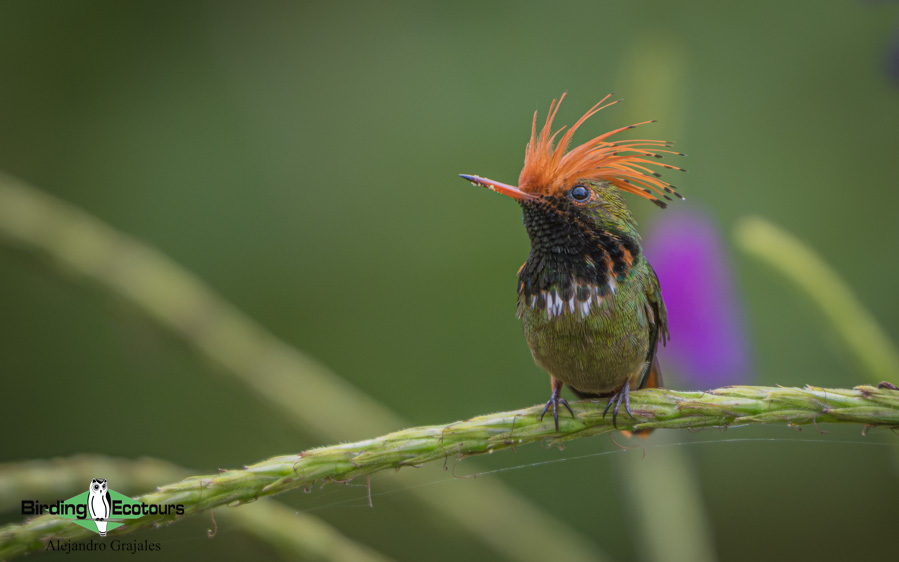
We will visit the private gardens of Manu Endemic Lodge and Reserve, where we will spend a good part of the morning enjoying the excellent hummingbird activity. Here we will search for the scarce White-browed Hermit, Pale-tailed Barbthroat, and, with luck and patience, the remarkable Buff-tailed Sicklebill. We will also look for the Peruvian endemic Peruvian Piedtail and the spectacular Rufous-crested Coquette, one of the star birds of this tour.
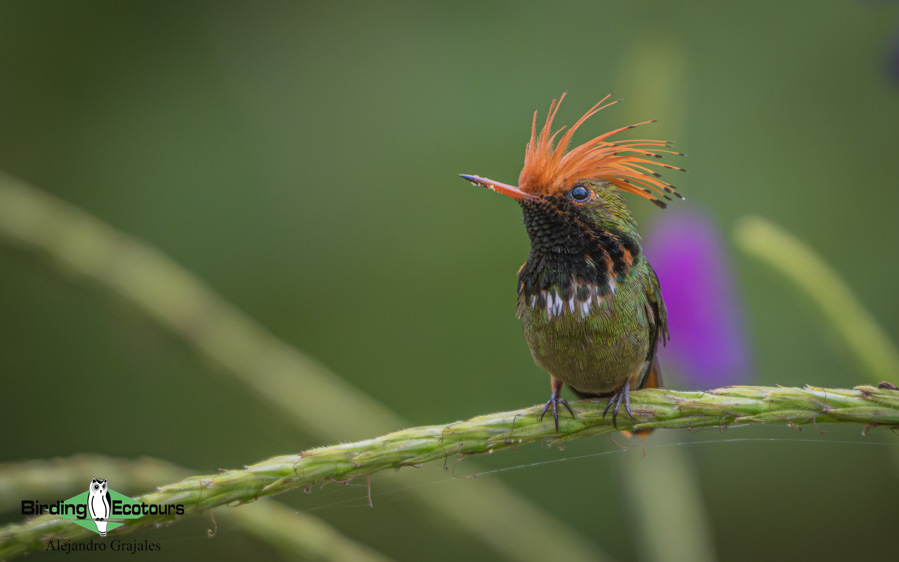 This trip also targets the striking Rufous-crested Coquette.
We will then continue towards Bamboo Lodge, where we should be treated to excellent views of the stunning Green-and-gold Tanager and Paradise Tanager, before continuing to our next destination, Manu Biolodge, also known as Villa Carmen Biological Station. At night we can look for Black-banded Owl and Tropical Screech Owl.
Overnight: Manu Biolodge
Day 7. Manu Biolodge and Amazonian Foothills
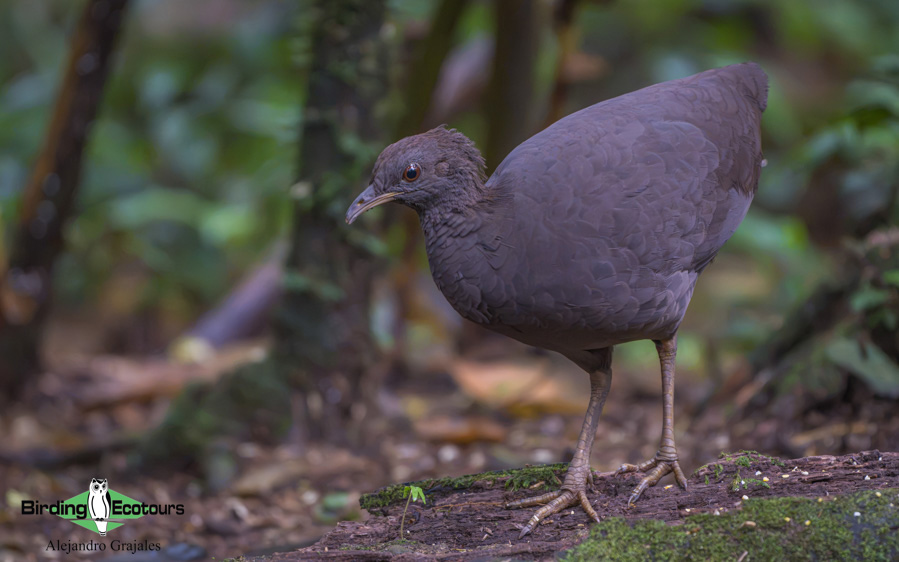
We will begin the day at the feeders of Manu Biolodge, where an early start will hopefully reveal three notoriously shy species of tinamous: Cinereous Tinamou, Undulated Tinamou, and Black-capped Tinamou. Seeing these normally secretive forest-floor birds at close range is always a special experience. Pectoral Sparrow may also be encountered around the feeding area.
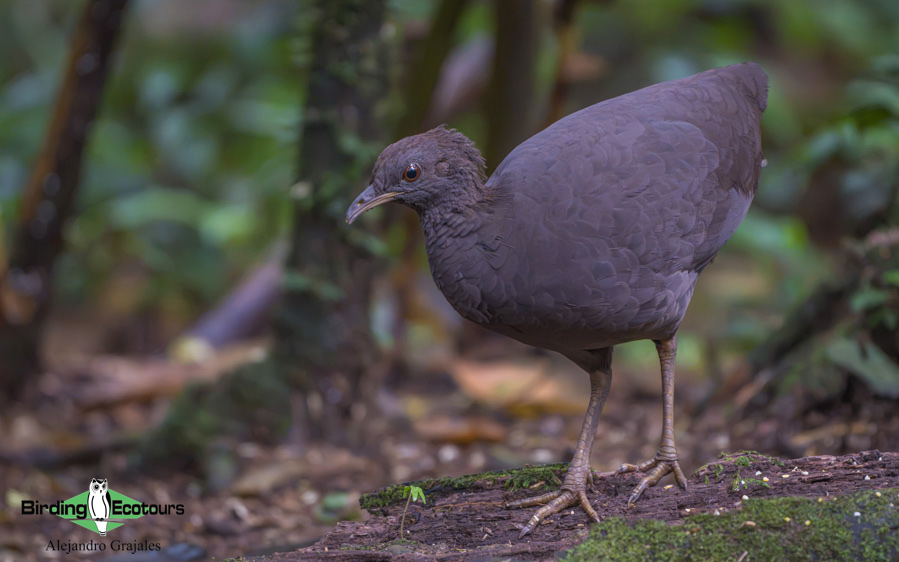 The shy Cinereous Tinamou at the Manu Biolodge feeders.
The surroundings of the lodge offer further excellent birding, with good chances of finding Spix’s Guan, Speckled Chachalaca, and Blue-throated Piping Guan, as well as the extraordinary Hoatzin, the sole member of its unique family.
After breakfast, we will visit a private bird reserve where specially established feeding stations and photography perches provide opportunities to observe secretive forest species at remarkably close range. Here we will look for White-lined Antbird, Great Antshrike, and Southern Chestnut-tailed Antbird as they approach the feeding area to take mealworms, offering excellent chances for both observation and photography.
A short and relatively easy trail descends for approximately 500 feet (150 meters) through the forest. Along the way, we may encounter Chestnut-capped Puffbird and Bamboo Antshrike, before reaching a feeding station established for the secretive Rufous-sided Crake. Here we hope to see this normally difficult-to-observe species at close range.
In the afternoon, we will bird around the Atalaya viewpoint, where the open vistas may produce Chestnut-fronted Macaw flying over the forest and perhaps Yellow-tufted Woodpecker. Great Potoo is occasionally encountered in the area, and we will keep a careful watch for this impressive nocturnal species.
Exceptional rarities such as Harpy Eagle have been recorded here on more than one occasion. Although our chances of encountering this magnificent eagle remain extremely remote, knowing that it occurs in these forests adds an extra element of excitement to our birding at Atalaya.
Overnight: Manu Biolodge
Day 8. Mascoitania Clay Lick and Machuhuasi Lake
We will depart well before dawn and take a boat to a nearby parrot clay lick, arriving in time to witness one of the classic wildlife spectacles of the Amazon. As the morning begins, parrots and parakeets gather around the clay lick, providing chances to observe Blue-headed Parrot, Yellow-crowned Amazon, Dusky-headed Parakeet, and White-eyed Parakeet. Several macaws may also be present, including Chestnut-fronted Macaw and Blue-headed Macaw, while, with some luck, we may also encounter the magnificent Blue-and-yellow Macaw. The riverine habitats surrounding the clay lick may also produce Sand-colored Nighthawk, Southern Lapwing, Collared Plover, and Swallow-winged Puffbird.
Later in the morning, we will visit Machuhuasi Lake, an attractive Amazonian oxbow lake surrounded by lush vegetation. Here we will search for a different selection of birds, including the remarkable Hoatzin, Horned Screamer, Limpkin, Pale-legged Hornero, Black-capped Donacobius, and the scarce Pale-eyed Blackbird.
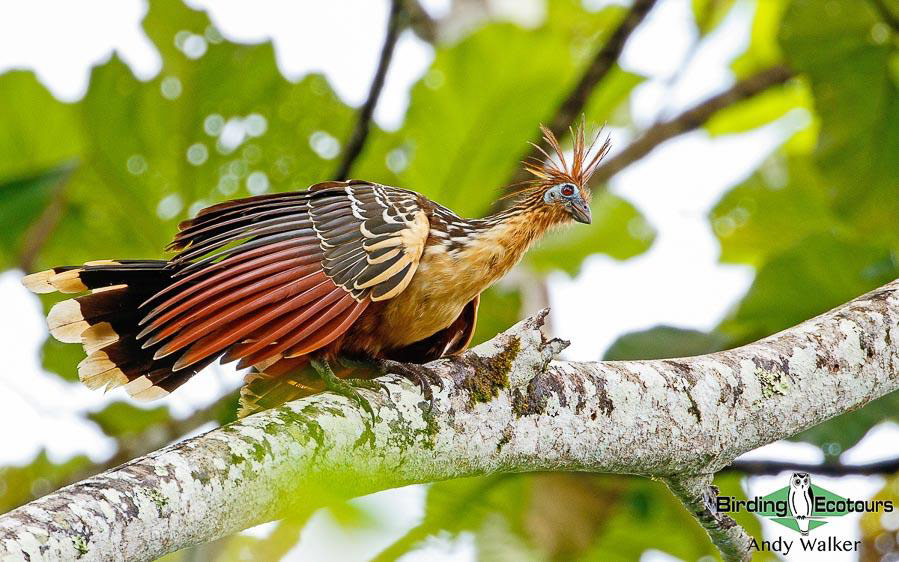 The unusual-looking Hoatzin – the sole member of its family, Opisthocomidae.
Throughout the day, the surrounding forest and secondary habitats may also produce Great Antshrike, Plain-winged Antshrike, Plain-crowned Spinetail, Slender-footed Tyrannulet, Chestnut-crowned Foliage-gleaner, Buff-throated Woodcreeper, Pygmy Antwren, Goeldi’s Antbird, and Peruvian Warbling Antbird, among many other Amazonian species. Later in the day, we will return toward the Manu Road and continue to Manu Endemic Lodge, where we will spend the night.
Overnight: Manu Endemic Lodge
Day 9. Mirador Pico de Hoz and transfer to Cusco
This morning we will visit another excellent feeding station at Mirador Pico de Hoz, where, with some luck, we may observe the impressive King Vulture from a specially designed hide. The site attracts a good variety of other birds, including Golden-bellied Euphonia, Rufous-bellied Euphonia, Opal-crowned Tanager, Green Honeycreeper, and Blue Dacnis, while the scarce Lemon-throated Barbet will be another exciting possibility. The hummingbird feeders offer further species such as Gould’s Jewelfront, Blue-fronted Lancebill, and Amethyst Woodstar, among others.
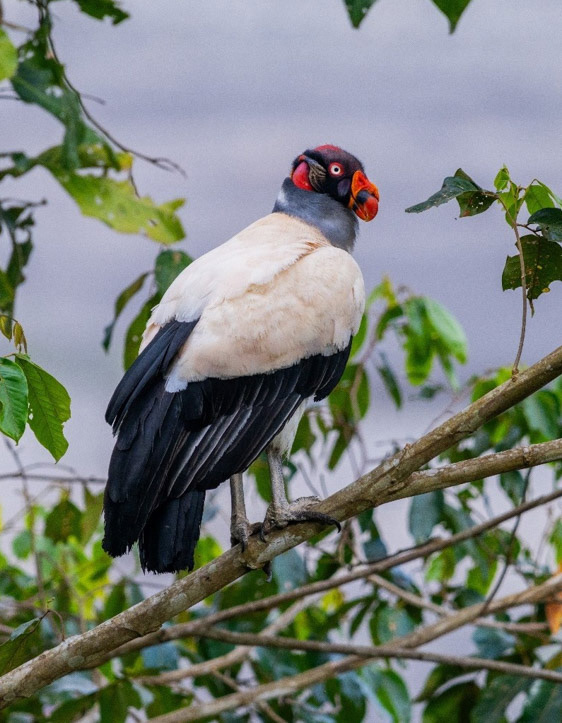 The majestic King Vulture will hopefully be seen at a feeding station (photo Andrew Cutler).
After approximately an hour at the feeding station, we will begin our journey back to the city of Cusco. The journey will be primarily a direct transfer, although we may make a few strategic stops along the way to search for any bird species we may still be missing, as well as occasional stops to stretch our legs.
Overnight: Cusco
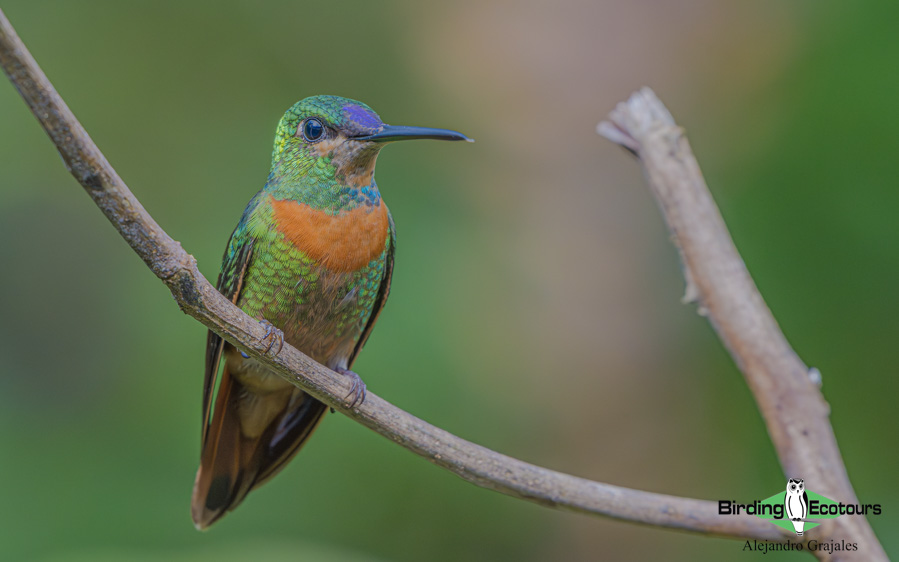 Gould’s Jewelfront is another stunner that we hope to see at a feeding station.
Day 10. Cusco to Limatambo – Birding the Inter-Andean Valleys
After a week of birding in the lush, humid forests of Manu, today we will return to the dramatically different landscapes of the dry inter-Andean valleys. We will travel southwest from Cusco on a scenic journey towards the town of Limatambo, exploring the open valleys, agricultural areas, and dry Andean slopes along the way.
This change of habitat brings another distinctive selection of birds, and we will search for species such as Andean Swift, Mountain Caracara, Black-chested Buzzard-Eagle, White-winged Black-Tyrant, Black-billed Shrike-Tyrant, the Peruvian endemic Rusty-fronted Canastero, Peruvian Sierra Finch, Plain-colored Seedeater, and Puna Ground-Tyrant. With some luck, we may also encounter Andean Parakeet and the impressive Aplomado Falcon.
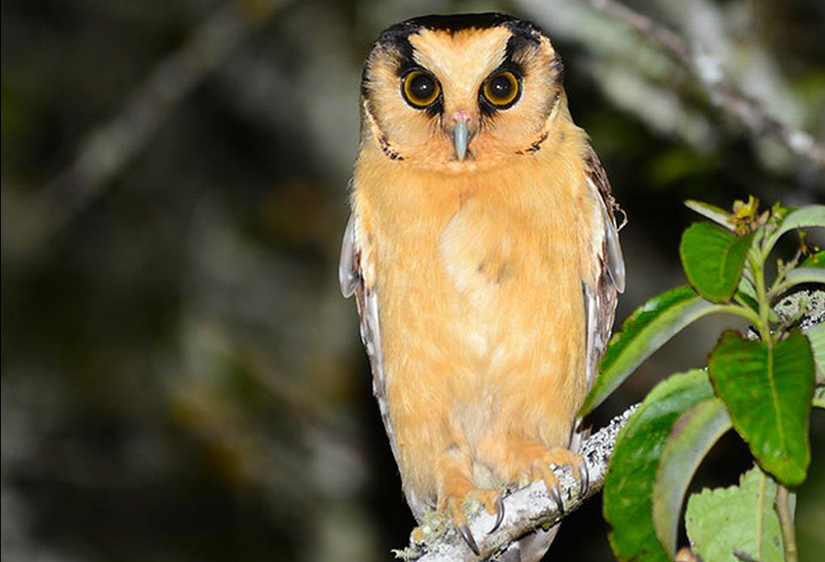
After dark, we will venture out again in search of two particularly rare and exciting nocturnal targets: Koepcke’s Screech Owl (Apurímac form) and Buff-fronted Owl. Both can be difficult to locate, but the possibility of encountering either of these elusive owls promises an exciting conclusion to our day.
Overnight: Limatambo
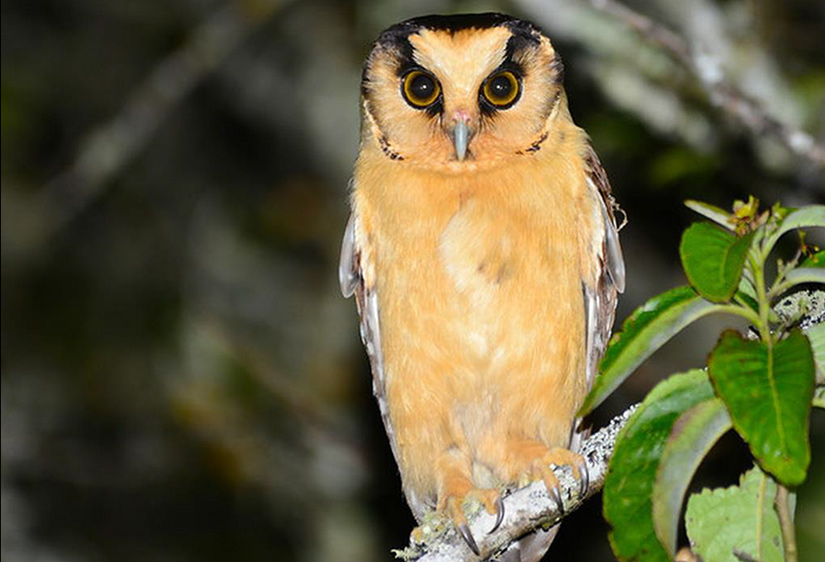 We will search for Buff-fronted Owl after dark around Limatambo (photo Alan Van Norman).
Day 11. Condor Canyon and transfer to Ollantaytambo
Today we will visit the spectacular Condor Canyon, where we hope to enjoy magnificent views of the true lord of the Andean skies, the majestic Andean Condor. Watching these enormous birds soaring effortlessly above the dramatic canyon and surrounding mountains is one of the great wildlife experiences of the Andes and promises to be another memorable highlight of our journey.
Other important birds we will search for today include several highly localized Peruvian endemics, notably Apurimac Spinetail, Apurimac Brushfinch, and Ampay Tapaculo.
After completing our birding in the area, we will continue towards the historic Andean town of Ollantaytambo, a drive of approximately three hours through the impressive landscapes of the Peruvian Andes.
Overnight: Ollantaytambo
Day 12. Lower Málaga Pass
Today we will travel along the slopes of the spectacular snow-capped Mount Verónica, following the road towards Quillabamba and the lower elevations of the Cusco region. Along the way, we will pass through magnificent high-Andean scenery, where we regularly encounter pairs of Andean Goose, along with Crested Duck, Andean Lapwing, and Puna Ibis.
As we approach Abra Málaga at approximately 14,150 feet (4,315 meters) above sea level, we may spend the morning visiting the famous high-elevation Polylepis forest in search of several highly sought-after specialists. Potential targets here include Giant Conebill, Ash-breasted Tit-Tyrant, White-browed Tit-Spinetail, and the rare Peruvian endemic Royal Cinclodes.
The possibility of visiting this higher‑altitude area depends entirely on participant fitness, weather, trail conditions, and the guide’s assessment. If conditions are favorable and the group agrees, we may explore this option. Please note that reaching the Polylepis forest requires hiking on steep terrain at around 14,150 feet (4,315 meters), where high altitude can make even short distances significantly more strenuous.
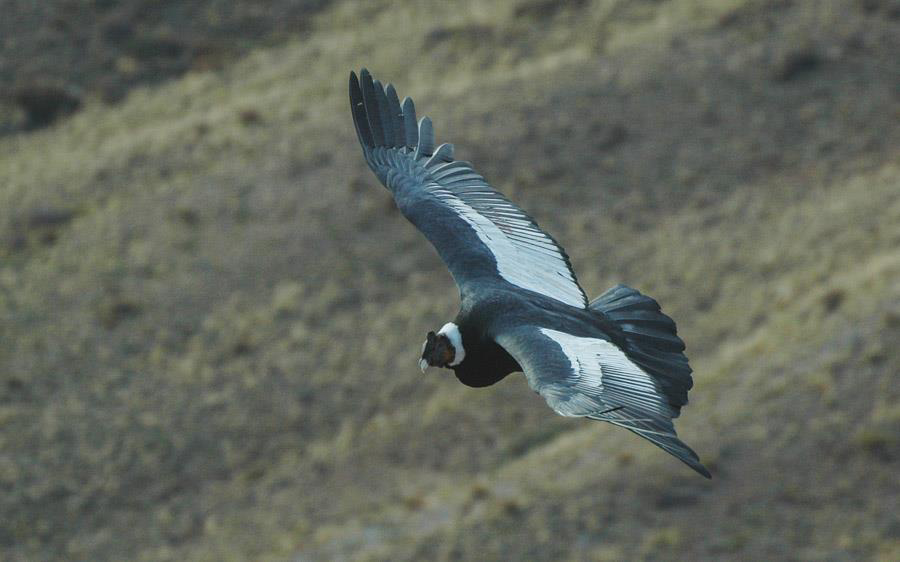 The huge Andean Condor will hopefully be seen in the high Andes (photo Alejandro Tello).
If we do not visit the high-altitude area, we will follow our regular itinerary and concentrate our birding at lower elevations. Here we will search for Diademed Tapaculo, Puna Thistletail, and Tit-like Dacnis, while mixed-species flocks may contain several important Peruvian endemics, including Inca Wren, Cuzco Brushfinch, Marcapata Spinetail, and Parodi’s Hemispingus. We will also look for Slater’s Tyrannulet and Grey-mantled Wren.
Another highlight will be visiting one of the few areas in Peru where we hope to observe Swallow-tailed Hummingbird. Other exciting hummingbirds we will search for include Violet-throated Starfrontlet and Gould’s Inca.
Eventually, we will reach the small locality of Casa Blanca, where we will spend the night in a simple, family-run guesthouse.
Overnight: Casa Blanca
Day 13. Masked Fruiteater Forest and transfer back to Cusco
Our journey will take us to one final birding site, where our main target will be the endemic Masked Fruiteater, a highly sought-after species and a fitting final special to pursue on our remarkable journey through southern Peru.
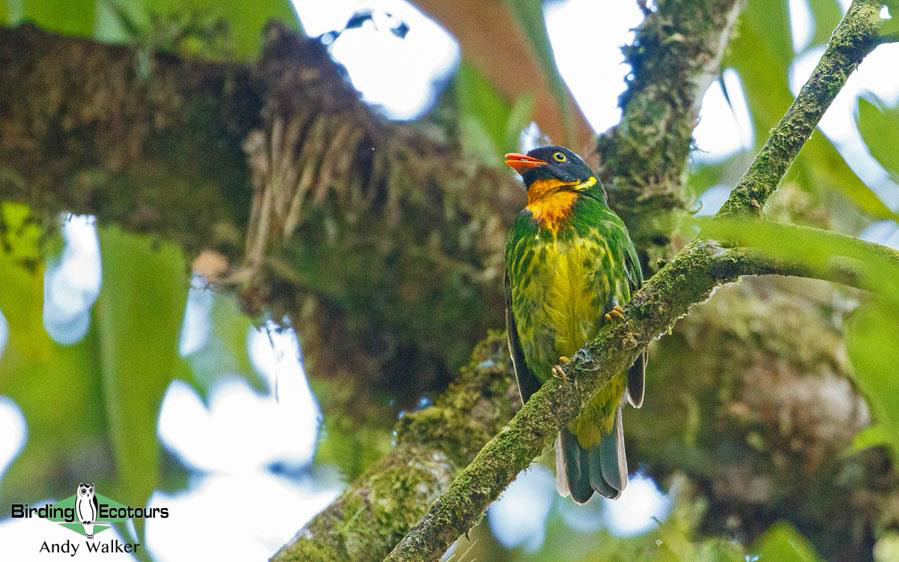 Masked Fruiteater, another highly prized member of the cotinga family.
Other important targets in the area include Golden-crowned Brushfinch and Slaty Tanager. In the montane forests here we may encounter species associated with elevations around 8,200 feet (2,500 meters), including several birds we may have previously seen along the Manu Road.
After completing our birding, we will begin our return journey to Cusco, making selected stops along the way whenever we encounter promising bird activity or chances to search for species we may still be missing.
Once back in Cusco, we will gather for our final dinner together, celebrating the many memorable birds, spectacular landscapes, and special experiences we have shared during this great adventure through Peru.
Overnight: Cusco
Day 14. Transfer to the airport and connecting flight to Lima
Today you will be transferred to Alejandro Velasco Astete International Airport in Cusco for your flight back to Lima, where you will connect with your international departure flight.
This marks the end of our birding adventure through southern Peru. We hope you leave with wonderful memories of the remarkable birds, landscapes, and wildlife experienced throughout the journey.
Please note that the itinerary cannot be guaranteed as it is only a rough guide and can be changed (usually slightly) due to factors such as availability of accommodation, updated information on the state of accommodation, roads, or birding sites, the discretion of the guides and other factors. In addition, we sometimes have to use a different international guide from the one advertised due to tour scheduling.
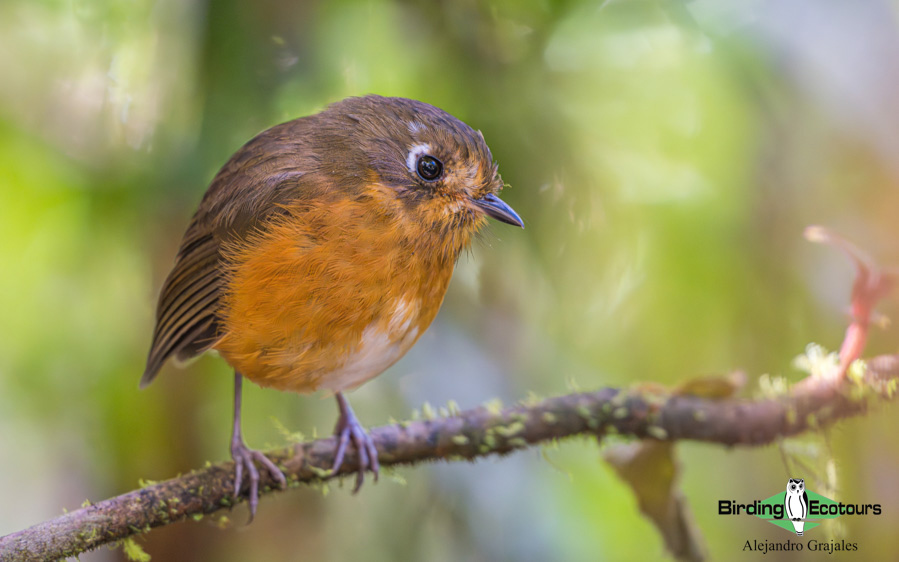 Rufous-breasted (Leymebamba) Antpitta can be found in montane forests of the Andes.