- Duration:
- 6 days
- Group Size:
- 4–8
- Tour Start:
- Antananarivo (Tana)
- Tour End:
- Antananarivo (Tana)
At request clients can upgrade to the new lodge in Masoala, given a significant surcharge.
Birding Tour Madagascar: 6-day Masoala Peninsula Extension
Details
2027
October/November
by request
Per person sharing
€6,737 EUR
$8,111 USD / £6,063 GBP
Single supplement
€612 EUR
$737 USD / £550 GBP
includes the expensive one-way charter flight but excludes one-way domestic flight for about €430, which we will book for you
Itinerary
Download ItineraryMadagascar Birding Tour: 6-day Masoala Peninsula Extension
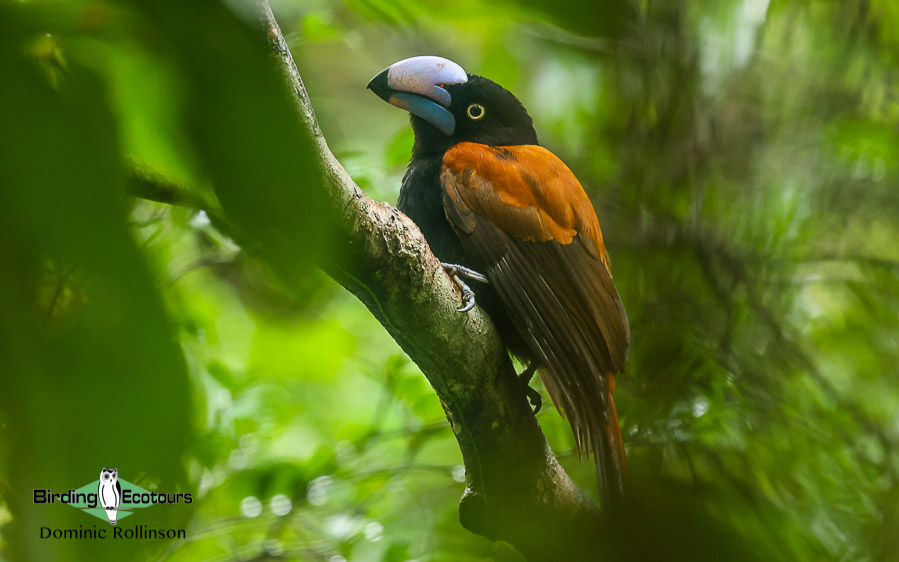 Helmet Vanga is a member of one of the four endemic avian families of Madagascar.
Overview
This Masoala Peninsula birding tour visits the largest intact lowland rainforest in all of Madagascar. Due to its geographical separation, and deforestation in areas surrounding the peninsula, it means several species of rare and exotic wildlife are now restricted to Masoala Peninsula. The area is surely one of the continent island’s least disturbed and beautiful areas, with untouched rainforest sweeping right down to clean, white-sand beaches. The lodge that we stay in on Masoala Peninsula is right on the edge of the rainforest and we often wake up to the calls of Greater Vasa and Lesser Vasa Parrots and fall asleep to the sounds of Rainforest Scops and White-browed Owls. Of course the highlight of any Masoala Peninsula birding tour will likely be the unbelievable Helmet Vanga (of which we have an excellent chance of seeing) as well as the even more range-restricted and rare Bernier’s Vanga. Further tricky species, which are easier here than anywhere else on the main Madagascar birding circuit, include Brown Mesite, Scaly and Short-legged Ground Rollers and Madagascar Pratincole.
Masoala Peninsula supports several rare and range-restricted lemur species such as Red Ruffed, White-fronted, Seal’s Sportive, Masoala Fork-marked and Moore’s Woolly Lemur. The lowland rainforests of Masoala are also home to good numbers of the largest, and most bizarre nocturnal lemur, the Aye-aye, although sightings of this most-wanted lemur are far from guaranteed.
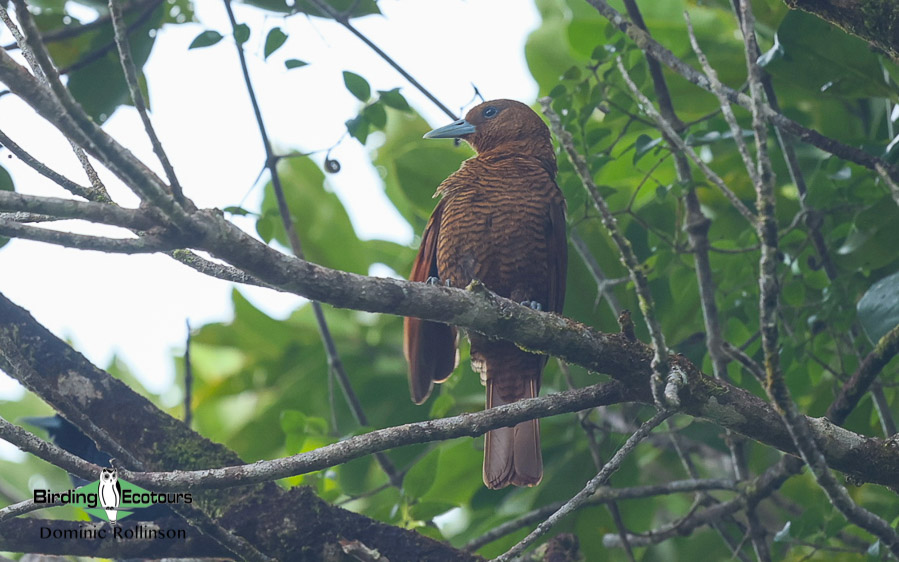 The range-restricted Bernier’s Vanga will be searched for in the lowland forests of Masoala Peninsula.
Detailed Itinerary (6 days/5 nights)
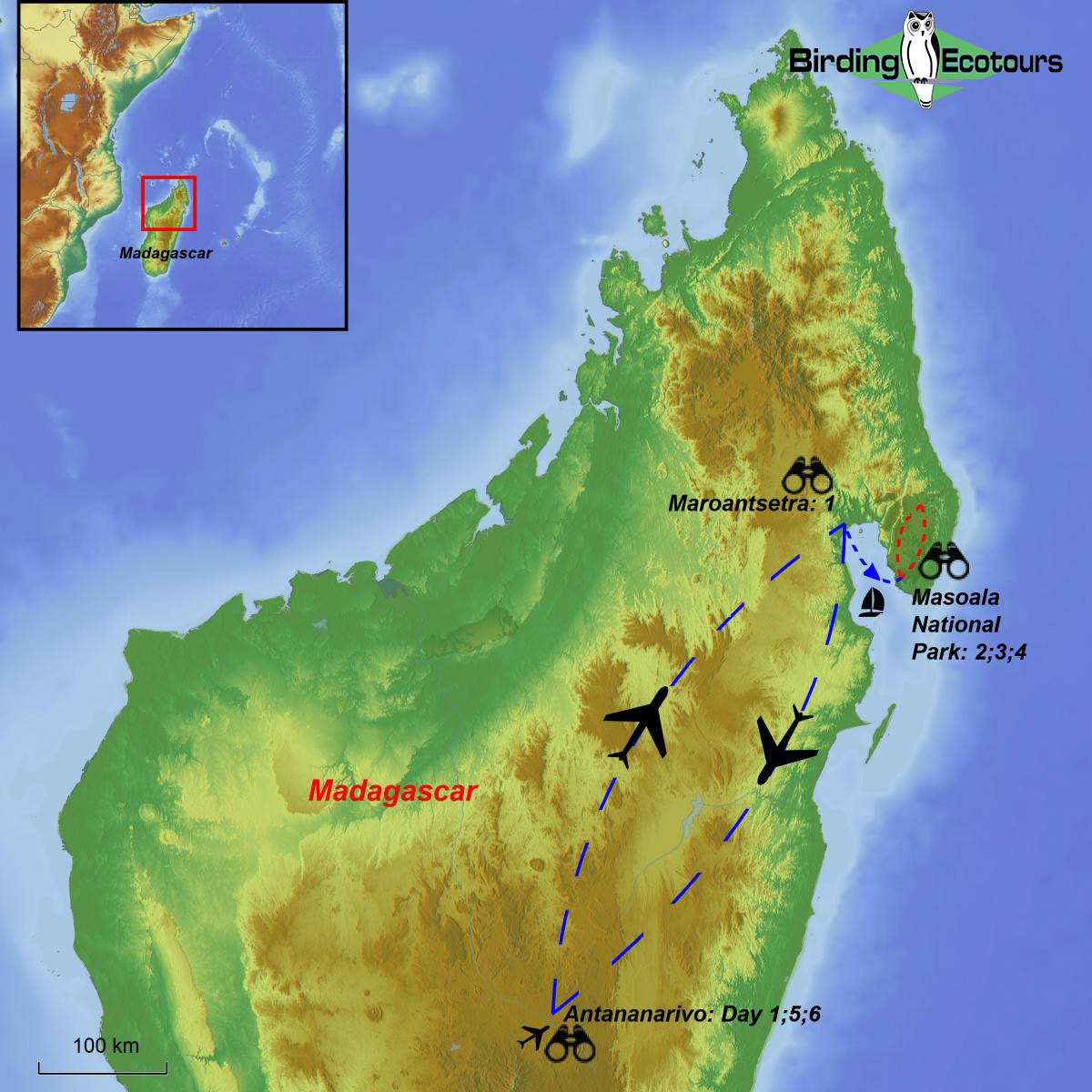
Day 1. Flight to Maroantsetra
We fly to Maroantsetra and transfer to our hotel. Birding around the hotel grounds is unfortunately very limited and besides Crested Drongo, Malagasy Coucal, and Malagasy Palm Swift, we’re unlikely to see too much else. A short walk to the nearby estuary may however produce some water birds such as Purple and Striated Herons, White-fronted Plover, Greater Crested and Lesser Crested Terns, Eurasian Whimbrel, and Common Sandpiper. In the evening we will however look for the striking and cute Lowland Streaked Tenrec which is fairly reliable around the lodge grounds at night.
Overnight: Masoala Resort, Maroantsetra
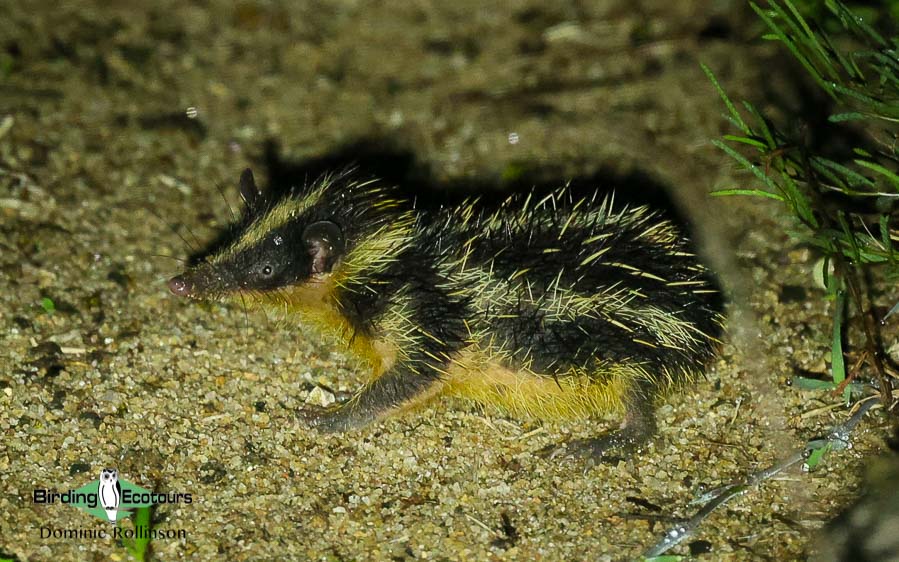 Lowland Steaked Tenrec can be seen in our lodge grounds in Maroantsetra.
Day 2. Boat transfer to Masoala National Park
Today we will take a boat trip across Antongil Bay, Madagascar’s largest bay. We travel past the island of Nosy Mangabe and eventually reach the Masoala Peninsula, which contains Madagascar’s largest tract of lowland rainforest and its largest national park, in the form of Masoala National Park. The boat crossing is normally quiet bird wise however we may see Greater Crested and Roseate Terns.
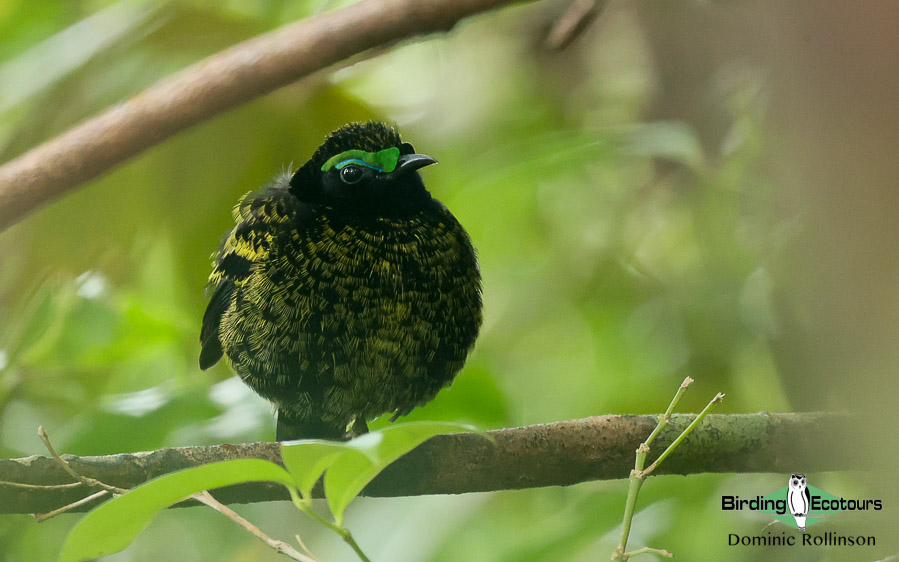
On arrival, we will quickly unpack and head out onto the trails behind our ecolodge heading into the nearby rainforest where we can get started on our long list of targets. Some of the birds we will target in this section of the rainforest might include Brown Mesite, Blue Coua, Madagascar Spinetail, Madagascar Blue Pigeon, Velvet Asity, Red-tailed and Chabert Vangas, White-throated Oxylabes, Long-billed Bernieria, and many others. During our time in Masoala’s rainforests we will be on the lookout for Madagascar Ibis which quietly feed on the forest floor and are easily overlooked. In the early evening we might see Madagascar Pratincoles hawking insects overhead while the night sounds often include Rainforest Scops and White-browed Owls.
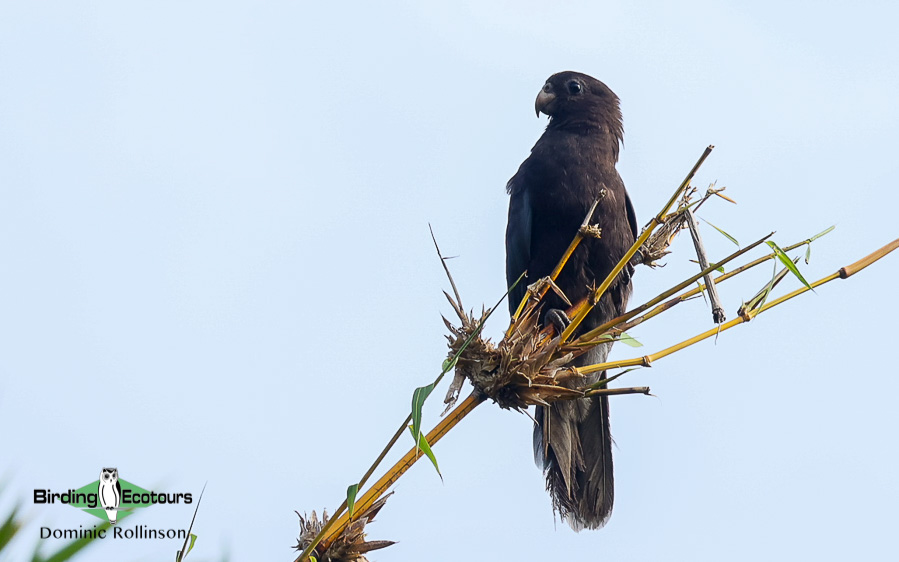
The best time for birding in the tropical lowland rainforests of Masoala Peninsula is during the mornings, with bird activity dropping off markedly in the afternoons. As such, our routine generally involves spending the entire morning out hiking and birding, then coming back for lunch and mostly taking the afternoons easy to bird around the lodge grounds (where Greater Vasa and Lesser Vasa Parrots may be seen, or perhaps the resident group of Eastern Lesser Bamboo Lemurs) or just enjoy the serene setting and perhaps a dip in the ocean.
In the evenings we can do a night walk or two where we may encounter various chameleon species and Seal’s Sportive and Moore’s Woolly Lemurs while the crème de la crème would be the rare and almost alien-looking Aye-aye.
Overnight: Ecolodge Chez Arol, Masoala
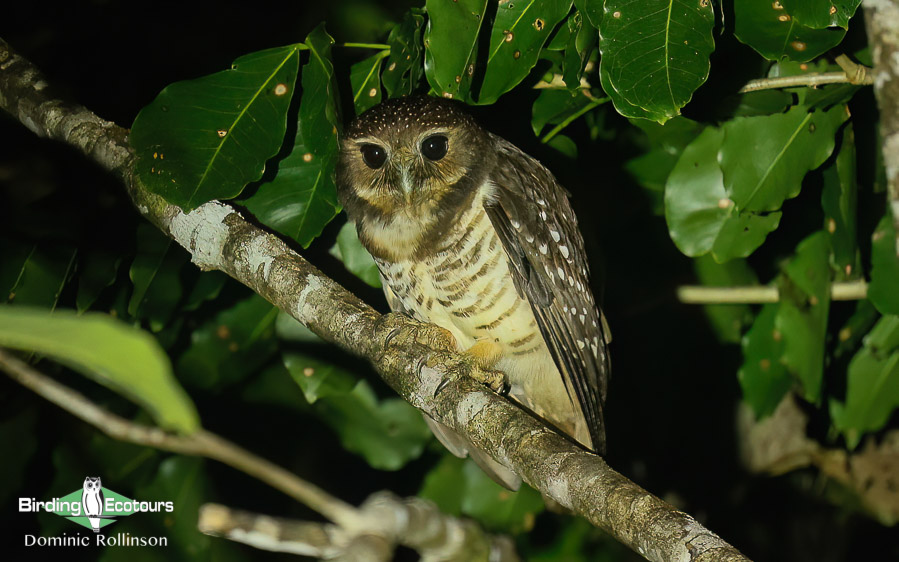 White-browed Owl is often seen from our camp on the edge of the forest.
Days 3 – 4. Birding Masoala National Park
We bird the incredible forests and remote tropical beaches of Masoala National Park for some of Madagascar’s most awesome birds, including Helmet (top of our list of target birds), White-headed and Nuthatch Vangas, Red-breasted and Red-fronted Couas, Short-legged and Scaly Ground Rollers, Brown Mesite, Cuckoo-roller, and many other sought-after birds.
On one of these days we will visit another nearby section of Masoala National Park which protects a different type of forest habitat, this being the littoral forest which is less dense, has a much lower canopy and is dominated by pandanus palms. Here our primary target is the range-restricted and highly sexually dimorphic Bernier’s Vanga which is regualr here. Other species which are often easier to find (and get better views of) in this forest include Blue Vanga, Common Newtonia, Stripe-throated Jery, and Malagasy Green Sunbird. The coastal rock formations here often hold the tricky Madagascar Pratincole too.
Of course, we will be on the lookout for some incredible lemurs during our daytime birding hikes too and hope to find Red Ruffed and White-fronted Lemurs.
Overnight: Ecolodge Chez Arol, Masoala
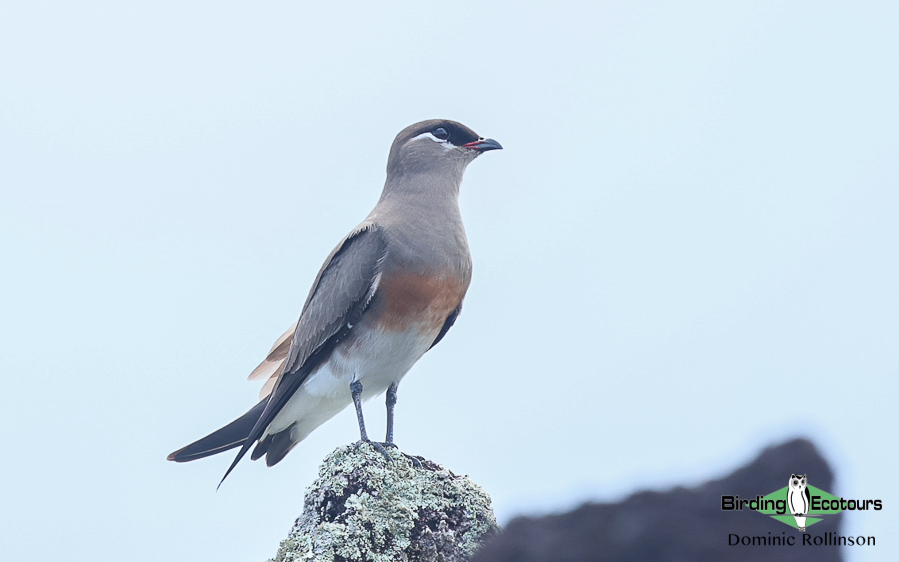 Madagascar Pratincole can be seen along Masoala Peninsula’s coastline.
Day 5. Boat Transfer to Maroantsetra, flight to Antananarivo
Today our time on the beautiful Masaoala Peninsula ends and we return via our boat trip to Maroantsetra and from there fly to Antananarivo. Once back in Tana we will transfer to our hotel.
Overnight: Relais des Plateaux, Antananarivo
Day 6. Departure, or day 1 of main trip
Today either your international flight will leave for home or you will start on our Best of Madagascar main tour.
Please note that the itinerary cannot be guaranteed as it is only a rough guide and can be changed (usually slightly) due to factors such as availability of accommodation, updated information on the state of accommodation, roads, or birding sites, the discretion of the guides and other factors. In addition, we sometimes have to use a different international guide from the one advertised due to tour scheduling.
Map
Testimonials
Gallery
General Information
GENERAL INFORMATION ABOUT MADAGASCAR CAN BE READ HERE