- Duration:
- 14 days
- Group Size:
- 4–6
- Tour Start:
- Phuket
- Tour End:
- Phuket
Birding Tour Thailand: Southern Thailand – Jewels of the South
Details
2028
03–16 March
Per person sharing
$10,650 USD
£8,446 GBP / €9,933 EUR
Single supplement
$1,360 USD
£1,078 GBP / €1,268 EUR
Itinerary
Download ItinerarySouthern Thailand: Jewels of the South
The peninsula of southern Thailand, part of geological Sundaland, is a birders’ and naturalists’ paradise. Bounded by the Gulf of Thailand to the east and the Andaman Sea to the west, this lush tropical region boasts a maritime climate and a unique combination of terrestrial and marine attractions that rank among the best globally. Our extra-small, small-group tour is designed to search for the region’s special birds in some spectacular and unique limestone karst scenery. This tour will depart with a minimum of just four, and a maximum of only six participants.
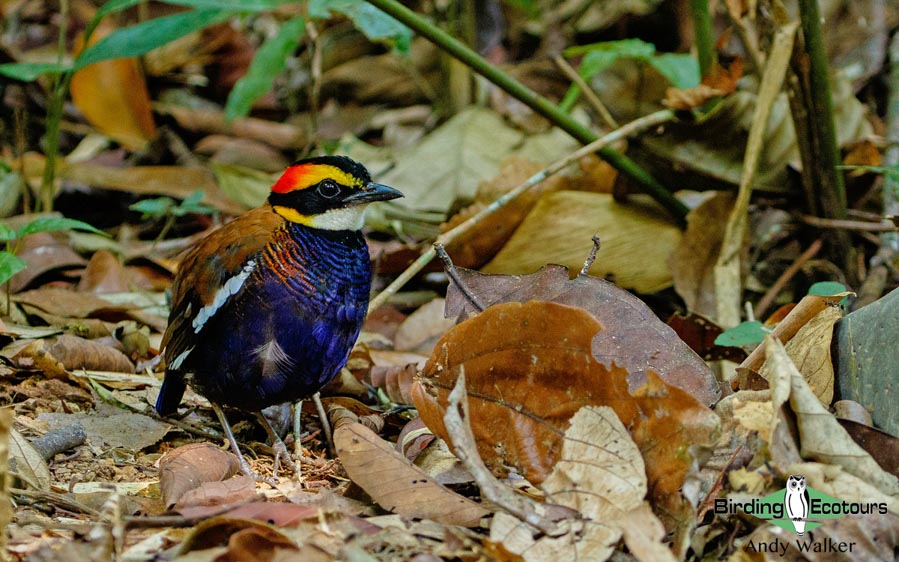
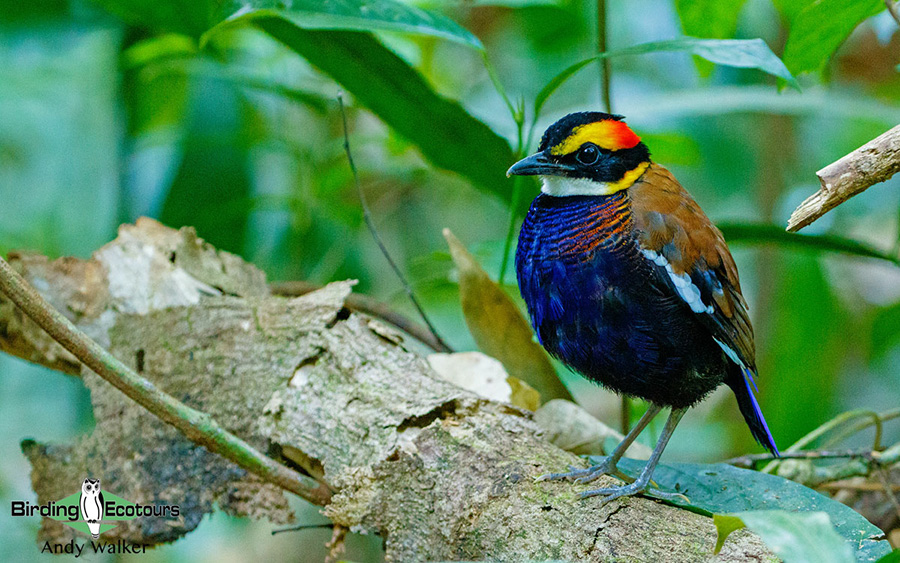 Malayan Banded Pitta is one of our spectacular targets on this trip.
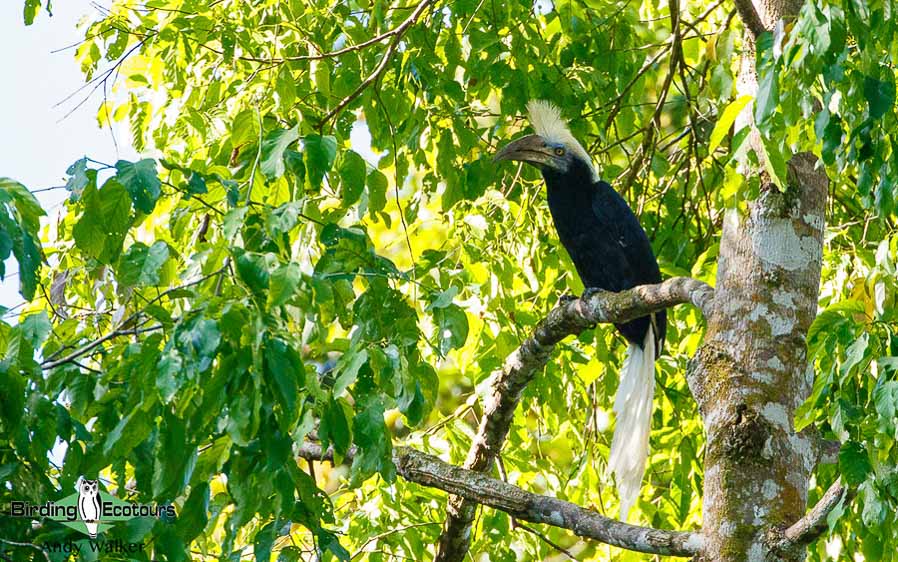
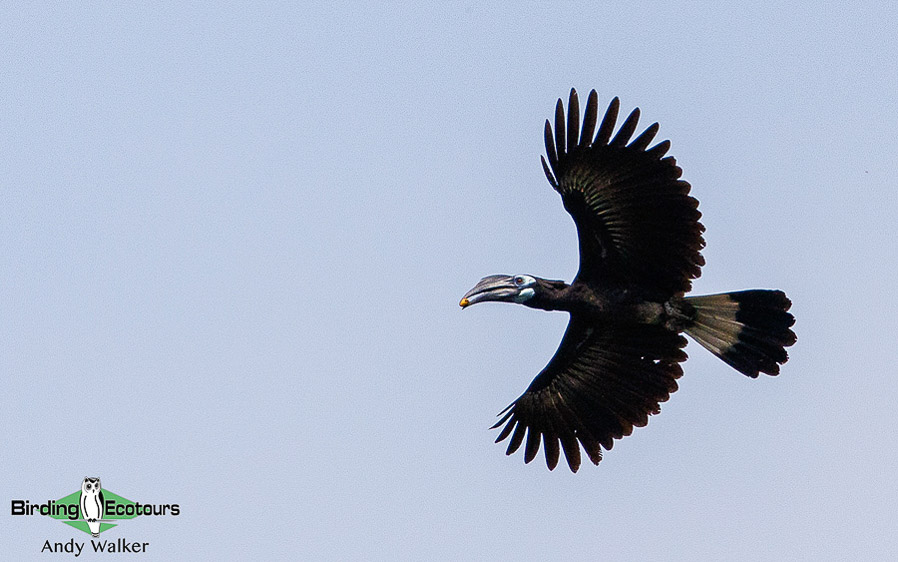
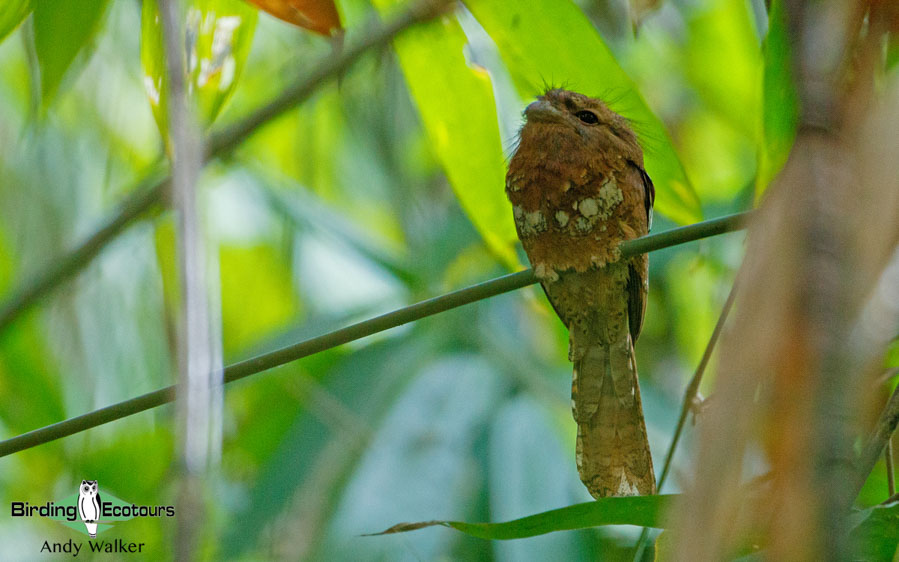
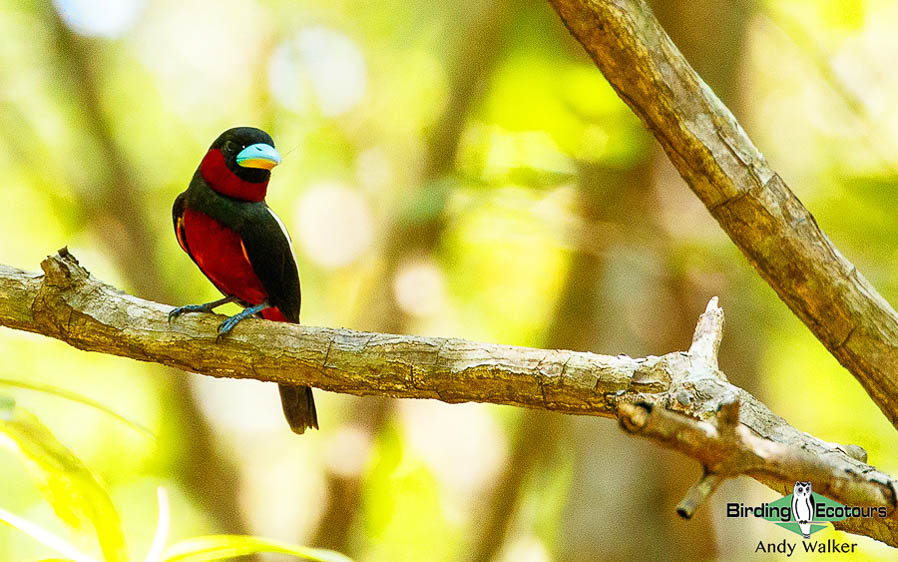
There are numerous special avian treats in southern Thailand, from several spectacular families, such as pittas, kingfishers, trogons, malkohas, hornbills, barbets, bee-eaters, and broadbills, including such beauties as Malayan Banded Pitta, Mangrove Pitta, (Gurney’s Pitta is now regrettably considered extirpated from Thailand), Great Hornbill, White-crowned Hornbill, Helmeted Hornbill (now considered Critically Endangered by BirdLife International), Bushy-crested Hornbill, Green Broadbill, Banded Broadbill, Black-and-yellow Broadbill, Black-and-red Broadbill, Rail-babbler, Scarlet-rumped Trogon, Orange-breasted Trogon, Red-throated Barbet, Golden-whiskered Barbet, Chestnut-breasted Malkoha, Red-billed Malkoha, Banded Kingfisher, Rufous-collared Kingfisher, Brown-winged Kingfisher, Ruddy Kingfisher, Malayan Blue-banded Kingfisher, and Red-bearded Bee-eater.
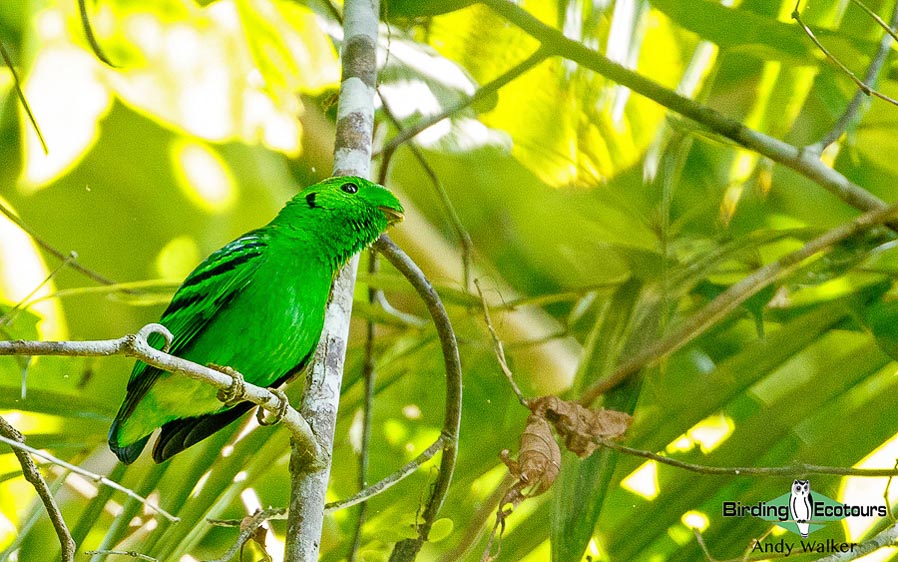
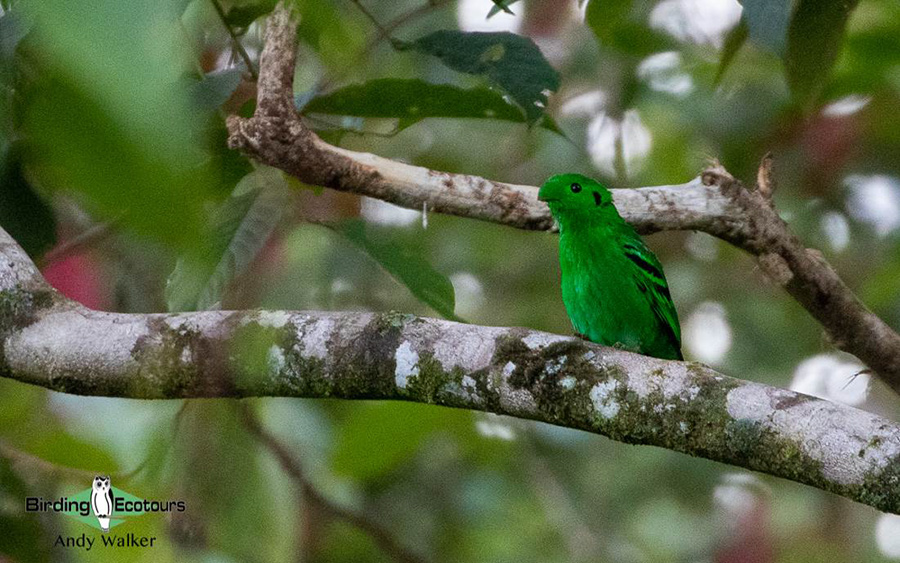 The sight of a male Green Broadbill will likely leave you speechless, it’s a stunner.
We visit a range of national parks to find the above specials, picking up scores of ornately colored woodpeckers, unique jungle-living babblers and bulbuls, attractive leafbirds, interesting spiderhunters, and other sought-after species along the way. We may encounter intriguing jungle mammals too, including Dusky Langur, Southern Pig-tailed Macaque, the aptly named Black Giant Squirrel, the beautiful Lar (White-handed) Gibbon, and, with some luck, the nocturnal Bengal Slow Loris. We will also visit the stunning reservoir at Khao Sok National Park, surrounded by one of the oldest primary forests in Southeast Asia and some of the most spectacular scenery in all of Thailand. This tropical birding adventure, set amid extraordinary karst limestone landscapes and rich tropical seas, is one not to be missed!
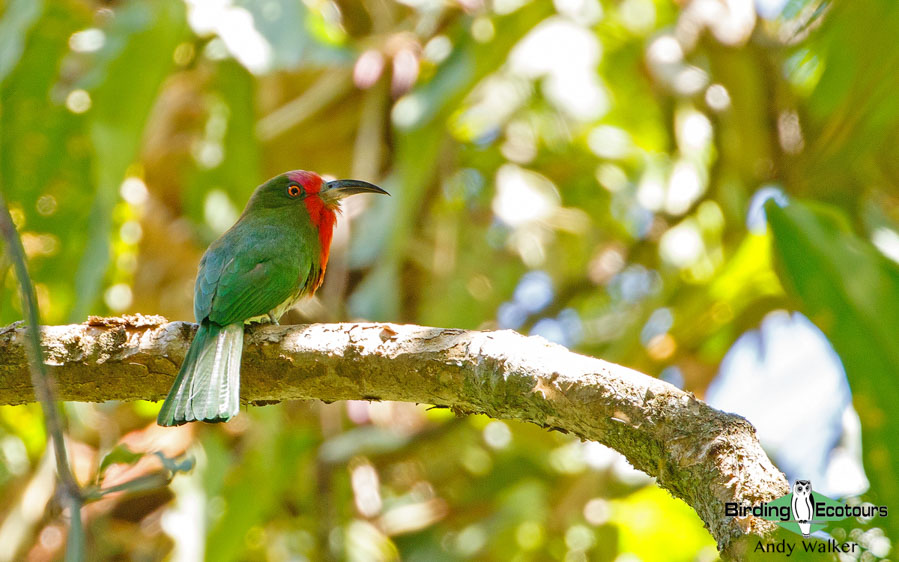
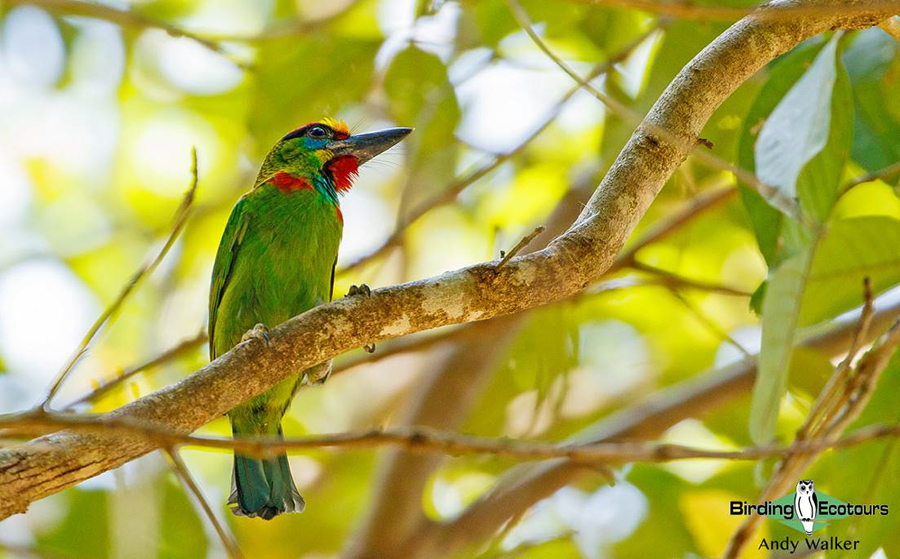 Red-throated Barbet is a target while we are birding in southern Thailand.
This southern Thailand birdwatching tour can easily be combined with our other Thai birding tours, these cover the north and central regions of the country, and offer some amazing birds, including Spoon-billed Sandpiper, Nordmann’s Greenshank, Mrs. Hume’s Pheasant, Blue Pitta, Eared Pitta, Rusty-naped Pitta, Coral-billed Ground Cuckoo, and many more exceptional birds. Furthermore, this southern Thailand birding tour combines perfectly with our thrilling Southern and Central Vietnam: Endemics and Regional Specials tour, which runs immediately after this tour (it’s just a short flight between Phuket and Ho Chi Minh City) and features some simply magical birds like Germain’s Peacock-Pheasant, Bar-bellied Pitta, Blue-rumped Pitta, Indochinese Green Magpie, Golden-winged Laughingthrush, Collared Laughingthrush, Grey-crowned Crocias, and so much more.
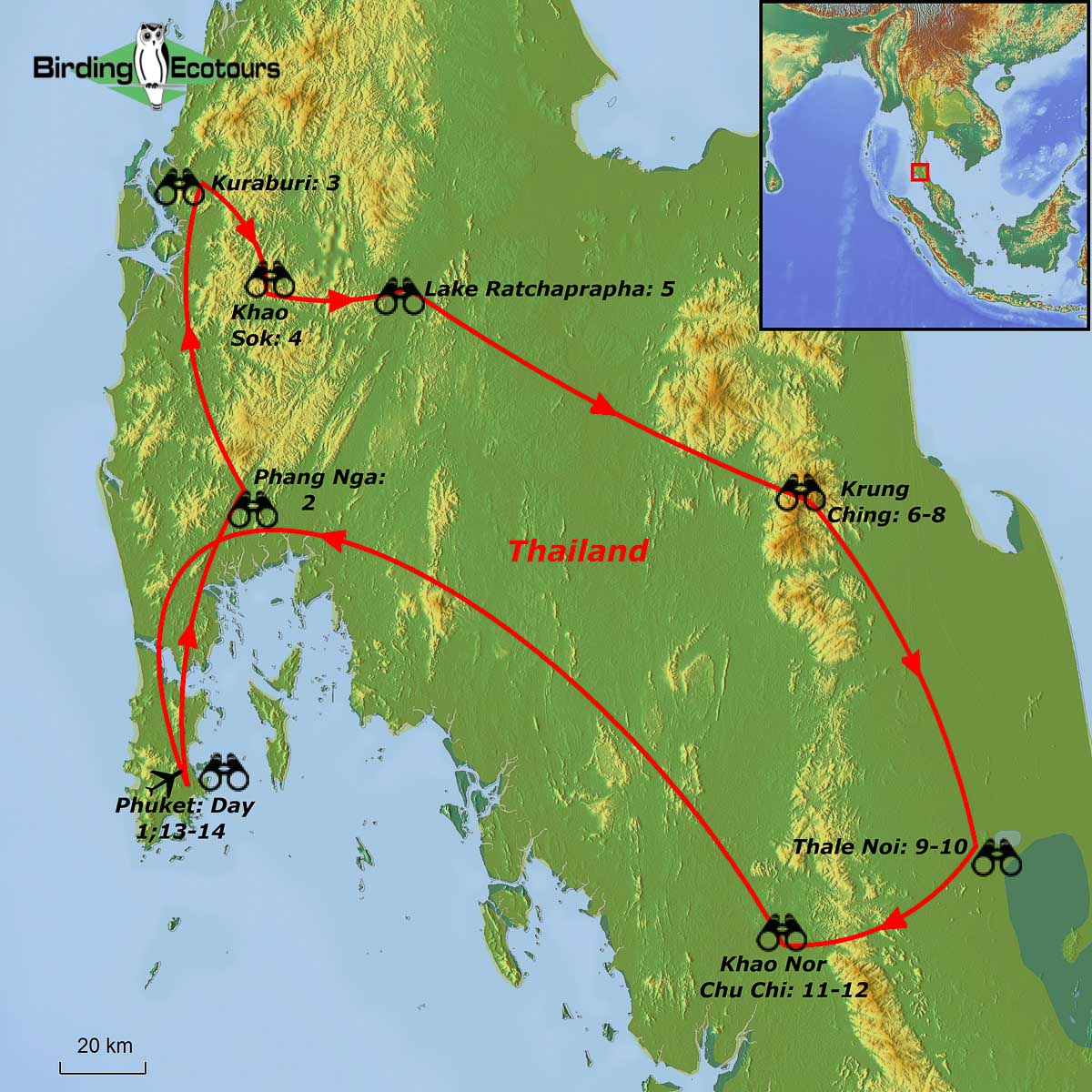
Itinerary (14 days/13 nights)
Day 1. Arrival in Phuket
Arrival in Phuket, where we will meet at our hotel for our group evening welcome meal together. Day at leisure, after your arrival.
Overnight: Phuket
Day 2. Birding at Khao Phra Thaeo and Phang Nga
Morning birding at Khao Phra Thaeo National Park on Phuket Island for an introduction to the birdlife of southern Thailand. Here we are likely to have our first sightings of species like Stripe-throated and Yellow-vented Bulbuls, Scarlet-backed and Orange-bellied Flowerpeckers, and Crimson Sunbird, with Coppersmith Barbet, Red-throated Barbet, and Blue-eared Barbet also possible. Other potential species here may include the dazzling Blyth’s Paradise Flycatcher and overwintering Forest Wagtail.
In the late morning we will drive toward Phang Nga, situated on the idyllic Phang Nga Bay, where we will have lunch and check into our hotel for the night. After lunch we will visit the local mangroves to look for specials such as Brown-winged Kingfisher, Ruddy Kingfisher , Streak-breasted Woodpecker, Chestnut-bellied Malkoha, and the gorgeous Mangrove Pitta.
Overnight: Phang Nga
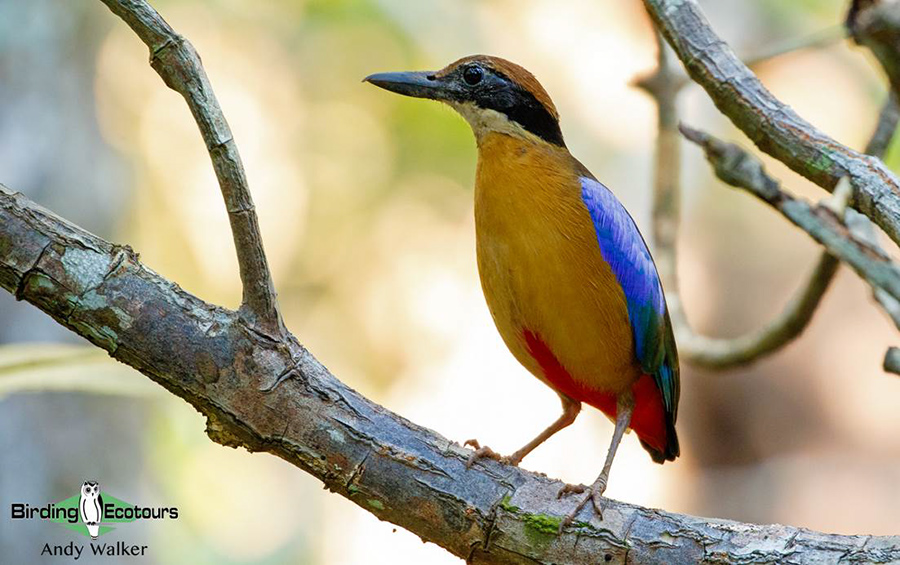 We hope to repeat the quality views of Mangrove Pitta we have had during our previous tours!
Day 3. Birding Phang-Nga Province
We will spend the early morning birding in a town park, which offers loads of great birds, such as Banded Woodpecker, Black-thighed Falconet, and Blue-tailed Bee-eater. We will also continue our exploration of the vast mangroves of the area, where we will be looking for exotic birds such as malkohas, kingfishers, and broadbills, maybe even Mangrove Whistler.
After lunch we will move to Thai Mueang, where we will search for Oriental Dollarbird (in the roller family), Grey-capped Pygmy Woodpecker, and the diminutive Vernal Hanging Parrot. We are also likely to see a range of more common species such as Red-wattled Lapwing and Lesser Whistling Duck here. Seasonal wetlands or rice paddies we pass by may support herons, bitterns, or egrets, as well as Watercock and White-breasted Waterhen, and if we see any suitable habitat, we will take a look, if time permits (noting we will spend time in similar vast habitat on Day 10 looking for wetland birds). Our third stop along the way to Khao Sok is one of southern Thailand’s shorebird meccas. Terek Sandpiper is the main attraction here, together with Greater and Lesser (Tibetan) Sand Plovers, Red-necked Stint, and Grey-tailed Tattler. At the end of the day we will move north to the Khura Buri, Si Phang Nga area.
Overnight: Si Phang Nga
Day 4. Birding Si Phang Nga National Park
An early morning start will see us enjoying the sunrise over the beautiful limestone crags as we head toward Si Phang Nga National Park, where we will spend the majority of the day, as well as the following morning, birding. Si Phang Nga National Park is home to the prodigious Helmeted Hornbill, as well as flocks of Bushy-crested Hornbill, and the immaculate Great Hornbill. The skies above the stream that flows through Si Phang Nga should produce the obscure Whiskered Treeswift and Silver-rumped Spinetail. Chestnut-naped Forktail occurs here, as does the range-restricted Lesser Fish Eagle. This national park is an excellent location for both Malayan Banded Pitta, reputed to be Thailand’s most dazzling pitta, and Banded Broadbill, itself rather dapper, with other impressive birds including Black-and-yellow Broadbill, Orange-headed Thrush, and Chinese Blue Flycatcher. Other potential species here include Little Spiderhunter, Thick-billed Spiderhunter, and Purple-naped Sunbird.
Overnight: Si Phang Nga
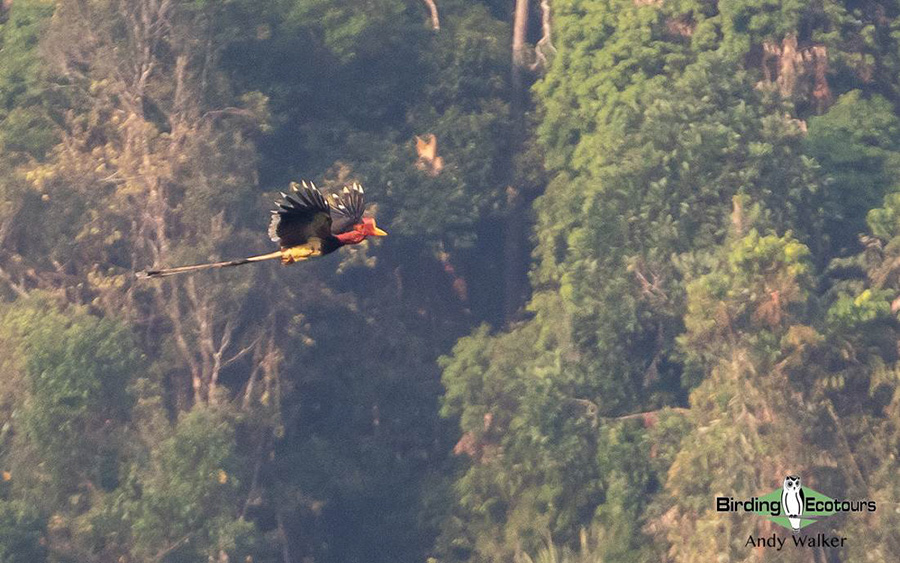 If we are lucky enough to see the Critically Endangered (BirdLife International) Helmeted Hornbill, it is sure to be a tour highlight.
Day 5. Birding Si Phang Nga National Park and travel to Khao Sok National Park area
We will have another morning birding at Si Phang Nga National Park, where we will continue our search for the special birds of the area, and some of the species possible might include Large Blue Flycatcher, Blyth’s Frogmouth, Gould’s Frogmouth, Wallace’s Hawk-Eagle, Brown Wood Owl, Raffles’s Malkoha, Grey-bellied Bulbul, Streaked Bulbul, Velvet-fronted Nuthatch, Blyth’s Paradise Flycatcher, Crow-billed Drongo, Blue-winged Leafbird, and Lesser Green Leafbird.
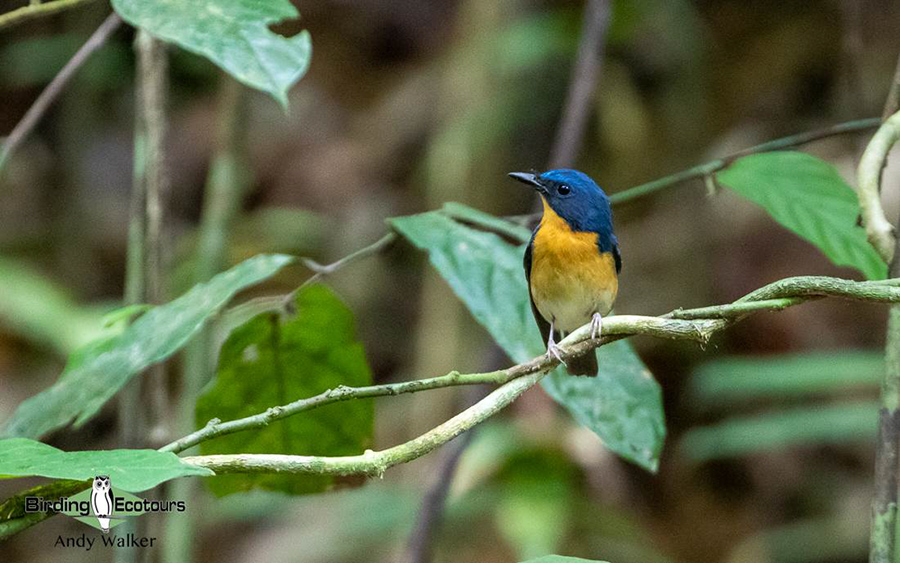 Large Blue Flycatcher is a difficult species to connect with globally, but some birds do overwinter in southern Thailand, and we will be looking out for them on this tour.
After lunch we will drive to Khao Sok. Along the way we will look at some river crossings, marshy grassland, and agricultural land, where we may find River Lapwing, Grey-headed Lapwing, Red-wattled Lapwing, along with kingfishers, shrikes, bee-eaters, and potentially some resident and migrant pipits as well as some migrant shorebirds.
Overnight: Khao Sok
Day 6. Birding Khao Sok National Park
We will have a morning session birding the river section of Khao Sok National Park. Here we search for the elusive Banded, Rufous-collared, and Malayan Blue-banded Kingfishers. The dense jungle here is also a good spot to get to grips with a range of babblers, including Pin-striped Tit-Babbler, Chestnut-winged Babbler, Malayan Black-capped Babbler, and Spot-necked Babbler. A range of woodpeckers occur here, including the flashy Maroon and Bamboo Woodpeckers, and the tiny White-browed Piculet, as well as other forest birds like Grey-breasted Spiderhunter. This is one of the sites where we will search for the gaudy Chestnut-naped Forktail as well as for Black-and-red Broadbill and Raffles’s Malkoha. With luck we might also spot some interesting animals, like Wagler’s Keeled Green Pit Viper.
We return to our lodge for lunch before we drive to the nearby Ratchaprapha Dam (Lake Ratchaprapha), where we will board a longboat to take us to our floating accommodation. The boat ride between the pier and our accommodation will take approximately 90 minutes. Between the limestone cliffs that tower hundreds of meters above us, we will search for White-bellied Sea Eagle, Oriental Hobby, Lesser Fish Eagle, and Grey-headed Fish Eagle. After checking into our floating accommodation, we will make a boat-based excursion on the lake which will provide excellent vistas into the jungle and gives us one of our best chances of sightings of Helmeted, Great, Bushy-crested, and White-crowned Hornbills, as well as woodpeckers like Greater and Common Flamebacks. In addition, jungle mammals like Dusky Langur and Lar (White-handed) Gibbon, which utters a beautifully haunting call from the jungle canopy, are likely. This is possibly the most scenic spot in Thailand too.
Overnight: Lake Ratchaprapha
Days 7. Birding Khao Sok National Park to Tha Sala
We will head onto the lake for a dawn wildlife cruise and will look for Helmeted Hornbill and all the other possible hornbill species of the area, a range of kingfisher such as Stork-billed Kingfisher, Black-capped Kingfisher, Blue-eared Kingfisher, and exciting raptors such as Bat Hawk, Lesser Fish Eagle, and Oriental Hobby. We will be out on the water most of the morning, returning to the pier in time for lunch.
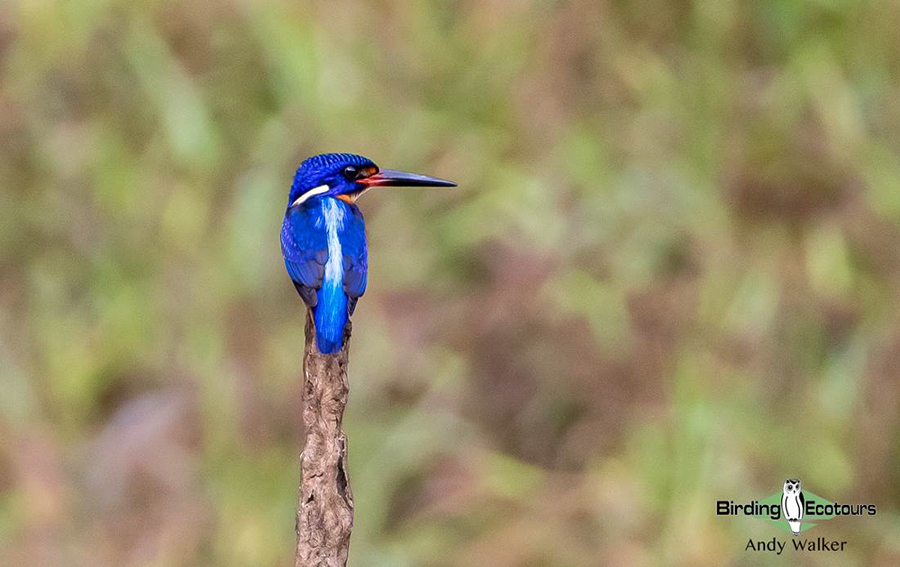 The gorgeous Blue-eared Kingfisher is one of several kingfisher species possible at Lake Ratchaprapha and on this southern Thailand tour in general.
After lunch we will drive to the Tha Sala area, our base for the next two nights for birding the nearby Khao Luang (Krung Ching) National Park on the eastern side of the Peninsula.
Overnight: Tha Sala
Day 8. Birding Khao Luang (Krung Ching) National Park
The rainforest at Khao Luang National Park holds a plethora of special birds that we will be looking for during our time here. These include White-crowned Forktail, Scarlet-rumped Trogon, Orange-breasted Trogon, the petite Rufous Piculet, the range-restricted Crested Jayshrike (now a monotypic family), Rail-babbler (a very rare monotypic family that requires immense luck here, but is possibly much easier in Borneo), Green, Black-and-yellow, Sooty, and Dusky Broadbills, Malayan Banded Pitta, Banded Kingfisher, Scarlet Minivet, Greater Racket-tailed Drongo, Helmeted Hornbill, and breeding Wallace’s Hawk-Eagle.
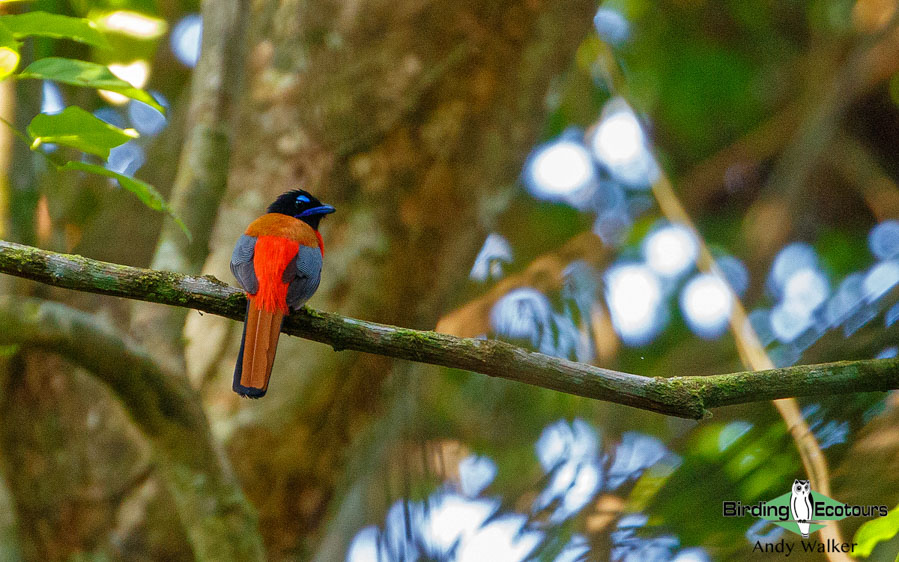
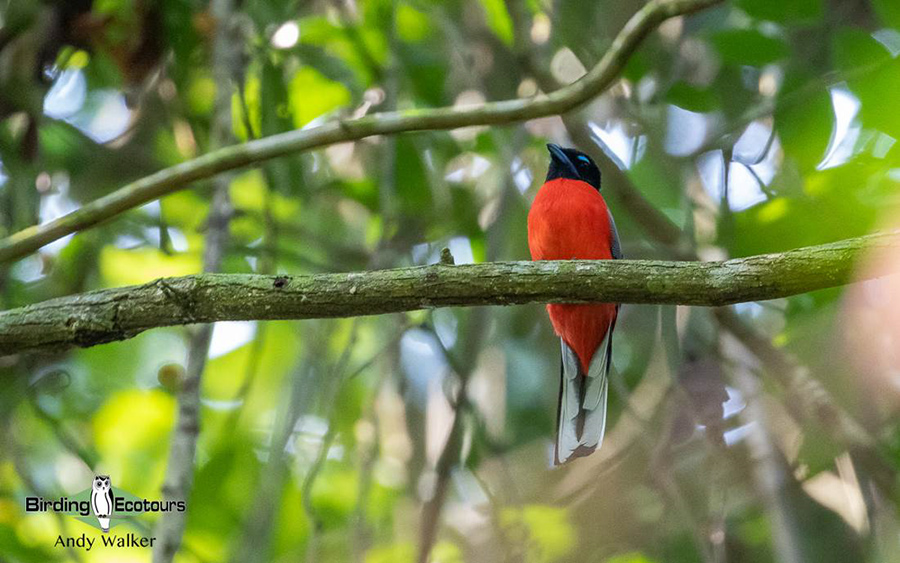 The gorgeous Scarlet-rumped Trogon is sure to be a highlight bird, it is so beautiful.
During our day birding here, we will spend some time on the main waterfall trail, looking and listening for the elusive Rail-babbler and other secretive forest birds, such as Fluffy-backed Tit-Babbler, Chestnut-winged Babbler, Moustached Babbler, and Black-throated Babbler. Around the headquarters area we will be looking for forest-edge birds and others visiting fruiting or flowering trees, such as Golden-whiskered Barbet, Blue-eared Barbet, Scaly-breasted Bulbul, Hairy-backed Bulbul, Spectacled Bulbul, Asian Red-eyed Bulbul, Black-crested Bulbul, Black-headed Bulbul, Black-naped Monarch, Square-tailed Drongo-Cuckoo, Orange-bellied Flowerpecker, and Yellow-eared Spiderhunter.
Overnight: Tha Sala
Day 9. Birding Khao Luang (Krung Ching) and the wetlands of Thale Noi
During our final morning birding session at Khao Luang we will walk the entrance road, where we might find some different species from those of the previous day, such as Red-billed Malkoha, Chestnut-breasted Malkoha, Raffles’s Malkoha, Black-and-yellow Broadbill, Banded Broadbill, Black Baza, Lesser Cuckooshrike, Great Iora, Ruby-cheeked Sunbird, Greater Green Leafbird, Spectacled Spiderhunter, and Crimson Sunbird.
In the late morning we will drive to our next base in the Thale Noi area. Here we will spend the afternoon at leisure around our accommodation in our comfortable resort.
Overnight: Thale Noi
Day 10. Birding Thale Noi
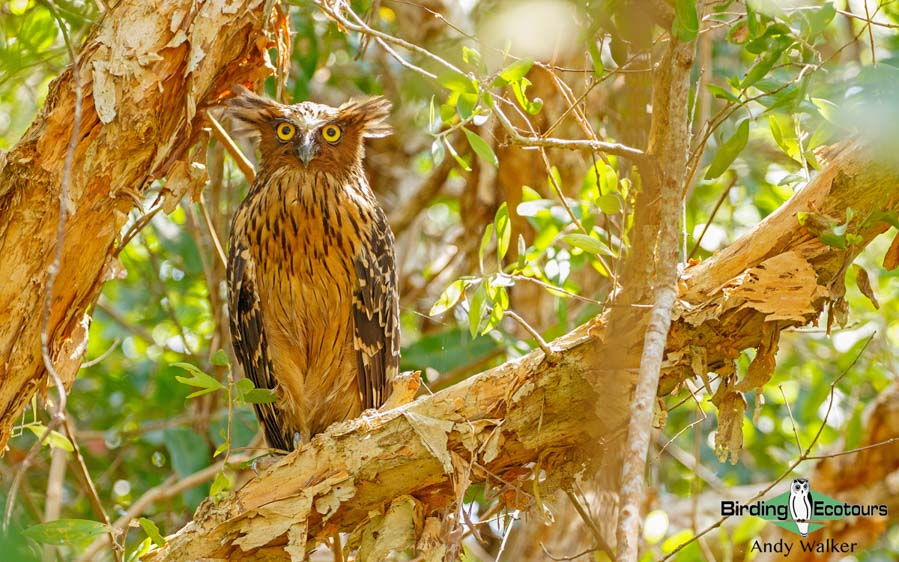
We will spend the day birding around Thale Noi, it will be great to be in open habitat after a lot of forest birding over previous days. Sometimes Buffy Fish Owl can be found roosting or nesting near our accommodation along the lake, and if we are lucky enough to find one it is sure to be another highlight.
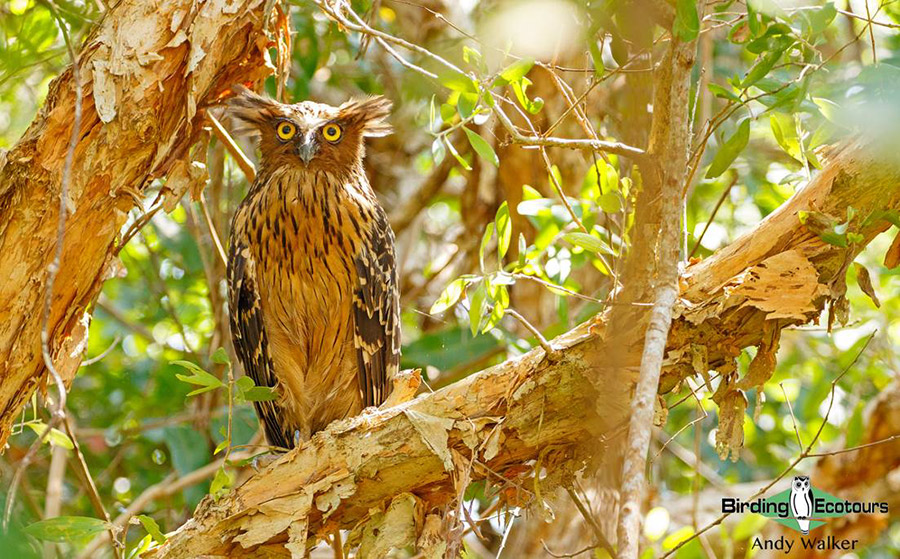 While birding around the lake we will keep our eyes peeled for Buffy Fish Owl.
In the wetlands around the edge of the lake we will look for Pheasant-tailed Jacana, Bronze-winged Jacana, Grey-headed Swamphen, Lesser Whistling Duck, Garganey, Cotton Pygmy Goose, or the rare (at least in this part of Thailand) Painted Stork.
We will sit out the heat of the middle of the day, maybe enjoying the resort’s spa or pool facilities, and then in the late afternoon we will visit a recent conservation initiative for the protection of the rare and localized (in Thailand) Knob-billed Duck. The management of rice paddies for this species here has resulted in a wonderful mosaic of habitats for a wide range of species that also make use of the lake, paddies, and nearby fish farms. Some of the species we will hope to find while birding the area include Bronze-winged and Pheasant-tailed Jacanas, Cotton Pygmy Goose, Yellow Bittern, Purple Heron, Stork-billed Kingfisher, Chinese Pond Heron, Eastern Marsh Harrier, Black-headed Ibis, Glossy Ibis, Indian Cormorant, Oriental Darter, Grey-headed Swamphen, Slaty-breasted Rail, White-browed Crake, Whiskered Tern, and with luck some interesting shorebirds such as Oriental Pratincole, Long-toed Stint, Wood Sandpiper, and Grey-headed Lapwing. Passerines around the area might include Pallas’s Grasshopper Warbler, Amur Stonechat, White-headed Munia, Jungle Myna, Siamese Pied Myna, Great Myna, Plain-backed Sparrow, and Asian Golden Weaver.
Overnight: Thale Noi
Day 11. Birding Trang Peninsular Botanic Garden and Khao Nor Chu Chi (KNCC)
After breakfast we will leave our accommodation and commence our journey towards Khao Nor Chu Chi (KNCC). We will spend most of the day birding in and around the Peninsular Botanic Garden near Trang, which is home to a small peat swamp and a lot of good birds. Here we can potentially see Red-billed Malkoha, Indian Cuckoo, Large Hawk-Cuckoo, Square-tailed Drongo-Cuckoo, Oriental Dwarf Kingfisher, Banded Woodpecker, Rufous Piculet, Great Iora, Green Iora, Bar-winged Flycatcher-shrike, Van Hasselt’s Sunbird, and Spectacled Spiderhunter, as well as plenty of other interesting species, maybe even the localized Red-crowned Barbet.
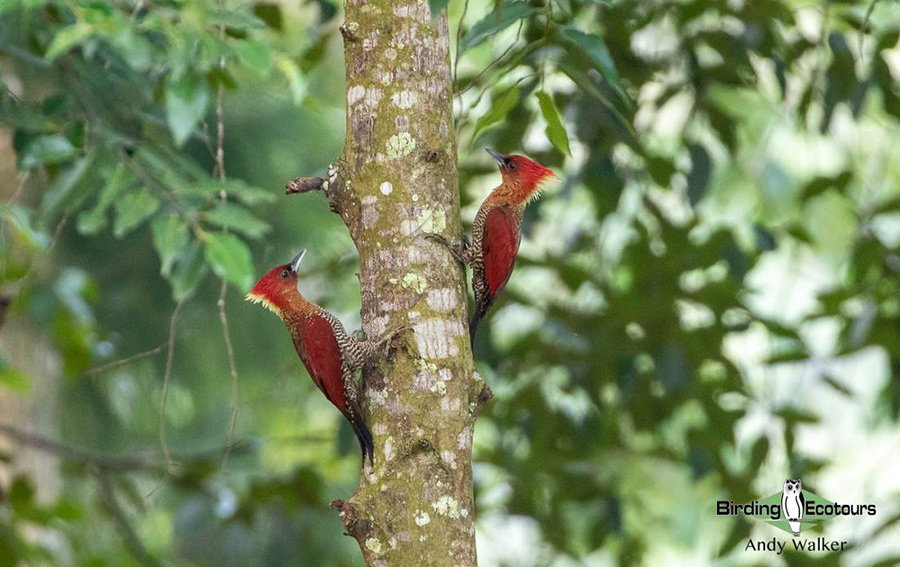 There are many attractive woodpeckers possible on this southern Thailand birding tour, and Banded Woodpeckers are possibly one of the best.
In the afternoon we will continue towards Khao Nor Chu Chi, our base for the next two nights. We will perhaps visit a nearby trail in the late afternoon, or look for some birds around the lodge grounds, where we might find Brown-throated Sunbird, White-throated Kingfisher, Red-throated Barbet, Great Myna, Orange-bellied Flowerpecker, Asian Koel, or Banded Woodpecker.
Our after-dinner outing at Khao Nor Chu Chi will be in search of Great Eared and Large-tailed Nightjars as well as Oriental Bay Owl, and we may also find other nocturnal species such as Brown Wood Owl, Sunda Scops Owl, or Barred Eagle-Owl, maybe even an interesting reptile or mammal too, such as Bengal Slow Loris.
Overnight: Khao Nor Chu Chi
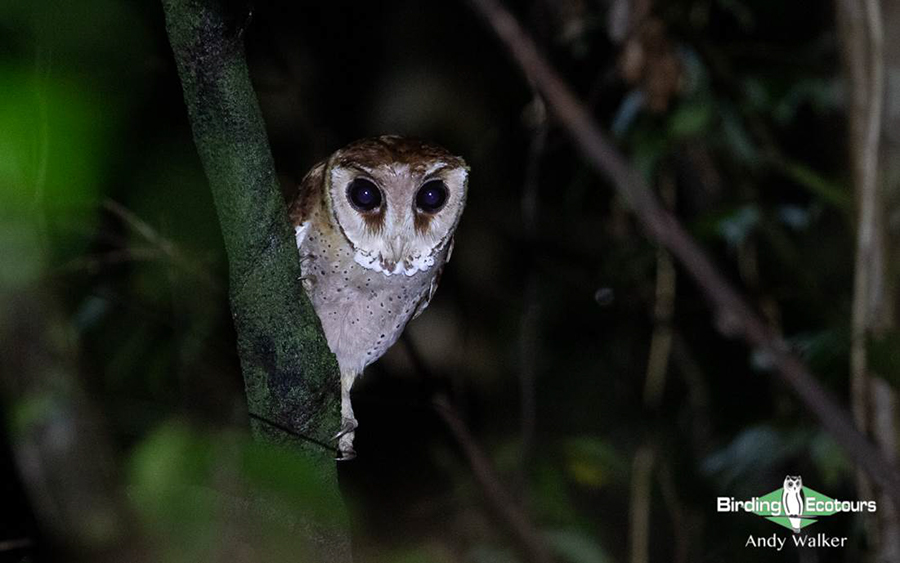 It is rare and highly secretive, but Oriental Bay Owl is one of several nocturnal species we will be looking for while birding at Khao Nor Chu Chi in southern Thailand.
Day 12. Birding Khao Nor Chu Chi/Khao Pra-Bang Khram Wildlife Sanctuary
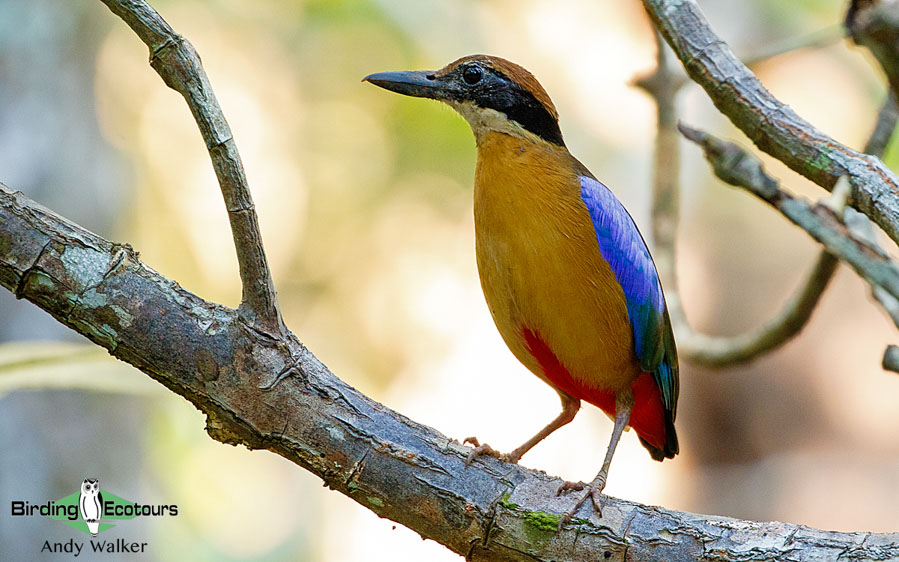
Sadly, Gurney’s Pitta is no longer seen at Khao Nor Chu Chi (also known as Khao Pra-Bang Khram Wildlife Sanctuary), but the area is still definitely well worth visiting, as it is the only remaining lowland forest in southern Thailand and home to a profusion of exciting birds. During our stay here we will search for flamboyance in the form of Orange-breasted and Scarlet-rumped Trogons, Red-crowned Barbet, Red-throated Barbet, Vernal Hanging Parrot, Chestnut-bellied and Raffles’s Malkohas, Crested Jayshrike, Malayan Banded Pitta (possibly even an early retuning migrant Hooded or Blue-winged Pitta if we’re really lucky), Black-and-yellow Broadbill, Green Broadbill, Rufous-collared and Oriental Dwarf Kingfishers, Common Hill Myna, Van Hasselt’s Sunbird, and Blyth’s Paradise Flycatcher. There are some seriously spectacular birds here and we will try and find as many as possible!
Less gaudy, but as impressive for the Asian birding connoisseur, are many species of cryptically marked babblers, including Ferruginous Babbler, Rufous-crowned Babbler, Malayan Black-capped Babbler, and Spot-necked Babbler, while Buff-rumped Woodpecker is exquisite in the subtlety of its markings, and numerous bulbuls can be found with patience, including Cream-vented Bulbul and Puff-backed Bulbul. Globally there are only two species of philentomas in the world, Maroon-breasted Philentoma and Rufous-winged Philentoma, both occur here, though they are not common and will take some luck. Khao Nor Chu Chi is also one of the very few places where the enigmatically elusive Giant Pitta has been sighted, but we will need extreme luck to find one of those (it can be found a touch more easily on our Sabah, Borneo bird tour, but it’s a tough bird to connect with anywhere in its range)!
Overnight: Khao Nor Chu Chi
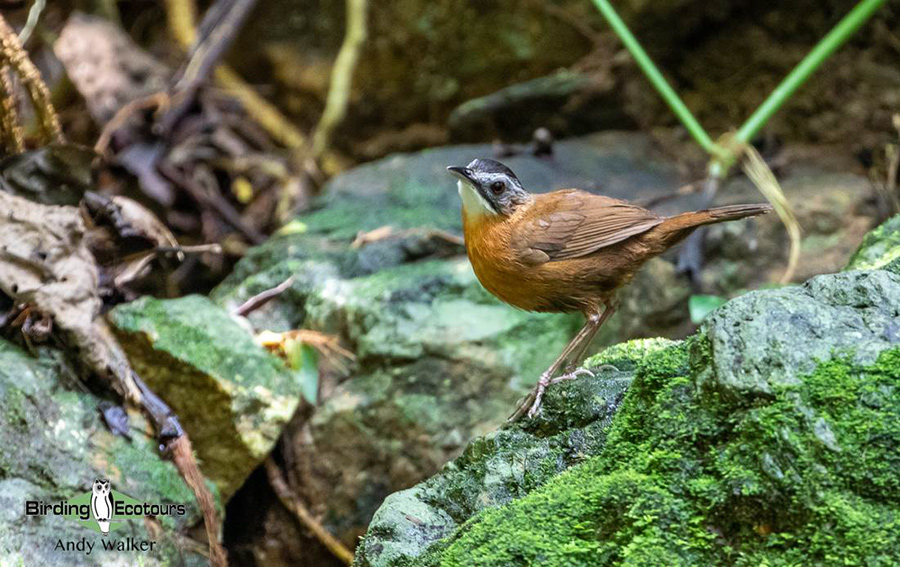 The song of Malayan Black-capped Babbler can be heard at Khao Nor Chu Chi, seeing this ground-dwelling species takes some patience though.
Day 13: Khao Nor Chu Chi to Phuket
We will have another morning birding around Khao Nor Chu Chi, looking for the aforementioned species along with others such as Moustached Hawk-Cuckoo, Hairy-backed Bulbul, Yellow-bellied Bulbul, Yellow-breasted Flowerpecker, Yellow-vented Flowerpecker, Crimson-breasted Flowerpecker, and plenty more.
After lunch we will check out of our accommodation and commence our drive back to Phuket, where we will have a final meal together and tackle the difficult and fun task of selecting a ‘Bird of the Trip’, never an easy job.
Overnight: Phuket
Day 14: Phuket International Airport, tour concludes
A non-birding day at leisure before your onward journey. The tour concludes with departure from Phuket International Airport.
Overnight: Not included
Please note that the itinerary cannot be guaranteed as it is only a rough guide and can be changed (usually slightly) due to factors such as availability of accommodation, updated information on the state of accommodation, roads, or birding sites, the discretion of the guides and other factors. In addition, we sometimes have to use a different international guide from the one advertised due to tour scheduling.
Map
Testimonials
Gallery
General Information
SOUTHERN THAILAND: JEWELS OF THE SOUTH
TOUR-SPECIFIC INFORMATION
GENERAL INFORMATION ABOUT THAILAND CAN BE READ HERE
TOUR OUTLINE
This two-week Thai birding tour visits some of the most spectacular of the unique karst limestone landscapes in the country, during our search for the special birds of southern Thailand. This is an extra-small group tour, with a maximum of just six people, ensuring a much better birding experience than is possible in a larger-group environment.
A great many quality birds are on offer here, such as Malayan Banded Pitta, Mangrove Pitta, White-crowned Hornbill, Helmeted Hornbill (along with several other hornbill species), Scarlet-rumped Trogon, Green Broadbill, Red-throated Barbet, Brown-winged Kingfisher, Blue-banded Kingfisher, and Rail-babbler. The tour starts and ends in Phuket and during the tour we visit Khao Phra Thaeo Wildlife Sanctuary (National Park), Si Phang Nga National Park, Khao Sok National Park – including stunning Lake Ratchaprapha (also known as Chiaw/Cheow Lan Lake), Khao Luang (Krung Ching) National Park, Thale Noi, and Khao Nor Chu Chi (Khao Pra-Bang Khram Wildlife Sanctuary). We will bird in and around a range of forests, mangroves, lakes, rivers, and coastal areas that will yield many bulbuls, trogons, hornbills, kingfishers, broadbills, owls, and malkohas. There are some good photo opportunities on the tour, but we don’t generally visit bird blinds like we do on our central Thailand and northern Thailand birdwatching tours.
DAILY ACTIVITIES, PHYSICAL REQUIREMENTS, AND TOUR PACE
This tour runs at a fairly quick pace with a few long days in the field or traveling and covers many sites to get the most out of the area in question. There are several one-night stays along the tour route. We will spend a lot of time birding in forest, either from vehicles, on foot, or by boat. Most of the trails we walk will be moderately flat and of fairly decent quality, however, there are a couple of hikes that are a bit longer and more strenuous and include some steep inclines. We don’t bird at very high elevation on this tour so elevation shouldn’t be a problem for anyone. The heat and humidity are likely to be rather draining at times. We always walk at a slow pace when birding and many of the walks are totally optional, sometimes sitting one out and resting in the shade in a campsite with a good view is a great way of seeing some cool birds! On some hikes we will likely cover distances of around three miles (five kilometers), but all walking will be at a slow pace.
We will usually have early morning and late afternoon birding sessions. We will generally sit out the middle part of the day when temperatures are hot and bird activity slow. Sometimes this will be back at our accommodation, but at other times it is likely to be within the forest/national park as we make use of the limited facilities these places have (such as campground and headquarter areas that offer shade and toilets).
We will take a couple of small-boat boat trips on this tour. One around a lake at Thale Noi in small dugout canoe type boats which allow for a great close approach to numerous waterbirds. This trip usually lasts a few hours. The other, more major, boat trip involves visiting Lake Ratchaprapha. We will take a larger boat (but still small) out to a floating hotel where we will spend the night (see “Accommodation” section for more information). We will then use this boat to access different parts of the lake as we bird the forest that cloaks the lake shore and impressive hilly landscape surrounding it. This usually allows us to get closer to a range of secretive hornbills and other birds, such as a range of forest raptors.
If you get motion sickness (e.g. while in vehicles and/or on boats), please be aware that some of the roads we cover will be windy and we will also be spending time on water, so please bring suitable medication, if required.
SAFETY
Most of the trails we cover are of a fairly decent quality, though some can be slippery (whether wet or not), so extreme care should be taken at several locations and we will advise you of the trail condition before setting off on our birding. A walking stick/hiking pole would be useful for some trails, such as at Khao Luang (Krung Ching) National Park where the beginning section of the trail is steep and can be slippery – those people not sound on their feet should consider sitting this hike out. There is a nice area to sit and watch for birds at the base of the trail to still see some great birds of the area.
Getting in and out of the boats is done at a basic dock and should be a dry entry/exit. However, if we stop the boat on the lakeshore (to stop and watch for a hornbill nest, for example), we may get out of the boat to be able to watch the nest more comfortably. We will obviously endeavor to moor the boat somewhere dry, but wet and dirty boots could be a possibility.
The tour is in the dry season but as on all of our Thailand bird tours leeches are a possibility, and are probably more likely on this tour than any other, though still not definite here, it really just depends on how wet it has been in the lead up to our tour.
WEATHER/CLIMATE
It is hot year-round in southern Thailand. We can expect daytime temperatures of around 86–95 °F (30–35 °C) with temperatures at night likely to be around 68–77 °F (20–25 °C). It is likely to feel humid, particularly when in the tropical forests and when birding in the mangroves at the coast. We do not really get any substantial elevation gains on the tour, so much cooler temperatures are unlikely. While it is usually mainly dry at this time of year, rain can occur in the form of afternoon thunderstorms. The sun is strong at this time of year and care should be taken to remain hydrated and use sun protection.
ACCOMMODATION
We stay in a range of accommodation on this tour, to get us close to the areas we will be birding, these will include hotels, boutique hotels, and lodges. Most of the accommodation is of a typical standard for a bird tour. Most accommodation will have air-conditioning (or a fan), and most, but not all, will have Wi-Fi, though this may be restricted to common areas such as dining areas. We will spend one night in “floating accommodation” on Lake Ratchaprapha, the accommodation is basic with no air-con (but rooms do have fans) and there may be no Wi-Fi here. This accommodation has a no plastic policy. A couple of the places we stay have swimming pools (or a lake!) to swim, should you wish.
MEALS
On some days (mainly when we have to get into national parks early) we will need to leave the accommodation early and eat a basic picnic breakfast. On some days we will have a picnic lunch. The breakfast/lunch picnics will usually consist of fruit, pastries, yoghurt, nuts, sandwiches, chips, etc. On some days we will get a hot lunch, usually consisting of rice- or noodle-based dishes, with the main meal of the day being in the evening. In some areas (away from tourist areas) alcohol may be difficult to get hold of, or more expensive due to religious reasons. The food of southern Thailand is usually more spicy than other parts of Thailand, though we can ask the people preparing the food to tone the spice levels down, and if you like spicy food, you can request extra spice to be added.
WHAT TO BRING: CLOTHING AND OTHER ITEMS
There is nothing specific required for this tour, please see the Thailand General Information for recommended clothing and other items. As mentioned above, a hiking pole/walking stick will be useful if you are not steady on your feet on a couple of the trails within the national parks. Leech socks could be useful if we hit an unseasonably wet spell and leeches are “out and about”.