- Duration:
- 12 days
- Group Size:
- 5–8, with a 15 % price surcharge should we only have a group of 4
- Tour Start:
- Kota Kinabalu
- Tour End:
- Lahad Datu
Borneo Birding Tour: Sabah Classic Set Departure Tour
Details
2027
20–31 July
Per person sharing
RM41,300 MYR
$10,619 USD / £8,050 GBP / €9,519 EUR
Single supplement
RM8,160 MYR
$2,098 USD / £1,591 GBP / €1,881 EUR
2028
20–31 July
Per person sharing
RM45,800 MYR
$11,776 USD / £8,927 GBP / €10,557 EUR
Single supplement
RM9,060 MYR
$2,329 USD / £1,766 GBP / €2,088 EUR
2029
20–31 July
Per person sharing
RM50,885 MYR
$13,083 USD / £9,918 GBP / €11,730 EUR
Single supplement
RM10,055 MYR
$2,585 USD / £1,960 GBP / €2,317 EUR
Itinerary
Download ItineraryBorneo Birding Tour: Sabah Classic Set Departure Tour
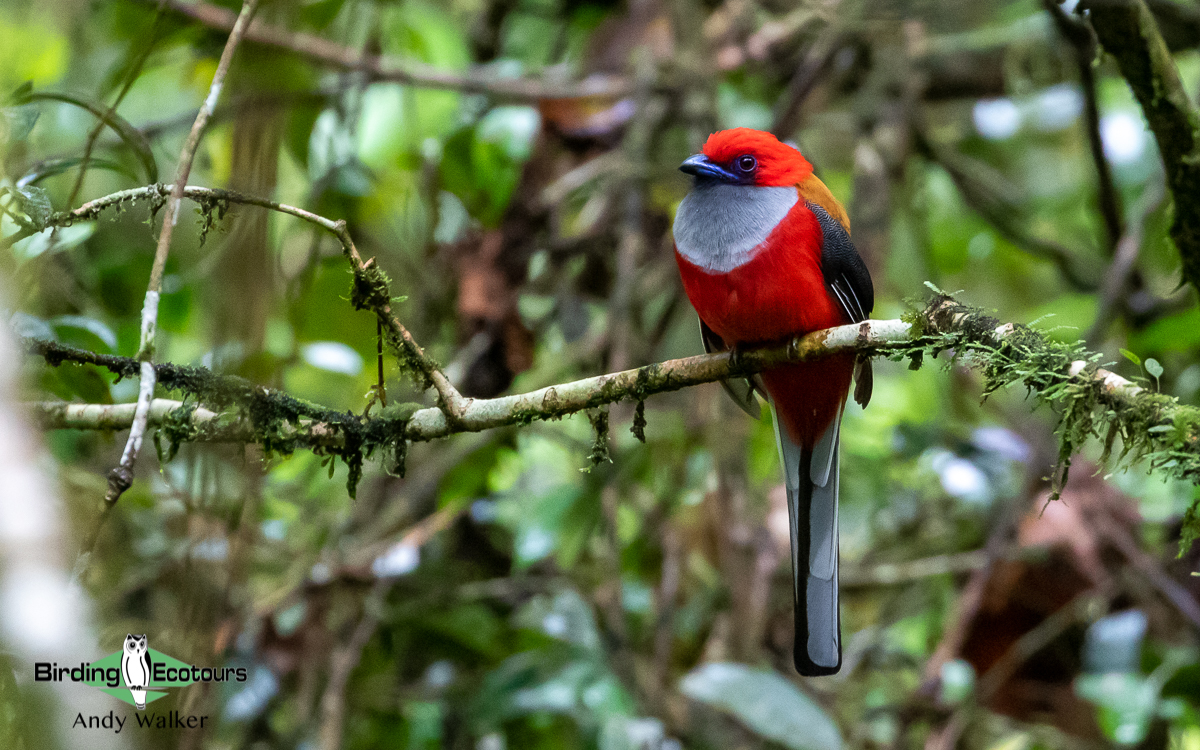
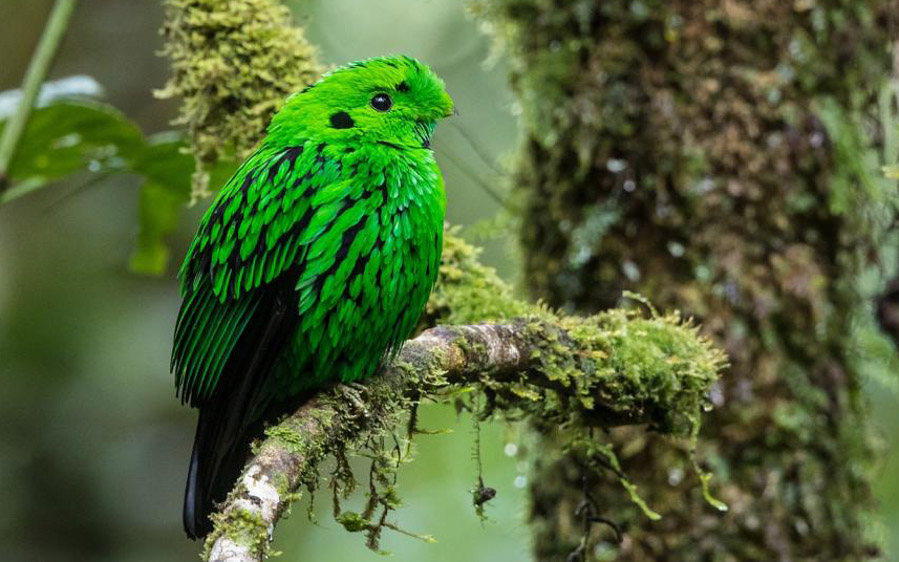
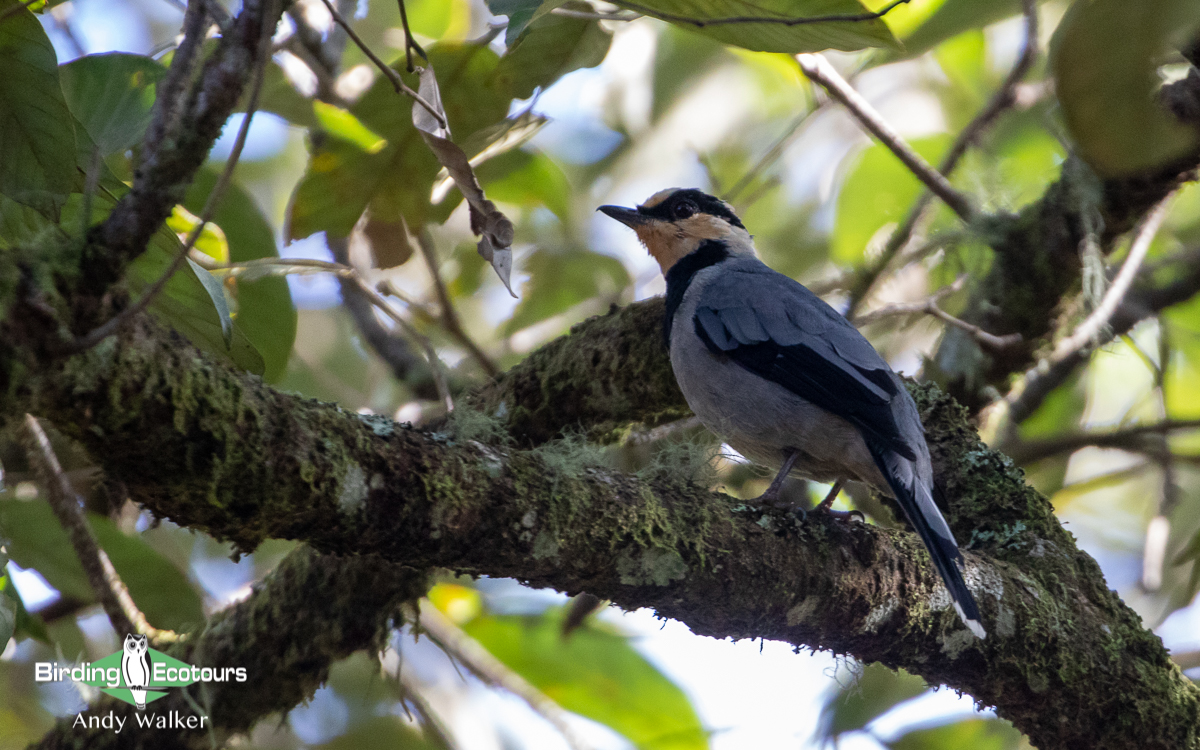
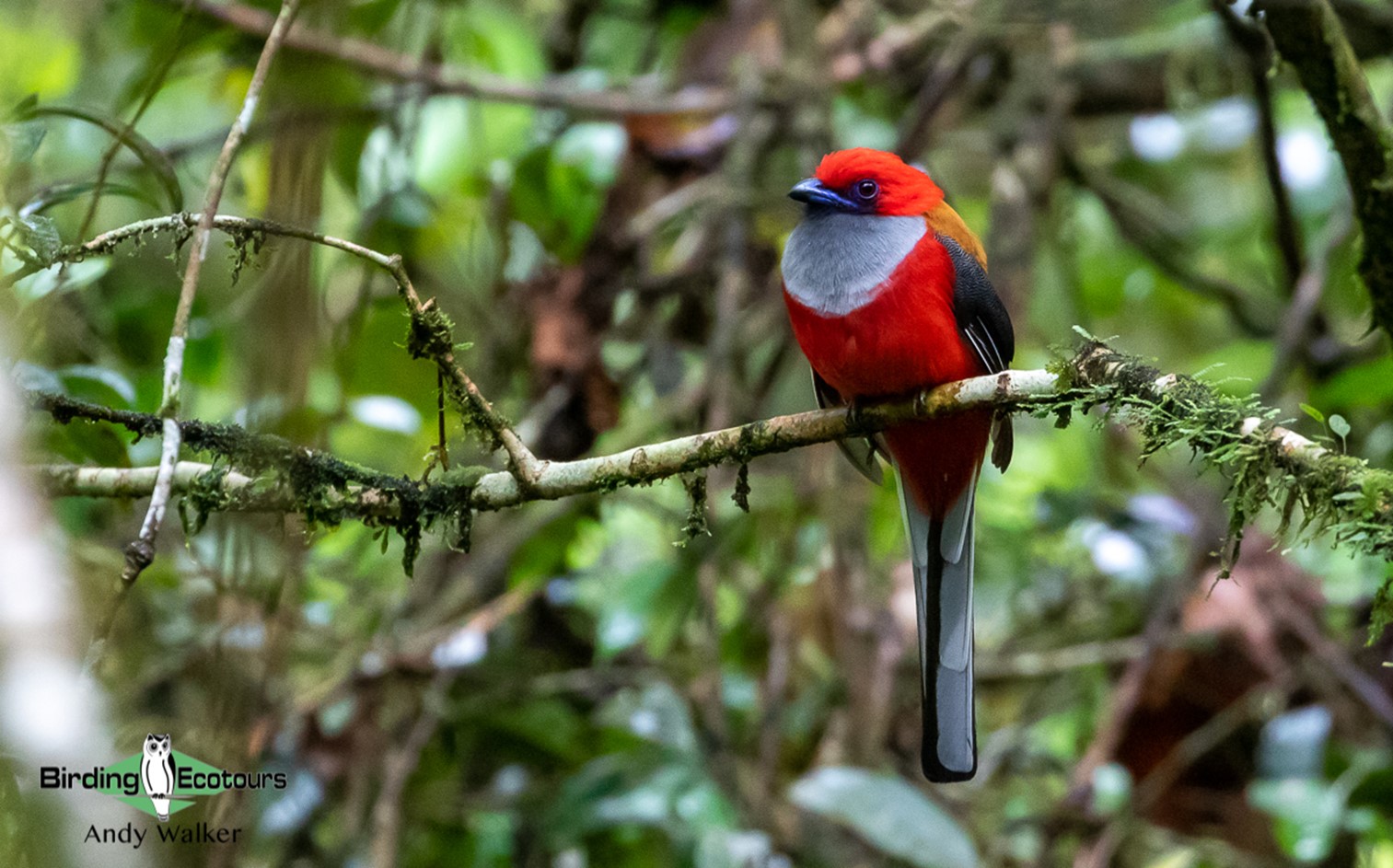 Whitehead’s Trogon – one of the famous “Whitehead’s trio” that we target on this Borneo tour.
Overview
Borneo, the world’s third-largest island, is one of the world’s most biodiverse wildlife havens. With over 50 island endemics found across pristine dipterocarp forests, montane cloudforests, riverine habitats, and mangrove swamps, you should enjoy an amazing time on this small-group birdwatching tour filled with stunning birds from mouthwatering families like pittas, trogons, kingfishers, hornbills, and broadbills, as well as a wide range of mammalian treasures.
Our Borneo birding tour will take us to the important birdwatching sites of the Malaysian province of Sabah, which covers the northernmost part of this vast and amazing island, including time spent birding in five of its IBAs (Important Bird Areas identified by BirdLife International): the Crocker Range, Mount Kinabalu, Kabili-Sepilok, the Kinabatangan river floodplain, and the Danum Valley (where we will stay at the magnificent Borneo Rainforest Lodge).
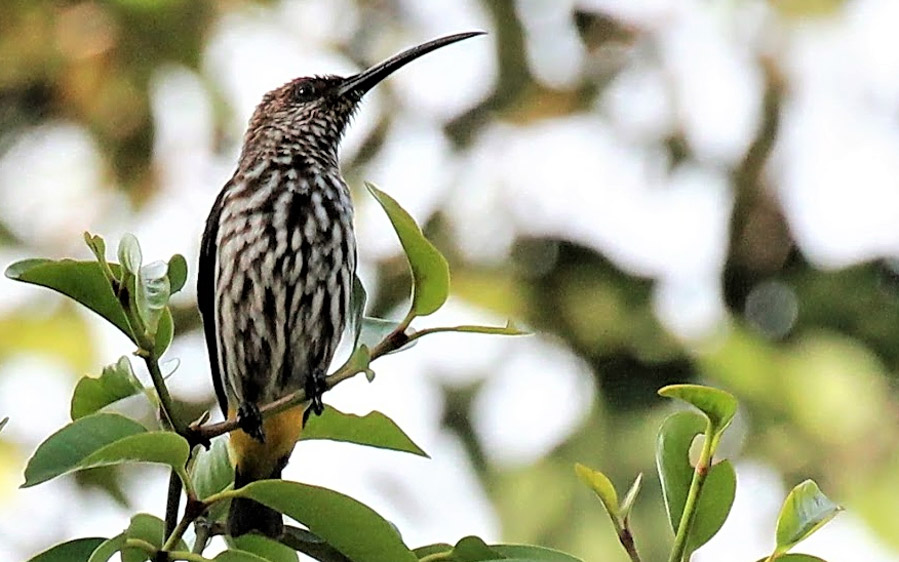
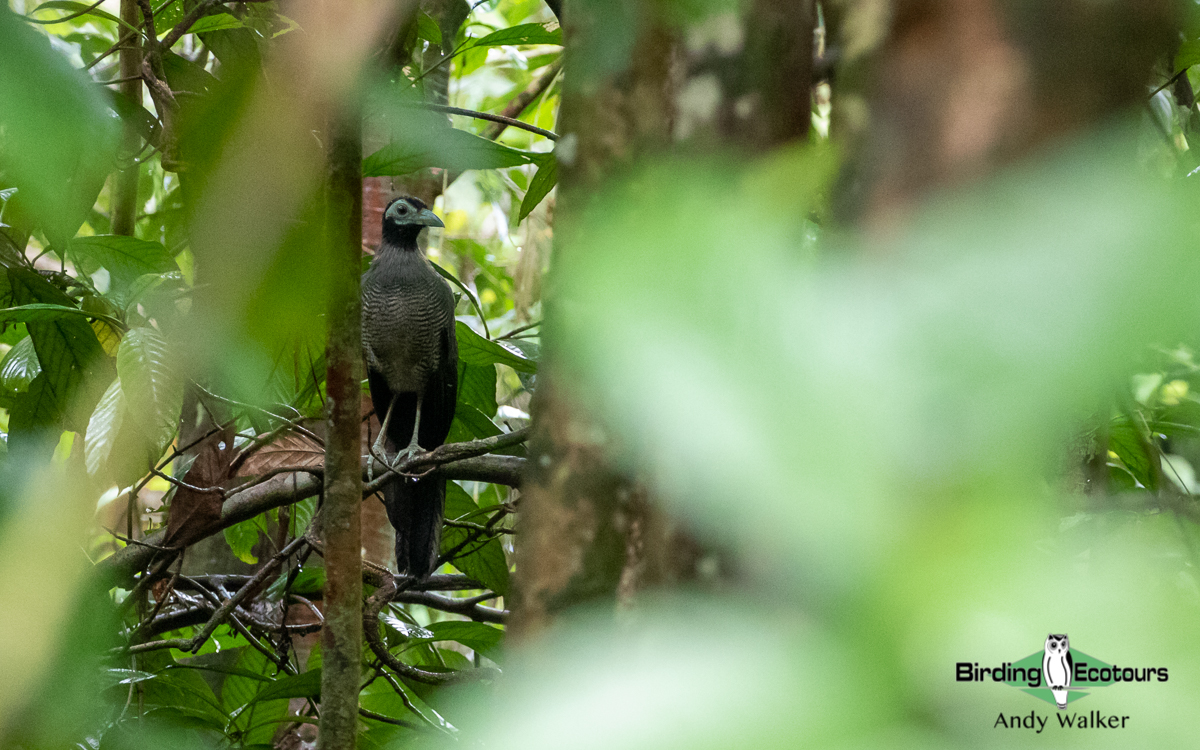
Some of the many birds we target include the famous “Whitehead’s trio” of Whitehead’s Trogon, Whitehead’s Broadbill, and Whitehead’s Spiderhunter, along with the monotypic Bornean Bristlehead, a big target for family listers and one of Borneo’s most sought endemics. We will also look for other mega endemic birds such as Bornean Ground Cuckoo, Fruithunter, and Bornean Green Magpie, and we will look for three glittering endemic pittas, the simply sublime trio of Blue-headed Pitta, Black-crowned Pitta, and Bornean Banded Pitta. Furthermore, we will also look for the near-mythical Giant Pitta. It is very unlikely that we will see the very tough endemic Blue-banded Pitta on this tour, though our Malaysia: Borneo, Sarawak – Restricted Range Endemics tour offers better chances for that one.
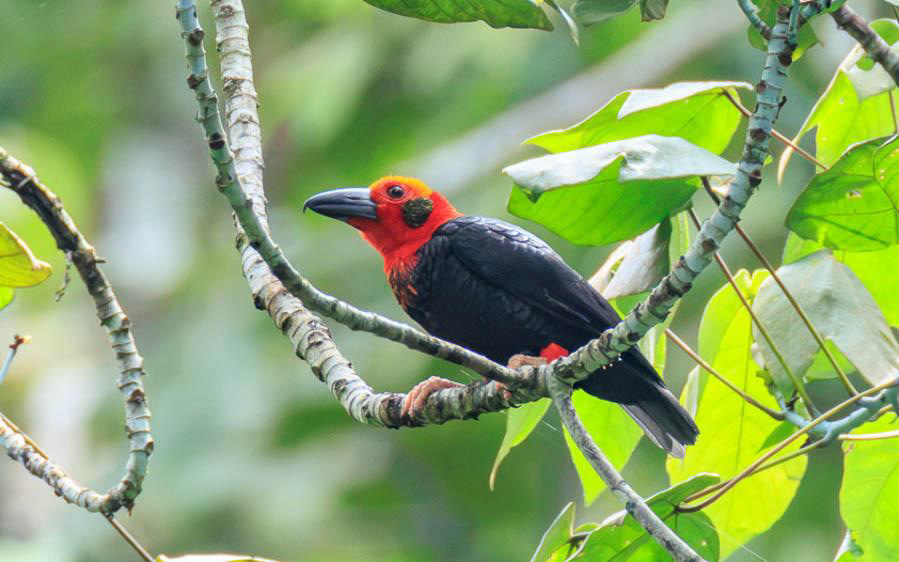 Bornean Bristlehead, a bizarre and monotypic endemic target (photo Norman Graf).
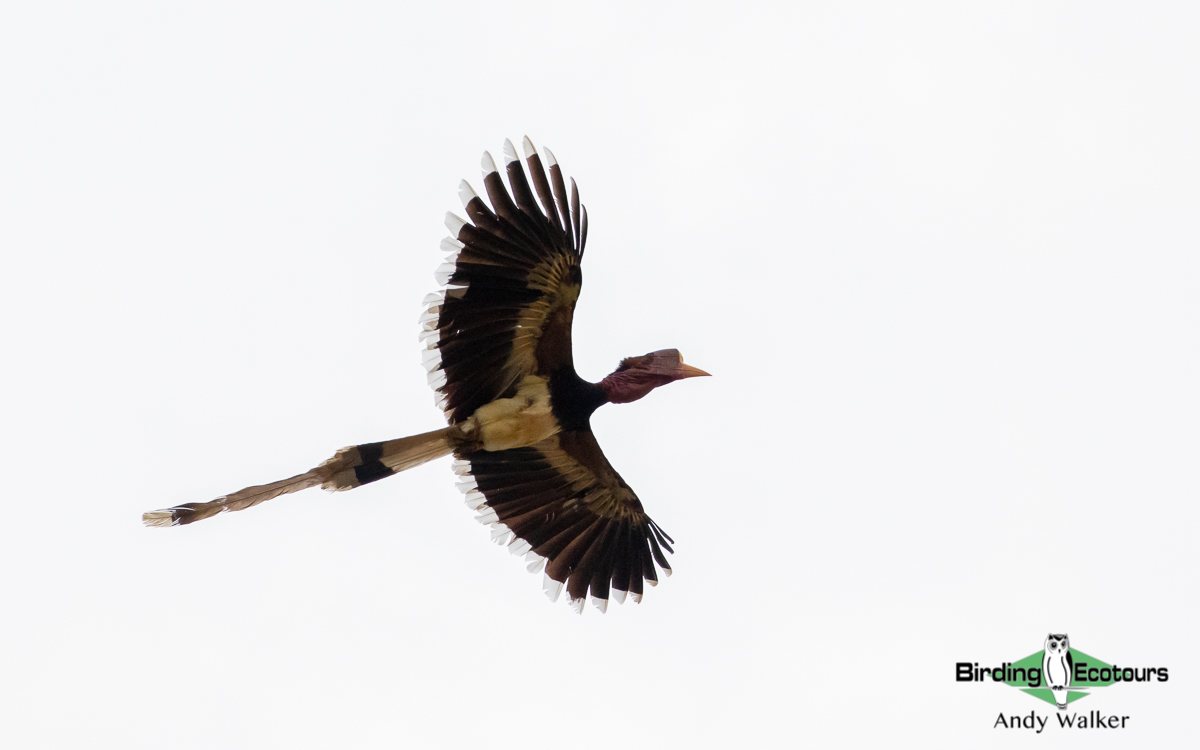
On our radar will be all eight hornbill species that occur here, including the spectacular Helmeted Hornbill, which is now Critically Endangered (BirdLife International), along with stunning Rhinoceros Hornbill. There will also be plenty of other endemic and Sundaic birds available during this tour, such as Storm’s Stork, Banded Kingfisher, and Bornean Forktail.
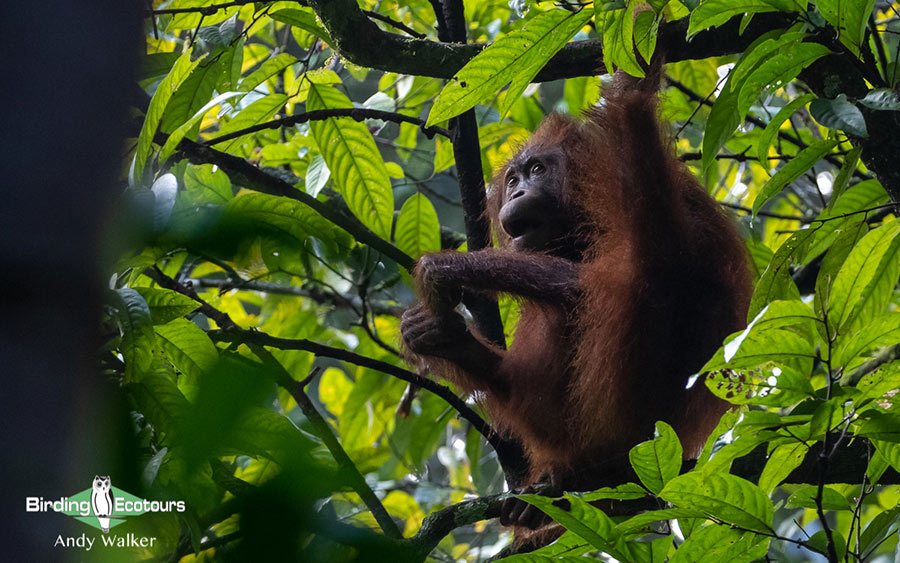
In addition to the incredible birds, we will also be focused on finding some spectacular mammals, such as the “old man of the forest”, the Bornean Orangutan, along with the unique-looking Proboscis Monkey, plus other delights including Malay Civet, Red Giant Flying Squirrel, and Northern (North Bornean) Grey Gibbon as a small sample of possibilities.
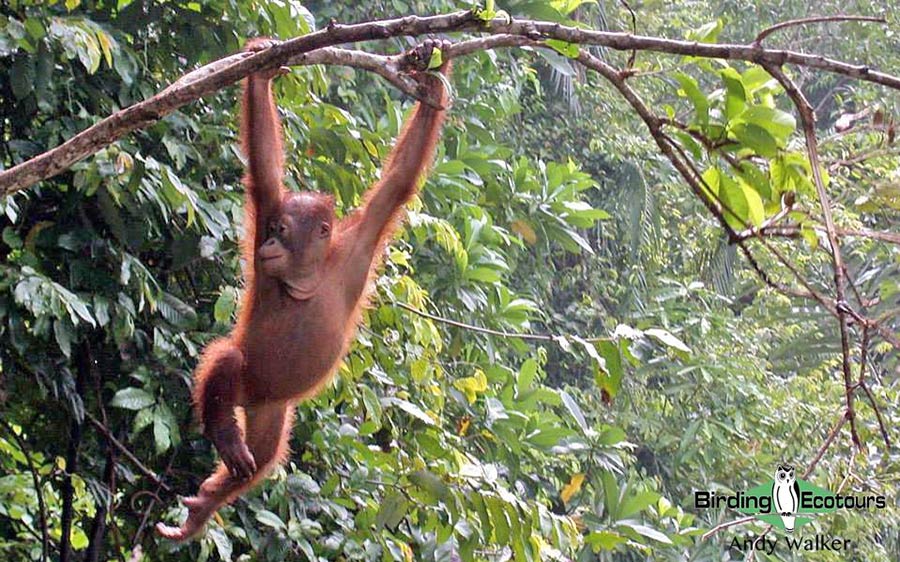 We will be sure to look for the amazing Bornean Orangutan during our tour of Sabah.
Detailed Itinerary (12 days/11 nights)
Day 1. Arrival in Kota Kinabalu
Your flight arrives any time in the morning, and you will be transferred to your hotel with the rest of the morning at leisure. We will meet for a welcome lunch, and thereafter will make a start with our first birding of the tour. We will likely head to the nearby Tanjung Aru beach to look for Blue-naped Parrot, Pied Triller, and other birds that we may not encounter for the rest of the trip, as well as visiting a couple of excellent wetland sites. If you would like to arrive the night before the tour starts to acclimatize and get onto the local time zone, we can arrange this for you; please just let us know.
Overnight: Kota Kinabalu City Hotel (or similar)
Day 2. Tambunan Rafflesia Nature Reserve Center, transfer to Kinabalu National Park
In the early morning (usually around 04:30 a.m.), we will take a packed breakfast and transfer to Kinabalu National Park, a UNESCO World Heritage Site. En route we will stop at the Tambunan Rafflesia Nature Reserve Center and Gunung Alab in the Crocker Range National Park. Here we will be birding for the whole morning, hoping to see, among others, a number of Bornean endemics such as Whitehead’s Spiderhunter, Bornean Barbet, Mountain Barbet, Golden-naped Barbet, Bornean Treepie, Chestnut-crested Yuhina, Penan Bulbul, Pale-faced Bulbul, Bornean Bulbul, Bare-headed Laughingthrush, and Chestnut-hooded Laughingthrush. With luck, we might even find the tough Crimson-headed Partridge (Bloodhead) or Red-breasted Partridge.
After our birding, we will make our way into the mountains to Kinabalu National Park. We will be based for three nights in Kundasang, a small village very close to the entrance to the park.
Overnight: Kinabalu Pine Resort, Kundasang (or similar)
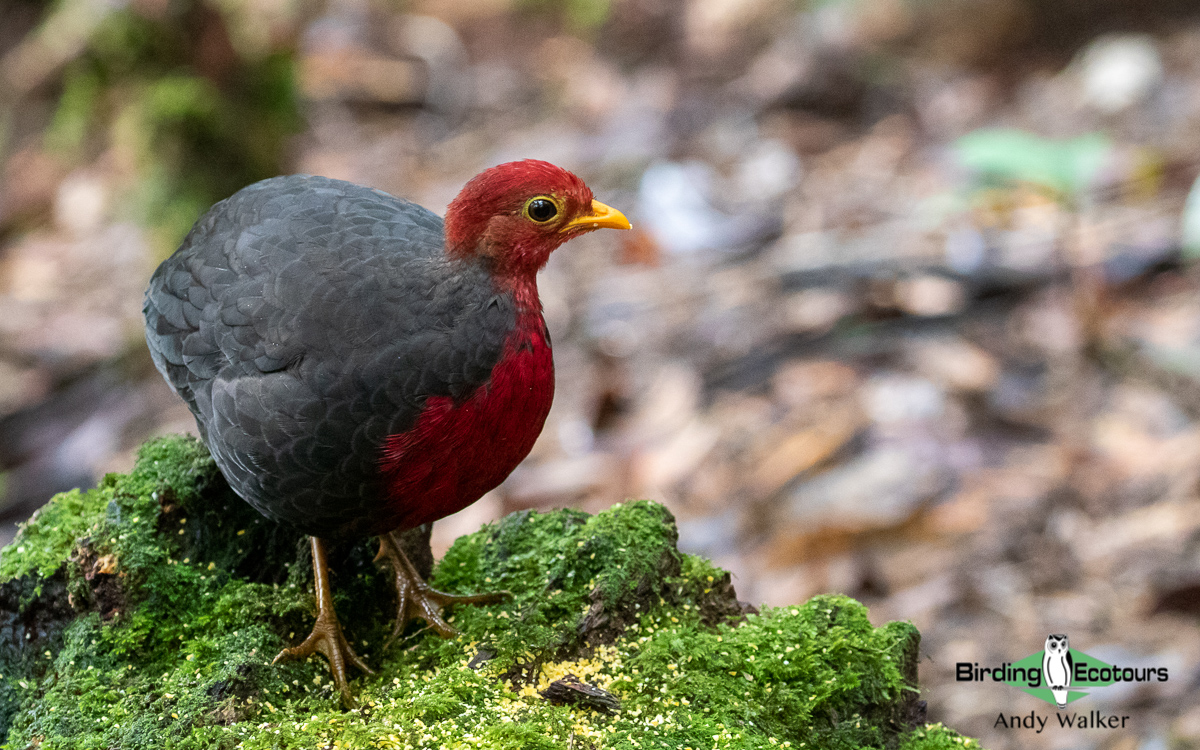
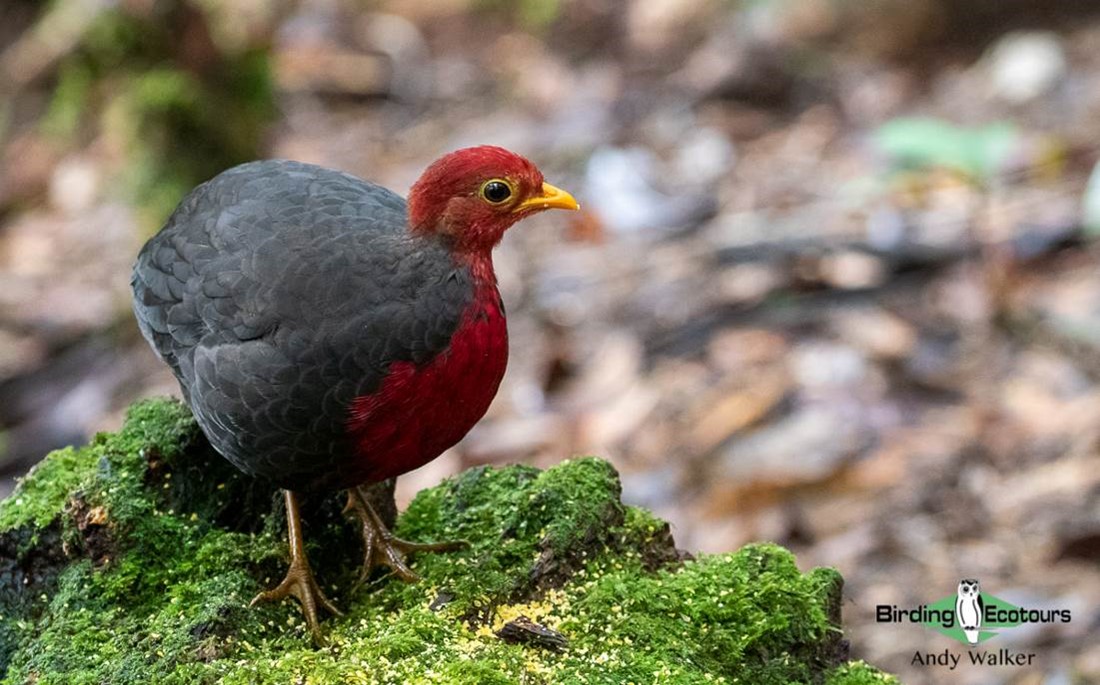 Not too difficult to hear, though seeing Crimson-headed Partridge (Bloodhead) takes some luck!
Day 3. Birding Kinabalu National Park
Today we will explore the network of forested trails around the headquarters of Kinabalu National Park on the forest-draped slopes of Mount (Gunung) Kinabalu. This mountain is the highest peak between the Himalayas and the tall ranges of New Guinea at 13,418 feet (4,090 meters). Its huge granite massif holds a spectacular avifauna with plenty of endemics for us to enjoy. Among these we hope to find Whitehead’s Trogon, Whitehead’s Broadbill, Fruithunter, Golden-naped Barbet, Bornean Swiftlet, Bornean Treepie, Bornean Stubtail, Bornean Green Magpie, Bornean Forktail, Eyebrowed Jungle Flycatcher (Bornean Shade-dweller), Black-sided Flowerpecker, Bare-headed Laughingthrush, Mountain Wren-Babbler, Bornean Whistler, Chestnut-crested Yuhina, and Everett’s Thrush.
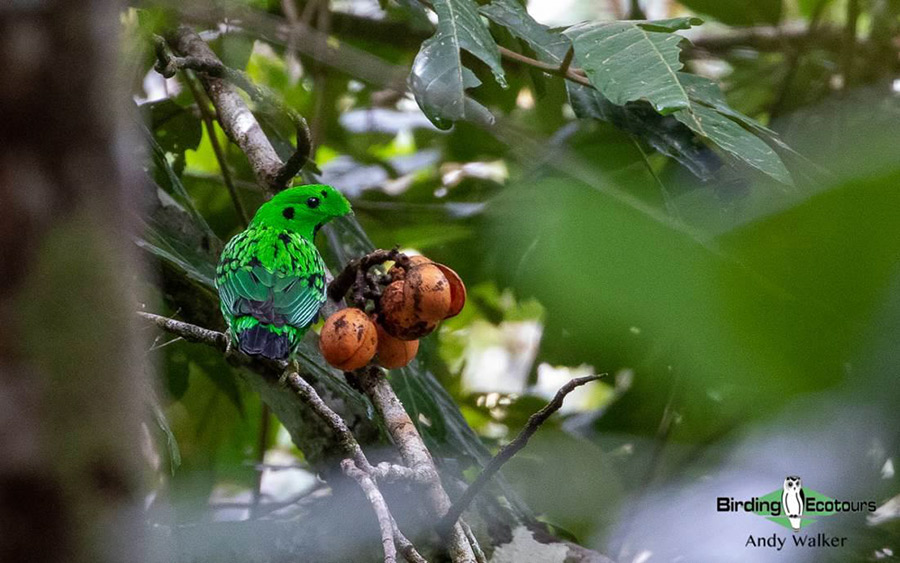 The large and bulky Whitehead’s Broadbill will hopefully be found in the montane forests on Mount (Gunung) Kinabalu. Checking fruiting trees can provide rewards.
In addition to the species mentioned above we will also be looking out for other enticing species, some perhaps even found in mixed feeding flocks (which can be a spectacular sight), like Penan Bulbul, Cinereous Bulbul, Chestnut-hooded Laughingthrush, Sunda Laughingthrush, White-browed (Blyth’s) Shrike-babbler, Mountain Leaf Warbler, Yellow-breasted Warbler, Aberrant (Sunda) Bush Warbler, White-throated Fantail, Temminck’s Sunbird, and Black-and-crimson Oriole, to name just a few.
Overnight: Kinabalu Pine Resort, Kundasang (or similar)
Day 4. Birding Kinabalu National Park
We will have another day birding within and around the Kinabalu National Park with morning and afternoon birding sessions likely to be punctuated by a period around our accommodation over the middle of the day. We will look for the birds mentioned above and will maybe focus on some of the more difficult species, or those requiring better views, possibly including the endemic Bornean Forktail, the endemic Pale-faced Bulbul, and recently split endemic Bornean (White-browed) Shortwing. We will also again be keeping our eyes peeled for Mountain Blackeye, Pygmy Heleia, Fruithunter, Cinereous Bulbul, Bornean Treepie, Bornean Stubtail, Bornean Whistler, Chestnut-hooded Laughingthrush, Whitehead’s Trogon, Whitehead’s Broadbill, and Mountain Wren-Babbler. During the day we might also find Least Pygmy Squirrel (the smallest squirrel in the world), the attractive Tufted (Whitehead’s) Pygmy Squirrel, and the rather huge Pale Giant Squirrel.
Overnight: Kinabalu Pine Resort, Kundasang (or similar)
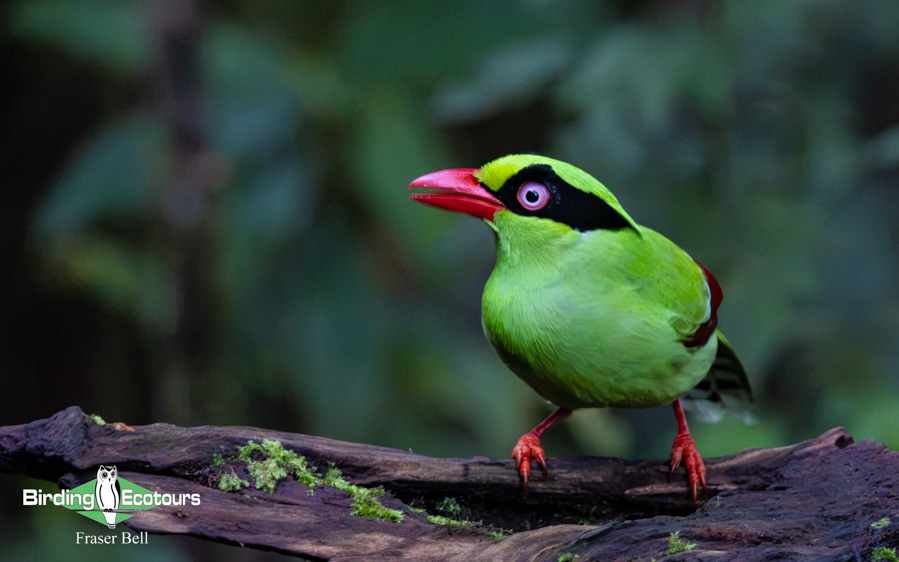
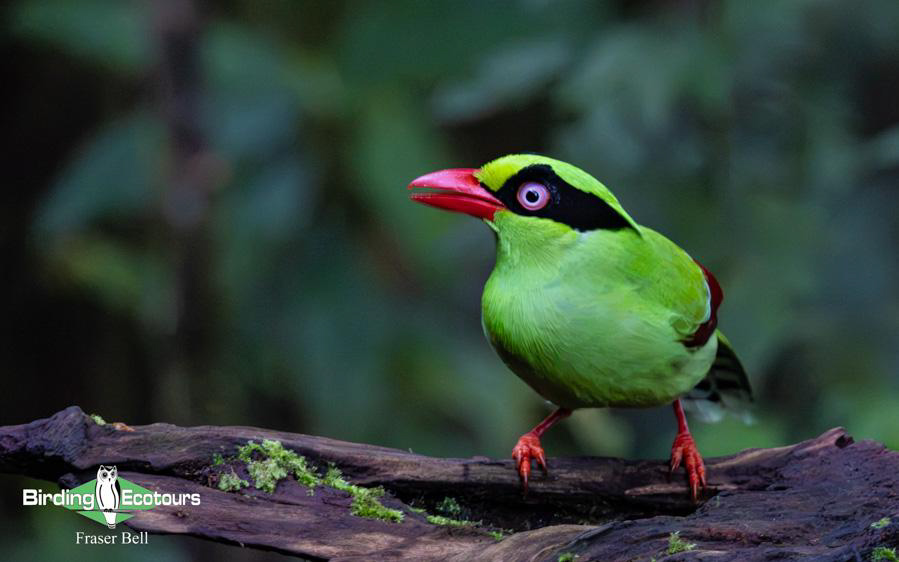 The striking Bornean Green Magpie can be seen in Kinabalu National Park.
Day 5. Poring Hot Springs, transfer to Sepilok
Although in the afternoon today we will have a lengthy (but extremely worthwhile) drive, we will spend a good part of the morning birding at Poring Hot Springs, a small reserve approximately 25 miles (40 kilometers) from Kinabalu National Park.
Poring is mainly known for its hot springs, which are a major Bornean tourist attraction, but the reserve also holds numerous exciting birds. During our walk we hope to encounter Rufous-collared Kingfisher, Black-and-yellow Broadbill, Banded Broadbill, Chestnut-capped Thrush, Moustached Babbler, Bornean Black-capped Babbler, Diard’s Trogon, Black Hornbill, Red-throated Barbet, Little Spiderhunter, Bornean Blue Flycatcher, Maroon-breasted Philentoma, Fulvous-chested Jungle Flycatcher, and perhaps also the attractive Scaly-breasted Bulbul. If we are lucky enough to find a fruiting tree, there is a slim chance of the tough Hose’s Broadbill, but chances for this species are greater on our Sarawak tour.
During the afternoon we will drive approximately five to six hours overland, mainly through endless oil palm plantations, to Sepilok and check into our accommodation for the next couple of nights. It is a depressing sight in all honesty; however, we are encouraged that there are still some large areas of protected habitat allowing the incredible lowland species here to continue to exist, and we hope that the presence of birdwatchers in the country can spark an interest in the local population to continue with the conservation efforts underway. We might see Crested Serpent Eagle, Changeable Hawk-Eagle, Black-winged Kite, Long-tailed Shrike, Striated Grassbird, and Dusky Munia along the way.
Overnight: Sepilok Jungle Resort (or similar)
Day 6. Kabili-Sepilok Forest Reserve and Rainforest Discovery Center
We will have a full day to explore this exciting area. We will bird the wonderful dipterocarp forest of the Kabili-Sepilok Forest Reserve with its magnificent walkway at the Rainforest Discovery Center in the morning, when the birds are most active. This will give us a chance for Bornean Bristlehead, our main target, among many other species we are going to encounter here like Black-crowned Pitta, Red-naped Trogon, Scarlet-rumped Trogon, Bornean Black-capped Babbler, Red-bearded Bee-eater, Oriental Dwarf Kingfisher, Rufous-collared Kingfisher, Banded Kingfisher, Bornean Spiderhunter, and possibly even Little Spiderhunter, Thick-billed Spiderhunter, Spectacled Spiderhunter, Yellow-eared Spiderhunter, and Long-billed Spiderhunter. We can also find the endemic Yellow-rumped Flowerpecker, and Dusky Munia, as well as barbets, mid-canopy bulbuls, ground-dwelling babblers, cuckoos, minivets, and many more avian riches, such as Rhinoceros Hornbill, White-crowned Hornbill, and Wallace’s Hawk-Eagle, that can be found in these wonderfully birdy forests. This is a very special place, and it is sure to be a memorable morning.
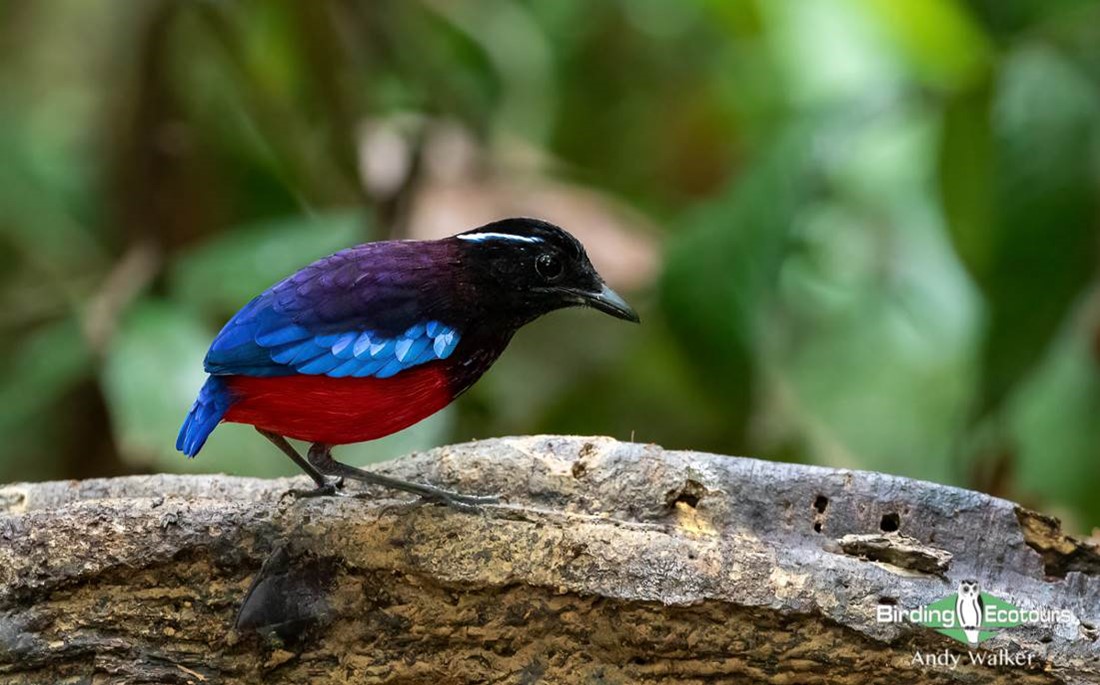 The stunning Black-crowned Pitta is possible in the Kabili-Sepilok Forest Reserve area, and a sighting like this would be a tour highlight for sure.
While birding here we might also see a number of inquisitive squirrels and possibly some primate species, among which the endearing Red Langur might be particularly appreciated.
An optional visit to the famous Sepilok Orangutan Rehabilitation Center for either the morning or the afternoon feeding of these semi-wild primates, along with several other species that take advantage of the free handouts, can be arranged, although it is very likely, but of course not guaranteed, that we will see Bornean Orangutan in the wild during the second half of this tour.
Overnight: Sepilok Jungle Resort (or similar)
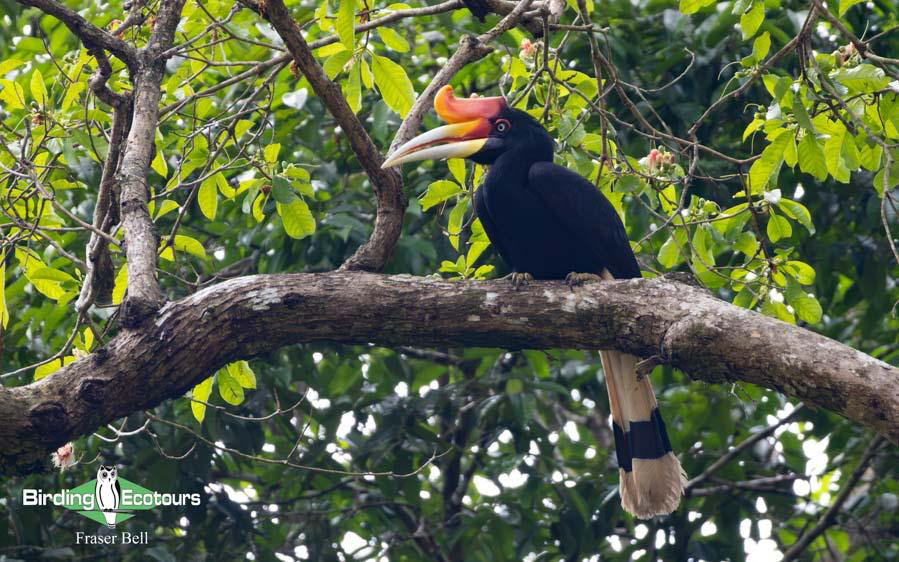 Rhinoceros Hornbill is an incredible sight.
Day 7. Birding Sepilok, transfer to the Kinabatangan River via Gomantong Caves
After breakfast we will still have time to do some morning birding in Sepilok for any species we might have missed or of which we would like to try to get improved views. We will then drive two hours overland, transferring to Sukau on the Kinabatangan River. We will make a stop at the famous Gomantong Caves, an intricate cave system inside Gomantong Hill, the largest limestone outcrop in the Lower Kinabatangan area. The caves and the surrounding area are a protected area for wildlife, especially Bornean Orangutan, which is frequently seen at the entrance to the caves, and are well-known in birding circles for the variety of swiftlets inhabiting them, together with a vast array of other wildlife, including massive populations of cockroaches and bats. Here we have a chance to see four species of swiftlets, three of which are near-identical and really only safely told apart by their nests. Edible-nest Swiftlet, Black-nest Swiftlet, Mossy-nest Swiftlet, and the more distinct Plume-toed Swiftlet all nest in these caves. There is a boardwalk through the caves that will give us access to the inside of the cave system, where we will be able to see where these birds make their nests and how the local workers collect them for bird’s-nest soup on intricate rope-and-ladder systems.
After arrival and check-in at the lovely Borneo Nature Lodge on the Kinabatangan River, where we will stay for two nights, we will embark in the late afternoon on our first birding river cruise.
The Kinabatangan Wildlife Sanctuary is now within the purview of the Sabah Wildlife Department. Despite ever-encroaching oil palm plantations, the original lowland forests and mangrove swamps near the coast have largely survived, providing sanctuary for a population of Saltwater Crocodiles and containing some of Borneo’s highest concentrations of wildlife. Of special note are Borneo’s indigenous Proboscis Monkey, Bornean Orangutan, and Asian Elephant (the subspecies occurring here possibly a full species: Bornean Pygmy Elephant). We will be looking for as many of these unique animals during our time on the river, and this sanctuary is also well known for its prolific birdlife.
Some of our main avian targets on the Kinabatangan River include Bornean Black Magpie, Collared Kingfisher, Rufous-collared Kingfisher, Ruddy Kingfisher, Stork-billed Kingfisher, Banded Kingfisher, Blue-eared Kingfisher, and Malaysian Blue-banded Kingfisher, along with Red-naped Trogon, Scarlet-rumped Trogon, and Western Hooded Pitta. If we are very lucky, we will also find a huge target bird, the enigmatic, rare, and just plain tough endemic Bornean Ground Cuckoo.
Overnight: Borneo Nature Lodge, Sukau (or similar)
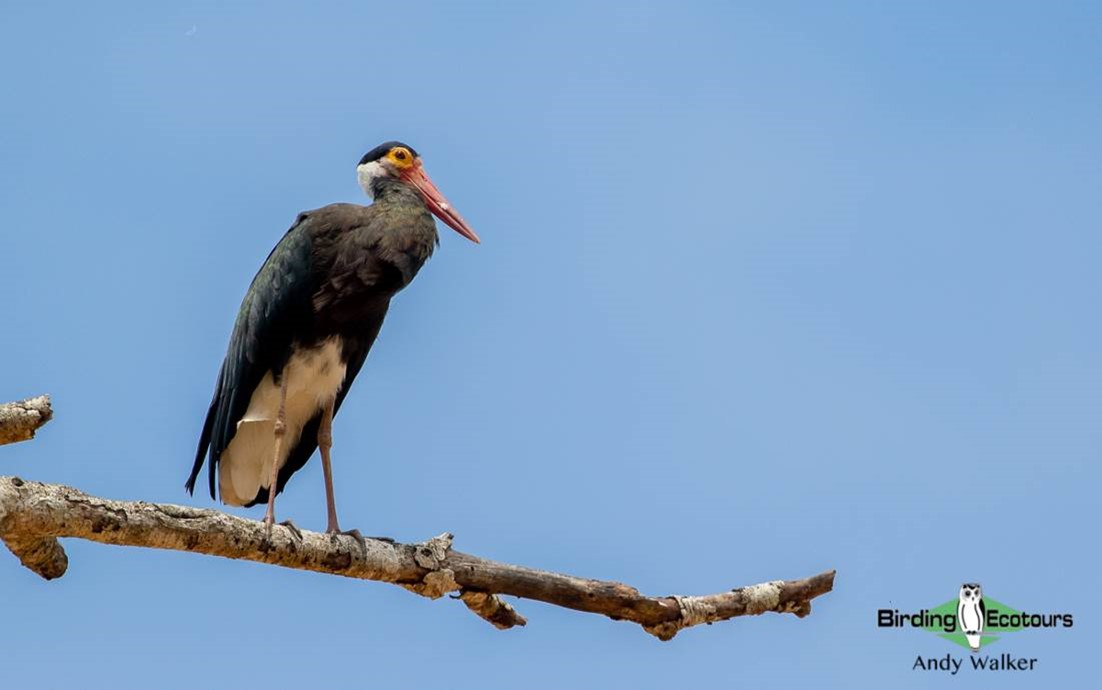 We will hope for good, perched views of Storm’s Stork.
Day 8. Kinabatangan Wildlife Sanctuary
In the early morning and mid-afternoon, boat trips will take us along the river and its small tributaries. Here we hope to see wild Bornean Orangutan feasting on the fruits of riverside fig trees or, in the late afternoon, preparing their nighttime nests. Troops of the bizarre Proboscis Monkeys with their huge potbellies and the males’ extraordinary, floppy noses will watch us curiously. Many groups of Long-tailed Macaques will be our constant companions, and we might find the occasional Silvery Lutung and, with luck, perhaps Northern (North Bornean) Grey Gibbon. We might come across a herd of Asian Elephants (Bornean Pygmy Elephant) in this area, or the secretive and rare Flat-headed Cat.
The forest along the river and its tributaries is home to a wealth of birds, including such spectacular species as Rhinoceros Hornbill, Helmeted Hornbill, Black Hornbill, Oriental Pied Hornbill, Bushy-crested Hornbill, Wreathed Hornbill, White-crowned Hornbill, and Wrinkled Hornbill (that is all the hornbills that occur in Borneo!), White-bellied Sea Eagle, Lesser Fish Eagle, Grey-headed Fish Eagle, Wallace’s Hawk-Eagle, Lesser Adjutant, Black-and-red Broadbill, Black-and-yellow Broadbill, Western Hooded Pitta, and with luck a pair or two of the Endangered (IUCN) Storm’s Storks or the endemic White-fronted Falconet sitting on a snag.
Overnight: Borneo Nature Lodge, Sukau (or similar)
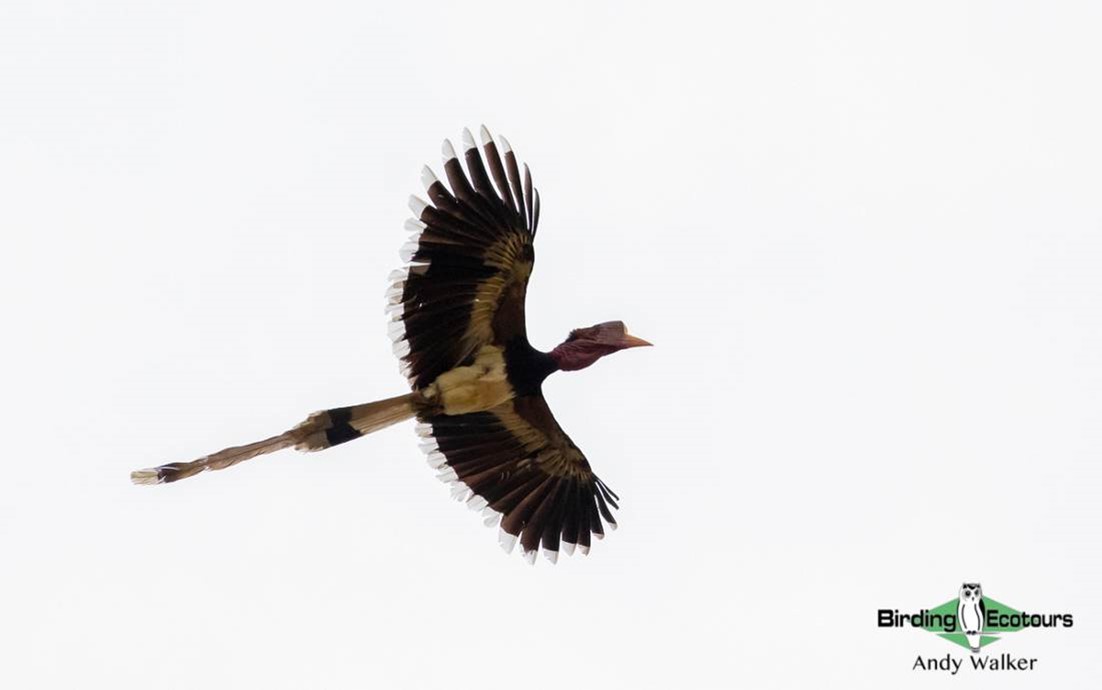 The huge Helmeted Hornbill is a spectacular and now rare sight across its whole small global range due to illegal hunting.
Day 9. Kinabatangan Wildlife Sanctuary to Danum Valley via Lahad Datu
After a final early morning cruise to look for more birds, we will depart overland to Danum Valley and make a stop at Lahad Datu for lunch after a journey of a couple of hours. After lunch we will have another drive for a few more hours on an adventurous prior logging road to the Danum Valley Conservation Area and the Borneo Rainforest Lodge. This wonderful, upscale lodge is situated in a large tract of mind-blowing primary rainforest, one of only very few remaining on Borneo after rampant logging and clearing for oil palm plantations. While within much of the conservation area selective logging was allowed, a large part had been set aside for the protection of one of only two remaining expanses of primary lowland dipterocarp forest in Sabah.
The Danum Valley Conservation Area boasts 268 bird species, and 110 mammals, 72 reptiles, 56 amphibians, and 37 fish species. We will search for a good selection of especially the birds and mammals during our time in this great habitat. We plan to arrive at the lodge by the middle of the afternoon and begin birding before it gets dark, making a start on the species listed below for Days 10 and 11.
After dinner we may be able to join one of the night drives to look for nocturnal animals as well as night birds, and we will likely make a couple of night outings during our time in the Danum Valley. Results of these are always unpredictable, of course, but with luck we might find Large Frogmouth and Gould’s Frogmouth or something really exciting from the mammalian world, like Red Giant or Black Flying Squirrels, Sunda Flying Lemur (Colugo), the occasional Philippine Slow Loris, Horsfield’s Tarsier, or the tiny Temminck’s Flying Squirrel.
Overnight: Borneo Rainforest Lodge, Danum Valley (or similar)
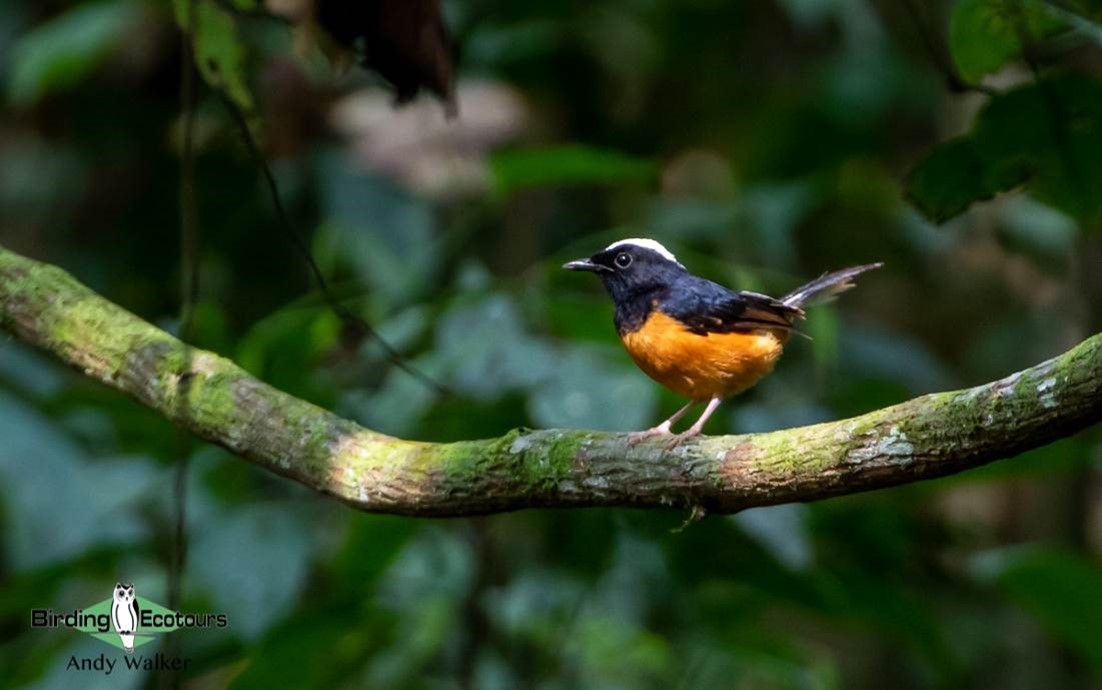 The attractive and endemic (to Sabah) White-crowned Shama can be found around our accommodation in the Danum Valley.
Days 10–11. Danum Valley Conservation Area
During our two full days in Danum Valley we will explore the excellent system of trails around the lodge as well as the canopy walkway, and after dinner there will be opportunities to go out with one of the local guides in search of nocturnal wildlife.
Among the multitude of birds we hope to encounter here are eight species of hornbills, with the huge Rhinoceros Hornbill likely to be seen and heard almost daily, plus chances of Helmeted Hornbill and White-crowned Hornbill to name a couple of others.
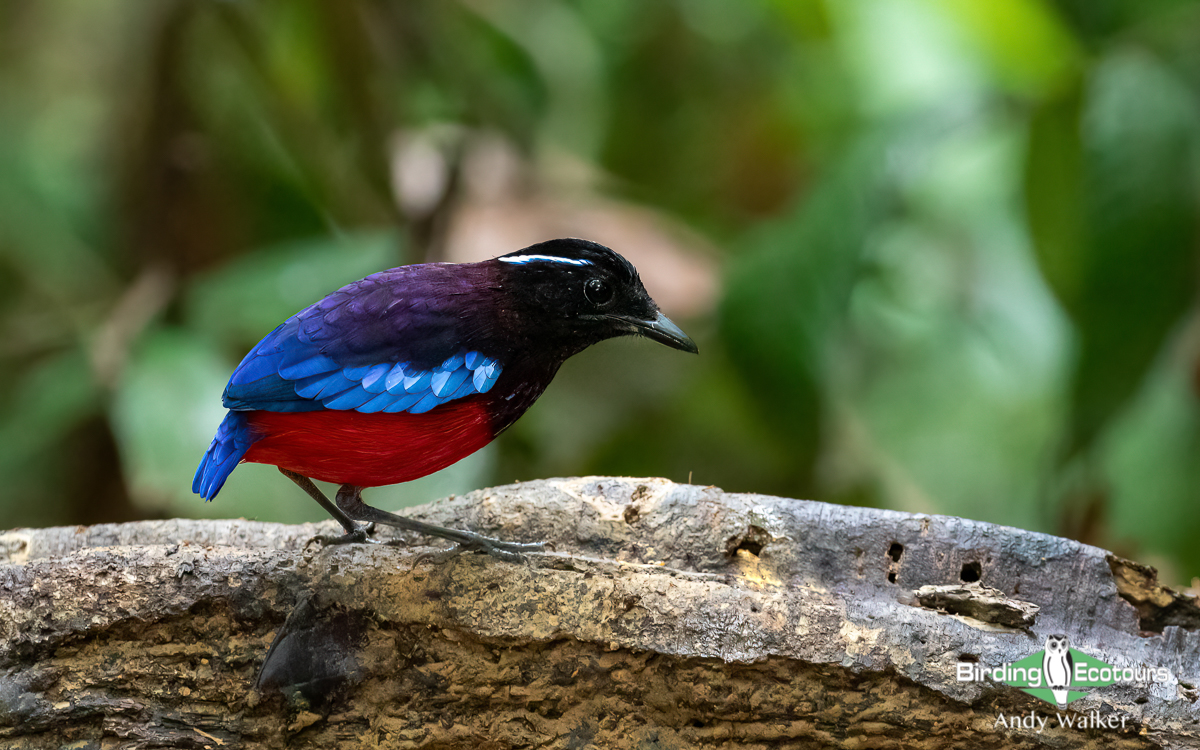
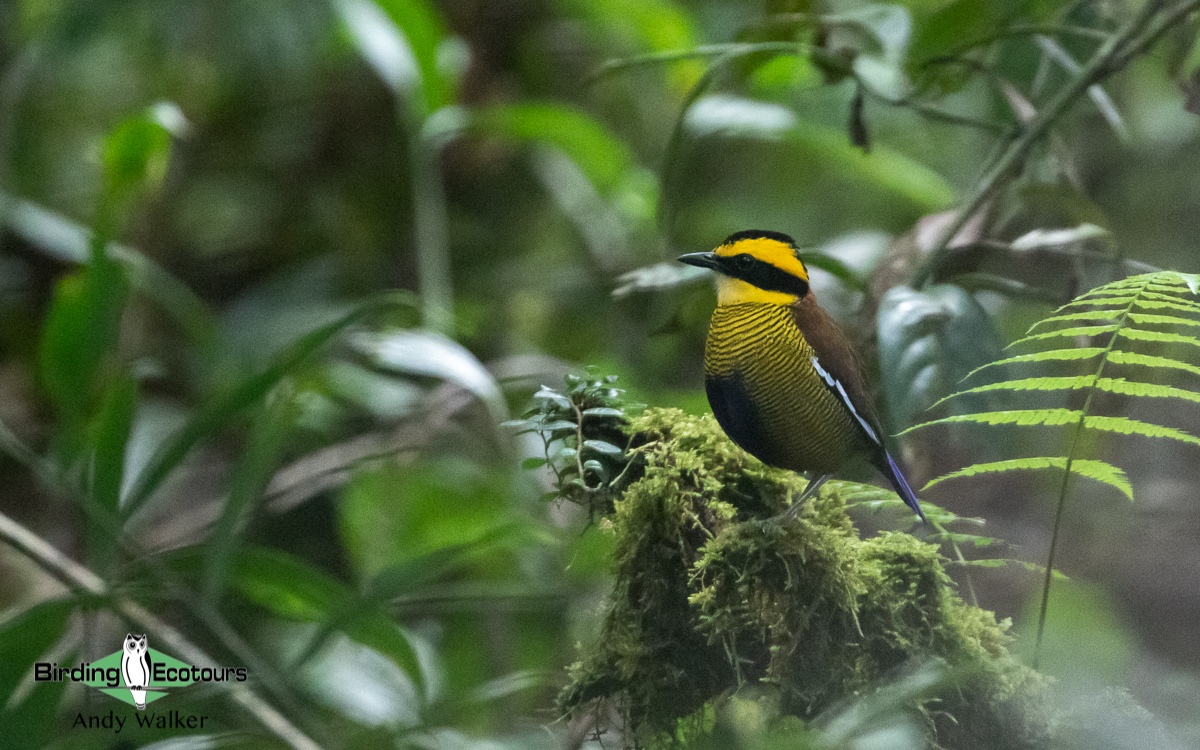
The entire slate of Bornean endemic pittas occurs in Danum Valley, though on this tour we are only likely to have a chance for three of these endemics, Black-crowned Pitta, Blue-headed Pitta, and Bornean Banded Pitta, and Giant Pitta and Western Hooded Pitta also occur in the areas we will be exploring.
In addition to the suite of hornbills and pittas mentioned above we will look for the monotypic Bornean Bristlehead and of course other special target birds like Bornean Crested Fireback, Sabah (Chestnut-necklaced) Partridge, Bornean Blue Flycatcher, Sunda Blue Flycatcher, White-crowned Shama, Black-throated Wren-Babbler, Bornean Wren-Babbler, Crested Jayshrike, Chestnut-naped Forktail, White-crowned Forktail, Great-billed Heron, Wallace’s Hawk-Eagle, Blyth’s Hawk-Eagle, Rufous-bellied Eagle, Bat Hawk, Large Green Pigeon, Great Slaty Woodpecker, Olive-backed Woodpecker, Ashy Tailorbird, Whiskered Treeswift, Oriental Dwarf Kingfisher, Chestnut-capped Thrush, and a host of forest bulbuls (including the Critically Endangered (BirdLife International) Straw-headed Bulbul), babblers, flowerpeckers, flycatchers, woodpeckers, drongos, raptors, sunbirds, and spiderhunters. This place really is a naturalist’s dream.
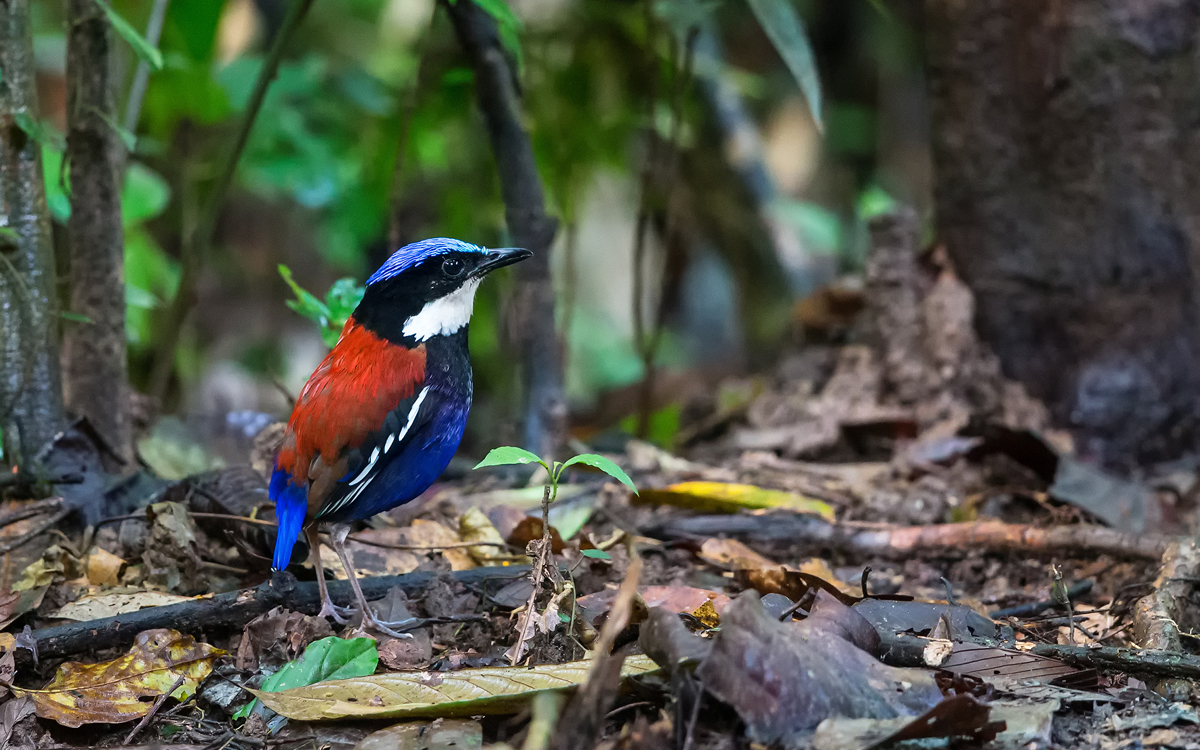 Blue-headed Pitta is a target during our time in Danum Valley (photo L. W. Keong).
Danum Valley is a particularly good area for Bornean Orangutan, which is sometimes even seen within the lodge grounds! Commoner mammal species include Long-tailed Macaque and Southern Pig-tailed Macaque, a wide variety of both diurnal and nocturnal tree shrews and squirrels, Bearded Pig, Masked Palm and Malay Civets, both Greater and Lesser Oriental Chevrotains, the endemic Bornean Yellow Muntjac, the much-more-widespread Southern Red Muntjac, and Sambar. The biggest predator here is the Sunda Clouded Leopard, which is seen on night drives a couple of times a year – so one can always hope (but certainly not expect!).
The heat of the afternoon after lunch allows some relaxed meanderings around the resort, and you can find flowerpeckers and spiderhunters in the flowering bushes, along with some stunning butterflies, all of which might provide some nice photographic opportunities. Regardless of what we see here we will be in for a veritable treat. It is a real privilege to wander through the forest and imagine what this fascinating island would have been like in years gone by. We could well encounter a trip highlight bird or mammal during our time in Danum Valley.
Overnight: Borneo Rainforest Lodge, Danum Valley (or similar)
Day 12. Danum Valley to Lahad Datu, departure
Sadly, our exciting tour to wild Sabah will end today. After a final morning relaxed birding session and early lunch, we will transfer from Danum Valley back to the Lahad Datu airport, where the tour ends in the early afternoon when we arrive back at Lahad Datu airport.
Overnight: Not included
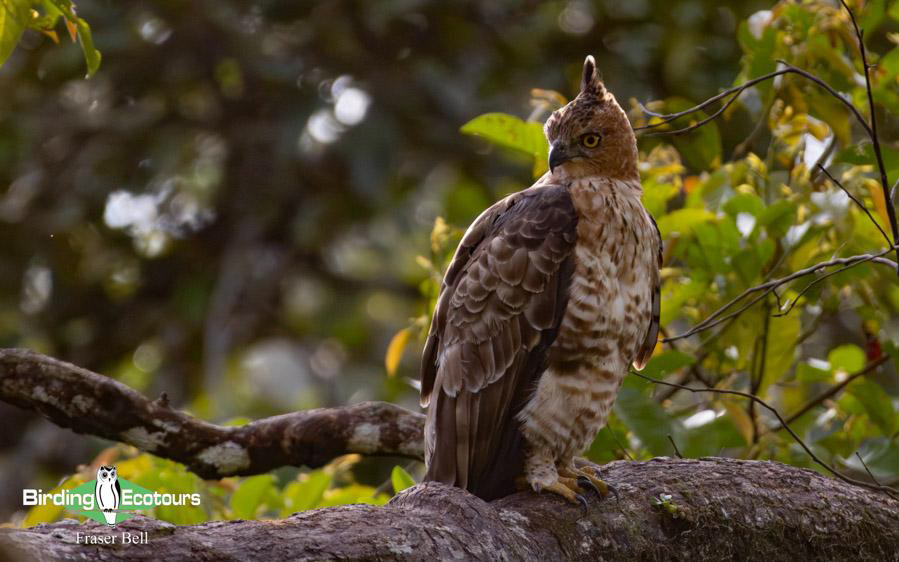 Wallace’s Hawk-Eagle can often be found in the Danum Valley.
Please note that the itinerary cannot be guaranteed as it is only a rough guide and can be changed (usually slightly) due to factors such as availability of accommodation, updated information on the state of accommodation, roads, or birding sites, the discretion of the guides, and other factors. In addition, we sometimes have to use a different guide from the one advertised due to tour scheduling or other factors.
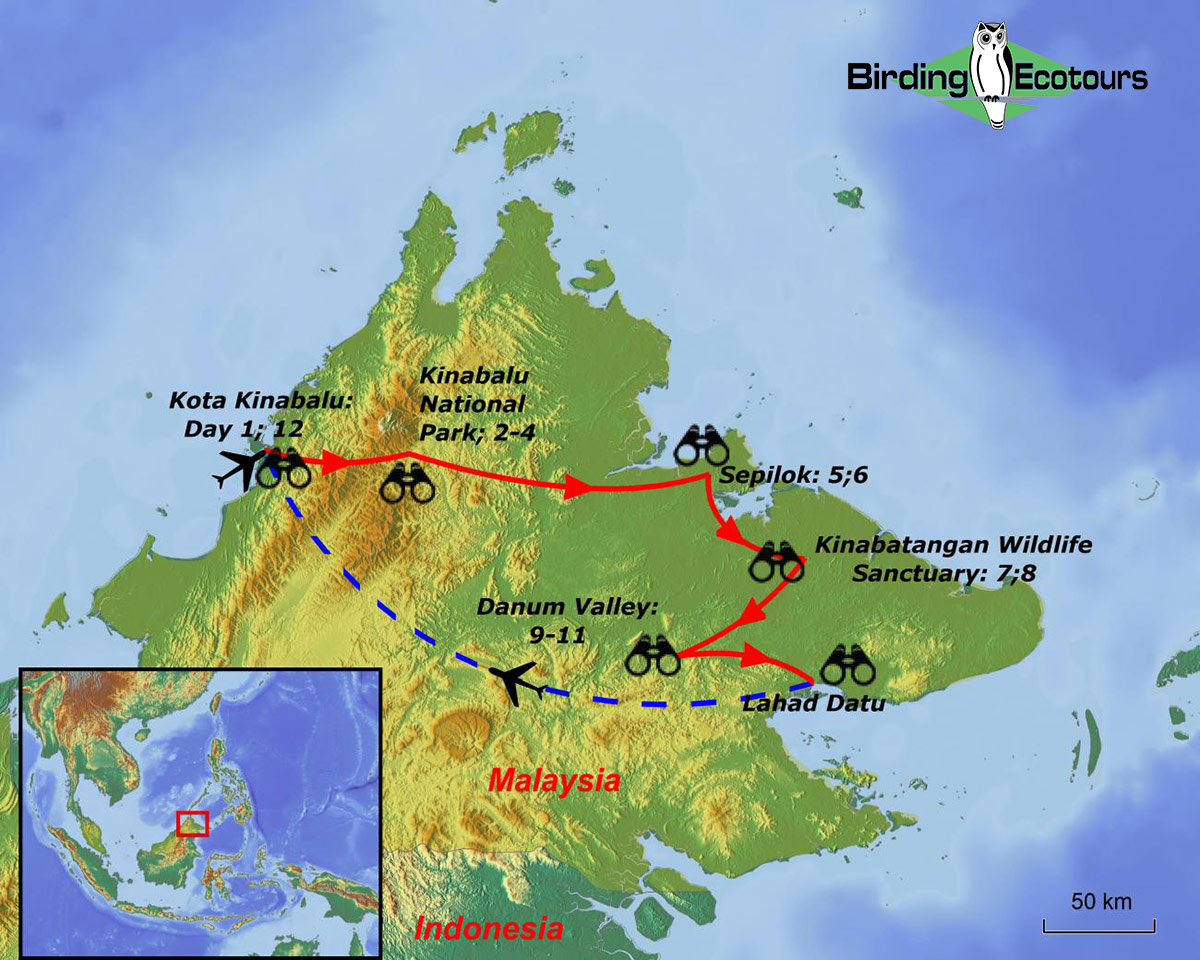
Map
Testimonials
Gallery
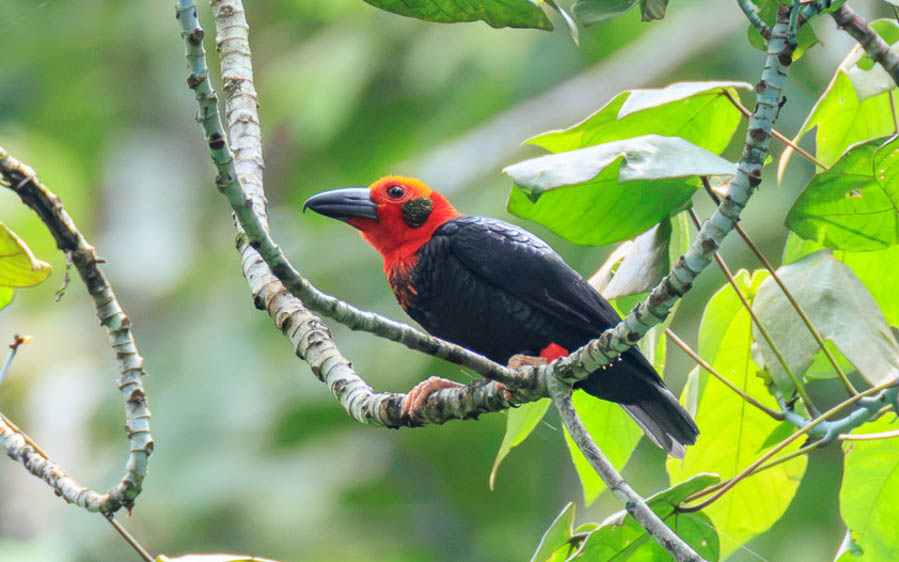
General Information
MALAYSIA: BORNEO – SABAH CLASSIC TOUR
TOUR-SPECIFIC INFORMATION
GENERAL INFORMATION ABOUT MALAYSIA (INCLUDING BORNEO) CAN BE READ HERE
TOUR OUTLINE
A great tour taking in several of the best birding sites in Borneo, including the Danum Valley. This Sabah tour starts in Kota Kinabalu and ends in Lahad Datu. Sabah is home to wonderful endemic birds and impressive wildlife and on this tour we will look for as much as we can, including the likes of Bornean Ground Cuckoo, Bornean Bristlehead, Whitehead’s Trogon, Fruithunter, Bornean Green Magpie, Blue-headed Pitta, Black-crowned Pitta, and so much more, including top mammals like Bornean Orangutan and Proboscis Monkey. This premium tour includes better accommodation (including the amazing Borneo Rainforest Lodge) and runs with a nice small group, giving you a much better birding experience than you would get on a large group tour.
DAILY ACTIVITIES, PHYSICAL REQUIREMENTS, AND TOUR PACE
This Borneo birdwatching tour requires reasonable physical fitness but is not considered too physically demanding (though humidity in the lowlands can increase tiredness). We will spend time birding on easy to moderate trails at a range of elevations and will experience hot and humid conditions in the lowlands and cooler temperatures in the mountains. We will usually have early morning birding sessions with a break during the middle of the day back at our accommodation to escape the heat of the day (less of an issue at higher elevations), with further birding sessions in the afternoon. Occasionally we will undertake some night walks/drives/boat rides to look for nocturnal wildlife. On some days we will have long drives (of between three and six hours) to get between birding areas. This is a birding-focused tour that does offer some photo opportunities, though these are secondary to the actual birding element of the tour, i.e., seeing the many endemic species and subspecies of the region as well as other regional specialties, will be considered priority.
TRANSPORTATION
The tour starts in Kota Kinabalu and ends in Lahad Datu. You will need to book a flight for the end of the tour from Lahad Datu to Kota Kinabalu/Kuala Lumpur (this flight is not included in the tour cost). For more information see the “Domestic Flights” section. We will use airconditioned vehicles on this tour. Roads are generally good and paved, with the exception of the road to Borneo Rainforest Lodge which is unpaved and a bit rough (it is an old logging road). Some roads, particularly in the mountains may be windy in places. We will use motorized boats for birding along the Kinabatangan River as this allows us great access to the forest.
DOMESTIC FLIGHTS
The tour itself doesn’t require any domestic flights, however the tour ends in Lahad Datu and so you will likely require a domestic fight to either Kota Kinabalu or Kuala Lumpur to connect with your international departure. The cost of this flight is not included in the tour price. If you will be joining our Sarawak – Restricted Range Endemics birding tour you will need to fly to Kota Kinabalu as that’s where that tour will commence from. If you need help booking this tour, please let us know as we may be able to book the flights for you and add the cost to your tour balance, payable no later than two months prior to departure.
The domestic flight is likely to have a hold luggage weight limit of 44 pounds (20 kilograms) and a hand luggage allowance of 15 pounds (7 kilograms). Any overweight baggage will likely incur costs and will be the responsibility of the individual. Excess baggage costs will most likely need to be paid in cash to the airline at the airport.
LUGGAGE
Please pack as lightly as possible for this tour (noting the expected weight allowance of the domestic flight that will be required after the tour). A medium, soft-sided, and robust duffle bag is likely to work best for packing in the tour vehicles. We recommend a daypack is used to keep items that you wish to use daily when in the vehicle or when birding in the field/from the boat.
SAFETY
Your safety is our paramount concern on this, and all of our tours, hence the detailed information contained within this tour-specific information and the Malaysia general information. Our tour takes us to a remote part of Sabah. There has been safety and security issues along the coast of eastern Sabah, between Kudat and Tawu, including (but not limited to) Lankaya, Mabul, Pom Pom, Kapalai, Litigan, Sipadan, and Mataking – however we do not go to any of these islands on the tour. These issues are linked to terrorists from southern Philippines and most incidents appear to be maritime related, though additional care should be taken in the towns of Sandakan and Lahad Datu. We monitor the situation continuously with our local guides who live in the area.
Trips and falls when on trails, tracks/roads, and getting into or out of the vehicles or boats are all possibilities on this tour and care should be taken at all times please. Sturdy walking shoes or hiking boots are recommended for this tour. A hiking pole or walking stick is compulsory if you are at all unsure on your feet.
There is a low risk of malaria on Sabah, but please consult your doctor or local travel clinic for specific advice. We will be spending time birding in lowland forests, riverine forest, and mangroves over the dawn and dusk periods, where we will come into contact with mosquitoes. Insect repellent with a high DEET concentration can be useful for keeping mosquitoes away and reducing the chance of getting bites. DEET insect spray can also keep chiggers and leeches away (as can citronella). Chiggers can lead to Scrub (Bush) Typhus and can be incredibly irritating. Leeches do not spread diseases, but they are rather unnerving and can cause blood loss and are particularly evident in Borneo. “Leech socks” are a useful piece of kit.
WEATHER/CLIMATE
While in the lowlands we can expect average daytime highs of around 88 °F (31 °C) and average nighttime lows of 72 °F (22 °C). There is often thick cloud cover here, resulting in hot and humid, rather oppressive, conditions. In the mountains it is cooler than the lowland temperatures and we can expect average daytime highs of around 84 °F (29 °C) and average nighttime lows of 63 °F (17 °C) but it may drop to below 59 °F (15 °C), occasionally.
The sun is strong at this time of year and care should be taken to remain hydrated and use sun protection. Rain is possible at any time at any location so rain gear and an umbrella will be essential. A dry bag is also recommended for protecting optics, electrical equipment/cameras, and important documents (see the “What to Bring: Clothing and Other Items” section below).
ACCOMMODATION
The accommodation on this tour is of a good standard with electricity throughout. Most of the accommodation has air conditioning (those in the mountains don’t really need it). Accommodation without air conditioning, such as in Danum Valley, should have fans instead.
ELECTRICITY
All locations we visit on the tour should have a regular power supply, unless there are unexpected power cuts etc.
COMMUNICATIONS
There is phone signal across most of Sabah and many of the accommodations will have Wi-Fi. You may want to purchase a local SIM card on arrival in Malaysia or use your own provider on a roaming package (be aware of charges). You can usually purchase a travel SIM from the airport from either Digi.com or Maxis, both are reasonably good at our tour destinations except for the Danum Valley, where only Maxis works. There is no Wi-Fi at our accommodation along the Kinabatangan River, but everywhere else should have Wi-Fi, though it may be unreliable in some places, such as Danum Valley.
FOOD AND MEALS
There are various food choices on this tour, most food is of a Chinese style, with local Malaysian food typical and with some western menu options in some places. Vegetarian food can be arranged but please let us know of any dietary requirements ahead of the tour. Most meals are based around chicken or fish with rice and noodles, and mixed vegetables, tempeh, and tofu. Fresh fruit will be available. Due to the lack of refrigeration, dairy products are not common. We suggest you bring your favorite snacks or protein bars to supplement your diet.
MONEY
We will have access to ATMs in Kota Kinabalu and at other towns we pass through during the tour, such as Sandakan and Lahad Datu. But it is usually best to withdraw cash from the airport.
WHAT TO BRING: CLOTHING AND OTHER ITEMS
The following is a list of useful items to bring on this Sabah birding tour and should be read in conjunction with the Malaysia general information document which suggests lots of other important items to bring on the tour.
- Hiking pole or walking stick to help on the tracks and trails. A walking stick is compulsory for anyone who is unsteady walking, as we feel this is a safety issue; we don’t want anyone slipping on the trails or anywhere else.
- Torch (flashlight) and/or headlamp, and spare batteries – we will have some nighttime bird/wildlife watching during the tour and so a torch and/or headlamp is required for that. Additionally, we will likely be setting off into the forest for our morning birding sessions when it is still dark, so this is essential kit. A torch is also useful for when walking around our accommodation at night.
- High concentration DEET insect repellant (note citronella also works well with leaches).
- Salt sachets can be effective in getting leeches off you.
- Leech socks – essential kit on this tour.
- A small personal first aid kit. See the suggested items from the Centers for Disease Control and Prevention (CDC), here. There are pharmacies in some of the towns we pass through, but we will only have limited access to these.
- Footwear is a matter of personal preference but sturdy shoes as a minimum are required, and hiking boots are probably best.
- Quick-drying clothes are the best for this tour and a good selection of clothing layers are also recommended for time at higher elevations where temperatures will be lower than in the lowlands (see the “Weather/Climate” section for further information on likely temperatures during the tour).
- Rain jacket (and small umbrella) and a coat/fleece for our time in the mountains.
- A dry bag to keep valuable documents in such as passports, cell phones, wallets etc., as well as cameras if it rains.