- Duration:
- 13 days
- Group Size:
- 4–8
- Tour Start:
- Sofia, Bulgaria
- Tour End:
- Bucharest, Romania
Bulgaria and Romania: Birding The Balkans in Spring
Details
2027
13–25 May
Per person sharing
€5,363 EUR
$6,334 USD / £4,795 GBP
Single supplement
€371 EUR
$438 USD / £332 GBP
Itinerary
Download ItineraryBulgaria and Romania: Birding the Balkans in Spring
This birding tour encompasses the majority of species-rich Bulgaria, along with the mighty Danube Delta in neighboring Romania. It offers a good chance of finding several tough and localized European birds, along with providing some great scenery and culinary delights!
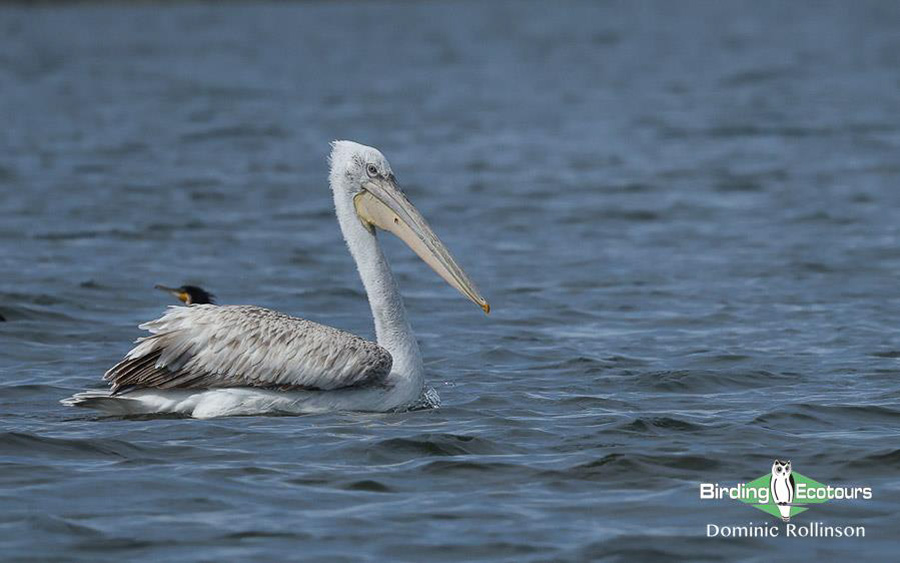 The huge Dalmatian Pelican is usually seen well on this tour.
Bulgaria and Romania both sport bird lists of around 400 species (following International Ornithological Congress (IOC) v14.2 taxonomy as of August 2024) with the most productive time of year being spring, after the arrival of many sub-Saharan migrants. Our tour, being timed to witness the peak of this spring migration phenomenon, will also be combined with expert local guides and a comprehensive itinerary, and will result in a great bird list of around 200 species.
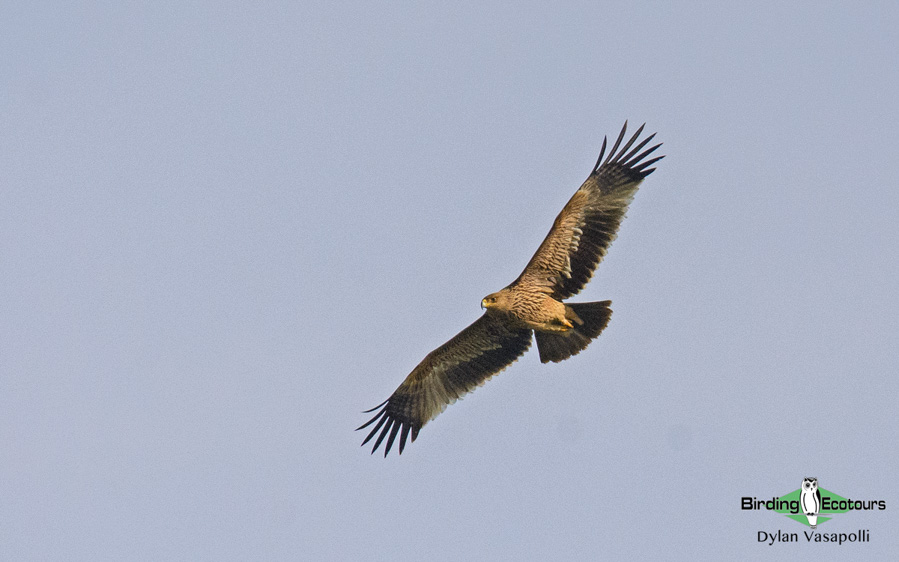
Some of the target birds for this trip include Dalmatian Pelican, Pygmy Cormorant, Ruddy Shelduck, Ferruginous Duck, numerous shorebirds (waders), and gulls (such as Pallas’s Gull, Caspian Gull, and Mediterranean Gull), and many raptors, including Eastern Imperial Eagle, Lesser Spotted Eagle, Booted Eagle, White-tailed Eagle, Egyptian Vulture, Cinereous Vulture, Long-legged Buzzard, Lesser Kestrel, and Levant Sparrowhawk.
Other localized and highly sought-after species include the famous Wallcreeper (a monotypic family), Masked Shrike, Western Rock Nuthatch, Sombre Tit, Pied Wheatear, Isabelline Wheatear, Spotted Nutcracker, Ring Ouzel, Olive-tree Warbler, Paddyfield Warbler, Semicollared Flycatcher, and several woodpecker species.
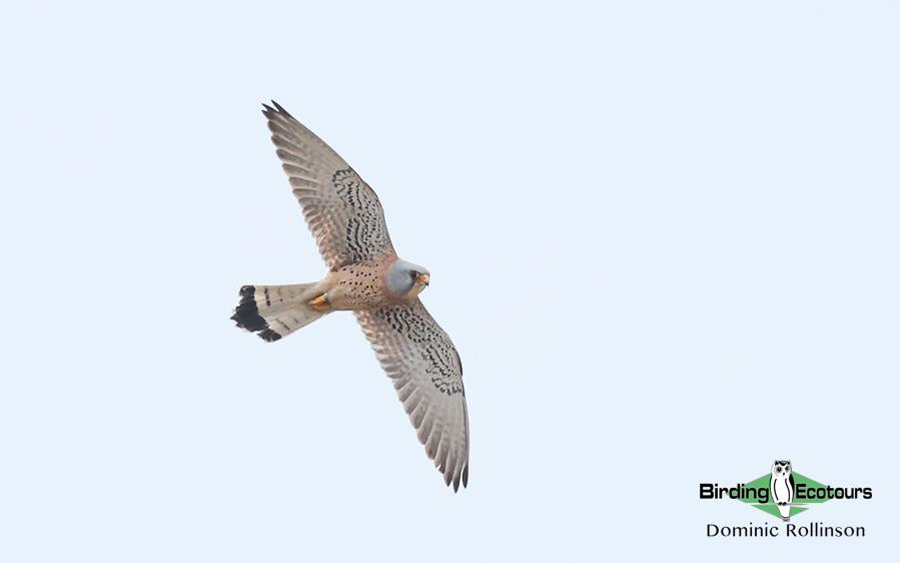 Lesser Kestrel is one of the many raptor species we should encounter in Bulgaria and Romania.
During the tour we will visit several Important Bird Areas (IBAs), identified by BirdLife International as extremely valuable for birds. Some of these include Trigrad Gorge, Studen Kladenets volcanic region, Krumovitza, Lake Burgas, Atanasovsko Lake, Srebarna Nature Reserve, Cape Kaliakra, Durankulak Lake, the vast Danube Delta, and Lake Techirghiol.
If you want to extend your time in this wonderful part of Europe, why not join our Romania Bird & Mammal Tour: Transylvanian Brown Bear Extension, which runs after this tour. This short four-day extension is designed to complement the main tour, offering a chance to spend time with some of Europe’s most iconic mammal species, as we spend two evenings in hides hoping to see Brown Bear, among other exciting species. During the days, we will target some of Europe’s more secretive forest specialists and focus on improving views of anything not seen on the main tour, such as Ural Owl, Black Woodpecker, Great Grey Shrike, and Wallcreeper.
If you are unable to make the dates of this scheduled tour, please do get in touch and we would be happy to help build a custom tour with dates to suit you.
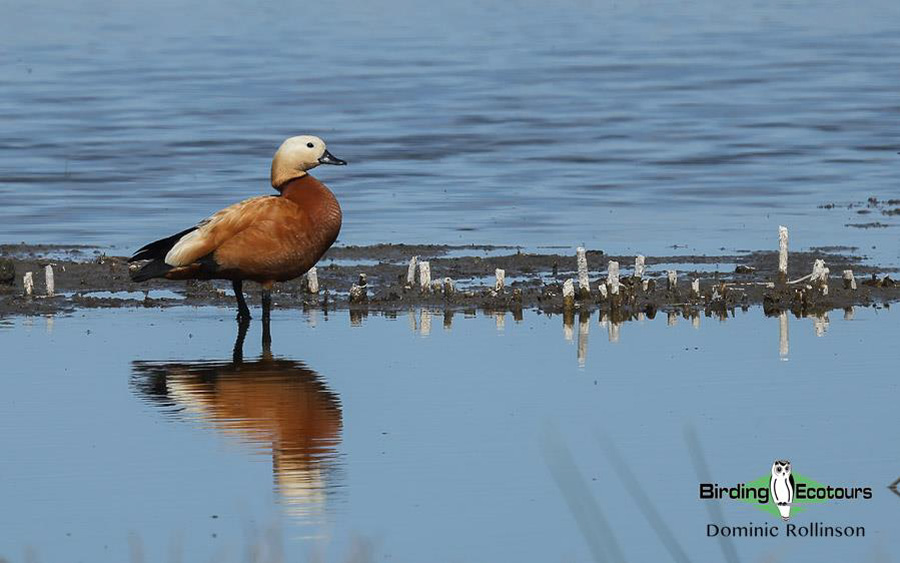 Ruddy Shelduck is readily encountered in Bulgaria and Romania.
Itinerary (13 days/12 nights)
Day 1. Arrival in Sofia and travel to western Rhodope Mountains
Our tour will start in the midmorning in Sofia, where you will be met by your Birding Ecotours tour leader and local guide. If you cannot arrive in Sofia in time for the start of the tour, please plan on arriving the day before the tour starts, we can help with extra accommodation if required. Perhaps you would like to explore the beautiful and ancient city ahead of the tour.
Our first birding stop will be to visit Vitosha Mountain near Sofia, before beginning our journey southeast towards the western Rhodope Mountains. Target species at Mount Vitosha and the general area include Spotted Nutcracker, Ring Ouzel, Eurasian Bullfinch, Common Firecrest, Goldcrest, and Grey Wagtail.
After our birding at Vitosha Mountain we will make our way through farmlands, perhaps looking for Corn Crake and various other migrants such as Western Marsh Harrier and Red-rumped Swallow. In the late afternoon we will begin a gradual ascent into the western Rhodope Mountains where we might find the likes of Eurasian Green Woodpecker, Red (Common) Crossbill, and Crested Tit.
Overnight: Osina area
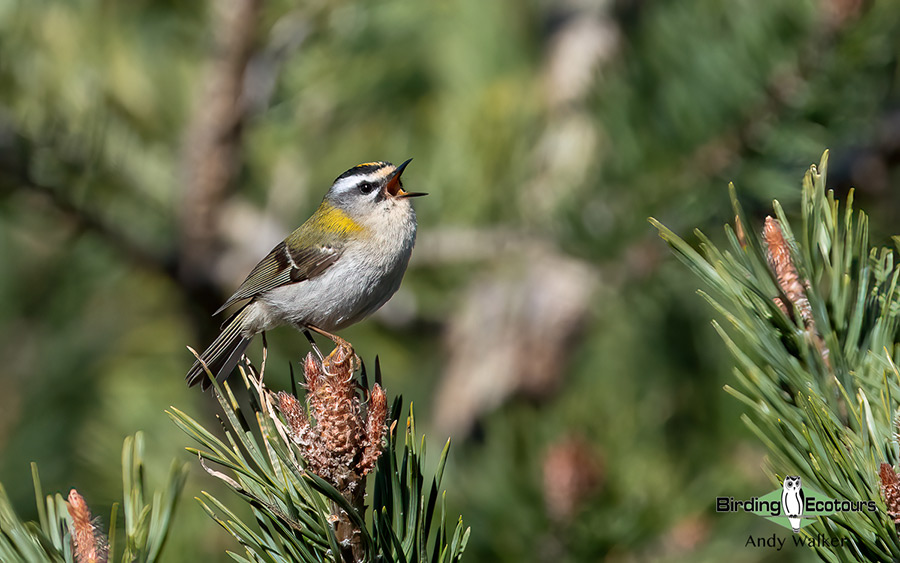 Coniferous forests will be birded for Common Firecrest.
Day 2. Birding in Trigrad Gorge and the surrounding area
Today the focus will be birding Trigrad Gorge, which is famous for the few pairs of Wallcreeper that reside in this ideal habitat for the species. We will spend some time (it can often take a few hours) throughout the day, scanning the tall cliff faces for this bizarre and beautiful species, a highly sought-after monotypic family. Here we should also see Alpine Swift, Pallid Swift, White-throated Dipper, Peregrine Falcon, Grey Wagtail, Eurasian Crag Martin, and European Serin.
We will spend the rest of the day in the region looking for Crested Tit, Black Woodpecker, Grey-headed Woodpecker, Black Redstart, White-throated Dipper, and other species in the conifer forests nearby. We may also be lucky enough to find Northern Chamois, an unusual-looking wild mountain goat.
Overnight: Yagodina, or nearby
Day 3. Trigrad Gorge and transfer to the eastern Rhodope Mountains
We will again visit the gorge for Wallcreeper, should we have missed it the previous afternoon. Otherwise, we will do some birding around the village, where various woodpeckers, tits, and finches can be expected. After lunch we will begin the transfer to the Krumovgrad area. Due to the nature of the mountain and rural roads, this is normally a drive of a few hours, which we will intersperse with numerous birding stops as we keep our eyes peeled for anything exciting.
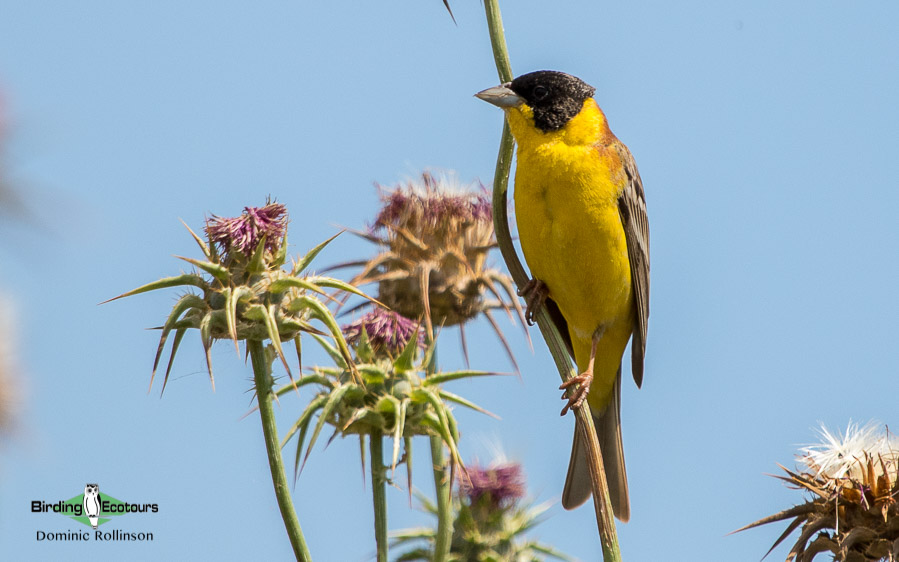
We slowly move out of the high mountains associated with the western Rhodope Mountains, into the lower lying reaches of the eastern Rhodope Mountains. Along these stops we can find species such as Little Owl, Cirl Bunting, Black-headed Bunting, Woodlark, Woodchat Shrike, Eurasian Hoopoe, Lesser Spotted Woodpecker, Middle Spotted Woodpecker, and the highly prized Sombre Tit.
Overnight: Krumovgrad
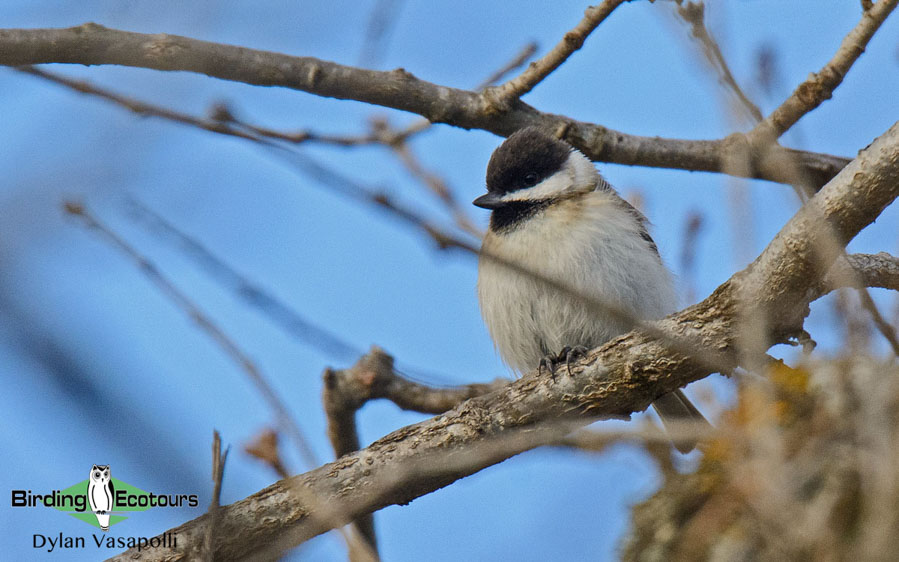 Patches of woodland should produce Sombre Tit.
Day 4. Birding Madjarovo and Ivaylovgrad reservoir
Today we will move to the Madjaraovo volcanic region and the area around Borislavtsi village, at the shore of the Ivaylovgrad reservoir, where the Arda river meanders through this stunning landscape. This will take us into prime rocky areas, holding specials such as Western Rock Nuthatch, Blue Rock Thrush, Black Stork, Rock Bunting, Ortolan Bunting, Eastern Olivaceous Warbler, and a range of raptors including Egyptian Vulture. The thickets in these areas also play host to large numbers of warblers, and our targets will include the Sardinian Warbler, Eastern Subalpine Warbler, Barred Warbler, and Eastern Orphean Warbler.
This is the land of vultures, and we can expect to see Griffon Vulture, Egyptian Vulture, and the prized Cinereous Vulture, a huge bird, even by vulture standards. Other raptors present here include Short-toed Snake Eagle, Black Kite, and Eurasian Honey Buzzard. We also have a good chance of finding Northern Raven and various wheatears like Eastern Black-eared Wheatear and Northern Wheatear, shrikes including Woodchat Shrike and Masked Shrike, and the same gorgeous warblers mentioned above. Alpine Swifts grace the sky here, and the ubiquitous Crested Lark struts around on open patches of ground.
Overnight: Madzharovo, Eastern Rhodopes Conservation Centre
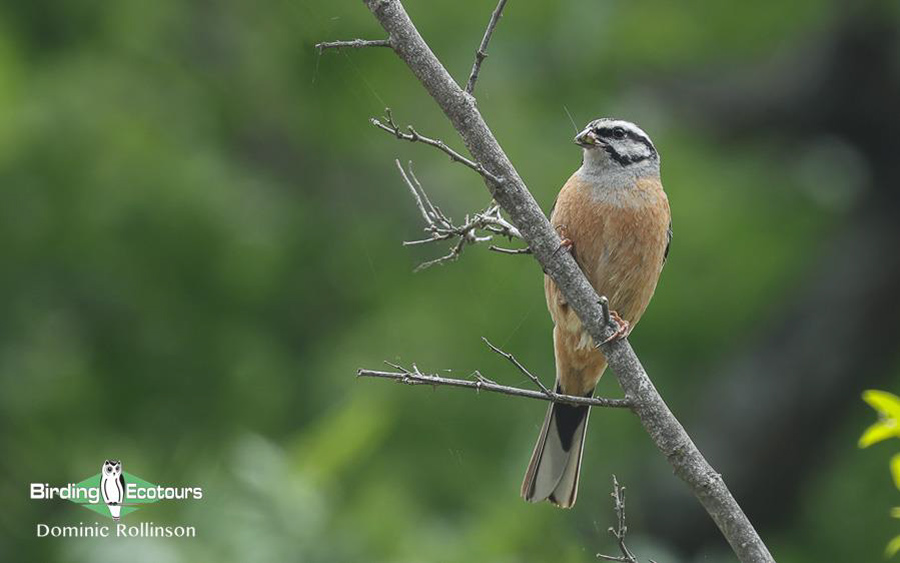 Rock Bunting – one of the several bunting species we are likely to see.
Day 5. Birding the Dolna Kula valley and Studen Kladenec
Today we will visit the Dolna Kula rocky valley. The entire eastern Rhodopes region is absolutely spectacular for birding and also plays host to some incredibly scenic routes. This valley has more woodland and bush than other parts of the region and hosts virtually all the warblers occurring in Eastern Europe! Following up on their mixed and jumbled calls is the best way to locate them, and that is just what we will do. Some of our warbler targets today include Eastern Olivaceous, Olive-tree, Sardinian, Eastern Subalpine and Eastern Bonelli’s Warblers.
Hawfinch inhabits the seeding trees here and great emphasis will be placed on finding Blue Rock Thrush and Chukar Partridge, as this must surely rank as one of the best sites in Europe for them. Black Stork breeds on inaccessible ledges in this area. Various species of bunting, including Cirl Bunting, Black-headed Bunting, Ortolan Bunting, and Corn Bunting occupy prominent song perches.
Common Cuckoo, Eurasian Golden Oriole, European Roller, and Common Nightingale litter the trees along the river, and Sombre Tit is another quality inhabitant here. This is also a good area to get to grips with European Turtle Dove, which is becoming less common around Europe due to a rapid population decline. Various hirundines can also be expected here, such as Barn Swallow, Red-rumped Swallow, and Common House Martin.
In the afternoon we will continue our birding around the Studen Kladenec area. This is yet another beautiful location where we can look for birds of prey, warblers such as Eastern Subalpine Warbler and Eastern Bonelli’s Warbler, Sombre Tit, Ortolan Bunting, Woodlark, and others. After dinner we may search for Eurasian Scops Owl near the hotel.
Overnight: Madzharovo, Eastern Rhodopes Conservation Centre
Day 6. Travel to Pomorie, birding on the way
We will have an early morning start as we commence our journey northeast, to reach the southern Black Sea coast on the eastern boundary of Bulgaria, where we will be staying at a local hotel for the next two nights. We will, of course, be looking out for birds along the way and we have a few birding stops lined up. Some of these may yield the likes of Eastern Imperial Eagle, Lesser Kestrel, Olive-tree Warbler, and Masked Shrike. Other possibilities could include Spanish Sparrow, Booted Eagle, Eurasian Golden Oriole, European Bee-eater, Black-headed Bunting, Isabelline Wheatear, and Montagu’s Harrier.
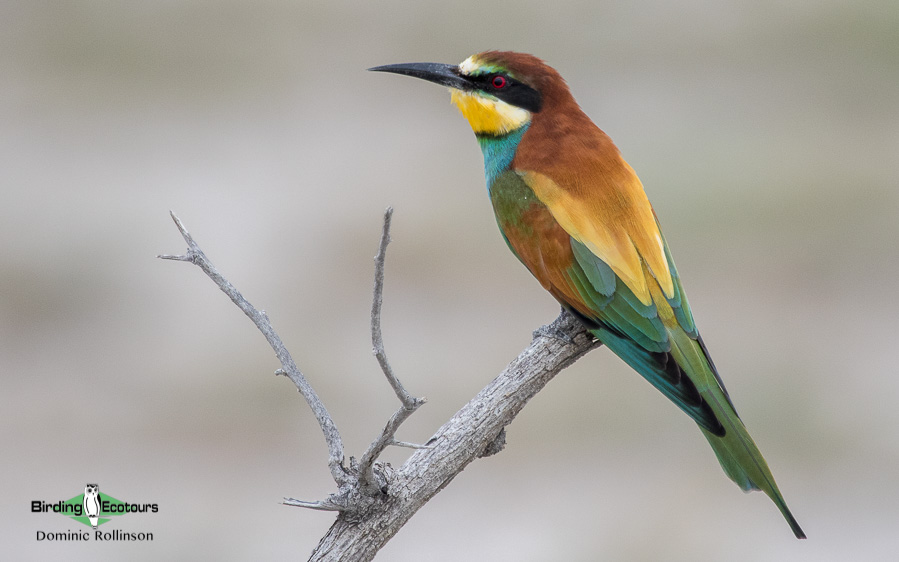 Our tour will be given a splash of exotic color as the skies fill with European Bee-eaters arriving from their wintering grounds in sub-Saharan Africa.
Time permitting, in the afternoon (or over the next couple of days) we will visit some wetlands around the town of Burgas, just north of our base in Sozopol, where many waterbirds can be expected. Specials here include Pygmy Cormorant, Little Bittern, Great Crested Grebe, Purple Heron, Squacco Heron, Black-crowned Night Heron, Eurasian Penduline Tit, Common Kingfisher, and various warblers, including Sedge Warbler, Cetti’s Warbler, and Great Reed Warbler.
Overnight: Sozopol
Day 7. Birding the wetlands around Pomorie and Burgas
Before breakfast we often make an early visit to Strandzha Nature Park, where the main prize is White-backed Woodpecker. This species is, however, tricky to locate at this time of the year. We will bird the forested areas of the park, where we might also find Grey-headed Woodpecker, Eurasian Nuthatch, Eurasian Treecreeper and Willow Tit.
The remainder of the day will be spent focusing on the waterbirds in the immediate Pomorie/Burgas area, one of the top migration hotspots in Europe, with an impressive variety of birds in every season. The main habitats include saltpans, freshwater lakes, and woodland fringing the lakes. We expect to see many shorebird species today, together with raptors, herons, and warblers, forming an interesting mix of birds.
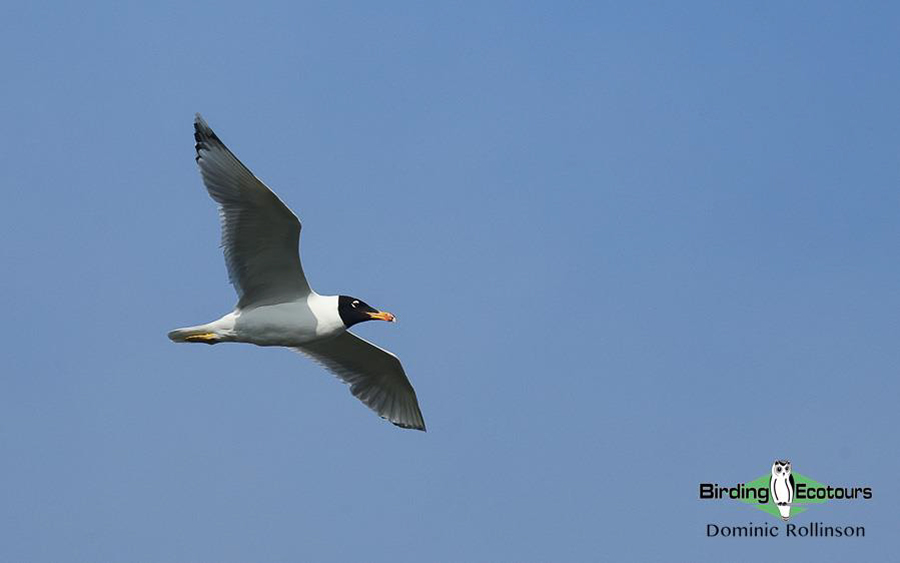 We should encounter many different gull species, such as the striking Pallas’s Gull.
Some of the exciting shorebird species we expect to find include Common Redshank, Spotted Redshank, Eurasian Oystercatcher, Ruff, Black-tailed Godwit, Little Ringed Plover, Kentish Plover, Dunlin, Eurasian Curlew, Wood Sandpiper, Common Greenshank, and Collared Pratincole. Temminck’s Stint and Broad-billed Sandpiper are rare visitors, but at this time of year almost anything is possible.
Various gulls and terns are also expected, including Little Gull, Mediterranean Gull, Slender-billed Gull, Yellow-legged Gull, and Black-headed Gull, while on the tern front, we will look for Common Tern, Sandwich Tern, Black Tern, Little Tern, and White-winged Tern. We will also search for waterbirds like Pygmy Cormorant, a range of herons, Spotted Crake (always tricky to see though), Western Marsh Harrier, Western Yellow Wagtail, Great White Pelican, Mute Swan, Eurasian Teal, and others.
The reedbeds will be scoured for Eurasian Penduline Tit, Bearded Reedling (another monotypic family), and various warblers. The woodlands surrounding some of the wetlands here are home to resident specials such as Lesser Spotted Woodpecker, and Middle Spotted Woodpecker, and migrants like Collared Flycatcher, European Pied Flycatcher, and Red-breasted Flycatcher. Interestingly, these three flycatchers all overwinter in incredibly different areas, yet all arrive here to breed. European Pied Flycatcher spends the winter in West Africa, Collared Flycatcher in Southeast Africa, and Red-breasted Flycatcher in West Asia (e.g. India). It is an interesting point to ponder as we watch these tiny and gorgeous birds here.
Overnight: Sozopol
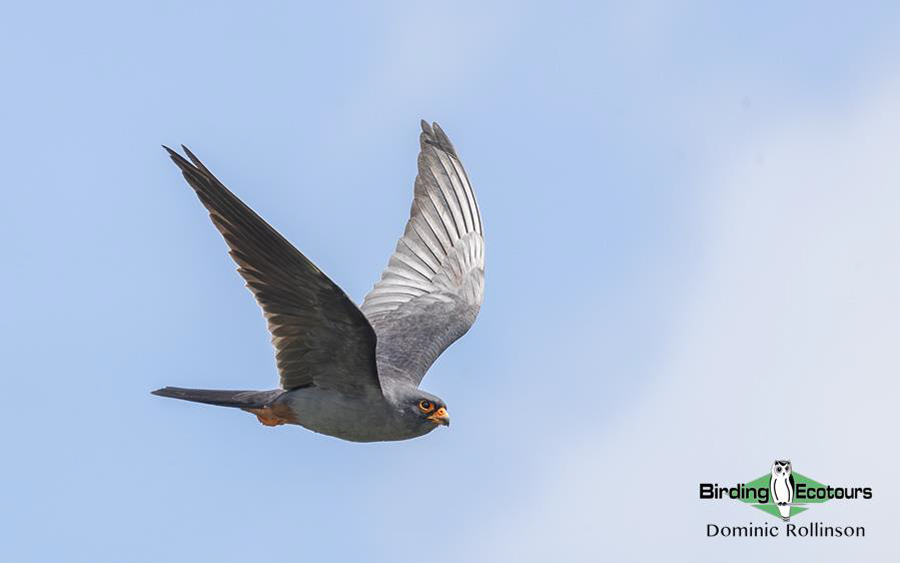 Red-footed Falcons are usually seen in good numbers on this tour.
Day 8. Travel to Kavarna and birding around Burgas
Should we have missed any key species the previous day, we will again go birding around the nearby saltpans this morning, before transferring to the town of Kavarna on the northern Black Sea coast. During the journey we will visit a highly productive section of forest located in the Balkan Mountain range. Here, targets will include Semicollared Flycatcher, Red-breasted Flycatcher, Short-toed Treecreeper, Eurasian Nuthatch, and Wood Warbler, along with various tits and woodpeckers, including Middle Spotted Woodpecker.
This is a great area in winter and on our Birding Tour Bulgaria: Black Sea and Vitosha in Winter tour we will spend four days here, observing overwintering Red-breasted Geese (and many other species). During spring, the birding here involves different species but is also great.
We will likely spend most of the day making the journey northwards, birding along the way. We will stop at various lakes and wetlands where we will search for Ruddy Shelduck, Northern Lapwing, Kentish Plover, Little Bittern, Glossy Ibis, and many other widespread migrants that are making their way back to their breeding grounds.
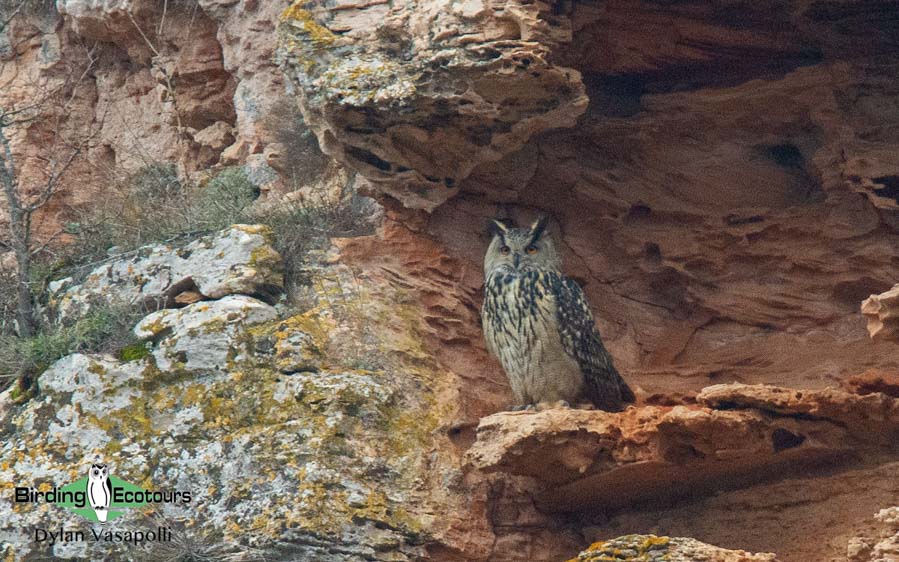
Before arriving at our accommodation in Kavarna we will scan some tall cliffs near town, where we hope to find roosting Eurasian Eagle-Owl.
Overnight: Kavarna
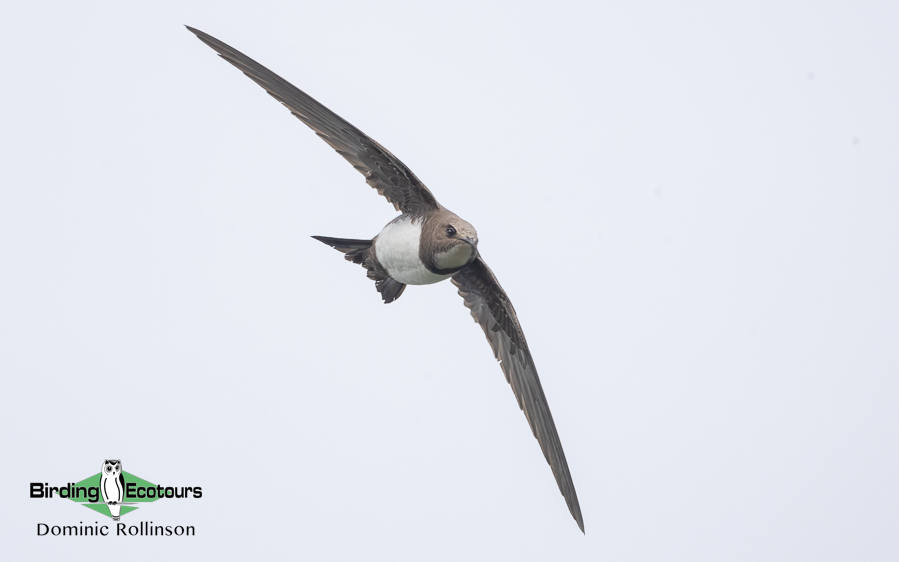 Cape Kaliakra usually holds good numbers of migrants such as Alpine Swift.
Day 9. Birding Cape Kaliakra and various wetlands around Kavarna
We will likely start the day with a trip to Cape Kaliakra Nature Reserve and Bolata for a completely different suite of birds. Here we can expect to see Calandra Lark, Greater Short-toed Lark, Eurasian Skylark, Tawny Pipit, Pied Wheatear, and many other migrants passing through the area. A scan of the sea can reveal various seabirds, including Black-throated Loon (Diver), Yelkouan Shearwater, Parasitic Jaeger (Arctic Skua), and the local subspecies of European Shag (desmarestii).
Next, we will head to the productive Durankulak Lake, along with possible visits to Shabla Tuzla Lake and the Kamen Bryag rocky steppes. Target species for the day include Montagu’s Harrier, Western Marsh Harrier, Squacco Heron, Purple Heron, Caspian Tern, Gull-billed Tern, Great White Pelican, Paddyfield Warbler, and Bearded Reedling.
We will also make another attempt at the larks, should we have missed any this morning, and will have another opportunity for pipits, including Red-throated Pipit. We should also be able to find some other great birds, like Eurasian Stone-curlew, Rosy Starling (erratic and often difficult to pin down), Levant Sparrowhawk, Common Reed Bunting, European Stonechat, European Pied Flycatcher, and Isabelline Wheatear.
Overnight: Kavarna
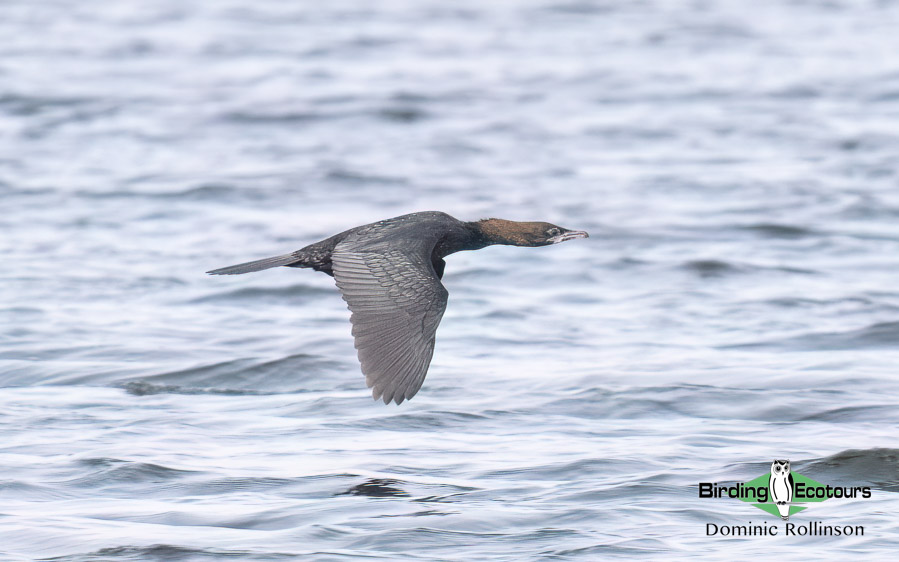 Pygmy Cormorant is common in the Danube Delta.
Day 10. Travel to the Danube Delta, Romania, birding en route
Today we will travel to the massive Danube Delta in neighboring Romania. During the journey we will likely visit Sinoe and Techirghiol Lakes. These lakes in the southeast of Romania offer a great range of habitats, including vast reedbeds, shallow lagoons, and sand bars. Birding these lakes will allow us to search for a range of species, including Pallas’s Gull, Caspian Gull, Paddyfield Warbler, European Bee-eater, and various shorebird and duck species. The surrounding farmlands host species such as Grey Partridge, Common Pheasant, Short-toed Eagle, Long-legged Buzzard, Red-footed Falcon, Calandra Lark, Tawny Pipit, Black-headed Bunting and so many others.
We will likely arrive in the late afternoon (by boat) at our accommodation, situated on an island in the Delta, where we will stay for the next two nights. The area around our hotel can be quite productive for birding, with migrants such as Common Cuckoo, Common Redstart, and Eastern Olivaceous Warbler often present.
Overnight: Uzlina Island
Day 11. Birding the Danube Delta
The Danube Delta’s impressive network of channels and lakes will be explored for the day by boat, which often allows us close-up views of many of our target species. We will also bird fishponds, associated flooded meadows, woodlands, and small pans, situated throughout the delta.
Birds of prey here include White-tailed Eagle, Eurasian Hobby, Red-footed Falcon, and Western Marsh Harrier, while wildfowl species will be evident, such as Greylag Goose, Common Shelduck, Mute Swan, Northern Shoveler, Eurasian Teal, Garganey, and Gadwall. Other waterbirds are numerous, and we should be able to find Black Stork, Eurasian Spoonbill, Dalmatian Pelican, Great White Pelican Pygmy Cormorant, Red-necked Grebe, Great Crested Grebe, all the European species of egrets and herons, and Glossy Ibis.
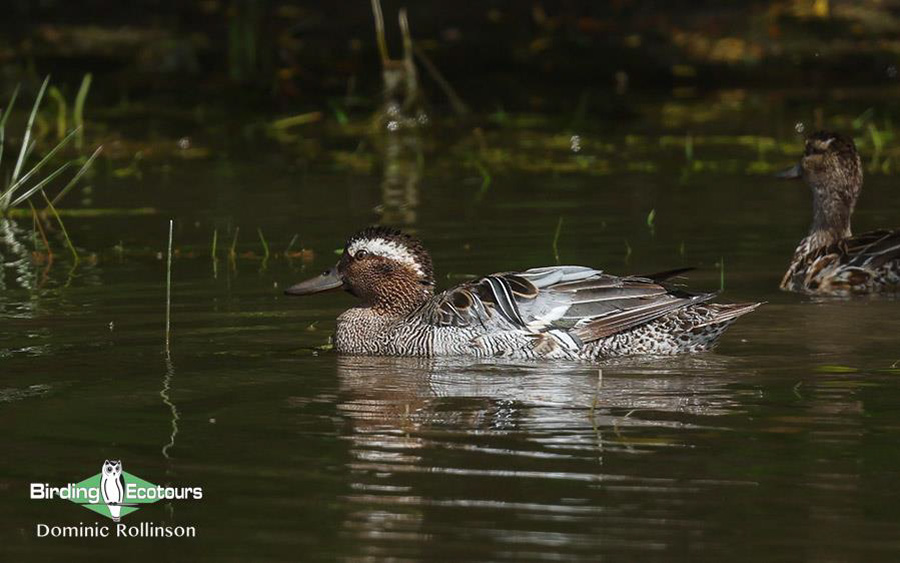 Garganey is one of the many waterfowl species we should see on this tour.
The flooded meadows should hold shorebirds like Black-winged Stilt, Pied Avocet, Common Snipe, Green Sandpiper, and terns including Caspian Tern, Black Tern, Whiskered Tern, and White-winged Tern.
The wooded riverbanks should hold the dazzling Common Kingfisher and woodpeckers including Syrian Woodpecker and the reedbeds might give up a new suite of warblers, including Savi’s Warbler, Sedge Warbler, and Moustached Warbler. These are all very vocal species but extremely skulking, so will usually require patience to come out of their reedbed habitats for a view.
Overnight: Uzlina Island
Day 12. Birding Danube Delta to Vadu
Following our great stay in the Danube Delta, we will depart this wonderful area for our final birding destination at Vadu. Here, the area’s expansive wetlands represent some of the country’s finest birding.
We will likely take most of the day slowly working our way back southwards, as we bird various lakes, wetlands and farmlands for any missing species, which may include Moustached Warbler, Paddyfield Warbler, or Rosy Starling. The area also hosts colonies of the scarce, Endangered (IUCN) European Ground Squirrel (also known as European Souslik).
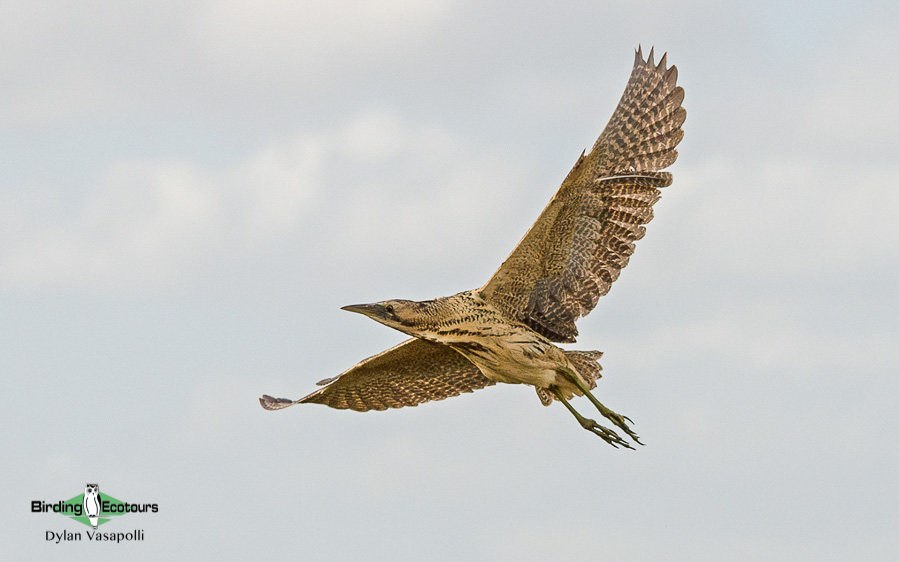
We will ensure we are in Vadu by the mid-afternoon to enjoy some fantastic wetland birding, to cap off our Balkans birding adventure. The wetlands here are usually full of waterfowl, herons, shorebirds, various other waterbirds, and warblers, including Eurasian Teal, Garganey, Northern Shoveler, Eurasian Bittern (we’re likely to hear them booming here and see them as they fly low over the reedbeds), Squacco Heron, Purple Heron, Eurasian Spoonbill, Collared Pratincole, Savi’s Warbler, and Paddyfield Warbler. Bearded Reedlings are often seen here too, as they flit between the vast reedbeds.
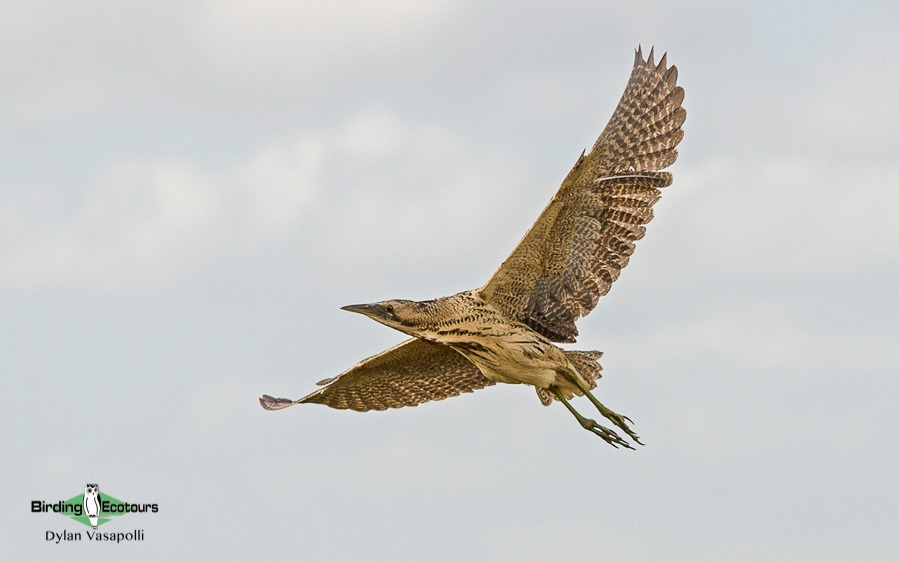 The often-elusive Eurasian Bittern can occasionally put on quite a show.
We will spend the night on the edge of Vadu town, overlooking wheatfields, from which Common Quail are often heard calling (although they are normally very tricky to lay eyes on)!
Overnight: Vadu
Day 13. Transfer to Bucharest for departure
This is mostly a non-birding day, as we transfer from Vadu to Bucharest, where the tour will conclude at midday, in time for your late afternoon or early evening flights out of Bucharest (please do not book flights any earlier than 3pm).
If you would like to spend some time in the wonderful city of Bucharest, we can easily help organize extra accommodation for you.
Overnight: Not included
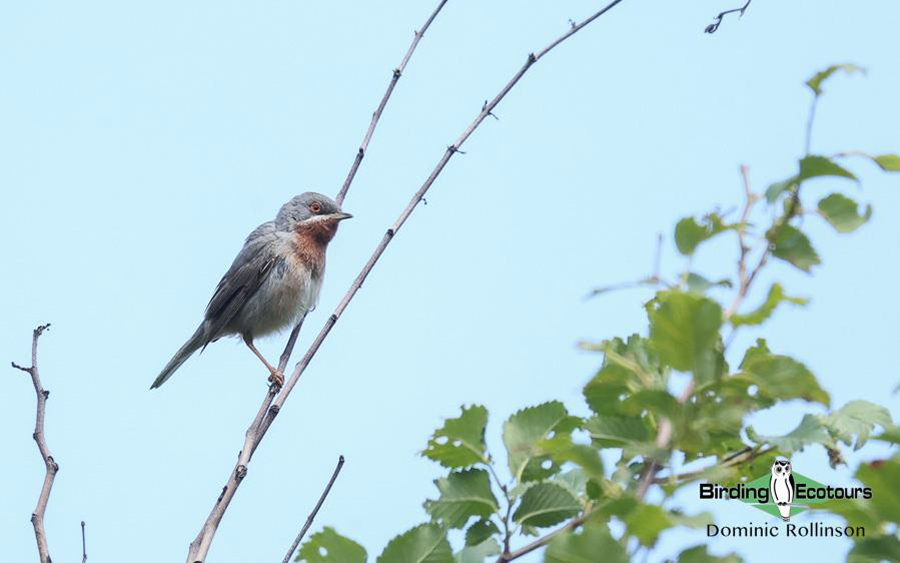 Returning migrants such as Eastern Subalpine Warblers are a highlight of this spring tour.
Please note that the itinerary cannot be guaranteed as it is only a rough guide and can be changed (usually slightly) due to factors such as availability of accommodation, updated information on the state of accommodation, roads, or birding sites, the discretion of the guides and other factors. In addition, we sometimes must use a different guide from the one advertised due to tour scheduling or other factors.
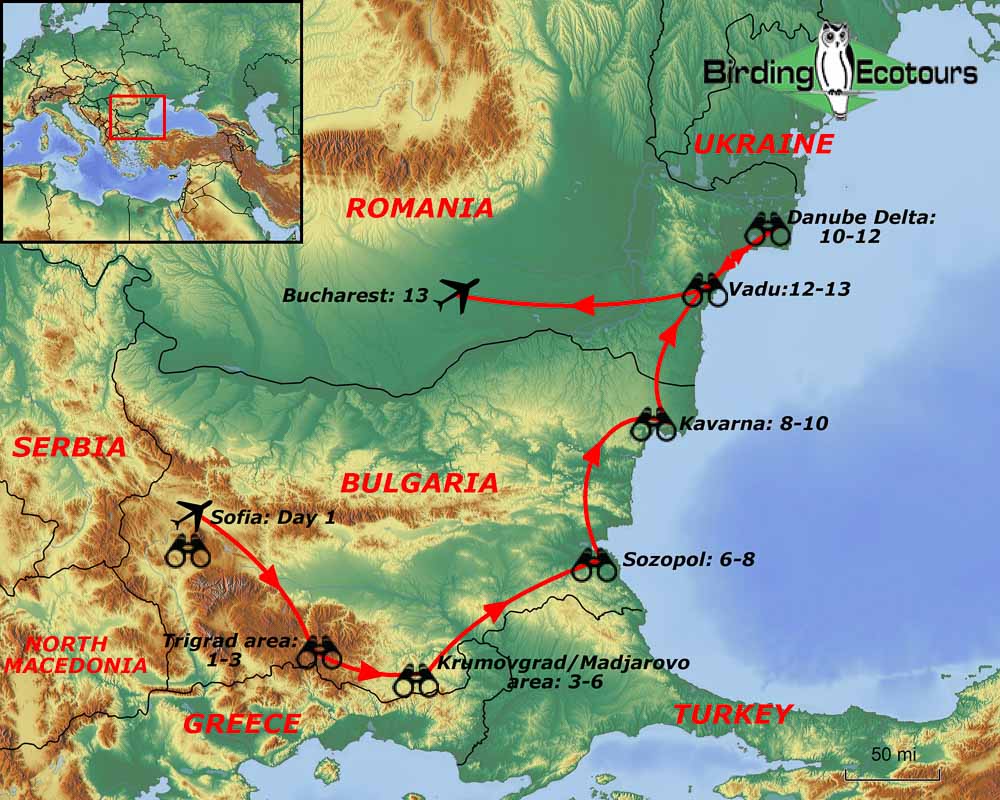
Map
Testimonials
Gallery
General Information
BULGARIA AND ROMANIA: GENERAL INFORMATION
TOUR OUTLINE
On this Bulgaria and Romania birding tour we explore some of the best birdwatching sites in Europe, from the rocky highland gorges of the Bulgarian Rhodopes to the vast wetlands of the Danube Delta in Romania. Spring is the most productive time to visit the Balkans, as millions of migratory birds return from Africa to breed across Europe. Our tour is timed to coincide with this peak migration period, allowing us to experience outstanding birding across a wide range of habitats while targeting many localized and sought-after European species.
We begin the tour in Sofia, birding the highlands of Vitosha mountain for species like Northern Nutcracker, Common Firecrest, and Ring Ouzel. From here we continue into the spectacular Rhodope Mountains, exploring the cliffs of Trigrad Gorge, one of Europe’s most reliable sites for the remarkable Wallcreeper, a stunning species representing its own monotypic family. Other possibilities include Black Woodpecker, Crested Tit, and White-throated Dipper, while the surrounding mountains hold Northern Chamois.
From the western Rhodopes we travel to the lower elevations of the Eastern Rhodopes, a region known for its dramatic scenery and excellent raptor diversity. Around Madzharovo and the Ivaylovgrad Reservoir, rocky slopes host Western Rock Nuthatch and Blue Thrush, while the Dolna Kula Valley thickets support Chukar Partridge, Sombre Tit, and Eastern Subalpine Warbler. Raptors such as Short-toed Snake Eagle, Eastern Imperial Eagle, and Cinereous Vulture could be encountered anywhere in the region.
Continuing northeast we reach the wetlands of Bulgaria’s Black Sea coast near Burgas and Pomorie, one of Europe’s premier migration hotspots. These lagoons host a wide diversity of waterbirds and shorebirds (waders), including Kentish Plover, Spotted Redshank, and Black-tailed Godwit, alongside gulls and terns such as Pallas’s Gull, Slender-billed Gull, and Black Tern. The reedbeds support species such as Bearded Reedling and Eurasian Penduline Tit, while nearby forests may produce White-backed Woodpecker and migratory flycatchers including Collared, European Pied, and Red-breasted Flycatcher. We then explore the coastal steppes around Cape Kaliakra and Durankulak Lake, excellent areas for raptors such as Montagu’s Harrier, and grassland specialists like Calandra Lark and Pied Wheatear.
The tour concludes in Romania’s Danube Delta, a UNESCO heritage site of important wetland ecosystems. Exploring the delta by boat allows us to access remote channels and reedbeds rich in birdlife such as a high diversity of ducks, herons, and terns. Highlights include Pygmy Cormorant, Dalmatian Pelican, and White-tailed Eagle, while reedbeds may reveal Paddyfield Warbler and the booming Eurasian Bittern, before we finish the tour in Bucharest.
DAILY ACTIVITIES, PHYSICAL REQUIREMENTS, AND TOUR PACE
Our Bulgaria and Romania birding tour moves at a comfortable pace while visiting a variety of habitats across both countries. Travel days are broken up with regular birding stops to maximize opportunities for target species. The longest transfer during the tour is approximately four and a half hours which we break up with regular bird stops. Birding on foot mostly consists of short walks along quiet roads, and forest trails, but we will spend time scanning cliffs, slopes, and wetlands. We will also enjoy boat-based birding, allowing us into the quieter areas of the Danube Delta for a unique experience.
The tour is considered easy to moderate in terms of physical effort. Most birding will involve walking distances of 1–2 miles (1.5–3 kilometers) at a time, usually on relatively flat or gently sloping terrain, or on uneven terrain where we will walk slower.
Birding days typically begin between 05:30–06:30, as early mornings provide the best bird activity, particularly for forest species and singing passerines. After several hours of birding we will stop for lunch and a short rest during the quieter midday period before continuing birding again in the afternoon. Each evening we will return to our accommodation for dinner.
SPECIES RECORDING (BIRD LISTS AND ANIMAL LISTS)
Ahead of the tour we will email you a detailed daily itinerary containing arrival and meeting instructions, and information about each day’s activities. A printed version of this itinerary will also be provided on the first evening of the tour. Each night your tour leader will review the plans for the following day, including departure times, breakfast arrangements, key birding locations, and the species we hope to see.
The itinerary will also include a checklist of birds and other wildlife that may be recorded during the tour. Participants are welcome to use this list to keep their own notes throughout the trip. We follow the latest International Ornithological Congress (IOC) taxonomy for birds, while other wildlife follows International Union for Conservation of Nature (IUCN) taxonomy, ensuring that all checklists are consistent with current global standards.
Each evening we will review the day’s sightings and compile a daily species list. Participation in this listing session is entirely optional. Birding Ecotours tour leaders also maintain eBird checklists for all birding activities during the tour, including both planned excursions and incidental sightings along the way. These checklists can be shared with participants who use eBird. If you would like to receive these lists, please provide your eBird username to the tour leader at the start of the tour. After the tour you will receive a PDF trip report by email. This report will take the form of an illustrated diary summarizing the highlights of the trip and will include a complete checklist of all wildlife recorded.
PASSPORT, VISA, AND ENTRY REQUIREMENTS
Most visitors do not require a visa to enter Bulgaria or Romania for short tourist stays. Many nationalities may enter Bulgaria visa-free for stays of up to 90 days within a 180-day period, including travelers from the United States, Canada, the United Kingdom, Australia (click on any of the countries to see details on Bulgaria’s immigration policies) and most EU countries. Check the Bulgarian immigration page here for more updated information on your specific requirements. Note that United States citizens holding dual nationality must enter and depart Bulgaria using their United States passport.
Both countries are members of the Schengen Area, which allows for free movement between participating countries once you have entered via Sofia, Bulgaria. See this link to Romania’s official immigration page. Country-specific information on Romanian travel can be found here for US citizens, here for Canadian citizens, here for UK citizens, and here for Australian citizens, please check these websites for any recent changes to ensure you are suitably covered. Citizens of countries not listed above should consult their own country’s embassy or consulate website to confirm visa requirements and entry regulations. If a visa is required, please ensure that it is obtained well in advance of your travel dates.
Visitors should have at least one blank page available for entry and exit stamps. You may also be required to show proof of onward or return travel, evidence of sufficient funds to cover your stay and proof of accommodation (this will be provided to you before the tour, and we recommend having the information on hand). We recommend carrying a photocopy of your passport during the tour, stored separately from the original document in case of loss or damage. It is also advisable to keep digital copies of important travel documents (such as your passport, travel insurance, and emergency contact details) stored securely online or in cloud storage for easy access if needed.
TRAVEL INSURANCE
As per our standard Terms and Conditions, we strongly recommend that you purchase comprehensive trip cancellation insurance to protect against unexpected events that might cause delays or interruptions to your travel. Your insurance should also cover illness, medical issues, accidents, repatriation, loss of luggage or valuable items, flight delays or cancellations, and medical evacuation. Failure to obtain adequate insurance could be costly should unexpected events occur. This is especially important on this tour, as we will visit remote areas where access to major medical facilities may be limited and medical evacuation to larger hospitals in cities such as Sofia or Bucharest may be necessary.
HEALTH, VACCINATIONS, AND MEDICAL CONDITIONS
We recommend that you are up to date with routine vaccinations before traveling to Bulgaria and Romania, including measles-mumps-rubella, tetanus, diphtheria, polio, chickenpox, seasonal flu, and COVID-19. In addition, Hepatitis A vaccination is commonly recommended for travelers visiting Europe. As we will occasionally be visiting rural areas, travelers may also wish to consult their doctor regarding tick-borne diseases, which do occur in Bulgaria and Romania, but not at rates greater than elsewhere in Europe.
Ticks and mosquitoes may be present in some habitats, particularly in lowland wetlands like the Danube Delta. We recommend taking precautions such as using insect repellent, wearing long pants and long-sleeved shirts when appropriate, and checking for ticks after spending time in grassy or wooded habitats.
Please consult your doctor or travel health specialist before traveling for the most up-to-date advice on vaccinations and health precautions. Official guidance can also be found on the CDC website (see guidance here for Bulgaria and here for Romania) or your country’s government travel health website. As per our general Terms and Conditions, please inform us when registering for the tour of any relevant medical conditions. Be aware that many hospitals and clinics may require payment upfront before treatment is provided, so comprehensive travel insurance is strongly recommended to cover potential medical costs or evacuation during the tour.
SAFETY, DANGEROUS ANIMALS
Bulgaria and Romania are generally very safe and welcoming destinations for travelers. Crime levels are relatively low (See a comparison to countries you know here) but petty theft can occasionally occur in busy tourist areas. Please keep a close watch on your personal belongings such as bags, wallets, cameras, and optics, particularly in cities such as Sofia and Bucharest. If traveling independently before or after the tour, we recommend avoiding walking alone late at night in unfamiliar areas, keeping valuables secure, and using licensed taxis or private transfer services.
While Brown Bears and Grey Wolves do occur in both Bulgaria and Romania, a sighting would be incredibly lucky as these are shy animals, and our guides will ensure that we always keep a safe distance where possible. In rural areas and villages we could encounter stray dogs, which you should avoid touching or interacting with. During the tour we will visit protected reserves, so please remain on designated paths and follow your guide’s instructions to minimize disturbance to wildlife and sensitive habitats.
FOOD AND WATER
Tap water is generally safe to drink in Bulgaria and Romania, particularly in cities and hotels. While in rural areas or birding in remote regions however, we recommend that participants drink bottled water. Drinking water will be available during the tour, and refillable water bottles will be provided to help reduce plastic waste.
Mealtimes will generally follow normal eating hours but may occasionally be flexible depending on our birding schedule and travel plans. Early morning birding sessions may require a packed breakfast, or a simple snack before heading out (which will be followed by a larger breakfast later in the morning). Breakfast and dinner will usually be taken at our accommodation or nearby restaurants, while lunch will be at local restaurants, cafés, or as a packed lunch depending on the schedule. If you need to eat at specific times due to medication or personal preference, we recommend bringing some snacks such as cereal bars, protein bars, nuts, or dried fruit.
Food during the tour will typically be a mix of traditional Balkan cuisine and international dishes, with plenty of options available in restaurants and hotels. Meals often include fresh vegetables, salads, grilled meats, soups, breads, cheeses, and seasonal produce. Fish is also commonly available, particularly in coastal areas. Vegetarian options are widely available, though choices may occasionally be more limited in smaller rural towns and we will generally search for the best options available. Overall, food standards throughout the tour are good and should cater to most dietary preferences. If you have specific dietary requirements or food allergies, please inform us in advance so that we can make appropriate arrangements.
CURRENCY
The official currencies used during this tour are the Euro (EUR) in Bulgaria and the Romanian leu (RON) in Romania, and both countries primarily use their local currencies for everyday transactions. While some tourist establishments may accept foreign currencies, paying in the local currency usually offers better value in both countries.
We recommend carrying a small amount of local cash for personal purchases, particularly in smaller towns or rural areas where card payments are not always accepted. Visa and Mastercard are widely accepted in hotels, restaurants, and shops in larger towns and cities and can be used to withdraw local currency from ATMs, while American Express is less commonly accepted. Local currency should preferably be withdrawn from ATMs or exchanged at major airports such as Sofia International Airport, but can also be withdrawn in towns and cities along the tour route if absolutely necessary. A small amount of cash will be useful for personal purchases, snacks, souvenirs, and gratuities. As with any travel destination, please remain vigilant when using ATMs or handling cash in busy public areas.
WEATHER/CLIMATE
Bulgaria and Romania experience a temperate continental climate, with warm springs, hot summers, and cold winters. Our tour takes place in May, the best time of year for birding in the Balkans, when temperatures are generally mild to warm and migratory birds are returning from their wintering grounds in Africa. Spring conditions are usually comfortable for birding, although weather can be variable. As bird activity is usually highest during the cooler parts of the day, most birding will take place in the early morning and late afternoon.
In Bulgaria, temperatures during May are typically pleasant, with daytime average temperatures ranging from 59–70°F (15–21°C) in most areas. Nights and early mornings can be cooler, especially in mountainous regions such as the Rhodope Mountains, where temperatures can drop to around 32°F (0°C), whereas maximum May temperatures generally don’t exceed 77°F (25°C). In Romania, spring temperatures are similar but often slightly milder, with daytime averages ranging from 63–72°F (17–22°C), with lows around 54°F (12°C) and highs around 75°F (24°C). Rain showers are possible throughout the tour, particularly in mountainous areas, but these are usually brief and interspersed with sunny periods.
ELECTRICITY AND COMMUNICATION
Power plug sockets in both Bulgaria (see here) and Romania (see here) are Type C and Type F, which are used throughout most of continental Europe. The standard voltage is 230 volts (V) and the frequency is 50 hertz (Hz). Visitors from countries using different plug types will likely need a travel adapter. If your home country uses a voltage between 220–240 V (such as the UK, most of Europe, Asia, and Africa), your electronic devices should work without a voltage converter. However, if the voltage in your country is 100–127 V (such as in the United States, Canada, and parts of South America), you may need a voltage converter for certain appliances.
All accommodation used during the tour provide electricity and Wi-Fi, though connection quality may vary depending on location. Internet access is typically reliable in larger towns and cities such as Sofia, Burgas, and Bucharest, but may be slower or less consistent in remote areas, particularly when we are staying near nature reserves or in the Danube Delta.
Mobile coverage is generally good across both countries, with ‘Vivacom’ offering the best coverage in Bulgaria, and ‘Orange’ having the best coverage in Romania. Participants may wish to purchase a local SIM card or eSIM before the tour; these are easily activated through your phone’s settings or the provider’s mobile app.
TRANSPORTATION AND LUGGAGE
Transportation during the tour will be in a comfortable 9-seater minibus, which will serve as our main vehicle while traveling between birding sites in Bulgaria and Romania. This allows for flexible birding with regular roadside stops and space for optics and daypacks. During our time in the Danube Delta, we will enjoy boat-based birding from a small motorboat, through its network of channels, lakes, and reedbeds, allowing close views of wetland species such as ducks, herons, and pelicans from the comfort of a shaded boat. While the boats do not have onboard toilets, breaks will be planned accordingly.
ACCOMMODATION
Accommodation during this Bulgaria and Romania birding tour will consist of a mix of comfortable hotels, guesthouses, and nature lodges located close to our main birding areas. In the Rhodope Mountains, we stay in small mountain hotels that provide easy access to the spectacular nearby gorges and forests. In the Eastern Rhodopes, our base will be a stunning guesthouse near Madzharovo, ideally positioned for exploring the region’s excellent raptor and warbler habitats.
Along Bulgaria’s Black Sea coast, accommodation in Sozopol and Kavarna places us close to important coastal wetlands and steppe habitats near Burgas, Cape Kaliakra, and Durankulak Lake. Later in the tour we stay within the remarkable Danube Delta, where our lodge on Uzlina Island provides direct access to the delta’s channels, lakes, and reedbeds for boat-based birding excursions. Our final night is near the wetlands around Vadu, offering opportunities for some last-minute birding before our transfer to Bucharest.
All accommodation used during this tour feature private en-suite bathrooms with hot water, 24-hour electricity, and Wi-Fi. Laundry services are available at several accommodations along the tour route.
WHAT TO BRING:
Clothing
Lightweight, breathable clothing is recommended for daytime birding, particularly in open habitats and along the Black Sea coast and Danube Delta, where temperatures can be pleasantly warm. Neutral or muted colors are ideal for birdwatching. Sun protection such as a wide-brimmed hat, sunglasses, and sunscreen is also recommended.
Early mornings and evenings can be cooler, especially in higher elevation areas such as the Rhodope Mountains, so layered clothing is the most suitable. A light sweater, fleece, or jacket will help keep you comfortable during early starts. Long pants are useful not only for cooler temperatures but also for protection against insects and ticks in forested or grassy areas.
Spring weather in the Balkans can be unpredictable, and brief showers are possible. We recommend bringing a lightweight waterproof jacket or rain shell. Bringing lightweight hiking boots or sturdy walking shoes for birding, and comfortable shoes or trainers for travel and relaxing is most suitable.
Equipment
Binoculars, a camera, or both, are highly recommended for all Birding Ecotours trips. Cameras are especially recommended if you wish to document your sightings, as many species seen on this trip are striking and photogenic. A small daypack is essential for carrying binoculars, water, field guides, and other personal items while in the field. A walking stick or hiking pole may be helpful for participants who prefer extra stability on uneven ground or longer walks.
Although we will not be doing a lot of night birding during the tour (we may try for Eurasian Scops Owl and Eurasian Eagle-Owl), a flashlight or headlamp can be useful for moving around accommodation at night, or in case of occasional power outages. A small personal first aid kit is also useful for treating minor cuts, blisters, or insect bites
FIELD GUIDES
Collins Bird Guide (Svensson, Mullarney, and Zetterström) – Widely regarded as the standard field guide for birds in Europe, this guide provides excellent illustrations, clear range maps, and detailed identification text. It is highly suitable for both beginner and experienced birders and is considered one of the best resources for identifying European bird species in the field.
Europe’s Birds: An Identification Guide (Hume, Still, Swash, and Harrop, 2021) – A modern and comprehensive guide covering all bird species recorded in Europe. The book features high-quality photographs, up-to-date taxonomy, and concise identification text, making it a useful companion both in the field and when reviewing sightings after birding.
Field Guide to Mammals of Europe, North Africa and the Middle East, Third Edition (Stéphane Aulagnier) – A comprehensive and well-illustrated guide covering the mammals of the region. It includes detailed identification text, distribution maps, and high-quality illustrations, making it an excellent reference for identifying mammals that may be encountered during the tour.
Reptiles and Amphibians of Europe (Speybroeck, Beukema, Bok, and Van der Voort, 2016) – An excellent and comprehensive guide to the reptiles and amphibians of Europe, featuring detailed photographs, range maps, and identification text. It is particularly useful for those interested in identifying the diverse herpetofauna that can be found across the Balkans and southeastern Europe.
USEFUL APPS AND WEBSITE RESOURCES
Merlin – This mobile app from the Cornell Lab of Ornithology can help identify birds by sight (photos) and sound (recordings), making it a useful tool during the tour. The app’s database continues to expand with new regional information and recordings. We recommend downloading the Europe bird pack before the trip so you can identify species likely to be encountered during birding in Bulgaria and Romania
eBird – The eBird website and mobile app provide an enormous amount of information on bird distribution, recent sightings, and birding hotspots. The app also allows you to keep track of your own bird lists during the tour. Through the Macaulay Library, eBird provides photo, video, and sound recordings for almost every bird species in the world, making it an excellent resource when birding in Eastern Europe.
Aves Vox – This app allows users to download bird songs and calls directly from the xeno-canto sound library onto their mobile device. It can be a useful reference for learning the calls of European species before the tour or reviewing bird vocalizations encountered in the field.
IOC World Bird List – This website provides the latest updates on global bird taxonomy, including newly described species, taxonomic splits, and lumps. It is widely used by birders and researchers worldwide and serves as the taxonomic standard used for bird lists on many international birding tours.