United Kingdom Birding Tours
Summary of our United Kingdom birding tours
Birding Ecotours offers spring and fall (autumn) birding tours across the United Kingdom, targeting resident specials as well as scarce migratory species. Our United Kingdom birdwatching tours explore England and Scotland’s diverse habitats, from winter wetlands and coastal reserves to springtime hedgerows and upland forests. Key target species include Red Kite, Scottish Crossbill, Rock Ptarmigan, Red Grouse, and a dazzling array of warblers and shorebirds. Top birding sites include Rutland Water, RSPB Titchwell Marsh, RSPB Bempton Cliffs, and WWT Caerlaverock, where spectacular birding opportunities await. The UK’s rich birding culture, extensive citizen-science networks, and well-managed nature reserves make it a rewarding destination for both new and experienced birders. Our tours combine expert guidance, small-group attention, and carefully selected locations to provide an immersive birdwatching experience across the British Isles.
Read More About United Kingdom
Introduction to the United Kingdom
The United Kingdom of Great Britain and Northern Ireland, commonly known simply as the United Kingdom (UK), consists of the northeastern section of the island of Ireland, known as Northern Ireland (the remainder of that island is called the Republic of Ireland and does not form part of the UK), and the island of Great Britain (which includes England, Wales, and Scotland), which is the largest island in Europe and the ninth-largest island in the world. The United Kingdom therefore contains four constituent countries: England, Wales, Scotland, and Northern Ireland.
Our United Kingdom birding tours currently take place in England and Scotland (outlined below). Reminders of these nations’ ancient past, from Roman times and earlier, remain visible today in castles, cathedrals, and historic towns. These historical reminders of the past will be seen and enjoyed as we search for a wide range of avian targets during our United Kingdom birdwatching tours.
The UK is situated off the northwest coast of Europe (and the Western Palearctic biogeographical region, or ecozone) and is surrounded by the Atlantic Ocean to the west and the North Sea to the east, with the English Channel to the south (broadly speaking). Most of the UK has a temperate climate, generally cool with much year-round rainfall, though some areas (such as the very high mountains in Scotland and the westernmost areas) do have different climates (e.g. subpolar oceanic, continental subarctic, and tundra climates). The UK experiences four seasons, spring, summer, autumn, and winter.
With the prevailing wind coming from the southwest, the western side of the UK is wetter than the eastern side. Atlantic currents, warmed by the Gulf Stream, bring mild winters particularly to the west, however, the north and east of the UK can experience cold winters when weather systems open airflow from eastern Europe and Siberia. Arctic blasts from the north and Mediterranean blasts from the south can occur in winter and spring, and during the autumn period mild hurricanes can hit (usually the tail end of hurricanes that have come across the Atlantic Ocean). These factors make the UK an excellent year-round destination for observing birds from across the world.
United Kingdom birding highlights
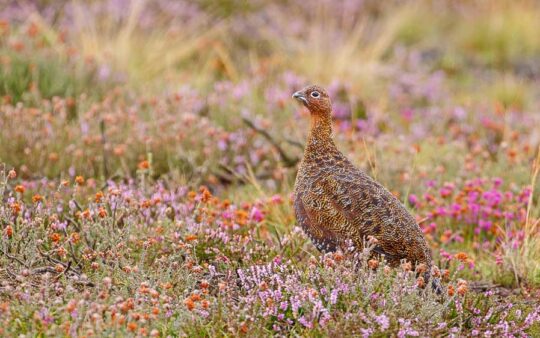
Following International Ornithological Congress (IOC) taxonomy the UK has a bird list of over 670 species; however, a vast number of these are vagrant birds. About 250 species of birds occur frequently, and United Kingdom birding tours during the spring and winter periods can connect with a good percentage of these. There are currently two recognized endemic birds in the UK, the Scottish Crossbill and Red Grouse. The climate and geography of the islands plays a huge part in where these bird species occur. For example, winter sees the arrival of hundreds of thousands of ducks and geese from their northern breeding grounds, while spring sees the hedgerows and gardens filled with birdsong with the arrival of migrant birds. The UK is also known for its fantastic nature reserves and these are often where most species are seen during a wildlife holiday. Reserves such as Rutland Water, RSPB Titchwell Marsh, RSPB Bempton Cliffs and WWT Caerlaverock all offer visiting birders the chance to witness sensational wildlife spectacles, such as the raptor roost at Titchwell in winter.
An increasing number of people are interested in natural history and specifically in bird watching as evidenced by the fact that the UK’s number one birdwatching charity, the Royal Society for the Protection of Birds (RSPB), has over one million members. Many towns, cities, and regions also have their own bird clubs or societies, with social birding a big hobby, whether it is people giving nature a home within their garden or traveling around the country. Technological advances have furthered the work carried out by the British Trust for Ornithology (BTO), and eBird is increasingly widespread, furthering the value of citizen-science birdwatching. Twitching and bird photography are especially popular among UK birders. “Bird news” is a very important way of birders finding out about rare birds, and websites such as BirdGuides, Rare Bird Alert, and Surfbirds provide regular updates on rare birds and have all helped with the flow of bird-sighting news and undoubtedly increased the number of people interested in birds and birding.
A closer look at our United Kingdom birding tours
We have three exciting small-group bird watching tours in the UK which will provide excellent views of some exciting common birds for a first-time visitor to Europe, such as European Robin, Eurasian Bullfinch, Eurasian Blue Tit, European Greenfinch, European Goldfinch, Eurasian Nuthatch, Yellowhammer, and Northern Lapwing. Each UK birding tour will then focus on some of the seasonal specials:
United Kingdom: Highlands and Islands of Scotland in Spring
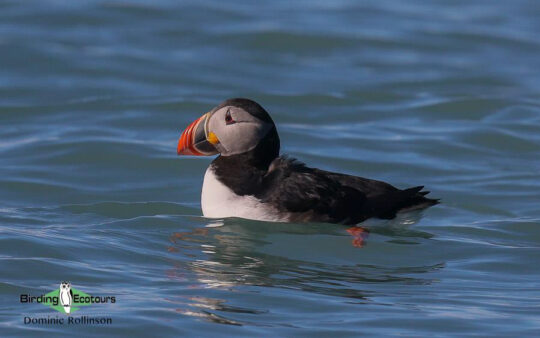
Timed for the peak of the breeding season, this spectacular Highlands and Islands birding adventure explores Scotland’s dramatic landscapes and rare habitats. Target species include Scottish Crossbill, Red Grouse, Rock Ptarmigan, Eurasian Dotterel, Corn Crake, Golden Eagle, White-tailed Eagle, Hen Harrier, Short-eared Owl, Atlantic Puffin, Black Guillemot, Horned Grebe, Crested Tit, and Snow Bunting, alongside mammals such as Eurasian Beaver, Red Squirrel, and Pine Marten. Follow the link above to see the detailed itinerary.
United Kingdom: England in Spring
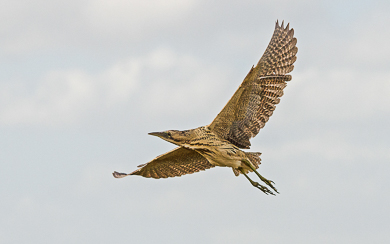
Occurring during the height of spring migration and breeding, this eastern England birding tour covers Norfolk, Suffolk, Yorkshire, and Northumberland. Highlights include Red Grouse, Black Grouse, European Nightjar, Eurasian Stone-curlew, Pied Avocet, Common Nightingale, Bearded Reedling (Tit), Garganey, Common Crane, Eurasian Bittern, Mediterranean Gull, Eurasian Hobby, and Atlantic Puffin. Expect close encounters with seabird colonies at Bempton Cliffs and the Farne Islands, plus chances for scarce migrants such as European Turtle Dove and Wood Warbler. Follow the link above to see the detailed itinerary.
United Kingdom: England Fall Migration Special
Set during the mid-fall migration period, this tour focuses on resident species, overwintering wildfowl, and exciting vagrants along the east coast of England. Key targets include Whooper Swan, Pink-footed Goose, Tundra Bean Goose, Smew, Velvet Scoter, Caspian Gull, Iceland Gull, Purple Sandpiper, European Golden Plover, Redwing, Fieldfare, Lapland Longspur (Bunting), Snow Bunting, Twite, Brambling, Hawfinch, and Bohemian Waxwing. We will also search for rarities such as Yellow-browed Warbler, Pallas’s Leaf Warbler, Red-flanked Bluetail, and Dusky Warbler. Follow the link above to see the detailed itinerary.