by Adam Cruickshank (written 10 November 2026)
More than 1,100 nautical miles from Cape Town, in the cold and blustery Southern Ocean, lies a sight that few people will ever have the privilege of witnessing. It’s not something you simply see and move on from. It’s an experience that stays with you for the rest of your life, which words can never fully express.
Monday, 27 January 2025.
Even now, that date brings back a whole range of emotions, emotions I got to share with around 1,900 fellow birders from across the world. I woke up that morning knowing it would be cold, windy, and wet, but none of this dampened my enthusiasm. I dressed warmly, strapped on my trusty 10×42 binoculars, and made my way to the small deck at the back of the MSC Musica.
As I stepped outside, those familiar feelings from my first Flock to Marion voyage in 2022 began to return. In the distance, I could make out the peaks of Marion Island. There was something almost overwhelming about gazing upon this remote island, part of the Prince Edward Islands, which together are home to nearly half of the world’s Snowy (Wandering) Albatrosses.
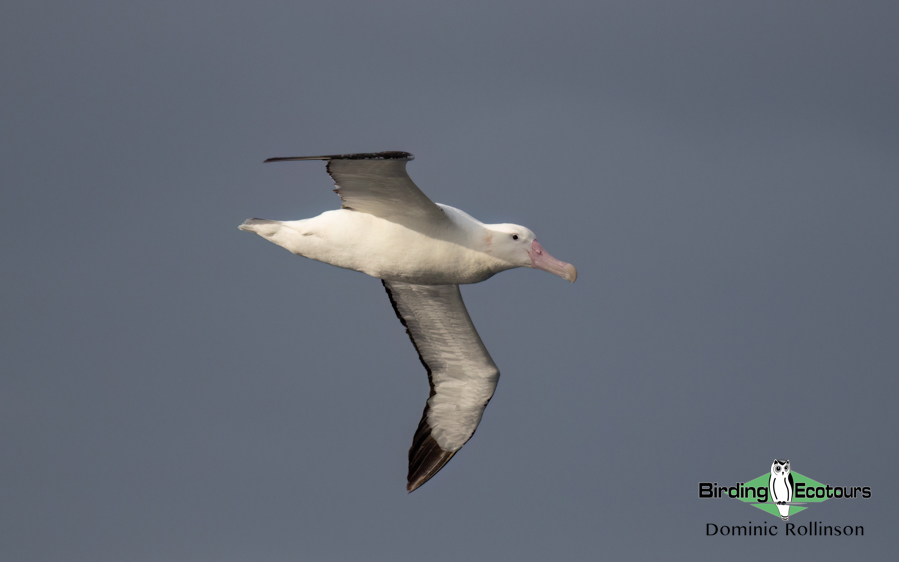
The Prince Edward Islands host just short of half of the world’s population of Snowy (Wandering) Albatrosses.
But what has stayed with me most vividly is the sight of hundreds of albatrosses soaring around the ship. These magnificent giants of the ocean glided past us, sometimes close enough that we could make out the smallest details of their wonderfully stoic faces. With enormous wings outstretched, they moved effortlessly above the waves, seemingly unmoved by the wind and the wild seas below them.
And there I stood, surrounded by these incredible birds, with Marion Island rising out of the ocean in the distance. I found myself overcome with emotion and with an overwhelming sense of just how privileged I was to be there, witnessing something that so few people will ever get to experience.
Flock to Marion 2028: Another opportunity to experience the Southern Ocean
The good news for those who have never had the opportunity to travel to these remote waters is that BirdLife South Africa is once again organizing a Flock to Marion cruise in 2028! The organization has a proud history of arranging birding cruises in the waters off southern Africa. It all started in 2013, when more than 1,100 birders set sail from Cape Town to Walvis Bay in Namibia. This cruise not only gave birders the opportunity to encounter a wonderful variety of pelagic species but also allowed them to enjoy some of Namibia’s birding specials.
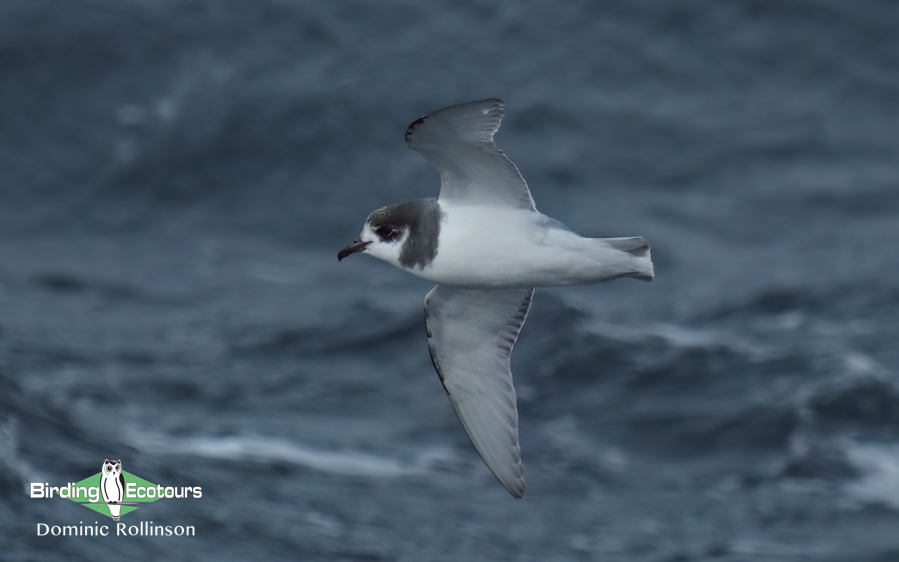
Blue Petrel, one of the many petrel species we hope to see on the Flock to Marion cruise.
Following the success of this first cruise, BirdLife South Africa organized Flock at Sea, AGAIN! in 2017. This time, rather than sailing to another country, the ship headed out into the deep waters off South Africa, traveling toward the southern edge of the country’s Exclusive Economic Zone (EEZ), which extends up to 200 nautical miles (approximately 370 kilometers) offshore.
Then, in January 2022, following a delay caused by the COVID-19 pandemic, BirdLife South Africa took things to another level by organizing the first Flock to Marion cruise. For the first time, a large passenger cruise liner took birders into the remote waters surrounding Marion and Prince Edward Islands. It was an incredible success.
In January 2025, BirdLife South Africa did it again, with around 1,900 birders setting sail for the Southern Ocean. I was fortunate enough to be among them, having also experienced the 2022 voyage, and I can genuinely say that these have been two of the most memorable birding experiences of my life.
And now, in 2028, we have another opportunity to experience this extraordinary part of the world. From 31st of January to the 7th of February 2028, the MSC Sinfonia will sail from Cape Town to the waters surrounding Marion and Prince Edward Islands before returning to South Africa, this time arriving in Durban. The ship will not land on either island and must remain at least 12 nautical miles (approximately 22 kilometers) offshore.
There is no guarantee that another cruise of this kind will be organized in the future. For many birders, this could be a rare opportunity to experience the seabirds and wildlife of the subantarctic from the comfort of a large cruise liner.
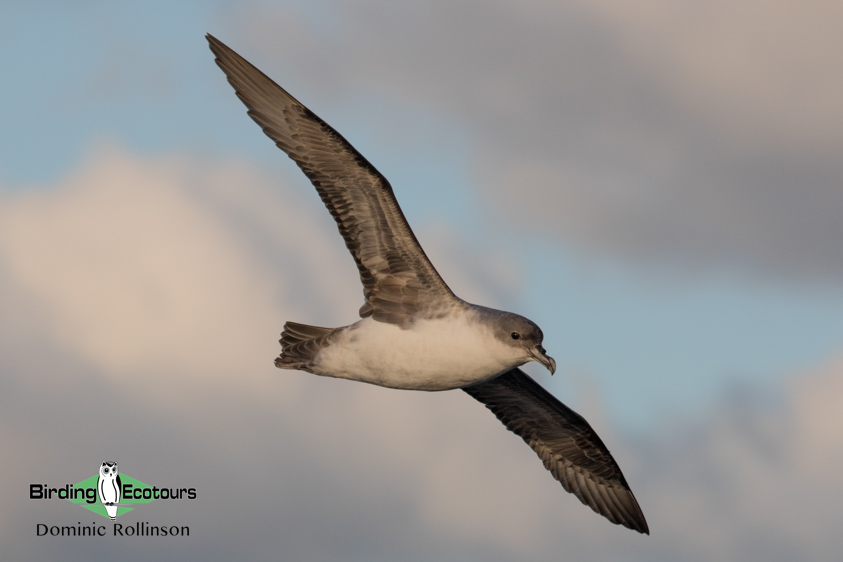
Grey Petrel is a burrow-nesting species that breeds on Marion Island.
What makes Flock to Marion 2028 so special?
The MSC Sinfonia has 976 cabins and a capacity of 2,646 passengers. Its open decks will give those on-board excellent opportunities to watch seabirds. As with other MSC cruises, passengers can enjoy comfortable accommodations, meals, entertainment, and many of the amenities of a modern cruise ship.
But what sets this cruise apart from other MSC voyages is the team of seabird and marine mammal specialists that BirdLife South Africa brings on board. Approximately 70 experts will be stationed around the outer decks throughout daylight hours, ensuring that even inexperienced birders can get tremendous value from the experience. And these guides do so much more than simply point out the birds and marine mammals being seen. They generously share their knowledge, helping passengers not only identify the different species but also understand their fascinating lives and behavior at sea.
On previous Flock to Marion cruises, I’ve had the privilege of standing alongside people such as Peter Harrison MBE, Hadoram Shirihai, and many other internationally respected birding experts. Being able to spend time with people who have dedicated so much of their lives to studying seabirds, listening to their stories, asking questions, and simply soaking up their knowledge has been one of the many highlights of these voyages.
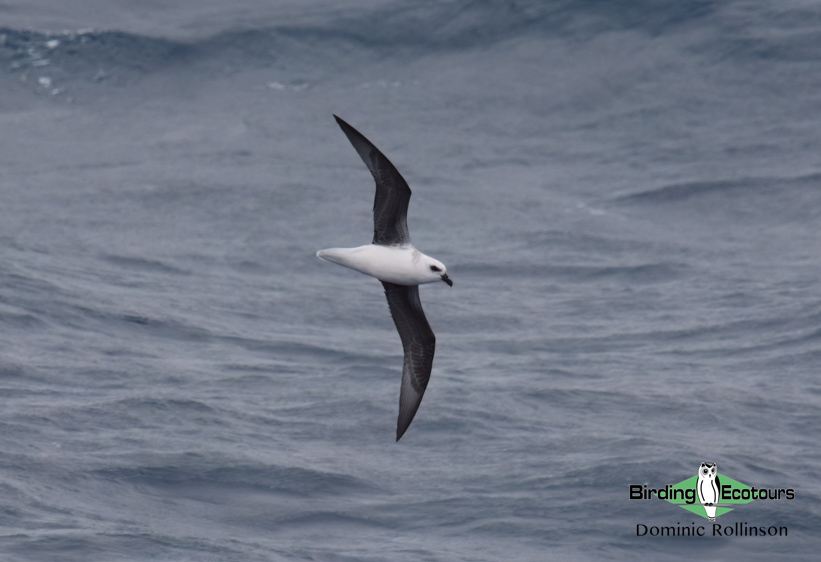
White-headed Petrel has been seen on both of the previous Flock to Marion cruises.
And the wonderful thing is that this specialist guiding is available to everyone on board as part of the Flock to Marion experience. There is a compulsory birding and lecture fee of R2,000 per person to help cover the specialists’ costs, but considering the expertise passengers have access to throughout the voyage, I think it represents exceptional value.
Birding Ecotours is also proud to once again have some of our own guides forming part of this team of specialists for the 2028 cruise.
But the learning opportunities don’t end when you leave the outer decks. Throughout the voyage, passengers can also attend a fascinating program of lectures presented by leading conservationists, seabird scientists, and birding experts. These talks add another dimension to the experience, helping passengers understand the wildlife and conservation challenges of the Southern Ocean.
Although the 2028 cruise costs more than previous voyages, it still represents exceptional value for anyone wanting to experience this remote part of our planet. When you consider the cost of reaching the Southern Ocean on a traditional expedition vessel, as well as the accommodations, meals, entertainment, and access to seabird experts, it is one of the most accessible ways to explore these waters.
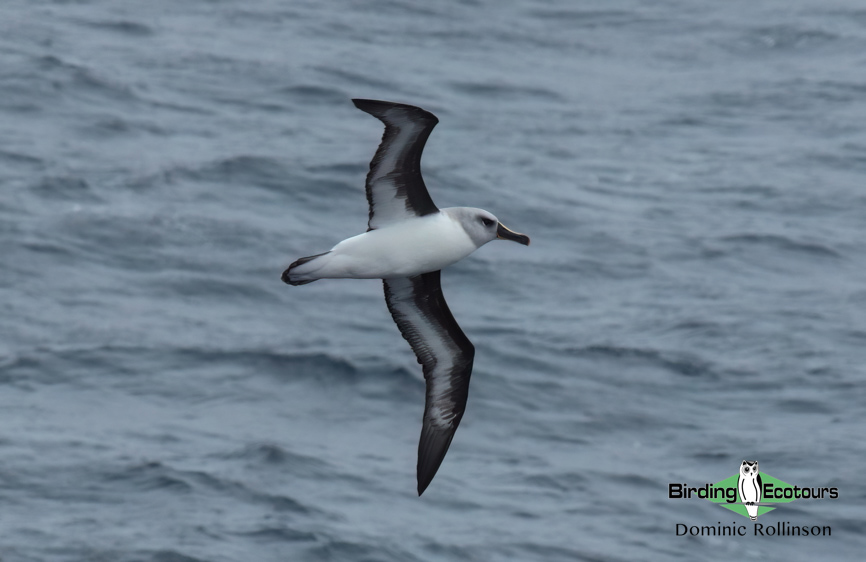
Grey-headed Albatross is one of the several albatross species that breeds on Marion Island.
The incredible birdlife of Marion Island and the Southern Ocean
Of course, for most birders, the biggest attraction is the wildlife that can be encountered on the voyage. According to the official Flock to Marion website, 53 seabird species and 17 mammal species were recorded on the 2025 cruise. The 2028 voyage could once again offer exceptional birding, with the possibility of seeing Snowy (Wandering), Sooty, Grey-headed, and Indian Yellow-nosed Albatrosses; Blue and Kerguelen Petrels; prions; giant petrels; and many other sought-after Southern Ocean species. And it’s not only about the birds. There are also opportunities to encounter whales, dolphins, and seals.
To give you a better idea of just how remarkable the birding can be, here is what Daniel Engelbrecht, one of our Birding Ecotours guides on the 2025 cruise, said about his experience:
“The sheer number of birds around the Prince Edward Islands is hard to comprehend. Tens of thousands of prions, mostly Salvin’s Prions, streamed past the ship, while hundreds of albatrosses, including Snowy (Wandering), Light-mantled, Sooty, Grey-headed, Indian Yellow-nosed, and Black-browed, graced the waters. We also saw large numbers of other tubenoses, such as petrels, storm petrels, and diving petrels. For me, though, the undisputed highlights were the penguins. During our time near the islands, we spotted four species: King, Macaroni, Eastern Rockhopper, and my personal favorite, and a global lifer for me, the Gentoo Penguin.”
To give readers an idea of the incredible variety of Southern Ocean birds and marine mammals that may be encountered on this voyage, I’ve also included a consolidated species list from the 2022 and 2025 Flock to Marion cruises at the bottom of this article.
More than just a birding cruise: Supporting the Mouse-Free Marion Project
But as extraordinary as the birding is, there is something even more important about the Flock to Marion cruise. One of the primary goals of the voyage is to raise awareness and funds for the conservation work being undertaken by BirdLife South Africa, including the Mouse-Free Marion Project.
This project, undertaken in partnership with South Africa’s Department of Forestry, Fisheries and the Environment, aims to eradicate invasive House Mice from Marion Island, where they are having a devastating impact on breeding albatrosses, petrels, and other seabirds.
These mice were introduced to the island more than two centuries ago. Over time, their numbers have increased dramatically, and they have begun preying on the eggs, chicks, and even adult birds that breed there. The injuries inflicted on these defenceless seabirds are often fatal, resulting in slow and agonizing deaths. The situation is extremely serious. Scientists warn that, without intervention, 19 of the 29 bird species that breed on Marion Island could face local extinction.
And this is where the Flock to Marion cruises have already made such an important contribution. The 2022 cruise raised more than R3 million for the Mouse-Free Marion Project through generous donations, pledges, and fundraising activities. The 2025 cruise built on that success, with the Mouse-Free Marion Project team raising more than R3.7 million through hectare sponsorships and onboard auctions. Overall, the 2025 voyage raised more than R9 million for BirdLife South Africa and the Mouse-Free Marion Project. These contributions are helping to safeguard the future of the albatrosses, petrels, and other wildlife that depend on this remarkable island.
Bookings for Flock to Marion 2028 open on November 30, 2026, with published starting fares of approximately US$1,300 per person sharing an interior cabin. These indicative prices include mandatory fees, vary by cabin type and availability, and may change with exchange rates. For current fares and details on how to book, visit the official Flock to Marion 2028 page on BirdLife South Africa’s website. All cruise bookings are handled directly by MSC Cruises. But the good news doesn’t end there!
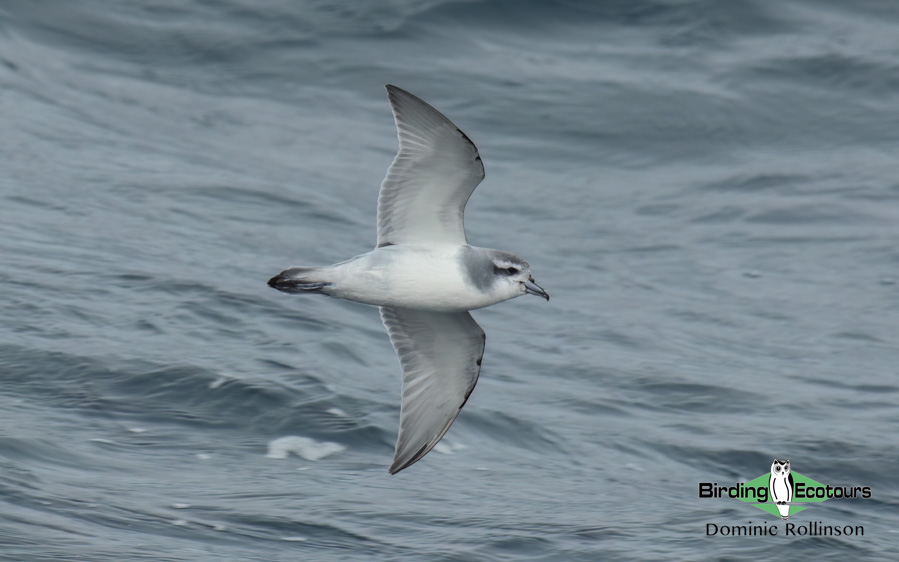
As always, prions represent a significant identification challenge, this bird being a Fairy Prion.
Extend Your visit with Birding Ecotours
For those traveling to South Africa for Flock to Marion 2028, Birding Ecotours is organizing a selection of birding tours before and after the cruise. These small group tours will allow you to make the most of your time in South Africa, experiencing not only the seabirds of the Southern Ocean but also the remarkable variety of birdlife found across the country.
We have four specially scheduled tours designed to fit around the cruise. Before the voyage, we have our Northern Cape’s Desert Endemics tour and Cape Town’s Fynbos Endemics tour. After the cruise, with the ship arriving in Durban, we have our Zululand Specials tour, followed by our South Africa: The North tour. These tours can be booked individually or combined, allowing you to experience several of South Africa’s most rewarding birding regions.
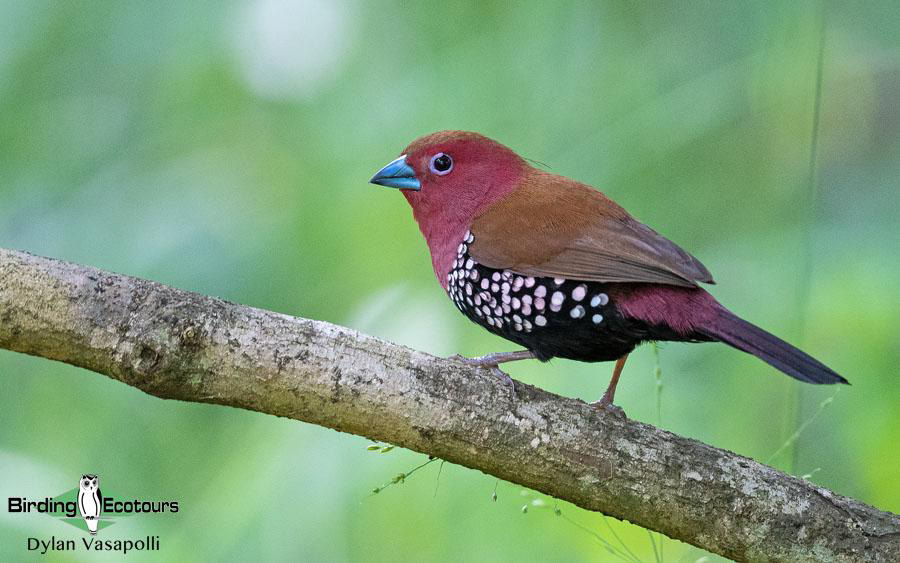
We should see Pink-throated Twinspot on our post-Flock Zululand birding tour.
And for those who would prefer something a little more flexible, we can also organize private birding tours and guided day trips tailored to your interests and target species.
One of the biggest advantages of booking your South African birding experience with Birding Ecotours is that our team can help with the arrangements surrounding your trip. From planning your itinerary and arranging accommodations before and after the cruise to assisting with local flights, transfers, and other travel details, we’ll work with you to make the experience as straightforward and enjoyable as possible.
Our goal is simple. We want you to spend less time worrying about travel arrangements and more time enjoying the birds that South Africa has to offer. If you’re planning to join Flock to Marion 2028 and would like help putting together your perfect South African birding experience, we’d love to hear from you. Email our team at [email protected] and let us help you make the most of this extraordinary opportunity.
Bird species seen on Flock to Marion 2022 and 2025 (only confirmed species are included)
| Common English Name | Scientific Name | 2022 | 2025 |
| African Oystercatcher | Haematopus moquini | x | x |
| Red Phalarope | Phalaropus fulicarius | x | x |
| Parasitic Jaeger | Stercorarius parasiticus | x | x |
| Long-tailed Jaeger | Stercorarius longicaudus | x | x |
| Brown Skua | Stercorarius antarcticus | x | x |
| Sooty Tern | Onychoprion fuscatus | x | x |
| Sandwich Tern | Thalasseus sandvicensis | x | |
| Greater Crested Tern | Thalasseus bergii | x | x |
| Lesser Crested Tern | Thalasseus bengalensis | x | |
| Common Tern | Sterna hirundo | x | x |
| Sabine’s Gull | Xema sabini | x | |
| Hartlaub’s Gull | Chroicocephalus hartlaubii | x | |
| Grey-headed Gull | Chroicocephalus cirrocephalus | x | x |
| Kelp Gull | Larus dominicanus | x | x |
| King Penguin | Aptenodytes patagonicus | x | x |
| Gentoo Penguin | Pygoscelis papua | x | |
| African Penguin | Spheniscus demersus | x | |
| Macaroni Penguin | Eudyptes chrysolophus | x | x |
| Eastern Rockhopper Penguin | Eudyptes fiholi | x | x |
| Northern Royal Albatross | Diomedea sanfordi | x | |
| Tristan Albatross | Diomedea dabbenena | x | |
| Snowy (Wandering) Albatross | Diomedea exulans | x | x |
| Light-mantled Albatross | Phoebetria palpebrata | x | x |
| Sooty Albatross | Phoebetria fusca | x | x |
| Atlantic Yellow-nosed Albatross | Thalassarche chlororhynchos | x | |
| Indian Yellow-nosed Albatross | Thalassarche carteri | x | x |
| Grey-headed Albatross | Thalassarche chrysostoma | x | x |
| Black-browed Albatross | Thalassarche melanophris | x | x |
| Shy Albatross | Thalassarche cauta | x | x |
| Wilson’s Storm Petrel | Oceanites oceanicus | x | x |
| Grey-backed Storm Petrel | Garrodia nereis | x | x |
| White-bellied Storm Petrel | Fregetta grallaria | x | |
| Black-bellied Storm Petrel | Fregetta tropica | x | x |
| Leach’s Storm Petrel | Hydrobates leucorhous | x | x |
| Pintado (Cape) Petrel | Daption capense | x | |
| Southern Giant Petrel | Macronectes giganteus | x | x |
| Northern Giant Petrel | Macronectes halli | x | x |
| Grey Petrel | Procellaria cinerea | x | x |
| White-chinned Petrel | Procellaria aequinoctialis | x | x |
| Cory’s Shearwater | Calonectris borealis | x | x |
| Sooty Shearwater | Ardenna grisea | x | x |
| Great Shearwater | Ardenna gravis | x | x |
| Flesh-footed Shearwater | Ardenna carneipes | x | |
| Manx Shearwater | Puffinus puffinus | x | |
| Subantarctic Shearwater | Puffinus elegans | x | x |
| Little Shearwater | Puffinus assimilis | x | x |
| Tropical Shearwater | Puffinus bailloni | x | x |
| Common Diving Petrel | Pelecanoides urinatrix | x | x |
| Blue Petrel | Halobaena caerulea | x | x |
| Fairy Prion | Pachyptila turtur | x | x |
| Broad-billed Prion | Pachyptila vittata | x | |
| Slender-billed Prion | Pachyptila belcheri | x | x |
| Antarctic Prion | Pachyptila desolata | x | x |
| Salvin’s Prion | Pachyptila salvini | x | x |
| Kerguelen Petrel | Aphrodroma brevirostris | x | |
| Soft-plumaged Petrel | Pterodroma mollis | x | x |
| White-headed Petrel | Pterodroma lessonii | x | x |
| Great-winged Petrel | Pterodroma macroptera | x | x |
| Barau’s Petrel | Pterodroma baraui | x | |
| Cape Gannet | Morus capensis | x | |
| Crowned Cormorant | Microcarbo coronatus | x | |
| Bank Cormorant | Phalacrocorax neglectus | x | |
| Cape Cormorant | Phalacrocorax capensis | x | |
| Great (White-breasted) Cormorant | Phalacrocorax carbo | x |
Marine mammals seen on Flock to Marion 2022 and 2025 (only confirmed species are included)
| Common English Name | Scientific Name | 2022 | 2025 |
| Southern Right Whale | Eubalaena australis | x | |
| Common Minke Whale | Balaenoptera acutorostrata | x | |
| Sei Whale | Balaenoptera borealis | x | |
| Blue Whale | Balaenoptera musculus | x | |
| Pygmy Blue Whale | Balaenoptera musculus brevicauda | x | |
| Fin Whale | Balaenoptera physalus | x | |
| Humpback Whale | Megaptera novaeangliae | x | |
| Sperm Whale | Physeter macrocephalus | x | x |
| Southern Bottlenose Whale | Hyperoodon planifrons | x | x |
| Longman’s Beaked Whale | Indopacetus pacificus | x | |
| Gray’s Beaked Whale | Mesoplodon grayi | x | |
| Strap-toothed Beaked Whale | Mesoplodon layardii | x | |
| Cuvier’s Beaked Whale | Ziphius cavirostris | x | x |
| Dusky Dolphin | Aethalodelphis obscurus | x | |
| Hourglass Dolphin | Cephalorhynchus cruciger | x | x |
| Heaviside’s Dolphin | Cephalorhynchus heavisidii | x | |
| Short-finned Pilot Whale | Globicephala macrorhynchus | x | |
| Long-finned Pilot Whale | Globicephala melas | x | x |
| Atlantic Humpback Dolphin | Sousa teuszii | x | |
| Striped Dolphin | Stenella coeruleoalba | x | x |
| Spinner Dolphin | Stenella longirostris | x | |
| Rough-toothed Dolphin | Steno bredanensis | x | |
| Cape Fur Seal | Arctocephalus pusillus | x | |
| Subantarctic Fur Seal | Arctocephalus tropicalis | x | x |