- Duration:
- 12 days
- Group Size:
- 6–8
- Start:
- Mahé, Seychelles
- End:
- Saint-Denis, Réunion
Indian Ocean Islands Birding Tour: Seychelles, Mauritius, Rodrigues and Réunion
Details
2027
04–15 October
Per person sharing
€7,900 EUR
$9,201 USD / £6,931 GBP
Single supplement
€1,560 EUR
$1,817 USD / £1,368 GBP
2028
04–15 October
Per person sharing
€8,500 EUR
$9,900 USD / £7,457 GBP
Single supplement
€1,690 EUR
$1,969 USD / £1,483 GBP
Itinerary
Indian Ocean Islands Birding Tour: Seychelles, Mauritius, Rodrigues and Réunion
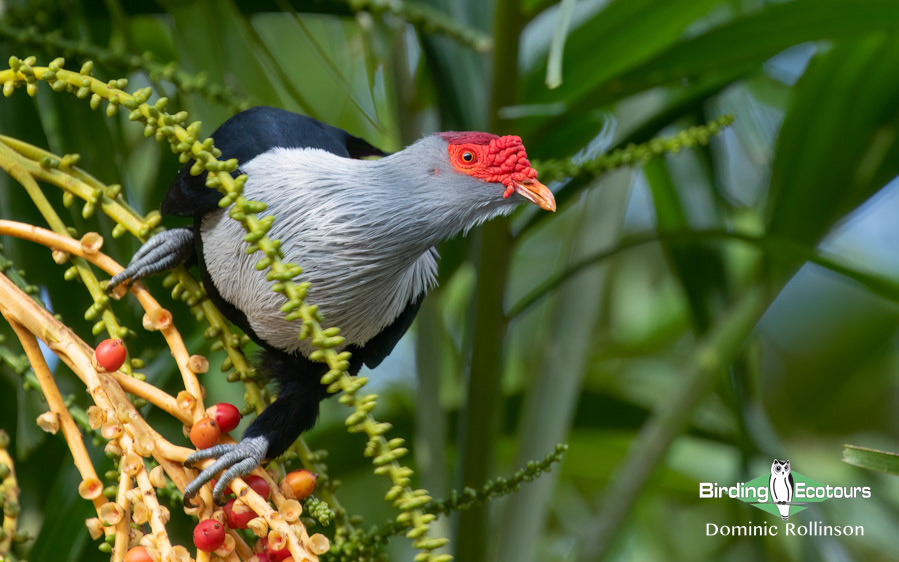 This Indian Ocean Islands tour will start off with many exciting Seychelles endemics, like this Seychelles Blue Pigeon.
Overview
This Indian Ocean Islands tour provides a fantastic opportunity for birding on some of the most stunning tropical islands in the world. We will spend time on at least seven different islands across four destinations: Seychelles, Mauritius, Rodrigues and Réunion (France). The tour focuses on seeing the nearly 30 endemic bird species found on these islands and a few endemic or near-endemic mammals. We will also look for several additional subspecies that may be elevated to species status in the future. This tour will be conducted at a relaxed pace, allowing plenty of time to experience the different cultures, enjoy some sightseeing, and unwind at comfortable accommodations between our exciting birding excursions targeting the islands’ endemic species.
Our tour begins in the Seychelles archipelago, on the island of Mahé, where we should quickly find some of the more widespread endemics, including Seychelles Sunbird and Seychelles Blue Pigeon. Our main targets on this island will be Seychelles White-eye and Seychelles Scops Owl. The Seychelles White-eye population on Mahé is tiny, and finding this species will require local knowledge and some perseverance. We will also have to bird late into the evening as we listen for the frog-like call of the scops owl before tracking it down for visuals.
Praslin Island is our next destination in the Seychelles. We will use this as a base to visit at least two other islands. Over the few days on Praslin, we will search for the Seychelles Black Parrot and then other fantastic endemics on nearby islands, including Seychelles Paradise Flycatcher on La Digue Island. We will also enjoy some excellent tropical seabirding, with the spectacular Blue-billed White Tern usually proving to be a firm favorite.
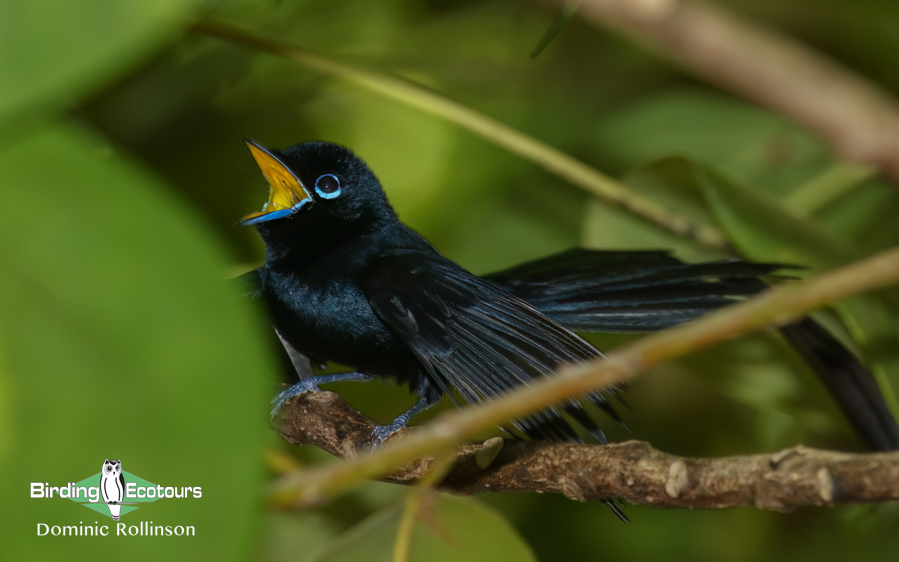 The Seychelles Paradise Flycatcher is another major target on the islands – with the males being all dark.
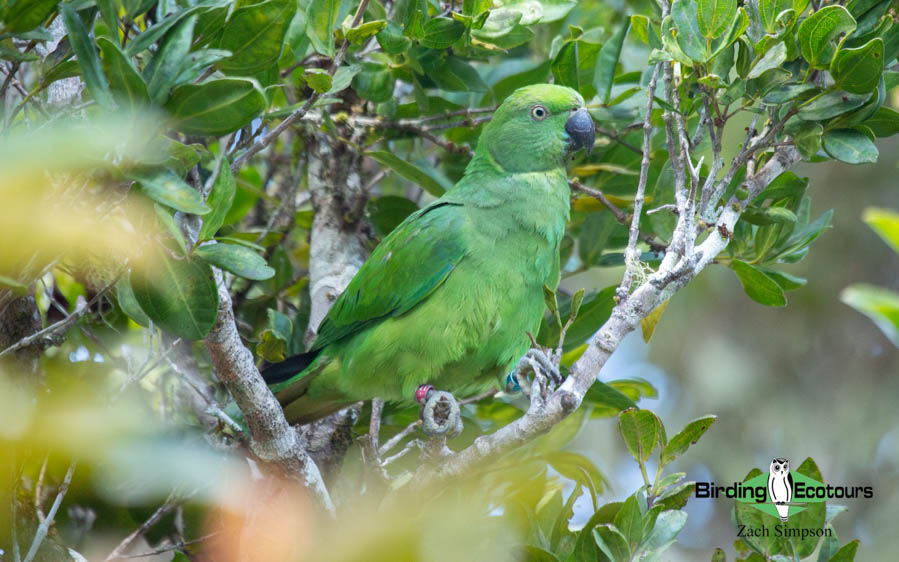
A flight of approximately 1,050 miles (1,700 kilometers) south will then take us to Mauritius. This country is famous for the extinct flightless Dodo. However, there are several endemic species that still survive on the island. We will spend a full day searching for the island endemics in the Black River Gorges National Park. Several species are relatively easy to find, allowing us to concentrate our efforts on the more challenging targets, particularly Mauritius Kestrel and Mauritius Olive White-eye. Many species such as Echo Parakeet, Mauritius Fody, Pink Pigeon and Mauritius Kestrel were once on the verge of extinction, but their populations have recovered substantially through conservation efforts. Our time on Mauritius also includes a pelagic trip where we hope to find several species of tropical seabirds.
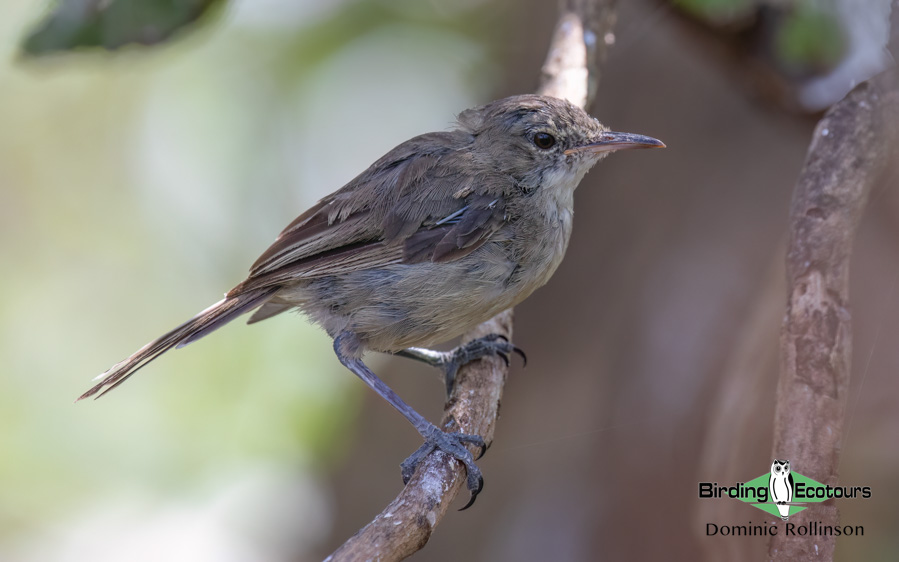
We will then take a short flight to Rodrigues, a small island (forming part of the Republic of Mauritius) approximately 250 miles (400 kilometers) east of Mauritius. Our visit will give us the opportunity to seek out two island endemics: Rodrigues Fody and Rodrigues Warbler.
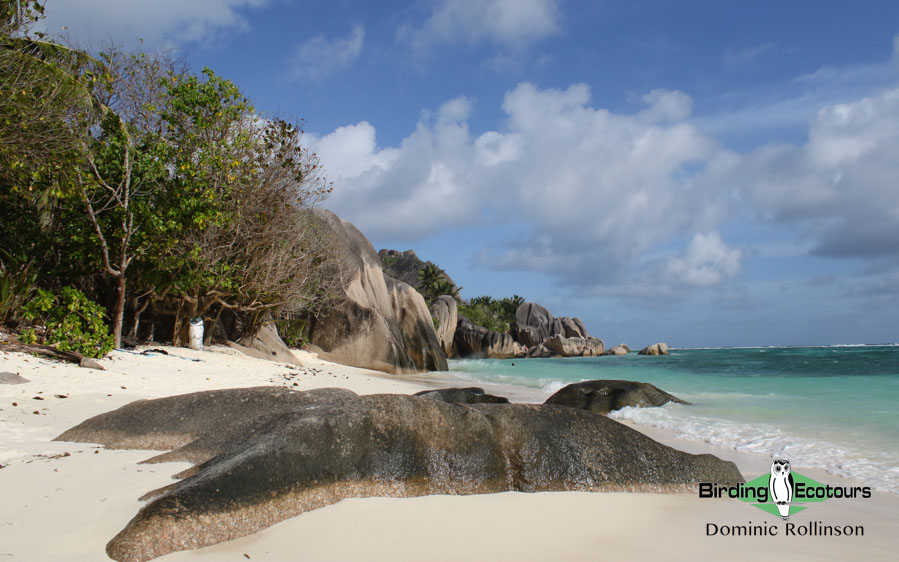 Stunning tropical beaches are a feature throughout this tour – such as here in the Seychelles.
After Rodrigues, we will head to Réunion Island in search of our last set of island endemics. We have a full day dedicated to finding these species. Réunion is particularly special as it hosts two breeding-endemic petrels: Barau’s Petrel and Mascarene Petrel. While in Réunion, weather permitting, we will also attempt a pelagic trip. Barau’s Petrels are often seen in large flocks offshore as they gather before returning inland to roost in broad daylight. However, the Mascarene Petrel is much rarer, with an estimated breeding population of around 100 pairs, making sightings exceptionally difficult. While we are unlikely to see this rare bird on this tour, we have a special trip set up later in the year, specifically targeting this species – find out more about this tour: Réunion Island and Mascarene Petrel Birding Tour.
Throughout the trip, we will also be looking for mammals. Several endemic mammals are possible during the tour, with the three flying fox species of the Seychelles, Mauritius, and Rodrigues being among the most exciting targets.
Birding Ecotours offers several tours in the wider Indian Ocean region. Consider combining this itinerary with our Comoros and Mayotte Birding Tour beforehand or our ever-popular Best of Madagascar Tour afterward to make the most of your Indian Ocean birding experience.
Detailed Itinerary (12 days/11 nights)
Day 1. Arrival in Seychelles (Mahé)
Upon arrival on Mahé, you will be met by your guide and transferred to the hotel. If time allows, we will begin birding this afternoon, making the most of our time by searching for Seychelles White-eye in the Morne Seychellois National Park area. This species is now extremely rare on Mahé, where the population was estimated at approximately 20 individuals in 2018. Although Seychelles White-eyes have been successfully introduced to several other islands, Mahé supports the original natural population, making our search for this increasingly elusive endemic particularly important. The other important target in the evening will be Seychelles Scops Owl for which Mahé will provide our only opportunity to see this species. We will listen for its distinctive frog-like call and then attempt to approach the bird for a sighting. Hopefully, after a successful afternoon of birding, we will head back to the hotel to enjoy a night’s rest.
Overnight: Hotel on Mahé
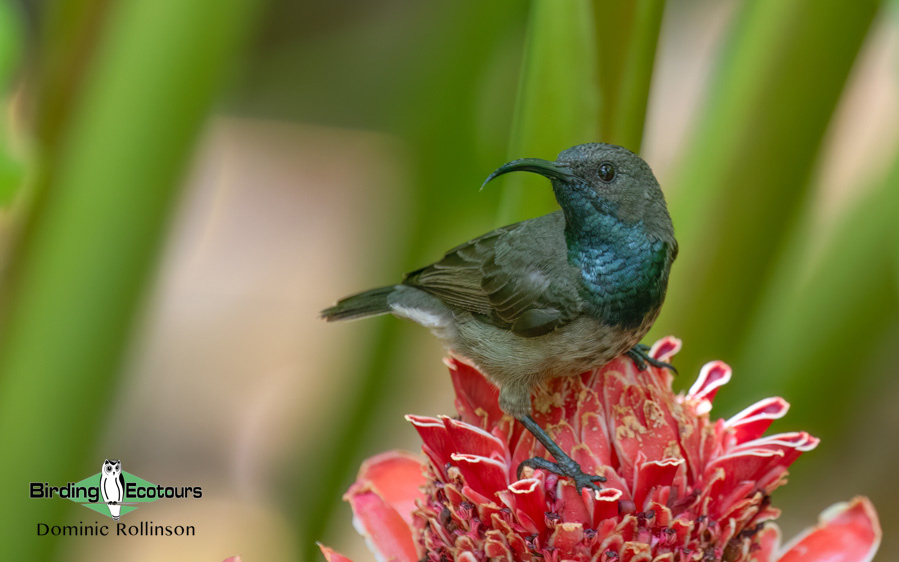 Seychelles Sunbird is one of the commoner endemics which we should see in good numbers.
Day 2. Birding Mahé and transfer to Praslin
This morning will give us an opportunity for a second attempt at Seychelles White-eye. Some other species that we should encounter both on Mahé and potentially other islands include Seychelles Blue Pigeon, Seychelles Kestrel, Seychelles Sunbird (the island’s most common endemic), Seychelles Bulbul and Seychelles Swiftlet. We will do our best to make sure we find all these Mauritian endemics. We will also be fortunate to see Seychelles Flying Fox, adding our first flying fox species to the trip list. This species is endemic to the Seychelles, while the closely related Comoros Flying Fox occurs on the Comoros and on Mafia Island, Tanzania.
After our morning’s birding, we will check out of the hotel and transfer to the airport for our flight to Praslin Island, approximately 26 miles (42 kilometers) away. Upon our arrival on Praslin, we will check into our hotel and enjoy a relaxed evening.
Overnight: Hotel on Praslin
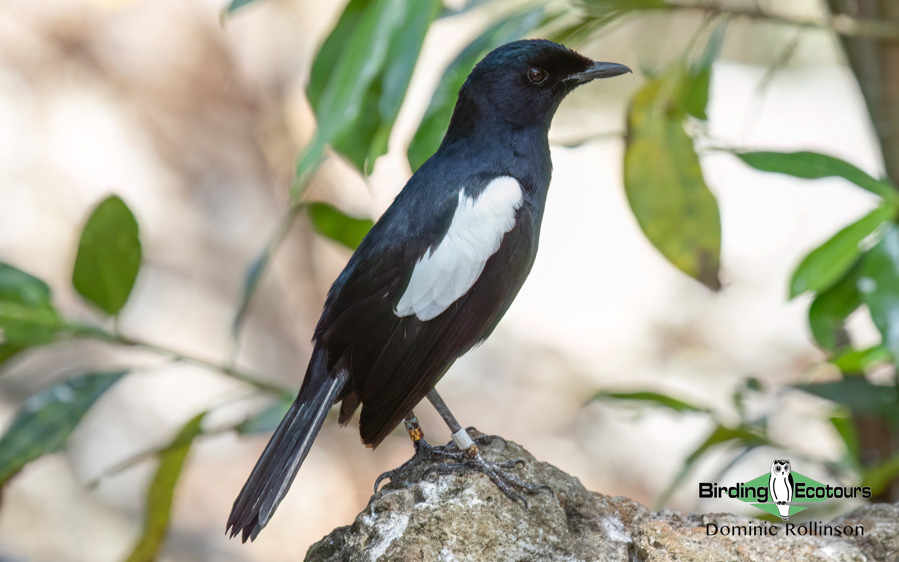 The highly sought-after Seychelles Magpie-Robin can only be seen on some of the smaller, protected islands around Praslin.
Day 3. Endemic birding on Praslin and Aride/Cousin Islands
We have a full day set aside to visit one of the Seychelles’ renowned seabird islands, ideally Aride Island, although Cousin Island may be visited as an alternative depending on sea conditions and other logistical considerations. We will visit only one of these islands, not both, as they support a similar suite of bird species. Either option offers an excellent opportunity to seek out some of the remaining key target species of the Seychelles leg.
We will charter a boat from Praslin to the island, where we will join a guided tour, as access is controlled. This should allow us to see three more Seychelles endemics, including Seychelles Magpie-Robin, Seychelles Warbler and Seychelles Fody. All three species are relatively reliable on these islands and are generally easy to see.
These islands also have a few different seabird colonies. In addition to the endemic landbirds, our main target will be the tree-nesting Blue-billed White Tern. Other species that breed on the islands include Brown and Lesser Noddies, Tropical and Wedge-tailed Shearwaters, Sooty and Bridled Terns and White-tailed Tropicbird. We also stand a chance of seeing both Greater and Lesser Frigatebirds as well as Masked Booby. We usually enjoy a local Creole barbecue lunch on the island.
We will likely spend the afternoon back on Praslin and will be searching for Seychelles Black Parrot. Our search for this species will take us to Vallée de Mai, a UNESCO World Heritage Site renowned for its exceptional forest of the endemic coco de mer palm (Lodoicea maldivica), which produces the largest seeds in the plant kingdom. As a remnant of ancient palm forests, this nature reserve harbors some important endemic species, highlighting its ecological importance. This site is also a very important breeding site for the parrot. This is the most reliable site for the parrot, and we may also encounter some of the other endemics here again.
Overnight: Hotel on Praslin
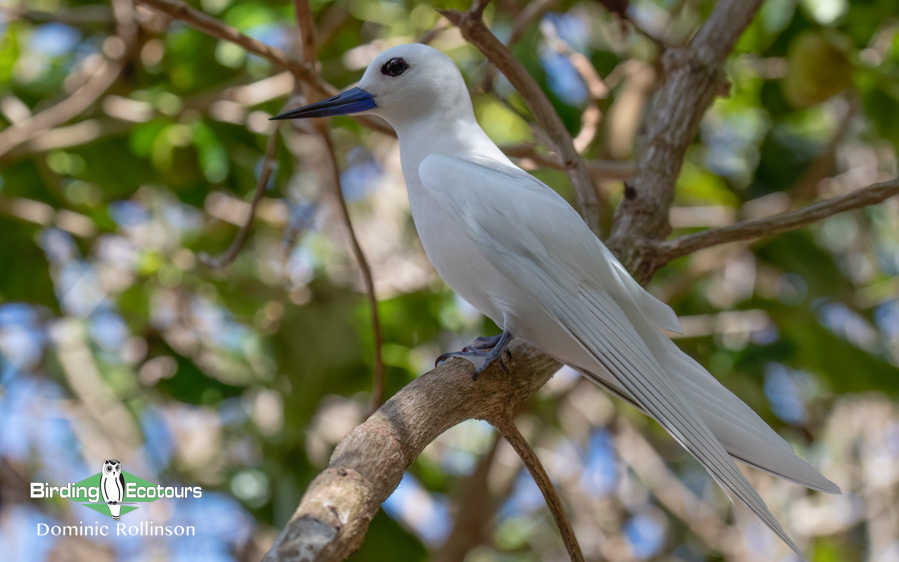 Stunning Blue-billed White Terns breed in the trees on these islands. They are usually a firm highlight for everyone, as they offer supreme views.
Day 4. Birding La Digue and transfer back to Mahé
In the early morning, we will take a ferry across to La Digue Island, a journey of approximately 2.5 miles (4 kilometers). Here, our main target is the Seychelles Paradise Flycatcher, of which we should see several individuals and have some time to enjoy this very special endemic. After enjoying the flycatcher, we will catch the ferry back to Praslin. If we have not yet found Seychelles Black Parrot, we can make another attempt at Vallée de Mai.
Later, we will catch our return flight from Praslin to Mahé. Once back on Mahé, we can either try for the difficult Seychelles White-eye or do some more general birding. Some time spent birding the mudflats could produce Crab-plover and other waders. Yellow Bittern is also present on the Seychelles, and we can spend some time looking for this species if we have not already seen it. This evening is also a back-up for Seychelles Scops Owl if we were unable to see it on the first night on Mahé. If we have already found all our target species, we can simply relax and enjoy our final evening on this tropical paradise.
Overnight: Hotel on Mahé
Day 5. Flight to Mauritius
After breakfast, we will take a flight to Mauritius. We should be able to get in some afternoon birding to get a head start with the endemics. Mauritius Grey White-eye is by far the easiest endemic to see on the island, and they’re often present in the hotel grounds. Mascarene Martin should be seen fairly easily as well as the endemic francicus race of Mascarene Swiftlet. There are also a few introduced species that are common on the island that will be around.
Overnight: Hotel on Mauritius
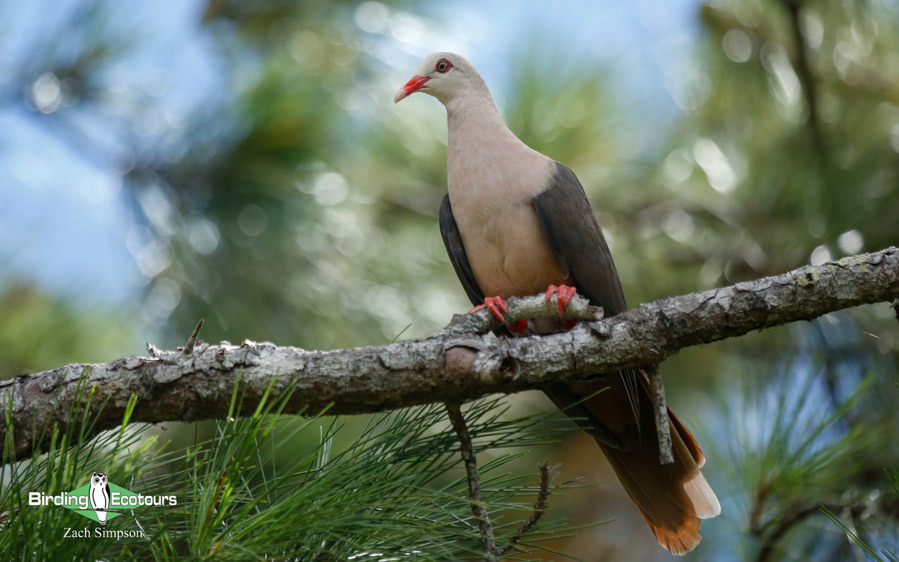 The Endangered Pink Pigeon, a Mauritian endemic, is one of the major targets on the island.
Day 6. Full day birding for Mauritian endemics
With an early start, we will head up into the mountains to continue our search for Mauritian endemics. Most, if not all, of our time will be spent in the Black River Gorges National Park. We will start off by checking a few spots on our way to Ebony Forest for Mauritius Olive White-eye. This can be a tough bird, but we will do our best to pin it down early in the day. While searching for this species we will hopefully pick up the more regular Mauritius Bulbul and the endemic desolata race of Mascarene Paradise Flycatcher. The best way to find Mauritius Cuckooshrike is to listen for its distinctive call and then track the bird down, as it is often seen calling from an elevated perch. Mauritius Fody is sometimes also seen displaying and we will hopefully also pin down some good views as the day goes on.
Of the endemic species, Mauritius Kestrel is generally the most challenging to see. Exploring the Ebony Forest area should give us our best opportunity to see this species, which breeds locally. Here we will also get an opportunity to see some of the unique endemic day geckos of Mauritius, Blue-tailed Day Gecko and Ornate Day Gecko.
After birding Ebony Forest, we will continue our search for the remaining endemics. Echo Parakeet can be distinguished from the more common introduced Rose-ringed Parakeet by its different call, while females also have dark bills rather than the red bills of Rose-ringed Parakeets. Towards the end of the day, if we have not already seen them, we will head to a site to look for Pink Pigeon. Mauritius Flying Foxes will most likely be seen at several sites during the day. Once we have (hopefully) seen all the endemics we will head back to our comfortable hotel to settle in for the evening.
Overnight: Hotel on Mauritius
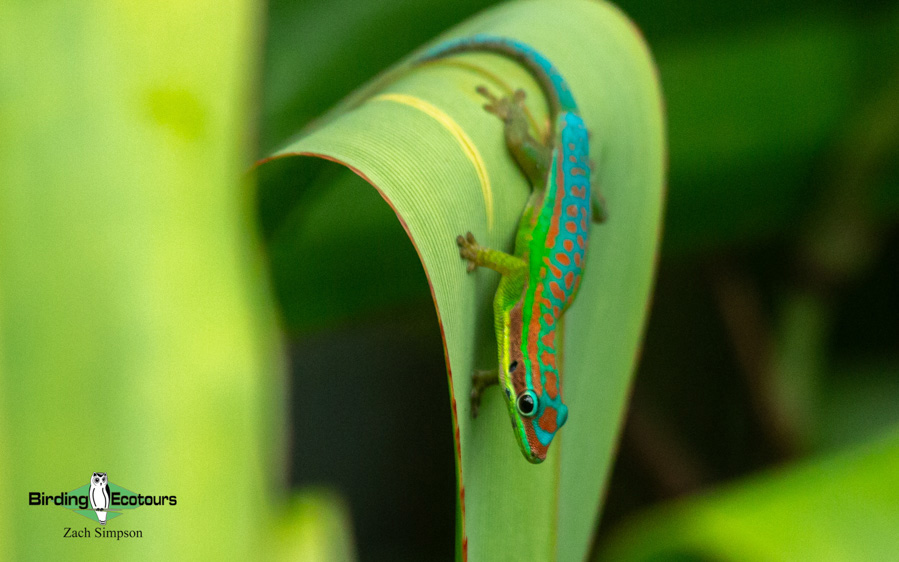 A Blue-tailed Day Gecko seen at Ebony Forest – what a stunning reptile!
Day 7. Mauritius pelagic
Following an early start, we will head to our pelagic launch site, aiming to get out to sea before temperatures rise. Several seabirds should be seen including Sooty Tern, Brown and Lesser Noddies, White-tailed and Red-tailed Tropicbirds, Wedge-tailed and Tropical Shearwaters, Barau’s Petrel and Masked Booby. We also stand a chance of seeing ‘Round Island Petrel’ on this pelagic trip. The taxonomy of the petrels breeding on nearby Round Island remains complex. Herald, Trindade, and Kermadec petrels all breed on the island, and hybridization has further complicated their identification and classification. These birds are sometimes collectively referred to as Round Island Petrels. After the pelagic, we will head back to our hotel, with a bit of sightseeing along the way. If we missed any of the island endemics the previous day, this afternoon gives us another opportunity to look for them.
Overnight: Hotel on Mauritius
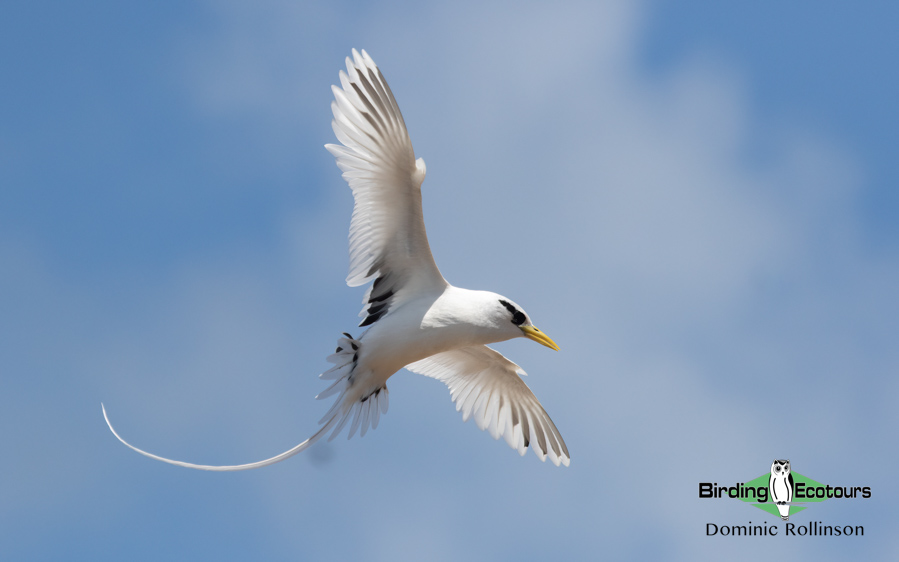 Good numbers of White-tailed Tropicbirds should be seen during our time at sea.
Day 8. Flight to Rodrigues and birding
We have a relaxed start to the morning and enjoy breakfast before we head to the airport to catch a flight to Rodrigues. After landing, we will check in at our hotel before heading out to search for the island’s two endemic bird species. We will concentrate our search on one of the remaining forest patches on the island, Grande Montagne Nature Reserve. Here we will spend time looking for Rodrigues Fody and Rodrigues Warbler. We should also have good views of Rodrigues Flying Foxes as we draw closer to the evening. After our time with these fantastic endemics, we will head back to our hotel.
Overnight: Hotel on Rodrigues
Day 9. Flight to Réunion
We have the morning available to try again for any missing endemics, although this may not be necessary. We will then start our travels to Réunion, which will likely take us via Mauritius, as there are limited direct flights. Once on Réunion, we will take a short drive and check into our hotel. If time allows, we will do a bit of afternoon birding.
Overnight: Hotel on Réunion
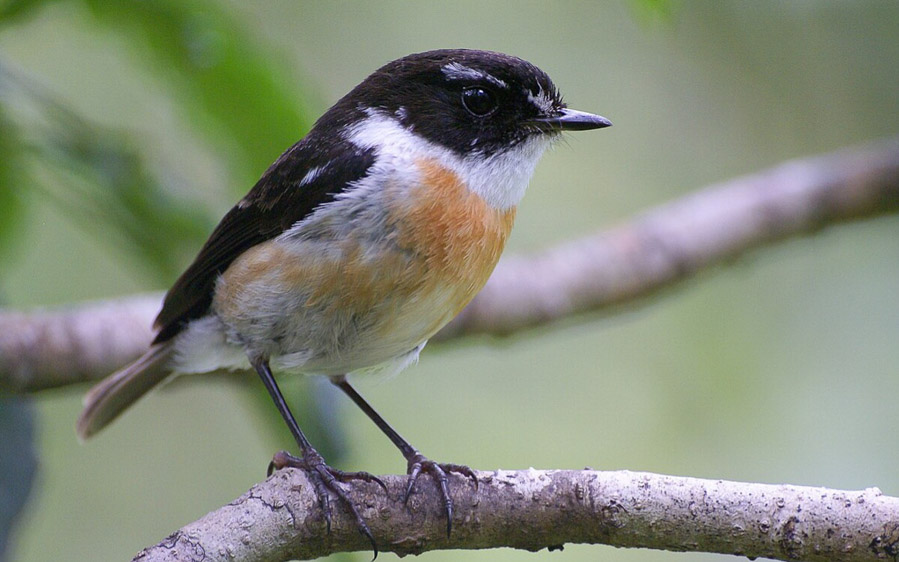 The endemic Reunion Stonechat generally only occurs in the interior of the island (photo Bruno Navez).
Day 10. Full day birding for Réunion’s endemics
We will spend the full day searching for Réunion’s endemic bird species. Réunion is an incredibly mountainous island with the tallest mountain, Piton des Neiges, reaching a height of just over 9,800 feet (3,000 meters). We will concentrate our efforts along the steep trail ascending the forested slopes of La Roche Écrite in the north of the island. We will not hike all the way to the summit and will instead concentrate our search on the first two miles (three kilometers) of this trail.
We should hopefully have little difficulty finding Reunion Grey White-eye and Réunion Olive White-eye. The Reunion Grey White-eye occurs in several forms, with distinct color variations. There are three lowland forms and one highland form, the latter having two distinct color morphs, and we will do our best to see all four forms. Reunion Stonechats are even sometimes found in the parking lot at the base of the trail! After spending some time on the trail, we should hopefully pick up Reunion Bulbul and the bourbonnensis race of Mascarene Paradise Flycatcher. Arguably the most challenging endemic to find is Réunion Cuckooshrike. This species is classified as Critically Endangered, with fewer than 100 individuals remaining in the wild. With sufficient time in its preferred microhabitat we should be able to find this species. During our time on Réunion we will also see Reunion Harrier, which is widespread on the island. We should also see the endemic saffordi race of Mascarene Swiftlet during our time on Réunion.
After a good day out searching for the endemics, we will head back to the hotel and enjoy a relaxed evening.
Overnight: Hotel on Réunion
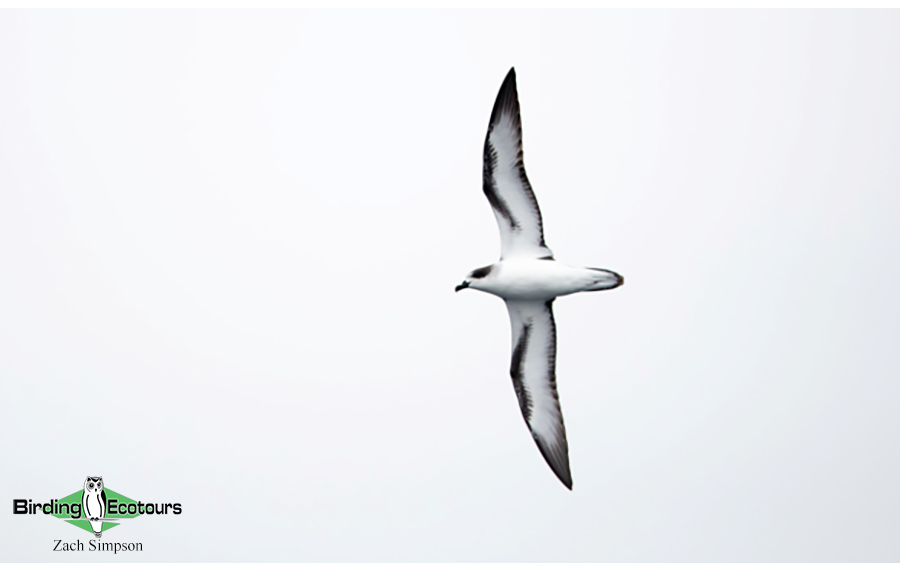 Barau’s Petrel is one of the two petrel species that breed only on Réunion, and the main reason for our special pelagic outing on the island.
Day 11. Final birding, volcanoes and Réunion pelagic
The day will be devoted to exploring some of the island’s most interesting scenic attractions, taking in its beautiful landscapes and varied habitats along the way. We will also have opportunities to revisit some of the key birding sites and search for any endemic species that we may have missed on our first day, allowing us to make the most of our time on the island.
In the afternoon, we will have a pelagic outing (as always, weather-dependent). This pelagic trip should offer us an incredible opportunity to see large numbers of Barau’s Petrel. This species breeds only on Réunion, and we should have an excellent opportunity to observe large numbers gathering offshore in the early evening before returning to their inland roosting sites. We will likely encounter other seabirds, including terns, noddies, and shearwaters, although many of these species will probably have been seen earlier in the tour. The rare Mascarene Petrel is another remote possibility, but it is difficult at this time of year. This is another breeding endemic to the island, but is far rarer and more poorly understood than Barau’s Petrel. This outing offers a slim chance of seeing this species as it returns towards the island after dark. With an estimated 100 pairs left, seeing this species would require a huge amount of luck. We do, however, offer a dedicated tour later in the year specifically targeting this species. Please see our Mascarene Petrel and Réunion Endemics Tour for further details. We will then settle in for the evening and reminisce over what is sure to have been an exciting and enjoyable tour.
We will likely move to a different hotel this evening to be closer to the pelagic departure point, as we expect to return quite late from the pelagic trip.
Overnight: Hotel on Réunion
Day 12. Departure from Réunion
This is the departure day, and there are no formal plans for the day. We kindly ask that you book your international flight to depart after 1 p.m. today.
You can link this tour up with our Best of Madagascar Tour which begins a few days later.
Please note that the itinerary cannot be guaranteed as it is only a rough guide and can be changed (usually slightly) due to factors such as availability of accommodation, updated information on the state of accommodation, roads, or birding sites, the discretion of the guides, and other factors. In addition, we sometimes have to use a different guide from the one advertised due to tour scheduling or other factors.