- Duration:
- 9 days
- Group Size:
- 6–8
- Tour Start:
- Santiago, Chile
- Tour End:
- Santiago, Chile
Central Chile and Araucarian Forest Specials Birding Tour
Details
2028
14–22 October
Prices TBA (2026 prices were US$6630 per person sharing, single supplement $1050).
Itinerary
Download ItineraryCentral Chile and Araucarian Forest Specials Birding Tour
This 9-day central Chile birding tour has been designed to provide clients with the best Chilean birding experience, focusing on regional specials and quality country endemics. During this fantastic trip you will have the opportunity to travel across the picturesque Chilean landscape along the central Andes. Taking advantage of Chile’s great road infrastructure and using a comfortable hotel in the capital city, Santiago, for four nights, we will enjoy visiting and birding various habitats across central Chile. Some of these habitats include important wetland reserves along the Pacific coast looking for specials such as Black-headed Duck, Coscoroba and Black-necked Swans and several waterfowl, wader and passerine species. We will also explore semideciduous inter-Andean valleys looking for Rufous-tailed Plantcutter and the endemic White-throated Tapaculo. From the dry Andean valleys we will ascend to the base of the majestic snow-capped Andes Mountains from where we will have chances to look for iconic birds such as the sought-after Diademed Sandpiper-Plover, Andean Condor, Andean Goose, Torrent Duck, Giant Hummingbird and the unique Crag Chilia, one of the most range-restricted Chilean endemics.
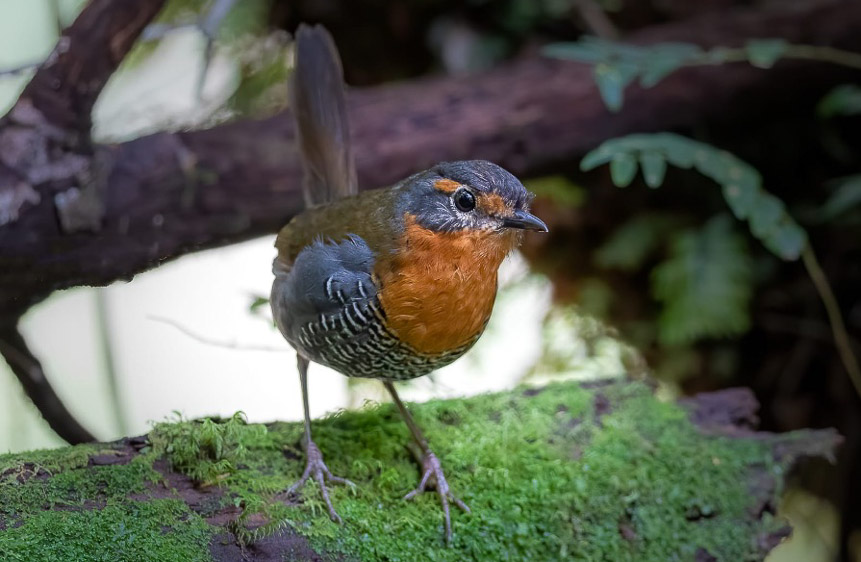 Chucao Tapaculo one of the world’s finest tapaculos (photo Fernando Diaz).
Central Chile is classified as one of the world’s five Mediterranean ecoregions and it is well renowned for its excellent wine. What could be better than experiencing high-quality birding while sampling some fine wine in a picturesque vineyard, surrounded by simply exquisite nature and birds!
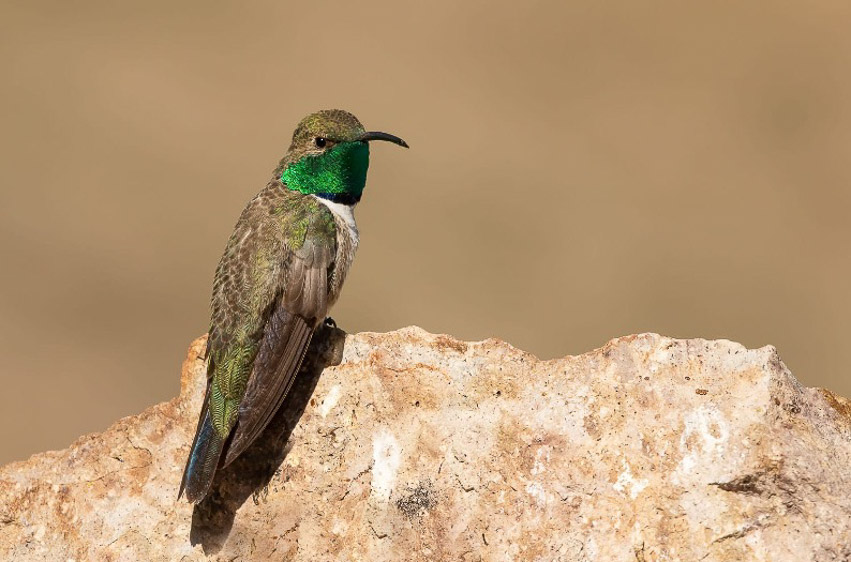 White-sided Hillstar in the Andes above Santiago (photo Fernando Diaz).
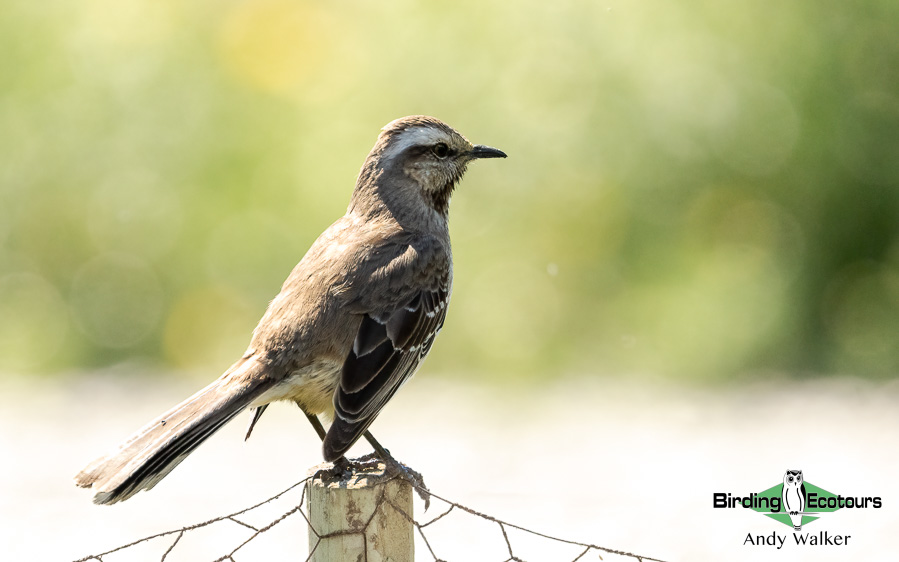
Following the route of Charles Darwin, we will visit the famous UNESCO Campana National Park where we will be looking for the splendid Moustached Turca, another Chilean endemic, and other specials such as Dusky-tailed Canastero, Striped Woodpecker, Chilean Flicker, Austral Pygmy Owl and Chilean Mockingbird.
Our adventure will end with us visiting the lush Valdivian temperate rainforest where we will have the chance to look for very special birds such as Magellanic Woodpecker, Thorn-tailed Rayadito, the endemic Chestnut-throated Huet-huet, Magellanic, Dusky and Ochre-flanked Tapaculos and the impressive Chucao Tapaculo. We will also look for White-throated Treerunner, Austral and Slender-billed Parakeets and the range-restricted Rufous-tailed Hawk.
We invite you to discover a fantastic country with a good selection of special birds and sample some of the finest wines in the region.
Itinerary (9 days/8 nights)
Day 1. Arrival to Santiago de Chile
Today you will arrive at Arturo Benítez International Airport, Santiago, where you will be met by your tour leader and transferred to our Santiago hotel.
Overnight: Santiago
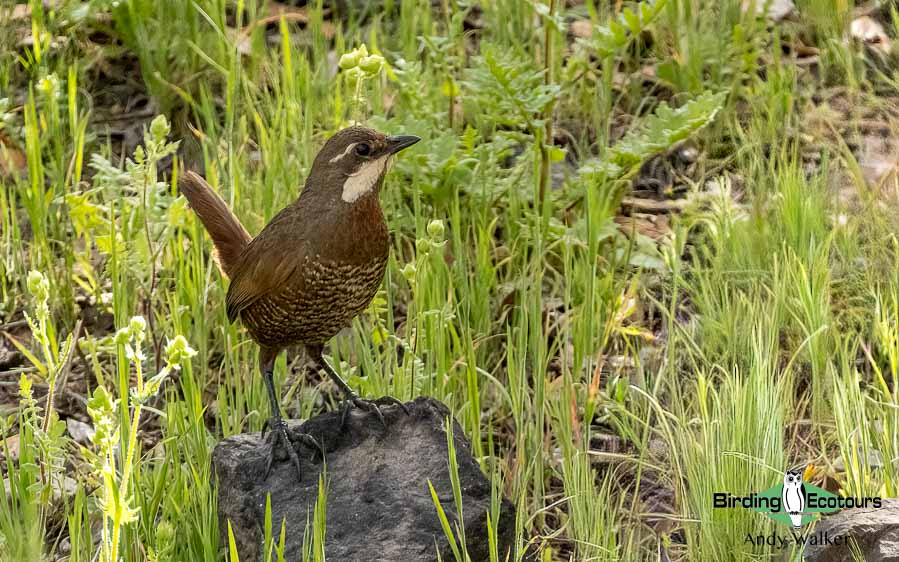 The endemic Moustached Turca is a standout species of central Chile.
Day 2. Farellones and Valle Nevado
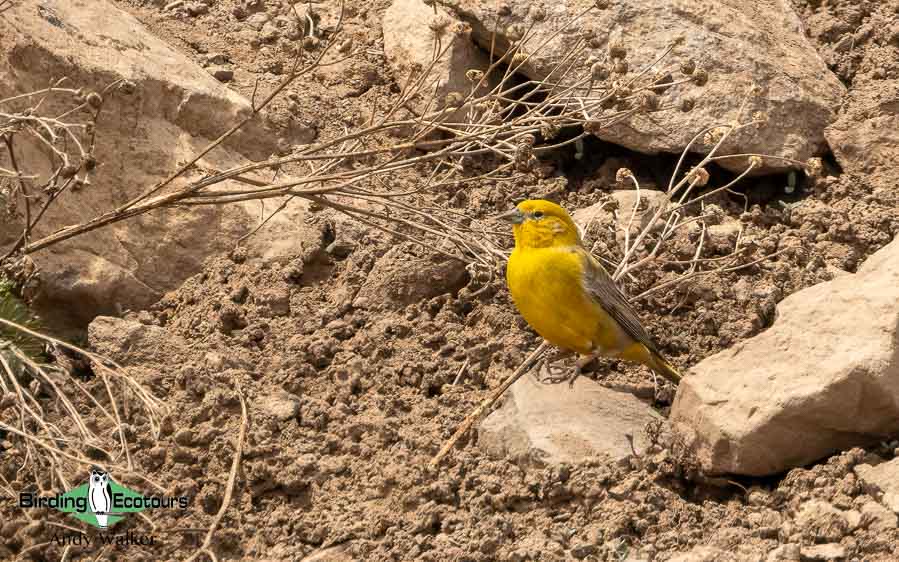
Today we will start our trip exploring the mountains above the city. We will ascend out of Santiago, enjoying our first foray into the Andes Mountains. Here we will look for Greater Yellow Finch, Creamy-rumped Miner, White-sided Hillstar, Grey-hooded Sierra Finch, Rufous-banded Miner, plus other more widespread species such as Variable Hawk, Mountain Caracara, and the iconic Andean Condor.
Later we will focus on the “big six of Santiago”, a colloquial term that usually refers to the six Chilean endemics found above Santiago. These include the impressive Moustached Turca, the shy Chilean Tinamou, the secretive White-throated Tapaculo, the conspicuous duo of Dusky Tapaculo and Crag Chilia and the agile Dusky-tailed Canastero.
After what is sure to have been a great first day of Chilean birding, we will return to our Santiago hotel.
Overnight: Santiago
Day 3. Coastal birding and wine route
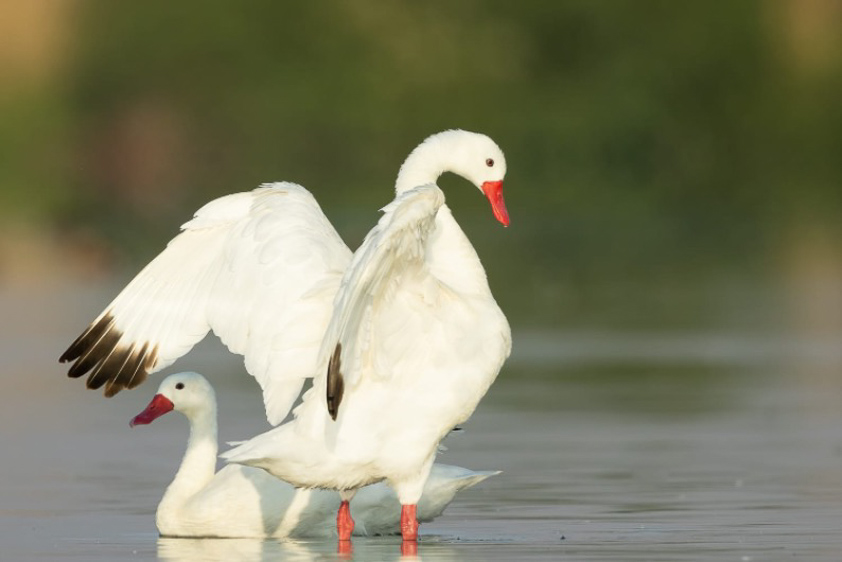
Today, we will explore various wetlands along the coast where we can see some unique waterfowl restricted to southern South America such as Black-necked and Coscoroba Swans, Black-headed Duck (the only brood-parasitic duck in the world), Red Shoveler, Chiloe Wigeon, and Lake Duck. Other birds here might include Yellow-billed Pintail, Yellow-billed Teal, Red-gartered, White-winged and Red-fronted Coots, Southern Lapwing, Snowy-crowned Tern, White-tufted, Pied-billed and Great Grebes, White-faced Ibis, Black Skimmer, Chimango Caracara, Austral Negrito, Grassland Yellow Finch, Wren-like Rushbird, Plumbeous Rail, Rufous-tailed Plantcutter, Many-colored Rush Tyrant, and Yellow-winged Blackbird.
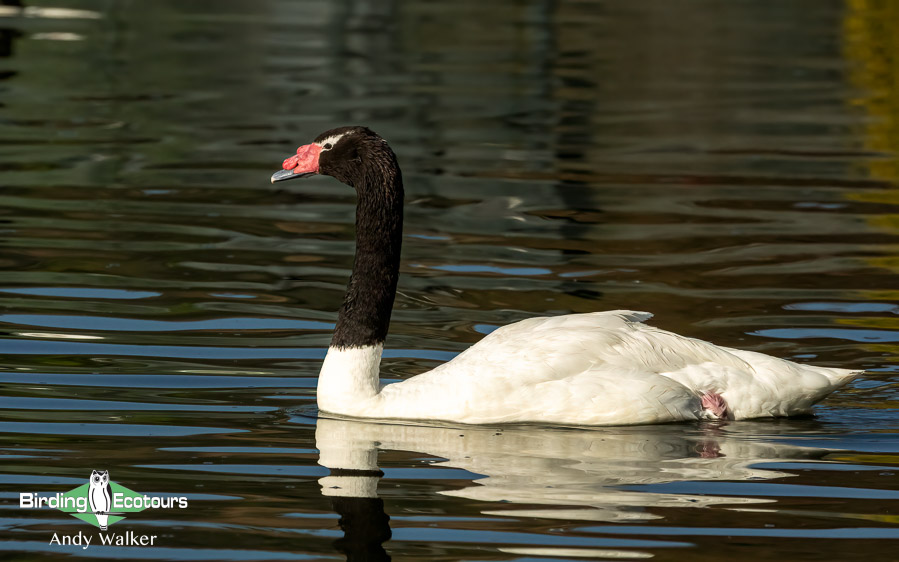 Black-necked Swan in the Chile lowlands.
Later, we will continue towards the Casablanca valley, famous for its splendid wines. We’ll have lunch at one of the valley’s lovely vineyards, followed by an interesting winemaking tour and ending with a fabulous winetasting. After enjoying a selection of fine wines, we will have time to relax and then make our way to our hotel in Casablanca.
Overnight: Casablanca
Day 4. Campana National Park
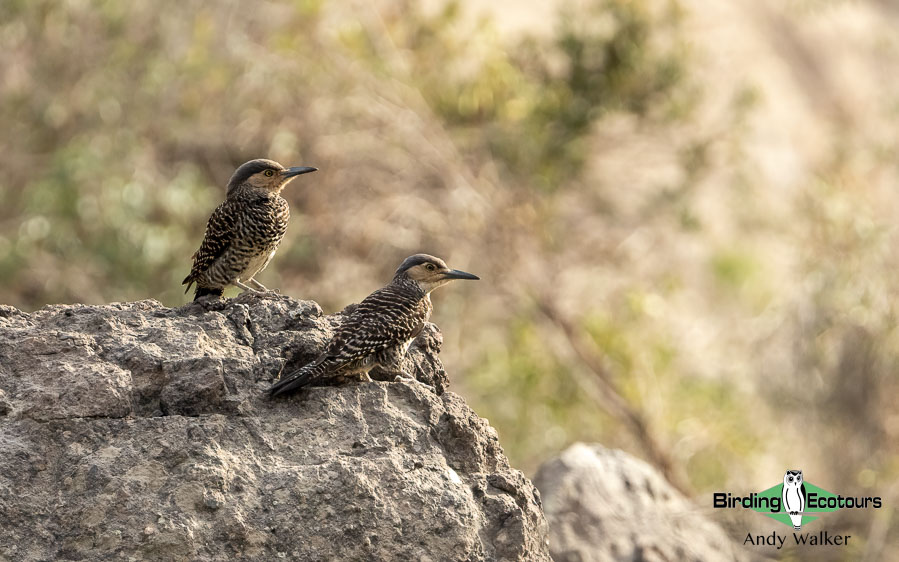
In 1834 Charles Darwin explored Chile during his famous trip onboard the Beagle. While visiting central Chile he discovered a unique, diverse area of Mediterranean forest and scrubland, rich in endemic flora and fauna. Many decades later the area became a national park known as the La Campana. The diverse and pristine vegetation in the park, unfortunately an uncommon occurrence in central Chile, is the ideal place to look for many of Chile’s key bird species. Here we will have another chance for some of the key endemics like Moustached Turca, White-throated Tapaculo, Chilean Tinamou, Dusky-tailed Canastero and Dusky Tapaculo. Other interesting birds we are likely to encounter include Chilean Pigeon, Striped Woodpecker, Chilean Flicker, Austral Pygmy Owl, Giant Hummingbird, Plain-mantled Tit-Spinetail, Tufted Tit-Tyrant, White-crested Elaenia, Rufous-tailed Plantcutter and Diuca Finch.
After an exciting day’s birding exploring this fascinating Chilean landscape we will head back east to Santiago.
Overnight: Santiago
Day 5. El Yeso Reservoir
Today we will visit the Embalse El Yeso, an artificial reservoir located at 9,800 feet (3,000 meters) elevation, known among birders as the easiest and most accessible place in the world to look for the most-wanted Diademed Sandpiper-Plover. Here at El Yeso, it is possible to find the sandpiper-plover at its southern limit, and without the hassle of long walks, which are required to find this species in central Peru and northern Argentina, at an altitude of 15,700 feet (4,800 meters) and 13,400 feet (4,100 meters), respectively. Other great birds include Upland Goose, Black-winged Ground Dove, White-sided Hillstar, Grey-breasted Seedsnipe, Magellanic Snipe, Scale-throated Earthcreeper, Buff-winged Cinclodes, Cordilleran Canastero, Black-billed Shrike-Tyrant, Ochre-naped and White-browed Ground Tyrants, Yellow-rumped Siskin, Austral Blackbird, Diuca Finch and Grey-hooded Sierra Finch.
Overnight: Santiago
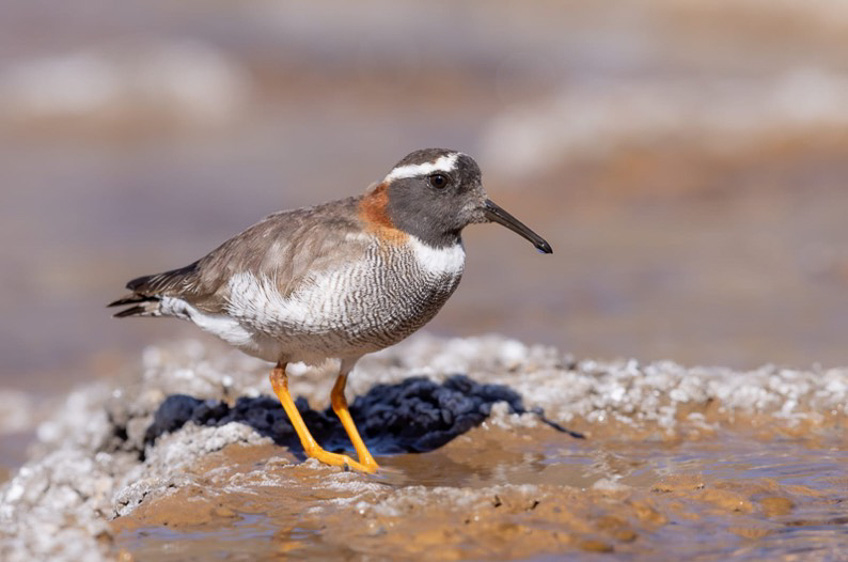 Diademed Sandpiper-Plover at El Yeso (photo Fernando Diaz).
Day 6. Colbun Lake and Vilches
Today we will head south of Santiago towards Talca and Colbún Lake. Still in dry Mediterranean habitat, our main targets will be the spectacularly colorful and very noisy Burrowing Parakeet, and the handsome Spectacled Duck. Once at the lake we will look for a few other interesting duck and grebe species as well as the tricky Spectacled Tyrant. We will then make a short trip north of the lake and spend the rest of the afternoon and the next day in the magnificent Altos de Lircay National Reserve. At dusk we’ll look for the elusive Rufous-legged Owl.
Overnight: Altos de los Vilches
Day 7. Altos Lircay National Reserve
Altos Lircay Reserve protects a very interesting ecotone, where temperate rainforest meets the Mediterranean ecoregion. Here we’ll see a mix of the bird communities characteristic of the dry Mediterranean habitat and the lush temperate Nothofagus forests. The lush primary forest is home to one of the least-known Chilean birds, the endemic Chestnut-throated Huet-huet (a tapaculo). While birding this fascinating area, we will look also for Austral Parakeet (the world’s southernmost parrot species). We may also have our first encounter with Magellanic Woodpecker (the largest woodpecker in South America) and the rare and hard-to-find Chilean Hawk.
Overnight: Alto de los Vilches
Day 8. Temuco and Valdivian forest
After breakfast at our hostería, we’ll head south towards Temuco, the capital city of the Araucanía Region. On our way we will stop by some meadowy agricultural areas to look for Screaming Cowbird, Hellmayr’s Pipit and Chilean Tinamou. By the time we reach Temuco, the dry Mediterranean landscape will have been left behind, replaced by lush temperate rainforest. Here, we can find dense rainforest understory species, such as Black-throated Huet-huet, Des Mur’s Wiretail, Chucao Tapaculo and Ochre–flanked Tapaculos and the near endemic Slender-billed Parakeet. The forests in the area are also a good spot to find the uncommon Rufous-tailed Hawk.
Overnight: Temuco
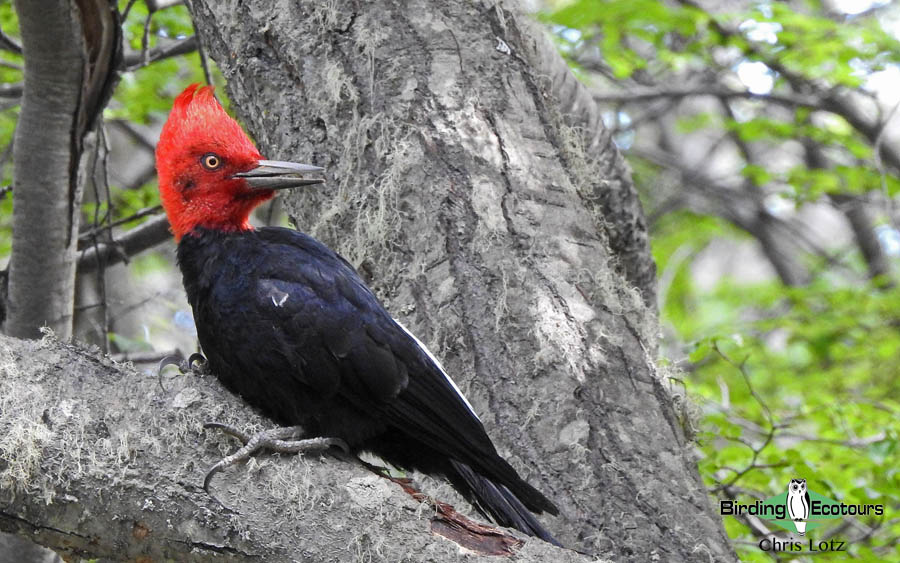 A male Magellanic Woodpecker in Los Altos del Lircay Reserve.
Day 9. Valdivian forest and flight to Santiago, tour ends
In the morning, we will head to the higher altitude habitat of mixed Nothofagus and Araucaria (Monkey Puzzle Trees) forests surrounded by stunning mountainous landscapes. Here we will look for the newly split Patagonian Forest Earthcreeper as well as Magellanic Tapaculo, Austral Parakeet, Striped Woodpecker, Chilean Flicker, White-throated Treerunner and other forest species. Today we will enjoy both fantastic forest birds and the allure of magical forests, in equal parts. The silhouettes of Araucaria trees on the hillside and the snow-capped volcanoes on the horizon give one the feeling of being in the midst of a prehistoric forest.
After a full day of birding, we will drive to Temuco’s airport for the short domestic flight back to Santiago where the tour will end.
Overnight: Not included
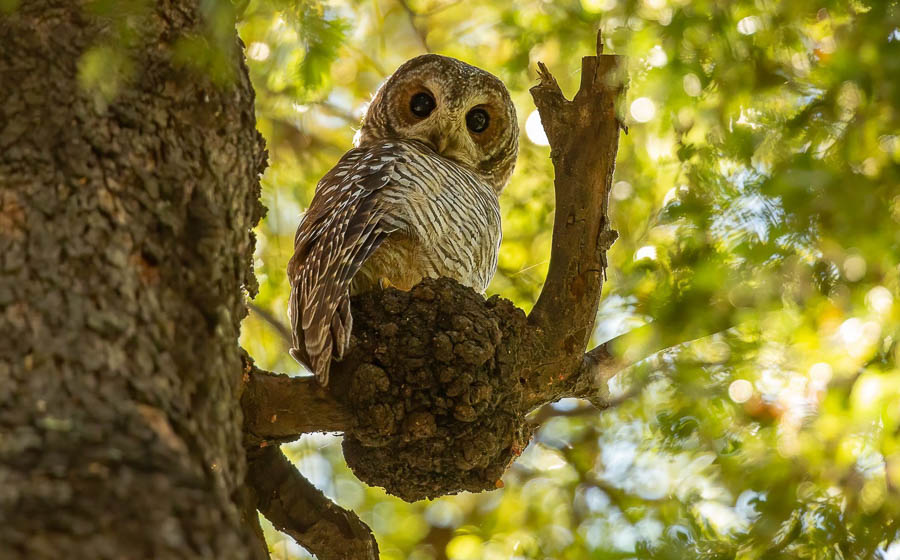 Rufous-legged Owl is possible to see in our Chile tour (photo Fernando Diaz).
Please note that the itinerary cannot be guaranteed as it is only a rough guide and can be changed (usually slightly) due to factors such as availability of accommodation, updated information on the state of accommodation, roads, or birding sites, the discretion of the guides and other factors. In addition, we sometimes have to use a different international guide from the one advertised due to tour scheduling.
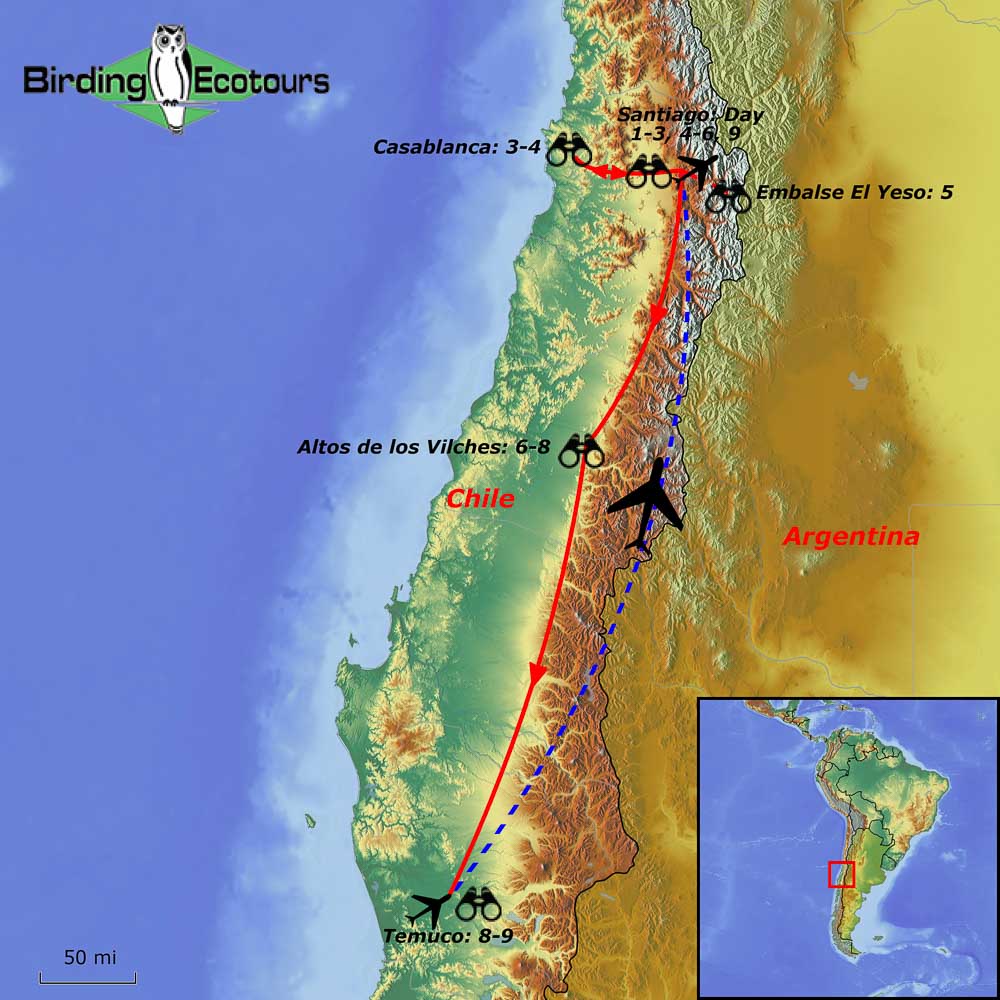
Map
Gallery
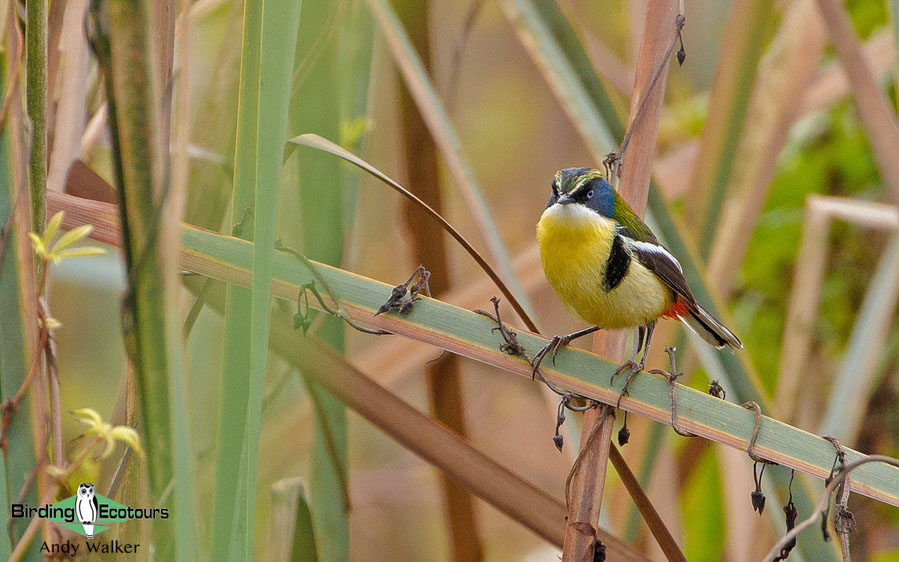
General Information
CENTRAL CHILE AND ARAUCARIAN FOREST SPECIALS BIRDING TOUR
TOUR-SPECIFIC INFORMATION
GENERAL INFORMATION ABOUT CHILE CAN BE READ HERE
ARRIVAL INFORMATION
Our tour begins in Santiago de Chile, at Arturo Merino Benítez International Airport (SCL). Your tour leader or other Birding Ecotours representatives will wait for you (with a signboard) at Santiago Airport and will then transfer you to your hotel.
You may wish to consult your travel agent to arrange the most convenient flights, and please contact us if you require any guidance. Please email us (or contact us by another preferred method) before booking any flights, as the information provided here serves only as an initial guide.
Please note that most international flights arrive in Santiago early in the morning. If you arrive on an early flight, you will be transferred to the hotel but may need to wait until standard check-in time. Early check-in may incur an additional charge, payable directly to the hotel, and is not included in the Birding Ecotours tour price. Alternatively, you may wish to book an additional night in advance.
When completing your customs declaration form, please use the following hotel address:
Hotel Plaza El Bosque Ebro
Ebro 2828, 7550091 Santiago, Las Condes, Región Metropolitana, Chile
Phone: +56 2 2498 1800
DEPARTURE INFORMATION
The tour will conclude at Santiago de Chile Airport following our domestic flight from Temuco. Tour participants will either connect with their international flights or stay an additional night in Santiago in case of an inconvenient departure time.
The flight from Temuco to Santiago will be operated by LATAM Airlines.
DOMESTIC FLIGHTS
We will have one domestic flight during the tour, from Temuco (ZCO) – La Araucanía International Airport to Santiago de Chile (SCL) – Arturo Merino Benítez International Airport, at the end of the tour. Participants connecting onward internationally with LATAM Airlines may be able to check their luggage through from Temuco; however, we strongly recommend confirming this directly with the airline in advance.
If you book your flight through us, the ticket includes:
- One checked luggage item (up to 50 lbs/23 kg)
- One carry-on bag
PHYSICAL REQUIREMENTS AND PACE
We categorize this trip as easy, and it is likely one of the easiest birding tours in the Neotropics.
Most birding is conducted along flat, smooth roads. Some uneven terrain, gentle uphill sections, and a few forest trails will be encountered, but there are no long hikes or strenuous walks planned, nor extended periods away from the vehicle.
This tour does not involve daily pre-dawn starts. However, please be aware that we will cover long driving distances, particularly toward the end of the tour.
Breakfast is served daily at the hotels, after which we depart directly for birding activities. We spend several nights in Santiago de Chile at approximately 2,625 feet (800 meters) above sea level, so altitude should not affect sleep or general comfort.
ALTITUDE
We explore a range of habitats from sea level to high-elevation Andean environments. The maximum elevation reached is approximately 9,800 feet (3,000 meters), and this occurs only during one morning visit to El Yeso, in search of high-altitude species.
Most birding sites are located between 3,800–6,500 feet (1,000–2,000 meters) above sea level. Accommodation in Santiago, used as our base to visit the Andes, is at around 2,600 feet (800 meters).
If you have any medical conditions that may be affected by altitude, please consult your doctor prior to travel.
MEALS AND WATER
Breakfasts and dinners are served at the hotels. Lunch is usually either a picnic-style boxed lunch or a meal at a local restaurant near the birding sites.
Lunches typically offer a fixed menu with a limited number of choices (including vegetarian options), while dinners are generally à la carte, with a wider selection available.
Tap water in urban areas of Chile is generally safe to drink. Bottled water is provided during birding activities and with meals. Please note that water and other items from hotel room minibars are not included in the tour cost.
WEATHER
The tour takes place during the Chilean spring, with expected temperatures ranging from approximately 7–23°C (45–73°F).
There is a chance of rain, particularly during our time in the Valdivian forest regions near Talca and Temuco.
MONEY AND ATMs
The national currency of Chile is the Chilean peso (CLP), often denoted by $ or CLP$. As of January 2025, the exchange rate is approximately CLP 890 = USD 1.
You can exchange US dollars at Santiago Airport and at an exchange office located near your hotel in Santiago. There are plenty of ATMs in the hotel area.
Credit cards are widely accepted throughout the country. Tipping may be done in Chilean pesos or US dollars.
LAUNDRY
Laundry services are available at the hotel in Santiago de Chile.
WHAT TO BRING
- Hiking shoes suitable for uneven terrain (waterproof footwear with Vibram soles is recommended)
- Comfortable walking shoes for use around hotels and during non-birding activities
- Warm jacket
- Fleece or windbreaker
- Tops and base layers (T-shirts, shirts, blouses, sweaters; quick-drying fabrics are recommended)
- Warm hat (winter beanie)
- Sun hat or baseball cap
- Gloves
- Personal medication and prescriptions (in case you need to purchase medication locally)
- Prescription glasses, including a spare pair
- Flashlight
- Electrical chargers and universal adapters
- Sunscreen
- Insect repellent
- Lip balm
- Walking stick (optional)
- Travel documents
- Plastic or waterproof bag for travel documents
- Camera memory cards
- Spare batteries
- Spotting scope (optional)
A communal telescope will be available and shared among the group for viewing on a rotational basis. If you wish to digi-scope or prefer prolonged scope views, please bring your own telescope.