- Duration:
- 16 days
- Group Size:
- 6–8
- Tour Start:
- Santiago, Chile
- Tour End:
- Santiago, Chile
Chile: A once-in-a-lifetime adventure — Chilean Endemics, Pumas and Torres del Paine
Details
2027
01–16 October
Per person sharing
$11,690 USD
£9,222 GBP / €10,946 EUR
Single supplement
$1,370 USD
£1,080 GBP / €1,283 EUR
2028
01–16 October
Per person sharing
$12,650 USD
£9,980 GBP / €11,845 EUR
Single supplement
$1,480 USD
£1,168 GBP / €1,386 EUR
Itinerary
Download ItineraryChile: A once-in-a-lifetime adventure — Chilean Endemics, Pumas and Torres del Paine
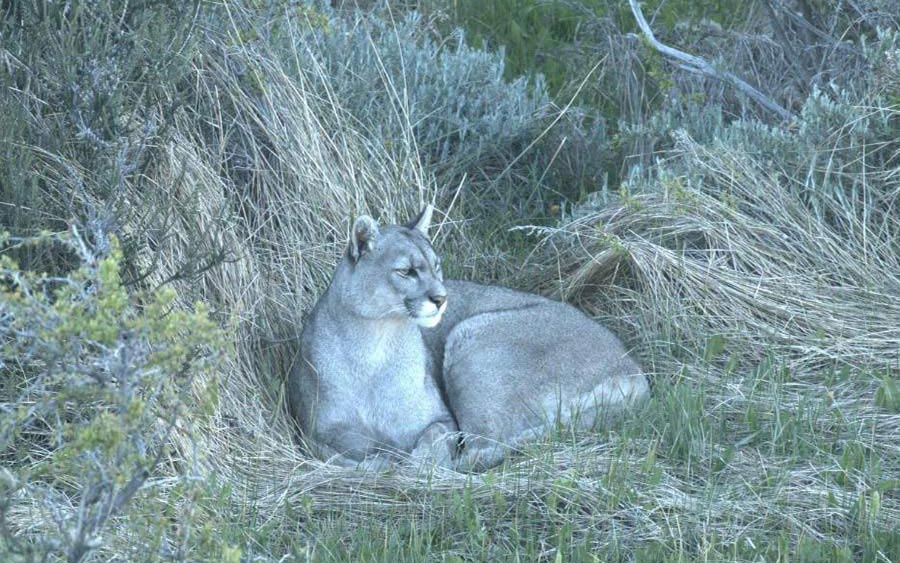
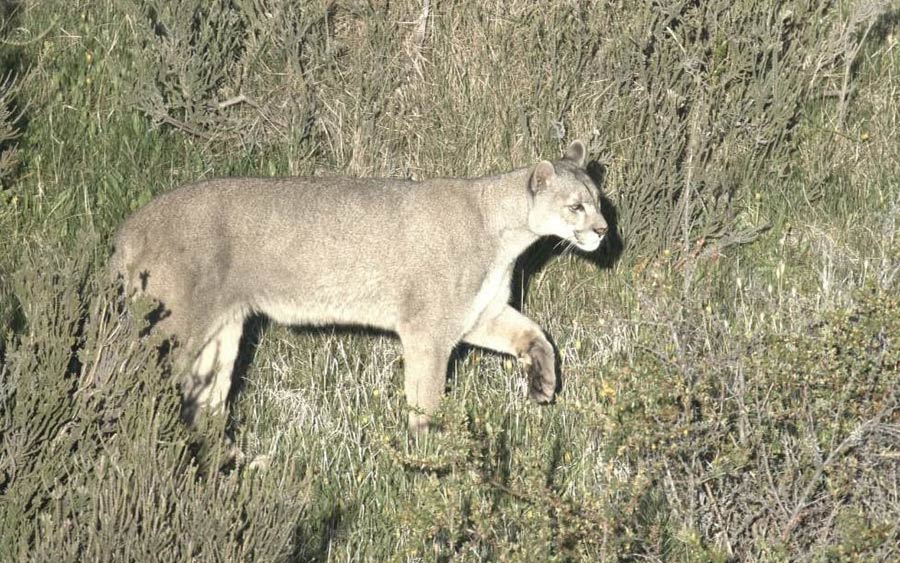
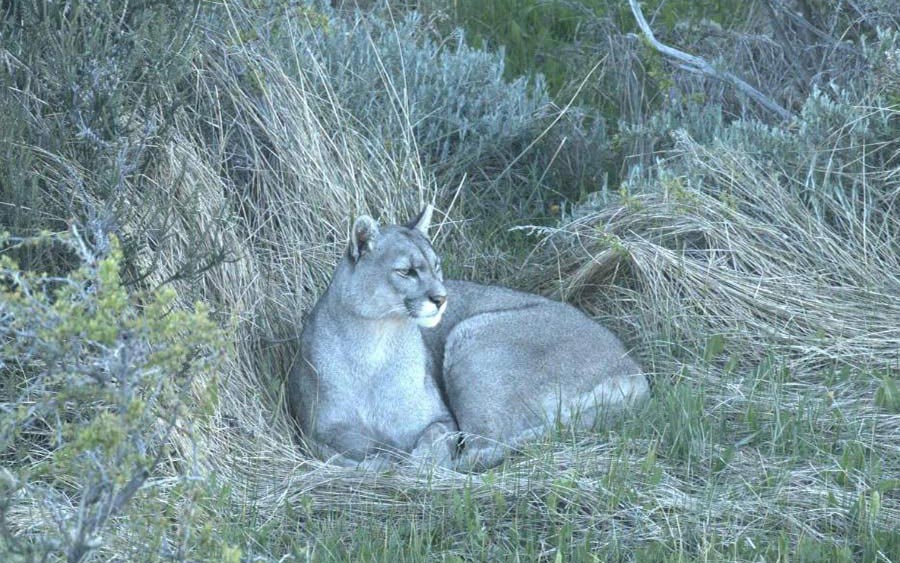 The majestic Puma is one of our main targets on this fabulous trip (photo Joi Inbody).
Overview
Few wildlife journeys in South America can rival the beauty, and sheer quality of this remarkable expedition. For birdwatchers, wildlife enthusiasts, and lovers of the natural world, Chile offers one of the continent’s most rewarding travel experiences, combining breathtaking scenery with exceptional biodiversity across an astonishing variety of habitats.
Our journey begins in Santiago, nestled at the foot of the snow-capped Andes, where the mountains harbor many of central Chile’s most sought-after specials. Here we will search for Chilean Tinamou, White-throated Tapaculo, Moustached Turca, the majestic Andean Condor, and the highly prized Diademed Sandpiper-Plover, one of the most coveted birds of the high Andes.
From the mountains we descend to the Pacific coast, where the cold, nutrient-rich Humboldt Current supports one of the world’s richest marine ecosystems. Along this spectacular coastline we will look for the elegant Inca Tern, Humboldt Penguin, the endemic Chilean Seaside Cinclodes, Blackish Oystercatcher, and the charismatic Marine Otter, while enjoying some of the finest coastal scenery in South America.
Our expedition then continues south into the legendary landscapes of Patagonia and the Magallanes Region, the southernmost reaches of continental South America and the closest we can come to Antarctica without leaving the mainland. Here, surrounded by towering granite peaks, turquoise lakes, vast glaciers, and endless windswept steppe, we will search for southern specials including King Penguin, Magellanic Diving Petrel, Magellanic Penguin, Ashy-headed Goose, Ruddy-headed Goose, the monotypic Magellanic Plover, Chocolate-vented Tyrant, Tawny-throated Dotterel, and Rufous-chested Dotterel
No visit to Patagonia would be complete without exploring the world-renowned Torres del Paine National Park, one of the finest places on Earth to observe wild Puma. Healthy populations, abundant prey, and breathtaking scenery combine to offer an exceptional opportunity to encounter South America’s largest feline roaming freely across one of the planet’s most spectacular wilderness landscapes.
Our adventure concludes in the enchanting Valdivian Temperate Rainforest, one of the world’s most distinctive temperate forest ecosystems. Sculpted by volcanoes, glaciers, deep fjords, and crystal-clear rivers, these ancient forests shelter an extraordinary collection of endemic and range-restricted wildlife found nowhere else on Earth. The breathtaking landscapes of Chiloé Island provide the perfect finale to our expedition as we explore its moss-draped forests in search of Chucao Tapaculo, the endemic Slender-billed Parakeet, Rufous-legged Owl, White-throated Treerunner, Ochre-flanked Tapaculo, Fire-eyed Diucon, and Austral Pygmy Owl. These secluded forests also protect some of Chile’s most elusive mammals, including the diminutive Southern Pudú, the endangered Darwin’s Fox, the Southern River Otter, and the mysterious Kodkod, the smallest wild cat in the Americas and one of the world’s most elusive predators.
Join us on what is undoubtedly one of the finest wildlife and birding adventures in Chile—a journey through extraordinary landscapes, remarkable biodiversity, and unforgettable encounters at the very end of the world.
Detailed Itinerary (16 days/15 nights)
Day 1. Arrival in Santiago and transfer to the hotel
Upon arrival at Arturo Merino Benítez International Airport in Santiago, you will be met by our representative and transferred to our comfortable hotel in the elegant district of Las Condes, nestled at the foot of the majestic Andes Mountains.
Overnight: Hotel El Bosque Ebro, Santiago
Day 2. Birding Yerba Loca and Farellones
Our Chilean adventure begins today with an early morning excursion to Yerba Loca Nature Sanctuary, a spectacular Andean reserve set against the dramatic backdrop of the snow-capped Andes. Located just outside Santiago, this pristine mountain valley provides an excellent introduction to the unique avifauna of central Chile while offering breathtaking alpine scenery.
Among the first birds of our journey we hope to encounter are the endemic Dusky-tailed Canastero, Striped Woodpecker, Tufted Tit-Tyrant, Austral Blackbird, Austral Thrush, Chilean Mockingbird, Green-backed Firecrown, Long-tailed Meadowlark, Grey-hooded Sierra Finch, Variable Hawk, Black-chested Buzzard-Eagle, Dusky Tapaculo, and the elegant Moustached Turca, one of Chile’s most charismatic endemic birds.
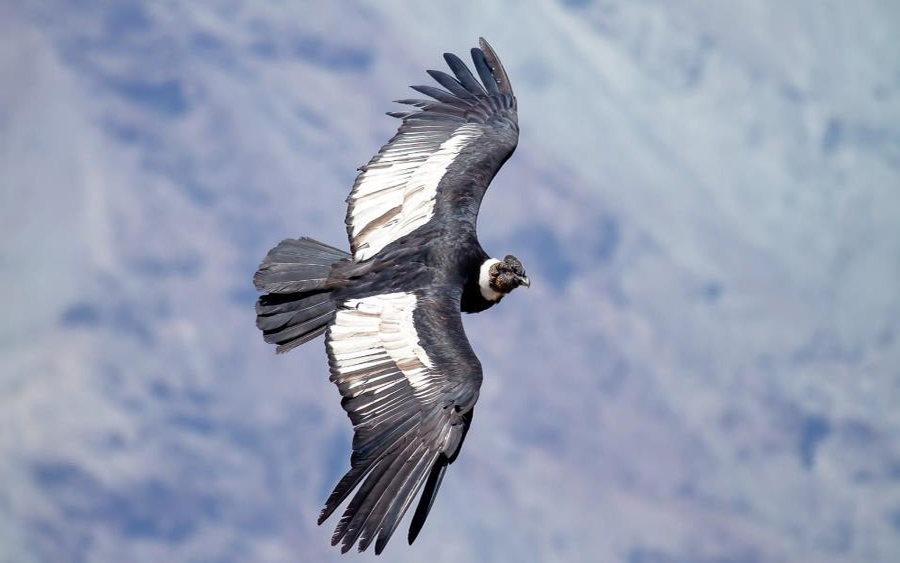
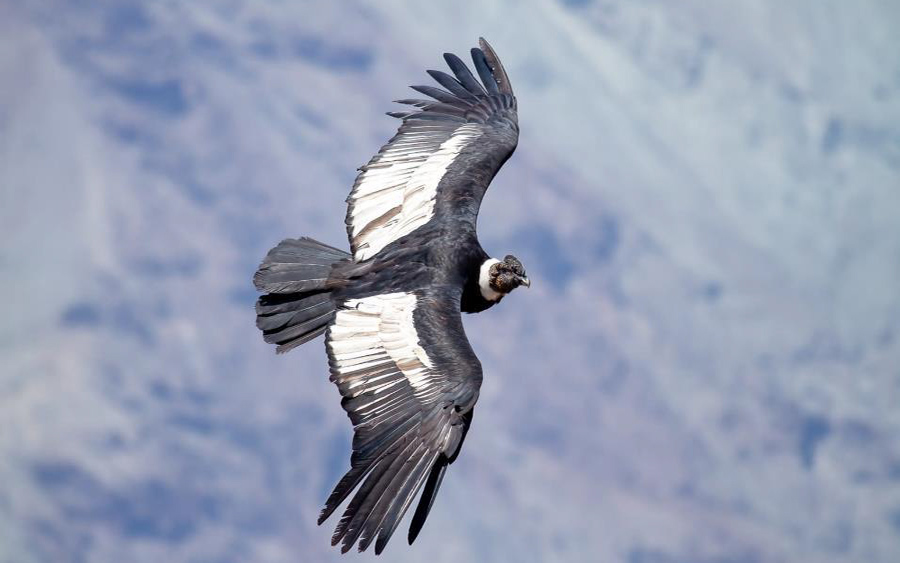 Chile is one of the best places to get close up views of Andean Condor (photo Fernando Diaz).
Yerba Loca is also one of the most reliable places to search for the elusive Lesser Horned Owl, which occasionally roosts in dense vegetation during daylight hours, providing a rare opportunity for excellent views of this secretive nocturnal species.
Our journey then continues higher into the Andes to the famous mountain resort of Farellones. Surrounded by towering peaks and dramatic alpine scenery, this is one of the finest places in central Chile to admire the magnificent Andean Condor as it circles effortlessly above the cliffs, carried by the rising mountain thermals. While the condor is undoubtedly the star of the show, the surrounding slopes may also reward us with Mountain Caracara, Black-billed Shrike-Tyrant, Yellow-rumped Siskin, Aplomado Falcon and several other characteristic birds of the high Andes. Later in the afternoon, we return to Santiago for our overnight stay.
Overnight: Hotel El Bosque Ebro, Santiago
Day 3. Birding El Yeso
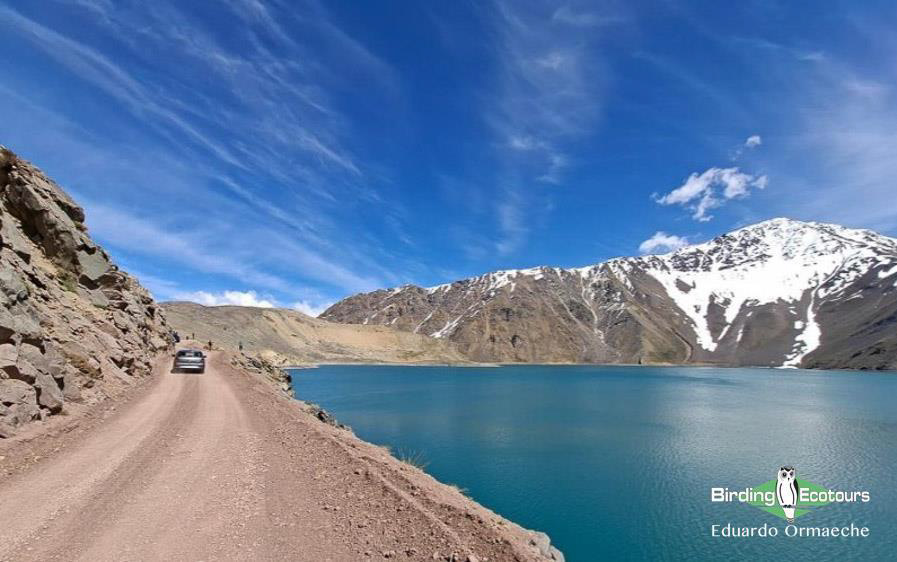
Today we venture deep into the heart of the central Andes to visit the spectacular El Yeso Reservoir, a breathtaking turquoise lake situated at 9,840 feet (3,000 meters) above sea level. Surrounded by rugged peaks, permanent snowfields, and some of the highest mountains in central Chile—including the imposing Cerro Aparejo—this remarkable reservoir supplies much of Santiago’s drinking water while providing one of the most scenic high Andes landscapes in the country.
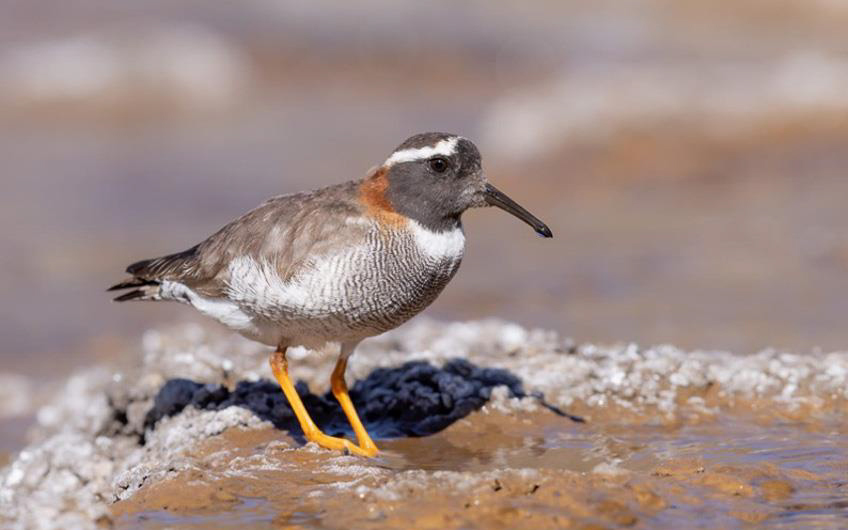
Our principal objective today is one of the most coveted birds of the high Andes—the remarkable Diademed Sandpiper-Plover. Despite inhabiting open alpine wetlands, this legendary species remains one of South America’s most sought-after birds due to its highly specialized habitat and limited distribution. El Yeso Reservoir is widely regarded as one of the most accessible and reliable places to search for this iconic species, offering an outstanding opportunity to observe it against one of the Andes’ most spectacular mountain backdrops.
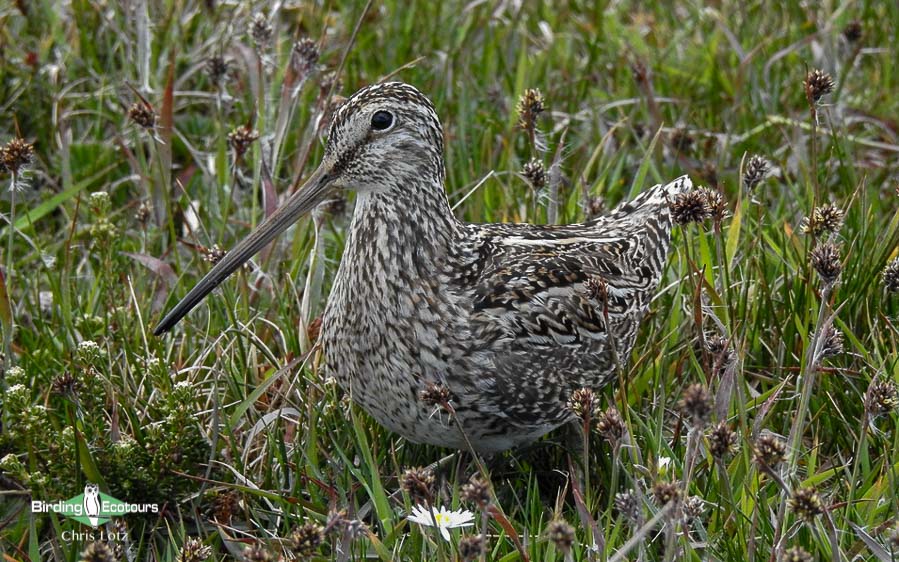
The surrounding puna and alpine wetlands also support an excellent diversity of high Andes birds. Among the species we hope to encounter are the endemic Crag Chilia, Rufous-banded Miner, Dark-bellied Cinclodes, Scale-throated Earthcreeper, Plumbeous Sierra Finch, Greater Yellow-Finch, Black-winged Ground Dove, Andean Goose, Magellanic Snipe, Crested Duck, Grey-breasted Seedsnipe, and Andean Gull.
Overnight: Hotel El Bosque Ebro, Santiago
Day 4. Birding the Pacific Coast and transfer to Casablanca Valley
Today’s excursion takes us to the Pacific coast, where a rich mosaic of estuaries, coastal lagoons, and freshwater marshes provides refuge for an impressive diversity of waterbirds and marsh specialists. These productive wetlands rank among the most important birding sites in central Chile, attracting both resident and migratory species throughout the year.
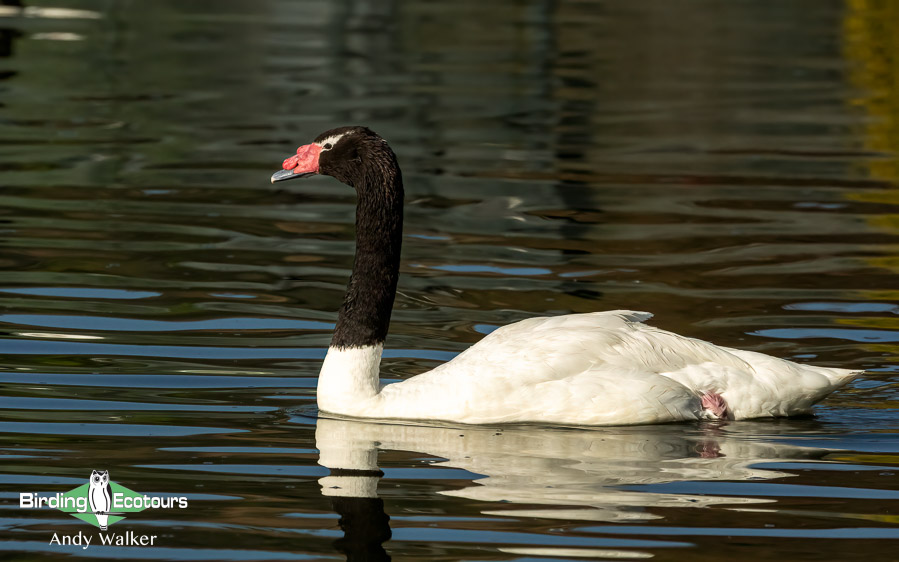
Among the many birds we hope to encounter are Coscoroba Swan, Black-necked Swan, Chiloé Wigeon, Yellow-billed Teal, Cinnamon Teal, Red-fronted Coot, White-tufted Grebe, Collared Plover, Black Skimmer, Plain-mantled Tit-Spinetail, Rufous-tailed Plantcutter, Austral Negrito, Black-chinned Siskin, Des Murs’s Wiretail, Wren-like Rushbird, Chilean Pigeon, along with a variety of additional wetland and coastal species.
Overnight: Hotel Casablanca, Casablanca
 The Andes above Santiago are the home of some incredible birds
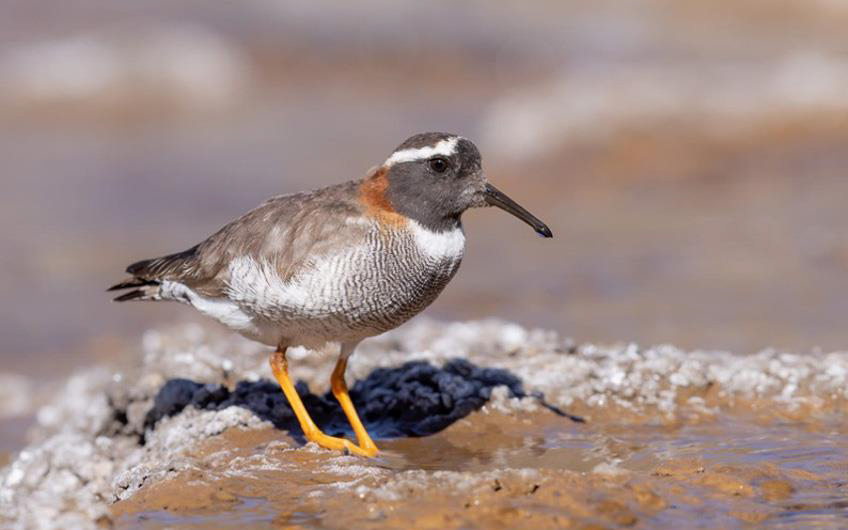 The most wanted Diademed Sandpiper-Plover (photo Fernando Diaz).
Day 5. Algarrobo and transfer to Santiago
Today’s excursion brings us to Chile’s rugged Pacific coastline as we visit the celebrated birding localities of Algarrobo and Concón. Here, where powerful ocean swells meet wave-battered rocky shores, we will search for one of Chile’s most localized endemic birds—the Chilean Seaside Cinclodes. Additional targets along the coast include Blackish Oystercatcher, the stunning Inca Tern, Surfbird, Brown-hooded Gull, Kelp Gull, Black Skimmer, Peruvian Booby, Red-legged Cormorant, Guanay Cormorant, Peruvian Pelican, Hudsonian Whimbrel, and, with a bit of luck, even Black-browed Albatross cruising offshore.
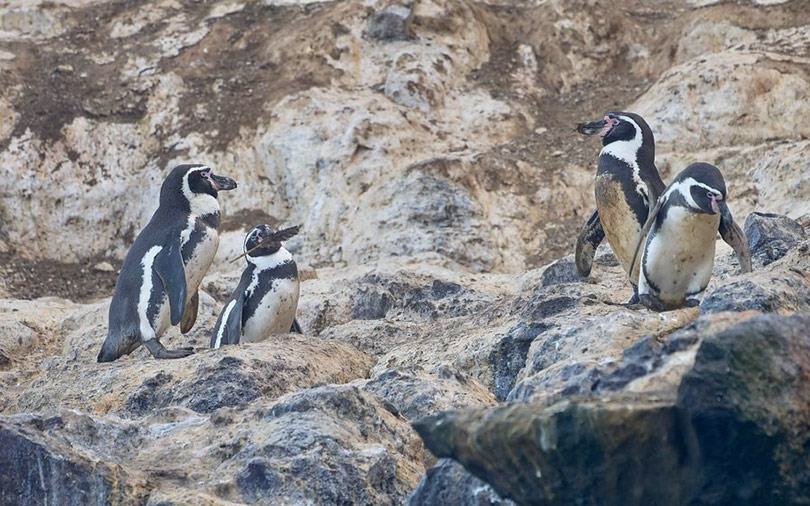
We will also search for Humboldt Penguin, which can often be seen resting on offshore rocks or swimming just beyond the surf. Although they are sometimes too distant for detailed photography, our spotting scopes usually provide outstanding views of these iconic seabirds.
With a little luck, the day may conclude with one of Chile’s most charismatic mammals—the elusive Marine Otter. Endemic to the cold, nutrient-rich waters of the Humboldt Current, this endangered species inhabits the country’s rocky coastline. Later, we will return to the hotel.
Overnight: Hotel Holiday Inn, Santiago Airport
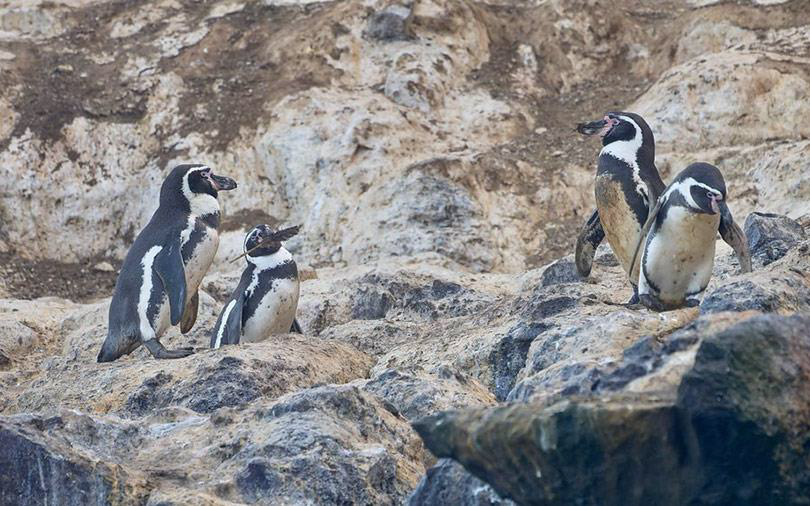 Humboldt Penguins seen along the coastline of Chile (photo Dr. Uwe Speck).
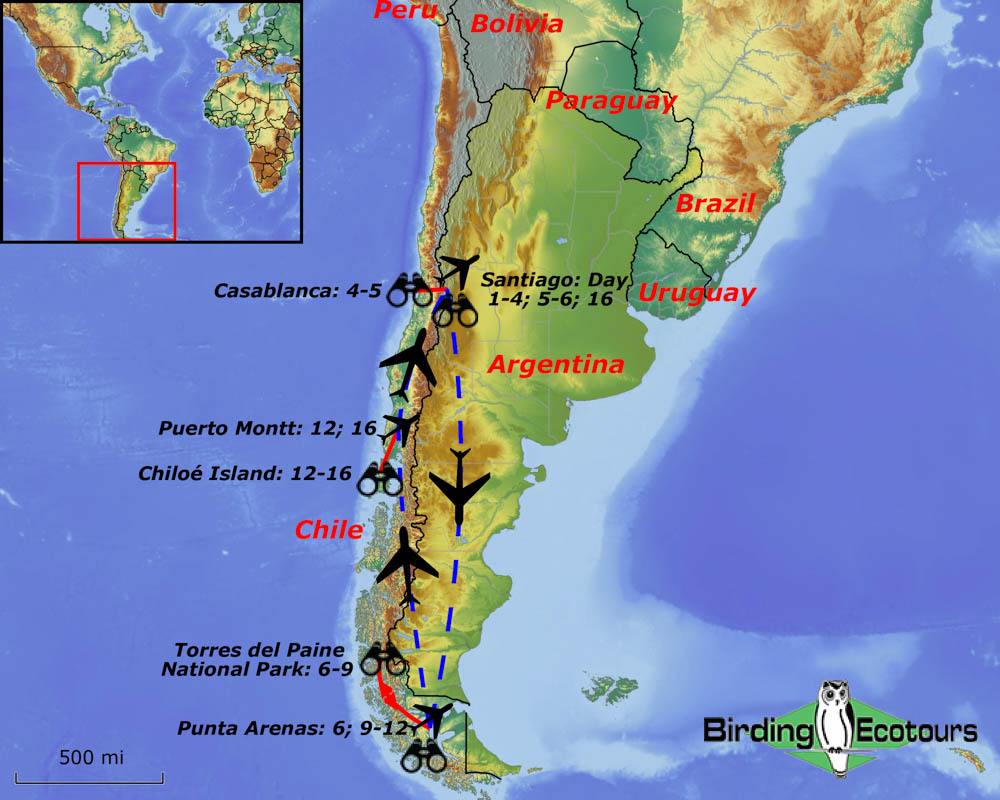
Day 6. Flight to Punta Arenas and transfer to Torres del Paine
An early morning flight of just over three hours takes us to the southern city of Punta Arenas, gateway to Chilean Patagonia and the legendary Magallanes Region. Upon arrival, our vehicle will be waiting to begin the scenic drive north toward Cerro Castillo, our base for exploring the world-famous Torres del Paine National Park and surrounding areas. Although the journey takes approximately five hours, the spectacular Patagonian landscape and its abundant wildlife ensure that the drive is an enjoyable part of the adventure.
As we cross the vast windswept steppe, we will begin encountering many of Patagonia’s characteristic birds, including Upland Goose, Ashy-headed Goose, Magellanic Oystercatcher, Black-faced Ibis, Black-necked Swan, Crested Duck, Southern Lapwing, Chilean Flamingo, and Chimango Caracara. Guanacos are frequently seen grazing across the open plains, while the region’s immense skies and sweeping vistas provide our first taste of the wild beauty that defines southern Chile.
By late afternoon we arrive at our comfortable base near Torres del Paine, where we can relax and prepare for the exciting wildlife encounters awaiting us over the coming days.
Overnight: Hotel Estancia El Ovejero Patagónico, Villa Cerro Castillo
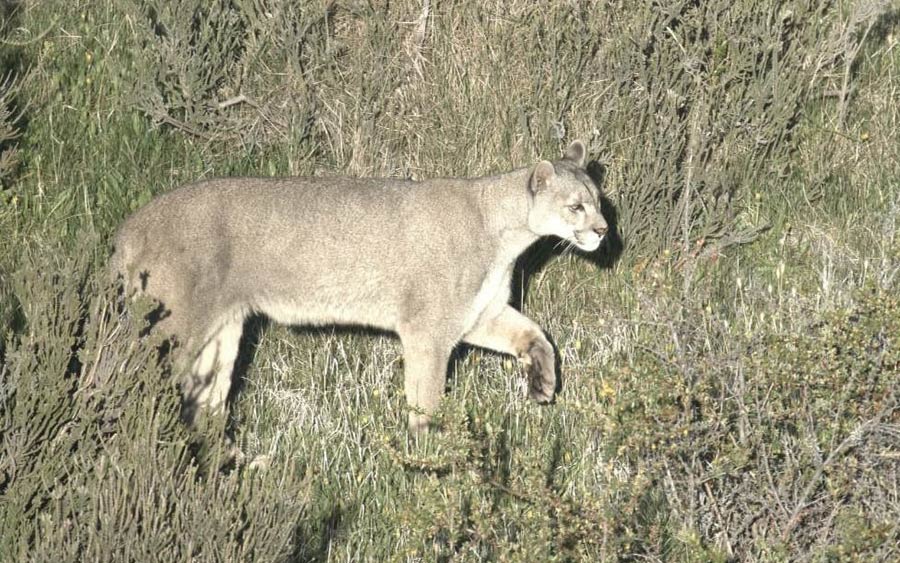 Puma hunting on the Patagonian steppe (photo Joi Inbody).
Day 7. Torres del Paine
Today is devoted entirely to one of the greatest wildlife experiences South America has to offer—tracking the magnificent Puma across the vast Patagonian steppe surrounding Cerro Castillo and Torres del Paine National Park.
Accompanied by experienced local trackers, we will spend the day searching for these elusive cats, visiting carefully selected areas that include both public lands and private estancias where special access has been arranged. Working closely with our tracking team greatly increases our chances of locating Pumas as they patrol their territories, hunt guanacos, or rest among the rocky hillsides.
Thanks to the healthy local population and the expertise of our trackers, this region is widely regarded as one of the finest places in the world to observe wild Puma. With favorable conditions, we may be fortunate enough to enjoy more than one encounter throughout the day, sometimes at remarkably close range, providing unforgettable opportunities for observation and photography.
Overnight: Hotel Estancia El Ovejero Patagónico, Villa Cerro Castillo
Day 8. Torres del Paine and transfer to Hostería Pehoé
A second full day is devoted to exploring the spectacular landscapes surrounding Cerro Castillo in search of the elusive Puma. Having the flexibility of two dedicated tracking days significantly increases our chances of prolonged and memorable encounters with South America’s largest feline while allowing us to follow the movements of individual animals under the guidance of our experienced local trackers.
Depending on the success of our Puma observations, we may also devote time to searching for some of Patagonia’s other fascinating mammals. With a bit of luck, we may encounter the elusive Humboldt’s Hog-nosed Skunk, the impressive Large Hairy Armadillo, and the ever-present South American Grey Fox, one of the region’s most characteristic predators. Throughout the day, the breathtaking scenery of Patagonia provides an unforgettable backdrop to one of the world’s premier wildlife experiences.
Overnight: Hostería Pehoé, Torres del Paine National Park
Day 9. Birding and transfer to Punta Arenas
We will make an early start in search of one of Patagonia’s most elusive birds—the secretive Austral Rail, a species that inhabits dense marsh vegetation and is seldom seen despite occurring in suitable habitat. Afterward, we begin our journey back to Punta Arenas, following little-traveled backroads through the vast Patagonian steppe. These remote grasslands provide excellent opportunities to search for a variety of southern specials, including Rufous-chested Dotterel, Tawny-throated Dotterel, Lesser Rhea, Two-banded Plover, Chocolate-vented Tyrant, Patagonian Sierra Finch, Austral Parakeet, and White-bridled Finch, while the immense open landscapes offer one last opportunity to appreciate the wild beauty of Patagonia.
Overnight: Hotel Almasur, Punta Arenas
Day 10. Birding around Punta Arenas
Our birding around Punta Arenas will focus on a variety of southern specials, including Ruddy-headed Goose, Flightless Steamer Duck, Chilean Skua, Dolphin Gull, Black-browed Albatross, Southern Giant Petrel, Imperial Cormorant, and Correndera Pipit, along with a variety of other characteristic seabirds and Patagonian coastal species that inhabit the Strait of Magellan.
Overnight: Hotel Almasur, Punta Arenas
Day 11. Porvenir and King Penguin Colony
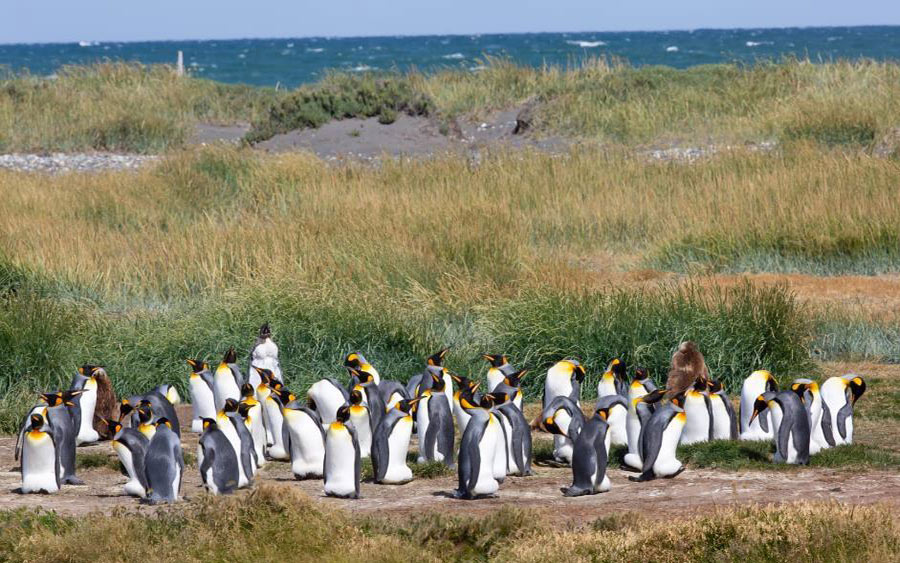
Today we cross the legendary Strait of Magellan by ferry to Tierra del Fuego, a windswept island forever linked to the great age of exploration. Our destination is Bahía Inútil, home to the world’s only continental breeding colony of King Penguins and the undisputed highlight of the day.
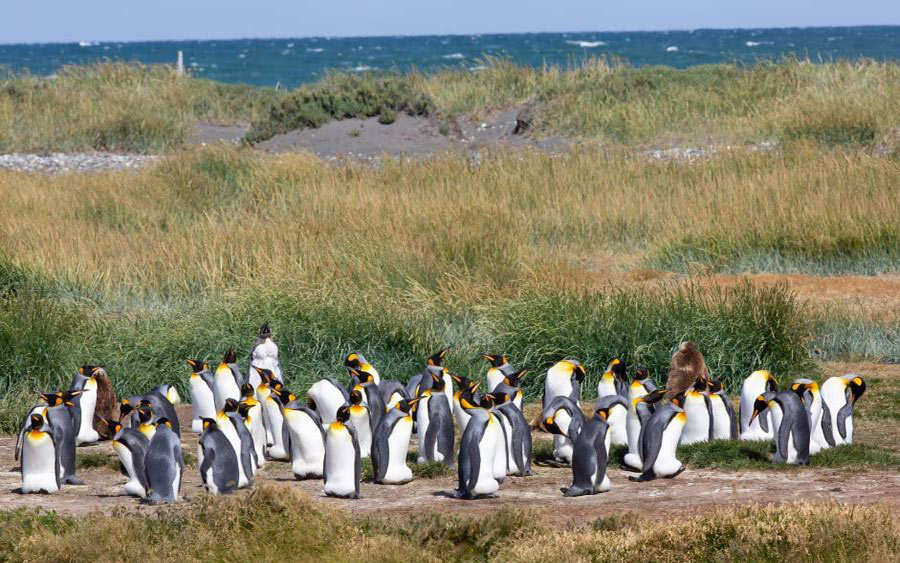 King Penguin colony at Bahía Inútil (photo Fernando Diaz).
Additional birding in the area may produce Magellanic Penguin, Magellanic Diving Petrel, Imperial Cormorant, Upland Goose, Ashy-headed Goose, South American Tern, and a variety of other characteristic Patagonian species. With a little luck, we may also encounter Peale’s Dolphin and South American Fur Seal.
Overnight: Hotel Almasur, Punta Arenas
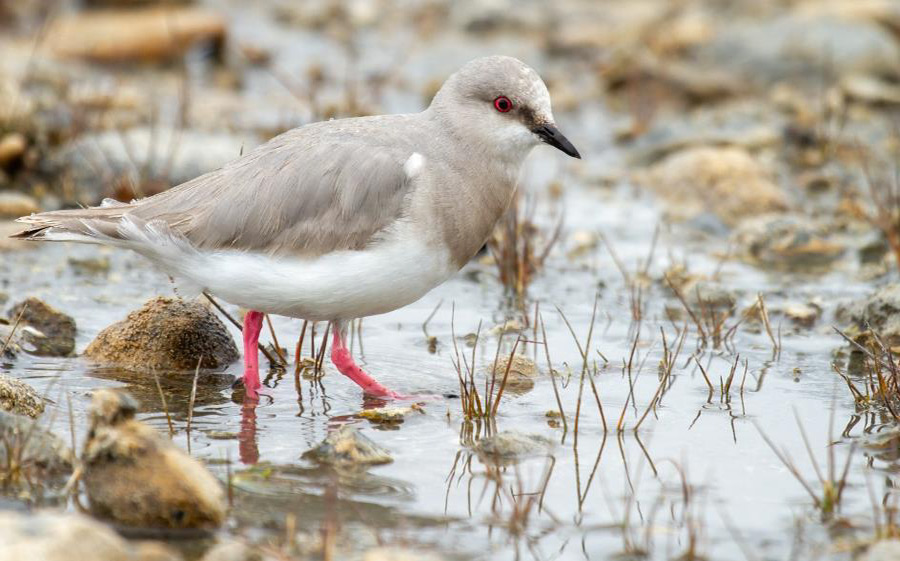
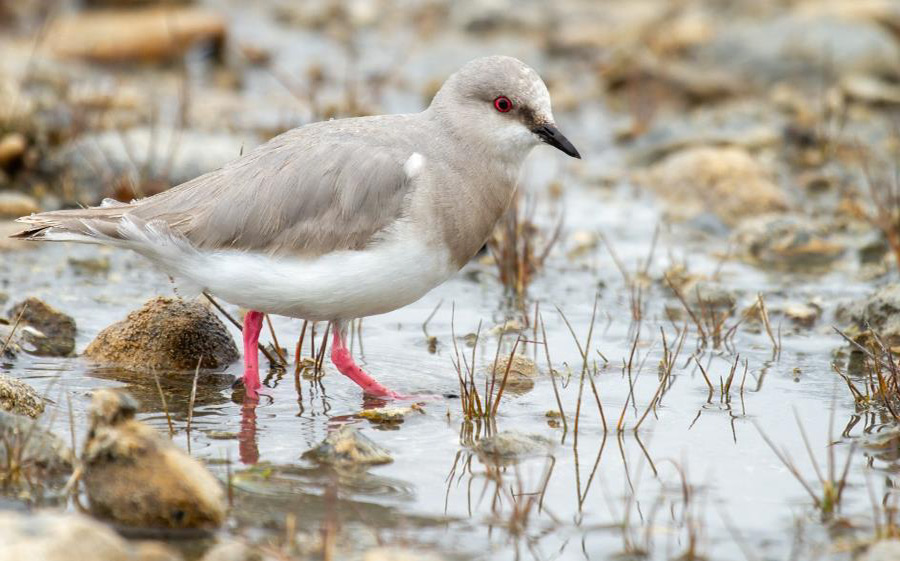 The most-wanted Magellanic Plover (photo Fernando Diaz).
Day 12. Flight to Puerto Montt and transfer to Chiloé island
We depart very early this morning for the airport to catch our flight north to Puerto Montt. Upon arrival, we immediately board the ferry across the Chacao Channel to the enchanting island of Chiloé, one of Chile’s most beautiful and least-visited natural treasures. During the crossing, we will keep a close watch over the surrounding waters for the recently described Pincoya Storm Petrel, a species formally described from Chile in 2013.
After reaching the island, we will have the opportunity to sample Chiloé’s famous local empanadas before continuing to our home for the next few nights—the beautiful Tepuhueico Lodge. Nestled within an extensive tract of pristine Valdivian Temperate Rainforest, the lodge is surrounded by towering ancient trees, including magnificent specimens of the endemic Mañío (Podocarpus nubigenus), some estimated to be more than 800 years old.
Upon arrival, there will be time to settle into our rooms, enjoy a refreshing welcome drink, and relax before dinner in this magical forest setting.
Overnight: Tepuhueico Lodge, Chiloé Island
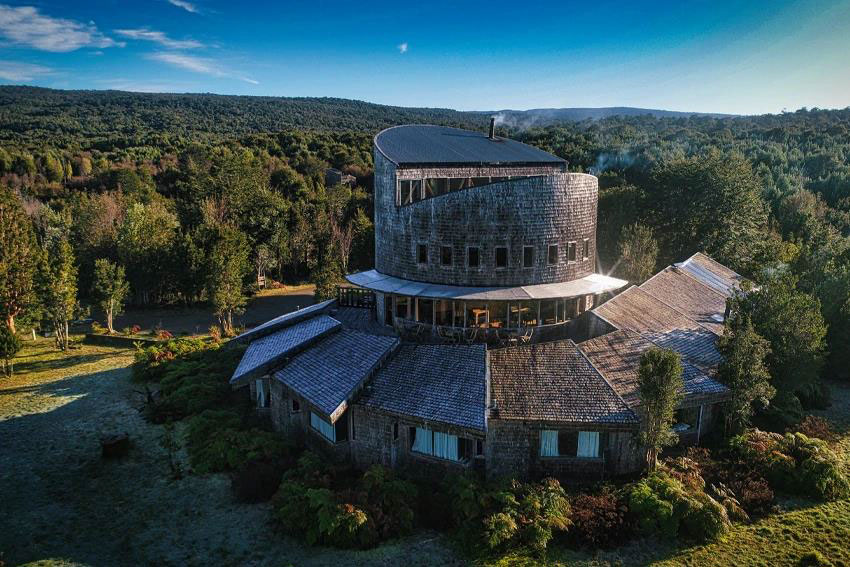 Tepuhueico Lodge will be our base for four nights on this tour (photo Martin Aguirre).
Days 13-15. Tepuhueico Lodge
Over the next three days, we will explore the pristine forests surrounding Tepuhueico Lodge, immersing ourselves in one of the most enchanting landscapes in southern Chile. Nearly two centuries ago, these forests inspired Charles Darwin during his historic voyage aboard HMS Beagle. Today, they remain among the finest examples of ancient Valdivian Temperate Rainforest. Towering trees draped in mosses and lichens, crystal-clear streams, and a remarkable sense of solitude create the perfect setting for one of South America’s most rewarding wildlife experiences.
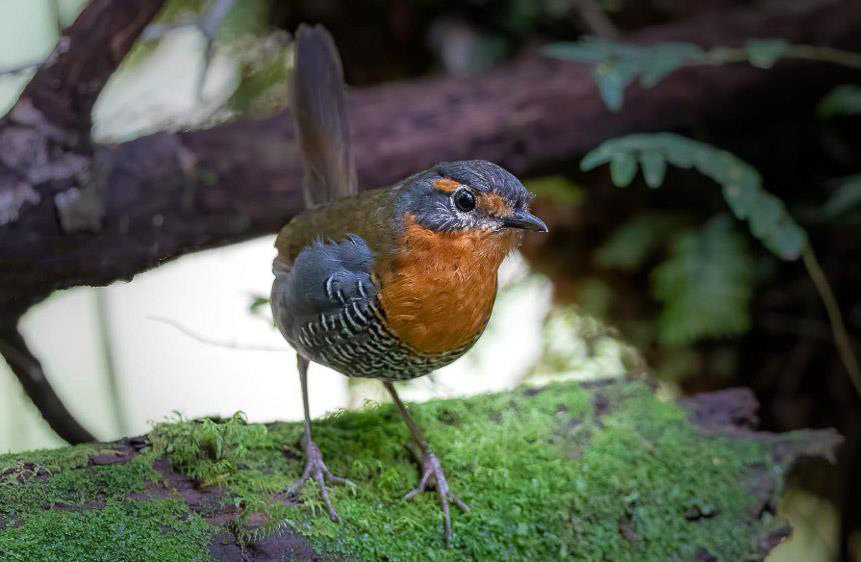
Our birding will focus on a remarkable collection of southern Chilean specials, including the endemic Slender-billed Parakeet, Chilean Hawk, White-throated Treerunner, Thorn-tailed Rayadito, Green-backed Firecrown, Fire-eyed Diucon, White-crested Elaenia, the impressive Black-throated Huet-huet, the charismatic Chucao Tapaculo, Ochre-flanked Tapaculo, Magellanic Tapaculo, Austral Pygmy Owl, Ringed Kingfisher, Des Murs’s Wiretail, Austral Thrush, Patagonian Tyrant, Striped Woodpecker, and Patagonian Sierra Finch.
After dark, we will venture into the forest in search of two of its most elusive nocturnal birds—the Band-winged Nightjar and the secretive Rufous-legged Owl, a species that is regularly encountered in the vicinity of the lodge.
Equally exciting will be our search for some of southern Chile’s most remarkable endemic mammals—often affectionately referred to as the region’s “Five Little Giants.” Tepuhueico is one of the best places in the world to look for these extraordinary species, although patience, perseverance, and a measure of good fortune are always required.
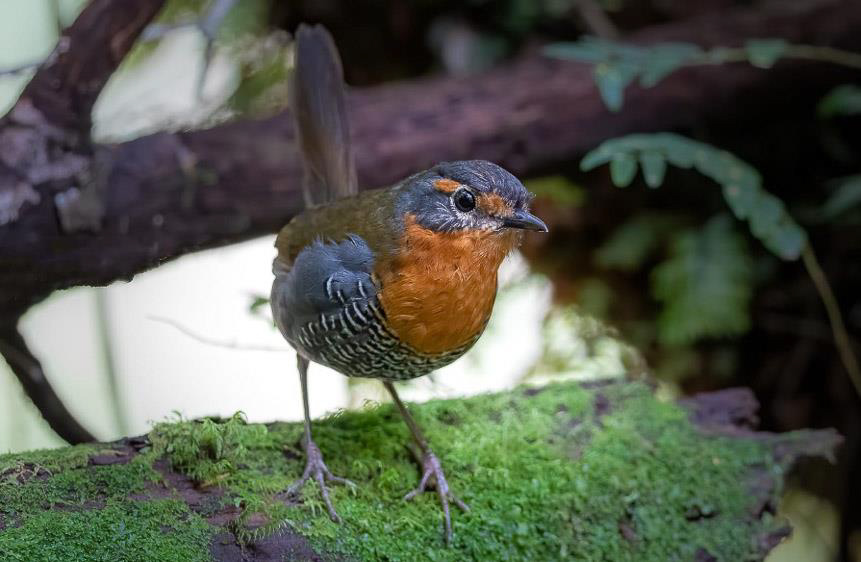 We hope to find Chucao Tapaculo near to Tepuhueico Lodge (photo Fernando Diaz).
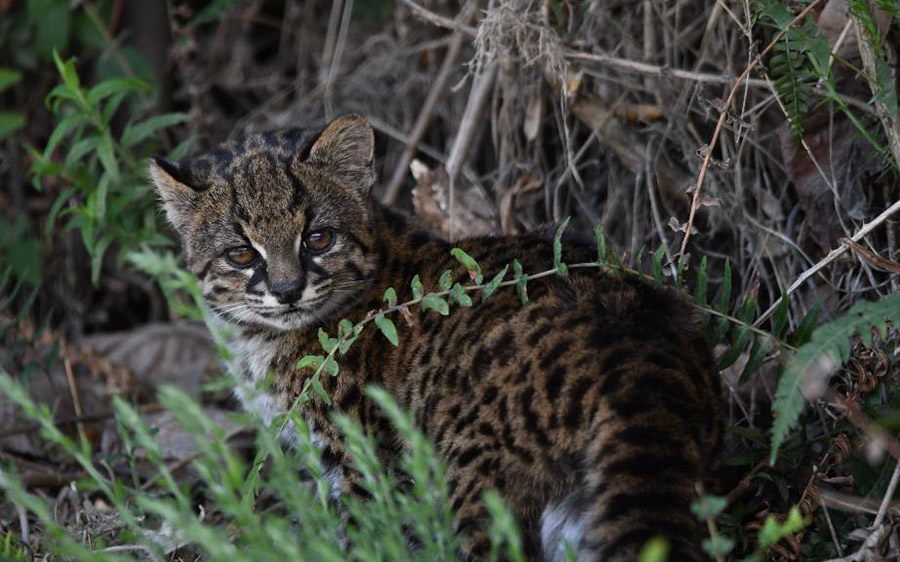
Among our principal mammalian targets is the diminutive Southern Pudu, which, together with its northern relative, is the smallest deer in the world. We will also search for the elusive Southern River Otter, the endangered Darwin’s Fox, and the fascinating Monito del Monte (Colocolo Opossum), a true living fossil and the world’s second-smallest marsupial. Finally, there remains the possibility—always a long shot but never impossible—of encountering the legendary Kodkod, the smallest wild cat in the Americas. Rarely seen and almost mythical among wildlife enthusiasts, a sighting of this elusive forest spirit would undoubtedly rank among the most memorable moments of the expedition.
While no encounter with these extraordinary mammals can ever be guaranteed, our experienced guides will dedicate every possible effort to maximizing our chances, making full use of their local knowledge and years of field experience in these remarkable forests.
Overnight: Tepuhueico Lodge, Chiloé Island
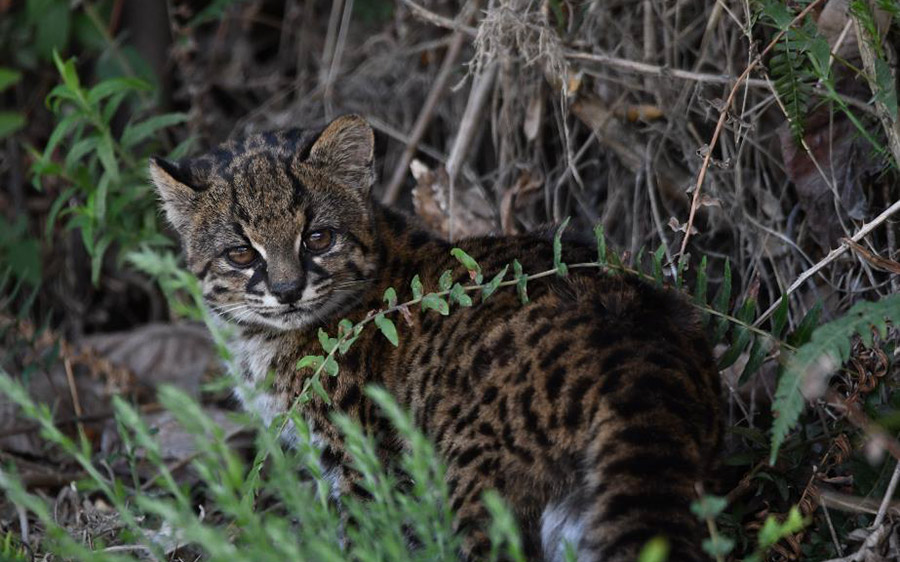 We will always be on the lookout for a chance encounter with Kodkod (photo Martin Aguirre).
Day 16. Transfer to Puerto Montt and flight to Santiago
This morning we bid farewell to the magical forests of Tepuhueico as we make our way back to the mainland. After crossing by ferry, we continue to Puerto Montt Airport for our flight to Santiago, where our unforgettable Chilean adventure comes to an end.
Please note that the itinerary cannot be guaranteed as it is only a rough guide and can be changed (usually slightly) due to factors such as availability of accommodation, updated information on the state of accommodation, roads, or birding sites, the discretion of the guides and other factors. In addition, we sometimes have to use a different international guide from the one advertised due to tour scheduling.
Map