- Duration:
- 22 days / 21 nights
- Group Size:
- 4-8
- Tour Start:
- Adelaide Airport, Adelaide, Australia
- Tour End:
- Cairns Airport, Cairns, Australia
Australia Birding Tour: Interior Outback to Cape York Rainforest
Details
2027
1–22 October
Per person sharing
A$25,890 AUD
$19,062 USD / £14,237 GBP / €17,003 EUR
Single supplement
A$3,050 AUD
$2,246 USD / £1,677 GBP / €2,003 EUR
2028
1–22 October
Per person sharing
A$27,870 AUD
$20,519 USD / £15,325 GBP / €18,303 EUR
Single supplement
A$3,240 AUD
$2,386 USD / £1,782 GBP / €2,127 EUR
Itinerary
Download ItineraryAustralia Birding Tour: Interior Outback to Cape York Rainforest
This epic expedition traverses some of the wildest and most remote landscapes in Australia, targeting many of the country’s most sought-after birds. Beginning in Adelaide, we quickly leave the temperate south behind and journey north through the ancient mountain ranges, red sand deserts, gibber plains, spinifex grasslands, and ephemeral wetlands of the vast outback, before ending in the lush tropical rainforests, mangroves, paperbark swamps, and savannas of the Cape York Peninsula.
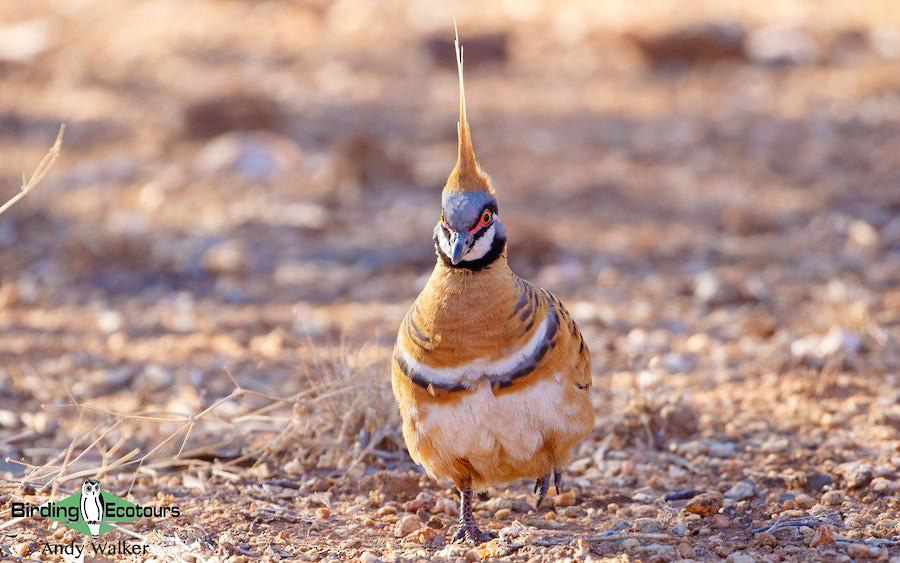
Spinifex Pigeon is one of the many exciting targets on this comprehensive Australian birding tour.
The tour is one of contrasts, focusing first on elusive desert nomads such as Letter-winged Kite, Spotted Nightjar, Flock Bronzewing, and eight secretive grasswrens, before turning to the colorful and highly localized birds of far northeastern Australia, including Golden-shouldered Parrot, Yellow-billed Kingfisher, Papuan Pitta, and White-streaked Honeyeater. Alongside the exceptional birding we also experience spectacular scenery, fascinating outback culture, and chances of remarkable wildlife, making this a truly adventurous Australian birding journey.
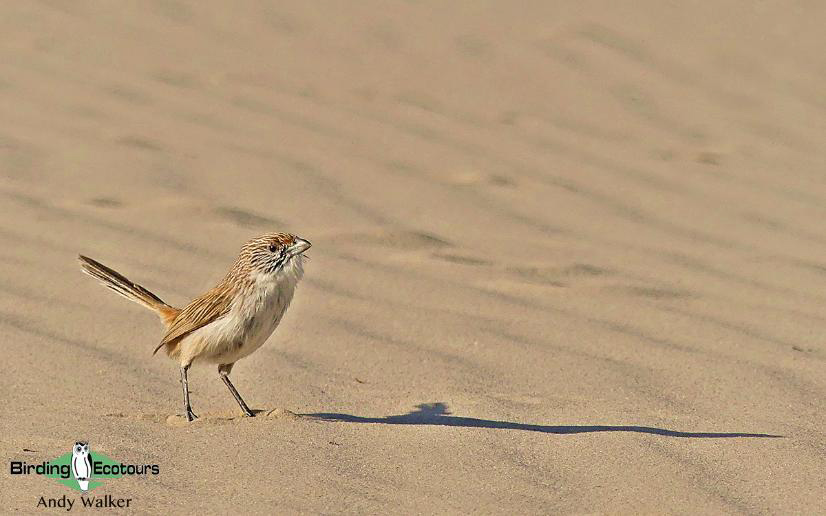
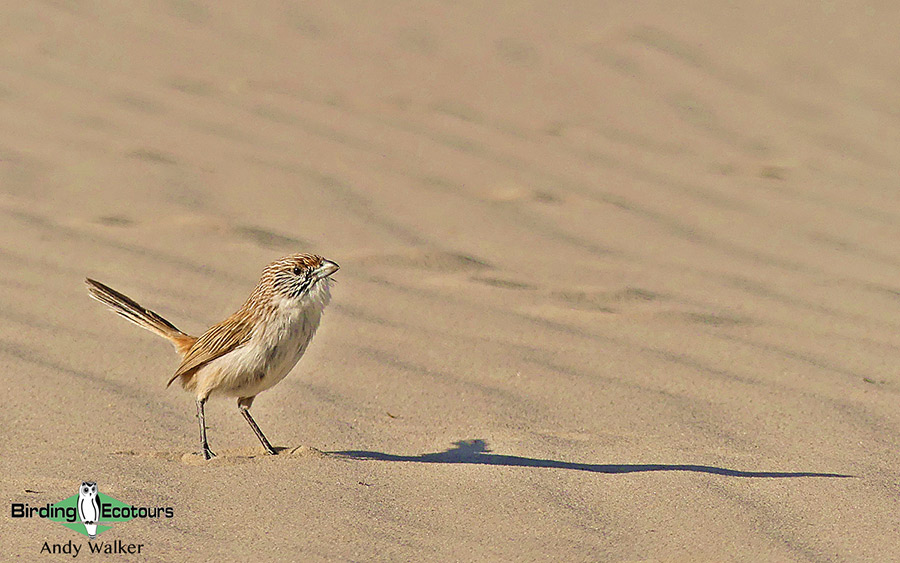
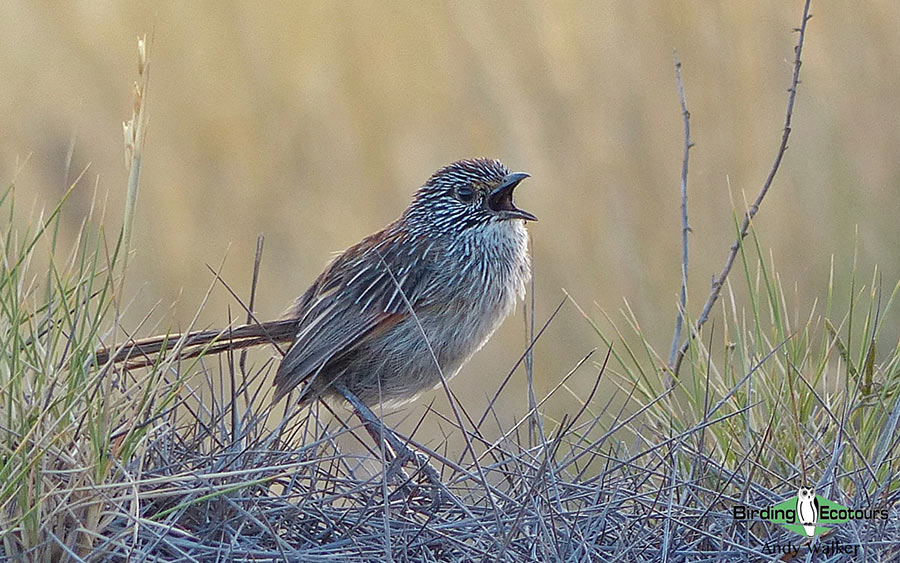
Eyrean Grasswren is one of eight grasswren species possible on this tour.
After beginning in Adelaide, we gradually leave the temperate south behind as we travel north through the vast and sparsely populated landscapes of the Australian interior. In the sandy mallee and spinifex country of the Eyre Peninsula and Gawler Ranges we search for Western Grasswren and Copperback Quail-thrush, before continuing into the dramatic rocky gorges and ancient mountain ranges of the Flinders Ranges, home to Short-tailed Grasswren and the endearing Yellow-footed Rock Wallaby. Following the remote Outback Highway and legendary Birdsville Track, we pass through endless gibber plains, ephemeral wetlands, and desert floodplains, where isolated billabongs attract a surprisingly high diversity. Here, in this harsh yet beautiful landscape, we look for Inland Dotterel, and three grasswrens, including the gorgeous Grey Grasswren. Skirting the vast dunes of the Simpson Desert, we continue north to the rocky spinifex hills and savannas around Mount Isa, where Spinifex Pigeon, threatened Carpentarian Grasswren, and a host of colorful finches thrive. Our final outback birding is near Winton, where we search dunefields and spinifex grassland for Grey Falcon, Rufous-crowned Emu-wren and Hall’s Babbler.
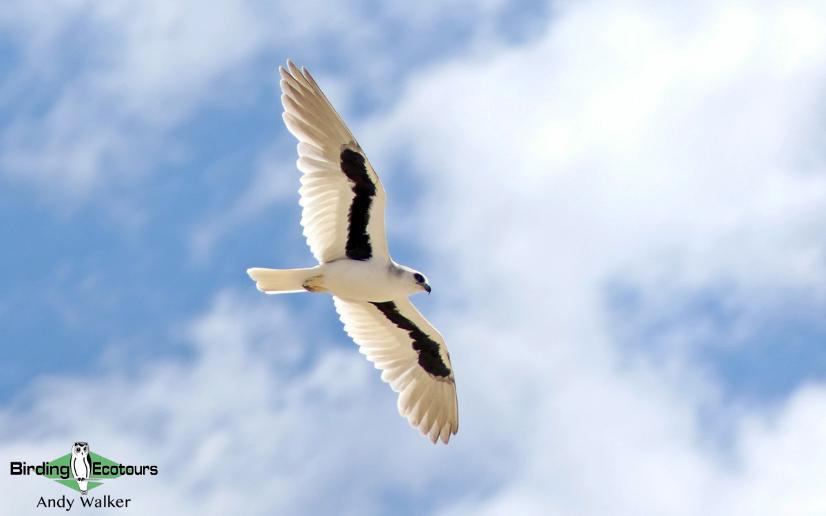
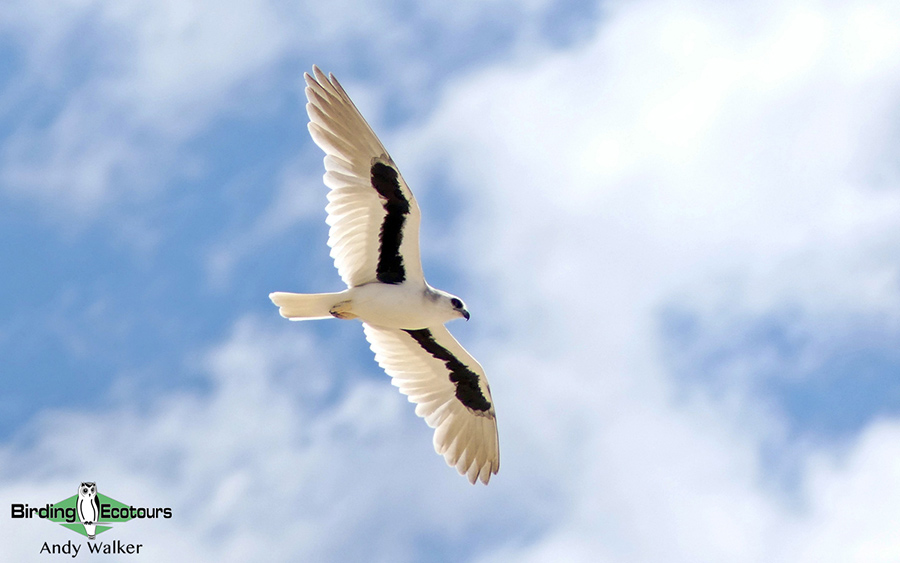
One of Australia’s most sought-after raptors, Letter-winged Kite will be a target on this tour.
Leaving the outback behind, we travel north through the tropical savannas of Queensland to Cairns, before continuing onto the remote Cape York Peninsula. Around Musgrave and Lakefield National Park we bird extensive wetlands, paperbark swamps, and eucalypt savannas, searching for the endangered Golden-shouldered Parrot and mysterious Red Goshawk among many waterbirds, honeyeaters, finches and more. Continuing farther north, we undertake an adventurous journey into the legendary Iron Range National Park, one of Australia’s last great tropical wildernesses. In the dense lowland rainforests, mangroves, and coastal woodlands of Iron Range we target a high diversity of rainforest specialists, including New Guinea species and just barely found in Australia, such as Yellow-billed Kingfisher, Papuan Eclectus, Black-eared Catbird, Trumpet Manucode, and Magnificent Riflebird, alongside localized Australian endemics including Frill-necked Monarch and Northern Scrub Robin. Night birding here we have chances for Marbled Frogmouth and Papuan Frogmouth, before we conclude the tour with a scheduled flight from Lockhart River back to Cairns.
This tour complements our Australia Birding Tour: Eastern Australia – from the Outback to the Wet Tropics tour, which serves as an excellent introduction to birding in Australia by visiting many of the country’s unique habitats, and targeting many iconic bird and mammals such as Southern Cassowary, Plains-wanderer, Superb Parrot, Noisy Pitta, Victoria’s Riflebird and many more. In contrast, this Interior Outback to Cape York Rainforest itinerary has a more specialist focus, venturing deeper into remote regions in search of some of Australia’s most elusive, localized, and nomadic birds, many of which are far harder to connect with elsewhere. This Interior Outback to Cape York Rainforest tour focusses less on the common and more widespread Australian species, to which more time is dedicated on the Outback to Wet Tropics tour, which is our most popular Australian tour, for a good reason!
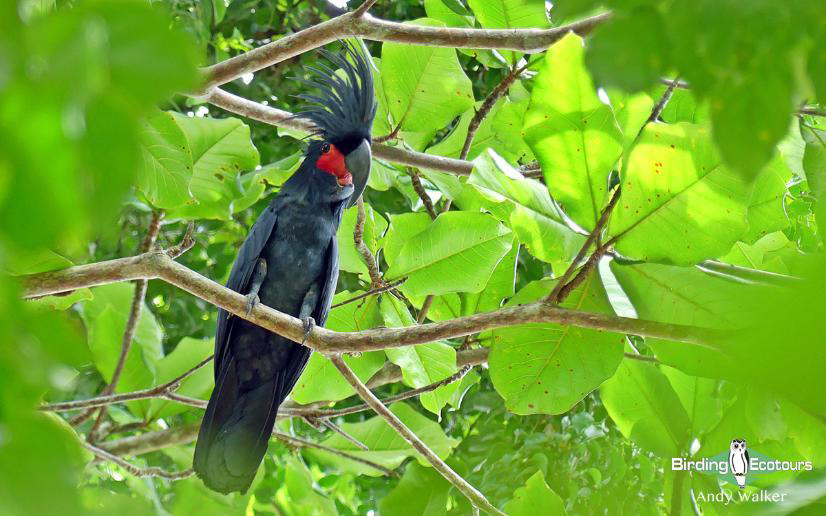
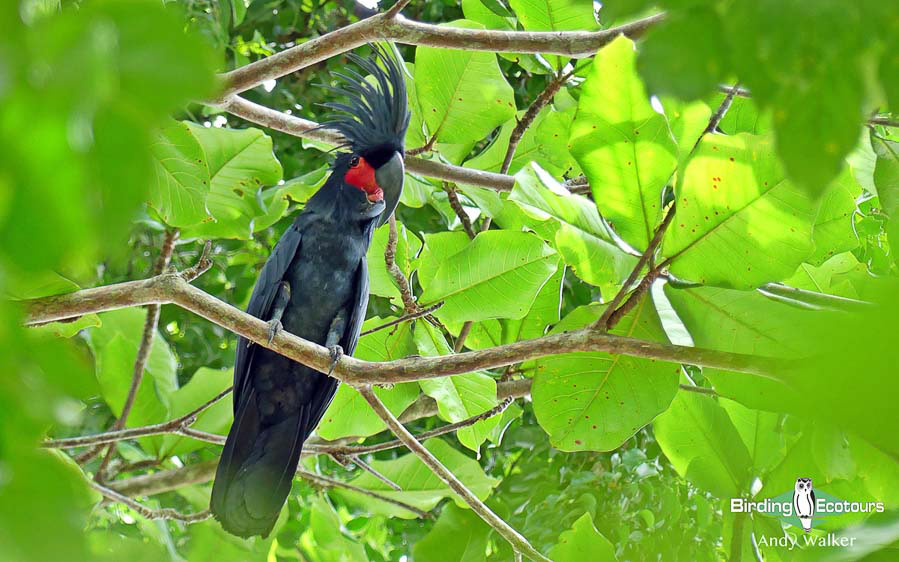
Palm Cockatoo is not only one of the most incredible birds in Australia, it’s one of the top birds anywhere in the world!
Itinerary (22 days/21 nights)
Day 1. Arrival in Adelaide
After arriving at Adelaide Airport, you will transfer to our hotel, with the remainder of the day at leisure. In the evening we will meet at the hotel for a welcome dinner and discuss the plans for the tour, before beginning our birding the following morning.
Overnight: Adelaide
Day 2. Adelaide to Port Augusta
After breakfast we will begin our journey toward the city of Port Augusta, which lies at the head of Spencer Gulf. Throughout the day we will gradually make our way north, enjoying some productive birding either around Adelaide itself or along the coast as we leave the city. As we depart our hotel and travel through the Adelaide Hills we will keep our eyes peeled for Koala, Western Grey Kangaroo, and birds such as Long-billed Corella, Crescent Honeyeater, Red Wattlebird, Scarlet Robin, among many other widespread and colorful species, including Crimson Rosella, Rainbow Lorikeet, Superb Fairywren, and New Holland Honeyeater.
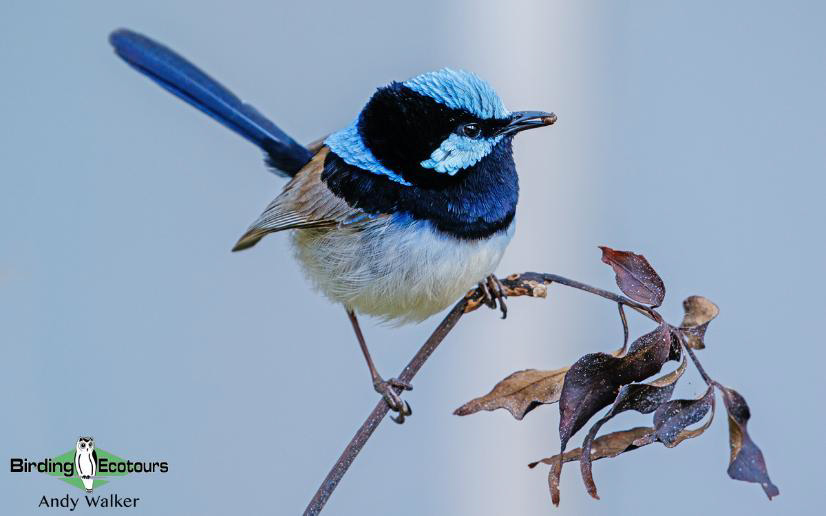
We will make the most of our time around Adeliade to get our eyes trained on some familiar friends, like Superb Fairywren, before we start focusing on the main targets of the tour.
Depending on local conditions, we may choose to visit coastal habitats such as tidal mudflats, sandy beaches, and mangrove-fringed saltmarshes at St Kilda or Bald Hill Beach. Here we could look for species such as Sooty Oystercatcher, Banded Stilt, Red-capped Plover, Far Eastern Curlew, Great Knot, Fairy Tern, Pacific Gull, and Black-faced Cormorant, alongside a high diversity of other shorebirds (waders), gulls, terns, and herons. Another option would be exploring mangrove forest and samphire flats at sites such as Port Gawler Conservation Park, where we might find Red-kneed Dotterel, Spotted Scrubwren, and Slender-billed Thornbill.
We expect to arrive in Port Augusta during the afternoon, when we will check into our hotel for the night. If time allows, we may also do some local birding, visiting the nearby Arid Lands Botanic Garden. The chenopod shrublands of the gardens provide excellent habitat for Chirruping Wedgebill, along with Australian Ringneck, Purple-crowned Lorikeet, Purple-backed Fairywren, White-winged Fairywren, and Rufous Fieldwren.
Overnight: Port Augusta
Day 3. Port Augusta to Mount Ive
With an early departure we travel west into the Eyre Peninsula, spending the morning birding Iron Knob and Lake Gilles Conservation Park. Here we have a specific set of targets, searching for the localized and difficult to see Copperback Quail-thrush, alongside species with more southern or western distributions which can otherwise only be seen at this site. These include Rufous Treecreeper, Blue-breasted Fairywren, Gilbert’s Whistler, and Western Yellow Robin. The open, arid mallee woodland and shrubland, and sandy dunes around the saline lake are also the best sites we visit on the tour for the stunning duo of Mulga Parrot and Splendid Fairywren. Other top targets include White-eared Honeyeater, White-fronted Honeyeater, Yellow-plumed Honeyeater, Inland Thornbill, White-browed Babbler, Dusky Woodswallow, and Crested Bellbird.
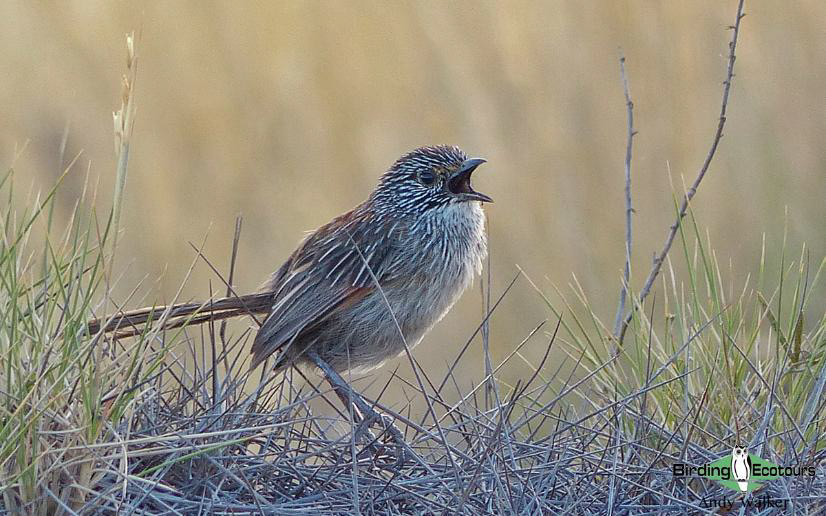
Short-tailed Grasswren will be a target over the next couple of days.
In the afternoon we will travel north for a one-night stay at Mount Ive Station, located in the heart of the Gawler Ranges. Along the way we will start to see Emu, the giant Red Kangaroo, and Common Wallaroo. This isolated station provides comfort in a vast yet spectacular landscape. While here we will target some restricted range specialties and, time permitting, we will begin searching for the targets listed for Day 4.
Overnight: Mount Ive Station
Day 4. Mount Ive to Port Augusta
With an early start we focus on the first two of our eight grasswren targets for the tour, Short-tailed Grasswren and Western Grasswren. The characterful Western Grasswren is an important target, with a tiny disjunct range, but our guides will take you to the best sites in Southern Australia for it. Other top targets include the striking Pink Cockatoo, Slender-billed Thornbill, and arid-zone specials such as Eastern Bluebonnet, Crimson Chat, White-fronted Chat, Southern Whiteface, and Hooded Robin. We will also enjoy seeing more widespread species, like Rainbow Bee-eater, Spiny-cheeked Honeyeater, Red-capped Robin, and we have another chance for Mulga Parrot and White-fronted Honeyeater. Once we have had our fill of birding the sandy dunes of the Gawler Ranges we will return east to Port Augusta, to prepare for our ten-day road trip across Australia’s remote and beautiful outback, which starts the next morning.
Overnight: Port Augusta
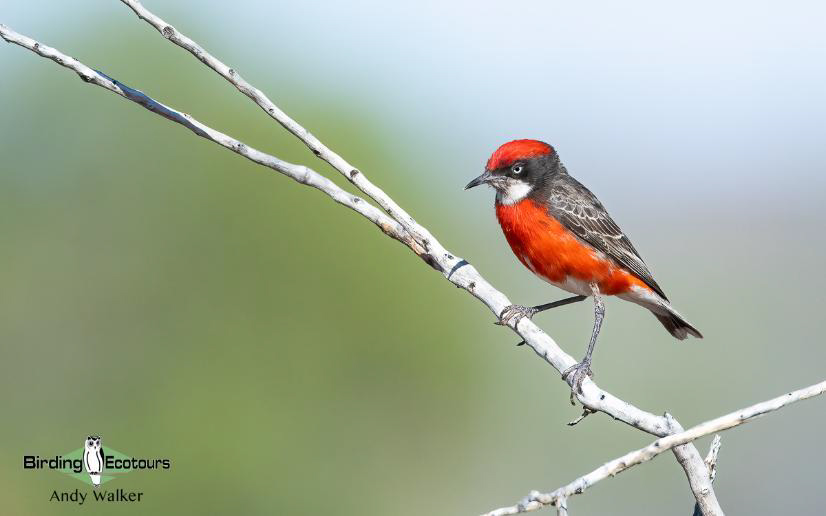
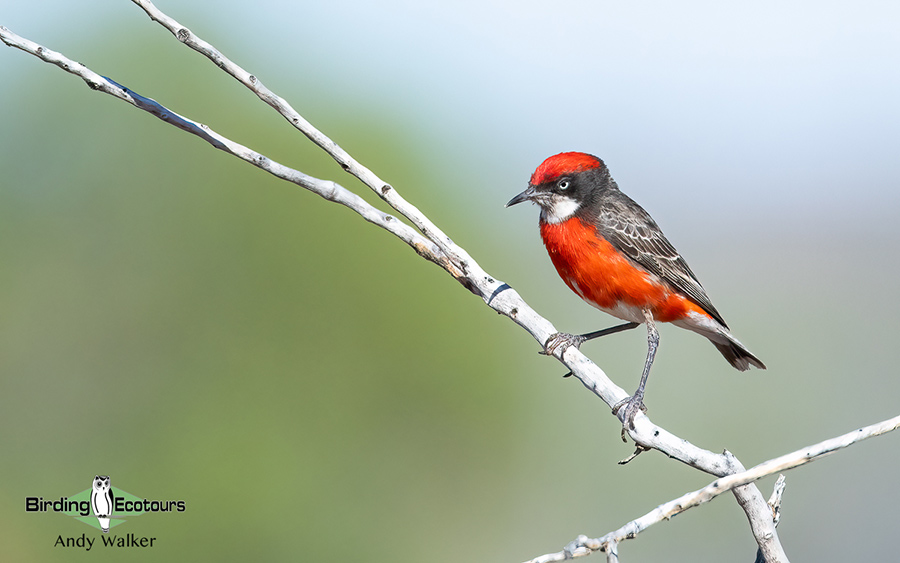
Crimson Chat (which is actually a honeyeater) provides a splash of color.
Day 5. Port Augusta to Lyndhurst
Today will be a much anticipated day, as we start our expedition across Australia’s interior, visiting some of the best outback birding sites in the country for a number of mouthwatering mysterious, nomadic, and rarely seen species. As we begin our journey along the appropriately named ‘Outback Highway’, we should start to see iconic species such as Emu, Wedge-tailed Eagle, Red-backed Kingfisher, Cockatiel, Budgerigar, White-winged Fairywren, and Little Crow, many of which will accompany us for the rest of our outback adventure.
Our first stop will be at the fantastic Ikara-Flinders Ranges National Park, a breathtaking place to go birding, with ancient mountains and dramatic, tree-lined rocky gorges. In the park we have another chance at finding Short-tailed Grasswren within the spinifex grasslands, along with the well named Elegant Parrot. We have our best chance for Black-eared Cuckoo, Grey-fronted Honeyeater, Redthroat, and Chestnut-breasted Whiteface here, and with luck we could find the secretive Southern Scrub Robin. Other targets include Common Bronzewing, Striated Pardalote, and Chestnut-rumped Thornbill, while in the rocky outcrops and cliffs we will look for the distinctive and range restricted Yellow-footed Rock Wallaby.
Continuing northwards we will likely stop at Leigh Creek Dam. Depending on the water levels and local conditions, this can be an excellent site for waterfowl, with more than ten species recorded including Freckled Duck, Blue-billed Duck, and Musk Duck. Other waterbirds here may include Black-fronted Dotterel, Australian Tern, and Tree Martin. We overnight in the small town of Lyndhurst, just north of Leigh Creek.
Overnight: Lyndhurst
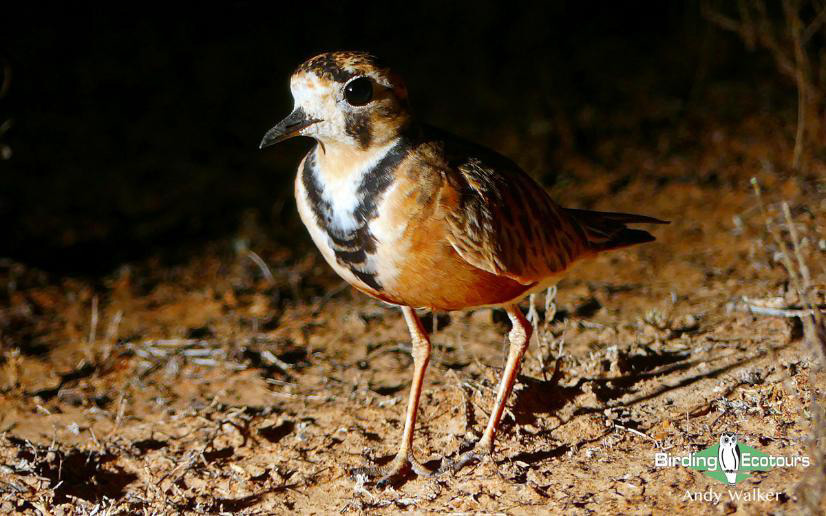
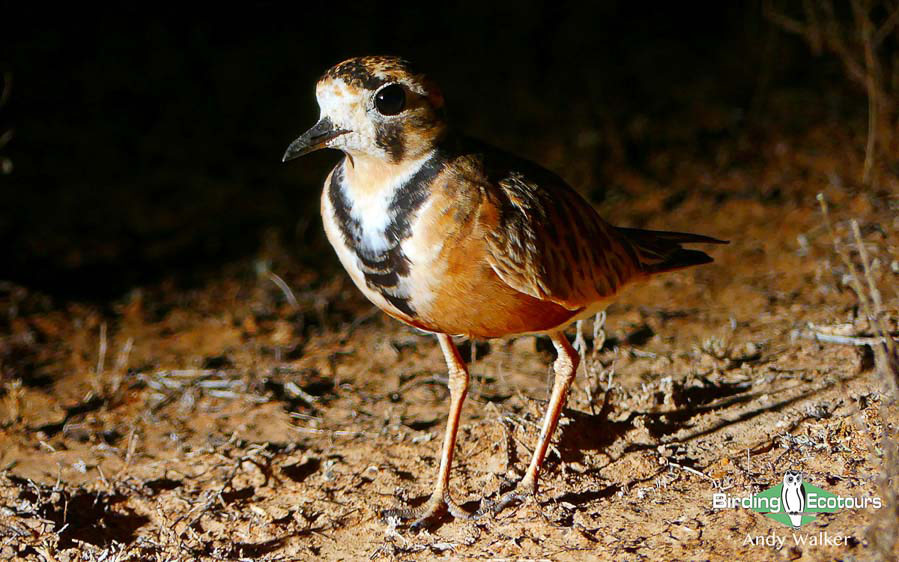
Inland Dotterel can be found at several locations we visit during the tour and you can sometimes get a surprise and bump into one at night!
Day 6. Lyndhurst to Marree
In the early morning we will explore the stony plains around Lyndhurst. Our main target for the morning is the brilliant Thick-billed Grasswren, a specialist of saltbush and bluebush habitats, but we will also keep our eyes peeled for Inland Dotterel and Australian Pratincole. Throughout the day we will start seeing species characteristic of Australia’s arid interior, such as the colorful Crimson Chat and Orange Chat, Masked Woodswallow, Brown Songlark, Rufous Songlark, and Zebra Finch.
After checking out, we head north then west to spend time at the isolated refuge of Witchelina Nature Reserve. This expansive area, one of the largest private nature reserves in Australia, is home to Little Eagle, Red-backed Kingfisher, Brown Falcon, Elegant Parrot, Rufous Fieldwren, Chirruping Wedgebill, and many others. Top of our target list will be Cinnamon Quail-thrush, which we will look for on the stony plains and tablelands within the picturesque reserve. Returning to the Outback Highway, we will pass through the historic ghost town of Farina, with its fascinating ruins, where we will look for Black-breasted Buzzard, Pied Honeyeater, and White-backed Swallow. We then turn north for the small settlement of Marree, where we will have a comfortable one-night stay.
Overnight: Marree
Day 7. Marree to Mungeranie
Early birding around the gibber plains bordering Marree will give us another opportunity for Thick-billed Grasswren, before we leave the Outback Highway and drive northeast along the infamous Birdsville Track. Over the next few days we will enjoy birding around several wetlands which serve as a mecca for waterbirds in this otherwise arid environment. As we make our way to Mungeranie, we will likely stop at ephemeral wetlands at Clayton Crossing or Dulkaninna Station. Here we will look for the elegant Red-necked Avocet, which has a wide but scattered distribution and can often be difficult to connect with, among other waterbirds such as Pink-eared Duck, Hardhead, Australian Crake, Black-tailed Nativehen, Baillon’s Crake, Hoary-headed Grebe, Pied Stilt, Straw-necked Ibis, Royal Spoonbill, and Yellow-billed Spoonbill. Other species we hope to encounter include Diamond Dove, Eastern Bluebonnet, White-backed Swallow, and Little Grassbird. As we continue north to Mungeranie for a two-night stay, we will keep a lookout for Inland Dotterel and Dingo across the plains.
Overnight: Mungeranie
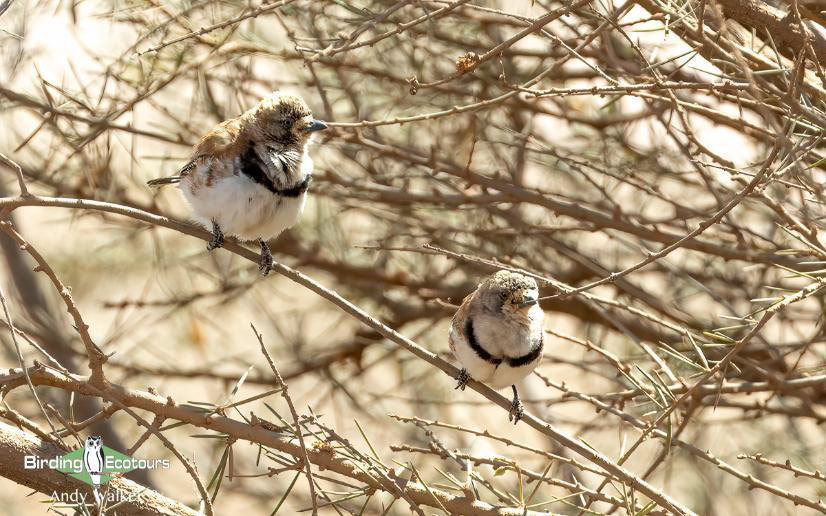
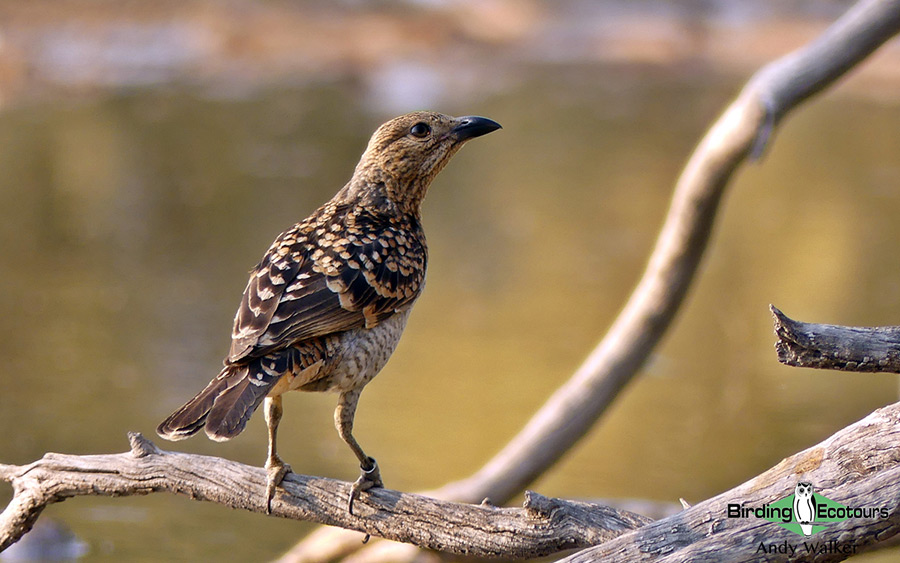
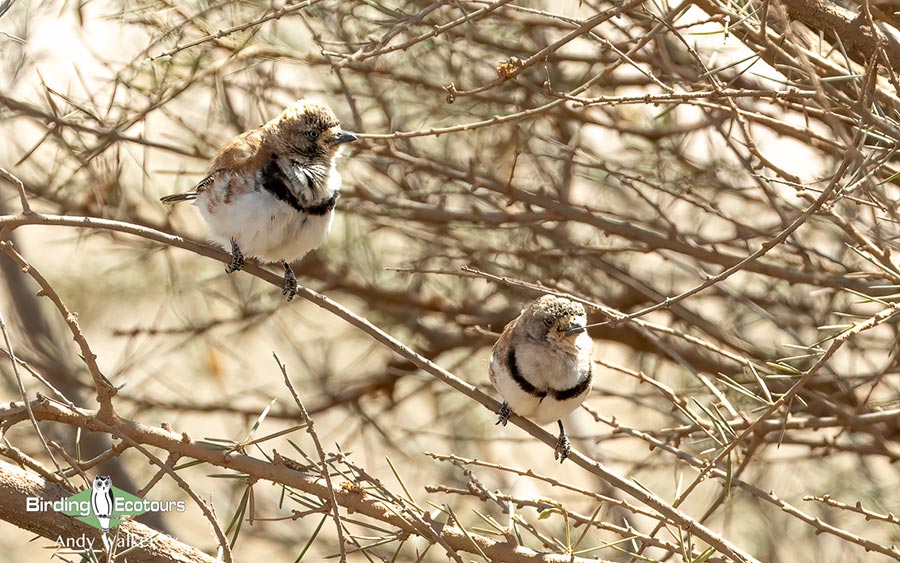
Banded Whiteface can be found in the Australian interior and we’ll look out for them in several locations, and they could be one of three whitefaces we see on the tour.
Day 8. Birding around Mungeranie
We will have a break from lots of driving today as we spend the whole day around Mungeranie, which lies northeast of Australia’s largest salt lake, the massive Lake Eyre. While we do not visit the lake, we will search for its namesake grasswren, the Eyrean Grasswren, a handsome species of tussock grasslands and sandhill canegrass. We will enjoy more wetland birding, as the local waterhole can be very productive, with the sought-after nomadic Flock Bronzewing possible, alongside many of the species listed as targets for the previous day. Away from the town, we will look for another rarely seen outback nomad, the Grey Falcon, along with Little Buttonquail, Gibberbird, Banded Whiteface, Chestnut-crowned Babbler, and the gorgeous Cinnamon Quail-thrush.
Overnight: Mungeranie
Day 9. Mungeranie to Birdsville
Today we have a fairly long drive ahead of us, skirting around the Simpson Desert as we head north to Birdsville, where we leave South Australia and cross into Queensland. We will make some key birding stops throughout the journey, most importantly for the attractive and elusive Grey Grasswren. This species is both localized and specialized on swamp floodplain habitat, yet this area on the Birdsville Track is one of the best places to see this iconic bird. Throughout the day we could encounter Australian Bustard, Flock Bronzewing, Little Corella, Gibberbird, Yellow Chat, and Black Honeyeater, while at the billabongs we pass there is a chance for top Australian waterbirds such as Australian Crake, Black-tailed Nativehen, and Red-necked Avocet. We end the day with a night in the desert town of Birdsville, one of outback Australia’s most well-known towns due to its remoteness, culture, and the beauty of the surrounding landscapes.
Overnight: Birdsville
Day 10. Birdsville to Boulia
We will start the day with some birding local to Birdsville. The billabong can be a highly productive site not just for waterbirds. Alternatively, should we want to try for Eyrean Grasswren or other outback species such as Pallid Cuckoo, Pied Honeyeater, and Red-browed Pardalote, we might travel into the edge of the Simpson Desert to the spectacular and well-named Big Red Sand Dune. We then depart north, heading to Boulia where we overnight, with some choice birding spots along the way. Top of our target list today is Letter-winged Kite, the beautiful ghostly outback nomad. These semi-colonial birds are often seen in groups, and Astrebla Downs National Park, which we pass by, is one of the best sites for them. Other top targets in this area include Banded Lapwing, Spotted Harrier, and Yellow Chat.
We will likely stop at the Cuttaburra and Georgina River crossings which are excellent for a high diversity of waterbirds and wetland species, including waterfowl, cormorants, ibis, spoonbills, with key species such as Brolga, Red-kneed Dotterel, Australian Pratincole, White-necked Heron, Horsfield’s Bronze Cuckoo, Black Falcon, and White-winged Triller.
Overnight: Boulia
Day 11. Boulia to Mount Isa
We continue our journey north, heading to the city of Mount Isa. We will stop near the town of Dajarra, where we will start to appreciate an interesting mix of eastern and northern species such as Spotted Bowerbird, Black-tailed Treecreeper, Grey-crowned Babbler, and Jacky Winter. Importantly however, we will also begin searching for Kalkadoon Grasswren, a much darker species than the other grasswrens targeted on the tour. On arrival in Mount Isa we will check in for a two-night stay, and, should time allow, we will make a start looking for the birds listed as targets under Day 12.
Overnight: Mount Isa
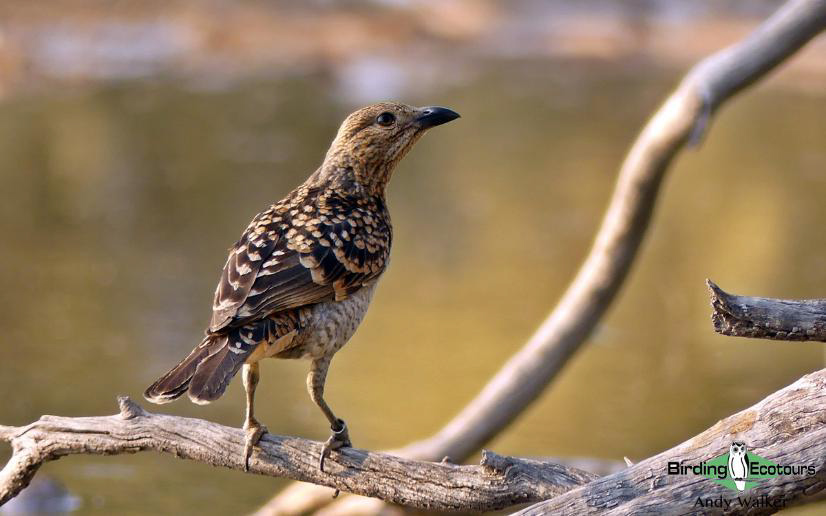
Spotted Bowerbird, along with several other targets on this tour are just found around Mount Isa and nearby areas, so we will look to maximize our birding here.
Day 12. Birding around Mount Isa
Mount Isa offers excellent birdwatching. The city is surrounded by savannah plains, rocky outcrops, spinifex grasslands, arid woodland, and many wetlands, including the huge Lake Moondarra. Here we search for two grasswrens, Kalkadoon Grasswren and the beautiful Carpentarian Grasswren, along with the gorgeous Spinifex Pigeon, and cryptic Spinifexbird. We will enjoy a full day birding around Mount Isa, and hope to encounter Red-winged Parrot, Varied Lorikeet, Red-backed Fairywren, Rufous-throated Honeyeater, Silver-crowned Friarbird, Black-chinned Honeyeater, Yellow-tinted Honeyeater, Grey-headed Honeyeater, Grey-fronted Honeyeater, Red-browed Pardalote, Little Woodswallow, and Paperbark Flycatcher.
The diversity of estrildid finches is incredible here, and we will look for Painted Finch, Double-barred Finch, Zebra Finch, Long-tailed Finch, Chestnut-breasted Mannikin, and, with luck, Pictorella Mannikin. We will also hope to encounter the endearing Purple-necked Rock-wallaby, a localized endemic to the rocky habitats in this region, and at night we may look for Spotted Nightjar.
Overnight: Mount Isa
Day 13. Mount Isa to Winton
Depending on our success with the grasswrens the previous day, we might opt for more birding around Mount Isa first thing. We then change direction, heading southeast for Winton. Stopping at Chinaman Creek Dam may produce Plumed Whistling Duck, Green Pygmy Goose, and other waterfowl, along with Black-necked Stork, Plumed Egret, Varied Lorikeet, and the Cloncurry subspecies of Australian Ringneck. We have a two-night stay in Winton, and from here we will enjoy some local night birding, targeting Spotted Nightjar and Australian Owlet-nightjar.
Overnight: Winton
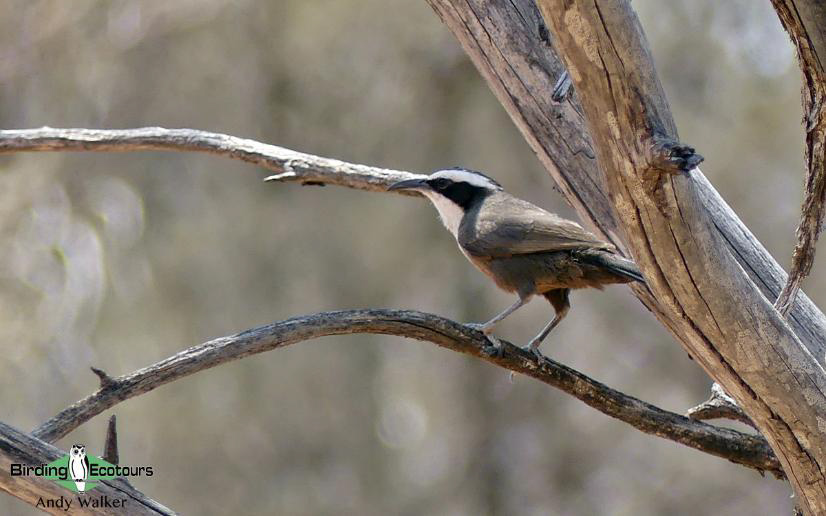
Hall’s Babbler has a small global range and we will target this species on this tour.
Day 14. Birding around Winton
Winton serves as the location of our final dedicated birding in the outback part of the tour, and it is set to be an exciting few days with several key outback specialists to target. Due south of Winton lies Opalton, named after the extensive opal deposits and home of the Opalton Grasswren, our eighth and final grasswren target of the tour. We will head south from Winton towards Opalton, exploring sandy plains, spinifex grasslands, lightly wooded acacia scrub, eucalypt-lined watercourses, and dunefields for species such as Bourke’s Parrot, Opalton Grasswren, Rufous-crowned Emu-wren, Hall’s Babbler, Chestnut-breasted Quail-thrush, Hooded Robin, Spinifexbird, Painted Finch, and with our best chance of seeing Grey Falcon. Closer to Winton, our targets may include Australian Bustard, Spinifex Pigeon, Banded Lapwing, Spotted Harrier, White-browed Woodswallow, Varied Sittella, Apostlebird, and Plum-headed Finch.
Overnight: Winton
Day 15. Winton to Hughenden
We will spend the morning targeting the species listed under Day 14. Many of the targets are nomadic or occur at low abundance, such as Grey Falcon and Bourke’s Parrot, so these species may take time to encounter. After checking out we head north for Hughenden for a one-night stay.
Overnight: Hughenden
Day 16. Hughenden to Cairns
Birding near Hughenden at first light we will start to see species widely distributed across eastern Australia, but new for the tour. These include Pheasant Coucal, Squatter Pigeon, Pale-headed Rosella, Blue-faced Honeyeater, Pied Currawong, and Torresian Crow. However, much of this day is set aside for driving north towards Cairns, although we will stop if we see anything exciting. Time dependent, we may visit the Mission Beach area on arrival into Cairns to try for the prehistoric Southern Cassowary, because it’s hard to drive past somewhere there is a chance to see this incredible bird!
Overnight: Cairns
Day 17. Cairns to the Cape York Peninsula
Our second major travel day sees us departing the city of Cairns and driving 250 miles (400 kilometers) to Musgrave, at the southern end of the Cape York Peninsula. We will spend much of the morning driving north, stopping should we see an interesting target such as Square-tailed Kite, and we may stretch our legs at one of the wetlands we pass for Magpie Goose or Sarus Crane. If we make good time, we will start birding in the Musgrave area targeting the species listed under Day 18, including one of Australia’s most localized, rare, and stunning endemics, the Golden-shouldered Parrot. We overnight in the Yarraden area for two nights.
Overnight: Yarraden
Day 18. Birding around Musgrave
We have the full day dedicated to birding the eucalypt savanna woodland of Musgrave, including a visit to the brilliant Artemis Station, and the vast Lakefield National Park. Our two main targets for the morning are both threatened on the IUCN Red List, Red Goshawk, one of Australia’s least known birds of prey, and the beautiful Golden-shouldered Parrot. This small area at the southern edge of the Cape York Peninsula is the best place in the world to see these rare species. Other top targets include the patchily distributed Black-breasted Buzzard, Channel-billed Cuckoo, Great Bowerbird, Silver-crowned Friarbird, Black-backed Butcherbird, and Masked Finch.
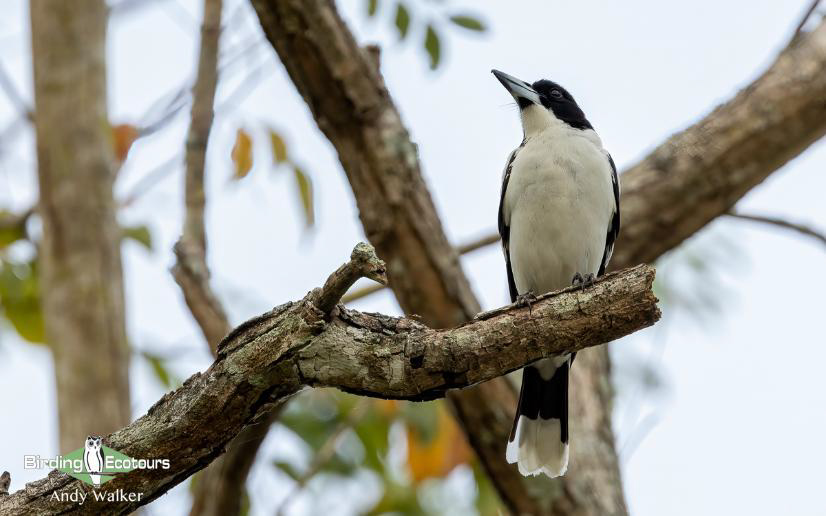
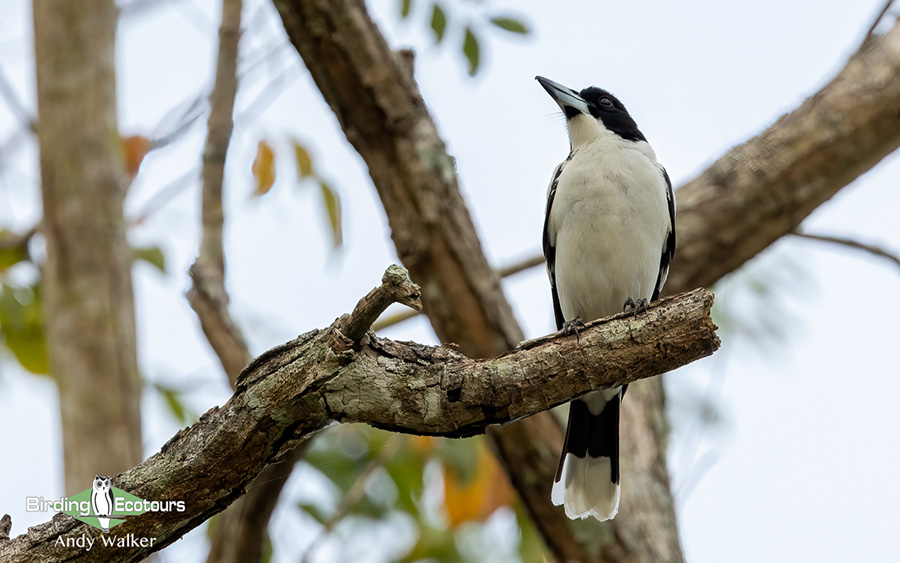
Black-backed Butcherbird can be found in the Cape York Peninsula.
At the extensive wetlands and the eucalypt and melaleuca (paperbark) woodlands of Lakefield National Park, we will target Spotted Whistling Duck, Radjah Shelduck, Green Pygmy Goose, Pied Heron, Blue-winged Kookaburra, Red-tailed Black Cockatoo, Rufous-banded Honeyeater, Bar-breasted Honeyeater, Brown-backed Honeyeater, Dusky Myzomela, Banded Honeyeater, Fairy Gerygone, Large-billed Gerygone, Green Oriole, and Lemon-bellied Flyrobin. The surrounding Nifold plains hold Brown Quail, Brolga, Star Finch, Black-throated Finch, plus Eastern Grass Owl if we stay until dusk.
Overnight: Yarraden
Day 19. Musgrave to Iron Range
We start the day with some local birding, then depart for Iron Range in the extreme northeast of Australia. This adventurous drive will take up most of the day and is enjoyable in itself, being mostly on dirt tracks through rainforest with many river crossings. On arrival we will check in to our final accommodation of the tour, where we are based for three nights as we explore some of Australia’s most secluded rainforest. We will start birding, targeting the incredible diversity listed under Days 20 and 21. While here we will also enjoy some night birding, targeting Marbled Frogmouth, Papuan Frogmouth, Large-tailed Nightjar, along with Common Spotted Cuscus and Green Tree Python.
Overnight: Iron Range
Day 20 – 21. Birding in the Cape York’s Iron Range National Park
Our final two full days will be spent immersing ourselves in Australia’s largest lowland tropical rainforest, the Iron Range National Park. This is a truly remarkable, untouched, and remote wilderness, where lush dense rainforest meets long sandy beaches and turquoise seas. Here we seek some of Australia’s most rarely seen species and enjoy birding many species-rich habitats, from mangroves, eucalypt woodlands, open savanna, paperbark swamps, wetlands, and rainforest.
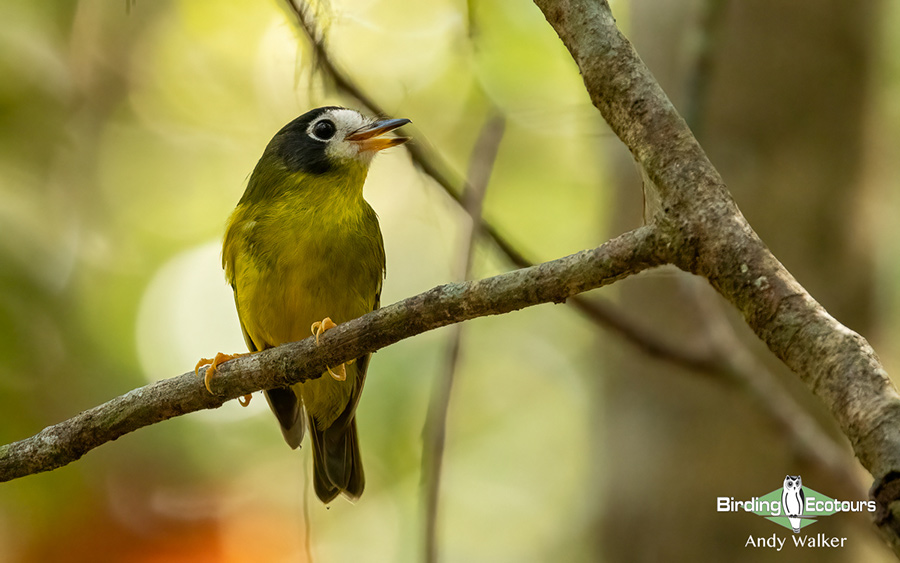
The Peninsula shares many species with New Guinea, offering birders a chance to get a flavor of the phenomenal diversity and uniqueness of Papua New Guinea alongside many special Australian species. Top of our list of targets are four Australian endemics, the cryptic Macleay’s Honeyeater, White-streaked Honeyeater, Frill-necked Monarch, and Northern Scrub Robin, which are only found in the rainforests and woodlands of the northern Cape York Peninsula.
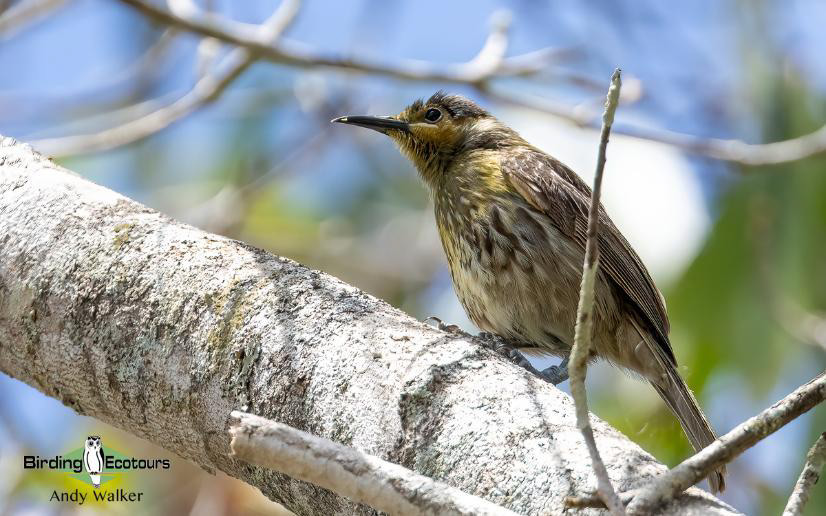
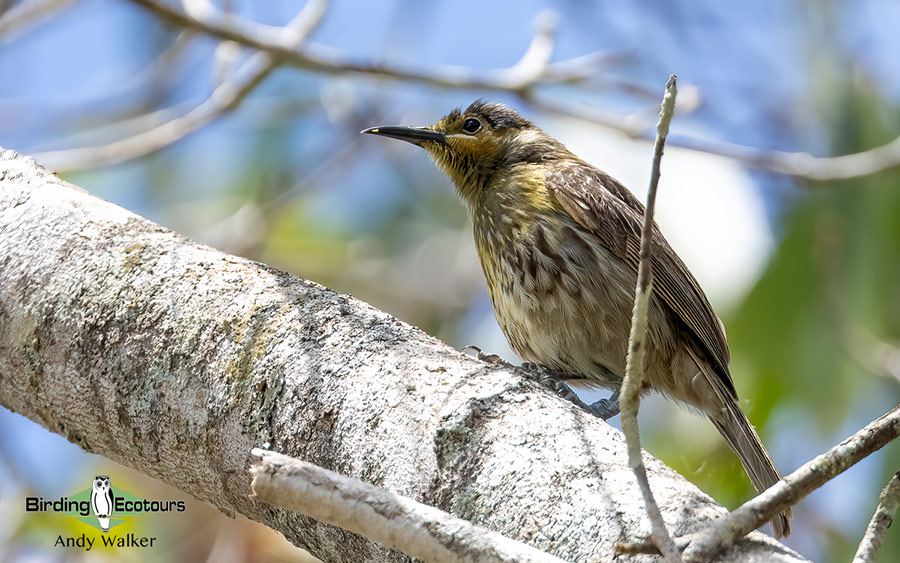
Macleay’s Honeyeater is one of several attractive honeyeaters found in the region.
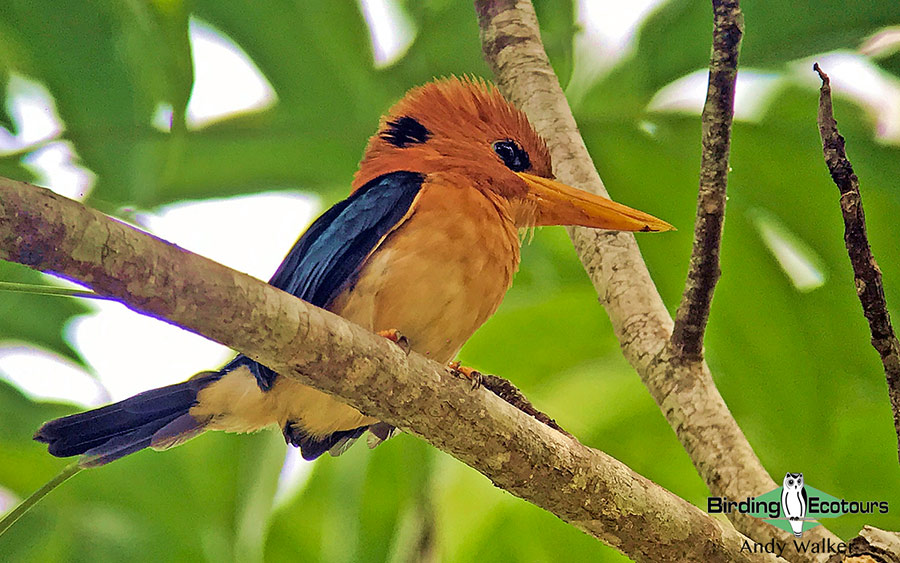
Many species more widely distributed in New Guinea are otherwise only found in this small region of Australia, including Yellow-billed Kingfisher, Palm Cockatoo, Papuan Eclectus, Red-cheeked Parrot, Papuan Pitta, Black-eared Catbird, Fawn-breasted Bowerbird, Green-backed Honeyeater, Tawny-breasted Honeyeater, Graceful Honeyeater, Tropical Scrubwren, Trumpet Manucode, Magnificent Riflebird, Yellow-legged Flyrobin, and White-faced Robin. We visit in the dry season, which has the added benefit of coinciding with the breeding season of migrants visiting from New Guinea, such as the stunning Black-winged Monarch.
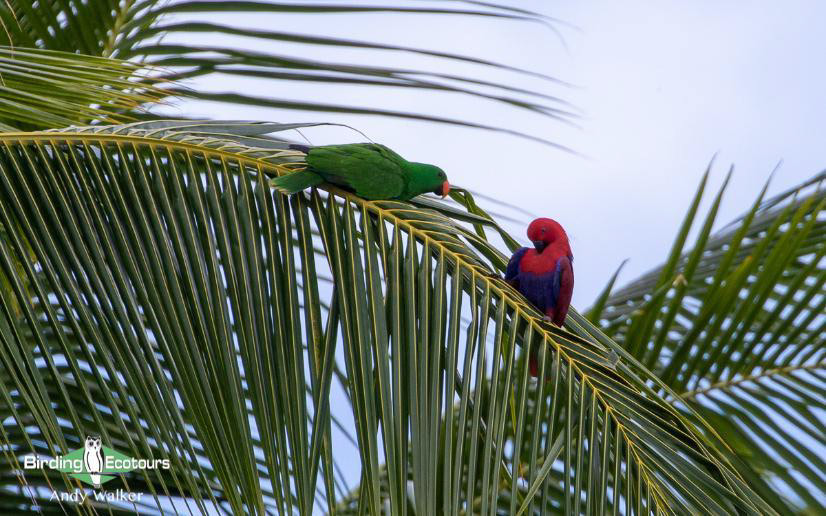
Papuan Eclectus can be found on the Cape York Peninsula. Interestingly, the female is the more colorful of the pair, with the male being more drab.
This is a great area to explore, and there are many of Australia’s rainforest species which can be found here, such as Southern Cassowary, Orange-footed Scrubfowl, Superb Fruit Dove, Chestnut-breasted Cuckoo, (maybe an early returning migrant Buff-breasted Paradise Kingfisher), Double-eyed Fig Parrot, Noisy Pitta, Lovely Fairywren, Yellow-spotted Honeyeater, Varied Honeyeater, Yellow-breasted Boatbill, Black Butcherbird, Grey Whistler, Spectacled Monarch, Black-faced Monarch, White-eared Monarch, Shining Flycatcher, White-browed Robin, and Agile Wallaby.
Overnight: Iron Range
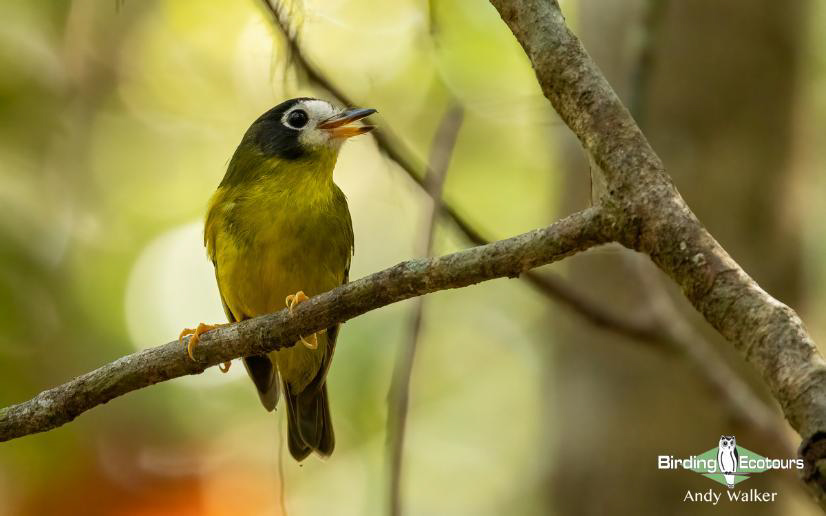
White-faced Robin is a rather cute special bird of the Cape York Peninsula.
Day 22. Tour concludes with flight from Cairns
A non-birding day with a morning flight from Lockhart River Airport on the Cape York Peninsula to Cairns Airport, where the tour ends.
Overnight: Not included.
Please note that the itinerary cannot be guaranteed as it is only a rough guide and can be changed (usually slightly) due to factors such as availability of accommodation, updated information on the state of accommodation, roads, or birding sites, the discretion of the guides, and other factors. In addition, we sometimes have to use a different guide from the one advertised due to tour scheduling or other factors.