12–23 May 2026
By Eduardo Ormaeche
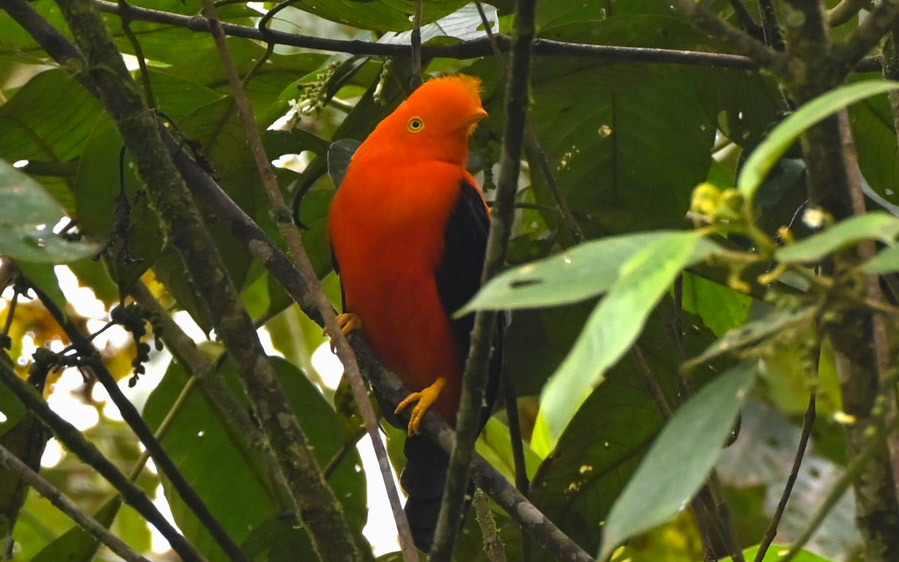
Andean Cock-of-the-rock, Peru’s national bird, showed well for us (photo by Margaret Gomez).
Overview
During the latter half of May 2026, I had the opportunity to organize, lead, and accompany a private group of friends with whom I had previously traveled in Ecuador and Brazil. This time, however, our journey took us through a region of my home country, Peru, that holds a special place in my heart. Northern Peru has been one of Birding Ecotours’ flagship destinations for more than two decades, offering some of the finest birding and the highest levels of endemism anywhere in South America.
The primary goal of this tour was to experience the remarkable avian and natural diversity that northern Peru has to offer. At the same time, it provided an opportunity to explore the country’s rich archaeological and historical heritage, particularly along the north coast, while also enjoying some of the finest examples of Peru’s world-renowned cuisine.
As has become customary with Birding Ecotours, the trip was a resounding success, running with the precision of a Swiss watch and even benefiting from favorable weather throughout. The true highlight, however, was the wonderful group of participants. Having traveled together on numerous adventures, they shared a strong sense of camaraderie, an unwavering enthusiasm, and a genuine passion for exploration. Their positive attitude and good humor ensured that every day of the tour was as enjoyable as it was rewarding.
Throughout the tour, we recorded an impressive total of 312 bird species, including a number of Peruvian endemics and globally threatened species. Among these were 40 species of hummingbirds, and 41 species of tanagers and allies, highlighting the extraordinary diversity found across the Andes and the Alto Mayo region.
Some of the most memorable birds encountered during the trip included the endemic Peruvian Plantcutter, the majestic Andean Condor, the spectacular Marvelous Spatuletail, Lulu’s Tody-Tyrant, Bar-winged Wood Wren, Chestnut Antpitta, and the highly sought-after Long-whiskered Owlet. Hummingbird highlights included the dazzling Rufous-crested Coquette, Wire-crested Thorntail, and the unmistakable Sword-billed Hummingbird. Other standout sightings included White-capped Dipper, Rufous-breasted Wood Quail, Uniform Crake, Rufous-sided Crake, Oilbird, Paradise Tanager, Hoatzin, Golden-headed Manakin, and Long-tailed Potoo, among many others.
A short post-tour extension along the coast of Lima provided excellent views of several iconic species of the Humboldt Current ecosystem. Highlights included Humboldt Penguin, Inca Tern, Blue-footed Booby, Guanay Cormorant, Red-legged Cormorant, Peruvian Pelican, and the localized Surf Cinclodes, providing a fitting conclusion to an already outstanding journey through Peru.
We invite you to read through our tour report, whether you are considering a future journey along this remarkable route, looking for inspiration on how to combine world-class birding with culture and history, or simply wishing to relive an adventure filled with memorable wildlife encounters, great food, and good company.
A detailed daily account can be read below, and the various species lists are located at the end of the report.
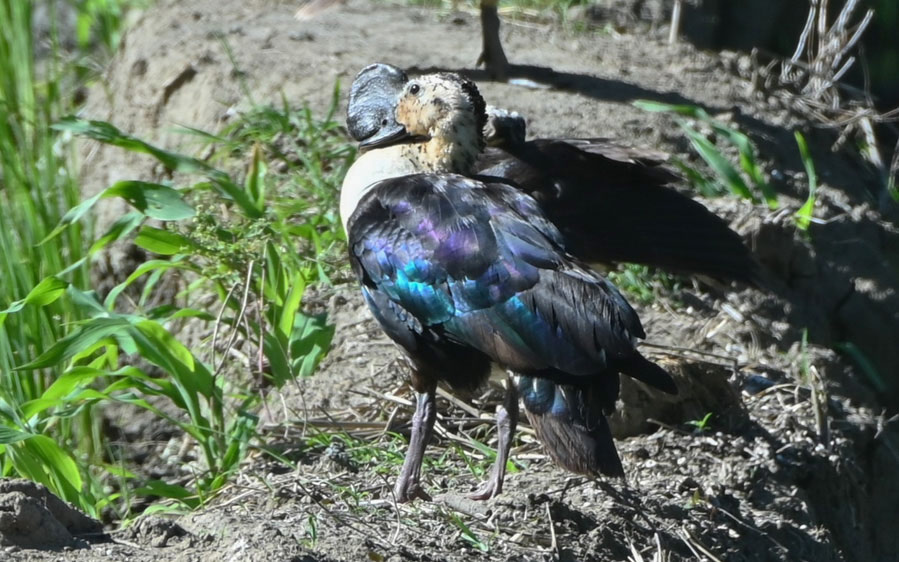
Comb Duck showed very well along the drive to Jaén (photo by Margaret Gomez).
Detailed Report
Day 1, 12th May 2026. Visit Pantanos de Villa and flight to Chiclayo
We began our journey with a visit to Villa Marshes, a wetland reserve in the southern Lima district of Chorrillos, just a short drive from Miraflores, where we were staying. One of Lima’s premier birding hotspots, the reserve is designated as a Ramsar Wetland of International Importance and provides a vital refuge for migratory birds along the Pacific Flyway, while also supporting a rich community of resident species.
Despite being surrounded by the urban sprawl of Lima, the abundance of birdlife makes a visit to Villa Marshes highly rewarding. Upon arrival, we headed straight to Playa Villa, where we observed a variety of coastal species, including Kelp Gull, Grey-hooded Gull, Grey Gull, Franklin’s Gull, and Belcher’s Gull. The latter, formerly known as Band-tailed Gull, commemorates the 19th-century British naval officer and explorer Sir Edward Belcher, who conducted important survey work along the Pacific coast of South America.
Other notable sightings included American Oystercatcher, Hudsonian Whimbrel, Black Skimmer, and our first Inca Terns of the trip. The group was immediately captivated by remarkably close views of this spectacular species, often regarded as one of the world’s most beautiful terns. With their elegant white mustaches, bright red bills, and striking plumage, the Inca Terns quickly became an early favorite among the participants.
Additional species recorded in the area included Cabot’s Tern, Neotropic Cormorant, Little Blue Heron, Snowy Egret, Great Egret, Peruvian Pelican, Killdeer, Black-necked Stilt, Common Gallinule, White-cheeked Pintail, Cinnamon Teal, West Peruvian Dove, Spotted Sandpiper, Willet, Stilt Sandpiper, Black Vulture, and Turkey Vulture. We also recorded our first Guanay Cormorant of the trip, seen flying distantly offshore.
One of the morning’s most unexpected highlights came when the group discovered a pair of Peruvian Thick-knees. Although this species is occasionally encountered in the area, it is never guaranteed, making the sighting a pleasant surprise and a rewarding addition to our growing trip list.
From the beach, we continued to the area known as Laguna Mayor, where a new suite of wetland birds awaited us. Among the highlights was the impressive Great Grebe, along with species such as Andean Coot, Pied-billed Grebe, Yellow-crowned Night Heron, Harris’s Hawk, Vermilion Flycatcher, Scrub Blackbird, Blue-and-white Swallow, and Southern House Wren.
The marsh vegetation also held a few of the reserve’s more specialized inhabitants. The elusive Wren-like Rushbird eventually revealed itself, although only briefly and never in the open for long. Similarly, the colorful Many-colored Rush Tyrant proved surprisingly shy, offering only a couple of fleeting views before disappearing back into the dense reedbeds.
We then made our way back to Miraflores, where we enjoyed lunch at La Huaca, a renowned restaurant located within the archaeological complex of Huaca Pucllana. This remarkable site consists of adobe pyramids and ceremonial structures built by the Lima Culture, which flourished along Peru’s central coast between the 3rd and 8th centuries AD. Offering outstanding views over the ancient ruins, the restaurant provided the perfect setting for our first introduction to Peru’s celebrated cuisine. The group thoroughly enjoyed a variety of exceptional dishes, with favorites including the classic Peruvian ceviche, a delicate fish tiradito served with huancaína sauce, and the ever-popular seafood tacu-tacu. The combination of history, archaeology, and world-class gastronomy made for a memorable and distinctly Peruvian experience.
Following lunch, we transferred to Lima’s airport for our flight north to the city of Chiclayo, gateway to some of Peru’s most fascinating archaeological treasures and the rich mosaic of habitats that characterize the country’s northern birding circuit. Upon arrival, we settled into our hotel and prepared for the exciting days ahead.
Day 2, 13th May 2026. Sipán Museum and Huaca Rajada Archaeological Site
Today was devoted entirely to exploring the archaeological site of Sipán at Huaca Rajada and the impressive Royal Tombs of Sipán Museum in the nearby city of Lambayeque. This was a day that Robert, one of our participants, had been eagerly anticipating. He first learned about this extraordinary discovery shortly after it was announced in 1987 and had long dreamed of seeing it for himself.
The discovery of the tomb of the Lord of Sipán is widely regarded as one of the most important archaeological finds ever made in the Americas. The tomb belonged to a powerful Moche ruler, a religious and military leader from a civilization that flourished along Peru’s northern coast between the 4th and 8th centuries AD. Buried alongside him were extraordinary treasures crafted from gold, gilded copper, turquoise, spondylus shell, and lapis lazuli stones, as well as the remains of attendants and companions intended to accompany him into the afterlife. Many of these remarkable artifacts have been displayed in temporary exhibitions throughout the United States and Europe, helping to establish the Lord of Sipán as one of Peru’s most iconic archaeological discoveries.
The day proved both fascinating and educational, offering a deeper appreciation of the rich cultural heritage of northern Peru. It also provided another opportunity to sample the region’s outstanding cuisine. Local specials such as seco de cabrito, sudado de mero, and tortilla de raya were thoroughly enjoyed by the group, while our lunch at the renowned Fiesta Restaurant became yet another culinary highlight of the tour.
Although birding was not the focus of the day, we still managed to record a few species during our explorations, including Fasciated Wren, Pacific Hornero, and Gray-breasted Martin. The real birding, however, was only about to begin.
Day 3, 14th May 2026. Bosque de Pómac and transfer to Salas
We started the day well before sunrise as we made our way to the Bosque de Pómac Historical and Ecological Sanctuary, one of the last significant remnants of native Algarrobo woodland (Prosopis pallida) remaining along Peru’s northern coast. This mesquite species is an important component of the region’s dry forest ecosystem but is increasingly threatened by illegal logging for charcoal production and the ongoing conversion of forested land to agriculture.
Arriving early allowed us to enjoy the cool morning temperatures while preparing breakfast and beginning our first birding session of the day. Among the species encountered were Scarlet-backed Woodpecker, Streak-headed Woodcreeper, White-edged Oriole, and the often-elusive Necklaced Spinetail, which proved particularly challenging. Despite repeated efforts, it took quite some time before everyone finally enjoyed satisfying views of this dry-forest specialist. Other birds recorded during the morning included Long-tailed Mockingbird, Pacific Hornero, Collared Antshrike, Southern Beardless Tyrannulet, Superciliated Wren, and Baird’s Flycatcher.
As the morning progressed, we continued adding new species to our list, many of them representatives of the unique Tumbesian Endemic Bird Area, a region encompassing northern coastal Peru and southwestern Ecuador. These dry forests harbor a remarkable concentration of endemic and near-endemic species found nowhere else on Earth, making them one of South America’s most important centers of avian diversity.
Among other species were Golden-olive Woodpecker, White-tailed Jay, Peruvian Pygmy Owl, Pacific Parrotlet, Snowy-throated Kingbird, Lineated Woodpecker, and Bananaquit. The birding was complemented by our first mammal sightings of the tour, both characteristic inhabitants of the Tumbesian region: the attractive Guayaquil Squirrel and the elusive Sechuran Fox, whose appearance added an extra dimension to an already rewarding morning in the dry forest.
We then moved to another sector of the sanctuary, where a new set of Tumbesian specials awaited us. Here we enjoyed excellent views of the near-endemic Tumbes Swallow, along with Plumbeous-backed Thrush, Cinereous Finch, Amazilia Hummingbird, Common Tody-Flycatcher, Blue-black Grassquit, White-browed Gnatcatcher, (a recent split from Tropical Gnatcatcher) and Croaking Ground Dove. An unexpected highlight came when a flock of six Wood Storks appeared soaring high overhead, following the course of the La Leche River. Their graceful flight against the clear morning sky provided a memorable spectacle and a striking contrast to the smaller dry-forest birds that had kept us occupied throughout the morning.
It was not long before we encountered one of the day’s principal targets, the endemic and Vulnerable Peruvian Plantcutter. This unique species belongs to the genus Phytotoma, a fascinating group that, for much of the 20th century, was placed in its own family, Phytotomidae. Only with the advent of modern genetic studies in the early 21st century was it shown to be closely related to the cotingas and subsequently incorporated into that family. Owing to its restricted range and ongoing habitat loss throughout the Tumbesian region, it remains one of northern Peru’s most sought-after endemics. Fortunately, our search was brief, and we were rewarded with outstanding views of both a male and a female. The strikingly plumaged male was particularly impressive and quickly became one of the morning’s most celebrated sightings.
By midday, we reluctantly left Bosque de Pómac and returned to Lambayeque for what would be our final gourmet lunch for some time. We chose to fully enjoy the celebrated cuisine of northern Peru, knowing that during the coming week our meals at the various ecolodges would be wholesome, tasty, and home-cooked, but considerably simpler in style. With that in mind, the group wasted no time taking full advantage of the opportunity at Restaurante Pacifico.
After lunch, full and satisfied, we prepared for the drive to the town of Salas, located approximately 42 miles (68 kilometers) north of Lambayeque. What should have been a relatively straightforward journey turned into a long and somewhat tedious drive due to heavy traffic along the route.
Upon arrival, we checked into the charming Faiques Lodge, where our host Manuel welcomed us warmly and ensured that we were well taken care of throughout our stay. The evening, however, still had one final surprise in store. A short nocturnal outing produced excellent views of West Peruvian Screech Owl.
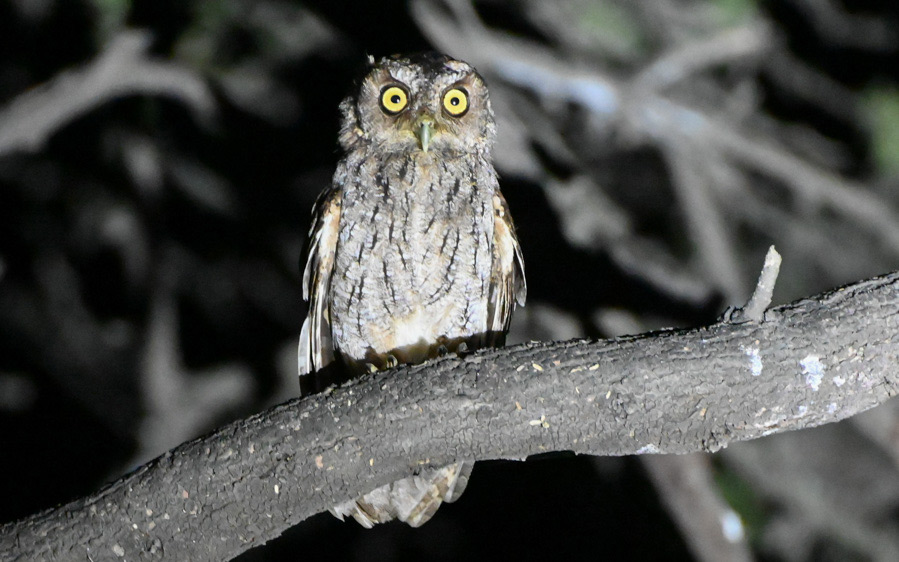
West Peruvian Screech Owl photographed at Los Faiques Lodge (photo by Margaret Gomez).
Day 4, 15th May 2026. Los Faiques Lodge and transfer to Jaén via Abra Porculla
Today was planned primarily as a travel day as we made our way toward the city of Jaén, where we would spend the night before continuing to Abra Patricia the following day. Since extensive birding was not part of the schedule, we allowed ourselves a slightly later start, taking time to enjoy breakfast and appreciate the wooded surroundings of the lodge before departure.
A leisurely walk around the property before breakfast nevertheless produced a number of excellent sightings. Among the highlights were Striped Cuckoo, Peruvian Pygmy Owl, Scarlet-backed Woodpecker, Streak-headed Woodcreeper, Pacific Parrotlet, Baird’s Flycatcher, and Superciliated Wren.
As we crossed Abra de Porculla, the lowest mountain pass in Peru at 7,011 feet (2,137 meters), we entered the famed Huancabamba Depression, the lowest section of the Andean cordillera. Here we saw Elegant Crescentchest, Three-banded Warbler, Tumbesian Tyrannulet, Ash-breasted Sierra Finch, Variable Hawk, Sparkling Violetear, and Amazilia Hummingbird. Further down the road we had views of Bare-faced Ground Dove and the endemic Spot-throated Hummingbird; however our attention soon shifted skyward when a large silhouette appeared gliding effortlessly across the brilliant blue sky. Almost instantly, a chorus of excited voices rang out: “Condor!”
An adult male Andean Condor drifted low overhead, providing spectacular views as it soared above us before gradually disappearing into the distance. It was a truly special moment for the entire group, and particularly for Eric, who thoroughly enjoyed the encounter. For me personally, the sighting was equally remarkable, as I had not recorded an Andean Condor at this locality in nearly twenty years of visiting the area. One of the largest flying birds in the world, the Andean Condor remains an enduring symbol of the Andes and serves as the national bird of Chile, Bolivia, Colombia, and Ecuador.
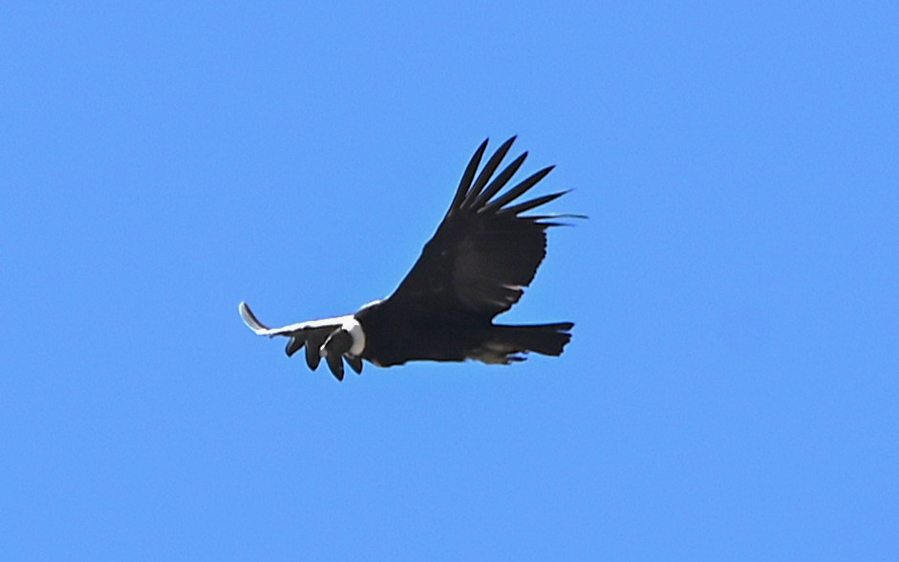
Andean Condor flying above the Porculla Pass (photo by Margaret Gomez).
Later, upon arriving in Jaén, we checked into our hotel and retired to our rooms for a well-earned rest.
Day 5, 16th May 2026. Bosque de Yanahuanca via Huembo Hummingbird Center
Another early start took us to the Yanahuanca Private Reserve, a relatively recent addition to the northern Peru birding circuit that has gained increasing attention among birdwatchers over the past several years. The reserve protects an important tract of native Marañón dry forest, a highly distinctive ecosystem that supports a number of localized and range-restricted species. Unfortunately, our time here was limited, as we still faced a long journey to Abra Patricia later in the day. Nevertheless, the reserve quickly rewarded us with an excellent selection of birds. Among the highlights were Streaked Saltator (race peruvianus), Chivi Vireo, Drab Seedeater, Saffron Finch, Maranon Gnatcatcher, Sooty-crowned Flycatcher, Fulvous-faced ScrubTyrant (a recent split from Tawny-crowned Pygmy Tyrant), Purple-throated Euphonia, Northern Slaty Antshrike (race leucogaster), Ecuadorian Ground Dove, White-tipped Dove, Common Squirrel Cuckoo, Golden-olive Woodpecker, Cordilleran Parakeet, a recently recognized split from Scarlet-fronted Parakeet, and Rufous-fronted Thornbird (race peruvianus). One species that particularly captured our attention was the regional Maranon Crescentchest, a highly sought-after special of this unique valley system. Unfortunately, it proved uncooperative during our visit. We heard a single distant vocalization, but despite our efforts the bird remained hidden.
We then continued our journey, crossing the mighty Marañón River and entering the department of Amazonas. A strategic stop at a series of rice fields produced one of the day’s most enjoyable surprises: three Comb Ducks, including a magnificent adult male that posed beautifully for photographs. The sighting once again brought a big smile to Eric’s face, as this striking species had been high on his wish list. A short distance farther along, we encountered three Limpkins, which provided excellent views. Although widespread elsewhere in the neotropics, the species is not especially common in the rice-growing areas around Bagua, making the sighting a welcome addition to our day. After another brief stop in the town of Pedro Ruiz, we finally arrived at Huembo, home to one of Peru’s most celebrated endemics: the spectacular Marvelous Spatuletail. From Huembo, we still had a little over an hour’s drive ahead of us before finally reaching Owlet Lodge, our home for the next four nights.
Day 6, 17th May 2026. Owlet Lodge and Marvelous Spatuletail
We were up very early the following morning as we made our way back to Huembo to visit a private garden nearby. In recent months, Marvelous Spatuletail had become increasingly difficult to find at the traditional hummingbird feeding station in Huembo, while two individuals had been visiting this alternative location on a regular basis. As always, our goal was to maximize our chances of connecting with every key target species, so the decision to visit the garden first thing in the morning was an easy one. Once there, we settled in comfortably in front of the feeders and began enjoying a steady stream of hummingbird activity. Among the species visiting the flowers and feeders were Sparkling Violetear, Lesser Violetear, Violet-fronted Brilliant, White-bellied Hummingbird, Bronzy Inca, and the diminutive Little Woodstar. Particularly noteworthy was the Little Woodstar, generally considered the world’s third-smallest species in the hummingbird family. We also enjoyed a few encounters with the less frequently seen Purple-throated Sunangel. Then came the moment everyone had been waiting for. The “Marvelous One” finally appeared: the highly sought-after endemic Marvelous Spatuletail. For many participants, this extraordinary hummingbird was the single most important reason for joining the tour, and it certainly did not disappoint.
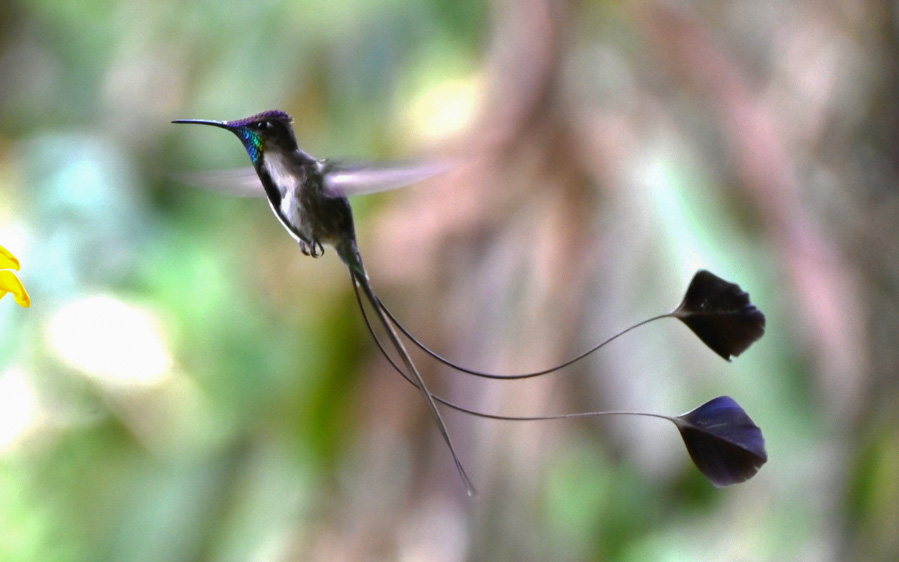
Marvelous Spatuletail, a stunning endemic of northern Peru (photo by Margaret Gomez).
After spending some quality time with the hummingbirds, we returned to Owlet Lodge for lunch and a well-deserved rest before preparing for one of the most anticipated events of the tour: a nocturnal excursion in search of the legendary Long-whiskered Owlet. It is worth noting that throughout our stay at the lodge, we spent time observing the hummingbird feeders at various times of day, and they consistently provided outstanding entertainment. Regular visitors included Chestnut-breasted Coronet, Collared Inca (race margaretae), Emerald-bellied Puffleg, Bronzy Inca, White-bellied Woodstar, Speckled Hummingbird, Fawn-breasted Brilliant, and the relatively uncommon Rufous-vented Whitetip. The undisputed highlight, however, was the incredible Sword-billed Hummingbird, famous for possessing the longest bill relative to body length of any bird in the world.
As evening approached, we began our hike along the lodge trails toward the habitat of the legendary Long-whiskered Owlet. Bird activity was rather slow along the way, with only a handful of sightings, including Cinnamon Flycatcher and Saffron-crowned Tanager. Nevertheless, the relative quiet of the forest would soon give way to one of the most extraordinary wildlife encounters of the entire tour.
Our excitement soared when, right along the trail, we encountered a family group of the endemic Yellow-tailed Woolly Monkey. This was an exceptional sighting and one that few visitors to the Peruvian Andes are fortunate enough to experience. We enjoyed prolonged and remarkably close views as the monkeys moved slowly through the canopy, before gradually disappearing into the forest. The Yellow-tailed Woolly Monkey is one of the world’s rarest primates and is currently classified as Critically Endangered. Today, it survives only in the humid montane forests of the Peruvian departments of Amazonas, San Martín, and La Libertad. The species was first described in 1812 by Alexander von Humboldt, based on a skin being used as a saddle pad by a local farmer. For more than a century, it was believed to be extinct until three specimens were collected in 1926, bringing the species back to the attention of the scientific community.
Once we reached the appropriate area and darkness had fully settled over the forest, the real challenge began. Without the aid of spotlights or thermal imaging equipment, and relying solely on experience, patience, and careful listening, Roberto and I began searching for one of Peru’s most enigmatic birds. After a period of intense concentration, we finally located the legendary Long-whiskered Owlet perched beside the trail. The reward was immense. One by one, our participants enjoyed excellent views of this extraordinary species, a bird many dedicated birders spend years dreaming of seeing. The group had approached the challenge with remarkable determination, fully appreciating the significance of the species and willingly enduring a demanding hike in pursuit of one of the world’s most coveted owls.
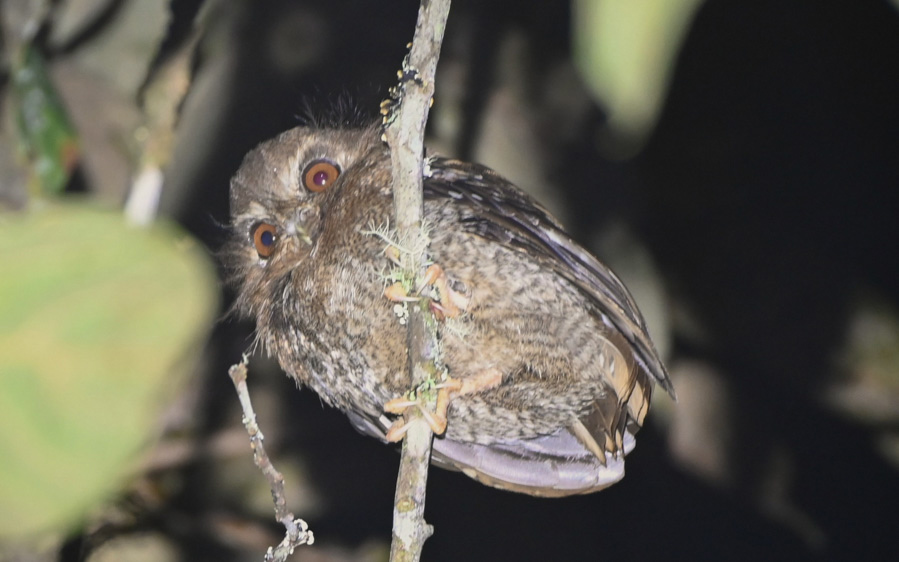
An enigmatic Long-whiskered Owlet in the Abra Patricia mountains (photo by Margaret Gomez).
As we finally began our walk back to the lodge, it was difficult not to reflect on the extraordinary day we had just experienced. How many people can honestly say they saw Marvelous Spatuletail, Yellow-tailed Woolly Monkey, and Long-whiskered Owlet all in the same day? Very few, if any. It was one of those rare days in the field when everything comes together perfectly – a day that will remain etched in our memories for many years to come. Enjoy the Malbec, folks!
Day 7, 18th May 2026. Owlet Lodge
Another morning dawned in the cloud forests of Abra Patricia, and as we made our way toward the dining room before breakfast, we were unexpectedly stopped by a familiar sound overhead. Looking up into the pre-dawn sky, we were treated to the silhouettes of Rufous-bellied Nighthawks flying above us while delivering their distinctive dawn calls. After breakfast, we enjoyed an outstanding encounter with the endemic Chestnut Antpitta at one of the lodge’s feeding stations. Throughout our stay at Owlet Lodge, a mixed-species feeding flock regularly moved through the forest surrounding the dining area, providing excellent birding opportunities between meals and often right from the lodge itself.
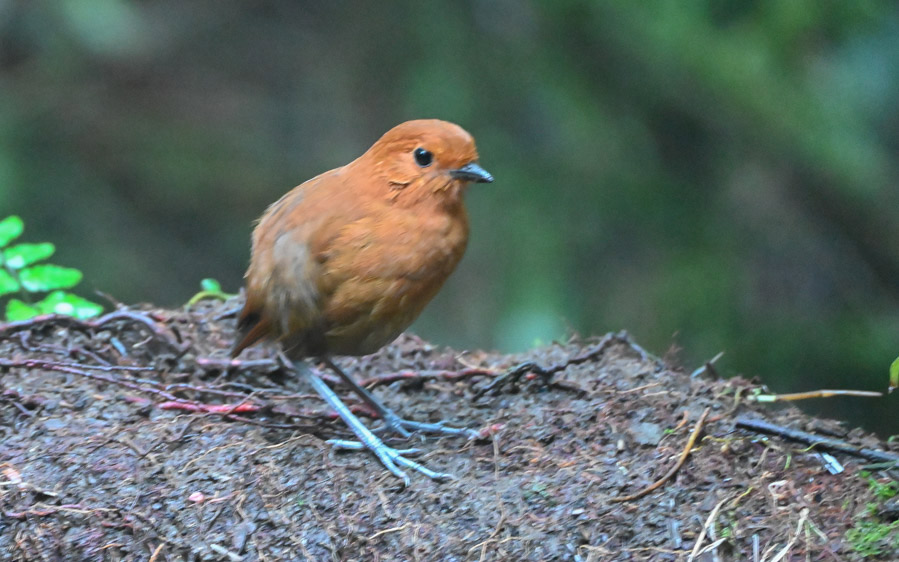
The endemic Chestnut Antpitta at the feeders of Owlet Lodge (photo by Margaret Gomez).
Among the species most frequently encountered were Saffron-crowned Tanager, Beryl-spangled Tanager, Blue-and-black Tanager, Flame-faced Tanager (represented here by the endemic race urubambae), Montane Woodcreeper, Bluish Flowerpiercer, Silver-backed Tanager, Pale-edged Flycatcher, Blue-capped Tanager, and Common Chlorospingus. The birding continued with sightings of Spectacled Whitestart, Peruvian Tyrannulet, Streak-necked Flycatcher, and Barred Becard. One particularly noteworthy observation was the silhouette of a Scaly-naped Amazon flying high above the cloud forests of Abra Patricia. This species is of special interest because it is the only member of the genus Amazona that regularly occurs at elevations approaching 6,561feet (2,000 meters) above sea level.
Additional sightings throughout the day included Band-tailed Pigeon, Smoke-colored Pewee, Masked Flowerpiercer, Sierran Elaenia, Metallic-green Tanager, White-rumped Hawk, White-capped Dipper, White-collared Jay, Montane Cacique (race peruvianus), Yellow-throated Tanager, the endemic Inca Flycatcher, and Golden-eyed Flowerpiercer.
Only a few participants managed brief views of the elusive Tawny-bellied Hermit, but there were much better encounters with the near-endemic and range-restricted Bar-winged Wood Wren, one of the most sought-after specials of the region. Another crowd favorite was the charming Peruvian Racket-tail, whose distinctive tail streamers and energetic behavior never fail to impress.
The grand finale, however, belonged to another of northern Peru’s most celebrated specials: the near-endemic and highly range-restricted Royal Sunangel. We were rewarded with superb views of a male feeding quietly among the flowers, its iridescent plumage catching the sunlight and glowing with remarkable brilliance. The sight of this stunning hummingbird, illuminated by the morning sun, was nothing short of spectacular and quickly became one of the day’s defining highlights.
During the afternoon, we explored a trail adjacent to the lodge. Once again, bird activity was noticeably subdued, a common occurrence in cloud forests during certain periods of the day. Despite our efforts, encounters were relatively few, although the forest itself remained as beautiful and atmospheric as ever. One species that captured our attention was the Golden-headed Quetzal. We heard its distinctive calls echoing through the forest several times and searched diligently for the bird, but it ultimately chose to remain hidden in the dense canopy.
Day 8, 19th May 2026. Owlet Lodge and Afluente
This morning, we once again enjoyed the mixed-species flock that regularly visited the area around the dining room. Although many of the birds had become familiar companions during our stay, the flock still produced a few welcome additions, including the beautiful Grass-green Tanager, Drab Hemispingus, and Capped Conebill.
After breakfast, we traveled to a locality outside the protected area in search of another of Amazonas’ most celebrated endemic birds. Before long, we were rewarded with excellent views of Lulu’s Tody-Flycatcher, a tiny and highly localized species that has become one of the flagship birds of northern Peru.
The species was named in honor of Lulu May von Hagen in recognition of her generous and dedicated support of research in avian genetics. It has also been known as Johnson’s Tody-Tyrant, commemorating Ned Johnson, one of the ornithologists involved in its description, who passed away a little over a decade ago. Personally, I have always preferred the name Lulu’s Tody-Flycatcher, as it seems to give the bird a bit more personality and individuality. Fortunately, this is now the name adopted by both the IOC World Bird List and BirdLife International’s Handbook of the Birds of the World. Whatever name one prefers, there is no denying that this delightful little flycatcher is one of the most sought-after endemic species in northern Peru, and the excellent views we obtained were greatly appreciated by the entire group.
We then continued to the Venceremos sector, one of the classic birding areas along the Abra Patricia road. Here we enjoyed a series of excellent sightings, beginning with Peru’s national bird, the magnificent Andean Cock-of-the-rock. A male of the northern race aequatorialis provided stunning views right beside the road, allowing everyone ample time to admire its brilliant coloration and distinctive shape.
Other noteworthy species encountered throughout the day included Subtropical Cacique, Ornate Flycatcher, Rufous-tailed Tyrant, Cliff Flycatcher (race sclateri), Masked Trogon, Orange-eared Tanager, Three-striped Warbler, Slaty Antwren, Greenish Puffleg, Magpie Tanager, Olive-chested Flycatcher, Gray-breasted Wood Wren, White-eyed Parakeet, Swallow-tailed Kite, Russet-backed Oropendola, Purple Honeycreeper, and Spotted Tanager.
Perhaps the most celebrated bird of the day, however, was the striking Vermilion Tanager. This beautiful species has a relatively restricted distribution, occurring primarily in northern Peru and Ecuador, with a few records extending into southern Colombia around the Mocoa region. Its brilliant crimson plumage and localized range make it one of the most desirable specials of the northern Andean foothills, and our views were greatly appreciated by the group.
Back at the lodge, we enjoyed a brief rest before setting out once more after dark to explore the trails around Owlet Lodge. Night had fallen over the cloud forest, and the atmosphere was filled with anticipation as we searched for some of the region’s most elusive nocturnal wildlife. The cool mountain air, the sounds of insects and distant frogs, and the darkness of the forest created the perfect setting for another memorable evening in Abra Patricia.
This evening we had two great encounters. The first was the endemic Peruvian Night Monkey, one of the least-known primates in South America and among the rarest in the neotropics. This elusive nocturnal monkey provided excellent views and represented another exceptional mammal sighting for the trip.
Our second nocturnal prize was the Cinnamon Screech Owl, a localized and highly sought-after owl of the eastern Andean slopes. It required considerable patience and effort to coax the bird into view, but eventually we succeeded in obtaining excellent looks as it perched beside the trail. With these final successes behind us, we returned to Owlet Lodge to enjoy our last dinner at this wonderful cloud-forest retreat, reflecting on several unforgettable days spent in one of Peru’s richest birding regions.
Day 9, 20th May 2026. Reserva Arena Blanca and transfer to Moyobamba
Today we departed Owlet Lodge before dawn and began the journey toward our next destination, the Arena Blanca Reserve near the town of Aguas Verdes in the department of San Martín. This remarkable site represents the first private initiative in Peru dedicated to attracting and feeding tinamous (Tinamidae) and wood quails (Odontophoridae), offering birders a rare opportunity to observe some of the country’s most secretive terrestrial birds at close range.
Upon arrival, we enjoyed breakfast before making our way to the hide. It did not take long for the birds to begin appearing. Among the first visitors were Orange-billed Sparrow (race spectabilis), White-tipped Dove, and Grey-fronted Dove. The stars of the show, however, were the tinamous. A Cinereous Tinamou quickly stole the spotlight with its bold behavior and entertaining interactions with the other birds visiting the feeding area, earning enthusiastic appreciation from everyone present. The performance was later complemented by excellent views of Little Tinamou, providing a memorable introduction to one of the reserve’s main attractions.
The hummingbird activity was outstanding, providing us with an excellent opportunity to observe a variety of foothill and lowland specials. Among the species recorded were Golden-tailed Sapphire, Gray-breasted Sabrewing, Many-spotted Hummingbird, Green Hermit, Great-billed Hermit, White-necked Jacobin, Brown Violetear, Black-throated Mango, the uncommon Blue-fronted Lancebill and the diminutive Amethyst Woodstar.
Only a few of us managed brief views of Long-billed Starthroat, Violet-headed Hummingbird, Fork-tailed Woodnymph, and Sapphire-spangled Emerald. The day’s top hummingbird honors were shared by the dazzling Rufous-crested Coquette and the extraordinary Wire-crested Thorntail. Both species provided exceptional views, and choosing a favorite between them proved nearly impossible.
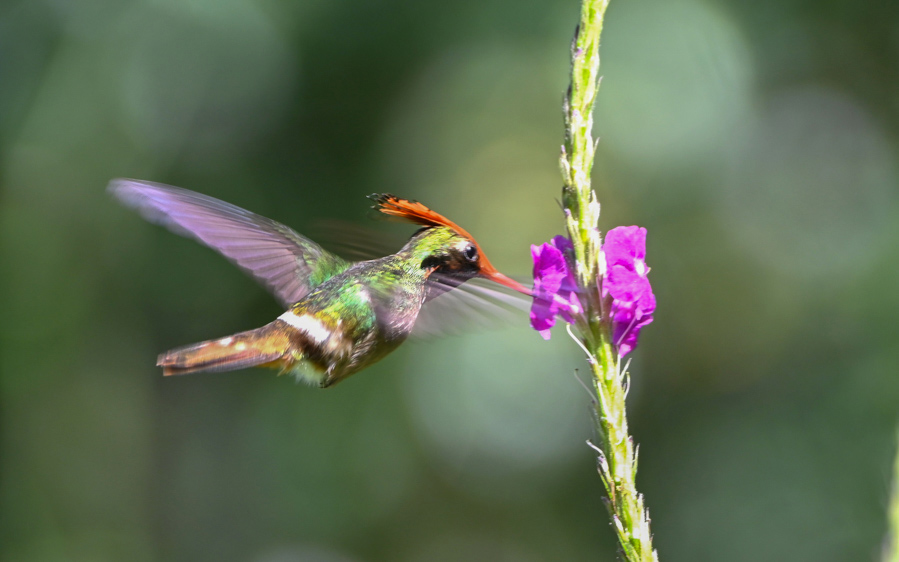
Another favorite: the handsome Rufous-crested Coquette (photo by Margaret Gomez).
After a long and patient wait, word finally arrived that the wood quails had appeared at the feeding station. We quietly made our way to the viewing area and were rewarded with a wonderful encounter with a family covey of Rufous-breasted Wood Quail.
We then had the opportunity to observe another notoriously elusive species that is now being successfully attracted to feeding stations for the first time in Peru: the secretive Uniform Crake. This skulking rail surprised us by providing remarkably good views, allowing everyone to appreciate a bird that is normally little more than a voice hidden deep within dense vegetation.
The reserve’s gardens and surrounding forest also produced a variety of additional species, including Fiery-capped Manakin, Short-tailed Swift, Green-backed Trogon, Black-billed Thrush, Blue-naped Chlorophonia, Bronze-green Euphonia, Paradise Tanager, and Black-faced Dacnis. A particularly frustrating yet exciting moment came when only Tony and I managed a brief glimpse of the shy Buff-tailed Sicklebill as it flashed through the vegetation before disappearing from view. Likewise, I was the only member of the group who spotted a Hauxwell’s Thrush for a few seconds in the bush.
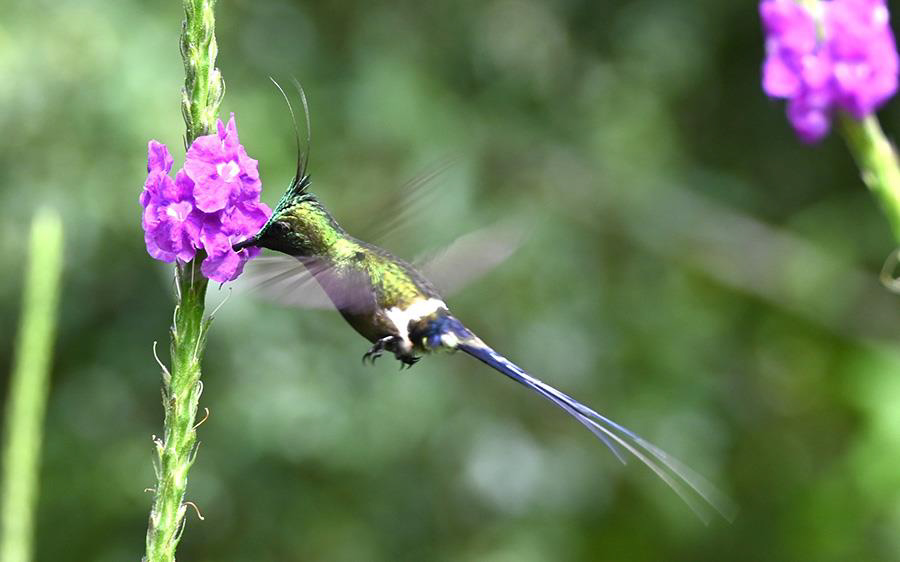
Wire-crested Thorntail at the Reserva Arena Blanca feeding station (photo by Margaret Gomez).
We then continued our journey to the Yacumama Recreation Center and Restaurant, where we stopped for lunch. Among the local specials enjoyed by the group, the traditional tacacho con cecina was particularly well received. After refreshing ourselves with a few cold drinks and escaping the afternoon heat, we decided to explore the trails surrounding the property’s artificial lagoons.
The birding proved quite enjoyable, producing species such as Black-fronted Nunbird,Gilded Barbet, Blue Ground Dove, Ringed Kingfisher, Green Kingfisher, Fork-tailed Palm Swift, Striated Heron, Western Cattle Egret, Blue-headed Parrot,Yellow-rumped Cacique, and Chestnut-eared Aracari.
One particularly interesting sighting was Lafresnaye’s Piculet, named in honor of the 19th-century French ornithologist and collector Baron Noël Frédéric Armand André de Lafresnaye. His contributions to ornithology were considerable, and several other birds also bear his name, including Lafresnaye’s Woodcreeper and Lafresnaye’s Vanga of Madagascar. Following his death, his impressive collection of more than 8,000 bird skins was acquired by the American naturalist Henry Bryant and was subsequently donated to the Boston Society of Natural History.
From there, we continued to our comfortable hotel in Moyobamba, where another memorable culinary experience awaited us. Dinner provided an excellent opportunity to sample additional Peruvian and Amazonian specials, showcasing the rich flavors and traditions of the region.
Day 10, 21st May 2026. Morro de Calzada and transfer to Pumarinri Lodge
Today we departed early for the private Ikam Reserve, located at Morro de la Calzada on the outskirts of Moyobamba. This isolated forested hill protects a unique remnant of habitat and serves as an important refuge for several localized species.
One of the morning’s highlights was another endemic Peruvian primate, the fascinating Rio Mayo Titi Monkey. Endemic to the department of San Martín, this charismatic species is classified as Critically Endangered and is among the most threatened primates in South America.
Birding around the reserve produced a variety of attractive species, including White-lined Tanager, Paradise Tanager, Black-faced Dacnis, Blue-crowned Trogon, Ruddy Ground Dove, and Rufous-crested Coquette. Another major highlight was the secretive Rufous-sided Crake, which surprised us by providing outstanding views at the feeding station. As with most rails, prolonged views are rarely guaranteed, making the encounter particularly rewarding.
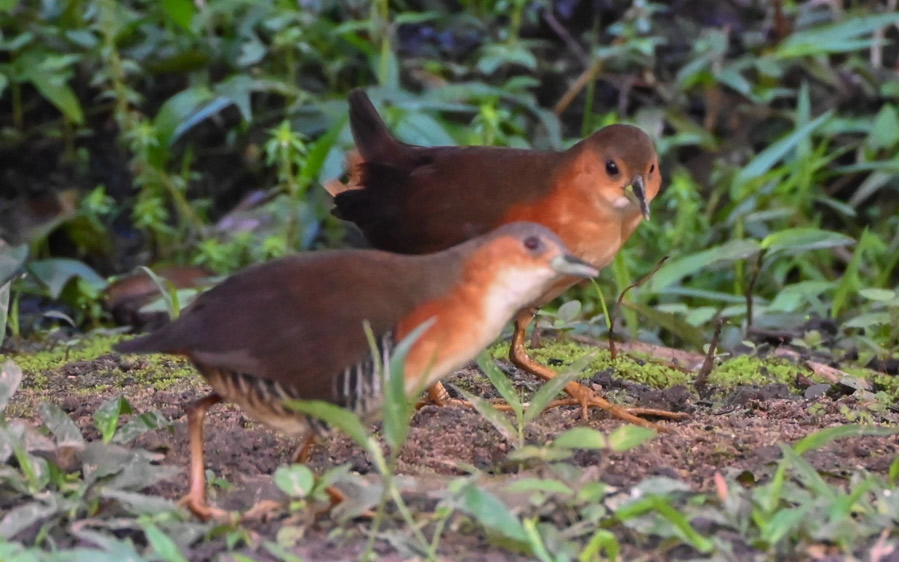
Rufous-sided Crakes seen at Morro de Calzada Reserve (photo by Margaret Gomez).
Tanager activity proved somewhat slower than expected, so we decided to visit a local residence nearby that maintains a productive feeding station. The decision paid off handsomely. The feeders attracted a variety of species, especially euphonias, giving us an excellent opportunity to compare Orange-bellied, Thick-billed, Purple-throated, White-lored, and White-vented Euphonias side by side.
The star attraction, however, was the endemic Huallaga Tanager, a highly localized species restricted to a small region of northern Peru. Excellent views of this sought-after endemic provided a fitting conclusion to a very successful morning around Moyobamba.
Leaving Moyobamba behind, we continued toward our next destination: the famous Oilbird stakeout. Upon arrival, we were rewarded with excellent views of several dozen Oilbirds, one of the most unusual and fascinating birds of South America.
The Oilbird is the sole member of the family Steatornithidae, making it a truly distinctive component of the continent’s avifauna. Nocturnal and highly specialized, it is one of the few birds in the world known to navigate using echolocation, much like bats. Watching these remarkable birds roosting within the cave system was a memorable experience and represented another major addition to our growing northern Peru bird list.
By late afternoon, we arrived at the comfortable and charming Pumarinri Lodge, beautifully situated along the banks of the Huallaga River. Surrounded by lush foothill forest and impressive scenery, the lodge provided a welcome opportunity to relax after another productive day in the field.
Day 11, 22nd May 2026. Aconavit feeding station and flight to Lima
Our final morning in northern Peru began with a stop in the Shapaja area, where we added several new species to the trip list. Highlights included Channel-billed Toucan, Hoatzin (another monotypic South American family and the national bird of Guyana), Smooth-billed Ani, White-banded Swallow, White-winged Swallow, and Swallow-winged Puffbird, among others.
From there, we continued along the Fernando Belaúnde Terry Highway, passing through much of the protected Escalera Conservation Area. Unfortunately, our schedule allowed little time for birding stops, as we had a long journey ahead. Our main objective was to reach the hummingbird center at Aconavit in hopes of picking up a few final specials, including the endemic Koepcke’s Hermit.
Unfortunately, we encountered one of the slowest periods of hummingbird activity I have ever experienced at the site. Only brief flashes of Grey-breasted Sabrewing were seen, and most of our hoped-for targets remained frustratingly absent. Birding, however, often rewards persistence in unexpected ways. Our consolation came in the form of several attractive species, including Violaceous Jay, White-flanked Antwren, and Green Honeycreeper. Then, just when it seemed the morning was winding down, news arrived of a perched Long-tailed Potoo.
What followed was one final “now or never” dash down the trail as we hurried to the location. The effort was more than worthwhile. Seeing this extraordinary bird perched in full daylight provided a spectacular finale to our northern Peru adventure and was unquestionably one of the trip’s most memorable moments.
Another noteworthy sighting was a male Golden-headed Manakin, although unfortunately not everyone in the group was able to connect with the bird before it disappeared into the forest. Later, we were transferred to Tarapoto airport where we caught our flight back to Lima.
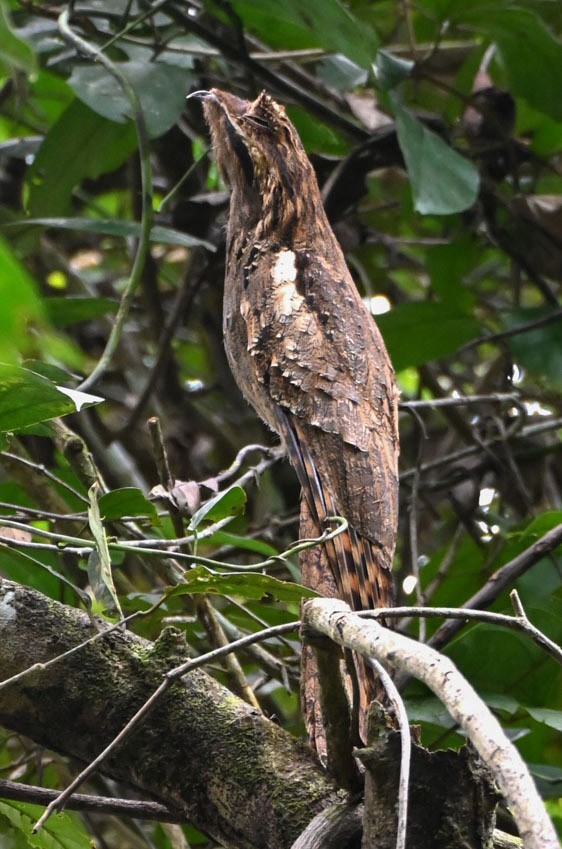
The widespread but difficult Long-tailed Potoo was a nice surprise (photo by Margaret Gomez).
Day 12, 23rd May 2026. Pucusana, Pachacamac Archaeological Site and departure
After enjoying a delicious breakfast at our hotel, we departed Lima and headed south toward the coastal town and fishing port of Pucusana. Located along Peru’s central coast, this picturesque seaside community serves as an excellent gateway to some of the country’s most productive marine birding habitats.
Upon arrival, our friend Pablo was waiting to take us on a boat excursion around Pucusana Island. The goal of the outing was to observe a variety of seabirds and coastal species associated with the rocky shoreline and the cold waters of the Peruvian Sea, part of the highly productive Humboldt Current ecosystem. With calm seas and excellent conditions, anticipation was high as we set out to explore one of the best coastal birding locations near Lima.
Our boat excursion provided excellent views of numerous flocks of Peruvian Pelican, Belcher’s Gull, Inca Tern, Blackish Oystercatcher, Red-legged Cormorant, and Peruvian Booby, all characteristic species of Peru’s rich Humboldt Current ecosystem.
The species most eagerly anticipated by the group, however, was undoubtedly the Humboldt Penguin, named in honor of the German naturalist and explorer Alexander von Humboldt. We were delighted to find several individuals along the rocky coastline, providing excellent views of one of South America’s most iconic seabirds. The Humboldt Penguin is a near-endemic species whose breeding and foraging range extends from central Peru to central Chile. Currently classified as Vulnerable, its global population is estimated at approximately 23,800 mature individuals. The species faces a number of significant conservation challenges, including fluctuations associated with El Niño and La Niña events, overfishing, marine pollution, introduced predators, habitat disturbance, and the historical exploitation of guano-producing islands.
Additional sightings included a brief but exciting encounter with a Peregrine Falcon, which flashed past the boat before disappearing from view. As the excursion drew to a close, we were rewarded with excellent views of several Blue-footed Boobies. We also encountered numerous South American Sea Lions, many of them hauled out on the rocky shoreline or resting on offshore islets, adding yet another dimension to our marine wildlife experience, and providing a fitting finale to our morning at sea.
Then, near the end of the excursion, as we approached the dramatic sea cave known as the Boquerón del Diablo (“Devil’s Mouth”), we connected with one of the final targets of the trip: the endemic Surf Cinclodes. This highly specialized species is restricted to the rocky coast of Peru and is unique among passerines in that it obtains virtually all of its food from marine resources found within the intertidal zone.
Leaving Pucusana behind, we said farewell to our friends Tony and Nancy, who were transferred directly to Jorge Chávez International Airport for their journey home. The rest of the group, however, made one final detour to visit the remarkable archaeological sanctuary of Pachacamac.
There, our guide Elky led us through the excellent museum and the principal structures of this historic ceremonial center, whose origins date back more than 2,000 years. For centuries, Pachacamac was one of the most important religious sites on the Pacific coast of South America, attracting pilgrims from across much of the Andean world long before the arrival of the Incas.
As if the day still had one last surprise in store, we received a final birding bonus during our visit. A Chestnut-collared Swallow, a species that is far from common in the Lima area, appeared and provided excellent views. It proved to be a fitting farewell and the perfect final addition to our trip list.
With that, our remarkable journey through northern Peru came to an end. From the dry forests of the Tumbesian region and the cloud forests of Abra Patricia to the foothills of the Alto Mayo, the archaeological wonders of Sipán and Pachacamac, and the rich marine ecosystems of the Peruvian coast, the tour had delivered an extraordinary combination of birds, wildlife, history, culture, and gastronomy. The Chestnut-collared Swallow served as a final exclamation point on an unforgettable adventure and a wonderful way to close the book on another successful Birding Ecotours journey through one of South America’s premier birding destinations.
Bird List – Following IOC (15.1) (March 2025)
Birds ‘heard only’ are marked with (H) after the common name, all other species were seen.
The following notation after species names is used to show conservation status following the IUCN Red List: VU = Vulnerable.
| Common Name | Scientific Name |
| Tinamous (Tinamidae) | |
| Cinereous Tinamou | Crypturellus cinereus |
| Little Tinamou | Crypturellus soui |
| Ducks, Geese, Swans (Anatidae) | |
| Comb Duck | Sarkidiornis sylvicola |
| Cinnamon Teal | Spatula cyanoptera |
| White-cheeked Pintail | Anas bahamensis |
| Guans, Curassows, Chachalacas (Cracidae) | |
| Andean Guan | Penelope montagnii |
| New World Quail (Odontophoridae) | |
| Rufous-breasted Wood Quail | Odontophorus speciosus |
| Nightjars (Caprimulgidae) | |
| Rufous-bellied Nighthawk | Lurocalis rufiventris |
| Oilbird (Steatornithidae) | |
| Oilbird | Steatornis caripensis |
| Potoos (Nyctibiidae) | |
| Long-tailed Potoo | Nyctibius aethereus |
| Swifts (Apodidae) | |
| Grey-rumped Swift | Chaetura cinereiventris |
| Short-tailed Swift | Chaetura brachyura |
| Fork-tailed Palm Swift | Tachornis squamata |
| Hummingbirds (Trochilidae) | |
| White-necked Jacobin | Florisuga mellivora |
| Buff-tailed Sicklebill | Eutoxeres condamini |
| Green Hermit | Phaethornis guy |
| Tawny-bellied Hermit | Phaethornis syrmatophorus |
| Great-billed Hermit | Phaethornis malaris |
| Green-fronted Lancebill | Doryfera ludovicae |
| Blue-fronted Lancebill | Doryfera johannae |
| Brown Violetear | Colibri delphinae |
| Lesser Violetear | Colibri cyanotus |
| Sparkling Violetear | Colibri coruscans |
| Purple-throated Sunangel | Heliangelus viola |
| Royal Sunangel | Heliangelus regalis |
| Wire-crested Thorntail | Discosura popelairii |
| Rufous-crested Coquette | Lophornis delattrei |
| Speckled Hummingbird | Adelomyia melanogenys |
| Long-tailed Sylph | Aglaiocercus kingii |
| Greenish Puffleg | Haplophaedia aureliae |
| Emerald-bellied Puffleg | Eriocnemis aline |
| Marvelous Spatuletail | Loddigesia mirabilis |
| Bronzy Inca | Coeligena coeligena |
| Collared Inca | Coeligena torquata |
| Sword-billed Hummingbird | Ensifera ensifera |
| Chestnut-breasted Coronet | Boissonneaua matthewsii |
| Peruvian Racket-tail | Ocreatus peruanus |
| Rufous-vented Whitetip | Urosticte ruficrissa |
| Fawn-breasted Brilliant | Heliodoxa rubinoides |
| Violet-fronted Brilliant | Heliodoxa leadbeateri |
| Long-billed Starthroat | Heliomaster longirostris |
| Amethyst Woodstar | Calliphlox amethystina |
| White-bellied Woodstar | Chaetocercus mulsant |
| Little Woodstar | Chaetocercus bombus |
| Violet-headed Hummingbird | Klais guimeti |
| Grey-breasted Sabrewing | Campylopterus largipennis |
| Spot-throated Hummingbird | Thaumasius taczanowskii |
| Fork-tailed Woodnymph | Thalurania furcata |
| Many-spotted Hummingbird | Taphrospilus hypostictus |
| White-bellied Hummingbird | Elliotomyia chionogaster |
| Amazilia Hummingbird | Amazilis amazilia |
| Golden-tailed Sapphire | Chrysuronia oenone |
| Sapphire-spangled Emerald | Chionomesa lactea |
| Cuckoos (Cuculidae) | |
| Smooth-billed Ani | Crotophaga ani |
| Groove-billed Ani | Crotophaga sulcirostris |
| Striped Cuckoo | Tapera naevia |
| Squirrel Cuckoo | Piaya cayana |
| Pigeons and Doves (Columbidae) | |
| Rock Dove | Columba livia |
| Band-tailed Pigeon | Patagioenas fasciata |
| Ecuadorian Ground Dove | Columbina buckleyi |
| Ruddy Ground Dove | Columbina talpacoti |
| Croaking Ground Dove | Columbina cruziana |
| Bare-faced Ground Dove | Metriopelia ceciliae |
| Blue Ground Dove | Claravis pretiosa |
| White-tipped Dove | Leptotila verreauxi |
| Grey-fronted Dove | Leptotila rufaxilla |
| Eared Dove | Zenaida auriculata |
| West Peruvian Dove | Zenaida meloda |
| Rails, Crakes and Coots (Rallidae) | |
| Uniform Crake | Amaurolimnas concolor |
| Common Gallinule | Gallinula galeata |
| Andean Coot | Fulica ardesiaca |
| Rufous-sided Crake | Laterallus melanophaius |
| Limpkin (Aramidae) | |
| Limpkin | Aramus guarauna |
| Grebes (Podicipedidae) | |
| Pied-billed Grebe | Podilymbus podiceps |
| Great Grebe | Podiceps major |
| Stone-curlews, Thick-knees (Burhinidae) | |
| Peruvian Thick-knee | Hesperoburhinus superciliaris |
| Oystercatchers (Haematopodidae) | |
| American Oystercatcher | Haematopus palliates |
| Blackish Oystercatcher | Haematopus ater |
| Penguins (Spheniscidae) | |
| Humboldt Penguin – VU | Spheniscus humboldti |
| Stilts, Avocets (Recurvirostridae) | |
| Black-necked Stilt | Himantopus mexicanus |
| Plovers (Charadriidae) | |
| Killdeer | Charadrius vociferus |
| Sandpipers, Snipes (Scolopacidae) | |
| Hudsonian Whimbrel | Numenius hudsonicus |
| Spotted Sandpiper | Actitis macularius |
| Willet | Tringa semipalmata |
| Stilt Sandpiper | Calidris himantopus |
| Greater Yellowlegs | Tringa melanoleuca |
| Gulls and Terns (Laridae) | |
| Black Skimmer | Rynchops niger |
| Inca Tern | Larosterna inca |
| Cabot’s Tern | Thalasseus acuflavidus |
| Elegant Tern | Thalasseus elegans |
| Grey-headed Gull | Chroicocephalus cirrocephalus |
| Grey Gull | Leucophaeus modestus |
| Franklin’s Gull | Leucophaeus pipixcan |
| Belcher’s Gull | Larus belcheri |
| Kelp Gull | Larus dominicanus |
| Storks (Ciconiidae) | |
| Woodstork | Mycteria americana |
| Boobies, Gannets (Sulidae) | |
| Peruvian Booby | Sula variegata |
| Blue-footed Booby | Sula nebouxii |
| Pelicans (Pelecanidae) | |
| Peruvian Pelican | Pelecanus thagus |
| Bitterns, Herons (Ardeidae) | |
| Fasciated Tiger Heron | Tigrisoma fasciatum |
| Yellow-crowned Night Heron | Nyctanassa violacea |
| Little-blue Heron | Egretta caerulea |
| Snowy Egret | Egretta thula |
| Striated Heron | Butorides striata |
| Great Egret | Ardea alba |
| Western Cattle Egret | Ardea ibis |
| Cocoi Heron | Ardea cocoi |
| Hoatzin (Opisthocomidae) | |
| Hoatzin | Opisthocomus hoazin |
| New World Vultures (Cathartidae) | |
| Andean Condor – VU | Vultur gryphus |
| Black Vulture | Coragyps atratus |
| Turkey Vulture | Cathartes aura |
| Lesser Yellow-headed Vulture | Cathartes burrovianus |
| Kites, Hawk Eagles (Accipitridae) | |
| Swallow-tailed Kite | Elanoides forficatus |
| Roadside Hawk | Rupornis magnirostris |
| Harris’s Hawk | Parabuteo unicinctus |
| White-rumped Hawk | Parabuteo leucorrhous |
| Variable Hawk | Geranoaetus polyosoma |
| Owls (Strigidae) | |
| Long-whiskered Owlet – VU | Xenoglaux loweryi |
| Burrowing Owl | Athene cunicularia |
| Pacific Pygmy Owl | Glaucidium peruanum |
| Ferruginous Pygmy Owl (H) | Glaucidium brasilianum |
| Tropical Screech Owl (H) | Megascops choliba |
| Cinnamon Screech Owl | Megascops petersoni |
| West Peruvian Screech Owl | Megascops roboratus |
| Rufous-banded Owl (H) | Strix albitarsis |
| Trogons (Trogonidae) | |
| Golden-headed Quetzal (H) | Pharomachrus auriceps |
| Green-backed Trogon | Trogon viridis |
| Blue-crowned Trogon | Trogon curucui |
| Masked Trogon | Trogon personatus |
| Kingfishers (Alcedinidae) | |
| Amazon Kingfisher | Chloroceryle amazona |
| Green Kingfisher | Chloroceryle americana |
| Ringed Kingfisher | Megaceryle torquata |
| Puffbirds (Bucconidae) | |
| Black-fronted Nunbird | Monasa nigrifrons |
| Swallow-winged Puffbird | Chelidoptera tenebrosa |
| New World Barbets (Capitonidae) | |
| Gilded Barbet | Capito auratus |
| Toucans (Ramphastidae) | |
| Channel-billed Toucan | Ramphastos vitellinus |
| Chestnut-eared Aracari | Pteroglossus castanotis |
| Woodpeckers (Picidae) | |
| Lafresnaye’s Piculet | Picumnus lafresnayi |
| Little Woodpecker | Veniliornis passerinus |
| Scarlet-backed Woodpecker | Veniliornis callonotus |
| Golden-olive Woodpecker | Colaptes rubiginosus |
| Lineated Woodpecker | Dryocopus lineatus |
| Caracaras, Falcons (Falconidae) | |
| American Kestrel | Falco sparverius |
| Peregrine Falcon | Falco peregrinus |
| New World Parrots (Psittacidae) | |
| Cobalt-winged Parakeet | Brotogeris cyanoptera |
| Blue-headed Parrot | Pionus menstruus |
| Scaly-naped Amazon | Amazona mercenarius |
| Cobalt-rumped Parrotlet | Forpus xanthopterygius |
| Pacific Parrotlet | Forpus coelestis |
| Mitred Parakeet | Psittacara mitratus |
| Red-masked Parakeet | Psittacara erythrogenys |
| White-eyed Parakeet | Psittacara leucophthalmus |
| Cordilleran Parakeet | Psittacara frontatus |
| Ovenbirds (Furnariidae) | |
| Olivaceous Woodcreeper | Sittasomus griseicapillus |
| Plain-brown Woodcreeper | Dendrocincla fuliginosa |
| Wedge-billed Woodcreeper | Glyphorynchus spirurus |
| Olive-backed Woodcreeper | Xiphorhynchus triangularis |
| Streak-headed Woodcreeper | Lepidocolaptes souleyetii |
| Montane Woodcreeper | Lepidocolaptes lacrymiger |
| Streaked Xenops | Xenops rutilans |
| Point-tailed Palmcreeper (H) | Berlepschia rikeri |
| Pacific Hornero | Furnarius cinnamomeus |
| Wren-like Rushbird | Phleocryptes melanops |
| Peruvian Seaside Cinclodes | Cinclodes taczanowskii |
| Pearled Treerunner | Margarornis squamiger |
| Rufous-fronted Thornbird | Phacellodomus rufifrons |
| Necklaced Spinetail | Synallaxis stictothorax |
| Antbirds (Thamnophilidae) | |
| White-flanked Antwren | Myrmotherula axillaris |
| Slaty Antwren | Myrmotherula schisticolor |
| Northern Slaty Antshrike | Thamnophilus punctatus |
| Variable Antshrike | Thamnophilus caerulescens |
| Collared Antshrike | Thamnophilus Bernardi |
| Great Antshrike | Taraba major |
| Streak-headed Antbird | Drymophila striaticeps |
| Antpittas (Grallariidae) | |
| Chestnut Antpitta | Grallaria blakei |
| Rusty-tinged Antpitta (H) | Grallaria przewalskii |
| Tapaculos (Rhinocryptidae) | |
| Rufous-vented Tapaculo (H) | Scytalopus femoralis |
| Crescentchest (Melanopareiidae) | |
| Elegant Crescentchest | Melanopareia elegans |
| Marañon Crescentchest (H) | Melanopareia maranonica |
| Tyrant Flycatchers (Tyrannidae) | |
| Black-capped Tyrannulet | Tyranniscus nigrocapillus |
| Sierran Elaenia | Elaenia pallatangae |
| Southern Beardless Tyrannulet | Camptostoma obsoletum |
| Sulphur-bellied Tyrannulet | Mecocerculus minor |
| Tumbesian Tyrannulet | Nesotriccus tumbezanus |
| Marañon Tyrannulet | Nesotriccus maranonicus |
| Peruvian Tyrannulet | Zimmerius viridiflavus |
| Mottled-cheeked Tyrannulet | Phylloscartes ventralis |
| Streak-necked Flycatcher | Mionectes striaticollis |
| Inca Flycatcher | Leptopogon taczanowskii |
| Flavescent Flycatcher | Myiophobus flavicans |
| Ornate Flycatcher | Myiotriccus ornatus |
| Many-colored Rush Tyrant | Tachuris rubrigastra |
| Lulu’s Tody-Flycatcher | Poecilotriccus luluae |
| Common Tody-Flycatcher | Todirostrum cinereum |
| Cinnamon Flycatcher | Pyrrhomyias cinnamomeus |
| Cliff Flycatcher | Hirundinea ferruginea |
| Black Phoebe | Sayornis nigricans |
| Smoke-colored Pewee | Contopus fumigatus |
| Vermilion Flycatcher | Pyrocephalus obscurus |
| Rufous-tailed Tyrant | Knipolegus poecilurus |
| Social Flycatcher | Myiozetetes similis |
| Great Kiskadee | Pitangus sulphuratus |
| Boat-billed Flycatcher | Megarynchus pitangua |
| Baird’s Flycatcher | Myiodynastes bairdii |
| Sulphury Flycatcher | Tyrannopsis sulphurea |
| Snowy-throated Kingbird | Tyrannus niveigularis |
| Tropical Kingbird | Tyrannus melancholicus |
| Pale-edged Flycatcher | Myiarchus cephalotes |
| Short-crested Flycatcher | Myiarchus ferox |
| Sooty-crowned Flycatcher | Myiarchus phaeocephalus |
| Cotingas (Cotingidae) | |
| Green-and-black Fruiteater | Pipreola riefferii |
| Andean Cock-of-the rock | Rupicola peruvianus |
| Peruvian Plantcutter – VU | Phytotoma raimondii |
| Manakins (Pipridae) | |
| Golden-headed Manakin | Ceratopipra erythrocephala |
| Fiery-capped Manakin | Machaeropterus pyrocephalus |
| Tityras, Becards and allies (Tityridae) | |
| Barred Becard | Pachyramphus versicolor |
| Vireos, Greenlets, Shrikes-babblers (Vireonidae) | |
| Rufous-browed Peppershrike | Cyclarhis gujanensis |
| Chivi Vireo | Vireo chivi |
| Brown-capped Vireo | Vireo leucophrys |
| Crowns, Jays (Corvidae) | |
| White-collared Jay | Cyanolyca viridicyanus |
| White-tailed Jay | Cyanocorax mystacalis |
| Violaceous Jay | Cyanocorax violaceus |
| Inca Jay | Cyanocorax yncas |
| Swallows, Martins (Hirundinidae) | |
| Tumbes Swallow | Tachycineta stolzmanni |
| White-winged Swallow | Tachycineta albiventer |
| Grey-breasted Martin | Progne chalybea |
| Blue-and-white Swallow | Pygochelidon cyanoleuca |
| Chestnut-collared Swallow | Petrochelidon rufocollaris |
| Wrens (Troglodytidae) | |
| Fasciated Wren | Campylorhynchus fasciatus |
| Thrush-like Wren | Campylorhynchus turdinus |
| Superciliated Wren | Cantorchilus superciliaris |
| Southern House Wren | Troglodytes musculus |
| Grey-breasted Wood Wren | Henicorhina leucophrys |
| Bar-winged Wood Wren | Henicorhina leucoptera |
| Northern Chestnut-breasted Wren (H) | Cyphorhinus dichrous |
| Gnatcatchers, (Polioptilidae) | |
| White-browed Gnatcatcher | Polioptila bilineata |
| Marañon Gnatcatcher | Polioptila maior |
| Mockingbird, Thrashes (Mimidae) | |
| Long-tailed Mockingbird | Mimus longicaudatus |
| Thrushes (Turdidae) | |
| Andean Solitaire | Myadestes ralloides |
| Plumbeous-backed Thrush | Turdus reevei |
| Great Thrush | Turdus fuscater |
| Hauxwell’s Thrush | Turdus hauxwelli |
| Dippers (Cinclidae) | |
| White-capped Dipper | Cinclus leucocephalus |
| Old World Sparrows (Passeridae) | |
| House Sparrow | Passer domesticus |
| Finches, Euphonias (Fringillidae) | |
| Hooded Siskin | Spinus magellanicus |
| Blue-naped Chlorophonia | Chlorophonia cyanea |
| Purple-throated Euphonia | Euphonia chlorotica |
| Orange-bellied Euphonia | Euphonia xanthogaster |
| White-vented Euphonia | Euphonia minuta |
| Thick-billed Euphonia | Euphonia laniirostris |
| Bronze-green Euphonia | Euphonia mesochrysa |
| White-lored Euphonia | Euphonia chrysopasta |
| New World Sparrows (Passerellidae) | |
| Common Chlorospingus | Chlorospingus flavopectus |
| Orange-billed Sparrow | Arremon aurantiirostris |
| Rufous-collared Sparrow | Zonotrichia capensis |
| Yellow-breasted Brushfinch | Atlapetes latinuchus |
| American Blackbirds (Icteriidae) | |
| Peruvian Meadowlark | Leistes bellicosus |
| Russet-backed Oropendola | Psarocolius angustifrons |
| Yellow-rumped Cacique | Cacicus cela |
| Subtropical Cacique | Cacicus uropygialis |
| Mountain Cacique | Cacicus chrysonotus |
| White-edged Oriole | Icterus graceannae |
| Shiny Cowbird | Molothrus bonariensis |
| Oriole Blackbird | Gymnomystax mexicanus |
| Scrub Blackbird | Dives warczewiczi |
| New World Warblers (Parulidae) | |
| Tropical Parula | Setophaga pitiayumi |
| Russet-crowned Warbler | Myiothlypis coronata |
| Three-banded Warbler | Basileuterus trifasciatus |
| Three-striped Warbler | Basileuterus tristriatus |
| Slate-throated Whitestart | Myioborus miniatus |
| Spectacled Whitestart | Myioborus melanocephalus |
| Tanagers & Allies (Thraupidae) | |
| Green Honeycreeper | Chlorophanes spiza |
| Swallow Tanager | Tersina viridis |
| Purple Honeycreeper | Cyanerpes caeruleus |
| Black-faced Dacnis | Dacnis lineata |
| Streaked Saltator | Saltator striatipectus |
| Bananaquit | Coereba flaveola |
| Blue-black Grassquit | Volatinia jacarina |
| Rufous-crested Tanager | Creurgops verticalis |
| Red Pileated Finch | Coryphospingus cucullatus |
| Huallaga Tanager | Ramphocelus melanogaster |
| Silver-beaked Tanager | Ramphocelus carbo |
| Drab Seedeater | Sporophila simplex |
| Cinereous Finch | Piezorina cinerea |
| Drab Hemispingus | Pseudospingus xanthophthalmus |
| Capped Conebill | Conirostrum albifrons |
| Cinereous Conebill | Conirostrum cinereum |
| Saffron Finch | Sicalis flaveola |
| Grassland Yellow Finch | Sicalis luteola |
| Golden-eyed Flowerpiercer | Diglossa glauca |
| Bluish Flowerpiercer | Diglossa caerulescens |
| Masked Flowerpiercer | Diglossa cyanea |
| White-sided Flowerpiercer | Diglossa albilatera |
| Vermilion Tanager | Calochaetes coccineus |
| Yellow-throated Tanager | Iridosornis analis |
| Blue-capped Tanager | Sporathraupis cyanocephala |
| Grass-green Tanager | Chlorornis riefferii |
| Orange-eared Tanager | Chlorochrysa calliparaea |
| Magpie Tanager | Cissopis leverianus |
| Red-capped Cardinal | Paroaria gularis |
| Spotted Tanager | Ixothraupis punctata |
| Golden-naped Tanager | Chalcothraupis ruficervix |
| Blue-grey Tanager | Thraupis episcopus |
| Palm Tanager | Thraupis palmarum |
| Silver-backed Tanager | Stilpnia viridicollis |
| Blue-necked Tanager | Stilpnia cyanicollis |
| Blue-and-black Tanager | Tangara vassorii |
| Beryl-spangled Tanager | Tangara nigroviridis |
| Metallic-green Tanager | Tangara labradorides |
| Saffron-crowned Tanager | Tangara xanthocephala |
| Flame-faced Tanager | Tangara parzudakii |
| Paradise Tanager | Tangara chilensis |
| Species seen: | 303 |
| Species heard: | 9 |
| Total recorded: | 312 |
Mammal List – Following Mammalwatching.com (October 2025)
The following notation after species names is used to show conservation status following the IUCN Red List: CR = Critically Endangered, VU = Vulnerable.
| Woolly, Spider, Howlers Monkeys (Atelidae) | |
| Yellow-tailed Woolly Monkey – CR | Lagothrix flavicauda |
| Titi, Sakis, Uakari Monkeys (Pitheciidae) | |
| Rio Mayo Titi Monkey – CR | Plecturocebus oenanthe |
| Neotropical Night Monkeys (Aotidae) | |
| Peruvian Night Monkey – VU | Aotus miconax |
| Tamarins & Marmosets (Callitrichidae) | |
| Andean Saddle-backed Tamarin | Leontocebus leucogenys |
| Squirrels (Sciuridae) | |
| Guayaquil Squirrel | Sciurus stramineus |
| Dogs, Wolves, Foxes (Canidae) | |
| Sechura Fox | Lycalopex sechurae |
| Eared Seals (Otariidae) | |
| South American Sea Lion | Otaria flavescens |
| Species seen: | 7 |
Reptile List – Following Reptiles of the World (November 2025)
| Green Iguana | Iguana iguana |
| Three-striped Poison Dart Frog | Ameerega trivittata |
| Species seen: | 2 |
This is a sample trip report. Please email us ([email protected]) for more trip reports from this destination.