- Duration:
- 9 days
- Group Size:
- 6–8
- Tour Start:
- Perth, Western Australia
- Tour End:
- Perth, Western Australia
Birding Tour Western Australia: Southwest Australian Endemic Birds
Details
2027
27 September–05 October
Per person sharing
A$8,990 AUD
$6,728 USD / £4,991 GBP / €5,828 EUR
Single supplement
A$1,350 AUD
$1,010 USD / £750 GBP / €875 EUR
2028
21–29 September
Per person sharing
A$9,700 AUD
$7,260 USD / £5,384 GBP / €6,287 EUR
Single supplement
A$1,425 AUD
$1,067 USD / £791 GBP / €924 EUR
Itinerary
Download ItineraryBirding Tour Western Australia: Southwest Australian Endemic Birds
Due to geographic isolation and diverse habitats, the southwest of the state of Western Australia boasts several endemic species and subspecies. This nine-day small-group well-paced Australian birding tour will focus on finding as many of these Western Australian endemic birds as possible, while also enjoying a wide range of other interesting flora and fauna along the way.
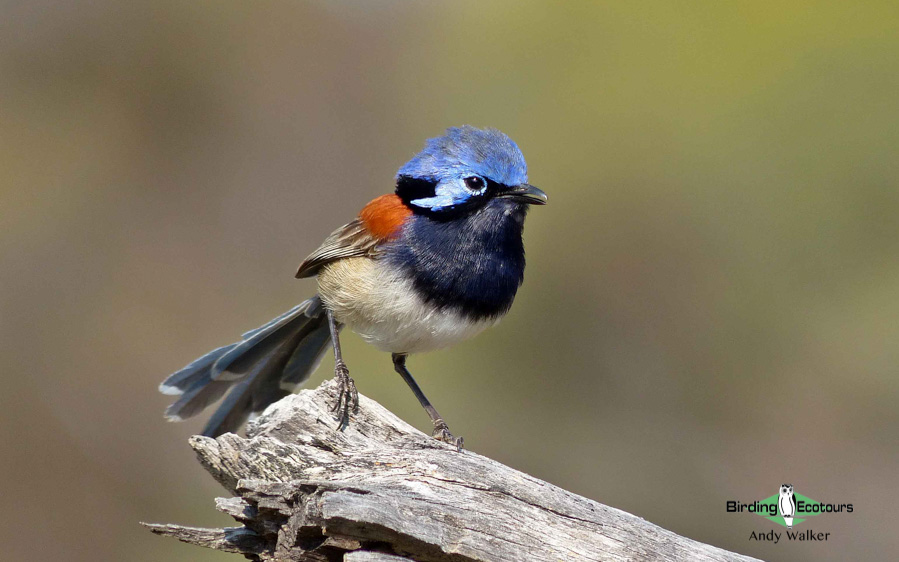
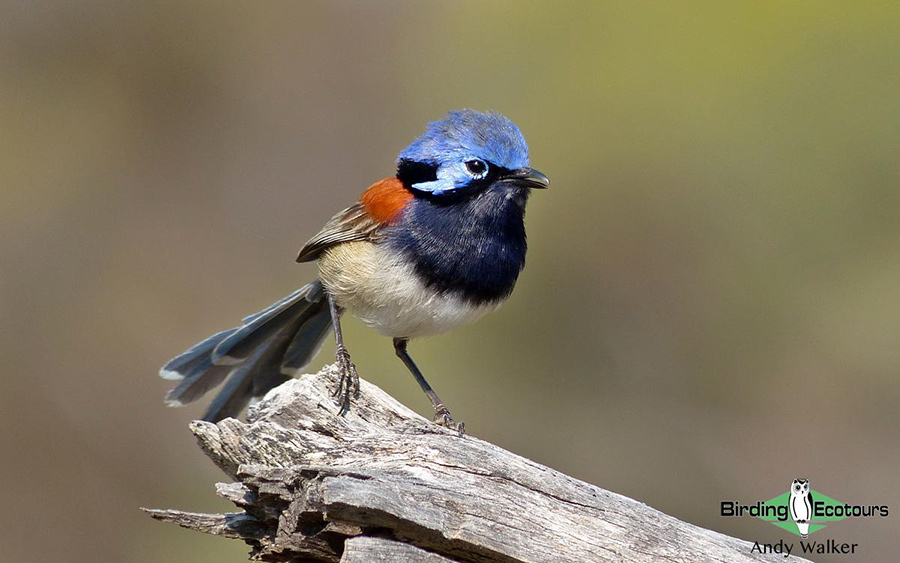 Blue-breasted Fairywren is one of our targets on this trip.
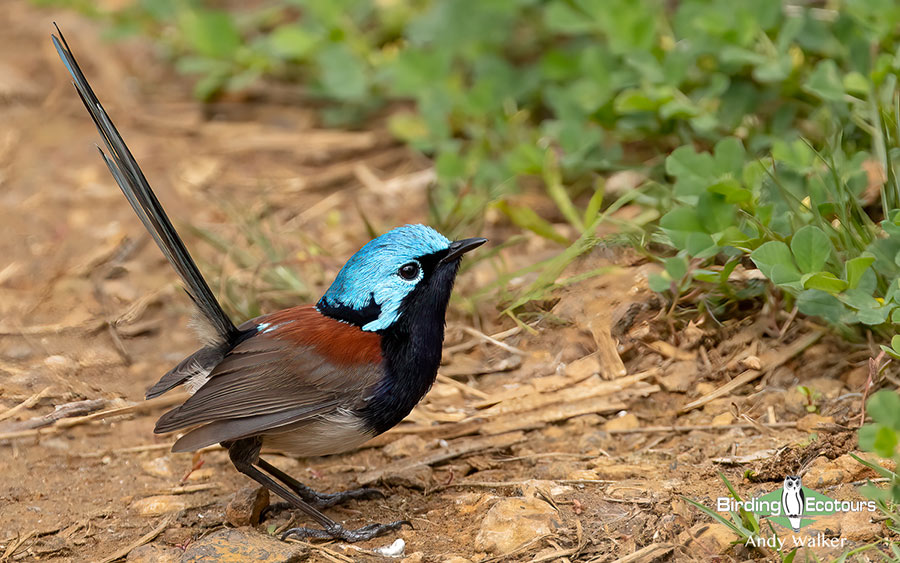
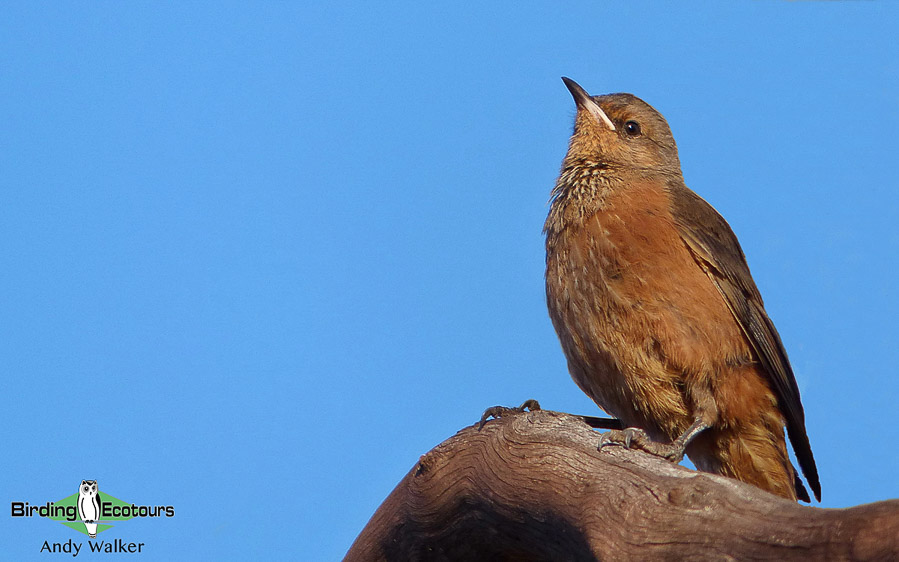
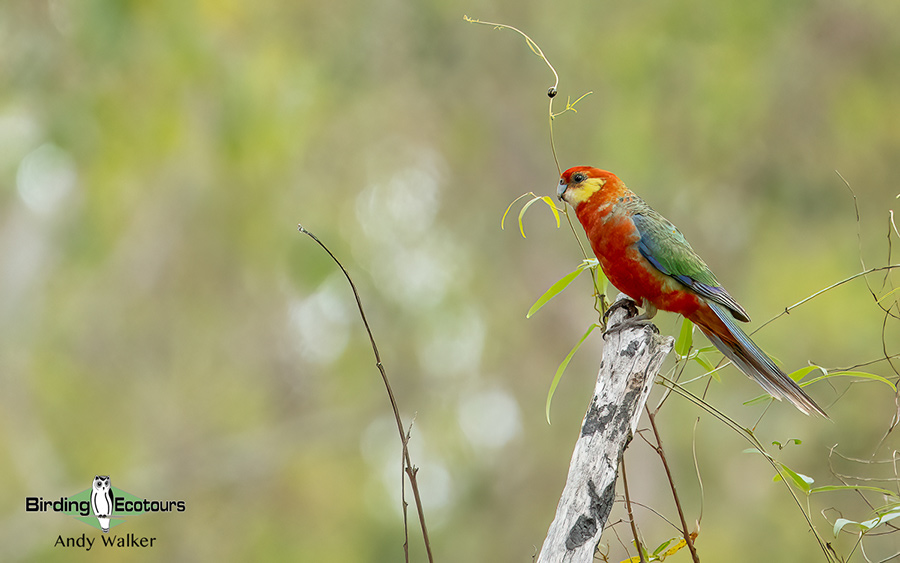
Local endemic bird species that we will be focusing our attention on during the tour include Carnaby’s (Short-billed) and Baudin’s (Long-billed) Black Cockatoos, Western Corella, Red-capped Parrot, Western Rosella, Noisy Scrubbird, Western Bristlebird, Red-winged Fairywren, Western Fieldwren, Western Thornbill, Western Wattlebird, Western Spinebill, Gilbert’s Honeyeater (formerly known as Western White-naped or Swan River Honeyeater), White-breasted Robin, Red-eared Firetail, Black-throated Whipbird, and Western Shriketit. Other species that are near-endemics to the state (and still Australian endemics) also form targets, as they are unlikely to be found on other eastern tours, these include Western Yellow Robin, Rufous Treecreeper, Blue-breasted Fairywren, and Spotted Scrubwren.
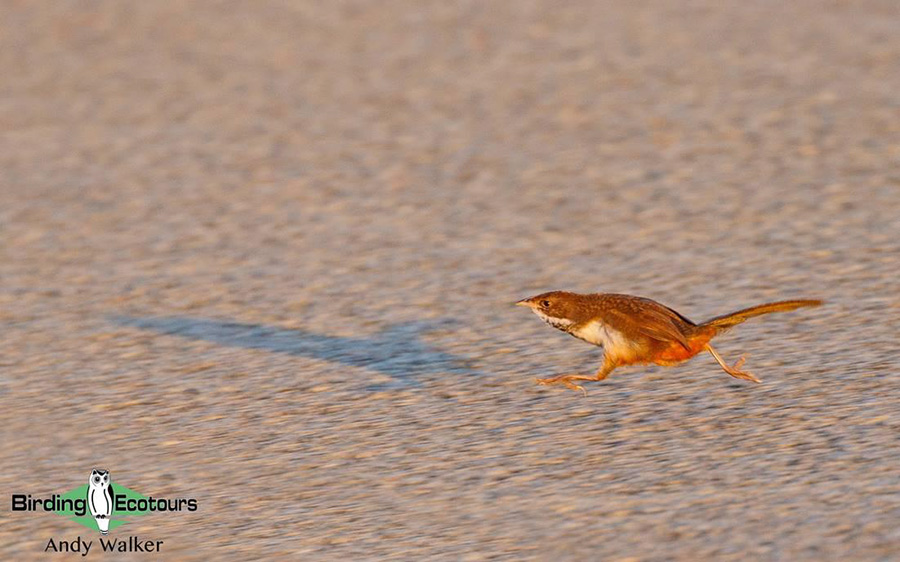 One of the toughest birds to see in all of Australia; we will hope to see Noisy Scrubbird well again, this is one seriously tough bird, but we have a great record of seeing them on our tours.
Additional species we will also be looking for include the Australian endemics Square-tailed Kite, Banded Stilt, Hooded Plover, Rock Parrot, Elegant Parrot, Purple-crowned Lorikeet, Western Whistler, Splendid Fairywren, and the near-endemic Fairy Tern. The isolation of southwestern Australia has led to a high degree of endemism, also at the subspecies level, and we will try to see as many of these as possible in case of potential future splits, such as (Western) Scarlet Robin and others. This tour will prove interesting for those participants who have been birding on the Australian East Coast and/or in Tasmania and are interested in the possibility of some potential future armchair ticks!
For those wishing to explore Australia further, this tour can be combined with our Birding Tour Australia: Northern Territory – Alice Springs and Uluru Birding Tour and our Birding Tour Australia: Northern Territory – Top End Birding Tour, both of these tours precede this Western Australia birdwatching tour.
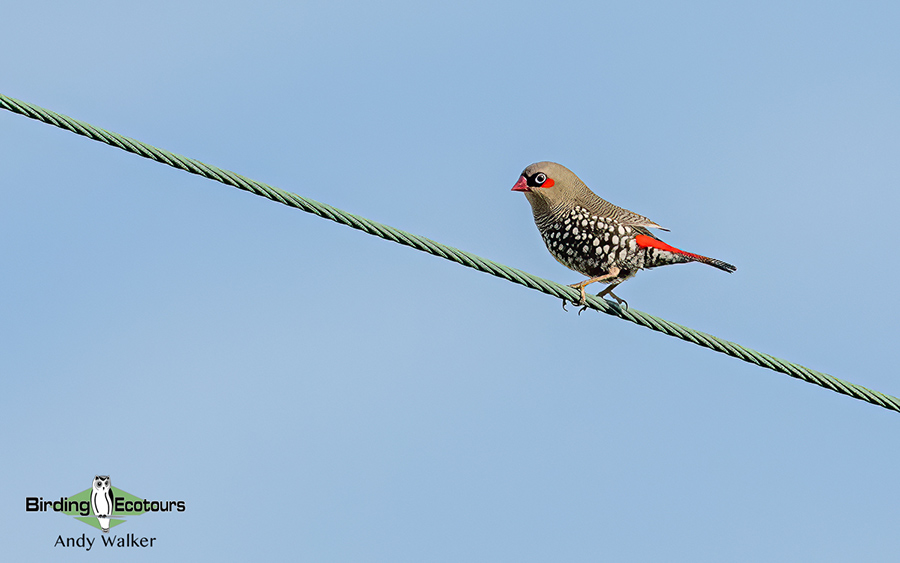
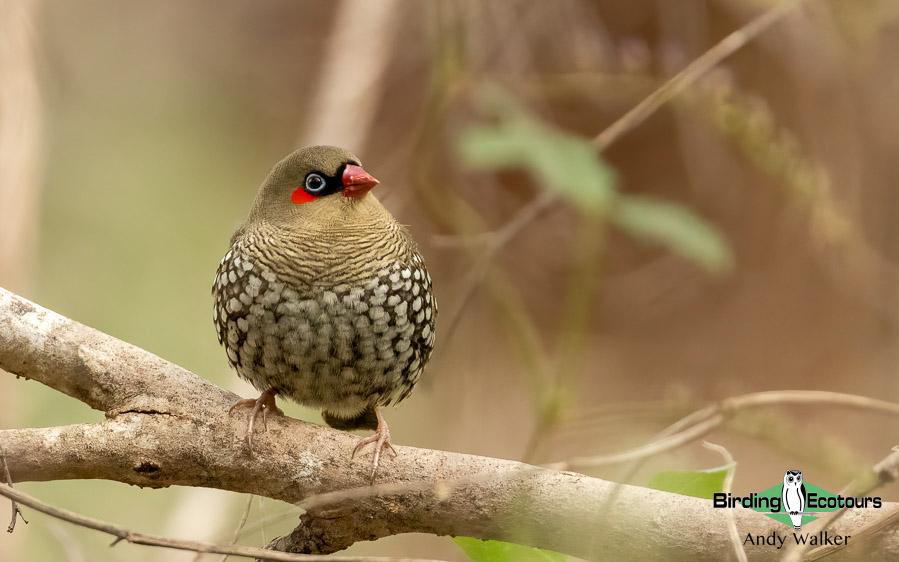 Red-eared Firetail is a beautiful finch found only in this part of Australia.
Itinerary (9 days/8 nights)
Day 1. Arrival in Perth
Morning arrival into Perth, if not arrived ahead of the tour starting. We will meet in the afternoon and spend the late afternoon birding around Perth, including near to our hotel, adjacent to the famous grounds of the Kings Park and Botanical Gardens, within the city. If we have time, we will take a walk into the park, where we will hope to connect with the first of the southwestern endemics, Western Spinebill and Western Wattlebird, as well as more widespread White-cheeked, New Holland, and Singing Honeyeaters and the huge and ever-vocal Red Wattlebird. Carnaby’s Black Cockatoo could be present, feeding in the pine trees, and we will likely find Little Corella, Australian Ringneck, Laughing Dove (introduced from Africa/India), and Rainbow Lorikeet and Laughing Kookaburra (both introduced from eastern Australia). Passerines here may include Australia’s smallest bird, the tiny Weebill, Australian Reed Warbler, and Little Grassbird, while waterbirds may include the beautiful Nankeen Night Heron and the stately Black Swan. We may also visit other sites within the city depending on local flowering conditions and time available.
Overnight: Perth
Day 2. Perth to Dryandra Woodland
We will likely spend the early morning birding around Perth, seeing some of the above species and others. If tidal conditions allow, we may find Red-necked Stint, Sharp-tailed and Curlew Sandpipers, Great and Red Knots, and Pacific Golden and Grey Plovers, among others. We will also check out some of the lakes in and around the city before we head south. The waterbodies here may harbor a late Freckled Duck if we are very lucky but other species likely include Hardhead, Blue-billed Duck, and Hoary-headed Grebe. Lakeside vegetation may hold Little Grassbird, Australian Reed Warbler, Grey Fantail and Spotless Crake. We will also keep our eyes peeled skywards for any raptors that may be overhead.
After a late breakfast we will leave Perth and head south towards the Dryandra Woodland area, keeping a look out for Baudin’s Black and Red-tailed Black Cockatoos along the way. After lunch we will check in to our accommodation for the next couple of nights and then head out for an afternoon birding in the local vicinity. This is one of the prime birding sites in the region, so we want to do it justice over the next couple of days.
Overnight: Narrogin
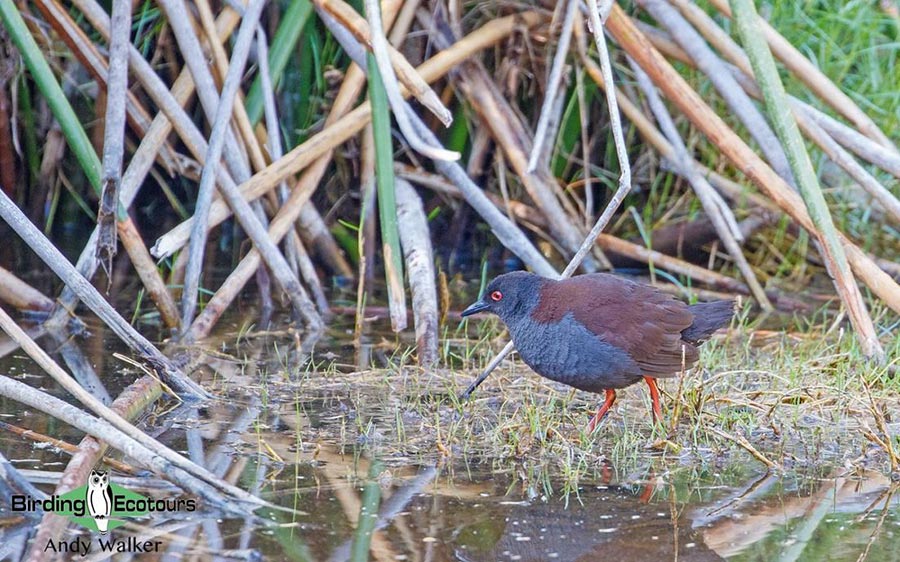 Spotless Crakes are often shy and retiring, but occasionally, with patience, they can show well.
Day 3. Full day at Dryandra Woodland
The woodland consists of an interesting mix of Eucalyptus (jarrah, wandoo, and marri), with a good native shrub layer. We will spend the full day in and around the woodland and will look for some of the area’s specialties, such as Western Yellow Robin, Rufous Treecreeper, Western Whistler, Blue-breasted Fairywren, Western Thornbill, Spotted Scrubwren, and Western Shriketit. We will also look for ‘the’ special mammal found at Dryandra – the rare Numbat.
There are plenty of birds to look for around the huge woodland, and we will focus on finding the above birds and other exciting species such as Painted Buttonquail, Wedge-tailed Eagle, Brown Goshawk, Carnaby’s Black Cockatoo, Red-capped Parrot, Western Rosella, Regent Parrot, Elegant Parrot, Brush Bronzewing, Black-faced Cuckooshrike, Western Spinebill, and Tawny-crowned, Yellow-plumed, Brown, Brown-headed, White-cheeked, New Holland, White-eared, and Gilbert’s Honeyeaters, Restless Flycatcher, and Splendid Fairywren.
Overnight: Narrogin
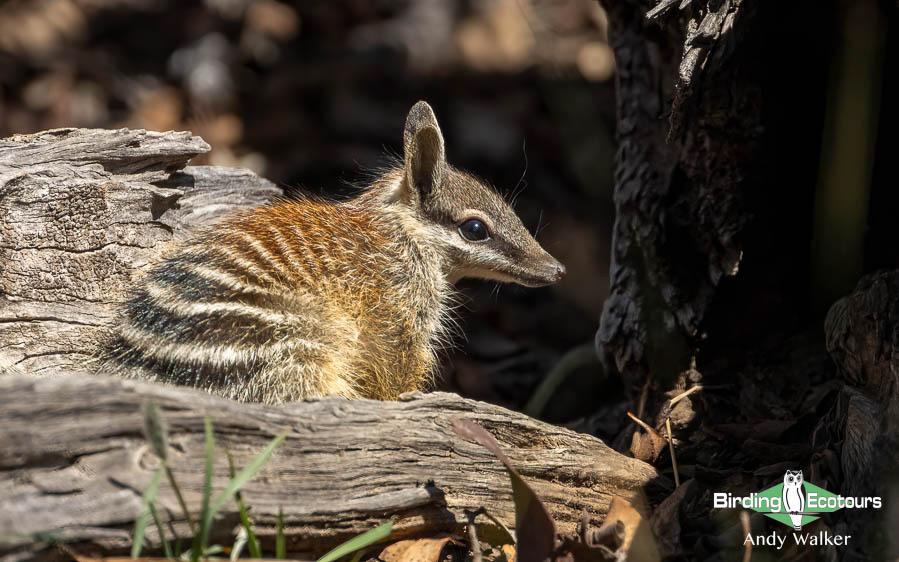 An exceptionally rare and range-restricted endemic mammal – Numbat. Unusually for an Australian mammal, this species is diurnal, spending its days hunting for termites.
Day 4. Dryandra Woodland to Stirling Range National Park
We will spend the morning back in Dryandra Woodland or another nearby interesting site, focusing on finding the aforementioned species and others that we may still be looking for, or want to see again after our last couple of days.
As the day progresses, we will continue south to the Stirling Range National Park, an area renowned for its impressive flora and pretty landscape, as well as plenty of avian targets. While here we will search for Black-throated Whipbird, Southern Scrub Robin, Western Spinebill, Gilbert’s and Purple-gaped Honeyeaters, Western Yellow Robin, Blue-breasted Fairywren, and Western Fieldwren.
Overnight: Amelup
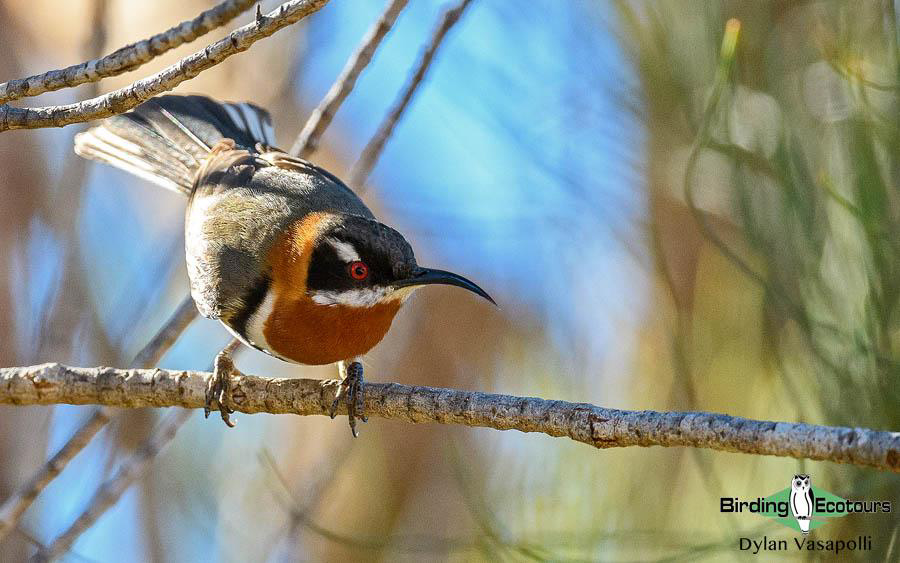 Western Spinebill is one seriously beautiful honeyeater – this tour is loaded will all manner of honeyeaters!
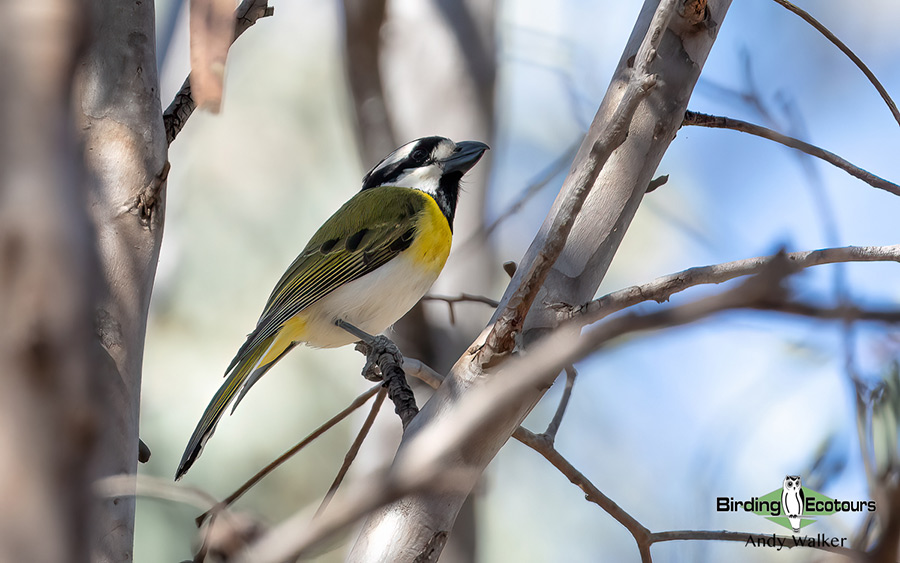
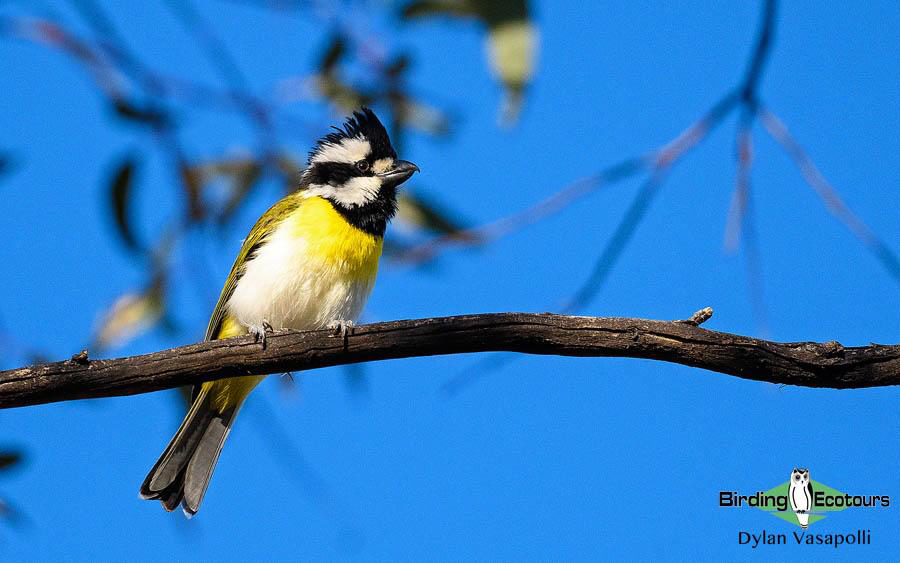 Western Shriketit, a recent split, is a difficult bird – fortunately, we have several chances throughout the route.
Day 5. Stirling Range National Park to Cheynes Beach
We will spend the morning birding at Sterling Range, seeking out those species referred to above but also many others, such as Square-tailed Kite, Spotted Harrier, Little Eagle, Wedge-tailed Eagle, Peregrine Falcon, Elegant Parrot, Regent Parrot, Rufous Treecreeper, Southern Emu-wren, Red-winged Fairywren, White-breasted Robin, (Western) Scarlet Robin, Western Thornbill, Western Shriketit, and Red-eared Firetail.
After our birding session here, we will travel down to the south coast township of Cheynes Beach, along the way looking out for interesting species such as White-necked Heron, Banded Stilt, and other interesting shorebirds/waders. Cheynes Beach is home to some great (and very difficult) birds, and we will start looking for these as soon as possible after our arrival and check in for our two-night stay here.
Overnight: Cheynes Beach
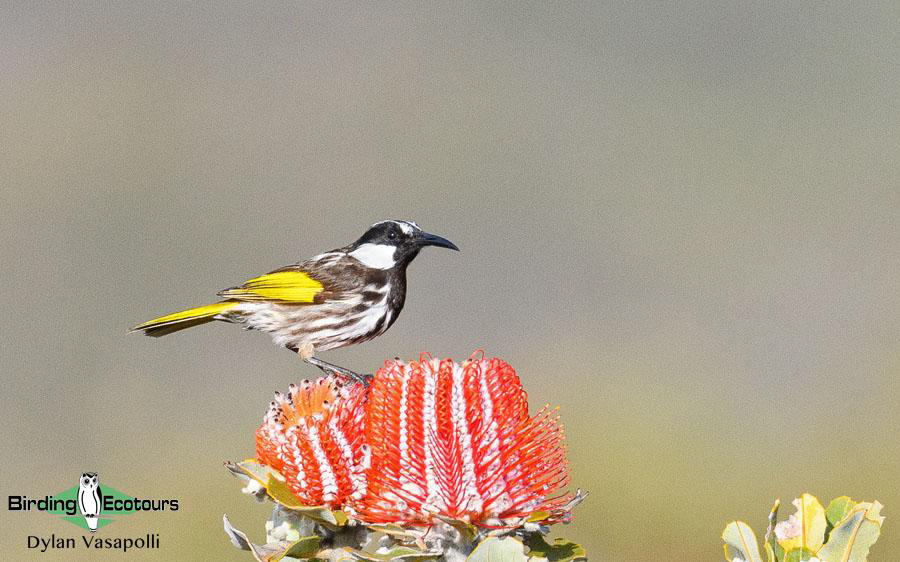 The flowering banksia’s at Cheynes Beach are a magnet to birds like this White-cheeked Honeyeater. We’ll hopefully get our first looks at these birds shortly after arriving.
Day 6. Full day at Cheynes Beach
A full day birding the Cheynes Beach area for three of Australia’s toughest, most skulking birds: Noisy Scrubbird, Western Bristlebird, and Black-throated Whipbird (a different subspecies from that at Stirling Ranges and a much talked-about potential further future split). These birds are difficult to see, but we will put all of our effort into securing views of them all during the course of the day. There are also plenty of other species to look for in the area, such as Wedge-tailed Eagle, Black-shouldered Kite, Spotted Harrier, Carnaby’s Black Cockatoo, Purple-crowned Lorikeet, Fan-tailed Cuckoo, Brush Bronzewing, Southern Emu-wren, Red-winged Fairywren, Spotted Scrubwren, Inland Thornbill, White-cheeked Honeyeater, New Holland Honeyeater, White-breasted Robin, Dusky Woodswallow, and Red-eared Firetail.
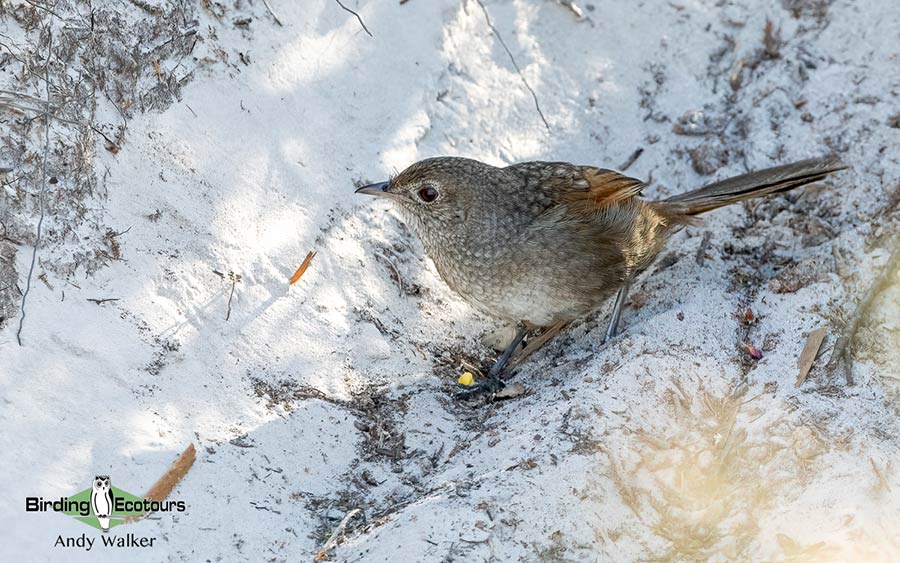
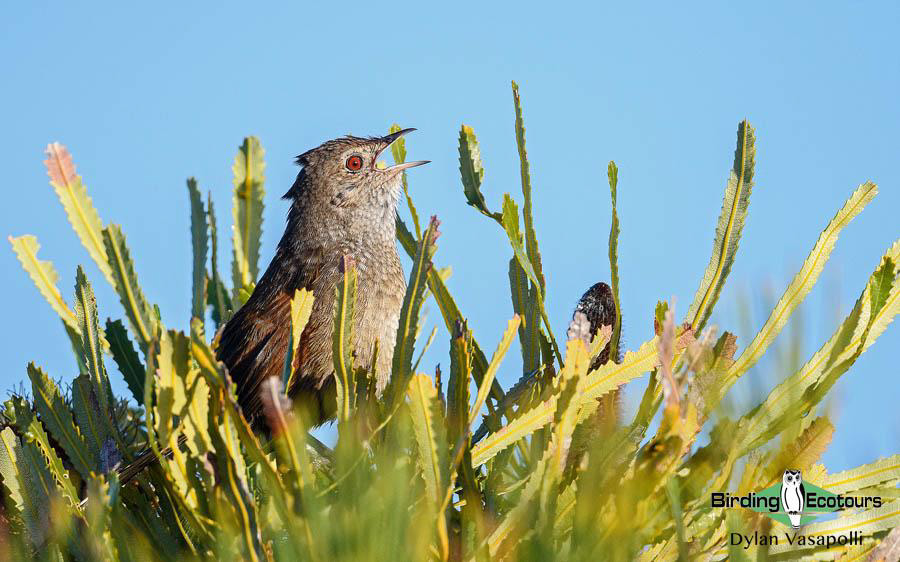 The heathland at Cheynes Beach is beautiful and occasionally one of the major skulkers shows well, such as this Western Bristlebird.
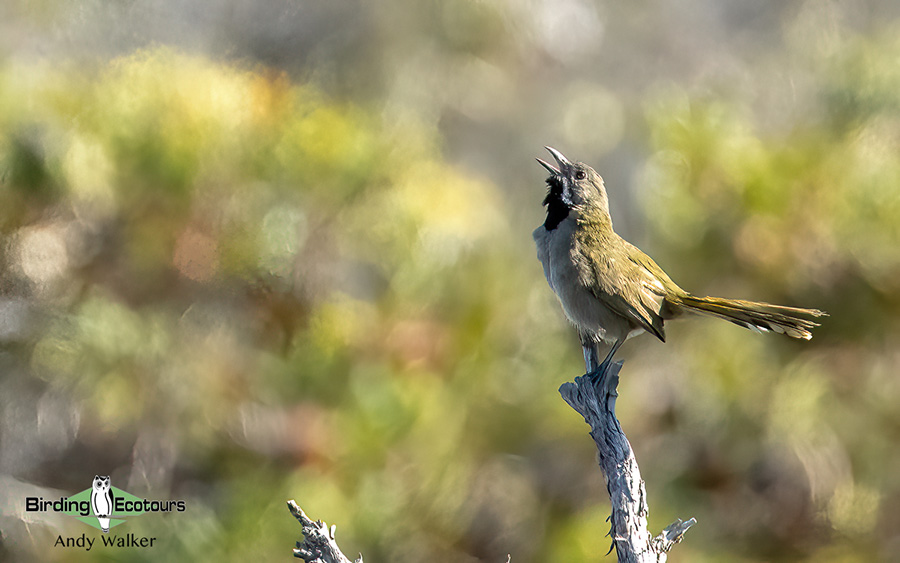
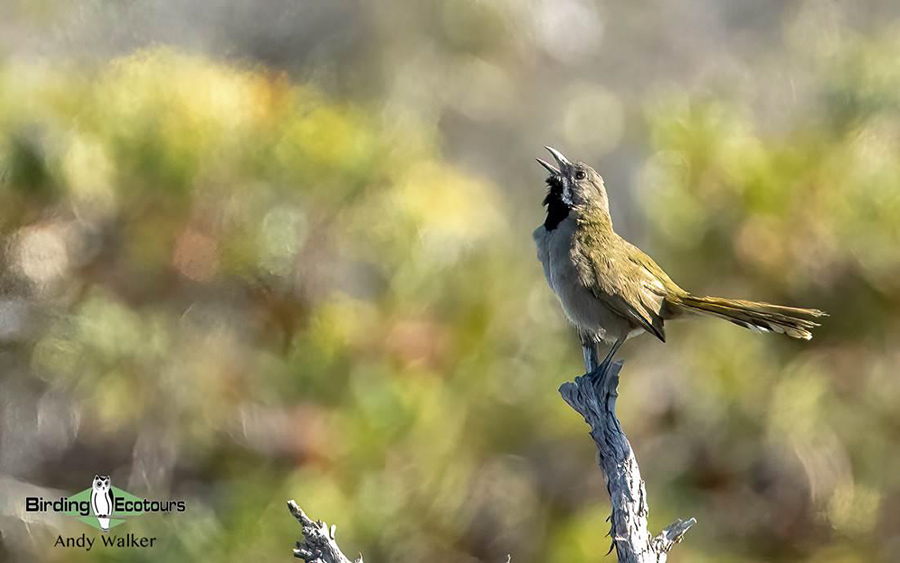 Black-throated Whipbird is another of the tough ones, but occasionally they come to the tops of the Banksia shrubs to announce their presence.
Weather permitting, at night we will look and listen for Tawny Frogmouth, Australian Boobook, and Spotted Nightjar, as well as the area’s nocturnal creatures such as Quokka, Western Ringtail Possum, the tiny Honey Possum (sometimes possible during the day too – they are tiny!), Western Brush Wallaby, and Southern Brown Bandicoot.
Overnight: Cheynes Beach
Day 7. Cheynes Beach to Augusta
We will spend the early morning birding around Cheynes Beach again, enjoying views of some of the above species and mopping up any others we may still want to try and see. We will then make our way west along the spectacularly forested coast with giant red tingle and karri trees towards Augusta. With a stop at Lake Muir Nature Reserve along the way we may find a selection of interesting wildfowl and waders (very much depending on water levels), such as Banded Stilt, Eurasian Coot, Yellow-billed Spoonbill, Blue-billed Duck, and Freckled Duck. More secretive species around the lake shore include Spotless Crake, and Australasian Bittern.
Regardless of water levels, the woodland surrounding the lake is home to a population of Western Corella, known as ‘Muir’s Corella’, which is an endemic and isolated subspecies and worth looking for. Other birds possible here include Emu, Carnaby’s, Baudin’s, and Red-tailed Black Cockatoos, Western Rosella, Australian Ringneck, Brown Quail, Square-tailed Kite, Western Spinebill, Gilbert’s Honeyeater, Southern Emu-wren, White-winged Triller, Restless Flycatcher, Western Yellow Robin, (Western) Scarlet Robin, and Spotted Pardalote. We will arrive in Augusta in time to freshen up before dinner.
Overnight: Augusta
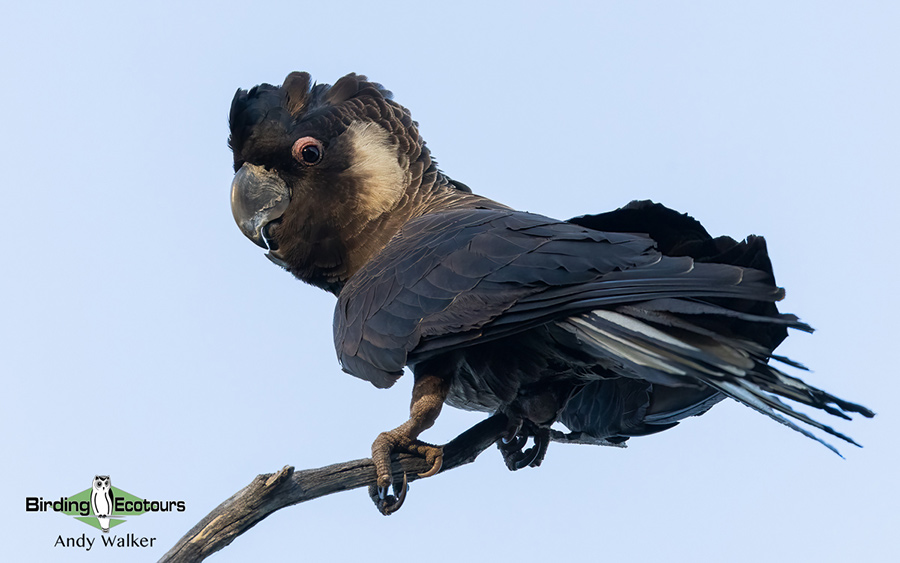
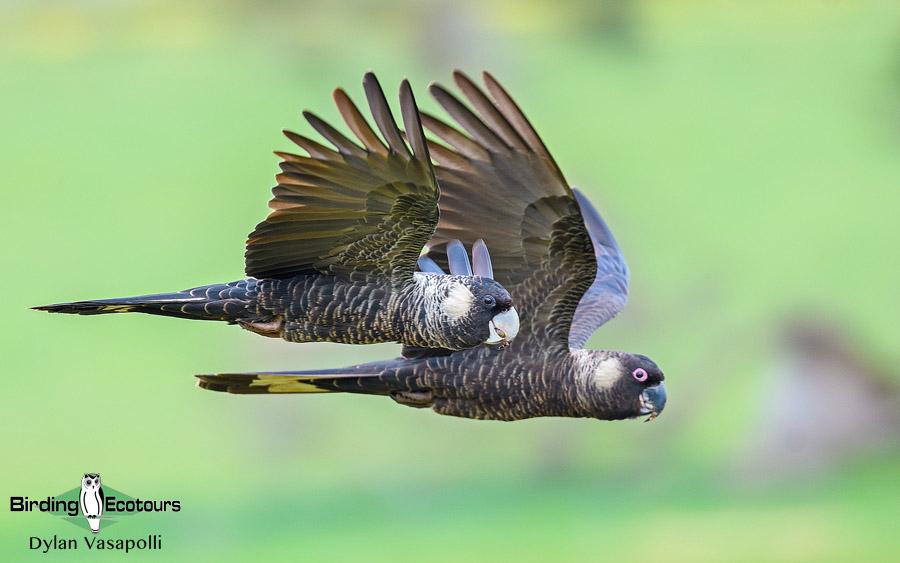 Baudin’s Black Cockatoos frequent the tall woodlands down here.
Day 8. Augusta to Busselton
The morning will be spent birding around the rugged coastline of the Cape Leeuwin area, pretty much the most southwesterly point of this huge continent-country where the Indian Ocean meets the Southern Ocean. We will look for seabirds here, such as Bridled Tern, Fairy Tern, Flesh-footed, Hutton’s, and Little Shearwaters, Southern Giant and Northern Giant Petrels, and Indian Yellow-nosed, Black-browed, and Shy Albatrosses. Much depends on what the weather is doing as to what is possible here over the water on any given day.
Along the coast we will look for Sooty and Pied Oystercatchers, Hooded Plover, Grey-tailed Tattler, Far Eastern Curlew, Pacific Reef Heron, Rock Parrot, Southern Emu-wren, and Splendid Fairywren.
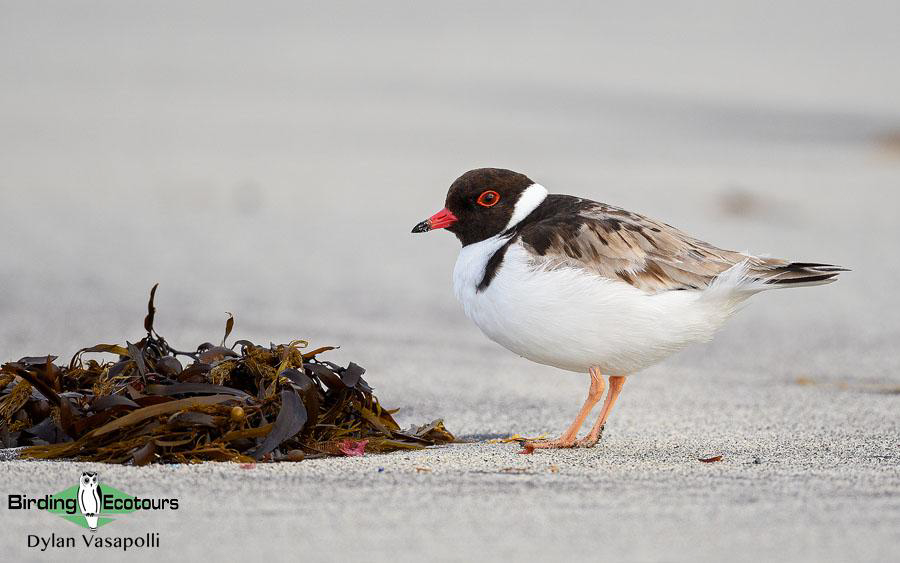 Hooded Plover is considered Vulnerable (BirdLife International), which is not surprising, it has a lot of recreational pressure on its breeding grounds (sandy beaches), but we will hope to find this beautiful shorebird during the tour.
After birding here, we will slowly wind our way up the coast, checking our areas of Banksia, jarrah, and marri woodland, with the hopes of seeing more black cockatoos, and Western Shriketit. We will stop in the picturesque Margaret River for lunch and will arrive in the Busselton area in the afternoon for the final night of the tour.
Overnight: Busselton
Day 9. Busselton to Perth, departure
Our final morning will be spent checking out some areas around Busselton where we often find interesting shorebirds and waterfowl. We will then commence the return journey back to Perth keeping our eyes peeled for anything interesting we may still want to see.
We will arrive in Perth mid-afternoon where the tour will conclude in time for an evening flight to your next destination.
Overnight: Not included
Please note that the itinerary cannot be guaranteed as it is only a rough guide and can be changed (usually slightly) due to factors such as availability of accommodation, updated information on the state of accommodation, roads, or birding sites, the discretion of the guides and other factors. In addition, we sometimes have to use a different international guide from the one advertised due to tour scheduling.
Map
Testimonials
Gallery
General Information
Birding Tour Australia: Western Australia – Southwest Specialties
Tour-Specific Information
GENERAL INFORMATION ABOUT AUSTRALIA CAN BE READ HERE
TOUR OUTLINE
This is a comprehensive Western Australia birding tour, yet it is also well-paced, allowing the opportunity to really enjoy the birds of the region. We have a couple of two-night stays along our Western Australian birding route, where we have more time to unpack and focus on the special birds of each area. Western Australia has been cut off from eastern Australia for many years, and as a result, many regionally endemic birds (and rare mammals) exist. Seemingly each year, scientific studies elevate distinct subspecies to full species status – e.g., Western Shriketit is the latest endemic species for the region with the split of the former Crested Shriketit complex into three geographically isolated “new” species. We pay careful attention to all different subspecies on this tour, even if the species may be common on our eastern Australia tour (if you’ve already done that one) because there is a reasonable chance of a future armchair tick!
Our Western Australia bird tour starts and ends in beautiful Perth. We really recommend getting in early for this tour to get used to the time zone and to enjoy what the city has to offer – good food and wine and some excellent parklands for birding. Perth is a long way from anywhere (even other major cities in Australia!) but is serviced by international flights from all around the world, as well as numerous domestic flights from all around Australia.
We will be concentrating on the endemic birds of Western Australia on this Western Australia birdwatching tour; some of these include some excellent parrots, such as Carnaby’s Black Cockatoo, Baudin’s Black Cockatoo, Western Corella, Red-capped Parrot, and Western Rosella. More secretive regionally endemic birds include Noisy Scrubbird, Western Bristlebird, and Black-throated Whipbird. Other top endemic targets on our Western Australia bird tour include Western Spinebill, Gilbert’s Honeyeater, White-breasted Robin, and Red-eared Firetail. Species not likely on many other Australian bird tours (as they mainly occur in a bit of a birdwatcher’s no-mans-land away from Western Australia), include Rufous Treecreeper, Blue-breasted Fairywren, Western Yellow Robin, and Western Whistler – all are stunners too! The tour also offers up chances of some exciting mammals, with one of the main targets being the very rare Numbat. Other interesting mammals can include Western Grey Kangaroo and the tiny Honey Possum. A decent list of reptiles can be expected if spring has sprung and temperatures are increasing. There could also be some interesting flowers on show, particularly orchids, which the Stirling Range is well known for (weather and season depending).
DAILY ACTIVITIES, PHYSICAL REQUIREMENTS, AND TOUR PACE
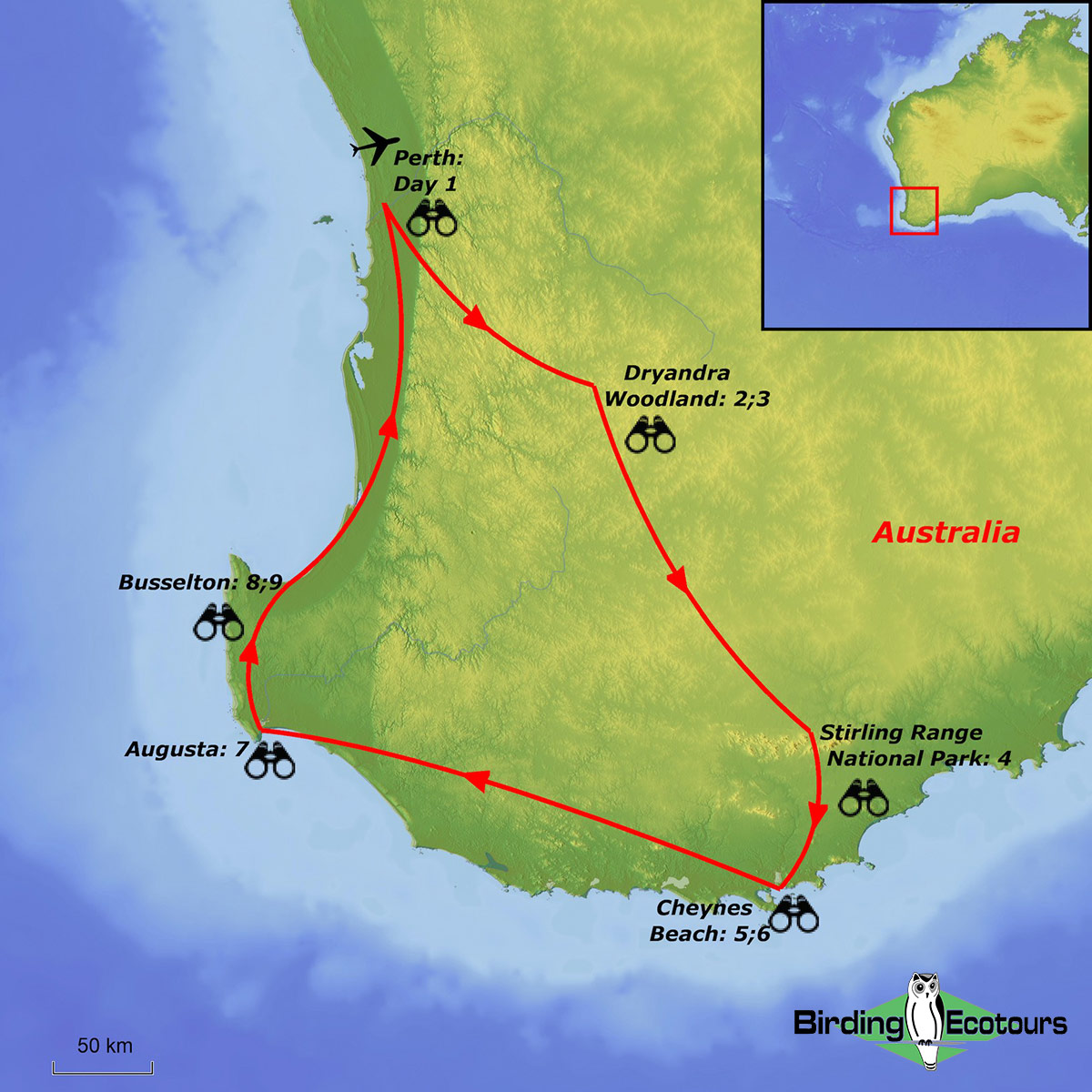
This Western Australia bird tour goes at a moderate pace, but there are a couple of two-night stays in the itinerary. We will cover quite a bit of ground on our birding circuit of the southwest of Western Australia. This circuit starts and ends in Perth and visits Dryandra Woodland, Stirling Range National Park, Cheynes Beach, Augusta (Cape Leeuwin), and Busselton.
There is quite a bit of driving involved to get between birding areas; these will be broken up by bathroom breaks and lunch/snack stops where possible. Most of the drives are around 2 – 3 hours in duration, but these will become longer with birding/lunch stops added. The longest drive is as we move between Cheynes Beach and Augusta; this is a drive of 4 – 5 hours, depending on traffic and birding stops. We usually buy a picnic lunch and eat this along the way on this day as the route passes through some areas with little provisions but some good birding stops.
The tour is generally considered easy in terms of physical exertion. We tend to make short walks from our vehicle or accommodation in a loop of up to 0.6 – 1.2 miles (1 – 2 kilometers/km), and we may make several of these a day. On a couple of occasions, such as at Cheynes Beach we are likely to make slightly longer walks of 2.5 miles (4 km). Most of the walking we will do will be on mainly flat (sometimes sandy ground), but there are a couple of hills we will walk up/down, particularly while in the Stirling Range area and the Cheynes Beach area. These walks are not considered difficult. We will, of course, take all walks slowly and at birding pace.
We will likely stake out one or two birds, which may require sitting in one place for a few hours (so having some layers will be important in case the temperature is low – see the “Weather” section below). We may look for some nocturnal wildlife at a couple of sites if the weather is suitable.
On some occasions, when we have multiple nights at one location, we will likely take a break for some rest and relaxation during the middle of the day.
TRANSPORTATION
We will use a 12-seater minibus on this Western Australia birdwatching tour. There will be limited baggage space in the vehicle, so please pack as lightly as possible for the tour (including within the seating area).
DOMESTIC FLIGHTS
There are no domestic flights on this Western Australia bird tour.
LUGGAGE
Please pack as lightly as possible for this Western Australia birding tour. A medium, soft-sided, and robust duffle bag is likely to work best for packing in the tour vehicles. You will be expected to load and unload your own bags into and out of vehicles and to/from your rooms.
We recommend a daypack is used to keep items that you wish to use daily when in the vehicle or when birding in the field (such as binoculars, camera, notebook, field guide, personal supply of water, snacks, umbrella, rain jacket, extra layers of clothing, etc.).
ACCOMMODATION
We stay in a very wide range of accommodation on this Western Australia birding tour, including nice city hotels, quaint countryside/rural bed and breakfasts, static caravans, holiday cottages, basic hotels/motels, and more luxurious lodges. The accommodation we use on this bird tour has been selected due to their good locations in terms of birding sites and places to eat (also important when in rural locations!). Most accommodation has ensuite bathrooms. At Stirling Range, we stay in small cottages; each cottage has two private bedrooms with a communal bathroom, kitchen, and dining/lounge area. We will spend one night here. The exact number of cottages we have depends on the final number of tour participants and rooming arrangements. Wi-Fi is available at most places we stay on this tour. Some of the accommodation provides breakfast/meals, and we will eat those there, where suitable. See the “Meals” section below for more.
MEALS
Despite Perth being one of the biggest and most cosmopolitan cities in Australia, once you leave the city behind, it becomes rural very quickly. Breakfasts will be taken at our overnight venues in most instances, though at some locations, such as at Stirling Range, Augusta, and Bussleton, we will use local cafés. Most lunches will be sourced from local bakeries or cafés and either eaten onsite or as we drive between different birding locations. Most dinners will be eaten at pubs or restaurants near our accommodation. On one night, when we stay at Stirling Range Retreat, we will have a picnic dinner sourced along the way. Our accommodation at Cheynes Beach will provide breakfast and dinner for us. Please make sure you have notified us of any dietary restrictions for this tour.
WEATHER
This tour will be occurring during the Western Australian spring; therefore, we can expect a range of temperatures and weather. The average daytime temperature is likely to be 61 degrees Fahrenheit (oF) (16 degrees Centigrade/oC), with highs of 70 oF (21 oC). At night, the temperatures could be in the region of 52 oF (11 oC). It is likely to be warmer inland and cooler by the sea, where southerly airflows can bring colder conditions. There are no notable elevation gains on this tour to impact the temperature. Rainfall could occur at any time on this tour but is more likely in coastal areas.
WHAT TO BRING: CLOTHING AND OTHER ITEMS
The following is a list of useful items to bring on this Western Australia birding tour and should be read in conjunction with the Australia general information document.
- A field guide to the birds of Western Australia. See the general information for our recommendations for this tour.
- Hiking pole or walking stick to help on the tracks and trails. While probably not necessary for everyone, a walking stick is compulsory for anyone who is unsteady walking, as we feel this is a safety issue; we don’t want anyone slipping on the trails or anywhere else. Please discuss with us if you are unsure whether you will need one or not.
- Torch (flashlight) and/or headlamp (headtorch), and spare batteries.
- High-concentration DEET insect repellant, or similar.
- A small personal first aid kit. See the suggested items from the Centers for Disease Control and Prevention (CDC), here.
- Lightweight hiking boots are likely the best footwear for this tour. A set of sandals (flip-flops) and/or trainers would be useful for walking around some of the accommodations but are not suitable for birding time (e.g., consider snake bites, mud, slips, trips, and falls, etc.).
- Quick-drying birding clothes (in suitable colors) are the best for this tour, and a good selection of clothing layers (including sweater/jumper/fleece/coat) are also recommended due to the potential for cool or even cold mornings or days, particularly on the south coast.
- Light rain jacket/poncho (and small umbrella) as rain could fall at any time at any location. Spring in Western Australia could see rain showers or prolonged periods of rain if a weather system moves through.
- A dry bag to keep valuable documents in, such as passports, cell phones, wallets, etc., as well as cameras, if it rains.

Download Australia – Southwest Specialties tour Information