- Duration:
- 16 days
- Group Size:
- 4–5
- Tour Start:
- Seville San Pablo Airport, Seville, Andalusia, Spain
- Tour End:
- Josep Tarradellas Barcelona-El Prat Airport, Barcelona, Spain
Spain: Spring Birding Extravaganza
Details
2027
12–27 April
Per person sharing
€7,620 EUR
$9,188 USD / £6,875 GBP
Single supplement
€1,375 EUR
$1,658 USD / £1,241 GBP
Itinerary
Download ItinerarySpain Birding Tour: Spring Birding Extravaganza
Spain is one of Europe’s birding wonders. It combines a sensational range of species with beautiful weather and stunning scenery. This spring birding extravaganza is perfectly timed to take in the exciting migration with a small group of like-minded birders. As our tour progresses, we will take in Spain’s vast interior with its breathtaking scenery, dotted with gorgeous white-painted classically Spanish villages. It is here that we will sample the finest avifauna that the country has to offer, including the excitement of up to 23 species of birds of prey! Our thorough itinerary covers a range of habitats from the famous coastal areas of Doñana National Park to the semi-arid steppe of the interior and the high peaks of the Pyrenees. This will enable us to see the true variety that Spain has to offer the visiting birdwatcher. The timing of our visit during the spring passage migration will also enable us to maximize the sheer number of species on offer.
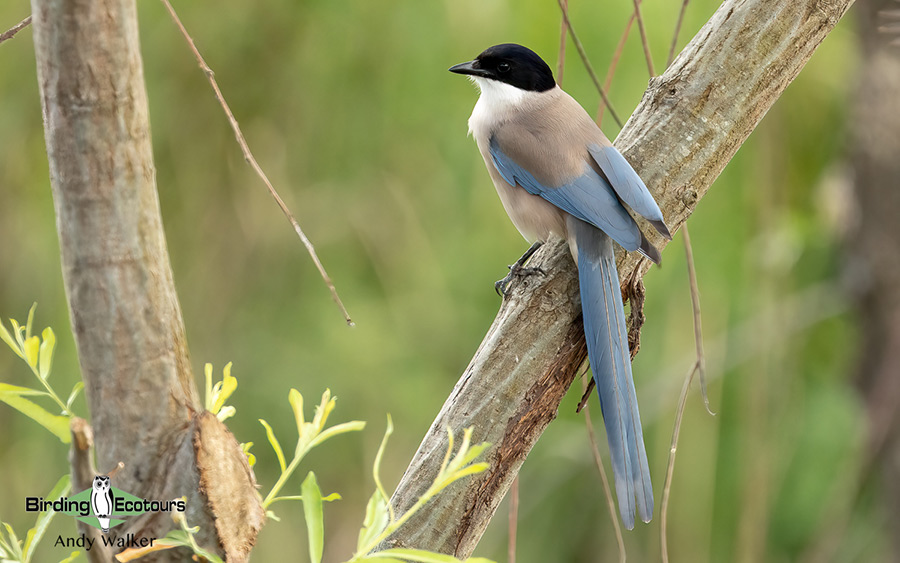
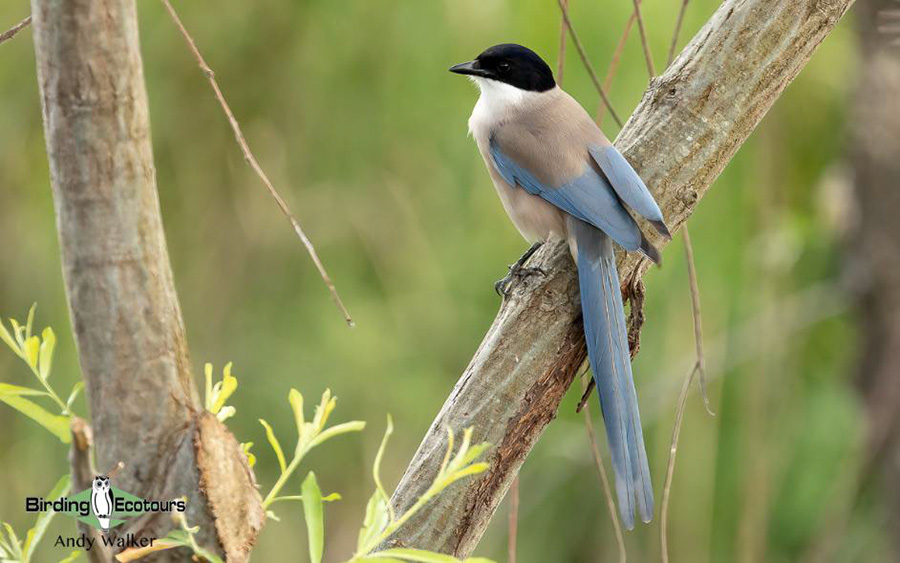 The gorgeous Iberian Magpie is a localized and attractive regional endemic and can be found on this Spain birding tour.
Spain’s bird list currently stands at 687 species (following International Ornithological Congress (IOC) v14.2 taxonomy as of July 2024), one of the highest single country lists in the Western Palearctic, and this results in a typically high total of over 200 species regularly recorded on this tour. The combination of expert guide, a comprehensive itinerary visiting the best places to go birding in Spain, as well as visiting at the best time of year, will result in some wonderful avian experiences.
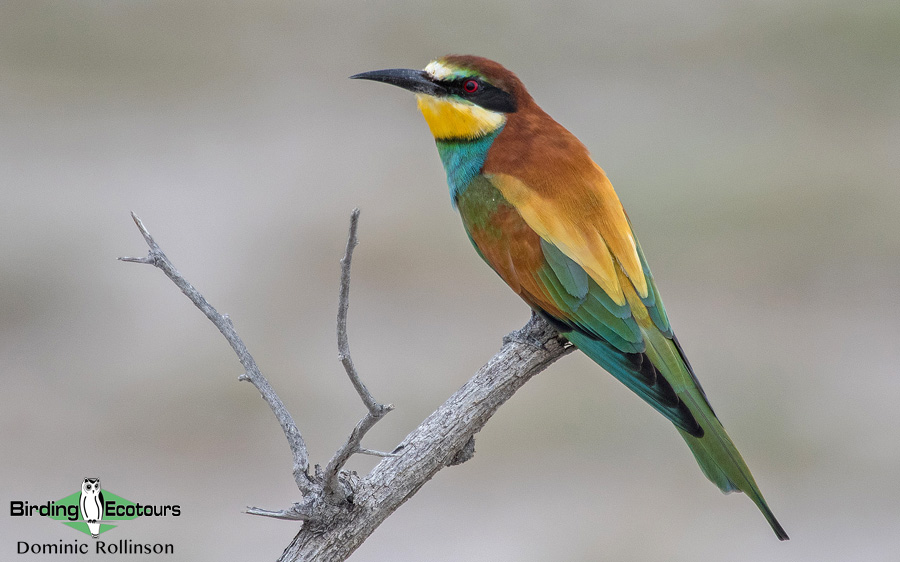 Our tour will be given a splash of exotic color as the skies fill with European Bee-eaters arriving from their wintering grounds in sub-Saharan Africa.
We begin our tour in the surrounds of the Guadalquivir River and the famous Doñana National Park where we will visit the bird rich habitats of this wonderful area. This is a great way to kick off our tour with classic Mediterranean species such as White-headed Duck, Marbled Duck, Red-crested Pochard, Black-winged Kite, Spanish Imperial Eagle, Montagu’s Harrier, Western Swamphen, Red-knobbed Coot (Critically Endangered on the Red List of Spain (BirdLife International) and the only population in Europe), Collared Pratincole, Lesser Kestrel, Iberian Magpie (formerly Azure-winged Magpie), and the newly described Mediterranean Short-toed Lark (formally Lesser Short-toed Lark) all targeted, along with many other species. Rarer species in the form of Little Swift and Lesser Crested Tern will add to the spectacle, as will a visit to the land of the world’s rarest large cat, Iberian Lynx. While sightings of this elusive predator are by no means guaranteed we will visit the best areas possible to give us a chance of an encounter with this mystical feline.
We then move north through the beautiful Spanish countryside towards Monfragüe National Park and the surrounding steppes and sierras. This area gives us a chance to explore some of Spain’s special steppe species such as Great Bustard, Little Bustard, Eurasian Stone-curlew, Black-bellied Sandgrouse, Pin-tailed Sandgrouse, Great Spotted Cuckoo, and European Roller.
This beautiful area is also prime raptor country, and here we will be in search of Egyptian Vulture, Cinereous Vulture, Griffon Vulture, Spanish Imperial Eagle, Booted Eagle, and Short-toed Snake Eagle. The national park is home to many other fabulous species including Black Stork, Western Orphean Warbler, Blue Rock Thrush, and Western Black-eared Wheatear.
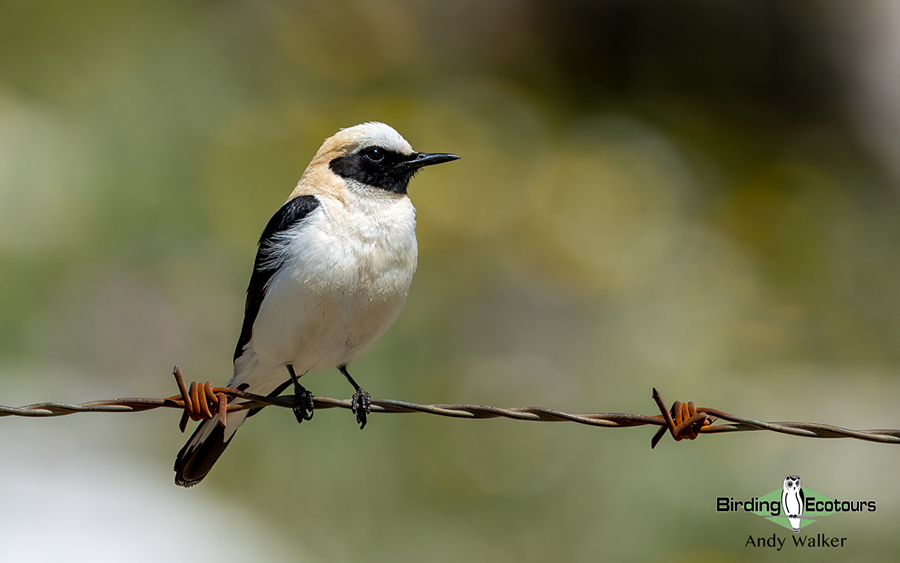
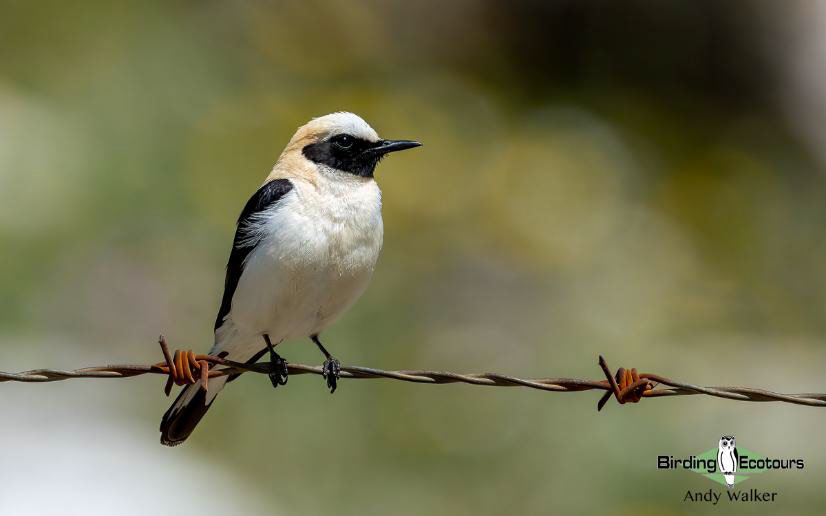 We should encounter the migrant Western Black-eared Wheatear on this Spanish birding tour.
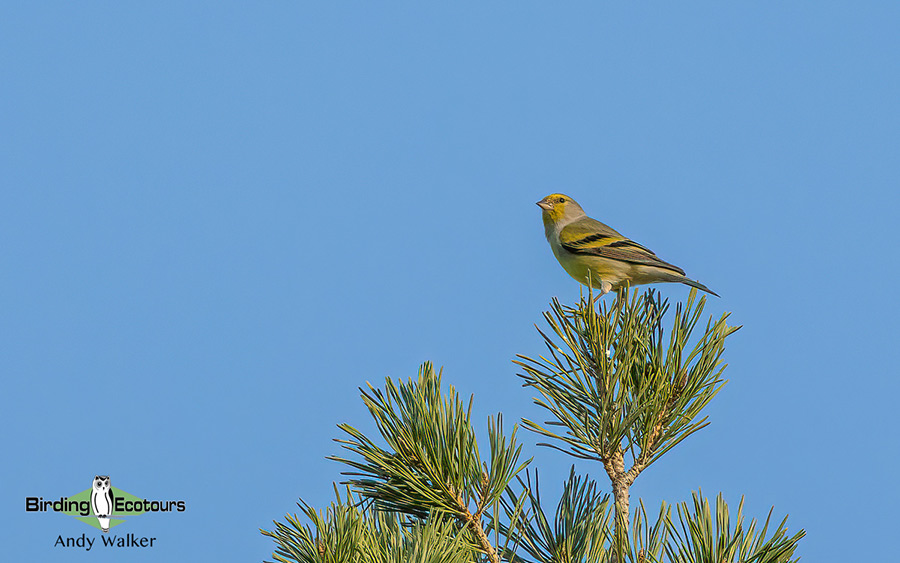
We will also get our first taste of mountain birding in the Sierra de Gredos. Here we will look for Crested Tit, White-throated Dipper, Common Rock Thrush, Water Pipit, Citril Finch, and Ortolan Bunting. We continue our northward journey to the plains north of Madrid. Here we will target the mystical Dupont’s Lark, which is best found in the early morning light of spring. This area is also superb for other larks such as Greater Short-toed Lark, Calandra Lark, and Thekla’s Lark. Other key species of the area are Common Quail, Iberian Grey Shrike, and Tawny Pipit.
We then take our long journey to the Pyrenees, with woodpeckers our first targets. We will search for Middle Spotted Woodpecker, Black Woodpecker, and the incredibly rare (in this part of Europe) White-backed Woodpecker. We then proceed further into the vast Pyrenean wilderness looking for the iconic Bearded Vulture, a true highlight of a visit to the region. We will continue to explore this breathtaking part of Europe and target the key species of the high Pyrenees.
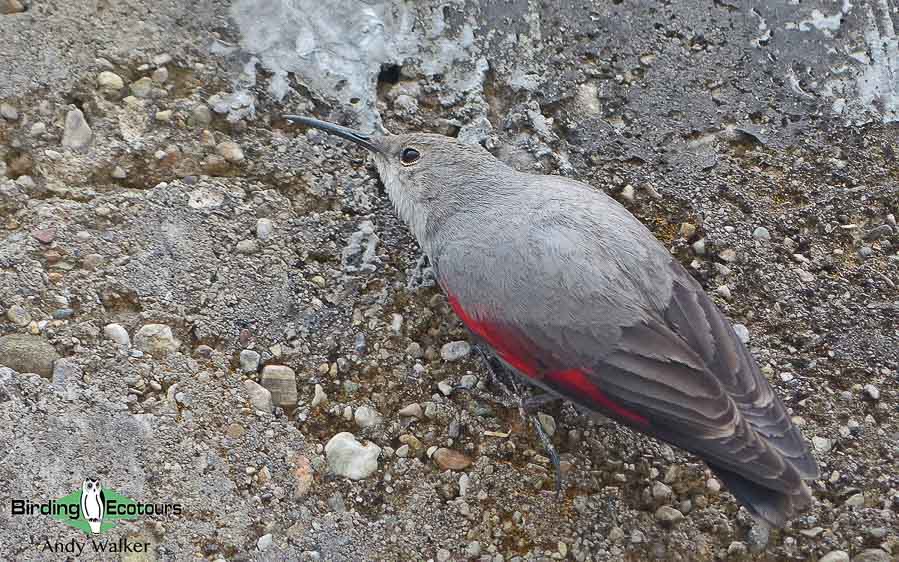
Along with Bearded Vulture we will spend time in search of the beautiful Wallcreeper (a monotypic family). The area that supports this species is also a great place to yet again search for Red-backed Shrike plus other key species for the region such as Eurasian Wryneck, Black Woodpecker, Alpine Chough, Marsh Tit, Eurasian Treecreeper, Garden Warbler, Ring Ouzel, Alpine Accentor, Rock Sparrow, and Yellowhammer. With luck we may also spot Southern Chamois, a species of goat-antelope, and the very adorable Alpine Marmot, a species of ground dwelling squirrel. We finish our Pyrenean adventure with a visit to the high plateaus and dramatic glacial valleys of the Ordesa y Monte Perdido National Park. Here we will target some of the previously mentioned montane species plus the striking White-winged Snowfinch.
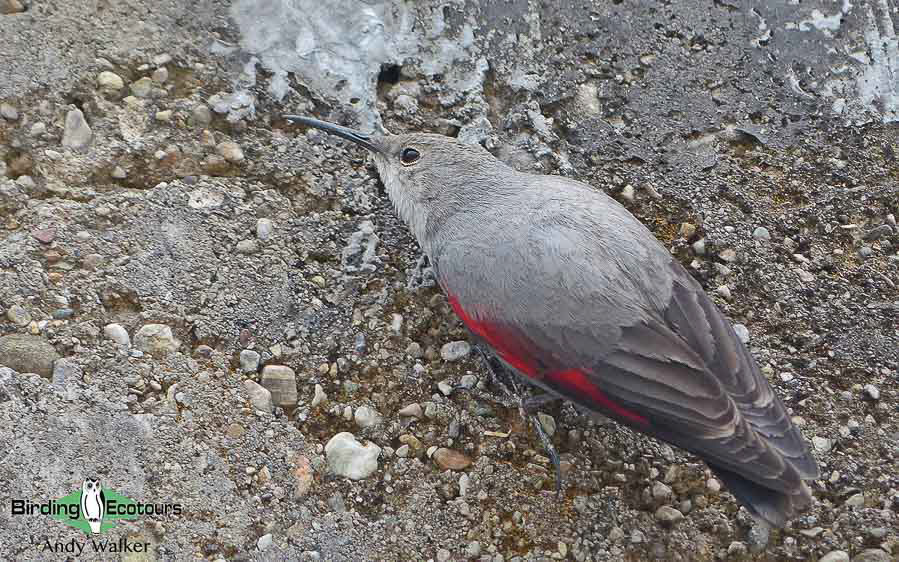 Wallcreeper is highly prized as this species is also a monotypic family.
Sadly, all good things must come to an end and the final leg of our tour will see us look for the often hard to find Moustached Warbler and Bearded Reedling (Bearded Tit) in the area around Lleida. We finish with a visit to the Delta de Llobregat near Barcelona, which will give an excellent range of wetland species and migrants, the perfect way to end our spring birding extravaganza. If you want to extend your birding in the region, consider joining our Morocco tour (before this tour) or our Poland tour (after this tour) for some more great Western Palearctic birding.
Itinerary (16 days/15 nights)
Day 1. Arrival in Seville
After your arrival in Seville and transfer to our hotel the rest of the day will be at your leisure to explore this ancient and beautiful city. We will have a group ‘welcome dinner’ in the evening.
Overnight: Hotel in Seville
Day 2. Birding around Sanlúcar de Barrameda
Our first full day of the tour will see us explore the superb area around Spain’s second longest river, the Guadalquivir. Throughout the day we will visit three bird rich sites that offer great variety and experiences.
The first site we are likely to visit is the Bonanza Saltpans. This expansive saltpan site is superb for shorebirds (waders) and we will spend some time here looking for species such as Kentish Plover, Little Ringed Plover, Black-winged Stilt, Pied Avocet, Dunlin, Little Stint, Curlew Sandpiper, Sanderling, Ruff, Common Redshank, and Eurasian Whimbrel. The area is also excellent for two rare waterbirds, the Endangered White-headed Duck and the Critically Endangered (in Spain), Red-knobbed Coot (BirdLife International). The entire European population of the coot is found in Spain and even here it is incredibly rare. Greater Flamingo is a common species here and we will visit a nearby heronry where we can find a variety of Pelecaniformes such as Black-crowned Night Heron, Squacco Heron, Western Cattle Egret, Purple Heron, and Eurasian Spoonbill.
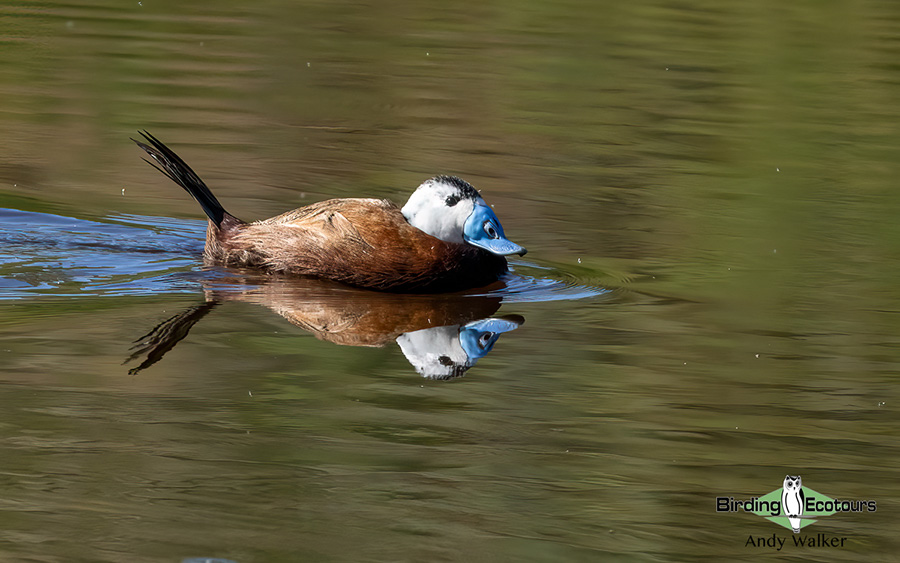
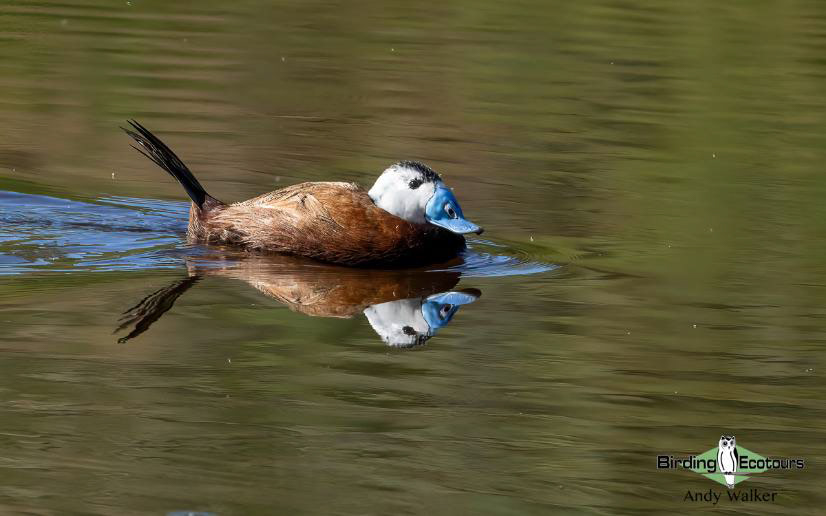 The Endangered (BirdLife International) White-headed Duck will be an early target on the tour.
The second site in the area will see us explore the habitats bordering the Guadalquivir River. It is here we will search for two key species in the form of Marbled Duck (another very localized species in Europe) and Mediterranean Short-toed Lark, two species that are hard to come by elsewhere in Spain. The vineyards around the area are a good spot to look for Montagu’s Harrier, Lesser Kestrel, and Eurasian Hoopoe, and the timing of our tour may allow us to catch up with the striking Rufous-tailed Scrub Robin, which breeds here.
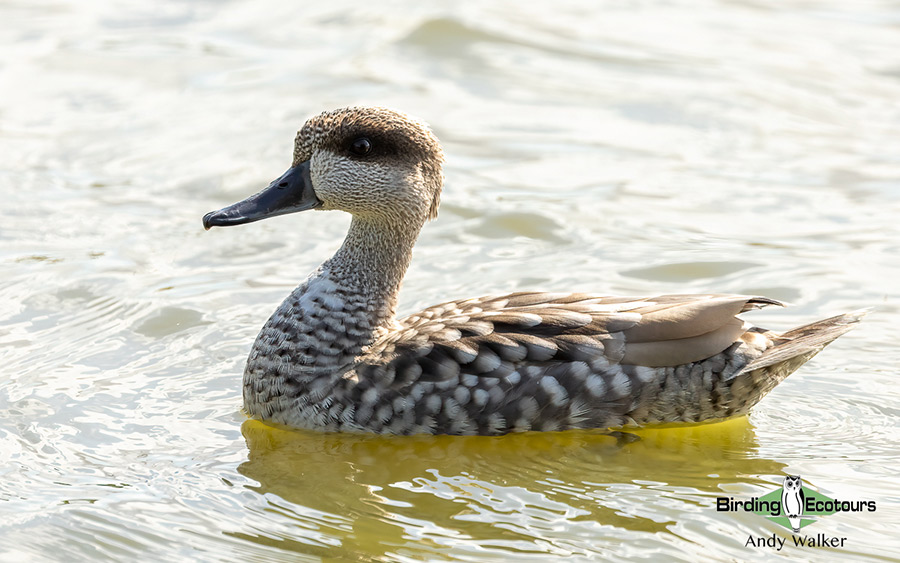
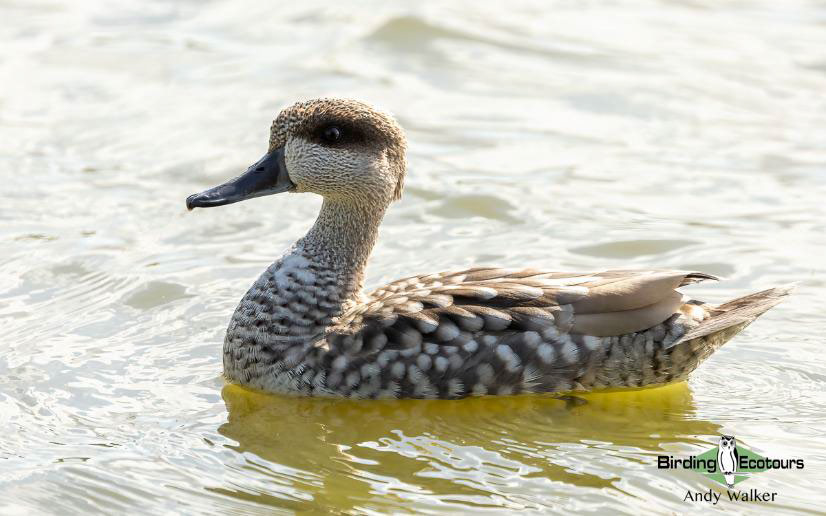 Marbled Duck is another rare target on our Spain birding tour.
Our final site in the area is the Port of Chipiona. Famed for its superb seafood, the town also holds the only European colony of the strikingly black-and-white plumaged Little Swift. While common on the other side of the Mediterranean, in Morocco, this species is a real European mega rarity, and we will take some time enjoying the nesting colony. The beach nearby can be excellent for shorebirds, gulls, and terns including rare species such as Lesser Crested Tern.
Overnight: Palacio de Arizón, Sanlúcar de Barrameda
Day 3. Sanlúcar de Barrameda to El Rocio
Depending on our success on day two we will either spend some time in the morning around Sanlúcar de Barrameda or proceed directly to the superb Brazo del Este wetlands to the north. This protected area near the city of Seville is a superb habitat for shorebirds and waterbirds, plus passerines such as Savi’s Warbler and Great Reed Warbler. We also stand a chance of adding some elusive crakes to our list with Spotted Crake, Little Crake, and Baillon’s Crake all present here.
As we proceed through the site, we will spot significant numbers of Western Swamphen, Purple Heron, Squacco Heron, Collared Pratincole, Whiskered Tern, and many more species typical of this habitat. We should also get some introduced species from Africa that have established themselves in the area such as Black-headed Weaver, Yellow-crowned Bishop, and Common Waxbill.
In the afternoon we visit Dehesa de Abajo and Dehesa Las Hermosillas on the borders of Doñana National Park. At these sites we have another chance of Marbled Duck, Red-crested Pochard, possibly Ferruginous Duck, and Red-knobbed Coot. We can then proceed to Dehesa Torneros which is a beautiful area in spring with large numbers of wildflowers. This habitat is excellent for Common Cuckoo, Sardinian Warbler, European Stonechat, European Serin, Corn Bunting, and other common passerines. The real bonus of this area is that we will be in the land of the Iberian Lynx and we will spend time looking for this elusive big cat.
After dinner we will search the grounds of our hotel, looking for Red-necked Nightjar, Tawny Owl, and Long-eared Owl.
Overnight: Ardea Purpurea, Villamanrique de la Condesa
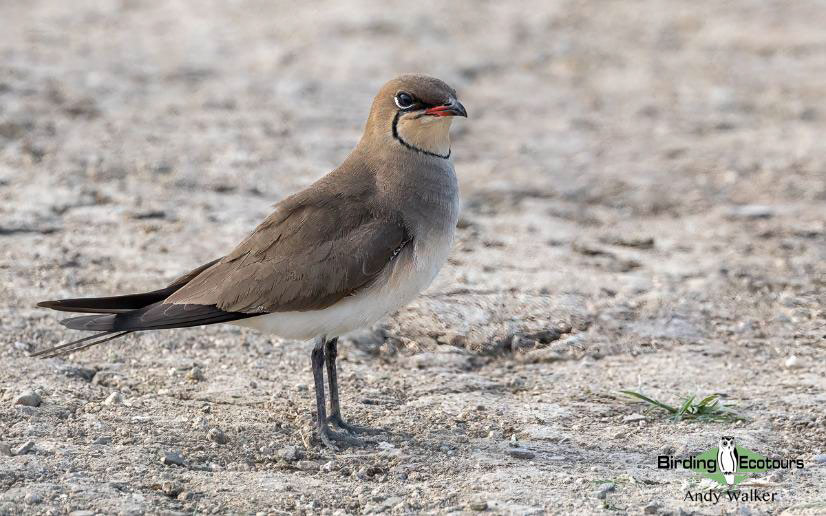 Collared Pratincoles can be found in large numbers around Sanlúcar de Barrameda.
Day 4. El Rocio
This morning we will visit the lagoon of El Rocio and surrounding sites of La Rocina, El Acebrón, and El Acebuche. This is a superb area for species that are otherwise hard to find in this part of Spain and we will spend time searching for Lesser Spotted Woodpecker, Iberian Green Woodpecker, Eurasian Golden Oriole, Dartford Warbler, Iberian Chiffchaff, and Iberian Magpie. Iberian Magpie was formally called Azure-winged Magpie, with two disjunct populations, however, this species has now been split into two species, with birds in China remaining as Azure-winged Magpie (we see these on our China: Sichuan tour), and birds in Iberia gaining the new name. They are both beautiful birds.
In the afternoon we will head towards Centro de Visitantes Jose Antonio Valverde. This is a superb birding area where we will be in the prime habitat of Spanish Imperial Eagle plus other highlight raptor species such as Montagu’s Harrier and Black-winged Kite. The lagoon and wetland areas here will give us a variety of species such as Greater Flamingo, Collared Pratincole, and Squacco Heron.
Overnight: Ardea Purpurea, Villamanrique de la Condesa
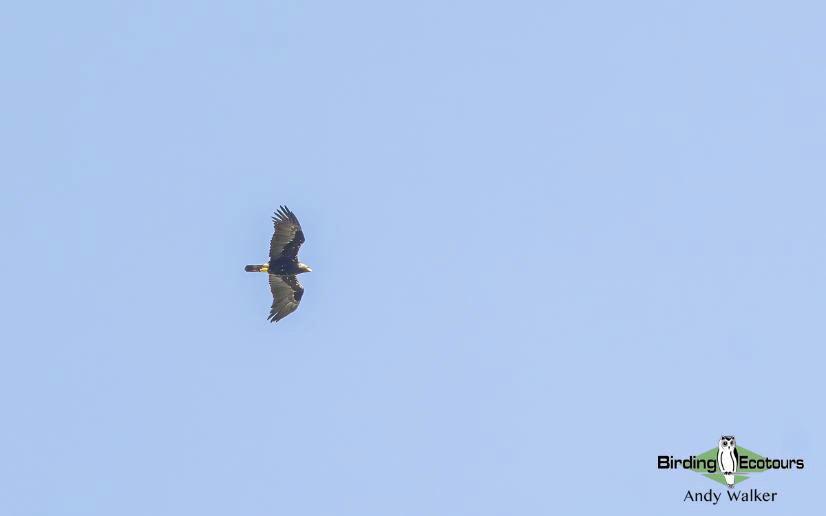 We will look for Spanish Imperial Eagle when we visit their prime habitat.
Day 5. El Rocio to Monfragüe
Our day will start with a short birding session at Bollullos Par del Condado. This area is our last stop in Andalusia and could be our last chance of seeing the stunning Montagu’s Harrier. Unfortunately, this species has declined rapidly in the neighboring region and our next destination, Extremadura, so this gives us one last chance of seeing this iconic Mediterranean species. Our tour should also be timed perfectly to coincide with the arrival of Rufous-tailed Scrub Robin and we will search this area for it as well.
Afterwards we will commence the journey north through the beautiful Spanish countryside towards Monfragüe. On the route we will stop at Alange Reservoir in Badajoz to search for Egyptian Vulture, Bonelli’s Eagle, Black Kite, Eurasian Scops Owl, Gull-billed Tern, Woodchat Shrike, Black Wheatear, and Western Black-eared Wheatear.
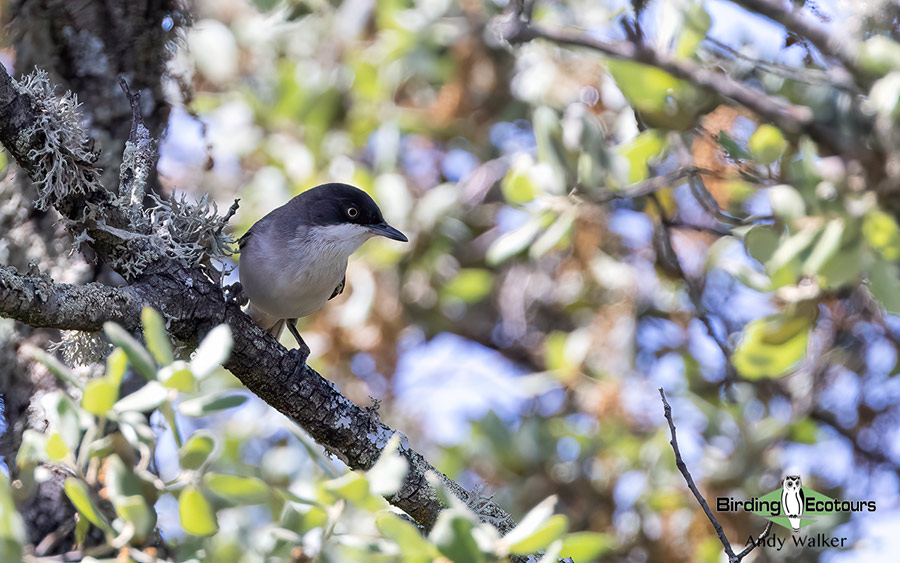
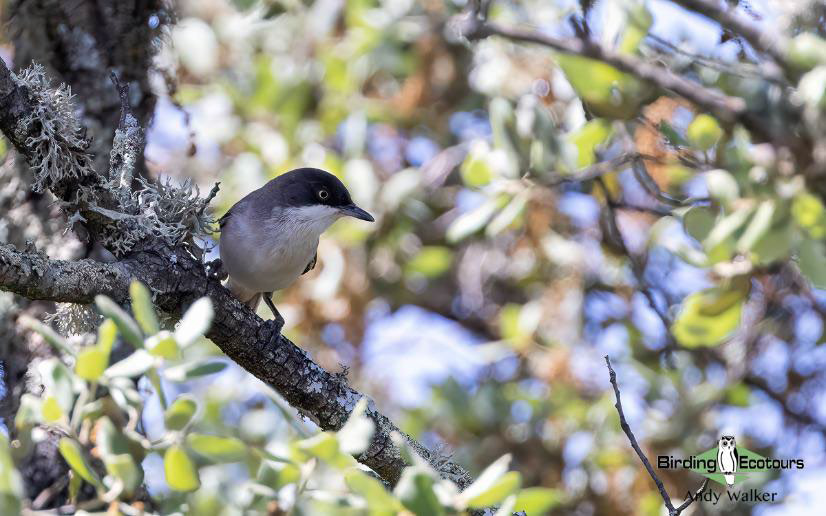 We should encounter the migrant Western Orphean Warbler on this Spanish birding tour.
After this stop we continue our journey north towards Monfragüe. Depending on our time of arrival we can visit one or two sites close to our hotel. One site is Jaraicejo, where the star species is the tiny Spectacled Warbler, a rather cute Sylvia warbler. Other Sylvia warblers present here include Western Subalpine Warbler and Dartford Warbler. Sylvia warblers are part of the Sylviidae family (now Sylviid Babblers) and are Europe’s answer to the colorful New World Warblers, the Parulidae family of the Americas. Additional key species in this bird rich area include Black Stork, Short-toed Snake Eagle, Booted Eagle, European Turtle Dove, European Bee-eater, Eurasian Hoopoe, Iberian Grey Shrike, Short-toed Treecreeper, Thekla’s Lark, Greater Short-toed Lark, Eurasian Crag Martin, European Red-rumped Swallow, Western Bonelli’s Warbler, Spotless Starling, Common Nightingale, Spanish Sparrow, and Cirl Bunting. Another nearby site is Almaraz where we have a chance of spotting the huge and equally striking Eurasian Eagle-Owl. This apex predator is a highlight of any tour and a sighting of one will be a great way to end the day.
Overnight: Hospederia de Monfragüe, Torrejón el Rubio
Day 6. Monfragüe to Santa Marta steppes
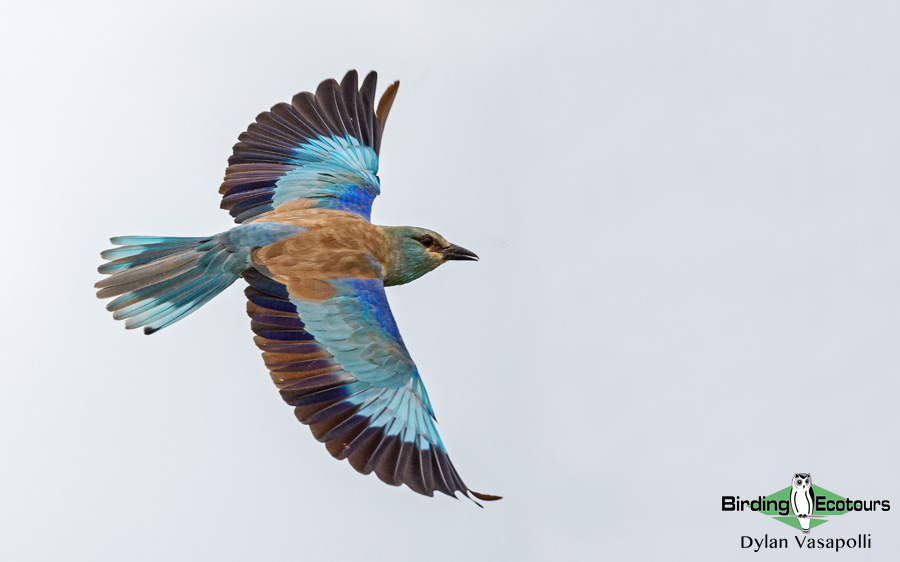
We will spend the full day exploring the Santa Marta steppes. This beautiful area is our best chance of the tour to spot some of the many iconic species of the steppe habitat. We will have plenty of time looking for Great Bustard, Little Bustard, Black-bellied Sandgrouse, Pin-tailed Sandgrouse, Eurasian Stone-curlew, European Roller, and Great Spotted Cuckoo.
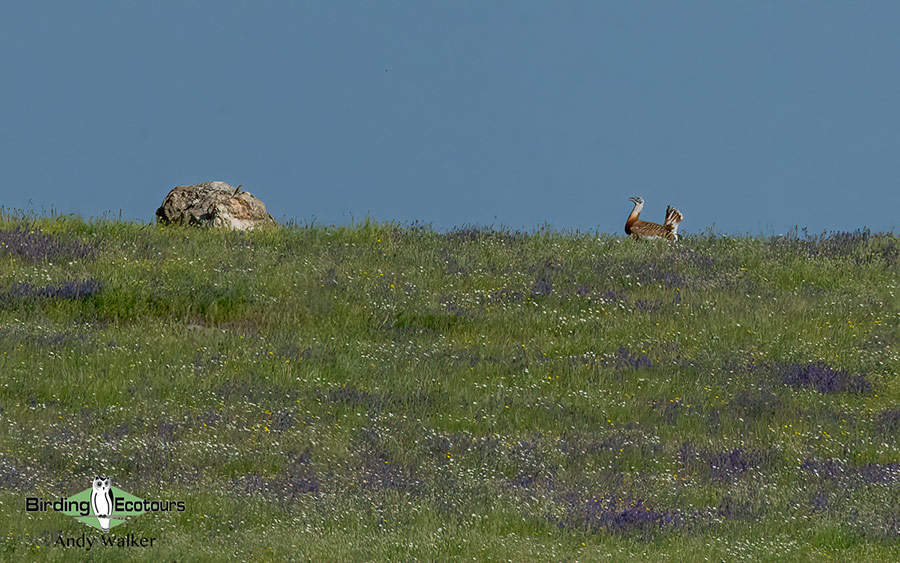
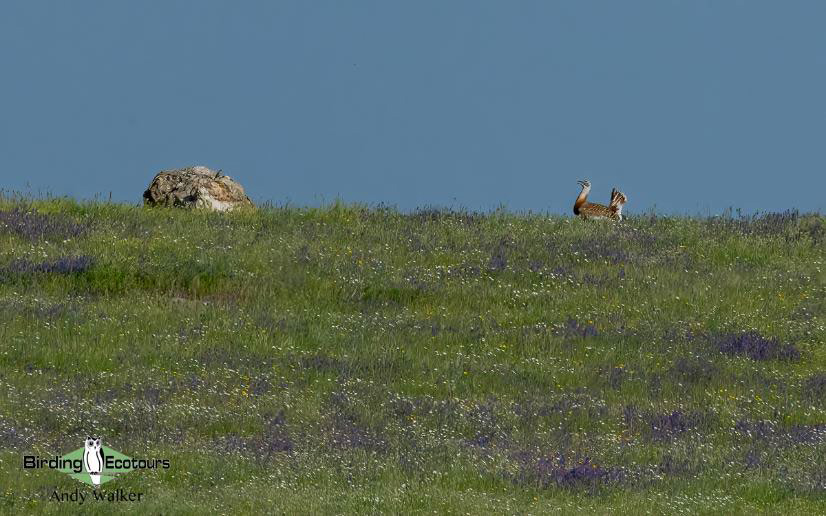 The sight of a Great Bustard roaming around a meadow of beautiful wildflowers is rather special.
Overhead, the sight and sound of European Bee-eaters will likely fill the air, and other steppe species such as Black Kite, Lesser Kestrel, Eurasian Hoopoe, Iberian Grey Shrike, Crested Lark, Calandra Lark, Greater Short-toed Lark, European Stonechat, and Corn Bunting will add variety to a day focused on the real specials of this area.
Overnight: Hospederia de Monfragüe, Torrejón El Rubio
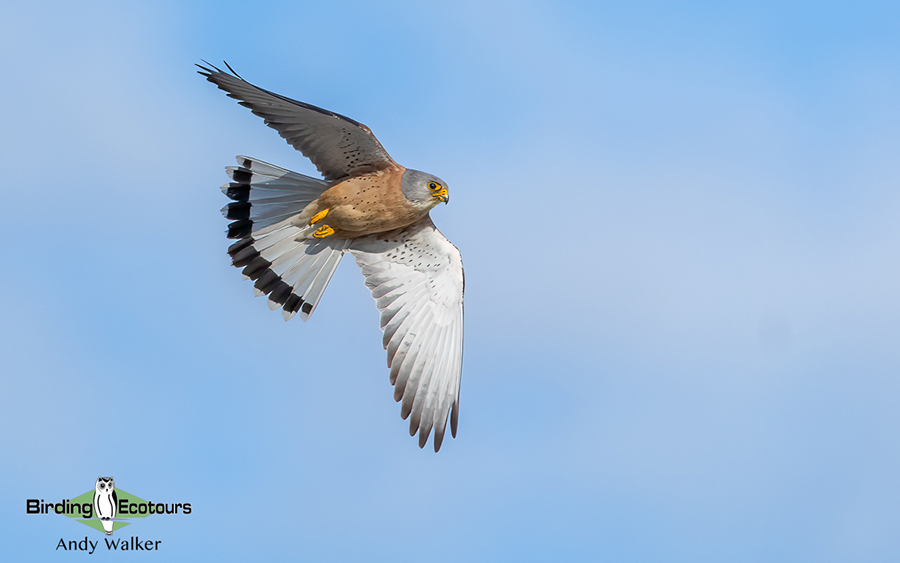
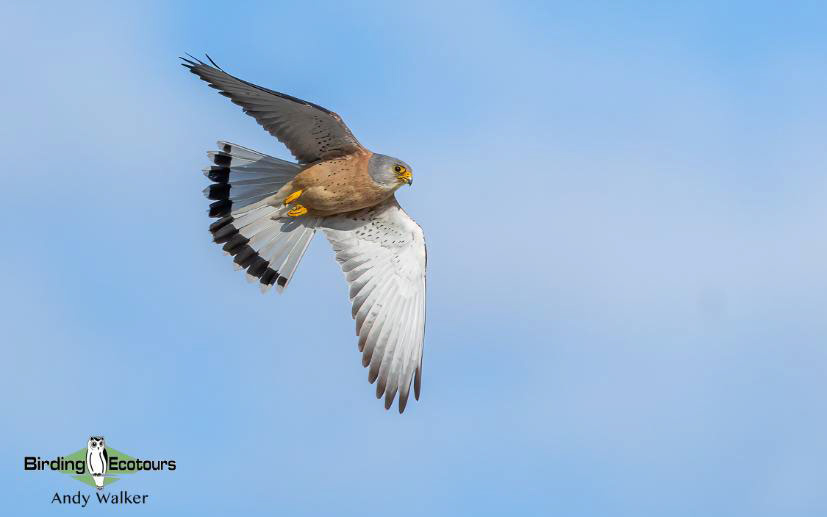 Arriving from Africa in the spring, colonies of breeding Lesser Kestrel can be found here.
Day 7. Monfragüe to Gredos
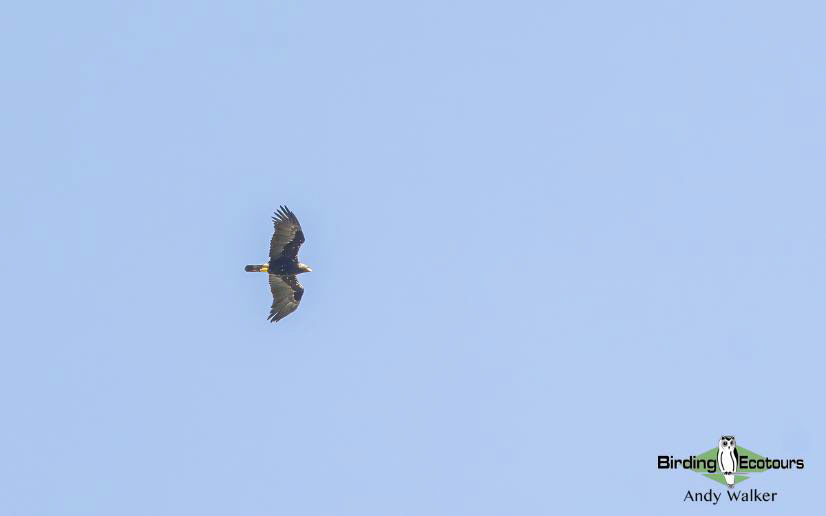
Our second day in Monfragüe will take us to Monfragüe National Park itself, before we continue our journey north to Gredos. The majestic scenery and fabulous wildlife here make this a real highlight of the tour. The national park is a mecca for birds of prey, with Egyptian Vulture, Cinereous Vulture, Griffon Vulture, Short-toed Snake Eagle, Booted Eagle, Bonelli’s Eagle, Spanish Imperial Eagle, Golden Eagle, Red Kite, Black Kite, Common Buzzard, Osprey, Eurasian Sparrowhawk, Eurasian Goshawk, Black-winged Kite, Montagu’s Harrier, Lesser Kestrel, Common Kestrel, Eurasian Hobby, and Peregrine Falcon all recorded in the area during spring. While some of these species are more common than others, we will have a fantastic day in the national park, taking in its many birds of prey.
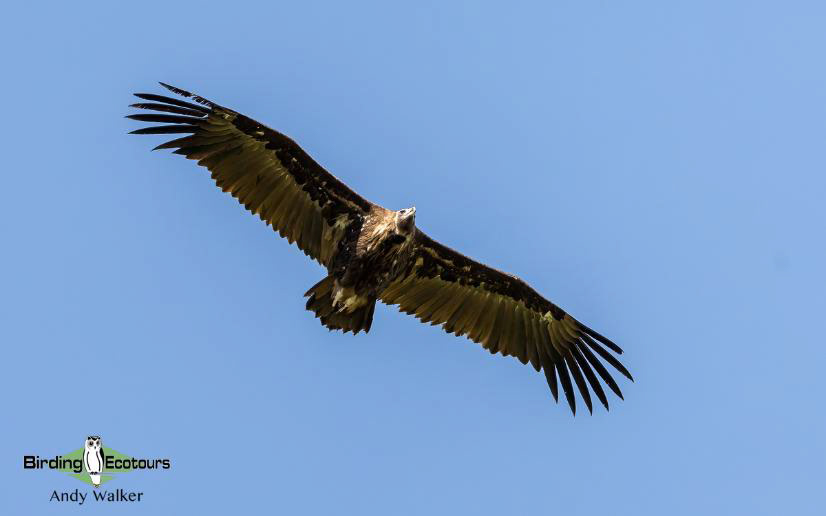 The humongous Cinereous Vulture can be seen well at Monfragüe National Park.
However, it is not all just about birds of prey here, as many other star species call the national park their home. These include Black Stork, Alpine Swift, Iberian Grey Shrike, Eurasian Golden Oriole, Thekla’s Lark, Eurasian Crag Martin, European Red-rumped Swallow, Short-toed Treecreeper, Zitting Cisticola, Melodious Warbler, Iberian Chiffchaff, Western Orphean Warbler, Western Subalpine Warbler, Blue Rock Thrush, Western Black-eared Wheatear, Northern Wheatear, Spanish Sparrow, Rock Sparrow, Hawfinch, Rock Bunting, and Cirl Bunting.
Overnight: Hostal Almanzor, Navarredonda de Gredos
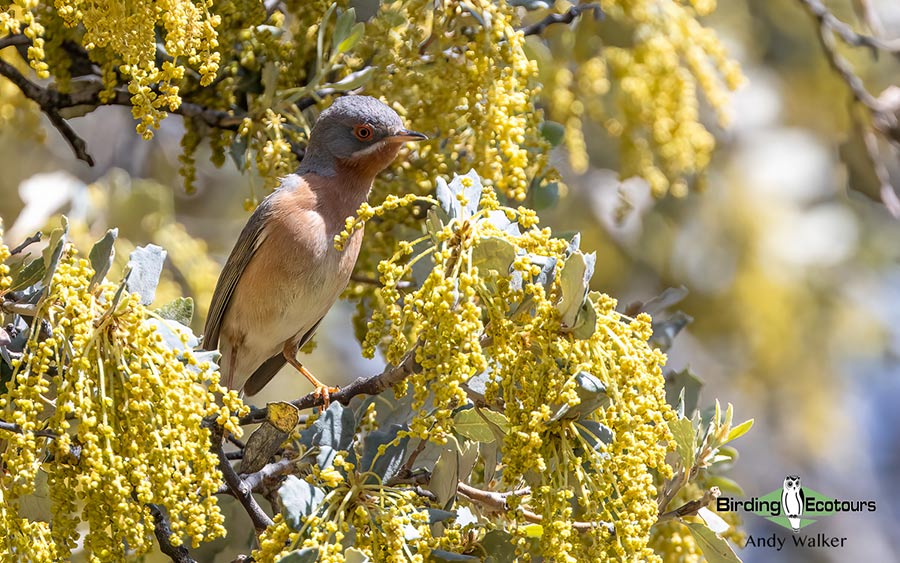
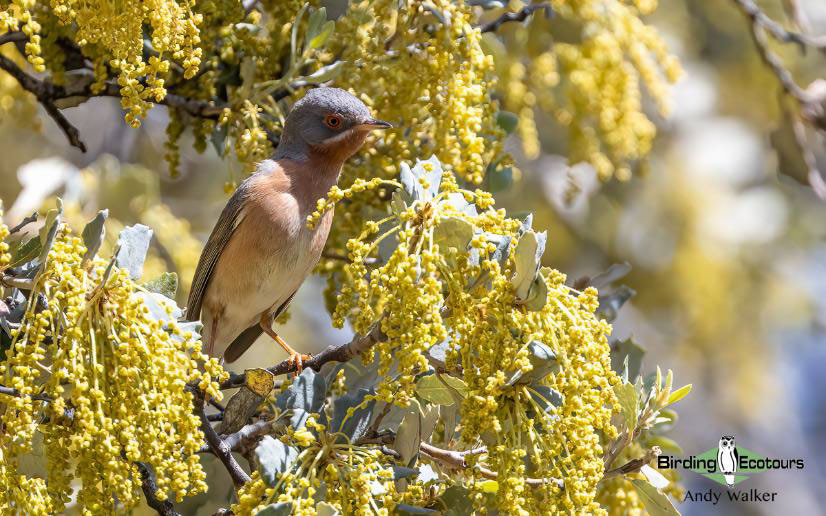 The attractive Western Subalpine Warbler is one of many warbler targets on this tour.
Day 8. Gredos to Hoces del Duratón
Our day will begin with a pre-breakfast visit to the hotel bird blind (hide) where we could get close views of Great Spotted Woodpecker, Eurasian Nuthatch, and Red (Common) Crossbill, along with common yet gorgeous garden species of the area, such as Eurasian Blue Tit, Great Tit, European Goldfinch, and European Greenfinch.
After breakfast we will continue our day by driving up to La Plataforma, which sits at 5,800 feet (1,770 meters) above sea level. Here we will enjoy stunning scenery along with some excellent bird species such as Red-backed Shrike, a species which is becoming incredibly rare in Spain, along with Eurasian Skylark, Northern Wheatear, Common Rock Thrush, Bluethroat, Water Pipit, and Ortolan Bunting. We will also explore the nearby forests for White-throated Dipper, Goldcrest, Crested Tit, and Citril Finch.
We are also in suitable terrain to search for Iberian Ibex. This fantastic-looking goat is split into four subspecies, two of which are extinct, with the subspecies in the Gredos area being known as Western Spanish (Gredos) Ibex.
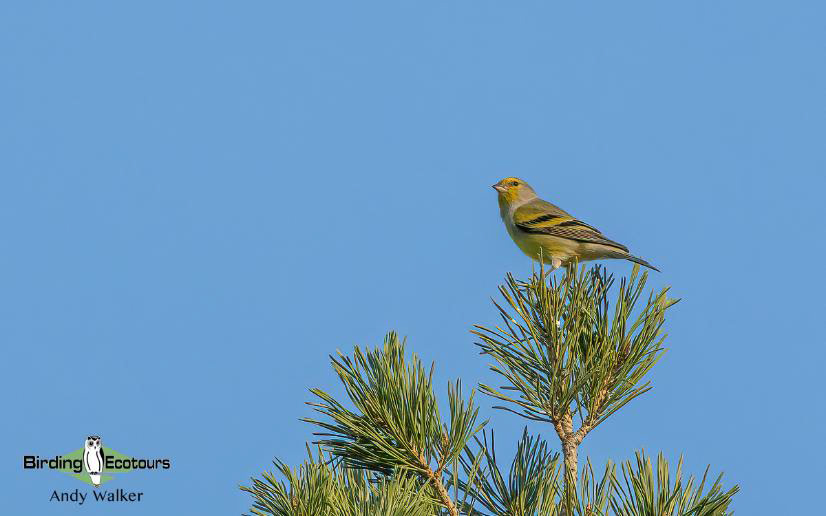 Citril Finch will be a target while we bird Gredos.
In the afternoon we head northeast towards the Hoces del Rio Duratón National Park. If time allows, we will make our first attempt at the incredibly elusive Dupont’s Lark. BirdLife International lists this bird as being of globally Near Threatened status and it has declined rapidly in many areas. It has always been a highly prized species, but that status has become more relevant than ever in recent years.
Overnight: Rincón de las Hoces, Burgomillodo
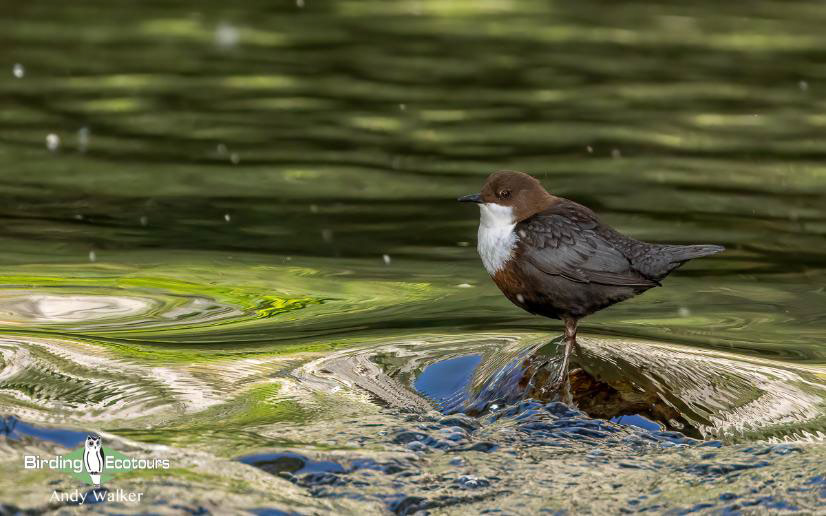 White-throated Dipper can be found in the mountain rivers.
Day 9. Hoces del Duratón to Irati
Today will see us make an early morning start as we go in search of Dupont’s Lark at Hoces del Duratón. As previously mentioned, this is a highly prized species and our best chance of seeing it will occur in the early morning as they perform their beautiful song. This area is generally excellent for larks and we could come across Greater Short-toed Lark, Calandra Lark, Eurasian Skylark, Crested Lark, and Thekla’s Lark here. Other star birds of the area include Common Quail, Common Cuckoo, Iberian Grey Shrike, and Tawny Pipit.
After breakfast we will prepare ourselves for the drive of around four hours to the Pyrenees mountains. Depending on time we have two options for this journey and your guide will discuss this with you at the time. Both routes offer the opportunity of good birding, with the southern route giving us the opportunity to look for the highly sought-after Middle Spotted Woodpecker.
After our drive we will arrive in the village of Ecay de Lónguida which sits nestled in the foothills of the Pyrenees just 20 miles (32 kilometers) from the border with France.
Overnight: Hotel Ekai, Ecay de Lónguida
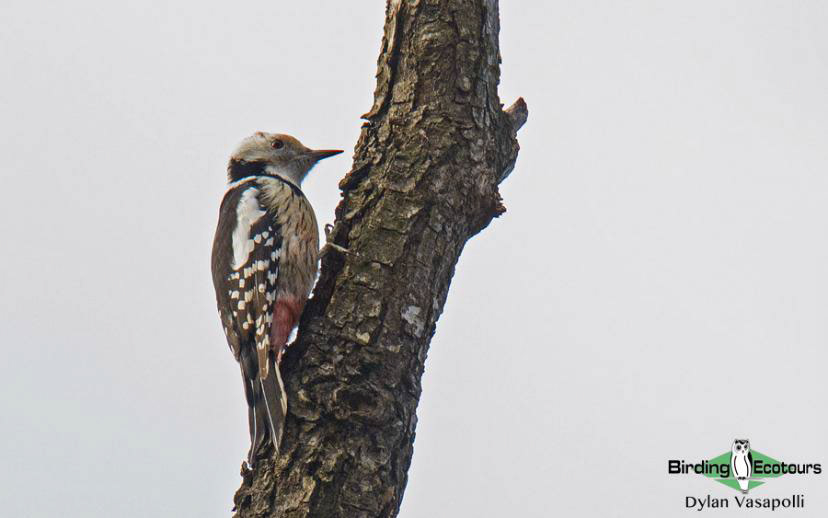 Middle Spotted Woodpecker (pictured) is one of three highly prized woodpecker species of the Irati Nature Reserve. We will spend time here searching for this species as well as the rarer Black Woodpecker and White-backed Woodpecker.
Day 10. Irati to Echo
We will search for several woodpeckers which are found in the areas of Irati Nature Reserve and Quinto Real. We will once again target Middle Spotted Woodpecker, but it is Black Woodpecker and White-backed Woodpecker which are the two most-prized species here. These are both incredibly difficult to see anywhere in Spain and to see both species would be a superb start to the day. We will give plenty of time to look for all three species, while being aware that we have another chance of getting Black Woodpecker later in the tour.
The afternoon will be spent driving to the breathtaking Echo valley. This area is extremely popular with climbers, but it is also a superb birding area and it is here that we will look for the iconic Bearded Vulture. This species of vulture is a star bird of the region and we will have several opportunities to connect with it.
Overnight: Hotel de Montaña Usón, Echo
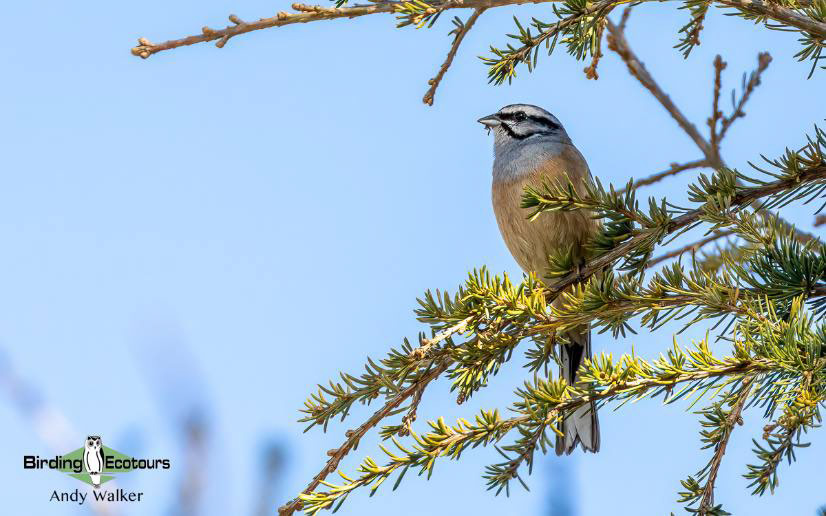 A bird of the mountains, we will look for Rock Bunting while exploring their habitat.
Day 11. Echo
We will once again explore the Echo valley and its surrounding areas. We begin at Gabardito in the high Pyrenees where, along with Bearded Vulture, our primary target will be the outrageous Wallcreeper. This species is in a monotypic family, meaning it is the only species in its family, and it is a highly prized bird for visitors to the region. We will then head to the forests nearby to search for Black Woodpecker, once again, and also for other forest species such as Marsh Tit, Garden Warbler, and Eurasian Treecreeper, the latter of which does not occur further south in Spain. We will continue our high-altitude birding at Guarrinza and La Mina, a stone’s throw from the border with France. Here we will target species such as Red-backed Shrike, Alpine Chough and Yellowhammer.
There are also two exciting mammal species here. The first is Alpine Marmot, which is a species of ground squirrel, and can be seen scurrying around the rocky outcrops of the area. The second is the rare Southern Chamois, a species of goat-antelope, which favors high mountain areas. Its population numbers just 50,000 individuals but is thankfully increasing. After a day exploring the high Pyrenees we will return to Echo for the night.
Overnight: Hotel de Montaña Usón, Echo
Day 12. Echo to Ordesa y Monte Perdido National Park
Depending on the success of the previous days we will have the ability to be flexible today. In the morning we can attempt to spot Wallcreeper, once again, in case we missed it during previous searches. If we have already had success with this iconic species, we can spend the morning in the Baztan valley for species like Red-backed Shrike and Marsh Tit. If time permits, we could spend the full day in this valley and climb its neighboring peaks to the French border to look for high-altitude specials such as Ring Ouzel (alpestris subspecies) and Alpine Accentor.
If we spend the morning in this area, we will make the journey towards Ordesa in the afternoon. En route we will stop to spot some species we may have missed so far. We will be in the prime habitat of Eurasian Wryneck, Common Chiffchaff, Western Subalpine Warbler, Rock Sparrow, and Ortolan Bunting. This area is also good for Black Woodpecker, if we have not already connected with this species.
Overnight: Hotel Palazio, Nerín
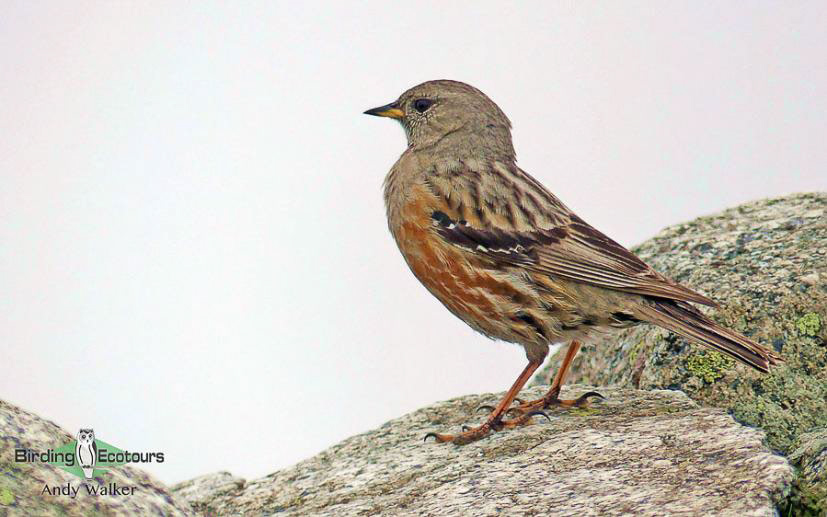 Alpine Accentor is a hardy passerine of high-altitude mountains.
Day 13. Ordesa to Lleida
Today we will exchange our tour bus for 4×4 vehicles as we head into the Ordesa y Monte Perdido National Park. This is the only way to reach this high-altitude area and we will spend the day at around 8,200 – 9,800 feet (2,500 – 3,000 meters) above sea level. This is the Pyrenees Mountains at their largest and the breathtaking Monte Perdido, the third highest peak in the Pyrenees, will tower over us, it is a spectacular site to be birding.
We will spend the day on the high plateau and view the glacial valley of Ordesa in all its majesty. It is here we will once again find high-altitude bird species, with White-winged Snowfinch being the star of the show. This stunning species is joined in its mountain home by Alpine Chough, Eurasian Crag Martin, White-throated Dipper, Black Redstart, Ring Ouzel (alpestris subspecies), Alpine Accentor, Water Pipit, Rock Sparrow, and Rock Bunting. We may get lucky and have Griffon Vulture and Bearded Vulture soar overhead once more as we descend through the valley, stopping to look for other species that favor this valley.
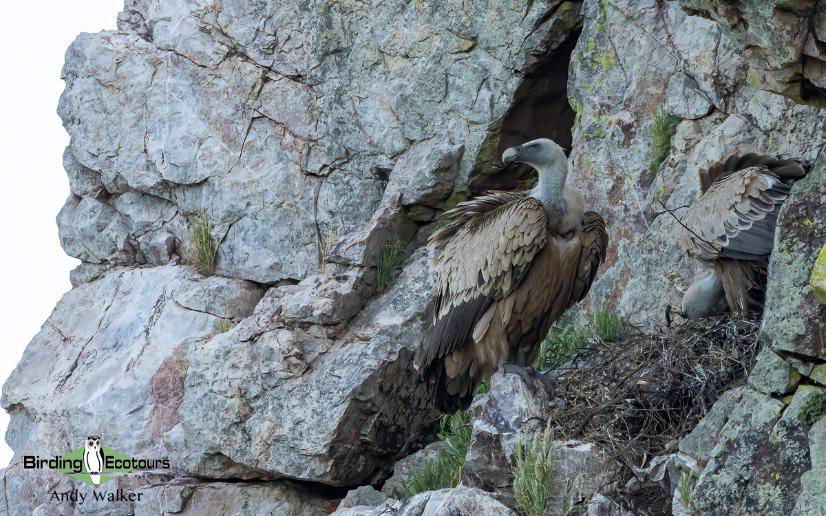 Griffon Vulture is one of several vulture species we may encounter on this birding tour.
With our lungs filled with fresh mountain air and our cameras full of stunning photos we will begin the descent out of the Pyrenees. We will travel south into the heartland of Lleida, the penultimate region we visit on our tour.
Overnight: Ibis Hotel, Lleida
Day 14. Lleida
We will try and seek out some of the area’s species that we may have missed previously. In addition, we will also look for two species which can prove very tricky. Moustached Warbler is one of these, and this species of Acrocephalus warbler can be exceptionally elusive as it moves through its preferred dense reedbed habitat. The second is the striking Bearded Reedling (Bearded Tit), another species which can be elusive. This bird is often heard before it is seen, with its characteristic “ping” call a great indicator that a group is nearby. We will once again overnight in the town of Lleida.
Overnight: Ibis Hotel, Lleida
Day 15. Lleida to Barcelona
The penultimate day of this exciting tour will see us spend the morning driving from Lleida into the Catalan capital of Barcelona. This stunning city also has the fantastic Delta de Llobregat on its doorstep, and it is here we will spend the day birding. This area is a fantastic spot for shorebirds (waders), wetland birds, and spring passage migrants making their way north. Species of note for this site include Red-crested Pochard, Purple Heron, Squacco Heron, Western Cattle Egret, Black-crowned Night Heron, Glossy Ibis, Greater Flamingo, Water Rail, Western Swamphen, Black-winged Stilt, Pied Avocet, Kentish Plover, Common Ringed Plover, Little Ringed Plover, Eurasian Whimbrel, Yellow-legged Gull, Whiskered Tern, Great Reed Warbler, and European Serin.
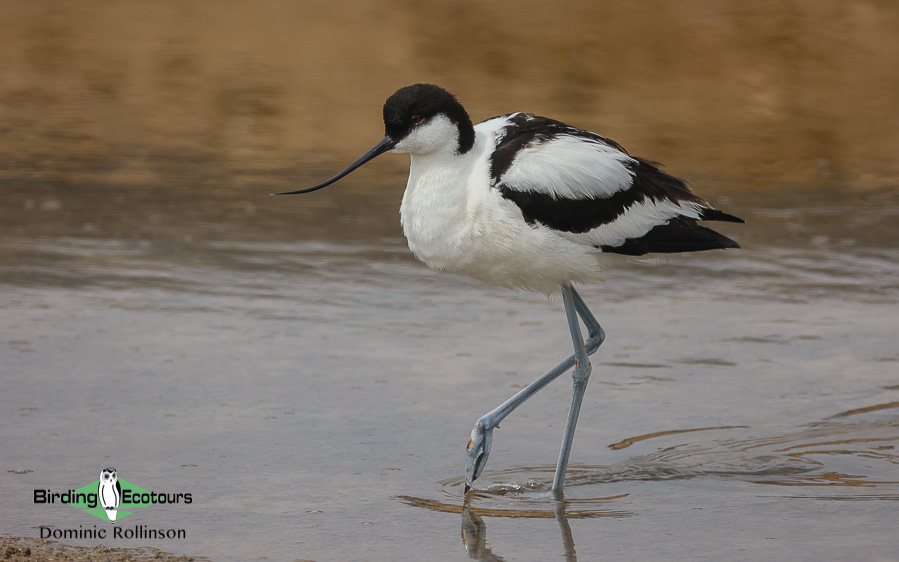 Our tour will end, as it begins, with many shorebird (wader) species. Pied Avocets are one of the prettiest shorebirds found in Spain and we will get good views of them during the tour.
It is also a great site for picking up migrant passerines, particularly warblers, and we may come across Sedge Warbler, Common (Eurasian) Reed Warbler, Wood Warbler, Western Bonelli’s Warbler, Willow Warbler, Eurasian Blackcap, Garden Warbler, Western Subalpine Warbler, Sardinian Warbler, Common Whitethroat, Common Nightingale, Common Redstart, Northern Wheatear, Spotted Flycatcher, European Pied Flycatcher, and Western Yellow Wagtail. The site is also a good lure for rarer species and, in recent springs, this part of Spain has seen eruptions of Collared Flycatcher, a rare vagrant that moves from Africa to eastern Europe (we often see this gorgeous bird on our Greece tour, for example).
Overnight: Hotel in Barcelona
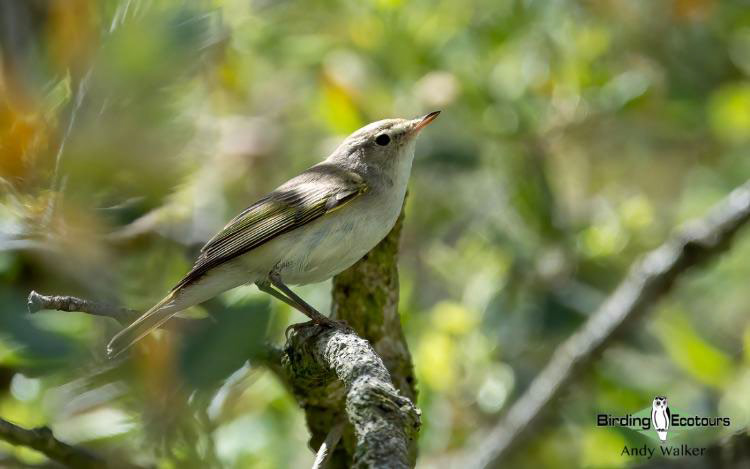 Western Bonelli’s Warbler is one of several migrant passerines possible during the tour.
Day 16. Barcelona where tour concludes
Non-birding day. After a leisurely breakfast at our hotel we will head to Josep Tarradellas Barcelona-El Prat Airport to connect you with your flight home or for some further travel (such as our Birding Tour Poland: Best of Eastern Europe tour, to really maximize your birding visit to Europe).
Prior to leaving Barcelona, your guide will be on hand to answer any questions relating to the trip list or identification of species we have seen on the tour, and we will have the important task of deciding ‘bird of the trip’, not an easy one, as we will have seen some absolute crackers.
Overnight: Not included
Please note that the itinerary cannot be guaranteed as it is only a rough guide and can be changed (usually slightly) due to factors such as availability of accommodation, updated information on the state of accommodation, roads, or birding sites, the discretion of the guide, and other factors. In addition, we sometimes have to use a different guide from the one advertised due to tour scheduling or other factors.
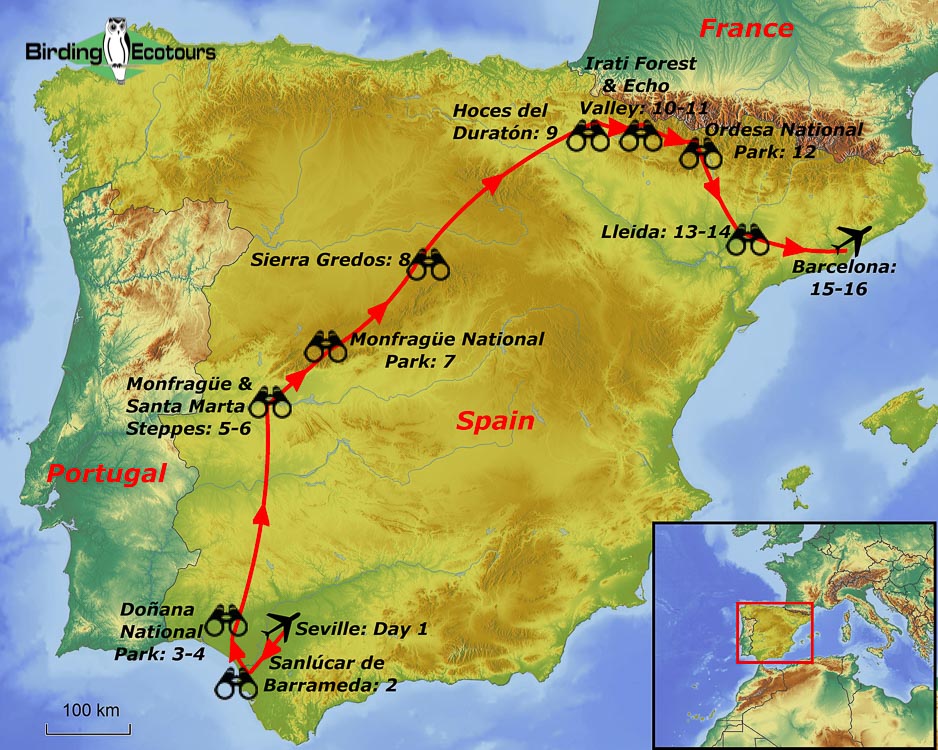
Map
Testimonials
Gallery
General Information
Spain: Spring Birding Extravaganza
Tour-specific Information
GENERAL INFORMATION ABOUT SPAIN CAN BE READ HERE
TOUR OUTLINE
Our small-group birdwatching tour to Spain during the spring season offers a comprehensive look at the Iberian region and connects with some of the most highly sought-after of the country’s species, such as Dupont’s Lark, Spanish Imperial Eagle, Cinereous Vulture, Bearded Vulture, Great Bustard, White-headed Duck, Marbled Duck, Pin-tailed Sandgrouse, Wallcreeper, Iberian Green Woodpecker, Iberian Magpie, Iberian Grey Shrike, White-winged Snowfinch, Citril Finch, and Alpine Accentor to mention but a few. Take a look at the detailed itinerary for more information on the species possible on this tour which starts in Seville and ends in Barcelona.
WEATHER/CLIMATE
The temperatures on this spring birding tour could be incredibly varied. During the first half of the tour, we should expect temperatures around 64 – 77 °F (18 – 25 °C) while our visit to the Pyrenees could see temperatures as low as single figures in Celsius (possibly in the region of 41 °F or 5 °C). Nights are generally comfortable but can still be chilly with temperatures around 46 – 57 °F (8 – 14 °C). The sun is strong this time of the year but as it is the European spring it is also necessary to be prepared for rain.
DAILY ACTIVITIES, PHYSICAL REQUIREMENTS, AND TOUR PACE
This spring birding tour covers a large proportion of Spain and is at a faster pace than some of our other tours, with a long list of birds possible. Longer journeys are broken up with birding and bathroom stops. Most walking is an easy level of exertion and at a gentle pace and should be suitable for most people, for the most part this will all be on easy tracks, roads, and trails for the most part. Some longer walks will be required for some sites and the exact details of these longer walks will be presented to you ahead of time, most walks are optional and should you wish to sit out a walk we will endeavor to plan something else for you, or you are welcome to relax around the hotel grounds.
The tour will require some early starts and late finishes to our days in the field to maximize the return on the birding and meal times will remain flexible around our birding activities, the main focus of this tour is finding as many of the regionally special birds as possible. Most of the tour is spent at sea-level and low elevations, though we will spend time in higher elevations later in the tour, but these elevations are still not particularly high and are unlikely to provide any constraints to most people (e.g. we will be birding at around 6,500 feet / 2,000 meters), potentially a little higher.
DOMESTIC FLIGHTS
There are no domestic flights included in this tour. Note the tour starts in Seville at Seville San Pablo Airport and ends in Barcelona at Josep Tarradellas Barcelona-El Prat Airport.
ACCOMMODATION
During our Spain spring tour we will be staying in a range of two-star to four-star hotels. All the hotels are of a traditional style and have been hand-picked to offer the best experience in their respective area. Hotels are located in areas that enable short drives to excellent birding areas.