- Duration:
- 14 days
- Group Size:
- 4–8
- Tour Start:
- Antananarivo (Tana)
- Tour End:
- Antananarivo (Tana)
Birding Tour Madagascar: 14-day Best of Madagascar Birding and Wildlife
Details
2026
18 – 31 October
Per person sharing
€6,756 EUR
$7,951 USD / £6,010 GBP
Single supplement
€926 EUR
$1,090 USD / £824 GBP
plus about €444 for the domestic flight, which we will book for you
2026 departure sold out, please consider booking early for our 2027 departure
2027
18 – 31 October
Per person sharing
€7,000 EUR
$8,237 USD / £6,227 GBP
Single supplement
€997 EUR
$1,173 USD / £887 GBP
plus about €500 for the domestic flight, which we will book for you
Itinerary
Download ItineraryBest of Madagascar: 14-day Birding and Wildlife Tour
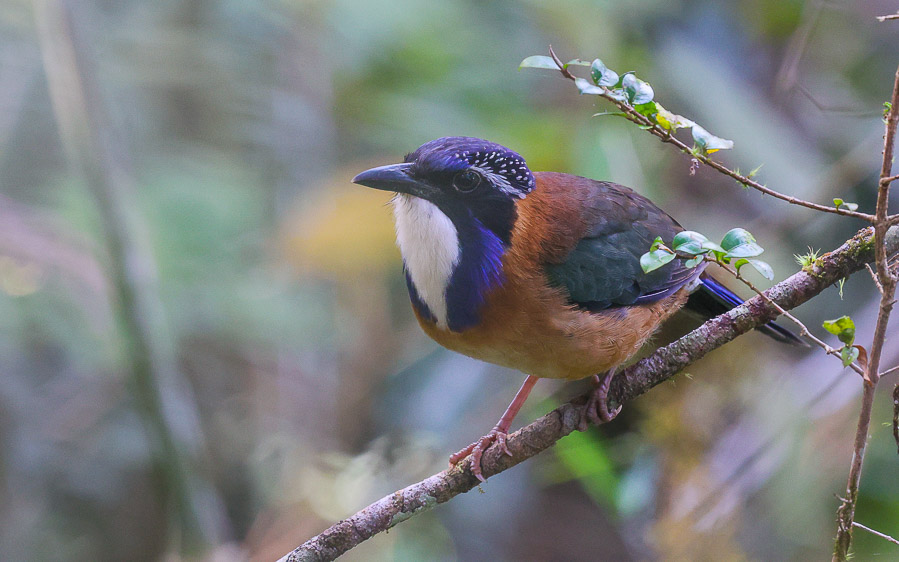 Pitta-like Ground Roller is a member of one of the four endemic avian families of Madagascar which we will be looking for on this tour.
Overview
Madagascar, our world’s fourth-largest island is, quite simply, unique. Four bird families and seven mammal families (including the lemurs) are endemic to this massive island, and around half the world’s chameleon species, along with weird and wonderful endemic plant families, and tons of other wildlife can all be found here. More than 100 bird species are endemic – including such exotic groups as vangas, ground rollers, couas, asities, mesites, and the extraordinary Cuckoo-roller. Lemurs vie for attention, from the tiny mouse lemurs to the marvelous sifakas and the amazing Indri with its deafening calls that resound through the forest.
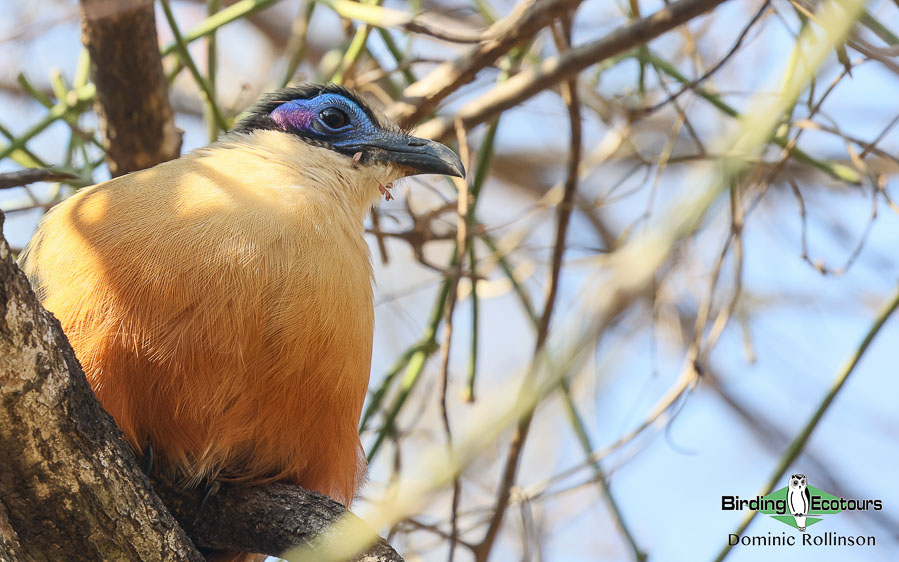
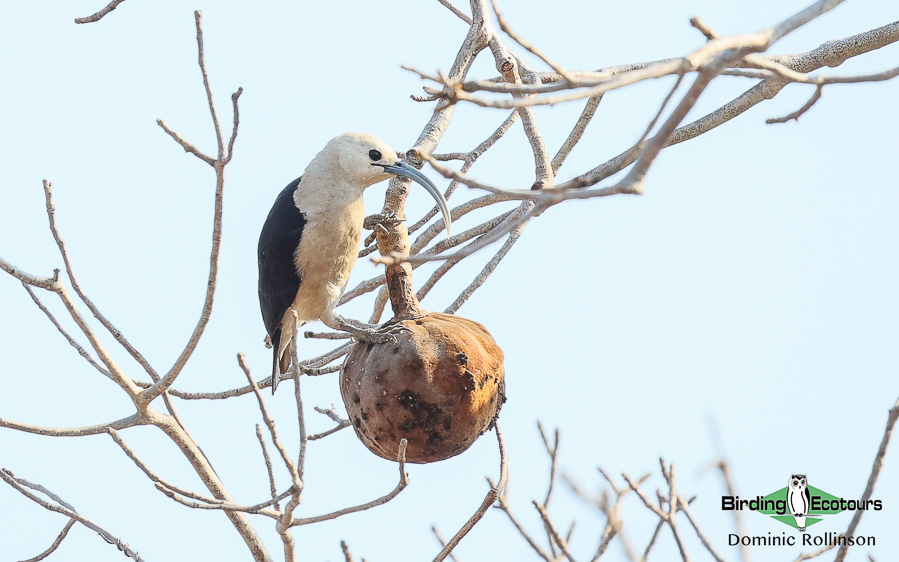
Our tour visits a range of habitats: grasslands, dry deciduous woodland, the bizarre spiny forest with its odd octopus trees (Didiera madagascariensis) and elephant’s foot trees (Pachypodium rosulatum), lush eastern rainforest, as well as lagoons and mudflats. The birds that we’ll look for include the roadrunner-like Long-tailed Ground Roller and the stunning Pitta-like, Scaly, and Rufous-headed Ground Rollers as well as the highly prized Subdesert Mesite, the unforgettable Giant Coua, the astounding Velvet Asity, and Madagascar Ibis, to name just a handful. We invite you to join us on a special tour to an amazing island!
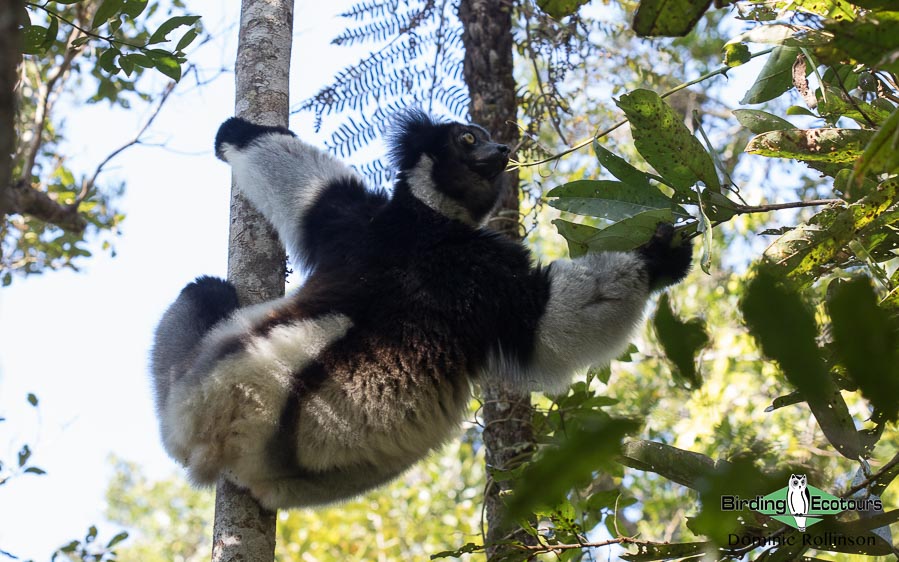 Indri, Madagascar’s largest lemur species.
This 14-day Madagascar birding tour can be combined with our Western Madagascar Rare Birds and Mammals tour and/or our Namibia, Okavango, and Victoria Falls birding tour.
Detailed Itinerary (14 days/13 nights)
Day 1. Arrival in Antananarivo
Your international flight arrives in Antananarivo (shortened to “Tana” by most people) today, or the previous day on your domestic flight from Maroantsetra, if you have joined our Masoala pre-tour. After arrival you will be transferred to your hotel where we can already get started with some of Madagascar’s common endemics and near-endemics including Madagascar Wagtail, Madagascar Mannikin, and even Madagascar Nightjar.
Overnight: Relais des Plateaux, Antananarivo
Day 2. Drive to Andasibe, afternoon birding Analamazoatra Special Reserve
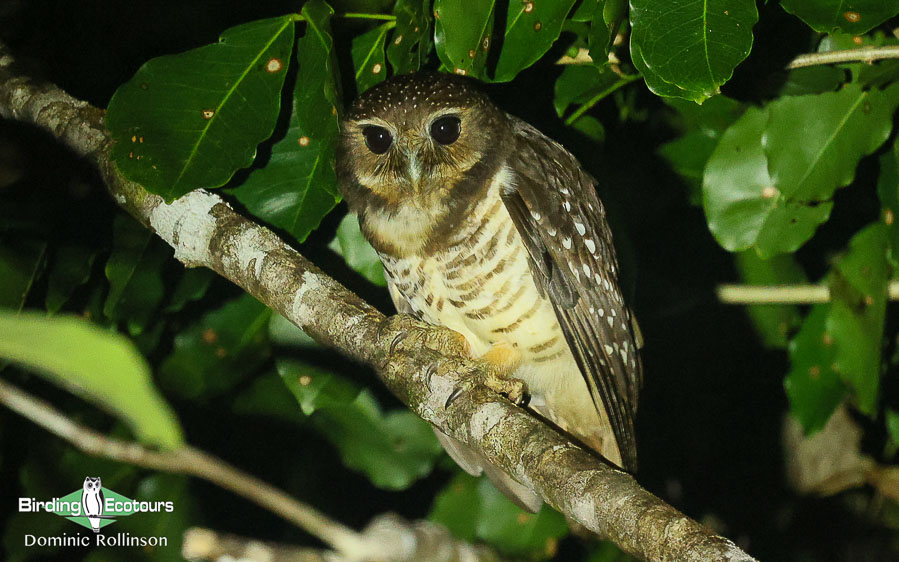
Early today we embark on a three-to-four-hour drive to Andasibe, one of Madagascar’s premier rainforest sites. Here the unforgettable call of the Indri resounds through the beautiful Andasibe-Mantadia National Park. In the afternoon we will visit its Analamazoatra section. We should find the Indri with ease, along with other spectacular lemur species such as Eastern Woolly, Common Brown, and Black-and-white Ruffed Lemurs. Birding is unbelievable, with Madagascar Wood Rail, Madagascar Flufftail, Nuthatch Vanga, Ward’s Flycatcher, Velvet Asity, Pitta-like, Rufous-headed, Scaly, and Short-legged Ground Rollers, along with two nightjars, including the bizarre Collared Nightjar at its daytime roost, all possible here. Madagascar Owl, Rainforest Scops Owl, and a suite of nocturnal lemurs and chameleons await us on a night walk in the area.
Overnight: Andasibe Hotel, Andasibe
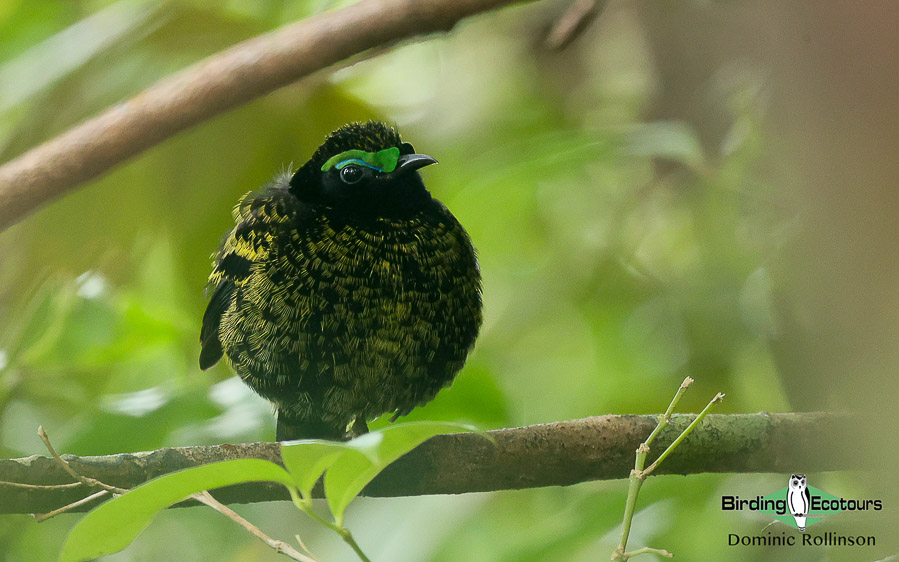 The strange Velvet Asity can be incredibly confiding at times.
Days 3 – 4. Andasibe-Mantadia National Park
We spend two more nights in the Andasibe-Mantadia National Park area, birding the beautiful primary and secondary forests of the area. We spend the whole day on Day 2 and the morning of Day 3 in the Mantadia National Park section, while perhaps returning to the Analamazoatra section in the afternoon of Day 3. We should find Velvet Asity, Common Sunbird-Asity, Forest Rock Thrush, Madagascar Flufftail, many vangas including Madagascar Blue, Crossley’s and Nuthatch Vangas, Madagascar Blue Pigeon, Madagascar Cuckooshrike, several endemic warblers such as Rand’s Warbler, and many more. We also have stakeouts for Madagascar Grebe (although erratic), the rare Meller’s Duck, and Madagascar Rail. We can also expect our first couas, Red-fronted Coua being a likely candidate. We certainly don’t ignore other non-avian wildlife and often see Black-and-white Ruffed Lemur, Giraffe-necked Weevil, Madagascar Tree Boa, and many chameleons.
During our time around Andasibe we will also likely visit Maromizaha Forest where we will do a long hike to further target Pollen’s, Madagascar Blue, Tylas and Nuthatch Vangas, Dark Newtonia, and Rufous-headed Ground Roller.
Overnight: Andasibe Hotel, Andasibe
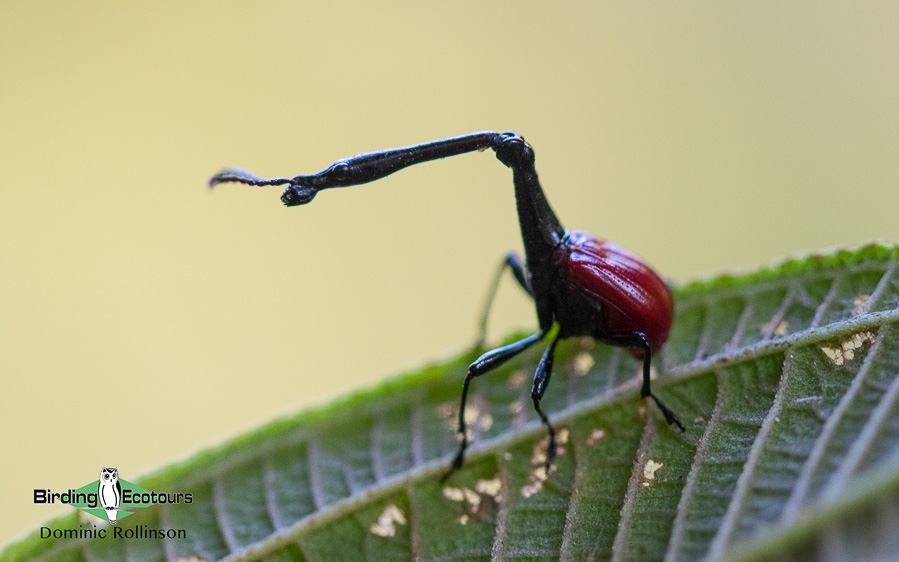 Giraffe-necked Weevil – Madagascar is well-known for its bizarre-looking wildlife.
Day 5. Drive to Antsirabe, birding on the way
We embark on a long and scenic road trip (looking for Hamerkop and Madagascar Snipe en route), breaking the journey to amazing Ranomafana National Park in the southeast of the island, with one night in Madagascar’s second largest city, Antsirabe.
Overnight: Couleur Café, Antsirabe
Day 6. Transfer to Ranomafana National Park
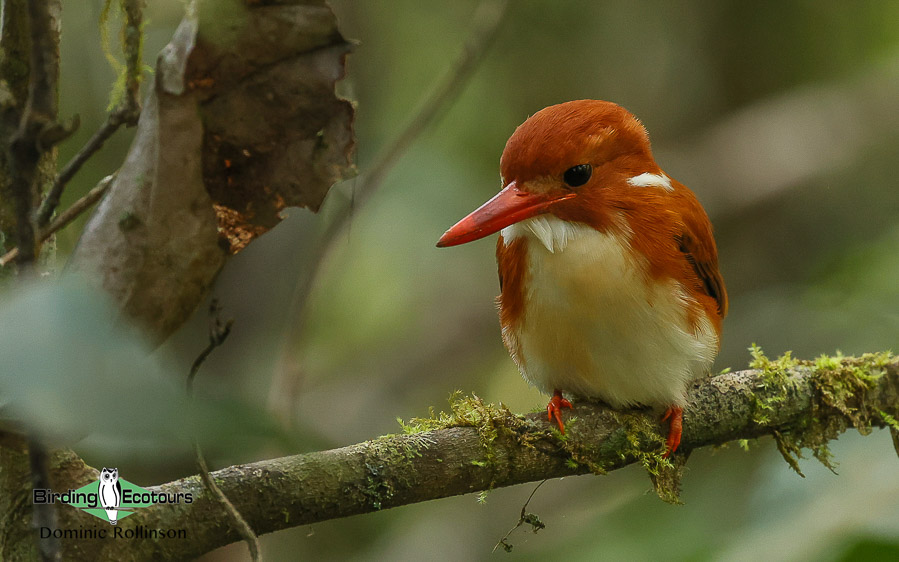
We hope to see many of Madagascar and its neighboring islands’ common endemics en route to the national park, including species such as Malagasy Kingfisher, Mascarene Martin, Malagasy Kestrel, Malagasy Bulbul, and many others. This evening we might have time for a night walk where we can look for Rufous Mouse Lemur and an array of exciting chameleon species.
Overnight: Setam Lodge, Ranomafana
Days 7 – 8. Birding Ranomafana National Park
At the magnificent Ranomafana National Park we are in for a real treat. The rainforest here is similar to that at Andasibe, but it is a better place for several species we won’t yet have seen, such as the rare Yellow-bellied Sunbird-Asity (with Common Sunbird-Asity more likely to be encountered), the recently described Cryptic Warbler, Madagascar Yellowbrow, Grey-crowned Tetraka, Pollen’s Vanga, Brown Emutail, Wedge-tailed Jery, the rare Madagascar Cuckoo-Hawk, and numerous others. We will explore some wetlands and rice paddies in the area where we hope to find Madagascar Snipe and Grey Emutail. As always, in a new part of the island, we expect new lemurs, such as Milne-Edwards’ Sifaka, Red-bellied, Grey Bamboo, and Golden Bamboo Lemurs. The reptiles here might include Satanic Leaf-tailed Gecko.
Overnight: Setam Lodge, Ranomafana
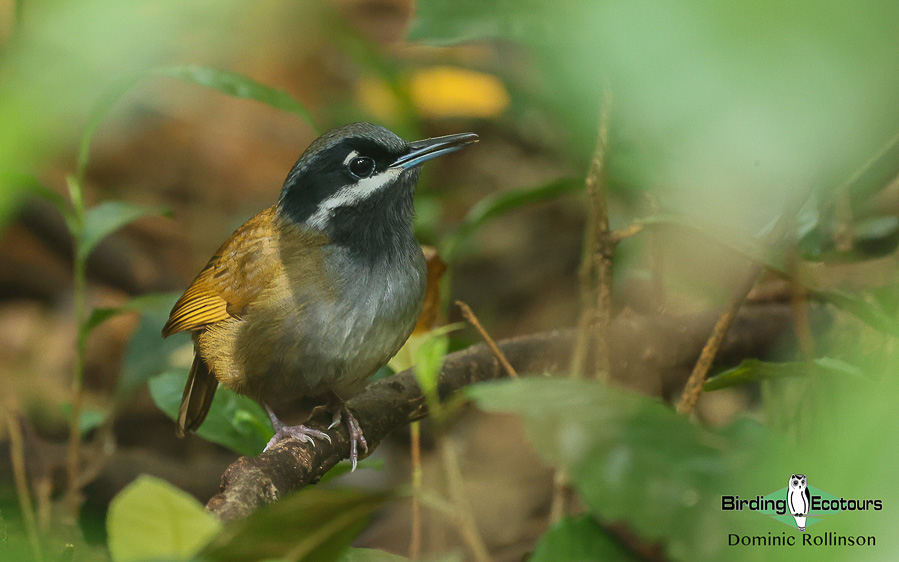 Crossley’s Vanga is one of the many vanga species we are likely to see on this tour.
Day 9. Isalo National Park
After some final birding at Ranomafana, we begin another scenic road trip across the island, with the possibility to stop shortly at Anja Community Reserve to find the friendly Ring-tailed Lemur as well as perhaps our first Madagascar Buttonquails and Grey-headed Lovebirds of the trip. Today we start heading westward, to much drier parts and the change in habitat will bring about a change in the suite of birds too with Madagascar Lark and Namaqua Dove possible today too. We’ll spend one night in the beautifully picturesque Isalo National Park, with our lodge set in amongst the beautiful sandstone formations. Here we’ll search for some more star birds, such as the Benson’s subspecies of Forest Rock Thrush and the attractively patterned Madagascar Partridge. In the evening we can look for Torotoroka Scops and White-browed Owls, around our hotel grounds.
Overnight: Relais de la Reine, Isalo
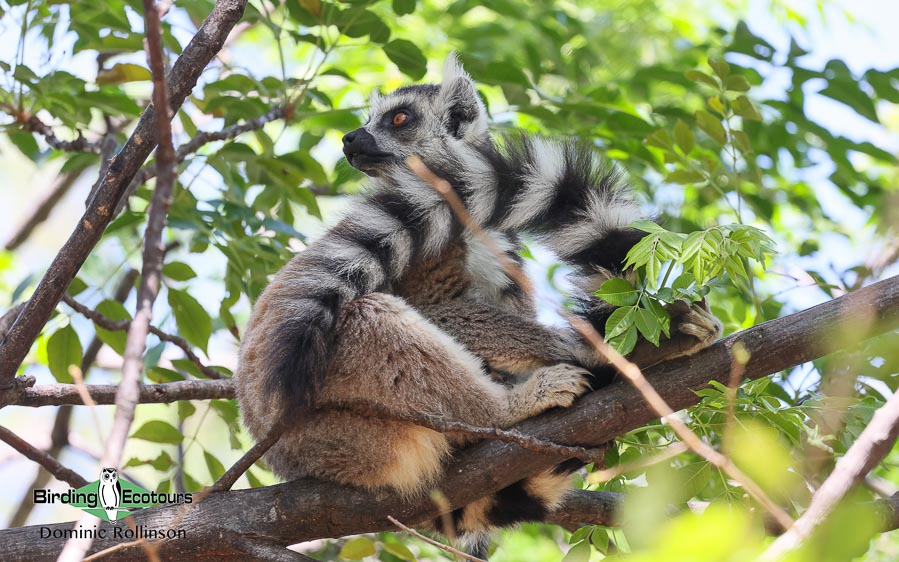 Ring-tailed Lemur may be seen at the Anja Community Reserve.
Day 10. Transfer to Ifaty, birding Zombitse National Park en route
Today we head towards the spiny forests of the southwest. This will be like entering a completely new world, and there is nothing else like this weird landscape anywhere in the world – Africa, although geographically close by, is nothing like Madagascar in its wildlife. However, before reaching these spiny forests we first have another fascinating drive that should generate some of Madagascar’s most localized birds.
On our drive westwards towards the spiny forests we stop at a unique dry deciduous forest at Zombitse National Park, inhabited by the Vulnerable (IUCN) Appert’s Tetraka, Coquerel’s and Giant Couas, the incomparable Cuckoo-roller, which we often see displaying, and various other goodies. In the dry woodlands of Zombitse we will also look out for Verreaux’s Sifaka, and Zombitse Sportive Lemur. If we still need them, local guides generally know the whereabouts of day roosts for Torotoroka Scops and White-browed Owls.
We then keep heading southwest and will stop off in some farming areas where we use the help of locals to try to find the rare and elusive Madagascar Sandgrouse. After searching for the sandgrouse, we continue the drive to our lovely beachside accommodation in Ifaty where Greater Vasa Parrots and Subdesert Brush Warblers can be enjoyed in the hotel grounds.
Overnight: Les Dunes d’Ifaty, Ifaty
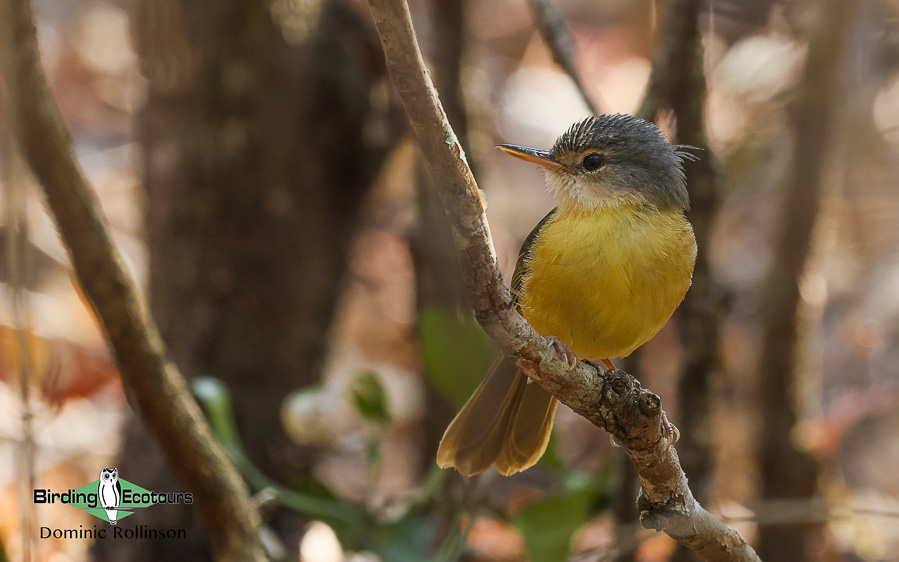 The range-restricted Appert’s Tetraka can be seen in Zombitse National Park.
Day 11. Birding the spiny forests near Ifaty
A world away from the eastern rainforests, after much anticipation, we now bird the spiny forests near Ifaty, where baobabs and octopus trees provide an absolutely unique habitat for a host of sought-after Madagascar endemics. Among them such incredible birds as Long-tailed Ground Roller, Subdesert Mesite, Sickle-billed and Lafresnaye’s Vangas, Archbold’s Newtonia, the rare Banded Kestrel, Thamnornis, Olive-capped and Running Couas, and others. We also visit a nearby coastal site for Madagascar Plover and other Palearctic shorebirds (waders) such as Ruddy Turnstone, Eurasian Whimbrel, Common Greenshank, and Little Stint.
Overnight: Les Dunes d’Ifaty, Ifaty
Day 12. Nosy Ve boat trip and transfer from Ifaty to La Table, near Toliara
This morning we take an exciting boat trip out to the small island of Nosy Ve where we can see the breeding colony of Red-tailed Tropicbirds as well as perhaps a flock of Crab-plovers. The nearby village of Anakao will be birded for Littoral Rock Thrush, the only site we can see this range-restricted species on this tour.
After our boat trip we will head south and then inland of Toliara, to a small hill reminiscent of Table Mountain in Cape Town, here called La Table. Behind it is a small area of scrubby forest, where we will search for the now famous Red-shouldered Vanga, the last lifer Phoebe Snetsinger saw before she was killed in a car accident (while birding!), and the localized Verreaux’s Coua. We hope to locate both, as well as possibly Lafresnaye’s Vanga.
Overnight: Arboretum d’Antsokay, near Toliara
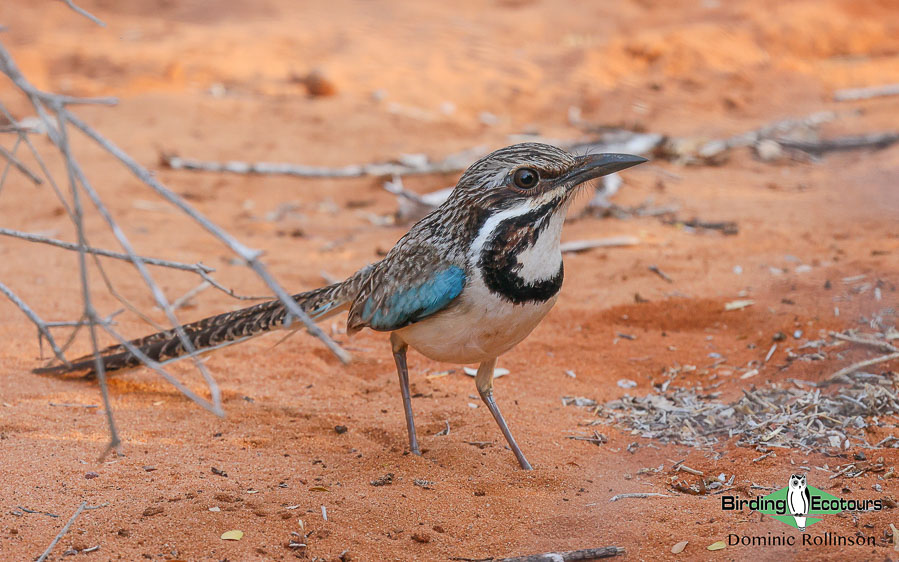 Long-tailed Ground Roller occurs in the spiny forest near Isalo.
Day 13. Flight to Tana, birding the city
Depending on flight times, we will either spend the morning birding around our lodge grounds or fly back to Tana earlier and spend the afternoon birding around the city. We can bird Lake Alarobia on the edge of the city for Meller’s Duck, Humblot’s Heron, Malagasy Pond Heron, White-throated Rail, and many other water birds. We can also keep a lookout for Sooty Falcon which are often seen perched on poles and towers near Tana’s airport.
Overnight: Relais des Plateaux, Antananarivo
Day 14. Departure
After some final birding in the city (see Lake Alarobia, above) either your international flight leaves Tana for home, or we will fly to Fort Dauphin for the Berenty extension.
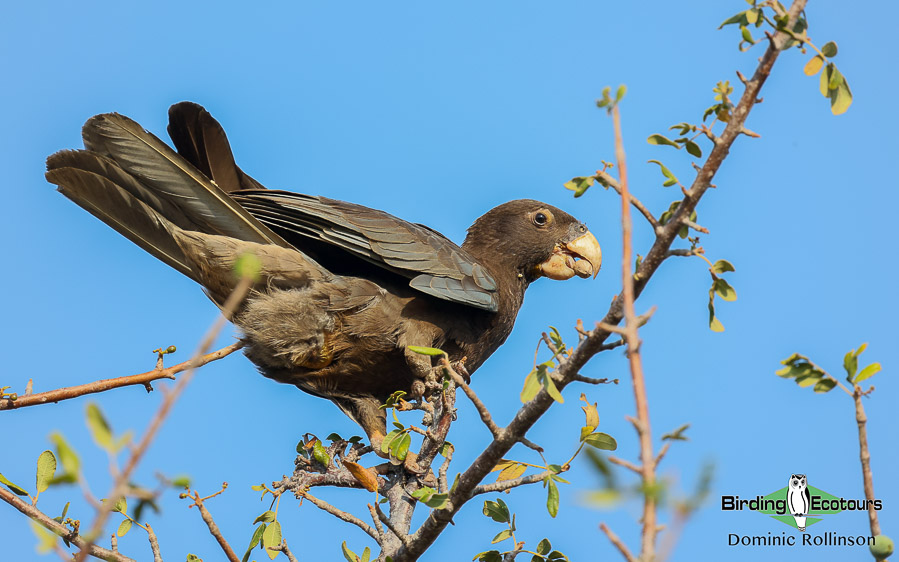 The huge Greater Vasa Parrot can be seen at several sites on this tour.
Please note that the itinerary cannot be guaranteed as it is only a rough guide and can be changed (usually slightly) due to factors such as availability of accommodation, updated information on the state of accommodation, roads, or birding sites, the discretion of the guides and other factors. In addition, we sometimes have to use a different international guide from the one advertised due to tour scheduling.
ADDITIONAL EXTENSIONS:
Please note that Madagascar is a huge island, and we offer remote extensions for some of Madagascar’s toughest endemics, including Madagascar Serpent Eagle, Red Owl, Madagascar Pochard, and Sakalava Rail.
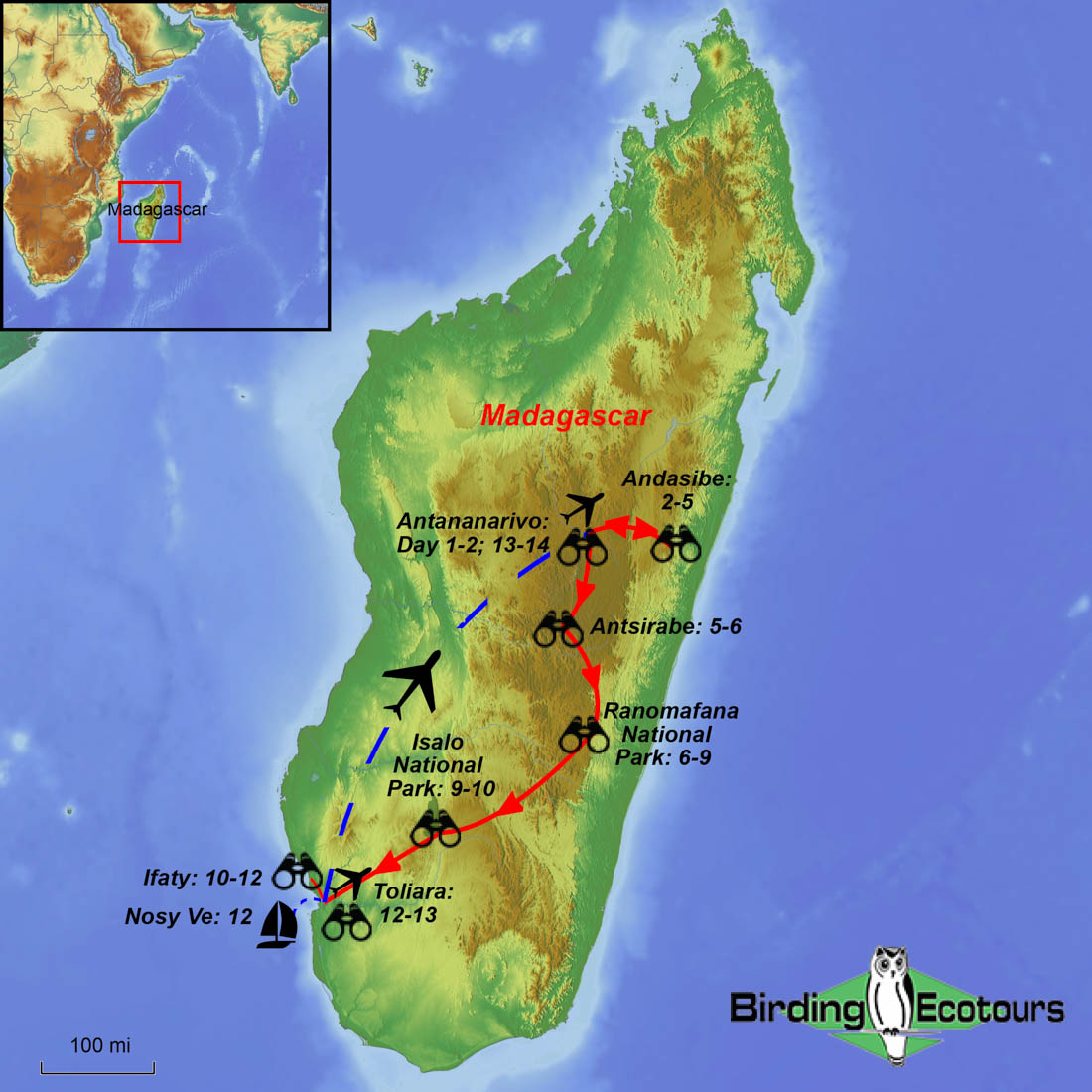
Map
Testimonials
Gallery
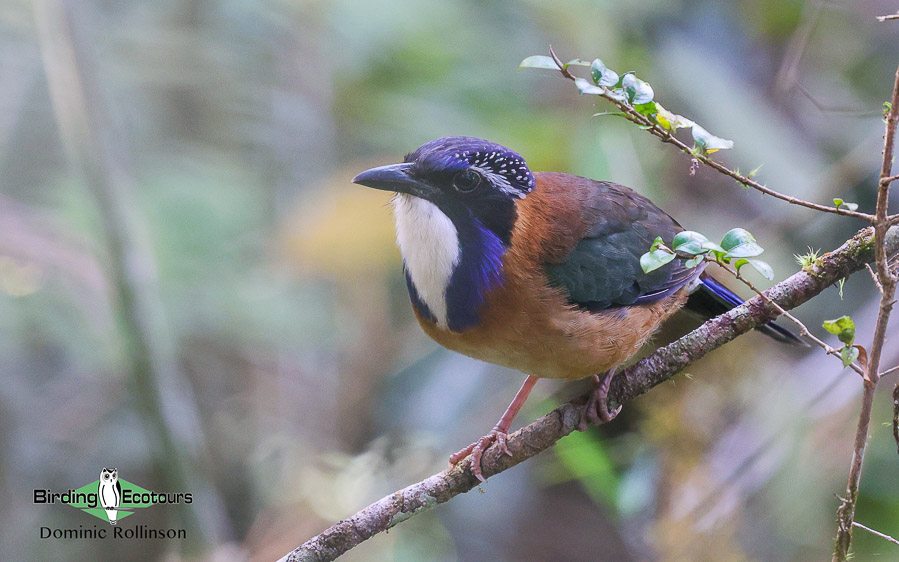
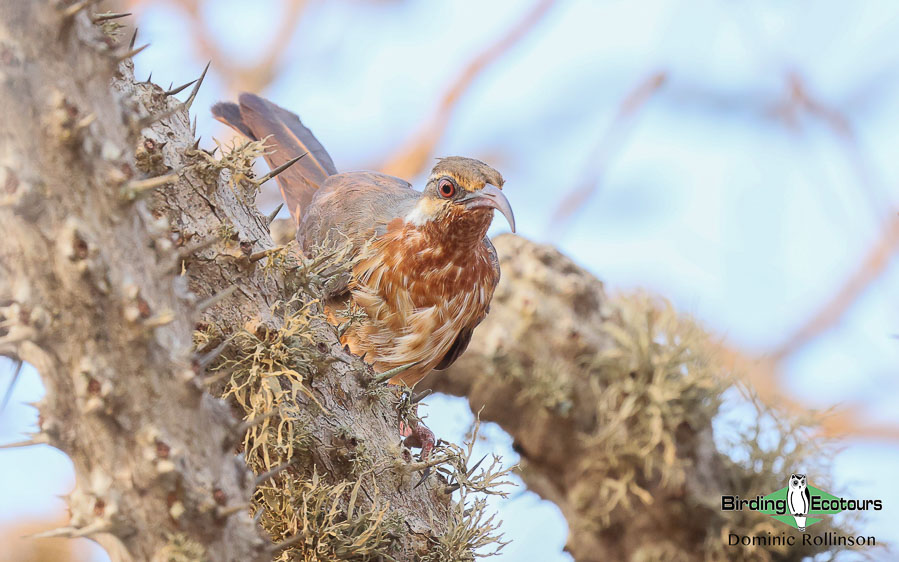
General Information
BEST OF MADAGASCAR BIRDING TOUR
TOUR-SPECIFIC INFORMATION
GENERAL INFORMATION ABOUT MADAGASCAR CAN BE READ HERE
TOUR OUTLINE
This 14-day Madagascar birding tour gives you the opportunity to see a great many Madagascar endemics and near-endemics while also allowing you to experience bizarre and unique wildlife such as Giraffe-necked Weevil, an assortment of strikingly patterned lemurs and many chameleon species (Madagascar is home to the world’s largest and smallest chameleon species)! This tour takes you from the rainforests of the central plateau to the otherworldly dry spiny forest of southwestern Madagascar, all the way enjoying endemic and unusual birds and wildlife.
PACE OF TOUR
This Madagascar birding tour is a fairly lengthy tour which may be tiring at times. One of the particularly tiring elements of this tour is the need for some very early starts, to ensure that we can get our birding in early before it heats up too much (this is especially the case while birding in the spiny forest of the southwest). The tour includes a lot of time on your feet walking in the hilly rainforests of eastern Madagascar and also birding in the sandy, dry spiny forest of the southwest.
To ensure we take advantage of the early morning peak in bird activity, we will sometimes leave the accommodation armed with simple (but adequate) breakfast packs, however, we will still likely enjoy a few sit-down breakfasts on this tour. Similarly, lunches will sometimes involve lunch packs, or simpler sandwiches/wraps which we eat while out birding (usually enjoying a picnic lunch) rather than a large sit-down meal. Occasionally, brunch is a better option, and this is likely as well. We do this so that we do not waste large amounts of time during the day when we could otherwise be out birding. Although these meals may be simpler, we will always ensure you are well fed so that you do not go hungry. A range of snacks is usually available to participants which can be bought from fuel stations, etc. Dinner is usually the main meal of the day and will of course be a sit-down meal which are generally of a good standard.
It is possible to opt out of some activities, such as various morning and afternoon excursions. On some days, however, this won’t be possible (if we’re moving between accommodations), although you can always wait in/near the vehicle while the rest of the group heads out (please do ask your tour leader for specifics).
There will be the option for night birding excursions on this birding tour, however, (as with most of our birding excursions) these trips are not mandatory, and we strongly recommend sitting out if you are finding the tour too tiring.
We generally ensure that we do have some meaningful down-time regularly on the tour, particularly on our non-travel days, while on the days when we travel between accommodation, there is less time for down-time (as this is otherwise spent traveling between destinations).
The guide discusses the daily plan with the group in detail each evening. Note that we do retain a sense of flexibility within reason, to allow for us to better maximize your birding and wildlife experience.
WALKING AND STYLE OF BIRDING
The tour is generally considered ‘moderate’ in terms of physical exertion. Most of the birding on this tour is done on foot along trails with very little roadside or vehicle-based birding. The tour involves a few longer walks through rainforests which can be quite hilly for which we may be out for the whole morning. Walking sticks or hiking poles are a great idea as they provide added stability to help with balance and are compulsory for anyone who is not steady at walking. The guide will discuss the day’s itinerary beforehand and will explain in greater detail what the day will entail and if you feel you’d prefer to sit out an activity we can likely make alternative plans.
LENGTH OF DRIVES
There are a few days in which there are long drives, made even longer with lunch/birding/fuel stops, however most drives, when not moving between accommodations, involve far less travel. Some of the longer transfers of this trip include
- Andasibe to Antsirabe,
- Antsirabe to Ranomafana,
- Ranomafana to Isalo,
- Isalo to Ifaty,
The above are all essentially full-day drives. We’ll likely leave in the morning (e.g. 8-9 am) and spend the whole day traveling and birding en route to our overnight accommodation, likely arriving in the late afternoon (e.g. 4-5 pm).
SAFETY
This tour does not spend much time in large cities (besides starting/ending in Antananarivo (Tana) and spending a night in Antsirabe) and we generally stay in tourist areas which are considered safe. While out birding, we suggest rather not leaving personal items of value in the vehicle if it is unattended, if you are ever in doubt, please just check with the tour leader.
We will not be visiting any areas of extreme altitude where altitude sickness will be an issue, with the highest elevation visited on this trip likely to be in the highlands of around 4,900 feet (1,500 meters) above sea level.
HEALTH, PESTS AND DANGEROUS ANIMALS
As with any trip to Madagascar, particular care should be taken when choosing what food you eat as ‘travelers’ diarrhea’ is unfortunately very common, even when eating at restaurants of a high standard. This is mostly due to the water used to wash food and it is best to avoid any unpeeled/uncooked vegetables/salads. If in doubt, please check with the local guide or tour leader before ordering your meal. Only drink bottled water and ensure you use bottled water when brushing your teeth.
While out birding on foot there could be ticks around, and so it is mostly recommended to wear long trousers and check yourself for ticks after the day out in the field. Additionally, it is a good idea to spray your legs/trousers and particularly boots/socks with anti-tick spray. Leeches may be encountered in rainforests, however, as this tour takes place during the dry season, they are likely to be less of an issue.
Rabies (although rare) does still exist in Madagascar and although the chances of you encountering rabid animals is very low on this trip, we strongly advise against touching/petting domestic animals, particularly while out in rural areas. Please consult with your tour leader if you are ever unsure though.
Even though none of Madagascar’s terrestrial snake species are highly venomous, some are considered mildly venomous and should not be touched. Please be vigilant while we are out walking.
In southwest Madagascar, while staying at Ifaty, it is possible to enjoy swimming and snorkeling in the sea. Highly venomous sea snakes occur in the seas surrounding Madagascar, and if any of these snakes are encountered while swimming or snorkeling, you should stay well away.
Malaria
We strongly recommend anti-malaria drugs for the entirety of this Madagascar tour as we will be in moderate to high risk areas for most of the tour. Thankfully, this tour visits Madagascar in the dry season, before the summer rains have arrived, which reduces malaria risk, however, we strongly suggest seeking the advice of a medical professional before your trip. Any one of the following three drugs are highly affective (albeit not 100 %, due to resistant strains of malaria) as malaria preventative measures:
Malarone (atovaquone/proguanil),
Doxycyxline, and
Larium (mefloquine).
Mosquito repellant, long trousers/jeans and long-sleeved shirts, particularly at night when malaria (Anopheles) mosquitos bite, are advised, in addition to the drugs.
In the unlikely event that one still contracts malaria after taking anti-malaria drugs and other precautions, the disease can still be easily treated if diagnosed soon after symptoms develop: suspect malaria if flu-like symptoms develop within a few weeks/months of visiting Madagascar. If it is malaria, it can be treated with an alternative to the prophylactic that you chose.
TRANSPORTATION
Depending on the final group size, we will likely use a medium-sized bus on this Madagascar birding tour, ensuring everybody has a window seat. Occasionally, we may split up the group into smaller vehicles when visiting areas with rougher or tighter roads. As with our other birding tours, we will use a seat rotation policy within the vehicle which will be explained to you by your tour leader at the start of the tour.
DOMESTIC FLIGHTS
There is one domestic flight on this birding tour on the penultimate day of the tour as we fly from Tulear back to Tana which is of around two hours flight time. We generally try book this flight for the late morning but cannot always guarantee this flight option. This day’s itinerary will depend on our scheduled flight time. Air Madagascar flights are, unfortunately, completely unreliable, and scheduled flight times can change on the day of the flight until as late as one hour before departure, so we will bear this in mind when deciding on the day’s itinerary.
ACCOMMODATION
The accommodation on this tour is of a good quality. It is worth noting that buildings in Madagascar are often not heated like they are in North America and Europe, etc., and so for colder evenings (such as potentially while on the central plateau) it may be worth packing warmer sleeping clothes.
Should you wish to arrive a day or two before the start of the tour, we strongly suggest staying at Relais des Plateaux in Antananarivo, where we are staying for our first night on tour. Please contact the Birding Ecotours office to help organize this for you.
It is possible to get laundry washed at most of the establishments used on this tour, with many establishments only accepting laundry if we have a minimum of two nights, and the laundry is provided on the first day/arrival day.
ELECTRICITY
Lighting in rooms tends to be low wattage, so you might like to bring a good quality torch/flashlight if you like reading in bed!
Electrical sockets are the same as in Europe (except the UK) – 2-prong and 220 Volts ITA Type C. It is good practice to bring international adapters, as many establishments are changing their plug outlets to better align with international clients.
WEATHER
This tour takes place during the cool and dry season when temperatures on the central plateau (days 1-9) may be cool at night but hot and humid during the daytime, with an average maximum of 79-83oF (26-28oC). During our time in the dry southwest (days 9-13) temperatures can get very hot during the daytime with average maximum temperatures of around 82-86oF (28-30oC).
Although this tour takes place in October, during the dry season, rain is still a possibility while on the central plateau, especially towards the end of the month. Because of the possibility of rain, we suggest bringing light preventative gear (like a poncho or light rain jacket).
WHAT TO BRING: CLOTHING AND OTHER ITEMS
Please see our blog on ‘What to bring on a birding tour’ which will help you pack for this Madagascar birding tour.
Download Best of Madagascar Tour-specific Information
Download Madagascar General Information