- Duration:
- 16 days
- Group Size:
- 4–8
- Tour Start:
- Dakar
- Tour End:
- Dakar
Birding Tour Senegal: Supreme West African Birding
Details
2028
05–20 February
Per person sharing
€5,800 EUR
$6,841 USD / £5,132 GBP
Single supplement
€520 EUR
$613 USD / £460 GBP
2029
05–20 February
Per person sharing
€6,260 EUR
$7,383 USD / £5,540 GBP
Single supplement
€560 EUR
$660 USD / £496 GBP
Itinerary
Download ItinerarySenegal: Supreme West African Birding
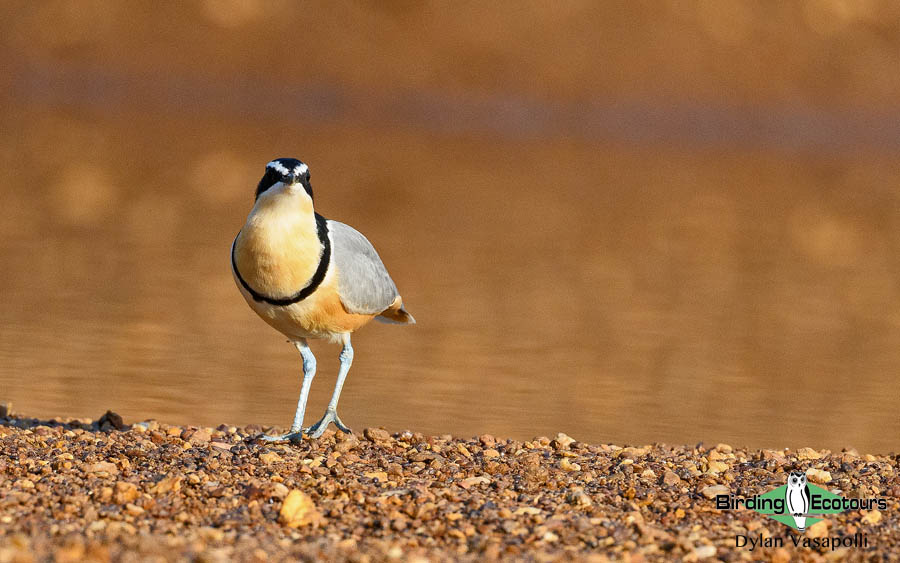
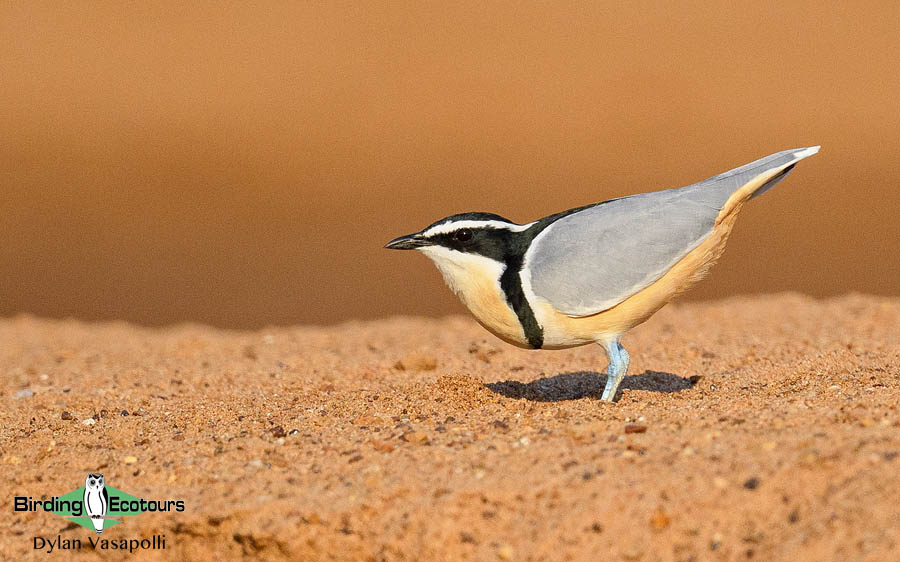
 The highly sought-after Egyptian Plover is one of our premier targets on this exciting tour – several boat trips are undertaken looking for them.
 The highly sought-after Egyptian Plover is one of our premier targets on this exciting tour – several boat trips are undertaken looking for them.
Overview
Steeped in history, Senegal is a delightful West African country that exceeds expectations. Not only is the country safe, but also easy to visit, with a number of direct flights from Europe and North America. Most importantly for us, however, are the birds. Located in the transitional Sahel zone—an otherwise difficult habitat type to access—Senegal offers what is easily the most accessible sites for such highly prized Sahel birds as Quail-plover, Cricket Warbler and Golden Nightjar. Not to mention the incredible Egyptian Plover, which is one of the most sought-after birds in Africa, along with the most important gathering of Scissor-tailed Kite in the world – all of which we readily seek.
This tour begins outside of the country’s bustling capital, Dakar, following which we transit to the northern reaches of the country. Bordering on the edge of the mighty Sahara Desert, we look for the first of our important targets, namely Golden Nightjar and Cricket Warbler. We will also attempt to track down other specials such as Sudan Golden Sparrow, Little Grey Woodpecker and Sennar Penduline Tit. A short stop at the vast Djoudj wetlands breaks our journey southwards. This is an extremely important overwintering site for ducks and other waterbirds, with birds numbering well into the tens of thousands. This vast wetland oasis on the edge of the Sahara Desert is truly spectacular. If luck is on our side, we will hopefully come across both the scarce Arabian and Savile’s Bustards, while also enjoying the likes of the majestic Black Crowned Crane and prized River Prinia in the surrounds.
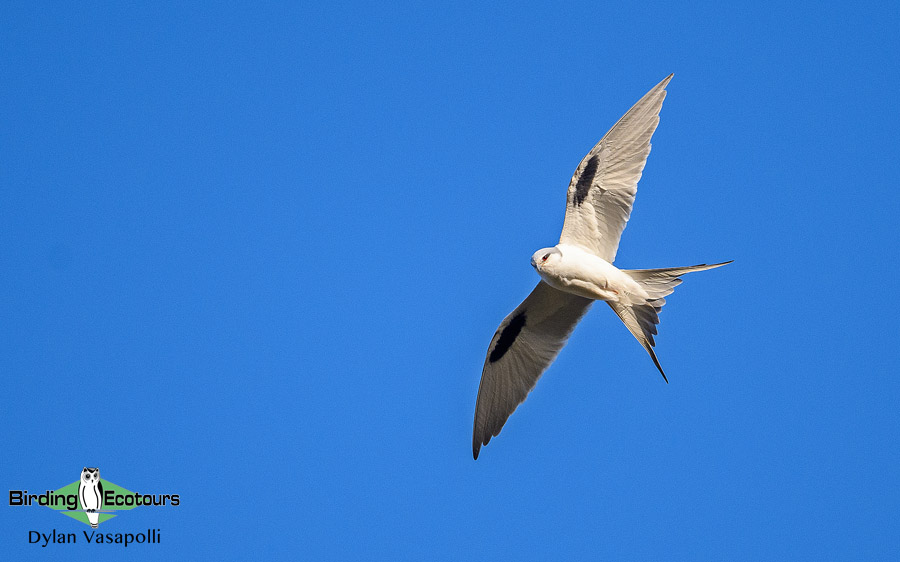 We make a trip to Kousmar Island, where vast numbers of Scissor-tailed Kites come to roost. This is one of the most memorable experiences on the tour!
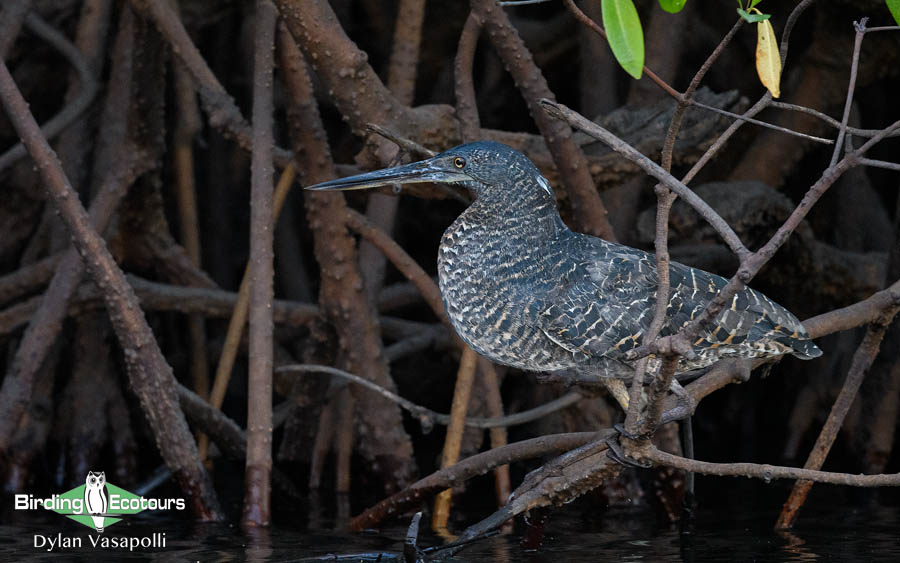
We make a concerted effort to find the mega Quail-plover before we reach the south-eastern parts of the country. This is quite the change from the dry, sandy desert-like north, and exploring the massive Gambia River and the moist deciduous woodlands and riparian forests of Dindefelo will significantly increase our species list. This region hosts the incomparable Egyptian Plover, along with scarce Pel’s Fishing Owl, African Finfoot, Neumann’s Starling and Mali Firefinch. We can also find more iconic and widespread species here, such as Violet Turaco, Blue-bellied Roller, Northern Carmine Bee-eater and Narina Trogon, among many others. We conclude the tour with several days exploring various bits of the extensive Saloum Delta from our comfortable lodge. A trip to the massive Scissor-tailed Kite roost on Kousmar Island, which numbers into the thousands, is sure to be a contender for ‘bird of the trip’, and we will also dedicate some time, and boat trips, to looking for the rare White-crested Tiger Heron in the mangroves.
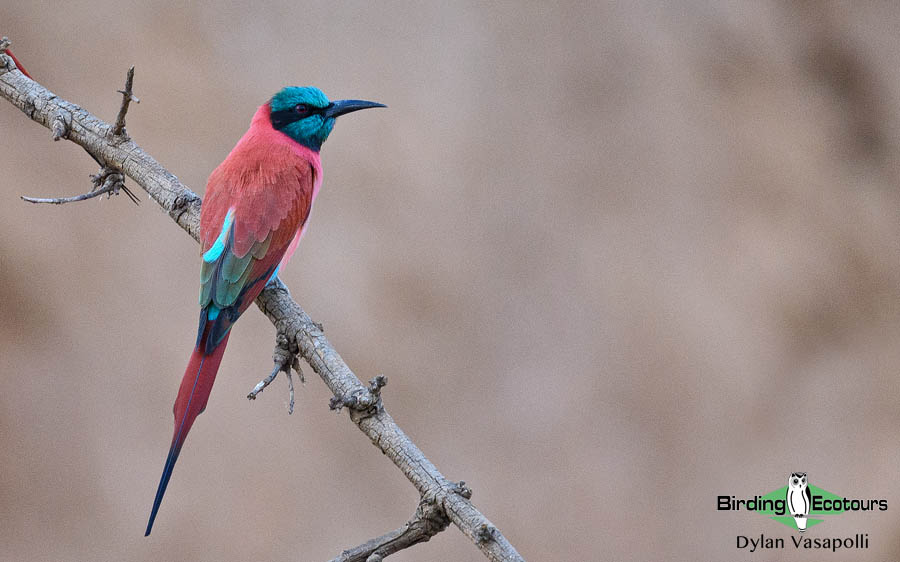 Northern Carmine Bee-eaters are always a firm favorite.
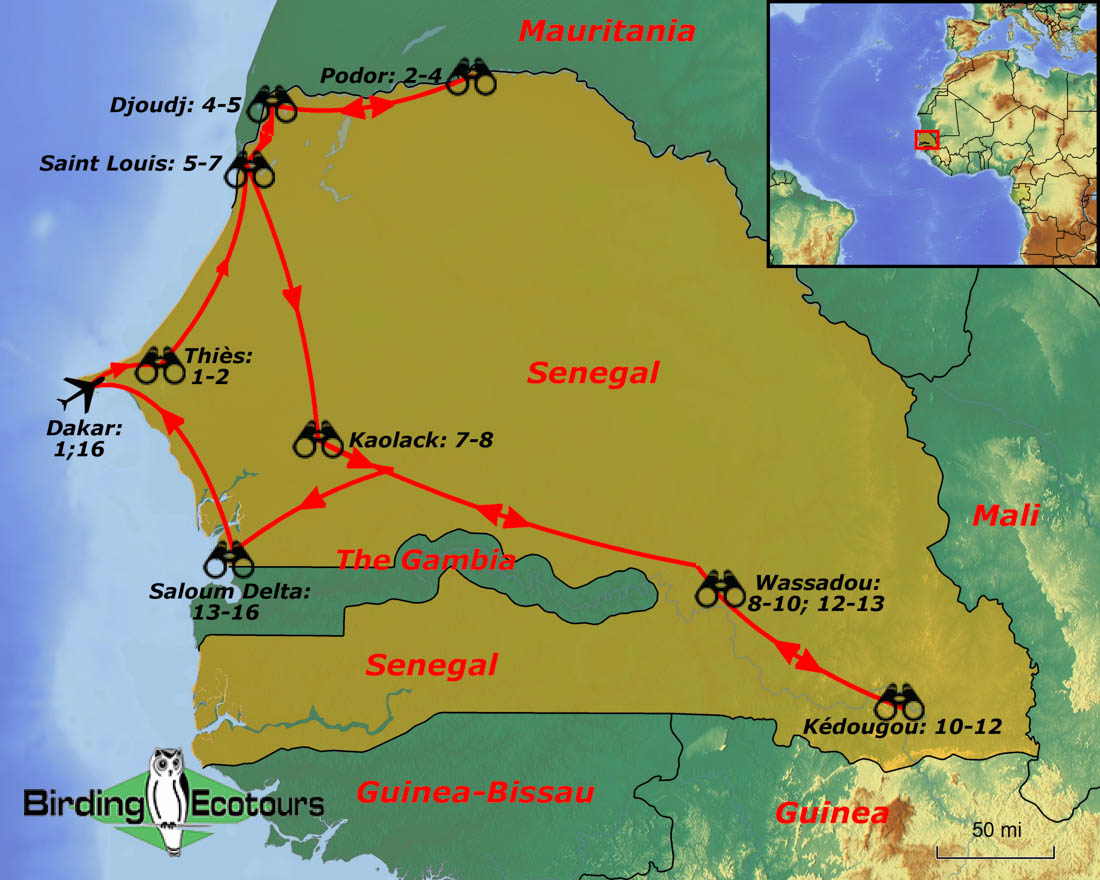
Detailed Itinerary (16 days/15 nights)
Day 1. Arrival into Dakar
The day is set aside for your arrival into the capital city, Dakar. After arrival at its new Blaise Diagne International Airport, we will overnight in nearby Thiès. There are no formal plans for birding today, and you can arrive at your leisure.
Overnight: Thiès
Days 2–3. Birding to Podor, and the edge of the Sahara Desert
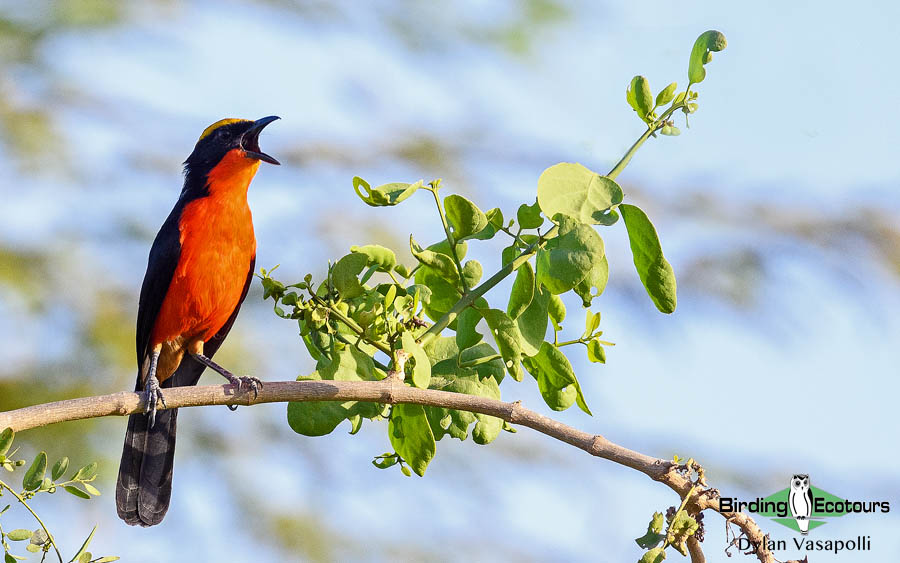
Our birding tour in Senegal begins as we transit north to the small village of Podor, right on the border with Mauritania, and on the edge of the Sahara Desert, for two nights. We begin adding new species quickly, and we will concentrate our birding in various (and bird-rich) acacia thornveld patches (almost reminiscent of southern Africa’s Kalahari Desert). Here we will quickly become acquainted with some of Senegal’s more common arid birds which include the likes of Vinaceous Dove, Blue-naped Mousebird, Western Red-billed Hornbill and the extravagant Long-tailed Glossy Starling. We also hope to come across a few more special birds which may include the bright Abyssinian Roller, African Green Bee-eater, Vieillot’s Barbet, Senegal Batis, Yellow-crowned Gonolek, Pygmy Sunbird, and if we’re lucky, the scarce Little Grey Woodpecker. This route also traverses the best region in Senegal for vultures, and we’ll keep a beady eye on the sky for the likes of the rare Lappet-faced and Rüppell’s Vultures, while both White-backed Vulture and Griffon Vulture are usually more obvious.
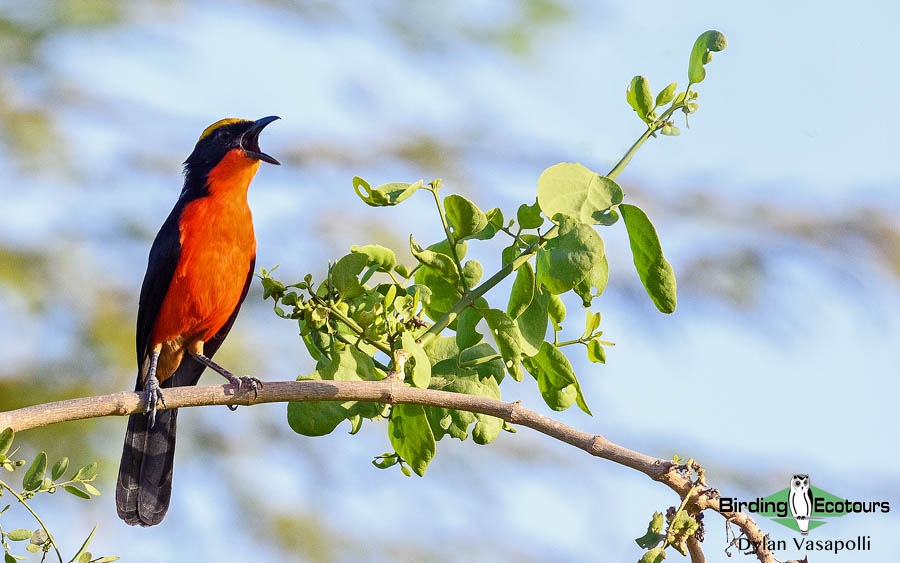 Vibrant Yellow-crowned Gonoleks add much to the surrounding arid landscapes.
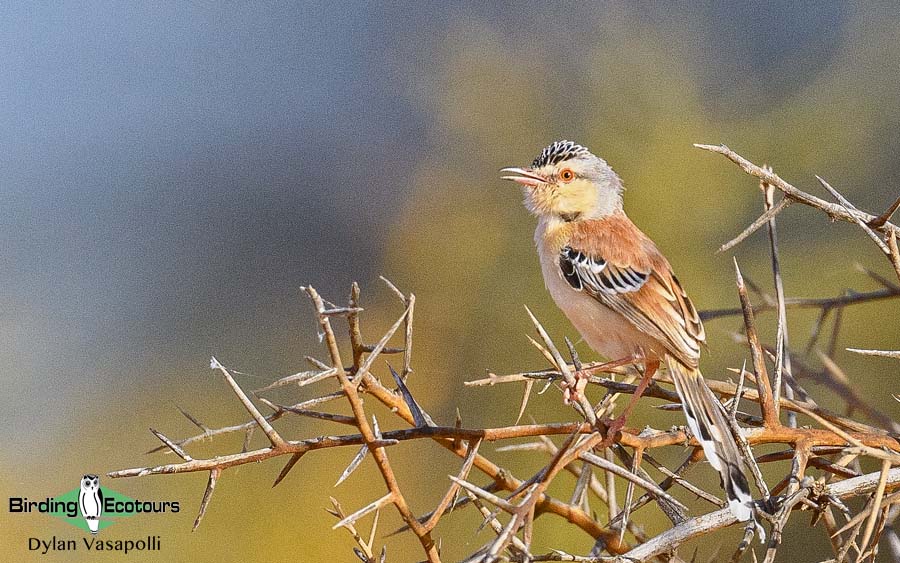
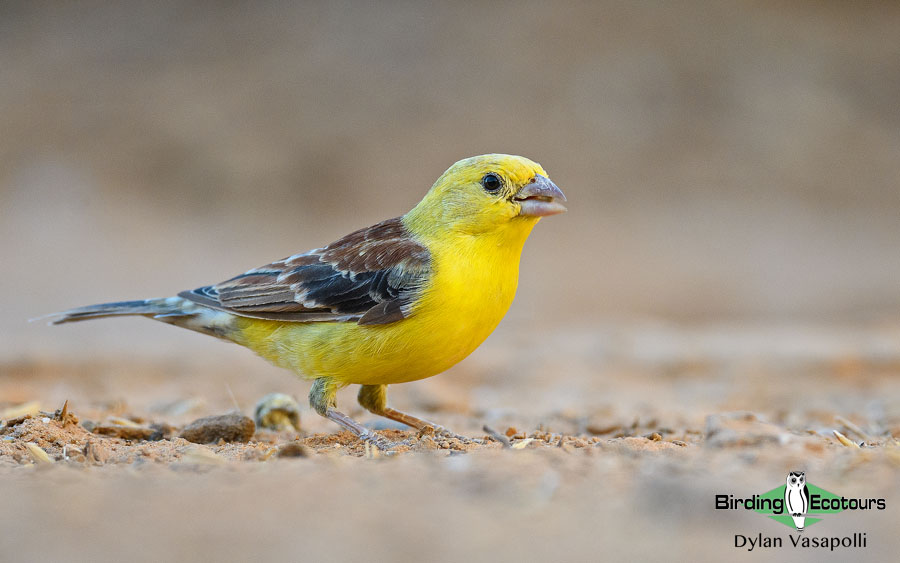
Once we reach the Richard Toll area, we enter into the prime Sahel zone, and a slew of key species awaits us. Foremost among our targets will be the iconic Golden Nightjar and Cricket Warbler – arguably more easily accessed here than at any other area in their range. We will also dedicate time to finding other specials from the dry north such as African Collared Dove, Black Scimitarbill, Little Grey Woodpecker, Fulvous Babbler, Sennar Penduline Tit, Black-crowned Sparrow-Lark, Black Scrub Robin, Chestnut-bellied Starling and Sudan Golden Sparrow. A colony of Horus Swifts in the area usually offers good views of this generally scarce and oft-missed species.
Overnight: Podor
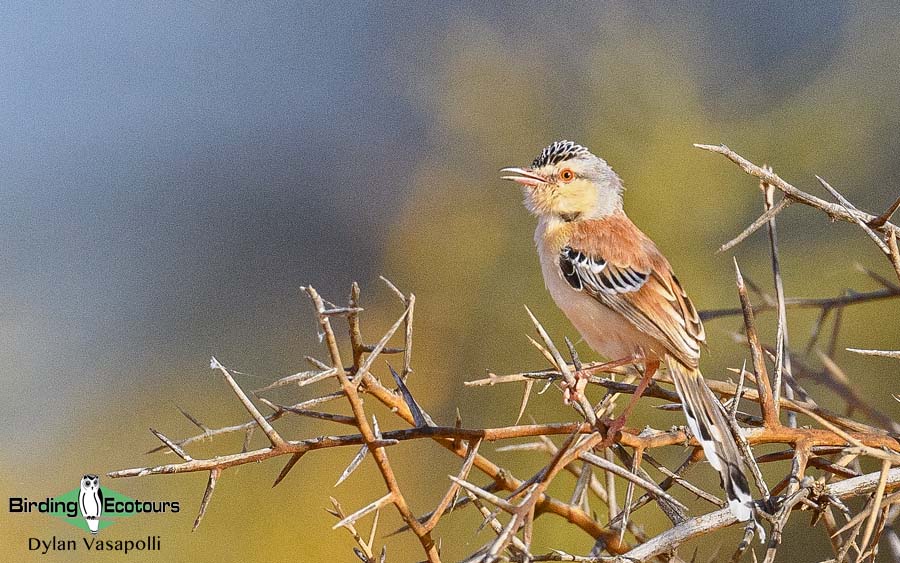 Cricket Warbler is a highly prized bird we’ll be seeking on the edge of the Sahara Desert.
Day 4. Transfer to the Djoudj National Bird Sanctuary
We will have a final morning of birding in the dry country around Podor, for any of the above-mentioned species (from days 2–3). Following this, we’ll transfer the fairly short distance down to Djoudj, where we anticipate arriving in good time, allowing for an afternoon excursion to the aptly named Grand Lac.
The Djoudj National Bird Sanctuary is a UNESCO World Heritage Site, and a wetland of major importance. Given its proximity to the massive Sahara Desert, this vast freshwater wetland system houses thousands of waterbirds, many of which overwinter here from Europe, and serves as an important breeding ground for many others. Combined with the cooling of the temperatures in the afternoon, the waterbird viewing will be exceptional here, and we are sure to bear witness to a magnificent spectacle comprised of many thousands of waterfowl (mostly consisting of White-faced Whistling Duck, Garganey, Northern Shoveler and Northern Pintail), along with both Greater and Lesser Flamingos. These are just a few of a wide range of waterbirds we expect to see here. Additionally, the dry scrubby verges of Grand Lac is arguably the most reliable place in the country to find the rare Arabian Bustard, and the late afternoon period gives us a good opportunity to hopefully find this scarce and declining bird.
Overnight: Djoudj
Day 5. Birding the Djoudj National Bird Sanctuary and Les Marigots
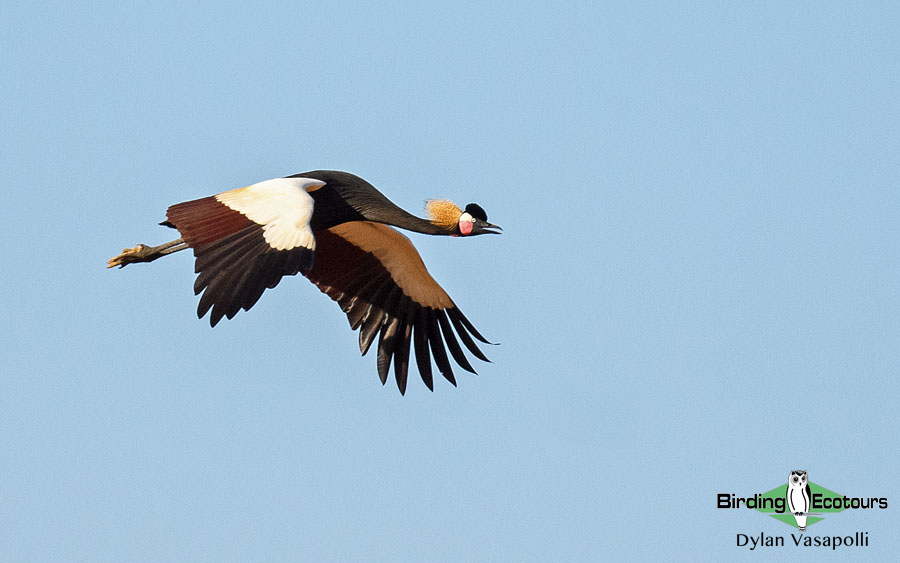
The full morning is spent within the Djoudj National Bird Sanctuary, as we seek out some of its other specials. Black Crowned Cranes are an important target species for us here, and with some dedicated scanning of the area we stand a good chance of finding them. We will need a bit of luck in finding the shy Greater Painted-snipe, as they stick to the reedy verges of the wetlands, while the incredibly localized and only recently described River Prinia fortunately shouldn’t present us with too much of a challenge, as they abound here. We will also include a boat trip to view the massive Great White Pelican breeding colony. Seeing these birds up at close range is a true highlight! Additionally, we have another chance to try for the rare Arabian Bustard should we still ‘need’ it. As usual, wetland areas are very birdy, and we expect to tally up to 100 species, with a wide range of shorebirds, herons, egrets, spoonbills, kingfishers, bee-eaters and warblers present.
Following lunch in the sanctuary, we transfer to our comfortable St Louis hotel for the night. We will ensure we arrive in good time, allowing us to try for another important target bird nearby – Savile’s Bustard. This species is sadly declining because of habitat loss.
Overnight: St Louis
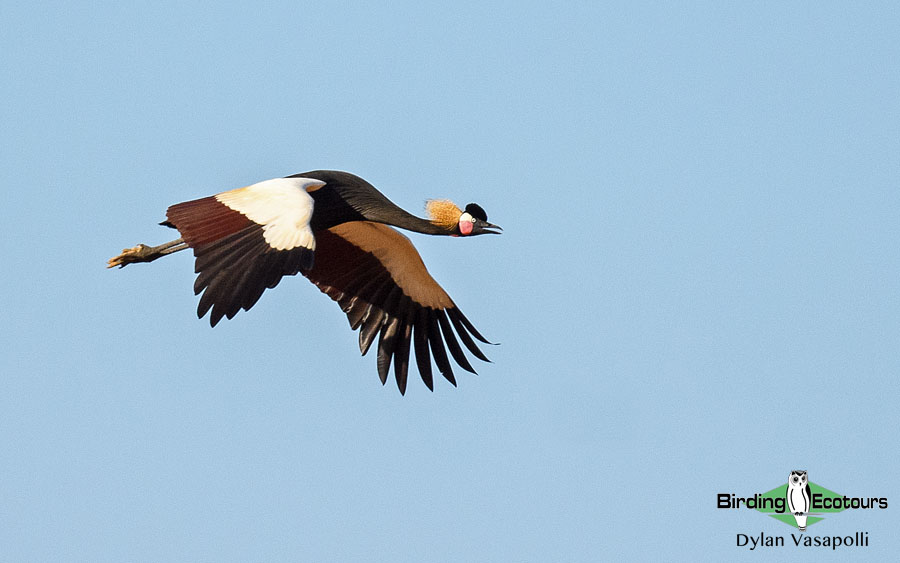 The stunning Black Crowned Crane is a highlight of our time in the Djoudj Bird Sanctuary.
Day 6. Full day of birding around St Louis
We have the full day at our disposal to bird around St Louis. We will likely visit several sites, concentrating our search around the Les Marigots area. Here, foremost of our key species on our radar will be the difficult Savile’s Bustard – some time is usually needed to ensure we can find this shy bird. The surrounding open plains can sometimes host nomadic species like Temminck’s Courser, while the dry acacia woodland interlinking all these areas hosts birds like Senegal Batis, Senegal Eremomela, Yellow-crowned Gonolek, Pygmy Sunbird, and others we’re likely to be starting to get familiar with.
The Les Marigots wetlands, with their extensive marshy wetlands are usually always bustling with a wide array of waterbirds. Groups of ducks and herons constantly commute overhead, and we’ll keep a beady eye on these for anything unusual. We’ll likely pay the most attention to the marshy fringes to the wetlands, as this is the domain of scarce species like Allen’s Gallinule and perhaps even Lesser Jacana, alongside more numerous species like African Jacana and Common Moorhen. The reedy edges also host a different suite of birds, and we’re likely to find species like Winding Cisticola and Greater Swamp Warbler, alongside the scarce River Prinia (once again) – though we should likely have seen this latter species in Djoudj already.
We will also try to access some coastal sites, which usually hold a wide array of Palearctic shorebirds (including impressive Eurasian Curlews and vast numbers of Common Redshanks, among many others), and perhaps West African Crested Tern.
Overnight: St Louis
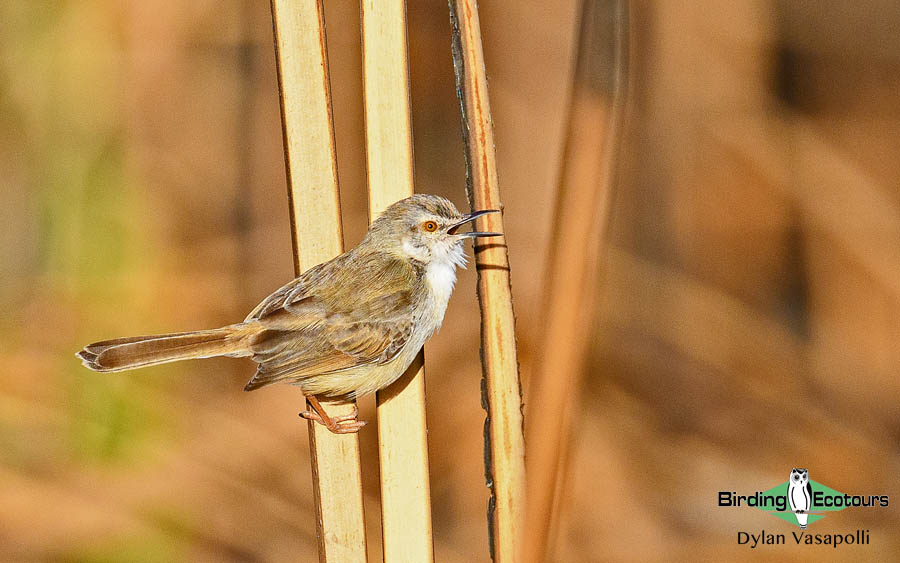
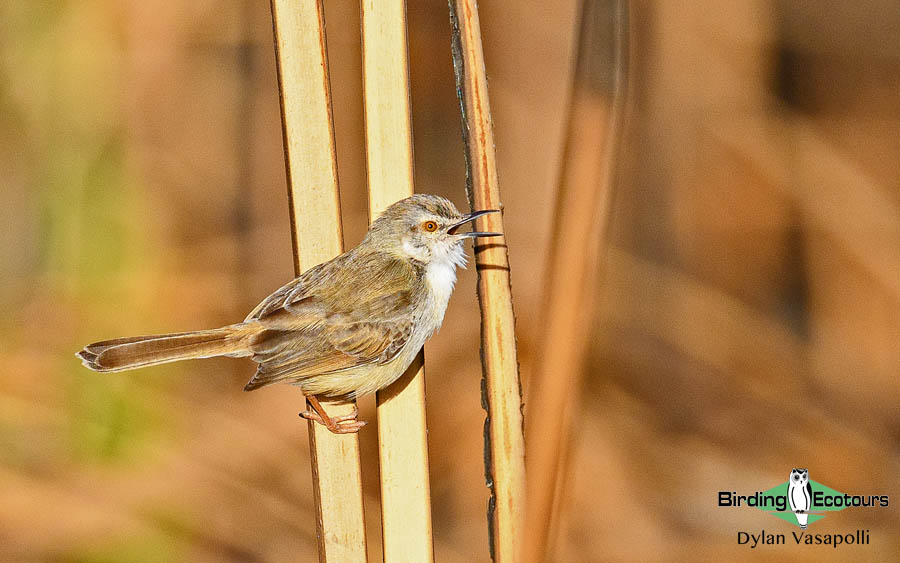 River Prinia is another important target species here – fortunately they are common!
Day 7. Searching for the mega Quail-plover
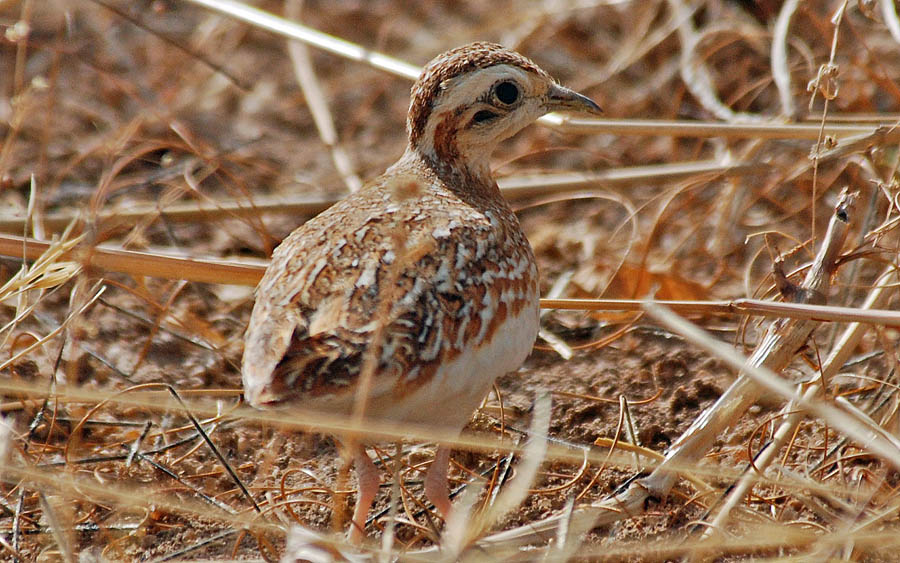
We have a long transfer today, as we begin the journey to the south-eastern parts of Senegal – the next main area we’ll be focusing our birding on. One important bird, however, lies in between – Quail-plover. This mega African bird is rare and highly nomadic, and is often one of the most sought-after African birds. Senegal is easily the best destination to see this species, and sightings have been quite reliable over the last few years. Finding this species can be extremely challenging, and it will involve the group walking through the arid scrubby vegetation in the hope of ‘finding’ it. Obviously, there is a lot more to it, with the bird favoring a very specific micro-habitat, which we hone in on and explore. We’ll likely be getting to our accommodation in the early evening.
Overnight: Kaolack
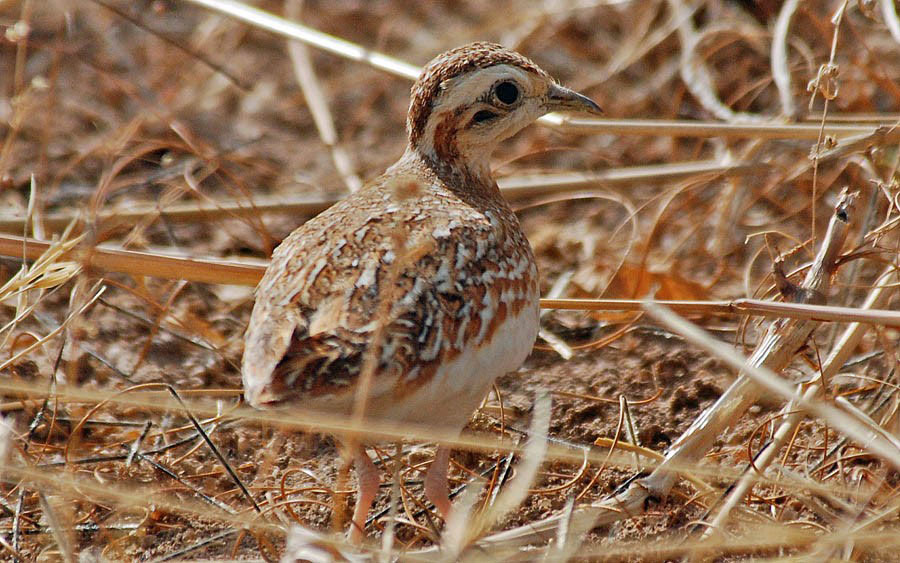 The unique Quail-plover is a mega African species, highly nomadic and thinly distributed. Senegal is arguably the easiest place to currently see this rare species
(photo Nigel Voaden, Wikimedia Commons).
Days 8–9. Birding and boat trips at Wassadou
We have a long drive to get to the famous (in birding terms!) Wassadou, where we will spend two nights. The drive across takes us from the dry Sahel country through ever-increasing bushier and treed woodlands, until we get to our endpoint in the guinea woodlands – a vast habitat difference from what we would have experienced so far on the trip.
Scenically located on the Gambia River in south-eastern Senegal, this area provides a great base from which to explore the surrounds. We take several boat trips along the Gambia River in search of our primary target, the iconic Egyptian Plover. Fortunately, the plover is usually not too difficult to find, and being on the boat normally allows us to get up close and personal with them, enjoying unbeatable views! Other highly prized species to be found include African Finfoot, White-backed Night Heron and even Pel’s Fishing Owl (rare). We visit colonies of the bright Red-throated and Northern Carmine Bee-eaters along the river here, and as we saunter slowly along the river, we are assured of coming across a great many kingfishers – Pied, Malachite, Giant, Woodland, Blue-breasted, Grey-headed and, more rarely, Shining-blue Kingfishers, can all be found. A wide range of other more common waterbirds are also likely.
We will also explore the surrounding riverine vegetation, as it generally supports a wealth of other birdlife. First and foremost, we will try to track down the localized Adamawa Turtle Dove, and we will also have our first opportunity to see the spectacular Violet Turaco and the strange Oriole Warbler.
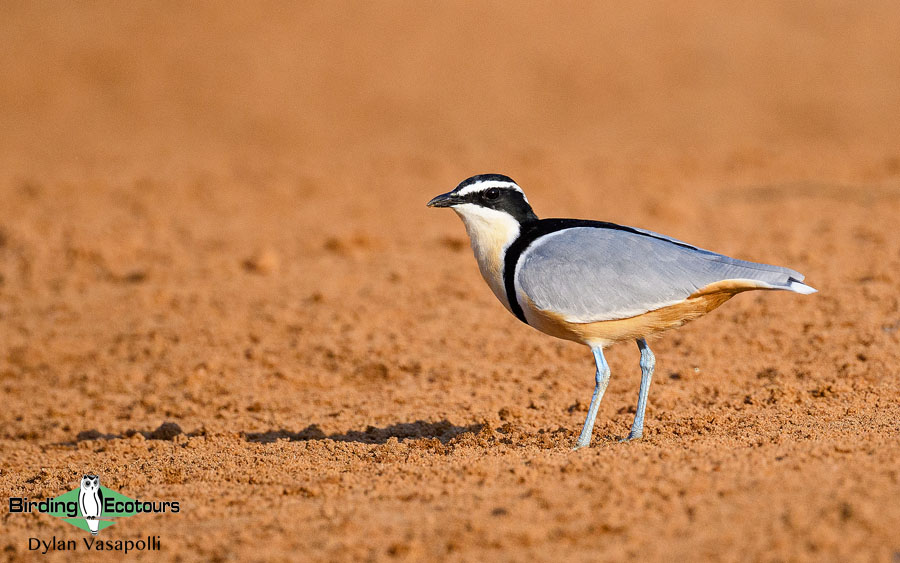 Egyptian Plover is a majorly important target on this tour. Fortunately, they are normally easy to find on the Gambia River from Wassadou.
Western Plantain-eater should be abundant, and we’re also likely to bump into a number of other species such as Broad-billed and the spectacular Blue-bellied Rollers, Brown-throated Wattle-eye, Northern Puffback, Red-shouldered Cuckooshrike, African Blue Flycatcher, Senegal Eremomela, Brown and Blackcap Babblers, Grey Tit-Flycatcher, Swamp Flycatcher, White-crowned Robin-Chat and Village Indigobird. A number of starlings are usually in evidence, and we should come across Bronze-tailed, Purple and Greater Blue-eared Starlings, in addition to the extravagant Long-tailed Glossy Starling, which we should already be familiar with. The area is also a magnet for raptors, and we need to keep an eye open for species such as Brown and Western Banded Snake Eagles, Wahlberg’s Eagle, African Hawk-Eagle and African Fish-Eagle, along with Shikra, Dark Chanting Goshawk and even Red-footed Falcon.
Overnight: Wassadou
Days 10–11. Birding Dindefelo, and the remote south-east
We undertake the long journey to Kédougou, following our time around the wonderful Wassadou area, where we base ourselves for two nights. The main purpose of coming to this remote town, right on the southern border with Guinea, is to give ourselves the best chance at finding some more localized birds – namely: Sun Lark, Neumann’s Starling and Mali Firefinch. We will concentrate our efforts around the Dindefelo waterfall, where the lush riverine forest feels completely different from all the dry habitat we’ve experienced so far throughout the rest of Senegal.
The birding is excellent here and is likely to turn up other such specials as Guinea Turaco and Narina Trogon, while we will count ourselves fortunate if we come across the rare Willcock’s Honeyguide or Dybowski’s Twinspot.
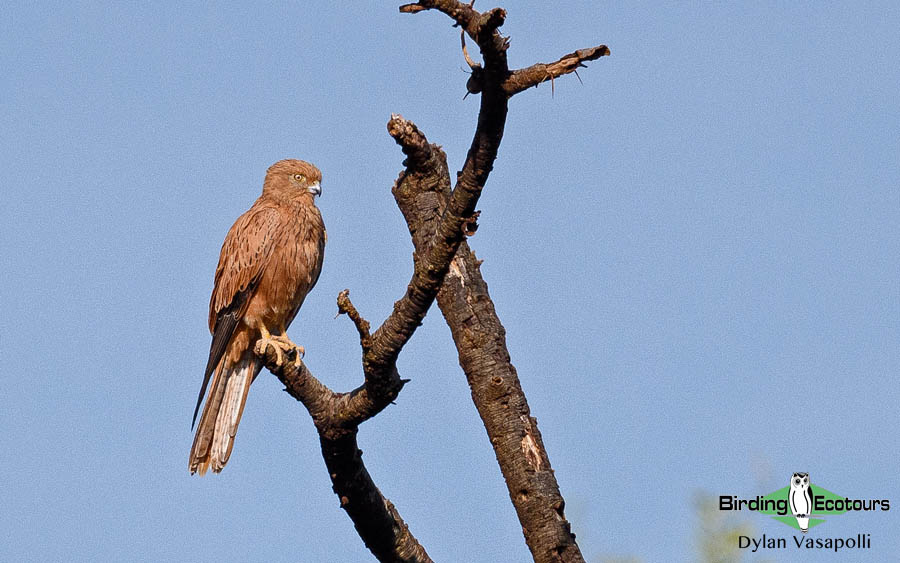
The wooded Guinea savannas blanketing this area are not to be ignored either, and it is within them that we’ll keep an eye out for further specials, including Fox Kestrel, Dorst’s Cisticola, Yellow-bellied Hyliota, Western Violet-backed Sunbird, Chestnut-crowned Sparrow Weaver, Sahel Paradise Whydah and Gosling’s Bunting.
Overnight: Kédougou
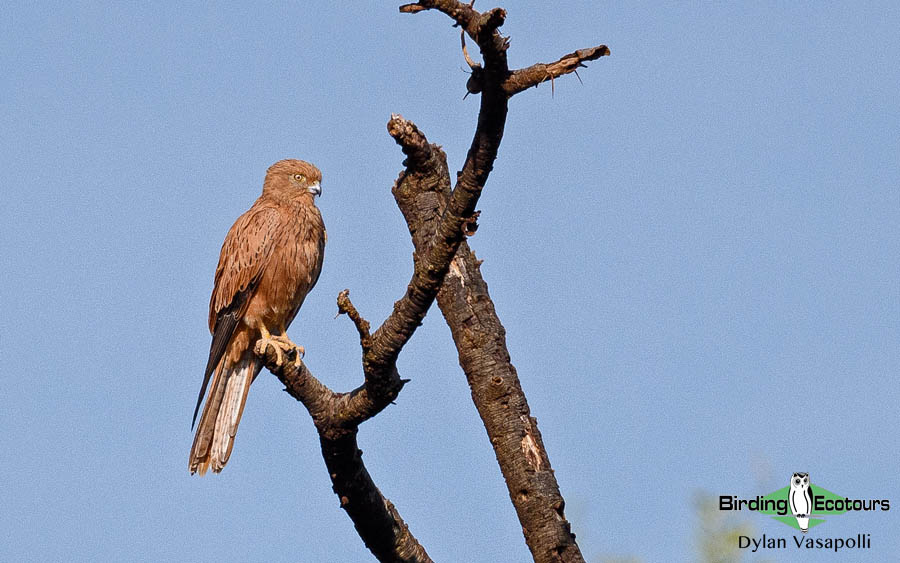 Fox Kestrel is one of the special birds of the Kédougou region we hope to come across.
Day 12. Birding to Wassadou
We have a final morning of birding to spend in the greater Kédougou region, where we can search for any of the scarce species we may not yet have seen, such as Sun Lark, before we’ll need to move on. Our journey takes us through the massive Niokolo-Koba National Park once again (we also journey through it on our way to Kédougou on Day 10), and while stopping is prohibited in the national park, we’ll hope to come across the massive Abyssinian Ground Hornbill and Bateleur while we’re transiting through.
Eventually, we’ll reach our base in the familiar Wassadou area, where we’ll spend the night – to break the drive to the Saloum Delta.
Overnight: Wassadou
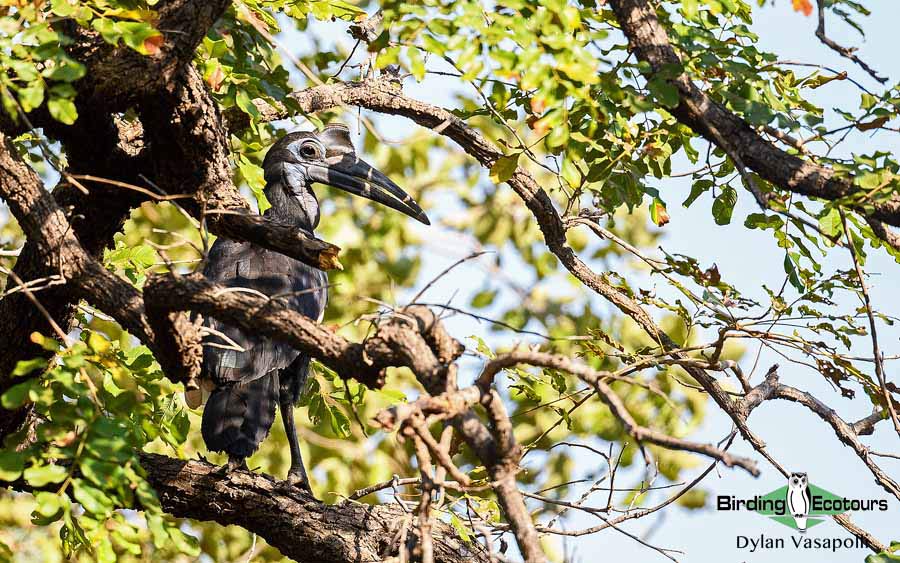 We’ll count ourselves fortunate if we find the massive Abyssinian Ground Hornbill as we cross through the vast Niokolo-Koba National Park
Day 13. Birding to the Saloum Delta, and Scissor-tailed Kites!
We make the journey back to Senegal’s coastline and the vast Saloum Delta. While we still have much driving to do today, we will have a full afternoon to spend birding around Ndiaffate. This arid area hosts many of the drier country birds we’ll be familiar with from the far north, such as Black-headed Lapwing, African Green Bee-eater, Desert Cisticola, Chestnut-bellied Starling and Pygmy Sunbird, among others. Additionally, Savile’s Bustard can sometimes be found.
Our main purpose for birding around Ndiaffate is that it presents us with the opportunity to get to the nearby Kousmar Island. This site, located effectively in the middle of the Saloum River, houses the most important roosting area during the dry season for Scissor-tailed Kite, anywhere in their range in the world. We ensure we arrive in good time in the later parts of the afternoon, and settle in as we watch first tens, then hundreds, and soon after, thousands of Scissor-tailed Kites gathering and dropping into their roost trees for the evening. This is an incredible spectacle to witness. Vast numbers of Lesser Kestrels also join the kites roosting here. No good things come easily though, we first have to wade through a tidal section of the river (effectively wet and muddy beach sand – ankle deep), before taking a canoe across a deeper channel to reach the island. Once we’ve had our fill of this amazing spectacle, we’ll journey to Toubacouta, where we’ll arrive in the early evening.
Overnight: Toubacouta
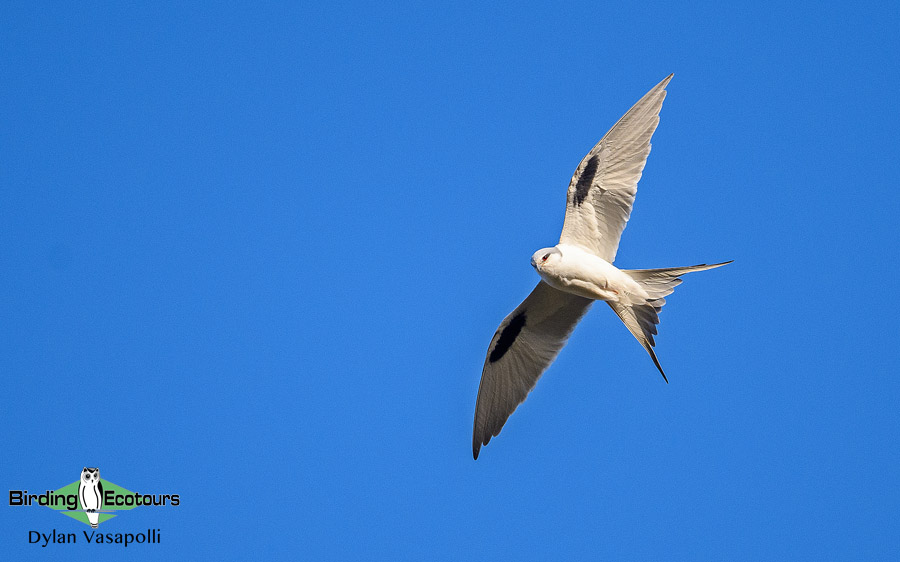
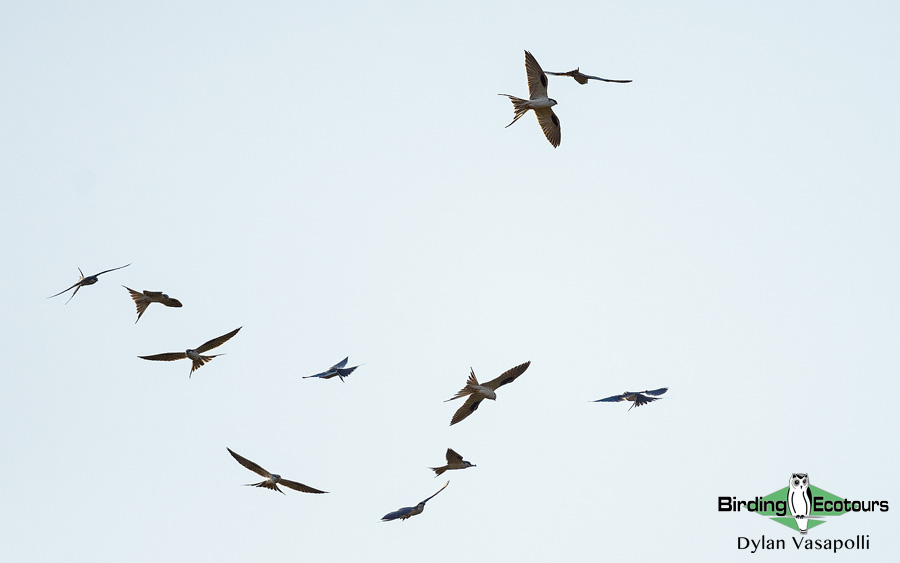 Just a few Scissor-tailed Kites doing a final circle before coming in to roost.
Days 14–15. Birding and boat trips in the Saloum Delta
We have two full days to explore the wonderfully diverse birding in and around the Saloum Delta. Our primary target, and hopefully the last of our main Senegal specials, is the White-crested Tiger Heron. This is a rare resident of the sprawling mangroves on the delta, and we undertake boat trips to best ensure we have every opportunity to see this special bird. As always, boat trips are generally excellent, and these ones are no different. Numbers of the comical Western Reef Heron typically outnumber all the other species, but we’ll search for the huge Goliath Heron, and similar-looking Black Heron as well. Shorebirds are well represented, and we’re likely to get close-up views of common species such as Eurasian Whimbrel and Grey Plover, along with the likes of Common Redshank and Bar-tailed Godwit. Caspian and Gull-billed Terns patrol the waterways, and the peculiar Hamerkop is likely to feature as well. The boat trips also present us with a great opportunity to see the scarce and local Mangrove Sunbird. Raptors are well represented and, in particular, we’ll look for the rather uncommon Beaudouin’s Snake Eagle among all the other species. Good numbers of Blue-cheeked Bee-eaters can often be seen moving about over the delta.
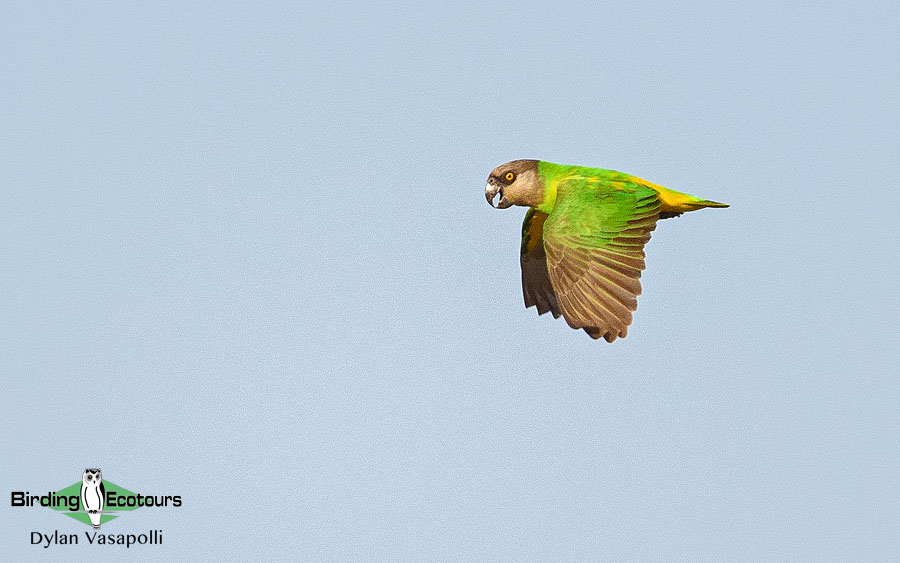
We will also spend time birding in the woodlands surrounding the Saloum Delta, along with some of the excellent freshwater wetlands. Coveys of Stone Partridges run about in the wooded areas, while small groups of Swallow-tailed Bee-eaters flit about quietly, and the hulking Bearded Barbets search out fruiting trees. Dainty Lavender Waxbills keep to the thicker areas, as Fine-spotted Woodpeckers explore the many large trees in the area, as noisy flocks of Senegal Parrot commute overhead. We’ll also seek out Four-banded Sandgrouse, and the bright Yellow Penduline Tit, though both are scarce and difficult to find. More widespread African species on the limit of their ranges here can also be expected and include the likes of Green Wood Hoopoe, Greater Honeyguide, Grey Kestrel, Yellow-billed Shrike, African Golden Oriole, Glossy-backed Drongo, Piapiac, Northern Crombec, Anteater Chat and Beautiful Sunbird. This is also a good zone for over-wintering Palearctic migrants from Europe, and it is not uncommon to encounter many species, ranging from the numerous Common Chiffchaff to Melodious Warbler and Common Redstart. In the evenings, we may be serenaded by African Scops Owls and Pearl-spotted Owlets, as we enjoy our final dinners together.
Overnight: Toubacouta
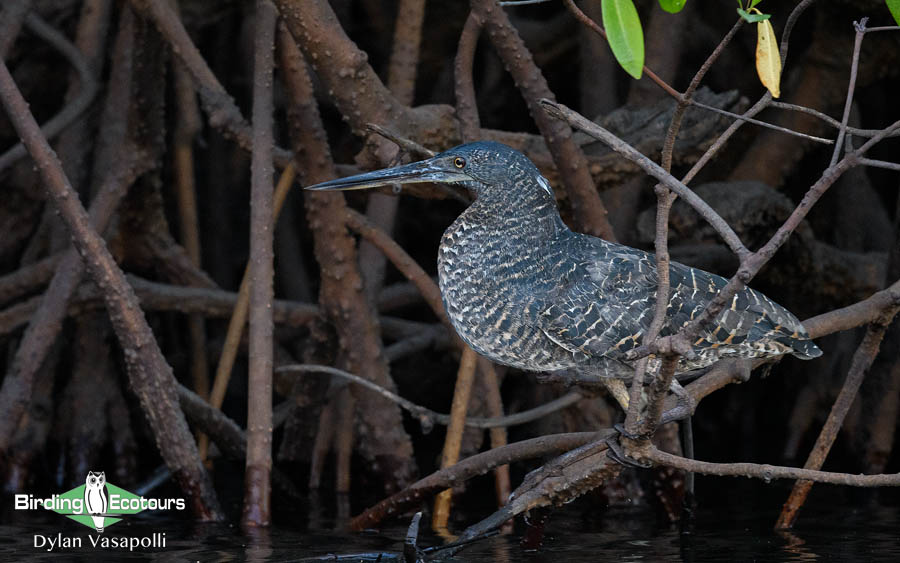 White-crested Tiger Heron will be sought out in the mangroves of the sprawling Saloum Delta – we undertake several boat trips to look for it.
Day 16. Transfer to Dakar, and evening departure
This is the last day of the tour, and we may have a bit of time in the morning to spend birding around the Toubacouta area, should we still be missing any birds such as the difficult White-crested Tiger Heron. Following the morning in the area, we eventually make the drive back to Dakar, where the tour will come to an end at the Blaise Diagne International Airport, in the afternoon. We advise you to only book flights departing this evening or later.
Overnight: Not included
Please note that the itinerary cannot be guaranteed as it is only a rough guide and can be changed (usually slightly) due to factors such as availability of accommodation, updated information on the state of accommodation, roads, or birding sites, the discretion of the guides, and other factors. In addition, we sometimes have to use a different guide from the one advertised due to tour scheduling or other factors.
Map