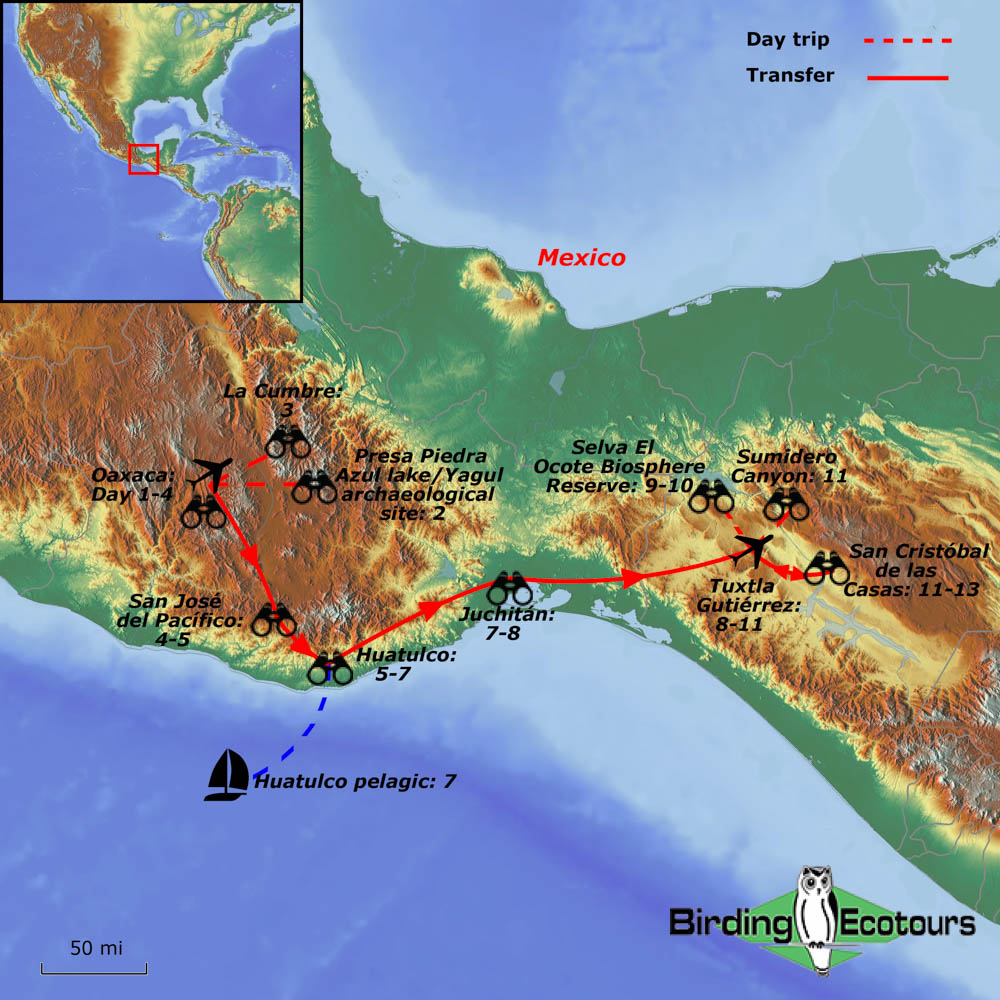
- Duration:
- 13 days
- Group Size:
- 5–8
- Tour Start:
- Oaxaca International Airport, Oaxaca de Juárez (Oaxaca City), Oaxaca, Mexico
- Tour End:
- Tuxtla Gutiérrez International Airport (also known as Ángel Albino Corzo International Airport), Tuxtla Gutiérrez, Chiapas, Mexico
Mexico Birding Tour: Specials of the South
Details
2027
10–22 February
Per person sharing
$6,470 USD
£5,080 GBP / €6,064 EUR
Single supplement
$860 USD
£675 GBP / €806 EUR
This trip is full, please consider booking early for our 2028 departure.
2028
10–22 February
Per person sharing
$7,180 USD
£5,636 GBP / €6,728 EUR
Single supplement
$1,100 USD
£863 GBP / €1,031 EUR
Itinerary
Download ItineraryBirding Tour Mexico: Specials of the South
Our tour through southern Mexico offers some of the country’s most exciting and rewarding birding, with around fifty Mexican endemics and many near-endemics, including species with tiny global ranges, making this a must-do region for global birdwatchers. Many of Mexico’s birds are beautiful, and this tour targets some of the most gorgeous, colorful, and iconic species anywhere in the world. Beginning in Oaxaca, we travel through arid valleys and cactus-covered hillsides, ascend into high-elevation pine–oak forests, continue south into cloud forest, and finally arrive at the humid tropical coast, where we enjoy a pelagic off the Pacific coast. From there we travel east into Chiapas, where we bird through dry thorn forest and wetlands to the lush lowland forests and canyons north of Tuxtla Gutiérrez, finally ending in beautiful high-altitude conifer woodlands. Throughout the tour and across these diverse habitats we target many brilliant Mexican species, with hummingbirds, vireos, jays, wrens, orioles, and buntings well represented, plus localized seabirds and many wintering North American migrants. The possibility of sampling regional dishes, from Oaxacan moles to coastal seafood and Chiapanecan specials, adds character to the journey. Accommodation is comfortable, welcoming, and well situated for birding, and we will experience the culture as we bird through several important ancient sites. All of these elements combine to create a fun, memorable, and rewarding birding tour.
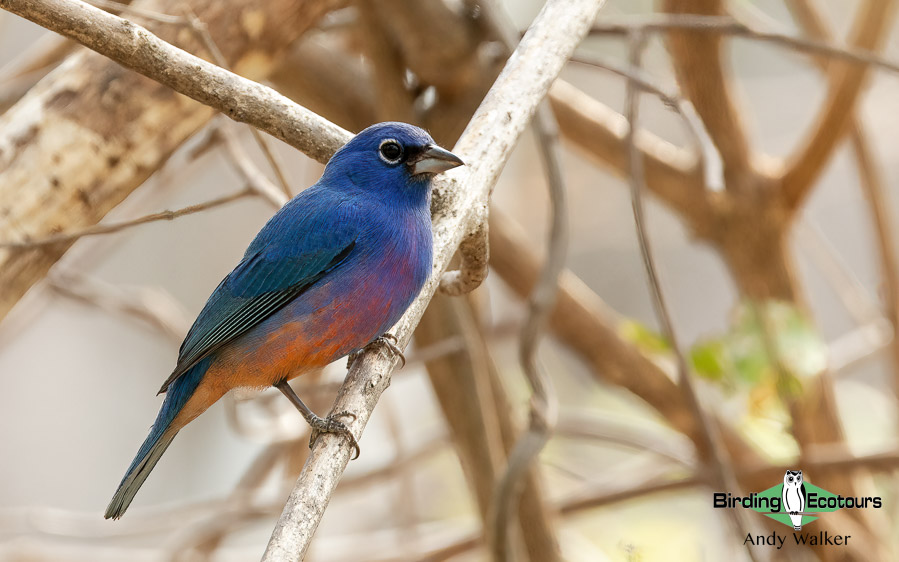 Throughout our tour we will look for many brilliant bird species endemic to Mexico, such as the iconic Rose-bellied Bunting.
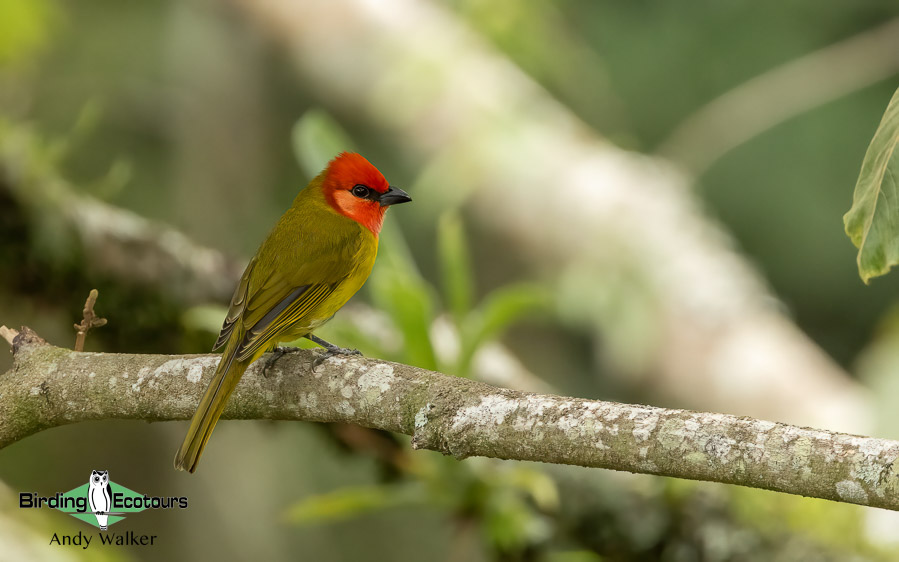
We begin our tour using Oaxaca City as our base, birding around Teotitlán del Valle and the ancient Zapotec site of Monte Albán. In the arid montane scrub, thorny hillsides, and rocky valleys, we start the tour with a bang, searching for many stunning local endemics such as Beautiful Sheartail, Ocellated Thrasher, Slaty Vireo, and Oaxaca Sparrow, alongside the gorgeous Grey Silky-flycatcher and dazzling Blue Mockingbird. Ascending into the tranquil high-elevation pine and oak forests of La Cumbre, we focus on quality rather than quantity, targeting pine specialists including the magnificent Long-tailed Wood Partridge, the extraordinary and highly sought Red Warbler, and secretive Dwarf Jay. Departing south, we climb into the humid cloud forests of San José del Pacífico, seeking the tiny jewel Bumblebee Hummingbird and the handsome White-throated Jay. We then descend into the lush foothills on the Pacific slopes, where our major target is the highly localized Oaxaca Hummingbird, along with other Mexican endemics such as Mexican Hermit and the elegant Red-headed Tanager.
On arrival at the coast, we explore the picturesque coastal forests around Huatulco. Top of our target list is the dazzling Orange-breasted Bunting, which is sure to feature on many birders’ global wish lists. In the tropical dry forests and mangroves, we search for other brilliant endemics such as Turquoise-crowned Hummingbird, Colima Pygmy Owl, Citreoline Trogon, and charismatic Red-breasted Chat. Early the next morning, we set out on a pelagic trip in an area famed for its high concentrations of seabirds, seeking Black Storm Petrel, Least Storm Petrel, Galapagos Shearwater, and many other seabird species, alongside marine mammals. Back on land, we drive east toward Juchitán, stopping at key wetlands before continuing into Chiapas and searching for the spectacularly colored Rose-bellied Bunting and Cinnamon-tailed Sparrow, two local endemics found only in this tiny region.
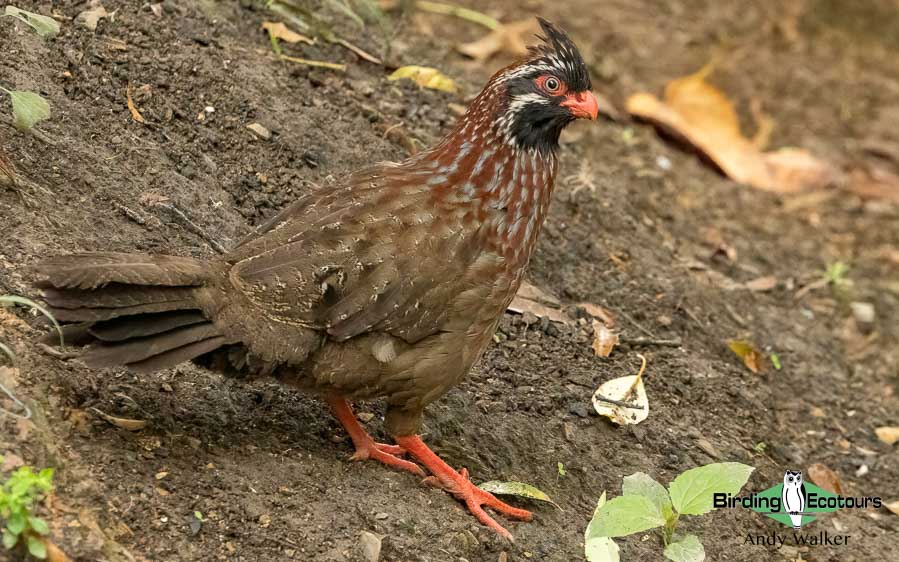 We hope to see Long-tailed Wood Partridge as we tour through the southern Mexican states of Oaxaca and Chiapas.
We spend two days exploring the lush evergreen forests and dramatic karst limestone landscapes of Selva El Ocote Biosphere Reserve and the nearby Armando Zebadua area. Our top target is the threatened Nava’s Wren, a species with an extremely restricted range, amid hundreds of more widespread Neotropical birds. A highlight is the spectacle of seeing hundreds of Green Parakeets near a massive limestone sinkhole. We then visit the stunning Sumidero Canyon, birding across a range of elevations along the oak- and scrub-covered cliffs, surrounded by staggering scenery and breathtaking vistas. Here we search for Highland Guan, Slender Sheartail, Belted Flycatcher, and the striking Blue-and-white Mockingbird. Heading east, our final full day takes us to the high-elevation Montetik Reserve near San Cristóbal de las Casas, home to many species found only in the Chiapas highlands or just across the border in Guatemala and Honduras. Here we focus on the dazzling Pink-headed Warbler, along with Bearded Screech Owl, Blue-throated Motmot, Rufous-browed Wren, and the elusive Black-throated Jay. We conclude the tour with a transfer back to Tuxtla Gutiérrez.
You can join our short Mexico Birding Tour: Yucatán and Cozumel extension, which precedes and complements the main southern Mexico tour. This compact and easily traveled itinerary offers a stunning introduction to Mexican birding, with high species diversity and many endemics, including Ocellated Turkey, Yucatan Nightjar, Yucatan Amazon, and Cozumel Emerald. The Yucatán and Cozumel extension concludes in Cancún on the morning of Day 1 of this tour, with onward flights to Oaxaca arranged the same day.
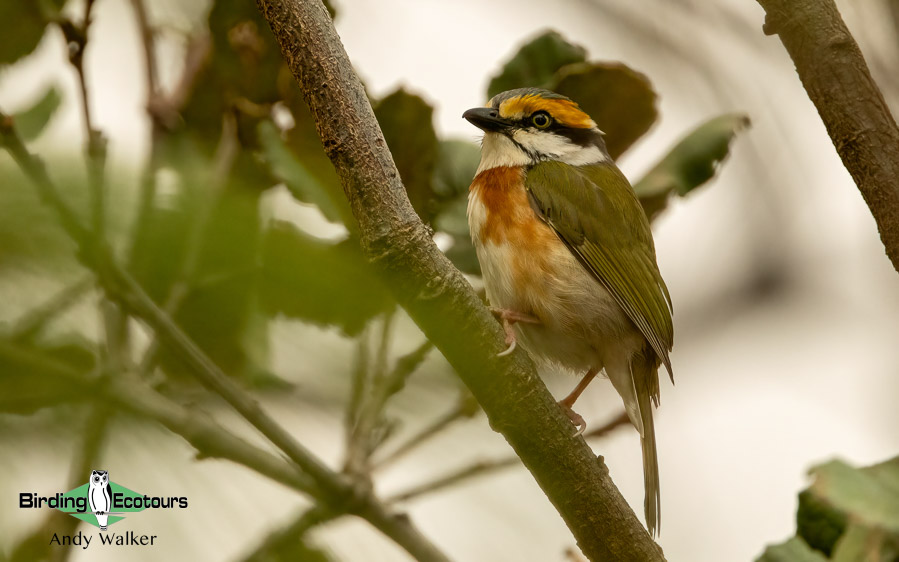
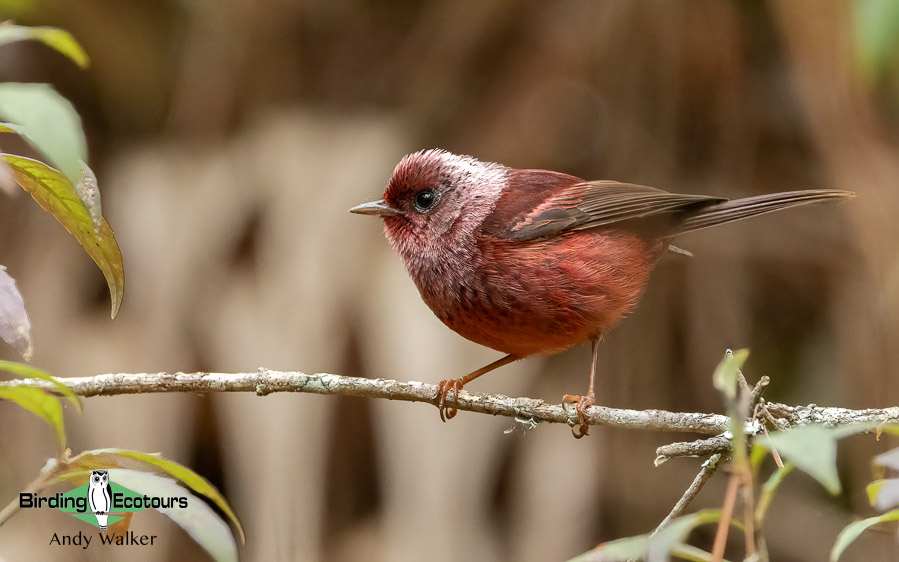 Several fantastically bright warblers will be targeted during the tour, such as the Pink-headed Warbler.
Detailed Itinerary (13 days/12 nights)
Day 1. Arrival in Oaxaca
Afternoon arrival at Oaxaca International Airport and transfer to our comfortable hotel in the city, which will serve as our base for the next three nights. The remainder of the day will be at your leisure, although we will gather in the evening for a welcome dinner together.
Overnight: Hotel Azucena, or similar, Oaxaca
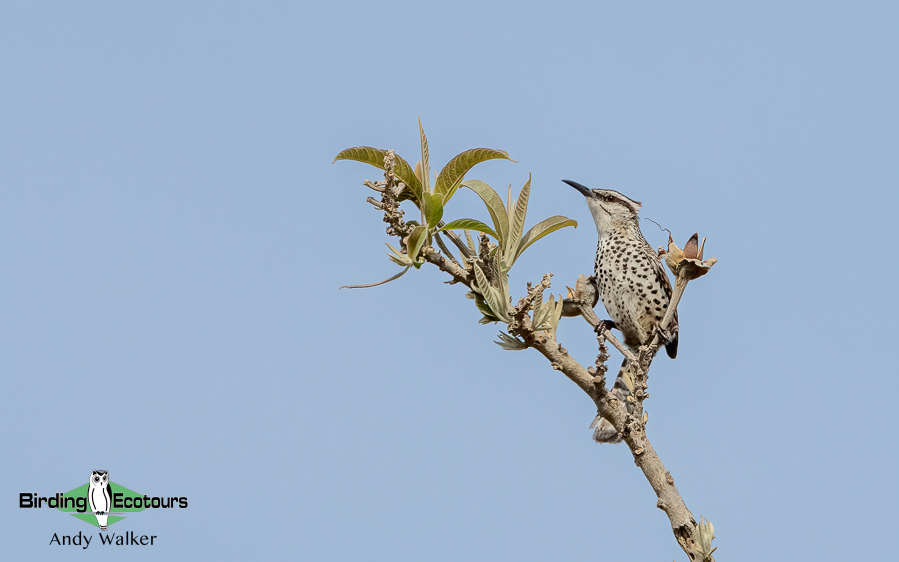 Mexico is well known for its high diversity of wrens, and we will look for several localized species on the tour, like the endemic Boucard’s Wren.
Day 2. Birding around Teotitlán del Valle and the Yagul archaeological site
We spend the day birding at a couple of sites not far from the vibrant and culturally rich Oaxaca City, a place known for its deep indigenous traditions, colorful markets, and beautiful Spanish colonial architecture. Traveling east, we first explore Presa Piedra Azul lake, river-edge forest scrub, and the arid montane oak scrub around the weaving village of Teotitlán del Valle. Later we will visit Yagul, an important Zapotec archaeological site perched above the valley, where we can learn about Zapotec culture while birding among ancient stone walls and cactus-dotted hillsides.
Our main targets include southern Mexican endemics such as Dusky Hummingbird, the aptly named Beautiful Sheartail, Grey-breasted Woodpecker, Pileated Flycatcher, Boucard’s Wren, the gorgeous Ocellated Thrasher, and Mexican endemics including the stunning Grey Silky-flycatcher, Rufous-backed Thrush, and Cinnamon-rumped Seedeater. We will also hope to find Bridled Titmouse and the iconic Red-faced Warbler in the higher-elevation oak scrub. This area supports a high diversity of sparrows, with Lark Sparrow, Chipping Sparrow, Clay-colored Sparrow, Vesper Sparrow, Savannah Sparrow, Botteri’s Sparrow, and Lincoln’s Sparrow all possible, along with three important endemics, Bridled Sparrow, Oaxaca Sparrow, and White-throated Towhee, each largely restricted to Oaxaca state.
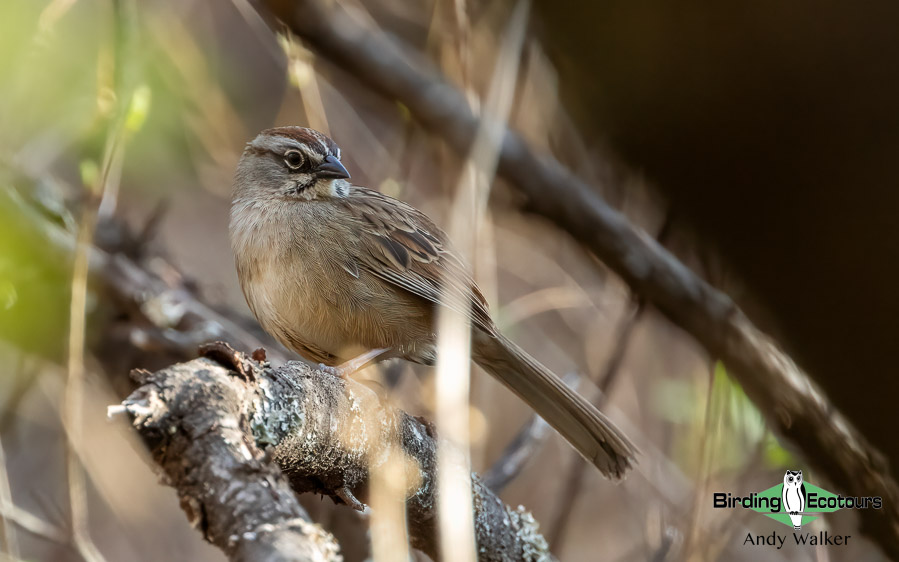 We will search for the endemic but shy Oaxaca Sparrow near Oaxaca city.
In addition to Oaxaca specials, we will enjoy a high diversity of more widespread but attractive birds such as Inca Dove, Plain-capped Starthroat, Least Grebe, White-tailed Hawk, Green Kingfisher, Ladder-backed Woodpecker, Black Phoebe, Greater Pewee, Vermilion Flycatcher, Woodhouse’s Scrub Jay, Rock Wren, Canyon Wren, Bewick’s Wren, Curve-billed Thrasher, Streak-backed Oriole, Black-vented Oriole, Slate-throated Whitestart, and Elegant Euphonia. Mexico is a major wintering destination for many North American breeders, and in these dry mountains we may also encounter migrants such as Killdeer, Violet-green Swallow, American Dusky Flycatcher, Cedar Waxwing, Ruby-crowned Kinglet, Bullock’s Oriole, Orange-crowned Warbler, Nashville Warbler, Virginia’s Warbler, MacGillivray’s Warbler, Black-throated Grey Warbler, Townsend’s Warbler, Wilson’s Warbler, Summer Tanager, Western Tanager, and Blue Grosbeak.
Overnight: Hotel Azucena, or similar, Oaxaca
Day 3. Pine forests of La Cumbre
We venture into the high elevation pine and oak forests of the La Cumbre Natural State Reserve near the town of Ixtepeji. We begin the morning by birding the road north of Oaxaca as we ascend into the mountains, and we then spend the remainder of the day exploring the reserve’s trails and paths at elevations around 9,200 feet (2,800 meters). Here we focus on high quality rather than high diversity. At the top of our target list is a trio of pine forest specials endemic to Mexico, the Grey-barred Wren, Collared Towhee, and the truly exceptional Red Warbler. Aside from these specialists, we will also search for other Mexican endemics, including the distinctive Long-tailed Wood Partridge, beautiful Dwarf Jay, White-striped Woodcreeper, Russet Nightingale-Thrush, and Rufous-capped Brushfinch, together with the near endemic Blue-throated Mountaingem, Mexican Chickadee, and Yellow-eyed Junco, which outside Mexico occur only in Arizona and New Mexico in the United States. Other key targets include the localized Mexican Violetear, Rivoli’s Hummingbird, White-eared Hummingbird, Mountain Trogon, stylish Chestnut-sided Shrike-Vireo, Brown-backed Solitaire, and the unusual Olive Warbler, the sole member of its family.
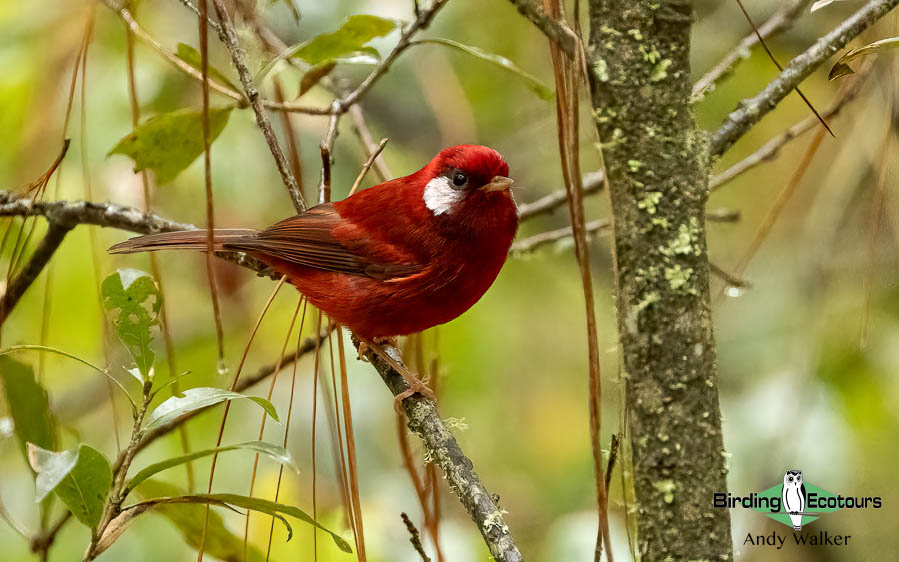 The shockingly vibrant Red Warbler will be a top target in the pine-oak forests of La Cumbre.
Exploring the high-altitude pine and oak forests of the reserve is peaceful and often surprisingly productive. In these cooler, aromatic forests, surrounded by moss-draped branches and distant mountain vistas, we search for a number of more widespread species, including Band-tailed Pigeon, Hairy Woodpecker, Spot-crowned Woodcreeper, Northern Tufted Flycatcher, Hammond’s Flycatcher, Hutton’s Vireo, Steller’s Jay, Grey-breasted Wood Wren, Brown Creeper, Hermit Thrush, Chestnut-capped Brushfinch, wintering Crescent-chested Warbler, MacGillivray’s Warbler, resident Golden-browed Warbler, Painted Whitestart, and Slate-throated Whitestart. There is also the chance of encountering rarer species, such as Pine Flycatcher, the seldom seen pine and oak specialist Aztec Thrush, and Black Thrush, and while these would be fortunate sightings, we will certainly be on the lookout. We end the day with some night birding for Mexican Whip-poor-will, Mountain Pygmy Owl, Fulvous Owl, and the patchily distributed Flammulated Owl, before returning to our comfortable hotel for a well-earned rest.
Overnight: Hotel Azucena, or similar, Oaxaca
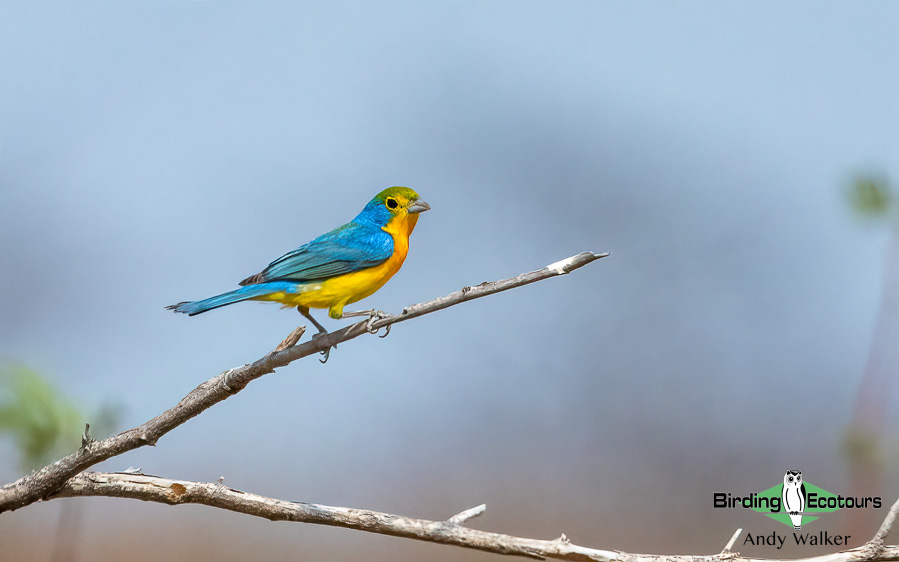 Orange-breasted Bunting is another beautiful species we target on our tour through Oaxaca and Chiapas.
Day 4. Monte Albán World Heritage site
Located just eight kilometers from Oaxaca City, Monte Albán is the principal ancient Zapotec city and a UNESCO World Heritage Site, celebrated for both its cultural significance and its striking setting above the Oaxaca Valley. Founded in the sixth century BCE, it served as the Zapotec capital for more than a thousand years. We will arrive early in the morning to explore this remarkable site, targeting some interesting localized species while taking in its cultural significance. Our main focus will be a group of Mexican endemics, the dazzling yet shy Blue Mockingbird, Pileated Flycatcher, Slaty Vireo, and Ocellated Thrasher. This is also our best opportunity to see Green-fronted Hummingbird and Dwarf Vireo, both restricted to southern Mexico, and the gloriously colored Varied Bunting, a predominantly Mexican species. Monte Albán provides another chance to find species seen on Day 2, along with other notable targets such as Berylline Hummingbird, Elegant Trogon, Northern Beardless Tyrannulet, Cassin’s Kingbird, Thick-billed Kingbird, Ash-throated Flycatcher, Nutting’s Flycatcher, Orange-billed Nightingale-Thrush, Rufous-capped Warbler, and Black-headed Grosbeak.
In the afternoon we will drive to San José del Pacífico, located at 7,550 feet (2,300 meters). This small mountain town is surrounded by lush cloud forest draped over forested hills and ridges, making it an ideal location for Mexican specials. Upon arrival we will begin looking for the species planned for the following morning, and as dusk falls we will try for Whiskered Screech-Owl. That night we will stay in quaint, isolated cabins nestled high in the peaceful forested mountains.
Overnight: Cabañas Puesta del Sol, or similar, San José del Pacífico
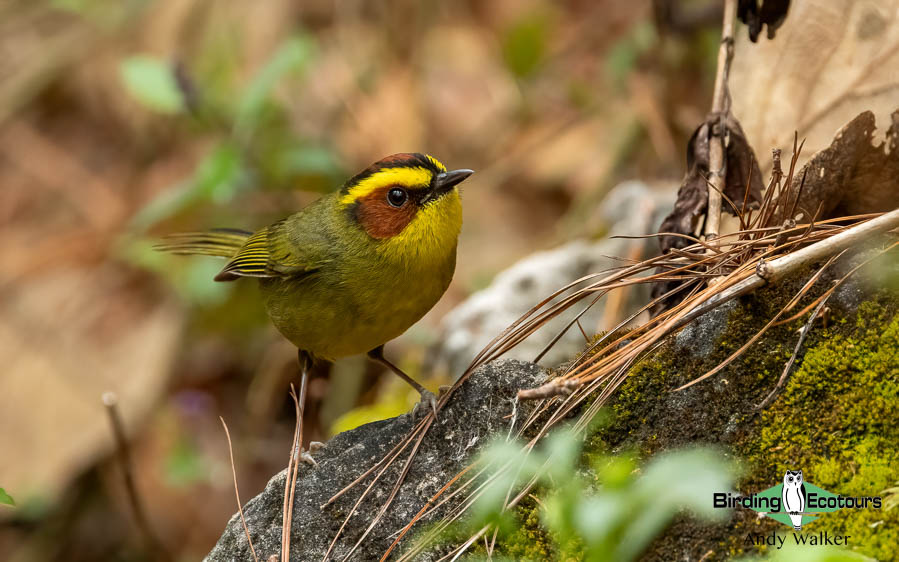 Many birds we look for are colorful and interesting, such as the Golden-browed Warbler.
Day 5. Birding the forested mountains of San José del Pacífico
This morning we will wake immersed in excellent birding habitat around our cabins, exploring the humid pine-oak forests and montane scrub. Key targets include the tiny and stunning Bumblebee Hummingbird, Hooded Yellowthroat, and the handsome yet endangered White-throated Jay. Other notable species of the area include range-restricted Amethyst-throated Mountaingem, Garnet-throated Hummingbird, Black-headed Siskin, Flame-colored Tanager, Cinnamon-bellied Flowerpiercer, plus more widespread Rufous Hummingbird, Ruby-throated Hummingbird, Broad-tailed Hummingbird, Western Flycatcher, and the dapper Painted Whitestart. We also have another chance at species seen on Day 3, including Long-tailed Wood Partridge, Mexican Violetear, Chestnut-sided Shrike-Vireo, Russet Nightingale-Thrush, Rufous-capped Brushfinch, and the brilliant Red Warbler.
Once we have explored these cloud forests, we will head south towards the mountain town of Pluma Hidalgo, a small community set among misty montane forests at the edge of the scenic Sierra Madre del Sur highlands. Our main target here is the absolutely stunning Oaxaca Hummingbird, an endangered species restricted to montane forests in this small region of Oaxaca. Pluma Hidalgo and the road leading up to it offer the best chance in the world to see this species. Aside from the Oaxaca Hummingbird, we hope to encounter Mexican Hermit, Golden-crowned Emerald, Wagler’s Toucanet, Grey-crowned Woodpecker, Golden Vireo, Happy Wren, and the elegant Red-headed Tanager, all endemic to Mexico. We will also search for White-faced Quail-Dove and Green-fronted Hummingbird, though both are rarely seen. Before descending south to the coast, we will look for Vaux’s Swift, Long-billed Starthroat, Blue-throated Mountaingem, Mountain Trogon, Emerald Toucanet, Acorn Woodpecker, Orange-fronted Parakeet, White-striped Woodcreeper, Bell’s Vireo, Ruddy-capped Nightingale-Thrush, Mexican Cacique, Audubon’s Oriole, and Blue Bunting.
Overnight: Hotel Mision de los Arcos, or similar, Huatulco
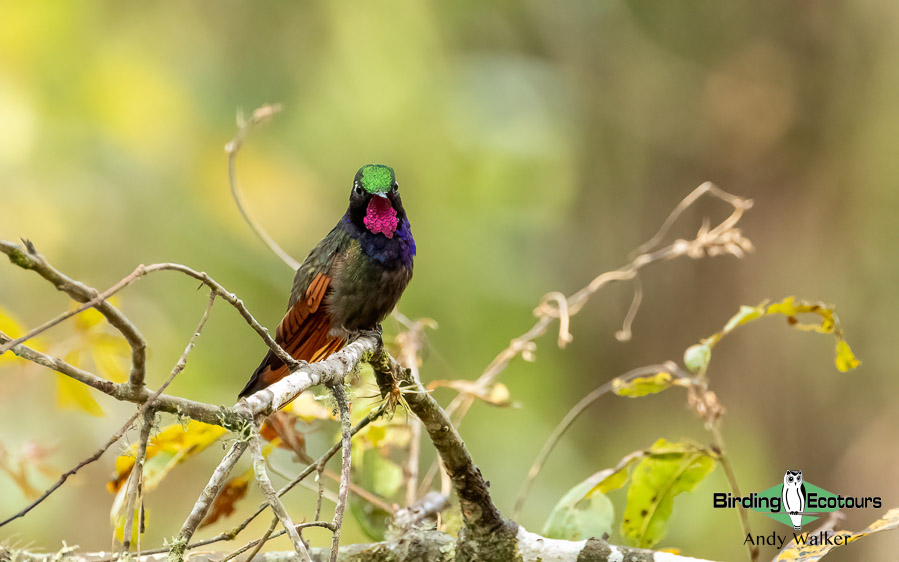 We will see plenty of gorgeous hummingbirds on our tour, including the stunning Garnet-throated Hummingbird.
Day 6. Full day in the Huatulco National Park
Following the previous faster-paced day, we will have a more leisurely day, focusing on local birding near coastal Huatulco. Most of our time will be spent in the exceptional Huatulco National Park, which encompasses lush wet tropical forest, mangroves, and sandy beaches. Top of our list today are two striking Mexican endemics: the characterful Red-breasted Chat and the beautiful Orange-breasted Bunting. We will also focus on localized endemics such as Turquoise-crowned Hummingbird and Russet-naped Wren, along with more widespread Mexican endemics, including West Mexican Chachalaca, Citreoline Trogon, Golden-cheeked Woodpecker, Flammulated Flycatcher, Golden Vireo, Happy Wren, Rufous-backed Thrush, and Cinnamon-rumped Seedeater.
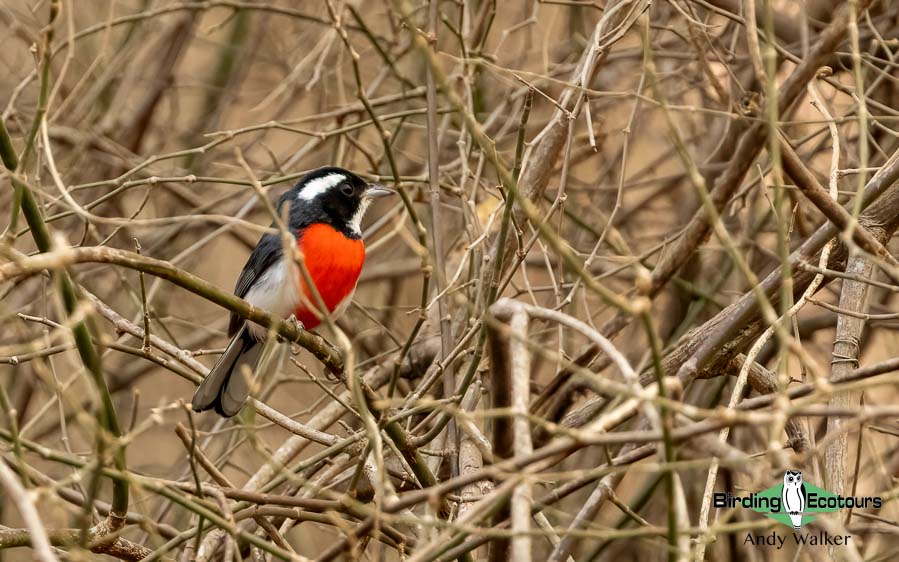 Red-breasted Chat is a secretive yet stunning Mexican endemic.
We will enjoy a slower-paced day, taking time to relax at our hotel during the hottest part of the day, before returning to the coastal jungles in the afternoon to continue birding until dusk. In the forest understory we will focus on Cinnamon Hummingbird, Yellow-breasted Chat, Olive Sparrow, Blue Bunting, and Blue Grosbeak, while roving mixed-species flocks, comprised of Russet-crowned Motmot, Ivory-billed Woodcreeper, White-throated Magpie-Jay, Mexican Cacique, Spot-breasted Oriole, Orchard Oriole, and Black-and-white Warbler, may alert us to the presence of Collared Forest Falcon. As dusk falls, we will continue on to search for nocturnal species, including the endemic Colima Pygmy Owl, localized Buff-collared Nightjar, and more widespread Lesser Nighthawk, Ferruginous Pygmy Owl, and Mottled Owl.
Overnight: Hotel Mision de los Arcos, or similar, Huatulco
Day 7. Pelagic birding from Huatulco
Early in the morning, we board a boat from Santa Cruz Huatulco to explore the rich pelagic waters off the Oaxaca coast, an area known for its high productivity and concentration of seabirds due to upwelling currents and abundant marine life. Our main targets will include species restricted to this part of the western central Pacific Ocean, such as Black Storm Petrel, Least Storm Petrel, Black-vented Shearwater, and Galapagos Shearwater, alongside a great supporting cast of Red Phalarope, Red-necked Phalarope, Elegant Tern, Royal Tern, Sabine’s Gull, Pomarine Jaeger, Wedge-tailed Shearwater, Pink-footed Shearwater, and Magnificent Frigatebird. We could see five species of booby on the boat trip, with Red-footed, Cocos, Masked, Nazca, and Blue-footed Booby all possible on this pelagic. Aside from the birds, we might encounter Pantropical Spotted Dolphin, Spinner Dolphin, Humpback Whale, and Olive Ridley Turtle.
After returning to dry land, we will check out and depart Huatulco, bound for Juchitán to the east. This afternoon will largely be a travel day as we drive towards the south-eastern border of Oaxaca, but we will stop at key wetlands for species such as Double-striped Thick-knee, White-faced Ibis, Stripe-headed Sparrow, and Altamira Oriole. On arrival, we will check in for our single night stay before departing Juchitán and the state of Oaxaca the following day.
Overnight: Hotel Central, or similar, Juchitán
 We should have plenty of sightings of Black Storm Petrel during our Oaxaca pelagic trip.
Day 8. Travel between Oaxaca and Chiapas, and the quest for the Rose-bellied Bunting
Unlike many other days on this tour, today emphasizes a few high-quality targets rather than high diversity. We will explore the thorn-forest, swamp, and gallery forest of the Sierra Tolostique area, focusing on the phenomenally plumaged Rose-bellied Bunting, a species with a tiny global range straddling the border of Oaxaca and Chiapas. The itinerary will remain flexible to give us the best chance of encountering this remarkable species. This area also offers the best opportunity to see the attractive endemic Cinnamon-tailed Sparrow, and gives us another chance for Beautiful Sheartail, Turquoise-crowned Hummingbird, Green-fronted Hummingbird, Citreoline Trogon, and the striking Orange-breasted Bunting. Other targets include Northern Bobwhite, Plain-capped Starthroat, Lesser Ground Cuckoo, Lesser Roadrunner, Scissor-tailed Flycatcher, Stripe-headed Sparrow, Indigo Bunting, and Painted Bunting.
Throughout the day, we will slowly make our way east into Chiapas, searching for Rose-bellied Bunting and our other key species. In the evening, we will check in to a well-positioned hotel for a three-night stay, well placed for the following two days of birding.
Overnight: Hotel Casa Del Agua, or similar, Tuxtla Gutiérrez
Days 9-10. Birding Selva El Ocote Biosphere Reserve and Armando Zebadua
We have two full days to explore the diverse forests of the Selva El Ocote Biosphere Reserve, where more than 400 species have been recorded. Given the high diversity, we will take our time to bird this area, enjoying the lush tropical evergreen forests and the dramatic karst limestone outcrops and canyons. Our main target is the Vulnerable Nava’s Wren, a species with a tiny global range (estimated at around 3,250 square miles / 8,400 square kilometers), with Selva El Ocote one of two core areas to see it. Other top targets, being localized or globally hard to see, include Wedge-tailed Sabrewing, Buff-bellied Hummingbird, Rufous-breasted Spinetail, White-bellied Wren, and the subtly beautiful Slate-colored Solitaire. If we are lucky we may encounter Spotted Wood Quail or the threatened (BirdLife International) Highland Guan. One afternoon we will visit the Sima de las Cotorras, an impressive natural sinkhole known for the roosting hundreds of Green Parakeets. Watching the parakeets arriving at the sinkhole is a brilliant wildlife spectacle to witness!
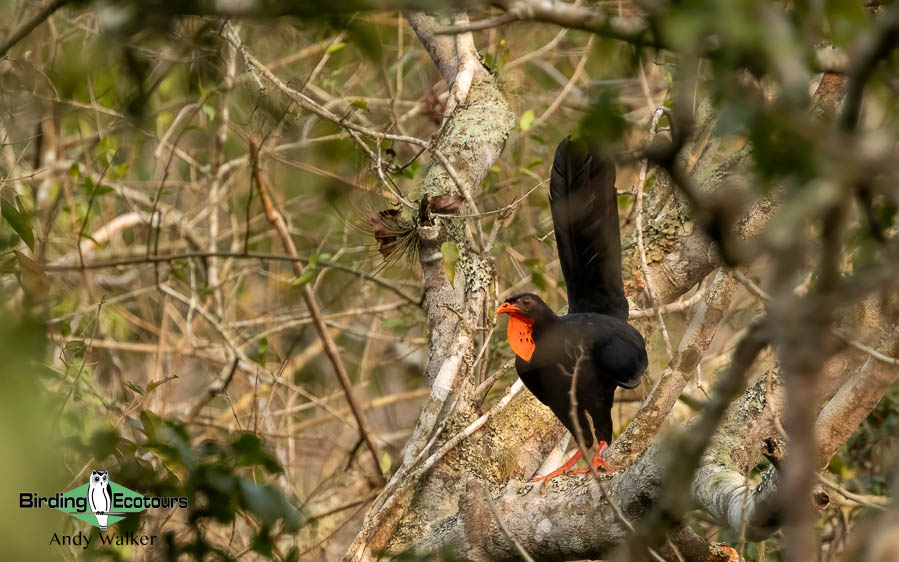 Highland Guan has one of the most bizarre calls of all birds we shall hear while birding in Mexico!
During our time here we will also enjoy quality road birding, offering excellent views into the dense forests of the Armando Zebadua area. Being at the northernmost end of contiguous tropical forest shared with the Central America Mountain Arc, we expect many new species for the tour that are more widely distributed throughout the Americas. Highlights could include Slaty-breasted Tinamou, Plain Chachalaca, Long-billed Hermit, Violet Sabrewing, Stripe-tailed Hummingbird, Ornate Hawk-Eagle, Keel-billed Toucan, Smoky-brown Woodpecker, Tawny-winged Woodcreeper, Fawn-throated Foliage-gleaner, Yellow-bellied Tyrannulet, Stub-tailed Spadebill, Green Shrike-Vireo, Spot-breasted Wren, Cabanis’s Wren, Black-faced Grosbeak, and Yellow-winged Tanager, plus mammals such as Mantled Howler Monkey and Mexican Spider Monkey. Each day ends in the comfort of our hotel near the city of Tuxtla Gutiérrez.
Overnight: Hotel Casa Del Agua, or similar, Tuxtla Gutiérrez
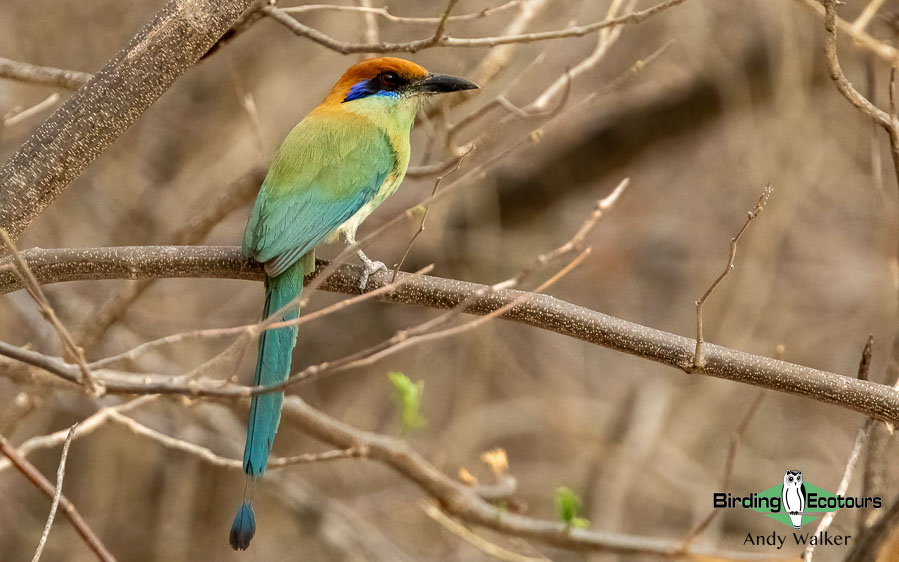 Russet-crowned Motmot is one of several motmot species possible on the tour.
Day 11. Birding the impressive Sumidero Canyon
Today we spend much of the day enjoying the picturesque and breathtaking Sumidero Canyon, a brilliant birdwatching destination combining both exciting species and impressive landscapes. This dramatic canyon, carved over millions of years by the Grijalva River, features towering limestone cliffs rising up to 3,300 feet (1,000 meters) above the river. We will travel to the northern part of the canyon, where the river sparkles far below the steep oak scrub covered cliff sides, and visit several viewpoints at different elevations over the course of the day. Our targets include the rare Highland Guan, gorgeous Slender Sheartail, sweet tufted Belted Flycatcher, striking Blue-and-white Mockingbird, and vibrant Yellow Grosbeak. We hope to get lucky and see the shy Singing Quail and Bar-winged Oriole, and we have another good chance for both Russet-crowned Motmot and Red-breasted Chat.
As we explore a range of altitudes, we should encounter new birds for the tour. These may include Canivet’s Emerald, Azure-crowned Hummingbird, White-bellied Emerald, Golden-fronted Woodpecker, White-fronted Amazon, Northern Bentbill, Eye-ringed Flatbill, Couch’s Kingbird, Green Jay, Banded Wren, White-lored Gnatcatcher, Fan-tailed Warbler, and Rusty Sparrow. After a full day of birding in these impressive landscapes, we will descend and head east to check in to our final hotel of the tour for a two-night stay in San Cristóbal de las Casas.
Overnight: Hotel Parador Margarita, or similar, San Cristóbal de las Casas
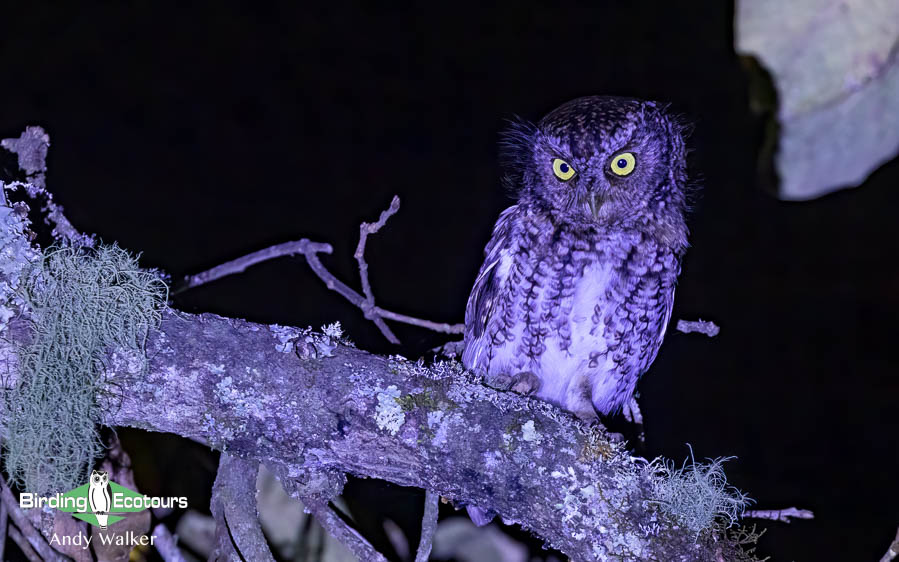 We will look for several localized and rare night birds during the tour, such as this Bearded Screech Owl.
Day 12. Montetik Reserve in the central Chiapas highlands
Our final full day of the tour will see us exploring a protected area of high-altitude forest near San Cristóbal de las Casas. In the Montetik Reserve, we are east enough to encounter a number of highland specialists of humid pine-oak-alder forests whose core range is shared only with Guatemala and Honduras. Top of our target list will be the absolutely beautiful gem, the near-endemic Pink-headed Warbler. This is such a wonderful species, and we will invest time to try and see this iconic species well. Other key targets include the bright Blue-throated Motmot, Guatemalan Flicker, Unicolored Jay, Black-capped Swallow, and Rufous-browed Wren.
We will also search for the mysterious, secretive, and localized Black-throated Jay and Rufous-collared Thrush. Although these species are rarely seen, the Montetik Reserve provides one of the best chances to locate them. While looking for these range-restricted specials, we should encounter other pine and higher-elevation species targeted earlier in the trip, such as Amethyst-throated Mountaingem, Garnet-throated Hummingbird, Brown-backed Solitaire, and Red-faced Warbler. Staying in the reserve until dusk, we hope to finish the tour by seeing the near-endemic Bearded Screech Owl and Mexican Whip-poor-will.
Overnight: Hotel Parador Margarita, or similar, San Cristóbal de las Casas
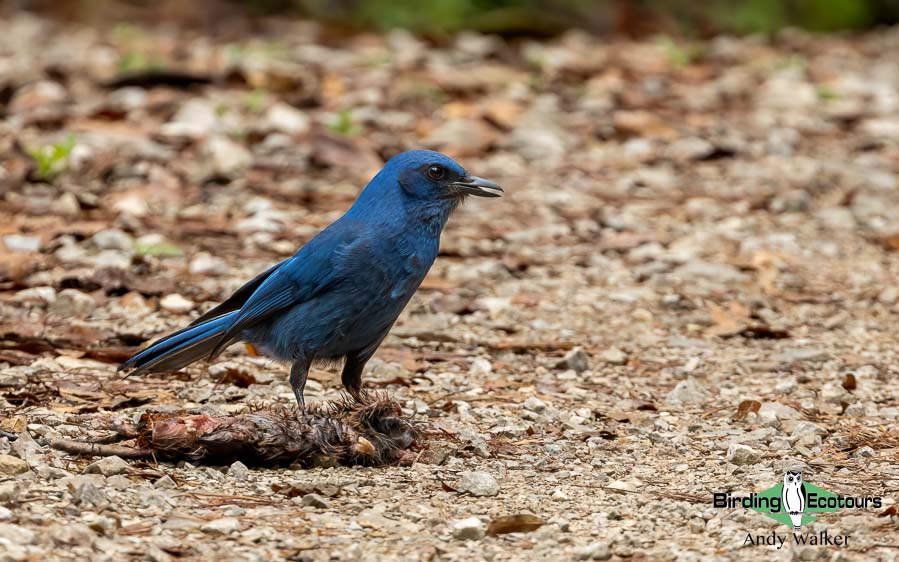 Spectacular jays will feature heavily on the tour, such as this Unicolored Jay.
Day 13. Tour concludes, departure from Tuxtla Gutiérrez airport
After a relaxed breakfast, we will transfer to Tuxtla Gutiérrez International Airport (also known as Ángel Albino Corzo International Airport), where the tour will conclude in the late morning.
Overnight: Not included
Please note that the itinerary cannot be guaranteed as it is only a rough guide and can be changed (usually only slightly) due to factors such as availability of accommodation, updated information on the state of accommodation, roads, or birding sites, the discretion of the guides and other factors. In addition, we sometimes have to use a different guide from the one advertised due to tour scheduling and other factors.
Map