- Duration:
- 6 days
- Group Size:
- 5–8
- Tour Start:
- Cancun International Airport, Cancún, Mexico
- Tour End:
- Cancun International Airport, Cancún, Mexico
Mexico Birding Tour: Yucatán and Cozumel Island Extension
Details
2027
05 – 10 February
Per person sharing
$3,290 USD
£2,583 GBP / €3,083 EUR
Single supplement
$650 USD
£510 GBP / €609 EUR
2028
05 – 10 February
Per person sharing
$3,650 USD
£2,865 GBP / €3,421 EUR
Single supplement
$725 USD
£569 GBP / €679 EUR
Itinerary
Download ItineraryBirding Tour Mexico: Yucatán and Cozumel Island Extension
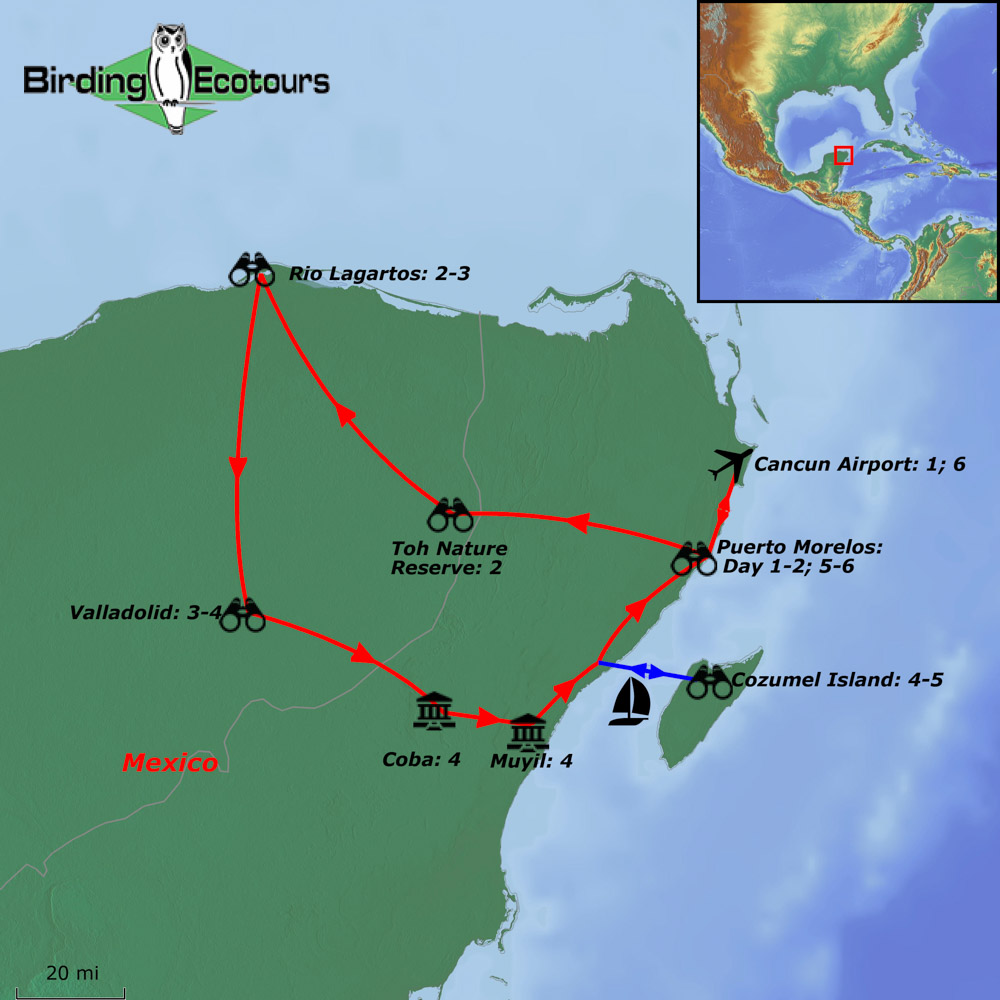
The Yucatán Peninsula offers a wonderful introduction to birding in Mexico, with a high diversity of species, including many endemics, all found within a compact and easily traveled region, rich in culture and natural beauty. Beginning in Puerto Morelos, we travel northwest to Rio Lagartos, where tropical beaches give way to vast mangroves, coastal wetlands, and open forest. From there, we loop south through areas of arid scrub and dry woodland, then continue into lush jungle surrounding ancient Mayan ruins, and finish on the idyllic island of Cozumel, renowned for its white sand beaches and colorful coral reefs just offshore. Along this route we will target many species endemic to the Yucatán Peninsula, as well as a trio of Cozumel Island endemics, together with beautiful Central American specials and wintering migrants from North America. Many of these birds are brightly colored, striking, or impressive, and several have tiny global ranges. From mangrove boat trips and ancient ruins to tropical forest and Caribbean island birding, this tour showcases the best of the Yucatán. Well-developed and welcoming to travelers, the Yucatán Peninsula combines outstanding food, interesting culture, comfortable accommodations, and amazing wildlife encounters with a sense of fun and discovery, making this a beautiful, exciting, and rewarding Mexican birding adventure.
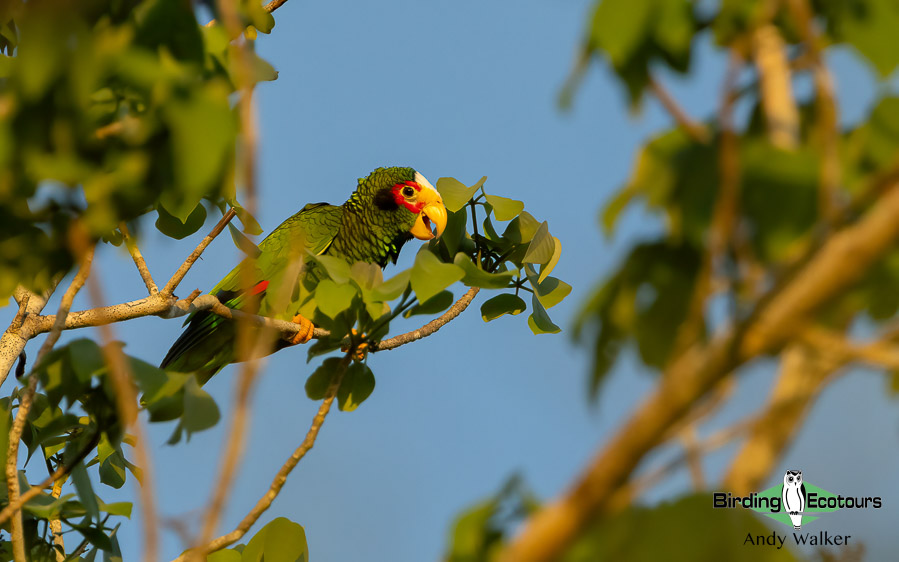 We will search for the rare, localized endemic, and rather attractive Yucatan Amazon during this tour.
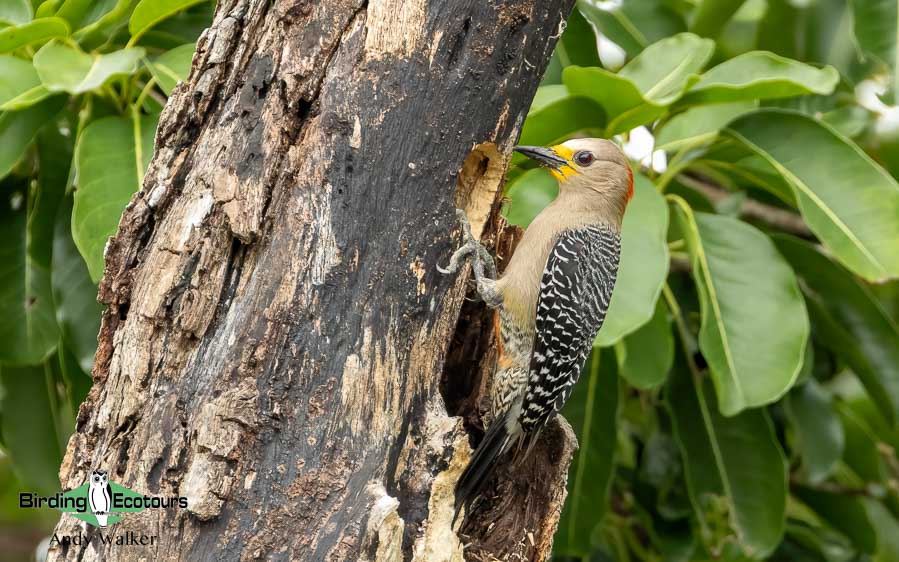
We start our tour in the forests of Toh Nature Reserve, which offers a superb introduction to Yucatán birding. Here, open forest and well-maintained trails provide excellent views of several Yucatán Peninsula endemics such as Yucatan Woodpecker, Yucatan Amazon, charismatic Yucatan Jay, handsome Black Catbird, alongside localized species such as Mayan Antthrush, Grey-throated Chat, and the dazzling Blue Bunting. From Toh, we travel north and west to the wetlands of the UNESCO Rio Lagartos Biosphere Reserve. These highly productive mangroves, tropical savannas, and shorelines support remarkable numbers of waterbirds, including shorebirds (waders), herons, flamingos, terns, kingfishers, and rails, while we also seek specialists such as Yucatan Wren, brilliant Orange Oriole, and at night, the elusive Yucatan Nightjar. In the surrounding arid woodland and scrub, we target the striking Lesser Roadrunner, coveys of Yucatan Bobwhite, the brilliant Mexican Sheartail, and with luck, the elusive Yucatan Gnatcatcher.
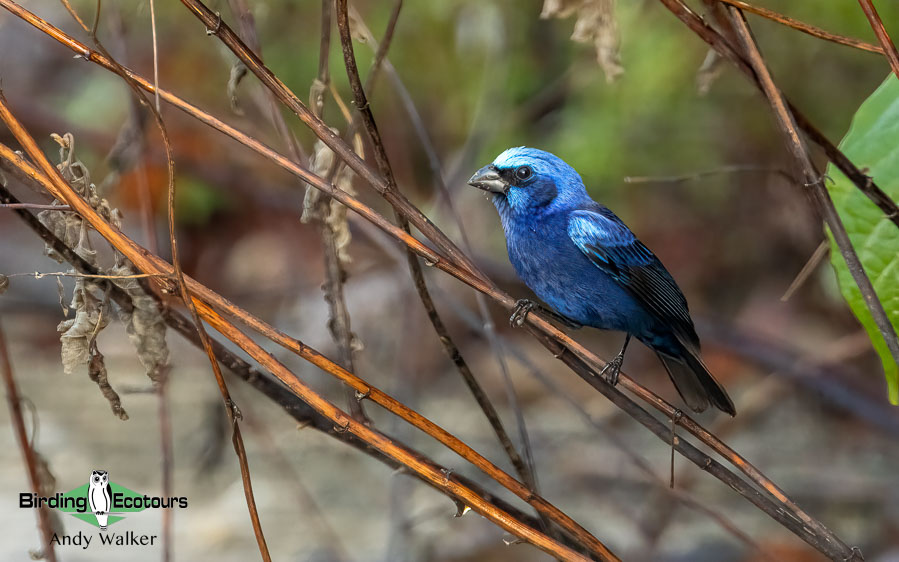 Blue Buntings will dazzle us as they forage in roadside vegetation!
From Rio Lagartos, we head south to Valladolid, where dry forest, scrub, and small wetlands host species such as the cryptic Singing Quail, as well as Wedge-tailed Sabrewing, Buff-bellied Hummingbird, and the spectacular Rose-throated Tanager. Night birding here is an exciting prospect, with chances for the highly sought Yucatan Poorwill, and others like Middle American Screech Owl. Continuing southeast, we explore the ancient Mayan sites of Cobá and Muyil, both iconic cultural sites, but the birding around them is superb. The lagoons host bitterns, Ruddy Crake, and Spotted Rail, while the open forest and jungle paths are home to incredible Ocellated Turkey, majestic Ornate Hawk-Eagle, Yucatan Vireo, Green-backed Sparrow, Morelet’s Seedeater, motmots, trogons, and a high diversity of orioles and flycatchers. Birding these sites is a truly unforgettable experience, seamlessly combining cultural discovery with outstanding birdwatching.
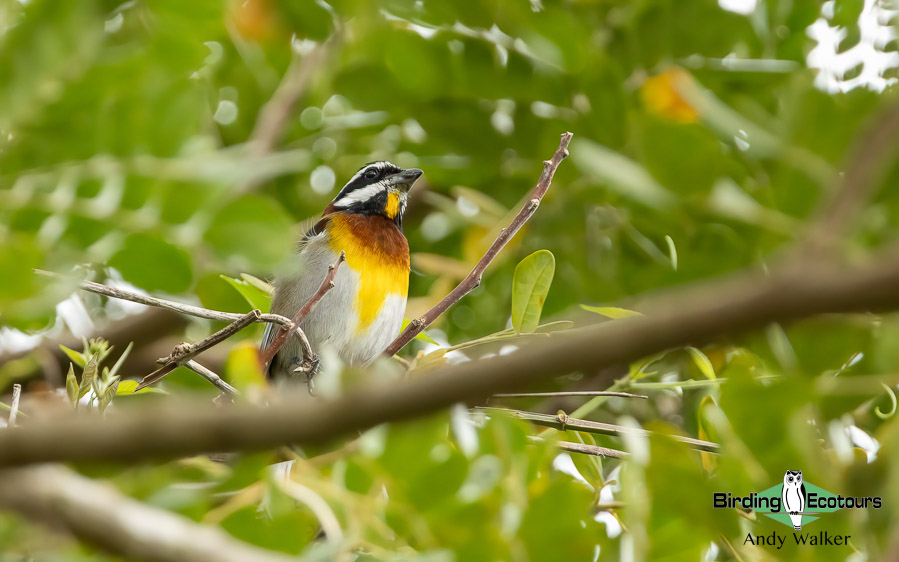
Leaving the jungles behind, we take a ferry to picturesque Cozumel Island, famed for its beauty, diverse reefs, and for us, three single island endemics. These are Cozumel Emerald, Cozumel Vireo, and Cozumel Wren, alongside several species otherwise only found on Caribbean islands, including White-crowned Pigeon, Caribbean Dove, Caribbean Elaenia, and the vibrant Western Spindalis. The island also attracts a high diversity of wintering migrants from North America, from waders and terns to warblers and vireos. We then have one final morning based on the coast to focus on our last targets before arriving at Cancun airport, where the tour ends.
This tour is an extension to our exciting Mexico: Specials of the South tour, which immediately follows our Yucatán and Cozumel Island extension. On the longer southern Mexico tour, we bird across Oaxaca and Chiapas for many staggeringly beautiful endemics, including Long-tailed Wood Partridge, Dwarf Jay, Red Warbler, Rose-bellied and Orange-breasted Buntings, and many others. On this tour, we will experience remarkably diverse landscapes, immerse ourselves in local culture, and enjoy a pelagic trip—all while traveling in comfort and savoring some of Mexico’s finest cuisine.
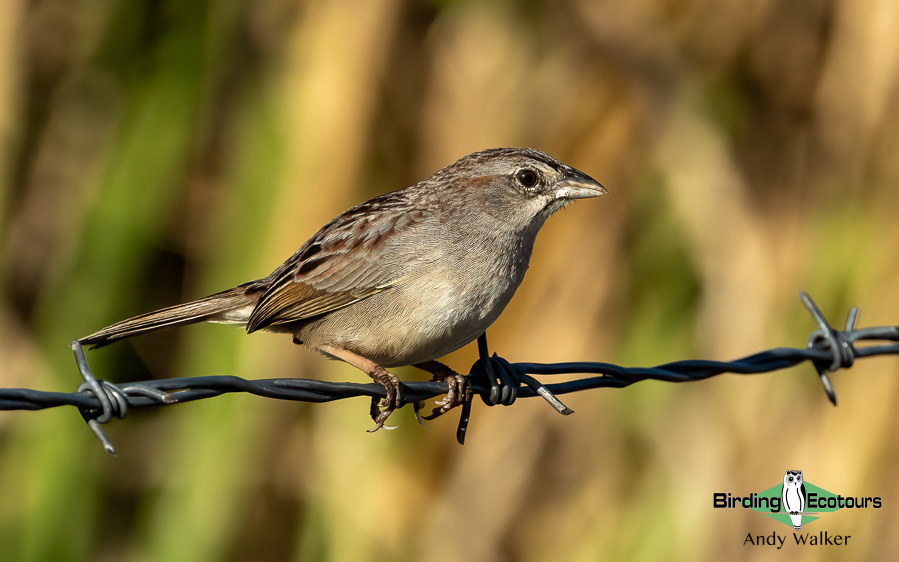
The characterful and localized Grey-throated Chat is a top tour target.
Detailed Itinerary (6 days/5 nights)
Day 1. Arrival in Cancun
This is a non-birding arrival day, with your afternoon arrival at Cancun International Airport ahead of our early start to our short Mexico Yucatán and Cozumel extension tour the following morning. We will gather at the airport and make the short transfer to our comfortable hotel in the charming Caribbean town of Puerto Morelos. For those traveling long distances, we recommend arriving earlier to relax in this peaceful town, where you can explore nearby natural highlights such as the Great Mayan Reef, beautiful Cenote La Noria, or the local botanical gardens. In the evening, we will meet for a welcome dinner together and enjoy the first of many excellent Mexican meals, with the region’s coastal location and Mayan heritage reflected in its delicious cuisine.
Overnight: Corales Suites, or similar, Puerto Morelos
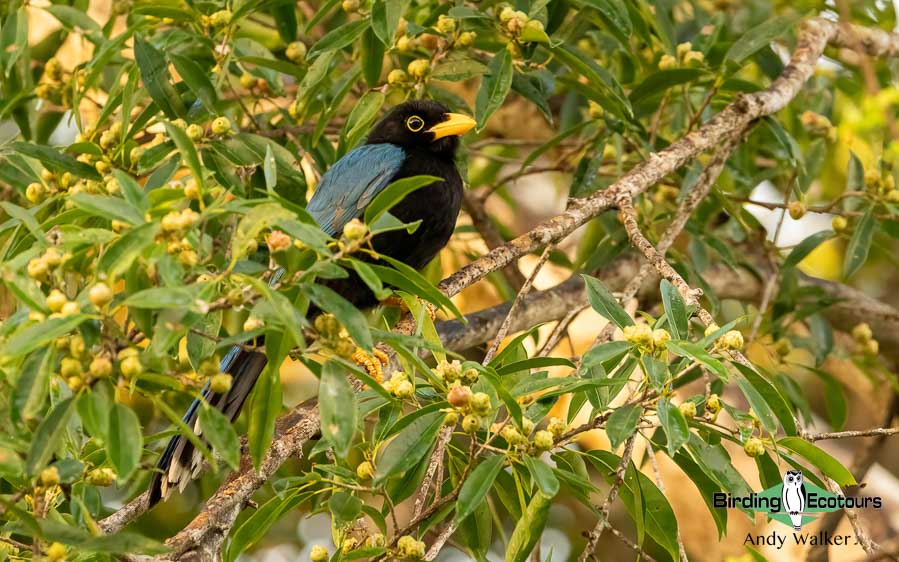 Vibrant Yucatan Jays are a fantastic endemic of the Yucatán Peninsula.
Day 2. Exploring Toh Nature Reserve and the coastal wetlands of Rio Lagartos
With an early start, we will drive a short distance to the forests of the Toh Nature Reserve. Birdwatching here offers a superb introduction to birding in Mexico, with open forest providing excellent viewing and photographic opportunities. With almost 300 species recorded at the site, this will be an exciting morning with many key targets to find. We will search for Yucatan Woodpecker, Yucatan Amazon, Yucatan Flycatcher, Yucatan Jay, Yucatan Vireo, and Black Catbird, along with localized species such as Buff-bellied Hummingbird, Mayan Antthrush, Green-backed Sparrow, Grey-throated Chat, and the dazzling Blue Bunting. We will spend most of the morning here, slowly birding along the trails in search of Thicket Tinamou, Plain Chachalaca, Scaled Pigeon, Blue Ground Dove, Vaux’s Swift, Wedge-tailed Sabrewing, White-bellied Emerald, Black-headed Trogon, Smoky-brown Woodpecker, White-fronted Amazon, Ruddy Woodcreeper, Ivory-billed Woodcreeper, Black-crowned Tityra, Grey-collared Becard, Stub-tailed Spadebill, Couch’s Kingbird, Green Jay, White-browed Gnatcatcher, White-bellied Wren, Yellow-billed Cacique, and Yellow-throated Euphonia. Once we have had our fill, we will continue north and west, traveling through the heat of the day as we make our way to Rio Lagartos.
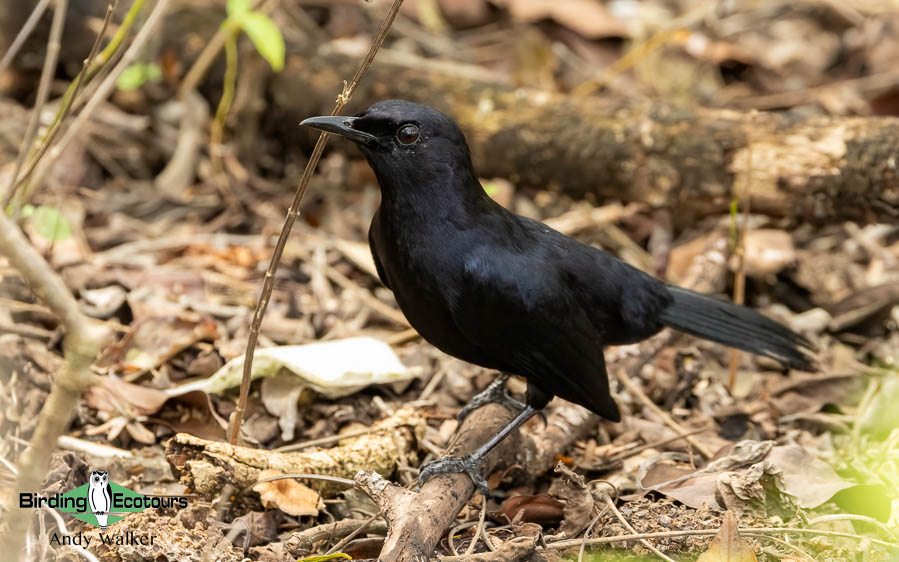 We will search for the characterful Black Catbird while birding the Yucatán Peninsula.
After checking in to our waterfront hotel, we will explore the beautiful wetlands of the UNESCO Rio Lagartos Biosphere Reserve. This extensive reserve protects a vast stretch of tropical savanna wetland which, due to its location and geology, is highly productive and supports exceptional biodiversity. On arrival, we will target several species with restricted global ranges, including Yucatan Bobwhite, Mexican Sheartail, a hummingbird found only here or in the Mexican Veracruz region, and Yucatan Wren, which is confined to this northern part of the Yucatán Peninsula. Other targets include Black-bellied Whistling Duck, Cinnamon Hummingbird, Lesser Yellow-headed Vulture, Ladder-backed Woodpecker, Laughing Falcon, Crested Caracara, Common Tody-Flycatcher, Vermilion Flycatcher, Orange Oriole, Altamira Oriole, Mangrove Vireo, Grey-crowned Yellowthroat, Northern Cardinal, Painted Bunting, and, with luck, Botteri’s Sparrow.
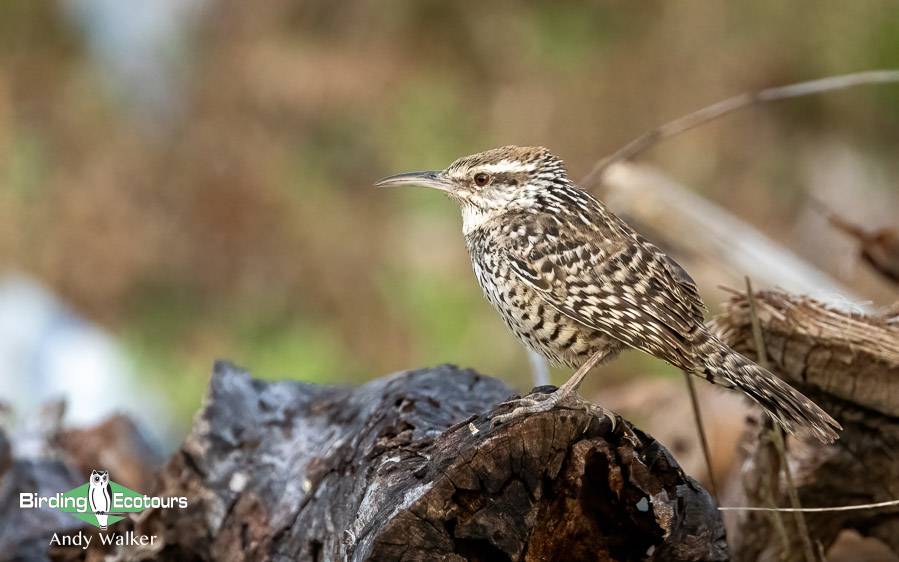
We will look for many Mexican endemics during the tour, such as the striking Yucatan Wren, a specialist of coastal thorn scrub in northern Yucatán.
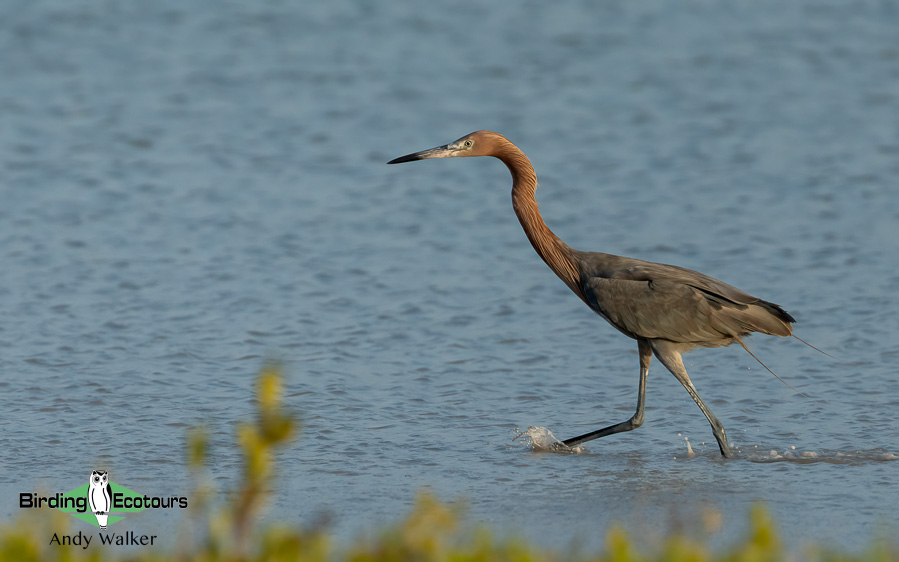
During our boat cruise through the mangroves of the Biosphere Reserve, we will look for the elusive Rufous-necked Wood Rail, Russet-naped Wood Rail, Clapper Rail, and Morelet’s Crocodile, as well as brilliant waterbirds such as Black Skimmer, American Flamingo, Wood Stork, Roseate Spoonbill, Reddish Egret, American Pygmy Kingfisher, and twelve heron and egret species, with Bare-throated Tiger Heron and Boat-billed Heron being the highlights. While the diversity is impressive, the sheer abundance of some of these species is enjoyable to witness. The Biosphere Reserve also holds globally important wintering populations of several North American breeders, including Marbled Godwit, Short-billed Dowitcher, Willet, Least Sandpiper, Western Sandpiper, Caspian Tern, and Forster’s Tern. As dusk falls, we will turn our attention to finding one of the Yucatán Peninsula’s most elusive endemics, the Yucatan Nightjar, along with other nocturnal species such as Lesser Nighthawk. The nightjar is uncommon and difficult to locate across much of its range, but it is often found in the mangroves and woodlands around Rio Lagartos, so we are well positioned to encounter this special night bird.
Overnight: Hotel Villa de Pescadores, or similar, Rio Lagartos
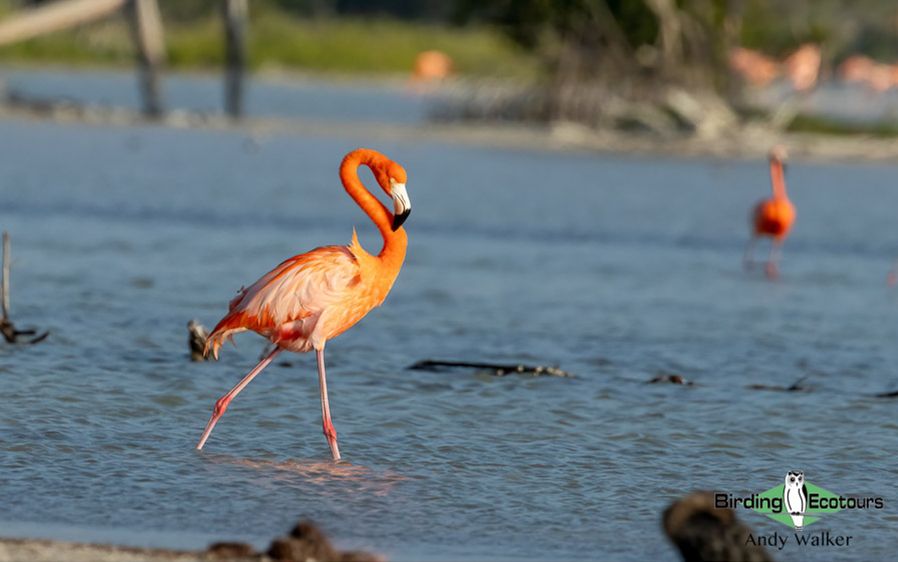 American Flamingos will be glowing in the late afternoon sunlight and will be a highlight in a long list of exciting species from our boat trip.
Day 3. Birding near Valladolid
We will spend the morning birding the open scrub and small wetland habitats along the quiet roads around Rio Lagartos. Our main targets are the brilliant Lesser Roadrunner and Yucatan Bobwhite, plus many of the species listed as targets on Day 2, such as the charismatic Mexican Sheartail and Yucatan Wren. While here, we will hope to find the Yucatan Gnatcatcher, a specialist of arid scrub with a small global range restricted to the northern edge of the Yucatán State. We end the morning by checking into our brilliant hotel for the night, located in the wonderful historic center of Valladolid city.
After some time to rest during the middle of the day, we will visit the nearby village of Xocén, where we will enjoy birding highly productive patches of arid, scrubby woodland, ideal habitat for several important targets. These include Singing Quail, Wedge-tailed Sabrewing, Buff-bellied Hummingbird, White-bellied Wren, and Rose-throated Tanager. In addition, the dry forest is excellent for Thicket Tinamou, Pheasant Cuckoo, Canivet’s Emerald, Turquoise-browed Motmot, White-fronted Amazon, Collared Forest Falcon, Bat Falcon, Rose-throated Becard, Grey-collared Becard, and Olive Sparrow, which are more likely in this area than elsewhere on the tour, making this area especially rewarding to explore. We will stay in the area until dusk, as Xocén has a high diversity of night birds. In particular, we will target the cryptic Yucatan Poorwill and have another chance for Yucatan Nightjar, both species endemic to the Yucatán Peninsula, but we might also find Middle American Screech Owl, Mottled Owl, Northern Potoo, and Pauraque.
Overnight: Hotel Casa de Quetzal, or similar, Valladolid
Day 4. Birding among the Mayan ruins of Cobá and Muyil
This day promises to be truly memorable, as we bird among ancient Mayan ruins in search of local specialties—a perfect blend of birding and culture. With an early departure, we travel southeast to Cobá, an ancient Mayan city. Our first stop is at the quiet lagoon just outside the archaeological site, where we hope to find the secretive Ruddy Crake, Spotted Rail, and Pinnated and American Bitterns, alongside Limpkin, Northern Jacana, Anhinga, Snail Kite, Belted Kingfisher, Yellow-winged Tanager, and Morelet’s Seedeater, among other wetland species. Cobá is an ancient Maya archaeological site dating back to the first century and renowned for its vast network of stone causeways and towering pyramids, including Ixmoja, one of the tallest in the region. Birding here is brilliant fun, with a number of exciting endemics to target, while also learning about the region’s fascinating culture. Watching the impressively colored Ocellated Turkey strolling among the Mayan ruins is a particularly memorable highlight!
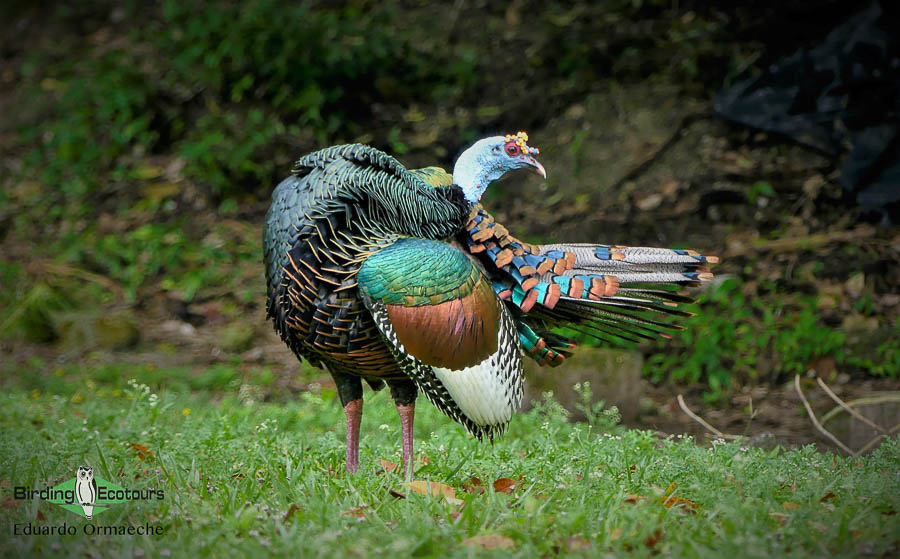 One of the many amazing targets on this Yucatán and Cozumel birding tour is the spectacular Ocellated Turkey.
We will spend the hottest part of the day driving south to the coast and the fantastic Muyil archaeological site. Muyil was one of the earliest and longest-inhabited Mayan sites in the Yucatán Peninsula, and we will make good use of the open forests around the pyramid and the well-maintained Mayan paths through the jungle to look for some special birds. Throughout the day we will look for localized Yucatan Woodpecker, Yucatan Vireo, Yucatan Jay, Green-backed Sparrow, and the subtly beautiful Rose-throated Tanager. In addition to these key species, we will target Plain Chachalaca, White-bellied Emerald, Ornate Hawk-Eagle, Black-headed Trogon, Gartered Trogon, Collared Aracari, Keel-billed Toucan, Pale-billed Woodpecker, Turquoise-browed Motmot, Lesson’s Motmot, Tawny-winged Woodcreeper, Rose-throated Becard, Northern Bentbill, Eye-ringed Flatbill, Bright-rumped Attila, Mangrove Vireo, Lesser Greenlet, Green Jay, Spot-breasted Wren, Yellow-throated Euphonia, Hooded Warbler, Black-throated Green Warbler, Red-throated Ant Tanager, Blue Bunting, Black-headed Saltator, and Cinnamon-bellied Saltators. We may also find mammals such as Yucatan Squirrel and the Endangered Yucatan Black Howler Monkey. The open woodland, riparian forest, and scrubby thickets at these sites are great for orioles, with Orange Oriole, an endemic to the Yucatán Peninsula, possible, along with seven other oriole species, including Hooded, Black-cowled, Yellow-backed, Yellow-tailed, and Altamira Orioles, and wintering Orchard and Baltimore Orioles. Once we have had our fill of Mayan birding, we will drive back north along the coast before boarding a ferry to Cozumel Island.
Overnight: Hacienda San Miguel Hotel, or similar, Cozumel
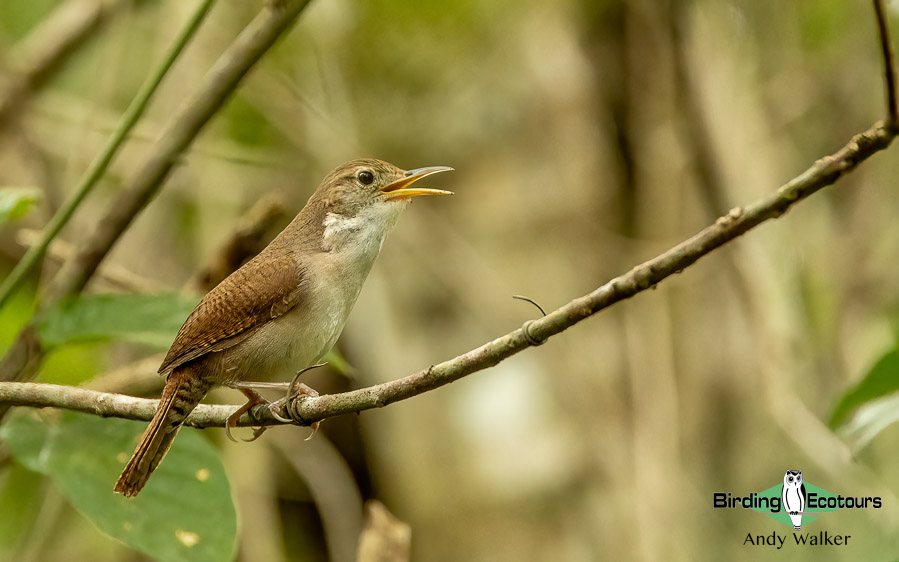 Cozumel Wren is endemic to tiny Cozumel Island, along with a couple of other species we will target during our stay.
Day 5. Endemics of Cozumel Island
Our final full day of birding will be spent on the beautiful island of Cozumel, Mexico’s largest inhabited island. This island paradise is surrounded by turquoise seas, spectacular coral reefs, and tropical white sand beaches. Our main targets on Cozumel are the three single-island endemics, Cozumel Emerald, with males sporting an intriguingly forked tail, Cozumel Vireo, and Cozumel Wren. Sadly the Critically Endangered Cozumel Thrasher has not been seen for almost 20 years, and it is likely that repeated hurricanes contributed to its extinction. We will spend the whole day birding across Cozumel, which hosts good populations of several species endemic to the Yucatán Peninsula, including Black Catbird, Yucatan Amazon, Yucatan Flycatcher, and several species otherwise found only on Caribbean islands, such as White-crowned Pigeon, Caribbean Dove, Caribbean Elaenia, and Western Spindalis.
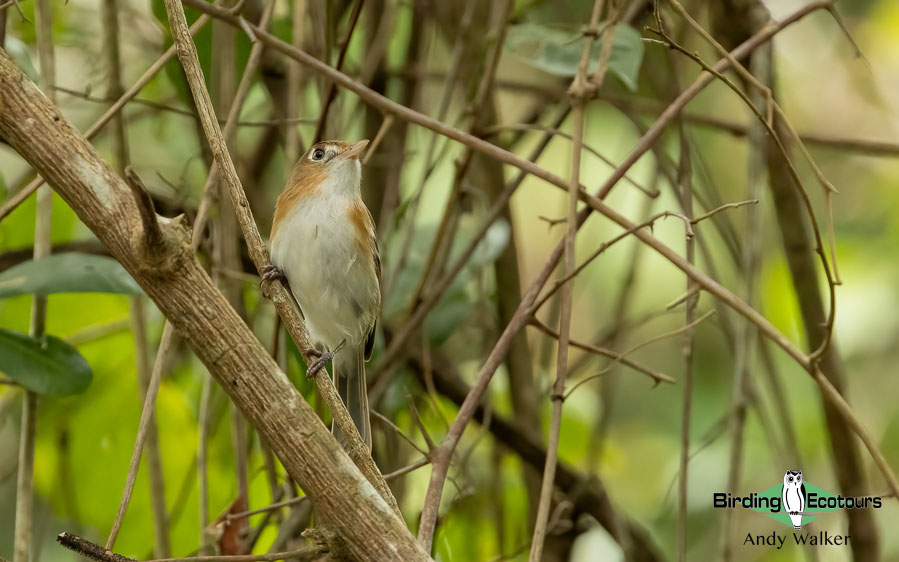 Cozumel Vireo is one of many vireos to be found in Mexico and is restricted to only its namesake island.
Throughout the day we will explore the scrubby tropical jungle of Cozumel for other great birds, including Mangrove Cuckoo, Green-breasted Mango, Olive-throated Parakeet, Blue-grey Gnatcatcher, Bananaquit, and Yellow-faced Grassquit, and the island is also a mecca for wintering migrants. We could encounter many species, such as White-eyed Vireo, Grey Catbird, Ovenbird, Northern Waterthrush, Black-and-white Warbler, Prothonotary Warbler, Swainson’s Warbler, Common Yellowthroat, American Redstart, Cape May Warbler, Northern Parula, Magnolia Warbler, American Yellow Warbler, Black-throated Blue Warbler, Palm Warbler, Myrtle Warbler, Yellow-throated Warbler, and Indigo Bunting. Non-avian highlights may include White-nosed Coatí, Pygmy Raccoon, Brown Basilisk, and American Crocodile.
On our journey back to the mainland, we will likely be accompanied by Laughing Gull, Royal Tern, Magnificent Frigatebird, Double-crested Cormorant, and Brown Pelican, before driving north along the coast and returning to the town of Puerto Morelos.
Overnight: Corales Suites, or similar, Puerto Morelos
Day 6. Tour conclusion, or transfer to Oaxaca
We will start with an early departure to bird locally before the tour concludes before lunch at Cancun Airport. We will likely visit Toh Nature Reserve, or perhaps the Puerto Morelos Botanic Gardens, for any species we have yet to encounter or to enjoy better views of the endemics. This is an excellent area to spend time, as the coastal forest attracts many North American wintering migrants, and many species of orioles and warblers are possible in the woods and scrub, while waders are often seen along the shoreline. This short tour of Yucatán and Cozumel Island ends on arrival at Cancun Airport, though those continuing on to our Mexico Specials of the South tour will board a flight in the early afternoon bound for Oaxaca.
Overnight: Not included (unless taking part in our Mexico Specials of the South tour)
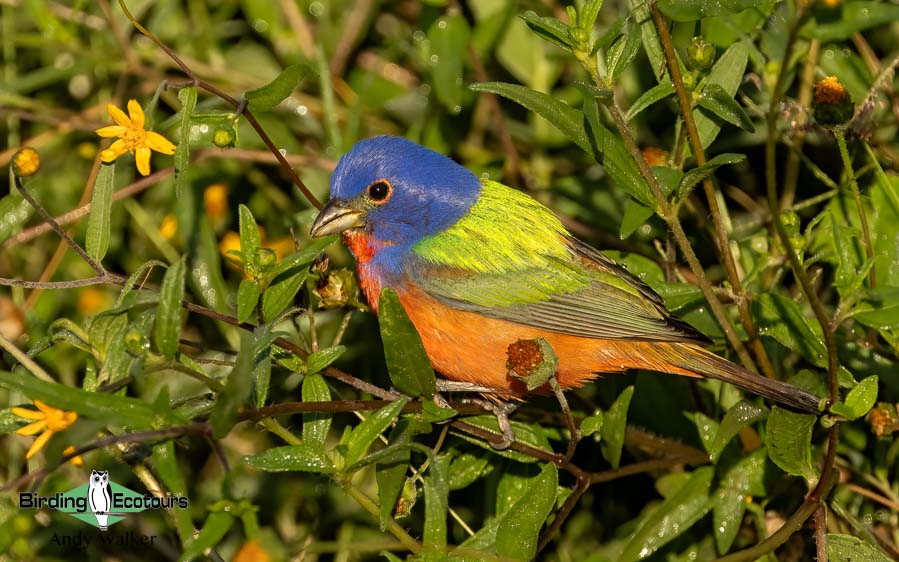 Mexico is blessed with multiple stunning bunting species, such as this Painted Bunting.
Please note that the itinerary cannot be guaranteed as it is only a rough guide and can be changed (usually only slightly) due to factors such as availability of accommodation, updated information on the state of accommodation, roads, or birding sites, the discretion of the guides and other factors. In addition, we sometimes have to use a different guide from the one advertised due to tour scheduling and other factors.
Map