- Duration:
- 7 days
- Group Size:
- 4–6
- Tour Start:
- Kota Kinabalu, Borneo
- Tour End:
- Kota Kinabalu, Borneo
Birding Tour Borneo : Sarawak – Restricted Range Endemics
Details
2027
01–07 August
Per person sharing
RM21,900 MYR
$5,627 USD / £4,257 GBP / €5,024 EUR
Single supplement
RM1,020 MYR
$263 USD / £198 GBP / €234 EUR
Single rooming is available in homestays on the first, fifth, and sixth nights only, but with shared bathroom facilities.
includes internal flight
2028
01–07 August
Per person sharing
RM24,300 MYR
$6,243 USD / £4,723 GBP / €5,576 EUR
Single supplement
RM1,130 MYR
$291 USD / £219 GBP / €259 EUR
Single rooming is available in homestays on the first, fifth, and sixth nights only, but with shared bathroom facilities.
includes internal flight
2029
01–07 August
Per person sharing
RM26,980 MYR
$6,932 USD / £5,244 GBP / €6,190 EUR
Single supplement
RM1,255 MYR
$322 USD / £244 GBP / €288 EUR
Single rooming is available in homestays on the first, fifth, and sixth nights only, but with shared bathroom facilities.
includes internal flight
Itinerary
Download ItineraryBirding Tour Borneo: Sarawak – Restricted Range Endemics
The Malaysian province of Sarawak in Borneo takes more effort than neighboring Sabah, but we do not recommend missing Sarawak as it provides superior chances of seeing Blue-banded Pitta, Bornean Banded Pitta, Hose’s Broadbill, Bulwer’s Pheasant, Rail-babbler, and other absolute jewels that will burn your eyes. And we also will be looking for species we have no chance of seeing on our Sabah tour, such as Dulit Frogmouth, Bornean Frogmouth, and Black Oriole, all mega world birds of rather legendary status!
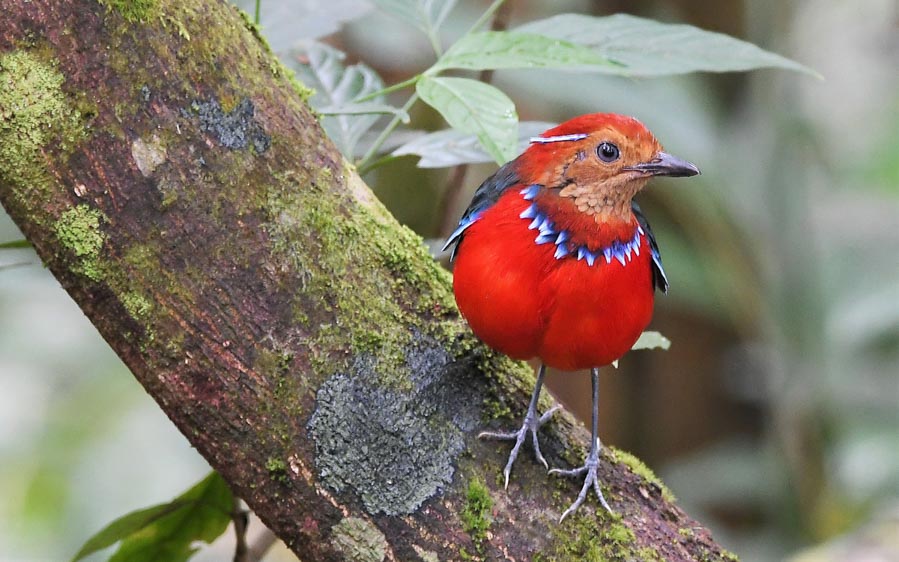 Blue-banded Pitta – one of the stunning birds we will target on this trip (photo Yeo Siew Teck).
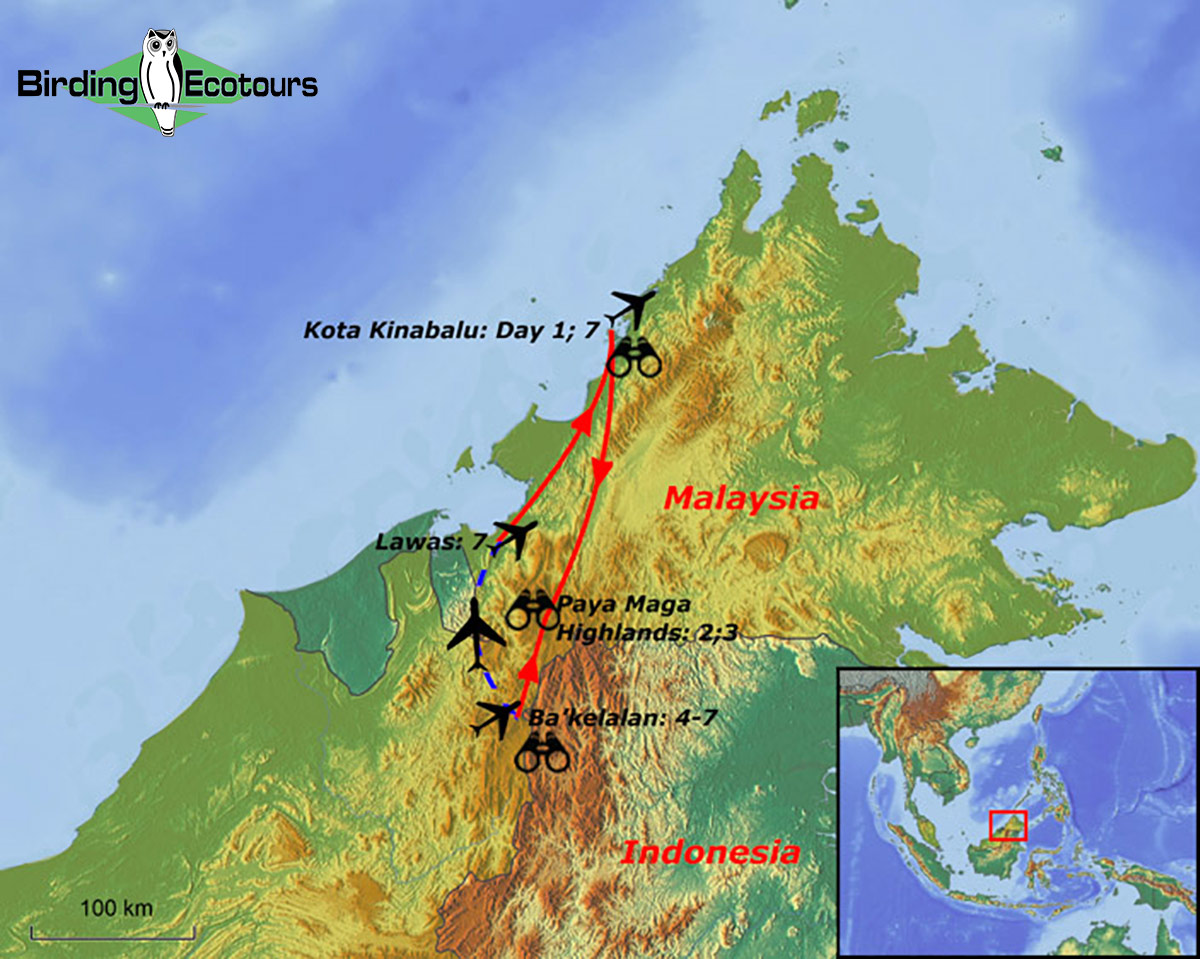
This short (seven-day) trip starts and ends in Kota Kinabalu in the neighboring Sabah province before crossing into Sarawak, where our birding is focused. This trip begins immediately after our Birding Tour Borneo: Sabah Classic Tour, and straight after this Sarawak tour there is our Birding Tour Malaysia: Peninsular Malaysia, which offers yet more spectacular birds.
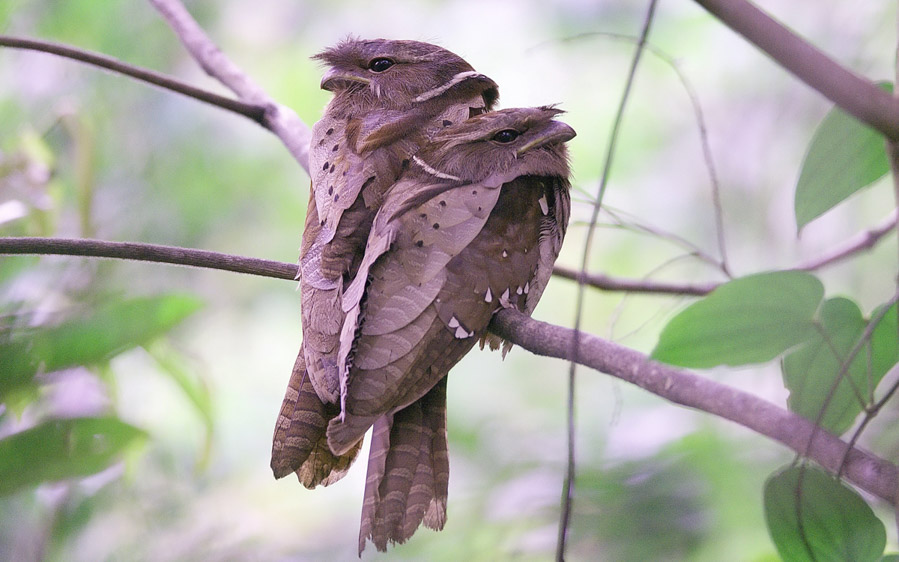 Dulit Frogmouth is one of the most legendary of Borneo’s endemics (photo Yeo Siew Teck).
Itinerary (7 days/6 nights)
Day 1. Kota Kinabalu to Orang Ulu Village (via Klias Wetland)
In the morning we proceed from Kota Kinabalu to the Klias Wetlands, where we will look for Grey-breasted Babbler, Scarlet-breasted Flowerpecker, Red-crowned Barbet, and Chestnut-bellied Malkoha. One of our main targets here will be Hook-billed Bulbul, a specialist of peat swamp forest. After lunch in Lawas town we will travel overland in four-wheel-drive vehicles to Orang Ulu Village ahead of our next few days birding at Paya Maga.
Overnight: Orang Ulu Village homestay
Day 2. Paya Maga Highlands
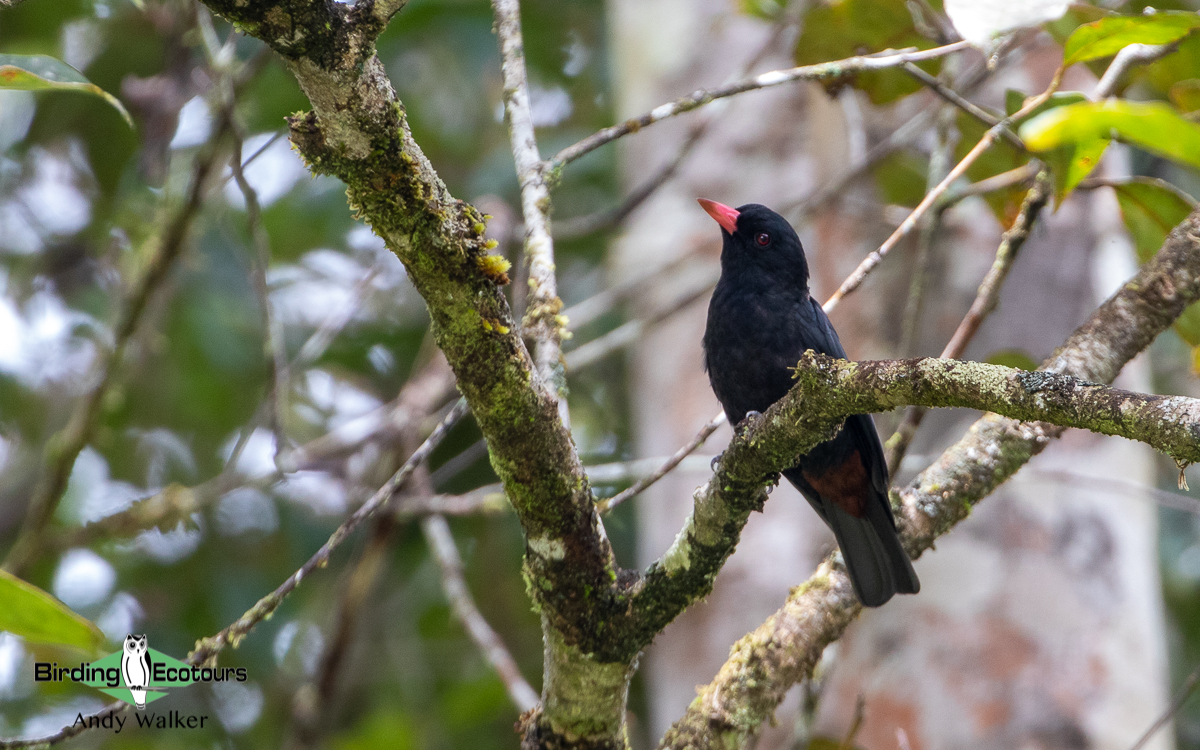
After breakfast we will transfer to the Paya Maga Highlands drop-off point, from where we will slowly hike for four kilometers (two-and-a-half miles) along a gently undulating old logging road to our campsite, birding along the way. This beautiful montane forest area in remote northeastern Sarawak is home to many incredible species, and we will be on the lookout for a very special bird, none other than Black Oriole, a very rare Bornean endemic not found in Sabah.
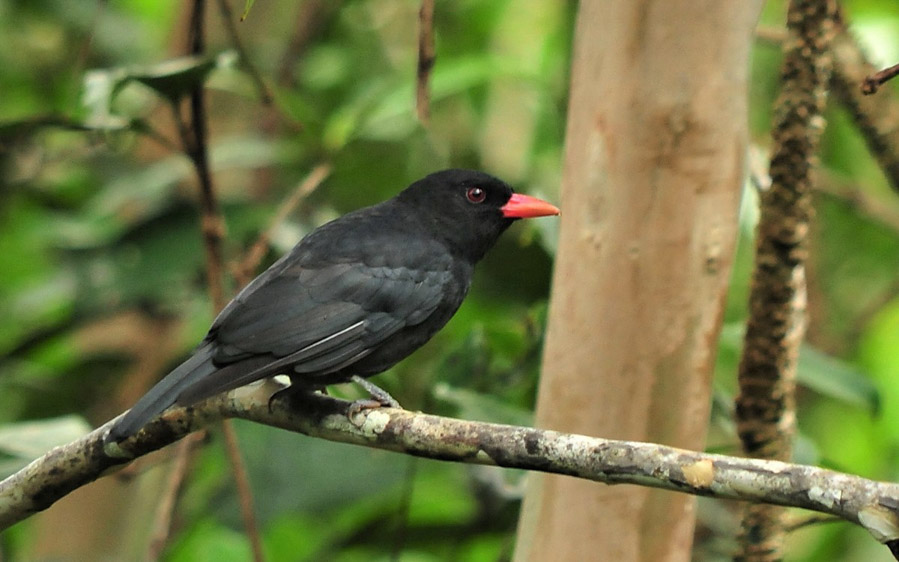 We will be birding in what is practically the only place in the world where you stand a chance of seeing the endemic Black Oriole (photo Yeo Siew Teck).
These highlands are covered in secondary forest with an abundance of Macaranga. We will bird the logging road from where it begins, then go beyond Gunung Doa at 850 meters (2,500 feet) to the base of the Paya Maga Camp Site at 1,050 meters (3,100 feet). The habitat along the road consists of mixed dipterocarp and lower montane forest. Occasional patches of undisturbed montane heath forest remain, particularly on the steepest slopes.
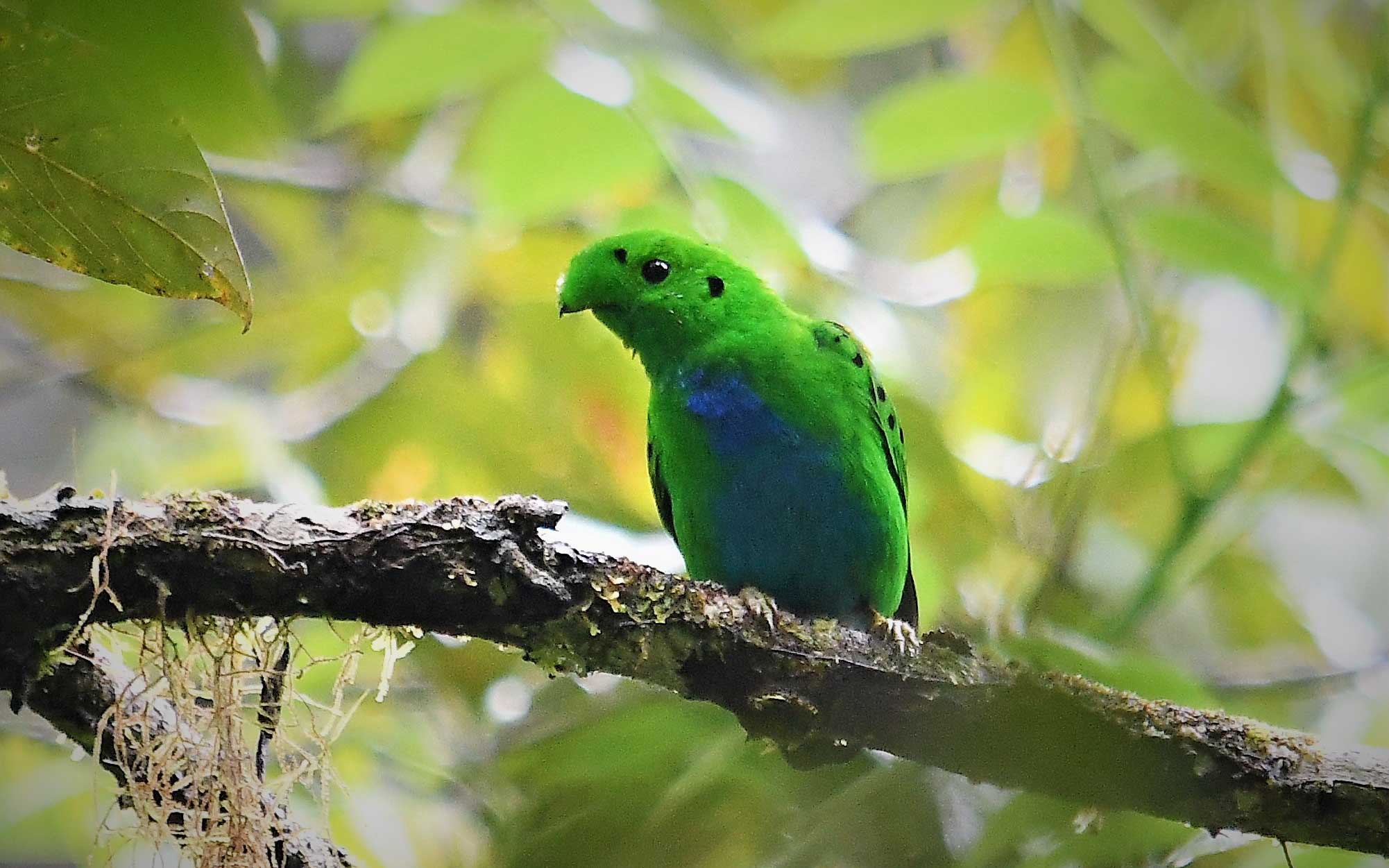
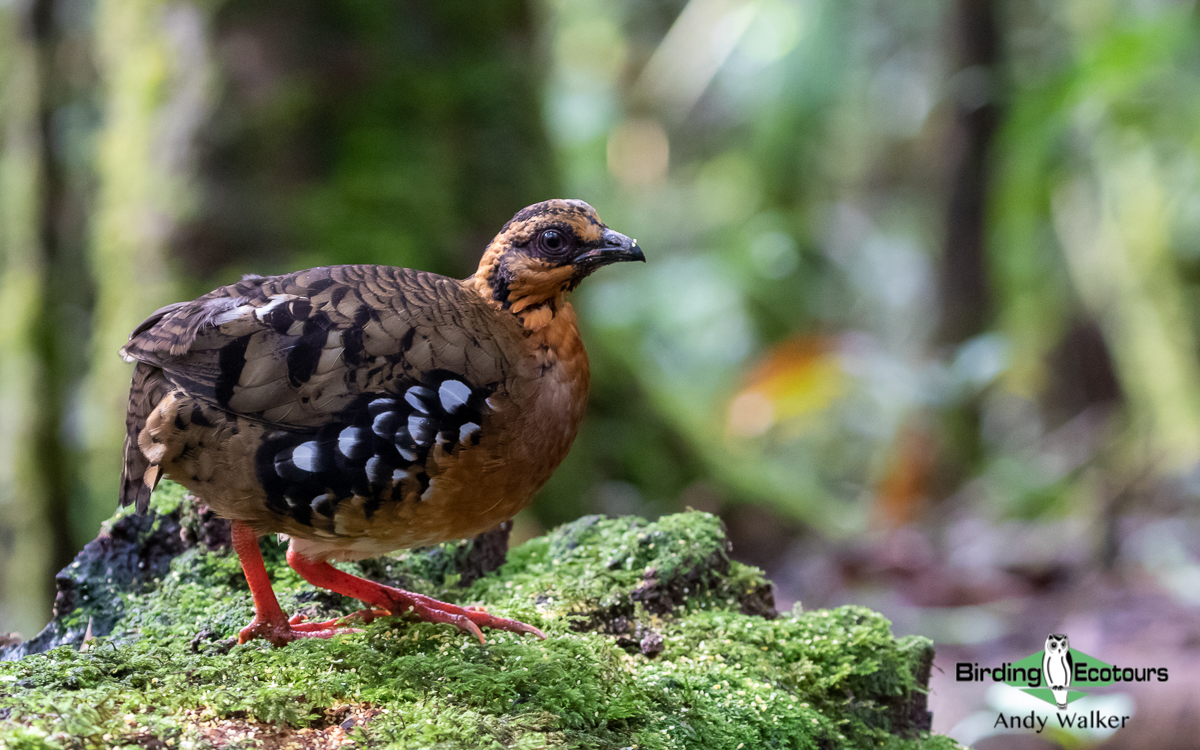
Targets during our hike will include Bulwer’s Pheasant along with Bornean Banded Pitta, Blue-banded Pitta, and Hose’s Broadbill, all stunning jewels. There are usually plenty of bulbuls, babblers, and flycatchers along the track, and other endemics may include Bornean Barbet and Bornean Leafbird.
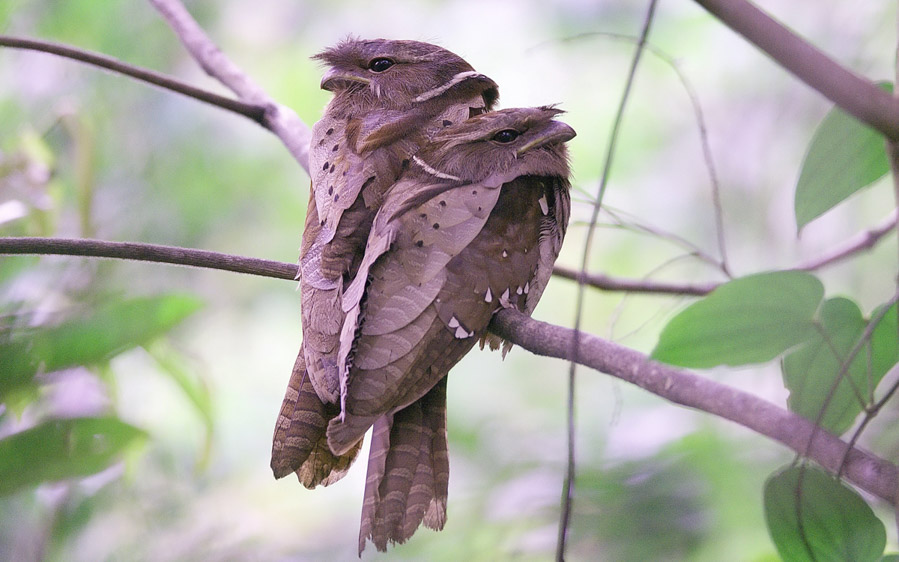
In the evening we will look for Bornean Frogmouth, another endemic bird best looked for in Sarawak as opposed to Sabah.
Overnight: Paya Maga campsite wooden house
Day 3. Paya Maga Highlands
After breakfast we continue birding the Paya Maga Highlands, hoping to add species to our list that might include more endemics. We will look for Hose’s Broadbill, Bornean Leafbird, Bornean Bulbul, Pygmy White-eye, Banded Kingfisher (an endemic subspecies and potential future split), Bornean Treepie, Chestnut-crested Yuhina, and any of the other goodies that are around.
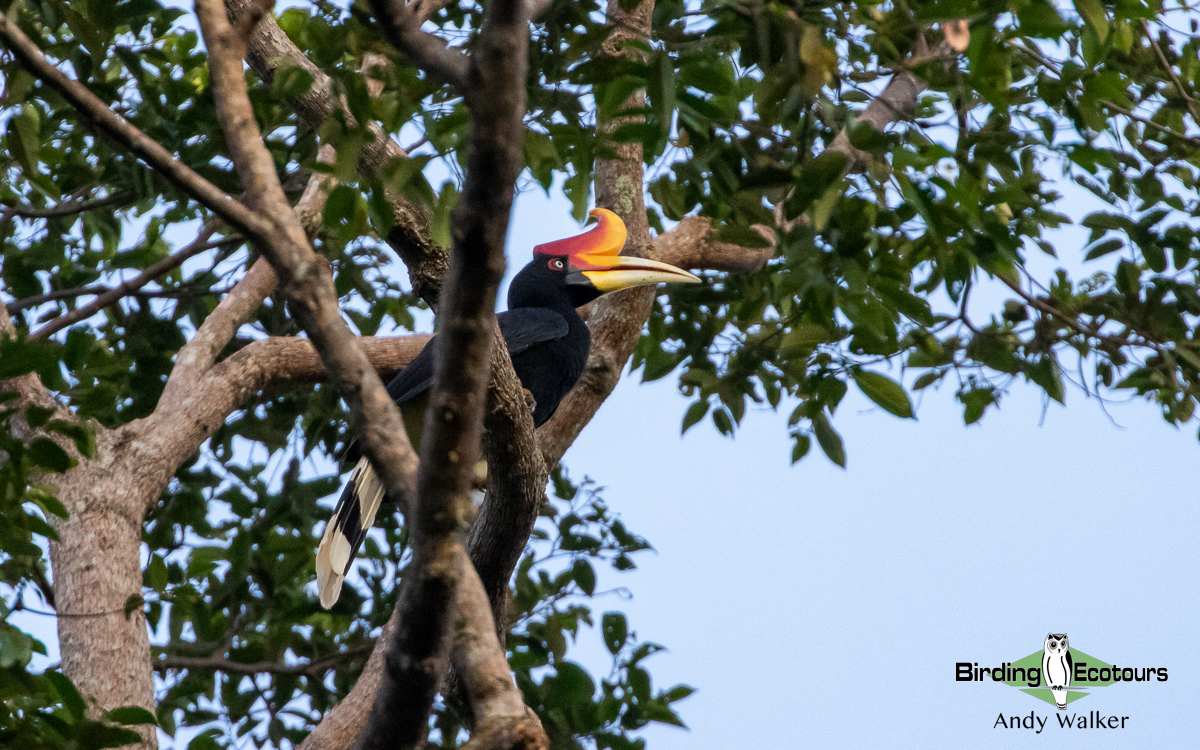
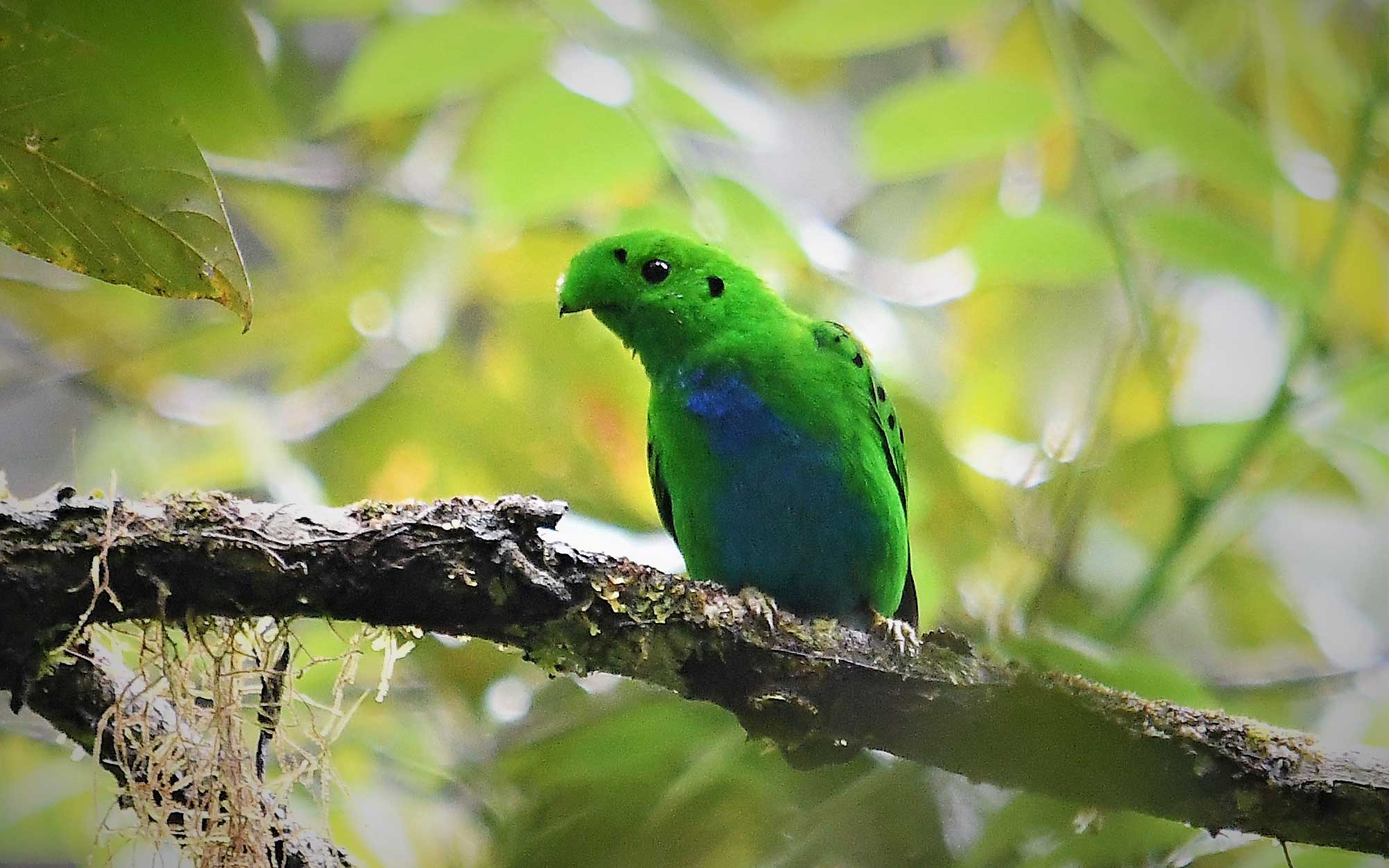 We will search for Hose’s Broadbill in the Paya Maga Highlands (photo Liew Weng Keong).
While not endemic, Rail-babbler is likely at the top of many birders’ wish-lists. Not only is it an incredible-looking species but it is also in a monotypic family, making it a must-see for any family lister. It is also extremely secretive and does not give itself up easily, although the sub-montane forest at Paya Maga is a good place to search for it.
We will also be sure to search for Javan Blue Flycatcher, until recently part of the Hill Blue Flycatcher complex. The subspecies of this new species that occurs in Borneo may potentially be further split as Dayak Blue Flycatcher in the near future, so this is one to be on the lookout for! Other species we will search for include Collared Owlet, Jambu Fruit Dove, White-necked Babbler, Eyebrowed Wren-Babbler, Temminck’s Babbler, the attractive Scaly-breasted Bulbul, Finsch’s Bulbul, Olive-backed Woodpecker, Rufous-collared Kingfisher, Diard’s Trogon, and Red-bearded Bee-eater. In the evening we will have another opportunity for Bornean Frogmouth if needed.
Overnight: Paya Maga campsite wooden house
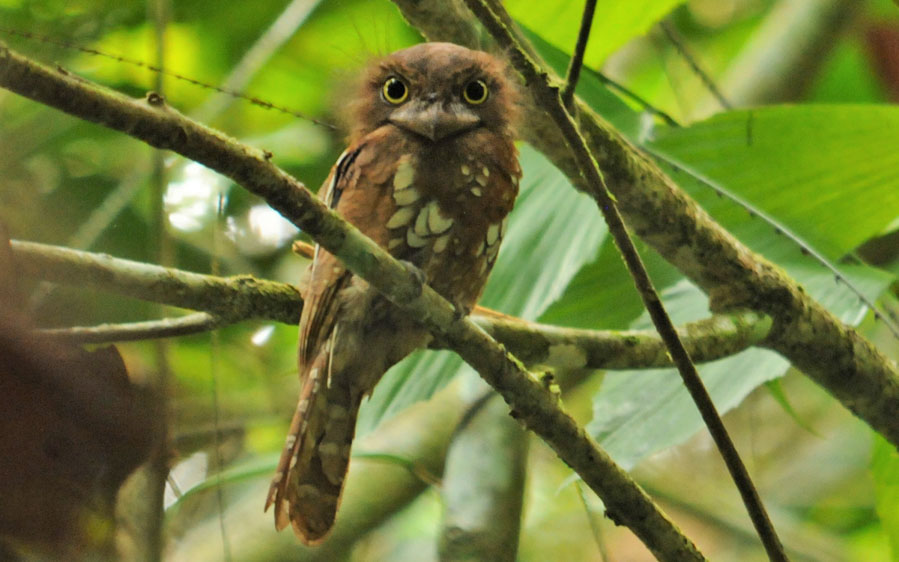 The rather cute endemic Bornean Frogmouth is another major target of the tour (photo Yeo Siew Teck).
Day 4. Paya Maga Highlands to Ba’kelalan
We will have a final morning birding in the Paya Maga Highlands area, where we will be on the continuous lookout for new species, some of which may include Rufous-tailed Shama, Bornean Spiderhunter, Bare-headed Laughingthrush, and Flavescent Bulbul of the distinctive endemic subspecies sometimes referred to as Pale-faced Bulbul, another potential split.
On reaching the point we were dropped off on day 2 we will board our four-wheel drive vehicles again for a few hours as we travel to the Ba’kelalan area, where we will check into our homestay late in the afternoon. This homestay will serve as our base for the next three nights as we work the area for its special birds.
After dinner we will search for the highly prized Dulit Frogmouth in a nearby patch of forest.
Overnight: Ba’kelalan homestay
Days 5 – 6. Ba’kelalan area
We will have two full days birding in the Ba’kelalan area, home to some of Borneo’s classic, vibrant, and famous endemic birds. These include the likes of Whitehead’s Spiderhunter, Whitehead’s Broadbill, Hose’s Broadbill, Fruithunter, Bornean Green Magpie, Mountain Serpent Eagle, Black-throated Wren-Babbler, Bornean Stubtail, Bornean Spiderhunter, Bornean Barbet, Mountain Barbet, Golden-naped Barbet, Bare-headed Laughingthrush, Chestnut-hooded Laughingthrush, and Bornean Whistler – an impressive set of birds likely to get the juices flowing!
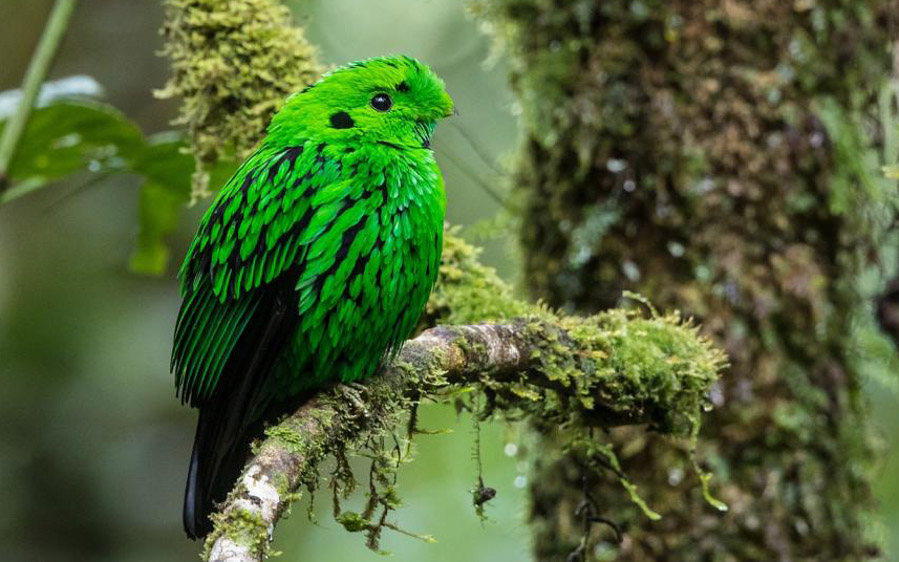 Whitehead’s Broadbill, a stunning endemic target (photo Liew Weng Keong)
During our time in Ba’kelalan we also hope to encounter Long-tailed Broadbill, Rufous-tailed Jungle Flycatcher, Orange-breasted Trogon, and Dark Hawk Cuckoo in addition to the many species mentioned above. We will have plenty of time to look for all these exciting species and many more. Crimson-headed Partridge, Red-breasted Partridge, and Ferruginous Partridge all occur here but are often particularly secretive and therefore very tough to actually see. In addition to Dulit Frogmouth other night birds in the vicinity of the homestay may include Malaysian Eared Nightjar and Brown Hawk-Owl, so we will seek those out.
Overnight: Ba’kelalan homestay
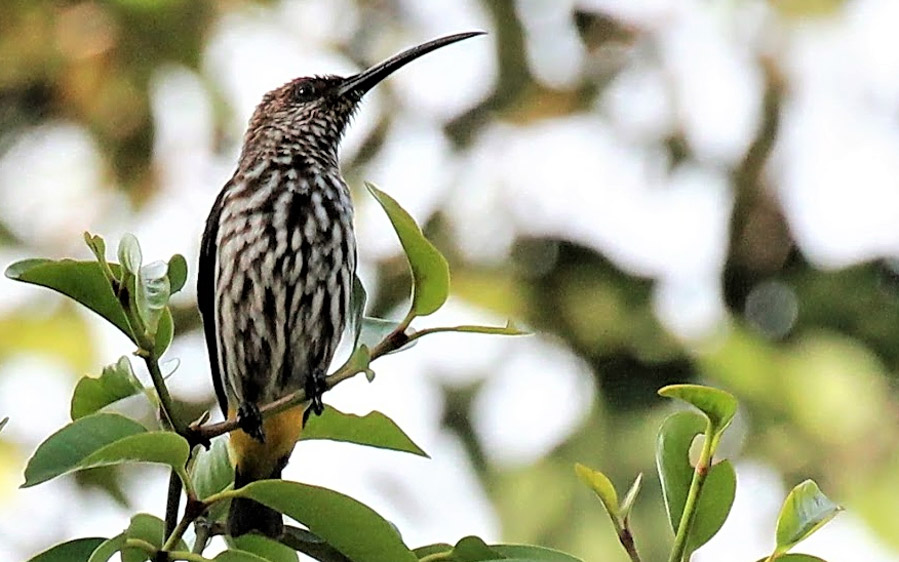 The endemic Whitehead’s Spiderhunter is another highly sought species (photo Yeo Siew Teck).
Day 7. Ba’kelalan to Kota Kinabalu (via Lawas)
We will have a final morning birding in the Ba’kelalan area, the exact timing of which will depend on the time of our flight between Ba’kelalan and Lawas. We may look around the village, where in the rice paddies and meadows we might find Greater Painted-snipe, Yellow Bittern, and Cinnamon Bittern, along with some other birds of the habitat.
After arrival in Lawas we will transfer back to Kota Kinabalu. The journey will take a few hours, and we aim to be back in the city in the late afternoon. If you plan on leaving Borneo on this day we recommend a late-evening flight; alternatively you could stay overnight (cost not included) and enjoy some hotel comforts after a week of exploring one of Asia’s greatest birding destinations.
Directly following this tour we start our Birding Tour Malaysia: Peninsular Malaysia, where we can see a very different set of birds to those seen on this tour, such as Mountain Peacock-Pheasant, Malayan Peacock-Pheasant, Ferruginous Partridge, Malayan Laughingthrush, Malayan Banded Pitta, Garnet Pitta, Blue-winged Pitta, Hooded Pitta, Mangrove Pitta, Common Green Magpie, Mangrove Blue Flycatcher, and many more!
Overnight: Not included
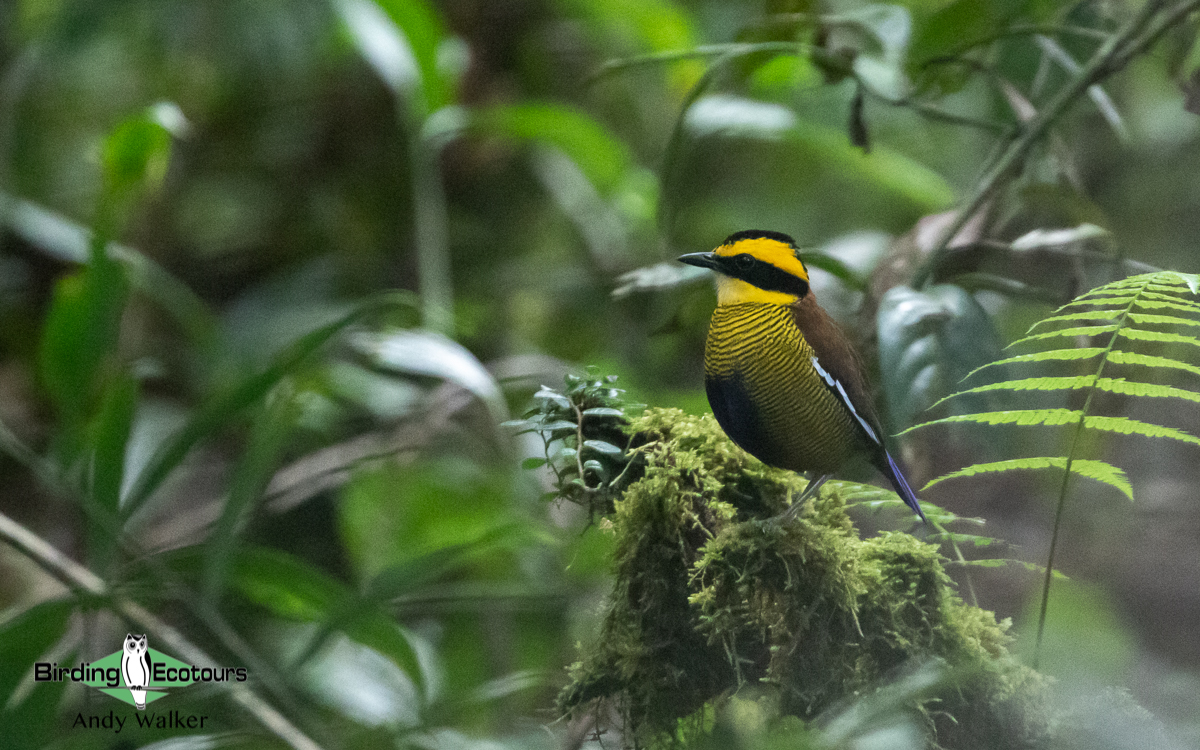
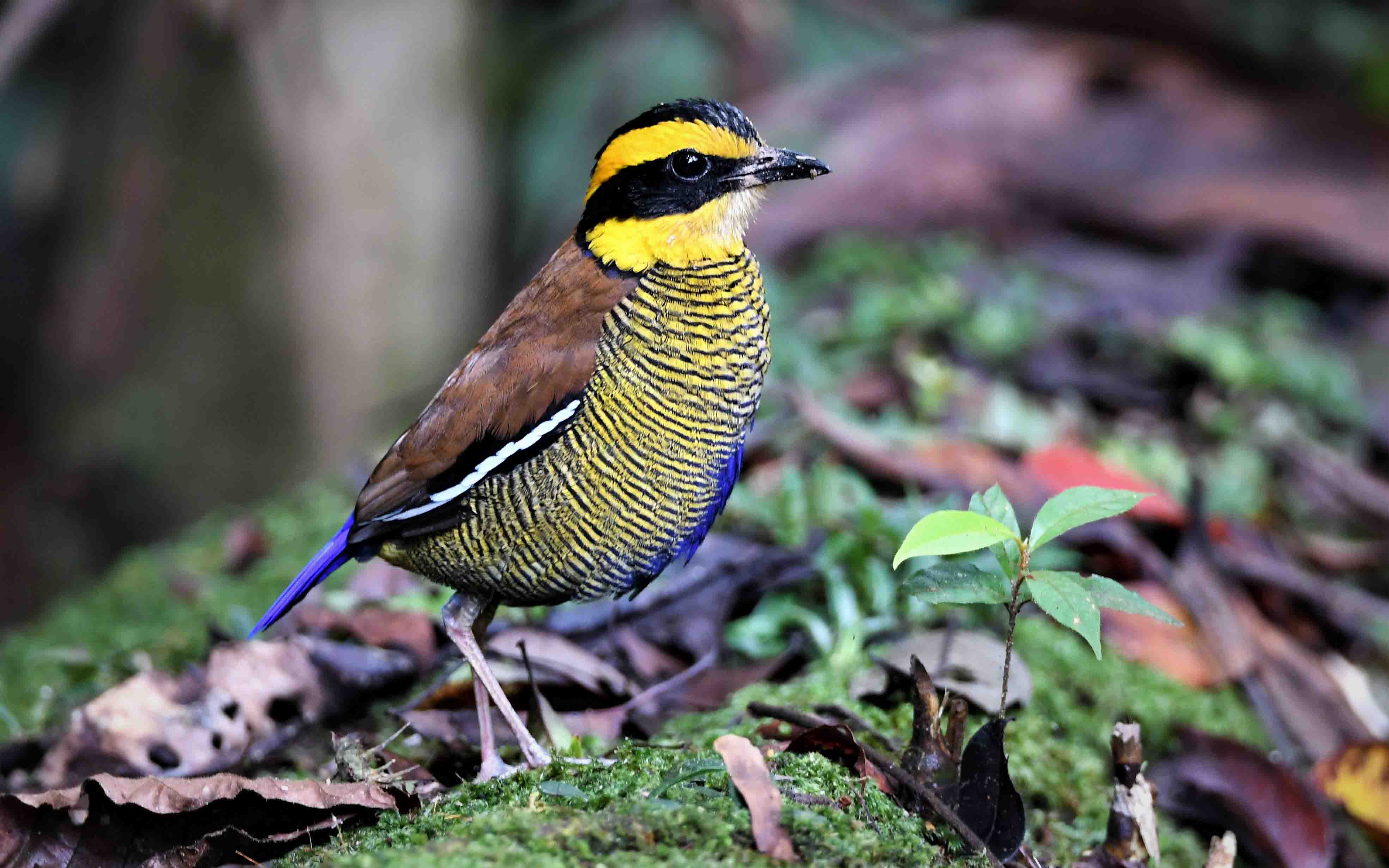 Bornean Banded Pitta is another endemic target on our Sarawak trip (photo Liew Weng Keong).
Please note that the itinerary cannot be guaranteed as it is only a rough guide and can be changed (usually slightly) due to factors such as availability of accommodation, updated information on the state of accommodation, roads, or birding sites, the discretion of the guides and other factors. In addition, we sometimes have to use a different international guide from the one advertised due to tour scheduling.
Map
Testimonials
Gallery
General Information
MALAYSIA: BORNEO – SARAWAK RESTRICTED RANGE ENDEMICS
TOUR-SPECIFIC INFORMATION
GENERAL INFORMATION ABOUT MALAYSIA (INCLUDING BORNEO) CAN BE READ HERE
TOUR OUTLINE
Sarawak is not to be missed, it offers the best chance in the world of finding Dulit Frogmouth, Bornean Frogmouth, and Black Oriole, as well as great birds like Blue-banded Pitta, Bornean Banded Pitta, Hose’s Broadbill, Bulwer’s Pheasant, and Rail-babbler. This tour starts and ends in Kota Kinabalu (in neighboring Sabah) and visits Klias wetland, the Paya Maga highlands, and Ba’kelalan. This tour runs with a nice small group with a minimum of four and a maximum of just six, giving everyone a much better birding experience than you would get on a large group tour.
DAILY ACTIVITIES, PHYSICAL REQUIREMENTS, AND TOUR PACE
This is a more remote tour than our other Bornean (Sabah) birding tour, with high avian rewards. It requires reasonable physical fitness and a sense of adventure. We will be staying in basic accommodation (homestays and camping) mainly with shared facilities, will have long hikes of three to five hours on muddy and possibly slippery trails most days, and will travel about in 4×4 vehicles on rough roads (there will be long drives in 4×4 vehicles to get between birding locations). Expect some night birding too, probably with early starts and late finishes, so all in all, we will be having long days in the field with little rest time. We are likely to experience a range of temperatures as we cover different elevations on the tour from lowlands to highlands.
TRANSPORTATION
We will be using 4×4 vehicles to get around on this tour. Roads are generally rough and not very good, with the going being quite slow at times, resulting in long travel times.
We will take a domestic flight back to Kota Kinabalu at the end of the tour.
DOMESTIC FLIGHTS
A domestic flight between Ba’kelalan and Lawas is included in the tour cost, but note that at the time of writing (February 2022) that flight may not be currently operating – due to Covid. So, if the flight is not operational, we may have to reorder the route of the tour and use 4×4 vehicles a little more to get around the wider region.
The domestic flight is likely to have a hold luggage weight limit of 44 pounds (20 kilograms) and a hand luggage allowance of 15 pounds (7 kilograms). Any overweight baggage will likely incur costs and will be the responsibility of the individual. Excess baggage costs will most likely need to be paid in cash to the airline at the airport.
LUGGAGE
Please pack as lightly as possible for this tour (noting the expected weight allowance of the domestic flight). A medium, soft-sided, and robust duffle bag is likely to work best for packing in the tour vehicles. A small daypack will be required for when we go out hiking during the day, to keep a personal supply of food and water for the day as well as other essential items such as rain gear, insect repellant, etc.
SAFETY
Your safety is our paramount concern on this, and all of our tours, so we are trying to provide you with as much information as possible within this tour-specific information and the Malaysia general information. Our tour takes us to a remote part of Sarawak.
The most likely issues on this tour are trips and falls when on trails, tracks/roads, and getting into or out of the 4×4 vehicles and so extra care should be taken at all times. Sturdy walking shoes, hiking boots or even rubber boots (wellington boots) are recommended for this tour. A hiking pole or walking stick is compulsory if you are at all unsure on your feet.
There is a low risk of malaria on Sarawak, but please consult your doctor or local travel clinic for specific advice. We will be spending time birding in areas where mosquitos occur. Insect repellent with a high DEET concentration can be useful for keeping them away and reducing the chance of mosquito bites. DEET or citronella insect spray can also keep chiggers and leeches away. Chiggers can lead to Scrub (Bush) Typhus and can be incredibly irritating. Leeches do not spread diseases, but they are rather unnerving and can cause blood loss and are particularly evident in Borneo. “Leech socks” are a useful piece of kit.
WEATHER/CLIMATE
In the mountains it is cooler than the lowlands and we can expect average daytime temperature highs of around 84 °F (29 °C) and average nighttime lows of 63 °F (17 °C) but the temperature may drop to below 59 °F (15 °C) occasionally. Note we will be in basic accommodation so you might feel the cold a bit more than if you were in a typical western-style building.
While in the lowlands we can expect average daytime highs of around 88 °F (31 °C) and average nighttime lows of 72 °F (22 °C). There is often thick cloud cover here, resulting in hot and humid, rather oppressive conditions.
Be aware that the sun is strong here and care should be taken to remain hydrated and use sun protection. Rain is possible at any time at any location so rain gear and an umbrella will be essential. A dry bag is also recommended for protecting optics, electrical equipment/cameras, and important documents. For more information on packing lists, see the “What to Bring: Clothing and Other Items” section below.
ACCOMMODATION
The accommodation on this tour is of a very basic standard and we will stay in homestays and camp in tents (within buildings) and these will have shared very basic bathroom facilities and toilets. The water pressure will be low for showering with limited hot water – most likely hot water at the homestay will be on request with hot water mixed into a pail of cold water for showering. You will need to bring a travel towel. There should be fans available at the homestay.
ELECTRICITY
Power cuts are frequent and some of the places we stay run on diesel generators. It would be advisable to bring a power bank for charging small personal items like smart phones etc.
COMMUNICATIONS
There is limited phone signal where we will be birding in Sarawak and there will not be any Wi-Fi along the tour route. You can purchase a local travel SIM card on arrival at the airport (Maxis SIM is probably the best for this tour). Alternatively, you can use your own provider on a roaming package, but please be aware there will likely be charges for this.
FOOD AND MEALS
Food is basic and of local Malaysian style. Vegetarian food can be arranged but please let us know of any dietary requirements ahead of the tour. Due to the lack of refrigeration, dairy products are not common. We suggest you bring your favorite snacks or protein bars to supplement your diet.
MONEY
We will only have access to ATMs in Kota Kinabalu on this tour. You shouldn’t require too much spare cash on this tour, but it is usually best to withdraw some cash when at the airport.
WHAT TO BRING: CLOTHING AND OTHER ITEMS
The following is a list of useful items to bring on this Sarawak birdwatching tour and should be read in conjunction with the Malaysia general information document, which suggests lots of other important items to bring on the tour.
- Hiking pole or walking stick to help on the tracks and trails. A walking stick is compulsory for anyone who is unsteady walking, as we feel this is a safety issue; we don’t want anyone slipping on the forest trails or anywhere else.
- Torch (flashlight) and/or headlamp, and spare batteries – we will have some nighttime bird/wildlife watching during the tour so a torch and/or headlamp will be required for that. Additionally, we will likely be setting off into the forest for our morning birding sessions when it is still dark, so this is essential kit. A torch is also useful for when walking around our accommodation at night which may have no power/lights overnight.
- A travel towel (suitable size to be used after showering).
- A day pack for carrying your personal supply of food and water when out on the trails and for other essential gear when out birding, such as umbrella, waterproofs etc.
- High concentration DEET or citronella insect repellant.
- Salt sachets can be effective for removing leeches if you get one on you.
- Leech socks – essential kit on this tour.
- A small personal first aid kit. See the suggested items from the Centers for Disease Control and Prevention (CDC), here. We will not have access to pharmacies on this tour due to the remote location of where we will be going.
- Footwear is a matter of personal preference but sturdy shoes as a minimum are required, and hiking boots or rubber boots (wellington boots) are probably best, with something a bit more comfortable maybe for time spent in vehicles.
- Quick-drying clothes are the best for this tour and a good selection of clothing layers are also recommended for time at the higher elevations (and overnights in basic accommodation) where temperatures will be lower than in the lowlands (see the “Weather/Climate” section for further information on likely temperatures during the tour).
- Rain jacket (and a small umbrella) and a coat/fleece for the time in the mountains.
- A dry bag to keep valuable documents in such as passports, cell phones, wallets etc., as well as cameras if it rains.
- Power bank – useful for charging items.