- Duration:
- 6 days
- Group Size:
- 6–8
- Tour Start:
- Alice Springs, Northern Territory
- Tour End:
- Alice Springs, Northern Territory
Birding Tour Australia: Northern Territory - Alice Springs And Uluru Birding Tour
Details
2027
20–25 September
Per person sharing
A$6,880 AUD
$5,033 USD / £3,800 GBP / €4,487 EUR
Single supplement
A$1,250 AUD
$915 USD / £691 GBP / €815 EUR
2028
14–19 September
Per person sharing
A$7,325 AUD
$5,358 USD / £4,046 GBP / €4,778 EUR
Single supplement
A$1,375 AUD
$1,006 USD / £759 GBP / €897 EUR
Itinerary
Download ItineraryBirding Tour Australia: Northern Territory – Alice Springs And Uluru Birding Tour
This short birding tour around Alice Springs in the south of the Northern Territory of Australia also takes in the magnificent Uluru (also known as Ayers Rock). It is an ideal tour to combine with two of our other Australian tours because it fits in perfectly between our Birding Tour Western Australia: Southwest Australian Endemic Birds and Birding Tour Australia: Northern Territory – Top End Birding Tour. Combining all three of these short Australian birding tours will give you an excellent list of the birds of north, central, and western Australia, complete with a multitude of highly sought-after Australian endemic birds.
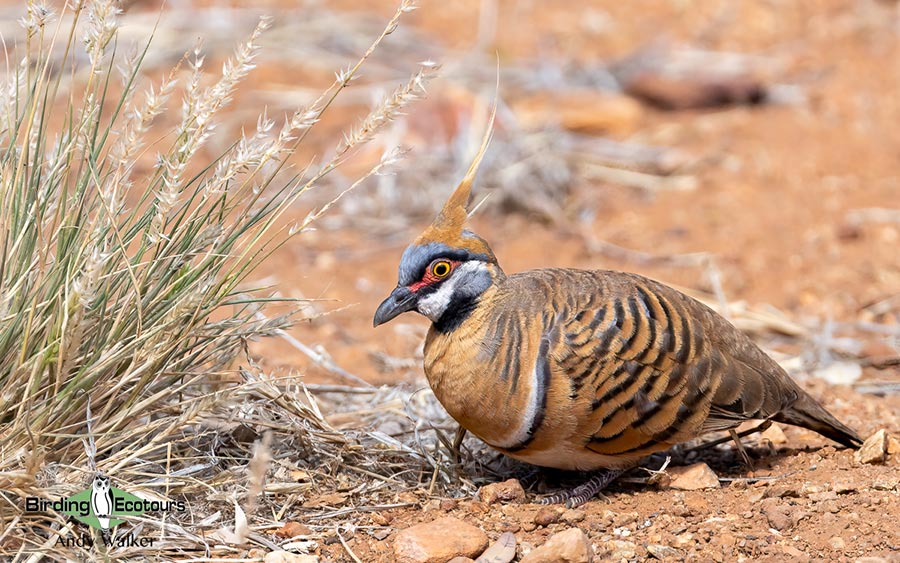
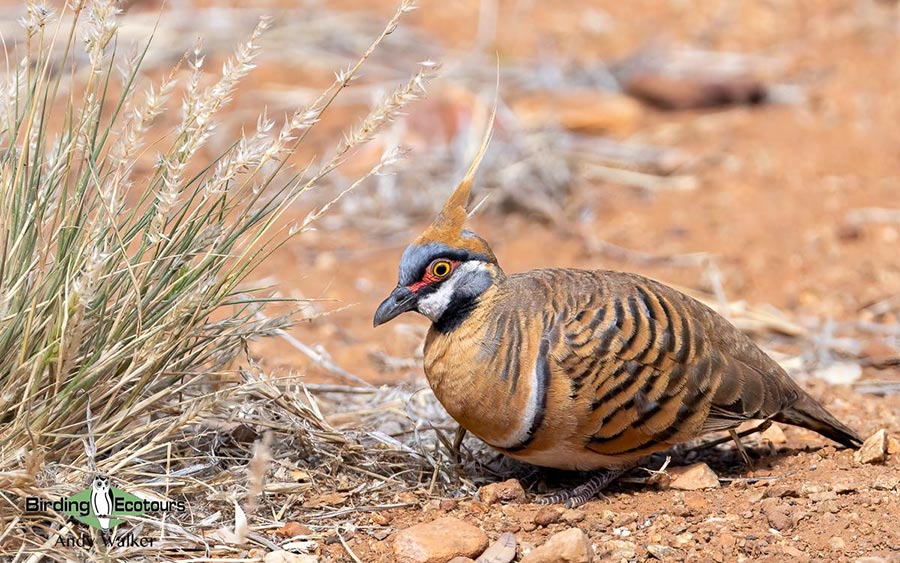 The striking Spinifex Pigeon is one of our top targets on this trip.
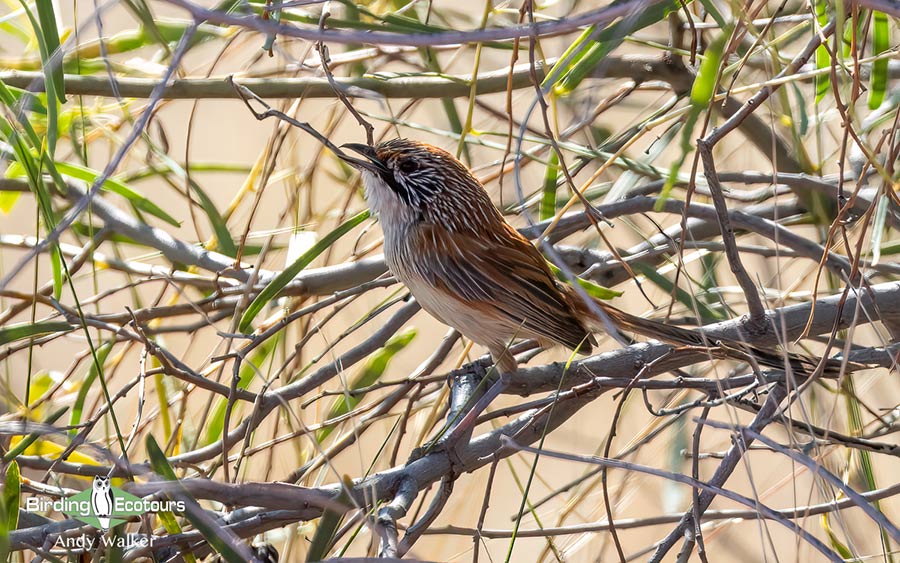
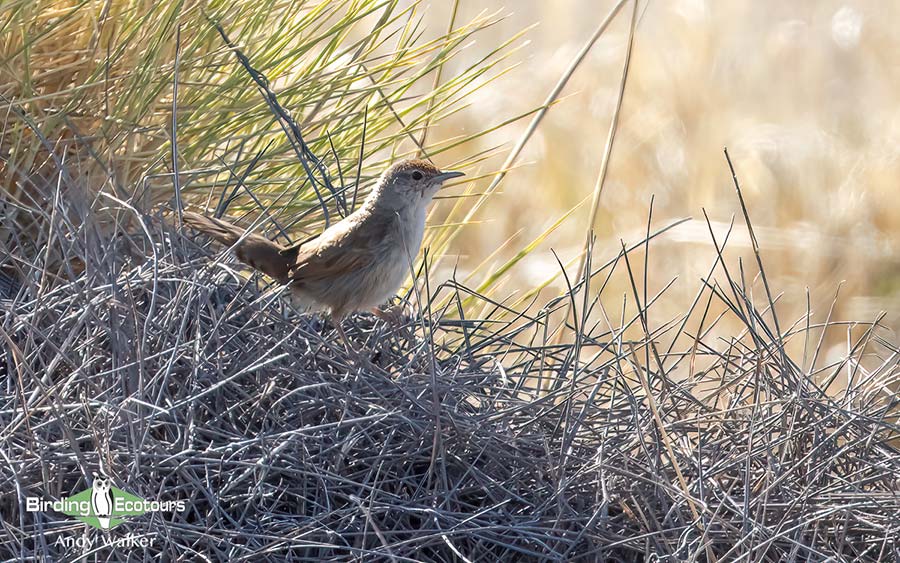
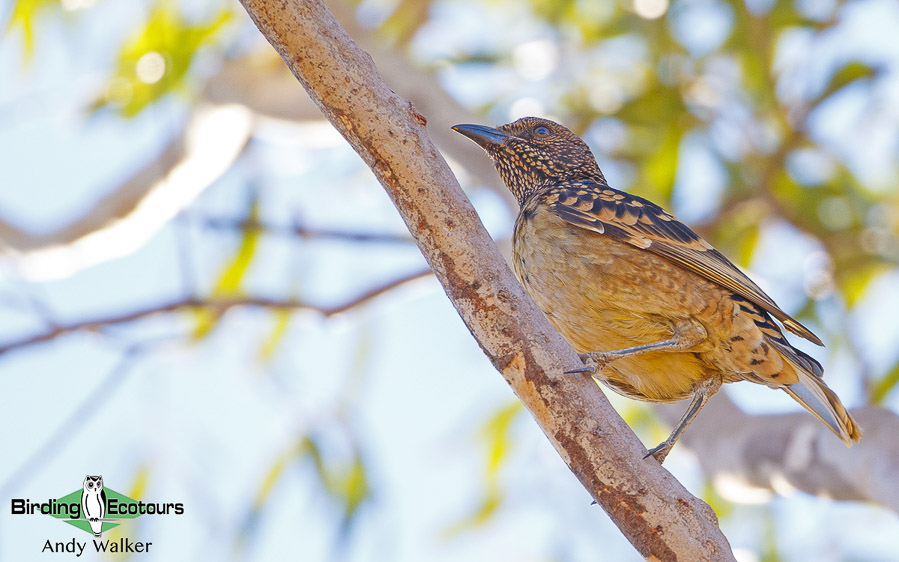
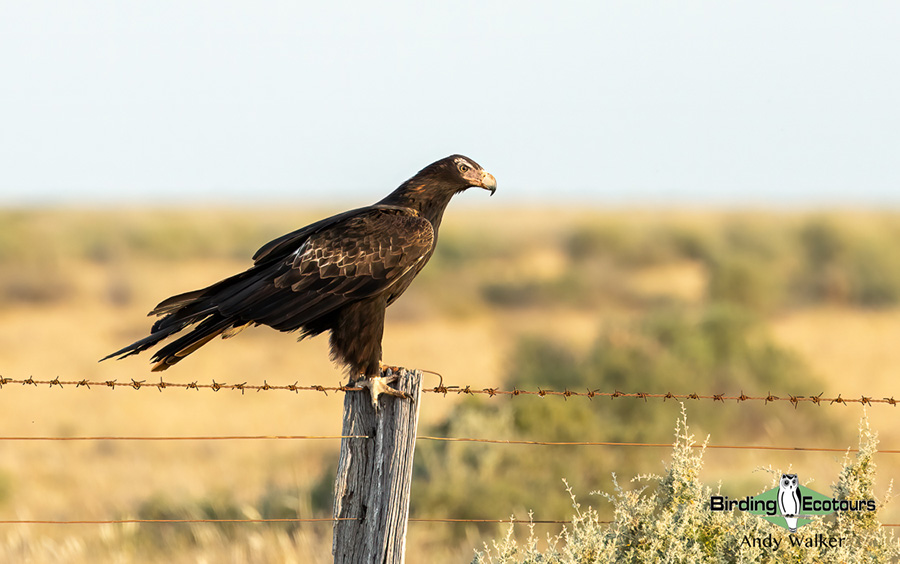
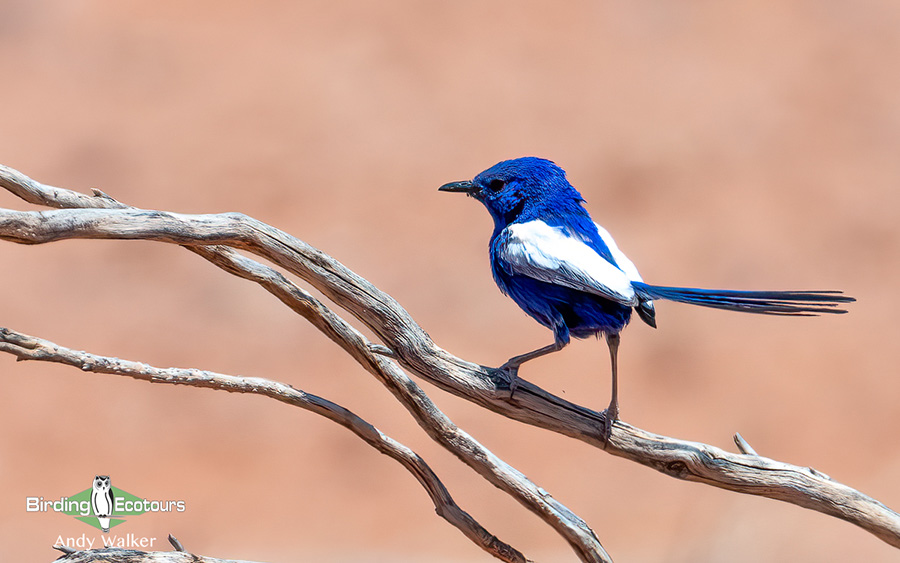
As with all our other tours this is a small-group tour. The majority of our tour will be based in Alice Springs, though we will also venture further afield to base ourselves near Uluru so we are well placed to enjoy this important feature. We will have a wide range of target birds while here, and will focus on the region’s specials such as Spinifex Pigeon, Spinifexbird, Rufous-crowned Emu-wren, Dusky Grasswren, Rufous Grasswren, Banded Whiteface, Grey Honeyeater, Western Bowerbird, Black-breasted Buzzard, Diamond Dove, Grey-headed Honeyeater, Black Honeyeater, Pied Honeyeater, Slaty-backed Thornbill, White-backed Swallow, Crested Bellbird, Black-eared Cuckoo, Budgerigar, Bourke’s Parrot, Mulga Parrot, Red-tailed Black Cockatoo, Spotted Harrier, Little Eagle, Wedge-tailed Eagle, Purple-backed Fairywren, Splendid Fairywren, White-winged Fairywren, Red-browed Pardalote, and Painted Finch.
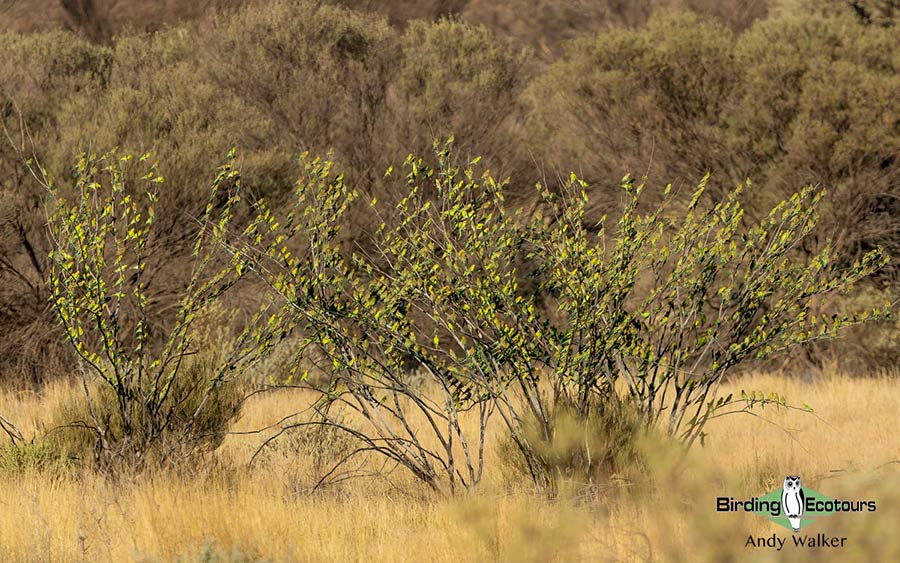
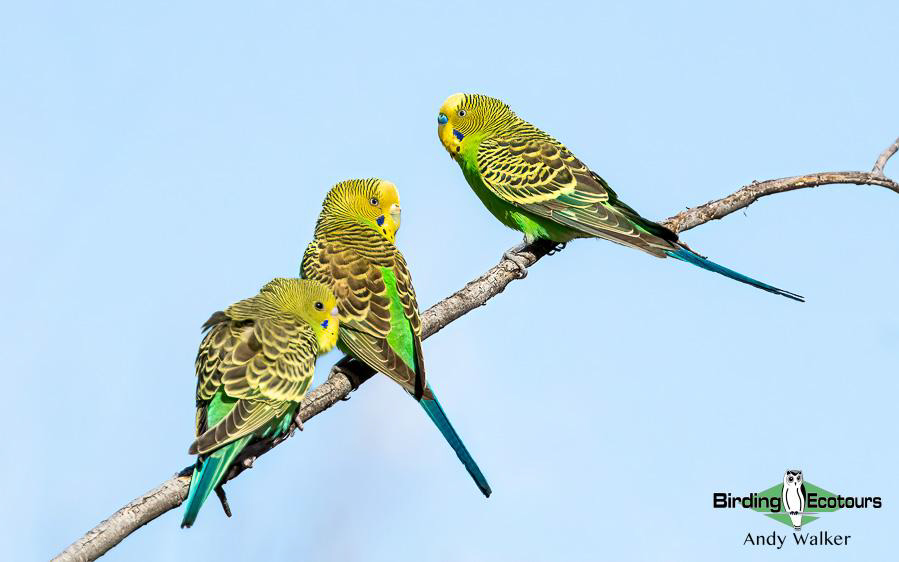 Budgerigar, a popular cage bird, is an Australian native largely restricted to ‘The Outback’ where they roam around nomadically in flocks. This tour is one of the more reliable to see this species.
Itinerary (6 days/5 nights)
Day 1. Arrival in Alice Springs
Arrival in Alice Springs. We will meet at our hotel in the evening for a welcome meal, ready to start birding the following morning. For those arriving early, there are plenty of birds in the river floodplain and botanic gardens near our hotel for some self-exploration.
Overnight: Alice Springs
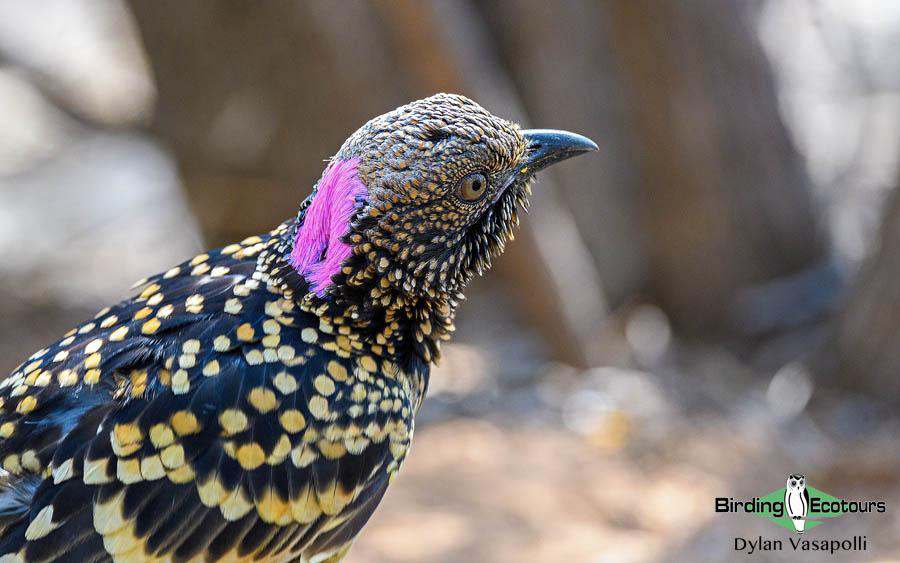 We will look for Western Bowerbird that can be found at their bowers in the city – an impressive garden bird!
Days 2 – 3. Birding Alice Springs environs
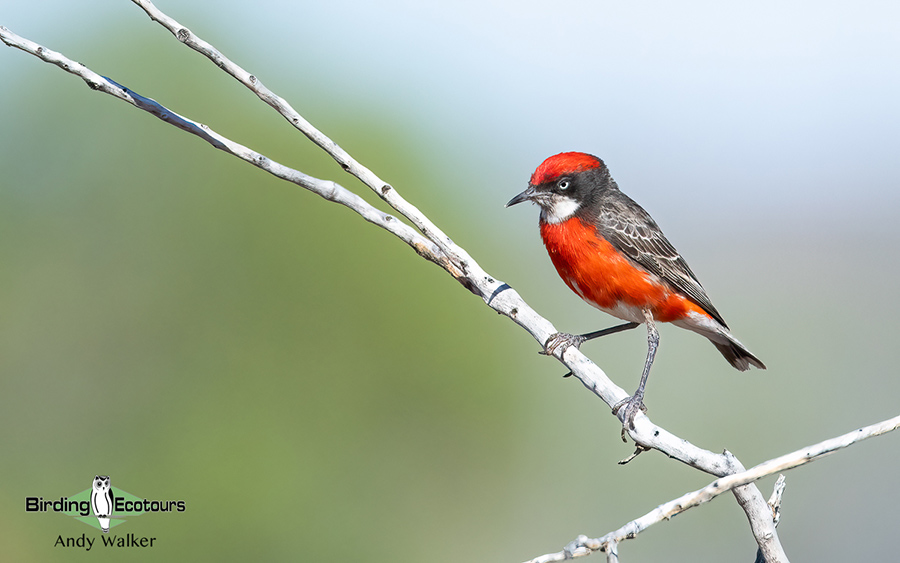
We have two full days of birding the Alice Springs area. There are several sites within close proximity to Alice Springs (even inside the city limits) and we will have morning and afternoon sessions at a range of these sites, such as the old telegraph station, the botanic gardens, the desert park, and the local back roads. Some of the species we could find here include Spinifex Pigeon, Western Bowerbird, Grey Honeyeater, Pied Honeyeater, Black Honeyeater, Hooded Robin, Painted Finch, Black-breasted Buzzard, Little Eagle, Galah, Australian Ringneck, Diamond Dove, Black-eared Cuckoo, Crimson Chat, Splendid Fairywren, Mistletoebird, Rainbow Bee-eater, Australian Zebra Finch, Grey-crowned Babbler, White-browed Babbler, Torresian Crow, Little Crow, Australian Boobook, and Red-browed Pardalote.
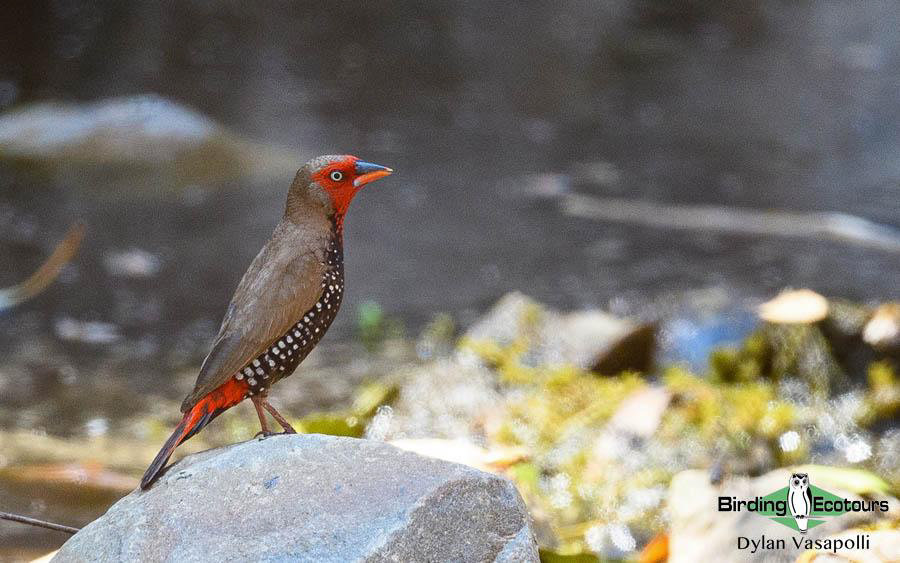 Painted Finch is one of the scarcer species occurring in the gorges near to town.
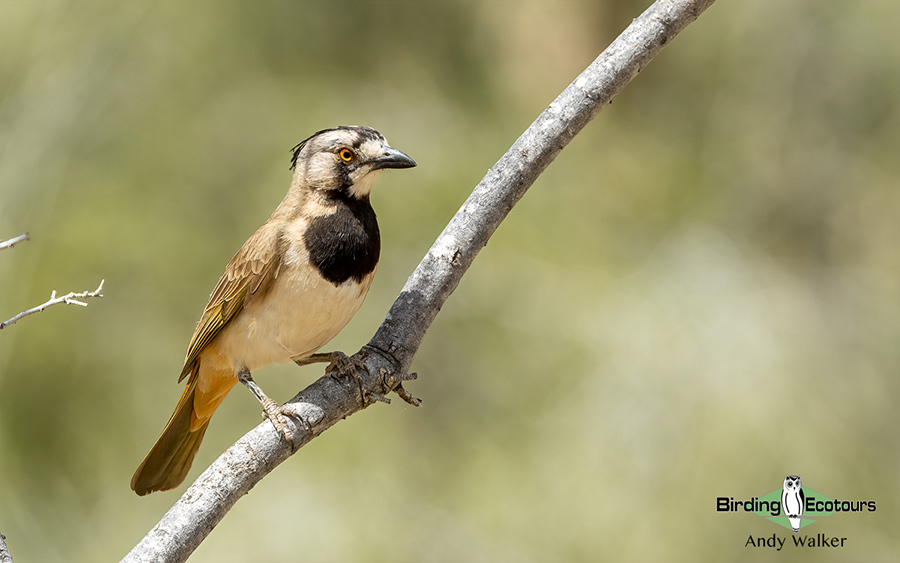
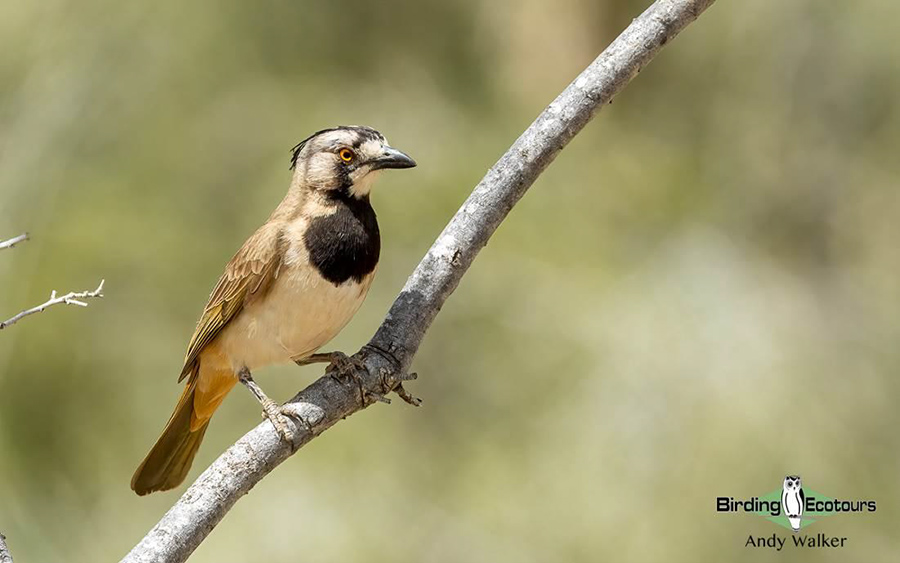 The song of Crested Bellbird is spectacular as it rings out through the desert.
We will also venture out from the city into the ‘desert’ areas, where we will look for some different and highly sought-after species such as Rufous-crowned Emu-wren, Spinifexbird, Dusky Grasswren, Banded Whiteface, Bourke’s Parrot, Crested Bellbird, Slaty-backed Thornbill, Red-browed Pardalote, and White-browed Treecreeper.
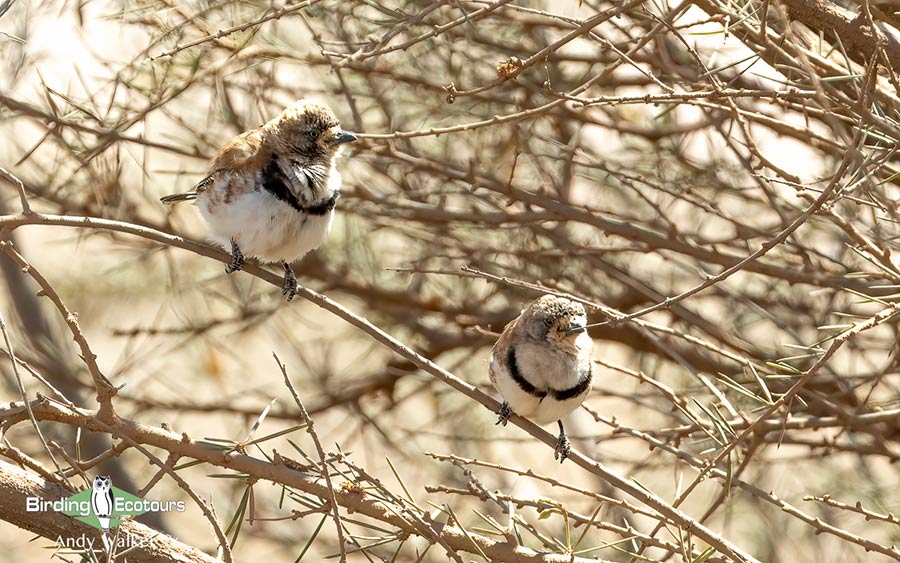
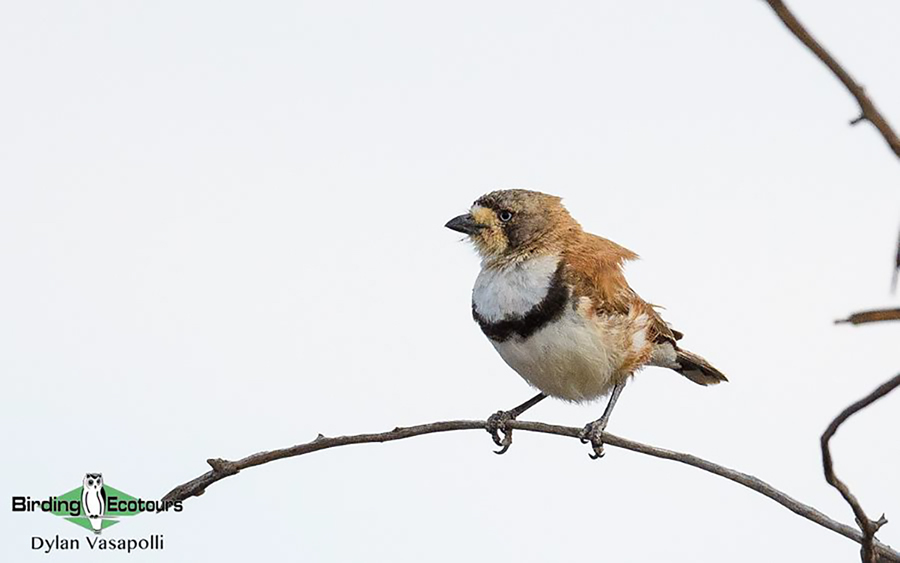 Banded Whiteface is a local speciality that we’ll be on the lookout for.
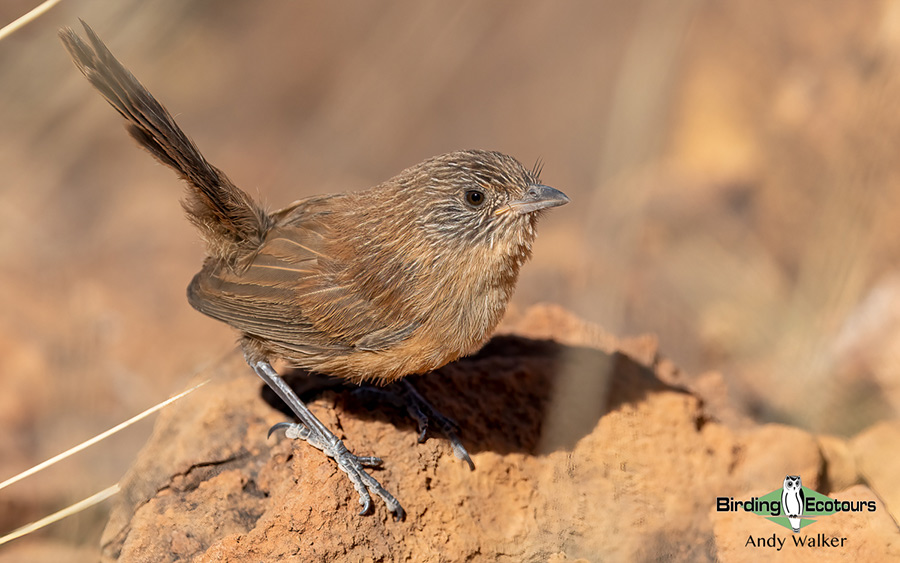
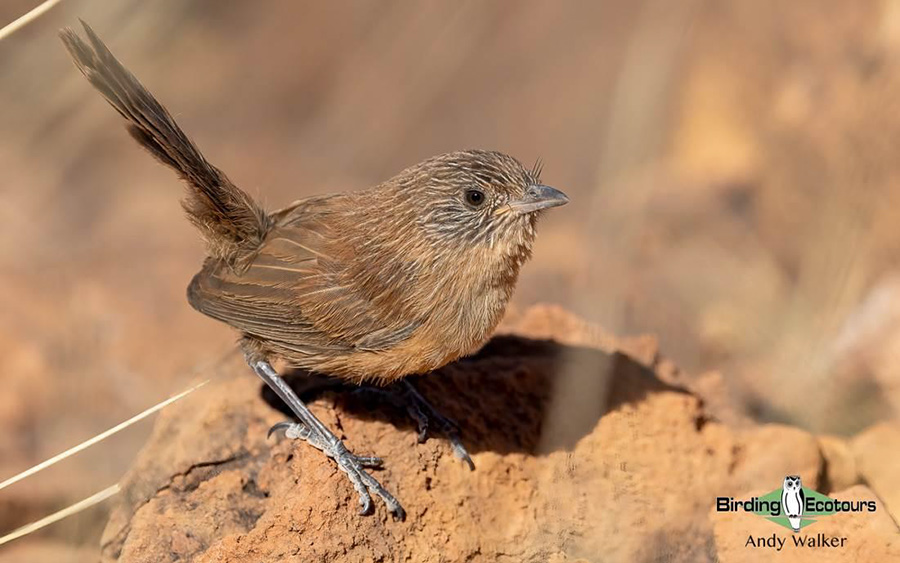 Dusky Grasswren is a target during our birding around Alice Springs. This family of birds is known as being difficult, and we hope to get views like this one from a previous tour.
Widespread Australian species we may find here include Southern Whiteface, Spotted Harrier, White-winged Fairywren, Purple-backed Fairywren, Hooded Robin, Inland Thornbill, White-fronted Honeyeater, Hooded Robin, Magpie-lark, White-backed Swallow, and Red-tailed Black Cockatoo.
Overnight: Alice Springs
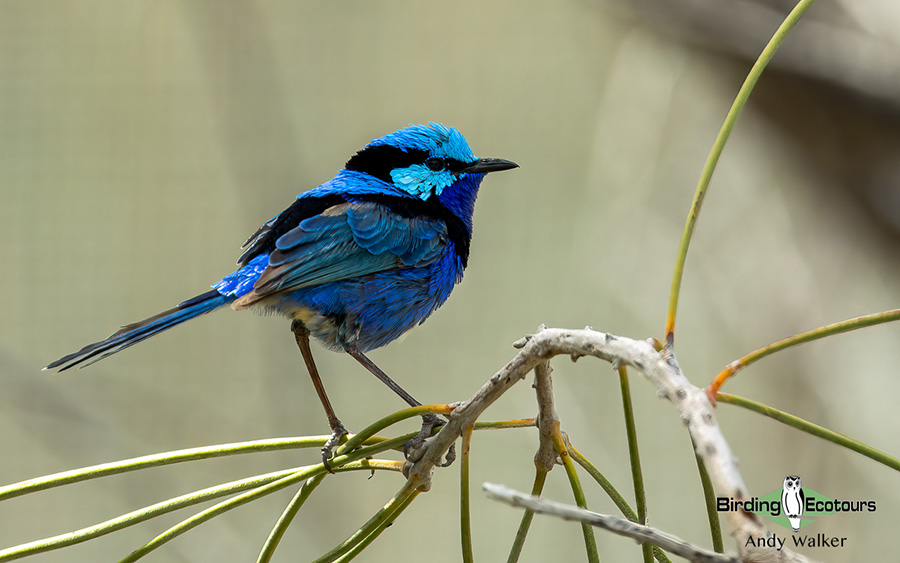
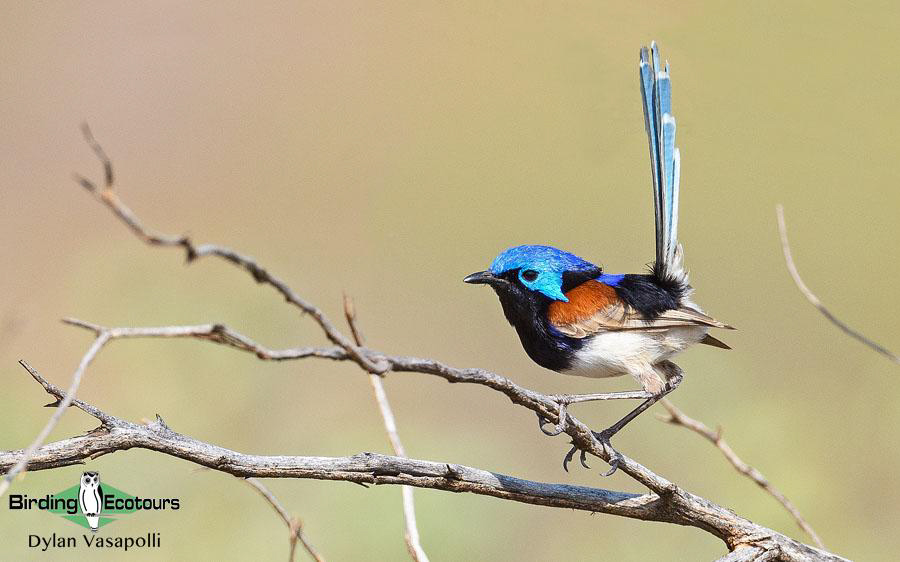 A spectacular male Purple-backed Fairywren adds a blast of color to the surrounds.
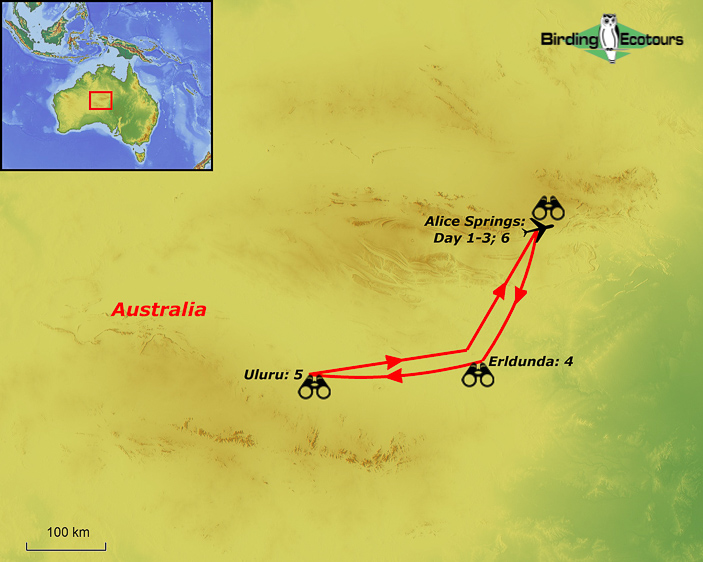
Day 4. Alice Springs to Erldunda
We will have a final morning birding in the Alice Springs area looking for any of the birds mentioned above, before we drive south to Erldunda, where we will spend the night. We should have time for some birding around our accommodation in the late afternoon, when the temperature has dropped, and we will look for some of the birds mentioned for Day 5, below.
Overnight: Erldunda
Day 5. Erldunda and Uluru (Ayers Rock)
We will spend the morning birding around Erldunda and making our way to the famous Uluru (Ayers Rock), which we will reach in the mid-afternoon. Some of the birds we will be on the lookout for in the morning include Cinnamon Quail-thrush, Chiming Wedgebill, Budgerigar, Crimson Chat, Orange Chat, Pink (formerly Major Mitchell’s) Cockatoo, and maybe the nomadic Inland Dotterel.
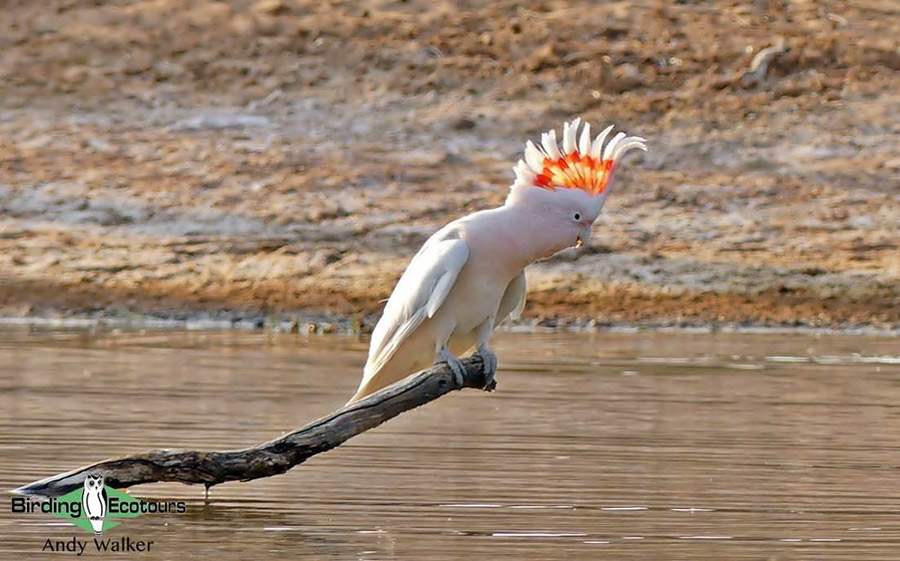 In a country blessed with a myriad of stunning parrots, Pink Cockatoo (formerly Major Mitchell’s Cockatoo) takes some beating!
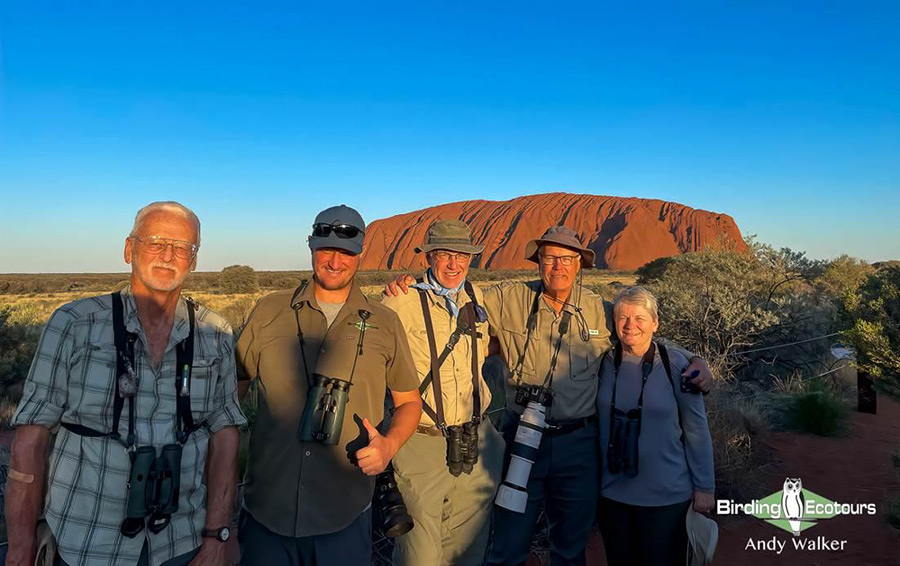 The sight of Uluru (also known as Ayres Rock) as the sun sets is absolutely spectacular and a tour highlight in its own right.
We will have some time taking in the sights of Uluru (Ayers Rock) in the afternoon and we will keep our eyes peeled for Rufous Grasswren, a recent (2020) split from Striated Grasswren. The birds here are touted as a further split, Sandhill Grasswren.
Overnight: Uluru
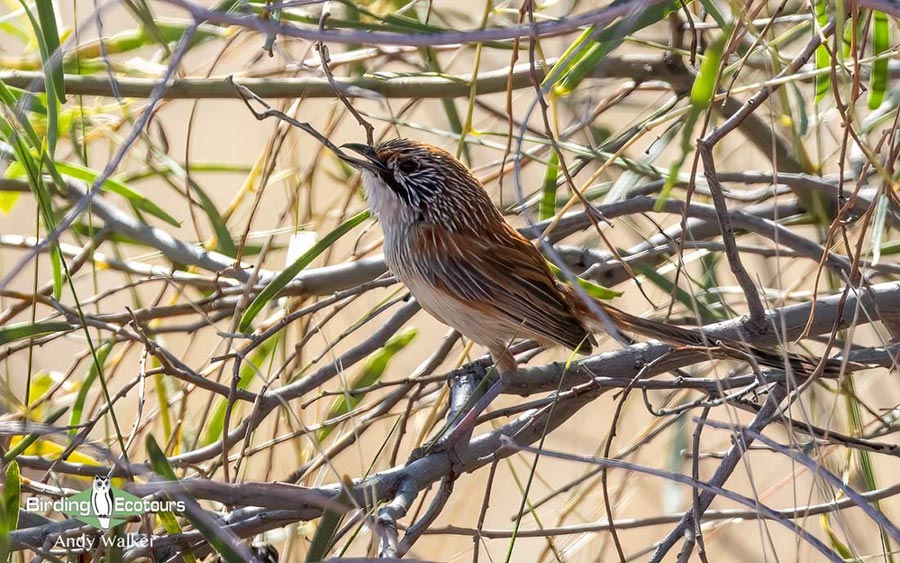 The rare and localized Rufous Grasswren will be a target around Uluru.
Day 6. Travel Uluru (Ayers Rock) to Alice Springs
After spending the early morning in the Uluru area looking for the species mentioned above, we will travel back to Alice Springs where the tour ends in the mid-afternoon.
Overnight: Not included
Please note that the itinerary cannot be guaranteed as it is only a rough guide and can be changed (usually slightly) due to factors such as availability of accommodation, updated information on the state of accommodation, roads, or birding sites, the discretion of the guides and other factors. In addition, we sometimes have to use a different international guide from the one advertised due to tour scheduling.
Map
Testimonials
Gallery
General Information
Birding Tour Australia: Northern Territory – Alice Springs Birding
Tour-Specific Information
GENERAL INFORMATION ABOUT AUSTRALIA CAN BE READ HERE
TOUR OUTLINE
This short birdwatching tour to the southern part of the Northern Territory focuses on the birds found around Alice Springs and includes a visit to Uluru (Ayres Rock). There are many desert specials to be found on our Alice Springs birding tour, including birds like Black-breasted Buzzard, Wedge-tailed Eagle, Spinifex Pigeon, Diamond Dove, Spinifexbird, Western Bowerbird, Dusky Grasswren, Rufous Grasswren, Rufous-crowned Emu-wren, Splendid Fairywren, Banded Whiteface, Crested Bellbird, Bourke’s Parrot, Mulga Parrot, Red-browed Pardalote, Australian Zebra Finch, and Painted Finch.
This tour combines perfectly with both our Northern Territory Top End birding tour and our Western Australia birding tour, which run either side of this Alice Springs bird tour in most years.
DAILY ACTIVITIES, PHYSICAL REQUIREMENTS, AND TOUR PACE
A relaxed pace, yet still comprehensive bird tour as we take in the special birds around the Alice Springs area. We will have one central base in Alice Springs city for a few days before we venture a little further away to Uluru, stopping for a night along the way. We will make morning and afternoon birding trips from our accommodation when we are based in Alice Springs city. We will then bird along the way as we move further afield from the city.
Birding around Alice Springs will involve drives of around an hour to get to the birding sites, sometimes a little less (approximately 30 minutes) and sometimes a little more. The drive between Alice Springs and Erldunda is around two hours and between Erldunda and Uluru is around three hours. The longest drive of the tour will be as we drive between Uluru and Alice Springs, which will be around five hours but will take longer as we add birding and lunch stops.
The tour is generally considered easy in terms of physical exertion. However, the temperatures during the day could get high (see “Weather” section below), so dehydration needs to be considered a possibility at all times, as does heat stroke and sunburn, etc.
Our usual tactic on this tour is to make short walks from our vehicle in a loop of up to 0.6 – 1.2 miles (1 – 2 kilometers), and we may make several of these a day. On a couple of occasions on this tour, we are likely to make slightly longer walks of 2.5 miles (4 kilometers), and we may make a couple of these a day too. Please ensure you always carry water with you on our walks away from the vehicle. Walking is often on fairly flat but occasionally undulating rough ground with rabbit holes and loose rocks, so care needs to be taken. In some areas we will be walking in very spiky spinifex grass, so long pants (trousers) are recommended.
TRANSPORTATION
We will use a 12-seater minibus on this Alice Springs birding tour. There will be limited baggage space, so please pack as lightly as possible for the tour (including within the seating area).
DOMESTIC FLIGHTS
There are no domestic flights on this Alice Springs birdwatching tour.
LUGGAGE
Please pack as lightly as possible for this Alice Springs birding tour due to limited space inside vehicles. A medium-sized, soft-sided, and robust duffle bag is likely to work best for packing in the tour vehicle. You will be expected to load and unload your own bags into and out of vehicles.
We recommend using a daypack to keep items that you wish to use daily when in the vehicle or when birding in the field (such as binoculars, camera, notebook, field guide, personal supply of water, snacks, umbrella, rain jacket, extra layers of clothing, etc.).
ACCOMMODATION
In Alice Springs and Uluru we stay at comfortable hotels in rooms with air conditioning and private bathrooms. There are restaurants on site where we will eat most of our meals, and the hotels offer free Wi-Fi. These hotels both have swimming pools.
At Erldunda, we stay in the roadhouse (a sort of outback motel), the rooms have air-conditioning, Wi-Fi, and private bathrooms. There is a swimming pool and restaurant on site.
WEATHER
Known as a warm month, the average maximum daytime temperature in Alice Springs during our birding tour in October is 90 degrees Fahrenheit (oF) (32 degrees Centigrade/oC), and the average minimum temperature is 60 oF (16 oC). Rain is unlikely on our tour, and as such, it is usually not very humid.
SAFETY
Alice Springs has received some negative press over recent years due to a significant increase in antisocial behavior and crime. Do not walk around outside the resort grounds (e.g., in town or elsewhere) after dark. Please do not leave valuables (or anything at any time) inside the vehicle when it is parked to help reduce the risk of anyone breaking into the vehicle. Please keep a close watch over your possessions (e.g., bags, wallet, optics, etc.) when we are out and about in the city, such as during lunch stops and city birding stops. Do not walk around Alice Springs city with expensive equipment in view at any time. Ensure the doors and windows are always closed and locked in your hotel rooms (when you are in the room and out of it).
WHAT TO BRING: CLOTHING AND OTHER ITEMS
The following is a list of useful items to bring on this Alice Springs birding tour and should be read in conjunction with the Australia general information document.
- A field guide to the birds of the region. See the general information for our recommendations for this Alice Springs bird tour.
- Hiking pole or walking stick to help on the tracks and trails. While probably not necessary for everyone, a walking stick is compulsory for anyone who is unsteady walking, as we feel this is a safety issue. We don’t want anyone slipping on the trails or anywhere else. Please discuss with us if you are unsure whether you will need one or not.
- High-concentration DEET insect repellant or similar products.
- A flynet for your face is very useful in some years.
- Sunhat, suncream, and sunglasses.
- A small personal first aid kit. See the suggested items from the Centers for Disease Control and Prevention (CDC) here.
- Lightweight hiking boots are likely the best footwear for this tour. A set of sandals (flip-flops) and/or trainers would be useful for walking around some of the accommodations but are not suitable for birding time (consider snake bites, mud, slips, trips, falls, etc.).
- Quick-drying birding clothes (in suitable colors) are the best for this tour; you are unlikely to require sweaters, etc., for this tour.
- All of our accommodations have swimming pools.
- A small hand towel or washcloth can be handy for cleaning dust off when in the desert. Not essential, but people do find these handy.
- A dry bag to keep valuable documents in, such as passports, cell phones, wallets, etc., as well as cameras, if we get unlucky and have a rain shower, or to keep dust off.

Download Australia – Alice Springs tour Information