by Adam Cruickshank (written 04 February 2026)
In part 1, we explored the first 20 monotypic bird families, each represented by a single living species with no close surviving relatives. Their evolutionary isolation makes them especially appealing to listers and fascinating to anyone interested in the broader story behind a bird.
In part 2, we move through the remaining 17 monotypic families. Some are localized endemics tied to one island or one mountain chain. Others have wide ranges but sit alone on the bird family tree. As in part 1, each account combines taxonomy with practical field details on identification, behavior, and conservation.
A table at the end of the article lists every species covered in part 2, along with suggested Birding Ecotours tours where each monotypic family can be seen. This keeps the series useful for family listing goals while remaining focused on the birds themselves.
Family: Eulacestomatidae
English name: Wattled Ploughbill
Scientific name: Eulacestoma nigropectus
The Wattled Ploughbill is a highland species, endemic to the central and eastern mountain ranges of New Guinea. The species gets its name from its distinctively shaped bill, specially adapted to pry under bark and into wood in search of insects. The male has two pink wattles on either side of the bill, along with a black throat and breast that contrast with the olive-green upperparts. The female lacks the wattles and is duller overall, with olive green upperparts and paler olive underparts.
Due to superficial similarities, the species was once classified with the Australasian whistlers (Pachycephalidae) or shriketits. Genetic studies have shown that it is not closely related to either group. Instead, its closest relatives appear to be the sittellas (Neosittidae). In 2014, it was placed in its own family, Eulacestomatidae.
The Wattled Ploughbill inhabits montane cloud forests and mossy forests, where it feeds on insects. Using its strong bill with a hooked upper mandible, it ploughs into dead wood, bark, and bamboo stalks to extract beetle larvae, spiders, and other insects. It forages from the forest floor up to about 30 feet (10 meters) and sometimes joins mixed-species feeding flocks.
This species is listed as Least Concern by the IUCN Red List, largely because it can persist in a range of forest habitats, including some human-altered landscapes. Even so, it is considered rare or uncommon across much of its range, which helps explain why this bird is so highly prized.
Family: Ifritidae
English name: Blue-capped Ifrit
Scientific name: Ifrita kowaldi
The Blue-capped Ifrit, a passerine endemic to the rainforests of New Guinea, is one of the few bird species known to be truly poisonous. It carries a neurotoxin called batrachotoxin in its skin and feathers, which can cause numbness and tingling if the bird is handled. The toxin is believed to be obtained from its diet, particularly from Choresine beetles. During breeding, some of this toxin may rub off onto the nest and eggs, offering a degree of protection against potential predators.
The Blue-capped Ifrit has a black-edged blue cap with a contrasting black crown spot, while the rest of the plumage is ochre-brown. There are two recognized subspecies that differ slightly in coloration. Ifrita kowaldi brunnea occurs in the mountains of west central New Guinea, while I. k. kowaldi is found in the central highlands and on the Huon Peninsula.
Historically, the species was placed in the families Cinclosomatidae and Monarchidae, but it is now classified in its own family, Ifritidae. Although common within its range, its population is thought to be in slow decline.
This insectivorous species is highly dependent on its forest ecosystem and occurs mainly in high-altitude montane forests, often between 3,300 and 13,100 feet (1,000 to 4,000 meters) above sea level. The Blue-capped Ifrit is often seen in small flocks, actively foraging through mossy branches in search of insects and other small prey.
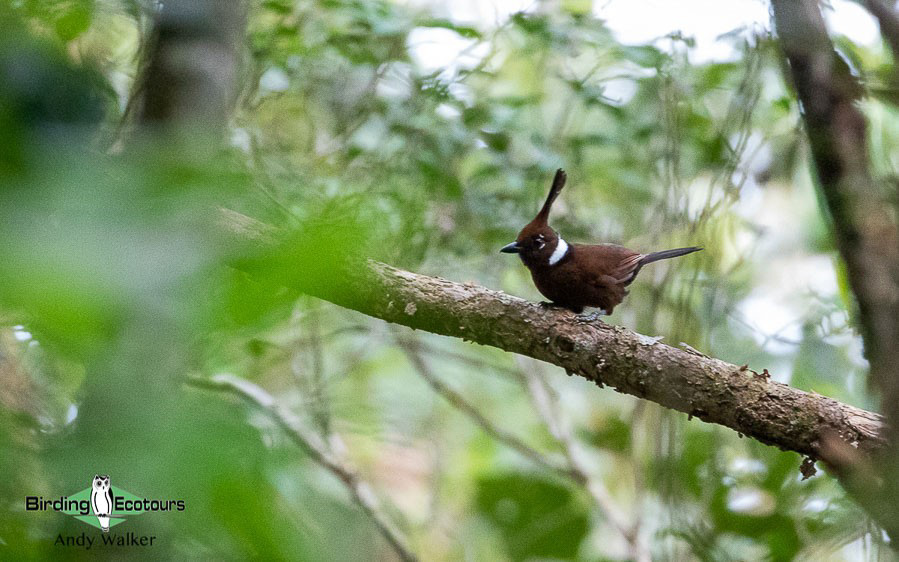
Crested Jayshrike showing its long crest and the bold white crescent on the side of the neck.
Family: Platylophidae
English name: Crested Jayshrike
Scientific name: Platylophus galericulatus
The predominantly dark-colored Crested Jayshrike is unmistakable, with its long crest, formed by two elongated feathers, a hook-tipped bill, and white crescents on the side of the neck. These pale markings, along with subtle eye markings, help individuals maintain visual contact when moving in small groups through the dim light of the forest undergrowth.
Like many monotypic families, this species has a complicated taxonomic history. It was originally thought to belong to the crow family (Corvidae), but this placement has been questioned since the early 2000s. Genetic studies have shown that it is not a true crow, but rather an early offshoot of a broader group of birds known as the Corvoidea.
In 2019, eBird and Clements checklists renamed the species the Crested Jayshrike and placed it in a newly proposed family, Platylophidae, which had not yet been formally described. The family was officially recognized in 2021, and the International Ornithological Congress (IOC) adopted the classification in 2022. However, there is a twist. As far back as 1855, the scientist Johann Jakob Kaup may have already used the family name Lophocittidae for this species. In taxonomy, older names usually take precedence, meaning Lophocittidae could potentially replace Platylophidae in the future.
The species occurs in lowland broadleaf forest across Borneo, Indonesia, Malaysia, Myanmar, and Thailand. At least four recognized subspecies are known: P. g. ardesiacus occurs on the Malay Peninsula, P. g. coronatus is found on Sumatra and most of Borneo, excluding the north, P. g. galericulatus is restricted to Java, while P. g. lemprieri occurs in northern Borneo.
The species is currently listed as Near Threatened by the IUCN. Habitat loss and capture for the cagebird trade are the main threats, and continued forest loss across its range has contributed to ongoing population declines.
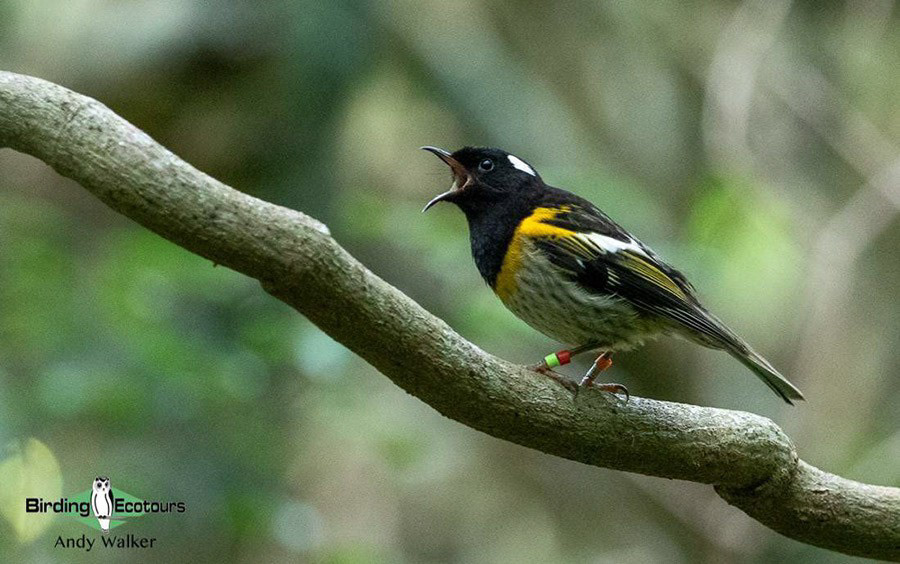
The New Zealand endemic Stitchbird in full song.
Family: Notiomystidae
English name: Stitchbird
Scientific name: Notiomystis cincta
The Stitchbird, also known by its Māori name hihi, is a unique and fascinating species endemic to New Zealand. Its call was once described by a New Zealand ornithologist as having “a fanciful resemblance to the word stitch.” This small bird resembles a honeyeater and has a cocked, wren-like tail. Males are striking, with a black head, prominent white ear tufts, a bold white wing bar, and a distinctive yellow band across the chest, separating the head from the greyish-ochre body. Females and juveniles are duller in coloration but retain the white wing bar.
The Stitchbird was once classified within the Australian and New Guinean honeyeater family (Meliphagidae), but genetic studies revealed that it is more closely related to the New Zealand endemic Callaeidae (wattlebirds). As a result, it was placed in its own family, Notiomystidae, in 2007.
One of the most remarkable aspects of the Stitchbird is its remarkable mating behavior. Males are known to copulate with multiple females and have testicles about four times larger than expected for their body size. During the breeding season, the cloacal protuberance used to store sperm is three times the typical size for a bird of its size. Even more unusually, Stitchbirds are the only known bird species to sometimes copulate face to face, with the female on her back, a behavior not documented in any other bird species.
The species is now found only in carefully managed populations on New Zealand’s North Island and nearby offshore islands. It was once widespread across the North Island but declined due to habitat loss and the introduction of predators, such as black rats. By the late 19th century, the Stitchbird survived only on Little Barrier Island. Since the 1990s, conservation efforts have reintroduced the species to two offshore island sanctuaries and several fenced mainland sites. These populations require intensive management, including pest control and supplementary feeding.
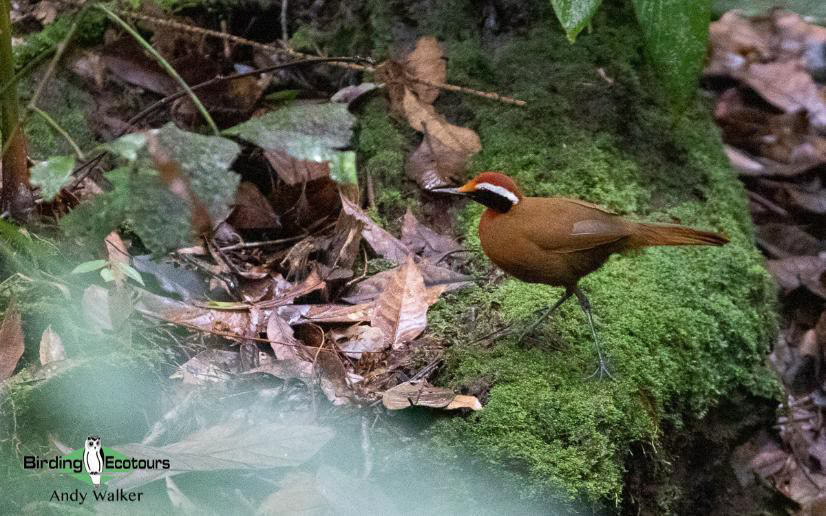
A secretive Rail-babbler moving across the forest floor.
Family: Eupetidae
English name: Rail-babbler
Scientific name: Eupetes macrocerus
The rail-like Rail-babbler, with its secretive lifestyle on the forest floor, is a species many birders dream of seeing. This elusive and attractive species is restricted to the Sundaic lowlands, including Peninsular Thailand, Peninsular Malaysia, Sumatra, Borneo (including the Natuna Islands), Brunei, and Kalimantan.
The Rail-babbler is a medium-sized bird with mostly brown plumage. It has a reddish forehead, crown, and throat, a long black eyestripe extending from the base of the bill to the neck, and a broad white supercilium.
It favors lowland, swamp, and heath forests with fairly open floors, where it feeds mainly on insects. When it gives its ghostly, monotonous whistle call, the bare blue skin patch on the side of its neck expands, an unforgettable sight for those lucky enough to witness this.
Scientists have long debated where the Rail-babbler fits on the bird family tree. It was initially placed in the Old World babbler family (Timaliidae). Later, some researchers suggested it belonged with birds such as quail-thrushes and whipbirds, and it was moved to the family Cinclosomatidae. At one point, the Blue Jewel-babbler was grouped with it in the same genus, but this was later corrected when studies showed the two species were unrelated.
In 1952, a scientist named William Serle pointed out that the Rail-babbler shared several physical traits with the rockfowl (Picathartes), such as body proportions, nostril placement, and forehead and tail shape. However, in 1973, Charles Gald Sibley argued that the resemblance was likely coincidental and due to convergent evolution.
Finally, in 2007, a molecular study confirmed that the Rail-babbler is not closely related to babblers or quail-thrushes. Instead, it is most closely related to rockjumpers (Chaetops), which are early-branching songbirds. Because it does not fit into any existing bird family, it was placed in its own monotypic family: Eupetidae.
The IUCN lists the Rail-babbler as Near Threatened due to extensive deforestation across its closed-canopy forest habitat. Although it has shown some tolerance of moderate habitat degradation, continued forest loss remains a significant threat to its survival.
Family: Panuridae
English name: Bearded Reedling
Scientific name: Panurus biarmicus
The next species in our exploration of monotypic families is the Bearded Reedling, an attractive small passerine. It has a complicated taxonomic history and has been placed in several different bird families over the years. Recent DNA research shows that it has no close living relatives. Originally, the Swedish scientist Carl Linnaeus grouped the species with the tits and named it Parus biarmicus. The species was later moved to a group known as the parrotbills. Over time, scientists placed it in families that included flycatchers, warblers, and babblers, but none proved to be a good fit. Later, it was placed in its own genus Panurus and eventually elevated to the monotypic family Panuridae. The name Panurus is derived from Greek, meaning very long tail, while biarmicus comes from an old name for a region in Russia, where the bird was mistakenly believed to occur.
This is a beautiful and charismatic bird. Males have a pale face, a long tail, bold black moustache-like markings, and a warm buff-orange wash on the flanks. Both sexes show a soft grey head, a rich cinnamon brown back and wings, and long black-and-white tails. They are often seen clinging acrobatically to reeds in wetland habitats. Despite being well camouflaged, their presence is often revealed by sharp, pinging calls.
These features are not just visual. They also play an important role in reproduction. Juveniles undergo a complete post juvenile molt, which is unusual among birds, and they resemble adults only a few months after hatching. The species tends to pair up early and is mostly monogamous, although males may occasionally mate with additional females. Both moustache length and tail length are important during mate selection, with longer features increasing the chance of attracting a mate.
The species is divided into several subspecies that differ slightly in plumage. The nominate form, P. b. biarmicus, occurs across northern, western, and southern Europe and extends into parts of Turkey and Azerbaijan, P. b. russicus ranges from eastern Europe through southern Russia and Central Asia into Mongolia and northern China, while a third form, P. b. kosswigi, has been recorded in southern Turkey and may have occurred in adjacent Syria, although the status of this population is uncertain and possibly extinct.
The IUCN lists the Bearded Reedling as a species of Least Concern. Although local populations can fluctuate, especially during severe winters, overall numbers appear stable. In some areas, populations have even increased due to the conservation and restoration of wetland habitats.
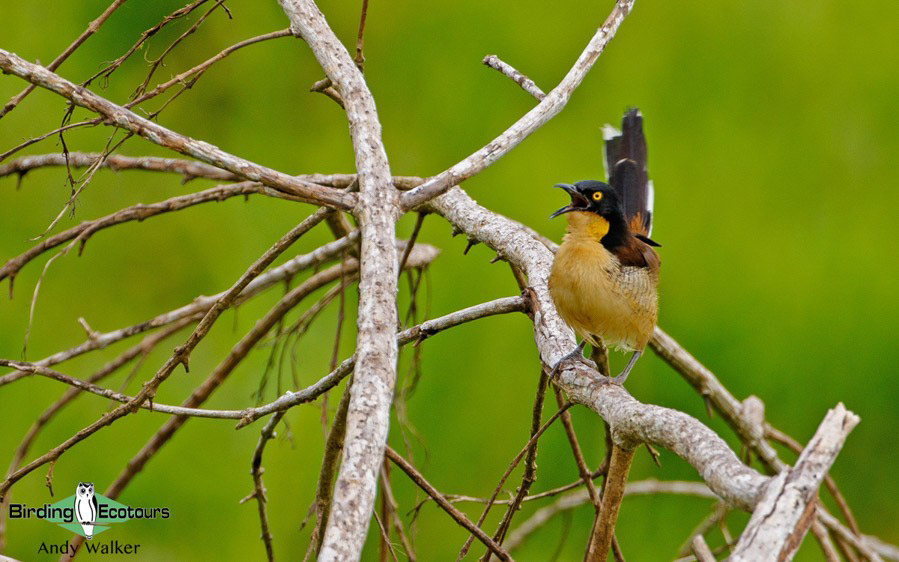
The striking Black-capped Donacobius is found in marshes and wetlands across much of South America.
Family: Donacobiidae
English name: Black-capped Donacobius
Scientific name: Donacobius atricapilla
The Black-capped Donacobius occurs in marshes and wetlands across much of South America. Its range includes Argentina, Bolivia, Brazil, Colombia, Ecuador, French Guiana, Guyana, Paraguay, Peru, Suriname, and Venezuela, and extends into Panama in Central America.
The species was once known as the Black-capped Mockingthrush, reflecting long-standing uncertainty about its relationships. In 1760, French zoologist Mathurin Jacques Brisson described the bird from a specimen he mistakenly believed came from South Africa, assigning French and Latin names that did not follow formal scientific naming rules. In 1766, Swedish naturalist Carl Linnaeus included the species in the twelfth edition of Systema Naturae, naming it Turdus atricapilla, meaning black haired thrush. The error in the type locality was later corrected, with the species shown to originate from eastern Brazil rather than South Africa. In 1831, English naturalist William Swainson established the genus Donacobius, a name derived from Greek words meaning “reed life,” a fitting reference to the bird’s wetland habitat.
Over the years, scientists placed the species in various families, including the thrushes (Turdidae), mockingbirds (Mimidae), and even the wrens (Troglodytidae). However, none of these placements were correct. Since 2018, most taxonomic authorities have agreed to place the species in its own unique family, Donacobiidae, and it is typically listed near the reed warblers (Acrocephalidae) in modern checklists.
Family: Dulidae
English name: Palmchat
Scientific name: Dulus dominicus
The Palmchat is found only on the island of Hispaniola, which includes both Haiti and the Dominican Republic, as well as the nearby Saona and Gonâve Islands. It is widespread and common throughout its range and holds the title of national bird of the Dominican Republic. While it is adaptable to many habitats, it is strongly associated with palm trees, especially areas with royal palms (Roystonea species).
This long-tailed songbird is easy to recognize by its pale yellow bill, olive green upperparts, heavily streaked underparts, and reddish brown eyes. With close observation, its yellow green rump and colored wing edges are also visible. The species was first described in 1760 by French zoologist Mathurin Jacques Brisson, who assigned a Latin name that did not conform to modern naming rules. Carl Linnaeus later provided the accepted scientific name Tanagra dominica in 1766. In 1816, Louis Pierre Vieillot placed it in its own genus, Dulus, where it remains today as a monotypic family.
Palmchats are highly social birds that build large communal nests, typically in palms. If palms are not available, they may use other trees or even telephone poles. These nest structures can be as large as 6.5 feet (about 2 meters) across and may house up to 30 pairs of birds in connected chambers.
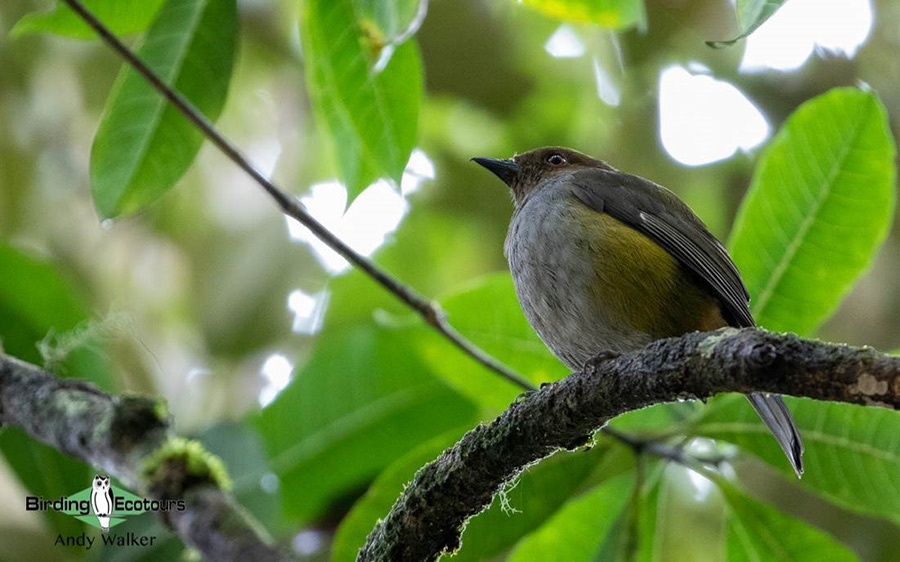
The drab-colored Hylocitrea is found in montane forests on the Indonesian island of Sulawesi.
Family: Hylocitreidae
English name: Hylocitrea
Scientific name: Hylocitrea bonensis
The Hylocitrea is a rather drab-colored montane forest bird found only on the Indonesian island of Sulawesi. Although it is currently recognized as a single species in its own family (Hylocitreidae), there is debate over whether it consists of two species due to slight plumage differences.
The southern subspecies, H. b. bonthaina, is restricted to the mountains of southwestern Sulawesi, whereas the northern subspecies, H. b. bonensis, inhabits the central, eastern, and northern highlands of the island. Notably, H. b. bonthaina may face a higher level of risk because of its limited distribution and ongoing habitat loss, even though the species as a whole is currently classified as Least Concern on the IUCN Red List.
The species was once placed in the whistler family, Pachycephalidae. However, genetic studies later showed that it does not belong in that group. This led to the creation of its own family, Hylocitreidae. Some ornithologists still argue that it could instead be treated as a monotypic subfamily within the waxwing family, Bombycillidae, but the consensus now favors it being in its own unique family due to its distinct evolutionary lineage.
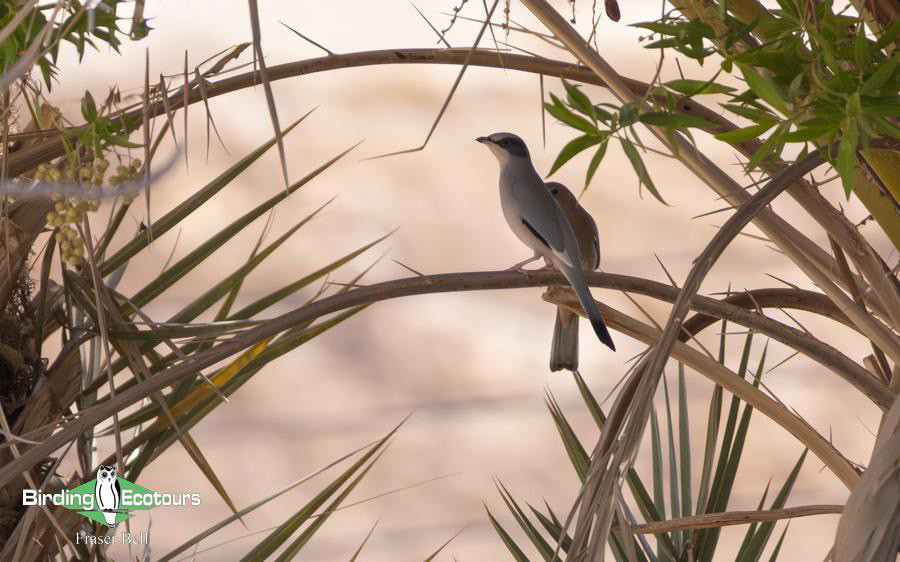
The Grey Hypocolius is a tour highlight on our Oman birding tours.
Family: Hypocoliidae
English name: Grey Hypocolius
Scientific name: Hypocolius ampelinus
The Grey Hypocolius is a species that superficially resembles a waxwing. For many years, ornithologists were unsure which species it was related to. It was originally thought to be related to bulbuls or even shrikes, but genetic studies have shown that it is most closely related to waxwings.
A 2019 study found that the Grey Hypocolius belongs to a group of birds that includes the Palmchat (Dulidae), waxwings (Bombycillidae), silky-flycatchers (Ptiliogonatidae), and Hylocitrea (Hylocitreidae). The study also showed that its closest relatives are the now-extinct Hawaiian honeyeaters (Mohoidae). Based on these studies, the Grey Hypocolius is placed as the only member of its own family, Hypocoliidae.
This elegant species occurs in dry, semi-desert regions. It has a mostly uniform grey or brownish grey plumage, with a small crest that is raised when the bird is alert or excited. Males also show a distinctive black triangular mask around the eyes. The species is found across parts of the Middle East and western Asia, including Iraq, Iran, the Arabian Peninsula, Afghanistan, Pakistan, and western India. It is a short distance migrant, moving farther south during winter.
Grey Hypocolius live in woodland and scrub, especially in river valleys near deserts, but are also found in irrigated and cultivated areas. It feeds mostly on fruit, foraging quietly in flocks as it moves through trees, palm groves, and orchards, and may also occasionally eat insects.
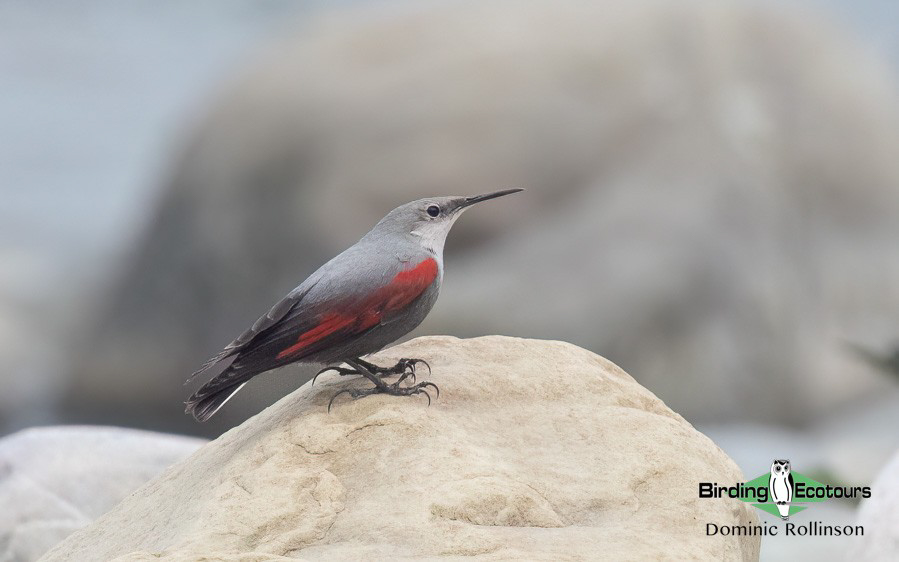
It is not difficult to see why the Wallcreeper is such a sought-after species!
Family: Tichodromidae
English name: Wallcreeper
Scientific name: Tichodroma muraria
When one sees the Wallcreeper, it is easy to understand why this high-altitude passerine is so sought after. Although its plumage is mostly blue grey, it has striking crimson wings. When the wings are folded, this color is hidden, but the bird frequently flicks them open, revealing bold red-and-white markings.
There are two accepted subspecies: the Eurasian Wallcreeper (T. m. muraria), found in southern and eastern Europe to the Caucasus and western Iran, and the Asian Wallcreeper (T. m. nepalensis), found from parts of Central Asia through the Himalayas to eastern China. The Asian form was originally described as a separate species.
When the bird was first described, Carl Linnaeus placed it with the treecreepers and named it Certhia muraria. It was later given its own genus, Tichodroma, but remained classified with the treecreepers for many years. Eventually, some scientists placed it in its own family, Tichodromidae, while others grouped it as a subfamily within the nuthatches (Sittidae). A 2016 genetic study showed that Wallcreepers are closely related to nuthatches and likely split from them a long time ago. We also know from the fossil record that at least one other wallcreeper species existed, Tichodroma capeki, which lived in what is now Hungary during the Miocene, about 5 to 10 million years ago.
Today, the Wallcreeper is the only living species in its family, and it belongs to a larger bird group called Certhioidea, which also includes nuthatches, spotted creepers, treecreepers, gnatcatchers, and wrens.
The species is known for its ability to move easily across vertical and angled surfaces. While it typically lives at high altitudes, it often moves to lower elevations in the non-breeding season. Its call is a high-pitched, musical whistle. Outside of the breeding season, it is generally solitary and maintains individual feeding territories. During the breeding season, males and females pair up and together defend a breeding territory.
The crimson-and-white markings on the wings are thought to play a role in visual signaling, perhaps replacing contact calls, which do not travel very far in mountainous environments.
Family: Elachuridae
English name: Spotted Elachura
Scientific name: Elachura formosa
This speckled passerine was only recognized as a distinct family in 2014, and much about it remains poorly known. The Spotted Elachura is a dark brown bird with rufous wings and tail. As its name suggests, it is covered in white spots across the body, with additional black barring on the wings and tail.
Historically, the species was grouped with the babblers and given the name Spelaeornis formosus. In 2014, however, DNA studies showed that it is not closely related to babblers at all. Instead, it represents an early branching lineage of songbirds with no close living relatives. As a result, scientists created a new family for this single species, Elachuridae.
The Spotted Elachura occurs in Bangladesh, Bhutan, China, India, Laos, Myanmar, Nepal, and Vietnam. It inhabits subtropical and tropical moist montane forests, where it favors dense undergrowth and thickets. It is most often associated with fern-covered ground, mossy rocks, decaying logs, brushwood, long grass, and scrub, frequently near streams or creeks.
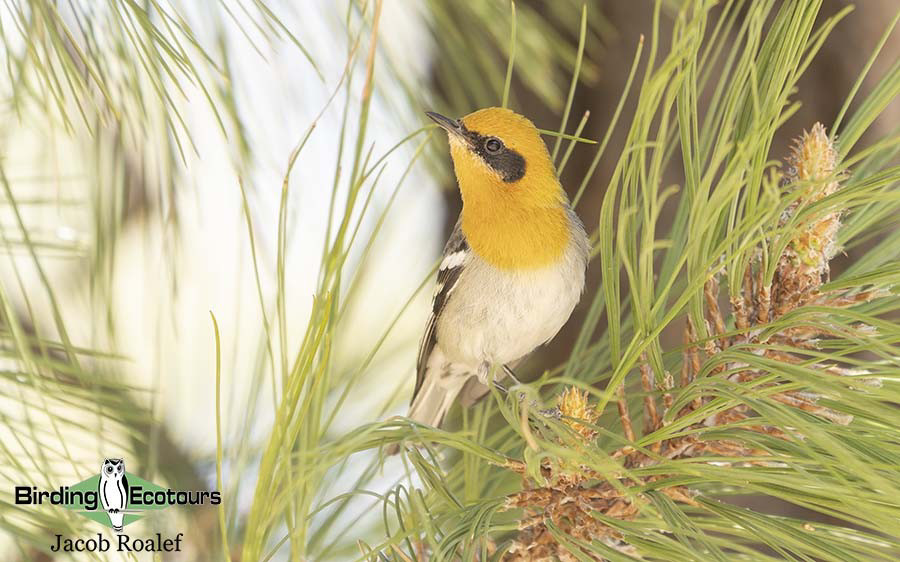
The Olive Warbler is one of the most photogenic members of a monotypic family.
Family: Peucedramidae
English name: Olive Warbler
Scientific name: Peucedramus taeniatus
The Olive Warbler is the only member of a bird family found exclusively in North and Central America. This photogenic species breeds from southern Arizona and New Mexico in the United States, south through Mexico and into Nicaragua. The male has a mostly grey body, olive green wings, two white wing bars, an orange head and breast, and a black eye patch. The female is duller, with a yellow head and a less distinct eye patch.
The name Peucedramus comes from Greek words meaning ‘fir tree’ and ‘runner’, reflecting where and how the species feeds. It favors foraging and nesting in pine forests. The species name taeniatus means ‘with a headband’, referring to the facial markings.
Originally, the Olive Warbler was placed in the New World warbler family Parulidae because of its resemblance to other warblers, particularly the presence of nine primary feathers and similarities in skin structure. Although it was given its own genus in 1875, its true relationship remained unclear. Some traits suggested affinities with Old World warblers Sylviidae, while aspects of its leg musculature pointed away from New World warblers. Later DNA studies showed that it is not closely related to any warblers. Instead, it represents an early branch of the group that includes finches, cardinals, tanagers, and related birds. It is now placed in its own family, Peucedramidae.
Five subspecies are recognized. Birds in the northern part of the range tend to be larger and less brightly colored, while southern birds are smaller and show brighter ochre or orange on the male’s head. The green coloration on the back is most vivid in the central part of its range and becomes greyer toward both the northern and southern extremes. In the far north, males may take up to two years to acquire full adult plumage.
Family: Urocynchramidae
English name: Przevalski’s Finch
Scientific name: Urocynchramus pylzowi
The Przevalski’s Finch, also known as Przewalski’s Finch or Przevalski’s Pinktail, is a small, long-tailed passerine endemic to central and southern China. It is named after the Russian explorer Nikolai Przhevalsky, who first described it. As early as 1918, Janusz von Domaniewski suggested that the species represented a distinct family, an idea later supported by Gerhard Wolters in 1979. Its classification remained uncertain for decades, leading to the use of alternative names such as Pink-tailed Bunting and Przewalski’s Rosefinch. In 2000, it was formally proposed that the species did not belong with finches or buntings and should be placed in its own family, Urocynchramidae, a treatment now accepted by modern taxonomies.
The species occurs on montane and submontane hillsides, typically at elevations of about 10,000 to 16,400 feet (3,050 to 5,000 meters). During the breeding season, birds are usually found in pairs, while small flocks form in winter. The species is sexually dimorphic. Males show bright pink on the throat, breast, and belly, while both sexes have streaked backs and wings.
One feature that sets Przevalski’s Finch apart from true finches and buntings is the structure of its outer primary feather. In finches and buntings, this feather is either extremely short or absent. In Przevalski’s Finch, it is nearly two thirds the length of the adjacent primary, a key trait supporting its placement in a separate family. There is still much to learn about this species, as it has not been extensively studied in the wild.
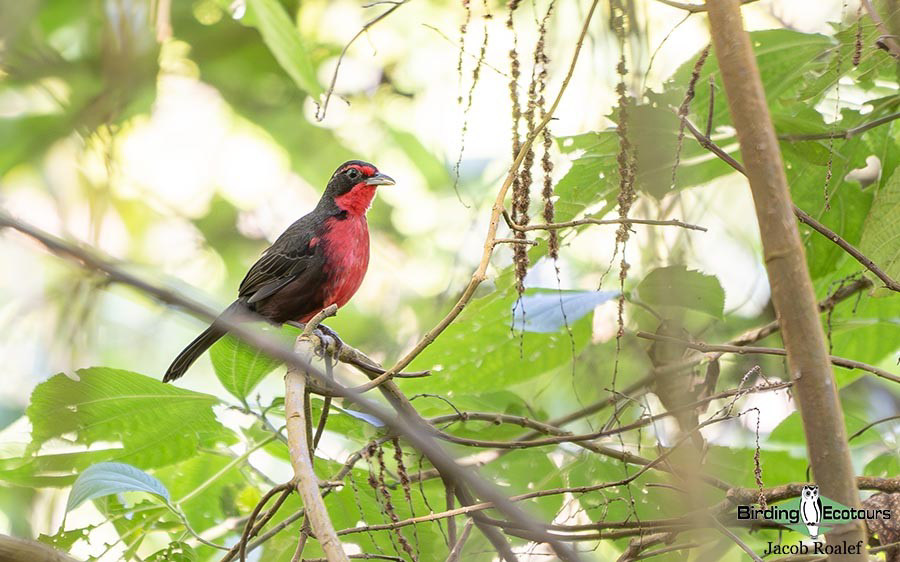
The brightly colored Rosy Thrush-Tanager is a species with an interesting taxonomic history.
Family: Rhodinocichlidae
English name: Rosy Thrush-tanager
Scientific name: Rhodinocichla rosea
The Rosy Thrush-Tanager does not fit neatly into any single group of songbirds, a fact that has shaped its taxonomic history. Over the years, it has been placed in several different families due to its unusual mix of characteristics. In 1832, it was first assigned to the ovenbird family Furnariidae, but was later recognized as a songbird rather than a suboscine. During the 1900s, it was moved between families including wrens, mockingbirds, thrashers, wood warblers, and tanagers. This taxonomic uncertainty also resulted in a range of common names, such as Thrush-Warbler and Rose-breasted Thrush-Tanager.
A genetic study in 1997 suggested a possible relationship with sparrows and buntings. However, a broader genetic analysis published in 2013, using more genes and taxa, showed that Rhodinocichla is quite distinct from these groups. It may represent one of the earliest branching lineages among songbirds with nine primary feathers. Because of this, it is now commonly placed in its own family, Rhodinocichlidae.
The Rosy Thrush-Tanager occurs in forested regions of Colombia, Costa Rica, Mexico, Panama, and Venezuela. Five subspecies are recognized. The species is sexually dimorphic, with both sexes being colorful. Males have dark brown upperparts, a bold white eyebrow, and deep pinkish magenta underparts, while females are similar but show orange tones in place of magenta.
Its song is rich, clear, and melodic, and is often delivered as a duet. Pairs may alternate phrases, producing a coordinated and flowing sequence of notes. This type of vocal behavior is unusual among tanager-like birds.
Family: Zeledoniidae
English name: Wrenthrush
Scientific name: Zeledonia coronata
The Wrenthrush is one of the most visually striking species on this list. This short-tailed, chunky bird is striking in appearance. Its face and neck are gunmetal grey, while the upperparts, tail, and flanks show a dull olive bronze tone. The most eye-catching feature is the bold yellow orange crown patch bordered in black. Despite this, it is not an easy bird to see. It is a skulker of dense undergrowth in cloud forest, usually foraging low but sometimes moving into higher branches. The species is endemic to the high-elevation cloud and elfin forests of the Talamancan Mountains in southern Costa Rica and western Panama.
Despite the name, the Wrenthrush isn’t a true wren (Troglodytidae) or a thrush (Turdidae), and it’s not closely related to either group. Over the years, it has been placed in several different families. Early on, it was thought to be related to thrushes. Later studies of skeletal features and egg proteins placed it with the nine-primaried oscines – a group that includes sparrows, blackbirds, and New World warblers. For a time, it was even placed in the warbler family (Parulidae), believed to be a ground-dwelling member of Basileuterus. But more recent genetic research shows that it doesn’t quite fit there either. Today, it’s placed in its own family, Zeledoniidae. Scientists still debate its closest relatives, with some suggesting a link to Teretistris (Cuban warblers), others to Icteria (Yellow-breasted Chat), or to a group of Caribbean families like Phaenicophilidae, Nesospingidae, and Spindalidae.
Both sexes sing, often duetting during the breeding season, especially at dawn and dusk. The Wrenthrush is a poor flyer, with short, rounded wings. At one point, there was even some speculation that it might be evolving toward flightlessness.
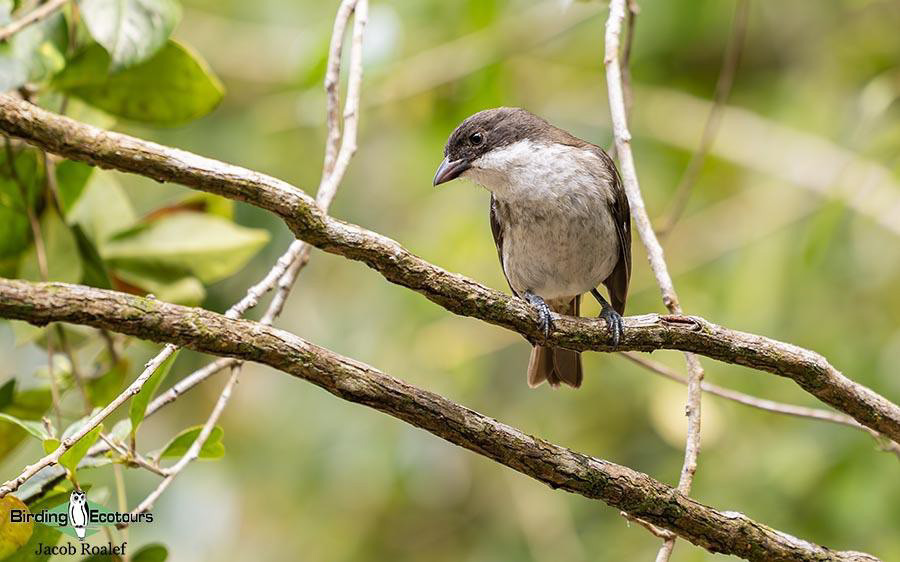
The rather drab Puerto Rican Tanager is found only on the Caribbean island of Puerto Rico.
Family: Nesospingidae
English name: Puerto Rican Tanager
Scientific name: Nesospingus speculiferus
The Puerto Rican Tanager is found only on the island of Puerto Rico. It was once widespread across the central mountain range, but extensive deforestation has fragmented its range, leaving isolated populations in the eastern and western highlands. Today, it inhabits mid- to high-elevation forests, from about 1,000 to 4,400 feet (300 to 1,350 meters).
This small songbird is olive brown above, with off-white underparts. Adults show faint dark streaking on the chest and a clean white throat. The sexes are similar, but males have a distinctive two-toned bill, black above and white below, while the female’s bill is entirely black.
The species was first described in 1875 from Puerto Rico. The type specimen, collected by Juan Cristóbal Gundlach, is held at the Smithsonian Institution in Washington, DC. A new genus, Nesospingus, was later erected for this bird. Although it was originally placed with the tanagers (Thraupidae), genetic studies showed it is more closely related to spindalises and palm tanagers, a group that sits nearer to wood warblers (Parulidae) than to true tanagers, and is treated as its own family, Nesospingidae.
The species is listed as Vulnerable. After hurricanes Irma and Maria in 2017, the population declined and its status was uplisted from Least Concern in 2021. Because it only lives on one island and depends on forest habitat, it is at elevated risk from storms and other threats.
Together, these monotypic families highlight the extraordinary evolutionary diversity hidden within the world’s birds. Each represents a unique lineage that has survived while its closest relatives disappeared, leaving behind living windows into deep avian history. For birders, they offer not just a tick on a list, but a chance to encounter species that stand alone on the tree of life, and are reminders of how much diversity exists beyond the familiar families we see every day.