- Duration:
- 13 days
- Group Size:
- 4–14
- Tour Start:
- Quito, Ecuador
- Tour End:
- Quito, Ecuador
Galápagos Islands Natural History Extravaganza
Details
2027
29 August—10 September
Per person sharing
$9,700 USD
£7,637 GBP / €9,047 EUR
Single supplement
$5,300 USD
£4,173 GBP / €4,943 EUR
includes Quito-Baltra-Quito flights
Itinerary
Download ItineraryGalápagos Islands Natural History Extravaganza
Just under 500 years ago the first Europeans arrived on the Galápagos Islands and marveled at this living laboratory. Today we continue to be awestruck by this constantly changing archipelago. As the Nazca Plate moves and new islands are formed, evolution is illustrated up close. A birding and wildlife tour to the Galápagos is a dream for any naturalist.
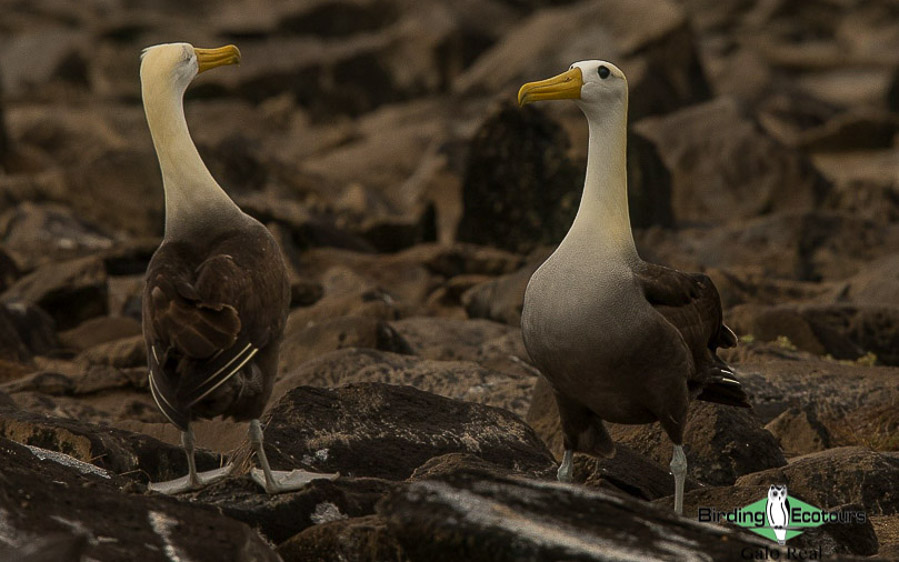
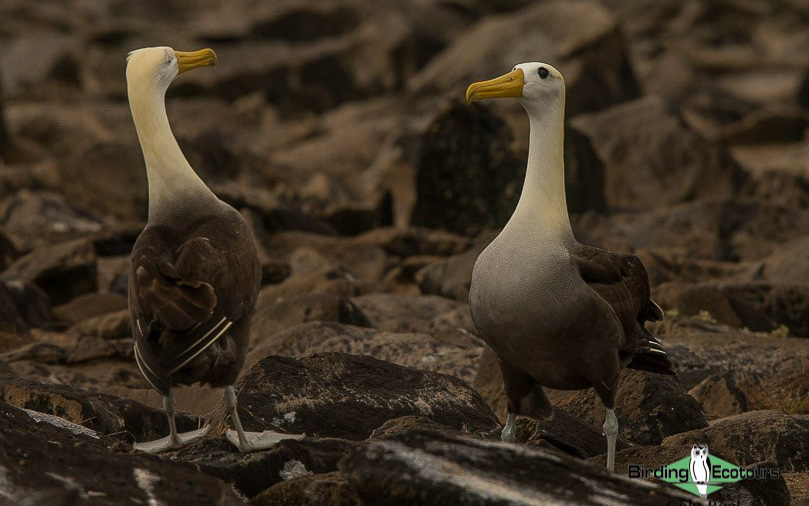 The majestic Waved Albatross can be seen on Española Island.
From Quito we fly to the island of Baltra. We then make our way to our home for the next eight days, the Samba, a spacious and luxuriously designed motor sailing yacht with wide open and shaded sun decks, a fully stocked bar, and a library. The abundant marine life that visits these waters year-round, the Marine Iguanas that dominate the rocky coastlines and the remarkable birdlife make it easy to see why this trip is a must for birders and naturalists.
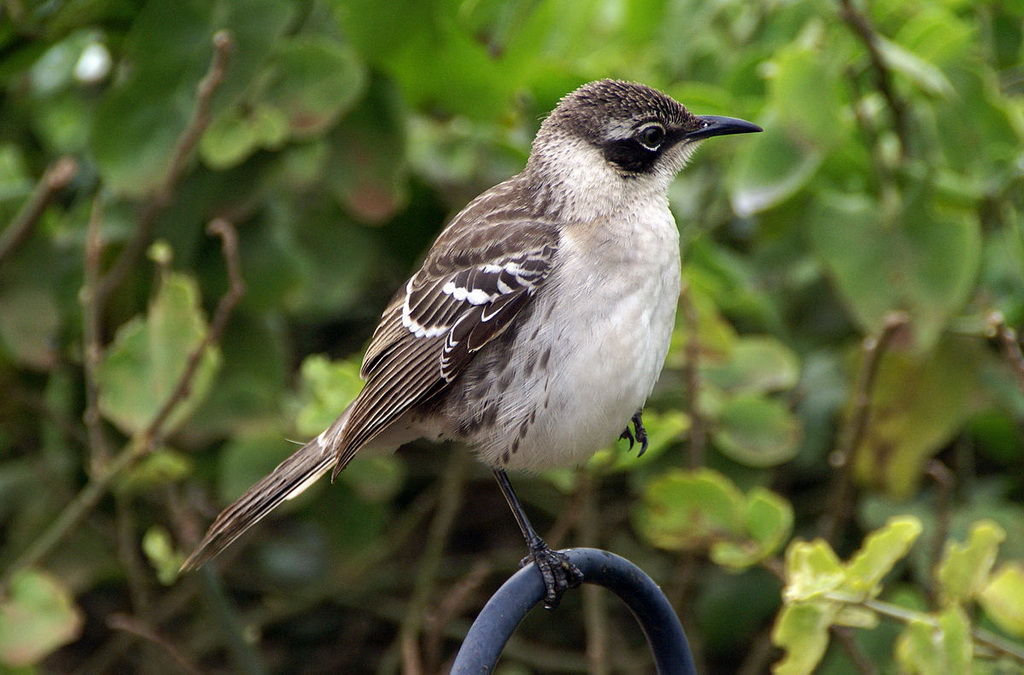
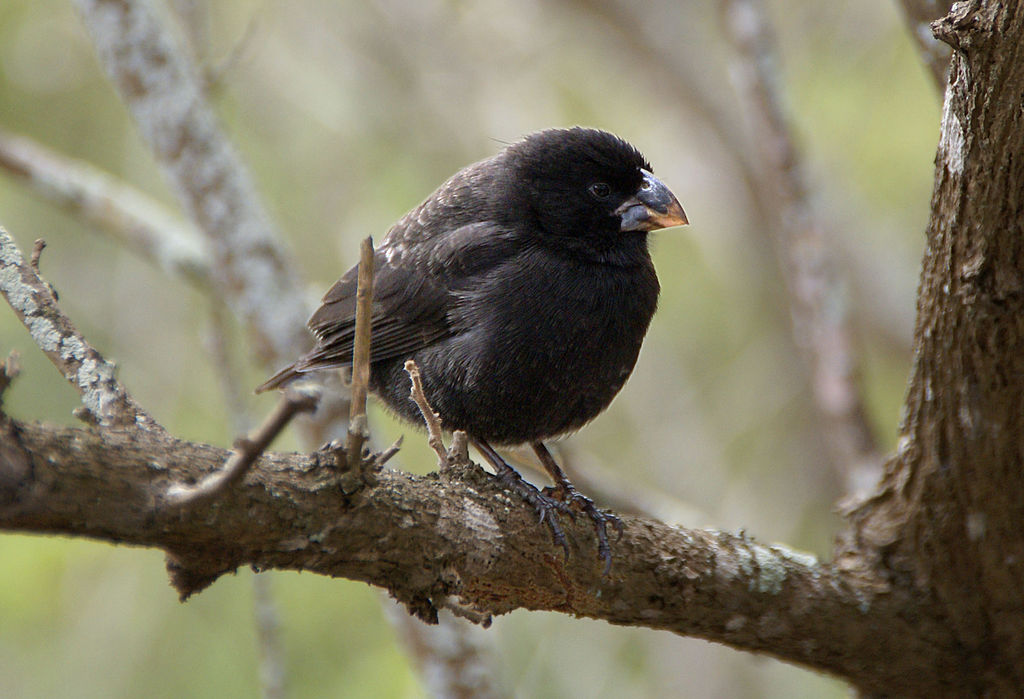
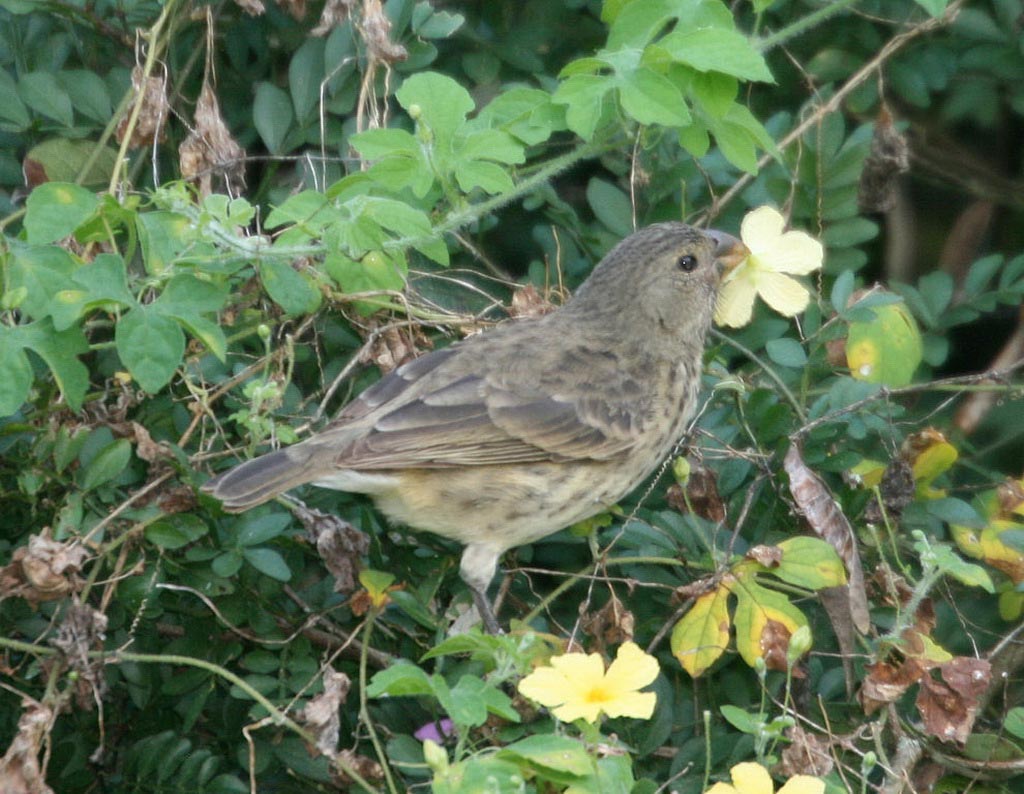
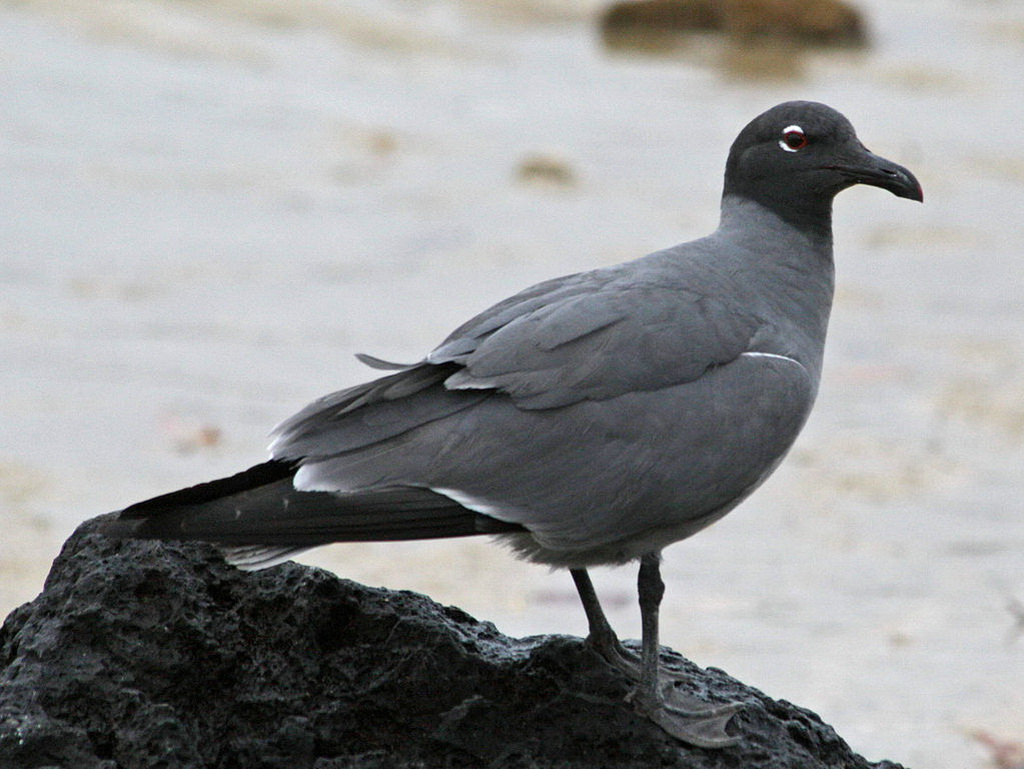
Some of the Galápagos specials that we hope to find on this trip include Galapagos Penguin, Waved Albatross, Galapagos Shearwater, Wedge-rumped and Elliot’s Storm Petrels, Magnificent Frigatebird, Nazca, Red-footed, and Blue-footed Boobies, Lava Heron, Galapagos Hawk, Lava Gull, Galapagos Martin, Galapagos Flycatcher, Vermilion Flycatcher, Galapagos, Floreana, San Cristobal and Espanola Mockingbirds, Vegetarian Finch, Woodpecker Finch, Common Cactus Finch, Green Warbler-Finch, Large and Small Tree Finches, Small and Medium Ground Finches and Mangrove Finch.
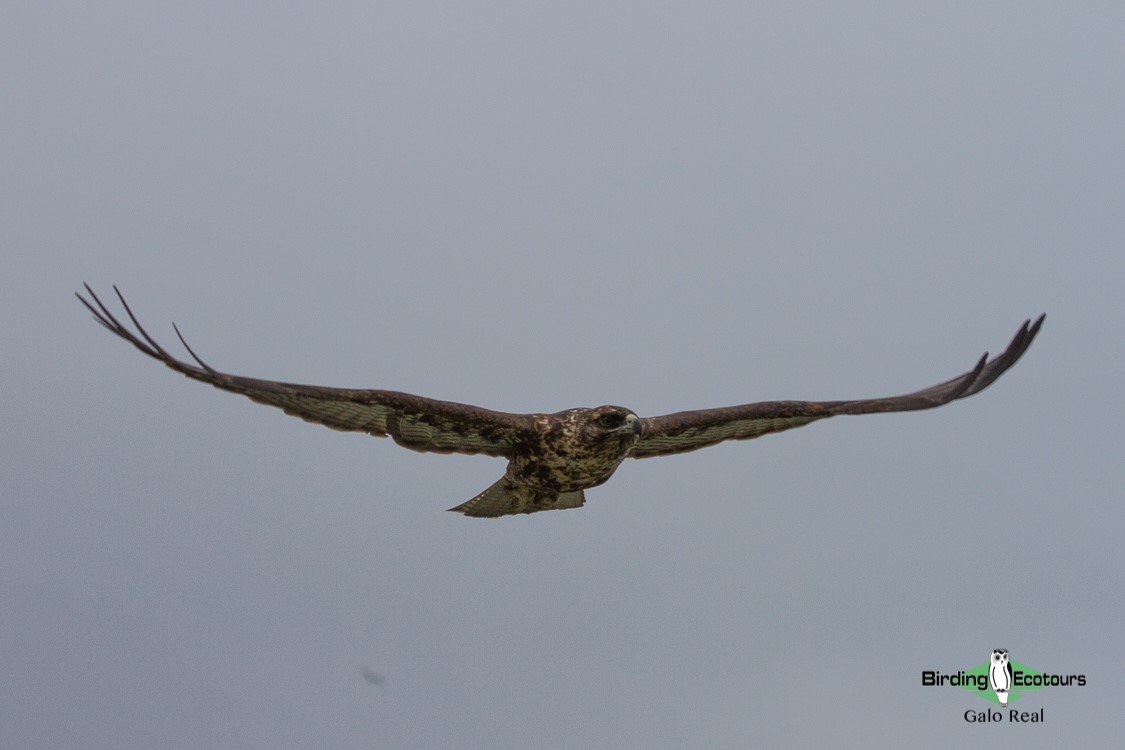
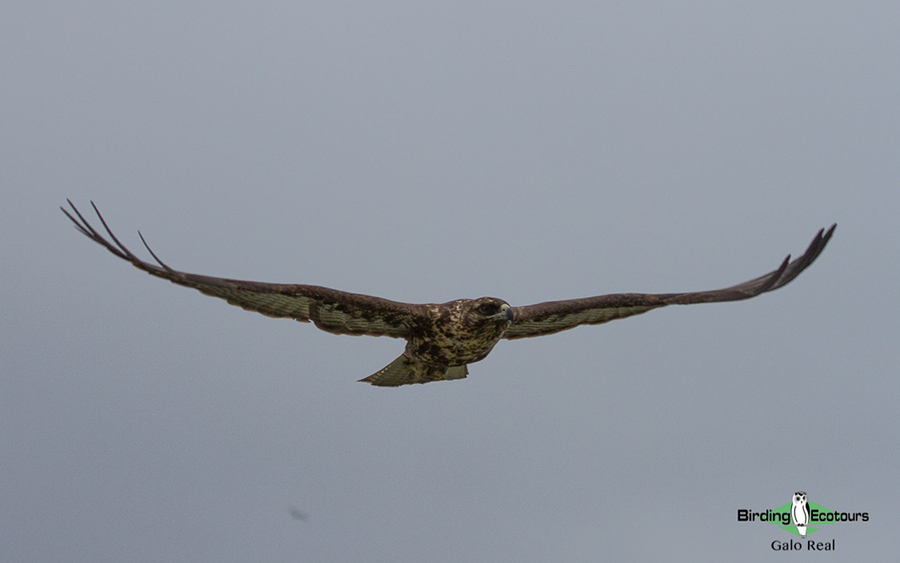 Galapagos Hawk is often picked up on Española Island.
In some years, this tour can be combined with our Northern Ecuador: Birding Paradise tour, and/or our Ecuador: The Amazon tour. Please e-mail [email protected] for more details.
Itinerary (13 days/12 nights)
Day 1. Arrival in Quito
After arriving at Mariscal Sucre International Airport in Quito you will be met by your guide and transferred to your hotel.
Overnight: Hotel in Quito
Day 2. Buffer Day
This buffer day allows a little wiggle room for late flights. This morning we will walk the trails around the hacienda, taking pictures of hummingbirds. The property borders the Chiche River Gorge and there are several lookouts. There is an underground tunnel dated to pre-Inca times that can be visited. We will also get ready for tomorrow.
Overnight: Hotel in Quito
Day 3. Baltra Island and Santa Cruz Island
After an early breakfast, we will head to the Quito airport for our flight to Baltra Island. Galápagos has its own set of rules and regulations, aside from Ecuador’s standard regulations. We will go through the Galápagos Biosecurity Control where our bags will be inspected for any type of stowaway bug or seed and then to receive our Galápagos Transit Cards. Once we have completed both these stops, we will check our baggage in and proceed to the gate to board our flight to Galápagos Islands!
On arrival at Seymour Airport on the island of Baltra we will pay the entrance fee to Galápagos National Park. After picking up our luggage, we will go through the quarantine system. Samba’s naturalist will be there to greet us, explain the plans for the day, and answer any questions. As we head out of the airport terminal we should spot our first endemics, Medium and Small Ground Finches. We will also be on the lookout for Vegetarian Finch, Woodpecker Finch, and Green Warbler-Finch, as well as Large and Small Tree Finches. From here we will take a water taxi to the nearby island of Santa Cruz.
The rest of the morning and afternoon will be spent exploring the highlands of Santa Cruz. We pass Bellavista and then take the north trail to Media Luna, a volcanic crater similar in shape to a crescent moon. Here the scenery changes as we move through disturbed agricultural lands to large expanses of the endemic Miconia plants and then into an area sheltered by the Galápagos fern trees and surrounded by lichens, mosses, bromeliads, and orchids. Galapagos Martin can often be spotted in this area. Galapagos Petrels nests along the walls of the crater, and this is one of the largest colonies. We will keep our eyes open for the ever-so-timid Galapagos Crake. This is also a great habitat for Large Tree Finch, Woodpecker Finch, Vegetarian Finch and Green Warbler-Finch.
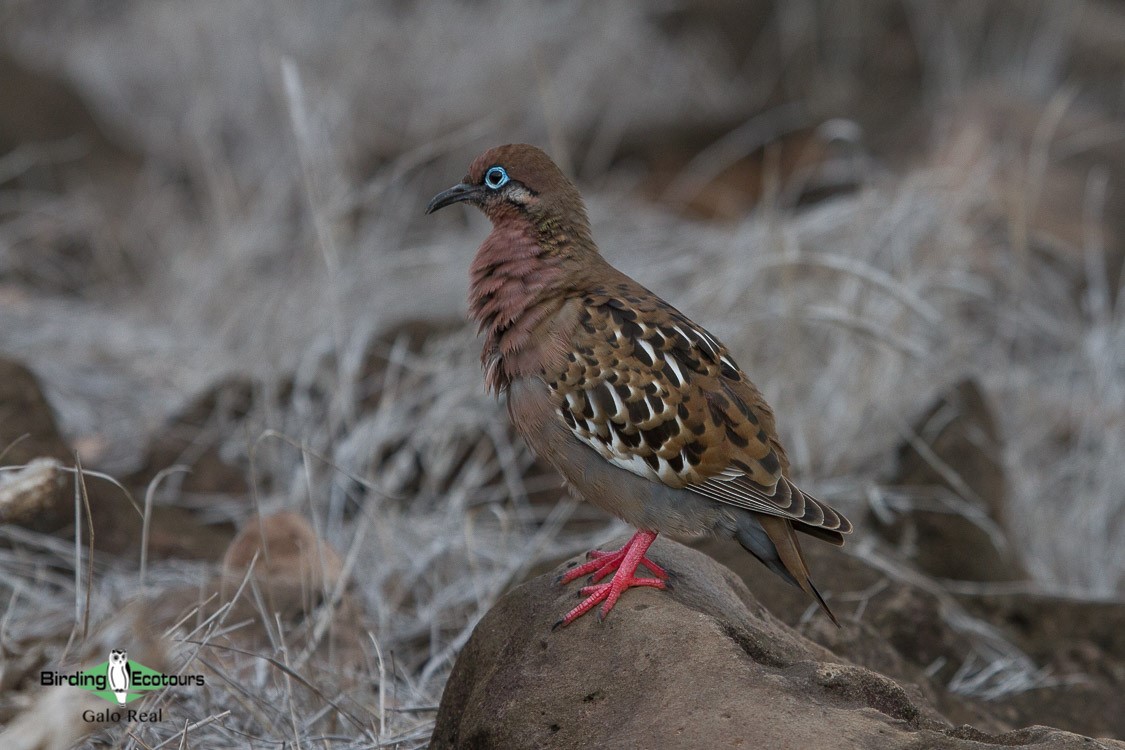
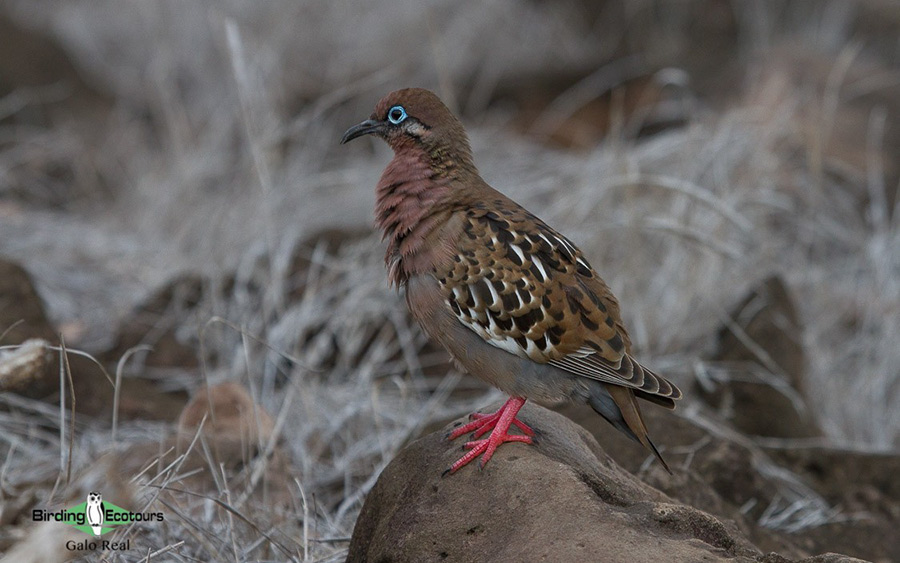 The handsome Galapagos Dove is one of the many endemics we will be targeting.
In the afternoon we will stop for lunch near the El Chato Giant Tortoise Reserve and hang out with Western Santa Cruz Giant Tortoises. Participants are strongly advised to wear appropriate gear for the visit to the highlands – the area is very moist and very likely to be muddy and humid. Pants, proper footwear, and a rain jacket are a must. Mangrove Yellow Warbler, Galapagos Crake and Paint-billed Crake could make an appearance around the pond at El Chato. Afterwards, we will make our way to the coast and the town of Puerto Ayora, which is surrounded by cacti, and where we should find Common Cactus Finch. After a quick final scan for more finches we will board the Samba for our first dinner and night.
Overnight: Samba
Day 4. Floreana Island
A four-hour boat trip from Puerto Ayora will bring us to the distinctive volcanic cones of Floreana Island at dawn. We will make a wet landing on a green crystal beach made of volcanic olivine (the name of a group of rock-forming minerals, typically found in mafic and ultramafic igneous rocks and green in color). Another Galápagos endemic, the Galapagos Petrel, nests here.
Punta Cormorant is located on the northern shore of Floreana. Around the brackish lagoon we can expect to find American Flamingo, White-cheeked Pintail, Whimbrel, Striated Heron and Brown Noddy, and other shore- and migratory species are also likely to be encountered. On the other side Green Turtles use every corner of a white sand beach to lay their eggs. One often sees stingrays and reef sharks from the shore.
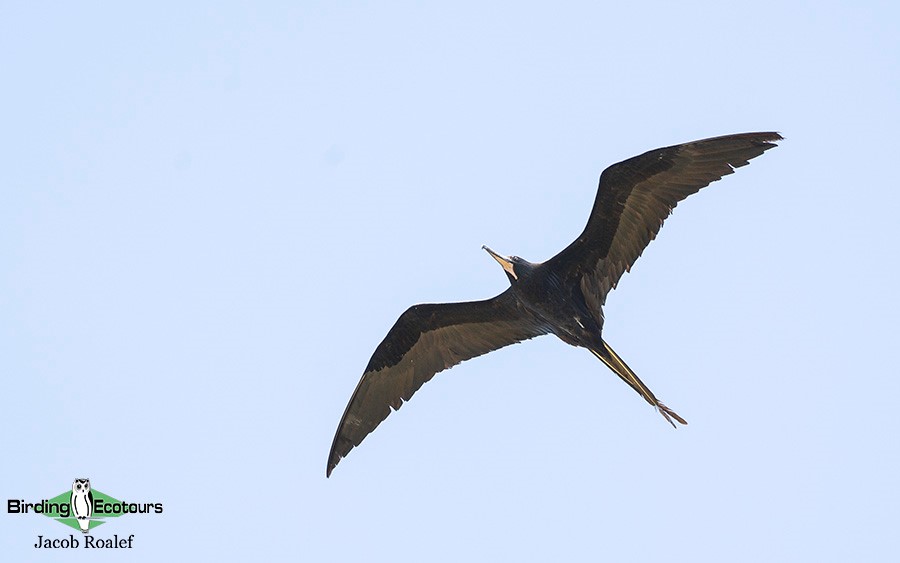
Around mid-morning we take a dinghy for a 25-minute journey and have the opportunity to snorkel at Champion Islet. This small islet is one of only two places where the rare Floreana Mockingbird survives, as well as Medium Tree Finch, due to the lack of invasive predators, like feral cats, that still roam the main island. Other species we can expect here include Common Cactus Finch, Swallow-tailed Gull, Magnificent Frigatebird and Red-billed Tropicbird. The landscape of cactus and terracotta rock formations feels almost dreamlike. Galapagos Sea Lions often play in the waters here. The snorkeling around the island is extraordinary.
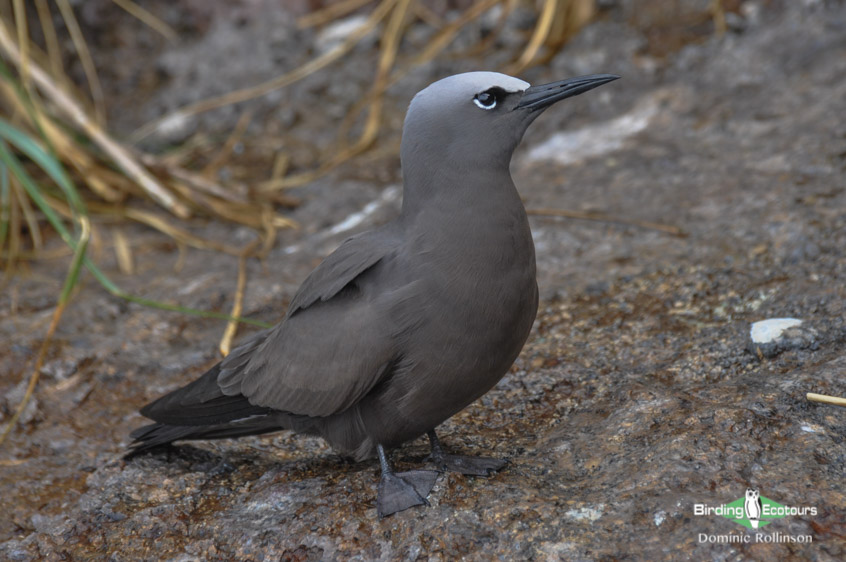 Brown Noddy can be seen along the shoreline of Floreana.
In the afternoon we stop at Post Office Bay. This former whaling hub dates back to the late 18th century and is well-known for being the first post office on the Galápagos. The original system is still working; you deposit your letter at the office and people heading back to the mainland stop by and pick up letters that are addressed close to their destination. These letters are often personally delivered!
Later we take kayaks and/or zodiacs and head west through a small series of islets and mangroves, with a large sea lion colony close by. We land near Baroness Lookout, named for a Viennese self-proclaimed baroness who lived here in the 1930s. From the top of this eroded volcanic cone we can imagine what this whaling hub looked like during the height of the whaling era. Dark-billed Cuckoo and Galapagos Flycatcher are often seen up here.
After a quick scan for seabirds and finches we will make our way back to the Samba for the night.
Overnight: Samba
Day 5. Española Island
Española is one of the oldest Galápagos Islands. Geologists estimate that it was formed over four million years ago as a shield volcano. With the help of low-viscosity lava, Española moved away from the hotspot and became dormant.
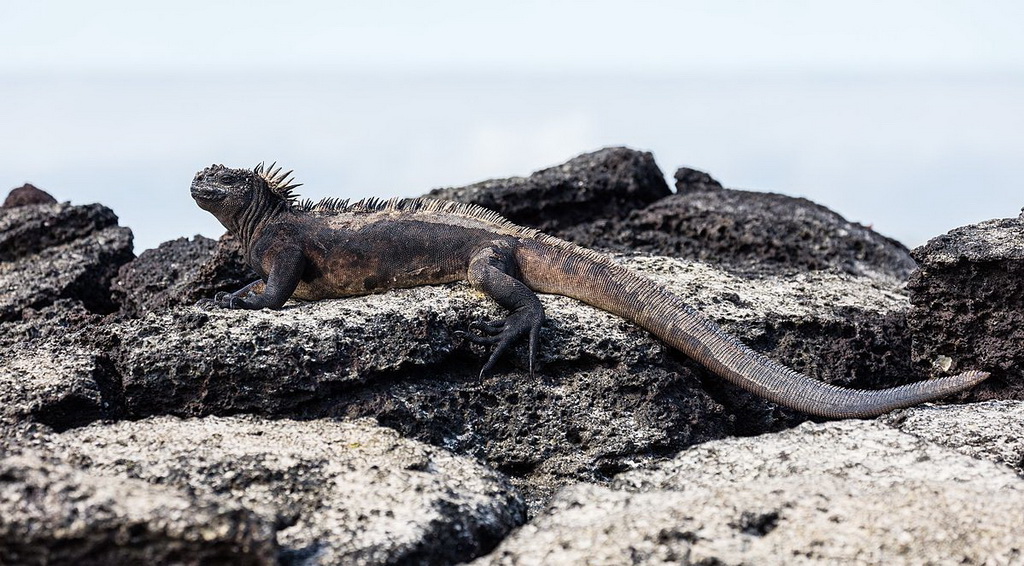
Key endemics on the island include Espanola Mockingbird and Espanola Lava Lizard, and this is a breeding island for the highly prized Waved Albatross. Upon arrival at its western tip, Punta Suarez, we will immediately notice the fiery-colored Espanola Marine Iguanas and the tame Galápagos Sea Lions, which wander around leisurely.
We follow a trail that leads to Punta Suarez, a long cliff face shaped by strong wave action and winds and dotted with Blue-footed Boobies and Sally Lightfoot Crabs. Espanola Lava Lizard in their bright attire line the coastline. As we make our way through saltbrush we will keep a lookout for Galapagos Hawk and Espanola Mockingbird. As we continue, we will come across large cliff-nesting colonies of Blue-footed and Nazca Boobies, Swallow-tailed Gulls and Red-billed Tropicbirds. The trail then leads inland to a rookery of Waved Albatross overlooking the ocean to the south. Galapagos Shearwater, Elliot’s Storm Petrel and Espanola Mockingbird can often be seen from here, as well as Espanola Cactus Finch and Grey Warbler‐Finch.
Depending on weather conditions we will snorkel or kayak around Gardner Bay either late in the morning or early in the afternoon. Its calm waters and attractive landscape are a great experience, above and below the water.
Along the picturesque white sand beaches we are likely to encounter sea lions and the curious Espanola Mockingbird, as well as Espanola Cactus Finch. A little behind the beach in the scrub brush we will look for Grey Warbler-Finch, Galapagos Dove and Galapagos Hawk.
In the late afternoon we will again board the Samba for the night.
Overnight: Samba
Day 6. San Cristóbal Island
San Cristóbal was the first island that Charles Darwin set foot on in the Galápagos, as it was home to the islands’ governor. The presence of fresh water at El Junco Lake in the highlands was the reason why the governor set up residence here. San Cristóbal also became a penal colony for mainland Ecuador in the 1880s, and later the inmates were used as slaves for newly established sugarcane plantations and sugar factories. Today we hope to see one new endemic bird, San Cristobal Mockingbird.
Before breakfast we will explore Kicker Rock, a large protruding volcanic feature. This eroded tuff cone has vertical walls of over 450 feet (137 meters) and has large numbers of seabirds nesting and resting on it, including Magnificent Frigatebird, Swallow-tailed Gull, Red-billed Tropicbird, Red-footed Booby, Nazca Booby, Brown Noddy, and Elliot´s Storm Petrel. We will circumnavigate the rock to fully appreciate its size. Snorkeling here is an option and can be spectacular, with Galapagos Sharks, sea turtles, and eagle rays swimming around a colorful drop-off, which is also full of tropical fish and invertebrates.
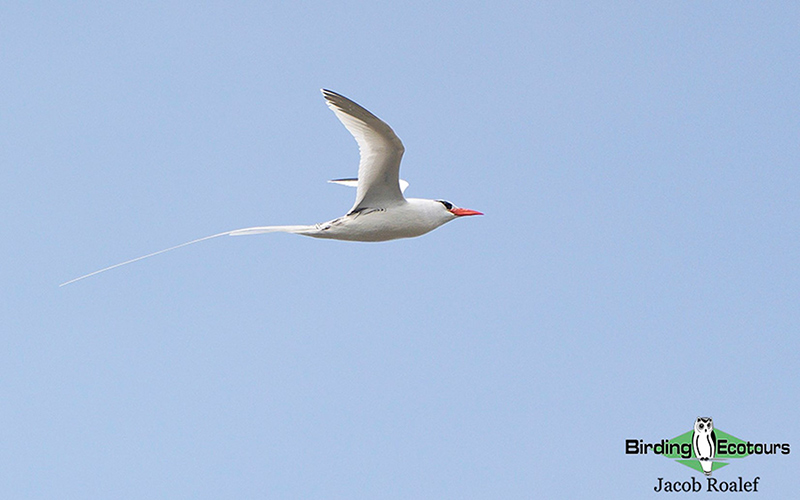 Red-billed Tropicbird breeds on the Galápagos Islands.
After three hours of navigating we will arrive at the Punta Pitt peninsula. Its mind-blowing landscape and protected cove offer a great chance to kayak, for those interested. We should be able to get very close to a large mixed colony of nesting seabirds on a nearby islet. Breeding seabirds here include Swallow-tailed Gull, Lava Gull, Great and Magnificent Frigatebirds, Nazca and Red-footed Boobies, Elliot´s Storm Petrel, and Galapagos Shearwater, while Mangrove Yellow Warblers can be seen in the nearby scrub. The golden sand and Galápagos Sea Lions will welcome us for our wet landing in the afternoon, to explore the area for San Cristobal Mockingbird. This point marks the closest distance to South America.
In the late afternoon we will make our way to board the Samba for dinner and overnight accommodation.
Overnight: Samba
Day 7. Santa Fe and South Plaza Islands
Rock formations on Santa Fe Island date back to 3.9 million years ago. Lava Heron enjoys hunting in these waters. Before whalers and pirates arrived, the dense forests of the giant Opuntia cacti were once home to the now-extinct Santa Fe Tortoise, but Espanola Giant Tortoise has been introduced to Santa Fe Island. There are currently two extant endemics on this island, Santa Fe Land Iguana and Santa Fe Rice Rat (a subspecies of the Galapagos Rice Rat).
The nearby Barrington Bay is a breathtaking inlet, with the white sand on the seabed reflecting the sunlight, turning the calm waters turquoise. There is another large sea lion colony here. A trail takes you into the large Opuntia cactus forest, where you can often spot Santa Fe Land Iguana and Galapagos Hawk.
While enjoying lunch we will navigate south to South Plaza Island, off the east coast of Santa Cruz. The dry landing takes us to a brilliant combination of life and colors. Sesuvium succulents, which change from bright green in the rainy season to red, orange, and then purple during the dry season, are gorgeous. Santa Fe Land Iguanas wander through bright, red-carpet weeds. Overhead Swallow-tailed Gulls nest in the overhanging rock formations, along with Red-billed Tropicbirds. This is one of the best spots in the archipelago to see land iguanas; their nests are scattered all over the hills.
In the late afternoon we will make our way back to the Samba.
Overnight: Samba
Day 8. Santiago and Bartolomé Islands
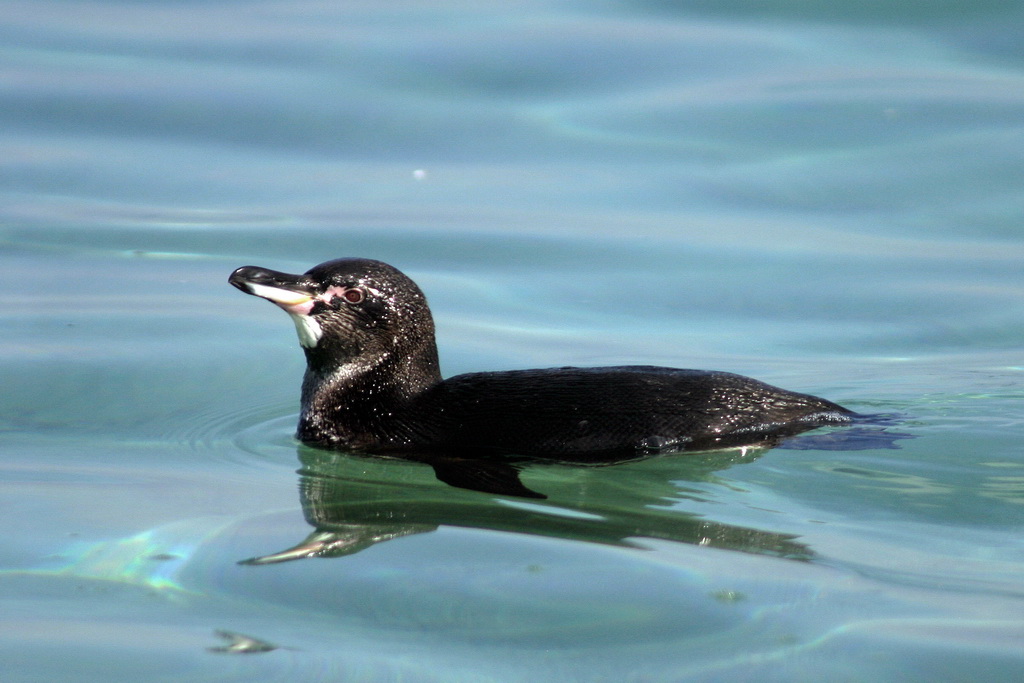
This morning we will make a wet landing on a small islet 200 yards (183 meters) off the coast of Santiago Island, Chinese Hat, named for its uncanny resemblance to a Chinese wide, cone-shaped hat. The snorkeling in the small turquoise channel is very active, with sharks, sea lions, Galapagos Penguins and rays.
In the afternoon we will land on the north beach of Bartolomé Island. There is a small breeding colony of Galapagos Penguins along the golden beaches, which are shared by Galapagos Sea Lions and Green Turtles. The impressive volcanic cone in the background, Pinnacle Rock, was created when expelled magma from an underwater volcano cooled and then exploded. This large rock was formed from thin basalt layers. Spotted Eagle Rays and Black-tipped and White-tipped Sharks can be seen from the beach.
Overnight: Samba
Day 9. Isabela Island
This morning we will circumnavigate the geological formation of Punta Vicente Roca, on the north shore of Isabela Island, on our zodiacs. Besides the nesting Blue-footed and Nazca Boobies, gulls, storm petrels, Brown Noddy, and Flightless Cormorant may be found here too. The cold waters coming in from the Cromwell Current provide abundant feeding opportunities for seabirds, whales, dolphins, and sea lions. There is a small colony of Galápagos Fur Seals here as well.
We will spend the afternoon looking for pelagic birds like Galapagos Petrel and Waved Albatross as we navigate toward North Seymour.
Overnight: Samba
Day 10. North Seymour Island, Baltra Island
After a dry landing on Seymour Island at sunrise, we will walk among the largest Blue-footed Booby colony in the Galápagos. Swallow-tailed Gulls and tropicbirds decorate the large basaltic walls of the island.
Then we will make our way back to the Samba for our final Galápagos breakfast. After navigating back to Santa Cruz Island we will say goodbye to the Samba and its crew.
Our driver will be waiting at the port to take us to our lodge for lunch. Perched in the highlands, this spot is a favorite of Western Santa Cruz Giant Tortoises. The rest of the day we will bird around the grounds.
Overnight: Galapagos Camp – Santa Cruz Highlands
Day 11 Santa Cruz Islands
This morning we will explore the highlands of Santa Cruz. Right away, the scenery changes as we move through disturbed agricultural lands, to large expanses of endemic miconia plants and then into an area sheltered by Galapagos Tree Ferns and surrounded by lichens, mosses, bromeliads, and orchids. Galapagos Martin is often spotted in this area. Galapagos Petrels nest along the walls of the crater, this is one of the largest colonies. We will keep our eyes peeled for the ever-so-timid Galapagos Crake and Paint-billed Crake. This is also great habitat for Large Tree Finch, Woodpecker Finch, Vegetarian Finch and Green Warbler-Finch. In the afternoon we will make our way to the Charles Darwin Station. Here we will have the opportunity to learn about the Archipelago’s climate and geography, as well as how certain factors influenced the evolution of species on the islands.
After visiting the station we will walk the boardwalk or strand before heading back up to our lodge.
Overnight: Galápagos Camp – Santa Cruz Highlands
Day 12. Flight Back to the mainland
Today is our flight back to Quito, so we will spend the morning birding around the Lodge, before packing up and returning to Baltra Island.
Overnight: Hacienda Jimenita
Day 13. Departure
Participants will be transferred to Mariscal Sucre International Airport for flights home.
Please note that the itinerary cannot be guaranteed as it is only a rough guide and can be changed (usually slightly) due to factors such as availability of accommodation, updated information on the state of accommodation, roads, or birding sites, the discretion of the guides, and other factors. In addition, we sometimes have to use a different guide from the one advertised due to tour scheduling or other factors.
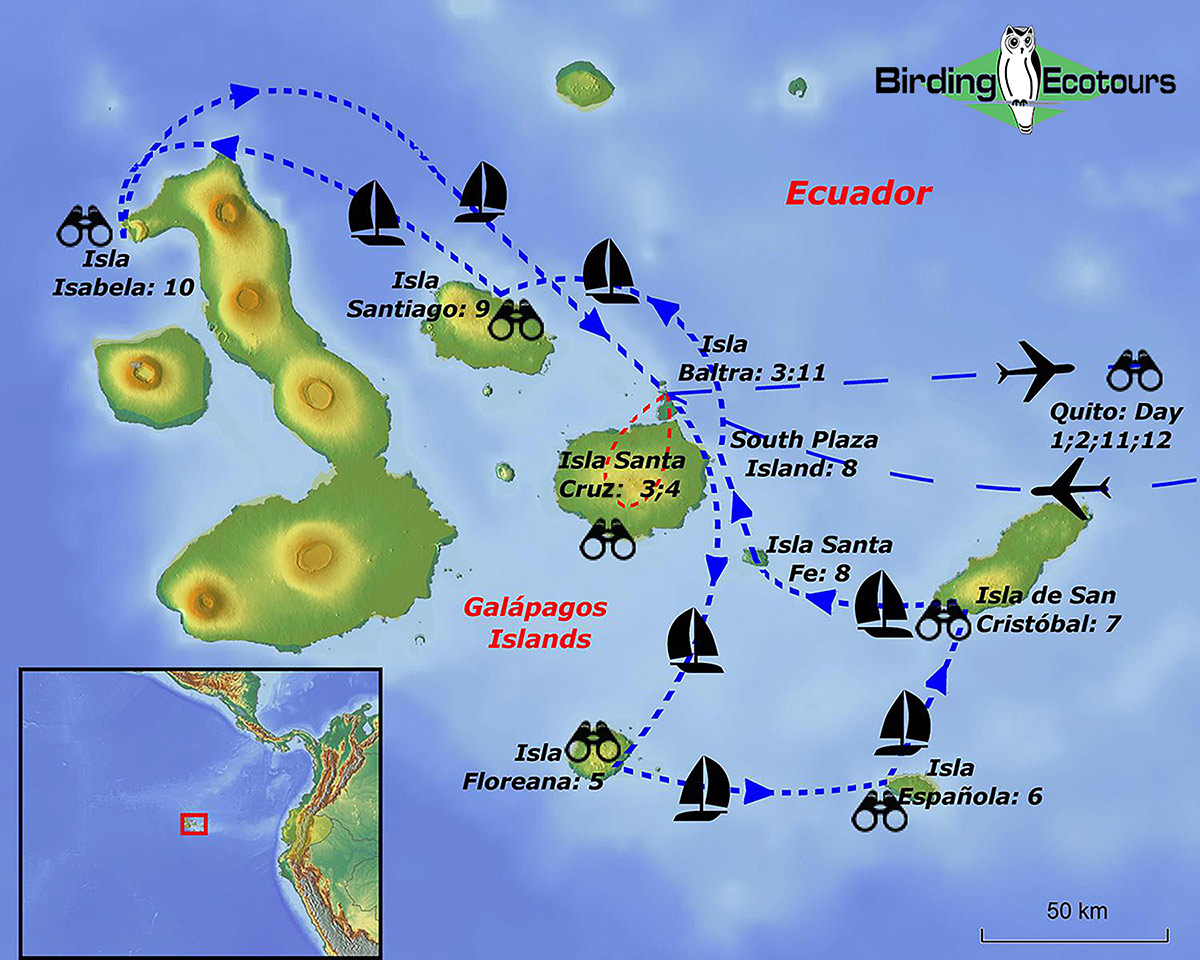
Map
Testimonials
Gallery
General Information
GALAPAGOS TOUR-SPECIFIC INFORMATION
PLEASE CLICK HERE FOR GENERAL INFORMATION PERTAINING TO ALL OUR ECUADOR TOURS
Since their documentation by Charles Darwin, the Galápagos Islands are perhaps the ultimate destination for every naturalist, birder, and nature lover around the world and they offer one of the best wildlife-watching experiences on the planet. Fortunately, the times of overfishing and whaling are now passed and The Encantadas (the Enchanted Isles) are managed with great care by the Ecuadorian government, to provide all visitors a unique and magical experience.
During our Galápagos tour we will explore San Cristóbal, Floreana, Española Baltra, Santa Fe, Santiago, Bartolomé, Isabela, and Santa Cruz islands targeting the wonders of this archipelago, including the likes of Blue-footed Booby, Red-billed Tropicbird, Galapagos Penguin, Flightless Cormorant, Galapagos Hawk, Lava Heron, Magnificent Frigatebird, and large colonies of Waved Albatrosses. In addition, we will of course target as many of “Darwin’s finches” as possible. We will also enjoy amazing creatures such as Marine Iguanas, Galapagos Tortoises, and Galapagos Sea Lions.
ARRIVAL INFORMATION
Our tour will start and finish in the city of Quito, Ecuador’s capital. You can reach Quito’s Mariscal Sucre International Airport (UIO) with non-stop flights from the USA, Spain, the Netherlands, and Panama. Please e-mail us before you book any flights, as the information shown here is just an initial guide. You might wish to consult your travel agent to book your most convenient flight, and please feel free to contact us if you need any further assistance. You will be met by our representatives at the airport who will welcome you and transfer you to your hotel. Please remember to keep your luggage tags, as they are normally required to exit the terminal building at Quito Airport. Please note that if you choose to arrive on an early flight, you will be transferred to the hotel but may have to wait until check-in is available (usually in the early afternoon). For an early check-in, you might be charged extra directly by the hotel; this cost is not included in the Birding Ecotours tour price. If you know in advance that you might require an early check-in (or if you just would like to spend some extra time in Quito/Ecuador prior to the tour) we will be happy to make extra bookings for you.
When filling out the customs declaration form on arrival into Ecuador, please use the following address for the hotel:
Hotel José de Puembo, Manuel Burbano S7-150 y San Fernando Puembo, Quito, Ecuador
DEPARTURE INFORMATION
Our tour will end in Quito after a wonderful twelve days and eleven nights exploring the Galápagos Islands. On the last morning, your tour leader, or one of our tour representatives, will arrange your transfer to Quito Airport, from where you can catch your flight home. If you would like to extend your birding in Ecuador or another South American destination please let us know.
DOMESTIC FLIGHT INFORMATION
This trip includes a two-hour domestic flight from Quito to Seymour Airport (GPS) on Baltra Island. The flight tickets are included in the tour price.
MONEY AND PAYMENTS
We recommend bringing US$ cash for your own payments and gratuities, other currencies are not accepted. There are no ATMs on Baltra Island (or anywhere else during the tour), and credit cards are not accepted. You can withdraw cash while in Quito from ATMs or from the Quito Mariscal Sucre International Airport.
VISITING THE ISLANDS
The Ecuadorian government, through the Galápagos Conservation department, usually closes off access to one island each year to give the wildlife of that island a break from the pressure of visiting tourists. It is then not possible to visit the island that is closed during that year. The island to be closed is usually announced approximately twelve months in advance of closure, to allow people to prepare for, and to take account of the closure. If you are interested in seeing a particular species (or particular island) on this tour, rather than the whole general “Galápagos experience”, we advise that you contact us prior to booking to find out which island will be closed during the year of your tour. During 2021, all islands should be open because the Galápagos Islands have been closed for a year, and the wildlife is considered ‘rested’ from tourist disturbance.
CUSTOM CONTROL
The custom control on arrival in the Galápagos Islands is extremely strict. All luggage will be scanned by X-ray machines and hand luggage will be checked by the custom crews. Bringing organic products (animal or vegetable), food, seeds, dried fruit, tea bags, coffee beans or instant coffee, stevia bags (or other sweetener/sugar packets), liquids, plastic, glass bottles, and cans is prohibited. You will be required to fill out a declaration form on arrival stating you do not have any forbidden items. Failure to observe the rules will result in loss of the item(s) and an expensive fine. Any fines will be your responsibility. We strongly advise you to follow the rules and if you need further information, please contact us.
SHOPPING
After arriving in the Galápagos Islands (at Baltra), we will have about 30 minutes to visit a nearby grocery store prior to boarding our boat, the Samba, to pick up any essentials that might be required (noting the items that you might usually have with you on a tour but are prohibited to bring to the archipelago, such as tea bags, sweetener, coffee, etc.). This will be the only opportunity to purchase such goods during the tour, until Day 10, when we are scheduled to arrive at Puerto Avora. Payments here need to be in US$ cash.
BOAT DESCRIPTION
We will be aboard the M/V Samba, a graceful 78-foot motor yacht of European vintage. To experience the mystical isolation that shaped the life of the Galápagos, this sturdy, stately and very comfortable motor-vessel is the best choice.
The Samba is a true European Dutch classic and the best in her class. A great ocean-going vessel with her specially designed high bow, she provides safe crossings and boasts a special stabilizing sail. Her main salon and aft dining facilities make her socially versatile while top-side settees and a flush and ample forward deck provide great getaways or extra space for group activities such as birding, stargazing, whale watching, or simply sunbathing. The Samba accommodates 14 guests, a perfect number to enjoy the magic of the Galápagos Islands, with privacy and flexibility. Its professional, experienced, and friendly crew, and naturalist guide, are devoted to go the extra mile to make your journey a trip of a lifetime. She is a graceful, top-quality craft and very environmentally friendly as well as socially responsible. She is locally owned and all the crewmembers are from the Galápagos Islands.
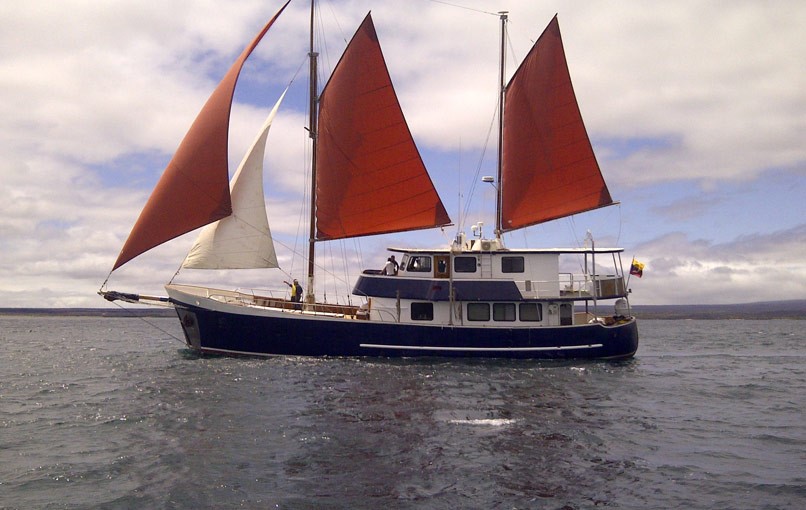 The yacht M/V Samba will take us around the Galápagos Islands during this tour.
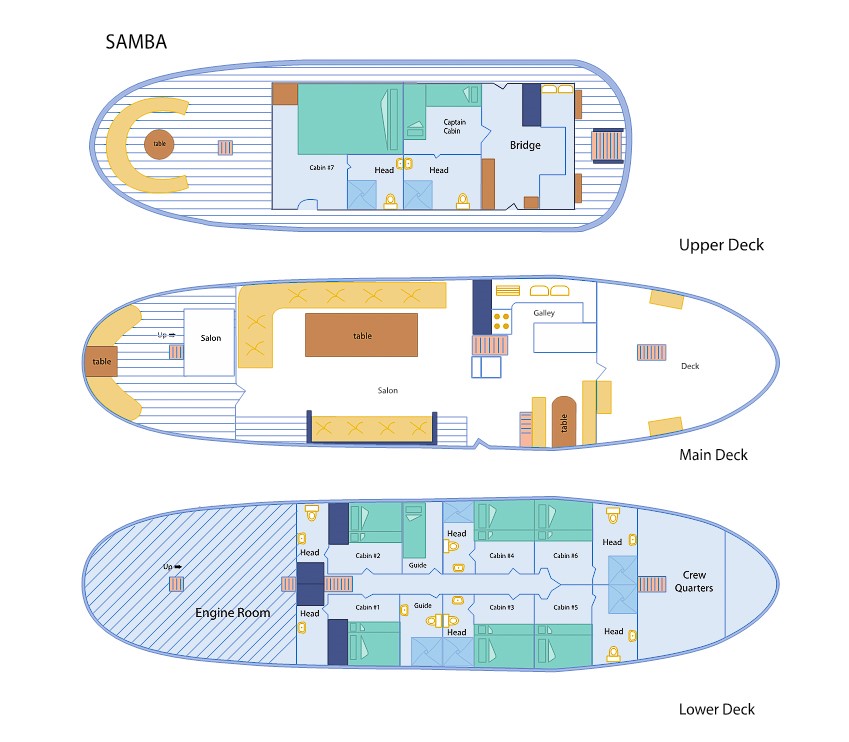 The M/V Samba layout.
ACCOMMODATION
Guest accommodation on board the Samba consists of six air-conditioned double cabins and one exterior double bed cabin, all with private bathrooms and hot water.
EQUIPMENT
Very efficient Twin DAV diesel engines (280 hp, Cummins) that use just six gallons of diesel every hour. Two generators each of 21 and 12.5 kilowatts (kW) for 110 volts (V) and 220 V alternative current and 12 V and 24 V direct current, Furuno Navnet Radar, Plotter and Sonar, Global Positioning System (GPS), VHF and SSB radios, two tenders (small boats) with outboard motors, 32” High-Definition (HD) LCD TV, and DVD video equipment.
BOAT SPECIFICATIONS
- Overall length: 78 feet (23 meters)
- Beam: 18 feet (5.4 meters)
- Tonnage: 134 tons
- Speed: 8.5 knots
- Range: 2,500 miles
- Sails: Genoa, main, mizzen
- Water capacity: 1,500 gallons and water maker
- Electric Power Supply: 110 V and 220 V (A/C)
SAFETY EQUIPMENT
One self-contained, 20-passenger life raft, EPIRB (Emergency Positioning Indicating Radio Beacon), two bi-directional VHF emergency radios, one VHF (Motorola) wide-range radio, VHF and HF radios, one cell-phone, a satellite phone communication system, life jackets, fire extinguishers, safety smoke and fire detectors with overhead sprinkler systems, A.B.C fire-control system, and CO2 bank for the engine room.
GALAPAGOS NATIONAL PARK RULES
The Galápagos Islands is by far the most pristine archipelago in the tropics. The natural beauty of the islands has been maintained thanks to the conservation status declared by the government of Ecuador who decided, in 1968, to make the conservation and restoration of the Galápagos Islands a national priority. The national park area constitutes more than 95% of the total landmass of the islands!
To help preserve this unique paradise, please follow these simple rules:
- Stay with your group and naturalist guide at all times. Always follow the directions given by your naturalist guide.
- Walk only on the marked trails and be careful and quiet as you move through the island.
- Be careful not to transport any live material (animals or plants) to the islands or from island to island (insects, seeds, and soil etc.). To reduce the risk of moving living organisms between islands, we are not allowed to take any food on our visits to the islands.
- No plants, rocks, animals (or their remains, such as bones), pieces of wood, feathers, sand, corals, shells, or other natural objects should be collected, moved, or disturbed. Removing or disturbing any of the above may damage the integrity of the national park. Take back home great memories and photos only.
- Animals should not be touched or handled. Do not disturb or pursue any animal from its resting or nesting spot. Best practice is to always be passive with wildlife, if you blend in as much as you can you will have a better experience and generate less impact on the animals.
- Keep a distance of at least seven feet (two meters) from all animals and remember that they are not pets and we must respect their space.
- Clean your shoes and snorkel equipment before and after you visit each island.
- When photographing animals turn off your flash.
- Do not litter, anywhere. Please do not hesitate to show your conservation attitude and pick up any litter you encounter. Litter left on the islands or in the sea can be a death trap for a wide range of creatures.
- Building fires or smoking within the park is not allowed.
DAILY INFORMATION
Each day we (the local naturalist guide and the Birding Ecotours tour leader) will brief you on the plans for the day ahead. We usually do this in the evening to allow you time to better plan for the following day. The briefing will prepare you for the island visits, times of disembarking, guidelines of what to bring, information on the terrain and expected weather conditions. We will of course also brief you on the birds, animals, and plants we will be looking for. In the evening we will run through all of the sightings from the day during our bird and animal listing session.
DO NOT FORGET
In preparation for our daily excursions, please make sure you carry the following items:
- Comfortable and informal clothing such as shorts, light pants, cotton t-shirts, sweaters, and windbreakers, according to the season of the year of your visit
- Cap or hat
- Sunglasses (polarized always better)
- Insect repellent
- Sunscreen
- Water bottle (note prohibited items)
- Appropriate walking gear (good walking shoes/walking sandals)
- Binoculars, cameras, batteries, and memory cards
When you return to the Samba, please make sure to leave your excursion shoes at the stern. Use other sandals or comfortable shoes for walking in all outside areas of the yacht. This will help prevent carrying alien microorganisms from island to island. Shoes are not allowed inside the boat.
SAFETY
To have a pleasant journey, we have made your safety our number one priority. The boat has been approved by strong national and international regulations to prevent and respond to any emergency scenario. All crewmembers are trained to assist you in case of any emergency. As a mandatory regulation, you will be part of a safety drill exercise in order to know what to do in case an emergency occurs. The safety drill will happen within the first 24 hours of boarding the Samba. Your naturalist guide will instruct you with safety procedures.
Please make yourself familiar with the location of the life vests and fire extinguisher in your cabin, as well as the quickest way to get to safety. Should you have any questions, please approach our onboard naturalist or captain.
SNORKELING SESSIONS (OPTIONAL)
The water in the Galápagos is quite cool, considering the archipelago straddles the Equator. The cold Humboldt Current, flowing north from Antarctica and northwest from South America, accounts for both the cold water and the high productivity of the water around the archipelago.
Snorkeling is highly recommended to get an unparalleled view of the underwater world. There will be opportunities to snorkel on most days before or after landings. This is an optional activity and if you are not keen there will be plenty of other activities to keep you occupied.
The snorkeling equipment on board is included in the price of your trip. The equipment is of excellent quality and the masks, snorkel, wet suits, and fins are in excellent condition. We ask you kindly to take good care of all the gadgets provided on the Samba. We supply three-millimeter, full-length suits which are considered essential for all but the most warm-blooded of us, giving better protection from cold, sunburn, rocks, and the occasional jellyfish.
SMOKING ON BOARD
Smoking is not allowed inside the boat. Smoking is only permitted on the deck away from other people (the crew will provide you with an ashtray). Smoking is not permitted on the islands near wildlife or while we are birding. Smoking is not permitted during group meals or while doing the checklists when the group are together. Please be considerate to other people on the boat if you are a smoker.
AIR CONDITIONING
An individual air-conditioning unit works in each of our cabins. Please ask the naturalist guide or one of the crewmembers about its use, should you need help.
WATER
We have a freshwater tank, with enough for our entire trip but we would like to ask you to save as much as possible, because there is little additional water on the islands. A simple effort from you might make a meaningful contribution. Please take short showers, in this way you will be helping to save energy used in the production of clean water.
DRINKABLE WATER
Potable and drinking water is provided on board and is produced through a reverse osmosis plant. To limit the amount of waste produced while in the Galápagos, we ask you kindly to reuse the bottle given to you on the first day. This bottle can be refilled with fresh water from the dispenser placed in the lounge. If you can bring your own refillable bottles that is best (but please note the list of prohibited items).
ELECTRICITY SUPPLY
The Samba has electricity outlets of 110 V and 220 V in every cabin. Extra electricity outlets are found in the dining room.
MEALS AND DINING SERVICES
Our chef offers fine cuisine ranging from international to local specialties, served in our dining room with a perfect environment. Please let our chef know if you have any dietary restrictions. The regular schedule for meal service is as follows:
- Breakfast: usually served between 06:00 and 07:00
- Lunch: normally served between 11:30 and 13:00
- Dinner: usually served between 18:30 and 20:00
- Snacks: served twice a day.
BAR SERVICE
In the fridge, you will find a variety of, beers, soft drinks, wines, cocktails, and liquors on board the Samba. The barman will open a consumption card with your name, without which no liquor or soft drinks can be purchased.
Prices on board are competitive and you do not need to bring your own liquor onto the boat.
PAYMENTS
Your purchases will be kept on record on your bar card and tallied at the end of your voyage. Your account must be settled prior to disembarkation. Payment must be in cash (US$).
COMMUNICATION
The yacht is equipped with two UHF/VHF/Motorola radios, satellite, and a cellular phone. The satellite phone on board can be contacted by dialing (008) 7077 318 0983. Guests can use the SAT phone on board at US$4 per minute to call out. Internationally enabled cell phones should get reception at some places in the Galápagos Islands. Communication with the coast guard and office in Puerto Ayora is possible at any time. There is no Wi-Fi on the Samba.
HEALTH
No immunizations are required for the Galápagos Islands and malaria pills are not needed on this tour as there is no malaria on the islands.
The water on board our boat is desalinated and perfectly safe to drink. Please bring a water bottle that is comfortable to carry to refill on board. The meals will be very carefully prepared, so you need not worry about hygiene standards during the tour.
On mainland Ecuador, prior to and after our time in the islands, we recommend drinking bottled water. If you are extending your stay on the mainland, a small water filter, such as Steripen, is great to bring along to help save plastic and money when buying bottled water. In the Galápagos, use plenty of sunscreen, wear a hat, polarized sunglasses (to have a better filter to see through water) and bring good hiking shoes for walking on uneven surfaces such as dry lava. Bring an adequate supply of any medications you take regularly or might need; nothing will be available in the Galápagos.
Seasickness is not a large problem in the Galápagos as we are near the islands most of the time and the seas tend to be calm. Nearly all of the open sea passages, when the boat could rock a bit more, will be at night. If you do experience motion sickness, you should bring medication or other preventative measures (electronic “Relief bands” seem to work well also). Please feel free to contact us for recommendations. Eating well, avoiding excessive amounts of alcohol, and getting a good night of sleep are also key in preventing an over-active stomach. Please be sure you have listed any medical problems, special dietary requests, food allergies, or food preferences on your tour booking form and update us if there are any changes before the trip.
WEATHER
From May until October, the weather is typically very pleasant in the Galápagos Islands, with an average daytime temperature of 75–85°F (24–30oC) (usually on the warmer side in May). It is pleasantly cool at night out on the deck and on early morning landings; you may want a sweatshirt or fleece for these times. Rain is a possibility, more so in early May, while late May and June there is a chance of heavy mist (called “garúa”), particularly in the highlands.
From November to April, the weather is typically very hot in the Galápagos Islands, with an average daytime temperature of 85–95°F (30–35oC) (usually on the warmer side in January). It is pleasantly cool at night out on the deck and on early morning landings; you may want a sweatshirt or fleece for these times. Rain is a possibility, more so in early January, because we start the transition between “cold-dry” and the “warm-wet” season. It can be particularly wet in the highlands.
INSECTS
Insects are not usually a problem in the Galápagos Islands, though there are wasps at a few landing sites. Please let us know if you are allergic to wasp stings. In general, use insect repellent if you use it at home on field outings in the summer. Mosquitoes are not generally a problem even on the mainland and there are almost no mosquitoes in the Galápagos Islands. Long, lightweight cotton or nylon pants are the most practical for protection from the sun, scratchy bushes along the trails, and insects.
HIKING
Galápagos walks vary from short to a couple of miles long over broken and uneven terrain. If you are not accustomed to walking these distances, especially over rocky and uneven terrain, you will still be able to join in most activities as we travel at a pace that allows us to see, appreciate, and photograph the unique nature of the islands. There are some basic walking sticks on board that you can borrow, or you may prefer to pack your own for stability on rocky terrain (e.g., for walking over rocky landscapes). San Bartolome Island requires negotiating a 100-step stairway for access. If you anticipate struggling with the walks, we strongly urge you to get out and do some good forest walking and hiking beforehand to get yourself in good condition for the trip. The fitter you are when the trip begins, the more you will enjoy your time in the field!
LAUNDRY
There is no laundry service on board the Samba.