- Duration:
- 15 days
- Group Size:
- 4–8
- Tour Start:
- Cochin International Airport, Kochi (Cochin)
- Tour End:
- Kempegowda International Airport, Bengaluru (Bangalore)
Birding Tour India: The South – Western Ghats and Nilgiri Endemics
Details
2027
05–19 January
Per person sharing
$7,704 USD
£6,109 GBP / €7,221 EUR
Single supplement
$1,199 USD
£950 GBP / €1,124 EUR
2028
06–20 January
Per person sharing
$8,551 USD
Single supplement
$1,330 USD
Itinerary
Download ItineraryBirding Tour India: The South – Western Ghats and Nilgiri Endemics
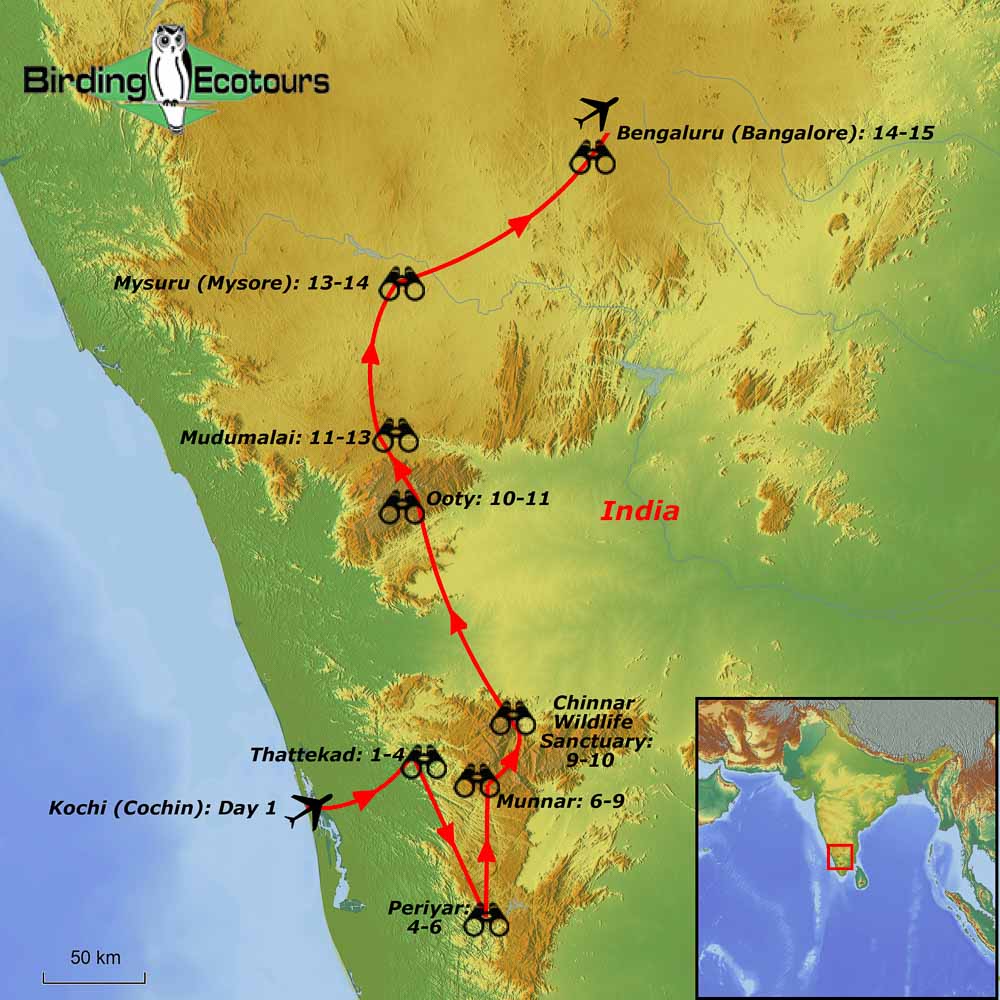
This two-week tour will focus on the many specialties that southern India has to offer in a small-group atmosphere, perfect for the forested environments we will bird in. The tour commences on the coast at Kochi (also known as Cochin), a large sea-port city in the state of Kerala and an ancient city of high value on the old spice-trading route, and finishes at the city of Bengaluru (formerly Bangalore), the capital of the state of Karnataka. Our journey will take in the vast splendor of the Western Ghats and Nilgiri Hills, where we will also enjoy a steady stream of Western Ghats and Nilgiri endemic birds and other wildlife as well as an excellent supporting cast of overwintering migrants and resident birds.
The delightful Indian Scimitar Babbler.
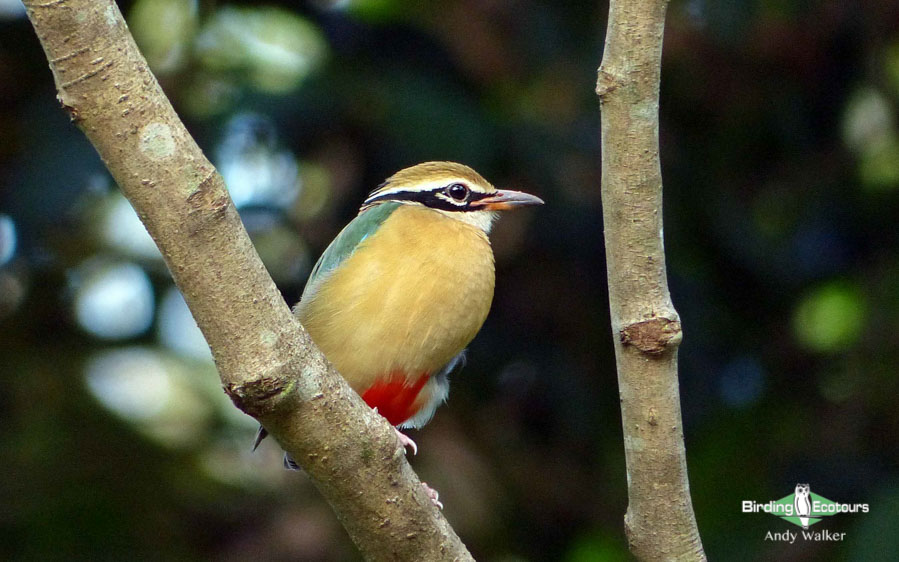
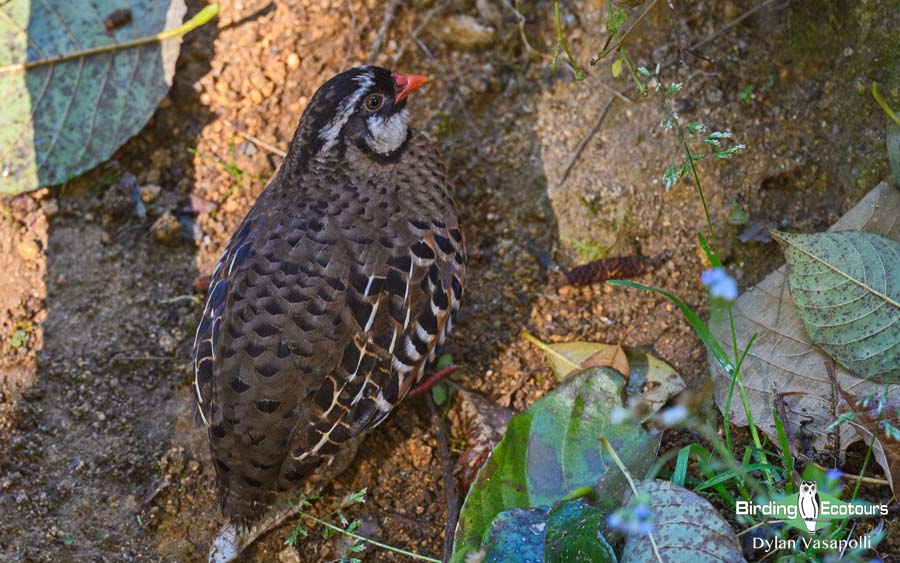
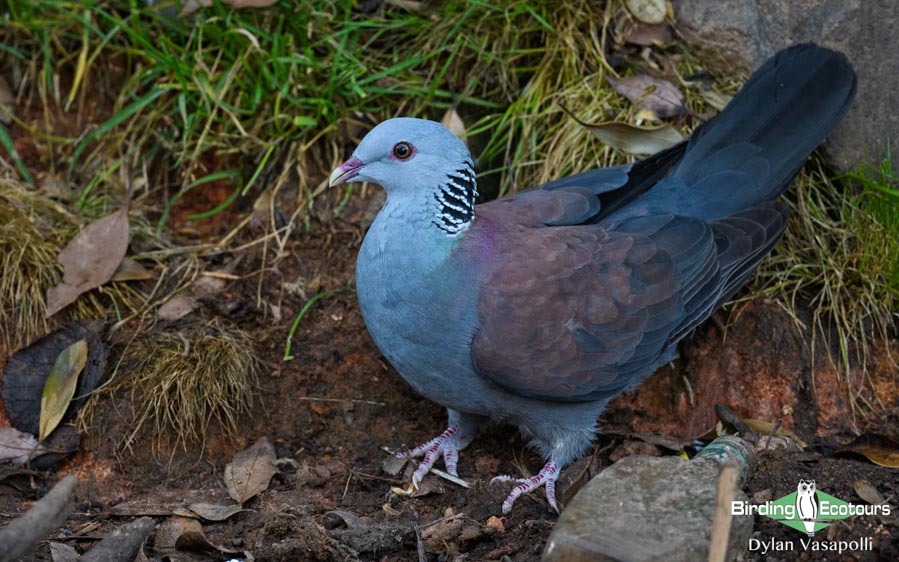
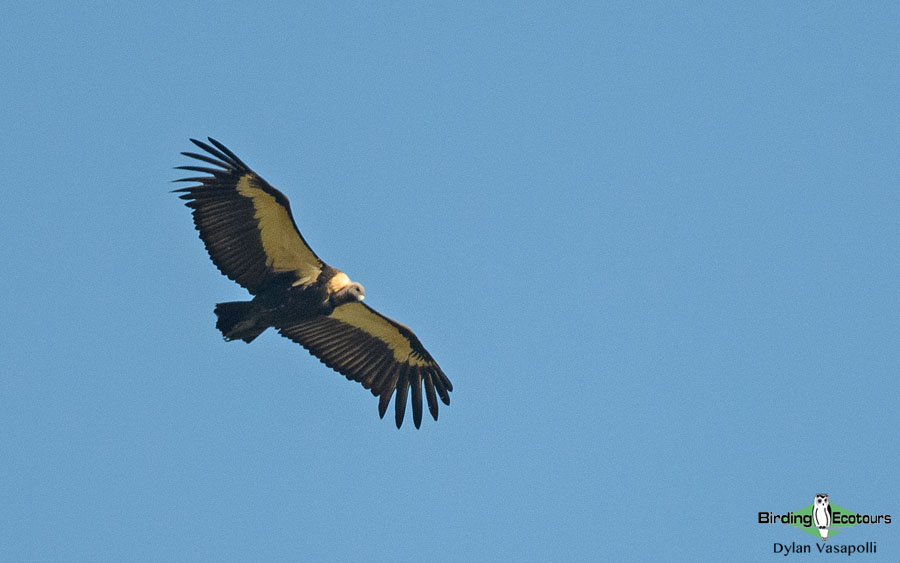
Some highlights on this tour are likely to include Black-and-orange Flycatcher, Indian Blue Robin, Nilgiri Blue Robin, White-bellied Blue Robin, Nilgiri Thrush, Nilgiri Laughingthrush, Palani Laughingthrush, Wayanad Laughingthrush (formerly called Wynaad Laughingthrush), White-bellied Treepie, Malabar Woodshrike, Malabar Barbet, Nilgiri Wood Pigeon, Nilgiri Flycatcher, Nilgiri Pipit, Sri Lanka Bay Owl, Malabar Whistling Thrush, Blue-winged (Malabar) Parakeet, Malabar Grey Hornbill, Malabar Trogon, Sri Lanka Frogmouth, Indian Pitta, Painted Bush Quail, Red Spurfowl, Great Eared Nightjar, White-bellied Minivet, and, with luck, Indian Vulture and White-rumped Vulture (both Critically Endangered IUCN) and the rare migrant Kashmir Flycatcher.
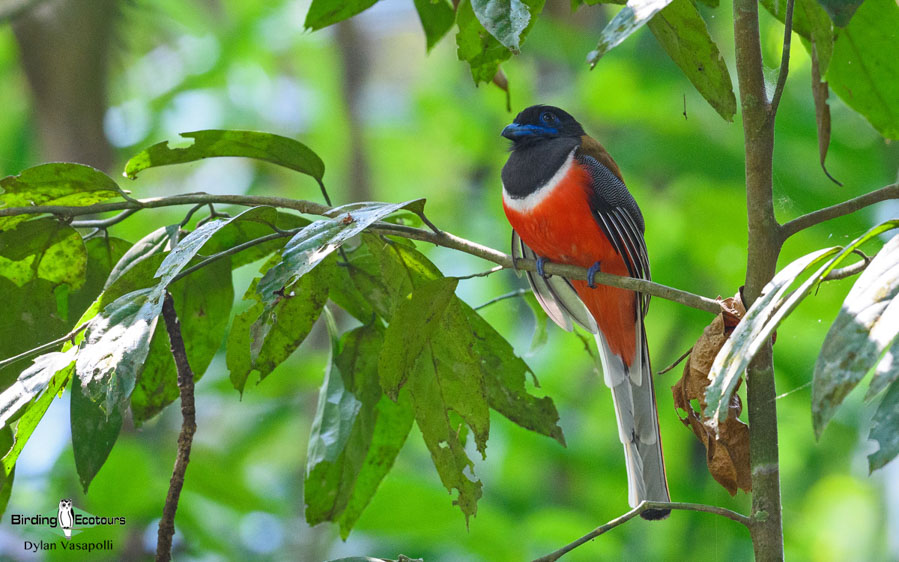
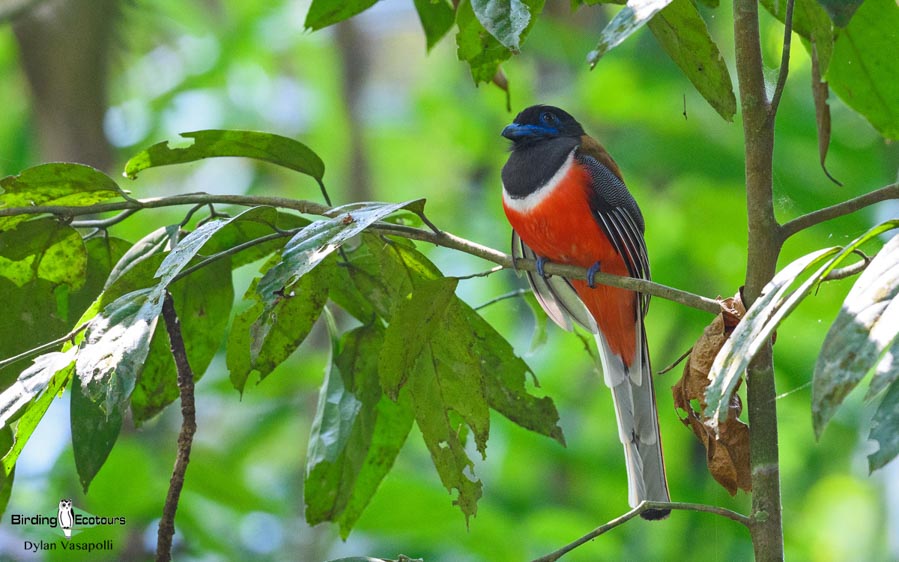 The stunning Malabar Trogon is one of our targets on this trip.
During the tour we will visit some very exciting nature reserves and sanctuaries, such as Ranganathittu Bird Sanctuary, Chinnar Wildlife Sanctuary, and, most famous of all, Thattekad Bird Sanctuary (probably one of the best birdwatching sites in southern India and an incredible place to start this tour). We will also visit some rather nice colonial hill stations, reminiscent of many countries formerly part of the British Empire such as in Kenya, Malaysia, and Sri Lanka. Interestingly, these locations (chosen for their cooler climate than that of the lowlands) often offer access to wonderful higher-elevation birding sites. They also often provide an interesting window into the cultural history of the area. Southern India is also very exciting in terms of food, which is considered rather different from that of other areas of India and promises to be memorable.
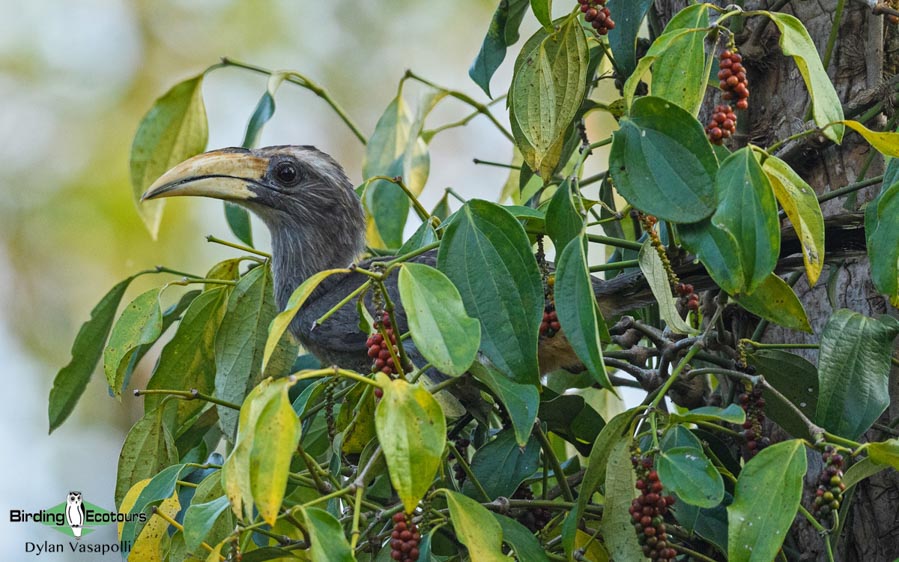 Malabar Grey Hornbill is fairly common in this part of the country.
You can continue after this tour with our Birding Tour India: Andaman Islands Endemics, designed specially to follow and complement this Southern India tour. The Andaman trip will look for numerous endemic birds, such as Andaman Woodpecker, Andaman Nightjar, Andaman Crake, Andaman Serpent Eagle, Andaman Masked Owl, Andaman Treepie, and many more! We also have many other exciting and extensive Indian tours following after this one; details of these can be found here.
We can also easily offer you birding, wildlife-watching, or cultural extensions at each location if you would like to extend your stay in this wonderful, diverse, and vibrant country.
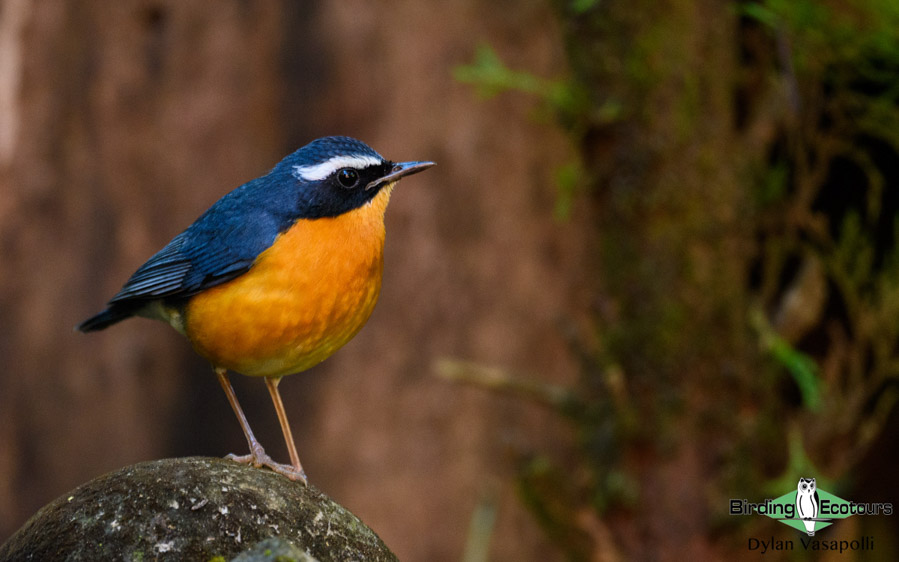 The striking Indian Blue Robin will be a highlight during the tour; the colors of this beautiful bird are just incredible.
Itinerary (15 days/14 nights)
Day 1. Arrival in Kochi (Cochin), birding nearby and transfer to Thattekad
After your morning arrival in Kochi (Cochin) we will all meet for a welcome lunch in a local restaurant. After lunch we will spend some time looking for wading birds and shorebirds nearby. This area is usually heaving with birds, and we may find Asian Openbill, Wood Sandpiper, Little Ringed Plover, Black-winged Stilt, Ruff, Marsh Sandpiper, Temminck’s Stint, and Little Stint among others before we transfer to our hotel in Thattekad, where we will spend the next three nights as we explore this wonderful area.
Overnight: Thattekad
Days 2 – 3. Thattekad Bird Sanctuary
Thattekad Bird Sanctuary is the prime birding destination in Southern India. We will have two full days and nights to thoroughly explore and enjoy the sanctuary and the superb surrounding local area, and this is a fantastic location to commence our southern Indian birding in earnest.
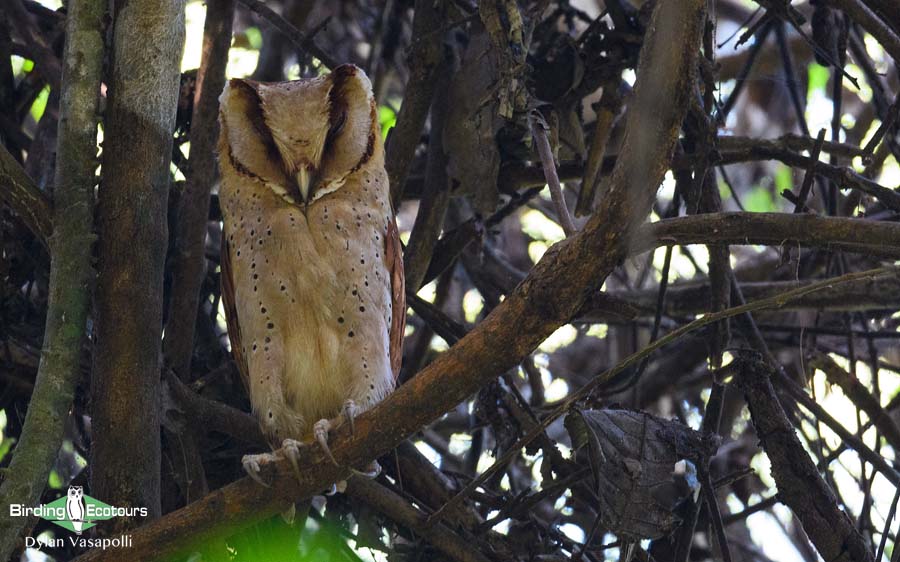
Diurnal and nocturnal specialties here are many and include Indian Pitta, Grey Junglefowl, Flame-throated Bulbul, Grey-headed Bulbul, White-bellied Treepie, Malabar Woodshrike, Sri Lanka Frogmouth, Malabar Trogon, Red Spurfowl, Indian Swiftlet, Jungle Owlet, Sri Lanka Bay Owl, Spot-bellied Eagle-Owl, Rufous Babbler, Orange Minivet, Blue-faced Malkoha, Brown-breasted Flycatcher, White-bellied Blue Flycatcher, Rusty-tailed Flycatcher, Malabar Starling, Asian Fairy-bluebird, Loten’s Sunbird, Black-hooded Oriole, Common Emerald Dove, Black-rumped Flameback, and Thick-billed Warbler.
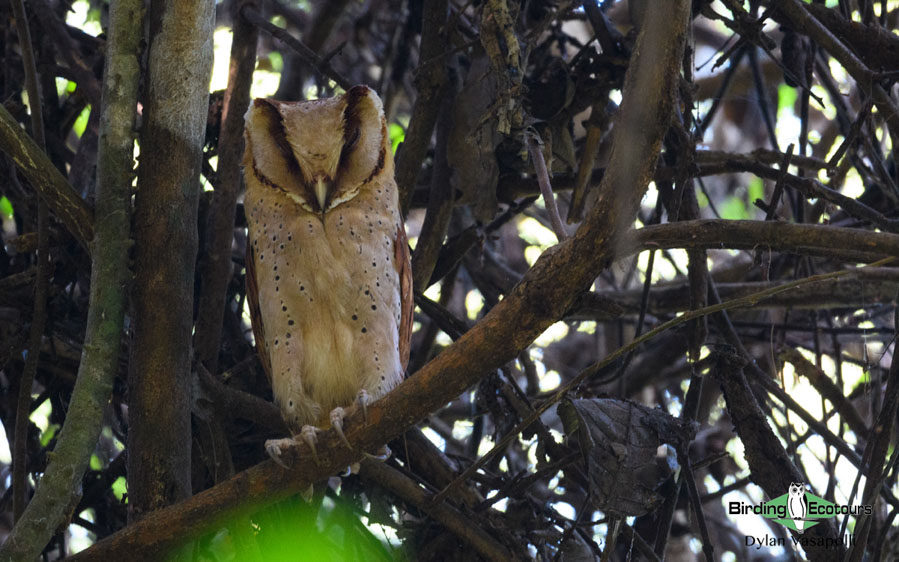 Sri Lanka Bay Owl is one of the toughest birds on the tour, but we hope to repeat our success of previous tours with views of this highly sought owl.
A few of the other species we will spend time concentrating on in Thattekad will be Malabar Grey Hornbill, Malabar Whistling Thrush, Blue-bearded Bee-eater, Black-throated Munia, and Brown Hawk-Owl. As we search for the above we are likely to find the following more widespread (but equally impressive) species: Indian Paradise Flycatcher, Lesser Yellownape, Heart-spotted Woodpecker, White-bellied Woodpecker, Fork-tailed Drongo-Cuckoo, Crested Goshawk, Mountain Imperial Pigeon, Plum-headed Parakeet, White-rumped Spinetail, Lesser Fish Eagle, Oriental Dollarbird, Brahminy Kite, Indian Golden Oriole, and Black-naped Monarch. The stunning Black Baza, probably one of the best and most unique-looking raptors in the world, is possible here, as is the spectacular Great Hornbill. The hornbill is actually one of the most important seed-spreaders in the Western Ghats and is responsible for distributing seeds far and wide from over 40 tree species!
We will concentrate our efforts on the morning and afternoon sessions, and if local conditions allow during the late afternoon we will visit a small water puddle that sometimes produces some good-looking passerine species, including Indian Blue Robin, White-bellied Blue Flycatcher, Tickell’s Blue Flycatcher, Puff-throated Babbler, and Orange-headed Thrush. Brown-breasted Flycatcher, Malabar Trogon, and Blue-winged Parakeet also occur here, and we will be looking for them.
We will also take some night drives/walks with the aim of connecting with a few of the incredible (and tough) night birds on offer, such as those listed already above plus Great Eared Nightjar, Jerdon’s Nightjar, Indian Nightjar, Savanna Nightjar, and Eastern Barn Owl.
Overnight: Thattekad
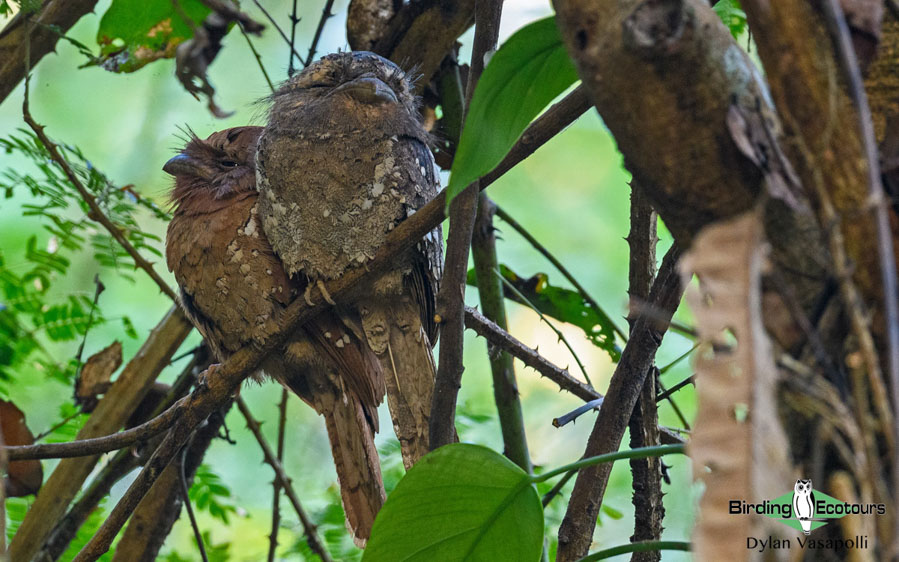
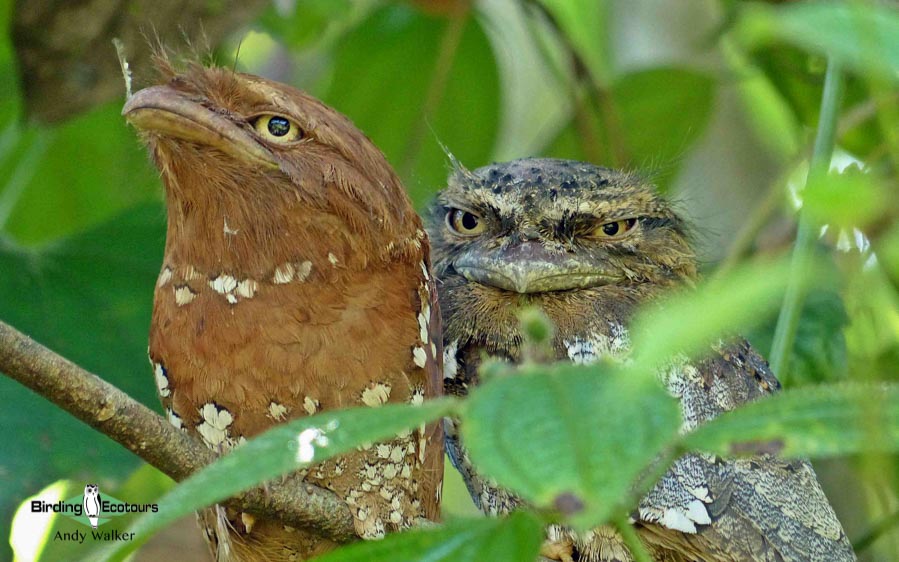 The rather odd-looking Sri Lanka Frogmouth is one of the smaller members of the family, yet it is a big target on this tour
Day 4. Thattekad to Periyar
After a final morning birding in Thattekad we will move to Periyar, ready to spend the full day there tomorrow looking for our target birds. We will have an afternoon walk to get started on some of the birds listed for day 5, including our main target of the area, Wayanad Laughingthrush (formerly called Wynaad Laughingthrush).
Overnight: Periyar
Day 5. Periyar
Our main target bird in Periyar is the endemic Wayanad Laughingthrush. Although this Western Ghats endemic species is relatively widespread in suitable moist forest it is probably one of the tougher birds to see due to its habit of quickly moving around in the undergrowth, it is a bit of a skulker! Other species we might see include Malabar Grey Hornbill, Nilgiri Wood Pigeon, Blue-winged (Malabar) Parakeet, Great Hornbill, Black Baza, Nilgiri Thrush, Nilgiri Flycatcher, White-bellied Blue Flycatcher, Little Spiderhunter, and Crimson-backed Sunbird.
Overnight: Periyar
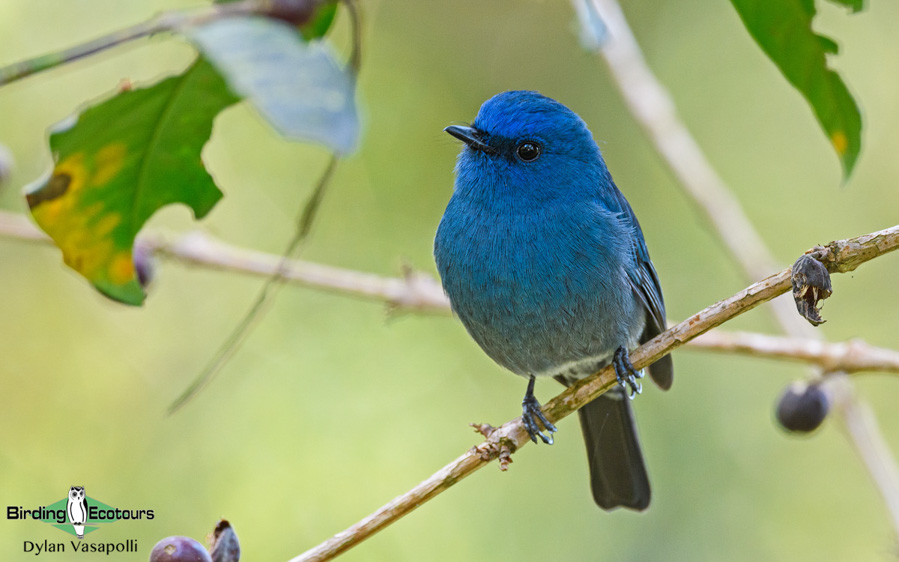 The pretty Nilgiri Flycatcher is sure to delight.
Day 6. Periyar to Munnar
After a final morning birding in the Periyar area we will continue to our next base at Munnar. The forests and montane grassland in the Munnar area are home to numerous southern specialties, and we will spend the remainder of the afternoon (if time) and the whole of the following two days looking for these. We will also look for Nilgiri Tahr, an endemic and Endangered (IUCN) ibex found high in the mountains of the Western Ghats.
Overnight: Munnar
Days 7 – 8. Munnar area and Eravikulam National Park
There are a lot of high-quality birds at Munnar and the surrounding area including the magnificent Eravikulam National Park. We will spend two full days looking for the following key target species from this region: Palani Laughingthrush, Nilgiri Thrush, Nilgiri Pipit, Painted Bush Quail, White-bellied Blue Robin, Broad-tailed Grassbird (present but tough at this time of year – try our Birding Tour India: – Rajasthan Monsoon Specialties for a range of birds that are easier in the monsoon), Nilgiri Wood Pigeon, Crimson-backed Sunbird, Nilgiri Flycatcher, Malabar Whistling Thrush, Indian Scimitar Babbler, Yellow-browed Bulbul, Yellow-throated Bulbul, Grey-fronted Green Pigeon, Malabar Barbet, Little Spiderhunter, Brown-cheeked Fulvetta, Vernal Hanging Parrot, Rusty-tailed Flycatcher, Indian Blackbird, Hill Swallow, and Blue-capped Rock Thrush. There will be much more to see beyond this small sample of birds listed.
Overnight: Munnar
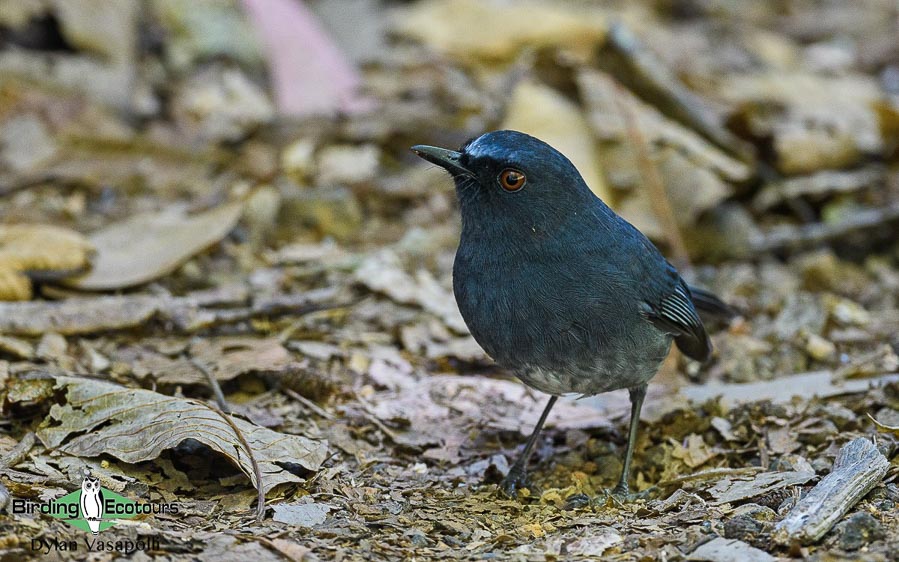 One of our targets in the Munnar area will be the often-secretive White-bellied Blue Robin.
Day 9. Munnar to Chinnar Wildlife Sanctuary
After a final morning around Munnar, probably exploring the great area around our accommodation, we will continue our journey to Chinnar Wildlife Sanctuary. During our afternoon birding we will try to find the huge (and rather spectacular, yet very secretive) Spot-bellied Eagle-Owl. While looking for the owl we may also find Malabar Whistling Thrush, Brown Fish Owl, Western Crowned Warbler, and Tickell’s Blue Flycatcher. We will also keep an eye in the trees for Sri Lankan (Grizzled) Giant Squirrel – a huge squirrel!
Overnight: Chinnar
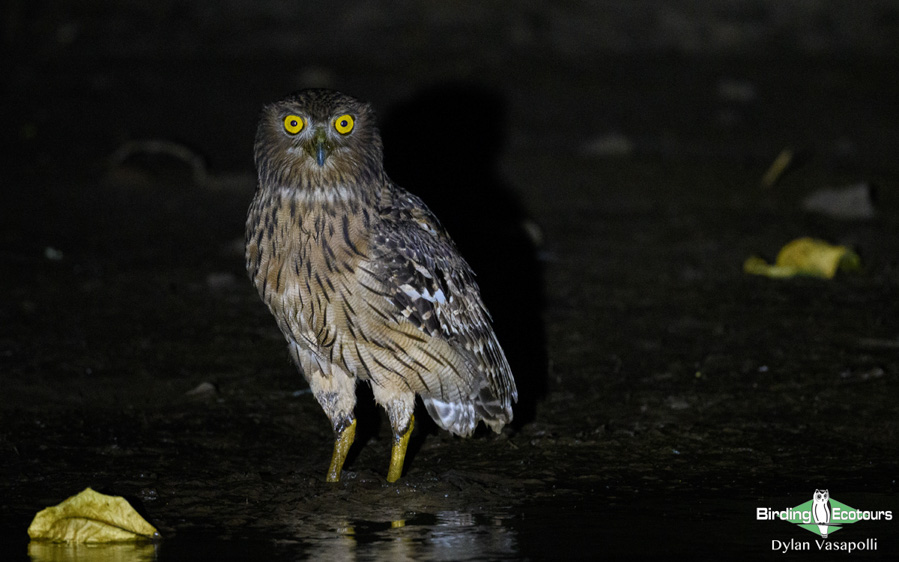 We had incredible views of Brown Fish Owl on our 2020 tour and hope to repeat this during future trips.
Day 10. Chinnar to Ooty
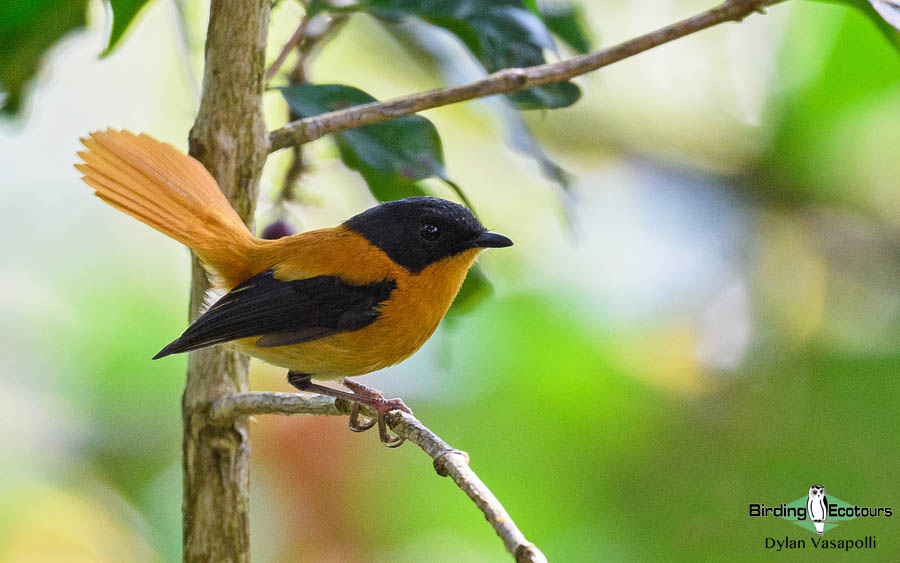
Following an early-morning birding session in Chinnar we will commence our journey to the old colonial British hill station of Ooty at about 2,200 meters (7,200 feet). Our first stop is likely to be a local hotel, where we will search for Black-and-orange Flycatcher, Indian Blue Robin, and Nilgiri Laughingthrush – all three are beautiful birds. Once we have had our fill here we will spend the remainder of the day checking out patches of shola forest, where there are many of our trip target birds to be found; some of these include Nilgiri Blue Robin, Nilgiri Thrush, Malabar Whistling Thrush, Indian Blackbird, Jerdon’s Leafbird, Yellow-browed Bulbul, Malabar Barbet, Nilgiri Wood Pigeon, Hill Swallow, and Painted Bush Quail. Other more-widespread species we may discover during the day could be Vernal Hanging Parrot, Black Eagle, Square-tailed Bulbul, and Bar-winged Flycatcher-shrike. If we are very lucky we may even find a rare overwintering migrant such as Kashmir Flycatcher.
Overnight: Ooty
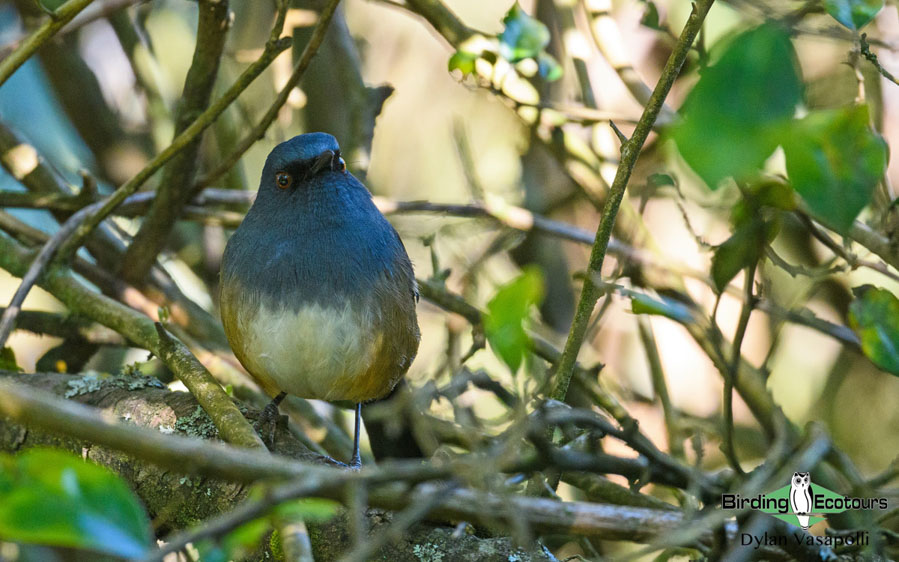 Nilgiri Blue Robin can be a skulker, but with patience we can achieve great views.
Day 11. Ooty to Mudumalai
After a final morning birding around Ooty, looking for the species listed for day 10, we will drop down to Mudumalai, making a start on the birds listed for day 12.
Overnight: Mudumalai
Day 12. Mudumalai
We will have the full day exploring the scrub habitat around the Mudumalai area and will have a morning and afternoon birding session looking for a range of target birds. The middle of the day will be spent relaxing in our attractive hotel grounds. We will seek the following species during our birding sessions (and many more): Jungle Bush Quail, Grey Junglefowl, Indian Peafowl, Red Spurfowl, Indian Vulture, White-rumped Vulture, Spot-bellied Eagle-Owl, Brown Fish Owl, Yellow-wattled Lapwing, Indian Nightjar, Indian Pitta, Blue-faced Malkoha, Blue-winged (Malabar) Parakeet, Common Hawk-Cuckoo, Yellow-crowned Woodpecker, Heart-spotted Woodpecker, Streak-throated Woodpecker, Ashy-crowned Sparrow-Lark, Jerdon’s Bush Lark, Malabar Lark, Indian Nuthatch, Black-headed Cuckooshrike, Yellow-billed Babbler, White-browed Bulbul, White-bellied Minivet, Small Minivet, Hume’s Whitethroat, Booted Warbler, White-cheeked Barbet, Orange-headed Thrush, Nilgiri Flowerpecker, and the gorgeous Red Avadavat.
Overnight: Mudumalai
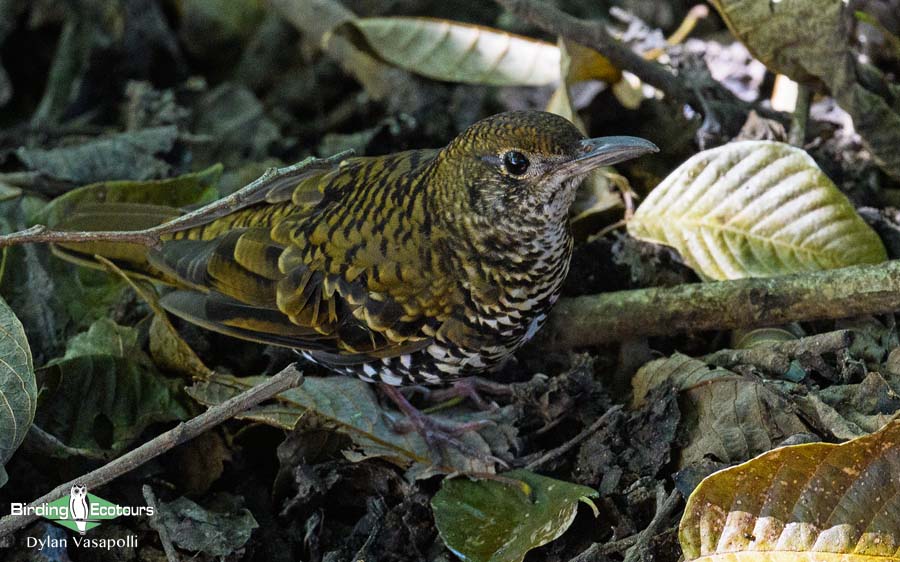
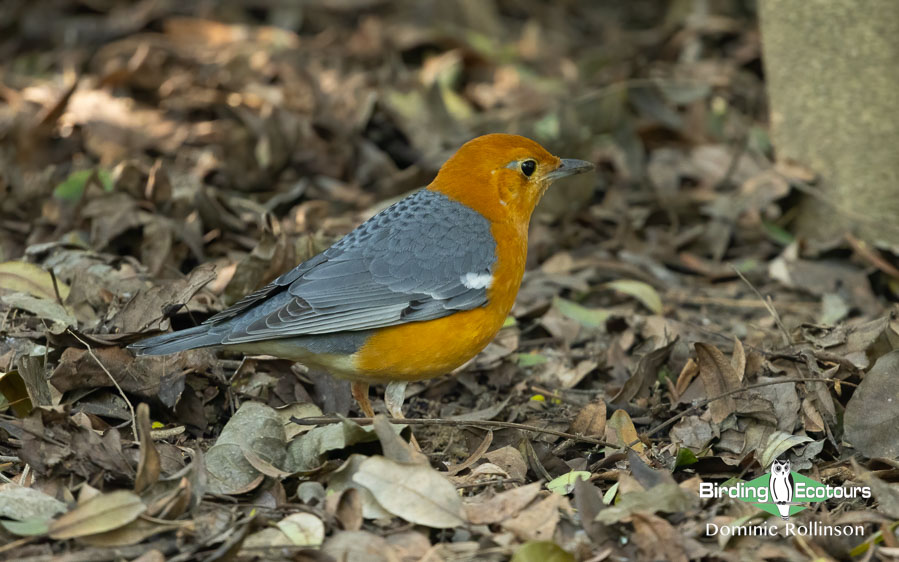 The attractive Orange-headed Thrush can be seen feeding in the leaf litter.
Day 13. Mudumalai to Mysuru (Mysore)
The morning will be spent in the marvelous Mudumalai area looking for any remaining targets listed for day 12. After lunch we will leave our wonderful hotel behind as we travel to Mysuru (Mysore), stopping along the way at several sites that may yield a few interesting species such as Blue-winged (Malabar) Parakeet, Red-naped Ibis, Yellow-wattled Lapwing, and Small Pratincole.
Overnight: Mysuru (Mysore)
Day 14. Mysuru (Mysore) to Bengaluru (Bangalore)
We will start the final full day of the tour birding at Ranganathittu Bird Sanctuary, where we will take a boat trip along the Cauvery (Kaveri) River. This small park is packed full of birds and offers some great photo opportunities of many, a perfect way to end the tour. During the boat trip we could see Spot-billed Pelican, Streak-throated Swallow, White-spotted Fantail, River Tern, and Indian Eagle-Owl. We are also likely to get some great views of Painted and Woolly-necked Storks. After finishing our birding in the sanctuary we will continue our journey to Bengaluru (Bangalore). Along the way we will stop at an area that is good for viewing Indian Vulture and occasionally White-rumped Vultures, both of these species are Critically Endangered (IUCN) and could certainly end our tour off in style!
We will have a final group evening meal together at our very comfortable hotel near the airport, where we will enjoy some great food and discuss what our “bird of the trip” might be.
Overnight: Bengaluru (Bangalore)
Day 15. Departure from Bengaluru (Bangalore)
Non-birding day. The tour concludes with international departure from Bengaluru (Bangalore). However, if you would like to continue your birding adventure you could join our Birding Tour India: Andaman Islands Endemics for a range of endemic species found only on the Andaman Islands, or our Birding Tour India: The North – Tigers, Amazing Birds, and the Himalayas, where we look for Bengal Tiger and some incredible birds such as the monotypic pair of Ibisbill and Wallcreeper and a great deal of other exciting birds such as Cheer Pheasant, Indian Courser, and Indian Skimmer.
Overnight: Not included
Please note that the itinerary cannot be guaranteed as it is only a rough guide and can be changed (usually slightly) due to factors such as availability of accommodation, updated information on the state of accommodation, roads, or birding sites, the discretion of the guides and other factors. In addition, we sometimes have to use a different international guide from the one advertised due to tour scheduling.
Map