- Duration:
- 16 days
- Group Size:
- 4 – 8
- Tour Start:
- Jacksons International Airport, Port Moresby
- Tour End:
- Jacksons International Airport, Port Moresby
Papua New Guinea: Birding Attenborough’s Paradise
Details
2026
12 – 27 August
Per person sharing
$10,440 USD
£8,168 GBP / €9,443 EUR
Single supplement
$990 USD
£775 GBP / €896 EUR
based on 4 – 8 participants
Domestic Flights: US$1,000 per person (estimated 2026 costs)
This tour is now full, please consider joining our 2028 departure.
2026
01 – 16 September
Per person sharing
$10,440 USD
£8,168 GBP / €9,443 EUR
Single supplement
$990 USD
£775 GBP / €896 EUR
based on 4 – 8 participants
Domestic Flights: US$1,000 per person (estimated 2026 costs)
This tour is now full, please consider joining our 2028 departure.
2028
30 August – 14 September
Per person sharing
$12,862 USD
£10,062 GBP / €11,634 EUR
Single supplement
$1,221 USD
£956 GBP / €1,105 EUR
based on 4 – 8 participants
Domestic Flights: US$1,000 per person (estimated 2026 costs)
Itinerary
Download ItineraryPapua New Guinea Bird Tour: Birding Attenborough’s Paradise
August/September 2026/2028
Papua New Guinea (PNG) is undoubtedly a birder’s paradise. Thirty-four birds-of-paradise (BoPs) live on the island of New Guinea, of which 31 can be found in PNG, and a large number of these are possible on this tour – get ready for sensory overload! The island is home to approximately 400 endemic bird species. Together with awe-inspiring scenery, endless rainforests, and fascinating highland societies that only made contact with the outside world in the 1930s, this makes PNG a definite must-see destination for any avid birder and nature enthusiast.
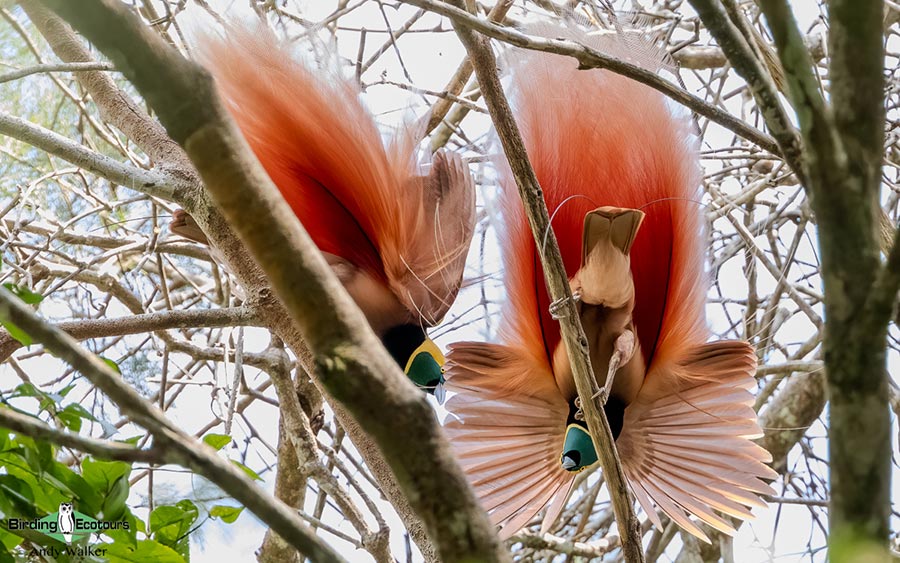
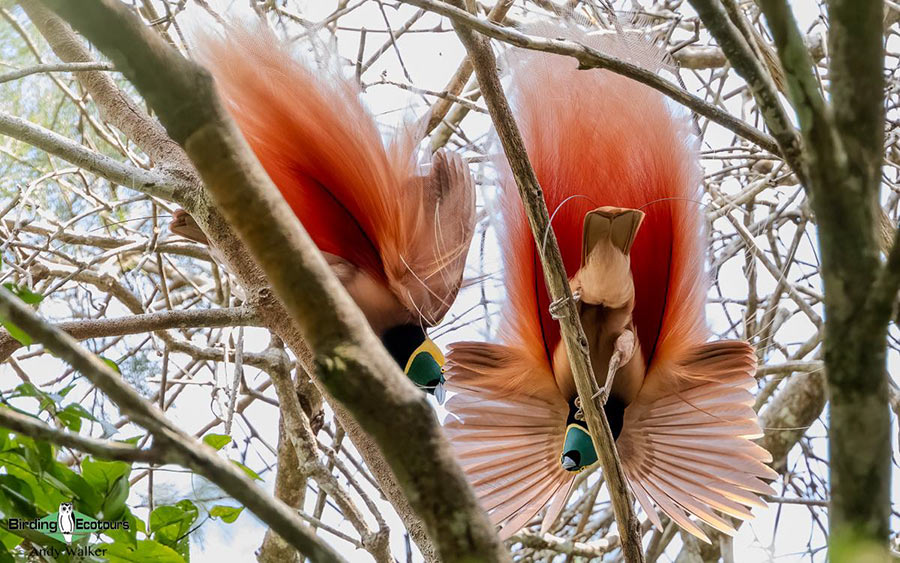 Raggiana Bird-of-paradise is the national bird of Papua New Guinea (PNG) and we will look for displaying birds in Varirata National Park during our PNG birding tour.
Our first birding of the tour will be at Varirata National Park and the Pacific Adventist University. Varirata is home to the beautiful Raggiana Bird-of-paradise, Growling Riflebird, Crinkle-collared Manucode, Forest Bittern, Hooded Pitohui, Brown-headed Paradise Kingfisher, an array of spectacular fruit doves, and much more. While at the university campus we could find the remarkable and huge Papuan Frogmouth, the localized Fawn-breasted Bowerbird, day roosting Barking Owls, and giant Blue-winged Kookaburra.
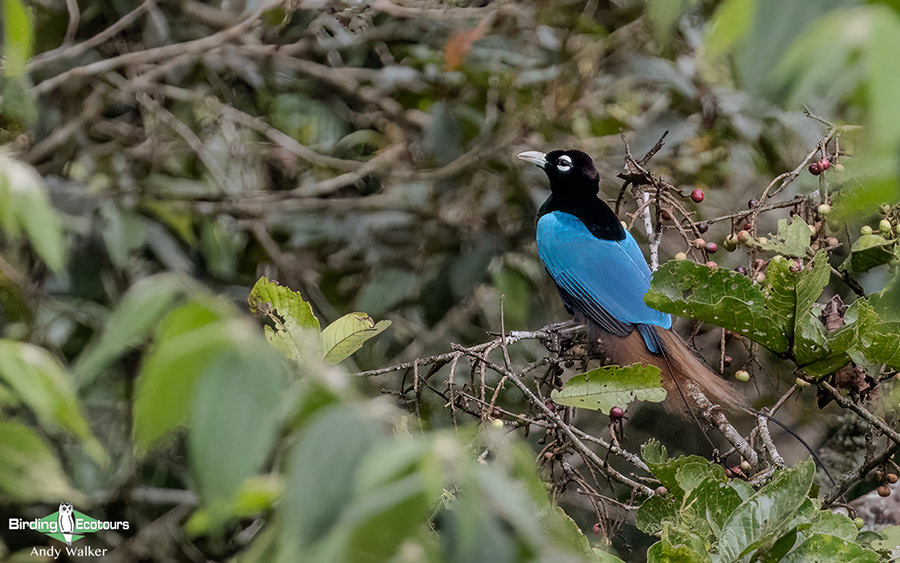
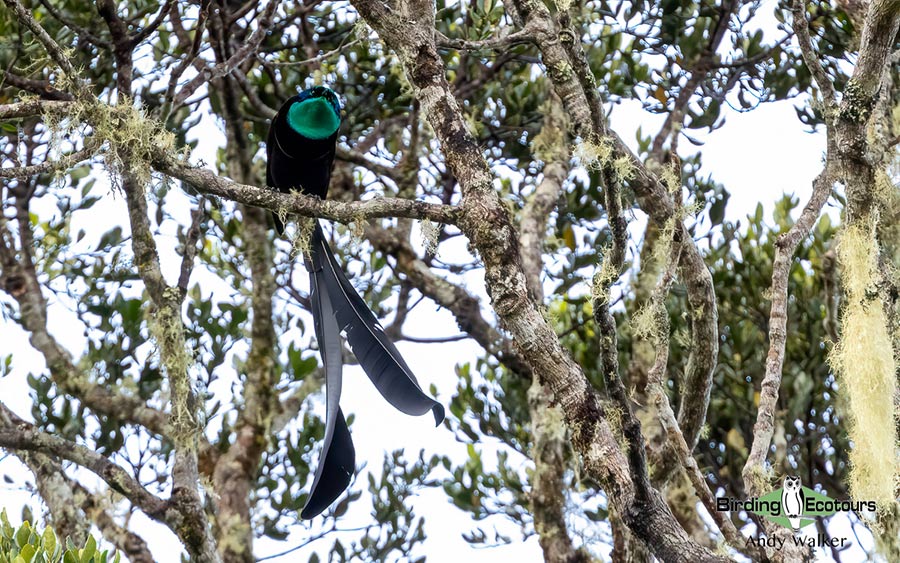
We will fly to the world famous city of Mount Hagen in the western highlands, where we base ourselves at nearby Kumul Lodge and Komange Eco Lodge, the holy grails of PNG highland birding sites. We will have our first look for stunning (but often shy) Blue Bird-of-paradise and, at Kumul’s legendary feeding table, some of PNG’s most spectacular birds await us in the form of Ribbon-tailed Astrapia (the adult males are surely one of the best-looking of the island’s birds-of-paradise?), Brehm’s Tiger Parrot, Stella’s Lorikeet, Crested Satinbird, and more. The Kumul Lodge and Komange Eco Lodge areas also hold a host of other birds-of-paradise, such as Brown Sicklebill, Greater Lophorina (formerly part of the Superb Bird-of-paradise complex), King of Saxony Bird-of-paradise, and Lesser Bird-of-paradise. We will also look here for Wattled Ploughbill, Mottled Berryhunter, Blue-crowned Ifrit, Crested Satinbird, Loria’s Satinbird, Lesser Melampitta, and many other incredible and highly sought-after birds.
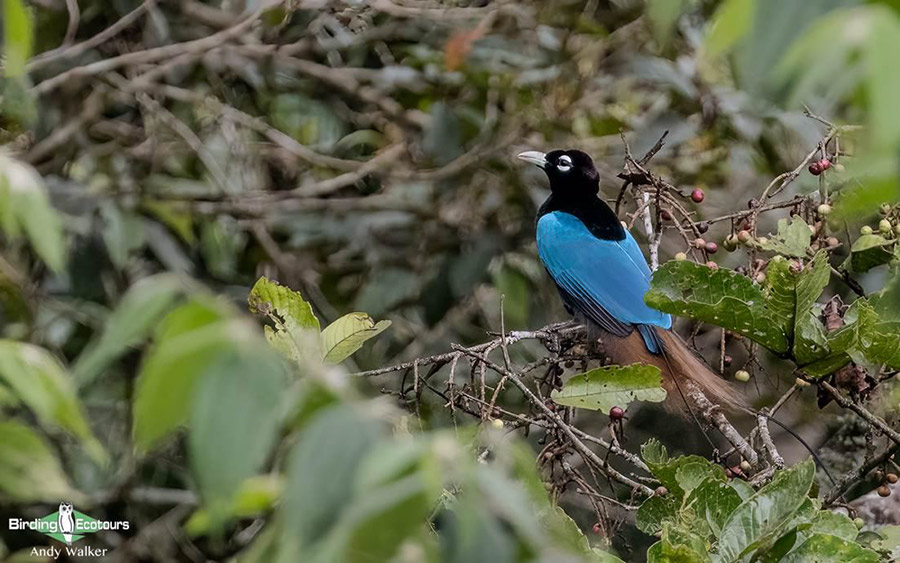 The birds-of-paradise are all special, however Blue Bird-of-paradise takes it up a notch or two!
After our highland birding, we will fly west to Kiunga. Kiunga is a port town on the Fly River in the Western Province of PNG. In this remote part of the country (including the basic Kwatu Camp) we will search for a host of breathtaking special birds, including the giant Sclater’s (formerly Southern) Crowned Pigeon, the bizarre Twelve-wired Bird-of-paradise, the gorgeous King Bird-of-paradise, Trumpet Manucode, Little Paradise Kingfisher, a range of parrots and fruit doves, and positively glowing Flame Bowerbird!
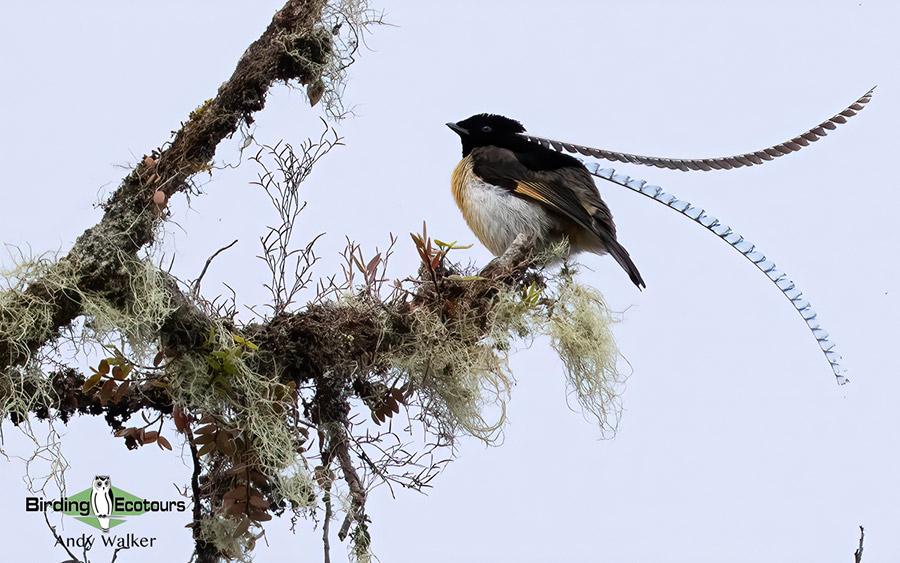
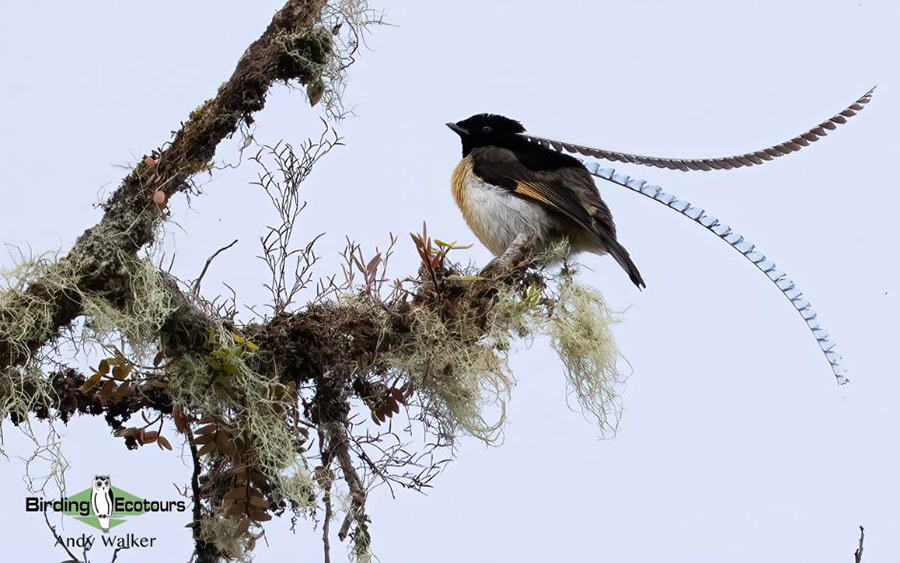 King of Saxony Bird-of-paradise is a remarkable bird and we will focus on having good views.
From Kiunga we will head north to Tabubil, and the little-visited Star Mountains, where we will undertake our birding in the mid- and high-elevation zones. We will search for some hard-to-find and highly sought species, such as Splendid Astrapia, King of Saxony Bird-of-paradise, Greater Bird-of-paradise, Queen Carola’s Parotia, Short-tailed Paradigalla, Black Sicklebill, Brown Sicklebill, and Greater Lophorina. Lots of other exciting species await us in the mountains. After this final birding we will end the tour back in Port Moresby.
This tour will give you an unforgettable experience of birding in PNG, one of the most amazing destinations in the world, providing you with a lifetime of memories of the simply gorgeous birds-of-paradise, as well as a long list of other impressive, unique, and endemic birds.
You may also like to consider our Papua New Guinea: New Britain Premium Extension – Bismarck Archipelago Birding tour. This short tour focuses on New Britain, Bismarck Archipelago, and Solomon Islands endemics, with highlights including Melanesian Megapode, Blue-eyed Cockatoo, Black-capped Paradise Kingfisher, New Britain Dwarf Kingfisher, Bismarck (New Britain) Pitta, and Golden Masked Owl.
Detailed Itinerary (16 days/15 nights)
Day 1. Arrival day in Port Moresby
Arrival in Papua New Guinea. You will be met at Jackson’s International Airport in Port Moresby by our representative and transferred to our hotel, approximately 10.5 miles (17 kilometers) outside the city. After your arrival at the accommodation, your time is at your leisure, you may be able to get your Papua New Guinea bird list underway in the hotel grounds. We will meet for our group “welcome dinner” in the evening and discuss the plans for the exciting birding to come over the next couple of weeks.
Overnight: Bluff Inn, Port Moresby (or similar)
Day 2. Birding Varirata National Park and Pacific Adventist University
Today we will have a short drive to Varirata National Park, which provides splendid low- and mid-elevation birding. We will spend the majority of the day here and might be able to find, among many others, such exciting birds as Forest Bittern, Barred Owlet-nightjar, Barking Owl, Brown-headed Paradise Kingfisher, Rufous-bellied Kookaburra, Blue-winged Kookaburra, Black Berrypecker, and hopefully PNG’s national bird, Raggiana Bird-of-paradise, along with two other birds-of-paradise, Growling Riflebird and Crinkle-collared Manucode.
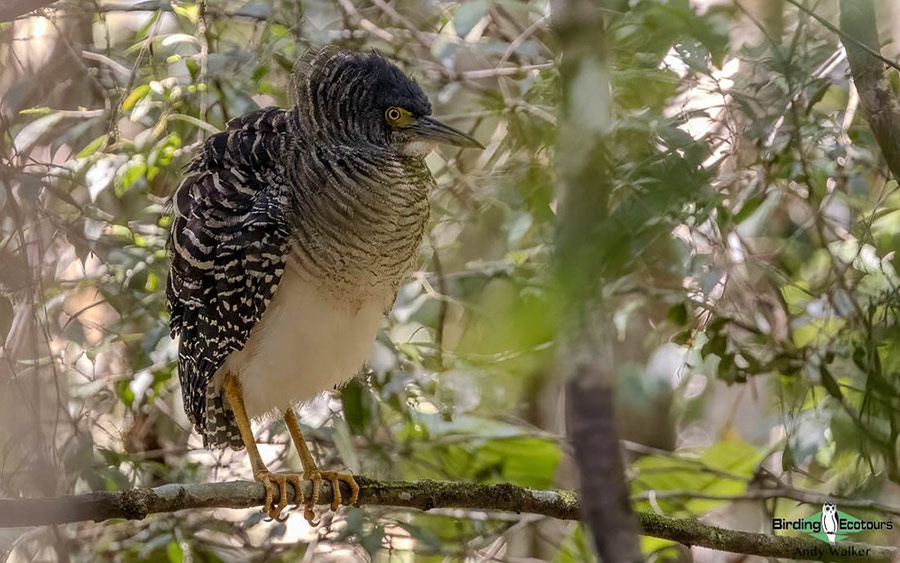 We hope to find the rare and secretive Forest Bittern during our day of birding at Varirata National Park.
There are so many great birds in Varirata National Park, and some further highlights here could include Blyth’s Hornbill, Beautiful Fruit Dove, Pink-spotted Fruit Dove, Orange-bellied Fruit Dove, Papuan King Parrot, Yellowish-streaked Lory, Eastern Hooded Pitta, Painted Quail-thrush, Chestnut-backed Jewel-babbler, Goldenface, Hooded Pitohui, Rusty Pitohui, Yellow-breasted Boatbill, Frilled Monarch, Pygmy Longbill, and Papuan Scrub Robin.
In the late afternoon we will likely fit in a visit to the Pacific Adventist University campus, as it is located near our accommodation and offers a range of different birds. Here we might find species such as Radjah Shelduck, Pied Heron, Comb-crested Jacana, Papuan Frogmouth, Orange-fronted Fruit Dove, Fawn-breasted Bowerbird, Rufous-banded Honeyeater, White-bellied Cuckooshrike, Black-backed Butcherbird, Singing Starling, and Grey-headed Mannikin.
Overnight: Bluff Inn, Port Moresby (or similar)
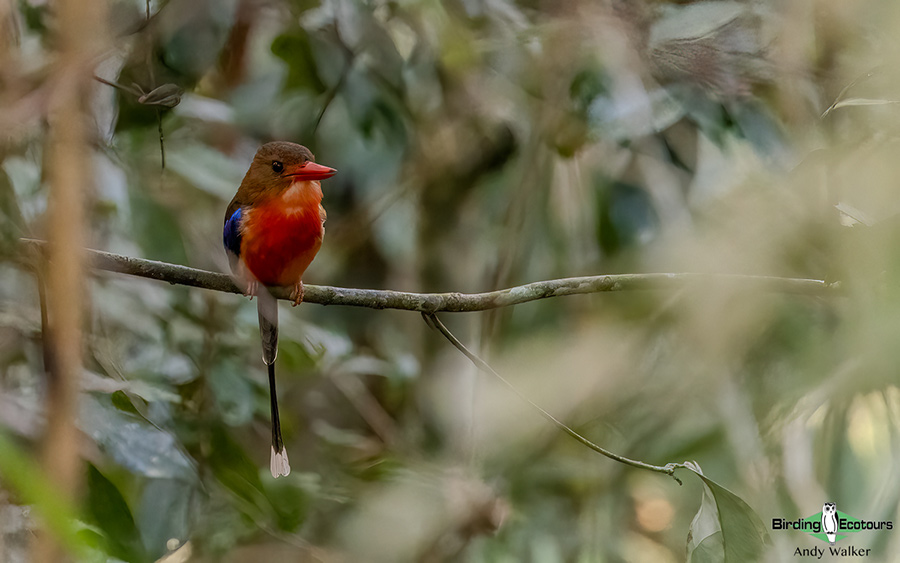
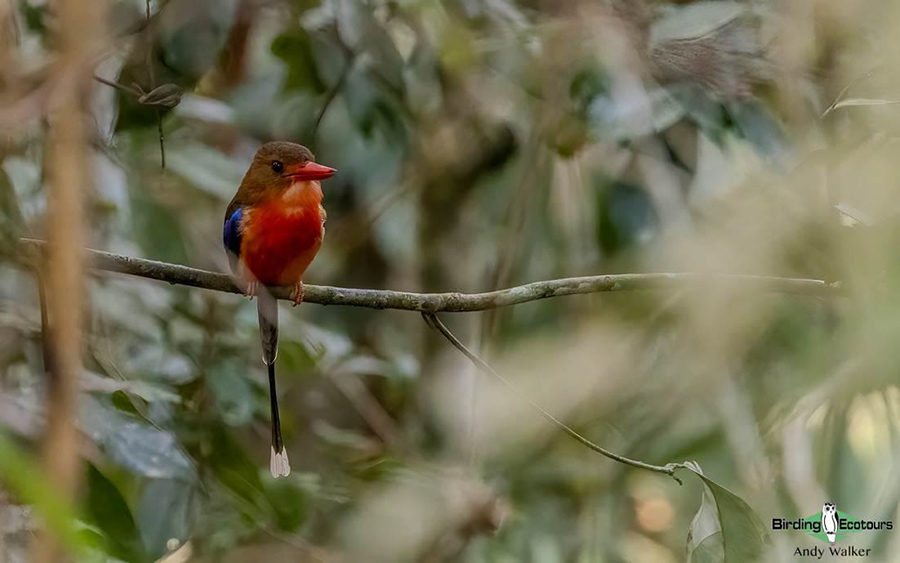 The gorgeous Brown-headed Paradise Kingfisher can be found hiding in the deep and dark vegetation in Varirata National Park and is one of several stunning paradise kingfishers possible on this Papua New Guinea birdwatching tour (and our New Britain extension).
Day 3. Port Moresby to Mount Hagen and Kumul Lodge birding
We transfer to the airport in Port Moresby for an early morning flight to Mount Hagen and then travel onwards to Kumul Lodge. Situated at 8,585 feet (2,861 meters), Kumul Lodge is one of the best-known landowner eco-tourism lodges in all of PNG and provides important income for many local people. The lodge also strives to protect the surrounding forested areas and our time here is sure to be a highlight of the whole tour.
At the lodge bird feeding table we can hope for some spectacular birds, such as Ribbon-tailed Astrapia (we will hope for a breeding plumage adult male), Brown Sicklebill, Brehm’s Tiger Parrot, Stella’s Lorikeet, Archbold’s Bowerbird, Crested Satinbird, Papuan Island Thrush, Common Smoky Honeyeater, Belford’s Melidectes, White-winged Robin, Chestnut Forest Rail, and more. It will be hard to pull ourselves away from the feeders, but there are so many high quality and localized species to look for in the wider area so, reluctantly, after spending time at the feeders we’ll bird the nearby forest, making a start on the birds listed for Days 4 – 5, below.
Overnight: Kumul Lodge, Mount Hagen
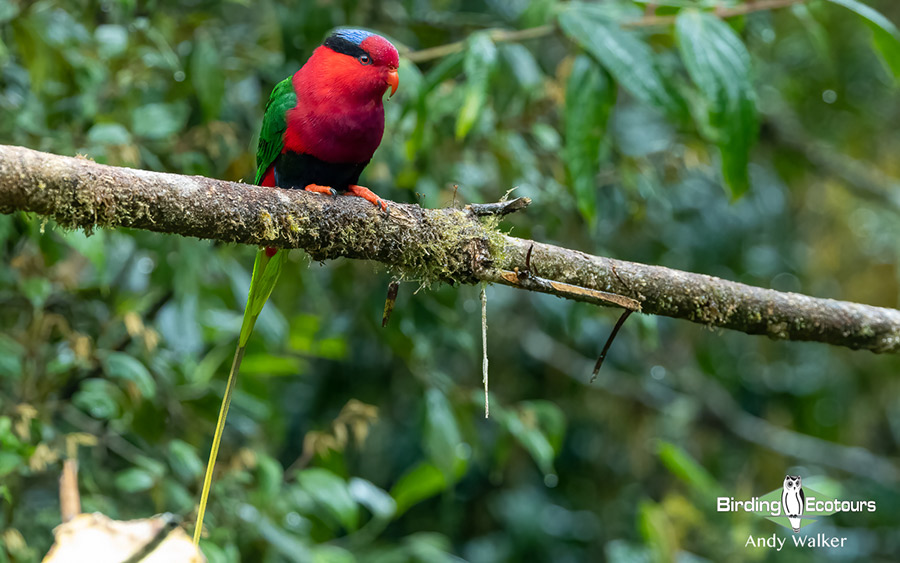
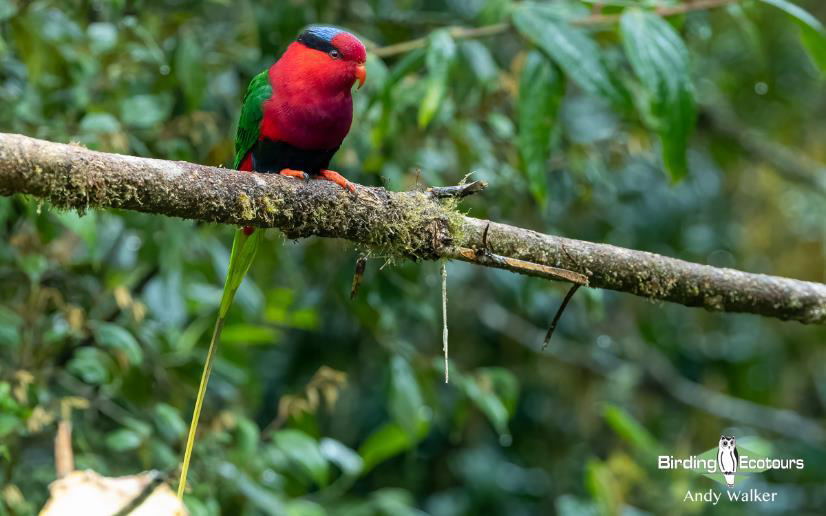 The rather colorful Stella’s Lorikeet occasionally visits the Kumul Lodge bird feeders.
Days 4 – 5. Two days of birding the Kumul Lodge area
We will have two full days (as well as time yesterday, after our arrival, and the following day ahead of our departure) birding this avian wonderland, including looking for the rare and range-restricted Blue Bird-of-paradise and many other breathtakingly beautiful members of the bird-of-paradise family, such as Ribbon-tailed Astrapia, Princess Stephanie’s Astrapia, King of Saxony Bird-of-paradise, Lesser Bird-of-paradise, Magnificent Bird-of-paradise, Brown Sicklebill, Greater Lophorina, Crinkle-collared Manucode, and Magnificent Riflebird.
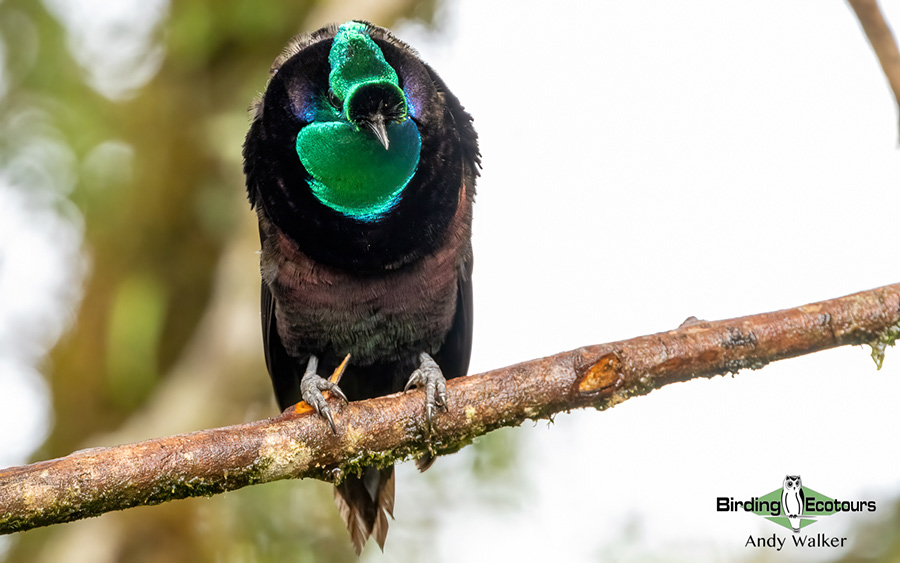
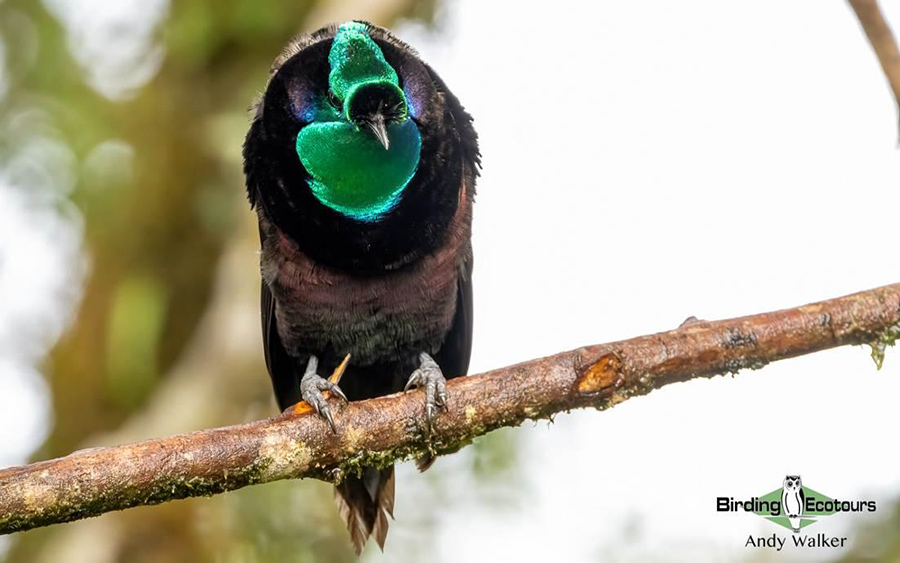 Ribbon-tailed Astrapia looking straight at you is an impressive sight!
There are so many other amazing birds around the Kumul Lodge environs and some of the other birds that we hope to see here over the course of our visit include Papuan Harrier, New Guinea Woodcock, Chestnut Forest Rail, Goldie’s Lorikeet, Yellow-billed Lorikeet, Orange-billed Lorikeet, Mountain Owlet-nightjar, Lesser Melampitta, Loria’s Satinbird, Crested Satinbird, Orange-crowned Fairywren, Black-breasted Boatbill, White-winged Robin, Garnet Robin, Black-headed Whistler, Regent Whistler, Rufous-naped Bellbird, Black Sittella, Ornate Melidectes, Grey-streaked Honeyeater, Fan-tailed Berrypecker, Eastern Crested Berrypecker, Tit Berrypecker, Mountain Firetail, Yellow-breasted Bowerbird, Torrent Flyrobin, and Torrent-lark.
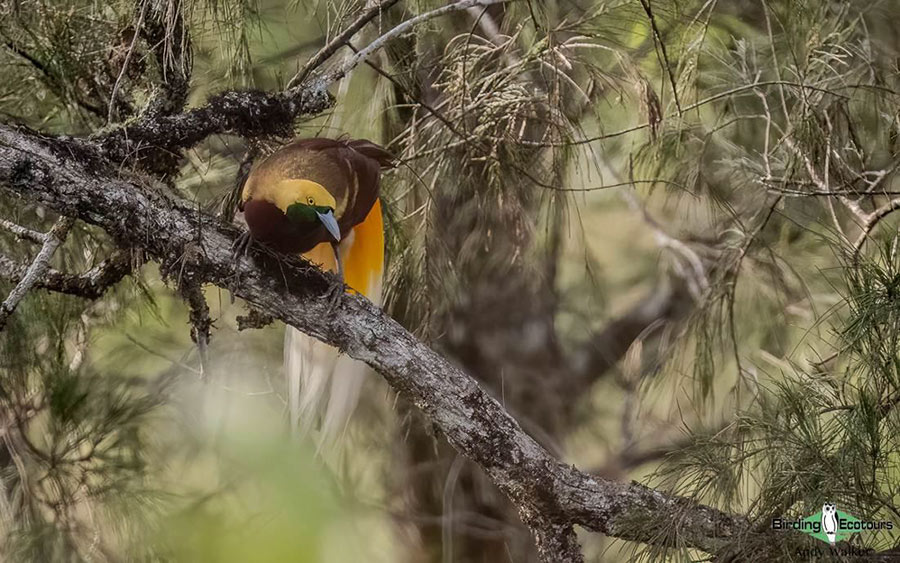 Lesser Bird-of-paradise can be found at some of the highland locations we visit on the tour.
To complement the above incredible birds, there are three additional species in the area that are monotypic families, and thus of interest to any family listers, these are therefore big targets for us while birding here and our next location. These three species are Mottled Berryhunter, Blue-capped Ifrit, and Wattled Ploughbill, we could see all three here.
If you need a rest from the mountain birding at any time, grabbing a tea or coffee (or beer!) and sitting and watching the bird feeders is never a bad choice!
Overnight (two nights): Kumul Lodge, Mount Hagen
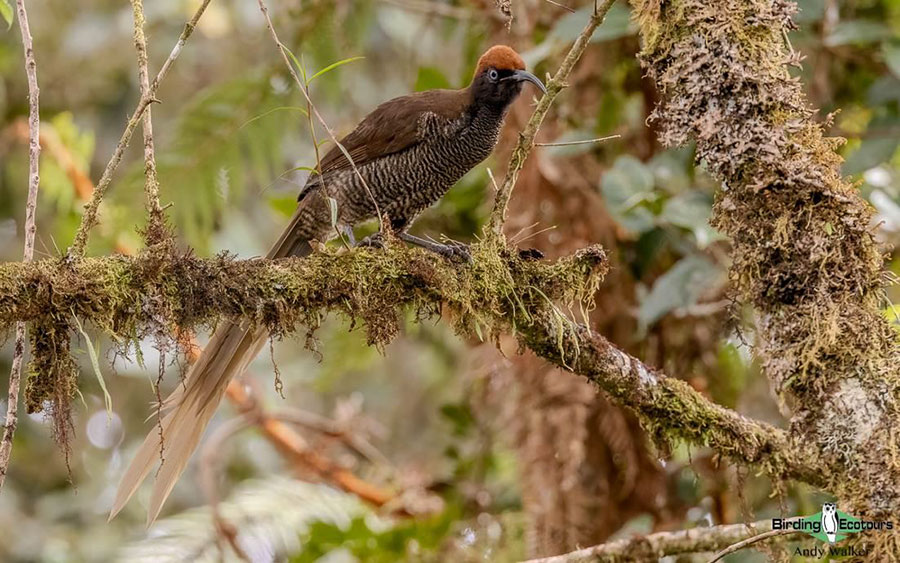 Close views of Brown Sicklebill can be enjoyed at the bird feeders at Kumul Lodge.
Day 6. Kumul Lodge to Komange Eco Tourism Lodge
After a final morning birding in the Kumul Lodge area, looking for the birds mentioned for Days 4 – 5, above, we will venture further northwest to the Komange Eco Tourism Lodge area, our base for two nights. This is another remote landowner-owned ecolodge and, although fairly basic, will put us in a good position for some great birds and birding. In the afternoon we will make a start on the birds listed for Day 7, below.
Overnight: Komange Eco Lodge, Sirunki
Day 7. Full day birding near Komange Eco Lodge
We will spend the day birding the Mt. Komonge Ridge and the area around the Komange Eco Tourism Lodge, where our main targets will include Wattled Ploughbill, Blue-capped Ifrit, and Mottled Berryhunter, along with Lesser Melampitta and both Loria’s and Crested Satinbirds (the latter three species previously and until relatively recently all considered to belong to the birds-of-paradise family). All of these birds will likely be key targets for any family listers as all are endemic to New Guinea island (some are also found on our Indonesia, West Papua tour). If you’re not a family lister you’ll likely enjoy them too, as they are all unique, attractive, and very interesting birds.
Of course, we will also be looking out for more views or improved views of birds-of-paradise, including King of Saxony Bird-of-paradise, Magnificent Bird-of-paradise, Princess Stephanie’s Astrapia, Ribbon-tailed Astrapia, Brown Sicklebill, Lawes’s Parotia, and Greater Lophorina.
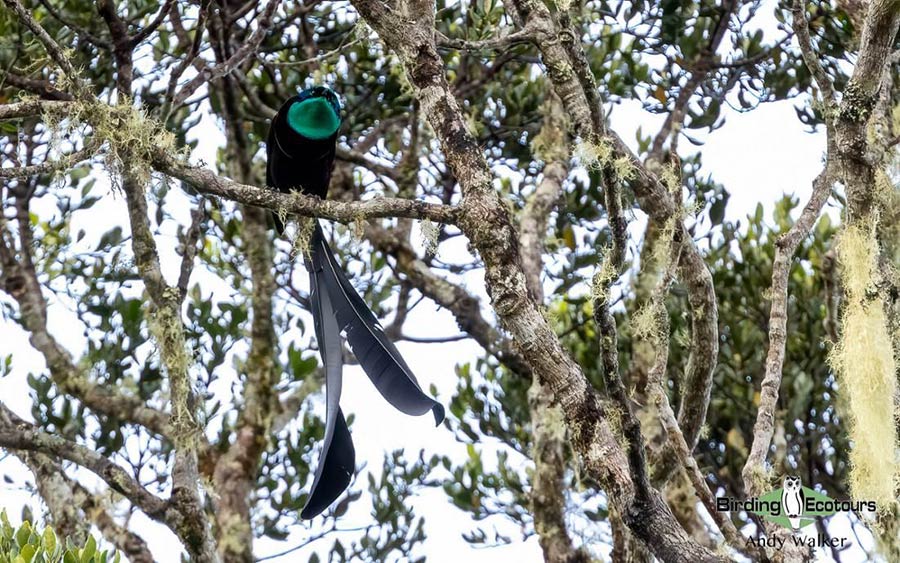 A gorgeous male Princess Stephanie’s Astrapia is another huge and spectacular bird-of-paradise.
In addition to the great birds mentioned above, we will also try and find a wide range of other top birds of PNG. Some of the possibilities include Papuan Eagle, Pygmy Eagle, Gurney’s Eagle, Papuan King Parrot, Goldie’s Lorikeet, Stella’s Lorikeet, Yellow-billed Lorikeet, Modest Tiger Parrot, Mountain Kingfisher, Belford’s Melidectes, Mountain Peltops, Tit Berrypecker, Rufous-naped Bellbird, Sclater’s Whistler, Regent Whistler, Brown-backed Whistler, MacGregor’s Bowerbird, Torrent-lark, Canary Flyrobin, Garnet Robin, Black-throated Robin, Papuan Treecreeper, Black Sittella, Papuan Sittella, Mountain Firetail, and Papuan Parrotfinch.
Overnight: Komange Eco Lodge, Sirunki
Day 8. Birding near Komange Eco Lodge, travel back to Kumul Lodge
After a final morning of birding around the Komange Eco Lodge area, we will transfer back to Kumul Lodge for our final night in this part of the highlands. We will likely remain flexible in our plans for today, depending on how things have gone over preceding days. If we get back to Kumul Lodge early there will again be plenty of great birds waiting for us there.
Overnight: Kumul Lodge, Mount Hagen
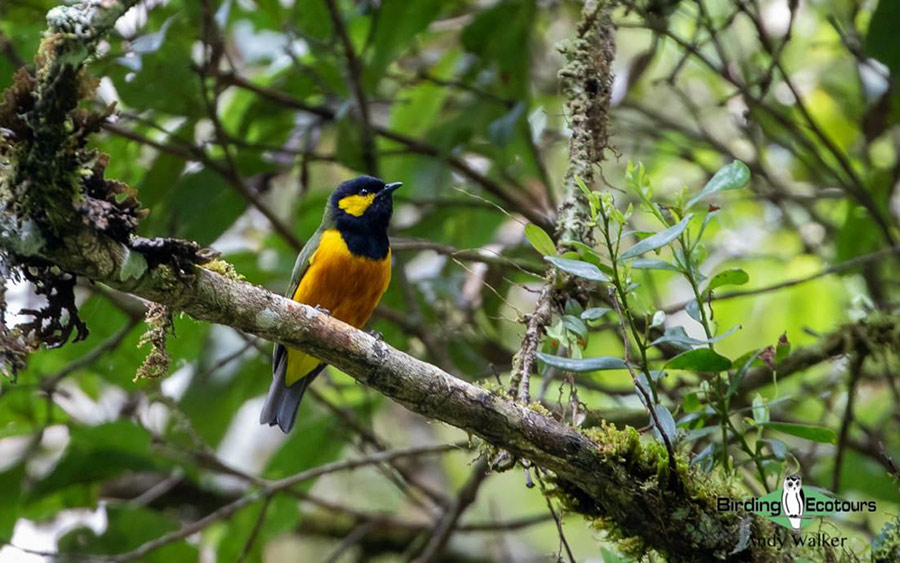 There is a sort of familiarity for birders from the Northern Hemisphere when seeing Tit Berrypecker, this attractive bird is not uncommon.
Day 9. Depart Kumul Lodge for Mount Hagen to fly to Kiunga then travel to Tabubil
Essentially a travel day as we make our way from Kumul Lodge back down to Mount Hagen. Once in the city we will take our flight west to Kiunga. From Kiunga we will drive north to Tabubil in the Star Mountains. Depending on flight schedules (and if they run to the schedule), we might have some opportunities for some roadside birding stops along the journey between Kiunga and Tabubil, and we will keep our eyes peeled from the vehicle for anything interesting.
Overnight: Hotel Cloudlands, Tabubil
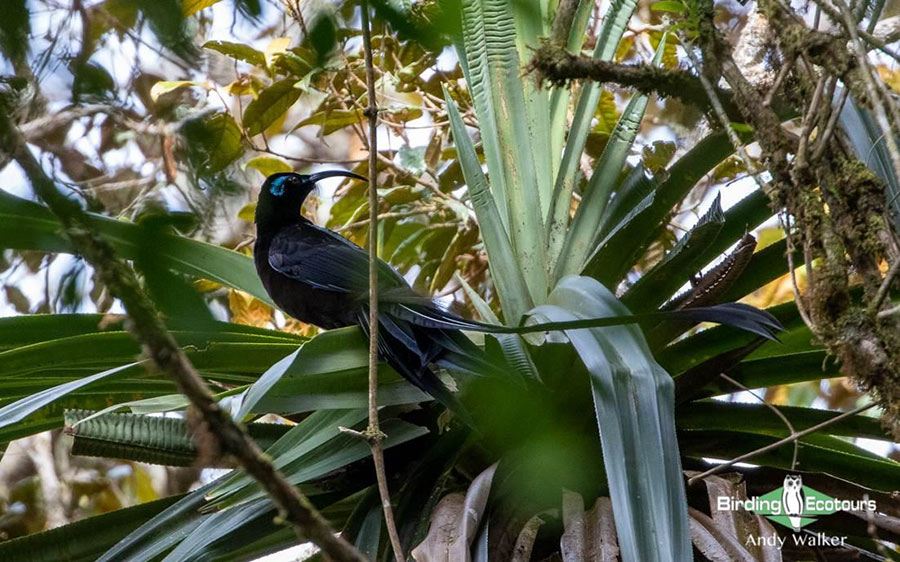 At over 3.6 feet (1.1 meter) in length the Black Sicklebill is one huge bird-of-paradise!
Days 10 – 11. Two days birding the Star Mountains and the Tabubil area
We will have two full days to explore the wonderful Star Mountains and Tabubil area. During this time, we might encounter several birds-of-paradise such as Splendid Astrapia, Queen Carola’s Parotia, the giant Black Sicklebill, and the unusual Short-tailed Paradigalla, along with chances for Greater Lophorina, Magnificent Riflebird, Glossy-mantled Manucode, King of Saxony Bird-of-paradise, Greater Bird-of-paradise, and Magnificent Bird-of-paradise. We will endeavor to find as many of these amazing birds as possible.
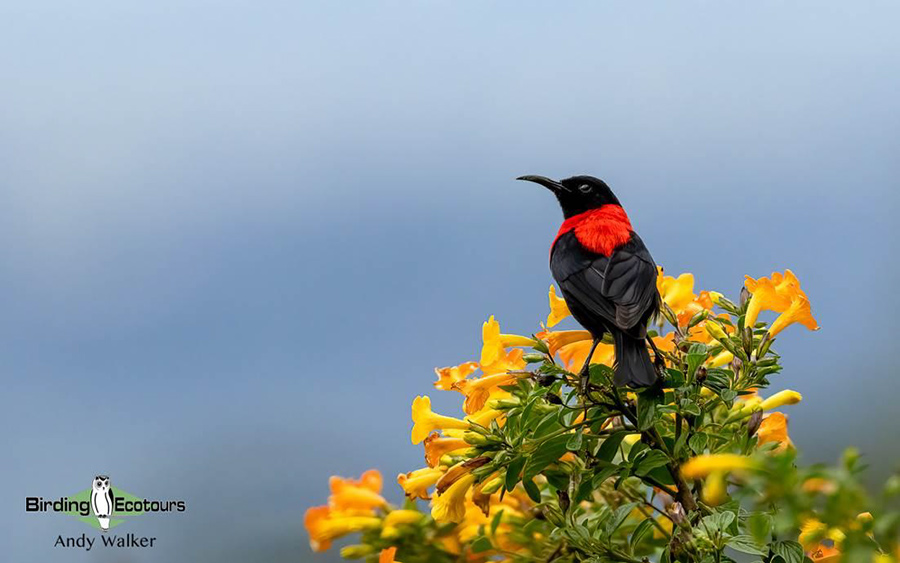 Red-collared Myzomela is one of many attractive and common honeyeaters possible on our PNG birding tour.
There are lots of other targets for us while birding in the Star Mountains and Tabubil area, with some of the more interesting birds we will look for including Salvadori’s Teal, New Guinea Bronzewing, Pesquet’s (New Guinea Vulturine) Parrot, Dusky Lory, Striated Lorikeet, Fairy Lorikeet, Red-breasted Pygmy Parrot, Blue-collared Parrot, Shovel-billed Kookaburra, Hook-billed Kingfisher, Mountain Kingfisher, Papuan Boobook, Golden Cuckooshrike, Grey-headed Cuckooshrike, Chestnut-backed Jewel-babbler, Wallace’s Fairywren, White-shouldered Fairywren, Emperor Fairywren, White-rumped Robin, Obscure Berrypecker, Piping Bellbird, Hooded Pitohui, Torrent-lark, Torrent Flyrobin, Capped White-eye, Mountain Peltops, Great Woodswallow, Mountain Honeyeater, Ornate Melidectes, Yellow-browed Melidectes, Mountain Myzomela, Red-collared Myzomela, and Loria’s Satinbird.
Overnight (two nights): Hotel Cloudlands, Tabubil
Day 12. Tabubil to Kiunga
We will have a final morning birding around Tabubil in the Star Mountains, before driving south back to Kiunga. We might get started on some of the birding sites around Kiunga, time permitting (targeting some of the birds listed for Days 13 and 15, below).
Overnight: Kiunga Guesthouse, Kiunga
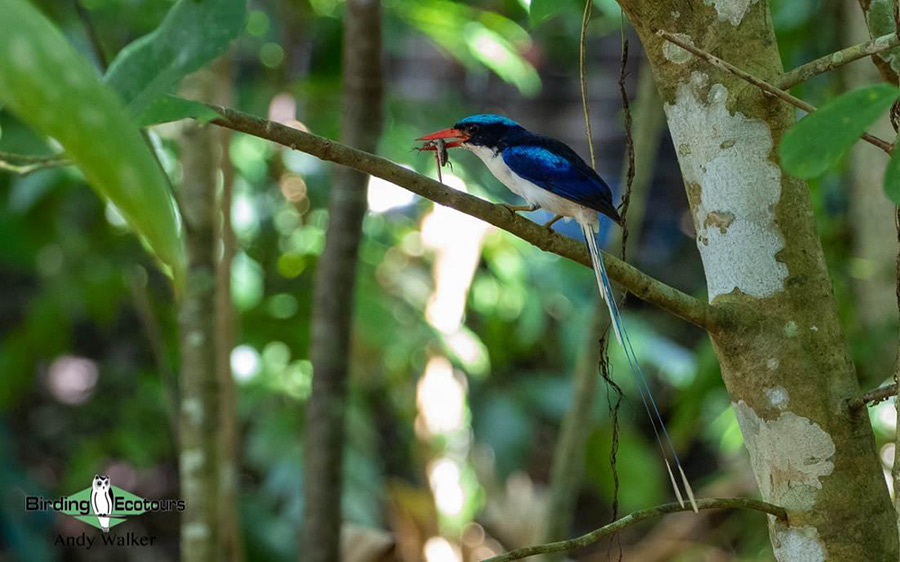 We can find both Little Paradise Kingfisher and Common Paradise Kingfisher (photographed here) while birding near Kwatu Camp.
Day 13. Birding Kiunga, then travel to remote and basic Kwatu Camp (by boat)
We will likely have a pre-breakfast birding trip near Kiunga town (this will largely be decided by our flight times on Day 15). During any pre-breakfast birding, we will target the species mentioned for Day 15.
After breakfast we will travel by boat up the Elavala River and its tributary, the Ketu River, until we arrive at the locally owned Kwatu Camp (this will take a few hours in the small boat). We will be birding along the way, and we might find species such as Black-billed Brushturkey, Great-billed Heron, Great Cuckoo-Dove, Sclater’s Crowned Pigeon, Collared Imperial Pigeon, Pinon’s Imperial Pigeon, Pink-spotted Fruit Dove, Beautiful Fruit Dove, Papuan Spine-tailed Swift, Blyth’s Hornbill, Azure Kingfisher, Papuan Dwarf Kingfisher, Common Paradise Kingfisher, Palm Cockatoo, Golden Monarch, Golden Myna, Glossy-mantled Manucode, Trumpet Manucode, and Grey Crow along the way. We will also keep our eyes peeled for any raptors that may be perched up or flying around, such as White-bellied Sea Eagle.
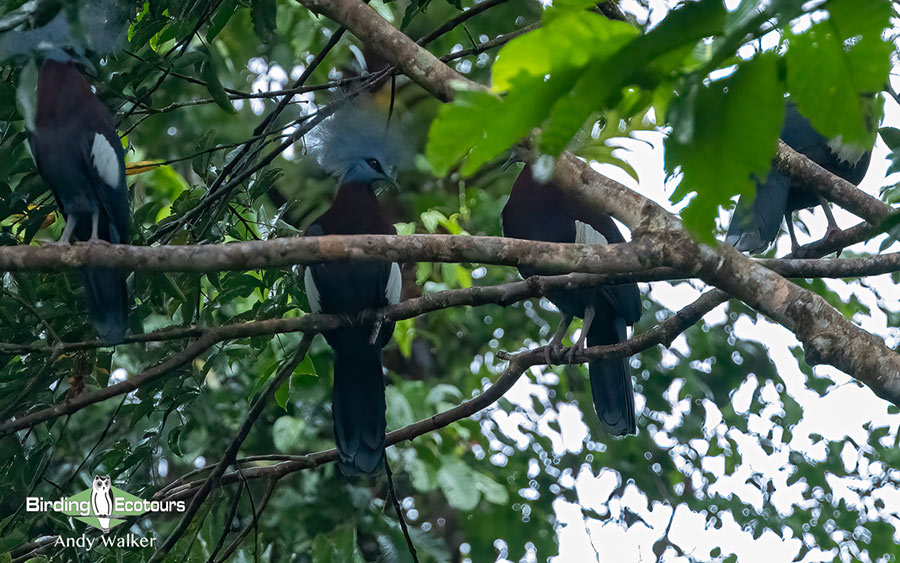
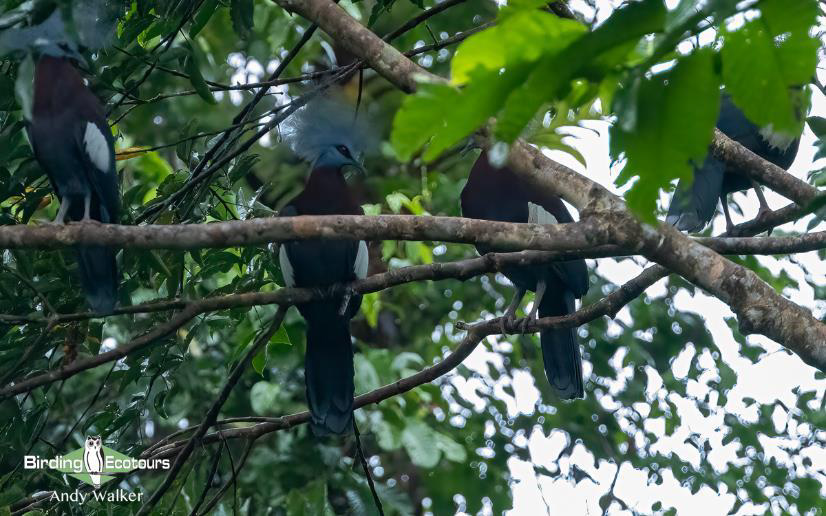 We will seek out the ginormous Sclater’s Crowned Pigeons while birding in the lowlands, they often roost near the basic Kwatu Camp.
In the afternoon, and the following morning, we will be birding around the camp and the wider area, where we might encounter some really exciting species such as Dwarf Cassowary, New Guinea Flightless Rail, Pygmy Eagle, Wallace’s Owlet-nightjar, Starry Owlet-nightjar, Marbled Frogmouth, Papuan Hawk-Owl, Common Paradise Kingfisher, Little Paradise Kingfisher, Hook-billed Kingfisher, Blue Jewel-babbler, Painted Quail-thrush, Papuan Babbler, Glossy-mantled Manucode, Twelve-wired Bird-of-paradise, and King Bird-of-paradise.
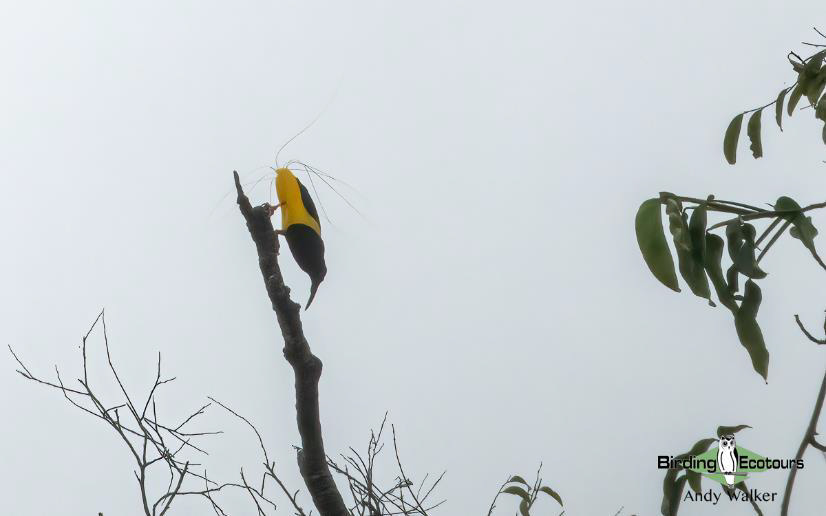 The remarkable sight of a displaying Twelve-wired Bird-of-paradise from near Kwatu Camp.
There are plenty of other great birds here too, and we will be keeping our eyes peeled for the likes of Doria’s Goshawk, Grey-headed Goshawk, Variable Goshawk, Orange-bellied Fruit Dove, Pink-spotted Fruit Dove, Palm Cockatoo, Red-cheeked Parrot, Papuan Eclectus, Dusky-cheeked Fig Parrot, Ivory-billed Coucal, Blyth’s Hornbill, Eastern Hooded Pitta, Moustached Treeswift, Southern Variable Pitohui, Emperor Fairywren, Shining Flycatcher, Black-sided Robin, Frilled Monarch, Hooded Butcherbird, Boyer’s Cuckooshrike, Golden Cuckooshrike, White-bellied Thicket Fantail, Lowland Peltops, and Black Sunbird.
Our birding while around Kwatu Camp will be largely boat-based, though there will be areas where we can get out of the boats and walk into the forests, some of this on trails, some of it more bushwhacking. Please refer to the tour-specific information for important details about our time in this remote area.
Overnight: Kwatu Camp, Ketu River
Day 14. Kwatu Camp area birding and boat trip back to Kiunga
In the morning we will be birding the area around the Kwatu Camp, again looking for some of the birds mentioned above for Day 13.
In the afternoon we will travel downriver by boat from Kwatu Camp back to Kiunga. On arrival back in Kiunga, we will transfer the short distance back to the Kiunga Guesthouse for our final night in the area.
Overnight: Kiunga Guesthouse, Kiunga
Day 15. Birding Kiunga area and flight to Port Moresby
We will likely have time this morning before our flight back to Port Moresby for some early morning birding near Kiunga. Here, we will look for Trumpet Manucode, Glossy-mantled Manucode, Greater Bird-of-paradise, King Bird-of-paradise, and Magnificent Riflebird, along with numerous pigeons and parrots, such as Wompoo Fruit Dove, Pink-spotted Fruit Dove, Superb Fruit Dove, Beautiful Fruit Dove, Orange-bellied Fruit Dove, Dwarf Fruit Dove, Palm Cockatoo, Yellow-capped Pygmy Parrot, Sulphur-crested Cockatoo, Papuan Eclectus, Red-cheeked Parrot, Red-flanked Lorikeet, Black-capped Lory, Dusky-cheeked Fig Parrot, and Double-eyed Fig Parrot. Several honeyeaters can also be seen, including Meyer’s Friarbird, and a wide range of other species, including multiple cuckooshrikes, Yellow-billed Kingfisher, cuckoos including Ivory-billed Coucal, Dwarf Koel, and Sahul Brush Cuckoo, and other top species, including Emperor Fairywren, Golden Monarch, Papuan Babbler, Papuan Spine-tailed Swift, Lowland Peltops, and possibly one of the flashiest birds of them all – Flame Bowerbird!
If our flight between Kiunga and Port Moresby is early in the day with no time for birding, we will make sure we fit our birding in around Kiunga on Day 13, prior to taking our boat trip to Kwatu Camp.
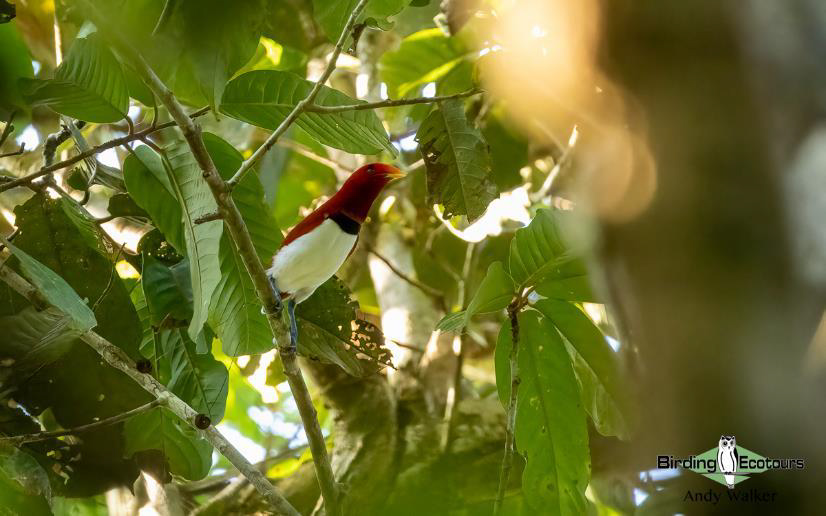 King Bird-of-paradise is a tiny and often hyperactive bird-of-paradise, it is also, like most of them, quite nice to look at!
We will fly from Kiunga back to Port Moresby, where we will be transferred back to our hotel for the final night of the tour.
Overnight: Bluff Inn, Port Moresby (or similar)
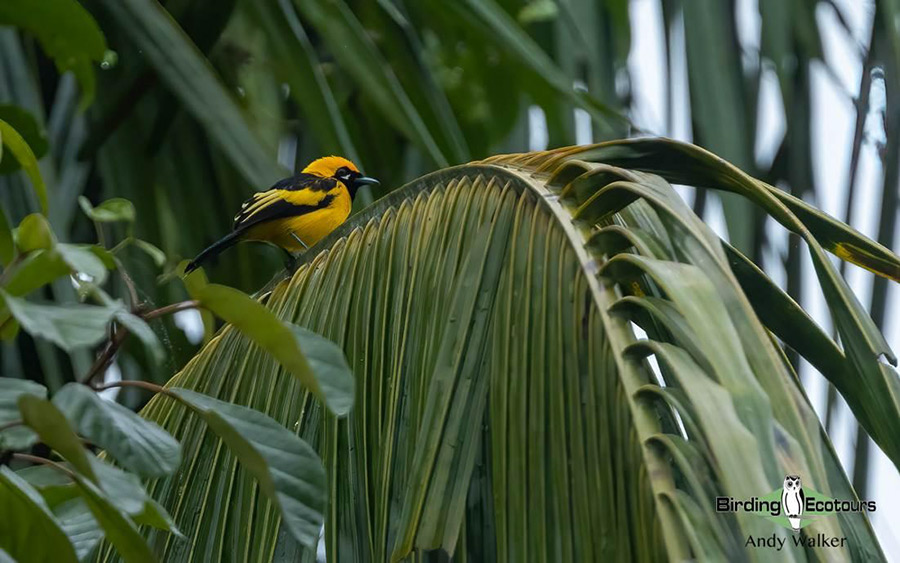 Golden Monarch is an attractive species and we will hope to get good views.
Day 16. Departure from Port Moresby as tour concludes
A non-birding day. You can leave at any time during the day (breakfast is the last meal provided and checkout time is 11:00hrs.). If you are continuing on our New Britain endemic birding tour, we will start that the following day.
Overnight: Not included
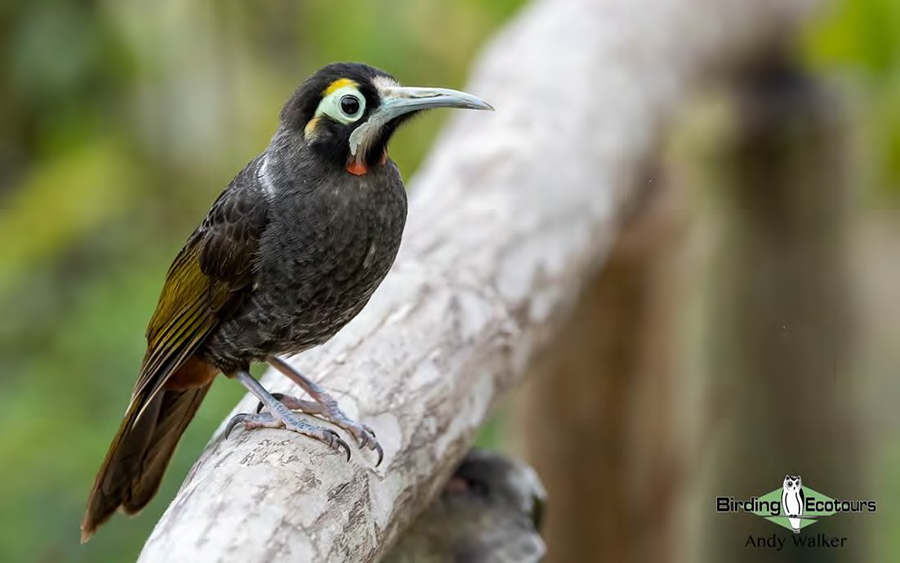 There are many honeyeaters possible on this PNG birding tour, some of the loudest and most boisterous are the melidectes, such as this Yellow-browed Melidectes.
Please note that the itinerary cannot be guaranteed as it is only a rough guide and can be changed due to factors such as availability of accommodation, updated information on the state of accommodation, roads, or birding sites, the discretion of the guides and other factors. Unreliable domestic flights may mean we need to alter the itinerary. In addition, we sometimes have to use a different international guide from the one advertised due to tour scheduling or other factors.
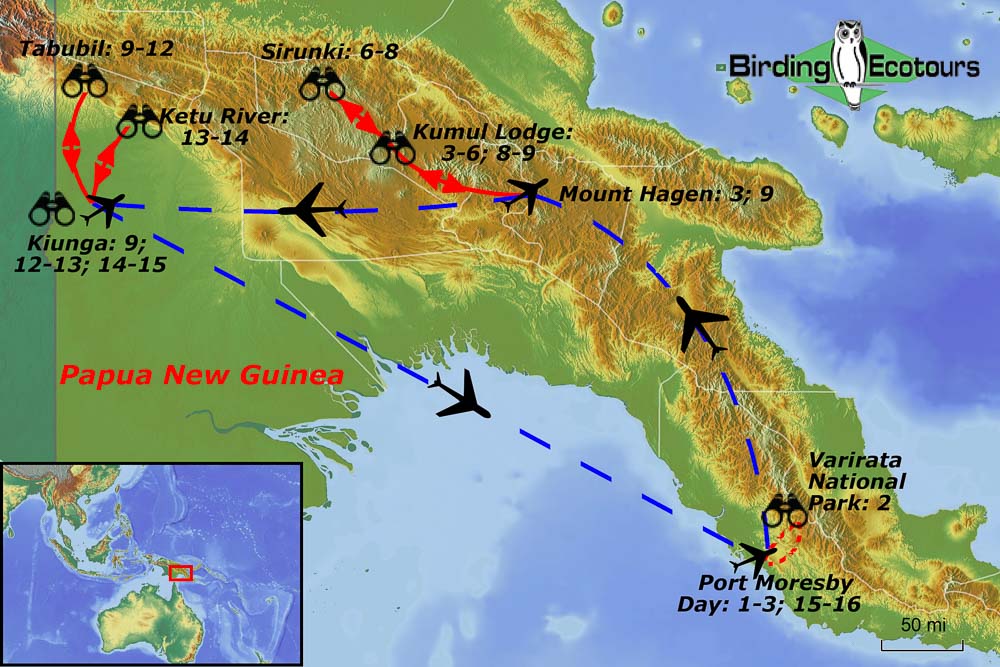
Map
Testimonials
Gallery
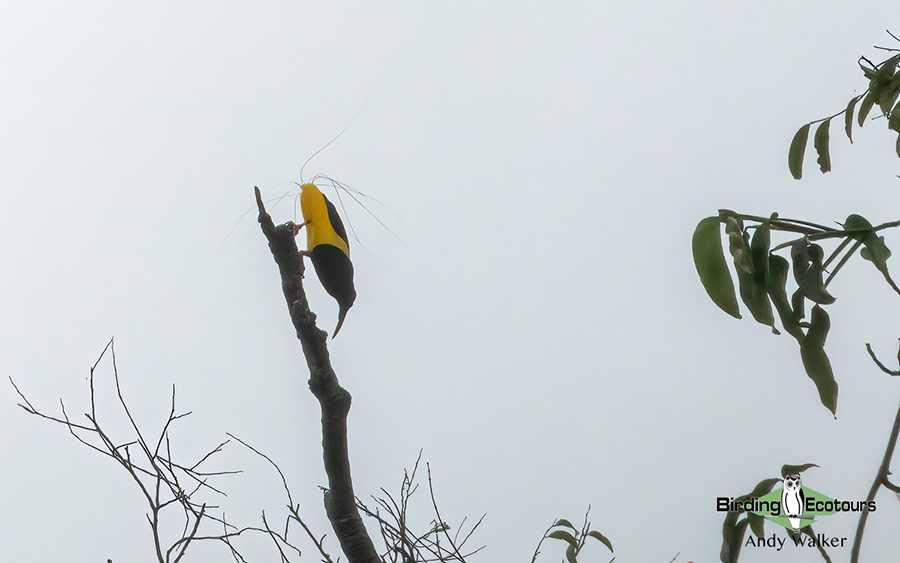
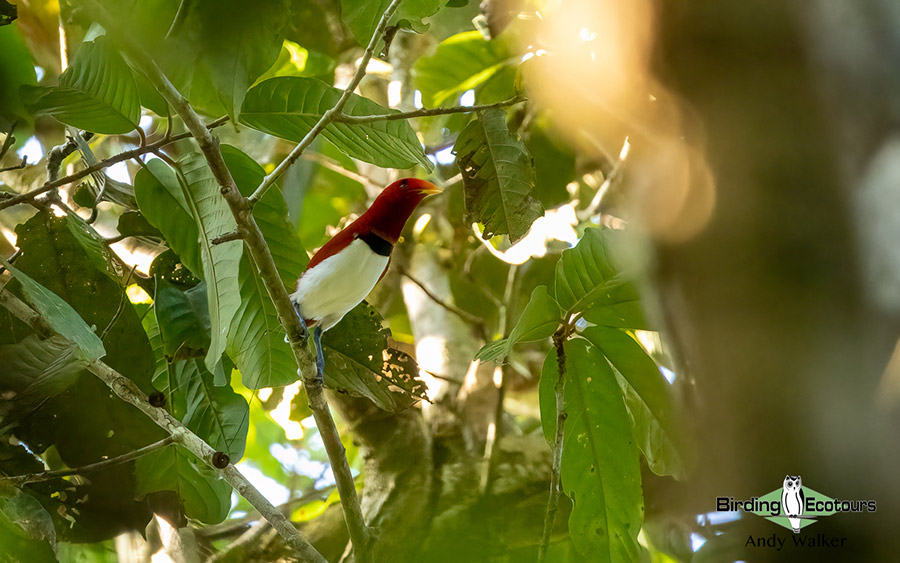
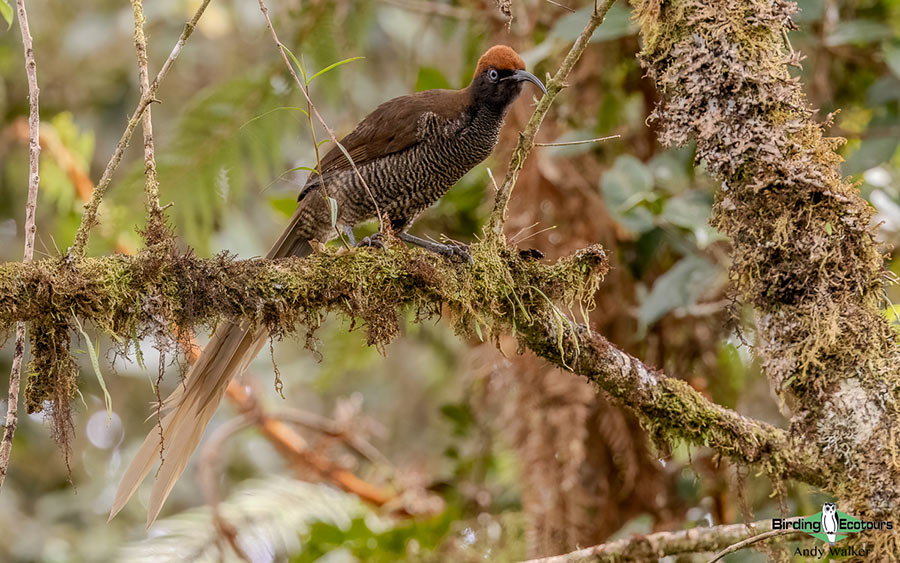
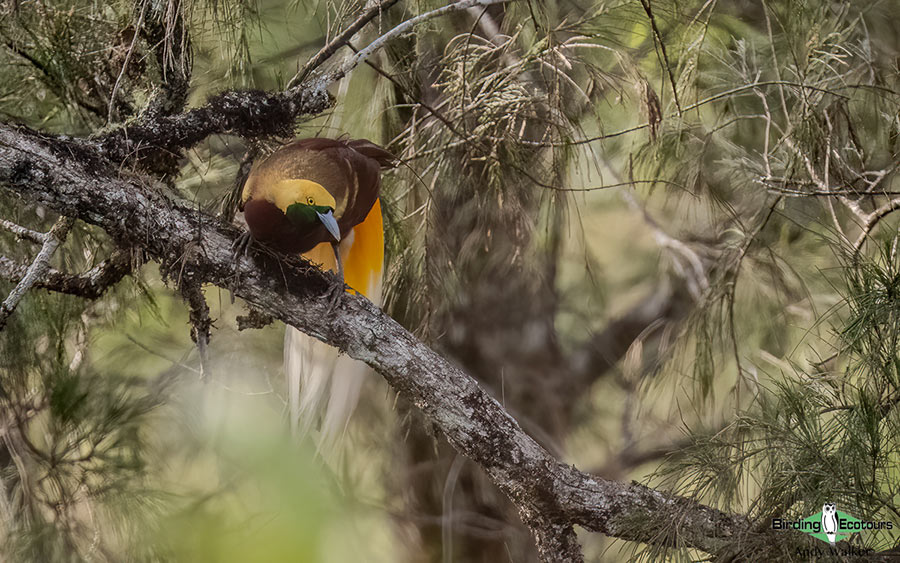
General Information
Papua New Guinea: Birding Attenborough’s Paradise
Tour-specific Information
GENERAL INFORMATION ABOUT PAPUA NEW GUINEA CAN BE READ HERE
TOUR OUTLINE
This amazing, once-in-a-lifetime birding tour focuses on the multitude of endemic birds that can be found in Papua New Guinea (PNG) and this includes numerous simply spectacular birds-of-paradise (BoPs) including Blue Bird-of-paradise, King of Saxony Bird-of-paradise, Raggiana Bird-of-paradise, Twelve-wired Bird-of-paradise, King Bird-of-paradise, Queen Carola’s Parotia, Ribbon-tailed Astrapia, and Princess Stephanie’s Astrapia. Plenty of other highlights will also be found on what promises to be an amazing Papua New Guinea birding tour. This is just a tiny sample of what’s on offer on this tour, please refer to the detailed itinerary for further details. This tour starts and ends in Port Moresby.
DAILY ACTIVITIES, PHYSICAL REQUIREMENTS, AND TOUR PACE
This Papua New Guinea: Birding Attenborough’s Paradise tour requires reasonable physical fitness and good agility to bird the relatively steep slopes found here. Papua New Guinea is one of the most remote and undeveloped countries in the world, so remember you are visiting a developing country and will be staying in remote “wilderness” areas, where there are no proper sanitation facilities. Expect many things to be very different from home.
We will shift our body clocks on this tour, rising very early but sleeping early too. Most birding occurs on narrow, sometimes swampy forest trails, and other times we will bird from wider roads and tracks that are often uneven and can be slippery. On the trails care must be taken as there are trip and slip hazards from damp roots, fallen trees, boulders, and uneven and rough surfaces. Walking sticks or hiking poles are a great idea as they provide added stability to help with balance and are compulsory for anyone who is not steady at walking, and highly recommended for everyone, no matter of ability.
Most trails are graded and rated “easy” to “moderate” in terms of physical activity with not too much up and down, but at some locations they do occur at elevation (e.g., over 7,000 feet / 2,130 meters). Some walks we make will be short, e.g. ¼ of a mile (0.4 kilometers) while sometimes it may be further, such as up to 2 miles (3.2 kilometers). Our local team are excellent at helping those less physically able at getting around the trails and in position to view the birds as required. Much of our birding is carried out from our accommodation bases, so these walks can be optional if you’d like to take a rest for some of them (and there are often great birds around our accommodation). We have more than one chance for most of the birds-of-paradise (and other excellent birds) during the tour, so sitting a session out does not mean you will necessarily miss something totally.
At some locations we may spend time within small bird blinds (which are often not particularly comfortable and may entail sitting on the ground or small stools) to get close to the various birds-of-paradise’s lekking/display sites (and sometimes other items of interest such as bowerbird bowers). Any minor temporary discomfort will, however, likely be well worth it.
Note that in each year the specific locations of the birds-of-paradise lek sites may change due to numerous factors beyond our control. Sometimes birds can be found displaying next to nice easy access points with very limited and simple walking, but at other times they can be further away and take much more effort to reach, sometimes involving a walk on difficult terrain for a longer period. We will try and provide as much information ahead of each hike for each specific bird-of-paradise lek site/birding adventure, to help you know what to expect and make any decisions on whether you want to miss a particular hike. When possible, we will take the easiest option, but sometimes the easiest option can also result in a fair bit of effort to reach. Sometimes at some locations we may find birds-of-paradise and other key birds in our accommodation gardens!
For the most part, this tour does not offer amazing photographic opportunities of the birds-of-paradise. Don’t expect to be getting views or photos like you will have seen on TV documentaries or in publications. The reality is that these short movies and glossy images can take months or years in the making. Many of the birds-of-paradise (and other birds such as pigeons and parrots) can be extremely nervous, due to a history of being hunted for feathers for traditional headdresses etc. Most of the birds-of-paradise we encounter on this tour are birds feeding rather than displaying, nevertheless, we do usually find some birds displaying, such as the spectacular Raggiana Bird-of-paradise, King Bird-of-paradise, and Twelve-wired Bird-of-paradise. It is also worth noting that some birds-of-paradise display very high in the treetops (e.g. King of Saxony Bird-of-paradise) or in deep dark areas of bush (e.g. Magnificent Bird-of-paradise) thus making photography challenging. If you are interested in bird-of-paradise photography, our West Papua tour is considered better for that than this tour, as we have access to more species coming to and displaying in front of bird blinds/hides in West Papua.
The information within this document and the Papua New Guinea general information linked from the top of document will hopefully help in your preparation for this tour, and please do contact us if you have any requests for specific or further information. The local people here are incredibly proud of their forests and their birds, and they love to share these with us. Tourism in Papua New Guinea provides valuable income for the villagers and protects the forests for the birds and future generations.
We recommend that if you decide to join this tour (no matter your fitness level) that you work on your physical fitness prior to it, hiking up and down hills/steps is a good way to prepare.
TRANSPORTATION
We use a wide range of transport on the tour, and this will likely include (when around Port Moresby) 24-seater coaster buses and 15-seater vans limited to nine seats. We might also make use of similar vehicles when in more remote locations and likely also 4×4 vehicles (such as Toyota Hilux or similar). We require that you are fit and flexible and can maneuver yourself into these high-clearance vehicles. We ask everyone to please be aware of the amount of extra equipment they bring into the seating area of the vehicles, as there will not be much room in some vehicles. Most of the roads away from the towns are rough and windy (bring motion sickness tablets if you suffer from motion sickness) and at times this can be a little uncomfortable. This is the only way to get to some of these remote birding places, so it’s worth the effort when you see the amazing birds! Please remember our seat rotation policy as detailed in the PNG general information document.
We will also take several boat trips during the tour, such as when we are on the Elavala River and Ketu River, when we make our way to and from Kwatu Camp. Accessing the boats may require climbing up or down a ladder onto/off a pier or possibly a wet landing. This will be on an open/exposed boat and the journey will take somewhere in the region of 2.5 hours. We will also use boats from the camp to get to some specific areas for birding. Protective gear to keep bags, optics, and cameras dry is essential in case it rains during these exposed journeys, similarly, you’ll want to have your rain jacket, poncho, umbrella etc. with you. Protective gear for the sun will also be necessary when we’re on the boats (such as hat, sunglasses, sunblock etc.).
We will make several domestic flights during this tour (see the “Domestic Flights” section below) as this is the best, and sometimes only, way to get between the best Papua New Guinean birding sites.
DOMESTIC FLIGHTS
This tour requires several domestic flights. The costs for these flights are not included in the tour cost. Once we confirm the tour, we will purchase flight tickets for everyone in the group at the same time to ensure we are all on the same flights, and the cost will be added to your tour balance payment that is due no later than two months prior to departure. The costs for domestic flights in PNG are higher than flying domestically in many other countries, and so the costs for domestic flights for this tour are rather expensive.
We try and use scheduled flights when possible and the baggage allowance for these flights is 35 pounds (lbs) / 16 kilograms (kgs), with 15 lbs (7kgs) for hand luggage. Weight limits must be strictly observed. Further details are contained within the general information for PNG.
Any overweight baggage will likely incur costs on scheduled flights and will need to be paid in cash to the airline at the airport, so sticking to the weight allowances is very important. The small regional airlines are strict and, if you come with inappropriate or excess baggage when boarding these small aircraft, your bags will be off-loaded and you will be required to re-pack, thus causing undue stress on yourself, the pilot, ground operational staff, and your fellow travelers.
Please note the itinerary for this tour may change as a result of airline schedule changes that are beyond our control. This might result in us having to run the tour in a different order, or miss some locations altogether.
LUGGAGE
Please pack as lightly as possible for this tour (noting the expected weight allowance of the domestic flights detailed above). A medium, soft-sided, and robust duffle bag is likely to work best for packing in the tour vehicles and on the planes we will use. We recommend a daypack be used to keep items that you wish to use daily when in the vehicle or when birding in the field. A small overnight bag (or your daypack) will be best for our overnight trip from Kiunga to Kwatu Camp, with the rest of the luggage being stored securely at our accommodation in Kiunga.
SAFETY AND SECURITY
Your safety and security is our paramount concern on this Papua New Guinea birding tour, as on all of our worldwide bird tours. That is why we have provided detailed information within this tour-specific information and the Papua New Guinea general information linked at the top of this document. It is essential that you read these documents (and the equally important documents linked from those documents) before the tour, to be fully up to date on the latest safety and security situation in Papua New Guinea. We consider PNG to be a less safe destination than most others we visit on our tours.
ACCOMMODATION
In Port Moresby we stay at the basic but comfortable motel-like Bluff Inn, located approximately 10.5 miles (17 kilometers) outside the city. This accommodation is conveniently located for birding at Varirata National Park and the Pacific Adventist University campus.
Kumul Lodge is one of the best-known landowner eco-tourism lodges in Papua New Guinea. It is located at 8,585 feet (2,861 meters), about an hour from Mount Hagen. The lodge offers clean but basic accommodation with private showers and toilets. Kumul Lodge has a short network of nature trails and has a wonderful birding veranda where you may even see some birds-of-paradise coming to bird feeders. Rooms are not particularly well insulated (if at all), so can get cold at night and can feel damp. Electric blankets might be available.
Komange Eco Tourism Lodge, located at Sirunki near the Mt. Komonge Ridge, is about two hours’ drive north of Kumul Lodge. This is another basic highland landowner eco-tourism lodge, serving hearty home cooked food with basic but clean accommodation in a good birding area. Rooms are not particularly well insulated (if at all), so can get cold at night and can feel damp.
Kiunga Guesthouse is a basic motel-like hotel in the mining and port town of Kiunga at around 213 feet (65 meters) in elevation. Some bedrooms have ensuite bathrooms and some share communal bathrooms, all are basic but functional. It is hot, wet, and very humid here.
Kwatu Camp is an extremely basic wooden shack camp in the middle of the very hot and humid (wet) forest and far away from any form of civilization, with extremely basic facilities and basic tinned food. We will spend just one night here, submerged deep in the Papua New Guinean rainforest, an excellent base for looking for rarely seen birds. There is no electricity here, so there is no power or charging facilities. There is some solar power for basic lighting, and candles are also provided. Single beds, along with simple bedding and a towel, are provided, these usually have mosquito nets too. Toilets are bush (pit) toilets, and washing is done in a nearby creek, or with a cold bucket shower (there are no bathrooms here and there is no hot water) – this is a real wilderness experience, for one night, but worth it for the birds on offer. There is no phone signal in this area.
Hotel Cloudlands is virtually the only accommodation in Tabubil town and sits at an elevation of 1,640 feet (500 meters). It is comfortable but basic, with air-conditioning and a restaurant. This is the best option for exploring the Star Mountains. This area can be very wet, with rain for 9-12 months of the year.
ELECTRICITY
Not all places we visit will be connected to mains electricity supply, please see details in the “Accommodation” section above for some specifics. Note, specifically, that there is no power at Kwatu Camp, where we will stay for one night, so make sure you have prepared in advance for the stay there (e.g., torches, spare batteries for cameras, powerbank to charge phones etc.).
COMMUNICATIONS
In order to access PNG mobile coverage, mobile phones need to be unblocked and a PNG sim card has to be purchased. This should cost around K10 (around US$2.5 in April 2025) per sim card, and our team at Port Moresby will be able to assist in getting this sorted out. It is relatively straightforward to organize as soon as you get into the arrivals hall, after collecting your bags at Jackson’s International Airport. We should have some sort of phone service around most of our tour route, except for our time around Kwatu Camp, which is in a very remote area. It is worth notifying your family prior to departure that while staying away from Port Moresby you will have very little phone/internet connectivity.
TIPPING
Please do not give gifts to individuals in villages. If you wish to do so, please discuss this with the lodge managers, who will either distribute the gifts evenly amongst the people or help you contact a community leader. If you would like to take gifts for villagers, items like basic school supplies, such as exercise books and pens, are more useful and appreciated, rather than candy and other trinkets. Please see the “Tipping” section in the PNG general information document for important details.
WHAT TO BRING: CLOTHING AND OTHER ITEMS
The following is a list of useful items to bring on this Papua New Guinea birding tour and should be read in conjunction with the Papua New Guinea general information document.
- A field guide to the region. Either of the following books are suitable.
- Birds of New Guinea: Including Bismarck Archipelago and Bougainville – Phil Gregory (2017), Lynx Edicions. This field guide has a clear and modern layout and current take on New Guinea, but is only available as a hardback and is expensive. Note that the second edition of this book is due out in late 2025.
- Birds of New Guinea – Thane K Pratt and Bruce M Beehler (2014), Princeton University Press, 2nd Edition. This field guide is older (and so taxonomically a bit behind current knowledge) and more ‘arty’ than the above guide, with some plates tough to follow, but is a softback and is affordable.
- Hiking pole or walking stick to help on the tracks and trails. A walking stick is compulsory for anyone who is unsteady walking, as we feel this is a safety issue; we don’t want anyone slipping on the trails or anywhere else. Please discuss with us if you are unsure whether you will need one or not.
- Torch (flashlight) and/or headlamp (headtorch), and spare batteries. Essential kit for when/if there is no power in the accommodations, such as at Kwatu Camp, where there is no power. We will also likely be setting off into the forest when it is still dark. A headlamp (headtorch) allows hands to be kept free to hold walking poles, handrails etc.
- High concentration DEET insect repellant, or similar.
- Wet wipes or similar for cleaning off hands and face, particularly likely to be useful when at Kwatu Camp, with no facilities to speak of.
- Anti-malarial tablets per your doctors/travel clinic recommendations.
- Leech socks – useful, particularly if it is wet, as is to be expected in some of the places we visit on this tour. Chiggers can be a nuisance near Kwatu Camp and leech socks may reduce impact from them.
- A small personal first aid kit. See the suggested items from the Centers for Disease Control and Prevention (CDC), here.
- Rubber boots are considered essential footwear in the muddy conditions found in some of the lowlands and riverine areas we will be birding in, especially if there has been rain. Walking boots are likely better for the mountain birding we will be doing. A set of sandals (flip-flops) and/or trainers would be useful for walking around some of the accommodation, but are not suitable for birding time (e.g. consider snake bites, mud, slips, trips, and falls, etc.).
- Quick-drying birding clothes (in suitable forest colors) are the best for this tour. A good selection of clothing layers (including sweater/jumper/fleece) are also recommended for time at the higher elevations, where temperatures will be much lower than in the lowlands and will feel cold, especially at night. (See the “Weather/Climate” section in the general information document for further information on likely temperatures during the tour).
- Something warm to sleep in when in the mountains, as the temperatures do drop and the basic rooms can get rather cold.
- Rain jacket (and small umbrella) as rain could fall at any time at any location.
- A coat/fleece for the time in the mountains, when temperatures will be lower and feel cooler.
- Some of the places we stay have swimming pools.
- A small hand towel or wash cloth can be handy for cleaning and drying things when in the rainforest. Not essential, but people do find these handy.
- A dry bag to keep valuable documents in, such as passports, cell phones, wallets etc., as well as cameras, if it rains. We consider this essential if you want to ensure your belongings stay dry. Additional dry bags or protective coverings for bags for when we take uncovered boat trips.
- Power bank – essential if you want to charge items on the go, note Kwatu Camp has no power.

Important Notes
Domestic flights note:
Please note that the tour price does not include domestic flights in PNG, these are estimated to be in the region of around US$1,000 per person (for the 2026 tour). We will book these tickets for everyone to ensure we are all on the same flights. The costs for these tickets will be added to your tour balance payment.
Please read the general and tour-specific information for important details on baggage allowances for this tour. You can leave excess baggage in our hotel in Port Moresby or with our local team on the ground. Similarly, when we go to the remote Kwatu Lodge for one night we can usually leave most of our luggage behind at our accommodation in Kiunga.
It is worth noting that PNG is plagued by domestic flight delays and cancellations for a variety of reasons. It goes without saying that any such issues are out of our control, but please rest assured we will do our best to try and salvage any such situation as best we can, working closely with our local team but it may mean minor or major itinerary changes.
Safety and security note:
Papua New Guinea is a mind-boggling destination for birds, wildlife, and culture, because it is one of the world’s last great, unexplored frontiers. However, frontiers can be risky places. The Australian government’s travel advice provides a good outline of the types of risks in PNG (see here), but please check the advice of your own government too.
Birding Ecotours exercises extreme care in planning and coordinating its tours, and we stay alert to and avoid areas of trouble, with frequent liaison with our team on the ground. Birding Ecotours does require, however, that all birders on our PNG tours have a comprehensive travel and medical insurance policy that specifically covers PNG. We consider it a less safe destination than most, and we need potential participants on our tours to this country to be aware of this and provide us with evidence of suitable insurance cover. We will provide each tour participant with detailed tour information packages prior to departure, in terms of general information for Papua New Guinea and information specific to this tour. It is essential you read through these documents ahead of the tour.
Visa note:
Most people visiting PNG will require a visa, we will provide you with the documents you will need from us, and our local team ahead of you making your visa application, and we will give you up to date instructions to help in this process (see the general information documents for more details).