- Duration:
- 7 days
- Group Size:
- 4–6
- Tour Start:
- Durban, South Africa
- Tour End:
- Durban, South Africa
Budget South Africa Birding Tour: Zululand Specials
Details
2027
10–16 May
Per person sharing
R48,790 ZAR
$3,101 USD / £2,342 GBP / €2,768 EUR
Single supplement
R7,040 ZAR
$447 USD / £338 GBP / €399 EUR
2028
10–16 May
Per person sharing
R54,170 ZAR
$3,443 USD / £2,600 GBP / €3,073 EUR
Single supplement
R7,820 ZAR
$497 USD / £375 GBP / €444 EUR
Itinerary
Download ItineraryBudget South Africa Birding Tour: Zululand Specials
This Zululand birding tour forms part of our carefully designed budget circuit, which also includes Cape Town, northern South Africa, and the Northern Cape. Together, these tours offer an opportunity to explore South Africa’s ecological diversity, from arid desert systems to coastal forests, fynbos, and savanna. By combining these destinations, participants can build a well-rounded bird list while experiencing a wide range of habitats and endemic-rich regions. While some tours focus on species numbers and others on localized endemics, KwaZulu-Natal’s Zululand region offers a strong combination of both.
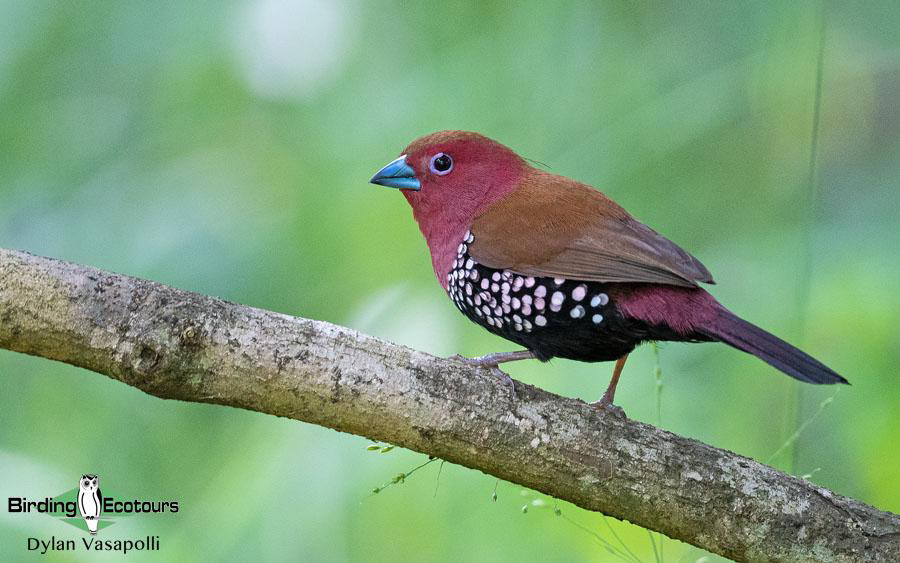
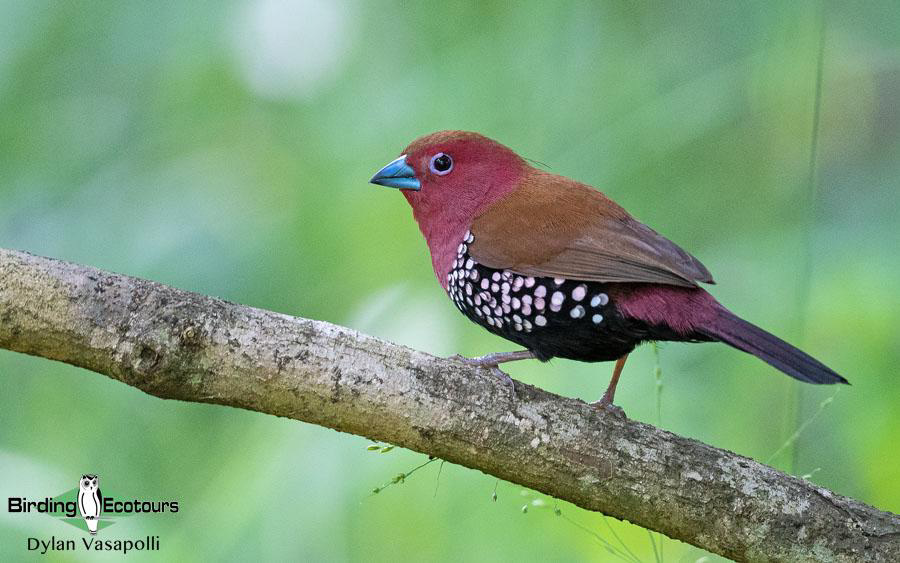 The delightful Pink-throated Twinspot is a major Zululand special, and one of our main targets on this tour.
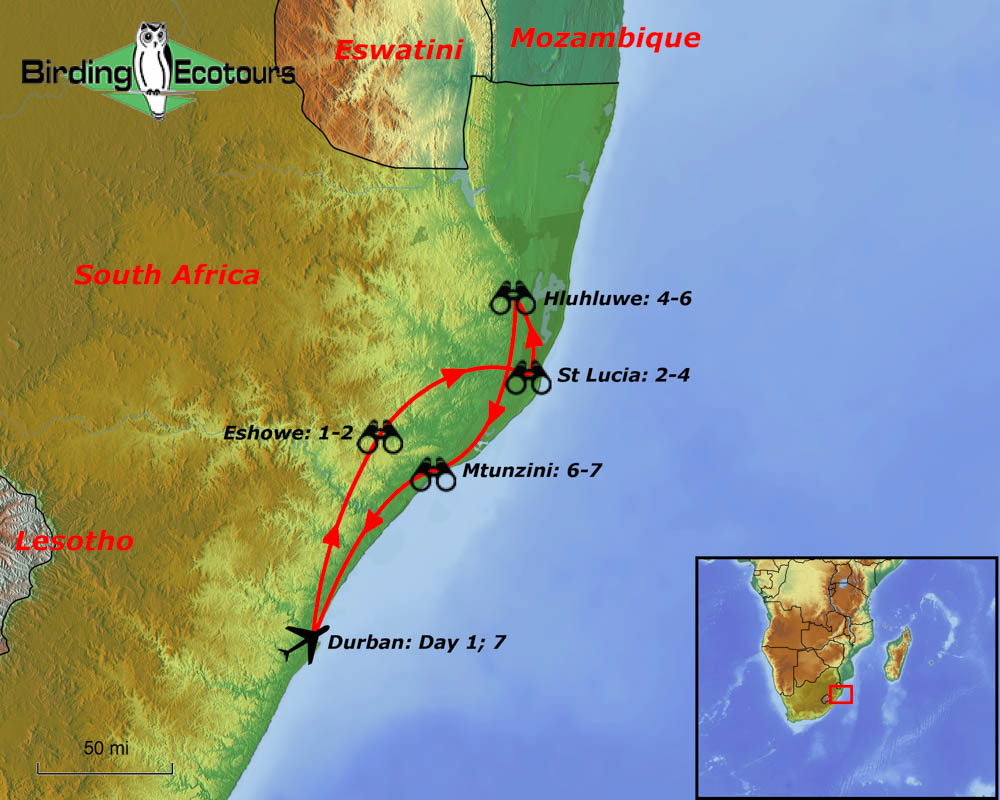
This budget tour showcases a carefully selected range of Zululand’s most rewarding birding destinations, while maintaining comfortable and affordable accommodation. We begin in the forested hills of Eshowe, known for its endemic and forest-specialist species, before moving to the St Lucia area within iSimangaliso Wetland Park, where wetland, estuarine, and coastal habitats offer excellent birding. We then continue into the Hluhluwe region, exploring a mosaic of sand forest, savanna, and grassland, each supporting its own suite of species. The tour concludes along the coast at Mtunzini, where estuarine and coastal forest systems provide a final set of birding opportunities.
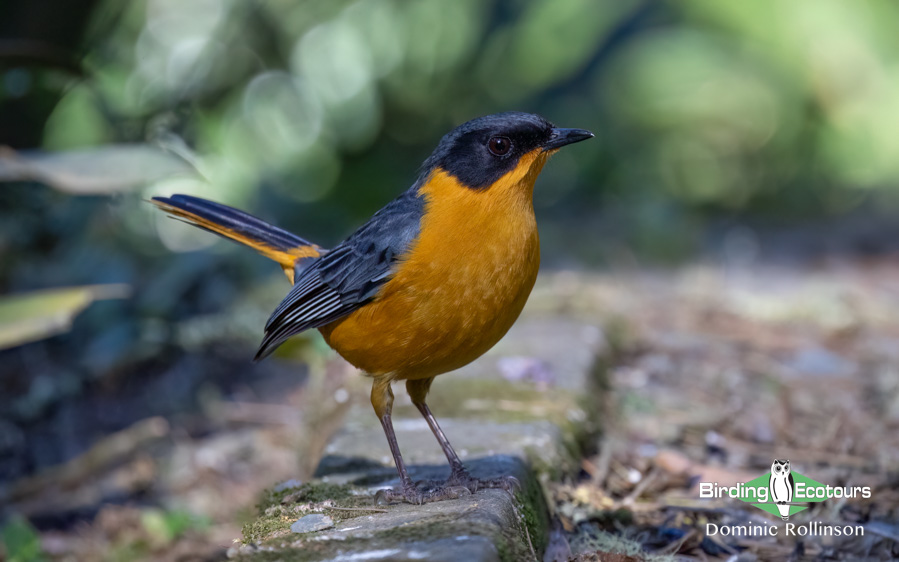
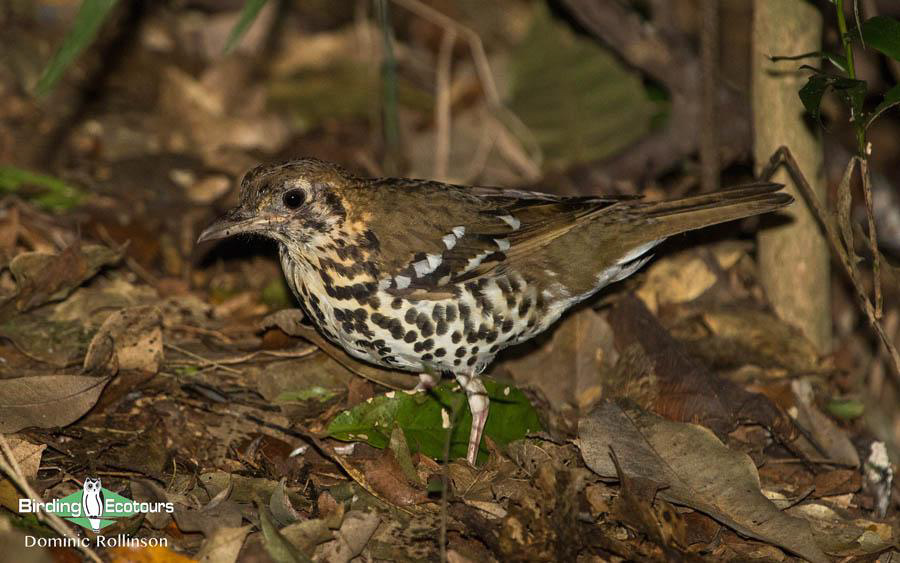
Across these habitats, we will target a wide range of regional specials and sought-after species. Highlights may include African Pygmy Goose, Southern Banded Snake Eagle, Palm-nut Vulture, Eastern Bronze-naped Pigeon, Green Barbet, Narina Trogon, Spotted Ground Thrush, Rudd’s Apalis, Neergaard’s Sunbird, Pink-throated Twinspot, Woodward’s Batis, Lemon-breasted Canary and Mangrove Kingfisher.
In addition to the birdlife, Zululand also offers rewarding mammal encounters. Species such as Common Hippopotamus, White Rhinoceros, Nyala, Giraffe, and Common Warthog are regularly seen, and even Leopard could be seen with some luck.
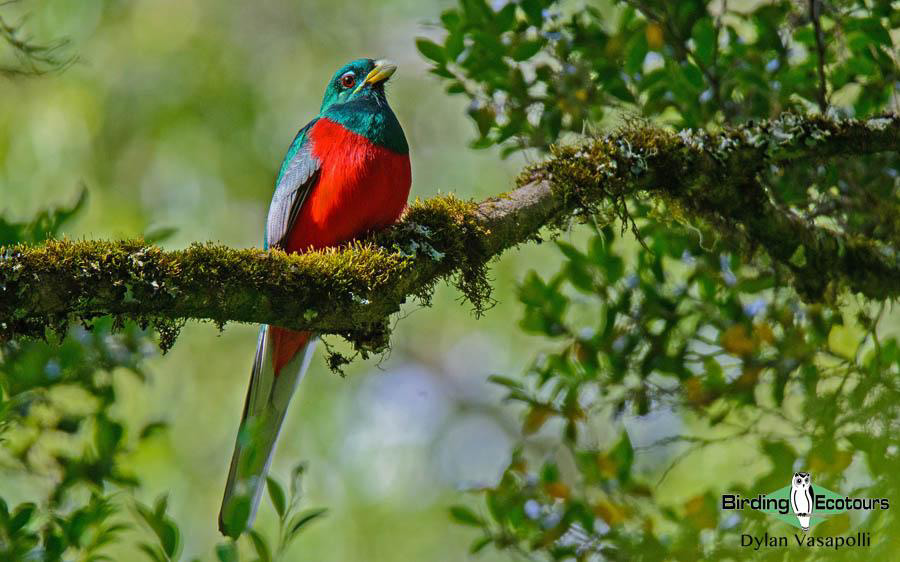
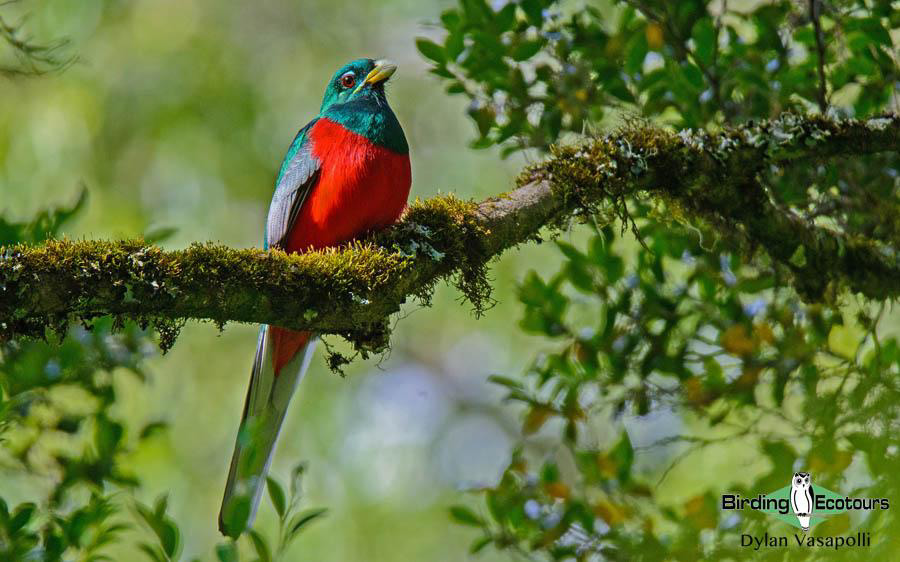 Trogons are a highly prized family of birds worldwide. South Africa has just one species, the Narina Trogon, which is a prime target on this tour.
Detailed Itinerary (7 days/6 nights)
Day 1. Arrival in Durban and transfer to Eshowe
This budget Zululand birding tour begins in Durban, one of South Africa’s key coastal gateways. We ask that you arrive by 2 p.m. today, as we have a short transfer to get to our accommodation this afternoon. For those joining this tour after our Budget South Africa Birding Tour: Cape Town’s Fynbos Endemics, you will arrive from Cape Town this morning. Upon arrival in Durban, you will be met at the airport and link up with the group.
En route to our accommodation, we will travel through a mix of coastal lowlands, farmland, and scattered wetland systems, offering our first introduction to the region’s birdlife. Species such as Long-crested Eagle, and African Woolly-necked Stork are characteristic roadside sightings, while brief stops may produce species typical of subtropical lowlands, including Purple-crested Turaco, Crowned Hornbill, Square-tailed Drongo, Red-capped Robin-Chat, Collared Sunbird and Spectacled Weaver.
If time allows, we may make a short stop at productive wetland sites, where a variety of waterbirds can be expected. These areas may support species such as Red-billed and Blue-billed Teals, African Jacana, Goliath Heron, Great White Pelican, Rufous-winged Cisticola and possibly even African Pygmy Goose.
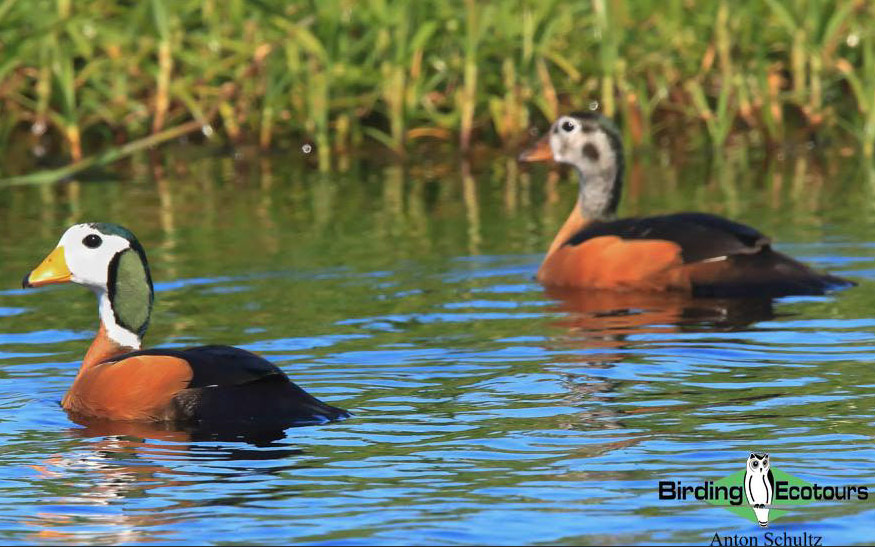
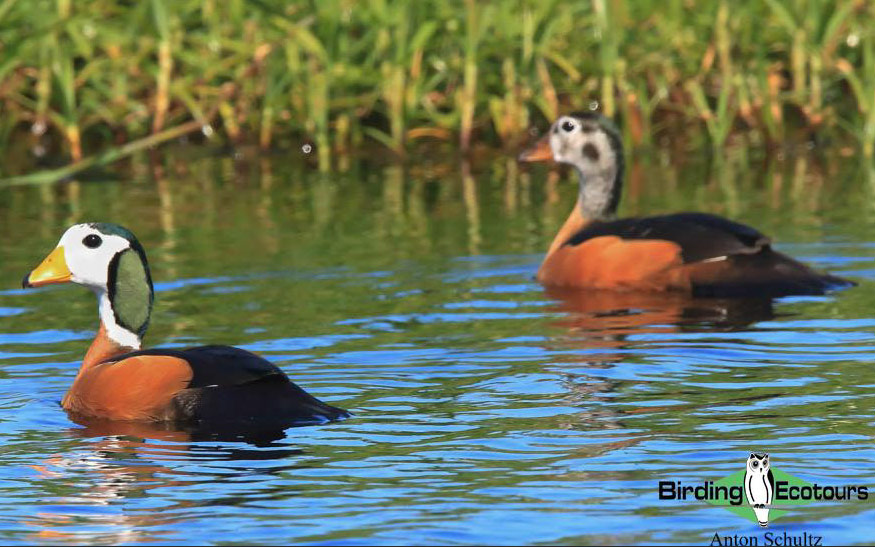 African Pygmy Goose has to be one of the cutest geese in the world.
As we approach Eshowe, the landscape transitions into patches of natural coastal and scarp forest, marking our entry into one of Zululand’s key birding regions. We aim to arrive in the late afternoon, allowing time to settle into our accommodation. Depending on time and conditions, there may be a short opportunity for introductory birding around the area.
In the evening, we will enjoy our first dinner together and discuss the birding to come over the next few days. With some luck, we may even have African Wood Owl visiting our accommodation.
Overnight: Eshowe
Day 2. Dlinza forest and transfer to St Lucia
We begin the day with an early morning visit to Dlinza Forest, one of the finest remaining patches of coastal scarp forest in southern Africa. This rich indigenous forest offers excellent opportunities for a range of sought-after species, and we will make use of the well-known aerial boardwalk and canopy tower, which provide a unique vantage point into the forest canopy. Early mornings here are particularly productive, with chances of encountering Eastern Bronze-naped Pigeon as they move or call from the treetops. Other key species include Narina Trogon, Spotted Ground Thrush, Chorister Robin-Chat, Green Twinspot, Grey Cuckooshrike, and Scaly-throated Honeyguide.
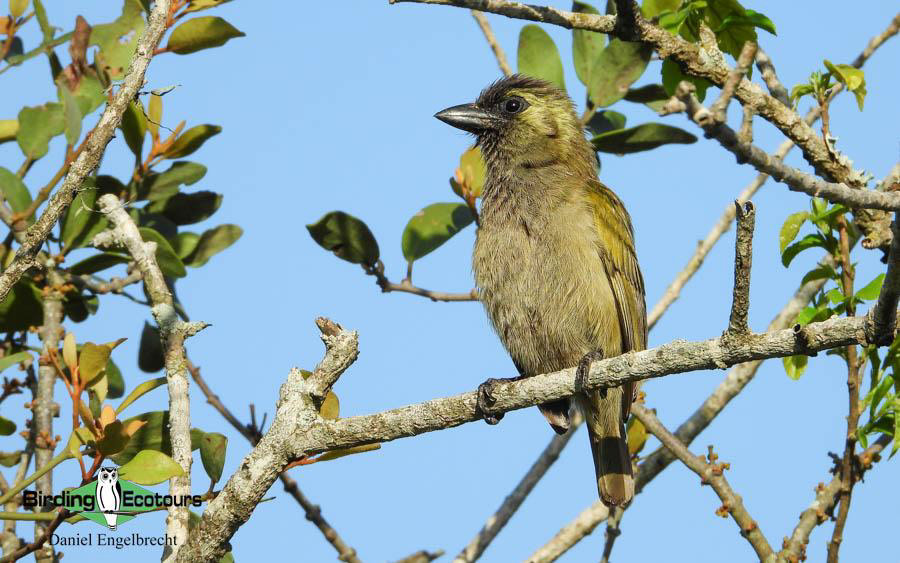
After our morning in Dlinza, we begin our journey north possibly making a detour past Ongoye Forest, the only site in South Africa for the highly localized Green Barbet. This species can be extremely challenging, but time spent along the forest edge and access roads may also produce Yellow-streaked Greenbul, Green Malkoha, Brown Scrub Robin and further chances for some other key forest species.
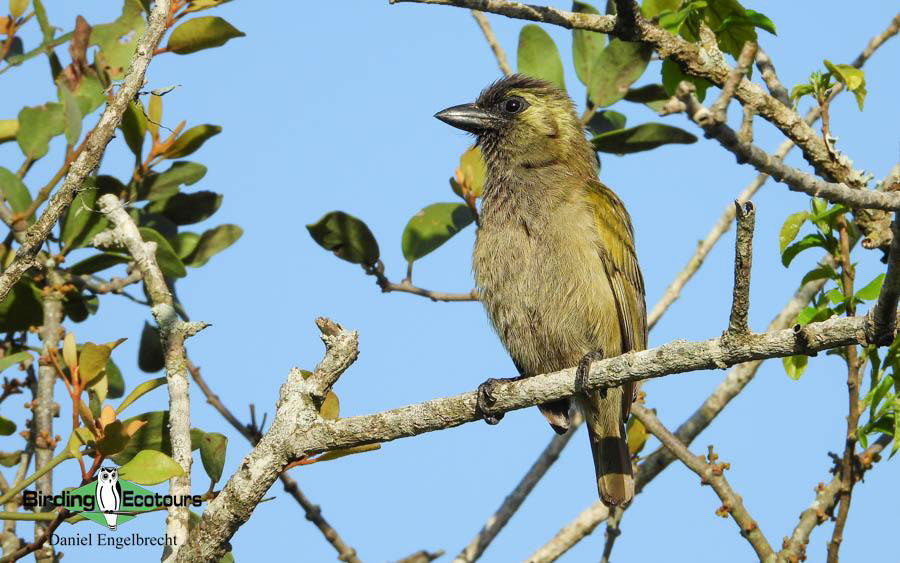 The restricted distribution of the Green Barbet is believed to be linked to the availability of fruiting figs at any given time of year in Ongoye Forest.
We continue towards the holiday town of St Lucia. As we enter town, we have excellent chances of encountering Southern Brown-throated Weaver alongside the more widespread Eastern Golden Weaver, often in close proximity.
Later in the afternoon, we will likely explore the iGwalagwala Trail, a well-known patch of coastal forest on the edge of town. Species we may encounter here include Livingstone’s Turaco, Trumpeter Hornbill, Narina Trogon, Olive Bushshrike, Green Malkoha, Grey Sunbird, Black-throated Wattle-eye, and Dark-backed Weaver, along with a variety of other forest-edge and thicket species. We may also hear calls evocative of summer, such as African Emerald Cuckoo (which occasionally overwinters in South Africa), though following these calls often reveals the vocal mimicry of Red-capped Robin-Chat.
We then settle into our accommodation, with the remainder of the afternoon or evening at leisure or for additional local birding. Dinner will be in town, where St Lucia’s well-known Common Hippopotamuses sometimes wander through the streets.
Overnight: St Lucia
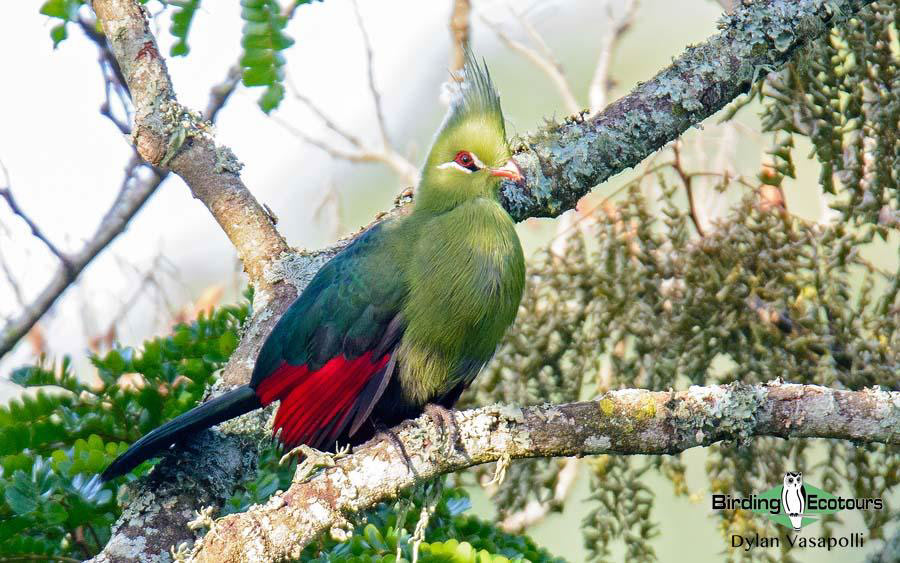
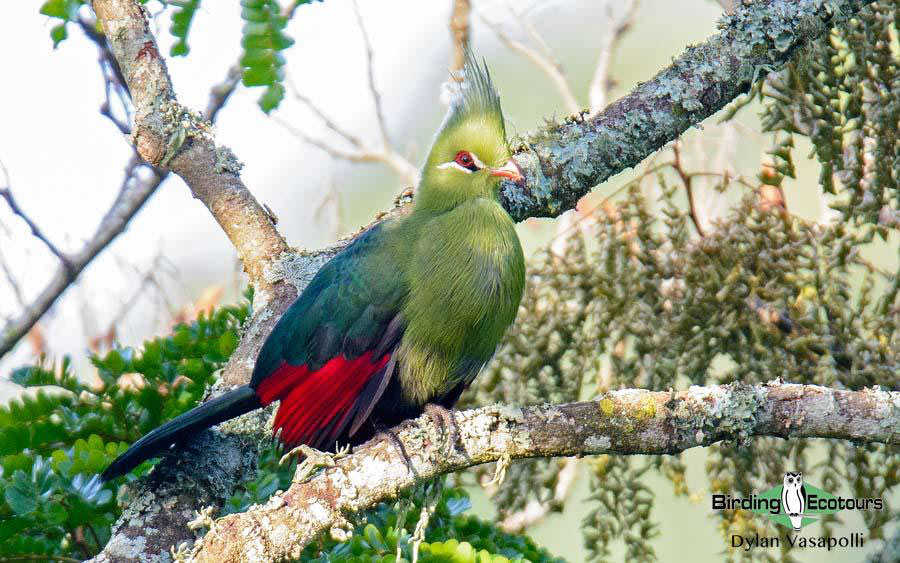 Livingstone’s Turaco is one of the many iconic specials we will search for in St Lucia.
Day 3: Eastern Shores of iSimangaliso Wetland Park
Today we will spend most of the day in the Eastern Shores section of iSimangaliso Wetland Park, one of the most diverse birding areas in Zululand. This extensive mosaic of wetlands, grassland, dune forest, and coastal shoreline provides consistently rewarding birding. Wetland pans and reedbeds may produce African Pygmy Goose, White-backed Duck, Saddle-billed Stork, and Malachite Kingfisher, while the surrounding woodlands support a different suite of species, including Rudd’s Apalis, Blue-mantled Crested Flycatcher, Woodward’s Batis, Brown Scrub Robin, and Grey Waxbill. The open grasslands add further variety, with species such as Black-bellied Bustard, Yellow-throated Longclaw, and Croaking Cisticola all possible. Raptors are always a possibility here, with the scarce Southern Banded Snake Eagle being a particularly sought-after target.
While focusing on birds, we will also keep an eye out for the park’s impressive mammals, including White Rhinoceros, Giraffe, Plains Zebra, and the relatively scarce Samango Monkey, while, with some luck, even Leopard may be encountered.
Notably, the iSimangaliso Wetland Park is a UNESCO World Heritage Site, recognized for its exceptional biodiversity and the variety of ecosystems packed into a relatively small area.
This evening, we have the option of undertaking a night drive in search of the highly sought-after Swamp Nightjar, along with a few other nocturnal species.
Overnight: St Lucia
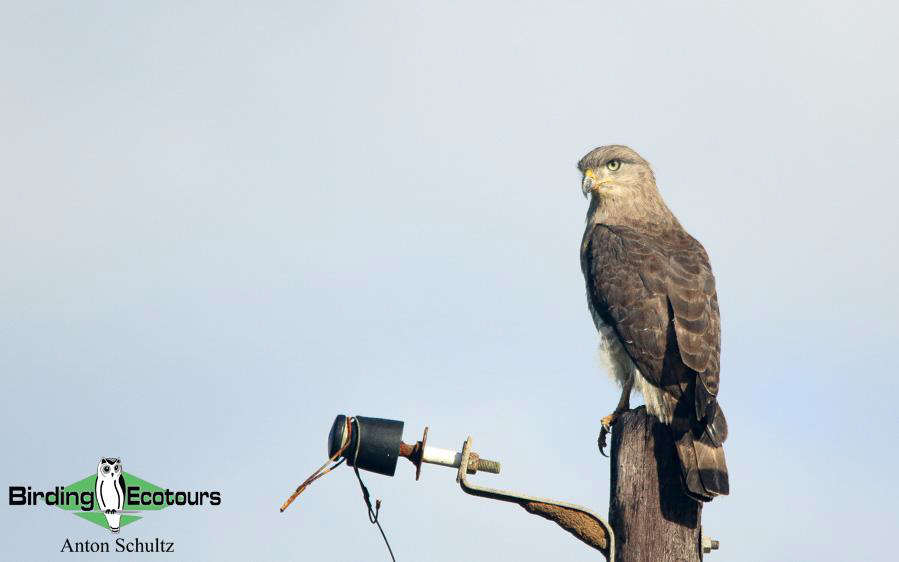
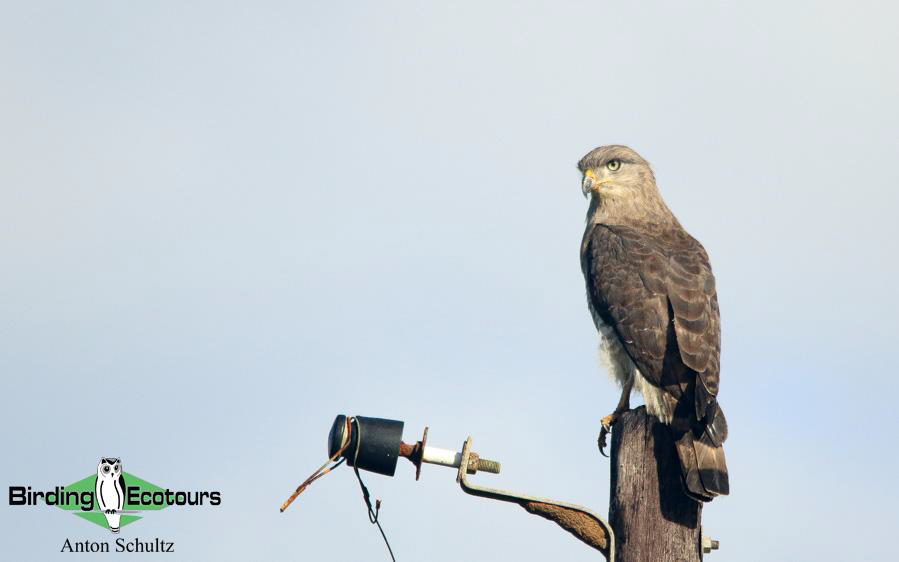 Southern Banded Snake Eagle is often found perched on man-made structures.
Day 4: St Lucia to Hluhluwe and the Nibela Floodplains
We may begin the day with another walk along the iGwalagwala Trail before breakfast, taking advantage of the cool, still conditions when forest birds are most active. Here, we will search for a similar suite of coastal forest species to those encountered previously.
After breakfast, we depart St Lucia and make our way towards Hluhluwe. The nearby floodplains form part of the most productive wetland systems in Zululand. Seasonal water levels create a constantly shifting mosaic of shallow pans, mudflats, and grassy margins, often supporting large concentrations of birds. These wetlands can host an impressive diversity, from conspicuous species such as Greater Flamingo and Pink-backed Pelican to a wide range of herons, ducks, and waders. Species such as Black Heron, Goliath Heron, Purple Swamphen, and Yellow-billed Egret are all possible, while overhead flocks of White-winged, Whiskered, and Caspian Terns add to the spectacle. Afternoons here can be particularly memorable, as large flocks move across the floodplain in the golden light.
The surrounding grasslands are equally rewarding, and we will search for species such as the striking and localized Rosy-throated Longclaw, along with Black-winged and Senegal Lapwings.
Overnight: Hluhluwe
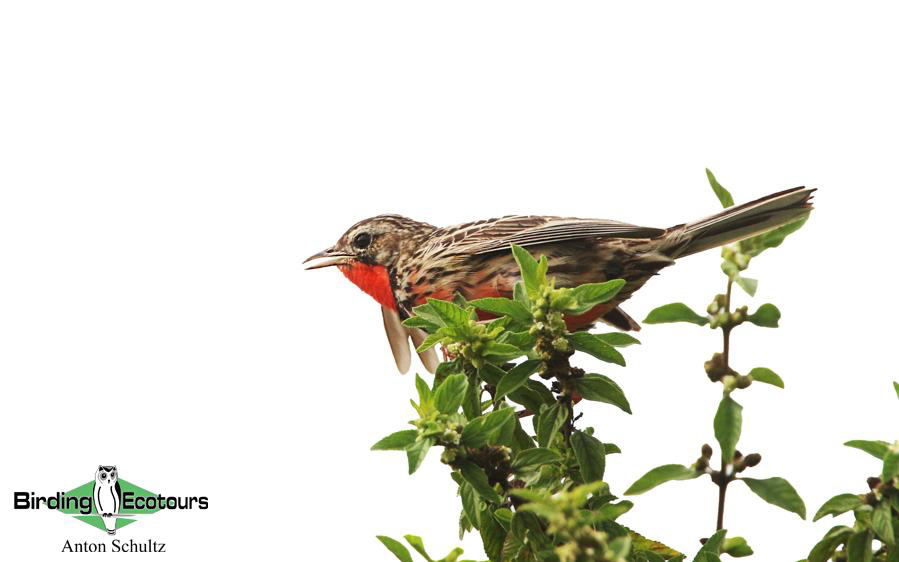
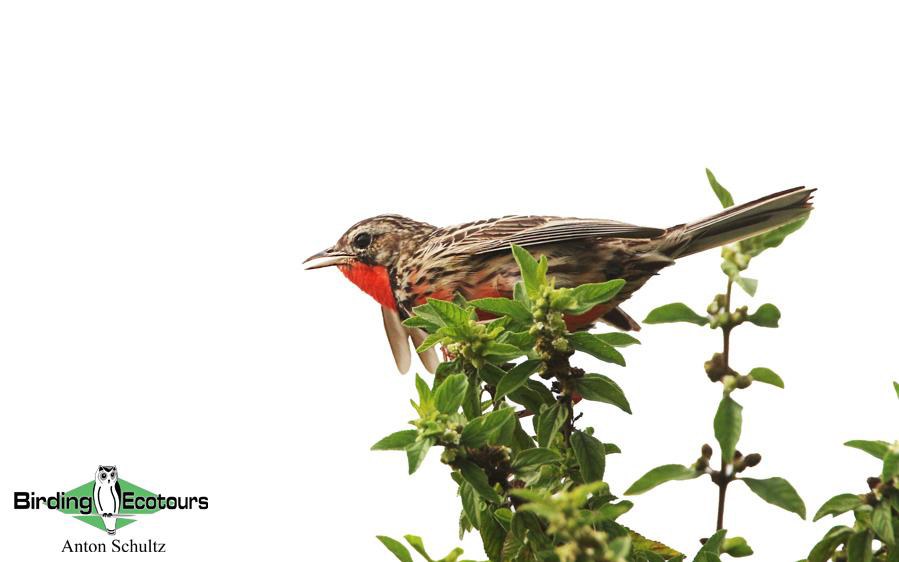 Rosy-throated Longclaw is tied to seasonally flooded plains and damp grasslands.
Day 5: Zululand bushveld and sand forest mosaic
Today is a full day exploring the rich mosaic of habitats that make Zululand one of the most exciting birding regions in South Africa. We will cover a combination of bushveld, savanna, sand forest, grassland, and wetland systems, each contributing its own suite of species and ensuring a diverse and rewarding day in the field.
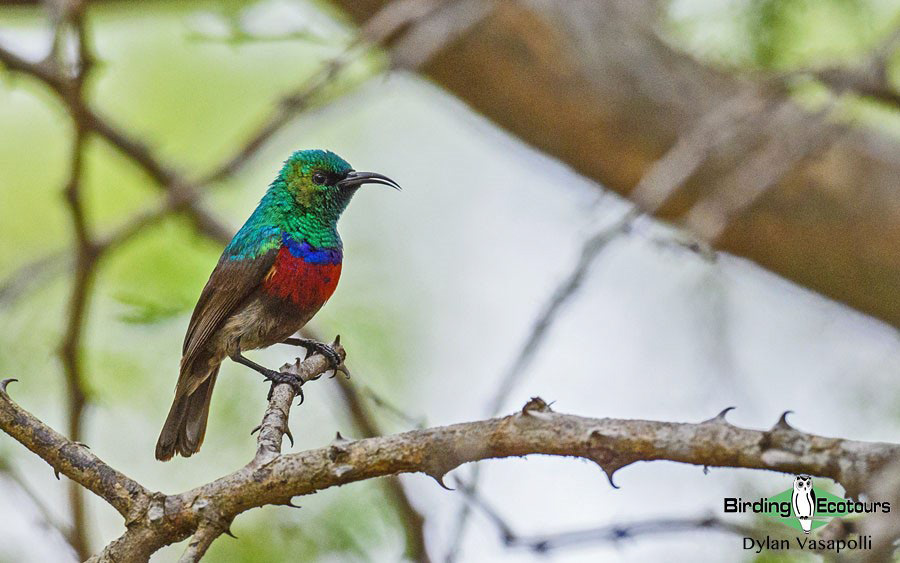
This region is particularly well known for its localized specials, and we will focus much of our effort on tracking down some of Zululand’s most sought-after birds. Among the highlights we will be searching for are Neergaard’s Sunbird, Gorgeous Bushshrike, Pink-throated Twinspot, Grey Waxbill, Grey-rumped Swallow, and Eastern Nicator, while the elusive African Broadbill remains a possibility, though always a challenging one.
In addition to these specials, the surrounding bushveld supports a range of widespread species, and we are likely to encounter birds such as Southern Red-fronted Tinkerbird, Yellow-throated Bush Sparrow, Grey Tit-Flycatcher, Black Cuckooshrike, Red-billed Oxpecker, and Orange-breasted Bushshrike among many others. In areas supporting Lala palm stands, we will make a concerted effort to find the localized Lemon-breasted Canary, a highly sought-after species which almost exclusively uses these palms for nesting. With such a variety of environments to explore, today offers one of the most exciting birding days of the tour, with the potential for a long list of both regional specials and widespread savanna species.
Overnight: Hluhluwe
Day 6: Hluhluwe and transfer to Mtunzini
We begin the day with some final morning birding in the Hluhluwe area, making the most of any remaining targets from the previous day. The combination of sand forest, woodland, and open patches can again be productive, and this session provides a valuable opportunity to pick up species we may have missed, or to enjoy improved views of some of Zululand’s specials in the soft early morning light. After breakfast, we depart Hluhluwe and make our way south towards the coastal town of Mtunzini. The drive takes us back through a variety of Zululand habitats, and we will remain attentive for any additional sightings along the way.
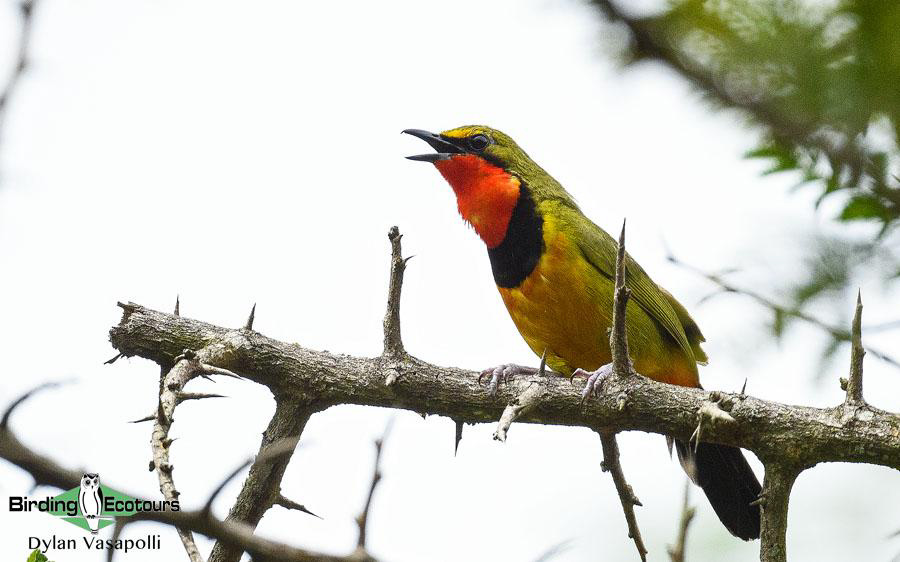
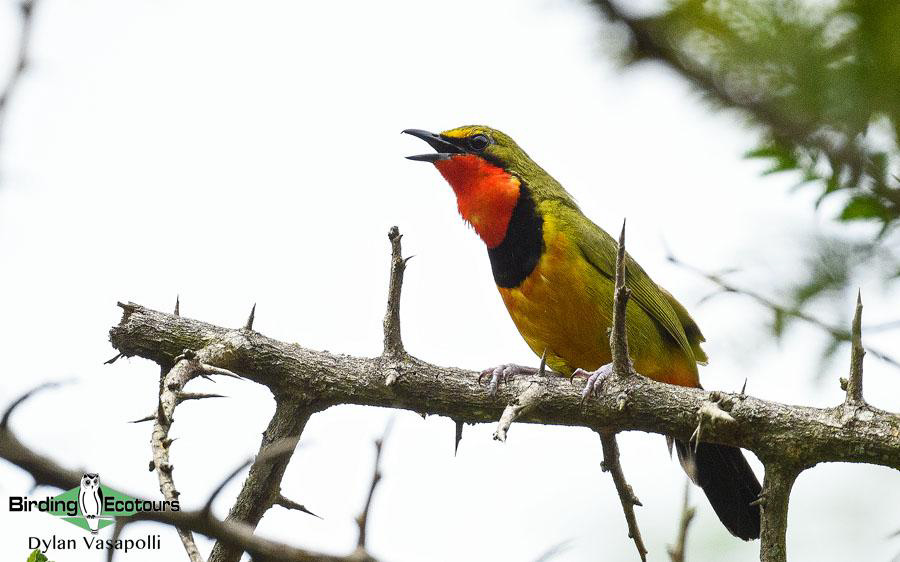
The aptly named Gorgeous Bushshrike is a shy species of thicket habitats. We will need a good dose of luck to see it this well, though its far-carrying calls are a feature of Zululand.
On arrival at Mtunzini, we will head into the local Umlalazi Nature Reserve, a well-known birding site where coastal forest, mangroves, estuary, and dune systems meet. One of the key features of this area is its stands of raffia palms, which support one of the most localized and sought-after species in South Africa, the Palm-nut Vulture. We will spend time searching these palms, where this unique species (one of the few largely vegetarian raptors in the world) can often be found feeding or roosting.
The surrounding coastal forest and estuarine habitats can also be very productive, with species such as the highly sought after Mangrove Kingfisher, Black-throated Wattle-eye, Grey Sunbird, and Green Malkoha all possible. Along the estuary margins, a variety of water-associated species may be present, adding further diversity to the afternoon’s birding. We return to our accommodation in Mtunzini in the late afternoon, where we can relax before dinner and reflect on our penultimate day in this remarkable region of South Africa.
Overnight: Mtunzini
Day 7: Mtunzini and departure
Our final morning will be relaxed, with time for a short birding session before departure. We will likely explore the Siyaya Forest Trail or do some light birding around the village, depending on time and conditions. This provides a final opportunity to pick up any remaining coastal forest or estuarine species, or to enjoy improved views of birds encountered earlier in the tour.
After breakfast, we will transfer to King Shaka International Airport in Durban, where the tour concludes around midday (kindly only book your flights out from 3 p.m. onwards today).
For those continuing on our complementary Budget South Africa Birding Tour: The North, this will begin the following morning, allowing for a chance to unwind with a smooth transition between the two trips.
Overnight: Not included
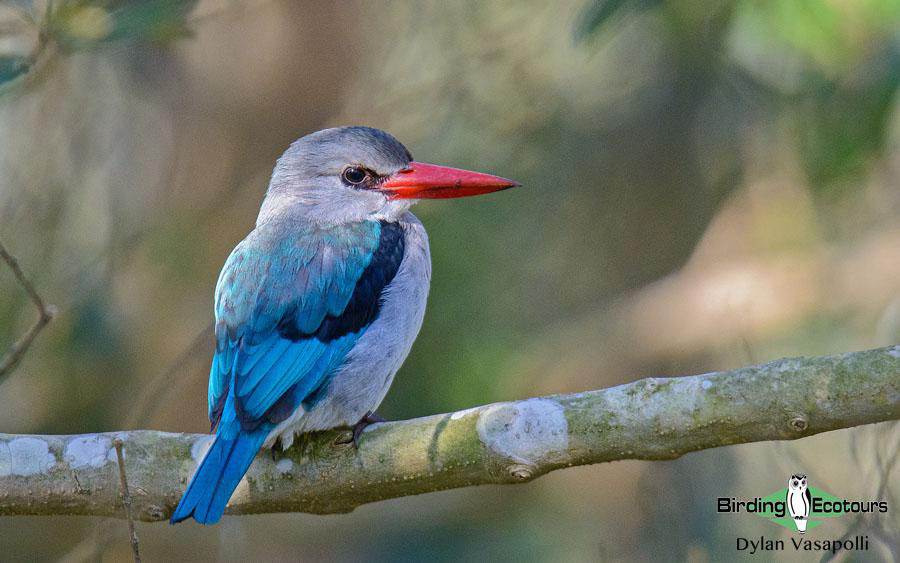
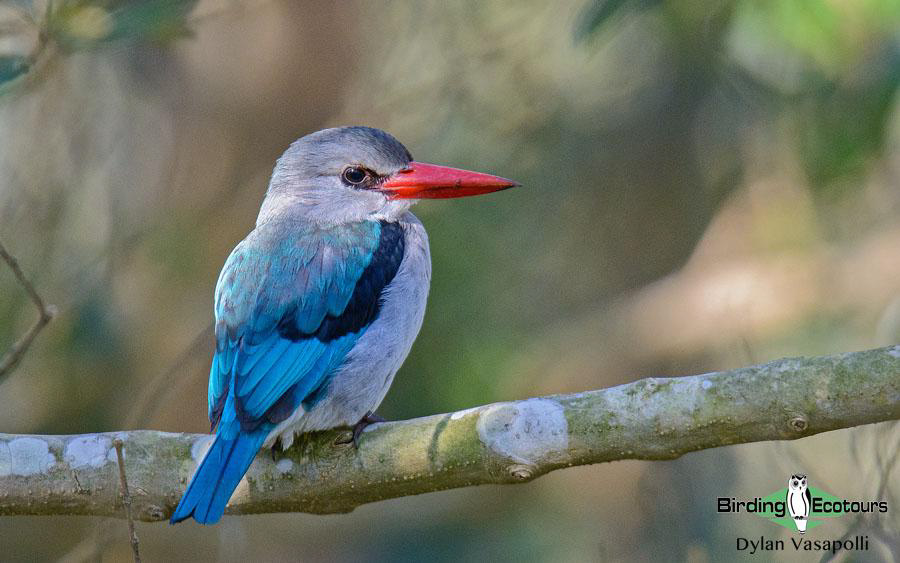 Mangrove Kingfisher is a scarce denizen of South Africa’s east coast, with birds moving into the Mtunzini area during the mid-year period.
Please note that the itinerary cannot be guaranteed as it is only a rough guide and can be changed (usually slightly) due to factors such as availability of accommodation, updated information on the state of accommodation, roads, or birding sites, the discretion of the guides, and other factors. In addition, we sometimes have to use a different guide from the one advertised due to tour scheduling or other factors.
Map
Gallery
General Information
BUDGET SOUTH AFRICA: ZULULAND SPECIALS
TOUR-SPECIFIC INFORMATION
GENERAL INFORMATION ABOUT SOUTH AFRICA CAN BE READ HERE
TOUR OUTLINE
This Zululand birding tour forms part of our carefully designed South African budget birding circuit, which also includes Cape Town, northern South Africa, and the Northern Cape. Together, these tours provide an outstanding opportunity to experience South Africa’s remarkable ecological diversity, ranging from arid desert landscapes and open savannas to coastal forests, wetlands, and the unique fynbos biome. By combining these destinations, participants can build an impressive and well-rounded bird list while exploring some of the country’s most productive birding regions.
While some tours focus primarily on species numbers and others on localized endemics, KwaZulu-Natal’s Zululand region offers an excellent balance of both. The region is renowned for its rich birdlife, high habitat diversity, and excellent birding infrastructure. During the tour, we will explore a variety of habitats, including grasslands, the highly restricted sand forests of northern KwaZulu-Natal, bushveld, coastal forest, estuarine systems, and extensive wetlands. This diversity of habitats supports an exceptional range of species and makes Zululand one of southern Africa’s premier birding destinations.
PACE OF TOUR
This is a week-long tour and is considered medium to fast-paced. Zululand has a well-developed tourism industry, and the excellent road network and infrastructure allow us to move efficiently between birding sites while minimizing travel time. The combination of accommodation located close to our key birding areas and the later sunrise times during this period means that extremely early starts are generally not necessary.
Most mornings begin with an opportunity to enjoy coffee together before heading out for the day’s birding. After several hours in the field, we will either return to our accommodation for breakfast or enjoy a packed breakfast at a birding site. As with most dedicated birding tours, our daily schedule is designed to maximize time in the field, and lunch arrangements may vary depending on the day’s objectives and bird activity.
Some days may allow for a short period of relaxation during the warmer part of the day before resuming afternoon birding, while on other days we may continue birding with only a brief break. The exact schedule will depend on weather conditions, target species, and local bird activity.
Optional night birding may also be offered during the tour. These excursions can provide opportunities for nocturnal birds and other wildlife, but participation is entirely optional. Guests are welcome to opt out of any evening activities if they prefer additional rest.
Each evening, your guide will discuss the following day’s plans with the group in detail. While we operate according to a well-planned itinerary, we retain a reasonable degree of flexibility to adapt to local conditions and maximize birding opportunities whenever possible.
WALKING AND STYLE OF BIRDING
A large proportion of our birding will be conducted from the vicinity of the vehicle. We often stop at carefully selected locations and spend time working an area thoroughly in search of specific target species. This approach allows us to cover a variety of habitats efficiently while minimizing unnecessary walking.
Several sites, including Dlinza Forest and the iGwalagwala Trail, feature well-maintained forest trails that we will explore on foot. Walks are generally easy to moderate in difficulty and are not expected to exceed approximately two miles (3.2 kilometers) in length. In some locations, particularly around our accommodation, birding may be conducted almost entirely on foot as we explore nearby habitats at a relaxed pace.
Participants should be comfortable with short walks on uneven ground, but no strenuous hiking is required for this tour.
LENGTH OF DRIVES
The drives between our various accommodation bases are generally between two and three hours in duration. Unlike many southern African birding tours, this itinerary does not include any full-day travel days.
Most longer drives are scheduled during the middle of the day, allowing us to maximize birding during the more productive early morning and late afternoon periods. Road conditions throughout the region are generally good, contributing to comfortable and efficient travel.
SAFETY
Throughout the tour, we spend the majority of our time in areas that are regularly visited by tourists and are generally considered safe. As with travel anywhere in the world, sensible precautions should be taken.
We recommend that valuables are not left unattended in the vehicle, particularly when stopping in towns or public areas. If you are ever uncertain about the safety of a particular location, please consult your guide for advice.
HEALTH, PESTS AND DANGEROUS ANIMALS
When walking on trails, we recommend wearing long trousers and applying tick repellent to your socks, shoes, and lower legs. Ticks may occasionally be encountered in some habitats. While ticks in South Africa do not transmit Lyme disease, bites can sometimes result in tick-bite fever, which is generally treatable and rarely results in serious long-term complications.
As with many wildlife destinations, encounters with potentially dangerous animals are possible, particularly within protected areas. Large mammals such as elephant, buffalo, and leopard occur within the region, and venomous snakes and scorpions may also be encountered. Such encounters are uncommon, and your guide will provide appropriate safety guidance whenever necessary.
Please refer to the “South Africa General Information” document for more detailed information regarding wildlife, health considerations, and safety precautions.
TRANSPORTATION
A comfortable 14-seater minibus will be used throughout the tour. To ensure fair viewing opportunities for all participants, a daily seat-rotation system will be implemented, which your guide will explain at the start of the tour.
Our intentionally small group size ensures that every participant has access to a window seat. Additionally, because we do not tow a trailer, the vehicle remains highly maneuverable, allowing us to respond quickly to bird sightings and reach a wider variety of birding locations.
Airport transfers on the first and final days of the tour are included in the tour price. Should you arrive before the tour begins or remain in South Africa after the tour concludes, additional transfers will be at your own expense. We will, however, gladly assist in arranging any required transportation.
DOMESTIC FLIGHTS
No domestic flights are required for this birding tour. The tour begins and ends at King Shaka International Airport in Durban.
Participants combining this tour with other tours in our South African budget circuit may, however, need to arrange domestic flights between destinations. We will provide guidance regarding any necessary travel arrangements.
ACCOMMODATION
Throughout the tour, we stay in comfortable lodges, guesthouses, and bed-and-breakfast establishments that offer a good standard of accommodation and hospitality. While this is a budget-focused tour and accommodation may not match the standard of our premium itineraries, all properties are selected to provide comfort, cleanliness, and convenient access to our birding locations.
Many of the accommodations also offer excellent birding opportunities directly on the property or in the surrounding grounds.
ELECTRICITY
Room lighting in some establishments may be relatively low wattage. Participants who enjoy reading in the evenings may wish to bring a good-quality torch or headlamp.
We also recommend carrying an international travel adapter. South Africa is gradually transitioning to newer plug standards, and accommodations may use a variety of outlet types. This is largely outside of our control, and having a universal adapter will help ensure compatibility throughout the tour.
WEATHER
Zululand is generally warm and humid throughout much of the year. As this tour takes place outside the peak summer months, temperatures are usually pleasant and comfortable for birding. Evenings and early mornings, particularly in the Eshowe area, can occasionally be cool, but conditions are rarely cold.
This tour takes place during May, a period when weather conditions can sometimes be variable. Although most rainfall in eastern South Africa occurs during the summer months, occasional rain is still possible. We therefore recommend packing clothing suitable for warm, cool, and wet conditions to ensure comfort throughout the tour.
WHAT TO BRING: CLOTHING AND OTHER ITEMS
Please refer to our blog article, “What to Bring on a Birding Tour,” for detailed packing recommendations. This guide provides practical advice on clothing, optics, footwear, luggage, and other useful items to help you prepare for your South African birding adventure.