- Duration:
- 10 days
- Group Size:
- 6 – 12. This is a larger maximum group size than usual for us; we will have one guide for groups 6-8 and two guides for groups 9-12.
- Tour Start:
- Honolulu, Hawaii, USA
- Tour End:
- Kona, Hawaii, USA
Hawaii Birding Tour – ABA, Endemic and Pelagic Birding in the Pacific
Details
2028
16 – 25 February
Per person sharing
$9,690 USD
£7,623 GBP / €9,098 EUR
Single supplement
$1,690 USD
£1,329 GBP / €1,587 EUR
2029
07–16 February
Per person sharing
$10,290 USD
£8,096 GBP / €9,662 EUR
Single supplement
$1,790 USD
£1,408 GBP / €1,681 EUR
Itinerary
Download ItineraryHawaii Birding Tour – ABA, Endemic and Pelagic Birding in the Pacific
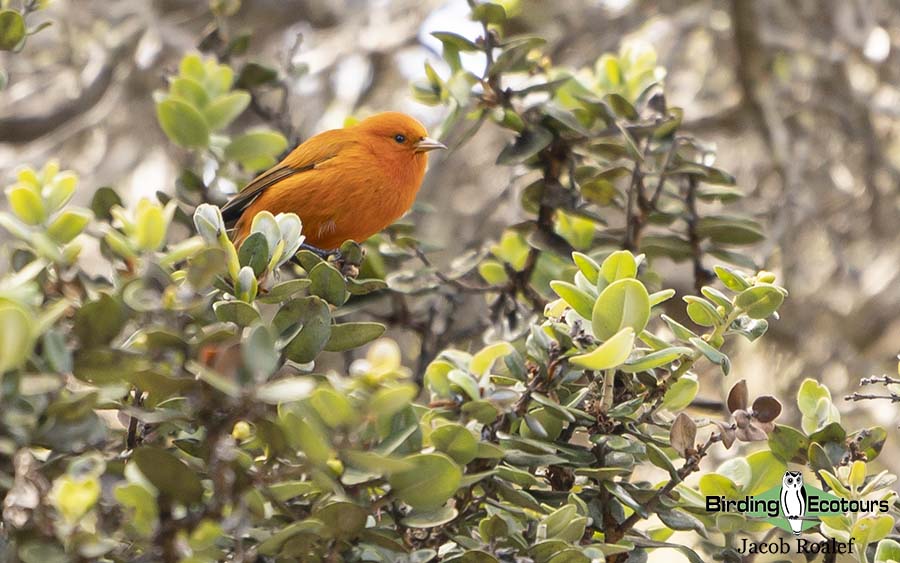
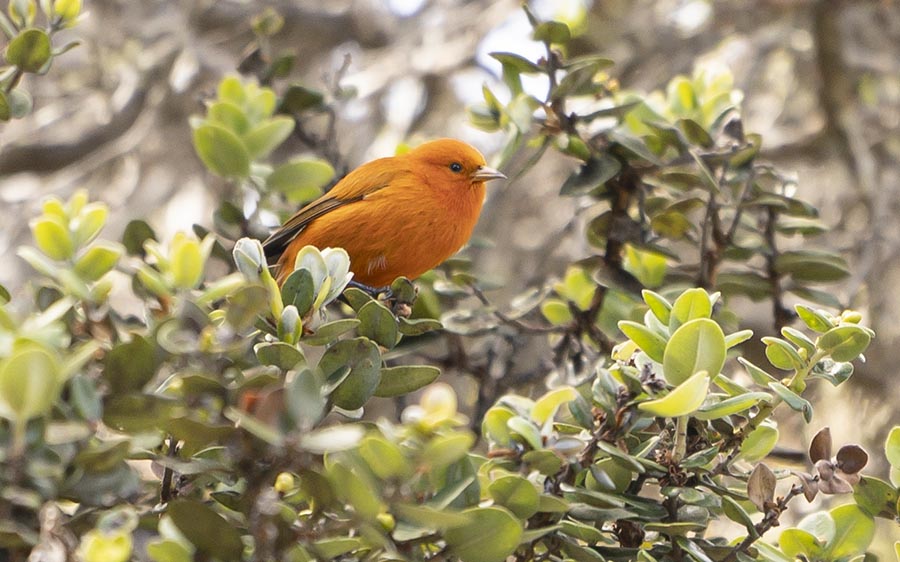 Hawaii Akepa is one of the many Hawaiian endemics, and a highly sought-after species.
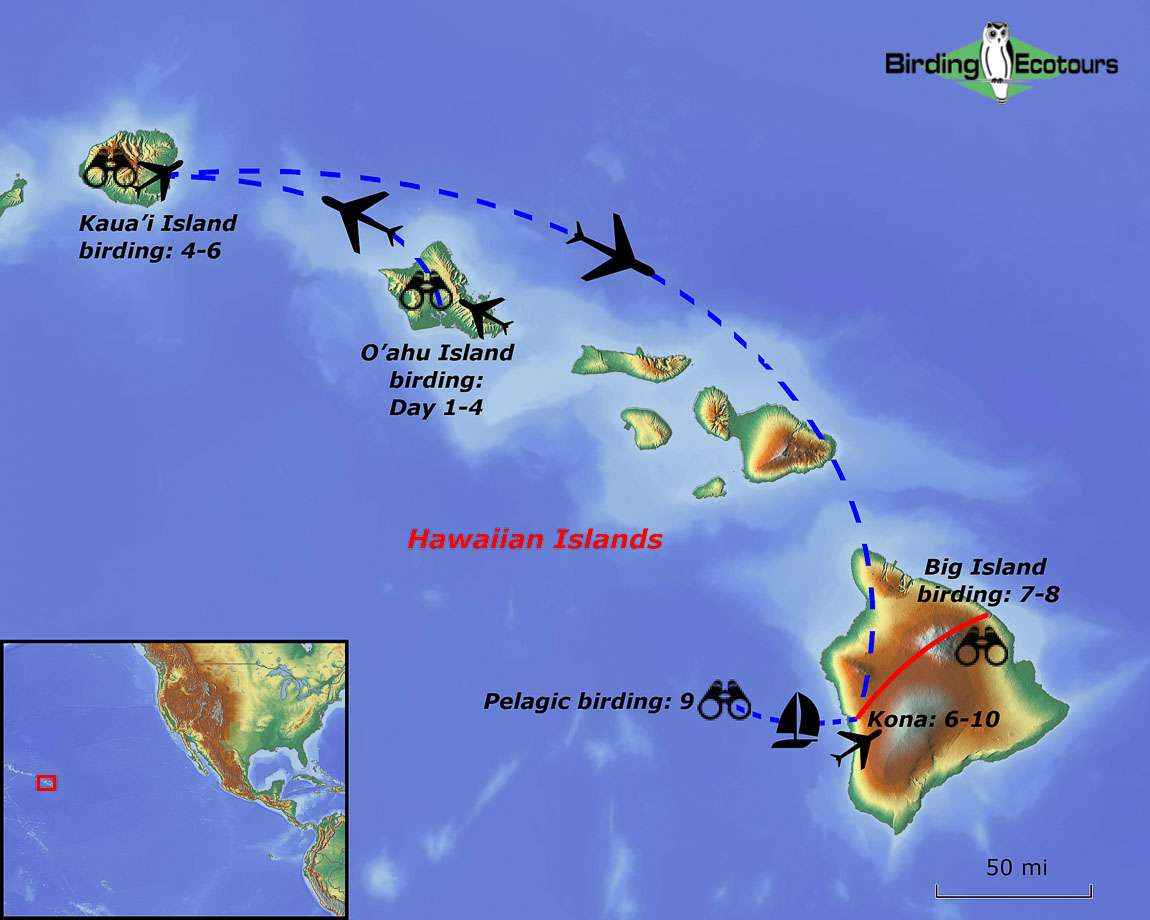
Our Hawaiian birding tour takes in the three most accessible islands of this remote Pacific archipelago.
This tour is dedicated to tracking down the islands’ extraordinary endemics—some found nowhere else on Earth and teetering on the brink of extinction. Beyond these coveted treasures, birding in Hawaii brings with it an incredible array of other birds, both on land and at sea—Hawaii’s pelagic birding is truly world-class! Whether you’re chasing additions to your ABA list or yearning to encounter some of the planet’s rarest species, this is the ultimate Hawaiian birding experience. Join us and experience Hawaii like never before!
Hawaii, known as the ‘Aloha State,’ is a tropical paradise unlike anywhere else. Once an independent nation, it is now the 50th U.S. state, comprising the remote Hawaiian Archipelago in the far reaches of the Pacific Ocean. The chain includes eight main islands: Niʻihau, Kauaʻi, Oʻahu, Molokaʻi, Lānaʻi, Kahoʻolawe, Maui, and Hawaiʻi (Big Island).
A top birding destination
While Hawaii is renowned for its luxurious weddings, stunning beaches, world-class surfing, and premier vacation resorts, it is also a top birding destination. Due to its isolation, Hawaii has an incredibly high rate of endemism, with many strange and peculiar-looking birds found nowhere else. Unfortunately, competition and predation by invasive species (primarily from Europe and Asia), habitat loss, and the spread of avian malaria by mosquitoes have devastated Hawaii’s birdlife, leading to extinctions and placing many species on the brink. It is one of those birding destinations to visit as soon as possible, before more endemics go extinct. Many species are now thinly distributed, becoming increasingly difficult to find.
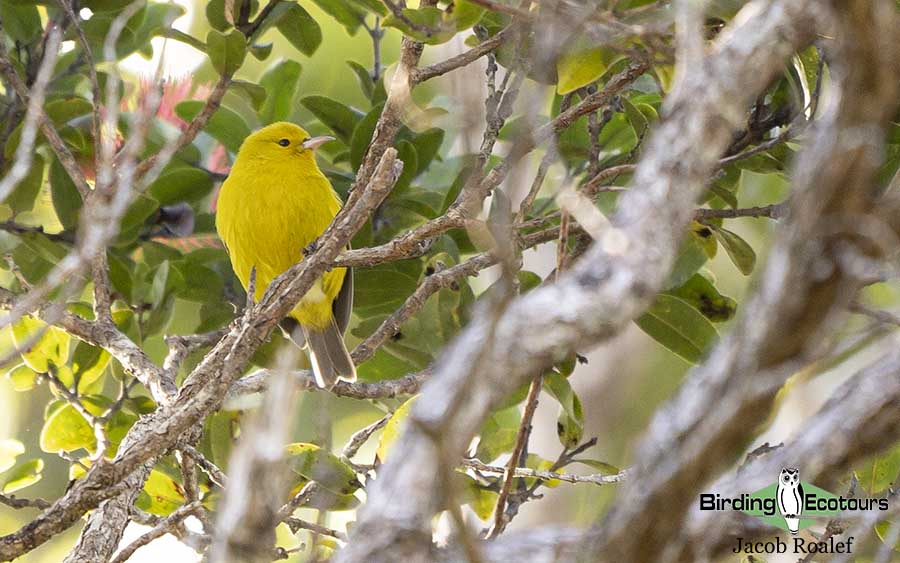
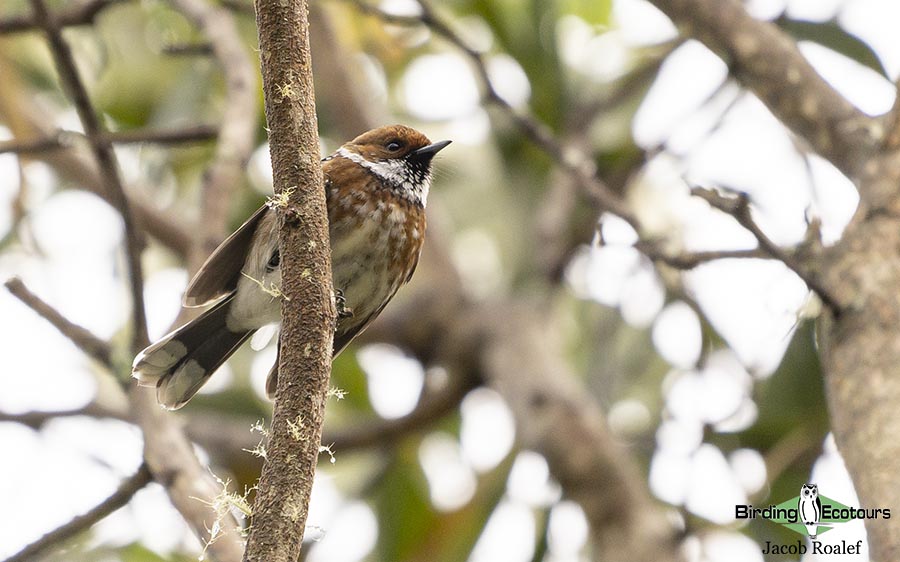
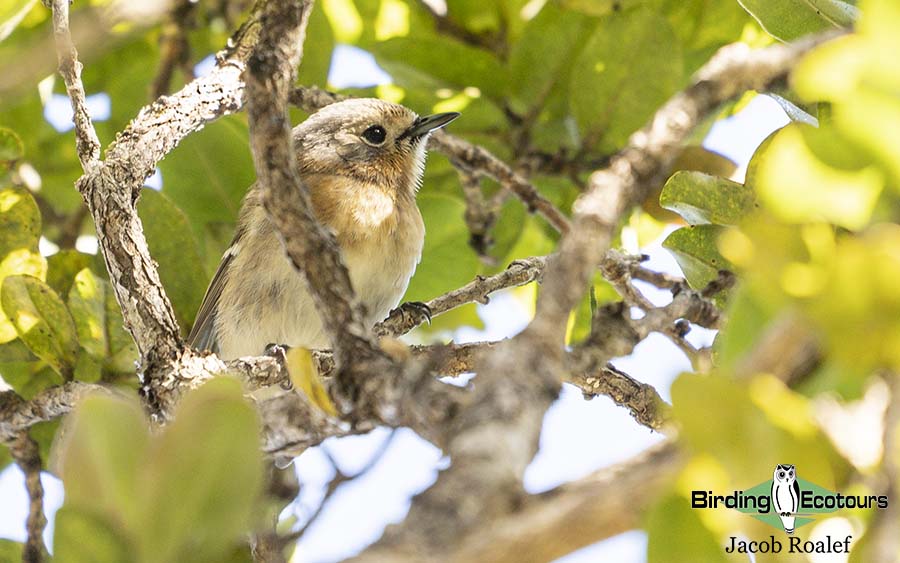 During this tour, we target all three endemic elepaio species including this Kauai Elepaio.
Our expertly guided Hawaiian birding tour focuses on the three most accessible :
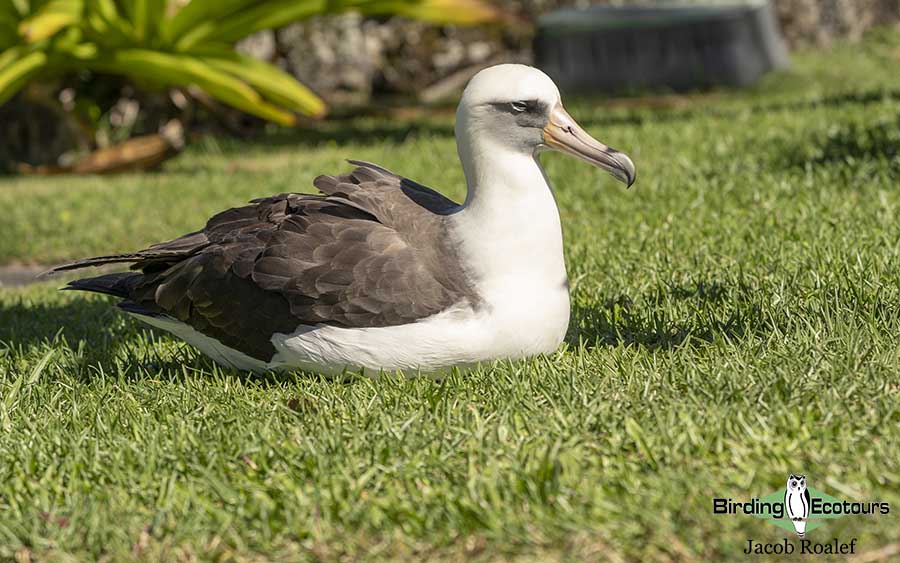
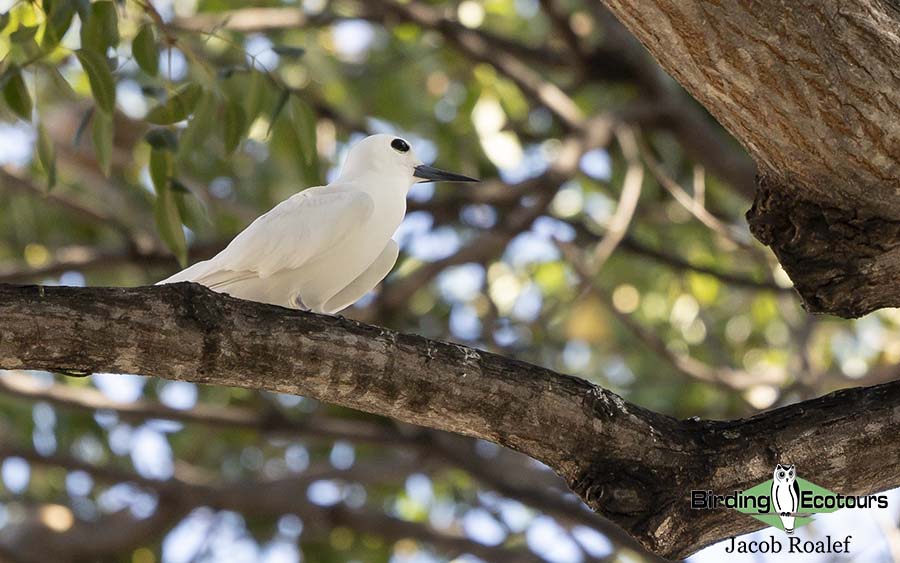
Oʻahu, Kauaʻi, and Hawaiʻi (Big Island). We visit pristine montane forests and coastal hotspots to target sought-after endemic species, such as Iiwi, Akiapolaau, Apapane, and Anianiau, along with common and widespread species like the Nene (Hawaiian Goose) – Hawaii’s state bird. Other highlights include Bristle-thighed Curlew, Hawaiian Petrel, Laysan Albatross, and Blue-billed White Tern, along with notable introduced species that now form part of Hawaii’s birding landscape. Unfortunately, since 2021, Palila has become very difficult to find; this Hawaii tour is definitely one to do as soon as possible before more species slip into extinction. We’ve slightly abbreviated our tour by a day as we will only make an attempt for Palila if we feel it worthwhile based on recent sightings.
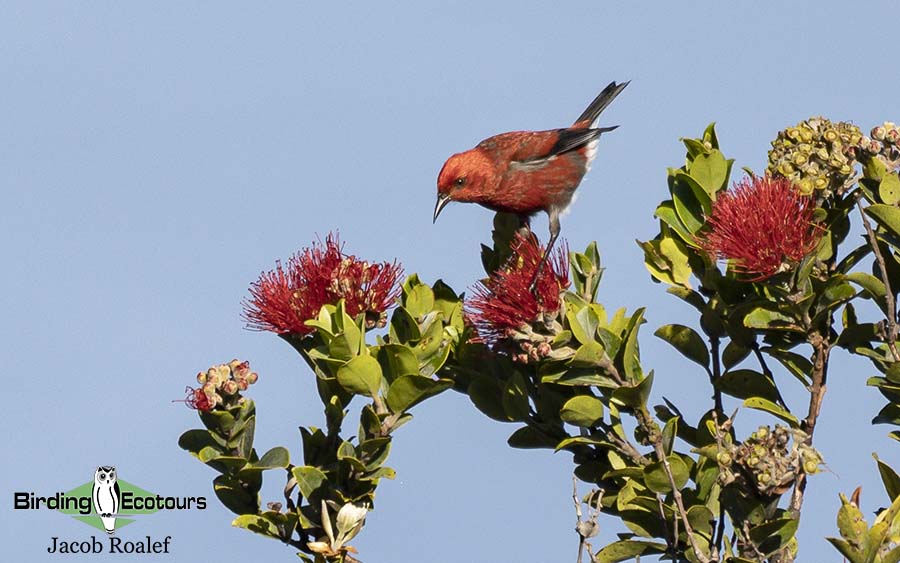
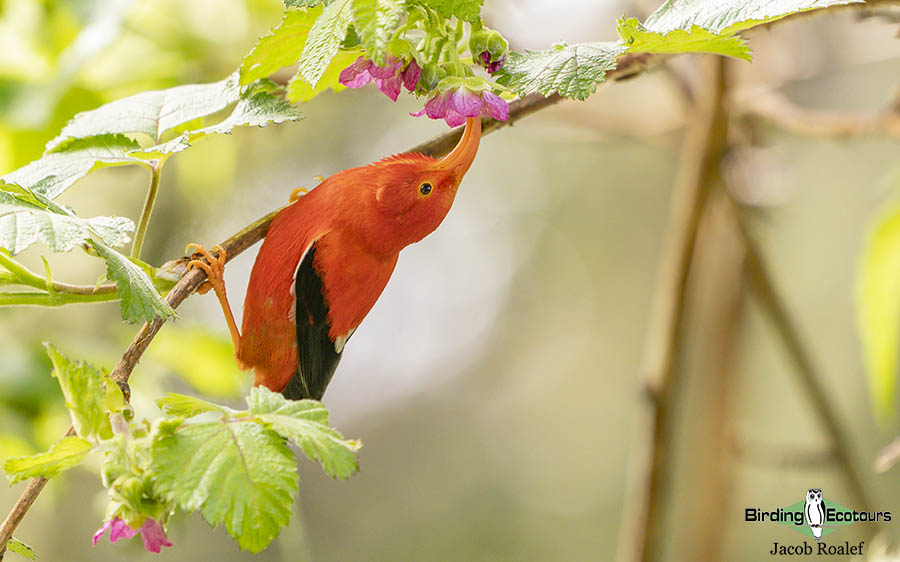 Iiwi is one of the most spectacular of Hawaii’s native birds.
With Hawaii and its birds officially recognized as countable on the ABA checklist, our tours are ideal for both North American birders adding to their ABA list and global birders seeking Hawaii’s endemics. We aim to see as many species as possible while raising awareness around Hawaii’s threatened birds and supporting local conservation efforts.
Hawaii’s combination of spectacular endemic birds, lush forests, and breathtaking scenery makes it a must-visit birding destination.
Join our Hawaiian birdwatching tour and experience the best of birding in Hawaii!
Detailed Itinerary (10 days/9 nights)
Day 1. Arrival in Honolulu, O’ahu
Today is your arrival day, and you can arrive at your leisure. Upon arrival in Honolulu (HNL) you will be transferred to our comfortable lodge, where we will spend the next three nights. Should there be time available in the afternoon, we may do some local birding nearby, getting familiar with some of the more regularly occurring species (see under Day 2 below for more details). We will gather in the lobby at 6 pm for our welcome dinner.
Overnight: Queen Kapiʻolani Hotel, Waikiki or similar
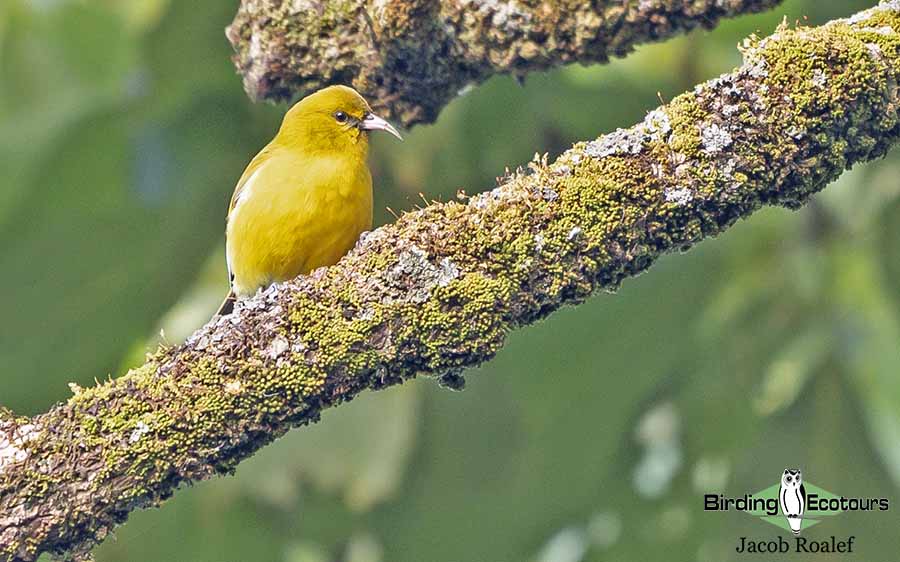 We will search for Oahu Amakihi in the forests of the Koʻolau Range.
Day 2. Birding O’ahu – Waikiki to the Koʻolau Range
Our first morning will be spent birding around the Kapiʻolani Regional Park. One of the star species here is Blue-billed White Tern, while Pacific Golden Plover is another sought-after bird at this site. A wide array of introduced species can also be sought and include the likes of Rose-ringed Parakeet, Zebra and Spotted Doves, Java Sparrow, Common Waxbill, Red-crested Cardinal and Yellow-fronted Canary. The rest of the day is spent outside of Wakiki in the forests of the Koʻolau Range where we will primarily search for the endemic Oahu Amakihi and the Oahu Elepaio. Both of these species are red-listed as per the IUCN Red List (being Vulnerable and Endangered, respectively). Indeed, rather tragically, many of the other endemic species occurring throughout the Hawaiian Islands are also red-listed and many of them Critically Endangered. Further introduced species, such as White-rumped Shama, Warbling White-eye and Red-billed Leiothrix can be seen in this area as well.
Overnight: Queen Kapiʻolani Hotel, Waikiki or similar
Day 3. Birding O’ahu – The north shore
Our day will be spent birding and exploring the coastal region along the north shore of the island. Although perhaps more well-known for its picturesque beaches, with world-class surfing, the secluded coves and tracts of shoreline, along with the vast family farms (with crops of coffee, cacao and many others) are home to the highly sought-after Bristle-thighed Curlew, along with a wide range of other targets such as Wandering Tattler, an endemic subspecies of Black-necked Stilt and the endemic Hawaiian Coot. Further introduced species such as Saffron Finch and Chestnut Munia can also be found in the area.
Overnight: Queen Kapiʻolani Hotel, Waikiki or similar
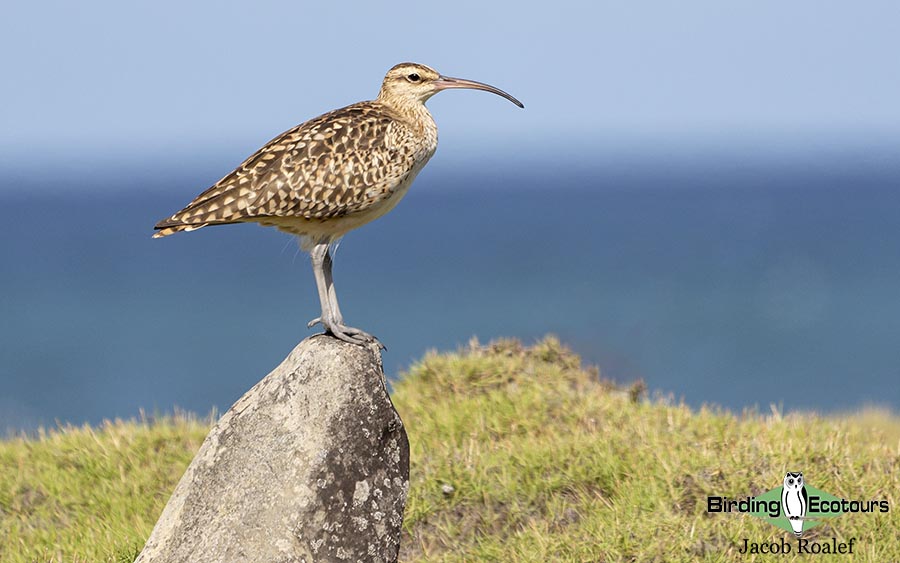 Bristle-thighed Curlew can be seen on O’ahu.
Day 4. Flight to Kaua’i and birding Kaua’i
After breakfast we will head to the airport for our flight (usually mid-morning) to Lihue on Kaua’i. Following our arrival, we will begin exploring Kaua’i’s beautiful north shore. We will focus our efforts around the rugged cliffs of the coastal Kīlauea Point National Wildlife Refuge and the freshwater-dominated Hanalei National Wildlife Refuge. One of our main targets at Kīlauea Point is the stunning Laysan Albatross – small numbers of which breed here. Other species we’ll search for are Red-footed and Brown Boobies, stunning Red-tailed and White-tailed Tropicbirds and Great Frigatebird (a similar, yet different species from the Magnificent Frigatebird occurring on mainland USA). Nene (also known as Hawaiian Goose), which is the state bird of Hawaii, usually provide us with great views throughout the day as well. Hawaiian Duck will be one of our main targets at the Hanalei National Wildlife Refuge.
Overnight: Sheraton Kauai Coconut Beach Resort, Kapaa or similar
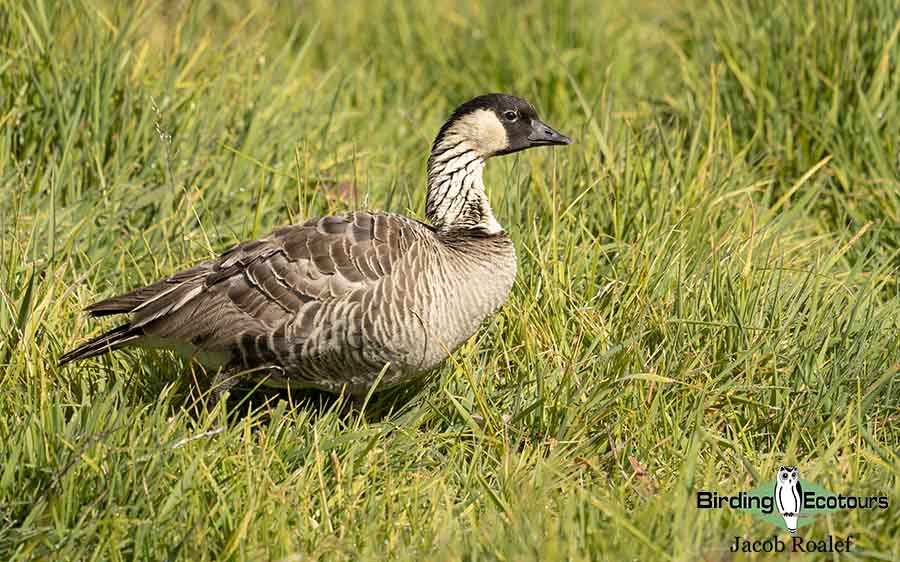 Nene (also known as Hawaiian Goose) is the state bird of Hawaii.
Day 5. Birding Kaua’i – Kōkeʻe State Park
We will dedicate the day to birding and exploring the glorious Kōkeʻe State Park. This lush mountainous park offers the best endemic birding on the island, and we will spend our time birding the rainforests for a wide assortment of difficult-to-pronounce specials such as Kauai Amakihi, Apapane, Anianiau, and Kauai Elepaio. Sadly, these species are declining dramatically, so we will give as much effort as possible to find them. This area also plays host to further introduced (yet countable) species such as Red Junglefowl, the difficult-to-see Japanese Bush Warbler, and Chinese Hwamei. Aside from this exciting endemic birding, we are also assured to enjoy incredible vistas of the Waimea Canyon, known as the ‘Grand Canyon of the Pacific’.
Overnight: Sheraton Kauai Coconut Beach Resort, Kapaa or similar
Day 6. Birding Kaua’i and flight to Kona, Big Island
We have a full morning available to us to continue birding and exploring Kaua’i. We will search for Greater Necklaced Laughingthrush today in particular, although we will need some luck to see this species, along with any of the island’s specials we may have missed, listed under Days 4 and 5 above. We will undertake an afternoon flight to Kona, on Big Island (also known as Hawai’i) from where we will settle in for the afternoon and spend the next four nights.
Overnight: Royal Kona Resort, Kona or similar
Day 7. Birding Big Island – Pu’u La’au, Mauna Kea and surrounds
We have a full day set aside to explore other important birding areas on the island – ranging from the high elevations of Pu’u La’au on the slopes of the dormant volcano, Mauna Kea, along the Saddle Road, to the more coastal Waikōloa area. Two important endemic species that we will focus our efforts on today are the Hawaii Elepaio and the Critically Endangered (IUCN) Palila. Various other new species we are unlikely to have seen yet might include Short-eared Owl, Wild Turkey, California Quail, Erckel’s Spurfowl, Black and Grey Francolins, Chukar Partridge, Chestnut-bellied Sandgrouse, Eurasian Skylark and African Silverbill.
Overnight: Royal Kona Resort, Kona
Day 8. Birding Big Island – Hakalau Forest National Wildlife Refuge
One of the most important birding sites for endemic Hawaiian species, throughout all of the Hawaiian Islands, is the Hakalau Forest National Wildlife Refuge. Dominated by montane cloud forest, with a strong suite of native plants and general wildlife still largely persisting, we will spend the entire day birding this wonderful protected and highly restricted area. Some of our target species here include the likes of Hawaiian Hawk, Omao, Hawaii Creeper, Hawaii Akepa, Akiapolaau, Iiwi, Hawaii Amakihi and Apapane. Whilst exploring the area for these species, and others, the ancient ohia trees that dominate the area will take you to a time long past, allowing us to better understand the plight of Hawaii’s endemic species.
Overnight: Royal Kona Resort, Kona
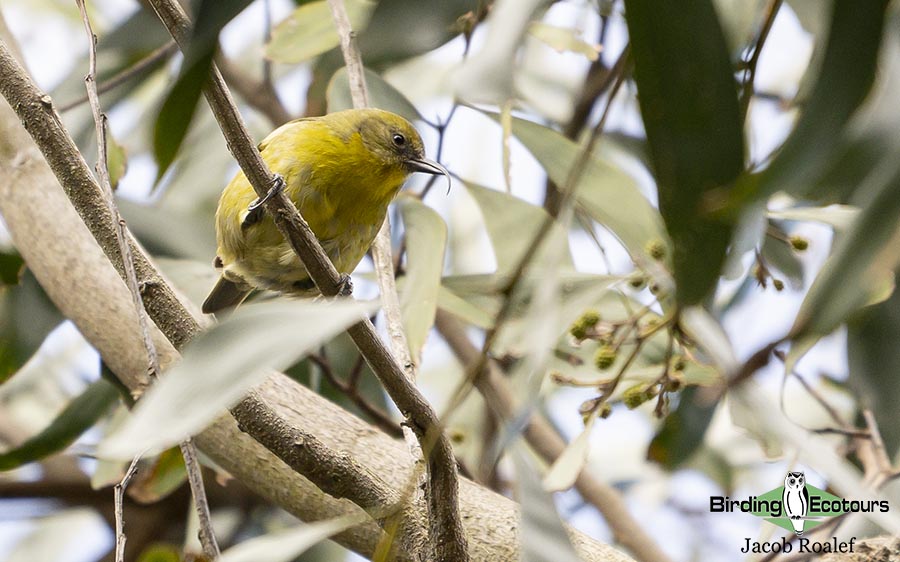 Akiapolaau is another highly sought-after Hawaiian endemic – just look at that beak!
Day 9. Pelagic Birding off Big Island
Today we will undertake a pelagic trip out of Honokohau Harbor. Together with our trusty captain and boat, we will spend most of the day out in the deep. In between the more regularly occurring species, we’ll keep a keen eye open for the likes of a wide range of exciting and fast-flying gadfly Pterodroma petrels, namely Hawaiian, Juan Fernandez, Mottled, White-necked and Black-winged Petrels, Christmas and the Critically Endangered (IUCN) Newell’s Shearwaters, Leach’s and Band-rumped Storm Petrels, Masked Booby, South Polar Skua and more. Indeed, the truly exciting aspect about pelagic birding is that you can never truly predict what you’ll see out there! More regularly occurring species typically seen include Wedge-tailed and Sooty Shearwaters, Bulwer’s Petrel, Great Frigatebird, the stunning White-tailed Tropicbird, Brown Booby, Sooty Tern and both Black and Brown Noddies. Occasional cetacean sightings can also feature on these trips. Following an excellent day out on the water, we will enjoy our dinner together and reminisce about the many exciting birds we would have seen.
Overnight: Royal Kona Resort, Kona or similar
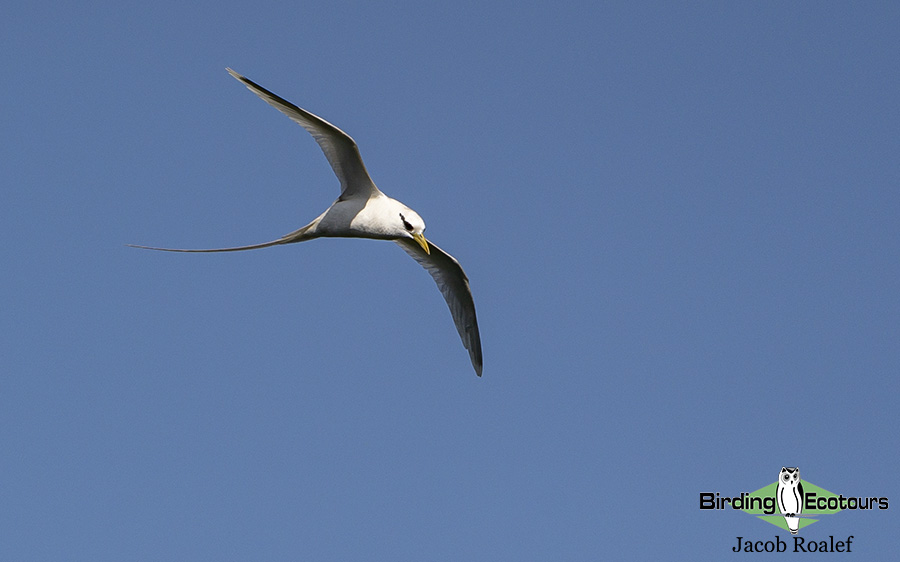 We’ll be on the lookout for White-tailed Tropicbird and more on our pelagic day trip.
Day 10. Departure from Kona, Hawai’i
The tour comes to an end today after breakfast, and you can depart home from Kona Airport.
Please note that the itinerary cannot be guaranteed as it is only a rough guide and can be changed (usually slightly) due to factors such as availability of accommodation, updated information on the state of accommodation, roads, or birding sites, the discretion of the guides and other factors. In addition, we sometimes have to use a different guide from the one advertised due to tour scheduling and other factors.
Map
Testimonials
Gallery
General Information
USA: Hawaii – ABA and Endemic Birding in the Pacific
Tour-specific Information
PASSPORT AND VISA
For US citizens, no visas or passports are required. You will need to bring along a government issued ID as they are sometimes required for hotels.
Non-United States citizens will require a valid passport to enter the country, and some may require a tourist visa. Please consult with your local US Embassy for more details and information. You may need to show your ID/passport at various hotels and for the boat departures on this tour.
TRAVEL INSURANCE
We strongly encourage you to purchase trip cancellation or interruption insurance in case you have to cancel due to illness or for any other reason, as tour payments are non-refundable as per our terms and conditions. We advise you to get a plan which covers all your medical care and evacuation back to your country of residence, repatriation, and trip cancellation due to illness just prior, or for any other reason.
HEALTH
Hawaii does not pose any major health risks. Its warm and humid climate as well as sometimes muddy terrain are the largest issues. Water will be available throughout the tour and please feel free to bring your own reusable bottle to refill throughout the tour. A good pair of hiking shoes/boots will help with the trails. We also recommend bringing along a walking stick/hiking poles if needed.
MEDICAL CONDITIONS
Please make sure that you are covered by medical insurance in case of an emergency while on this trip. Without insurance the cost of medical care can be extremely high. Please notify us at the time of registering for this tour of any medical conditions you think we should know about (including allergies, heart conditions, epilepsy, etc.). This will greatly help us to cater to your needs and update emergency services if required.
WEATHER/CLIMATE
Daytime temperatures are generally warm 70–80 °F (21–27 °C), however temps will cool off considerably as we climb to higher altitudes on some days. Layers and jackets are a must to help with the wide range of conditions and wind. It is likely to rain at least once while on tour and we will be boarding a pelagic with cool wind blowing off the water. Waterproof and rain gear are essential to ensure comfort while on the tour.
ACCOMMODATIONS
We will be staying at comfortable hotels and resorts, as is the way on Hawaii.
COMMUNICATIONS
Our hotels should have decent access to Wi-Fi throughout the trip and phone service is typically reasonable near these areas and in the larger more populated cities. There are times throughout the trip where we will be out in the wilderness (on certain islands) so do expect to lose coverage in some places.
PHYSICAL REQUIREMENTS AND PACE OF TOUR
Our tour of Hawaii covers three islands in only ten days however, the pace is more comfortable and relaxed overall with plenty of time to search for all target species. There are two flights involved as we island hop, so we will be dealing with airports which are typically a non-issue. Early morning starts are consistent with other birding tours, typically around 6 am. There are no evening/night birding events scheduled on this tour.
Most of the walking is along either roadsides or well-kept trails, completed at a relaxed pace. Terrain on a few trails can be rocky and muddy depending on the weather conditions so walking sticks/hiking poles are recommended, if needed. The majority of the hiking/walking is two miles/three kilometers or less but does involve some altitude and steeper climbs on certain days as we bird in the mountainous regions searching for endemic species. There will always be options to sit out certain hikes or mornings depending on how you might be feeling and your own personal capabilities.
WHAT TO BRING
Please kindly read the general list of what to bring on a birding tour, here.
Layers and rain gear are always a good idea when preparing for a wide variety of weather conditions, and we consider them essential on this tour. We also do recommend bringing Dramamine or other motion sickness medications, if you need them, as there are a few longer drives in the vehicle and a pelagic trip. Also, please bring along a face mask (or a few) to ensure we are able to follow local guidelines during the Covid-19 pandemic as they will be required in certain areas.
Do not forget – Binoculars, prescription drugs (also bring the generic names for these drugs), toiletries, prescription glasses (and a spare pair), sunglasses, camera, batteries (for electronic equipment and chargers for re-chargeable batteries, if required), alarm clock, money pouch, field guide(s), daypack.
Key documents and cash – Passports, your travel or health insurance cards, photocopies of which can be carried by the tour leader in case of emergency, Covid-19 vaccine card, photos/screenshots of vaccine card, credit cards (see info above). US dollars for drinks, gifts, tips, items of a personal nature, etc., which are not included in the tour cost.
LUGGAGE
There should be enough space for each participant to bring one medium-sized suitcase as well as a personal bag to keep at their seat with them. Please do be mindful with large cameras or tripods if you choose to bring these along.

Download Hawaii: ABA and Endemic Birding in the Pacific Information