by Adam Cruickshank (written 6 March 2026)
Cricket South Africa has confirmed that they will host the Australian men’s cricket team for three ODI matches and three Test matches in September and October 2026. This series marks Australia’s first Test tour to South Africa since the 2018 sandpaper controversy, adding extra interest to what has historically been one of international cricket’s most intense rivalries.
The South Africa versus Australia series has always delivered drama, both on and off the field. What makes this tour especially appealing for travelling birders is the chance to combine world-class cricket with some of the best birding on the African continent, without needing to choose between the two.
This guide is designed for Australian cricket supporters who also enjoy wildlife and birding. It provides practical information on the match venues, the cities being visited, and the birding opportunities available around each stop. The aim is to allow visitors to enjoy the cricket fully while making the most of the exceptional birding available before match days, on rest days, and between venues.
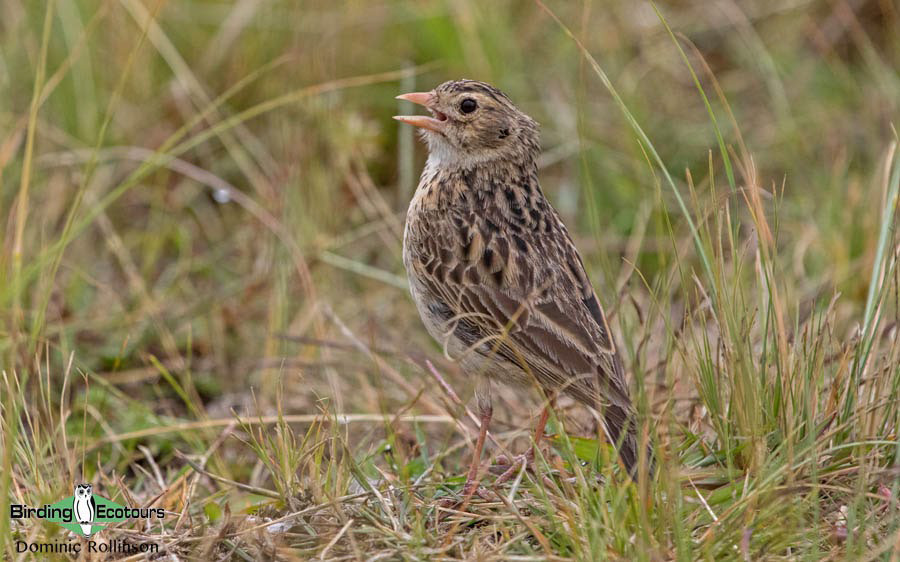
One of the projects Birding Ecotours supports is BirdLife South Africa’s work to save the critically endangered Botha’s Lark.
For those interested in a customised experience, Birding Ecotours can design private or small group birding itineraries that fit neatly around the cricket schedule. Private tours offer flexibility and can be tailored to match days and travel requirements. When travelling in groups of five or more, costs reduce significantly, making this an efficient and flexible way to experience both cricket and birding. Ten percent of the cost of every Birding Ecotours trip is donated directly to conservation projects.
Why this tour is special for birders
South Africa is home to more than 850 bird species and boasts more endemic and near-endemic species than any other mainland African country. This tour takes place in spring, a prime birding season when many migratory species return and temperatures remain comfortable. By following the cricket route, visitors will pass through several major biomes, increasing the number of species seen and offering realistic chances of encountering some of the country’s most sought-after birds, including the Critically Endangered (BirdLife International) African Penguin, as well as, Black Harrier, Cape and Drakensberg Rockjumpers, Cape and Gurney’s Sugarbirds, Bush Blackcap, Blue Crane, and Ground Woodpecker, to name a few.
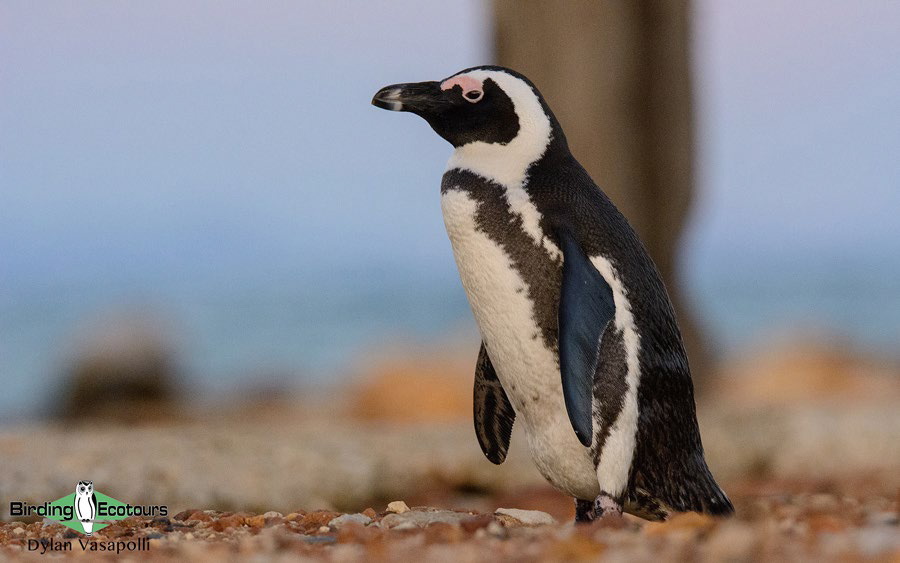
Time in the Cape will allow you to connect with the charismatic African Penguin.
Wildlife beyond birds
Beyond birding, South Africa also offers excellent wildlife viewing. Many reserves visited along this route support the “Big Five” – (White/Black)Rhinoceros, Leopard, Lion, Cape Buffalo, and African Savanna Elephant. Less well known is the group of mammals often referred to as the “Shy Five”. These elusive species include Aardvark, Southern Aardwolf, Cape Porcupine, Bat-eared Fox, and Meerkat, all of which can be seen with careful planning.
With the right itinerary, it is entirely possible to enjoy outstanding birding and wildlife experiences without missing a single ball of cricket.
Cricket tour schedule
First ODI: 24 September, Kingsmead Stadium, Durban
Second ODI: 27 September, Wanderers Stadium, Johannesburg
Third ODI: 30 September, JB Marks Oval, Potchefstroom (D/N)
Warm-up match: 3–4 October, JB Marks Oval, Potchefstroom
First Test: 9–13 October, Kingsmead Stadium, Durban
Second Test: 18–22 October, St George’s Park, Gqeberha
Third Test: 27–31 October, Newlands Cricket Ground, Cape Town
The sections below follow the tour city by city, giving an overview of each match venue, the host city, and the birding opportunities available around each stop on the schedule.
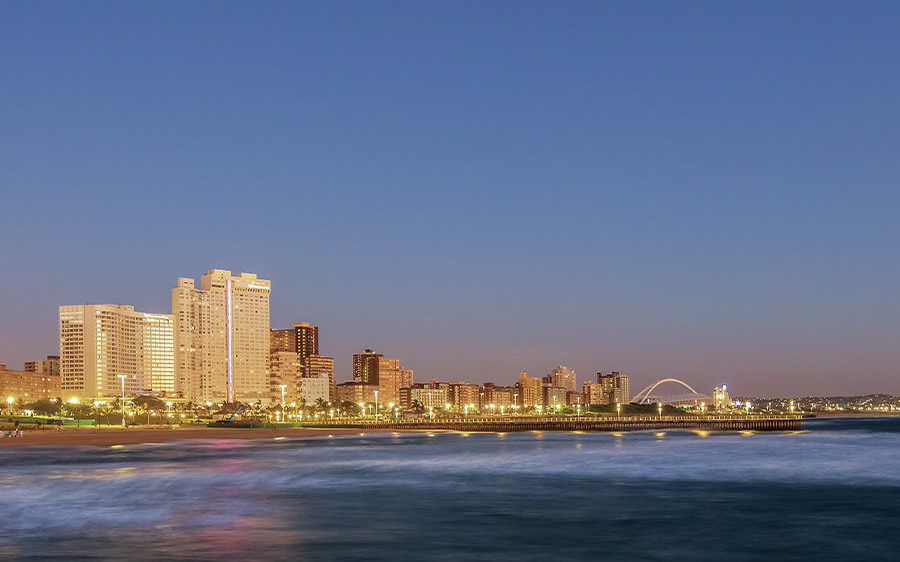
The Durban skyline with Moses Mabhida Stadium in the background (photo Rory Baker Photography).
Durban
Durban plays host to the first match of the tour. The city is situated on the east coast of South Africa along the Indian Ocean. With its hot, humid summers and mild winters, Durban is a popular tourist destination. Durban (called eThekwini in Zulu, meaning “bay” or “lagoon”) is the third largest city in South Africa. The city is served by King Shaka International Airport, located just north of the city.
Formerly known as Port Natal, Durban is home to the busiest port in sub-Saharan Africa.
The city is made up of a wide variety of cultures, which is reflected in its architecture. Alongside modern buildings, you will see mosques, temples, and many examples of Victorian architecture. Durban is also known for having the largest Indian population outside of India.
Durban offers a wide range of accommodation and dining options to suit most budgets. The city is well known for its curries, and no visit is complete without trying a bunny chow. A bunny chow is a hollowed-out loaf of bread filled with curry, and locals will tell you it is best eaten with your hands.
There is no shortage of things to see in Durban. Major attractions include the spectacular Moses Mabhida Stadium, built for the 2010 FIFA World Cup, uShaka Marine World Aquarium, the Durban Botanic Gardens (Africa’s oldest surviving botanic garden), several museums, and the famous Golden Mile beachfront. If you would like to visit some of the traditional markets in the city, these are best experienced with a guided tour.
Beyond its beaches, culture, and cricket, Durban is also one of the best cities in South Africa for birding, with excellent birding locations both within the city and a short drive away.
Kingsmead Stadium
Kingsmead Cricket Stadium, now known as Hollywoodbets Kingsmead Stadium, is a 25,000-seat ground situated only a stone’s throw from the Indian Ocean. The stadium is more than 100 years old. Hollywoodbets Dolphins and, more recently, the Durban Super Giants, use Kingsmead as their home ground.
The stadium has a mix of modern stands and popular grass banks. The historic West Stand is still in place, and several elements of the ground’s history remain visible today.
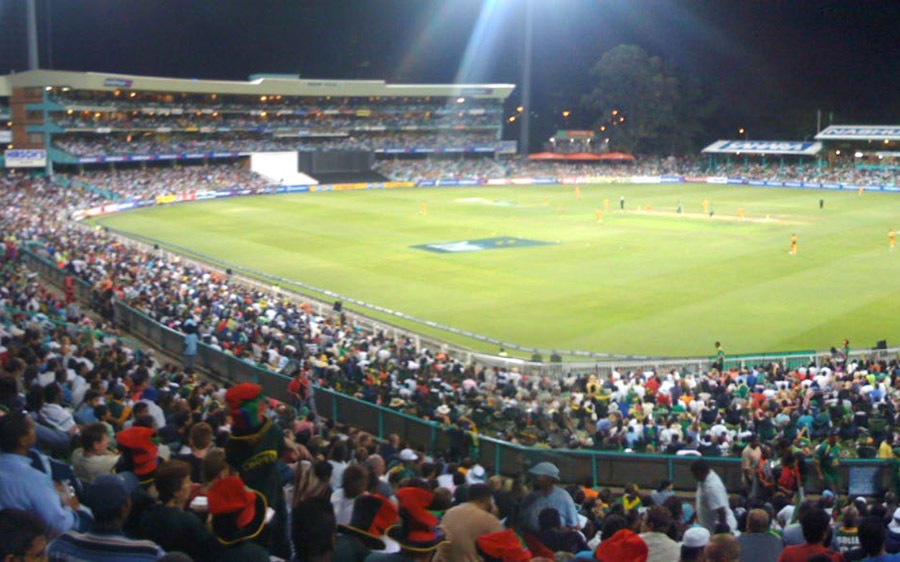
A packed Kingsmead Stadium showcases the lively atmosphere that makes this one of South Africa’s most popular cricket venues (photo FlickreviewR, Wikimedia Commons).
The first Test match at the stadium was played on 18 January 1923 between South Africa and England, which ended in a draw. Kingsmead also famously hosted the longest Test match ever played, known as the “Timeless Test” between South Africa and England in 1939, which lasted 12 days from 3 March to 14 March.
As with many international stadiums, there is a wide variety of food and drink available. We recommend getting a bunny chow during the match. Just make sure to grab plenty of serviettes, as it is best eaten with your hands.
On this tour, Australia will play two matches at Kingsmead: one ODI and one Test match. Over the years, Kingsmead has proved to be a good ground for Australia. Australia have played nine ODI matches here, winning six. Against South Africa specifically, they have played eight ODIs and won five of them.
In Test matches, the two sides have met eleven times at Kingsmead. Australia have won six of those matches and drawn two. Since South Africa’s readmission to international cricket, the teams have played five Tests at Kingsmead. Australia have won three, drawn one, and lost only once.
Based on this record, Australia may start the Test match as slight favourites. It is worth noting that matches at Kingsmead are sometimes affected by bad light, which can influence the result depending on how much time is lost.
Australia ODI record at Kingsmead
| Home Team | Away Team | Winner | Margin | Match Date |
| South Africa | Australia | South Africa | 7 wickets | Feb 24, 1994 |
| South Africa | Australia | Australia | 15 runs | Apr 5, 1997 |
| South Africa | Australia | South Africa | 6 wickets | Apr 12, 2000 |
| South Africa | Australia | Australia | 8 wickets | Apr 3, 2002 |
| Australia | Kenya | Australia | 5 wickets | Mar 15, 2003 |
| South Africa | Australia | Australia | 1 wicket | Mar 10, 2006 |
| South Africa | Australia | Australia | 141 runs | Apr 3, 2009 |
| South Africa | Australia | Australia | 3 wickets | Oct 28, 2011 |
| South Africa | Australia | South Africa | 4 wickets | Oct 5, 2016 |
Australia Test record at Kingsmead
| Home Team | Away Team | Winner | Margin | Match Date |
| South Africa | Australia | Australia | 9 wickets | Dec 14-18, 1935 |
| South Africa | Australia | Australia | inns & 6 runs | Feb 28-Mar 3, 1936 |
| South Africa | Australia | Australia | 5 wickets | Jan 20-24, 1950 |
| South Africa | Australia | Drawn | – | Jan 24-29, 1958 |
| South Africa | Australia | South Africa | 8 wickets | Jan 20-25, 1967 |
| South Africa | Australia | South Africa | inns & 129 runs | Feb 5-9, 1970 |
| South Africa | Australia | Drawn | – | Mar 25-29, 1994 |
| South Africa | Australia | South Africa | 5 wickets | Mar 15-18, 2002 |
| South Africa | Australia | Australia | 112 runs | Mar 24-28, 2006 |
| South Africa | Australia | Australia | 175 runs | Mar 6-10, 2009 |
| South Africa | Australia | Australia | 118 runs | Mar 1-5, 2018 |
Birding in Durban
Durban is one of the best cities in South Africa for combining cricket with birding. The city’s subtropical climate and mix of coastal forest, wetlands, and grasslands create excellent birding opportunities, many of which can be reached within an hour of the city centre.
Several productive birding sites are located close to Kingsmead Stadium. Umhlanga Nature Reserve, only a short drive from the airport, offers a mix of coastal forest, wetland, and estuarine habitat. Here, birders can look for species such as Red-capped Robin-Chat, Blue-mantled Crested Flycatcher, Black-bellied Starling, Rufous-winged Cisticola, Red-headed Quelea, Southern Brown-throated, Eastern Golden and Thick-billed Weavers, Collared, Grey, Purple-banded and Olive Sunbirds, and the elusive Buff-spotted Flufftail. During the summer months, the nearby beaches can also produce shorebirds such as Grey Plover, Common Sandpiper, Sanderling, and Ruddy Turnstone.
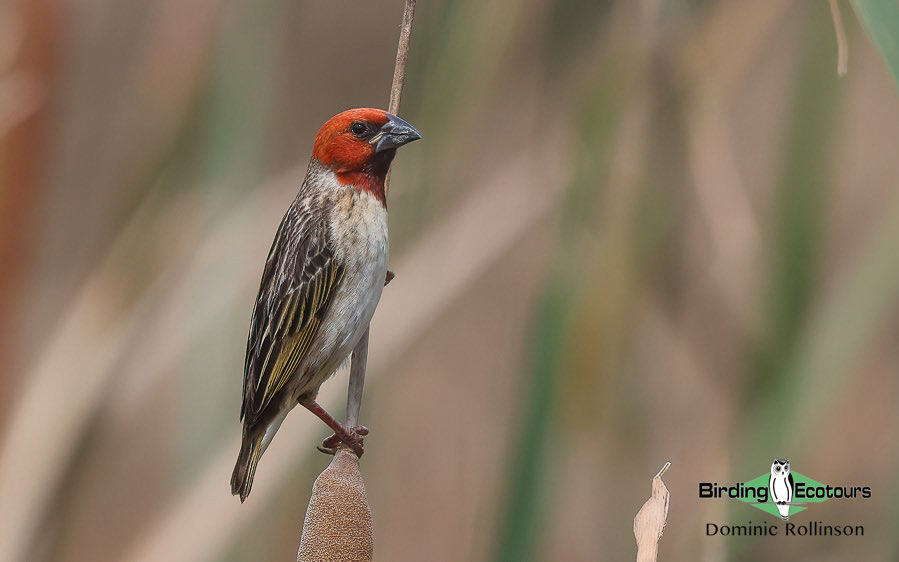
Red-headed Quelea is a sought-after local species.
Closer to the city centre, Pigeon Valley Nature Reserve provides excellent forest birding. A few hours walking the trails can produce species such as Purple-crested Turaco, White-eared Barbet, Yellow-rumped Tinkerbird, Dark-backed Weaver, and Tambourine Dove. In winter, the reserve is also one of the best places along the coast to search for the Spotted Ground Thrush.
A little further from the city, several outstanding birding areas can be reached on a day trip. Coastal forest at Umdoni Park can produce Narina Trogon, Green Malkoha, Grey Cuckooshrike, and Knysna Turaco, while inland reserves such as Springside and the Karkloof region offer opportunities to see species such as Crowned Eagle, Fan-tailed Grassbird, and all three of South Africa’s crane species (Blue, Grey-crowned, and Wattled Cranes).
For those wanting to travel slightly farther, southern Zululand is one of the most bird-rich regions in the country. Forest reserves around Eshowe hold species such as Narina Trogon, Lemon Dove, African Broadbill, and Eastern Bronze-naped Pigeon, while Mtunzini is famous for Palm-nut Vulture and the rare Southern Banded Snake Eagle.
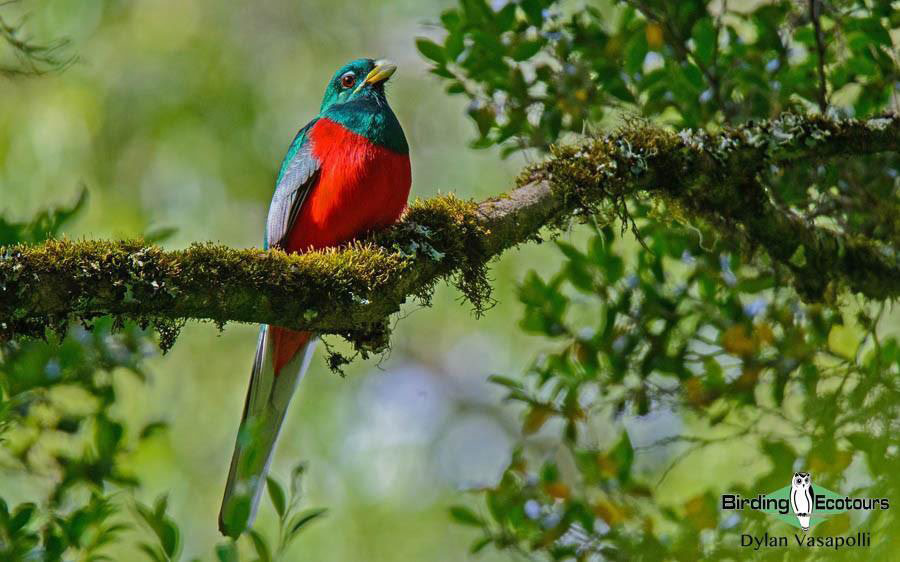
Birding in KwaZulu-Natal will provide many opportunities to see Narina Trogon.
One of the advantages of birding around Durban is how easily it can be combined with the cricket schedule. Many of these locations can be visited in the morning before the start of play, making it possible to enjoy a few hours of birding before heading to Kingsmead.
For those with a little more time available, a trip up Sani Pass offers one of the best birding experiences in South Africa. This dramatic mountain road climbs into the Drakensberg Escarpment and provides access to many of the region’s high-altitude specialties. Birders ascending the pass may encounter species such as Bush Blackcap, Drakensberg Prinia, Ground Woodpecker, Gurney’s Sugarbird, Buff-streaked Chat, and the range-restricted Drakensberg Siskin and Drakensberg Rockjumper. Raptors such as Bearded and Cape Vultures may also be seen soaring above the cliffs. Reaching the summit brings birders into the mountain kingdom of Lesotho, where open highland plains hold species such as Sickle-winged Chat, Mountain Pipit, Fairy Flycatcher, and Sentinel Rock Thrush.
For visitors wanting expert guidance, Birding Ecotours offers Durban day tours that can be tailored around the cricket schedule and target species. If you would like some ideas for possible Durban day trips, check out this article.
For those wanting a deeper birding experience, our Subtropical South Africa tour explores many of the region’s best birding areas, including Zululand and the forests of KwaZulu-Natal. The tour begins the day after the Kingsmead Test match in Durban, making it the ideal opportunity for travelling supporters to extend their stay and experience some of South Africa’s finest birding.
Combined with the cricket tour, this creates a unique journey through the country that blends world-class cricket with some of the best birding southern Africa has to offer.
Top 10 bird species to see in Durban
| Knysna Turaco |
| Narina Trogon |
| Red-headed Quelea |
| Mountain Wagtail |
| Half-coloured Kingfisher |
| Green Twinspot |
| Buff-spotted Flufftail |
| Crowned Eagle |
| Green Malkoha |
| Magpie Mannikin |
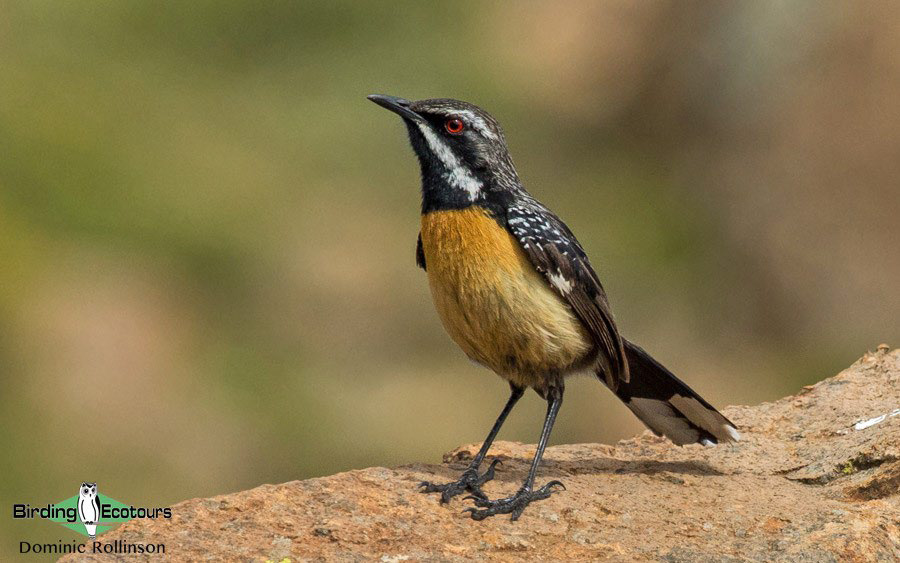
A trip up Sani Pass will allow you to see the iconic Drakensberg Rockjumper.
Johannesburg
Australia has played an interesting role in shaping the second-largest city in Africa.
Johannesburg, or “Jozi” as many locals call it, is the economic hub of South Africa and is situated in the landlocked province of Gauteng. The province’s name means “Place of Gold” in Sotho, referring to the mineral-rich region where the city is located. Johannesburg has two airports: OR Tambo International Airport, the larger of the two, and Lanseria Airport. For many visitors travelling to South Africa, Johannesburg is the first place they experience in the country.
Over the centuries, many different groups have shaped what the city is today, from early Stone Age inhabitants to the Khoi San, Tswana communities, and later Boer settlers. What ultimately transformed the area from farmland into the sprawling city it is today was the discovery of gold in February 1886 by Australian prospector George Harrison.
Johannesburg lies on the Highveld at an elevation of between 1,740 and 1,810 metres (5,700 to 5,930 feet), giving it a subtropical highland climate. The city’s landscape still reflects the mining history that shaped it. Although many mining operations ended in the 1960s, the remnants of that era remain visible across the city. One of the city’s popular attractions, Gold Reef City, is not only an amusement park but also offers guided tours exploring the mines that once formed the backbone of the region’s economy.
Johannesburg is an amalgamation of formerly separate towns, settlements, and townships. As a result, visitors will see some of the continent’s tallest skyscrapers, reflecting the wealth generated by mining. At the same time, areas such as Soweto and Alexandra tell the story of the country’s apartheid era. The city reflects both its troubled past and the prosperity that once flowed from the minerals beneath its soil.
Although Johannesburg is a busy city that rarely seems to slow down, it is also surprisingly green. With an estimated ten million trees, it is often described as one of the greenest cities in the world.

The modern Sandton skyscrapers in northern Johannesburg (photo Wikiguy1101, Wikimedia Commons).
The city offers visitors a wide range of activities. Nature lovers can explore several green spaces, including the Walter Sisulu National Botanical Garden and many other parks. For the more adventurous, bungee jumping from the Orlando Towers in Soweto is a popular attraction. The nearby Cradle of Humankind allows visitors to explore one of the most important fossil sites in the world and discover the origins of humankind. For those interested in history, the Apartheid Museum is an essential stop.
Johannesburg was also home to iconic South Africans such as Nelson Mandela and Archbishop Desmond Tutu. Today, visitors can explore the city beneath the shadows of its skyscrapers and world-class shopping centres, while also experiencing vibrant bars, shebeens, and the vast townships that form part of the city’s complex and fascinating story.
Beyond the history, skyline, and cricket, Johannesburg also offers surprisingly good birding, with several excellent nature reserves located within the city and just a short drive away.
Wanderers Stadium
The 34,000-seat Wanderers is a cricket stadium that has hosted many famous matches over the years. The ground, now known as Bidvest Wanderers Stadium, is nicknamed “The Bullring” because of its intimidating atmosphere. The Highveld Lions and Joburg Super Kings use it as their home ground. Situated more than 1,700 metres above sea level, this high-altitude venue is often known for producing big scores. Because of the thinner air and lower air pressure at this elevation, the ball often travels further than at many other grounds.
On this tour, the Wanderers will host the second ODI between South Africa and Australia on 27 September 2026.
The first Test match at the ground was played on 24 December 1956, making it the 41st venue to host Test cricket. The stadium is located in the district of Illovo, just south of Sandton. Although it sits in the middle of Johannesburg, there are several sporting facilities around the ground, including the 18-hole Wanderers Golf Course.
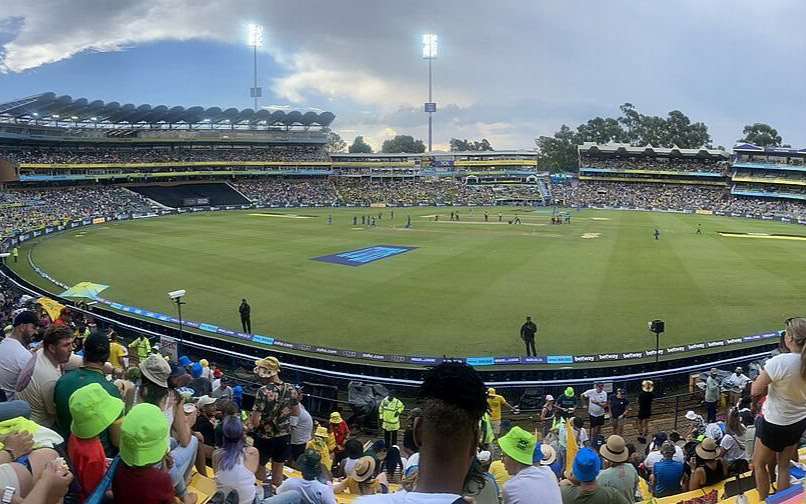
The Wanderers, known as the Bullring, is famous for its intense atmosphere and big match history (photo TapticInfo, Wikimedia Commons).
While many memorable matches have been played here, the most famous is probably the “434 match” in 2006. Australia batted first in the ODI and scored a mammoth 434, the first time a team had passed the 400 mark in ODI cricket. Although the target looked impossible, South Africa managed to chase it down. The match has often been called the greatest ODI of all time.
The Wanderers also holds a special place in Australian cricket history. It was here that Australia defeated India in the 2003 Cricket World Cup final to lift the trophy.
Australia have played eleven ODIs at the Wanderers, winning six of them. South Africa and Australia have played eight ODIs against each other at the ground, with South Africa winning five of those matches and Australia winning three.
In Test cricket, South Africa and Australia have met eleven times at the Wanderers since the ground first hosted Tests in 1956. Australia have won six of those encounters, with only one ending in a draw. Since South Africa’s readmission to international cricket, the two sides have locked horns seven times at the stadium, with Australia winning an impressive five of those matches.
With the Wanderers’ famous atmosphere and reputation for high-scoring matches, both the ODI and Test encounters should provide plenty of excitement for travelling Australian supporters.
Australia ODI record at the Wanderers
| Home Team | Away Team | Winner | Margin | Match Date |
| South Africa | Australia | South Africa | 5 runs | Feb 19, 1994 |
| South Africa | Australia | Australia | 8 runs | Apr 8, 1997 |
| South Africa | Australia | South Africa | 4 wickets | Apr 16, 2000 |
| South Africa | Australia | Australia | 19 runs | Mar 22, 2002 |
| Australia | Pakistan | Australia | 82 runs | Feb 11, 2003 |
| Australia | India | Australia | 125 runs | Mar 23, 2003 |
| South Africa | Australia | South Africa | 1 wicket | Mar 12, 2006 |
| South Africa | Australia | Australia | 47 runs | Apr 17, 2009 |
| Australia | West Indies | Australia | 50 runs | Sep 26, 2009 |
| South Africa | Australia | South Africa | 142 runs | Oct 2, 2016 |
| South Africa | Australia | South Africa | 122 runs | Sep 17, 2023 |
Australia Test record at the Wanderers
| Home Team | Away Team | Winner | Margin | Match Date |
| South Africa | Australia | Australia | 10 wickets | Feb 7-12, 1958 |
| South Africa | Australia | South Africa | 233 runs | Dec 23-28, 1966 |
| South Africa | Australia | drawn | – | Feb 3-8, 1967 |
| South Africa | Australia | South Africa | 307 runs | Feb 19-24, 1970 |
| South Africa | Australia | South Africa | 197 runs | Mar 4-8, 1994 |
| South Africa | Australia | Australia | inns & 196 runs | Feb 28-Mar 4, 1997 |
| South Africa | Australia | Australia | inns & 360 runs | Feb 22-24, 2002 |
| South Africa | Australia | Australia | 2 wickets | Mar 31-Apr 4, 2006 |
| South Africa | Australia | Australia | 162 runs | Feb 26-Mar 2, 2009 |
| South Africa | Australia | Australia | 2 wickets | Nov 17-21, 2011 |
| South Africa | Australia | South Africa | 492 runs | Mar 30-Apr 3, 2018 |
Birding in Johannesburg
Johannesburg may be South Africa’s largest city, but excellent birding can be found surprisingly close to the urban centre. Within a short drive of the city, birders can explore grasslands, wetlands, and bushveld habitats that hold an impressive range of species.
One of the advantages of birding in Gauteng is that many productive locations are easily reached on a day trip. Grassland reserves such as Suikerbosrand Nature Reserve offer the chance to see species like Orange River, Grey-winged, and Red-winged Francolins, Northern Black Korhaan, Eastern Long-billed Lark, Bokmakierie, Mountain and Ant-eating Chats, and the iconic Long-tailed Widowbird. Nearby wetlands such as Marievale Bird Sanctuary provide excellent opportunities for waterbirds, including Goliath Heron, African Rail, Blue-billed Teal, Cape Shoveler, and, with some luck, secretive species such as Baillon’s Crake and Red-chested Flufftail.
Another popular location is the Walter Sisulu National Botanical Garden, one of the most beautiful natural areas in Johannesburg. The gardens are well known among birders for their resident pair of Verreaux’s Eagles, which often soar dramatically in front of the waterfall. The surrounding woodland and gardens host a wide range of species, including Striped Pipit, African Paradise Flycatcher, Orange-breasted Bushshrike, Black Cuckooshrike, Green Wood Hoopoe,Black-headed Oriole, Greater Double-collared Sunbird, and several species of cuckoo during the summer months. Don’t forget to keep an eye open along the stream for Half-collared Kingfisher.
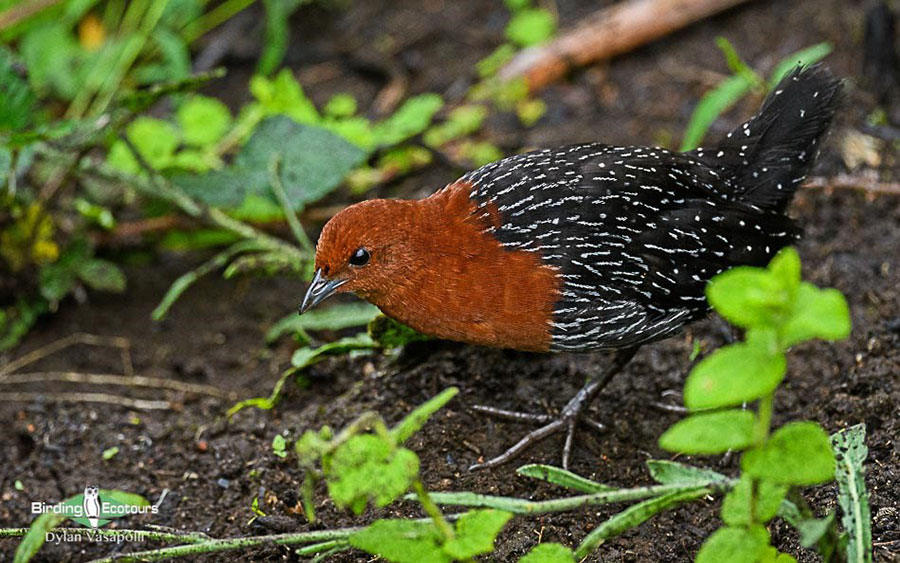
A visit to Marievale Bird Sanctuary may reward you with a sighting of the shy Red-chested Flufftail.
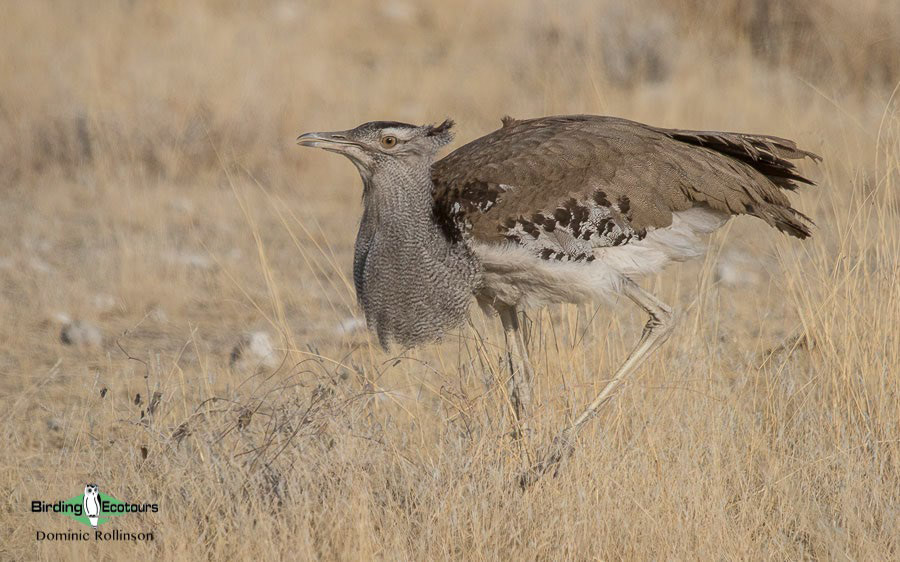
The massive Kori Bustard can be seen at Pilanesberg National Park.
For those wanting to combine birding with wildlife viewing, Pilanesberg National Park makes an excellent day trip from Johannesburg. The reserve supports around 350 bird species and is also home to a full range of large African mammals. Birders here can look for species such as Secretarybird, Kori Bustard, Pale Chanting Goshawk, Verreaux’s Eagle, Martial Eagle, Crimson-breasted Shrike, Kalahari Scrub Robin, White-throated Robin-Chat, and Violet-eared Waxbill.
Many of these sites can easily be visited in the morning before the start of play at the Wanderers, making Johannesburg another excellent stop on the cricket tour for birders.
For visitors seeking expert guidance, Birding Ecotours offers Johannesburg and Pretoria birding day tours that target many of the region’s most sought-after species.
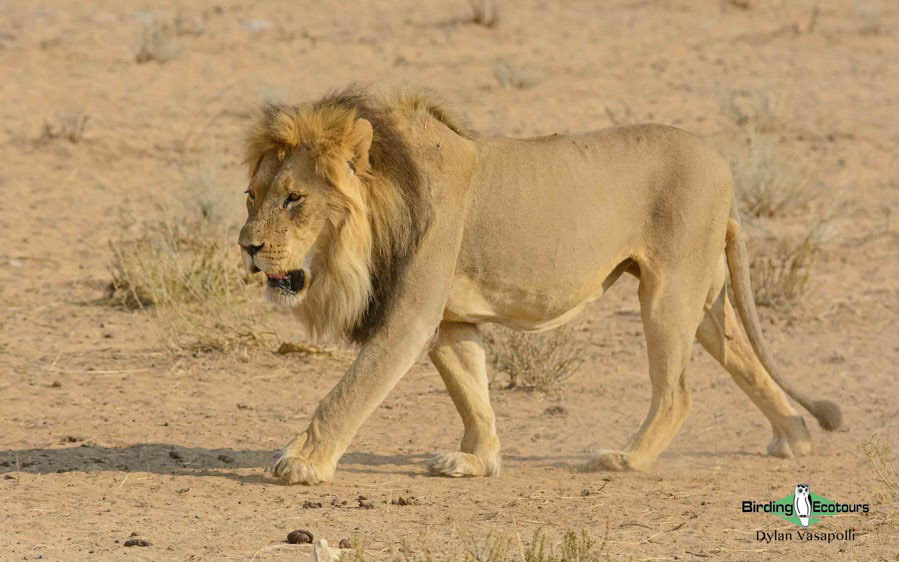
Kruger National Park is one of the best places in South Africa to see Lion.
For those wanting to extend their stay, Johannesburg is also the main gateway to Kruger National Park, one of Africa’s most famous wildlife destinations. A few days in Kruger offers the chance to combine outstanding birding with classic African safari experiences. In addition to the Big Five, birders can look for species such as Southern Ground Hornbill, Saddle-billed Stork, Bateleur, Pel’s Fishing Owl, and a wide variety of raptors and woodland birds. Adding a short Kruger extension to the cricket tour creates a truly memorable South African wildlife experience.
Top 10 bird species to see in Johannesburg
| Orange River Francolin |
| Red-chested Flufftail |
| Northern Black Korhaan |
| Ovambo Sparrowhawk |
| Ayres’s Hawk Eagle |
| Verreaux’s Eagle |
| Melodious Lark |
| Orange-breasted Waxbill |
| Short-toed Rock Thrush |
| Cuckoo-finch |
Potchefstroom
While Durban, Johannesburg, and Cape Town are major cities, Potchefstroom offers something a little different. This smaller university town has a relaxed atmosphere and a strong sporting culture, making it an interesting stop on the tour.
Potchefstroom is a medium-sized academic town in the North West Province of South Africa. The town lies about one and a half hours from Johannesburg and is often considered the home of North West sport. Due to the absence of large factories in the area, the town enjoys good air quality, which has led many sports teams and athletes to use it as a base for training. This includes the 2023 Australian men’s World Cup cricket team, who trained here before going on to win the tournament. Australian supporters may therefore hope that some of that luck carries over when the team returns to the town on this tour.
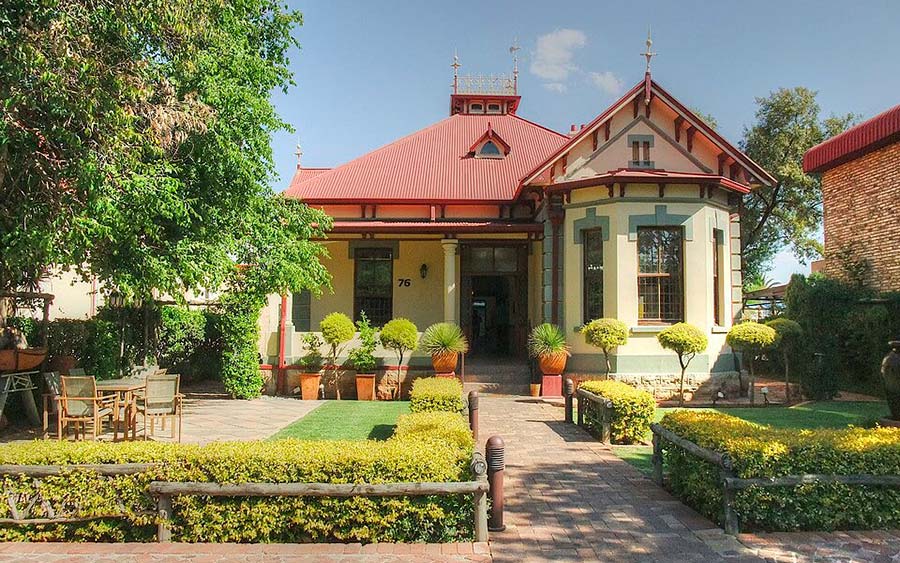
An example of the beautiful historical architecture which can be found in Potchefstroom (photo Leo za1, Wikimedia Commons)
The town is known as “Potch” by locals and is home to North West University, as well as several other tertiary institutions. With a large student population, the town has a lively nightlife. But Potchefstroom’s appeal is not limited to student life. It is also home to several national monuments and museums, meaning that despite its size, there is plenty for visitors to see and do.
Potchefstroom was established in 1838 by the Voortrekkers led by Andries Hendrik Potgieter, which some suggest is how the town got its name. “Pot” refers to his surname, “chef” to the leader, and “stroom” to the Mooi River that runs through the town. The town is rich in history and, until 1860, served as the first capital of the old South African Republic.
One of the town’s museums is the President Pretorius Museum, built by Marthinus Wessel Pretorius, the first president of the South African Republic. He was also the founder of the city of Pretoria.
JB Marks Oval
The JB Marks Oval may not have hosted as much international cricket as the other stadiums on this tour, but this 18,000-seat venue in the academic town of Potchefstroom promises to be a lively ground when it fills up. On this tour, JB Marks Oval will host the third ODI between South Africa and Australia, as well as a two-day warm-up match between the two sides.
The ground, previously known as Senwes Park, is not only a cricket venue but also serves as the base for AFL South Africa and the national Australian Rules Football team, making it a multi-sport venue. The stadium is the home ground of the North West Dragons cricket team, and the Highveld Lions occasionally play matches here as well.
The ground hosted its first international match on 20 October 2000, when South Africa played New Zealand in an ODI. The venue has also hosted two Test matches, both between South Africa and Bangladesh, in 2002 and again in 2017. Australia have played five ODIs at the ground, including two matches during their victorious 2003 World Cup campaign. In the three ODI matches they have played here against South Africa, Australia have yet to record a win, losing two of those games, while the first match between the sides ended in a tie.
Although smaller than the other venues on the tour, JB Marks Oval often produces an excellent atmosphere, with passionate local crowds creating a lively setting for international cricket.
Australia ODI record at JB Marks Oval
| Home Team | Away Team | Winner | Margin | Match Date |
| Australia | Netherlands | Australia | 75 runs | Feb 20, 2003 |
| Australia | Namibia | Australia | 256 runs | Feb 27, 2003 |
| South Africa | Australia | tied | – | Mar 27, 2002 |
| South Africa | Australia | South Africa | 6 wickets | Mar 7, 2020 |
| South Africa | Australia | South Africa | 111 runs | Sep 12, 2023 |
Birding in Potchefstroom
Potchefstroom may be best known as a university town, but it also offers excellent birding opportunities in the surrounding Highveld grasslands and wetlands. The area supports a variety of habitats, including open grassland, farm dams, rivers, and acacia woodland, making it a productive stop for birders travelling through the North West Province.
One of the most accessible birding sites close to town is the OPM Prozesky Bird Sanctuary, situated on the southern side of Potchefstroom. This small but productive reserve protects a series of wetlands and reedbeds that regularly produce a wide variety of waterbirds. Species such as African Swamphen, Black Crake, Goliath Heron, Little Bittern,Cape Shoveler, Fulvous Whistling Duck, South African Shelduck, and Whiskered Tern can all be found here, while the surrounding grassland may hold Cape Longclaw and Orange-breasted Waxbill. With around 200 species recorded, it is one of the most rewarding birding sites in the immediate area.
The wider Potchefstroom region is particularly good for Highveld grassland birding, with quiet rural roads and open farmland providing habitat for a number of characteristic species. Birders exploring these areas may encounter larks such as Rufous-naped, Spike-heeled, and Red-capped Larks, while the open plains can produce birds like Secretarybird, Capped Wheatear, Ant-eating Chat, and Melodious Lark. Nearby pans and dams can also attract flamingos, ducks, and a good variety of waders depending on seasonal water levels.
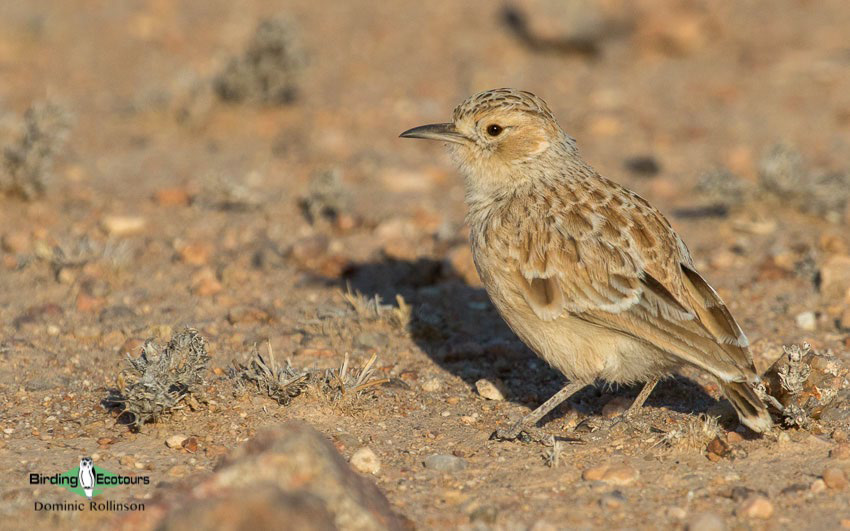
The Highveld grasslands around Potchefstroom are a good area for Spike-heeled Lark.
A short drive from Potchefstroom brings birders to the Vredefort Dome Conservancy, a UNESCO World Heritage Site created by one of the largest meteorite impacts on Earth. The rocky hills, riverine woodland, and open plains of the conservancy support a different suite of species to the surrounding grasslands. Birders here may encounter species such as Orange River Francolin, Northern Black Korhaan, Verreaux’s Eagle,Golden-tailed Woodpecker, Ashy Tit, Black-faced Waxbill, and Orange River White-eye. Along the nearby Vaal River, it is also possible to see African Fish Eagle, African Black Duck, and Giant Kingfisher.
These birding areas are all located within a relatively short distance of Potchefstroom, making them suitable for early morning excursions before the day’s cricket begins.
Although Birding Ecotours does not currently list specific scheduled tours in the Potchefstroom area, visitors who are interested in exploring the region’s birdlife are welcome to get in touch. Our team of expert guides can curate bespoke birding outings or short extensions around Potchefstroom and the surrounding Highveld, helping visitors make the most of the birding opportunities while visiting this historic cricket venue.
Top 10 bird species to see in Potchefstroom
| South African Shelduck |
| African Black Duck |
| Eastern Clapper Lark |
| Black-faced Waxbill |
| Orange River White-eye |
| Greater Kestrel |
| Cloud Cisticola |
| Crimson-breasted Shrike |
| Kalahari Scrub Robin |
| African Grass Owl |
Gqeberha (Port Elizabeth)
Gqeberha is arguably the city in South Africa with the most difficult name to pronounce (to learn to pronounce it, watch this video). Until 2021, the city was known as Port Elizabeth. Gqeberha is situated on Algoa Bay in the Eastern Cape and is the sixth most populous city in South Africa. The city forms part of the larger Nelson Mandela Bay Metro and is home to one of the country’s largest seaports. It is also one of South Africa’s most important industrial hubs, particularly for the automotive industry.
The city is also known as the “Friendly City” or, because of its often-windy conditions, the “Windy City”. Although many assume the name Port Elizabeth was linked to Queen Elizabeth, the city was actually named after the wife of its founder, Sir Rufane Donkin. He named the settlement after his wife, Elizabeth Frances, who died in India. In 2021, the city’s name was officially changed to Gqeberha, after the Xhosa name for the Baakens River, which flows through the area.
There is plenty for visitors to see and do in Gqeberha. For those interested in history, the Donkin Heritage Trail links 51 places of historical interest in the old Hill area of the city and tells the story of the early British colonial settlers who arrived in the region. Route 67 features a collection of 67 artworks celebrating the life and legacy of Nelson Mandela. The city is also home to the fascinating South African Air Force Museum.
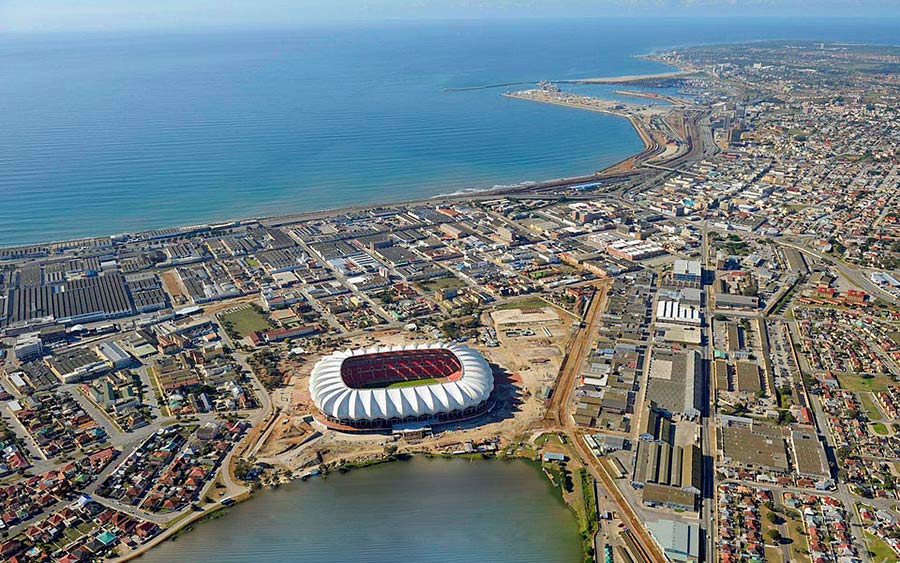
A view over Gqeberha, with the impressive Nelson Mandela Bay Stadium in the foreground and the coastline stretching beyond (photo Panoramio, Wikimedia Commons).
Gqeberha is also a beach lover’s paradise, with around 40 kilometres of beautiful coastline. The city has six swimming beaches, three of which have Blue Flag status. Sardinia Bay Beach is often regarded as one of the most beautiful beaches in the country and is known as an excellent walking beach, with kilometres of unspoilt and remote coastline.
The impressive 46,000-seat Nelson Mandela Bay Stadium was built for the 2010 FIFA World Cup and hosted eight matches during the tournament. Today, the stadium remains an important sporting venue, regularly hosting rugby and football matches.
Gqeberha is easily accessible via Chief Dawid Stuurman International Airport, which is located only a few minutes’ drive from the central business district.
St George’s Park
Few cricket grounds in the world have quite the atmosphere of St George’s Park. Situated only a short distance from the Indian Ocean, this historic venue has long been one of South Africa’s most distinctive places to watch a Test match.
The 19,000-seat St George’s Park is a cricket ground steeped in history. The venue hosted South Africa’s first ever Test match on 12 March 1889, when South Africa played England in the first Test match held outside England or Australia. On 5 March 1970, South Africa defeated Australia by a massive 323 runs at this ground. That match would go down in history as the final Test South Africa played before their 21-year isolation from international cricket. St George’s Park also hosted South Africa’s first rugby international when they faced England here in 1891.
On this tour, St George’s Park will host the second Test match between South Africa and Australia, played from 18–22 October 2026. The stadium is the home ground of the Dafabet Warriors and the Sunrisers Eastern Cape. Located close to the Indian Ocean, the ground has become famous for the St George’s Park Band, a full brass band that plays throughout many matches at the venue.
One of the most distinctive features of St George’s Park is this famous band. The brass band has been entertaining crowds here for decades, playing throughout the day and adding a unique soundtrack to the cricket. For many visiting supporters, it is something completely different from the atmosphere at most international grounds, giving the stadium a relaxed and festive feel that has become part of the ground’s identity.
Australia have played seven Test matches against South Africa at St George’s Park, winning three of them. Since South Africa’s readmission to international cricket, the two sides have met three times at the ground, with Australia winning once and South Africa winning twice. Based on past records, this could be a venue where South Africa feels confident going into the match.
With its rich history and unique atmosphere, St George’s Park remains one of the most distinctive cricket venues in the world.
Australia Test record at St George’s Park
| Home Team | Away Team | Winner | Margin | Match Date |
| South Africa | Australia | Australia | inns & 259 runs | Mar 3-6, 1950 |
| South Africa | Australia | Australia | 8 wickets | Feb 28-Mar 4, 1958 |
| South Africa | Australia | South Africa | 7 wickets | Feb 24-28, 1967 |
| South Africa | Australia | South Africa | 323 runs | Mar 5-10, 1970 |
| South Africa | Australia | Australia | 2 wickets | Mar 14-17, 1997 |
| South Africa | Australia | South Africa | 231 runs | Feb 20-23, 2014 |
| South Africa | Australia | South Africa | 6 wickets | Mar 9-12, 2018 |
Birding around Gqeberha
Gqeberha offers a surprisingly diverse range of birding opportunities within a short distance of the city. Estuaries, coastal dunes, wetlands, forested valleys, and nearby game reserves all combine to make this part of the Eastern Cape a rewarding stop for visiting birders.
One of the most popular sites is Cape Recife Nature Reserve, situated at the southwestern edge of Algoa Bay. This coastal reserve offers excellent shorebird and seabird viewing, with species such as African Oystercatcher, Cape Gannet offshore, several tern species including Roseate and Damara Terns, White-fronted Plover, and Cape Cormorant all seen regularly. The surrounding coastal vegetation also holds species such as Red-necked Spurfowl, Cape Grassbird, Karoo Prinia, Cape Bulbul, and Southern Tchagra.
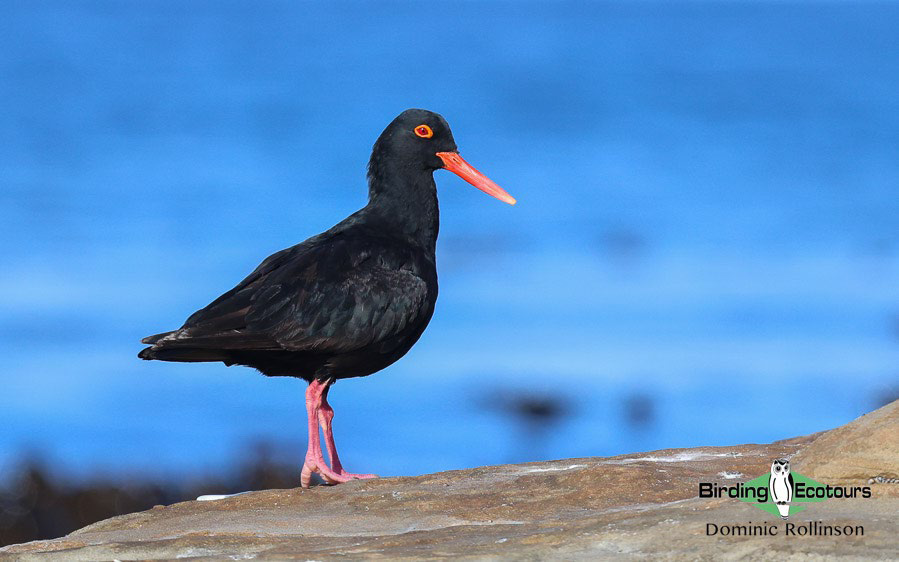
African Oystercatcher is one of the species you may see at Cape Recife Nature Reserve.
Another important birding location is the Swartkops Estuary, one of the largest estuarine systems in the region. The mudflats, reedbeds, and saltpans support large numbers of waterbirds, including Greater and Lesser Flamingos, African Spoonbill, African Marsh Harrier, Curlew and Marsh Sandpipers, Little Stint, and a variety of terns and gulls. The estuary is also a reliable site for species such as African Fish Eagle, and Pied and Malachite Kingfishers.
Within the city itself, there are several smaller reserves that offer rewarding birding. Settlers Park and the Baakens Valley provide patches of riverine woodland where birders may encounter species such as Knysna Turaco, Olive Woodpecker, Forest Canary, and African Paradise Flycatcher. Wetland areas such as Cotswold Quarry, Happy Valley, and Fairview Racecourse often hold a good selection of waterbirds and migrants, while nearby grasslands along Tankatara Road can produce a variety of open-country species.
For those with additional time available, the birding possibilities extend well beyond the city. A short drive north brings birders to the Sundays River estuary near Colchester, another productive wetland system where flamingos, waders, and terns are often present. From here, it is also easy to access Addo Elephant National Park, one of South Africa’s premier wildlife reserves. In addition to its famous elephant population, Addo offers excellent birding with species such as Secretarybird, Denham’s Bustard, Blue Crane, Pale Chanting Goshawk, Karoo Scrub Robin, Bokmakierie, and a wide range of raptors.
Further west of the city, Van Stadens Pass provides a completely different habitat, with forested slopes and deep river valleys supporting species such as Knysna Turaco, Narina Trogon, Chorister Robin-Chat, and Olive Woodpecker.
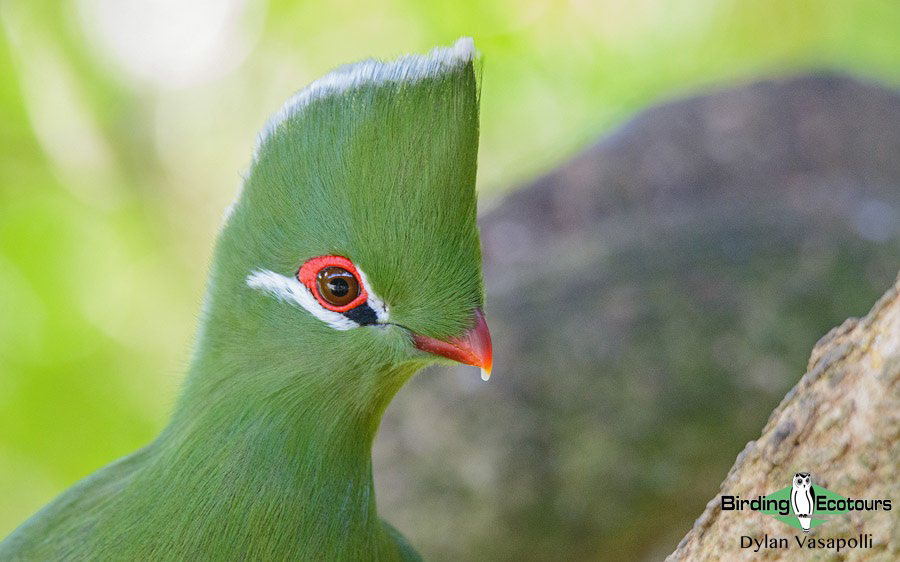
Time in the Eastern Cape provides the opportunity to see the endemic Knysna Turaco.
Algoa Bay itself is also an important seabird area. Offshore islands such as Bird Island support one of the largest Cape Gannet colonies in the world, while nearby St Croix Island hosts a major African Penguin colony. These islands can be visited on boat-based marine wildlife trips departing from the harbour, although this would normally require a dedicated outing rather than a short birding excursion around the cricket schedule.
Although Birding Ecotours does not currently list scheduled tours in Gqeberha, the region offers excellent birding both within the city and in the surrounding Eastern Cape. Travellers interested in exploring these areas are welcome to get in touch, and our team can design bespoke birding outings or short extensions around Gqeberha, helping visitors experience the rich birdlife of this part of South Africa while enjoying the cricket at St George’s Park.
Top 10 bird species to see in Gqeberha (Port Elizabeth)
| Knysna Turaco |
| Knysna Warbler |
| Knysna Woodpecker |
| African Oystercatcher |
| Damara Tern |
| Roseate Tern |
| Cape Cormorant |
| Red-necked Spurfowl |
| Southern Tchagra |
| Southern Red-fronted Tinkerbird |
Cape Town
Cape Town is one of the most popular destinations for tourists visiting South Africa. Built around the iconic Table Mountain, the city is regarded by many as one of the most beautiful cities in the world. Situated on the south-western tip of the African continent, Cape Town is one of the most historically important cities in the country. Located in the Western Cape, it is the second most populous city in South Africa and serves as the legislative capital of the country.
The city was founded in 1652 when the Dutch East India Company established a refreshment station for its ships on the shores of Table Bay. Cape Town is often called the “Mother City” because it was the first site of European settlement in South Africa. This settlement also introduced the slave trade to the region. The arrival of slaves from many parts of the world, together with European settlers, helped shape the cultures, religions, and architecture that define the city today.
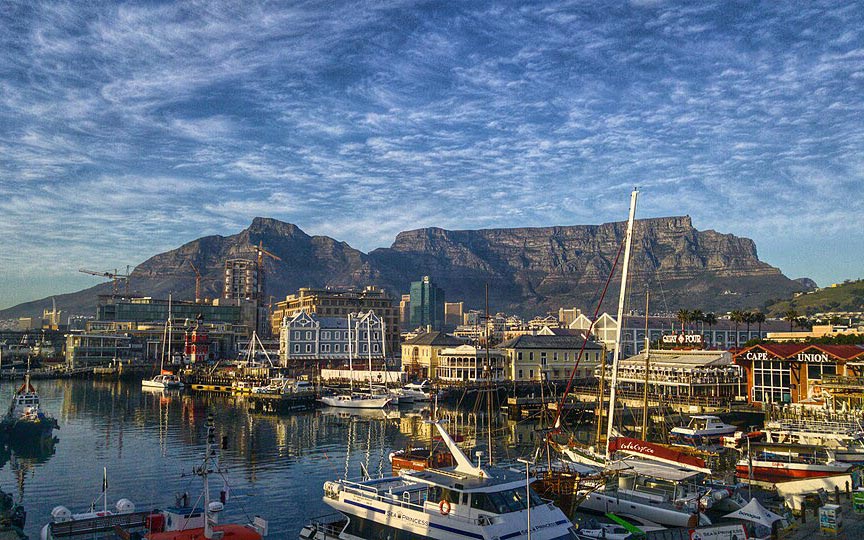
The iconic Table Mountain offers a stunning backdrop for Cape Town (photo HP Botha, Wikimedia Commons).
For those interested in the history of the region, there are many excellent museums and historical sites to visit. These include the District Six Museum, the Iziko Bo-Kaap Museum, the Castle of Good Hope, and the Iziko Slave Lodge. One of the most significant historical landmarks is the world-famous Robben Island, where Nelson Mandela was imprisoned for 27 years.
But Cape Town offers far more than just history. The city provides visitors with a wide range of activities, no matter their interests. The Cape is well known for its beautiful beaches that attract thousands of visitors each year. The city is also home to many of the country’s best-known hotels and restaurants, while the nearby Cape Winelands produce some of the finest wines in the world. For those wanting to visit Table Mountain, the Table Mountain Cableway allows visitors to reach the summit in around five minutes.
For nature lovers, the world-famous Kirstenbosch National Botanical Garden is a must-visit destination. The V&A Waterfront is one of the city’s most popular attractions, with a marina, hotels, restaurants, and shops all located in this vibrant harbour precinct. The waterfront also forms part of one of the oldest working harbours in the Southern Hemisphere. For those looking for a memorable meal, Cape Town sits at the heart of South Africa’s fishing industry. Enjoying fish and chips at one of the local restaurants, often only metres from the fishing boats, is an experience not to be missed.
Cape Town International Airport offers regular domestic and international flights, making the city easily accessible for visitors travelling to the region.
Newlands Cricket Ground
Few cricket grounds in the world can match the setting of Newlands Cricket Ground. With Table Mountain and Devil’s Peak rising dramatically behind the stadium, it is easy to understand why many people consider Newlands to be the most beautiful cricket ground in the world. Watching a Test match here, with the mountain towering over the ground, is an experience that every cricket supporter should have at least once. As the light changes during the day, the mountain backdrop shifts colour, adding another layer to the spectacle of watching cricket at Newlands.
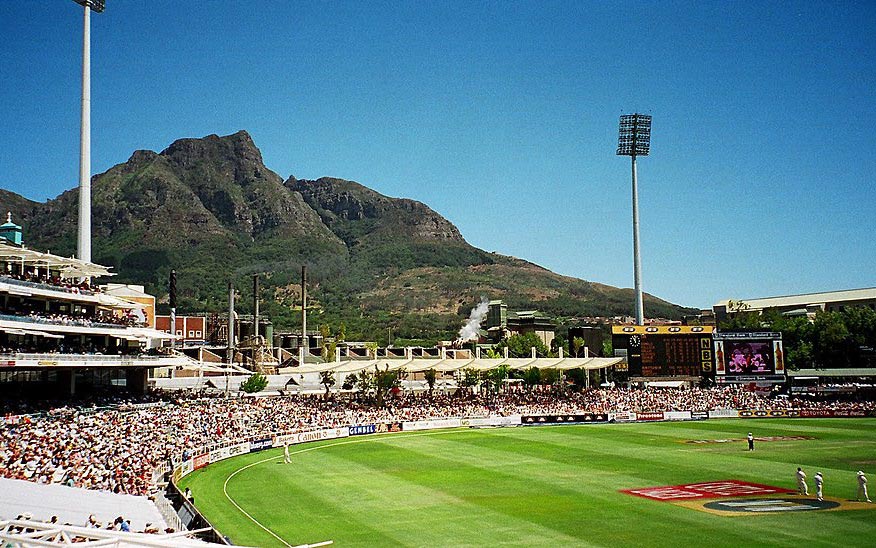
Set against the dramatic backdrop of Table Mountain, Newlands Cricket Ground is often rated as one of the world’s most beautiful cricket venues (photo Paddy Briggs, Wikimedia Commons).
Newlands is one of the oldest sporting venues in South Africa, with the first Test match played here on 25 March 1889 against England. Western Province and MI Cape Town both use the stadium as their home ground, and Newlands regularly attracts strong crowds for both domestic and international cricket.
Over the years, the stadium has grown to a seating capacity of around 25,000, as some of the older grass seating areas were replaced with modern stands. While the primary focus of the venue remains cricket, recent developments have added office space and other facilities, turning Newlands into a mixed-use precinct. On this tour, Newlands Cricket Ground will host the third and final Test match between South Africa and Australia, played from 27–31 October 2026.
Historically, Newlands has been a successful ground for Australia. The two sides have played 14 Test matches against each other here, with Australia winning 10 of those encounters and South Africa winning four. Since South Africa’s readmission to international cricket, the teams have met seven times at Newlands. Australia have won four of those matches, while South Africa have won three, showing how closely contested the modern era encounters have been.
With its breathtaking setting and long cricketing history, Newlands provides a fitting stage for the final Test of the series.
Australia Test record at Newlands Cricket Ground
| Home Team | Away Team | Winner | Margin | Match Date |
| South Africa | Australia | Australia | 10 wickets | Nov 8-11, 1902 |
| South Africa | Australia | Australia | 10 wickets | Nov 26-29, 1921 |
| South Africa | Australia | Australia | inns & 78 runs | Jan 1-4, 1936 |
| South Africa | Australia | Australia | 8 wickets | Dec 31, 1949 – Jan 4, 1950 |
| South Africa | Australia | Australia | inns & 141 runs | Dec 31, 1957 – Jan 3, 1958 |
| South Africa | Australia | Australia | 6 wickets | Dec 31, 1966 – Jan 5, 1967 |
| South Africa | Australia | South Africa | 170 runs | Jan 22-27, 1970 |
| South Africa | Australia | Australia | 9 wickets | Mar 17-21, 1994 |
| South Africa | Australia | Australia | 4 wickets | Mar 8-12, 2002 |
| South Africa | Australia | Australia | 7 wickets | Mar 16-18, 2006 |
| South Africa | Australia | South Africa | inns & 20 runs | Mar 19-22, 2009 |
| South Africa | Australia | South Africa | 8 wickets | Nov 9-11, 2011 |
| South Africa | Australia | Australia | 245 runs | Mar 1-5, 2014 |
| South Africa | Australia | South Africa | 322 runs | Mar 22-25, 2018 |
Cape Town Birding
Cape Town is widely regarded as one of the most beautiful cities in the world, but it is also one of the best birding destinations in South Africa. The city lies at the heart of the Cape Floristic Region, one of the world’s six floral kingdoms. This unique vegetation type, known as fynbos, supports a number of bird species that occur nowhere else on earth.
Many excellent birding sites can be reached within a short drive of the city. One of the most rewarding day trips from Cape Town explores the spectacular Cape Fold Mountains and coastal fynbos habitat along the eastern side of False Bay. The scenic drive alone is worth the trip, but the birding is equally memorable. Key target species include Cape Rockjumper, Cape Sugarbird, Orange-breasted Sunbird, Cape Siskin, and Victorin’s Warbler, all of which are closely tied to the region’s unique fynbos habitat.
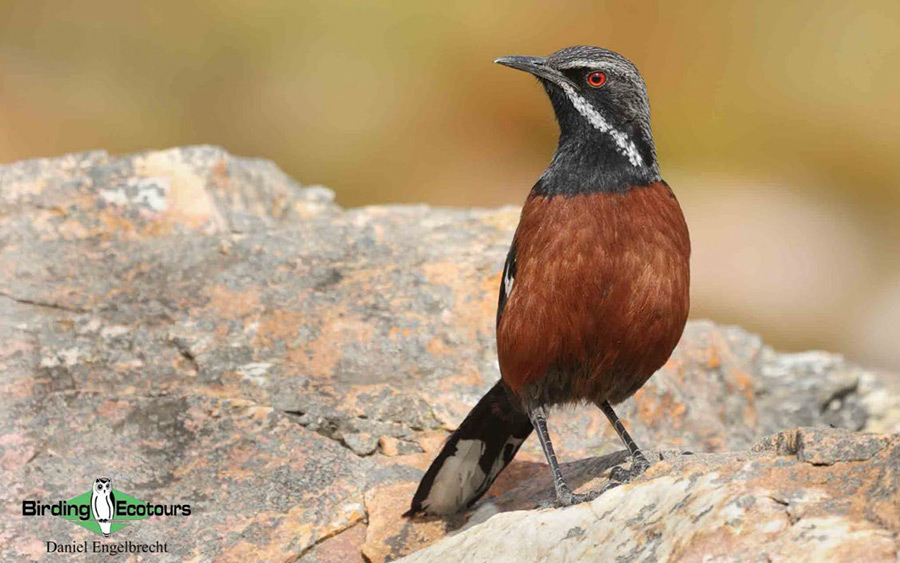
Rooi-Els is one of the best places to see the endemic Cape Rockjumper.
The coastal village of Rooi-Els is one of the best places to search for Cape Rockjumper, a species that ranks high on the wish list of visiting birders. Nearby Betty’s Bay offers another highlight with a mainland colony of African Penguins, as well as good viewing opportunities of Bank, Cape, Crowned, and Great Cormorants along the rocky shoreline.
Further birding opportunities can be found at the beautiful Harold Porter National Botanical Garden, where species such as Cape Batis, Blue-mantled Crested Flycatcher, Southern Boubou, Fiscal Flycatcher, and Swee Waxbill occur alongside the more localised fynbos birds.
Another rewarding option is a day trip north along the West Coast. This area offers a completely different birding experience, with strandveld vegetation, coastal lagoons, and open farmland. Sites such as the West Coast National Park can produce species including Black Harrier, Southern Black Korhaan, Cape Penduline Tit, Grey-winged Francolin, and large numbers of migrant shorebirds at the famous Langebaan Lagoon.
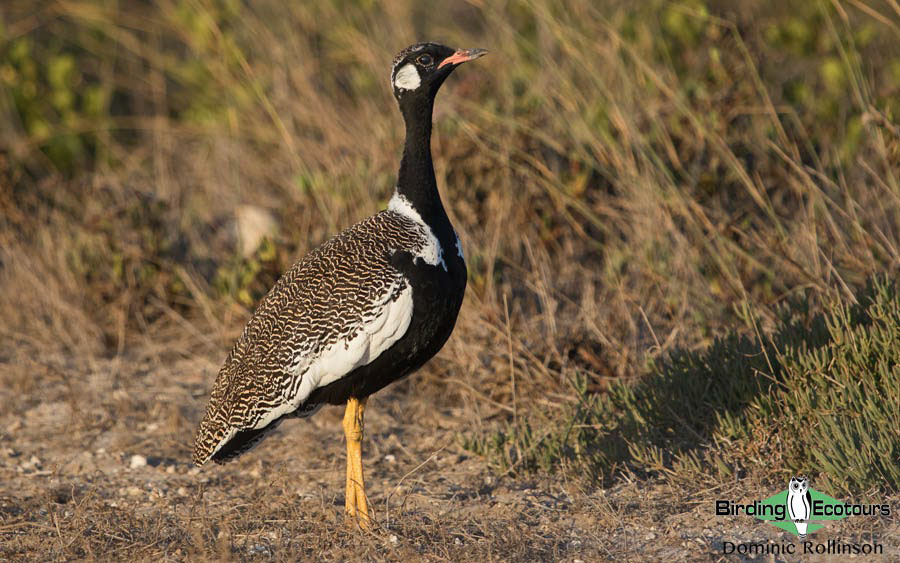
Southern Black Korhaan is a species to look out for in West Coast National Park.
These birding areas are easily reached from Cape Town and make excellent morning or full-day excursions around the cricket schedule.
For visitors wanting expert guidance, Birding Ecotours offers a range of Cape Town birding day tours, including the popular Mountains and Fynbos tour as well as West Coast birding excursions targeting the region’s unique endemic species.
For those with more time available, the Cape region also offers outstanding multi-day extensions. One particularly rewarding option is a journey into the Tankwa Karoo, where the birdlife changes dramatically as the landscape opens into vast semi-desert plains. Here, birders can search for Karoo specialties such as Karoo Korhaan, Tractrac and Karoo Chats, Karoo Eremomela, Rufous-eared, Cinnamon-breasted and Namaqua Warblers, Pririt Batis, and Black-headed Canary, to name a few.
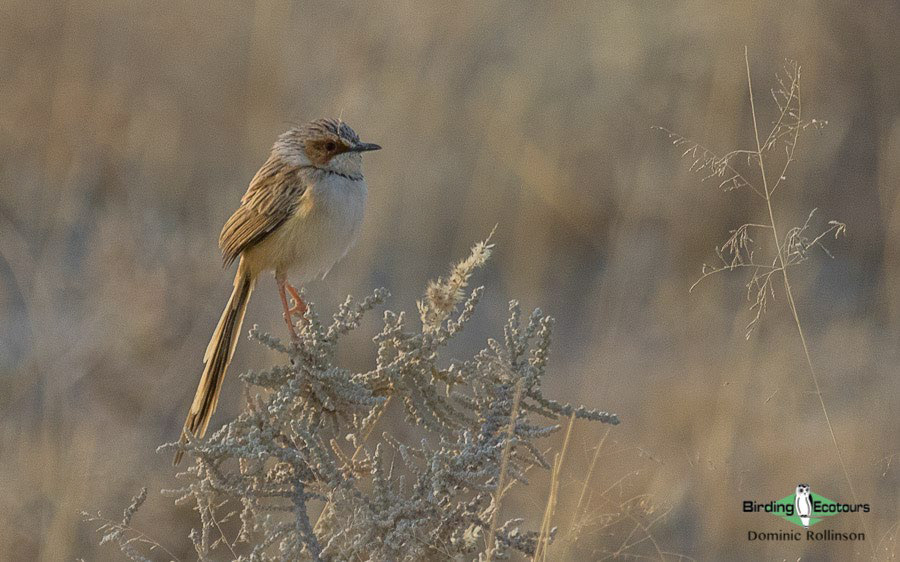
The Rufous-eared Warbler is one of the prettiest Karoo species!
Another unforgettable experience from Cape Town is a pelagic birding trip. These trips head offshore to the rich fishing grounds beyond Cape Point, where large numbers of seabirds gather behind trawlers. Depending on the season, birders may encounter several species of albatrosses, petrels, shearwaters, and storm petrels, making Cape Town one of the premier pelagic birding destinations in the world.
Whether visitors choose a short day trip or a longer extension, Cape Town offers some of the most distinctive birding experiences anywhere in Africa.
Top 10 bird species to see in Cape Town
| Cape Rockjumper |
| Cape Sugarbird |
| Orange-breasted Sunbird |
| Rufous-breasted Sparrowhawk |
| Cape Siskin |
| Cape Eagle-Owl |
| African Penguin |
| African Wood Owl |
| Forest Buzzard |
| Bank Cormorant |
Make the most of your South African cricket tour
Following Australia on tour through South Africa offers more than just world-class cricket. From the coastal forests of KwaZulu-Natal to the Highveld grasslands of Gauteng, the estuaries of the Eastern Cape, and the unique fynbos landscapes of the Cape, the journey across the country also passes through some of southern Africa’s most rewarding birding regions.
For travelling supporters who enjoy birding, this tour presents a rare opportunity to combine two great passions. Many excellent birding sites are located close to the host cities, making it possible to enjoy productive morning birding before heading to the stadium. For those with more time available, the route also provides access to some of the continent’s most iconic wildlife destinations, including the Kruger National Park, Addo Elephant National Park, and the remarkable landscapes of the Cape.
Birding Ecotours offers a wide range of birding tours across South Africa, from short day trips around the host cities to longer extensions exploring the country’s most spectacular birding regions. Our team can also help design customised birding itineraries to fit around the cricket schedule, allowing visitors to make the most of their time in the country.
Whether you would like to join one of our scheduled tours, add a few guided birding days between matches, or have us arrange a complete birding itinerary around the tour, we would be delighted to help.
If you are planning to follow Australia on their tour of South Africa and would like to include some unforgettable birding experiences along the way, please get in touch with the Birding Ecotours team at [email protected], and we will help you plan the perfect combination of cricket and birding.