- Duration:
- 10 days
- Group Size:
- 4–6
- Tour Start:
- Entebbe, Uganda
- Tour End:
- Entebbe, Uganda
Eastern Uganda Birding Tour – Fox’s Weaver & Localized Specialties
Details
2027
15–24 August
Per person sharing
$6,950 USD
£5,513 GBP / €6,513 EUR
Single supplement
$400 USD
£317 GBP / €375 EUR
2028
15–24 August
Per person sharing
$7,500 USD
£5,948 GBP / €7,029 EUR
Single supplement
$500 USD
£397 GBP / €468 EUR
Itinerary
Download ItineraryEastern Uganda Birding Tour – Fox’s Weaver & Localized Specialties
Uganda has emerged over the last few decades as one of the most popular birding destinations on the African continent, and for good reason. Despite being roughly the size of the state of Oregon, Uganda boasts over 1,000 recorded bird species, including several near-endemic and range-restricted species best seen within the country. In addition to its remarkable avian diversity, Uganda offers mammal viewing on a par with that of East and Southern Africa and truly stands apart for its exceptional primate diversity.
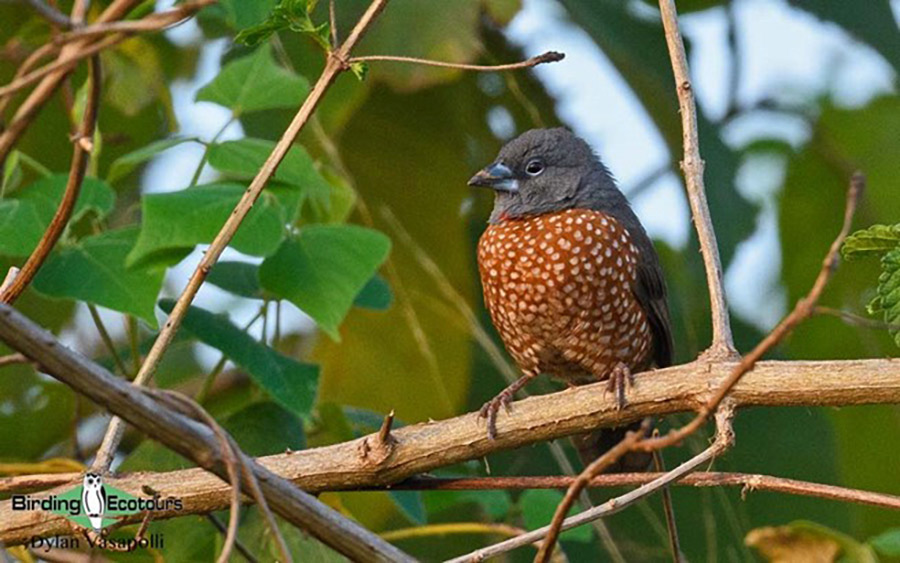
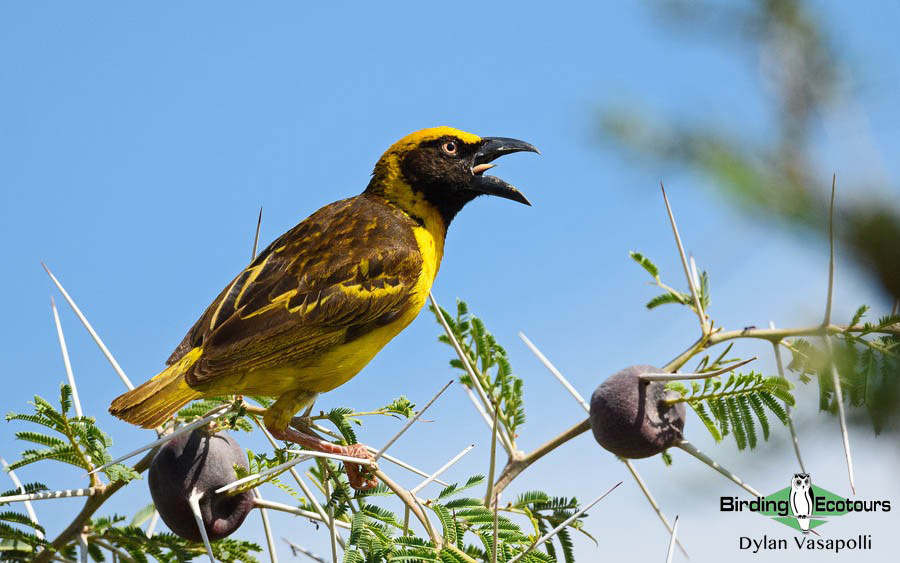 The poorly known and recently rediscovered Fox’s Weaver is Uganda’s only endemic bird and one of the tour’s main targets.
This carefully crafted 10-day Eastern Uganda Birding Tour visits the lesser-known, underexplored northeastern reaches of the country in search of localized birds seldom encountered on our popular Best of Uganda Birding Tour – Shoebill, Albertine Rift Endemics and Great Apes – or on most itineraries to Uganda.
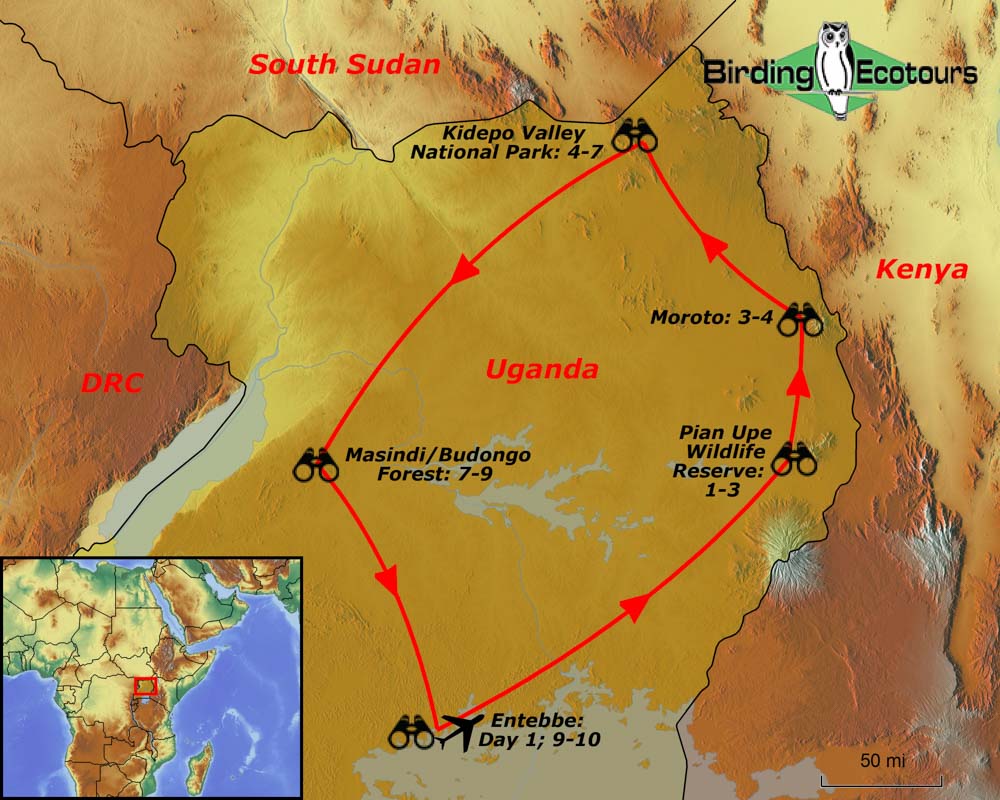
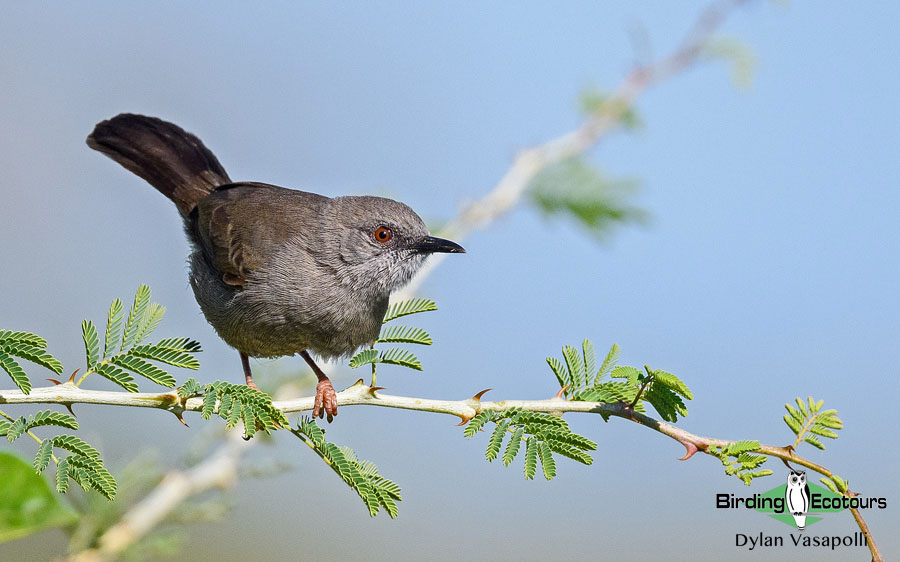
We start the tour in the lush town of Entebbe, on the outskirts of Uganda’s bustling capital, Kampala, before making our way northeast to Pian Upe Wildlife Reserve, one of Uganda’s largest protected areas. Here, we target Uganda’s only endemic bird, the recently rediscovered Fox’s Weaver, in addition to Karamoja Apalis (a recent split from the Maasai Apalis of Kenya and Tanzania and essentially endemic to Uganda), along with other exciting species such as Stone Partridge and Clapperton’s Spurfowl.
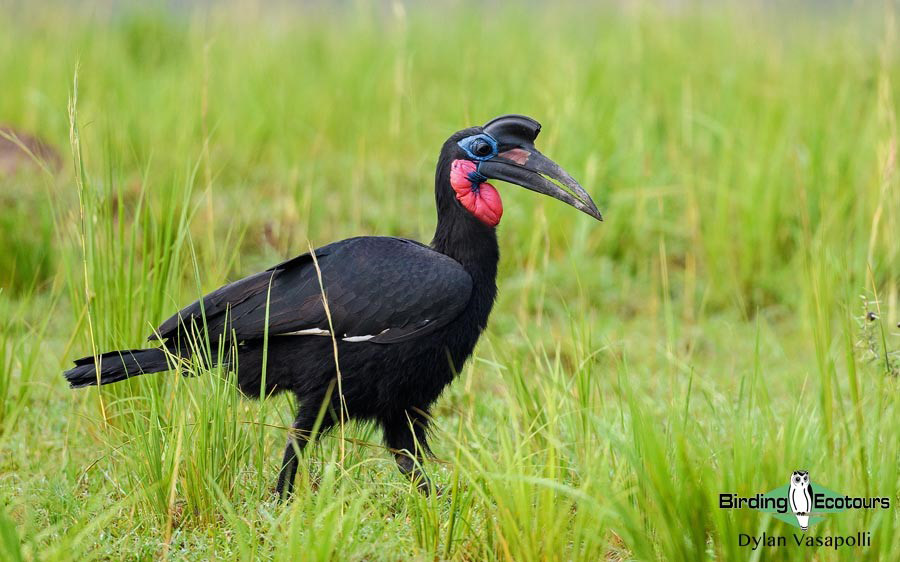
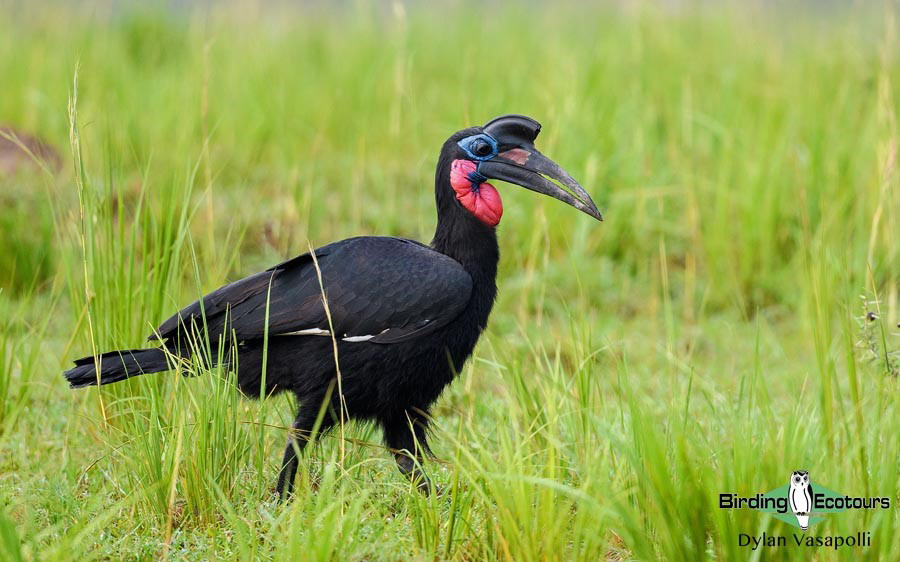 We have an excellent chance of seeing Abyssinian Ground Hornbill on this tour!
We then continue through the town of Moroto, lying at the foot of Mount Moroto, where we search for species typically associated with neighboring Kenya, including the sought-after Jackson’s Hornbill. Kidepo Valley National Park is next on the agenda, where we will spend three nights in this spectacular reserve located on the border with South Sudan in the far northeastern corner of the country. Kidepo Valley National Park is Uganda’s most remote and least explored protected area, yet it is widely considered one of Africa’s most spectacular wildernesses. Key targets here include the rare and massive Black-breasted Barbet, the elusive Ring-necked Francolin, and the recently split Kidepo Lark (previously considered conspecific with the more widespread Red-winged Lark), among others. Mammals are also well represented in Kidepo, and we should encounter herds of Cape Buffalo, Plains Zebra, Waterbuck, Common Eland, Hartebeest, and Northern Giraffe, along with the possibility of big cats such as Lion and Leopard.
Our route then takes us west to Masindi, our base for exploring the exceptionally tall lowland forests along the Royal Mile section of Budongo Forest, where we hope to add further exciting species to our list. Major targets here include the localized and tricky Ituri Batis and Nahan’s Partridge, along with dozens of other sought-after birds. We then return to Entebbe for the final night, with the tour concluding the following day.
This tour follows directly on from our Ultimate Uganda – Shoebill, Albertine Rift Endemics and Great Apes Tour, making it easy to combine the two into one comprehensive Uganda birding adventure.
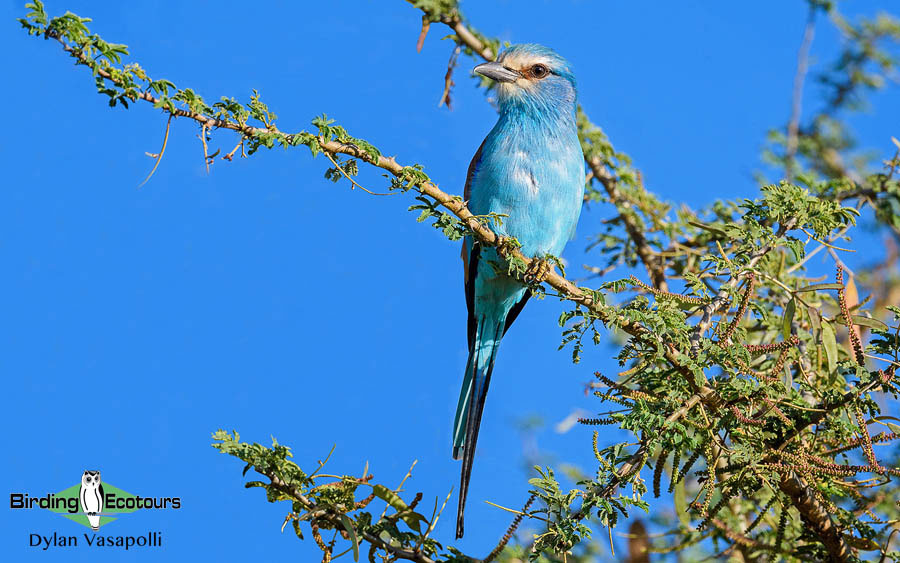
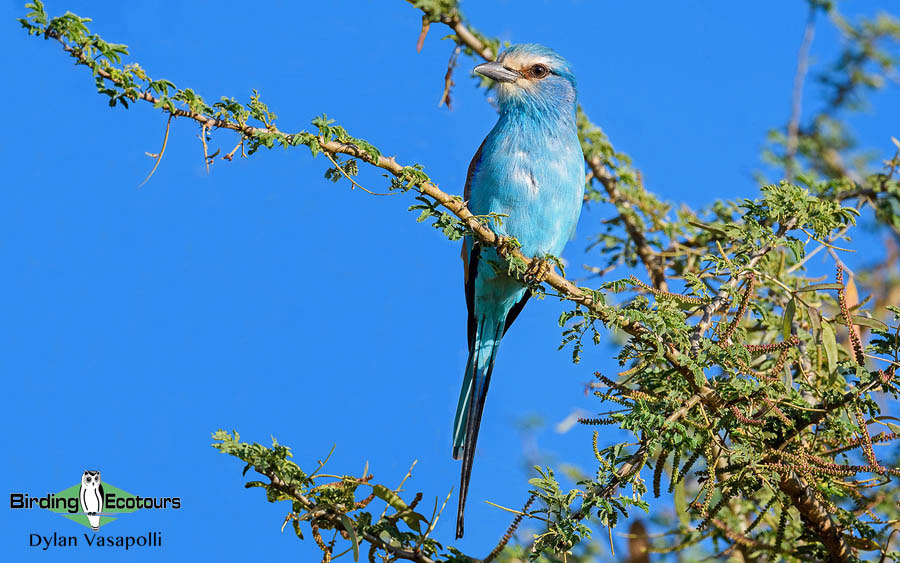 Colorful Abyssinian Rollers are a regular sight on this tour!
Itinerary (10 days/9 nights)
Day 1. Arrival in Entebbe and transfer to Pian Upe Wildlife Reserve
The tour will start in Entebbe, a quiet and leafy town on the shores of Lake Victoria. From here, we will make our way through the bustling capital city, Kampala, as we embark on the long drive east to Pian Upe Wildlife Reserve. This scenic reserve is dominated by vast savanna plains broken by mountains and rocky outcrops, and is Uganda’s second-largest protected area. We expect to arrive in the afternoon, and will get our list kicked off with some of the more common species like African Grey Hornbill, Spot-flanked Barbet, Rüppell’s and Superb Starlings, Silverbird, Red-cheeked Cordon-bleu, and Chestnut-crowned Sparrow-Weaver, to name only a handful.
The main reason for visiting this reserve is to search for Uganda’s only endemic bird, the poorly known Fox’s Weaver, which was rediscovered in this area after its apparent disappearance for several years. We will likely make our first attempt to see this species today; however, we will have the entire day tomorrow to continue our search.
Overnight: Pian Upe Wildlife Reserve
Day 2. Full day birding Pian Upe Wildlife Reserve
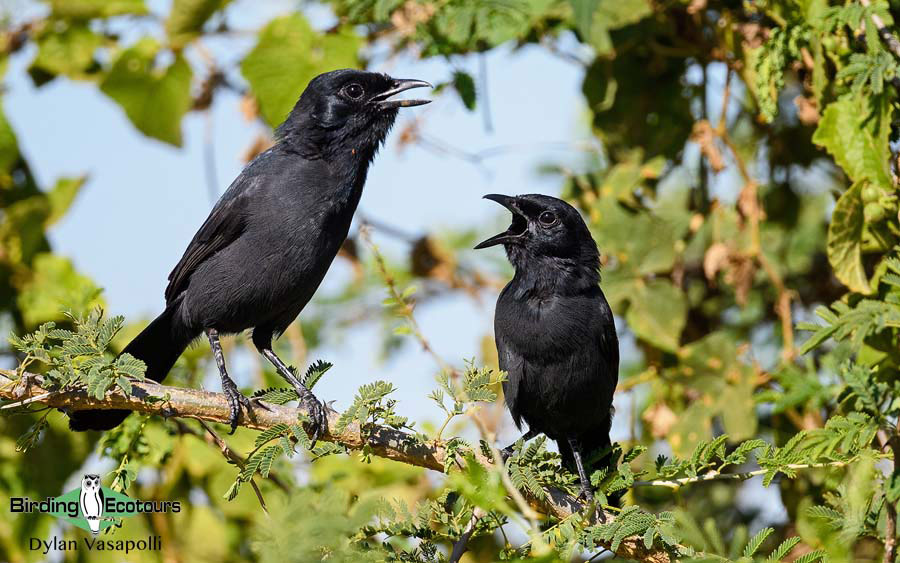
We have a full day at our disposal to explore Pian Upe Wildlife Reserve in search of our target species. Rocky outcrops in the reserve are likely to yield vocal Stone Partridges, a species of great taxonomic interest, as it is one of only two African members of the New World Quail family (Odontophoridae), the other being Nahan’s Partridge, which we will try for later in the trip. We should tally up an impressive day list while exploring the savanna habitats in this reserve, with opportunities for species like Clapperton’s Spurfowl, Bruce’s Green Pigeon, Fox Kestrel, Black Coucal, Nubian and African Grey Woodpeckers, the splendid Abyssinian Roller, White-headed and Black-billed Barbets, Fan-tailed Raven, Western Black-headed Batis, Northern White-crowned Shrike, White-bellied Tit, Green-backed Eremomela, Pale Prinia, Red-faced Crombec, Flappet Lark, and Chestnut Sparrow, to name a few. We will also get our eye in with a variety of cisticolas, including Croaking, Red-pate, Boran, Rattling, Foxy, Zitting, Black-backed, and Wing-snapping Cisticolas.
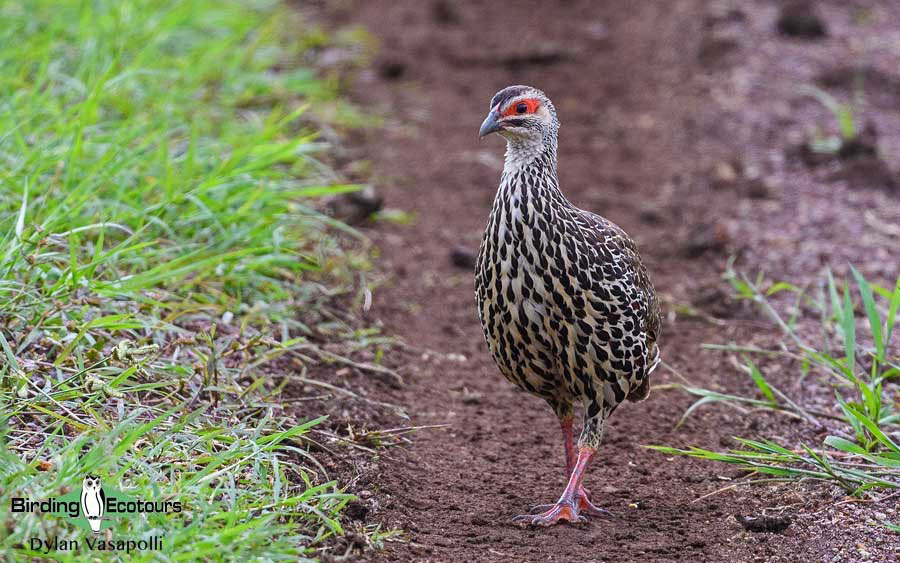
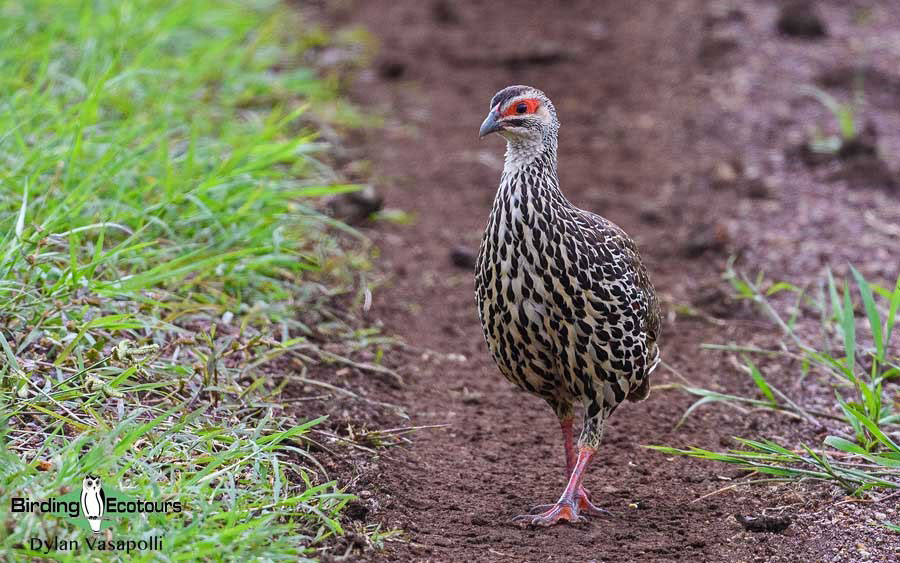 The intricately patterned Clapperton’s Spurfowl can be seen at several sites in eastern Uganda.
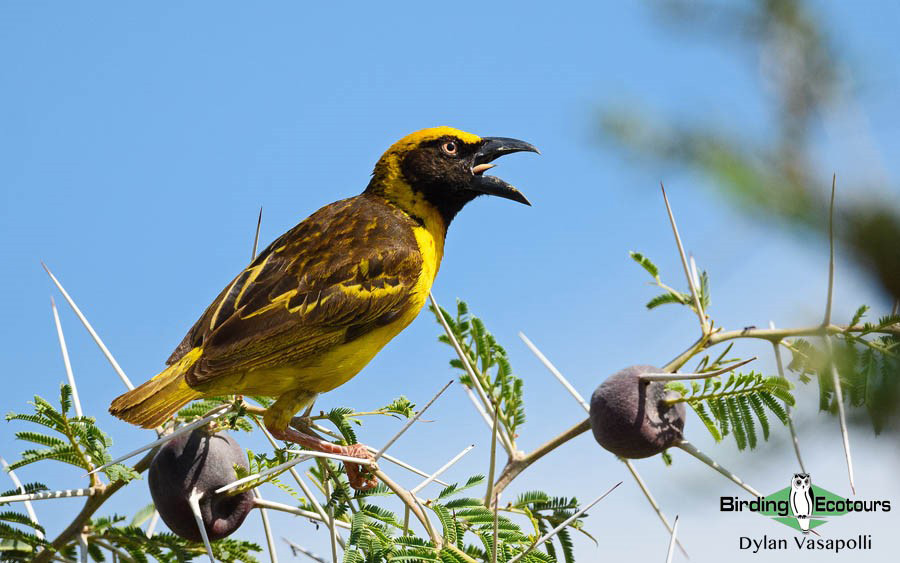
Another of our main targets today is the localized Karamoja Apalis, which is essentially endemic to northeastern Uganda after a recent split from Maasai Apalis. Areas of flooded grassland host large numbers of weavers, bishops, and widowbirds. In addition to Fox’s Weaver, we have a fair chance at seeing Cardinal and Red-billed Queleas, Northern Red and Black-winged Red Bishops, Little and Village Weavers, and White-winged Widowbird. Raptors are also well represented here, and we often see Lappet-faced, Hooded, and White-backed Vultures, Dark and Eastern Chanting Goshawks, Long-crested and Martial Eagles, and the colorful Bateleur. It’s not all about birds at Pian Upe, as we should see good numbers of mammals, including Tsessebe (Topi), Hartebeest, Common Eland, Plains Zebra, Northern Giraffe, and the rare Roan Antelope.
Overnight: Pian Upe Wildlife Reserve
Day 3. Pian Upe Wildlife Reserve to Mount Moroto
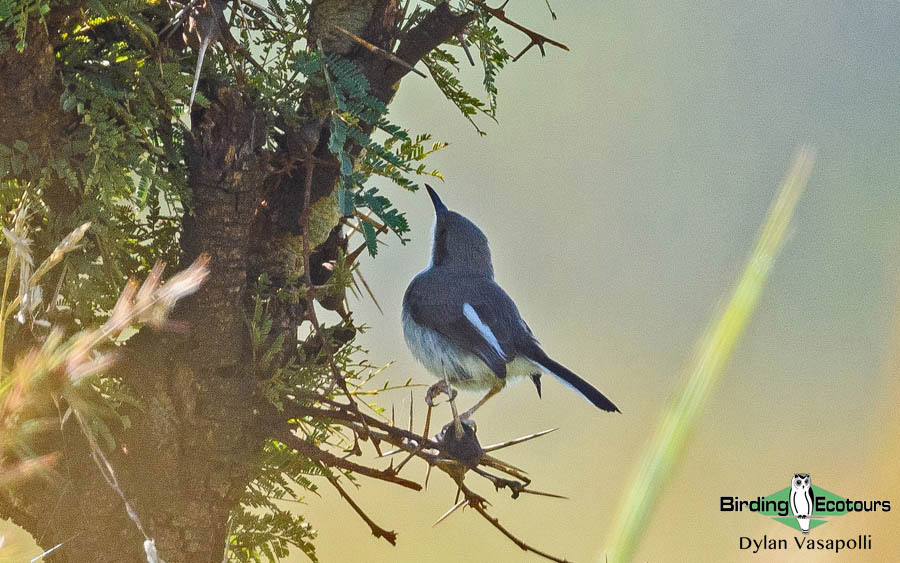
After breakfast and perhaps a final early morning birding session at Pian Upe, we will start the drive north towards Mount Moroto. As we make our way north, the landscape becomes ever drier, and the change in habitat brings with it a new suite of birds. We plan to make several roadside stops, and we expect to start seeing arid country species like Jackson’s Hornbill, White-bellied Go-away-bird, D’Arnaud’s Barbet, Red-fronted Barbet, Northern Red-fronted Tinkerbird, White-headed and White-billed Buffalo Weavers, White-browed Sparrow-Weaver, Marico Sunbird, Eastern Violet-backed Sunbird, Slate-colored Boubou, Three-streaked Tchagra, Rufous Chatterer, Northern Red-billed Hornbill, and African Grey Flycatcher.
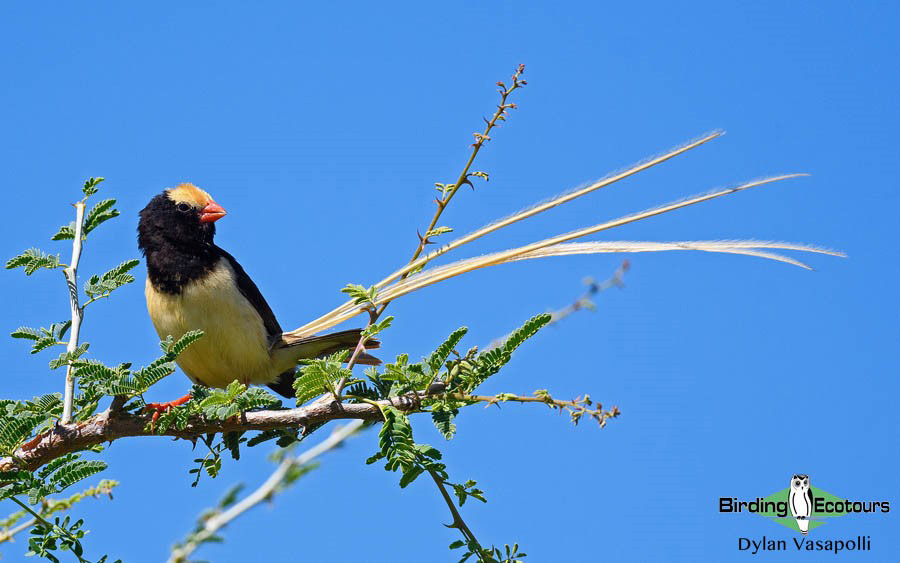 The attractive Straw-tailed Whydah is always a pleasure to see.
After lunch in Moroto, we will explore the foothills of Mount Moroto, which may yield the localized Hemprich’s Hornbill, along with other species like the dashing White-crested Turaco, Dusky Turtle Dove, Red-and-yellow Barbet, Pygmy Batis, and Long-billed Pipit.
Overnight: Moroto
Day 4. Mount Moroto to Kidepo Valley National Park
Today will be a long day in the car as we make our way to Kidepo Valley National Park in Uganda’s northeastern corner, on the border with South Sudan. Despite the long drive, we hope to squeeze in a substantial amount of birding along the way, especially in the thornveld habitats around Matheniko Reserve. We will have another shot at some of the species mentioned under Day 3, and new additions may include Yellow-necked Spurfowl, White-bellied Bustard, Pygmy Falcon, Abyssinian Scimitarbill, Grey Wren-Warbler, Straw-tailed and Steel-blue Whydahs, Speckle-fronted Weaver, Black-cheeked Waxbill, Parrot-billed Sparrow, Purple Grenadier, and White-bellied Canary. Open areas in this part of the country often support species like Black-headed Lapwing, Heuglin’s Wheatear, and White-throated Bee-eater.
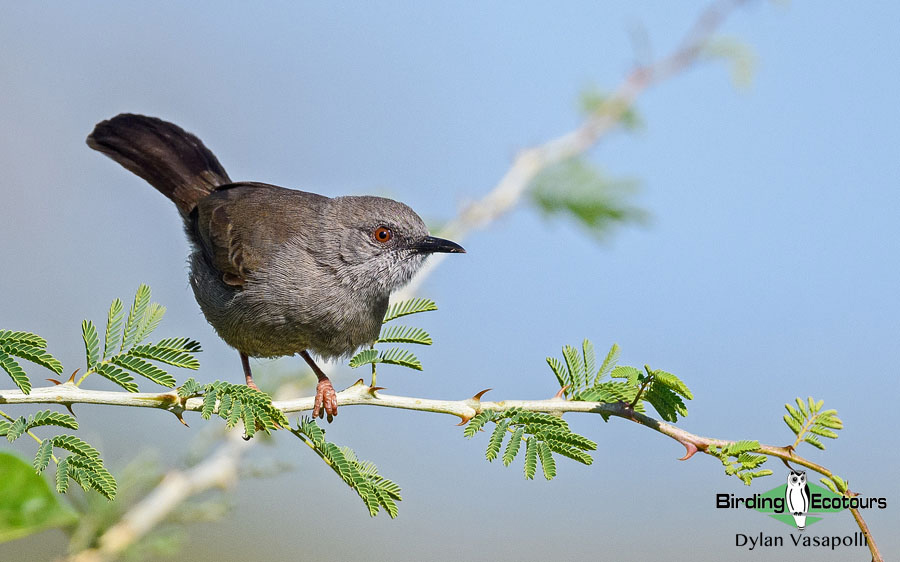 Grey Wren-Warbler is relatively common in northeastern Uganda.
We will likely arrive at our lovely lodge in Kidepo with its sweeping views over the Kidepo Valley in the late afternoon. Depending on our arrival time, we may take a stroll around the lodge grounds, which could yield many of the species mentioned over the past few days.
Overnight: Kidepo Valley National Park
Days 5 – 6. Full day birding Kidepo Valley National Park
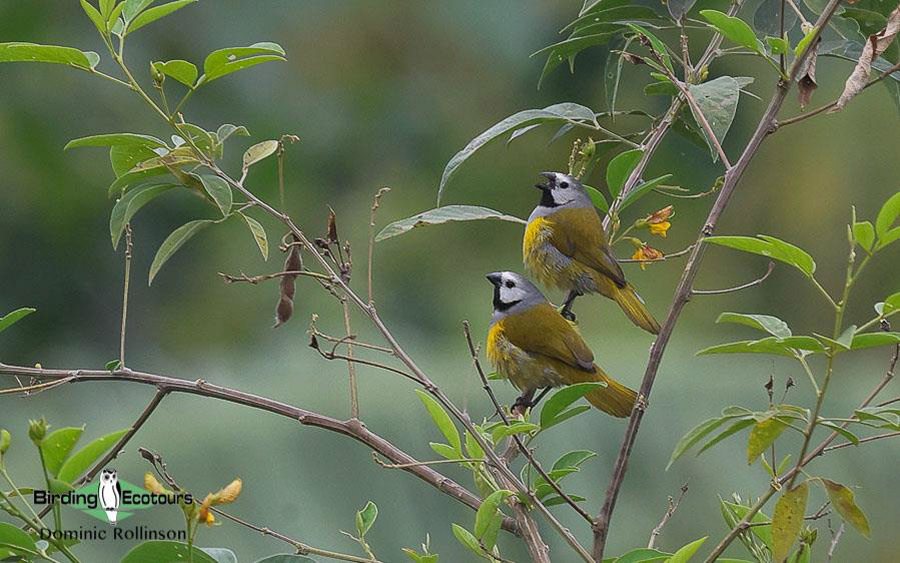
We will have two full days to explore this spectacular and seldom-visited national park. First on our agenda will be the sought-after and exceptionally localized Black-breasted Barbet. Kidepo is undoubtedly the best place in the world to see this massive barbet with its giant ivory bill, and we will dedicate a considerable amount of time to finding this bird around the rocky outcrops that it inhabits. Another big target at Kidepo will be the scarce Ring-necked Francolin, which, despite being easy to hear, will require a good dose of patience and luck to see. While driving around the park, we hope to rack up a sizeable species list with birds like Black-billed Wood Dove, Rüppell’s Vulture, Crested Francolin, Black-bellied Bustard, Four-banded Sandgrouse, Rose-ringed Parakeet, Eastern Plantain-eater, Mosque Swallow, Red-necked Falcon, Grey Kestrel, Abyssinian Ground Hornbill, Yellow-billed Shrike, Black Scimitarbill, Yellow-bellied Hyliota, the recently split and localized Kidepo Lark, White-fronted Black Chat, and Brown-rumped Bunting, among many others.
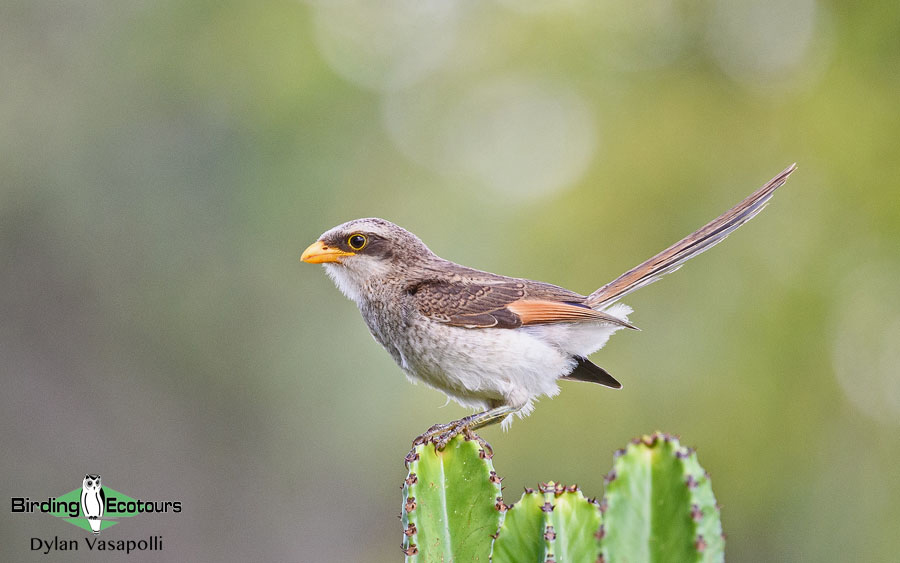
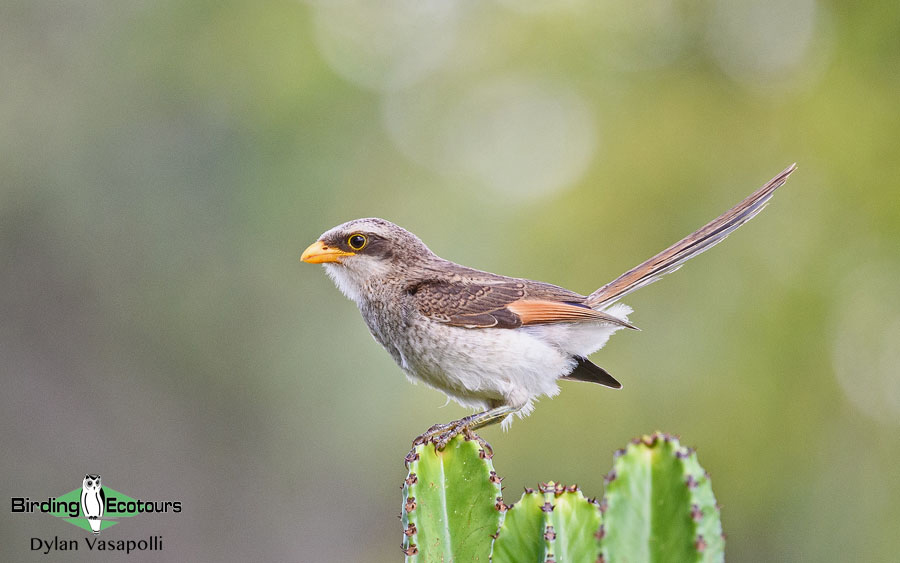 The odd-looking Yellow-billed Shrike can be seen in Kidepo Valley National Park.
Areas of flooded and rank grassland also play host to a number of nomadic species like Allen’s Gallinule, African Crake, Common Buttonquail, Harlequin Quail, and two tricky warblers – Fan-tailed Grassbird and Moustached Grass Warbler. Kidepo is also known for its large herds of Cape Buffalo and other mammals, including Oribi and Bohor Reedbuck, among the more common ungulates. Often, the ungulates in the park are attended by the odd-looking Piapiac and both Yellow-billed and Red-billed Oxpeckers. With luck, we may see big cats like Lion and Leopard during our time here; however, these sought-after mammals can never be guaranteed.
Overnight: Kidepo Valley National Park
Day 7. Kidepo Valley National Park to Masindi
Today will primarily be a travel day with limited birding as we make our way west towards the town of Masindi and the lowland forests of Budongo Forest Reserve. Depending on how we have fared with our target species at Kidepo, we may make a final attempt at any outstanding targets before starting the drive after breakfast. We should arrive in Masindi in the late afternoon and may do some local birding in the farmlands around town, which could yield new species like Black-and-white-casqued Hornbill, Brown-backed Scrub Robin, Grey-capped Warbler, Copper and Olive-bellied Sunbirds, several species of weaver, Brown Twinspot, Grey-headed Oliveback, and Black-crowned Waxbill, to name a few.
Overnight: Masindi
Day 8. Full day birding the Royal Mile, Budongo Forest
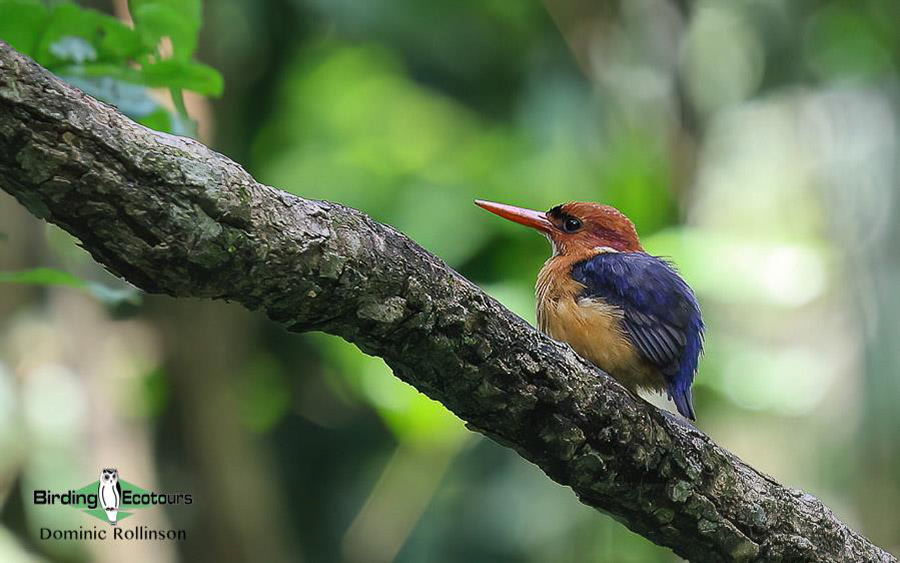
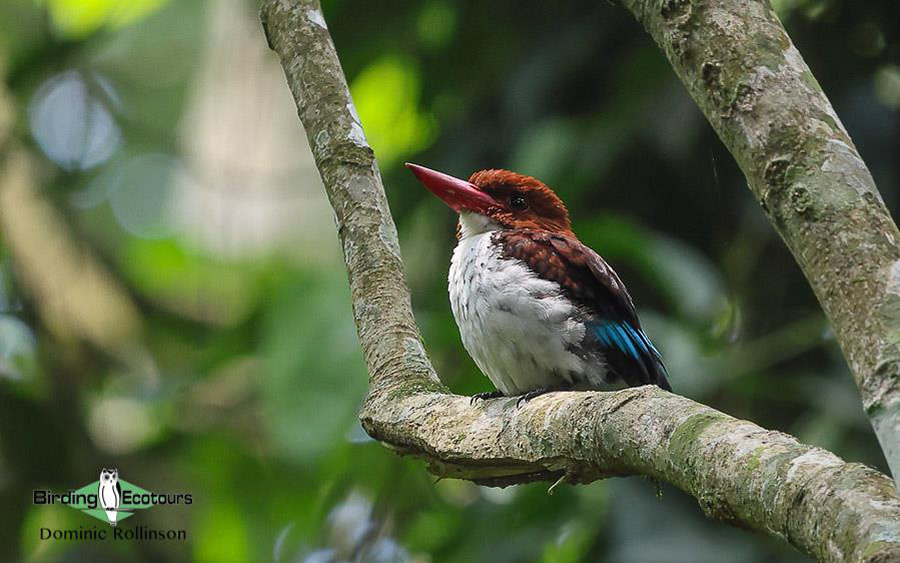
Budongo Forest is excellent for many special birds that we are unlikely to have seen earlier in the tour, and we will spend the day birding the famous Royal Mile section of the forest. Among the highlights is the diminutive Chestnut-capped Flycatcher, one of a small group of taxonomically enigmatic, warbler-like flycatchers, with its close relatives more commonly recorded on our Tanzania and Mozambique tours. Other prized species include Fraser’s Forest Flycatcher and the canopy-dwelling Ituri Batis. Budongo is also exceptional for kingfishers. The highly sought-after Chocolate-backed Kingfisher is often the most coveted, while Blue-breasted Kingfisher and African Dwarf Kingfisher add further brilliance to the forest.
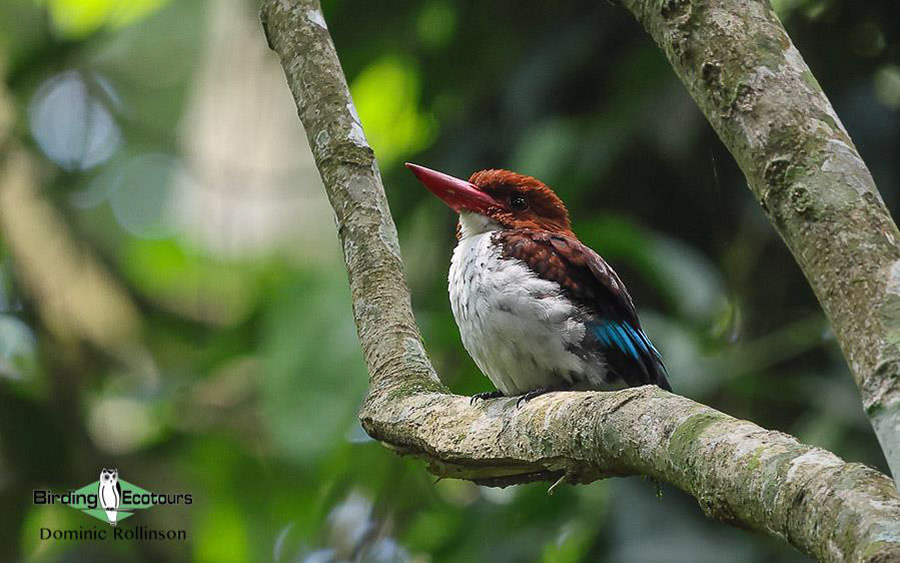 Budongo Forest is an excellent site for the secretive Chocolate-backed Kingfisher.
Near the forest floor, we will search for Red-tailed Ant Thrush, Fire-crested Alethe, and the elusive Nahan’s Partridge, among others. The mid-levels and canopy host species, such as Rufous-crowned Eremomela and White-thighed Hornbill, alongside a rich assemblage of barbets, tinkerbirds, and woodpeckers. Greenbuls are particularly diverse here, with numerous species occupying different forest strata, from dense undergrowth to the upper canopy, providing both a rewarding and occasionally challenging identification exercise.
In addition to the exceptional birding on offer at Budongo, the forest is also home to a few primates, including Blue and Red-tailed Monkeys, Guereza, Olive Baboon, and even Chimpanzees, although the latter is best seen on our Ultimate Uganda – Shoebill, Albertine Rift Endemics and Great Apes Tour.
Overnight: Masindi
Day 9. Masindi to Entebbe
After breakfast and a final birding session around Masindi, we will start the drive back to Entebbe, where we will spend the last night of the trip.
Overnight: Entebbe
Day 10. Departure
Our exciting 10-day adventure across the remote eastern reaches of Uganda will conclude after breakfast, after which you are free to depart at your leisure.
Please note that the itinerary cannot be guaranteed as it is only a rough guide and can be changed (usually slightly) due to factors such as availability of accommodation, updated information on the state of accommodation, roads, or birding sites, the discretion of the guides, and other factors. In addition, we sometimes have to use a different guide from the one advertised due to tour scheduling or other factors.
Map